

How to Stay Healthy While Traveling in Europe: Practical Tips
I'm Carol Cram, novelist and arts travel writer, and founder of Art In Fiction, a curated database of 2,700+ novels inspired by the arts. Artsy Traveler contains affiliate links for products and services I personally use and recommend. As an Amazon Associate, I earn from qualifying purchases. Please read the Disclosure for more information.
When you travel in Europe, you’re exposed to crowded transportation, popular attractions, shared accommodations, and new germs.
That may sound daunting, but staying healthy in Europe is very manageable. In fact, medical care is often easier to access in Europe than it is at home.
This post shares practical, common-sense tips for staying healthy while traveling in Europe, from hygiene and accommodations to pharmacies and medical care if you need it.
Table of Contents
- Good Hygiene for Staying Healthy in Europe
- Accommodation Tips for Staying Healthy in Europe
- Medications and First Aid to Keep You Healthy in Europe
- How to Use European Pharmacies When You’re Sick
- Getting Medical Attention on the Road
- How to Avoid Getting Sick While Traveling
- Staying Healthy FAQs
- Keep Traveling with Artsy Traveler
Good Hygiene for Staying Healthy in Europe
When you travel in Europe, you’re exposed to far more people, shared surfaces, and enclosed spaces than you are at home.
Your immune system is also adjusting to new environments, time zones, and routines, which can make you more vulnerable to picking up bugs.
Good hygiene habits are one of the simplest and most effective ways to stay healthy on the road. They form the foundation of staying healthy in Europe, especially when you’re moving frequently between cities and countries.
Be Vigilant About Hand-Washing
I know—what else is new? But when you’re traveling, hand-washing is even more important than it is when you’re at home.
Not touching your face and keeping your hands clean can help prevent the spread of germs and infectious diseases. The current guideline is to wash your hands for 20 seconds with soap and water.
Wet your hands, leave the water running, soap up and then wash your hands for as long as it takes to sing Happy Birthday twice. Rinse your hands, then dry them with a paper towel. Use the paper towel to turn off the water and to open the bathroom door.
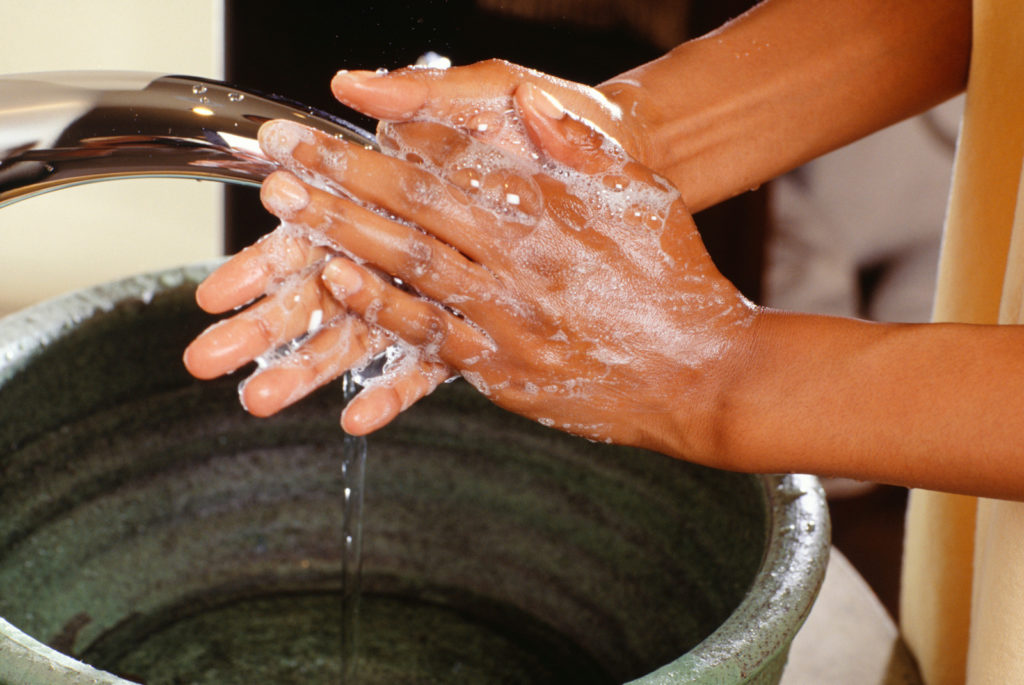
In a public washroom, you may want to sing under your breath.
Or take a stab at singing it in the local language and maybe make some new friends or at least attract some smiles.
Stay Hydrated
You walk a great deal in Europe so make sure you stay hydrated. Always order a bottle of water in a restaurant, minimize alcohol consumption at least during the day, and keep a bottle of water in your fridge in the hotel.
In Rome, you can drink straight from taps called nasoni that were installed in the 1870s to provide a free and public water supply. The water is clear and tastes great, but it takes a bit of practice to figure out how to get the water from the spout to your mouth. Here’s my guide on a photography tour in Rome demonstrating how to get a drink.

Finding Washrooms in Europe
As soon as you get to a restaurant and before you reach for the bread sticks, find the washroom and wash your hands. Take time to learn how to ask, “Where is the toilet?” in the language of the country you’re traveling in.
Or just raise your eyebrow at the server, smile ruefully and cock your head politely toward the back of the restaurant. The server will know what you want and steer you in the right direction.
That said, avoid public washrooms as much as possible, particularly the coin-operated, telephone-booth type WC on street corners.
In a pinch, you may have no choice, but if you can, wait until you get back to your hotel room.
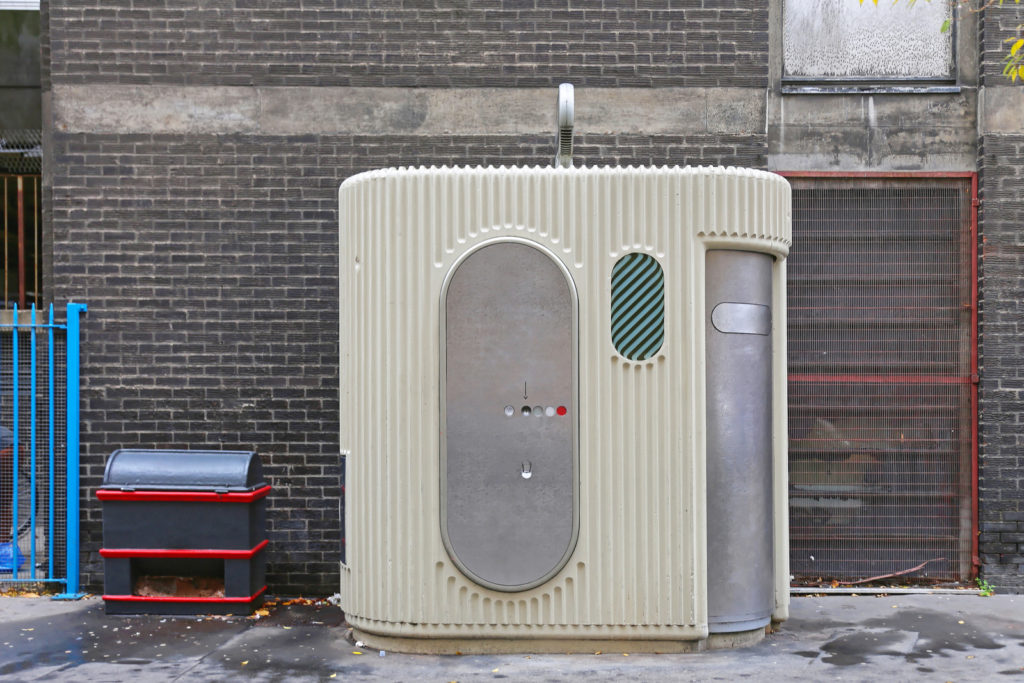
Public toilets (pictured above) are useful in a pinch. For an entertaining and detailed look at toilets in Europe, check out this article by Rick Steves.
Take Alcohol Wipes or Hand Sanitizer
Stash several packets of alcohol wipes in your day pack or handbag. When you get to Europe, look for the European versions in pharmacies and large supermarkets.
Purchasing these kinds of products in Europe is always interesting because you often end up with products that are different from what you’re familiar with and work just as well or better.
Keep Safe on the Plane
I’ve taken to wiping down my tray table on the plane in recent years. I never used to, which is probably why I usually caught a cold within the first few days of arriving in Europe.
I also recently read that the seat pocket in front of you is NEVER cleaned, which means it’s probably equivalent to a Grade 9 science project. You don’t want to think about it.
Resist the temptation to stash your book or laptop in the seat pocket. Keep a small bag with you in your seat for storing the stuff you need during the flight.
You should also wipe down the seat belt and buckle, the remote control, the TV screen, and the headrest.
Accommodation Tips for Staying Healthy in Europe
Inspect Hotel Rooms Carefully
Unfortunately, hotel rooms can be notoriously filthy even if they look clean.
Although I don’t think it helps to get too paranoid in our post-COVID world, check for obvious signs of dirt such as poorly cleaned bathroom fixtures, stained carpets, and musty bedding.
If the place is really awful, don’t hesitate to leave.
A pervading smell of bug spray is another clue that you might want to find a different place.
Also, even in “good” hotels, bedspreads and decorative pillows are rarely washed. Be sure to remove the bedspread before sitting on the bed and don’t cuddle up to the pillows. Avoid placing your suitcase on the bedspread or other soft furnishings.
Another germ-laced object in hotel rooms is the TV universal remote control. Before using it, give it a good swab with an alcohol wipe.
If you’re sensitive to dust or chemicals, crack a window when you first enter your room, even in winter, for a few minutes of fresh air. European hotels often prioritize energy efficiency over ventilation.
Medications and First Aid to Keep You Healthy in Europe
Take Extra Medications
If you take prescription medications, bring along more than you think you’ll need for the duration of your trip. If you’re quarantined or otherwise delayed, you want to be sure to have enough medication.
Consider taking enough to last for at least four to six weeks beyond the duration of your trip. It’s a good idea to travel with a copy of your prescription as well.
Take a First Aid Kit
A compact travel first aid kit with alcohol wipes, bandages, and a thermometer doesn’t take up much space and can save you a lot of stress.
In addition to the usual first aid kit supplies (Band-Aids, tweezers, aspirins, etc.), take along a small bottle of Oil of Oregano or the cold remedy of your choice. At the first sign of a scratchy throat, take a dose or two.
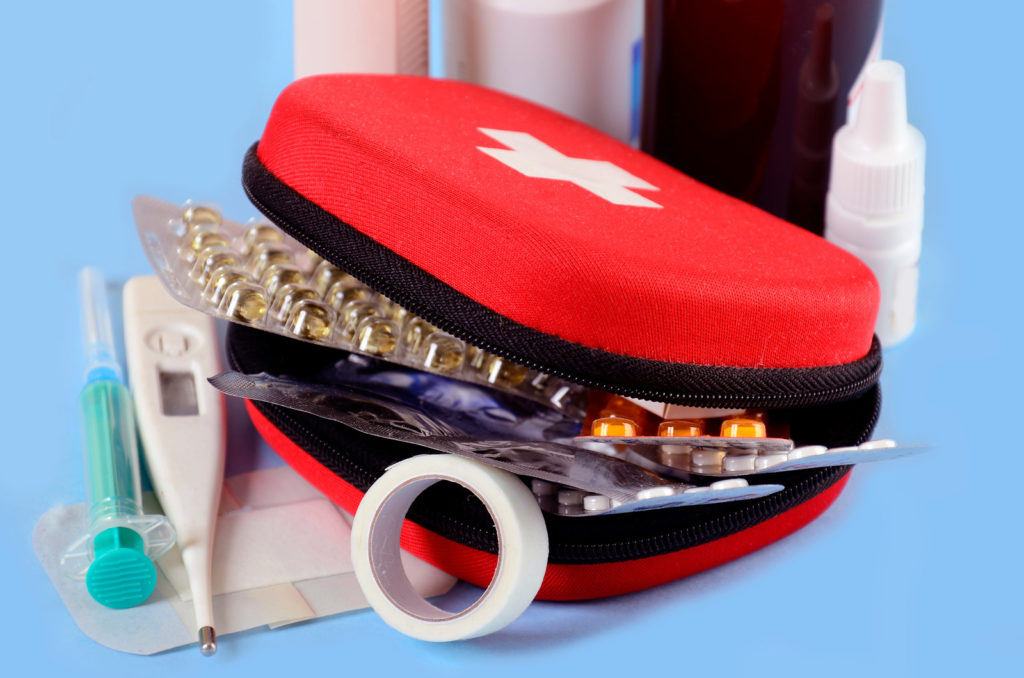
Then get thee to a European pharmacy pronto.
How to Use European Pharmacies When You’re Sick
Look for the illuminated green cross. In many European cities, you’ll find a pharmacy on every other block.
European pharmacies play a major role in staying healthy while traveling in Europe, particularly for minor illnesses.
One of the great joys of traveling in Europe is discovering the quality of the pharmacies. Most are staffed with English-speaking health care professionals.
Buy Suggested Remedies at Pharmacies
Explain what’s wrong to the pharmacist. He or she will probably ask several detailed questions about your symptoms, health history, and any medications you take regularly.
The remedies they recommend can be pricey, but in my experience they work well. Don’t stint.
Getting Medical Attention on the Road
Connect with a Local Doctor
Thanks to the Internet, it’s increasingly easy to find a doctor while traveling in Europe.
I’ve consulted with doctors in Spain, Italy, and France, and all have been English-speaking and very helpful. Ask for a list of doctors at the local pharmacy or search online for “English-speaking doctors in [city]”.
Is Medical Care in Europe Good for Travelers?
In Madrid, I searched for “English-speaking doctors for travelers” and came up with several websites that catered to tourists in need of medical attention. I called one of them and literally within an hour, a doctor arrived at my hotel room.
She examined me, gave me a shot, prescribed medications, and then whipped out her Visa machine.
The cost was 150 euros. I could have claimed it on my medical insurance, but with a deductible of $500, it wasn’t worth it. The doctor told me that a lot of her calls are to tend to tourists who are hungover after too much Madrid partying.
I paid for each visit I made to a doctor in Europe, but the cost was extremely reasonable (the 150 euros in Madrid was the most expensive) and the care first-rate.
When you’re in need of a doctor in Europe, don’t wait. Go online, find a doctor or a service that caters to tourists and either call or book online.
Go to the Hospital if Needed
In a medical emergency, go directly to the hospital. I’ve heard from many travelers that the level of care is excellent.
If whatever ails you can’t be fixed by a trip to the pharmacy or a visit with a local doctor, go to a hospital and ask for help.
Travel Insurance: Your Safety Net on the Road
The best way to approach medical care in Europe is to have good travel insurance before you need it.
One option worth considering is SafetyWing, which offers flexible travel medical insurance designed for independent travelers under 70 years old.
You can buy it before you leave or at any point during your travels, it covers you across 180+ countries, and the claims process is straightforward. Just tell them what happened and get reimbursed within a few days.
Coverage includes hospital stays, emergency evacuations, lost luggage, and travel delays.

How to Avoid Getting Sick While Traveling
Avoid Large Crowds at Attractions
When possible, avoid visiting attractions at peak times when crowds are at their thickest. Your best bet is to go first thing in the morning.
When you get to the Louvre as soon as it opens, you’ll not only avoid crowds and germs, you’ll also have the place to yourself.
Imagine being the day’s first person who gets to see the Mona Lisa.
If you have a cold or are immunocompromised, wearing a mask when out in crowds makes good sense and is considerate to others.
Manage Jet Lag
If you’re flying a long distance to get to Europe (for me, it’s nine hours from Vancouver to Amsterdam), you will experience some jet lag. You will also be more vulnerable to getting sick from whatever bugs are circulating through crowded metros and packed museums.
Mitigate jet lag by first, pacing yourself so you don’t try to do to much over the first few days of your trip. Second, get out in daylight as soon as you arrive, even if you’re exhausted from the flight. Do your best to stay awake until a reasonable bedtime. Also, eat lightly, avoid alcohol, and drink lots of water.
Don’t make the mistake of booking a concert on your first or second night. It’s embarrassing when you nod off in the middle of Hamlet’s soliloquy.
Travel Healthy: Walk More and Use Transit Less
Being jammed next to someone who is coughing and sneezing when you have no way to avoid them is a recipe for disaster. Be conscious of crowds on public transit and whenever possible, walk or wait for the next bus or train that may be less crowded.
You can mitigate some of the risk by avoiding public transit during rush hour times.
Take Lots of Reading Material
Pack an eReader loaded with novels and guidebooks in case illness or delays force an unplanned rest day. For inspiration, check out some of the novels listed in Literature and Creative Inspiration.
Rest and Pace Yourself
The best way to stay healthy on the road is to avoid over-scheduling yourself. When you’re exhausted, you are a magnet for germs.
Instead of visiting two museums in a morning, visit only one. In the later afternoons, return to your hotel for a nap.
Rest should be a non-negotiable, particularly as you age. We don’t try to do nearly as much in a day as we used to. What’s the rush? Pick one or two things, enjoy them thoroughly, build in lots of time to sit in a cafe and watch the world go by, and then rest before going out for dinner and a concert.
When you feel the first signs of a scratchy throat or unusual fatigue, immediately slow down. Go to the pharmacy and ask for their recommendations, drink plenty of water, and prioritize sleep.
I know from experience that trying to push through symptoms rarely ends well.
Staying Healthy FAQs
Yes. In most European cities, it’s surprisingly easy to find an English-speaking doctor, especially in tourist destinations. Pharmacies often provide referrals, and many private doctors will see travelers the same day or even make hotel visits. Care is typically excellent and reasonably priced.
Yes. While medical care in Europe is high-quality and often affordable, travel health insurance protects you in case of hospitalization, emergency treatment, or trip disruptions due to illness. Read the fine print to be sure your policy covers pre-existing conditions and includes emergency evacuation. If you’re under 70, consider SafetyWing.
Pharmacists in Europe cannot formally prescribe medication, but they are highly trained and can recommend effective over-the-counter remedies, many of which would require a prescription at home. For common ailments like colds, stomach issues, or minor infections, a pharmacy visit is often all you need.
Bring enough prescription medication for your entire trip plus extra in case of delays. Also pack basic items like pain relievers, cold remedies, bandages, alcohol wipes, and any personal health essentials you regularly use.
Yes. Look for the illuminated green cross; pharmacies are common in cities and towns across Europe, often located every few blocks in urban areas. Most pharmacists speak English and are accustomed to helping travelers.
Public transit is generally safe, but it can be crowded. To reduce risk, avoid rush hours, practice good hand hygiene, and consider walking when possible. If you’re immunocompromised or feeling unwell, wearing a mask in crowded settings is a sensible precaution.
Slow down immediately. Visit a pharmacy for advice, hydrate, rest, and don’t push through symptoms. If symptoms persist or worsen, contact a local doctor or visit a hospital. European healthcare systems are well equipped to handle travelers.
The most effective strategy is to get outside in daylight as soon as you arrive, even if you’re exhausted because natural light is the fastest way to reset your body clock. Stay awake until a reasonable local bedtime rather than napping in the afternoon, eat lightly on your first day, and drink plenty of water. Most importantly, don’t over-schedule your first two days. Give your body time to adjust before you commit to evening performances or full days of museum-going.
The short answer is to do less than you think you can. Travel fatigue is almost always the result of over-scheduling: too many destinations, too many museums in a single day, too many late evenings without adequate rest. Build afternoon rest time into your itinerary as a non-negotiable rather than an afterthought. A nap before an evening concert is not wasted time. It’s what allows you to enjoy the concert fully. When you feel the first signs of fatigue or a scratchy throat, slow down immediately rather than pushing through. Catching the warning signs early almost always prevents a minor tiredness from becoming several days off your feet.
Keep Traveling with Artsy Traveler
Staying healthy in Europe is entirely possible. Just like at home, you can avoid germs by taking a few sensible precautions. The good news is that health care in Europe is first-rate.
Buy comprehensive travel insurance that includes health coverage and then relax. If you do get sick, you will be well taken care of.
For more practical advice on planning a smooth and stress-free European trip, check out these Travel Smart guides:
- Finding the Best Accommodation in Europe: My Top Tips
- Drive in Europe: Top Tips for Happy & Safe Travel
- How to Eat Well in Europe: Dining Tips and Smart Splurges
Would you like to save this post?

Carol M. Cram writes novels inspired by the arts; runs Artsy Traveler, an arts-focused travel blog, and Art In Fiction, a curated database of 2,700+ novels inspired by the arts; and hosts The Art In Fiction Podcast. She has also authored 60+ textbooks on computer applications and taught at Capilano University for over two decades. Carol lives with her husband, artist Gregg Simpson, on beautiful Bowen Island near Vancouver, BC.


 See all my novels


One Comment