
Finding the Best Accommodation in Europe: My Top Tips
I'm Carol Cram, novelist and arts travel writer, and founder of Art In Fiction, a curated database of 2500+ novels inspired by the arts. Artsy Traveler contains affiliate links for products and services I personally use and recommend. As an Amazon Associate, I earn from qualifying purchases. Please read the Disclosure for more information.
I’m not a student anymore, and my back appreciates a comfy mattress.
After decades of traveling independently across Europe, I’ve developed strong opinions about where to stay, how much to spend, and what makes the difference between accommodation you forget the moment you check out and accommodation you’re still talking about years later.
This guide is not about finding the cheapest possible place to sleep. It’s about finding the best value within your budget: comfortable, well located, and memorable. Those three things are not as expensive as you might think, if you know what to look for.
If you’re traveling solo, choosing the right accommodation becomes even more important for comfort and peace of mind. My solo travel tips post covers that angle in more detail.
Table of Contents
- My Accommodation Philosophy
- What Accommodation Costs in Europe
- Tips for Finding Accommodations in Europe
- Step 1: Location, Location, Location
- Step 2: Identify Room Size
- Step 3: Select the Accommodation Type
- Step 4: Check Accommodation Amenities
- Step 5: Identify Cancellation Options
- Step 6: Pay Attention to Accommodation Ratings and Reviews
- Make the Final Choice
- Finding Accommodation FAQs
- Accommodation Recommendations
- Keep Traveling Smart with Artsy Traveler
My Accommodation Philosophy
The difference between a mediocre three-star property and an excellent four-star property is sometimes a matter of twenty or thirty euros a night. That’s worth paying. I’d rather spend €200 on a hotel with a balcony overlooking the Mediterranean than €175 on a place with a broken ceiling fan overlooking an industrial park. I’ve stayed at both kinds of places and I know which one I remember fondly.
The trick is to focus on value rather than price. Cheap accommodation that’s uncomfortable, inconveniently located, or poorly maintained is not a bargain. It’s a false economy that costs you energy, time, and enjoyment every day of your trip.
Many of the places I recommend here also appear in my destination-specific guides, such as my posts on Where to Stay in Italy, Where to Stay in Spain, Where to Stay in France, Where to Stay in Portugal, and Where to Stay in Germany.
What Accommodation Costs in Europe
On Artsy Traveler I recommend three- to four-star accommodation in the €120 to €250 per night range for two people sharing, depending on location. In practice, I’ve been paying closer to €400 a night in major cities such as Paris, Amsterdam, and London on recent trips, which reflects how significantly prices have risen since the pandemic.
I caution against trying to save money by staying on the outskirts of popular cities in order to save money. Yes, you’ll pay less per night, but you’ll spend hours commuting each way, you’ll miss the atmosphere of the historic center, and you’ll be further from the museums, galleries, concert halls, and theaters you’ve traveled to Europe to experience.
For arts-focused travelers in particular, proximity to cultural venues is worth paying a premium for.
To illustrate the range: on a recent trip, four nights at an apartment with a terrace overlooking the Vienne river in the Loire Valley cost slightly less than one night at the Citadines Saint-Germain-des-Prés in Paris. The Paris apartment was located right on the Seine in my favorite part of the city, and during a week’s stay I almost never needed to take the Métro.
The Loire Valley apartment was a different kind of value entirely. Both were worth every euro.
I share specific hotel and apartment recommendations, organized by city and region, in my Artsy Traveler Recommended Accommodations guide.
Tips for Finding Accommodations in Europe
How to Search for Accommodation in Europe
Finding the right place takes time and patience, and it’s worth using several methods rather than relying on a single source.
I start with booking.com, which keeps track of all my bookings and makes canceling and rebooking straightforward. I also check TripAdvisor, Hotels.com, and Expedia for comparison, and always look at the hotel’s own website since occasionally they offer better rates or perks not available through booking platforms.
The six steps below will help you get the best value from whichever platform you use.
Step 1: Location, Location, Location
Location is the single most important factor in choosing accommodation in Europe, and it’s worth spending time on before you book anything else.
Thank goodness for Google Maps! Use it to check out street views of the hotel. You’ll quickly figure out if the hotel looks run-down or if the neighborhood appears to be on the sketchy side. Will you be staying in a soul-sucking suburb or a park-like resort?
For Arts-Focused Travelers
If your itinerary includes concerts, opera, theater, or multiple museum visits, factor cultural venue locations into your accommodation choice.
Staying within walking distance of the venues you’re visiting most frequently saves time, reduces transportation costs, and means you can return to your hotel between a museum visit and an evening performance without an expensive taxi. I always check where my key cultural venues are before I book accommodation and choose something within comfortable walking distance wherever possible.
Noise
A hotel on a busy pedestrian street in a historic center can be bustling during the day and pandemonium at night. Read reviews specifically for noise mentions before booking, and consider whether a room facing a courtyard or a quiet side street is available.
If You’re Driving
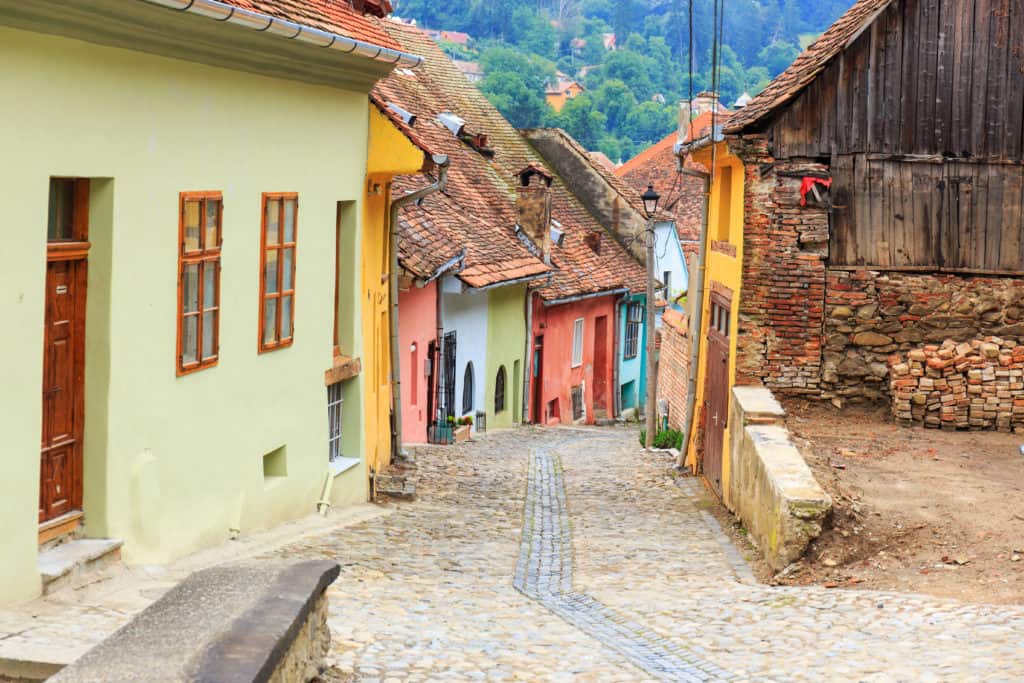
Do not attempt to drive into the centers of historic towns and villages, particularly in Tuscany and Provence. The roads are extremely narrow, you may be ticketed for entering restricted zones, and finding parking is often virtually impossible.
Either park in a nearby car park and walk to your hotel with your luggage, or choose accommodation just outside the city walls with its own parking. My Driving in Europe guide covers this in more detail.
For airport arrivals and transfers between cities, Daytrip.com offers private transfers with local drivers across Europe, which is particularly useful when you’re arriving late with luggage and don’t want to navigate public transit.
If You’re Traveling by Train
Avoid hotels near the train station. They can be scruffy compared to hotels in the historic center, which are typically a short walk or taxi ride away.
When I’m traveling by train I always book the most interesting, boutique-style hotel I can find in the historic center. It makes up for the times I’ve had to stay in modern, convenient, and forgettable places on the outskirts when driving.
Step 2: Identify Room Size
European hotel rooms can often be smaller than their counterparts in North America, particularly in the historic centers where old buildings have limited space.
When booking your hotel, check the room size. Sites such as booking.com always specify the size of the room in square meters. Fifteen square meters (about 160 square feet) or smaller is too small to comfortably fit two people and their luggage.
In the middle of the night, I want to get to the bathroom without breaking my leg tripping over a suitcase.
I search for the largest room available within my budget and location options. Usually, rooms over 20 square meters are fine, but the bigger the better.
Often a junior suite will only be a few euros more than a room and usually includes a seating area.
Elevators
If stairs are an issue, check that the property has an elevator.
We’ve occasionally ended up in hotels with rooms on the third floor with no elevator. Hauling our luggage up three flights is getting increasingly more challenging as we age. Nowadays, I always check for elevators before booking a property.
Mind you, be aware that some hotel elevators in Europe are so tiny they only fit your luggage and maybe one other person. On more than one occasion, we’ve had to ride the elevator in shifts: me with my suitcase, followed by Gregg with his suitcase.
But it’s all part of the fun of staying in European hotels.
Step 3: Select the Accommodation Type
For most trips, you’ll either be staying in a hotel or bed and breakfast, or staying in a self-catering apartment or house.
I choose hotels for one- or two-night stays and self-catering apartments or house rentals for longer stays.
Hotels
Hotels are a good choice in big cities where you are not staying for long and you want to take advantage of in-house restaurants and bars and access the services of the front desk staff.
When I travel solo, I choose hotels in the center of the action so I don’t need to walk far. I also feel more secure knowing the front desk is attended 24/7.
ApartHotels
Another option in cities that is becoming increasingly popular are aparthotels that are staffed and feature suites with separate bedrooms, a kitchen, and more space than most hotel rooms.
ApartHotels are often the same price or even slightly cheaper than hotels, and are generally more comfortable.
Apartments
A self-catered apartment is not staffed, and you may or may not meet an attendant when you arrive.
More and more, we arrive at a self-catered apartment armed only with a code that has been emailed to us the day before.
Fortunately, help is only a Whats-App call away, so usually the lack of onsite staff is not an issue.
Longer City Stays
Apartments or aparthotels in cities work well when you want to settle in and live like a local.
Buy food and a bottle of wine (so much cheaper than in a restaurant) at local stores, cook a meal, and really stretch out.
I highlight some of my favorite self-catering stays in 10 Best Charming Hotels in Europe for Independent Travelers, which includes both boutique hotels and apartment-style accommodations.
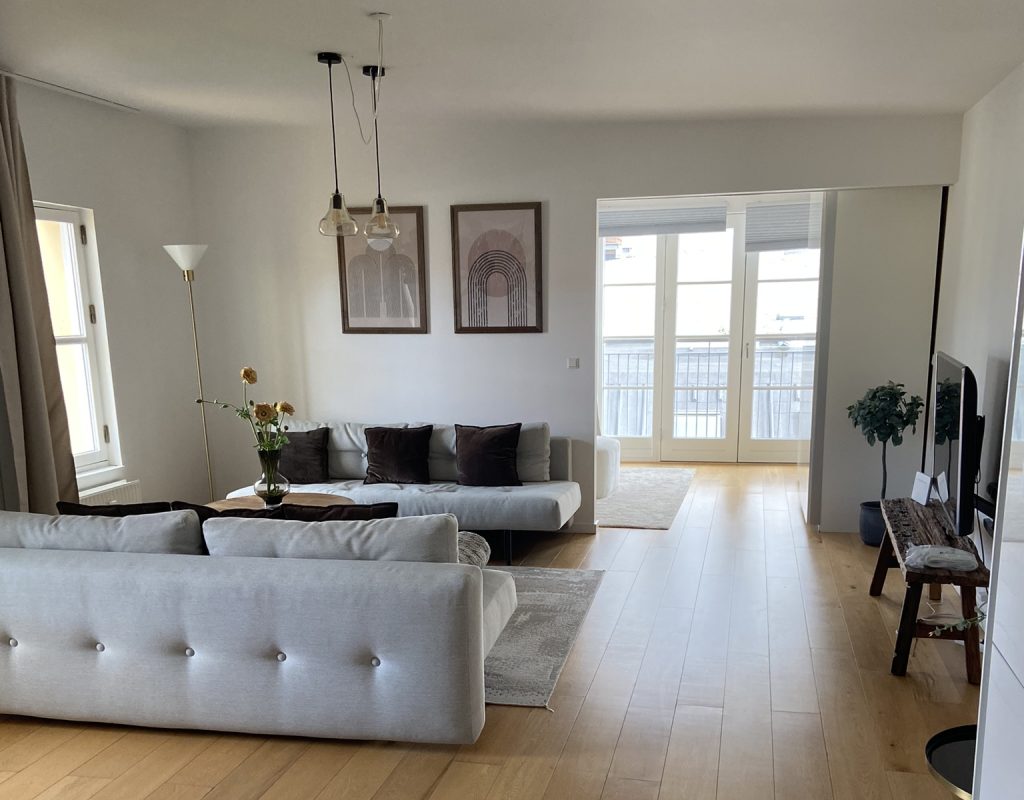
Here’s a stylish apartment I stayed at while visiting Copenhagen, Denmark.
Parking at City Properties
If you’re driving into a city, choose a place that either includes a parking garage (usually for an additional cost) or offers valet parking. Avoid street parking when you’re likely to run afoul of parking regulations written in a foreign language and end up with a ticket.
Another alternative is to park your car on the outskirts in a secure lot and then take a taxi to your hotel in the center. I use an app called Parclick to find suitable lots.
Country Stays
When staying more than a few nights in the countryside or in small towns or villages, check out options for renting a whole house.
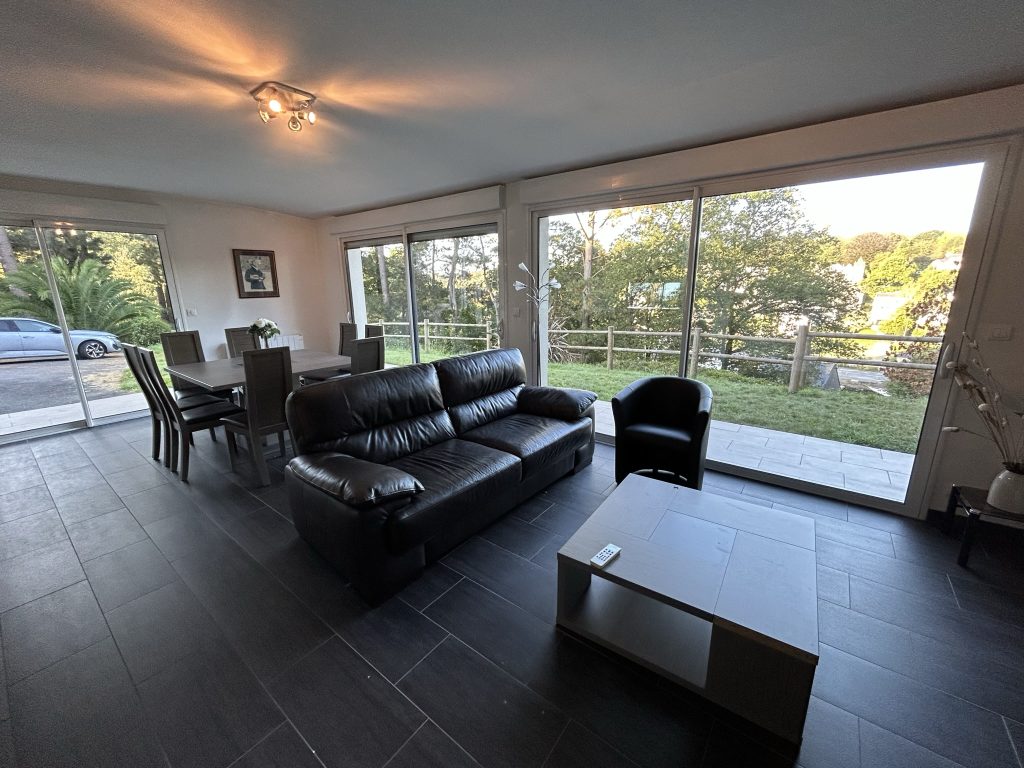
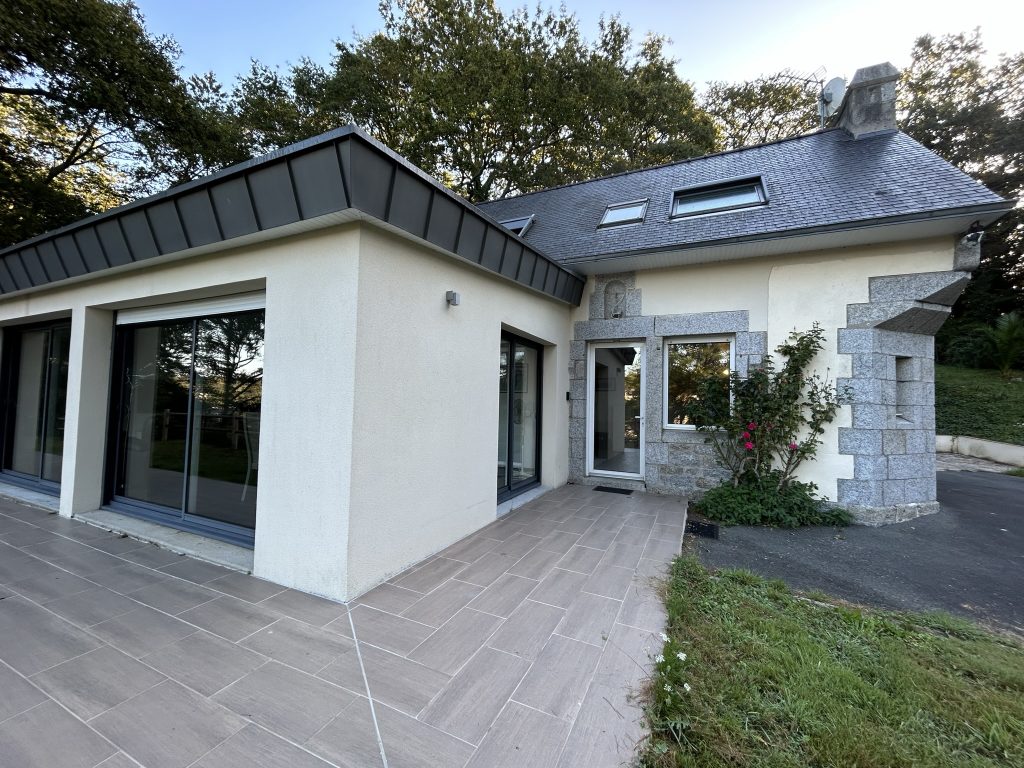
Here’s the gorgeous (and surprisingly affordable) house I stayed at during a one-week visit to Pont-Aven in Brittany.
I’ve also enjoyed staying at agriturismo establishments, where I’ve eaten produce grown steps from the front door. You’ll find these mostly in France and Italy.
Some offer cooking classes and wine tastings in addition to accommodation. They are a particularly good option if you’re traveling with children.
Unique Accommodation Options
And for a truly special travel experience, explore options for staying in a castle, château, convent, monastery, or other historic building.
Often these places are no more expensive than a regular hotel, and can transform a good trip into an unforgettable one. We stayed in a converted monastery in the Pyrenees in Spain that made us feel like we were royalty, all for the price of a regular hotel room.


A great source for unique accommodations in Spain are paradores. A parador is state-owned, luxury hotel often housed in an historic building such as a castle, monastery, or palace. Their purpose is to both provide accommodation and preserve national heritage.
Check the paradores website for properties and to book.
In Portugal, these kinds of properties are called pousadas. We stayed at a lovely modern pousada in the charming town of Bragança in northeast Portugal. Here’s the view of the castle across the valley from our balcony.

For arts-focused travelers, staying in a historic building is itself a cultural experience worth a few extra euros.
Where to Find Self-Catering Accommodations
You’ll find apartments on websites such as VRBO. Lately, I’ve favored the ones listed on booking.com because the booking and cancellation requirements are less stringent than on other sites.
On a recent trip to Porto in Portugal, I rented a place on the top floor of a lovely old house with a view of the river. I paid a few euros more to have a fabulous breakfast delivered to my door every morning.

Worth every euro.
Step 4: Check Accommodation Amenities
At a minimum, I want the following amenities.
Wireless Networking
Make sure the property includes free in-room Wi-Fi (pronounced WEE FEE in Europe). Some hotels offer Wi-Fi only in the lobby and public spaces, and some hotels even charge for it, although I’ve found that less often than in previous years.
In Europe, Wi-Fi is pretty much universal.
Bathtubs
We tend to prefer bathtubs over showers, but in recent years have had to admit defeat more often than not. Increasingly, hotels are replacing bathtubs with showers.
Many times I’ve given up the search for a bathtub and booked a hotel with a shower. On the upside, showers in good hotels are getting very high tech with rainforest heads, multi-speed pulse heads, and even massage jets.
Air Conditioning
Air conditioning used to be an unheard of luxury in Europe, but not anymore, at least in my experience. With summers getting hotter, air conditioning is available in most upscale hotels, although it won’t be of the frigid variety found in many North American hotels.
When you’re booking a hotel between June and September, particularly in southern Europe, make sure it has air conditioning. Life is too short for sweaty nights.
Fridge
If you like to travel with an insulated food bag, look for hotels with fridges where you can store your perishables.
Balcony or Terrace
I don’t like feeling boxed in and so almost always choose a hotel that includes a balcony or, even better, a terrace.
If I’m visiting a seaside place, I usually spring for a room with a view over the sea rather than over the garbage bins at the back. It costs a bit more but how often do you get to wake up, open the curtains, and look out over the Mediterranean?
Noise
Check hotel reviews for noise complaints. If several reviewers complain about noise, choose another property. Once, we stayed in a place in Rome that was right next door to a disco that started at 1 am and went on until 4. The bed shook and not in a good way.
Step 5: Identify Cancellation Options
Choose rooms with free cancellation options until or unless you’re 100% sure you’ll be staying there. You never know what can happen, and to my mind the money saved by choosing the no-cancellation option is not worth the risk.
I always book refundable and then change to non-refundable closer to my travel date when I’m confident my plans are set.
Step 6: Pay Attention to Accommodation Ratings and Reviews
I pay attention to the reviews and the rankings on travel websites such as booking.com. A hotel that has an average rating of 6.8 out of 10 is a hard pass.
Occasionally I’ve chosen hotels in the high 7s, but 8.0 is typically my cut-off.
I also read a selection of the reviews. If a fair number of people grumble about cleanliness or unfriendly staff or funny smells, I move briskly on to the next listing.
You need to determine which review categories to prioritize. For me, the main categories are location, cleanliness, WiFi, and value for money. Here’s a typical overview of seven categories on a booking.com listing for a well-reviewed hotel in Paris.

Value for money is not quite as high because the hotel, like most nice hotels in Paris, is over-priced, but location is rated very highly as is comfort, cleanliness, and WiFi. This would be a keeper.
The key to making great accommodation choices is searching for value over price within your budget.
If the difference between a hotel with a 9+ rating and one with a 7+ rating is not appreciable, always choose the hotel with the higher rating.
Make the Final Choice
Don’t wait too long to book your accommodation in Europe. I usually start at least six months in advance of my trip, and even then, I can have trouble finding exactly the properties I want.
If a property is not available on one website, try another website or go directly to the hotel’s website. Sometimes a property is listed as “sold out” on a website like booking.com when rooms are available on other sites.
Use the map below to search for accommodation across Europe. It includes hotels, apartments, and other options in one convenient place so you can easily compare location, price, and availability.
If you’re still in the early stages of planning, my step-by-step guide, How to Plan a European Trip: 9 Easy Steps for a Perfect Itinerary, will help you put the whole journey together.
The best accommodation in Europe is not always the most expensive, but it’s rarely the cheapest.
For me, the best accommodation is the place that puts me within walking distance of what I want to see, has a comfy bed and plenty of good towels, delivers strong WiFi, and is reasonably priced for the area.
By reasonably, I mean not the cheapest and not the most expensive. Look at all the places in an area and choose properties priced in the middle, which these days is much higher than I paid back in the day, but that’s traveling.
Stay flexible and be choosy.
Finding Accommodation FAQs
It depends on the length and style of your trip. Hotels work best for short stays and in big cities where you want central locations, front desk service, and on-site amenities. Apartments and house rentals are ideal for longer stays, especially if you want more space, a kitchen, and the chance to live like a local. I often book a mix of both on our trips.
For popular cities and peak travel seasons, I recommend booking accommodation six months in advance if possible. Boutique hotels and well-located apartments tend to sell out early. If your plans aren’t firm, choose places with free cancellation so you can stay flexible.
Yes. Many European hotel rooms are smaller than what travelers from North America are used to, especially in historic city centers. Always check the room size in square meters before booking. For two people with luggage, I recommend booking a room over 20 square meters when possible.
Yes, almost always. Staying in or near the historic center saves time, transportation costs, and energy, and lets you enjoy the atmosphere of the city day and night. Cheaper accommodations on the outskirts may look like a bargain, but long daily commutes can quickly cancel out any savings.
At a minimum, look for reliable in-room Wi-Fi and check reviews for noise complaints. Get a room with air conditioning if you’re traveling in summer. A fridge, elevator, and a bathroom with a spacious shower and lots of towels can make a big difference, especially on longer stays. Small comforts add up when you’re traveling for weeks at a time.
I usually start with booking platforms because they make it easy to compare prices, read reviews, and manage cancellations. Once I’ve found a place I like, I sometimes check the hotel’s own website because occasionally they offer better rates or extra perks. It’s always worth a quick comparison.
Choosing based on price alone. A slightly more expensive hotel in a great location with good reviews often delivers far better value than a cheap place that’s uncomfortable, inconvenient, or poorly maintained. Comfort, location, and reviews matter more than saving a few euros a night.
I suggest making 8.0 your cutoff. If possible, book accommodation with a rating of at least 8.5 to 9.5, and check reviews. The ratings for each category should be as high as possible.
I favor booking.com because you can keep track of all your accommodation and I’ve found them consistently efficient over the course of numerous trips.
Location is everything. Before you book, check where your key cultural venues are: the museums you plan to visit most frequently, the concert hall or opera house where you have tickets, and the theater district. Choose accommodation within comfortable walking distance of these venues wherever possible.
Accommodation Recommendations
Here are links to my accommodation recommendations in several of the countries featured on Artsy Traveler. You’ll find many more recommendations in posts about specific destinations.
- Where to Stay in Germany: My Best Picks
- Where to Stay in France: My Best Picks
- Where to Stay in Italy: My Best Picks
- Where to Stay in Portugal: My Best Picks
- Where to Stay in Spain: My Best Picks
Keep Traveling Smart with Artsy Traveler
Here are more posts on Artsy Traveler to help you travel smart:
- How to Plan a European Trip: Nine Easy Steps for a Perfect Itinerary
- How to Eat Well in Europe: Dining Tips and Smart Splurges
- How to Experience Europe Without the Crowds: 10 Joyful Travel Tips
- How to Stay Healthy While Traveling in Europe: Practical Tips
- Airalo ESIM Review: The Best Way To Stay Connected Abroad
- Green Travel Tips for Europe: Practical, Realistic, and Honest
- Best Travel Gear for Europe: What I Pack and Why
- How to Manage Money in Europe: A Practical Guide
Would you like to save this post?

Carol M. Cram is the author of five award-winning novels inspired by art and the women who shaped it, the creator of Artsy Traveler, an arts-focused travel blog, the founder of Art In Fiction, a curated database of 2,500+ novels inspired by the arts, and the host of The Art In Fiction Podcast. She also authored 60+ textbooks on computer applications and taught at Capilano University for over two decades. She lives with her husband, artist Gregg Simpson, on beautiful Bowen Island near Vancouver, BC.
[…] Find Accommodation […]
[…] Find Accommodation […]
[…] Find Accommodation […]
[…] Find Accommodation […]
[…] Find Accommodation […]
Useful tips for finding great accommodations in Europe! The reminder to book early for popular destinations is spot-on. Perfect advice for travelers planning trips.
Thanks, John. I’m glad you’re enjoying Artsy Traveler! And yes, booking early is essential. I’m starting to book now for two trips coming up in spring and fall in 2025!