
How to Experience Europe Without the Crowds: 10 Joyful Travel Tips
I'm Carol Cram, novelist and arts travel writer, and founder of Art In Fiction, a curated database of 2,700+ novels inspired by the arts. Artsy Traveler contains affiliate links for products and services I personally use and recommend. As an Amazon Associate, I earn from qualifying purchases. Please read the Disclosure for more information.
I’ve experienced my share of European crowds: thousands surging into the Colosseum, the queue for the Louvre baking in the summer sun, the second level of the Eiffel Tower so packed that getting a photo of the view feels impossible.
The joys of travel dwindle fast in the face of relentless crowds, inflated prices, and locals who are understandably tired of the whole circus.
The good news is that even in Europe’s most visited cities, you can escape the crowds.
By choosing lesser-known museums, seeking out neighborhood restaurants, attending local concerts, and wandering along quiet side streets, you can experience Europe’s great cities closer to the ground, with better meals, calmer days, and far more interesting encounters.
Here are my ten tips for doing exactly that.
Table of Contents
- #1: Eat Where the Locals Eat
- #2: Seek Out Lesser-Known Museums
- #3: Go to Art Openings
- #4: Attend Local Concerts and Events
- #5: Ride Public Transit
- #6: Shop for Food in Local Markets
- #7: Take a Cooking Class
- #8: Go on a Walking Tour
- #9: Skip the Iconic Sites (and What to Do Instead)
- #10: How to Escape Crowds Even in Tourist Cities
- FAQs: Avoiding Crowds in Europe
- More Posts on My Favorite Uncrowded European Sites
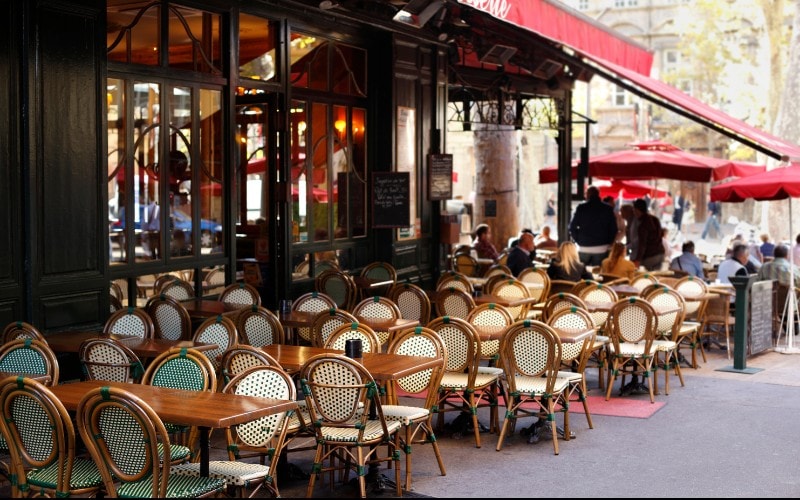
#1: Eat Where the Locals Eat
The restaurants closest to Europe’s most iconic sites are almost universally overpriced, underwhelming, and packed with other tourists.
Avoiding them is one of the easiest crowd-avoidance strategies available, and it comes with the added bonus of eating much better food.
To help me decide where to eat, I check reviews and look for restaurants with a 4.5-star average or higher.
If the best reviews are written in the local language, that’s a strong signal the restaurant is frequented by locals rather than tourists.
A few blocks away from the busy piazzas and tourist thoroughfares, you’ll almost always find quieter streets with better kitchens.
Make a Reservation
Once I’ve chosen a restaurant, I book a table. In popular European cities, reservations are increasingly essential.
Without one, you may find yourself wandering for longer than is comfortable before finding a well-reviewed restaurant with available tables.
One useful trick: reserve for the time the restaurant opens, usually 7 or 8 pm depending on the city. Europeans eat later than North Americans, which means the early sitting is often quiet. You may well have the restaurant largely to yourself for the first hour.
Ask Your Hotel
Another reliable strategy is to ask your hotel to recommend a local restaurant and make a reservation on your behalf.
Every time I’ve followed a hotel recommendation, I’ve eaten well. Hotels have a stake in keeping their guests happy and rarely point you toward a tourist trap.
#2: Seek Out Lesser-Known Museums
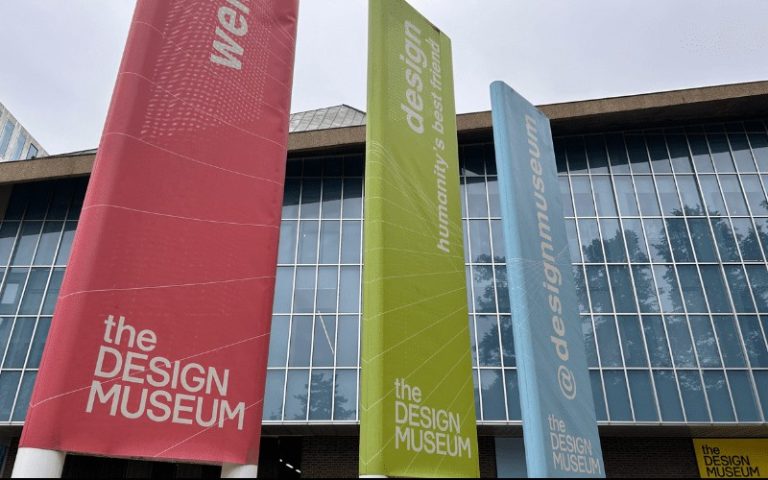
Europe’s most famous museums are famous for good reason, but they come at a cost: long lines, crowded galleries, and looking at art through a forest of other people’s smartphones.
The good news is that for every Louvre, there’s a Rodin Museum around the corner with half the crowds and twice the intimacy.
On a recent trip to Pompeii, I lined up for forty minutes to collect the skip-the-line ticket I’d purchased online days earlier, then lined up for another twenty minutes in the skip-the-line line to actually get in.
Yes, Pompeii was worth seeing, but it was also exhausting. I had a much better experience at the Archaeological Museum in Naples where I viewed the frescoes, paintings, ceramics, mosaics, and other objects salvaged from Pompeii in air-conditioned comfort with zero crowds.
Favorite Swaps
These days I actively seek out the lesser-known museums and sites that serious art lovers often find more rewarding than the blockbuster institutions.
Instead of sweating in the queue outside the Louvre in Paris, visit the Rodin Museum. It’s smaller, calmer, and the sculpture garden alone is worth the trip.
In Amsterdam, consider skipping the Van Gogh Museum, or going very early or late in the day, and visiting the Rembrandt Huis instead. It’s charming, informative, and rarely overwhelming.
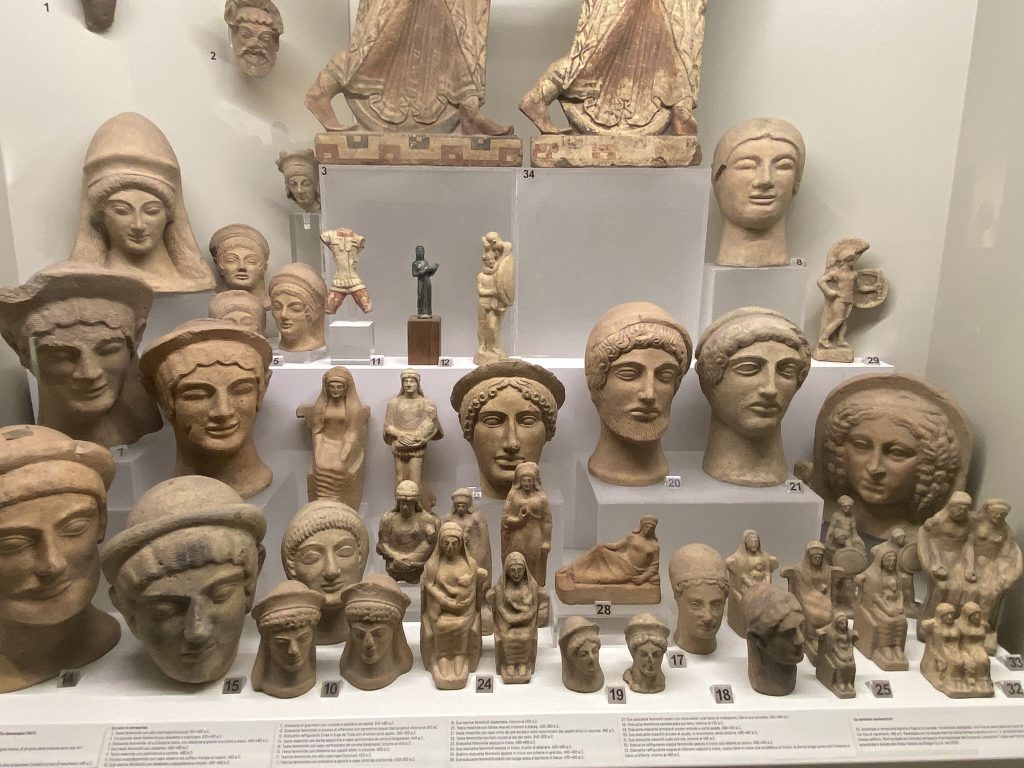
In Rome, the Etruscan Museum houses an extraordinary collection of treasures, and both times I’ve visited, I’ve had the galleries almost entirely to myself. That’s not a reflection of the quality of the exhibits but rather because the museum sits far enough off the main tourist circuit that many visitors never find it.
For arts-focused travelers, lesser-known museums aren’t a compromise. They’re often the better choice.
Lesser-Known Museums to Visit
Here are posts about some of my favorite lesser-known and fabulous museums in Europe:
- Visit Rome’s Best Kept Literary Oasis: The Keats-Shelley House
- The Museum of English Rural Life: A Fascinating Look at England’s Countryside Past
- 13 Unique Museums in Europe to Put On Your List
- Seven Super Single-Artist Museums in Europe You Should Visit
- Courtauld Gallery in London: A Treasure Trove for the Artsy Traveler
#3: Go to Art Openings
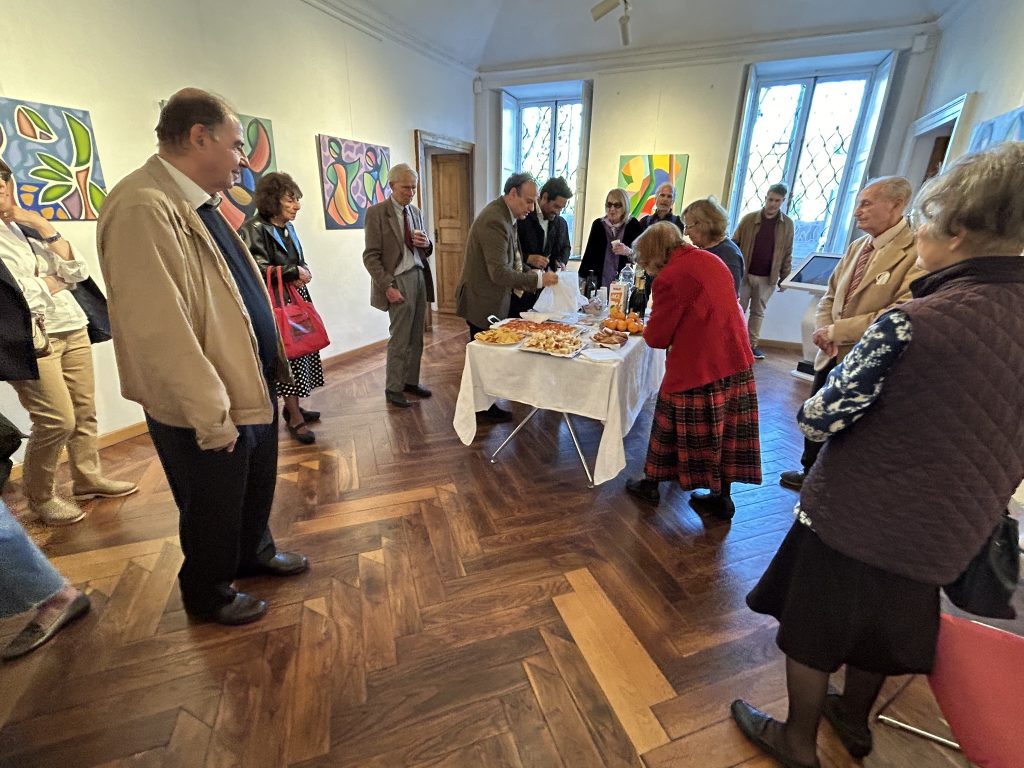
Art opening receptions are free, open to anyone, and one of the best ways to spend an evening in a European city.
Walk in off the street, look at some artwork, have a glass of wine, and find yourself in conversation with local artists, collectors, and art lovers.
Most exhibitions include an opening reception, called a vernissage in France and an inaugurazione in Italy. These events typically include wine, sometimes food, and occasionally a short talk by the artist or curator. They are almost always free and open to the public.
Much of my European travel in recent years is shaped by my husband Gregg Simpson‘s exhibition schedule, which means I’ve attended a lot of art openings across Europe. We’ve met fellow travelers, local artists, and people who’ve become friends over the years, all over a glass of wine in front of a painting.
It’s one of my favorite things about traveling in Europe.
How to Find Art Openings
Check online listings for the cities you’re visiting and search for terms like “vernissage Paris” or “art opening Rome” combined with your travel dates.
Gallery districts are also worth strolling in the early evening, particularly on Thursdays, Fridays, and Saturdays, when openings are most common.
In Paris, the Left Bank and Marais districts have dense concentrations of galleries. If you pass a gallery with people spilling out onto the pavement with wine glasses, walk in. You’ll be welcomed.
#4: Attend Local Concerts and Events
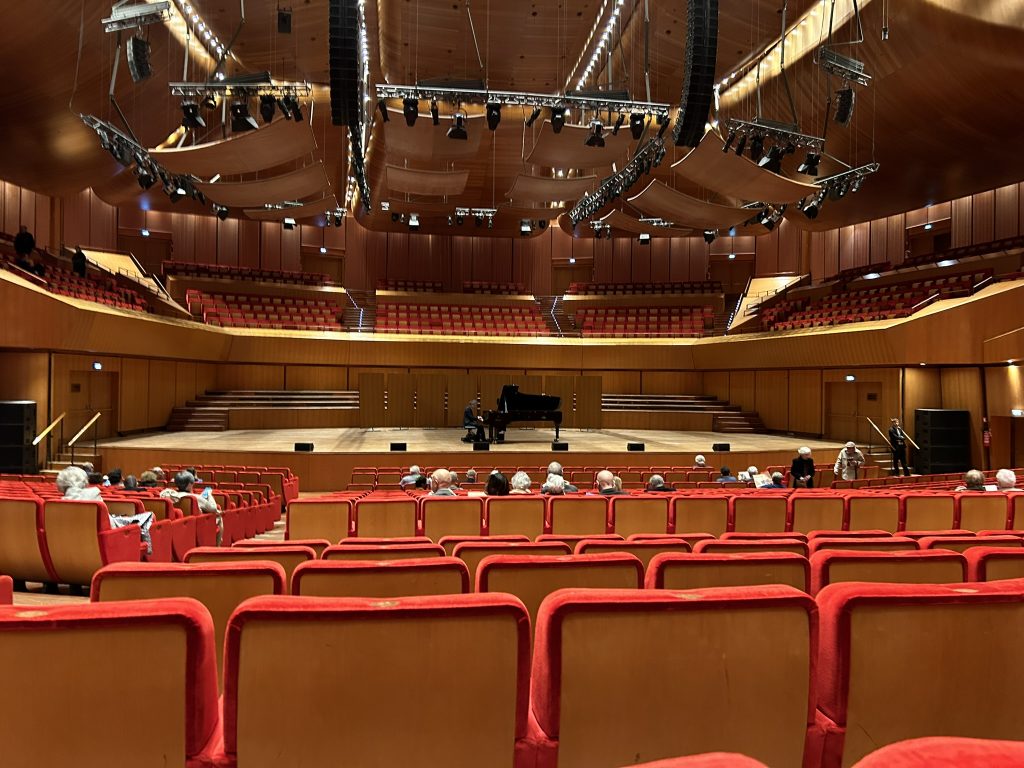
Classical music concerts in Europe are one of travel’s great underrated pleasures, and they’re remarkably good value compared to what you’d pay for equivalent performances in North America.
The venues are often extraordinary, and even the most tourist-oriented performances deliver a memorable evening.
I book tickets ahead of time when I know what I want to see, but some of my best concert experiences have come from simply paying attention.
On a recent trip to Siena, I picked up a flyer in our hotel advertising an intimate concert with a singer and pianist in a local church. The performance was in a candlelit space with perhaps forty people in the audience, and it was one of those travel evenings that stays with you.
In Rome, we spotted a poster for concerts at the Auditorium Parco della Musica, a stylish venue well north of the tourist center. We bought tickets and spent two evenings surrounded almost entirely by locals.
Don’t Dismiss Tourist Concerts
Even performances aimed squarely at tourists are worth attending. Fado in Lisbon, flamenco in Seville, medieval music in southern France, opera in Rome, folk music in Bacharach on the Rhine, Vivaldi in Venice, Stravinsky in Berlin, a Chopin recital in Leipzig, Shostakovich in Hamburg. Every one of these experiences was worth every euro.
How to Find Concerts and Events
Look for posters and flyers in your hotel, in café windows, and on community notice boards. Search online for concert listings in each city on your itinerary. Check the websites of local concert halls, churches, and cultural centers rather than relying on aggregator sites, which often miss the smaller, more interesting events.

#5: Ride Public Transit
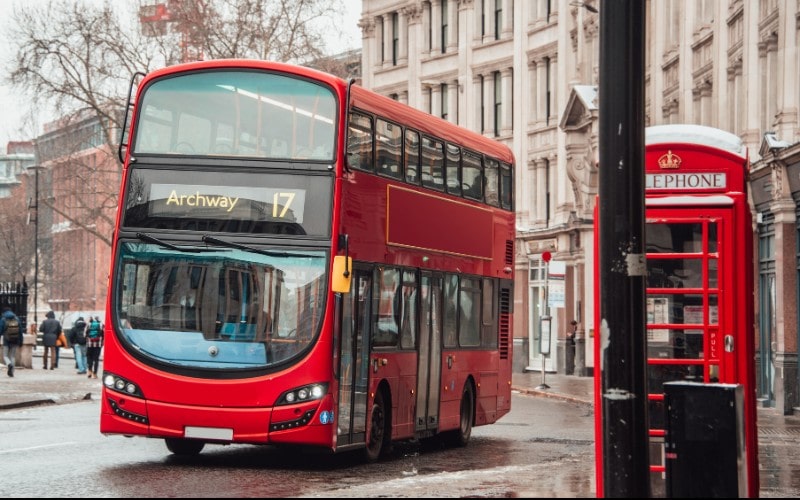
One of the simplest ways to experience a European city like a local is to travel through it the way locals do, which means buses, trams, and metros rather than taxis or private transfers.
Public transit takes you through neighborhoods that organized tours never visit, past local shops and cafés and parks, and deposits you at your destination having seen a slice of actual city life along the way.
I follow my progress on Google Maps so I know exactly where to get off, which removes the main anxiety about using unfamiliar transit systems.
These days, paying is simple. Most European cities accept a tap of your credit card on buses, trams, and metros, with no need to buy tickets in advance or figure out a local transit app.
To navigate confidently on public transit, a reliable data connection is essential. I use an Airalo eSIM, which gives me local data rates across Europe without swapping SIM cards or paying roaming charges. Being connected means Google Maps works, transit apps work, and getting lost becomes a choice rather than an accident.
A Cautionary Tale
One important note about paper tickets: always validate them when you board, even if nobody around you appears to be doing so.
I learned this lesson the hard way in Turin. Gregg and I boarded a bus holding paper tickets purchased from a local tobacconist and noticed that none of the other passengers were validating their tickets at the machine. I wrongly concluded that validation wasn’t required. Maybe it was a special holiday?
Ten minutes later, an inspector got on the bus and started checking tickets. Everyone on the bus held up their smartphones.
As tourists, we had only the paper tickets we’d purchased from the local tobacconist. When the inspector came over and tried to scan our tickets—nada. My protestations of being a dumb tourist fell on deaf ears. The inspector came armed with a Visa machine and on the spot charged us forty euros…each.
So, just because no one else is validating their ticket doesn’t mean you shouldn’t validate your ticket!
A Note on Pickpockets
Violent crime in Europe is rare, but pickpockets are active in crowded buses, metros, and tourist areas.
Keep your phone in a front pocket, use a crossbody bag rather than a backpack for valuables, give your hand on your valuables when getting on and off transit, and be particularly alert in busy metro stations and on routes that serve major tourist sites.
Pickpockets are usually dressed like tourists and work in groups of three. If you see three people carrying large bags or coats over their arms on a warm day, move away. They are very good at what they do.
#6: Shop for Food in Local Markets
Shopping for snacks, lunches and the occasional dinner to enjoy in your hotel room or apartment not only lets you experience life as a temporary local, but also saves you money.
In general, food prices are lower in Europe (although starting to rise), and the quality of the fresh produce is far superior to what is found in the average North American grocery store.
I love prowling the aisles of a European supermarket and ordering pre-made food at the in-store delis. I’ve typically found the staff to be friendly and tolerant of my attempts to at least say hello, goodbye and thank you in their language.
Outdoor Markets
Be on the lookout for open-air markets where you’ll find a dizzying array of foods along with clothing, ceramics, antiques, and local crafts.
Some cities also have large covered indoor markets that are destinations in their own right, such as the Mercado de Triana in Seville.
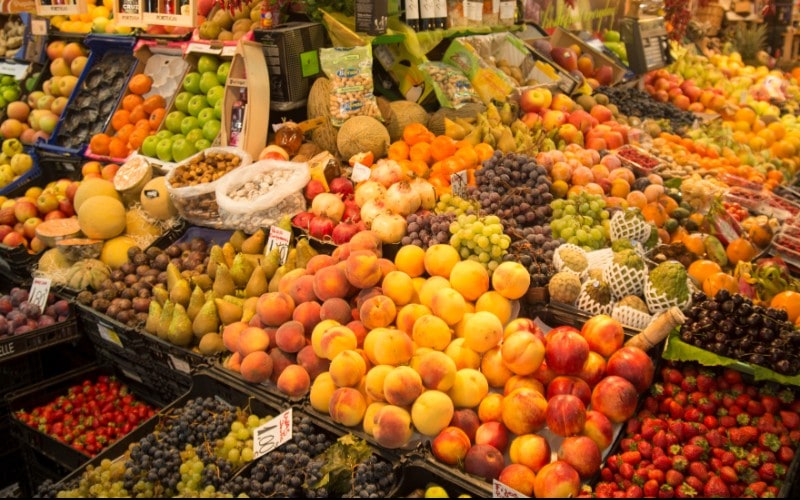
A practical tip for arts-focused travelers: many of Europe’s best food markets are within easy walking distance of major cultural districts. Building a market visit into a morning before a museum or gallery makes for a nearly perfect day. Pick up supplies for a picnic lunch, find a quiet park or square, and arrive at the museum refreshed rather than rushed.
#7: Take a Cooking Class
A cooking class is one of the most rewarding things you can do in a European city. You spend two or three hours in a kitchen with a local chef, learning techniques specific to the region, and you leave with skills you’ll actually use at home.
The class size is usually small, the atmosphere is convivial, and the food fantastic.
I take a cooking class whenever I can fit one into an itinerary. In Rome, I spent a morning learning to make gelato, pizza, and supplì with a wonderfully enthusiastic local chef. Read about that experience here: Pizza, Gelato, Suppli–Oh My! A Fantastic Cooking Class in Rome.
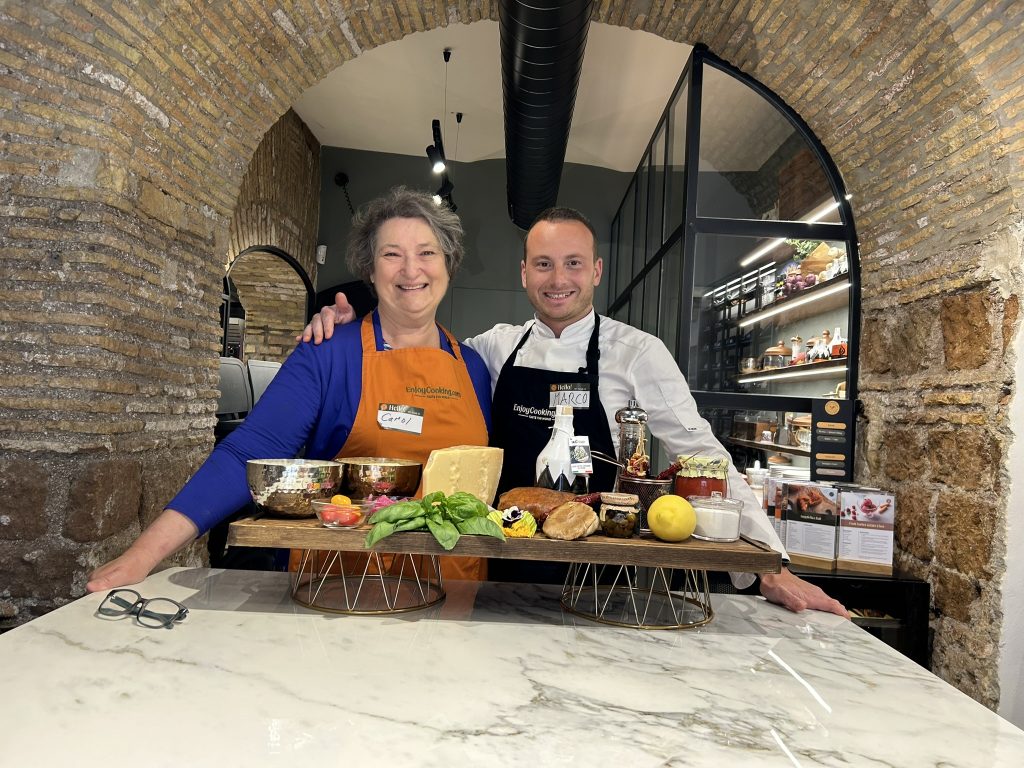
In Madrid, a tapas class introduced me to fellow travelers from Australia, the Netherlands, the UK, France, and Korea. By the end of the afternoon we were eating together around a table and exchanging travel recommendations like old friends.
How to Find and Book Cooking Classes
Websites such as Winedering and Eating Europe are my go-to resources for finding well-reviewed cooking classes across Europe. Filter by city, cuisine type, and group size. Small group classes are almost always worth the modest premium over larger ones, both for the quality of instruction and the intimacy of the experience.
Book in advance, particularly in popular cities like Rome, Florence, and Barcelona, where the best classes fill up weeks ahead.
#8: Go on a Walking Tour
A well-chosen walking tour is one of the best ways to experience a European city’s art, architecture, and history in context. A good guide doesn’t just point at buildings and recite dates. They show you the connections between things, the stories behind the facades, and the corners of a neighborhood that you’d walk past without a second glance on your own.
I’ve become a big fan of specialty tours that focus on a specific subject or district.
In Rome, I joined a walking tour of the old Jewish ghetto that completely reframed my understanding of the city’s layered history.
In London, I explored the back alleys and colorful history of the Covent Garden theater district.
In Stratford-upon-Avon, a guide in full William Shakespeare costume brought the bard to rollicking life.
Walking tours usually take you behind the scenes and to places where regular bus tours can’t go. The guides are often locals who are very enthusiastic about their subject and love showing off hidden gems.
How to Find Walking Tours
GuruWalk lists free walking tours run by locals on a pay-what-you-can basis and is a good option for specialty tours with a specific subject focus.
Small group and private tours are almost always worth the modest premium. The difference between a tour of twelve people and a tour of four is considerable..
#9: Skip the Iconic Sites (and What to Do Instead)
Europe’s most famous landmarks are famous for good reason, and I’m not suggesting you ignore super-popular sites such as the Colosseum in Rome and the Eiffel Tower in Paris.
The question is how much of your limited travel time you want to spend standing in line to experience these sites officially versus simply enjoying them as part of the city around you.
My approach: stroll past the Colosseum and take it in from the outside. Walk across one of the Seine bridges and photograph the Eiffel Tower with the river in the foreground.
Then, veer off into a shady side street and enjoy an hour or two wandering around a quiet neighborhood, sitting in a park, and enjoying a drink at an outdoor café surrounded by locals.
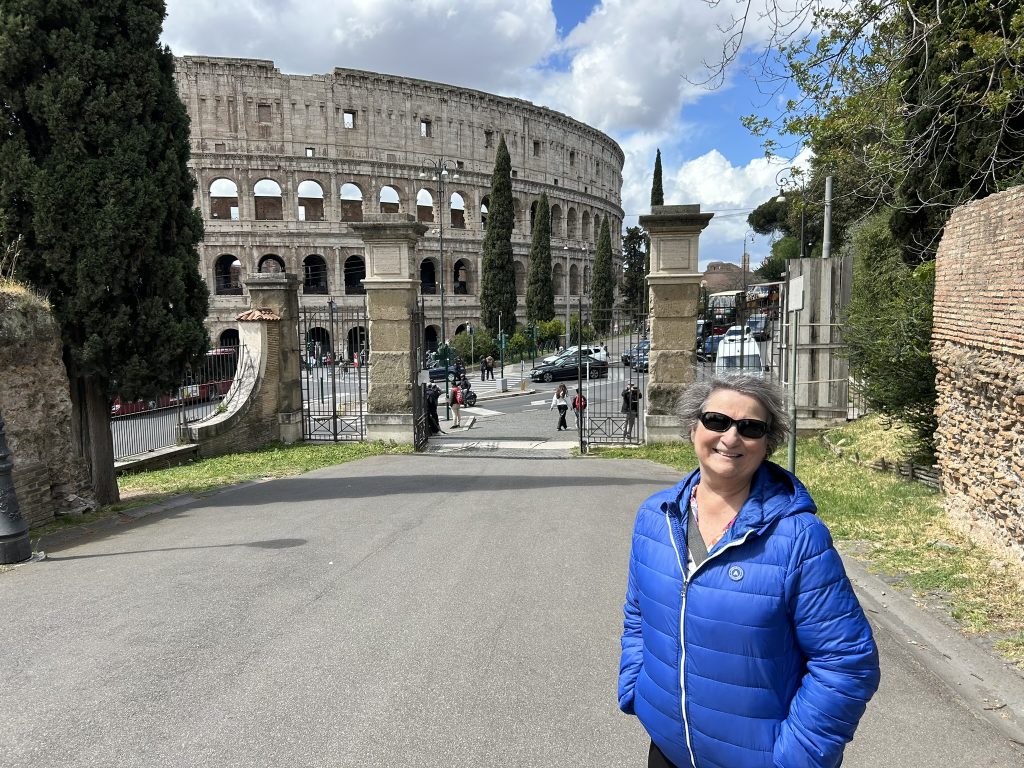
When visiting major museums such as the Uffizi in Florence and the Louvre in Paris, book tickets to enter at opening time or an hour or two before closing. You’ll still encounter crowds, but they won’t be quite so intense.
Travel isn’t about ticking off the big sites. Instead, think of travel as your opportunity to surround yourself with a kaleidoscope of interesting sights, sounds, and encounters. Some of your best travel experiences happen in the gaps between visits to famous sites.
Slow down and savor the displays in a small museum, make time for a concert or an art opening, be on the lookout for a local festival, and just be.
#10: How to Escape Crowds Even in Tourist Cities
Even in Venice, one of Europe’s busiest tourist cities, you can find solitude.
Leave the busy piazzas and thoroughfares and within seconds, you’ll be wandering down narrow alleyways and crossing tiny bridges spanning sleepy canals that look like they haven’t been disturbed for centuries.
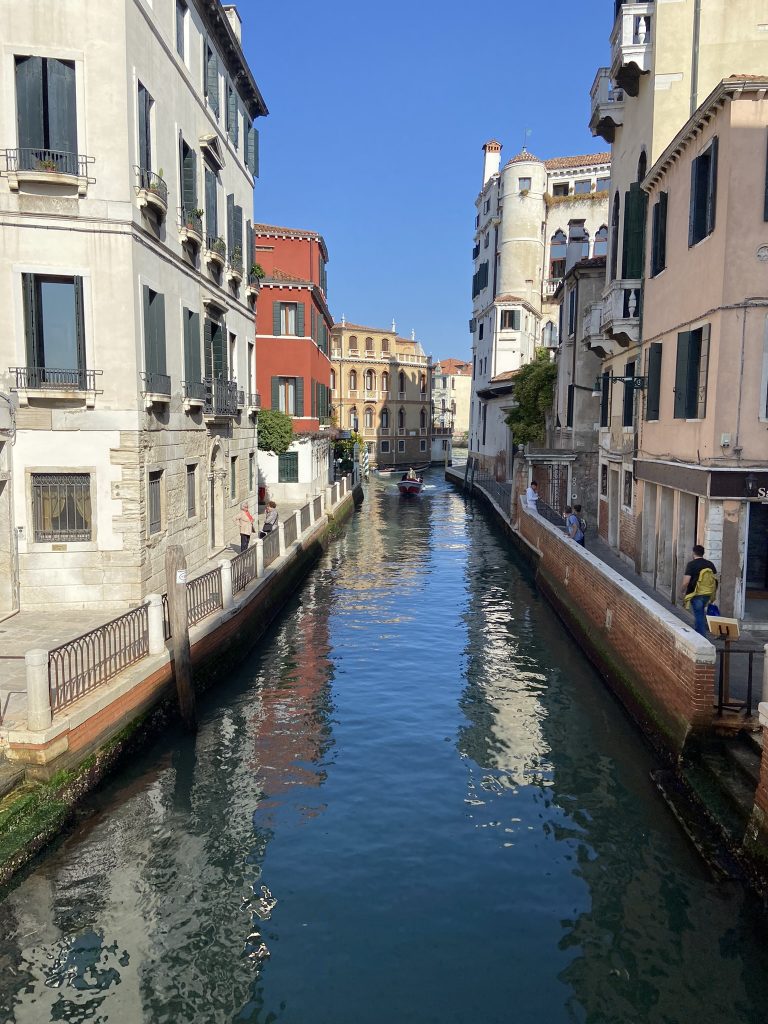
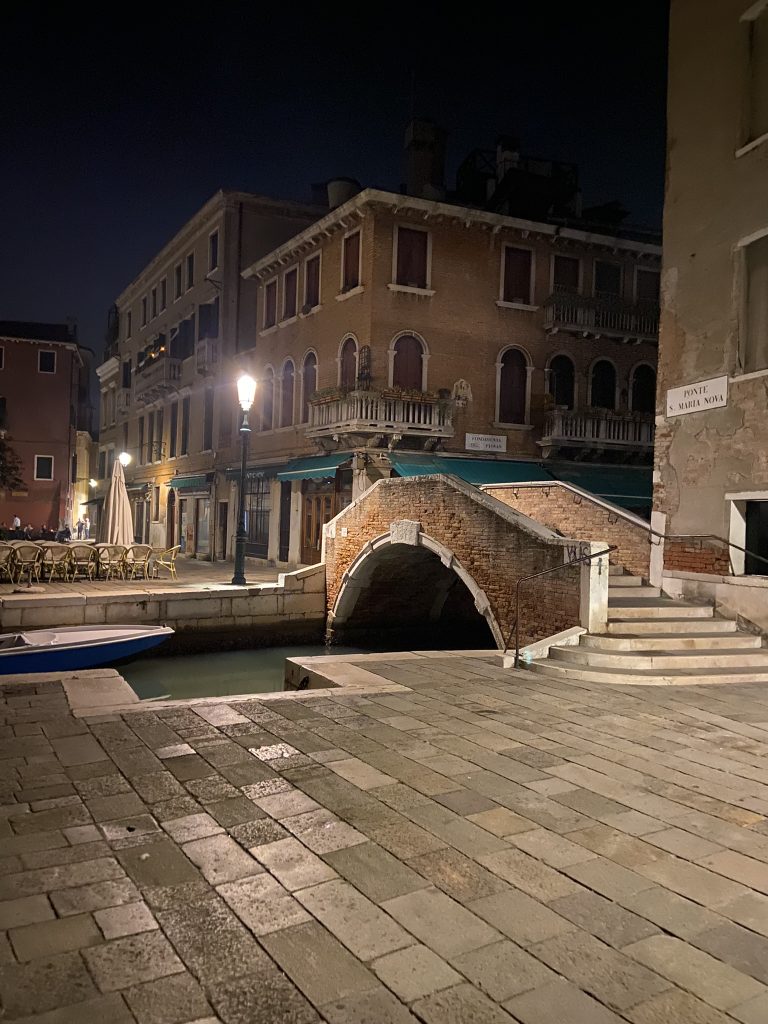
I skirt the main tourist drags in busy towns by going left or right down the first narrow street I see. I may get a bit lost, but I also find glorious solitude and the chance to commune with the past.
Siena’s Campo bustles with tourists, but walk a few meters down a side street and you’re alone and surrounded by buildings that haven’t changed much in 700 years.
And at night, you’ll probably have the Campo all to yourself.
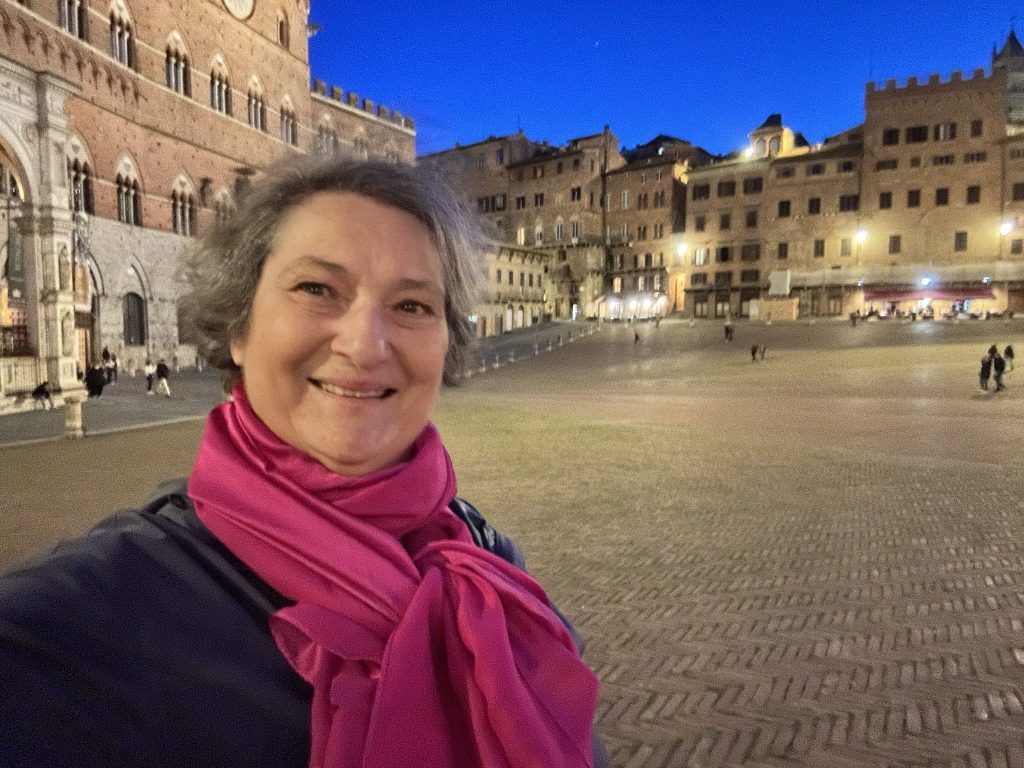
Such opportunities for quiet encounters with history make European travel endlessly appealing.
FAQs: Avoiding Crowds in Europe
The short answer is that avoiding crowds and missing the best parts are not the same thing. Concerts, art openings, lesser-known museums, local markets, and neighborhood restaurants are almost always uncrowded and serve excellent food. For the iconic sites you really want to see, book timed entry well in advance and arrive at opening time or two hours before closing. For everything else, follow the ten tips above.
Shoulder seasons, meaning April to early June and September to October, offer the best combination of manageable crowds, reasonable prices, and good weather across most of Europe. July and August are the busiest months, particularly in coastal destinations and major cities. If summer travel is unavoidable, focus on cities rather than beach destinations, visit popular sites early in the morning or late in the day, and build plenty of time into your days for wandering off the main tourist routes.
For major sites that require timed entry, yes, and often weeks or months in advance. The Uffizi, the Colosseum, the Anne Frank House, and Sagrada Familia are among the many attractions that sell out well ahead of peak season. For smaller and lesser-known museums, advance booking is rarely necessary, but always check opening hours and closure days before you go. Many European museums close on Mondays.
Search for restaurants with a 4.5-star average or higher and read the reviews. If the most enthusiastic reviews are written in the local language, that’s a strong indicator the restaurant is frequented by locals. Walk a few blocks away from major tourist sites and you’ll almost always find quieter streets with better options. Book a table as soon as you’ve chosen a restaurant, particularly in popular cities where good places fill up fast.
Public transit in Europe is generally very safe. The main precaution worth taking is keeping a close hand on your valuables in crowded buses and metro stations, where pickpockets can be active. Use a crossbody bag for valuables rather than a backpack, keep your phone in a front pocket, and be alert when boarding and exiting busy transit. One practical note: if you’re using paper tickets rather than a tap-to-pay card, always validate your ticket when you board, even if nobody around you appears to be doing so. The fine for an unvalidated ticket is considerably more painful than the validation process.
Yes. Fado in Lisbon, flamenco in Seville, Mozart in Vienna, and similar tourist-friendly performances are popular precisely because they’re good. The musicians are professionals performing music they love, and the experience is almost always worth the ticket price. For a more local feel, look for concerts advertised on posters and flyers in your hotel or in café windows, and check the websites of local concert halls and churches for events that may not appear on the main tourist radar.
More Posts on My Favorite Uncrowded European Sites
- A Week in Fascinating Little Padua Reveals Hidden Treasures
- Peaceful Piacenza: Why Visit and What To See
- How to See the Art of Pompeii at the National Archaeological Museum in Naples
- A Trio of Must-See Museums in Copenhagen
Would you like to save this post?

Carol M. Cram writes novels inspired by the arts; runs Artsy Traveler, an arts-focused travel blog, and Art In Fiction, a curated database of 2,700+ novels inspired by the arts; and hosts The Art In Fiction Podcast. She has also authored 60+ textbooks on computer applications and taught at Capilano University for over two decades. Carol lives with her husband, artist Gregg Simpson, on beautiful Bowen Island near Vancouver, BC.

 See all my novels