Fathom Stone Art: A Unique Hands-On Experience in Whistler

Whistler, BC, has so much to offer outdoor enthusiasts, but did you know you can also indulge your artsy side? Take a class at Fathom Stone Art and learn how to carve soapstone, a substance I found myself falling in love with.

On a recent Sea to Sky getaway to Whistler, I wanted to include a hands-on creative experience in our busy weekend, so I connected with Fathom Stone Art and booked a soapstone carving class for my daughter Julia and me.

It turned out to be one of the most absorbing two hours of the entire weekend.

Full Disclosure: I was given a free class in exchange for an honest review.


Finding Fathom Stone

Fathom Stone Art is located in the lobby of the Whistler Westin, one of Whistler’s many upscale hotels.

John Fathom, the owner and a master carver himself, has created a welcoming space that feels both professional and approachable. Outside the shop, tables are set up with the tools of the trade: files, rasps, drills, and sandpaper, along with blocks of soapstone in various sizes waiting to become someone’s next treasure.

Both children and adults are welcome. During my visit, several children were busy at the next table. John told me that it’s about a 60/40 split between adults and children (the 60 being adults). He also mentioned that children are great fun to work with since they are fearless. Adults are often too worried they’ll make a mistake.

I could relate! At first, I felt daunted by the block of soapstone I’d chosen. How could I even start? I’m not Michelangelo; I’m not even Italian.


Why Soapstone?

John explained that on the hardness scale, diamond is the hardest at 10 and soapstone is the softest at 1.

Within minutes of picking up my block and starting to file, I discovered exactly what that meant. Soapstone yields surprisingly quickly to the tools.

After several minutes of filing, I began to see that transforming my block into a bear might just be possible.

Choosing What to Carve

Because we were short on time, we chose the mini sculpture class in which we’d create (or try to) a small fish, animal, or abstract form in about two hours.

Longer classes (up to four hours and more) are also available. If you have the time, I recommend taking a longer class and carving something larger than a mini.

Guests who take longer classes can return to work on their project over multiple sessions. This is a great option if you’re staying in Whistler for several days. Fathom Stone Art is open late so you can ski all day and carve in the late afternoon.

John told me that during the busy ski season in the winter, the classes are full to bursting.

Several finished carvings are available to help you decide what to make. I decided to carve a bear, which as it turned out was a bit ambitious but definitely worthwhile.

Julia chose an orca that later became a salmon.


Carving Soapstone

After you’ve chosen what you want to carve, John and one other instructor guides you through the process of sketching your design and then working through the stages of carving, sanding, and polishing.

Their guidance is patient and practical without being prescriptive. They don’t do the carving for you, although occasionally I found myself hoping John would just pick up my little bear and turn it into a piece of art.

But no, the carving is all mine, which of course is the point. Here’s Julia working hard on her orca/salmon:

Julia working on the orca/salmon at Fathom Stone Art in Whistler, BC

I was riveted for the entire two hours. I actually can’t remember being so absorbed with a hands-on activity. I barely looked up from my little bear so intent was I on filing and carving.

At one point, John handed over a box full of power tools which I found really fun to work with.

Unfortunately, I got a bit too enthusiastic with one of the tools and sliced off my bear’s snout. Oh no!

But John just said “there’s no crying in soapstone carving” and quickly glued the snout back on so perfectly that no crack is visible.

When we were finished and I was lining up the salmon and bear for a photo shoot, I accidentally dropped Julia’s salmon on the tile floor, breaking off the tail.

Again I heard no crying in soapstone carving and moments later the salmon’s tail was glued back on and all was well.


The Results

So, did I succeed in turning my block of soapstone into something resembling a bear?

Maybe not, but I love him. He will stand guard on my desk, reminding me daily of a very enjoyable two-hour experience.

A soapstone carving of a bear created during a class  at Fathom Stone Art in Whistler, BC

Even if carving is not your thing, the Fathom Stone Art gallery is worth a visit. The stunning collection of finished sculptures in soapstone, jade, serpentine, and argillite will make you wish for a larger bank account, although some of the smaller pieces are affordable.

Work by several very accomplished First Nations and local artists is featured. You’ll find animal sculptures and abstract pieces (my favorites).

View of the gallery of beautiful carvings at Fathom Stone Art in Whistler, BC


Practical Information

Fathom Stone Art is located in the lobby of the Westin Whistler at 4090 Whistler Way, Whistler BC.

Instructors guide you step by step as you choose your BC soapstone, sketch your design, carve, sand, and polish your piece. Classes run by appointment from 9:00 am to 7:00 pm daily.

Here’s the pricing line to add to the Practical Information section:


Fathom Stone Art offers classes at several price points to suit different budgets and time commitments:

  • Pendant carving class (1 hour, ages 5 and up) is $75 per person.
  • Mini carving class (2 hours) is the one I took with Julia and costs $100.
  • Small sculpture class (3 hours, ages 8 and up) is $200 per person
  • Medium sculpture (4 to 6 hours, ages 10 and up) is $300 per person
  • Large sculpture (6 or more hours, ages 14 and up) is $400 per person. Larger sculpture classes can be completed over multiple sessions.

Check www.fathomstone.com for current pricing as rates may change.

To book, call (604) 962-7722, email gallery@fathomstone.com, or book online at fathomstone.com.


Fathom Stone Art FAQs

Where is Fathom Stone Art in Whistler?

Fathom Stone Art is located in the lobby of the Westin Whistler at 4090 Whistler Way, a short walk from Whistler Village.

How long does a soapstone carving class at Fathom Stone Art take?

Classes run for two to four hours, depending on the size of carving you decide to make. That sounds like plenty of time but once you get started, the time goes fast. I could have easily spent a third hour working on my little bear. Guests who choose to create larger pieces can work on them over multiple sessions.

Do I need any experience to take a soapstone carving class?

No experience is needed. Instructors guide you through every step of the process, from choosing your stone and sketching your design to carving, sanding, and polishing your finished piece.

Is soapstone carving suitable for children?

Yes. Both children and adults are welcome at Fathom Stone Art. It is an excellent family-friendly activity.

What can I make in a soapstone carving class?

You choose your own design. Animals are popular, particularly bears, orcas, and Inukshuk. Your instructor will help you find a design that is achievable in two hours.

How hard is soapstone to carve?

Soapstone rates 1 on the Mohs hardness scale, making it the softest natural carving material available. It yields quickly to files and rasps, which means you can see your design taking shape almost immediately.

What do I take home from a soapstone carving class?

You take home the piece you carve, sanded and polished to a smooth finish. It makes a meaningful souvenir since you made it yourself from BC stone.

How do I book a soapstone carving class at Fathom Stone Art?

Classes run by appointment from 9:00 am to 7:00 pm daily. To book, call (604) 962-7722, email gallery@fathomstone.com, or book online at fathomstone.com.

Is there a gallery at Fathom Stone Art?

Yes. The Fathom Stone gallery features a collection of finished sculptures in soapstone, jade, serpentine, and argillite by accomplished First Nations and local artists, ranging from small affordable pieces to significant works.


Keep Exploring Canada with Artsy Traveler

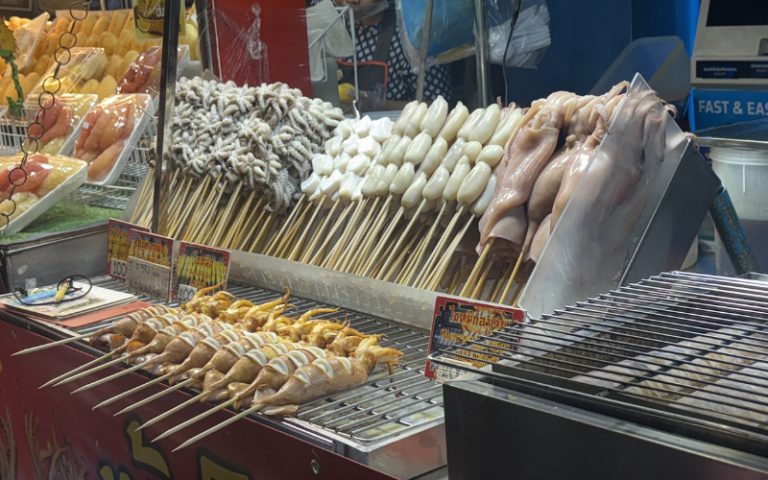
Saefood at a food stall in Bangkok

Chef’s Tour Bangkok Review: The Best Chinatown Food Tour?

If you’re researching whether to book a food tour in Bangkok, this Chef’s Tour Bangkok review will help you decide if it’s truly the best Chinatown food tour.

Part food tour and part history lesson, Bangkok Backstreets, the signature Chinatown experience from Chef’s Tour Bangkok, satisfies all the senses.

For almost four hours, you’ll follow your enthusiastic guide through dark alleys and past sizzling grills to fluorescent-lit dives that have earned Michelin stars as well as bustling places on the main drag. You’ll taste, talk, listen, and learn.

While I joined the evening tour when Yaowarat Road glows under neon lights, Chef’s Tour Bangkok also runs daytime departures for this Chinatown food tour. If you prefer exploring in natural light or have evening plans, the daytime option offers the same outstanding food and storytelling experience.

I came for the food and left with a deeper appreciation for the stories that shaped Bangkok’s Chinatown.

A Chef’s Tour of Bangkok is designed for travelers who want to get off the beaten path, visit places they’d never find on their own, and sample a wide range of Thai cooking.

I recommend taking the tour at the beginning of your Thailand vacation so you’ll feel confident choosing dishes during the rest of your trip.

In this post, I’ll share what the experience was like, how the tour is organized, some of my favorite moments, and whether it might be right for you.

Disclosure: I received a complimentary tour from Chef’s Tour Bangkok in exchange for an honest review. All thoughts and opinions expressed here are my own.


Chef’s Tour Bangkok Review: Quick Facts

  • Tour: Bangkok Backstreets Food Tour
  • Company: Chef’s Tour Bangkok
  • Duration: Almost 4 hours
  • Tastings: 15 dishes
  • Group size: Small (ours was 8 people)
  • Location: Bangkok’s Chinatown (Yaowarat area)
  • Best for: Curious eaters, first-time Bangkok visitors, travelers who love cultural context with their cuisine

How the Evening Began

We arrived at ten minutes before 5 pm and were immediately whisked to an upstairs lounge to wait for the group to assemble. Cold tea was served, and we were encouraged to use the washrooms before heading out.

Our group of eight included a couple from Denmark, two women from Indonesia, a couple from Colorado, and Julia and me from Canada.

Our guide, Noah, introduced herself and delivered the headline of the evening:

“Tonight, we will sample fifteen dishes.”

Fifteen? I’m going to need a bigger appetite!

Noah assured us that all would be well and reminded us to pace ourselves.

She then confirmed allergies and preferences. One guest was lactose intolerant, another was allergic to avocado. Julia mentioned that she doesn’t love seafood, which was slightly problematic since one stop would feature seafood. She gamely agreed to at least try a few bites.


First Stop: Garlic, Pork, and a Chili Lesson

We stepped out into the early evening buzz and quickly ducked off the busy main road into quieter backstreets.

Our first stop was a place selling garlic chive pancakes from a food cart run by a woman who has been making them for decades. We sat at a long table upon which was set out dense garlic chive pancakes, a glossy black bean and soy sauce, and dishes of melt-in-your-mouth stewed pork.

Noah instructed us to taste the pork as served. Then she showed us how Thai locals eat it:

  • A spoonful of pork
  • A generous sliver of raw garlic
  • A sprinkling of chili sauce
  • A small green chili

“In Thailand,” she explained, “the smaller the chili, the hotter it is.”

She instructed us to take a tiny bite of the chili first and then to eat the spoonful of pork, garlic, and sauce.

The chili hit first—sharp, bright heat—followed by the richness of pork and the bite of garlic. The flavors didn’t just blend; they unfolded.

Dish of stewed pork served in a Thai restaurant on the Chef's Food Tour in Bangkok

The value of the food tour became evident. Without Noah’s guidance, I would never have known to combine the food in this way. Her tips made all the difference to my enjoyment of the evening.


Highlights of the Chef’s Food Tour

The tour progessed slowly, with humor and storytelling woven between dishes. Noah really knew her stuff. She’s been a tour guide in Bangkok for many years, recently switching to food tours since they’ve become increasingly popular.

She had a deep love of history which she shared with us each time we stopped to sample a dish.

I won’t describe all fifteen dishes we sampled because you’ll want to experience them for yourself. Instead, here are my top highlights along with a few hints about some of the dishes you’ll enjoy.

The Backstreets of Chinatown

We wound through dark alleys, passing in front of a house that was over 150 years old. Not every smell was pleasant—think eau de garbage layered over damp dirt. Then, every so often, the scent of sesame oil and chilies cut through the air and everything shifted.

The labyrinth of lanes would be impenetrable without a guide, and is one of the reasons why the Bangkok Backstreets Food Tour is so special.

The Story of the Green Bowl

Noah paused in front of a small place which had a sign depicting a Green Bowl. She explained that the Green Bowl is a prestigious food award in Thailand, often considered the local equivalent of a Michelin star.

It’s awarded to street food places and affordable, delicious eateries and signifies trusted quality. 

Store with a green bowl out front and NoAhh the guide for the Chef's Tour

The Green Bowl is found all over Thailand and is a reliable guide for travelers looking for authentic, budget-friendly, and high-quality Thai cuisine. 

Lantern-Lined Lanes

The narrow alleys we walked through were part of Bangkok’s thriving Chinatown. Some streets were lined with shops selling colorful Chinese paper lanterns and paper replicas of everything from cars to cell phones to household goods.

People buy the paper replicas to burn as offerings to ancestors.

Paper offerings at a shop in Bangkok's Chinatown
Paper replicas that are burned as offerings to ancestors by Chinese people in Bangkok

A Michelin-Star “Hole-in-the-Wall”

We entered a tiny establishment with fluorescent lighting and zero charm that had just one large table and a few smaller ones. We were seated around the large table and told that despite appearances, the establishment had earned a Michelin star, was featured in a Netflix documentary, and welcomed a Thai princess.

The walls were lined with pictures proving the claims.

We were served shrimp dim sum. Plump morsels of shrimp peeked out of a delectable filling wrapped in won ton to make the perfect bite…or two. It was not easy to stick with Noah’s warning to pace ourselves when every dish we sampled was outstanding.

Best Peanut Satay

We sat outside at one long table and were served skewers of grilled chicken that we dipped into the best spicy peanut sauce I’ve ever tasted. A fresh salad was served that perfectly complemented the rich sauce.

Platter containing skewers of chicken satay next to two plates of peanut sauce.

In the fading late afternoon light, the sounds and smells of cooking at street food places all around us mingled with Noah’s fascinating stories about the history of the food.

It all felt pretty magical, and a fitting way to end our first full day in Thailand.

Man cooking chicken satay at a street food stall in Bangkok

Pennywort Green Juice

Noah served us small glasses of pennywort green juice. Reputed to smooth the skin and aid digestion, it tasted like sweetgrass and was surprisingly refreshing after eating the chicken skewers coated with spicy peanut sauce.

Plastic Stools and Perfect Details

At several places, we perched on backless plastic stools in dark laneways. Noah’s assistant, a young woman called Rainbow, was always on hand to make sure there were enough seats and that everyone was well supplied with hand sanitizer spritzes and Handi Wipes.

The organization was impeccable with every stop perfectly managed and every bite of food fresh and tasty.

Neon and Noise on Yaowarat Road

After a few hours prowling the dark back alleys of Chinatown and eating in places impossible to find without a tour, we emerged onto Yaowarat Road.

What a contrast! Neon blazed and the crowds surged. I’ve rarely seen so many people trying to share a sidewalk. Meat sizzled on open grills, traffic roared, conversations buzzed. It was sensory overload at its best.

Neon in Bangkok's Chinatown

Chilis vs. Peppers

We ducked into one place on Yaowarat Road and were served a dish spiced only with pepper. Noah told us that chilis are not native to Thailand. They were brought to the country by Portuguese and Spanish traders in the 16th or early 17th century via trade routes from the Americas.

So, although chilis form such an integral part of Thai cuisine, they are a relatively recent innovation. Prior to their arrival, Thai cuisine relied mostly on peppercorns for heat.

I thoroughly enjoyed the pepper-laced dish we were served.

Special Ice Cream

An unexpected treat towards the end of the tour was a dish of ice cream flavored with an ingredient I won’t divulge in case you decide to take the food tour.

I don’t want to spoil the surprise. Rest assured, the ice cream tasted amazing!

Chefs Tour Guide in front of a banner advertising ice cream

Why Take This Tour at the Start of Your Trip?

After four hours with Noah, I learned:

  • How to layer flavors
  • How to identify good street food
  • How spice levels work
  • What certain ingredients signal about a dish

The tour gave me confidence. During the rest of our time in Thailand, I felt far more adventurous and less intimidated when ordering.


Who Is This Tour Right For?

This tour is for you if you:

  • want to explore Bangkok beyond tourist restaurants
  • value funky experiences that take you off the beaten track
  • appreciate cultural storytelling
  • prefer small-group experiences
  • want to learn about Thai cuisine

The tour may not work for you if you have strict dietary restrictions. While the organizers endeavor to cater to certain allergies and preferences, they note on their website that the tour is not suitable for people who don’t eat meat.


Frequently Asked Questions

How much walking is involved?

There’s moderate walking between stops through Chinatown’s lanes and along Yaowarat Road. The pace is relaxed, with frequent seated food breaks.

Is the food very spicy?

Some dishes have heat, but you can control how much chili you add. Your guide explains how to adjust spice levels.

Can dietary restrictions be accommodated?

Allergies and preferences are discussed at the beginning of the tour. While the team does their best to accommodate, this is a street food–focused tour, so very strict diets may be challenging. It’s best to notify the company in advance.

Will I be full?

Yes. Fifteen dishes over four hours is substantial. Come hungry.

Is it suitable for first-time visitors to Bangkok?

Absolutely. In fact, I recommend taking the tour early in your trip. It will transform how you approach food during the rest of your stay.

Do I need to tip?

Tipping is not mandatory in Thailand but is appreciated for excellent service. I definitely recommend tipping your guide. He or she works hard to provide a memorable experience.

What if it rains?

Much of the tour moves between covered areas and restaurants, but you may walk in light rain. Bringing a small umbrella in rainy season is wise.


Ready to Experience Bangkok’s Backstreets for Yourself?

If you love discovering places you’d never find alone, tasting dishes you don’t know how to order, and hearing the stories that make a city come alive, this tour is for you.

The Bangkok Backstreets Chinatown food tour with Chef’s Tour Bangkok isn’t just about eating; it’s about understanding. In just four hours, you’ll:

  • Sample 15 expertly chosen dishes
  • Visit hidden Michelin-recognized gems
  • Learn how to layer Thai flavors properly
  • Gain the confidence to order street food during the rest of your trip

Small-group tours fill quickly, especially in high season, so I recommend booking early, particularly if you’re planning to visit Bangkok between November and March.

Check Availability and Reserve your Spot

Book your tour directly on the Chef’s Tour Website. Come hungry. Bring your curiosity. And don’t underestimate the small green chilies.


Is Chef’s Tour Bangkok the Best Chinatown Food Tour?

That’s the obvious question, and the reason you’re likely reading this Chef’s Tour Bangkok review in the first place.

Bangkok has no shortage of food tours. A quick search reveals dozens of options promising street food, hidden gems, and “authentic local experiences”. So what makes Chef’s Tour Bangkok stand out in a city famous for its cuisine?

1. Small Groups & Big Attention to Detail

Unlike some larger Bangkok food tours that move quickly from stall to stall, this Chinatown food tour keeps group sizes small. With just eight of us, there was time for questions, conversation, and thoughtful pacing. Nothing felt rushed.

2. Depth, Not Just Dishes

Many tours focus primarily on eating. This one layers in history — Chinese immigration, culinary influences, the evolution of spices in Thai cuisine — so you understand why you’re tasting what you’re tasting. It’s part food tour, part cultural immersion.

3. Hidden Michelin-Recognized Stops

You’ll visit places you would never find on your own, including a tiny fluorescent-lit restaurant that has earned Michelin recognition. It’s the kind of spot you’d walk past without realizing what’s inside.

4. Practical Skills You Can Use Later

One of the biggest surprises for me was how I learned how to layer flavors properly, how to gauge chili heat, and how to recognize signs of quality at street stalls. That knowledge carried me through the rest of my trip.

5. Organization and Professionalism

From allergy checks to hand wipes to seamless transitions between stops, the tour felt exceptionally well managed. That level of polish isn’t always guaranteed on street food tours.

So, is Chef’s Tour Bangkok the best Chinatown food tour?

If you’re looking for a small-group experience that combines outstanding food, cultural storytelling, and practical insight into Thai cuisine — it very well might be.

It’s not just about eating your way through Chinatown. It’s about understanding it.

I arrived hungry, and I left full, both of food and of stories.


Where to Stay in Bangkok

Bangkok is HUGE! Figuring out where to stay is not easy because there are so many options and all have pros and cons. We stayed in the Sathon area, which is in the business district. It’s close to BTS Stations and quiet at night. Here are some options:

We stayed for three nights at Sabai Sathorn Service Apartment, which is a short walk from the Chong Nonsi BTS Skytrain Station. Our apartment included two bedrooms, which was perfect for our mother-daughter trip, in addition to a spacious living room, a kitchen, and even a small balcony.

The rooftop pool provided a welcome place to cool off after a day of sightseeing in steamy Bangkok. Next to the pool was a well-staffed place offering Thai massages.

Carol Cram at the Resin Art Jewelry Workshop at Soigne in Vancouver

Make Your Own Jewelry: Beginner-Friendly Resin Workshop at Soigné Vancouver

Coming to my home town of Vancouver? Consider taking the resin art jewelry workshop or one of the other craft workshops offered by Soigné, a mecca for craft enthusiasts located on Powell Street, a short drive from Gastown and the cruise ship terminal.

It’s a great way to connect with locals and come away with a unique souvenir.

Soigné offers dozens of workshops covering crafts such as paper-making, soap-making, feltwork, leather work and especially jewelry making. Check their website for details.

I chose the resin jewelry-making workshop mostly because I’ve long been fascinated by resin jewelry. The translucence, the bright colors, and the seemingly unlimited design options really appeal to me.

I was also looking for a unique gift for my best friend’s birthday. Going to a craft workshop together sounded like it would be just the ticket.

And I was right!

In this post, I share my experience attending the two-hour Resin Art Jewelry Workshop at Soigné. If you’re into swirling pigments and embedding botanicals to craft your very own pair of earrings or a pendant, then this artsy Vancouver experience deserves a place on your itinerary.


Quick Facts

Workshop Name: Resin Art Jewelry Workshop at Soigné
Location: Soigné, 393 Powell Street (in the Octopus Studios) in Vancouver, BC
Duration: 2 hours
What You’ll Make: A pair of earrings or two pendants (I chose two pendants)
Skill Level: Beginner-friendly
Supplies Included: All tools and materials are included for a separate (and modest) supply fee
Group Size: Maximum of 12
Cost:
CAD $75 (check the website for promo prices)
What to Bring: Yourself and a love of color and texture
Why It’s Ideal for Artsy Travelers: You handcraft a beautiful souvenir and connect with local artists


My Experience at the Resin Art Jewelry Workshop

I arrived at Soigné at the Octopus Studios at 393 Powell Street, pushed open the metal gate and walked into a pleasingly cluttered workshop area set up with two tables and walls full of artwork and supplies.

Tables set with supplies for the Resin Art Jewelry workshop at Soigne in Vancouver

Soigné’s owner Beata Kacy, who introduced herself as Kacy, greeted me and directed me to stash my coat and purse into a cubby and grab an apron.

Kacy has been running Soigné for over thirty years and now employs several other teachers to facilitate dozens of craft workshops.

I was early, so Kacy invited me to check out the space and also wander into the back room to view the studios of the other artists who occupy the Octopus Studios.

Octopus studios in Vancouver - work areas of several artists

It’s a cozy and welcoming space. I immediately felt at ease.

Cool things to look at are everywhere—jewelry, small paintings, crafting supplies, pottery—you name it! The vibe is definitely creative.

Wall of small colorful paintings at Soigne art workshop in Vancouver
Room in the Soigne craft workshop in Vancouver showing crafting supplies and with walls covered with craft works

My friend arrived along with the four other participants in the afternoon workshop: two friends (like us) and a mother and daughter.

Soigné can accommodate up to twelve participants at two tables.  

We discovered that each of the three groups was there celebrating a birthday. I guess my idea to treat my friend to a craft workshop for her birthday wasn’t exactly original!

But it is a good idea. Not only do you get to spend time together, but you’ll also learn some new skills and come away with a lovely keepsake.


Learning How to Make Resin Art Jewelry

Once everyone was assembled, Kacy walked us through the process of making resin art jewelry.

We learned there are two kinds of resin. UV resin yields instant results and is perfect for making small objects such as jewelry. Epoxy resin is suitable for making larger objects such as coasters that take at least 24 hours to dry.

In the Resin Art Jewelry workshop, we worked with UV resin, a mildly toxic substance similar to the resins used in nail salons to apply acrylic colours to fingernails.

Kacy also offers a Resin Coaster workshop that uses epoxy resin. I may well take that next!

Kacy showed us how to pour the resin into a mould and then layer in different colors using opaque or translucent dyes as well as gold, copper and silver pigments paired with various bits of glitter, dried botanicals, small shells and stones.

She’s a patient and good-humored instructor who is very encouraging. She genuinely seems to enjoy teaching and helping others express their creativity.

Beaty Kazy, owner of Soigne, standing among her crafts including jewelry, purses and antique furniture

Making Resin Art Jewelry

After the demo, we picked out our moulds from a large box and chose some vials of paint, glitter, and other objects to decorate our jewelry.

Box full of plastic moulds used to make resin art jewellry

I loved it! After pouring resin into the first of two moulds for pendants, I squeezed in bits of pigment and added some gold flakes and purple glitter.

Meanwhile, my friend chose to make two heart-shaped pendants for her young nieces.

After I completed a piece, Kacy placed it under the UV light for five minutes on each side. She then peeled off the mould and voilà!

At the end of the workshop, she affixed bails to each pendant for threading onto a chain.


Showing Off the Finished Products

Here are the results of our labors. My friend made the hearts and I made the two larger pendants. I must admit to being very pleased with the results!

Four pieces of resin art jewelry - two small hearts - one is pink and one is purple and two larger pendants

I recommend treating yourself (and maybe a friend) to a workshop at Soigné.

One caveat: take a ride share or taxi directly to the studio rather than walking or even taking the bus. The neighborhood is rough.

Also, watch for the white building with a painting of an octopus; it’s easy to miss. You’ll see a metal gate. Push it open, open the gate in front of the door and open the door (or ring the bell if it’s locked).


FAQ’s Resin Art Jewelry Workshop

Here are some questions you may have about the Resin Art Jewelry workshop at Soigné.

Do I need prior experience?

No. I was a complete beginner and knew nothing about resin art (although I’ve always thought it was very cool).

Is the resin safe to work with?

It is mildly toxic but perfectly safe if used in well-ventilated conditions and with frequent hand washing. Kacy clearly explained how to work safely with the resin.

How many pieces will I make?

You can choose to make two earrings or two pendants. I chose to make two pendants.

Is it suitable for kids or teens?

Definitely. The young girl at the workshop I took was just ten years old and she had a great time (and made a beautiful pendant!).

What should I wear?

Wear regular clothes; aprons are provided.

How do I get to Soigné?

Take a taxi or a ride share directly to and from the location.

Should I book in advance?

Definitely. Although the workshop I attended was not full, that was unusual. The workshop following the one I attended was fully booked with twelve participants. Check the schedule on the website and book in advance to secure your spot.


Here are three stylish downtown-area hotels that appeal to creative travelers.

Loden Hotel

A chic boutique property known for its elegant design, warm lighting, and serene, refined atmosphere, the Loden Hotel is a great choice for relaxing after a day of crafting.

OPUS Vancouver

OPUS Vancouver has bright, bold, playful rooms with strong design personality, perfect for travelers who love a splash of color and creative energy.

Granville Island Hotel

Located on Granville Island about a ten-minute bus ride from downtown Vancouver, the Granville Island Hotel is a great choice if you’re looking for something a little bit different. You can stroll around the Granville Island Market and other shops, take in a performance at nearby Bard on the Beach or the Arts Club Theatre, and listen to the seagulls as you drift off to sleep.


Other Experiences in Vancouver

Pair your Soigné workshop with these artsy activities in Vancouver:

Powered by GetYourGuide


Keep Exploring Vancouver with Artsy Traveler

For anyone who loves to experience a city through its creative culture, the resin art jewelry workshop at Soigné is a delightful way to spend a few hours in Vancouver.

Have you taken a workshop at Soigné or another crafting place in Vancouver? Share your experience with other artsy travelers in the Comments below.

Here are more posts about Vancouver:

Lone tree in front of Lake Beauvert near Jasper, Alberta, taken during a Jasper Photo Tour

Jasper Photo Tours: Sharpen Your Skills with a Pro

If you’re looking to elevate your photography skills and capture the grandeur of Jasper, Alberta, treat yourself to a Jasper Photo Tour.

Guided by professional photographers Mike and Beth Gere, these small-group tours offer everything from wildlife and night-sky photography to early-morning “golden light” excursions.

Whether you’re a beginner with a smartphone or a pro with a DSLR, you’ll come away inspired — and with better photos than you thought possible.


My Experience with Jasper Photo Tours

On a fall trip to Jasper on the Rocky Mountaineer train, my daughter, Julia, and I signed up for the two-hour Golden Light Morning Photography Tour with Mike.

We were lucky — we had him all to ourselves, which meant a session perfectly tailored to our interests and skill levels.

Julia, a crochet artist, wanted to photograph the miniature train she had crocheted against the sweeping backdrop of Jasper’s peaks. Mike happily accommodated, offering tips on staging, depth of field, and composition for her Nikon SLR.

Here’s how our luminous morning unfolded.


Lake Beauvert

Mike picked us up at our hotel,  Lobstick Lodge, at 8 a.m. and drove to a quiet vantage point overlooking Lake Beauvert, with views across the still water toward the super-swanky Jasper Park Lodge.

He began by giving Julia a quick refresher on focal lengths and exposure settings while I wandered the shoreline, iPhone in hand, chasing reflections and texture.

One of my favorite captures from that morning was this twisty tree silhouetted against the mirror flat lake, mountains rising beyond like a watercolor wash.

After her refresher lesson, Julia worked on taking pictures of her crochet train in front of the view.

Julia kneeling at the base of a tree taking a photograph of a crochet train perched on a limb.

River Views

We hopped back into Mike’s SUV and wound our way toward a bridge over a rushing stream, stopping often to scout compositions. Although the morning was overcast, the moody light lent itself well to dramatic shots.

Mike showed me how to use my iPhone to blur the rushing water in the photo below.

Gorgeous photograph of a still river with blurred rapids in the foreground and the mountains and trees reflected
Beautiful reflection of mountains in a still river with the blackened trunk of a burned out tree in the foreground taken on a Japser Photo Tour

Burnscapes and Renewal

Many of our stops took us through haunting burnscapes, blackened trunks from the July 2024 wildfire standing stark against a bruised sky.

Mike told us about his experience during the terrible fire that wiped out many homes and businesses in Jasper.

On a positive note, the residents of Jasper are rebuilding. Just over a year later, there’s evidence of the fire everywhere in the form of burned trees and vacant lots, but also a lot of rebuilding, with almost all hotels and restaurants again welcoming visitors.

A stand of burned and blackened trees in Jasper, Alberta, taken on a Jasper Photo Tour

Wildlife Encounter

On the way back toward Jasper, Mike’s eagle eyes spotted elk grazing in a river valley. He parked and led us down a narrow path bordered by burned trunks, and pointed out a safe vantage point from which to watch a female elk pick her way across the river, her reflection shimmering in the current.

I snap a few photos with my iPhone zoomed to the max, but the results are just okay compared to the shots below that Mike took with his professional camera and large zoom lens. Beautiful!

Elk, October 4, 2025, Mike Gere

Looking at Mike’s photos makes me think about taking up photography with a decent camera again! Perhaps one day.


What We Learned (and What You Will, Too)

Even a short two-hour tour left us with a surprising amount of new knowledge — and confidence.

  • I finally learned how to use Live Mode on my iPhone to photograph flowing water, then apply loop, bounce, or blur effects.
  • Mike showed me how to dial in scene brightness before pressing the shutter, a small trick that makes a big difference.
  • Julia’s understanding of exposure, composition, and creative framing sharpened significantly during our session.

Even as a “non-photographer,” I was given thoughtful pointers on framing and lighting. Mike has a gift for meeting people exactly where they are.

car with logo of Jasper Photo Tours in front of a river and mountain

Tours on Offer at Jasper Photo Tours

On their website, Mike and Beth offer a well-rounded lineup of photographic experiences, suited to all levels and interests. Here’s a sampling of available tours:

Tour TypeDuration & Price*What You’ll Do
Intro to Photography (2 hrs)CA$210A beginner-focused workshop covering fundamentals, ideal for novices
Night Photography Tour (2 hrs)CA$210Shoot in Jasper’s Dark Sky Preserve, learn long exposures, star trails, aurora opportunities
Wildlife Photography Tour (3 hrs)CA$315Head to prime wildlife zones, with more time to wait, stalk, and capture animal moments
8-Hour Icefields TourAll dayVenture along the Icefields Parkway, glacier views, sweeping landscapes

* Prices as listed on Jasper Photo Tours’ “Book a Tour” page in Canadian dollars.

Mike and Beth keep groups intimate, no more than three photographers per tour, ensuring personalized instruction. And non-photographer companions can tag along for free.


Our Evening: Night Skies & Jasper SkyTram

Inspired by Mike’s encouragement, Julia and I decided to continue our photo adventure that evening by signing up for the Jasper SkyTram Night Sky Experience.

Jasper SkyTram offers special night-sky excursions on Saturday evenings in September and Friday/Saturday evenings in October, timed perfectly for sunset and stargazing.

Jasper Sky Tram docking at the top of the mountain with a view of the valley and Jasper in the background.

As the sun dipped, the peaks blushed gold and pink. We walked around the boardwalk encircling the restaurant at the top of the SkyTram to capture dozens of shots of the spectacular view. Here are just a few.

Incredible sunset over the peaks surrounding Jasper taken from the top of the Jasper SkyTram in October
The moon rising over paks surrounding Jasper taken at the top of the Jasper SkyTram

Once darkness fell, we joined astronomers from the Jasper Planetarium, who had set up telescopes along the boardwalk. We gazed at the moon, stars, and almost glimpsed Saturn before the clouds rolled in.

Inside the tram-top restaurant where we retreated to warm up with hot chocolate, I noticed several large night-sky and aurora images taken by Mike Gere.

In Jasper, everyone seems to know everyone. When we mentioned to one of the astronomers that we’d taken a photography tour that morning, he smiled knowingly. “Ah, with Mike? He’s up here shooting right now.” He pointed to the icy path leading away from the boardwalk and around the side of the mountain.


Why I Recommend Jasper Photo Tours

  • Tailored instruction – Small groups mean lessons match your pace and interests.
  • Access to hidden gems – Explore early-morning and off-the-beaten-path locations.
  • Creative learning – Deepen both technique and storytelling through your lens.
  • Welcoming to non-photographers – Companions are free to join and still learn.
  • Dark Sky advantage – Jasper’s pristine night skies make for stunning astrophotography.

If you’re visiting Jasper, whether as a dedicated photographer or a curious traveler, I can’t recommend Jasper Photo Tours enough. You’ll leave not only with better pictures, but also with a deeper appreciation for the rhythm of light, landscape, and creativity itself.


Practical Info

  • Website: Jasper Photo Tours
  • Guides: Mike & Beth Gere
  • Location: Jasper National Park, Alberta, Canada
  • Group Size: Max 3 photographers + free companion
  • Best Season: May–October for landscapes; October for Dark Sky stargazing
  • Book Early: Spots fill quickly during fall foliage and aurora season.

Final Reflection

As someone who usually points and shoots with an iPhone, I didn’t expect to come away from a morning photo tour in the mountains feeling so creatively charged.

But that’s the beauty of Jasper Photo Tours; they meet you where you are and help you see and appreciate the world in front of you.

For more about photography tours, check out my post about the photography tour I enjoyed in Rome a few weeks before traveling to Jasper:

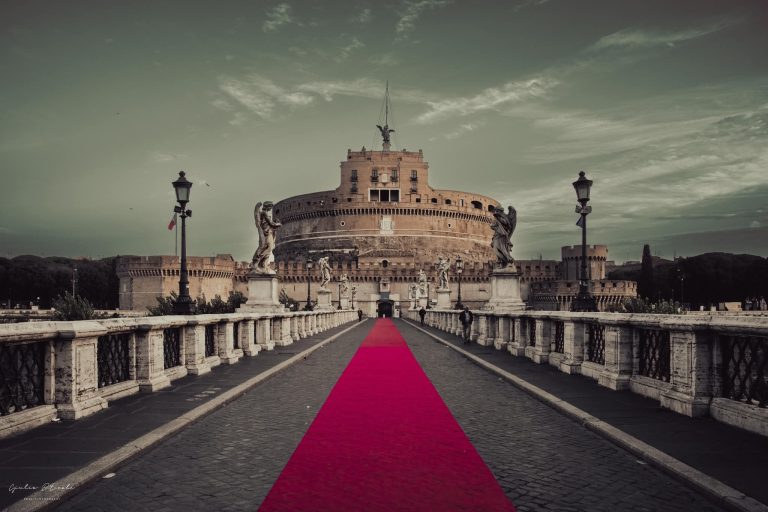
Castel Sant'Angelo, a fortress that combines in itself both the Roman times of the Empire, it was Hadrian's masuleum, and medieval and Renaissance times, since it became the fortress of the Popes, while it is a museum now. Photo by Giulio d'Ercole

Take a Photography Tour in Rome and Learn with an Expert

Rome, with its sumptuous churches, lively street scenes, and evocative Roman ruins, is a photographer’s dream destination. If you’re looking for a unique experience in Rome, consider booking a Rome Photo Fun Tour.

With professional photographer Giulio d’Ercole, you’ll learn how to capture images that are well framed, beautifully lit, and truly memorable.

Giulio offers some of the best photo tours in Rome, from half-day and full-day city walks to multi-day photography adventures across Italy. His group tours are kept intentionally small (no more than four people), or you can opt for a private tour, which I did.

Photo Credit: Giulio’s stunning photo of Castel Sant’Angelo in Rome is at the top of this post.

Giulio’s tours are open to everyone, from amateurs with a smartphone to serious photographers with professional gear. His tours are energetic, comprehensive, and packed full of valuable tips.

I recently joined Giulio on his Rome Churches, Angels, and Art Photo Tour, a 4-hour exploration that took me through seven of the city’s most photogenic churches and hidden corners. Armed only with my iPhone, I came away with sharper skills, a camera roll full of artistic shots, and a fresh perspective on Rome.

Full disclosure: While I did pay for my tour with Giulio (money well spent!), I will receive a small commission if you click on any link to Giulio’s tour site and purchase a tour. Thank you!


📸 Photography Tour Itinerary: Rome Churches, Angels & Art Tour

Here’s a quick look at the stops and subjects you’ll capture on Giulio’s 4-hour Rome photography tour:

  • Santa Maria Maggiore – Golden ceilings, pilgrims, and basilica grandeur
  • Santa Prassede – Byzantine mosaics
  • San Pietro in Vincoli – Michelangelo’s Moses
  • Santi Apostoli – Underground frescoes and hidden Christian history
  • Street Scenes & Ruins – Cobblestone alleys, ivy-draped balconies, and a taste of ancient Rome
  • Sant’Ignazio – Trompe l’oeil ceiling illusions and a year-round nativity scene
  • San Luigi dei Francesi – Caravaggio’s masterpieces
  • Sant’Agnese in Agone – Baroque ceilings on Piazza Navona
  • Bernini’s Fountain of the Four Rivers – Sculptural storytelling

Why Take a Photography Tour in Rome?

A Rome photography tour is the perfect way to see the Eternal City through a new lens—literally. Instead of rushing from one monument to the next, you slow down, observe details, and learn techniques from a professional.

Here’s how my morning with Giulio played out, starting at 8:30 am in front of the church of Santa Maria Maggiore.


Santa Maria Maggiore

The crowds are already starting to swell at the security checkpoint when I arrive and meet up with Giulio d’Ercole, owner of Rome Photo Fun Tours.

It’s Jubilee year and a Saturday, so busloads of pilgrims have arrived from all around Italy. Many wear matching scarves printed with the name of their diocese.

Giulio leads me into the massive basilica and quickly gets down to business. He starts by showing me how to take a good picture of the stunning ceilings.

Ceiling at Santa Maria Maggiore in Rome
Candlesticks and ornate baroque ceiling at Santa Maria Maggiore

Giulio shares that he likes taking pictures of people and points out some church-related subject ideas such as pictures of people in the confessionals.

I’ve generally avoided taking pictures of people, so Giulio’s perspective is new to me. He tells me not to be shy, and over the course of the morning, I get bolder and snap a few candid shots of my own.

View of a confessional with a person confessing and the hand of the priest appearing at the window

👉 Tip I Learned: Don’t be afraid to include people in your photos. Candid moments often bring a story to life.

Two priests talking in Santa Maria Maggiore

Santa Prassede

We go next to Santa Prassede, a church that features several amazing Byzantine mosaics (my favorite kind!).

This church is less crowded, giving us more opportunities to compose pictures without jostling for position.

I learn “not to be lazy” and walk closer to a subject to take a picture of it rather than depending on the camera’s zoom feature to get a shot that lacks resolution.

Here are a few of my shots of the mosaics at Santa Prassade.

Close up of elaborate Byzantine mosaic at Santa Prassede church
Byzantine style mosaic of Christ and three figures
Byzantine style mosaic in a corner with arches

👉 Tip I Learned: Zoom with your feet. Walk closer to the subject for sharper, more detailed images.


San Pietro in Vincoli

We hop into Giulio’s car and drive over to San Pietro in Vincoli to see Michelangelo’s statue of Moses. Giulio explains how it was sculpted from one piece of marble and positioned to catch the light.

He talks about telling a story of a subject that takes the viewer from the whole subject to a series of closeups.

Full view of Michelangelo's Moses statue in the Church of San Pietro in Vincoli
View of the head and torso of Michelangelo's Moses statue in the Church of San Pietro in Vincoli
Close up of the head of Michelangelo's Moses statue in the Church of San Pietro in Vincoli

👉 Tip I Learned: Tell a visual story by moving from wide shots to close-ups. Create a narrative, not just a snapshot.

Outside the church, Giulio stops at one of Rome’s many water fountains called nasoni. I’ve heard of these, but never used them. He demonstrates how to get a drink and tells me how the city began installing them in the 1870s to provide a free and public water supply. 

Here’s Giulio demonstrating how to get a drink from a nasoni.

Giulio D'Ercole who runs Rome Photo Fun tours taking a drink from a Nasoni in Rome (a water fountain)

Santi Apostoli

This church is my favorite of the seven churches we visit. It is built over an early Christian church that features many remarkable Roman-style frescoes. We descend below the altar and have the shadowy hallways and chapels of the early church to ourselves.

Close up of a detail of a sea serpent painting on a Roman-style fresco in Santi Apostoli in Rome
Roman style fresco of Mary and Jesus  taken at Santi Apostoli

While I take pictures of the Roman-era paintings, I enjoy listening to the orchestra that is rehearsing in the main church above us.

Thanks to Giulio’s example, I’m learning how to look for new and different perspectives, and so snap this photo of the cello cases lined up alongside the pews.

A line up of cello cases at a Roman church

👉 Tip I Learned: Look for unusual perspectives and contrasts; details often tell the most powerful stories.


Street Scenes and Roman Ruins

On our way between churches, we veer down some lovely cobbled streets that hint at what Rome used to be like before so many of the buildings were turned into tourist apartments.

Giulio shares how Rome now is very different from the Rome he knew growing up in the 1970s.

Meanwhile, I’m learning to not be shy and snap a candid photo of a priest walking down the street.

A priest walking along a quaint cobbled street past a house with vegetation growing up it

Millions of visitors are taking a toll on Rome’s communities. Many businesses have closed over the years and families have moved out to make way for short-term rental apartments, souvenir stores, and restaurants. Even so, Rome’s side streets are still magical. One minute you can be part of a throng of tourists streaming across the cobblestones, and the next you’re completely alone on a narrow street that looks like it hasn’t changed in centuries.

We pause to take pictures of buildings draped in greenery.

Quiet side street in Rome, view of a house with window boxes and lots of vegetation on the walls

👉 Tip I Learned: Don’t just shoot monuments. Capture the everyday street details that give a city its soul.

We emerge onto the Via dei Fori Imperiali and while we walk past Roman ruins, Giulio shares his extensive knowledge of Roman history, particularly the rise (and fall) of fascism in the 20th century and Mussolini’s attempts to bring Rome’s glorious past into the present.

statue of Caesar across from the Roman Forum in Rome

Sant’Ignazio

Giulio sets a brisk pace and soon we’re off again to the next church, Sant’Ignazio. This is one of Rome’s more popular churches and is therefore quite crowded.

One of the attractions is the remarkable Baroque ceiling. Giulio points out the trompe l’oeil effects and explains how the black dome that looks like a dome at the beginning of the nave is shown to be flat-painted when we move to the center of the church.

Baroque trompe d'oiel ceiling at Sant'Ignazio

We retreat to the quieter side chapels where Giulio encourages me to explore how light hits statues and to focus on only one or two elements.

Close up of a black marble statue of an angel at Sant'Ignazio

San Luigi dei Francesi

I am looking forward to checking out the famous trio of Caravaggio paintings in San Luigi dei Francesi. With the morning well advanced, the crowds have increased considerably and I need to wait my turn to get a shot.

The light is too glaring on the central figure, but I manage to take a few photos, including this one, which is my favorite of the three paintings.

Painting by Caravaggio at San Luigi dei Francesi

I’ve seen quite a few Caravaggios during my visits to Rome (most notably at the Museo Borghese) and have grown to appreciate Caravaggio’s use of light, the movement he imbues his figures with, and his depiction of everyday people instead of idealized figures.


Sant’Agnese in Agone & Piazza Navona

Our final stop is Sant’Agnese in Agone, where Giulio once again has me look up to capture the magnificent ceiling details.

We end a wonderful (and packed) morning by circumnavigating Bernini’s famous Four Rivers fountain in Piazza Navona. Giulio stops at each of the four statues and unravels the many clues that Bernini sculpted into the statues to indicate which river each statue represents. I learn that only the statue representing Europe has its face turned to the viewer.

I snap pictures of the blinding white marble against a very blue Roman sky.

Statue of the four rivers by Bernini in the piazza Navona

Practical Details for Your Rome Photography Tour

Here’s what to expect when you take a photography tour with Rome Photo Fun Tours.

  • Length: 4 hours
  • Pace: Brisk; expect thousands of steps
  • Group size: Max. 4 people
  • Skill level: Beginners to advanced
  • Equipment: DSLR, mirrorless, or smartphones all welcome
  • Insider tip: Don’t zoom; step closer to your subject for clarity.

Final Thoughts

My Rome photography tour with Giulio was intense, inspiring, and absolutely worth it. I walked thousands of steps, took dozens of photos, and most importantly, learned how to see Rome differently.

What I appreciated most about this experience wasn’t just improving my photography skills. It was how slowing down changed the way I engaged with Rome itself. Learning to notice light, texture, and everyday details turned familiar streets into something new. This kind of creative, experience-driven travel is what keeps me returning to cities like Rome.

Whether you’re a serious photographer with advanced gear or an iPhone shooter like me, this is one of the best photography experiences in Rome and a refreshingly unique thing to do in one of Europe’s most heavily touristed cities.

Giulio adapts his instructions to every skill level and makes sure you leave with sharper skills and memorable images.

Next time I’m in Rome, I’ll join his most popular tour: Rome at Night Photography Tour.

If you’re planning a trip to Rome, don’t just take photos; learn how to make them unforgettable. Book one of the best photography experiences in Rome for independent travelers and capture the Eternal City through an artist’s lens.

This post reflects the kind of creative, culture-rich travel I feature on Artsy Traveler. Learn more about how I collaborate with cultural travel brands.

More Creative Activities on Artsy Traveler

Here are more posts about creative travel experiences in Italy to explore while traveling:

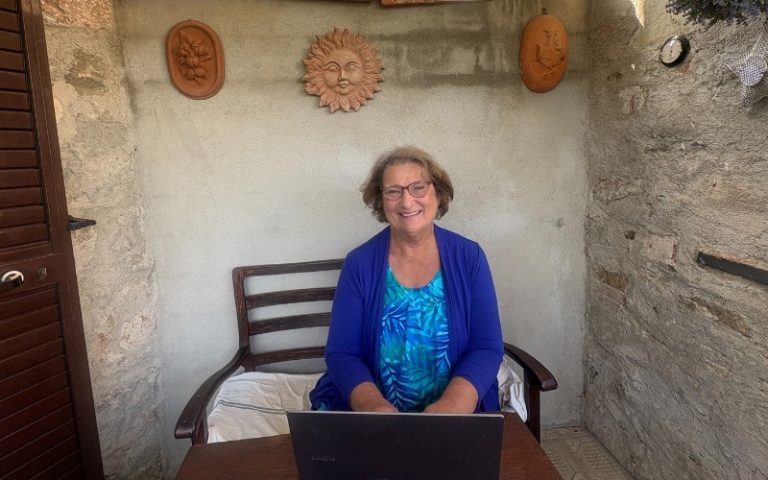
Carol Cram at the writers retreat in

Get Inspired at a Writing and Art Retreat in Tuscany

Looking for a creative retreat in Tuscany where you can focus on your art or writing in peace? Then consider booking a week’s stay at Casale di Clio, an 18th-century village house located in tiny Vetteglia, about an hour’s drive north of Lucca.

Here, you’ll find stunning views, cozy rooms, and inspiring spaces designed to inspire writers, painters, and poets.

I spent a week at Casale di Clio working on my novel while my husband, artist Gregg Simpson, painted in the “art barn”. The peaceful, jaw-droppingly gorgeous surroundings are exceedingly conducive to contemplative, creative work.

We both left feeling energized, productive, and deeply inspired by this magical corner of Italy. And no wonder! Look at the view from my top-floor room.

Rainbow over the valey seen from a window at Casale di Clio, a writing retreat in Tuscany

Highlights: My Stay at Casale di Clio

The Setting – Casale di Clio

In the charming village of Vetteglia, founded in Roman times, Casale di Clio offers breathtaking views of valleys and mountains. The retreat is run by Adrian, from Devon, and his Italian wife, Tiziana (Tizi), who live in part of their thoughtfully renovated stone house.

Four guest rooms, each with a desk, are reserved for artists and writers. Three of these have ensuite facilities, and a fourth uses a bathroom a short way along the corridor. Guests also share a kitchen, dining room, library, balcony and terrace, plus the newly renovated “art barn” and are welcome to use the garden, complete with chairs and a sunshade.

Daily Rhythm

My week was a productive mix of writing, walking, and soaking in the atmosphere. Mornings at my desk with a view of the Tuscan hills stretching out before me led to some productive writing stints.

View of a laptop  computer with the view beyond of the Tuscany countrysidea Casale di Clio writing retreat

Afternoons meant terrace breaks, library time, and woodland walks to nearby villages. Gregg worked happily in the art barn, spreading out his supplies in a space designed for creating art.

Meals were a pleasure: cooking with ingredients from Tizi’s garden and the village shop, or joining Adrian and Tizi for homemade dinners. We also enjoyed excursions to Bagni di Lucca, once a favorite spa town of Mary and Percy Bysshe Shelley, Byron, and the Brownings.

The Experience

The week wasn’t just about word counts, although I did manage to write over 10,000 words. It was about reconnecting with my work-in-progress, finding clarity, and even weathering a rainy-day writing crisis with the misty Tuscan hills for company. Gregg declared the art barn the best studio he’s ever had, and I found myself more focused and inspired than at any other point during our European travels.

Final Thoughts

Casale di Clio is not a vacation spot; it’s a creative retreat designed to give writers, painters, and poets the space to work in extraordinary surroundings.

If you’re looking to escape distractions, breathe in mountain air, and invite the muse to visit, this Tuscan haven may be exactly what you need.


Full Journal: Day by Day at Casale di Clio

Day 1

After a twisty, turny drive up to the village of Vetteglia, we veer down a narrow road and park near an ancient chapel below Casale di Clio. Adrian bounds down the hill to greet us, then cheerfully hauls our luggage up to the house in a wheelbarrow.

Here’s the view up from where we parked the car to the Casale di Clio. My room’s the middle one.

View of Casale di Clio with the blog poster's room circled in red

Casale di Clio does not accommodate couples in one room, preferring to rent rooms to individuals. Gregg is in the Galileo room and I’m next door in Hildegard. Each room has a desk, cupboard, double bed, and small ensuite bathroom with a shower and toilet. Just steps away is another bathroom equipped with a large tub.

But we are not confined to our rooms! Retreat guests also have the run of the ground floor, which includes a kitchen, dining room, living room, library, and terrace. There are lots of places to work.


Gregg and I get settled, and then Adrian takes me and the other guest for a walk around Vetteglia and the surrounding countryside. We learn that the village is home to about fifty people, including a few expats, some holiday homes, an Airbnb, and several Italian families with young children.

Here’s the view from the main square, which is actually just an overlook with space for a few cars to park.

view from the main square of Vetteglia in Tuscany

We descend to Adrian and Tizi’s large vegetable plot, enclosed by a mildly electrified fence to stop wild boars. Apparently, it doesn’t stop porcupines, which manage to do some damage.

Adrian and Tizi grow squash, cabbage, tomatoes, potatoes, and other crops. I sample a handful of cherry tomatoes the next morning—delicious.

Below the plot is a hillside that’s also part of the property and available as a place to bring a chair and commune with nature while writing, painting, or just thinking. The views are spectacular!

View of a solitary tree in front of mountains and hills in northern Tuscany

After our walk, I set up my computer and get to work. By the time Adrian calls us to a welcome aperitif before dinner, I’ve knocked out 900 words, a big win for me!

For most of the five weeks we’ve been in Europe, I’ve been lucky to manage 300 words in a day. I’m determined to buckle down this week at Casale di Clio and get a solid 10,000 words written.

I’m working on the first draft of a new novel, always the most challenging part of the writing process for me. Like many writers (perhaps most!), I don’t particularly love writing—but I love having written.

Gregg and I meet Adrian and Tizi on the terrace for a festive glass of prosecco and some nibblies. The third guest is tired and chooses not to join us.

Nibblies on a table on a terrace in Tuscany

We launch into a lively conversation and quickly discover common ground. Adrian shares his love of sports cars with Gregg, a fellow enthusiast, and tells me about the historical novel he’s planning to write. Who knew that the host of this writing/art retreat is also a historical novelist?

Tizi serves a tasty lasagna dinner followed by homemade fig pie with ice cream.

The welcome dinner is included in the price of the seven-day retreat. For the rest of the week, we have full access to the well-equipped kitchen and can also pay extra to have dinner prepared for us. I tell Tizi we’ll eat with them on Wednesday.

After dinner, Gregg returns to the art barn while I pound out a few more words and attend to email. Thankfully, the Wi-Fi is strong throughout the house, a relief after four days near Lake Garda at a place with no Wi-Fi in our room.


Day 2

I wake early on our first full day at Casale di Clio, make a coffee, and settle on the terrace for a phone call with our daughter back in Canada. By 8:30 am, I’m back in my room and at my desk.

My goal is to write 2,000 words a day—a lot for me. I’ve heard of writers cranking out many more, but I’ve learned to let go of envy. Writing is deeply personal: what works for one writer may not work for another.

By 11, the sun pouring into my room is too hot for me to continue. I close the wooden shutters and go for a short walk. At every turn is a new vista, a new photograph, a new idea. I can see why Adrian and Tizi chose this place to live in and share as a retreat.

Large mountain seen from Vetteglia in Tuscany

I make myself an early lunch and spend the afternoon roaming from room to room, terrace to terrace—writing, reading, and thinking. By mid-afternoon, I’ve passed the 1,000 word mark.

In the small library, I spread out research books on van Gogh and his time in Arles. The first part of my novel is set in 1888 in Arles and features both van Gogh and Gauguin, although the story is not about them.

At 6 pm, I venture out for a longer walk. Paths wind through the forest and across the hills. The afternoon light casts deep shadows across the Tuscan landscape, and I give myself over to the magic of this stunning area.

Country road linking Vetteglia to San Gemingnano in Tuscany

A brisk 20-minute walk takes me to a crossroads. I choose the far-left road and eventually end up in San Gemignano, the closest town to Vetteglia, where we’ll shop on Monday. Vetteglia itself doesn’t have any stores.

Back at Casale di Clio, I cook lemon-buffalo stuffed pasta with cacio e pepe sauce, plus a salad and tomatoes from Tizi’s garden. After dinner, I return to my desk and finally hit my 2,000-word goal.


Day 3

I’m at my desk by 8:30 am and manage 1,000 words before breaking at 11 to walk with Tizi to San Gemignano.

She takes me through the woods along a track that likely dates back to Roman times. Tizi explains that Vetteglia was founded by a retired centurion who was given the land as payment for his military service. The path is steep and rocky but beautiful and very peaceful.

At the village shop, I stock up on food, including sausages for dinner. I walk back along the road. It’s a less charming route, but easier when laden with groceries.

The afternoon is low-key—reading, resting, and research—but by 4 pm, I’m back at work and produce another 1,000 words.

Gregg is equally happy: the art barn gives him space to spread out and work.

Gregg Simpon working in the art barn at Casale di Clio, an art and writing retreat in Tuscany
A selection of drawings by Gregg Simpson laid out on the floor of the art barn at the Casale di Clio, an art and writing retreat in Tuscany

Day 4

Rain and thunder roll in overnight. A rainy day is the best kind of day for a writer, but instead of cranking out more words, I waste the morning tumbling into research rabbit holes and existential doubt.

I take a break to film the cacophony of swallows swirling through the sky outside my window. I learn later that they are having one last swoop through the village before winging off to Africa for the winter.

By day’s end, I’ve written zero words. Instead of beating myself up, I publish an Artsy Traveler blog post, answer emails, and Zoom with a potential publicist for my next novel, The Choir (coming February 2026).

Days like this happen despite the best of intentions. If I must have a writing crisis, at least Casale di Clio is a beautiful place to have one.

Misty view from casale di Clio in Tuscany

Day 5

The rain lingers, but I’m refreshed. I spend the morning rethinking my novel’s plot and purpose. It’s hard work but necessary.

At noon, Gregg and I drive down to Bagni di Lucca, once a fashionable spa town. Mary Shelley edited Frankenstein here, and later the Brownings stayed by the river, where Robert proposed to Elizabeth. Literary history lives in these hills.

Plaque on a building in Bagni di Lucca stating that Percy Bysshe Shelley lived there in 1818
Plaque on a building in Bagni di Lucca stating that Robert & Elizabeth Bartrett Browning lived there in 1857

Back at Casale di Clio, Tizi serves us a dinner of risotto with courgettes and freshly foraged porcini mushrooms. I’ve never tasted mushrooms so good.


Day 6

The morning is productive, but our attempt to eat lunch in San Cassiano goes awry. We can’t find a restaurant, so we keep driving. The SatNav goes out, but fortunately the road winds down into the valley and back to Bagni di Lucca.

We settle at an outdoor café, where we’re joined by a busload of Yorkshire tourists. I enjoy listening to their accents (The Choir is set in Yorkshire in the 1890s). After sipping a cappuccino and buying a few groceries, we head back up the narrow, hair-raising road to Vetteglia.

We spend the rest of the day in our respective work spaces. I make more progress with my novel and feel like I just might see a few glimmers of light at the end of the tunnel. Can I sustain it? I hope!


Day 7

I fill my last full day with writing and blogging. At noon, I walk to San Gemingnano and buy fresh porcini mushrooms from the village shop. Cooked in butter and olive oil and accompanied by a slice of fresh focaccia, they make a divine lunch.

In the evening, Adrian and Tizi drive us down to Bagni di Lucca for a farewell celebration—aperitifs at Café Italia followed by pizza. Thankfully, Tizi drives us safely back up the twisting road in the dark.

Here’s an admittedly doctored shot of Adrian and Tizi that I snapped in Bagni di Lucca and then put in front of a view of the Tuscan countryside.

Adrian and Tiazzy, hosts at Casale di Clio

We’re off!

Final clean-up, final check for belongings, heartfelt goodbyes—and we’re headed to our next adventure.

If you’re looking for a place to tune out the world and focus on a creative project in spectacular surroundings, Casale di Clio may be just the ticket. Find more information on their website.

Have you participated in a writing or art retreat? Share your experiences with other artsy travelers in the Comments below. Here’s my post about an art workshop with Italiana Tours:

Painting instructor Rod Moore teaches plein air drawing to a group of Italiana Tours participants

Fire Up Your Creativity with Italiana Tours

Thirteen people gather for an Italian art retreat in Le Marche, spending a week under the Italian sun drawing, painting, and soaking up the beauty of this drop-dead gorgeous, undertouristed region that invites exploration and jump-starts the imagination.

I’ve been invited to sit in for a day at the Italian Sketchbook Retreat, run by Italiana Tours.

Under the direction of Australian artist Rod Moore, I hope to flex my drawing muscles, and maybe even conquer my fear of the blank canvas.

Disclosure: I was hosted by Italiana Tours for two nights of accommodation at Il Parco Ducale in exchange for coverage of the Italian Sketchbook Retreat. As always, all opinions are entirely my own, and I only write about experiences I genuinely value and recommend to arts-focused and independent travelers.

I attended as an observer and participant for a single day, allowing me to experience the retreat as most travelers do and to write about it from an editorial, experience-first perspective.


Who This Italiana Tour in Le Marche Is For

The Italian Sketchbook Retreat hosted by Italiana Tours is designed for artists, writers, and creatively curious travelers who want to combine skill-building with cultural immersion. It’s ideal for those who enjoy slow travel, expert-led experiences, and meaningful engagement with a location, rather than fast-paced sightseeing.


Arrival at Il Parco Ducale

I arrive a few hours before the rest of the group and settle in at Il Parco Ducale, the retreat’s base. This beautiful old palazzo boasts brick arches, foot-thick walls, and heavy wooden beams. There’s also a swimming pool, and the town of Urbania, with its charming medieval center, is just a short walk away.

Il Parco Ducale in Le Marche near Urbania – accommodation for Italiana Tours art retreat.

The palazzo is next door to the summer residence of the Duke of Urbino, built in the late 15th century. The magnificent Renaissance palace provides a dramatic backdrop for the art classes, while the surrounding landscape looks as though it’s been lifted straight out of a Renaissance painting. Add a few robed figures in the foreground, and you’d swear that time has stood still.

View of countryside near venue for Italiana Tours in Le Marche, Italy

What is Italiana Tours?

Italiana Tours was founded about ten years ago by Piero and Katie Pagliardini to offer custom art tours and retreats, primarily in Le Marche and Puglia. Piero, a local expert, grew up in Le Marche, where he developed a passion for nature, hospitality, and art workshops in Italy. Together with the travel coordinator, Alex, they have crafted tours all over Italy.

Each retreat is led by a renowned artist. The retreat I’m sitting in on is led by Rod Moore, the star of two Australian TV programs—Plein Air Painting TV and Yes, You Can Paint—and founder of the online Learn To Paint Academy.


Our First Evening

By six pm, the group has arrived. Together, we ride into Urbania for a wine-tasting and pizza dinner.

At a cozy trattoria, we gather at one long table. The noise level quickly rises as people swap “Where are you froms?”.

We’re an international mix, with participants from Australia, Belgium, the U.S., India, and me from Canada.

We sample three wines—a sparkling, a white, and a red—all from the Le Marche region. Afterward, we stroll through the quiet town, past arcaded buildings, to a pizzeria.

My All’Amatriciana pizza is spicy and delicious, paired with another red wine. Dessert brings four digestifs, including the ever-popular limoncello, served ice-cold.

Piero Pagliardini, the host of Italiana Tours in Urbania in the Marches, Italy
Piero Pagliardini, host of Italiana Tours

My Day at the Italian Sketchbook Retreat in Le Marche

The next morning, we assemble in the large breakfast room where tables are arranged in a U-shape. Rod leads us through warm-up exercises to prepare us for sketching en plein air later in the day.

I lose myself in drawing lines, experimenting with cross-hatching and stippling (new to me!), and studying values from dark to light.

Breaking a Scene Into Six Parts

Rod introduces us to the Rule of 6: breaking any scene into six basic shapes to capture the “big picture” before layering in details.

So we can practice breaking scenes into six parts, Rod has provided us with hundreds of reference photos on Dropbox. He also encourages us to use our own photos if we wish.

I flip through my photos and choose a quiet canal scene that I took on a recent trip to Venice to break into six shapes. It’s surprisingly challenging, and I quickly realize why the exercise is a valuable one for developing drawing skills.

The atmosphere is both relaxed and productive. Rod circulates, offering encouragement and practical suggestions. His teaching style is warm and approachable.


Afternoon Excursion

After lunch, we hop on the bus to Urbania for a visit to the Chiesa dei Morti. Excursions are part of the daily rhythm here. During the week, participants will visit the market in Urbania and Raphael’s childhood home in Urbino, and take a cooking class at a 12th-century mill.

I won’t spoil the surprise of what we found in the crypt of the Chiesa dei Morti, but trust me, it’s unforgettable.

While in Urbania, we stop to admire a view of the palace where the Duke of Urbino stayed when he was in town. Later in the week, the group will go to this location to do some plein air painting.


The Retreat Participants

Our group is a mix of retirees and mid-career professionals, some returning for their fifth retreat with Italiana Tours. That loyalty says a lot about the value of these retreats.

Some participants are Rod’s students, both in-person or online, while others are newcomers eager to learn. The retreat welcomes both painters and non-painters, with special outings for those not attending the classes. Here are some of the participants I got to know:

  • Tim and Carol, from North Carolina, are seasoned travelers. While Tim paints, Carol joins the non-painting excursions.
  • Rohit, from New Delhi, is one of Rod’s online students and has come for his first in-person workshop.
  • Marie is on her fifth Italiana Tours retreat, having attended in both Le Marche and Puglia.
  • Charles, a fellow novelist, is attending his fifth retreat as well, though it’s his first time painting.
  • Beeb, from Australia, is attending the retreat after spending five months in Europe, during which she walked the 900-kilometer Camino di Santiago.
  • Hans, from Belgium, is attending for the first time, hoping to develop his painting skills as he moves into retirement.

Several more of the participants tell me they’ve come because they know Rod’s work. The group bonds quickly over shared meals, travel stories, and artistic discoveries.


Plein Air Sketching

In the afternoon, I attempt my first plein air sketch. Nervous at first, I watch as Rod demonstrates, sketching the six “big shapes” of a building at Il Parco Ducale with confident pen strokes, and then filling in details.

When it’s my turn, my first drawing of the ducal palace flops. But with Rod’s good-humored encouragement, I try again, this time choosing a simpler subject.

To my surprise, I love it. The act of sketching outdoors, surrounded by such a timeless landscape, rekindles my long-lost interest in drawing. After just one day, I feel inspired to keep sketching (and maybe even start painting again).


Looking Ahead: Upcoming Italiana Tours

Piero and his team host approximately ten workshops a year, divided between Le Marche, Puglia, and Sicily. The retreats fill quickly, so if you’re looking for an artsy traveler’s dream week of creativity, food, and exploration, check out the Italiana Tours website.

The Italian Sketchbook Retreat is especially well suited to artists, writers, and creatively curious travelers who want more than a sightseeing holiday.

While structured art instruction is at the heart of the experience, the retreat also offers rich cultural immersion through food, landscape, and daily excursions, making it an ideal choice for anyone who values creativity and slow travel. Non-painting partners are thoughtfully included, with curated outings that reflect the same spirit of discovery.

Takeaway: One day at the Italian Sketchbook Retreat hosted by Italiana Tours was enough to fire up my creativity and demonstrate how well-designed creative travel experiences can leave a lasting impact.

This post reflects the kind of creative, culture-rich travel I feature on Artsy Traveler. Learn more about how I collaborate with cultural travel brands.


More Creative Activities on Artsy Traveler

Here are more posts about creative travel experiences in Italy to explore while traveling:

Explore Greek Cuisine in a Savor Nafplio Cooking Class

Have you ever wanted to learn the secrets of Greek cooking? If so, then consider adding a cooking class to your Greek travel itinerary.

When I traveled in Greece, I found out very quickly that Greek food is consistently tastier than any food I’ve eaten anywhere.

Sure, I’ve had great meals in France, Italy, Spain, and even North America, but Greece wins hands down when it comes to consistency, taste, and freshness.

To learn why Greek food is so great—and more importantly, how to prepare it myself—my daughter, Julia, and I decided take a cooking class at Savor Nafplio Cooking while staying in lovely little Nafplio.

In the three-hour class, we learned how to prepare Greek dishes and then enjoyed a five-course meal complete with wine pairings.


Introduction to Savor Nafplio Cooking Class

Nafplio is one of Greece’s most charming small towns, with pastel-colored buildings, Venetian fortifications, and a relaxed seaside atmosphere that makes it an ideal base for slow travel in the Peloponnese.

Once the first capital of modern Greece, Nafplio combines layers of history with a lively food scene rooted in regional traditions. Taking a cooking class here is not just about learning recipes; it provides a chance to connect with local ingredients, techniques, and the rhythms of everyday Greek life.

We arrived at 5 pm to discover that we were the only two participants. Chef Kostas was a wonderful host and teacher. He kept us enthralled and engaged throughout the class.

I’ve taken several cooking classes while traveling in Europe, and the class at Savor Nafplio Cooking ranked as one of the best.

The "Savor Experiences" logo on a gray wall, with stylized green and red leaves and the words "Food & Wine" in black text.

Chef Kostas started the evening by sharing the menu and telling us what to expect. We then got right to work.


Dishes Prepared During the Class

Over the course of the three-hour class, we prepared lamb bogana, beef-stuffed zucchini, tomato salad with cucumber soup, and orange pie, along with tastings of some excellent local wine.

Main Course: Lamb Bogana

The main course of the four-course meal was lamb and potatoes. Since both must cook for at least two hours, we started by preparing the lamb then the potatoes. Kostas showed me how to cut slits in the lamb and insert small slivers of garlic along with sprinklings of salt and pepper. Meanwhile, Julia was put to work making the paste to rub over the lamb.

I also peeled potatoes to layer under the lamb. While we worked, Kostas provided us with a wealth of useful tips and information about what we were doing—and why.

Appetizer: Beef-Stuffed Zucchini

Once the lamb and potatoes were in the oven, we got going on the beef-stuffed zucchini. Julia and I learned how to core a zucchini (harder than it looks!), and then we prepared the meat filling. We mixed fresh herbs, an egg, plenty of olive oil, and green onions with ground beef and then stuffed the mixture into the hollowed-out zucchinis.

Kostas nestled three stuffed zucchinis into a pan half-filled with water. Later, we smothered them in a delectable egg and lemon sauce.

Tomato Salad with Cucumber Soup

Kostas taught us how to prepare cucumbers for pureeing into a refreshing green soup. He used small cucumbers which he said were less bitter. To ensure the soup was a pleasing color of green, but not too bitter, he instructed me to peel the cucumber in stripes. Cool tip.

Later, he served the cucumber soup under a mound of chopped Greek salad fixings: tomatoes, onions, olives, capers and some crunchy bread bits all topped with fresh feta cheese. Delicious!

Orange Pie

Traditional Greek orange pie was what I’d call cake: a light, orange-flavored sponge soaked in an orange syrup. Kostas demonstrated how to prepare and measured the many ingredients required for the pie.

One of my jobs was to cut a roll of filo pastry into thin ribbons and then mix them with eggs and fresh orange juice. The filo was a substitute for flour. Its texture gives the pie a lighter texture than if it was made with flour. Interesting idea!

Dining at Savor Nafplio

With all the food prepared, the dining and wine tasting began. Kostas brought out a small loaf of warm sourdough bread for us to dip in local olive oil flavored with local sea salt. The bread was so good that I ate too much of it and then later had trouble finishing all my dinner.

Kostas paired five wines with the various courses, from a light white to an after-dinner dessert wine. Kostas explained each wine’s origins in Greece and what to expect while tasting. I thoroughly enjoyed tasting the wine and sampled the dinner courses.

Here are pictures of the meal we enjoyed at Savor Nafplio Cooking.


Booking a Class at Savor Nafplio Cooking

Kostas varies the menu depending on the preferences of the guests. We’d specified no fish or shellfish so they weren’t on the menu.

He also looks at what’s fresh in the local market and consults his own mood. The menu we enjoyed may not be the menu a guest would enjoy on another night. I am, however, confident that whatever the menu, the cooking experience will be first-rate.

A smiling man in a black chef's jacket labeled "Savor" stands next to a woman in a patterned sleeveless top, both posing in front of a wooden world map on the wall.
Carol with Chef Kostas at Savor Nafplio Cooking Class

If you’re visiting Nafplio, I recommend finding three hours in your schedule to take a cooking class and enjoy a meal and wine pairings at Savor Nafplio Cooking. You’ll get excellent value for the money and learn new cooking tips.


Cooking Classes in Greece

Here are some GetYourGuide cooking classes available in Greece:

Powered by GetYourGuide

More Cooking Classes on Artsy Traveler

Here are more posts about cooking classes I’ve taken when traveling.

Chef Marco stands behind a table filled with fresh ingredients, ready to lead a cooking class in Rome."

Pizza, Gelato, Suppli–Oh My! A Fantastic Cooking Class in Rome

Fancy taking a cooking class while you’re visiting Rome?

I highly recommend the experience. I’m a huge fan of taking cooking classes when I travel around interesting locales that have unique cuisines.

So far, I’ve taken a market class and a French sauces class (sweet and savory) in Paris, a tapas class in Madrid, and a pasta & tiramisù class in Rome.

Pinterest graphic with the text A Fantastic Cooking Class in Rome. Below is a picture of a pizza.

In this post, I share my experience taking a Pizza, Gelato, and Suppli-Making class in Rome.

Choosing a Class in Rome

Most cooking classes available in Rome are variations on the pasta/tiramisù class I took on a previous trip to Rome. Fortunately, after a bit of searching on GetYourGuide, I discovered a pizza and gelato-making class.

Perfect! I signed up on Tuesday for the class on Friday.

EnjoyCooking.com with Crown Tours

I’d taken the pasta/tiramisù class with InRome Cooking, which I highly recommend. But this time, I decided to go with EnjoyCooking.com for the sake of variety and having a new company to write about on Artsy Traveler.

EnjoyCooking.com partners with Crown Tours to offer cooking classes in a lovely, brick-arched space next door to their tour office and across the street from the Colosseum.

The day before the class, I got a WhatsApp call from the company. The family that had signed up to take the same class had canceled, leaving me on my own.

Did I want to postpone the class to the evening slot? I couldn’t because that evening, we were having the opening of my husband Gregg Simpson’s art exhibition at Il Leone Galleria in Rome. I was assured that they were happy to still offer the class at the 10 am time slot even if I was on my own.

Lucky me!

Arrival at EnjoyCooking.com

I arrived on Friday morning and was ushered into the cooking space. There was room for eight people so it was much more intimate than the class I took at InRome Cooking which hosted twelve.

To my delight, there was one other woman in the class. Over the course of the next three hours, we bonded and had an awesome time.

Chef Marco!

But the biggest surprise was meeting the chef. In walked Marco, the same chef who had taught the pasta/tiramisù class at InRome Cooking.

I couldn’t believe it! I told him I’d taken his class and showed him the blog post. He was so excited!

Carol cram with Chef Marco at enjoycooking.com cooking class in Rome
Back again with Chef Marco, this time at EnjoyCooking.com

So that was a great way to kick off the morning.

Over the next three hours, Chef Marco led my new friend and me in a lively, hands-on and informative class. I’m always amazed at how much I learn about cooking technique in these classes.

Gelato Making

We started with gelato. To my relief, I discovered that the ice cream maker I’d purchased several years ago could be dragged out, dusted off, and used to make gelato.

We heated several pints of fresh milk in a pot over an electric hot plate. Marco informed us that the milk should be as fresh as possible, so fresh that it would spoil after three days.

Of course, getting milk that fresh is next to impossible in North America unless you live on a farm, which I don’t. But the next best thing is high quality organic milk.

We heated the milk and whisked in sugar followed by ten egg yolks and lemon zest to make limone gelato. The lemons had come from the Amalfi coast and smelled divine.

After mixing the gelato, we poured it into the commercial gelato maker that would produce perfect gelato within thirty minutes.

What an impressive looking machine!

A pot of fresh milk being heated on an electric hot plate, the first step in preparing limone gelato during a Roman cooking class

Marco informed us that we would also make raspberry sorbetto to go along with the limone gelato. Sorbetto is even faster and easier to make than gelato.

We mixed water with raspberries and once the gelato was made, we poured it into the gelato-maker (after the limone gelato was done, of course).

Here’s a video of the raspberry gelato being extruded from the gelato maker—an exceedingly beautiful and satisfying sight.

Suppli-Making

I had never heard of suppli, a Roman street food that is widely available throughout the city.

Marco showed us how to take rice cooked in tomatoes and form it around fresh cubes of mozzarella cheese, then bread and deep fry it. The result was a log-shaped rectangle that when still hot and pulled apart stretched the warm mozzarella cheese.

It was yummy but a bit rich for me at only 11 am!

But when in Rome…!

Hands shaping rice mixed with tomatoes around fresh mozzarella cubes, crafting traditional Roman suppli in a cooking class.

Pizza-Making

The main event of the cooking class was making pizza the proper way—like they make piazza in Napoli where Marco is from.

I learned that the pizza dough should be rested for two hours after mixing and then rested in the refrigerator for up to three days.

That was new to me. I’d always let my piazza dough rise for about an hour, if that, and then cooked it. Apparently, doing so results in dough that is still fermenting when it hits your tummy. Not good!

Mixing the Pizza Dough

We mixed the dough and kneaded it for about six minutes, a very satisfying process. The dough was light and very elastic.

It was then put away to rest and presumably used for a class the next day. Marco then produced dough that had already rested and risen for a day, and we proceeded to learn how to shape the dough into a pizza.

Handling the soft, pliant dough was such a pleasure. We didn’t learn how to throw it in the air, but we did learn a few tricks to apply back home.

Baking the Pizza

Another tip I learned was to slather on the tomato sauce first, bake the pizza for about six minutes in a home oven (much less in a high-temperature commercial oven) and then add the toppings and cook for another three to four minutes.

I also learned that certain toppings such as prosciutto should not be cooked, but added after the pizza comes out of the oven.

I was told that, for best results, I should get a pizza stone, so that’s going on next year’s Christmas list!

Topping the Pizza

After baking the pizza with the sauce, we were offered a wide array of toppings to dress our pizza. My companion chose mozzarella cheese and fresh sausage.

I chose anchovies, mushrooms, olives, and of course mozzarella cheese. Here we are, making our pizzas in front of the scrumptious assortment of toppings.

Carol and her new friend stretch  pizza dough, preparing to create a Neapolitan-style pizza under Chef Marco's guidance.

Finishing the Pizzas

The pizzas went back in the oven and voila! Within minutes they were being served to us.

The first bites were wonderful, the crust slightly charred and very puffed up (the sign of a good pizza) and the toppings fresh. I managed to get through three pieces before giving up.

Marco thoughtfully put the remainder in a pizza box for me to take home to Gregg.

Finished pizza with anchovies and olives at cooking class in rome

After pizza, we were served the gelato we’d made earlier. OMG!

The limone gelato, in particular, was to die for. I don’t think I’ve ever tasted a fresher and more delightful-tasting gelato. It puts the run-of-the-mill gelatos found in gelato stores to shame. As Marco said, it’s all about using the freshest ingredients.

scoops of limone and raspberry gelatos

The class ended with my receiving my certificate and posing for a picture with Marco. I was thoroughly satisfied with my second Rome cooking experience in EnjoyCooking.com and Crown Tours.

A smile was on my face as I threaded my way through the crowds of tourists streaming past the Colosseum and Forum on my way back to our comfy little apartment in the Jewish Ghetto.

Thank you, EnjoyCooking.com and Marco for an excellent experience.

EnjoyCooking.com Class

Here’s a link to the cooking class I took through Crown Tours. As mentioned often on Artsy Traveler, I’m a big fan of GetYourGuide.

Powered by GetYourGuide

More Cooking Classes in Rome with GetYourGuide

Here is a selection of additional cooking classes in Rome run both by Crown Tours and other companies.

Powered by GetYourGuide

Here are more posts about cooking classes:

Tanvi Pathare and the Villa Lena in Tuscany

Free Your Inner Floral Artist at Stunning Villa Lena in the Tuscan Countryside

As an Artsy Traveler, one of the most rewarding things I recommend you do is sign up for an artsy retreat in a gorgeous location. You’ll get inspired while learning new techniques and meeting like-minded travelers.

I recently discovered the Villa Lena in Tuscany (and I LOVE Tuscany!) where you can do just that.

Imagine spending four days surrounded by spring flowers in the Tuscan countryside while you learn how to arrange and paint flowers with master artist Tanvi Pathare.

Tanvi Pathare floral painting workshop at Villa Lena in Tuscany

From May 5th to 10th in 2023, Tanvi conducted four watercolor master classes that “focused on an old and healing art form: the slow-paced appreciation of flowers, landscapes, and natural beauty.”

Sounds pretty awesome to me! I hooked up virtually with Tanvi and asked her some questions about her background as an artist and about her Flower Painting Retreat at the Villa Lena in Tuscany.

Interview with Tanvi Pathare

I interviewed Tanvi virtually (and hope one day to meet and learn with her in person!). Here is our interview.

Who is Tanvi Pathare?

Artsy Traveler: Tell us about your background as an artist–where you studied and some of your influences.

Tanvi Pathare: I was born in Mumbai, India. Since an early age, I was fascinated by the idea that you could create something beautiful with your hands; I enjoyed the craft element of it. I studied at the Sir J. J. School of Art in Mumbai, after which I moved to Florence in the search of more formal training as a realist painter.

I studied in the painting program at the Florence Academy of Art. After graduating from this program, I began teaching, and have been a Principal Instructor for drawing and painting at The Florence Academy ever since.

I look up to painters such as Rembrandt, Titian, Van Dyck, John Singer Sargent, Emil Carlsen, Henri Fantin-Latour, and Isaac Levitan to name a few.

Tanvi’s Inspiration

Artsy Traveler: What is it about floral painting that inspires you?

Tanvi Pathare: I feel my journey as a painter involves the constant delightful pursuit of studying the perfection of nature. Flowers are a wonderful source of inspiration, as they change, move, and grow. I find tracking their beauty through paint highly intriguing.

Tanvi Pathare painting in Tuscany
Tanvi teaching painting in Florence

Tanvi’s Favorite Flowers

Artsy Traveler: Do you have any favorite flowers that you particularly enjoy painting?

Tanvi Pathare: I truly enjoy painting roses and peonies. I think their overall forms are very intricate, and hence a good place to spend a few hours meditating over them.

Painting of peonies by Tanvi Pathare who is hosting a workshop at the Villa Lena in Tuscany
Painting of peonies by Tanvi Pathare

Influences of Location

Artsy Traveler: You grew up in India and now live in Florence. How have these locations inspired you? What changed in your work when you moved to Europe? 

Tanvi Pathare: I think having grown up in India, color (and a lot of it) was always a part of my visual aesthetic. Moving to Florence, I think my palette, became a bit more harmonized, though still having sharp color notes. My formal training in Florence helped me organize my ideas in a more cohesive way. Living in Florence, you are spoilt by the beauty around you. I think Mumbai and Florence will always be an integral part of my language as a painter.

Villa Lena Workshop

Artsy Traveler: As a workshop leader, what do you hope participants will take away from their experience painting with you?

Tanvi Pathare: hope that participants walk away with a new found appreciation of nature and flowers. Painting flowers is a beautiful way of truly appreciating their beauty because you spend much longer looking at them, versus just taking a picture of them and moving along..

White Roses by Tanvi Pathare who is hosting a workshop at the Villa Lena in Tuscany
White Roses by Tanvi Pathare

Tanvi Pathare’s Artwork

Tanvi’s art is truly exquisite. Her website beautifully showcases her work with various subjects: portraits, landscapes, and still lifes (lots of flowers in this category).

Here is a selection of some of her works I particularly liked. I can definitely see how she is influenced by masters such as Titian and Rembrandt and also by 19th century painters such as Henri Fantin-Latour and John Singer Sargent.

Landscapes by Tanvi Pathare

Tanvi’s website includes several paintings of the Tuscan landscape. Artists have been captivated by this landscape for centuries and no wonder. Tanvi captures the light and motion with fluid strokes and an eye for strong composition.

Landscape painting by Tanvi Pathare
The Valley in Lucca by Tanvi Pathare
Painting of the Mediterranean by Tanvi Pathare
The Mediterranean by Tanvi Pathare

Still Lifes by Tanvi Pathare

I often gravitate to still life paintings when I tour art museums. I especially enjoy flower paintings, perhaps because my mother painted flowers almost until she passed at the age of 93. So flower paintings have been a part of my life forever. Also, although I’m not the best of gardeners, I love watching flowers grow! Tanvi’s flower paintings really spoke to me. She captures the exuberance of their colors and the whimsy of their forms spilling out of vases and scattering petals. I feel like I can reach out and pluck a rose just before it falls.

Wine and Roses by Tanvi Pathare who is hosting a workshop at the Villa Lena in Tuscany
Wine and Roses by Tanvi Pathare
Of Peonies and Roses by Tanvi Pathare who is hosting a workshop at the Villa Lena in Tuscany
Of Peonies and Roses by Tanvi Pathare
A Wisteria Dream by Tanvi Pathare who is hosting a workshop at the Villa Lena in Tuscany
A Wisteria Dream by Tanvi Pathare
Still Life with Roses and Cherry Blossoms by Tanvi Pathare who is hosting a workshop at the Villa Lena in Tuscany
Still Life with Roses and Cherry Blossoms by Tanvi Pathare

To see more of Tanvi’s work, check her website.

About the Flower Painting Workshop at Villa Lena

The Flower Painting Workshop at Villa Lena ran from May 5th to May 10th, 2023. Participants stayed at the Villa Lena and participateed in many more activities in addition to flower painting.

When I read the description about what participants in Tanvi’s floral painting workshop at the Villa Lena did during their stay, I wished I could hop on a plane and attend myself.

Here’s what participants enjoyed during the floral painting workshop:

  • 5 nights accommodation on site at Villa Lena 
  • Full board – farm to table feasting. 
  • 4 master classes on painting floral compositions with Tanvi Pathare
  • Wine tasting
  • Afternoon tea & baking lesson with in-house pastry chef 
  • Pasta cooking class
  • Olive oil tasting 
  • Guided tours of the VL orto & flower farm, with flower cutting session
  • Daily Yoga 
  • Access to Villa Lena facilities including 2 pools, 2 bars and beautiful common areas. 

What an amazing way to spend some time in Tuscany!

Click here for more information and to view what workshops are available now.

Full disclosure: If you follow this link and book a stay at the Villa Lena, I earn a small commission. Thank you!

Flowers at the Villa Lena in Tuscany
Having a meal at the Villa Lena in Tuscany

Visit Villa Lena

Villa Lena is located in the heart of Tuscany between Pisa and Florence. The villa hosts retreats and offers agriturismo accommodation.

Aerial view of the pool at the Villa Lena in Tuscany
Villa Lena in Tuscany
View over the Tuscan countryside
Pool overlooking the Tuscany countryside at Villa Lena

Staying at the Villa Lena

The accommodations at Villa Lena are stylish and comfortable. I’m imagining myself sitting in front of that view doing some writing. I’ve always found Tuscany an incredibly inspiring place to work and can’t wait to get back there in Fall 2023.

view from a room at Villa Lena
View from a room at Vill Lena
A bedroom at the Villa Lena

Villa Lena Foundation

The villa is also affiliated with the Villa Lena Foundation, a not-for-profit organization dedicated to supporting international contemporary artists working in art, music, film, literature, fashion, and other creative disciplines, and fostering opportunities for multi-disciplinary dialogue. If you’re an artist, you can apply to do at residency at the Villa Lena Foundation. Applications open soon for residencies in 2024. Check the Villa Lena Foundation website for details.

Art Studio at the Villa Lena Foundation
Art studio at the Villa Lena Foundation

Conclusion

Are you traveling to Tuscany? Consider spending time participating in a painting workshop at the Villa Lena. You’ll come away with a renewed appreciation of the beauty of nature and a painting or two that you’ve created.

Have you ever taken an art workshop or gone on a painting retreat? Share your experience and suggestions with other Artsy Travelers in the Comments below.

Here are some more posts about artists and artsy traveling in Tuscany: