

Driving in Europe: Top Tips for Happy & Safe Travel
I'm Carol Cram, novelist and arts travel writer, and founder of Art In Fiction, a curated database of 2,700+ novels inspired by the arts. Artsy Traveler contains affiliate links for products and services I personally use and recommend. As an Amazon Associate, I earn from qualifying purchases. Please read the Disclosure for more information.
Driving in Europe can feel intimidating if you’re used to wide roads, grid patterns, and orderly traffic lights.
Narrow village streets, massive trucks on the highways, assertive drivers, and confusing roundabouts can make even confident drivers hesitate before deciding to rent a car.
People drive in Europe; they don’t just cruise.
That said, driving in Europe is absolutely doable. With a bit of preparation and the right mindset, renting a car gives you unmatched freedom to explore the countryside, reach remote villages, and travel at your own pace.
In this guide, I share my best tips for driving safely and confidently in Europe, based on more than 40 years of experience and dozens of European road trips.
Table of Contents
Deciding Whater To Drive or Not To Drive in Europe
First off, should you drive in Europe at all? Trains in Europe are frequent and efficient, particularly for covering long distances. Also, if you’re traveling solo, trains are cheaper than cars.
However, if you’re traveling as a couple or a family, car rentals can be more economical, depending on how far you plan to travel.
Rail Travel vs. Car Travel in Europe
| Rail Travel | Car Travel |
| Cheaper for solo travelers, particularly with a Eurail pass | Cheaper for two or more people traveling together |
| High-speed trains whisk you quickly between cities. | Massive traffic jams and long hours at the wheel are stressful. |
| Trains take you into the center of a city. | Driving in cities can be challenging and parking is expensive. |
| Great if you travel light | Great if you don’t travel light |
| Train service can be sporadic in rural areas. | Explore remote corners of Europe with ease. |
| Your itinerary is constrained by train schedules. | You have complete freedom to go where and when you please. |
| More eco-friendly by a country mile | Not eco-friendly, although hybrid rental cars are increasingly available. |
Rail/Drive Strategy
A good strategy is to take high-speed trains for long distances and rent a car locally to explore.
Getting an International Driving Permit
To drive in Western Europe, you’ll need your passport and the driver’s license issued by your country.
You should also get an International Driving Permit (IDP). In four decades, I’ve never been asked to show one. However, for minimal cost, you’re wise to get one just in case.
An International Driving Permit (IDP) is an official translation of your driver’s license. Contact your local automobile association to apply. The cost is about $20 USD along with two passport-sized photos.
If you get into an accident, having an IDP will make your life easier, especially if the local police officer doesn’t speak English. Several European countries technically require an IDP, including Italy, Spain, Greece, and Austria. Check requirements for your specific destinations before you leave.
Also, get the IDP well before you leave for Europe. Once you’re in Europe, you can’t apply for one.
My Driving in Europe guide covers IDP requirements and driving rules country by country.
Choosing Your European Rental Car
My go-to for finding both short-term rentals and long-term leases is Auto Europe, which lets you compare options, pickup locations, and prices in one place.
Pick Up and Drop Off at the Airport
Always pick up your rental car at the airport rather than in the city center. Driving a new car is stressful enough without also navigating unfamiliar streets and roundabouts from the start.
An airport pickup puts you on the highway within minutes, giving you time to get accustomed to the car before anything more demanding is required.

Better yet, don’t pick up the car the moment you land. Grab a taxi into the city, spend a day or two recovering from jet lag and doing some stress-free sightseeing, and then return to the airport to collect the car when you’re ready to hit the road.
Dropping off at the airport is equally straightforward. Follow the Rental Car Return signs, find your company, unload, and you’re done.
On a recent trip, we flew into Amsterdam, spent two days in the city center, then took a taxi to the Renault office and picked up our car. Eight weeks and many thousands of kilometers later, we dropped it off at the Renault office on the outskirts of Milan, took a cab into the city, enjoyed two days touring Milan, and flew home.
It’s a satisfying way to structure a long trip.
Consider an Open-Jaw Rental
If you’ve booked open-jaw flights, consider an open-jaw car rental to match. Most companies charge a drop-off fee for returning the car to a different location, but compare that cost against the gas, tolls, accommodation, and time required to drive back to your starting point.
We almost always find the surcharge is the better deal.
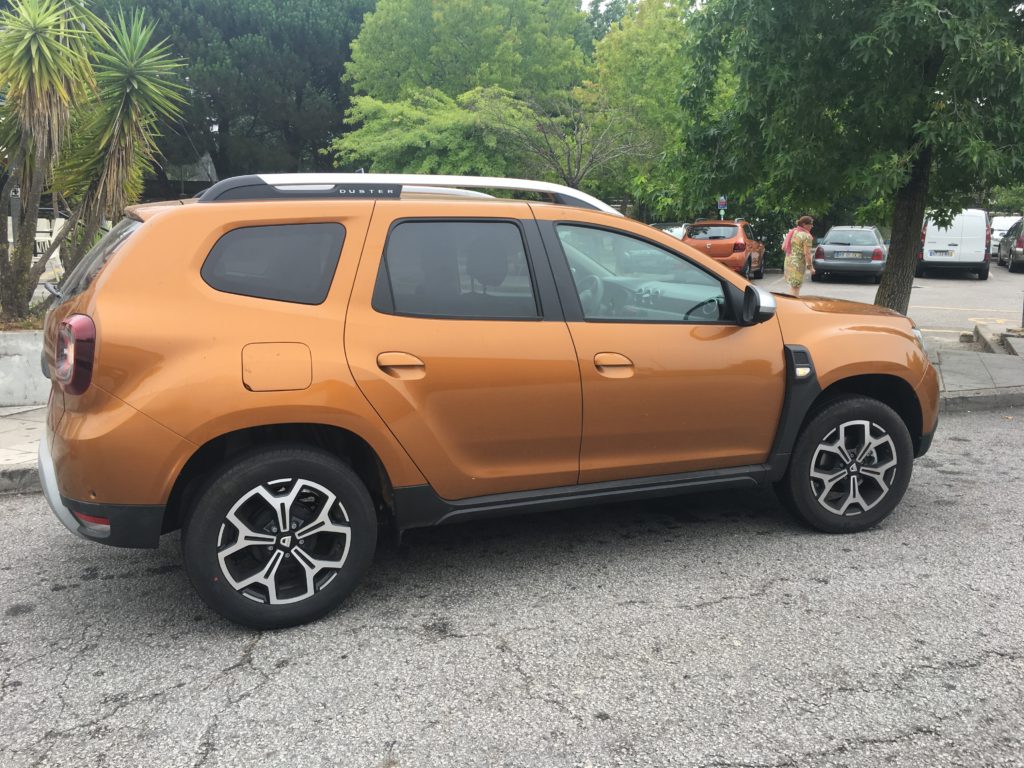
Rent a Small Car with Automatic Transmission
And always get a car with automatic transmission. Yes, it costs more. But Europe is not a flat continent, and driving a manual on steep switchbacks, in city traffic, or on narrow mountain roads is considerably more stressful than it sounds at home.
We’ve learned this the hard way. On one memorable trip, Gregg couldn’t figure out how to put our manual rental into reverse. A week later, we nearly slid into the ocean beneath the parking area near Mont-St.-Michel.
I still break into a cold sweat whenever I think about it.
Pay the difference and get an automatic. You’ll add years to your life.
For longer trips of three weeks or more, leasing can be significantly cheaper than renting and typically includes all insurance and taxes in the rate. My Driving in Europe guide covers leasing in detail.
Navigating in Europe
Driving in Europe is a two-person job. One person drives, the other navigates.
I use Google Maps on my phone and mute the car’s built-in GPS to avoid competing voices. I then listen to Google Maps through one earbud and direct Gregg. He keeps his eyes on the road and hands on the wheel.
That said, GPS does not prevent getting lost. Many times we’ve driven in circles while I yell at the GPS lady as though she’s real and Gregg weaves through traffic with his hands in a death grip on the steering wheel.
For long drives, pick up a paper map at a gas station. Zooming in and out of a phone screen gets tiresome, and a paper map gives you the big picture of your journey at a glance.
Before you set off each day, check Google Maps for traffic conditions on your planned route. Red means slow, and sometimes construction on major highways can delay you for hours.
We still reminisce about the four-hour traffic jam near The Hague with an eight-year-old in the back seat. It was not a highlight of the trip.
If you’re using Google Maps to navigate, you’ll need a lot of data. I buy eSIMs from Airalo so I always have enough data for long drives.
When choosing routes, pay attention to how the road looks on the map. If it twists like a demented roller coaster, reconsider. Mountain roads that look scenic on a map are often so demanding that the driver can’t enjoy the view anyway.
Want the Complete Driving in Europe Guide?
This post covers the essentials. For the full picture, including country-by-country driving rules, low emission zones, vignette requirements, a pre-departure checklist, and a trip planning workbook with automatic fuel and budget calculations, my Driving in Europe guide has everything you need before you turn the key.
Get the guide for $7.99 through May 31, 2026 — regular price $9.99.
Driving on Highways in Europe
European highways are generally excellent. In some countries, such as Portugal, they’re virtually empty. In others, notably Belgium and the Netherlands, they’re packed with trucks the size of Tyrannosaurus rexes. Keep your wits about you and drive defensively.
Radar and Speed Limits
Radar is everywhere in Europe. Picture this: three months after you return home from your European vacation, a letter arrives. You open it to find a speeding ticket written in several languages with a hefty fine attached, usually €80 or more.
The only way to never get a speeding ticket in Europe is to always drive the speed limit, even when other cars are whizzing past you. GPS warnings about speed traps are useful but not foolproof. The speed limit is the only reliable protection.
The Passing Lane
The passing lane on European highways is not a cruising lane. It exists for passing and nothing else. Move into it to pass, then move back immediately. Linger there and you’ll have a sports car on your bumper within seconds driven by a gesticulating mad man.
Toll Roads
Toll roads are common in France, Italy, Spain, and Portugal. Take a ticket when you enter, and then pay when you exit based on distance traveled. Do not lose your ticket. If you do, you’ll be charged for the entire length of the motorway regardless of how far you actually traveled.
We’ve made that mistake and it hurts. Playing the dumb tourist doesn’t work. I know because I’ve tried.
Keep your gas tank at least half full on long highway drives. Getting stuck in a construction delay with an empty tank is an experience worth avoiding.
My Driving in Europe guide covers toll systems, vignettes, and low emission zones country by country.
Driving in the Country in Europe
One of the best reasons to rent a car in Europe is to explore countryside that trains don’t reach.
Park outside the walls of a medieval village, stroll through tiny cobbled streets, stop for a picnic on a deserted beach, and find the small regional museum that isn’t in the guidebook.
Country Roads
Some country roads are single lane with more bends than feels decent. Slow down and watch for mirrors attached to poles at blind corners, which show you whether something is coming from the other direction.
If there’s no mirror, tap your horn before rounding a blind corner. If you do meet someone head on, pull right and trust that the other driver will do the same. European drivers are accustomed to tight spaces.
The golden rule: drive slowly and carefully. Just because locals drive fast on narrow roads doesn’t mean you have to.
Roundabouts
Roundabouts are everywhere in Europe, particularly in France, and mastering them is non-negotiable.
The rule is simple: traffic already in the roundabout has right of way. Wait until your way is clear before entering. Once inside, get into the correct lane for your exit.
This is easier said than done. Many times I’ve been uncertain which exit Gregg should take, so I’ve told him to go around again while I figure it out. Sometimes we’ve circled twice, even three times.
Nobody is keeping score. Just go around again.
Navigating in Cities and Towns
Even with GPS, driving in European cities is challenging. Traffic is horrendous, one-way streets abound, road works contradict GPS directions, and drivers are impatient.
We’ve driven into the heart of Paris a few times, and I don’t recommend the experience. On one memorable occasion we drove through the pedestrian-only plaza behind the Pompidou Center into a tiny one-way street going the wrong way.
I book a hotel on the outskirts, use taxis or public transit to reach the center, and leave the car in the hotel garage. You’ll save money on parking, avoid the stress of city driving, and arrive at your destination ready to enjoy yourself.
ZTLs and Low Emission Zones
Many European cities restrict access to their historic centers. Italy’s ZTL zones (Zona a Traffico Limitato) prohibit non-residents from driving in town centers during certain hours.
London, Paris, and other major cities have Low Emission Zones that charge fees or restrict older vehicles entirely. Entering these zones without knowing the rules generates automatic fines sent to your home address months later.
Check restrictions for every city on your itinerary before you arrive. My Driving in Europe guide covers ZTLs and LEZs city by city.
Medieval Villages
Never drive into a medieval village. Park outside the walls and walk. The streets were designed for mules, not rental cars, and the consequences of discovering this firsthand are both expensive and embarrassing.
Driving Safely
Don’t Drink and Drive
Penalties for drinking and driving in Europe are severe. Blood alcohol limits vary by country: France, Germany, Italy, and Spain allow 0.5%, the UK allows 0.8%, and several eastern European countries including Hungary and Romania have a zero tolerance policy.
When in doubt, leave the car at the hotel and walk or take a taxi.
Avoid Driving at Night
Driving at night in unfamiliar European countryside is a lot more challenging than it sounds. Poorly lit roads, unfamiliar turns, and the absence of landmarks you recognized during the day all conspire against you.
Getting lost at night in rural Europe is not fun. I speak from experience.
If you know you’ll be returning to your accommodation after dark, note landmarks and turns during your daytime drive. If GPS fails (and sometimes it does), you want to know where you are.
Theft
Never leave anything valuable in your car, even at autoroute rest stops. We always take our laptops into the café with us.
We also avoid sightseeing with luggage in the car. Instead we go directly to our hotel, unload, and then drive to wherever we want to go.
Accidents
If you’re involved in an accident, call the emergency number provided with your rental immediately. Having an International Driving Permit will make dealing with local police considerably easier.
Parking the Car
In cities, you’ll pay a pretty euro for parking, usually at least €30 per day. When possible, book hotels that include parking, even if it costs extra. Free hotel parking is almost never available in European city centers, so factor the cost into your accommodation budget when comparing options.
If you end up in an underground parking garage, take photos immediately: your parking stall number, the floor level, and the nearest exit sign.
More times than I care to admit, Gregg and I have wandered frantically around multi-storey underground lots searching for our car. The photos take ten seconds and save considerable anguish.
Have your credit card ready to pay for parking because many machines don’t take cash. Take a ticket when you enter the car park and then leave to enjoy your day.
When you return to the car park, go directly to the ticket machine, insert your ticket, use your credit card to pay what you owe, take the receipt, go get your car, and then use the receipt to exit.
The system works well, so long as you don’t lose your ticket.
Driving in the UK
In the UK, always look both ways several times before pulling out, particularly on busy roads.
If you’re from North America or any country that drives on the right, you’ll be in the habit of looking left before you pull out to turn right. If you do that in the UK without also looking to your right, you could be killed. I’ve had a few close calls.
Also, in the UK, be careful driving on country roads with no lines. You may naturally drift over to the wrong side of the road, with dire consequences if you encounter oncoming traffic.
Driving in Europe FAQs
Yes, driving in Europe is generally safe, especially if you’re an experienced driver. Roads are well maintained, traffic laws are enforced, and European drivers are typically skilled and confident. The biggest challenges tend to be narrow streets, roundabouts, and fast-moving traffic rather than safety issues.
Several European countries technically require an IDP, including Italy, Spain, Greece, and Austria. In 25 years of driving in Europe, we’ve never been asked to show one, but for a cost of around $20, it’s worth having, particularly if you’re involved in an accident and dealing with local police who don’t speak English. Get it before you leave home because you can’t apply for one once you’re in Europe.
Driving in Europe can feel intimidating at first, particularly navigating roundabouts and adjusting to faster, more assertive traffic. After that, most travelers adjust quickly. The key is to avoid city driving where possible, and focus on rural areas. Highways are easy to navigate, signage is clear, and GPS works well.
It depends on your itinerary. Trains are ideal for long distances and city-to-city travel, especially for solo travelers. Renting a car is best for exploring the countryside, visiting small villages, and traveling as a couple or family. Many travelers combine both by taking trains between regions and renting a car locally.
Yes. European roads are often narrower, speed limits are strictly enforced by radar, roundabouts replace most intersections, manual transmission cars are the norm, and drivers tend to be more assertive and decisive. Toll roads are common in countries like France and Italy, while in the UK, Ireland, Malta, and Cyprus, you drive on the left. None of these differences are insurmountable, but knowing about them before you arrive makes the adjustment considerably smoother.
Yes, but automatic cars cost more and should be booked well in advance. Manual transmissions are far more common in Europe. If you’re not fully comfortable driving a manual, especially on hills or in traffic, paying extra for an automatic is usually worth it.
Yes, and getting more expensive. Fuel costs continue to climb, and you need to factor in rising costs for tolls and parking in addition to insurance. In addition, some countries require vignettes (highway tax stickers) that must be purchased before you drive on their motorways. Low emission zones in major cities can generate unexpected fines (I’ve had a few). However, for couples or families, driving is almost always more economical than buying multiple train tickets, particularly for rural travel where car travel may be the only viable option.
ZTLs (Zona a Traffico Limitato) are restricted traffic zones in Italian city centers that prohibit non-residents from driving during certain hours. Cameras monitor the entrances automatically and fines are sent to your home address months after your trip. Low emission zones operate similarly in cities such as London and Paris, restricting or charging older or more polluting vehicles. Both can catch rental car drivers off guard since there’s no toll booth or immediate indication that you’ve violated anything. Check restrictions for every city on your itinerary before you arrive.
Several European countries require drivers to purchase a vignette, a highway tax sticker, before using their motorways. These include Switzerland, Austria, Czech Republic, Slovenia, and Hungary among others. In some countries you buy a physical sticker at the border or a gas station; in others the system is electronic. Driving without one generates an automatic fine. My Driving in Europe guide covers vignette requirements country by country.
For many travelers, yes. Driving in Europe offers freedom, flexibility, and access to places trains can’t reach. While it requires confidence and preparation, the ability to explore at your own pace often outweighs the challenges—especially for countryside-focused trips.
Last Words on Driving in Europe
Driving in Europe is challenging. You need steady nerves, good reflexes, and a good navigator. If you enjoy driving, have plenty of experience driving in heavy traffic and enjoy the challenge of finding your way on unfamiliar roads, then go for it.
If you choose not to drive, there are options for exploring the countryside. Book the occasional small-group tour or, if you’re traveling with three or more people, hire a driver for the day. Doing so even three or four times during a trip will cost less than renting a car and paying for gas, tolls, and parking.

When I travel solo, I never rent a car. I take trains and buses between cities and towns, hop in taxis to get to my accommodations, and book small-group tours to explore the countryside.
When Gregg and I travel together, we almost always rent a car because we like the increased freedom to go where we want when we want. That said, we breathe a heartfelt sigh of relief every time we return the car unscathed.
Planning a European Road Trip?
Forty plus years of European driving experience went into my Driving in Europe guide. It covers everything this post doesn’t: country-by-country rules, low emission zones and ZTLs, vignette requirements, what to do if you’re in an accident, and a bonus trip planning workbook with automatic calculations for fuel costs, tolls, and budget. If you’re serious about a European road trip, it’s the most useful $7.99 you’ll spend before you leave.
Get the guide for $7.99 through May 31, 2026 — regular price $9.99.
Keep Traveling Smart with Artsy Traveler
Here are more posts I’ve written to help you travel smart in Europe and beyond:
- How to Plan a European Trip: Nine Easy Steps for a Perfect Itinerary
- How to Eat Well in Europe: Dining Tips and Smart Splurges
- How to Experience Europe Without the Crowds: 10 Joyful Travel Tips
- Finding the Best Accommodation in Europe: My Top Tips
- How to Stay Healthy While Traveling in Europe: Practical Tips
- Smart Green Travel: Practical Ways to Travel Sustainably
- Airalo ESIM Review: The Best Way To Stay Connected Abroad
- Best Travel Gear for Europe: What I Pack and Why
Would you like to save this post?

Carol M. Cram writes novels inspired by the arts; runs Artsy Traveler, an arts-focused travel blog, and Art In Fiction, a curated database of 2,700+ novels inspired by the arts; and hosts The Art In Fiction Podcast. She has also authored 60+ textbooks on computer applications and taught at Capilano University for over two decades. Carol lives with her husband, artist Gregg Simpson, on beautiful Bowen Island near Vancouver, BC.

 See all my novels


These driving tips are gold! Driving in Europe can be intimidating, but your insights on rules, parking, and tolls make it so much clearer. Especially helpful for first-timers. Bookmarking this for my upcoming trip – thanks for the advice!
Thanks so much! We’ve driven a LOT in Europe over the last three decades so I’m glad our experiences are helpful. Before every trip, we ponder not getting a car and taking trains instead, but we always end up leasing a car. The freedom is worth it even though I can’t say it’s cost effective. Driving in Europe is not cheap!
Such a useful and practical guide! I love how you cover everything from road rules to scenic routes, really makes the idea of driving in Europe feel exciting and doable. Thanks for the great tips and inspiration!