Consider alloting time during your stay in Copenhagen for taking day trips. You’ll find plenty to see and do in the city to fill at least three days, but after that, it’s time to venture farther afield.
Your Copenhagen Card (see more below) is your best friend. Use it to take trains all over the greater Capital region and to visit some of Denmark’s premier castles.
The map below shows the locations of the three recommended day trips. You could possibly see all three in one day if you’re traveling by car, but that might be overkill!
I suggest taking just one trip a day so you have time to enjoy the locations and still get back to Copenhagen in time to take in one or two more local sights and then enjoy a leisurely dinner.
On the map below, #1 is the Copenhagen Hovedbanegården, aka the Central Station. You’ll be catching the trains from here.
Trip map created with Wanderlog, the best trip planner app on iOS and Android
Frederiksborg Castle
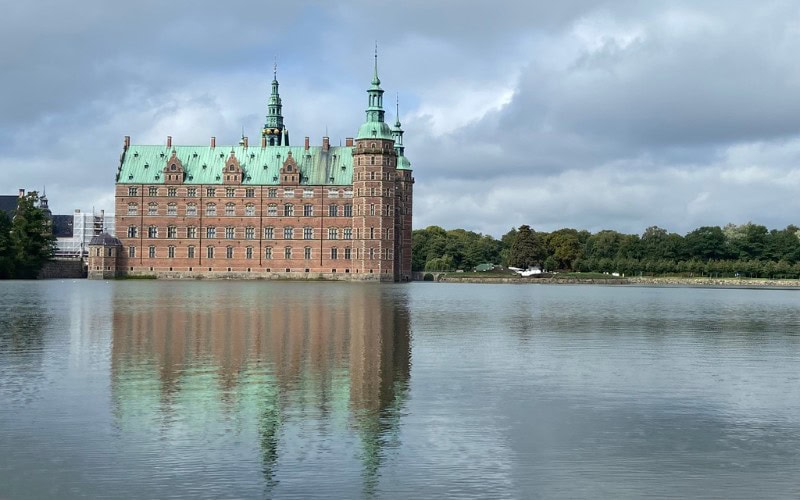
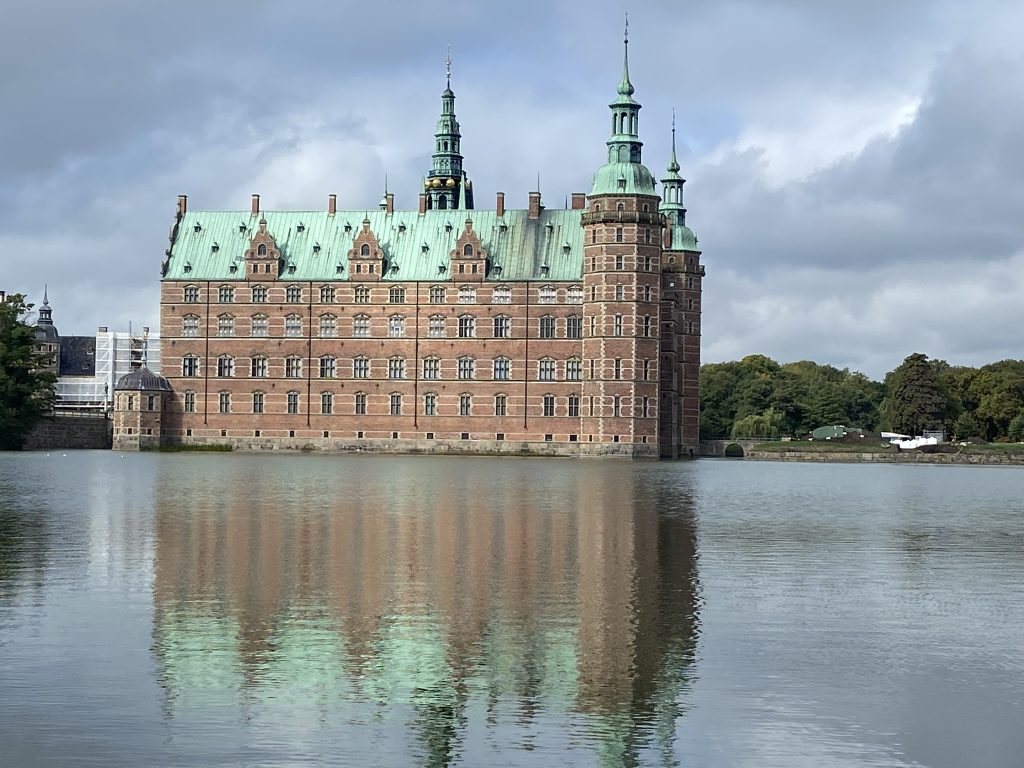
The largest Renaissance complex in the Nordic region is Frederiksborg Castle (#2 on the map above) in Hillerød, about 30 minutes outside Copenhagen by train.
The castle is one of the must-do day trips from Copenhagen, particularly if the weather is fine. Set in a lake and surrounded by gardens, the castle is extremely photogenic.
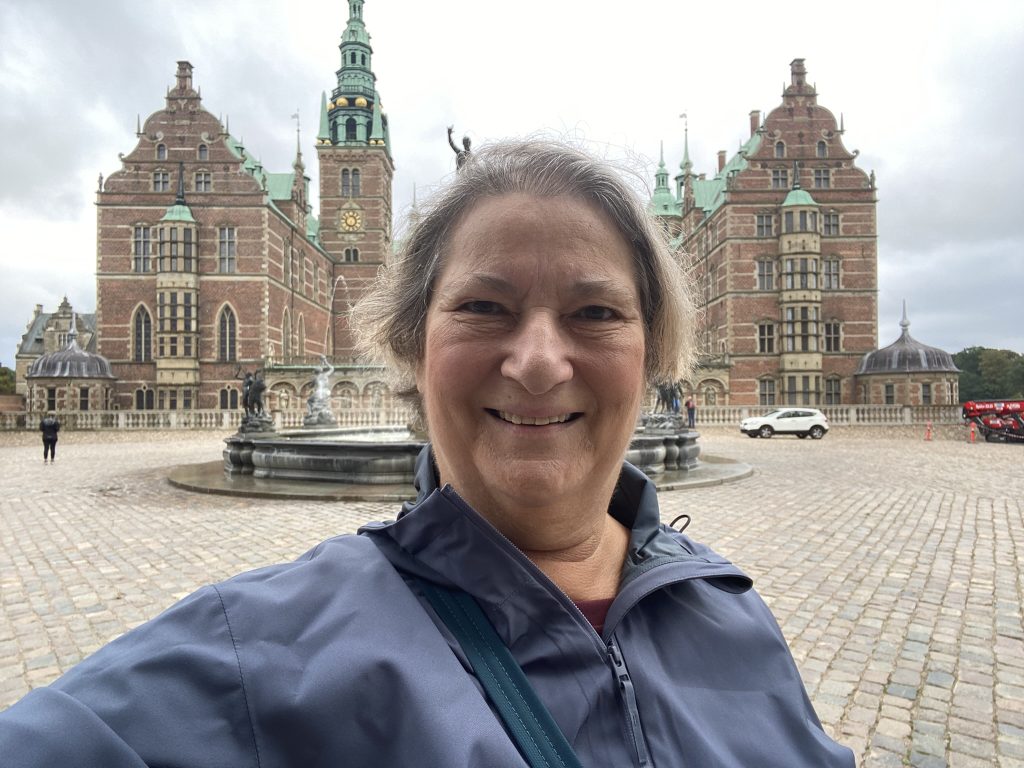
Carol arrives at Frederiksborg Castle during her day trip from Copenhagen
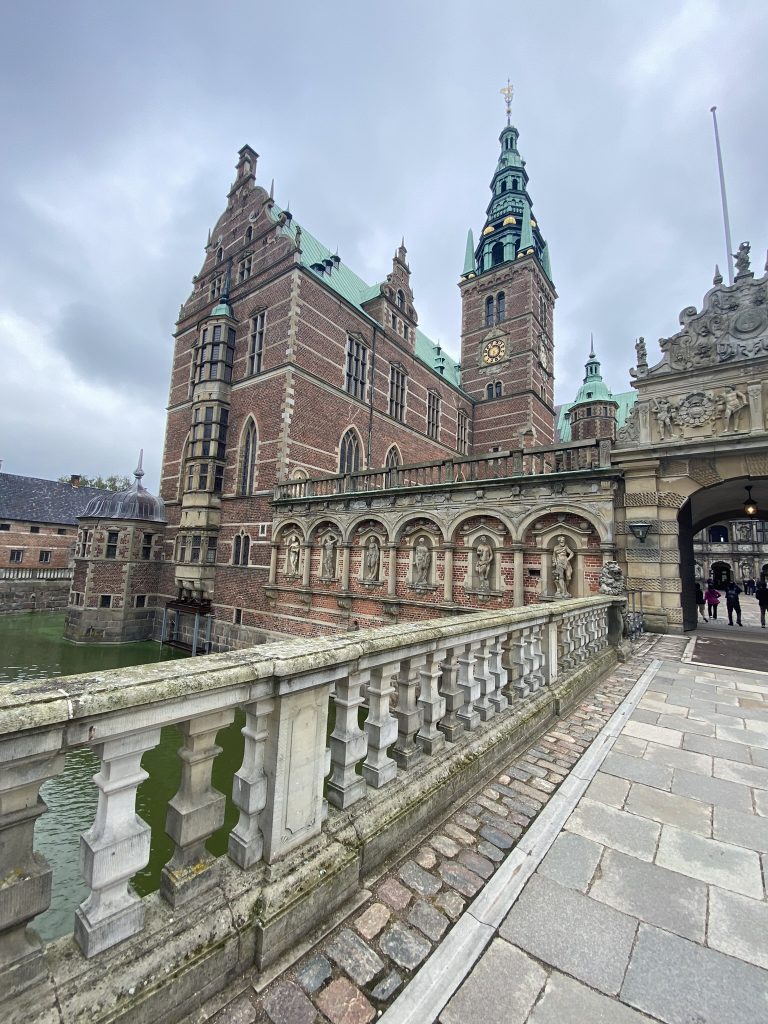
Walked over the bridge to the entrance to Frederiksborg Castle
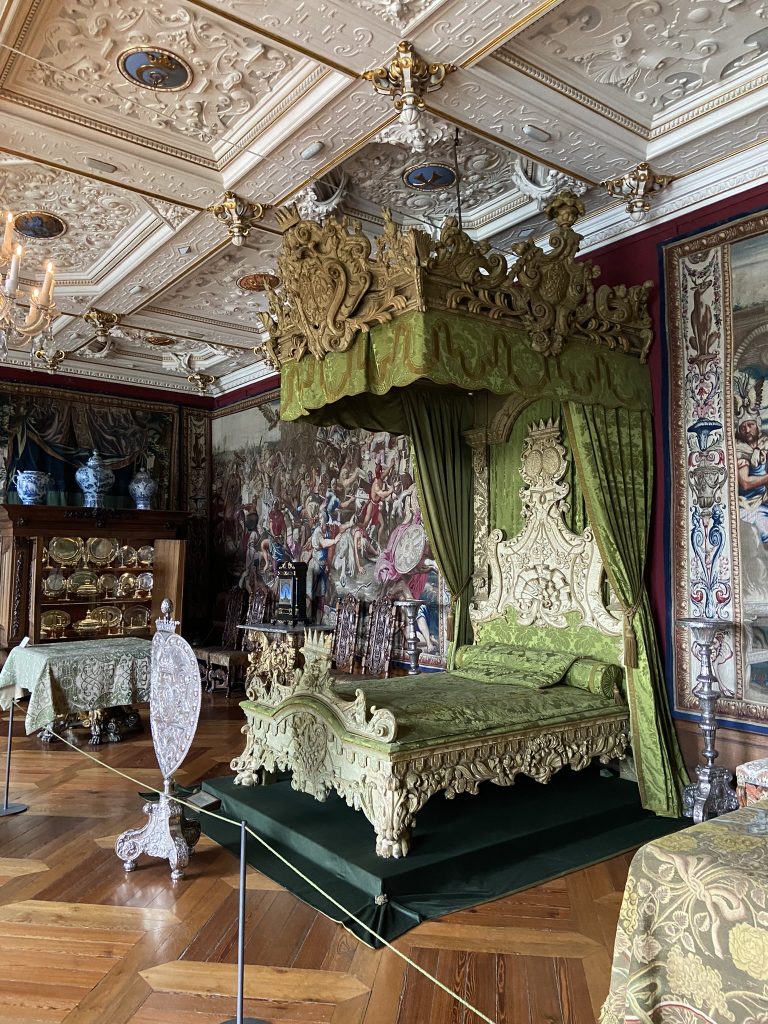
Inside the castle is room after sumptuous room. Wear your walking shoes–it’s a big place!
I toured the castle fairly quickly because I wanted to get outside to view the castle from the lake. However, if you’re interested in Danish history, the castle could easily fill an hour or two of your time.
Here’s a selection of a few of the rooms and displays I wandered through.
One of many sumptuous royal apartments
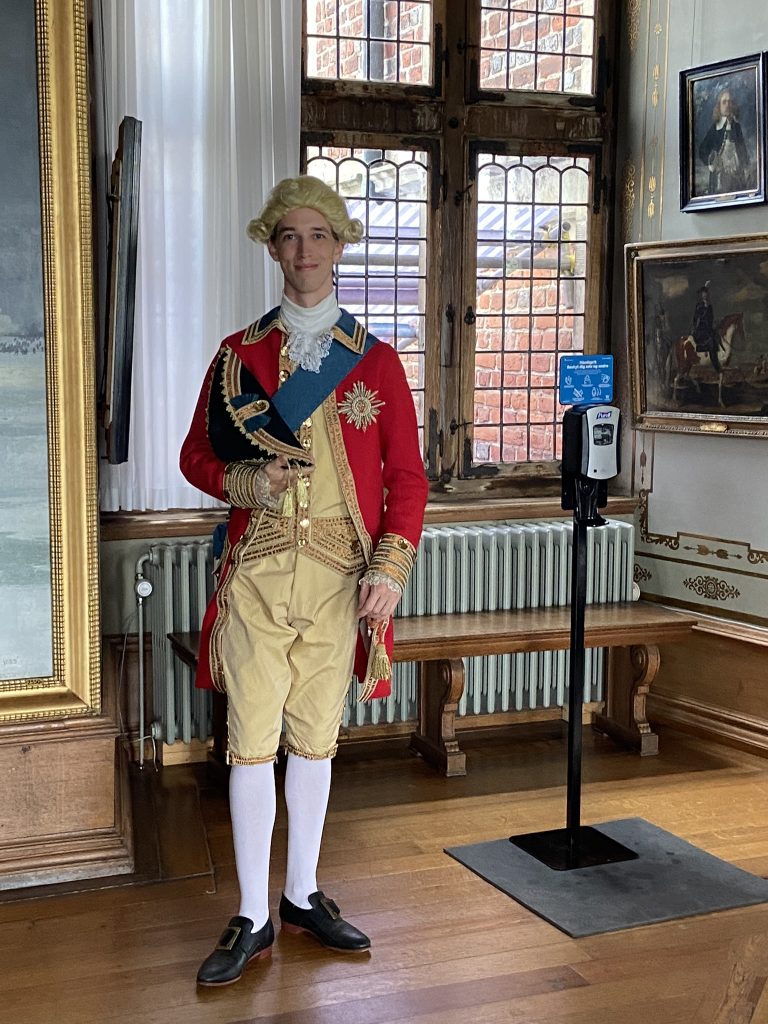
An 18th-century footman is happy to pose for photos
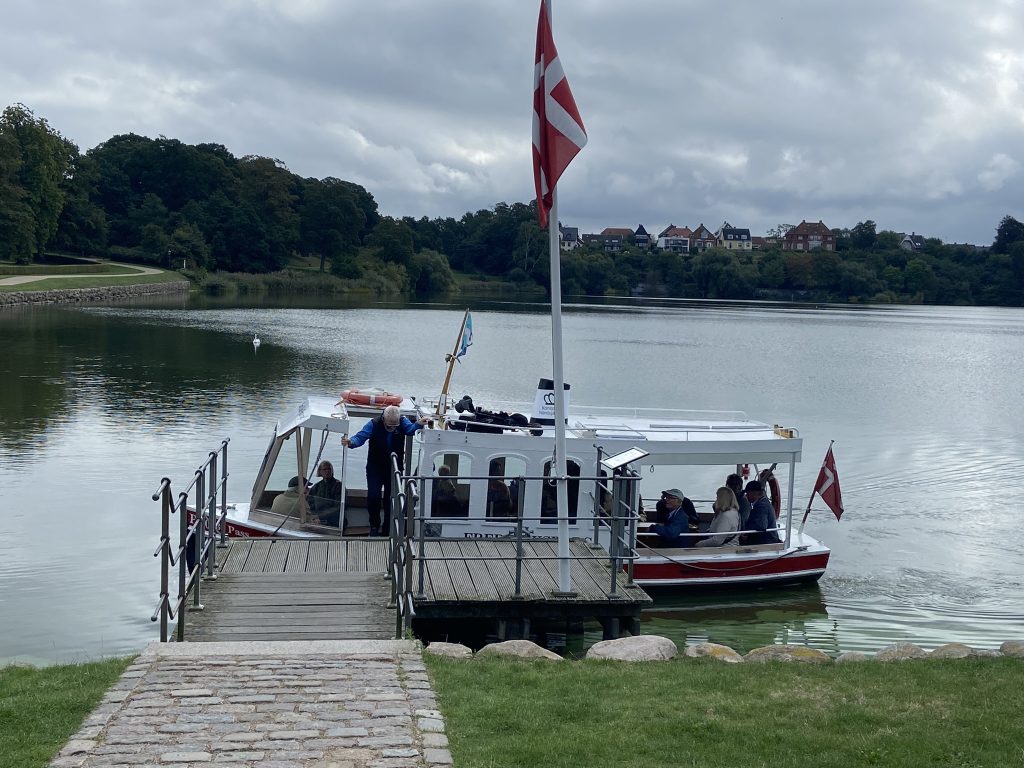
Outside the castle, you can tour the gardens and then catch the cute little launch that goes from a dock near the castle across the lake to the town of Hillerød. The cost of the launch (along with the castle entrance and all busses and trains) is included with the marvelous Copenhagen Card.
Cost of the ferry across the lake is included with the Copenhagen card
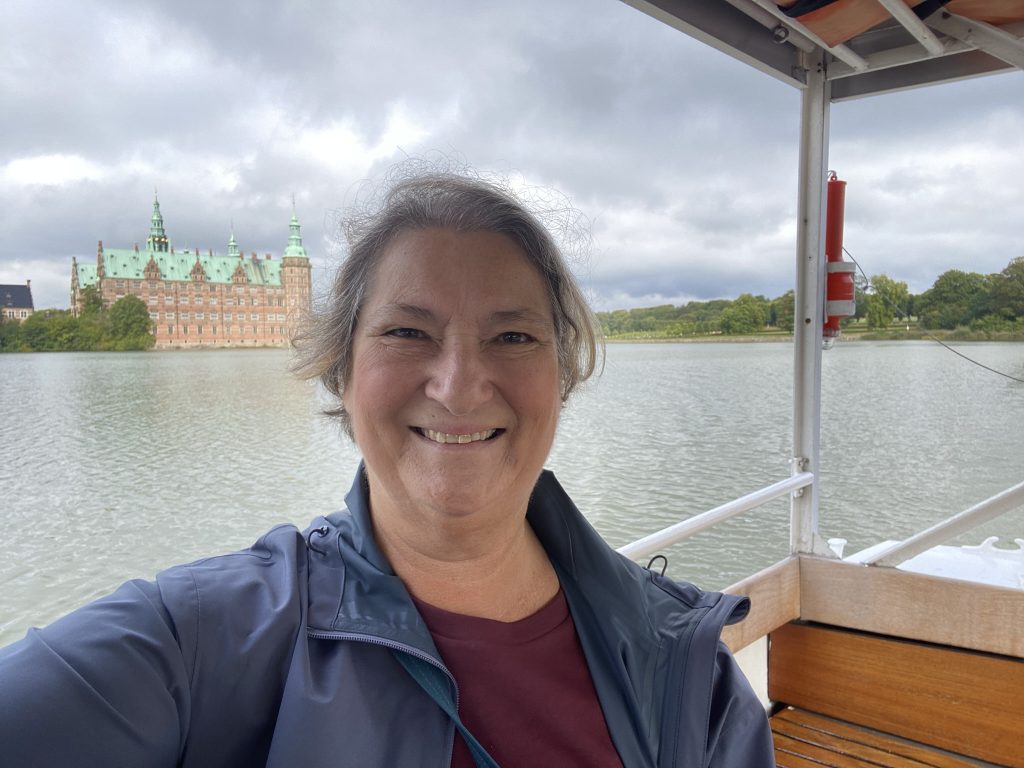
On the launch across the lake at Frederiksborg Castle
As I was crossing the lake, the sun came out with magical results.
Fredericksborg Castle
Hillerød
For your day trip to Frederiksborg Castle, you’ll catch the train from Copenhagen to Hillerød and then from the station, take a bus or walk to the castle.
Many of the people getting off the train are also tourists and heading for the castle, so it’s pretty easy to just follow the crowd to the bus stop. If in doubt, ask someone who looks like a local. I never encountered anyone in Denmark who did not speak excellent English.
After touring the castle, you can either take the bus back to Hillerød or, like I did, catch the launch across the lake. It docks at Hillerød.
Wander through the attractive little town, grab a coffee in the central square, browse a few shops, and then walk to the train station for the journey back to Copenhagen. The entire trip to the castle and Hillerød lasts only a few hours unless you are a super-fan and want to examine every part of the castle open to the public and also walk the miles of pathways in the formal gardens.
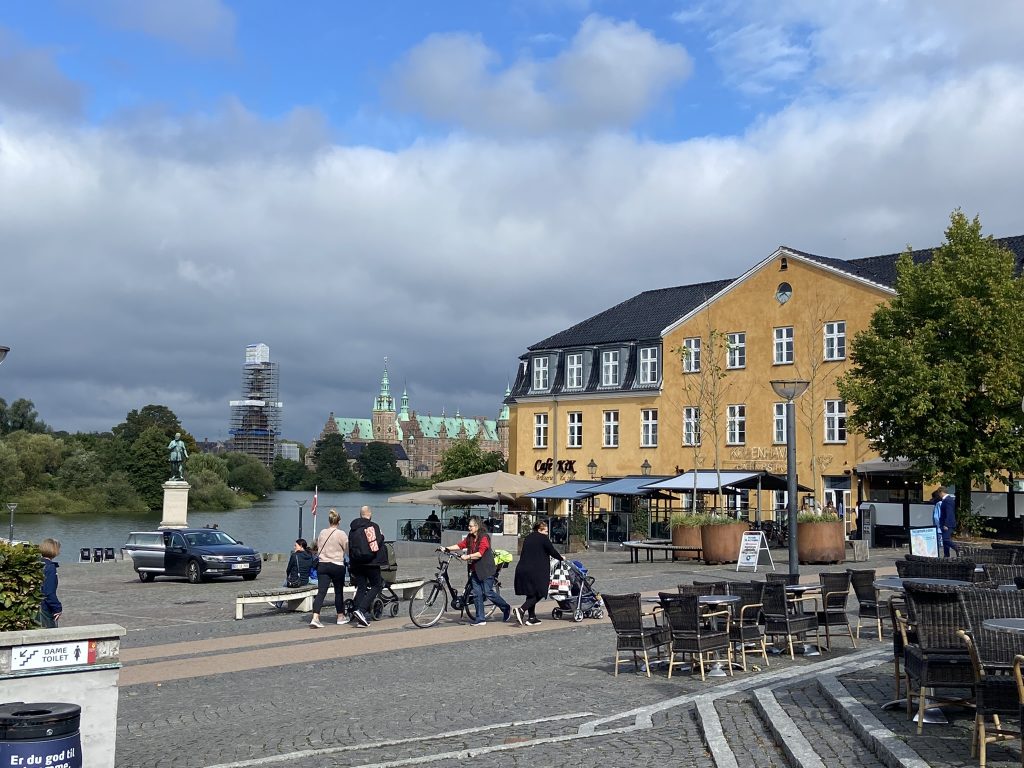
The charming town of Hillerød with the castle across the lake
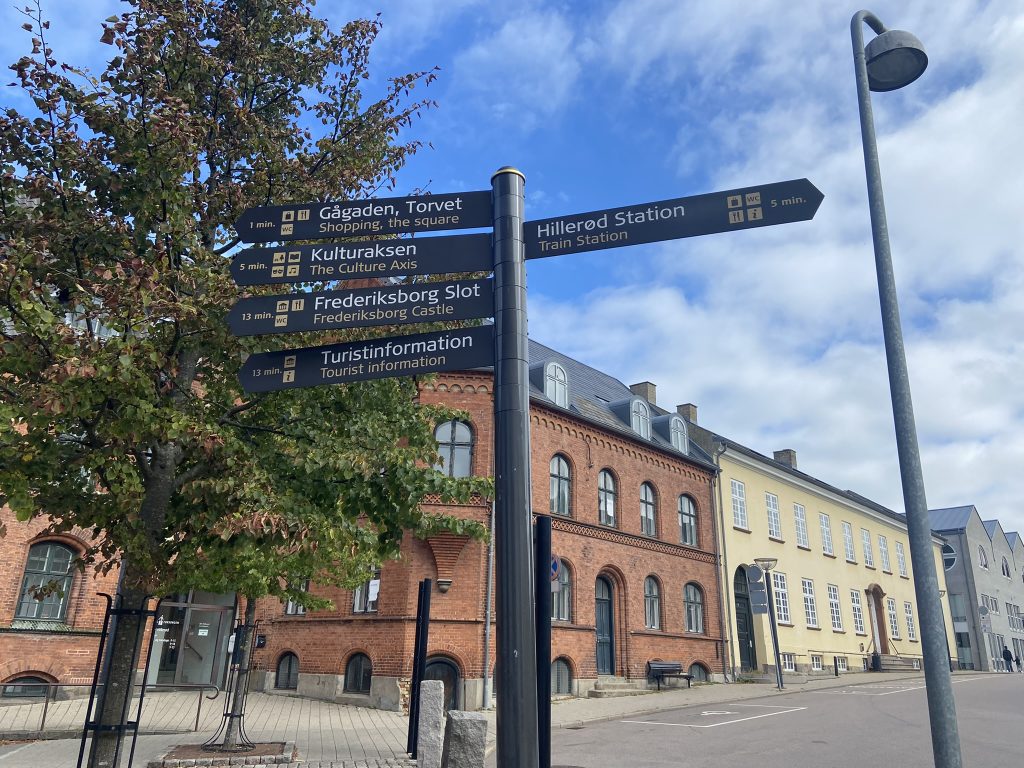
Signposts in Hillerød leading me back to the station
Frederiksborg Castle Practical Information
Frederiksborg Castle is open every day throughout the year from 10:00 to 17:00 April to October and 11:00 to 15:00 November to March. Admission is 90 DKK for adults, but you can use your Copenhagen Card (see below for details). The museum is located in Hillerød, a 40-minute ride on S-train line A from Copenhagen. From Hillerød Station you can walk to the castle (View the route here) or take the local busses 301 (direction: Ullerød) or 302 (direction: Sophienlund) and get off at the stop “Frederiksborg Slot”.
Kronborg Castle
Located on the sound between Sweden and Denmark about 40 minutes north of Copenhagen, Kronborg Castle (#3 on the map above) and the charming town of Helsingor are both great choices for a day trip from Copenhagen.
In fact, if you only have time for one of the three day trips presented in this post, I’d choose Kronborg. While the castle itself is not as large and imposing as Frederiksborg Castle, the town of Helsingor has more to offer.
Also, if you’re a Hamlet fan, then you have to visit Kronborg Castle, which was the setting for Shakespeare’s play. It’s easy to imagine Prince Hamlet wandering through the lofty halls of the castle and looking out to sea, brooding and plotting revenge.
If you have a car, you can even zip across on the ferry to Helsingborg in Sweden and from there carry on north to Gothenburg and even Stockholm.
Touring Kronborg Castle
Kronborg Castle towers above the narrow sound between the coasts of Denmark and Sweden. It’s a Renaissance castle complete with spires and towers, and is a designated UNESCO World Heritage Site.
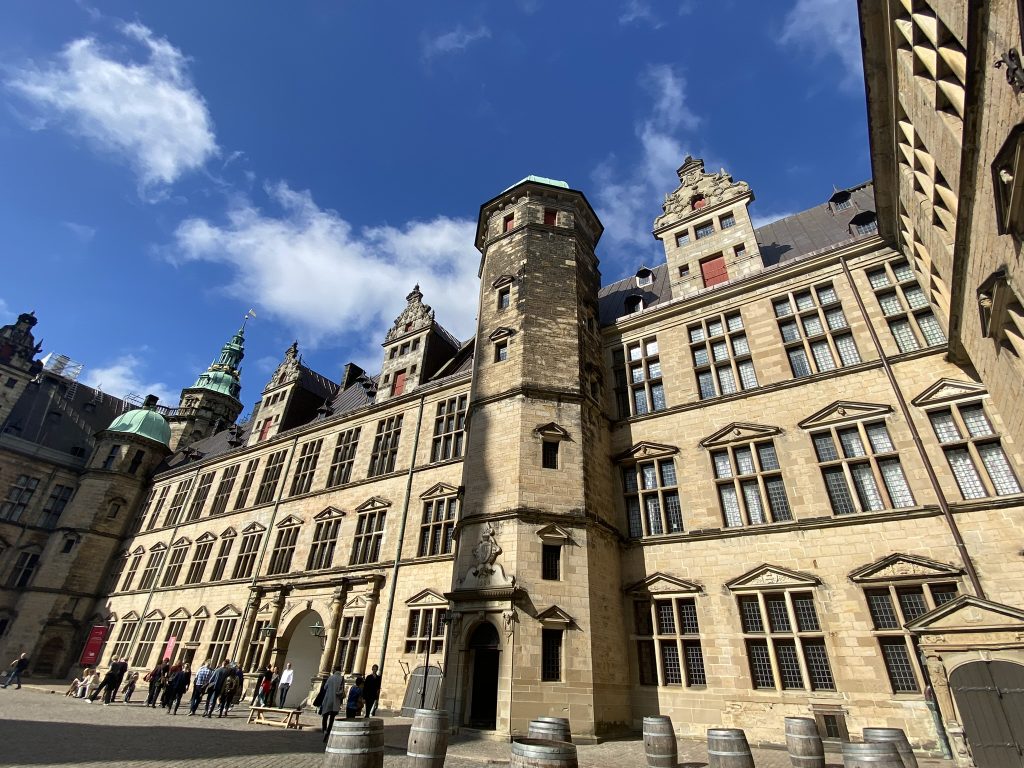
Courtyard instide Kronborg Castle
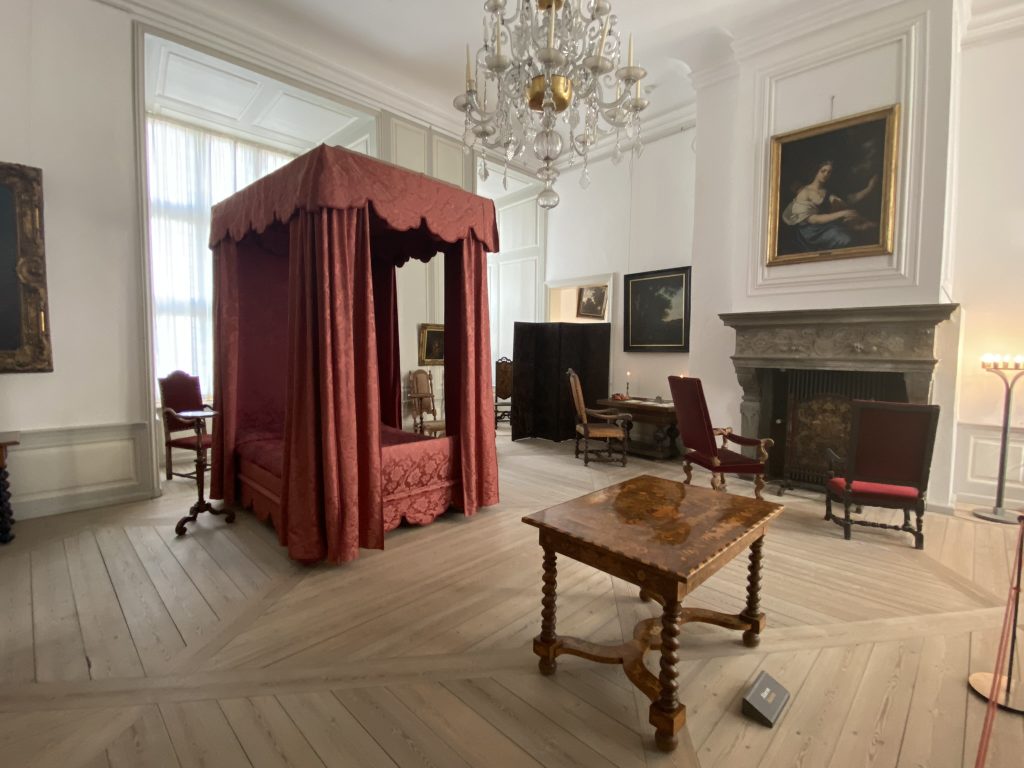
Inside the castle are rooms full of period furnishings. The prevailing feeling is a bit starker than Frederiksborg Castle. It’s worth touring, but doesn’t require a lot of time.
Bedroom in Kronborg Castle
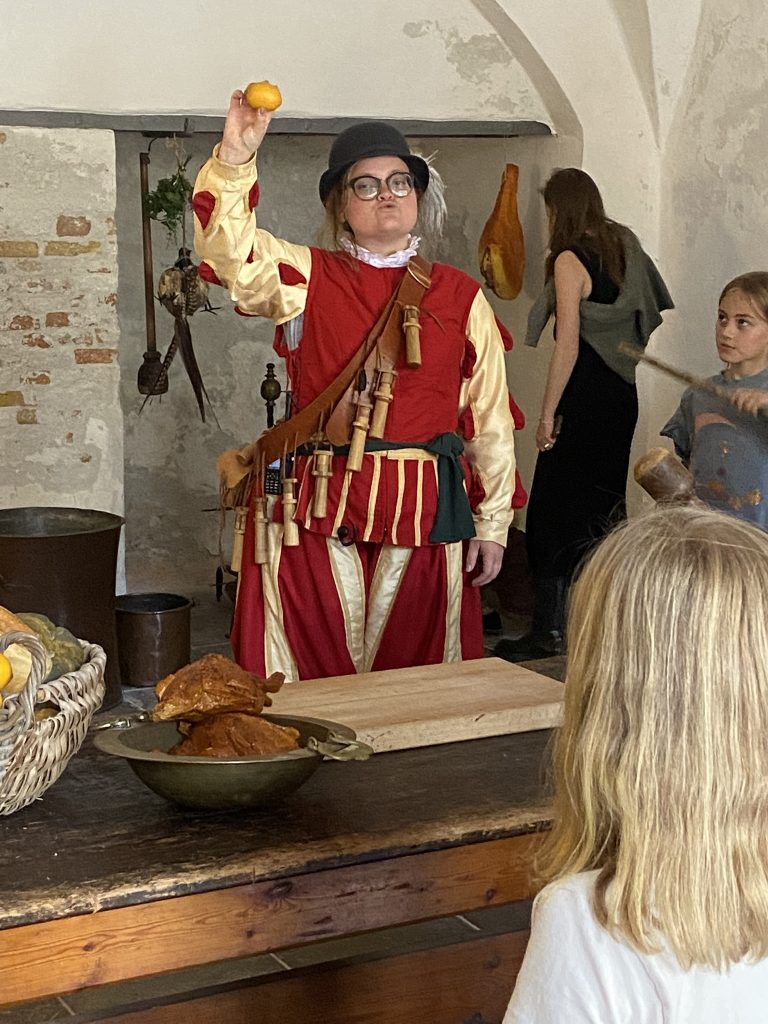
Costumed guide talks about food at Kronborg Castle
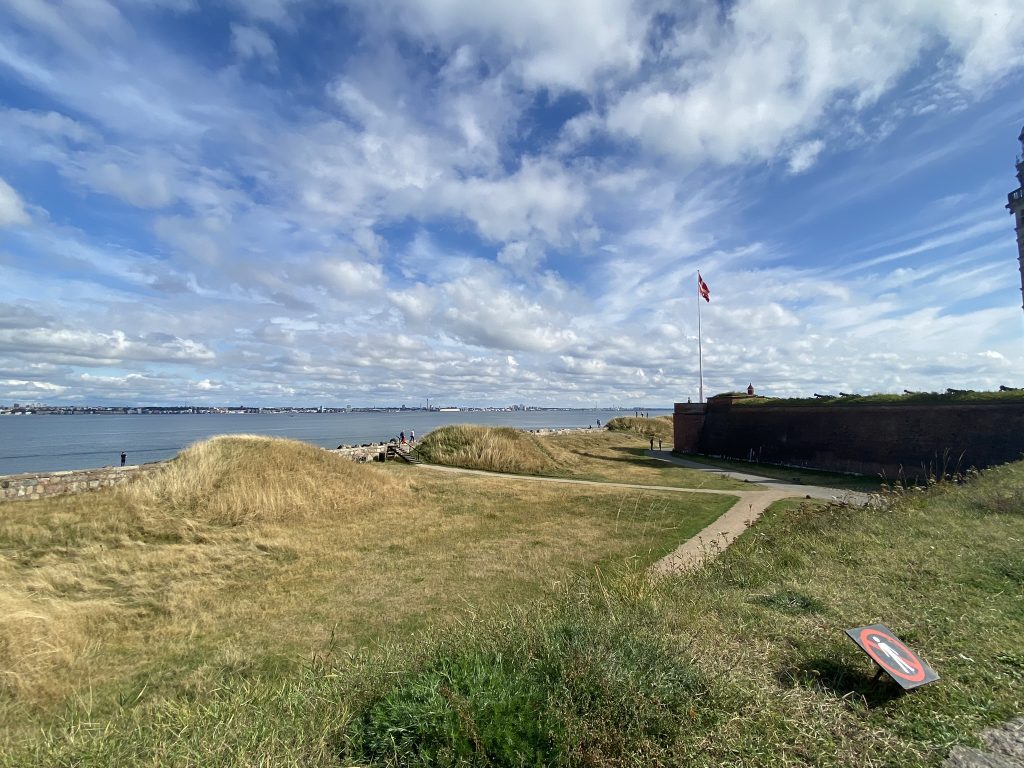
The views from the castle over the sound to Sweden on the far shore are lovely on a clear day. Check out the clouds!
View from Kronborg Castle toward Sweden
Kronborg Castle Practical Information
Kronborg Castle is open daily from 10:00 to 17:00 May to October and from 11:00 to 15:00 November to April. Admission is 125 DKK for adults, but you can use your Copenhagen Card (see below for details). The castle is located in Helsingør, a 40-minute train ride from Copenhagen. From the station, you can walk about ten minutes to the castle.
Helsingør
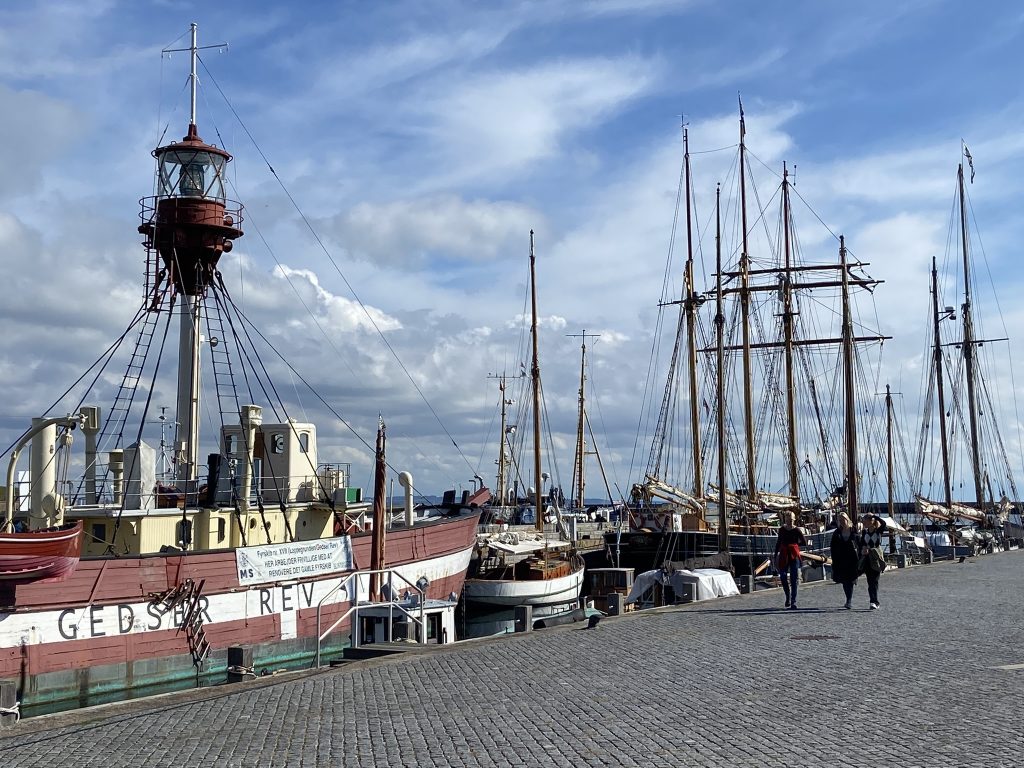
I enjoyed wandering around Helsingør. It’s not at all touristy; the vast majority of the people out soaking up the sunny September day were locals. The harbor area with its ships and Maritime Museum are worth lingering in during your day trip from Copenhagen.
Lively harbor with tall ships in Helsingør
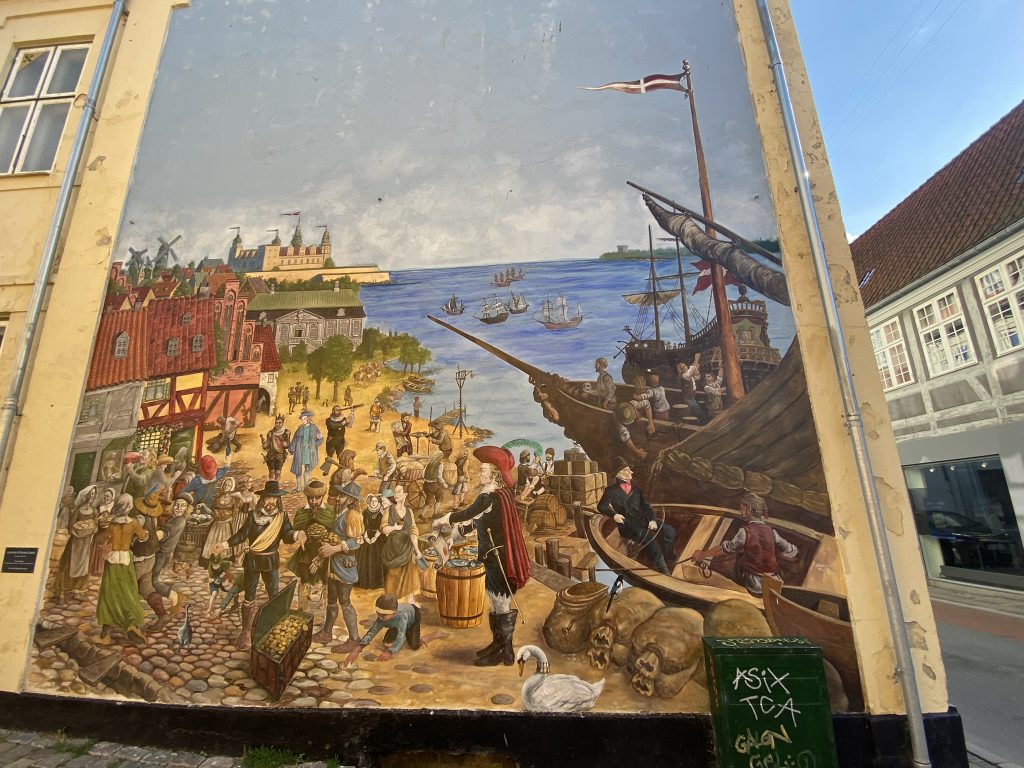
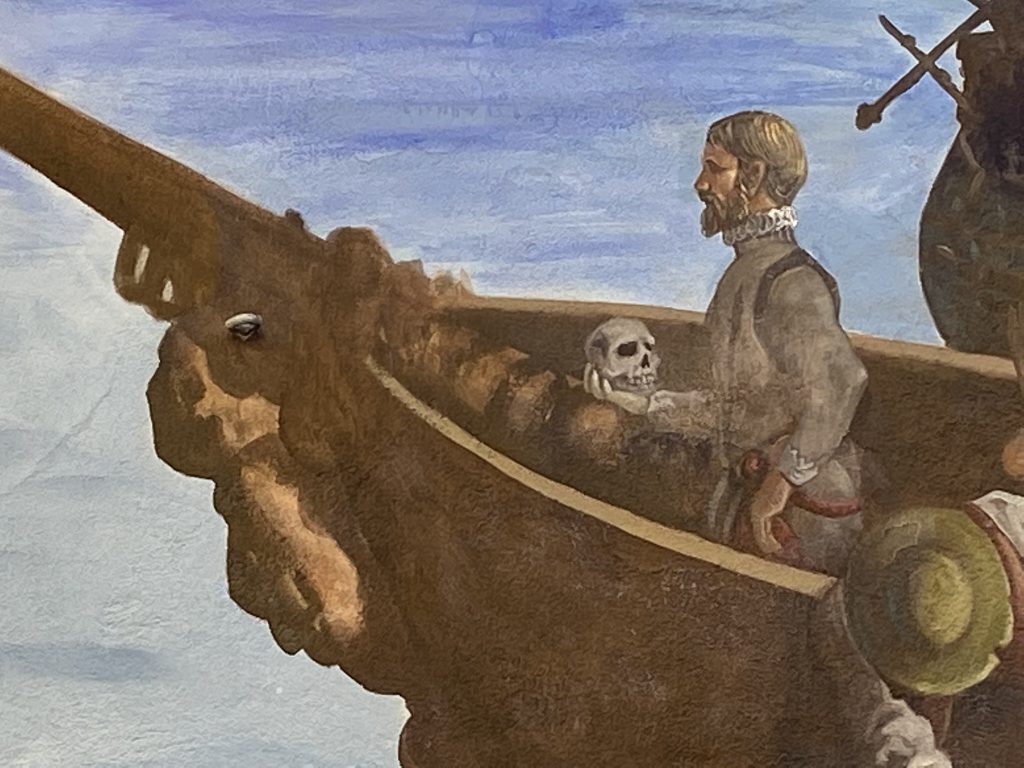
Also view murals on buildings throughout the town. I particularly enjoyed seeing the one of Hamlet holding Yorick’s skull.
Colorful mural of Helsingør in the 16th century
Close-up of Hamlet in the prow of a ship in a mural
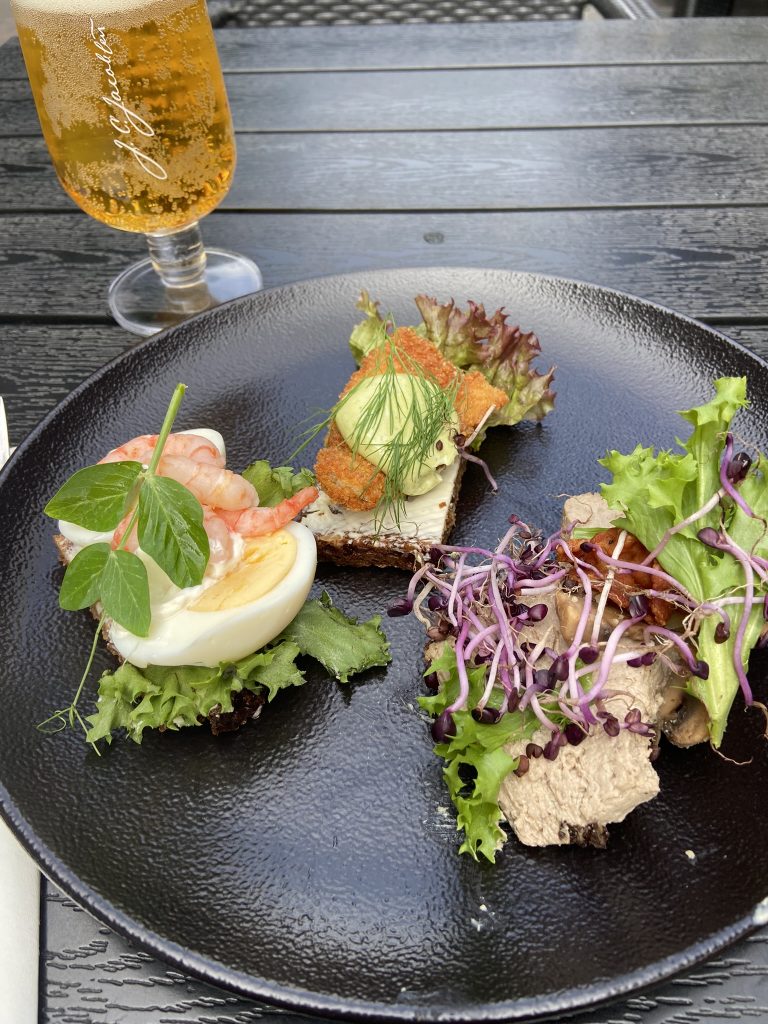
I stopped for lunch on a pedestrian street full of outdoor cafes and enjoyed three scrumptious Smørrebrød – open-faced sandwiches, along with a strong and satisfying Danish beer.
As in many restaurants that serve Smørrebrød, I was invited to go check out a mouth-watering display of the tasty sandwiches and then choose the number and kind I wanted. Each of the three I chose was a winner.
Smørrebrød for lunch in Helsingør
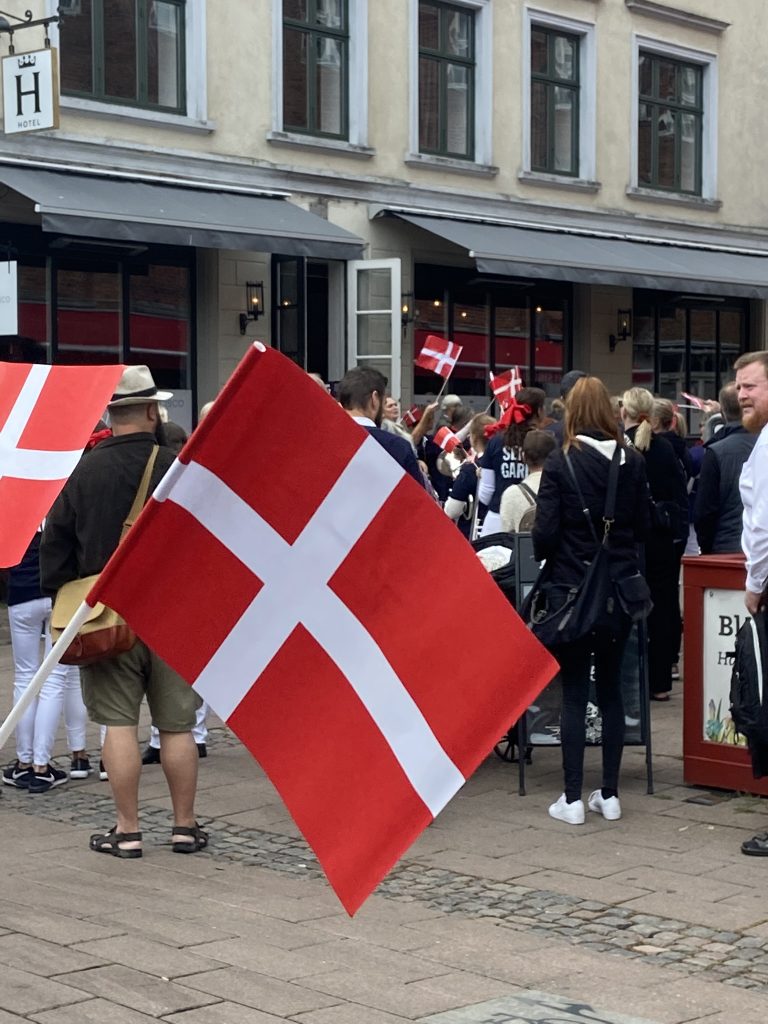
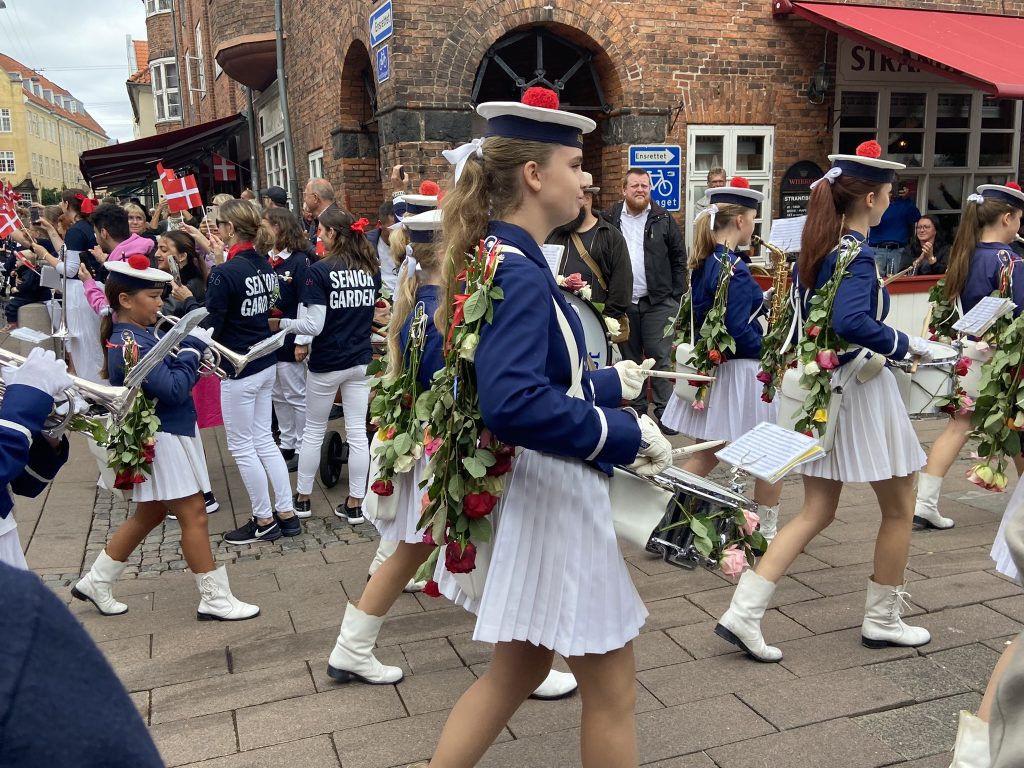
I happened to arrive in Helsingør when locals were celebrating the Golden Jubilee of Queen Margrethe. There were lots of Danish flags and a parade!
Danes celebrating the Golden Jubilee of the Queen
Parade for the Golden Jubilee in Helsingør
A good sightseeing strategy if you want to see both Kronborg Castle and the Louisiana Museum of Art on a day trip from Copenhagen is to do both on the same day. They are quite close together in the same geographical area (north of Copenhagen). In fact, you take the same train from Copenhagen. Go to Kronborg Castle first and then backtrack to the Louisiana Museum or go the other way around. Bear in mind that you’ll find more and cheaper lunch options in Helsignor. At the Louisiana Museum, you only have the fancy restaurant at the museum (excellent food but not cheap!).
Frederiksborg & Kronborg Day Tours
You can choose to take a guided day trip from Copenhagen that includes both Frederiksborg Castle and Kronborg Castle. This tour also goes to Roskilde where you’ll tour the Viking Ship Museum.
The Louisiana Museum of Modern Art (#4 on the map) is about a 30-minute train ride north of Copenhagen and is world-renowned as one of Europe’s best modern art museums.
I’ll confess that I found the exhibitions a tad underwhelming. However, the setting of the museum on the North Sea and the many outdoor sculptures are fabulous and well worth the trip.
Founded by Knud W. Jensen to house Danish modern art, the museum opened in 1958. Within a few years, the focus shifted from featuring predominantly Danish art to becoming an international museum that featured internationally renowned artists.
Check what exhibitions are on, but even if they don’t appeal, visit the museum anyway. It makes for a lovely morning out from Copenhagen. You reach it by train (covered by the Copenhagen Card) followed by a pleasant 20-minute stroll along a suburban road to the museum.
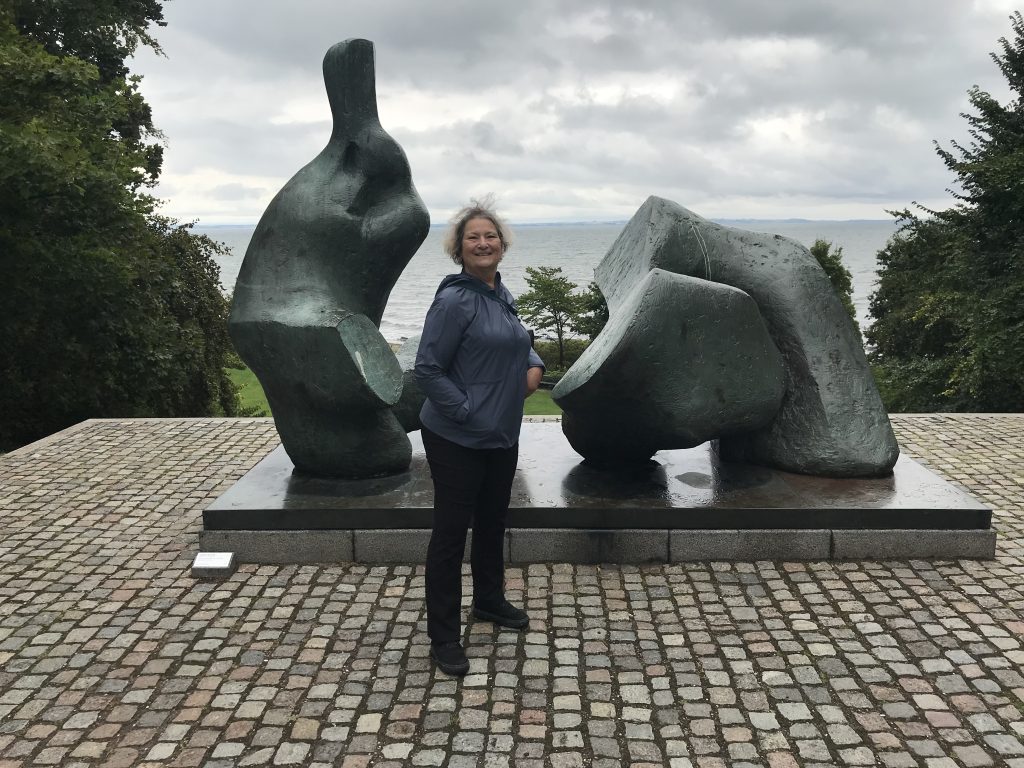
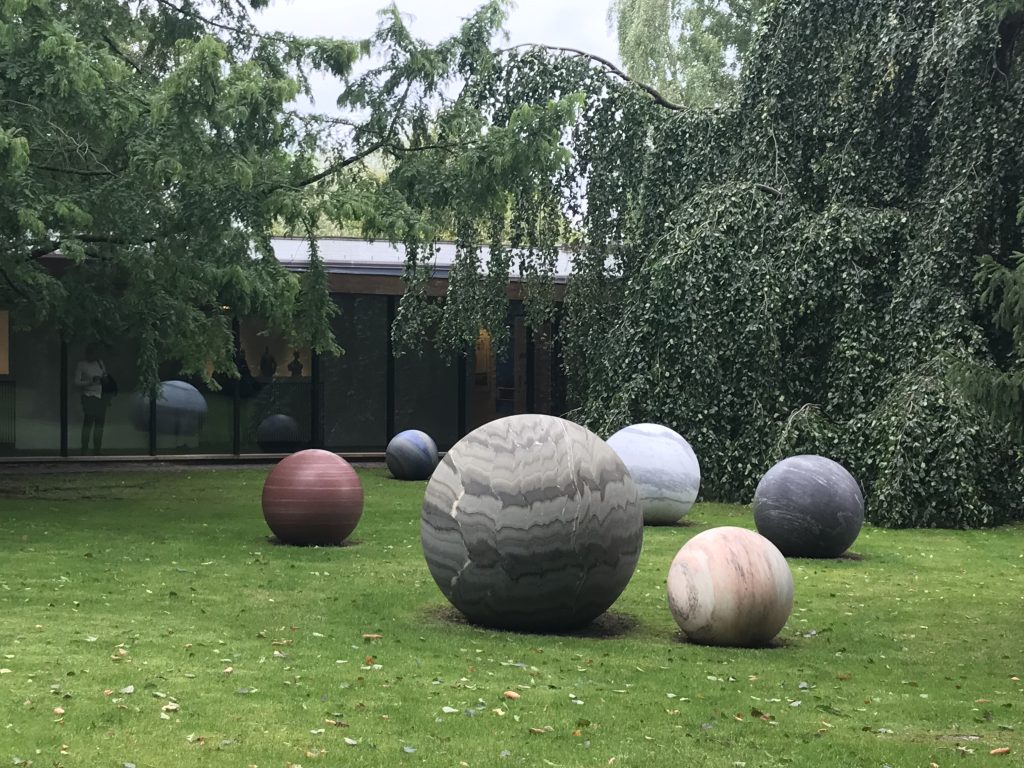
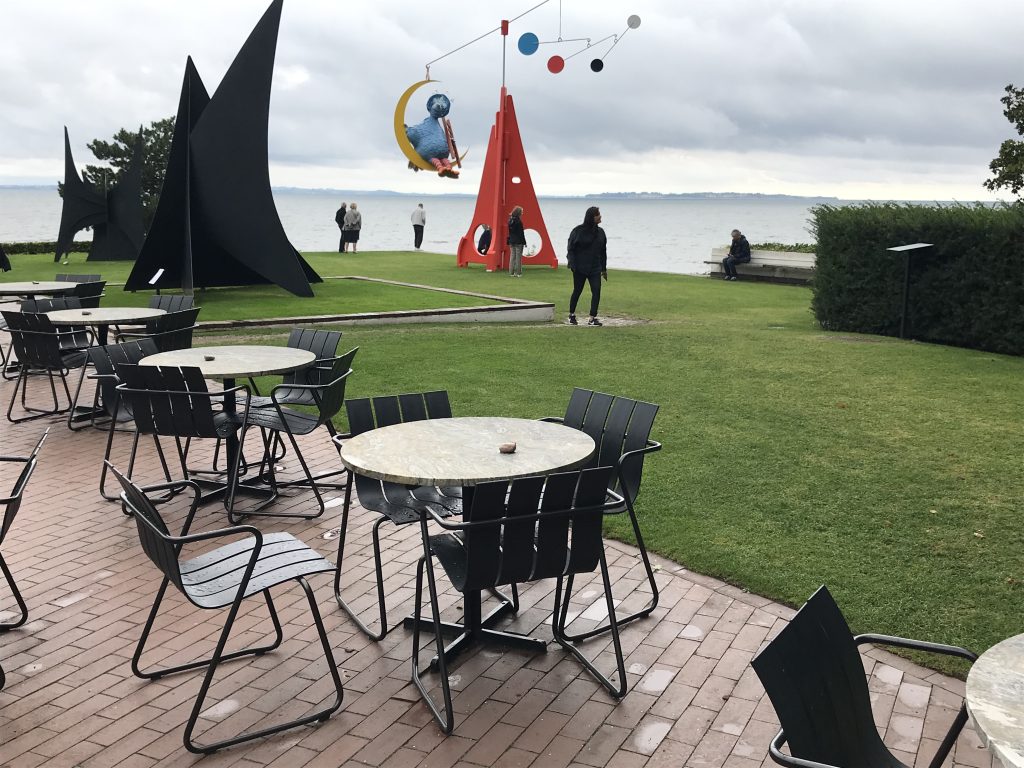
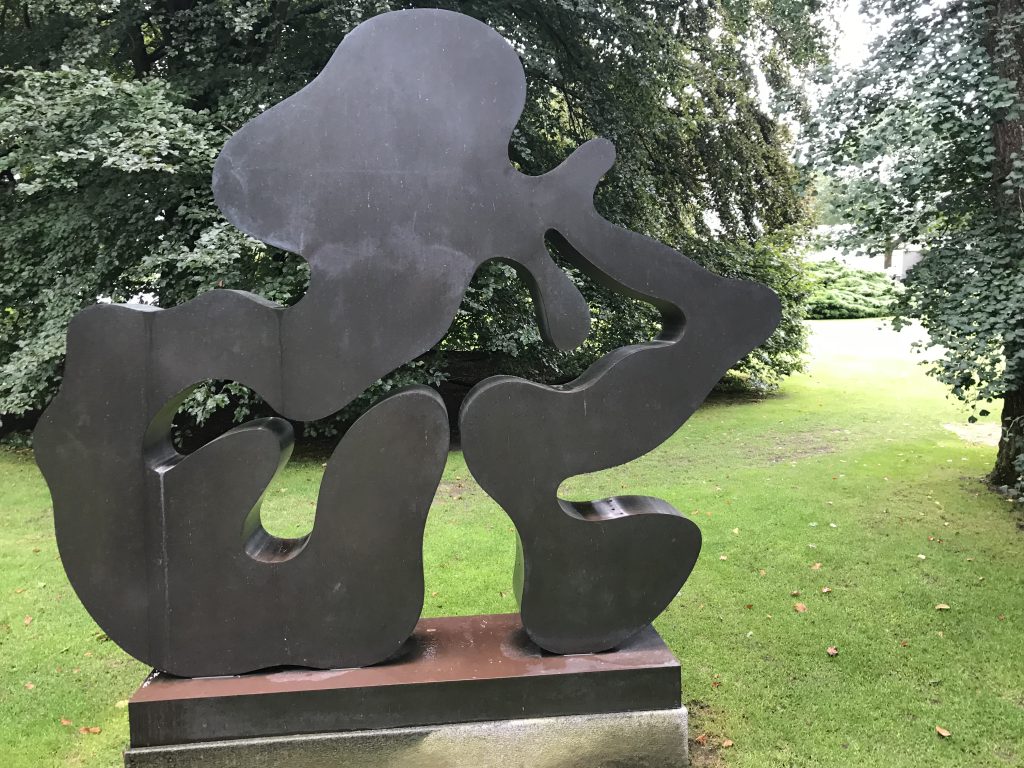
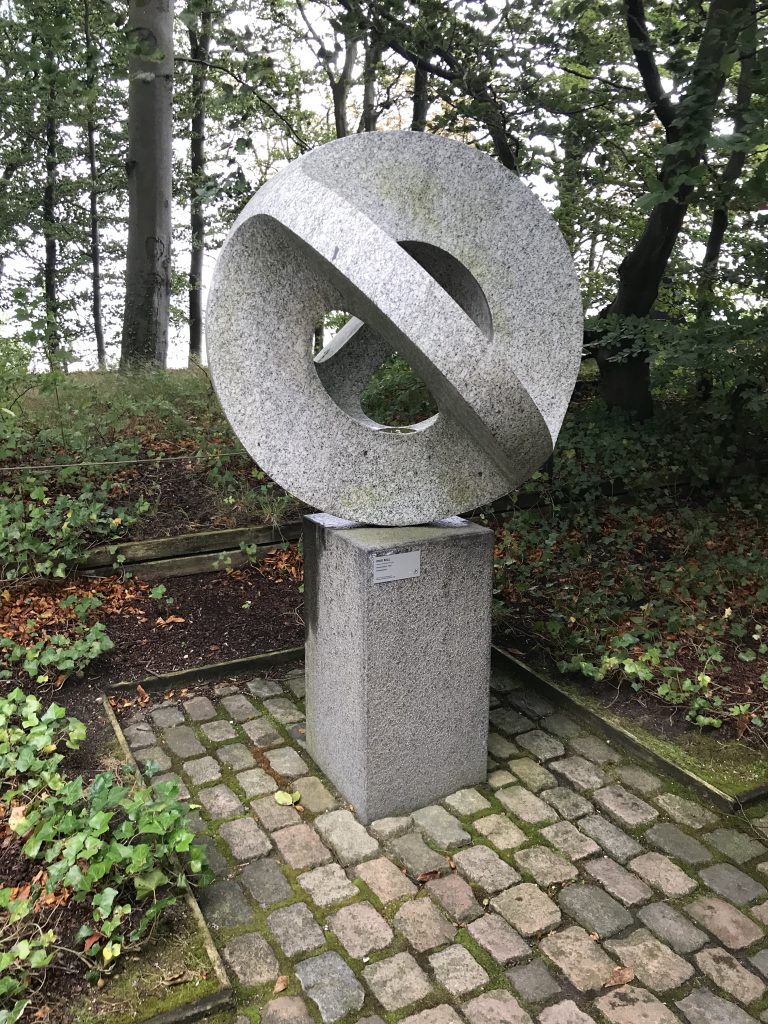
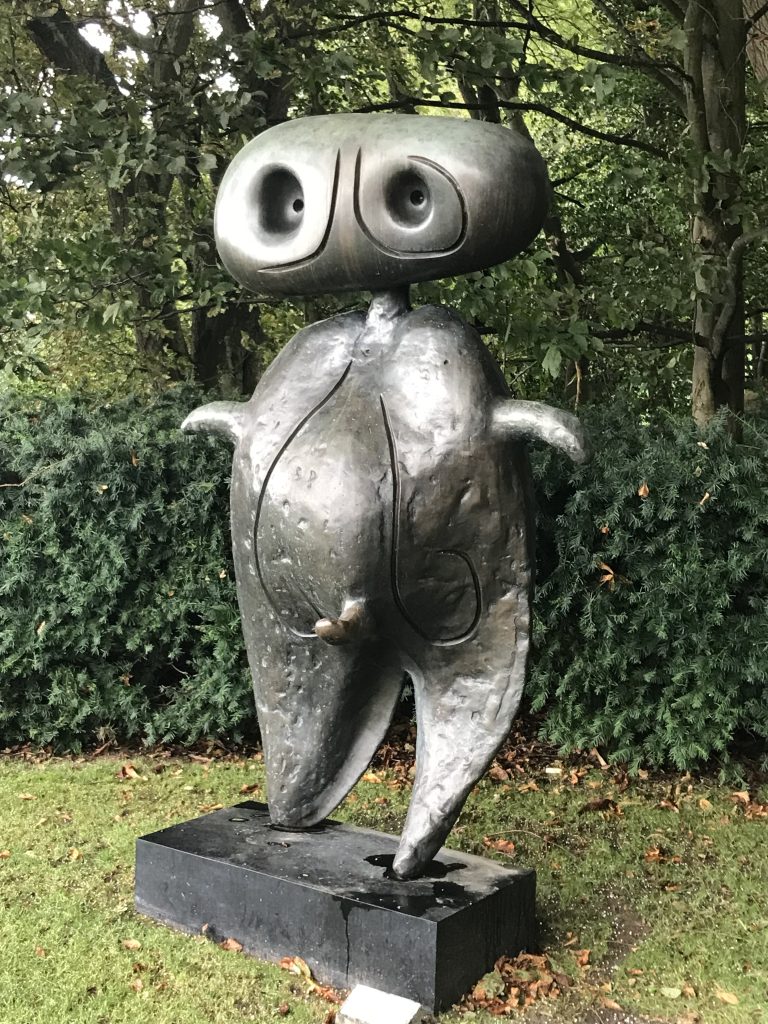
After visiting the exhibitions, head outside where the real stars of the museum are located. Here’s a selection of sculptures dotted all around the large property.
View toward Sweden
Stone spheres in the sculpture garden
Captivating mobile overlooking the Sound
Cool cutout sculpture
Granite sculpture
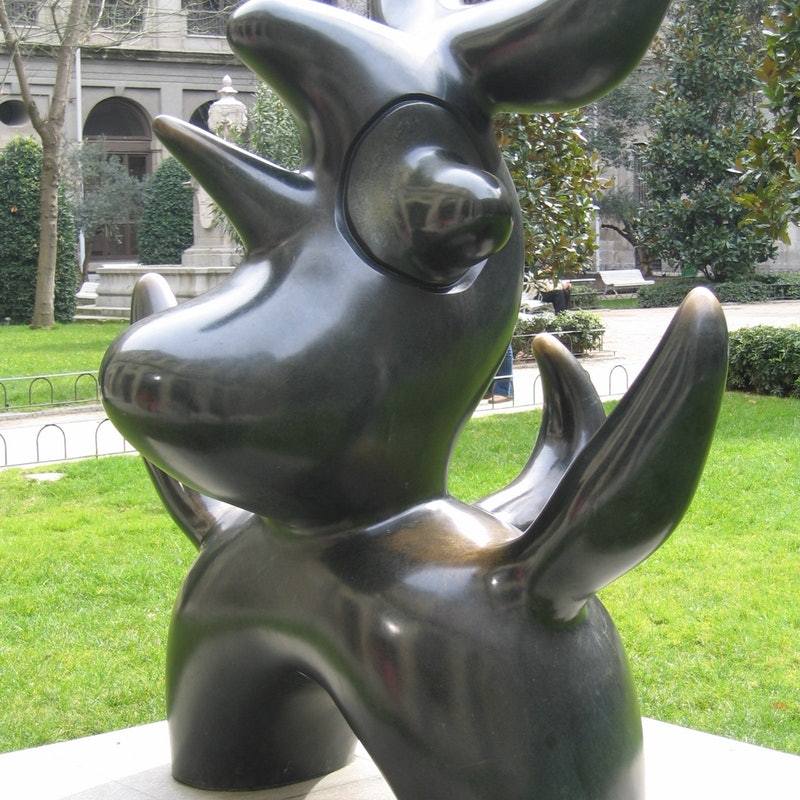
Is it a Miro?
Louisiana Museum of Modern Art Practical Information
The Louisiana Museum of Modern Art is located in Humlebæk about 30 minutes north of Copenhagen. Catch the train from the main train station and then walk about twenty minutes to the museum. If you have a car, you can drive there. Ample parking is provided. The museum is open Tuesday to Friday from 10:00 to 22:00 and Saturday and Sunday from 11:00 to 18:00 (closed Monday) and covered by the Copenhagen Card.
Purchase the Copenhagen Card
Not all tourist cards are great value, but the Copenhagen Card is definitely worth purchasing. It covers so much of what you’ll want to see in Copenhagen, including all three of the sites and all the transportation options covered in this post, dozens museums (there are a LOT of museums in Copenhagen), and attractions such as Tivoli Gardens (worth a visit to see the lights in the evening). You can use the Copenhagen Card on the local subways. It truly is a bargain and a major time saver.
I almost never buy city cards, but I’m very glad I purchased the Copenhagen Card. Having it saved me loads of time, made sightseeing a pleasure, and took all the stress out of riding public transit. It’s a winner!
Click the image below to purchase the Copenhagen card.
Here are some options for tickets and tours purchased through Tiqets.com:
Where to Stay in Copenhagen
If you’re looking for lots of space in the atmospheric Nyhavn area, you can’t go wrong with this two-bedroom apartment located in one of the colorful houses right on the harbor.
Another good option is the stylishly upscale Phoenix Copenhagen, also in the Nyhavn area. The hotel is pretty high end price-wise, but the staff are friendly, the marble lobby is gorgeous and the restaurant downstairs serves hearty food, particularly welcome on the cold and rainy night I stayed.
Conclusion
Have you taken day trips from Copenhagen? Which ones did you visit and recommend? Please share in the comments below.
Here are more posts about awesome museums to visit in England and Europe:
Wonderful museums are thick on the ground in Copenhagen. You’ll be spoiled for choice. But if your time is limited, I suggest you focus on what I consider three of the best museum experiences in Copenhagen.
The Design Museum: Perfect for lovers of interior design & furniture–and anyone who appreciates beautiful things
The Louisiana Museum of Modern Art: A must-see for both its modern art and spectacular natural setting about thirty minutes north of Copenhagen (super easy to get to).
Each of these museums is world-class and worth a trip to Denmark’s fabulous capital city just to visit them.
Armed with a Copenhagen Card, I ventured forth into the bustling streets of Copenhagen for three amazing Artsy Traveler experiences.
Highlights at a Glance
Exploring the Magic of Form exhibition at the Design Museum
Viewing the Viking exhibition at the Danish National Museum
Wandering around the outdoor sculptures at the Louisiana Museum of Modern Art
The map below shows the location of the three museums described in this post: The Design Museum (#1), the Danish National Museum (#2) and the Louisiana Museum of Modern Art (#3).
If you’re looking for lots of space in the atmospheric Nyhavn area, you can’t go wrong with this two-bedroom apartment located in one of the colorful houses right on the harbor.
Another good option is the stylishly upscale Phoenix Copenhagen, also in the Nyhavn area. The hotel is pretty high end price-wise, but the staff are friendly, the marble lobby is gorgeous and the restaurant downstairs serves hearty food, particularly welcome on the cold and rainy night I stayed.
The map below provides you with several more options.
Design Museum
Called the Designmuseum Danmark, this museum is absolutely stunning (see #1 on the map above).
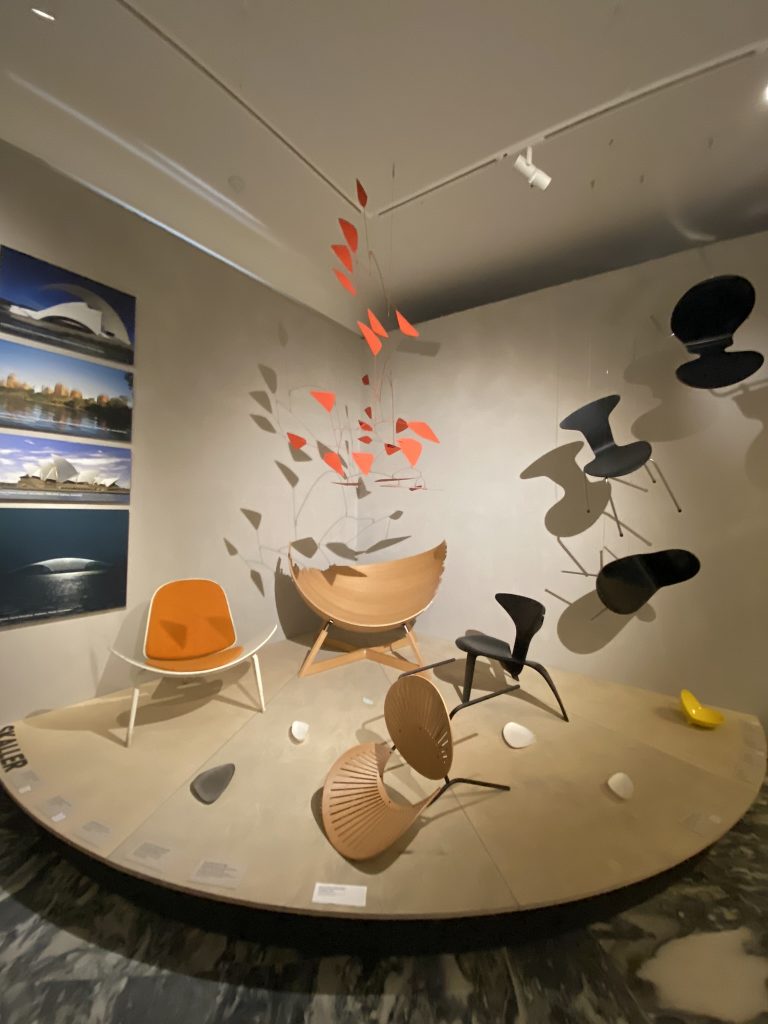
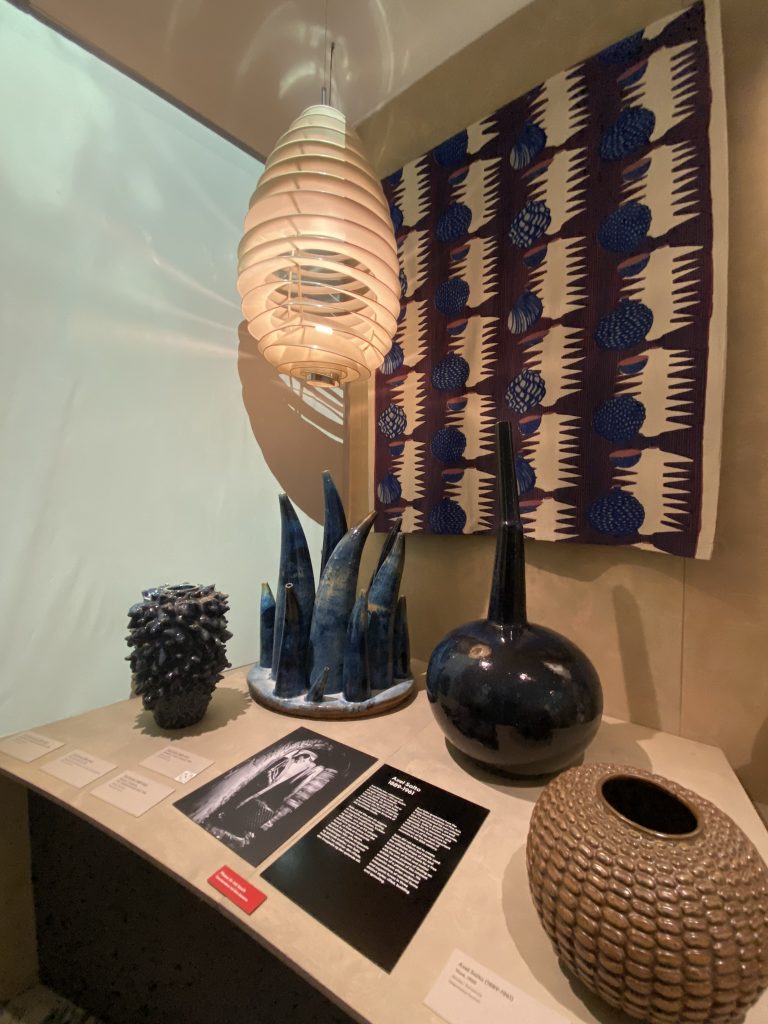
Even if you’ve never in your life thought about design, put this museum on your list of must-sees while in Copenhagen. It tells the story of Danish design in room after room of artful displays of everything from furniture to objects to textiles to cutlery to posters, and a lot more.
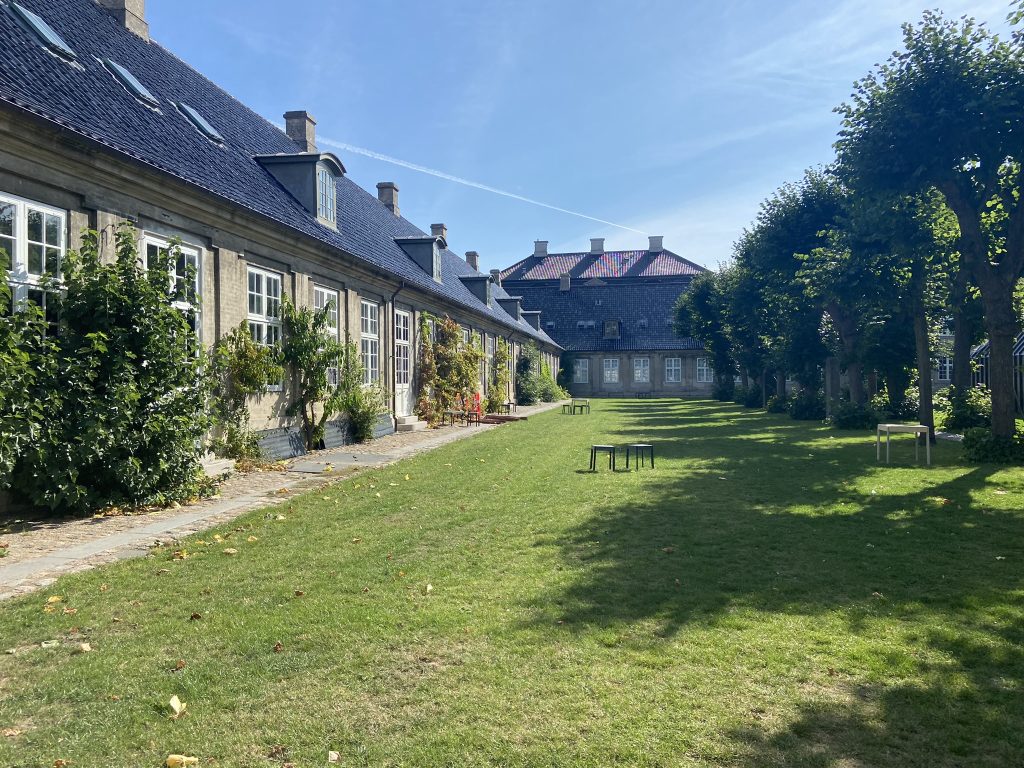
I never wanted to leave, although after my visit, I did enjoy relaxing in the lovely courtyard and drinking lattes served by an enthusiastic young man. He was so pleased when we raved to him about how much we loved the museum.
Breezy and relaxing outdoor area at the Designmuseum Danmark
Gregg relaxing after touring the Designmuseum Danmark
The many rooms in the Designmuseum Danmark are arranged around themed exhibitions that run for quite a long time. For the most up-to-date information about current and upcoming exhibitions, check the museum’s website.
Current Exhibition: The Power of Print showcases textiles from the greatest Danish fabric printers throughout history and runs to January 4, 2026.
Each display is accompanied by informative explanations in both Danish and English. Here’s an overview of the exhibitions I saw at the Designmuseum Danmark. Apart from The Future is Present, all the exhibitions are permanent.
The Future is Present
During my visit in 2023, I enjoyed The Future is Present special exhibition. This marvelous exhibition explored many of the ways in which designers around the world are finding solutions to challenges such as climate change, refugee flows, pandemics, and more.
How do we live together in communities, relate to each other, and interact with our environments? And what role does design play?
The many displays are both beautiful and thought-provoking.
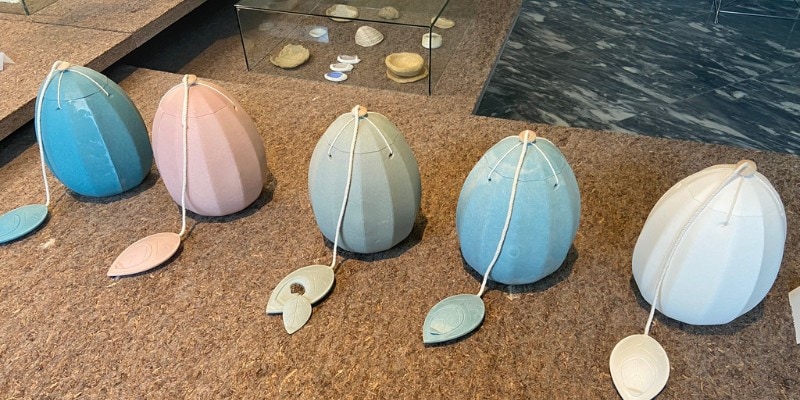
One of my favorites is this display of biodegradable urns. The pendant attached to the urn is planted so that loved ones can enjoy “the growing flowers and a tree in a place for conversation and remembrance.”
Biodegradable urns – a way to remember loved ones long after their passing
Wonder
This exhibition featured objects from some of the Designmuseum’s many collections. The exhibition tells the story of how a thing becomes an object in a private collection or in a museum.
Each display is imaginatively presented and accompanied by excellent commentary.
You could spend a lot of time in the Designmuseum Danmark!
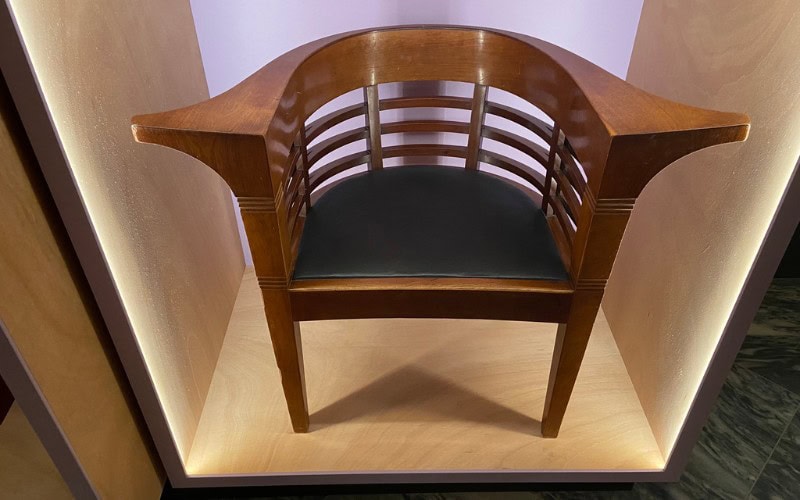
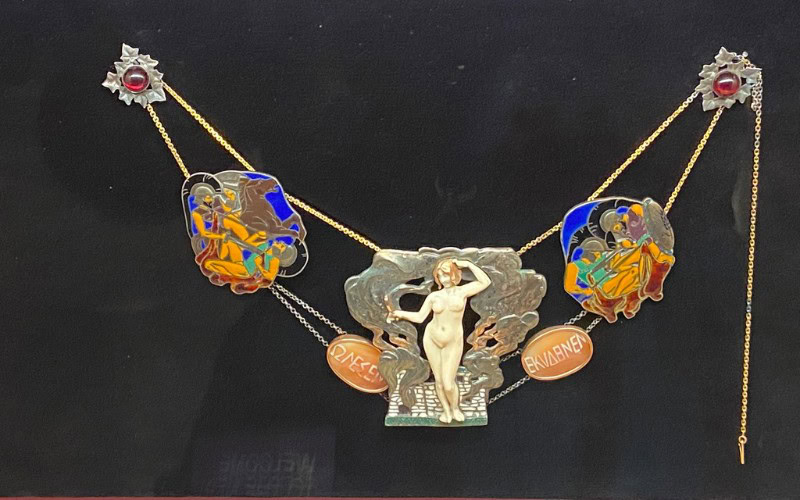
Here’s a sampling of some of the objects in the Wonder exhibition.
Gorgeously designed chair from the 19th CenturyArt nouveau necklace
The Magic of Form
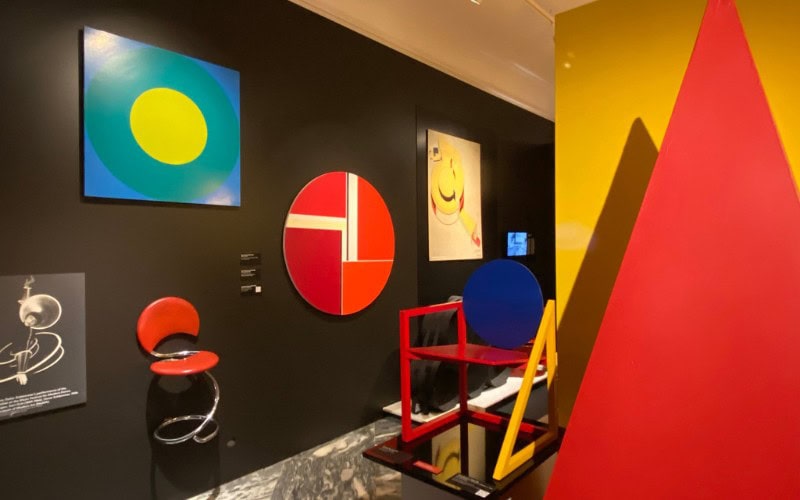
Our favorite exhibition was The Magic of Form that took us on a fabulous journey through Danish design history. As anyone who has seen a piece of Danish modern furniture knows, Denmark and design go hand in hand.
The Danes have a knack for creating marvelously designed furniture that is both beautiful and practical.
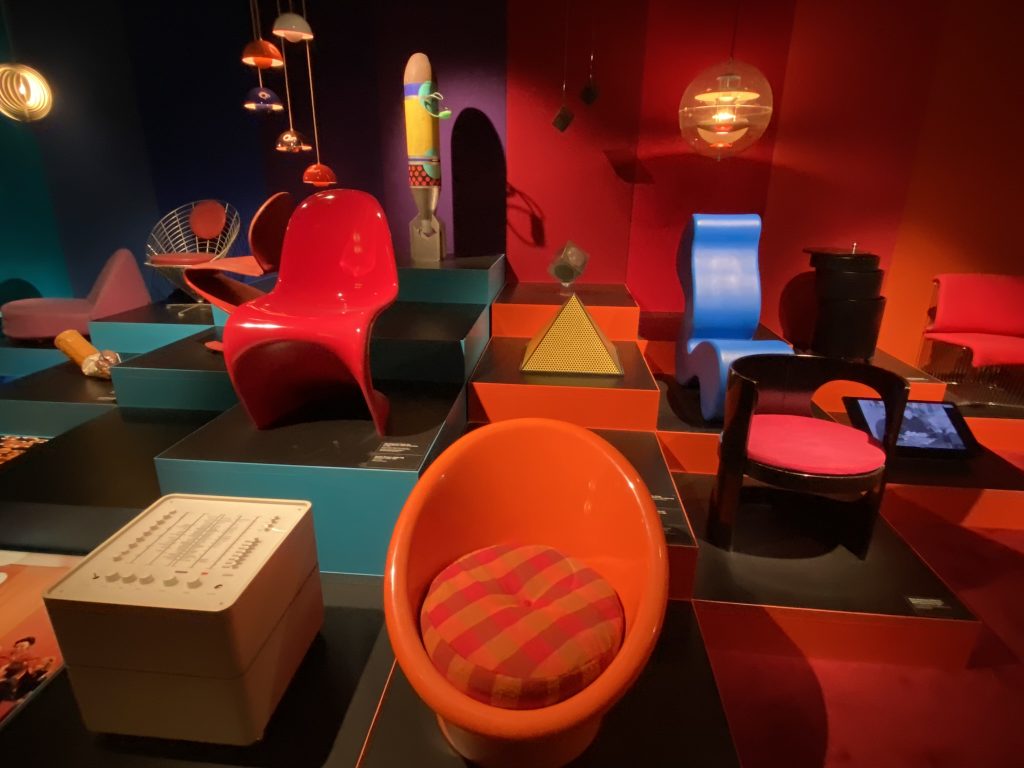
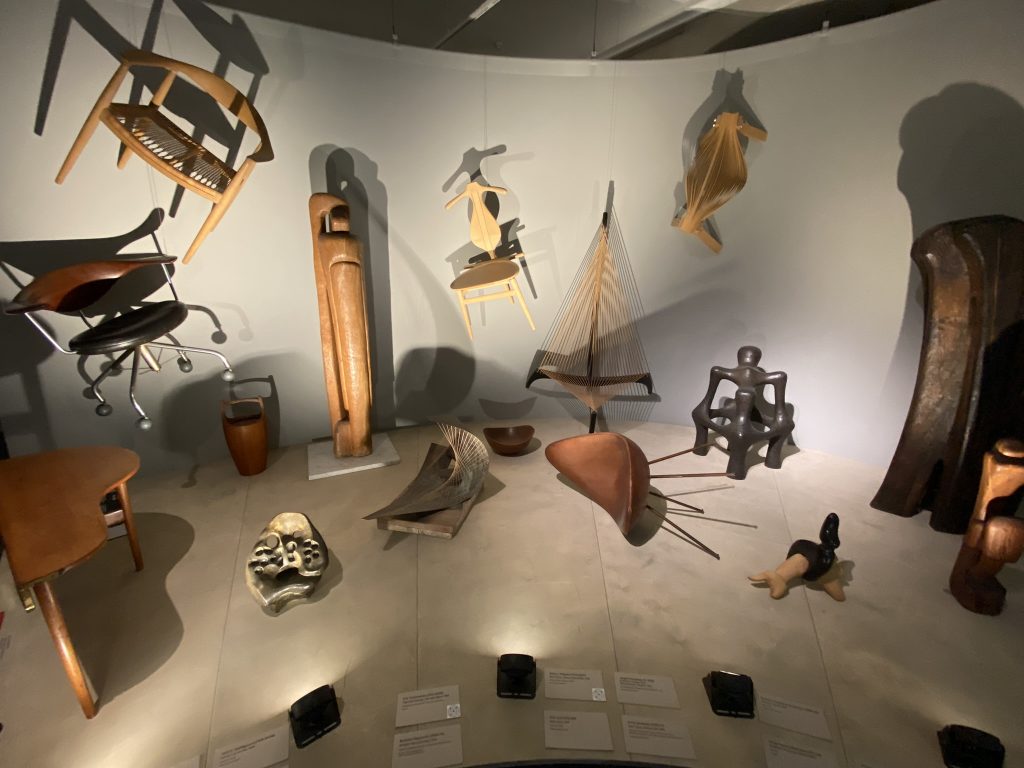
The exhibition is massive–room after room of objects and pieces of furniture that follow the historical development of Danish design from around 1900 to the present. Every time I entered a new room, I gasped in wonder.
Not only were the objects themselves stunning, but also the way in which they were presented raised my experience of museum display techniques to new heights.
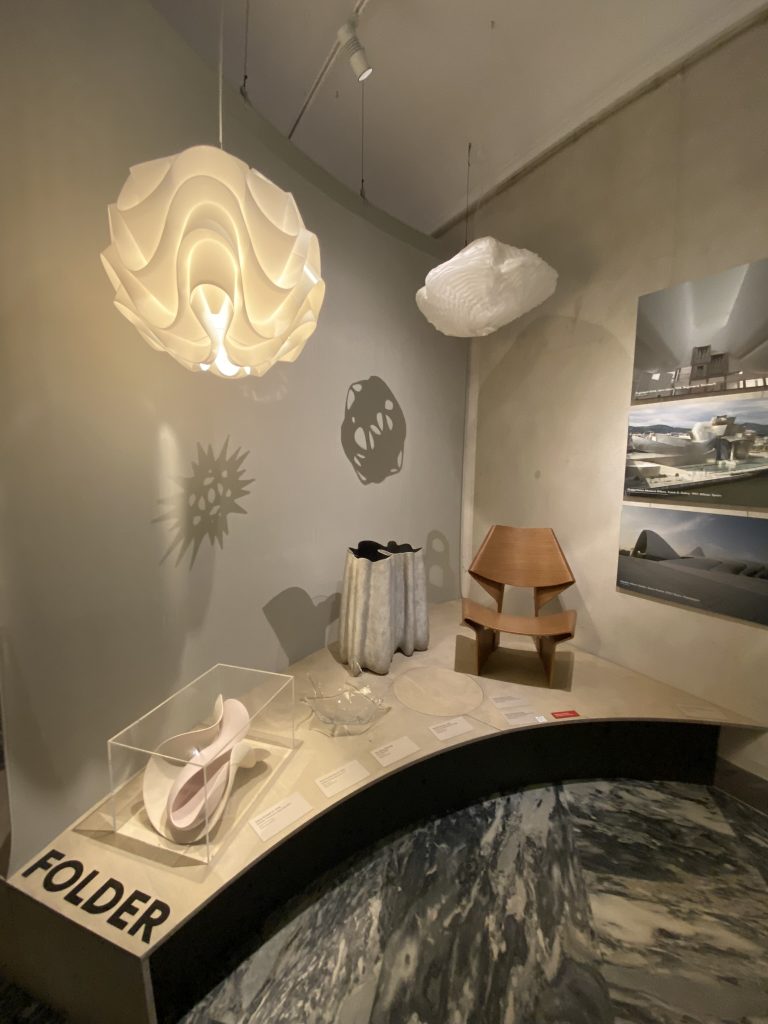
Here’s a selection of a few of the rooms and displays I wandered through.
Danish Modern chairs imaginatively displayed
Vases, a modern light fixture, and an abstract painting
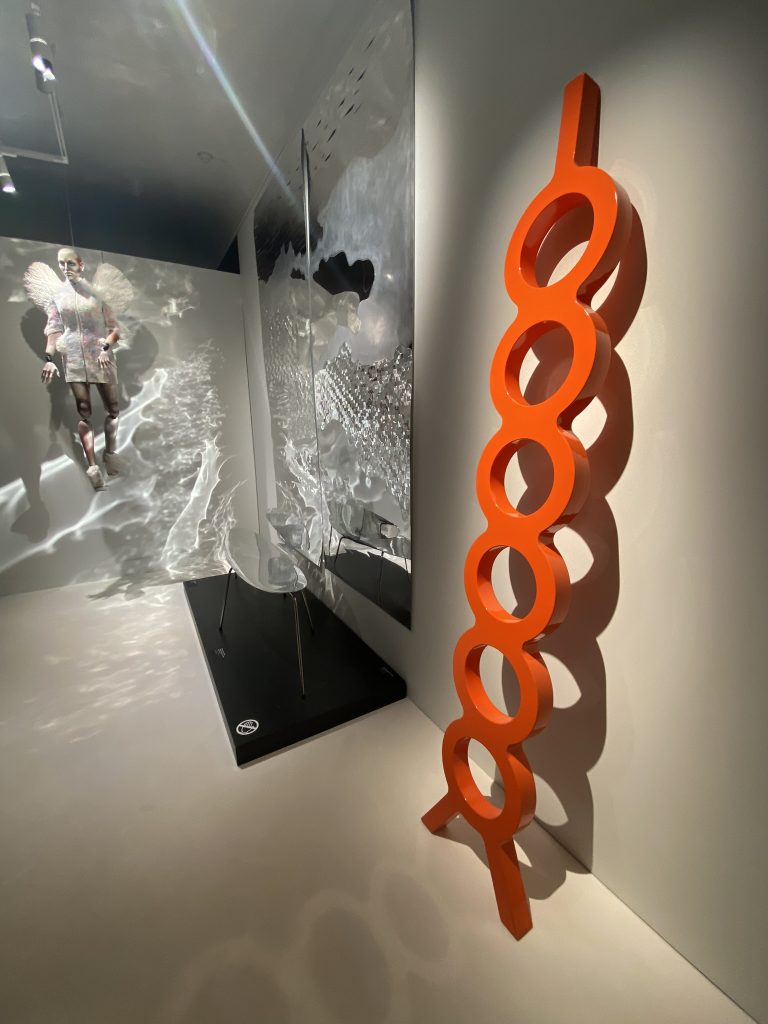
Chock full of color and form
Danish Modern run amok
Ultra modern Danish Modern chic
Colorful sculpture
Other Exhibitions
When I toured the Designmuseum Danmark, I also saw two other exhibitions.
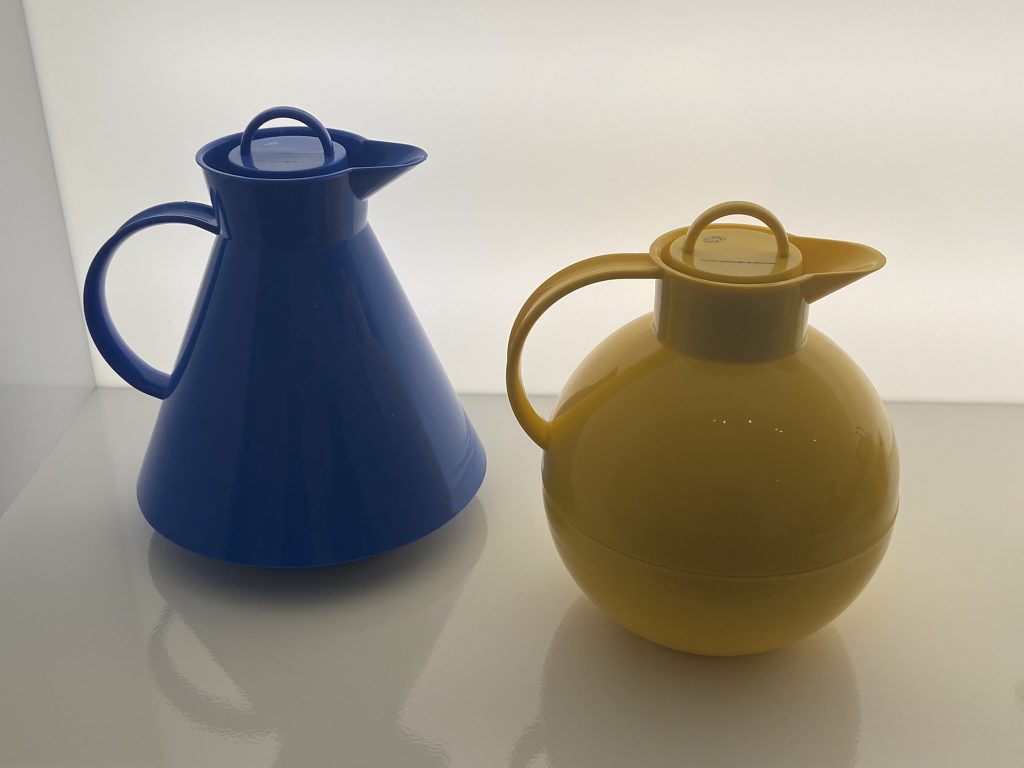
The Table, Cover Thyself exhibition of plates and cultlery showed a myriad selection of table settings including plates, cutlery, tureens, figurines, and more. I particularly loved these two jugs.
Two beautifully designed coffee jugs
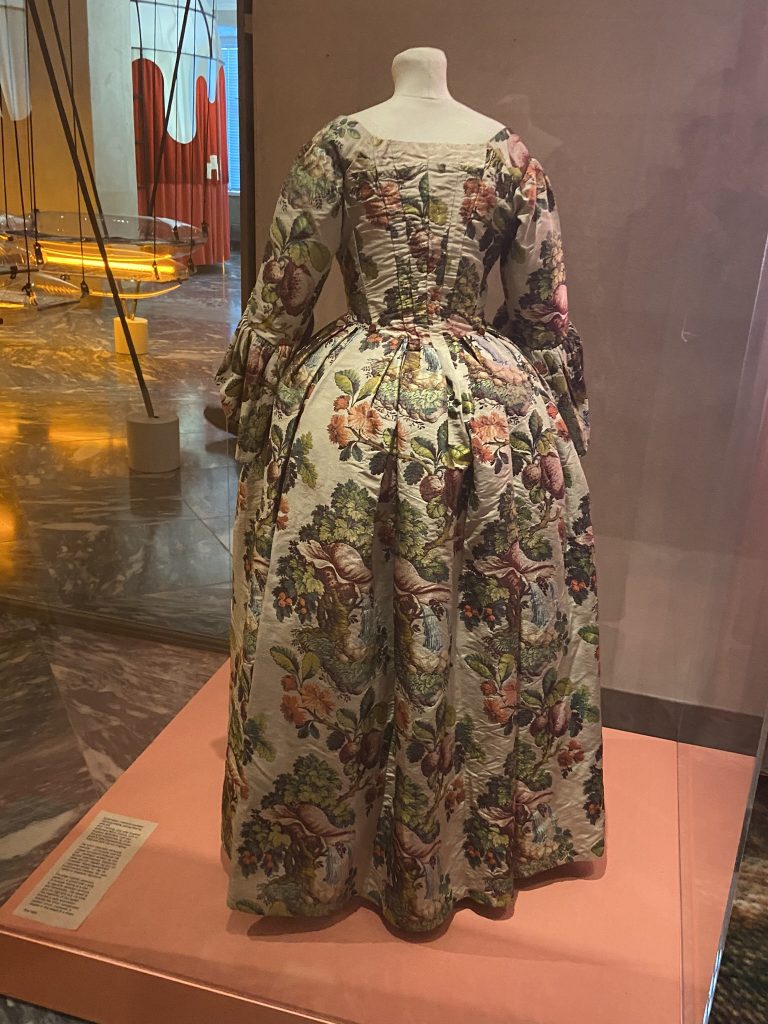
The Powerful Patterns exhibition explored patterns as an artform and included a wealth of textiles and costumes, including this beautiful dress.
Dress with exquisite embroidery
The Designmuseum Danmark was one of the many highlights of my week in Copenhagen. I can hardly wait to return to see what new exhibitions are being featured.
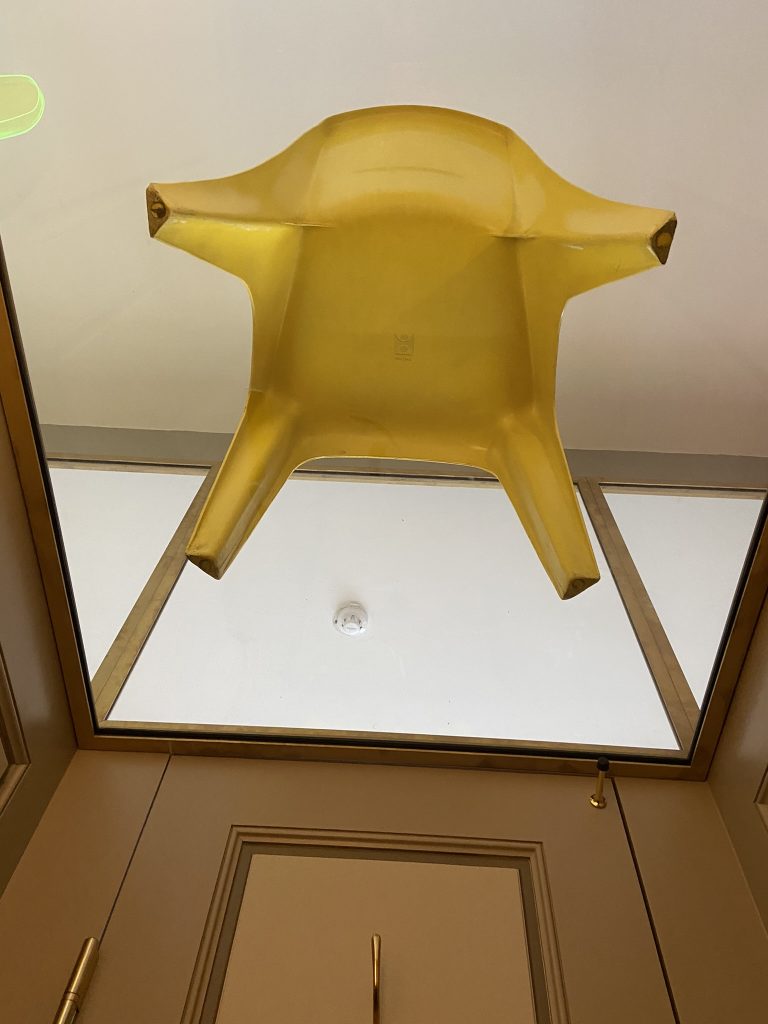
And to top off my visit, I discovered that even a trip to the ladies room was fraught with design. Here’s what I saw when I look up from where I was, um, sitting:
Chair suspended over a toilet stall at the Designmuseum Danmark
The Danes have a sense of humor for sure!
Design Museum Practical Information
The Designmuseum Danmark is open from 10 am to 6 pm Tuesday to Sunday (closed Monday). Admission is 130 DKK for adults, but you can use your Copenhagen Card (see below for details). The museum is located at Bredgade 68 and makes a great stop on the way to see the Little Mermaid in the Copenhagen harbor.
The National Museum of Denmark
The Nationalmuseet (#2 on the map at the top of this post) is another major museum in which you could get lost for hours. In fact, I ran out of steam after touring the awesome collection of prehistory and Viking artifacts and didn’t see all the museum has to offer.
All the more reason to return!
But even if you, like me, only manage to tour half the museum, make sure it’s the half that includes the Danish prehistory and Viking collections. Each display is cleverly mounted and includes fascinating commentary in Danish and English.
Danish Prehistory Collection
I have a soft spot for prehistory museums and monuments, and visit them whenever I can. Check out my post on seven of my fave prehistory spots in Europe. Given my predelictions, I naturally made a beeline for the Danish Prehistory collection.
What a treasure trove!
The exhibition features objects made prior to 1050 AD and extending way, way back into the misty mists of time (like 6000 BCE!) and includes unique archaeological treasures like the Trundholm Chariot of the Sun, the Egtved girl’s grave, the Gundestrup cauldron, the Hoby tomb, and more.
Twenty-four rooms arranged in a large square enclosing the gardens take you from the earliest years up to the Viking era.
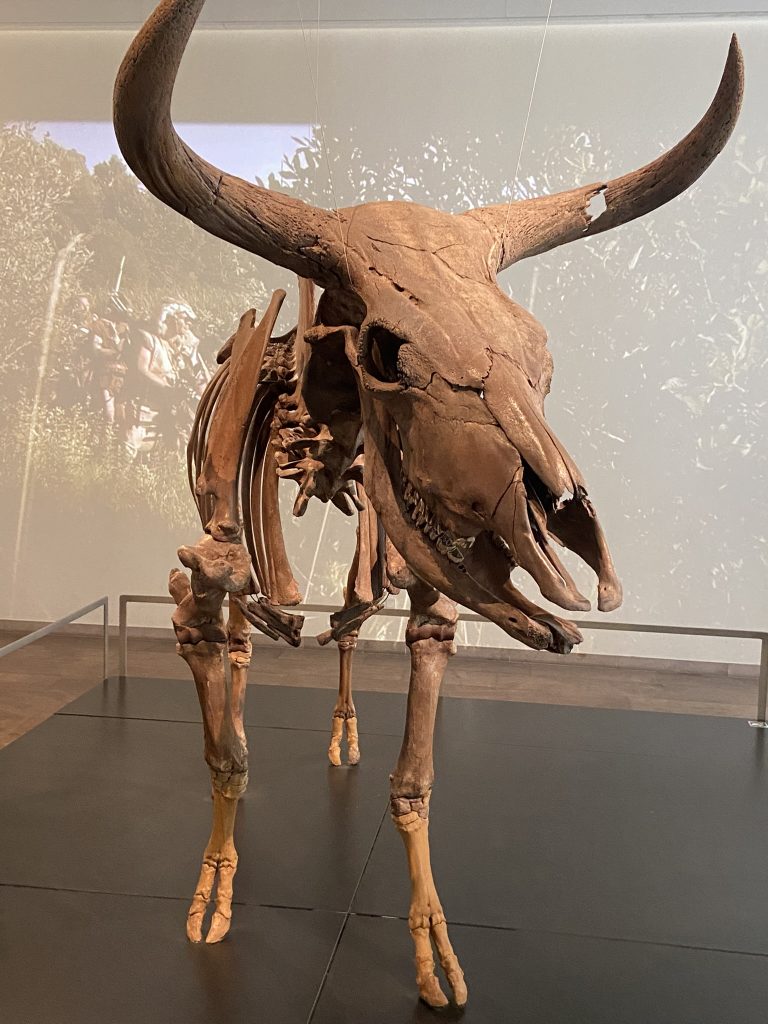
I was astonished and enthralled by the age of many of the prehistoric objects in the first several rooms. A highlight is the skeleton of a massive bull elk that perished in a bog over 8500 years ago.
The Tåderup Elk at the Danish National Museum
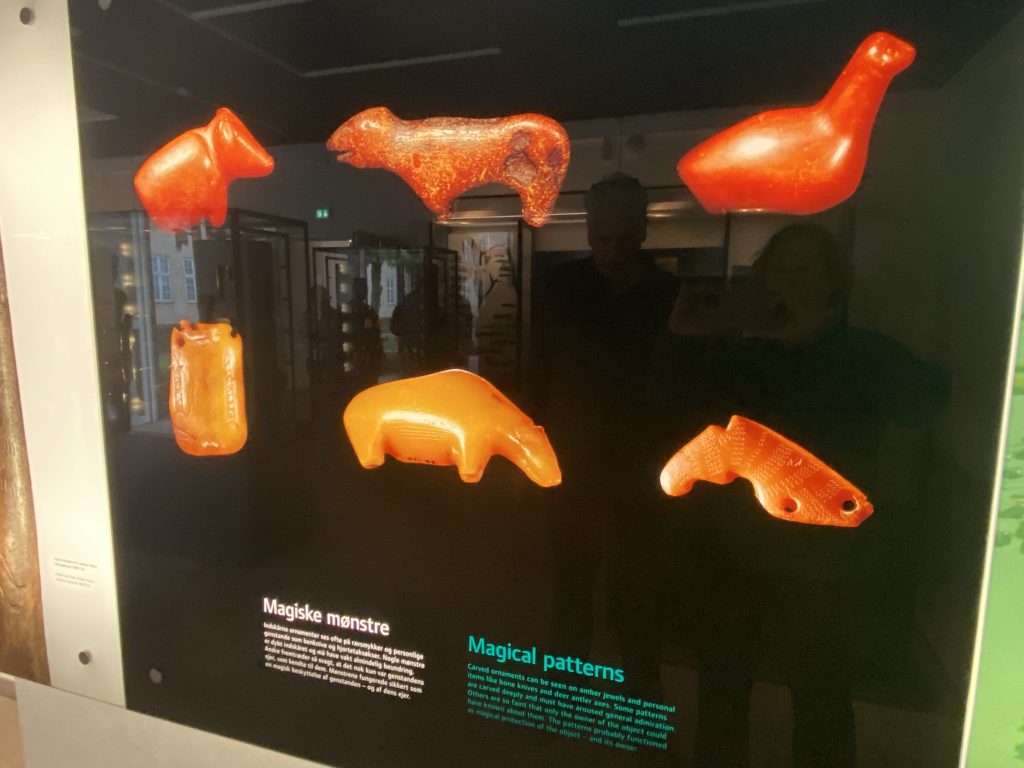
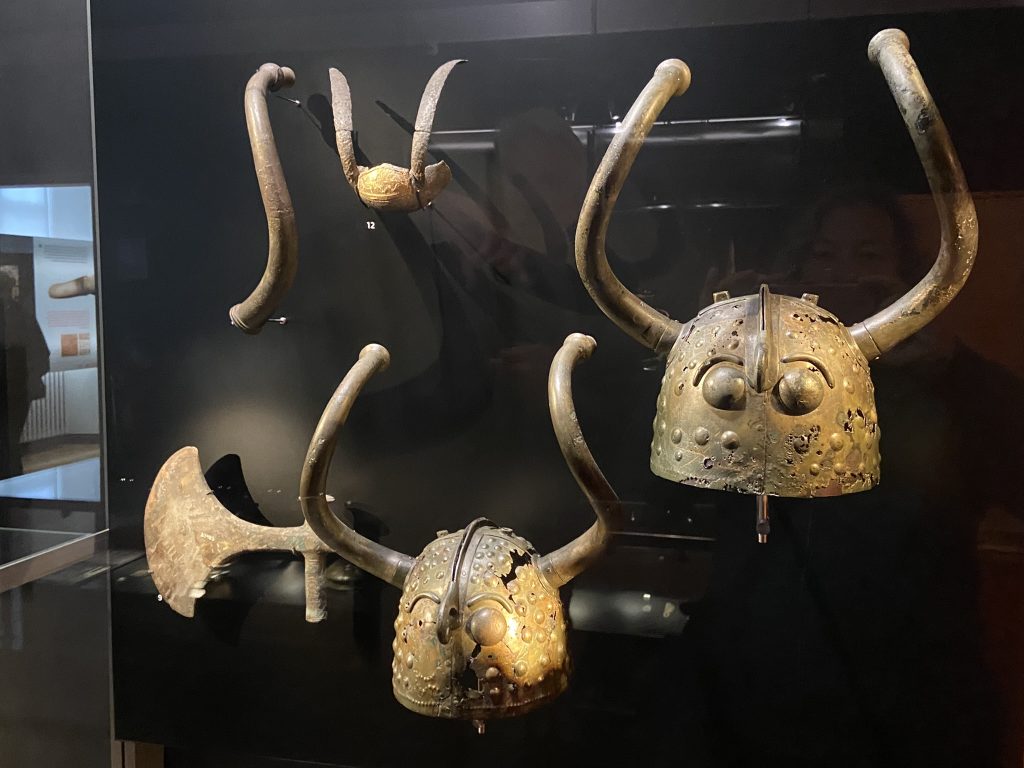
Here are two of my favorite displays, but there were many more. You could spend a very long time in the Danish prehistory rooms.
Polished figures from prehistoric grave sites
Viksø helmets from the Bronze Age
Viking Exhibition
Eventually, you’ll arrive at the Viking exhibition to be confronted by a model of a full-size Viking ship (and it’s really big!). The ship dominates the large room that includes displays that trace Denmark’s huge contribution to world history.
At one time, Vikings controlled vast swathes of Europe, extending all the way to North America. A wall-size map at the beginning of the exhibition shows how far their influence extended.
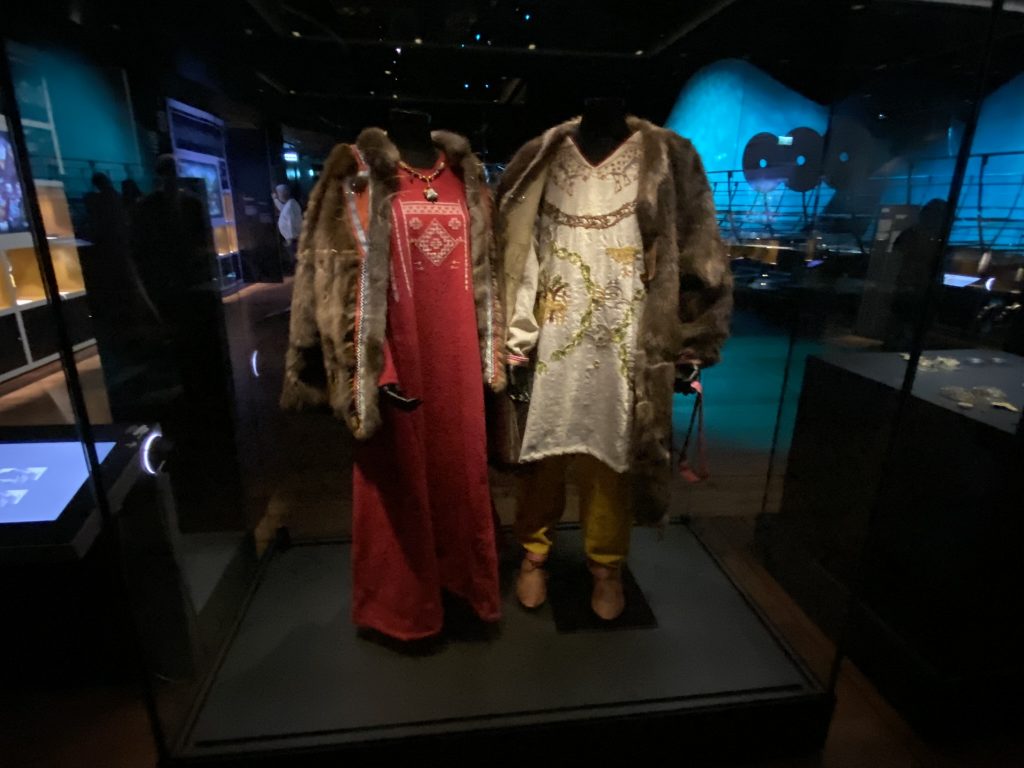
Sartorial elegance of the Vikings; a portion of the ship model is in the background
The Danes are very proud of their Viking heritage, as evidenced by the care they’ve taken to mount such a spectacular exhibition.
The Raid Experience
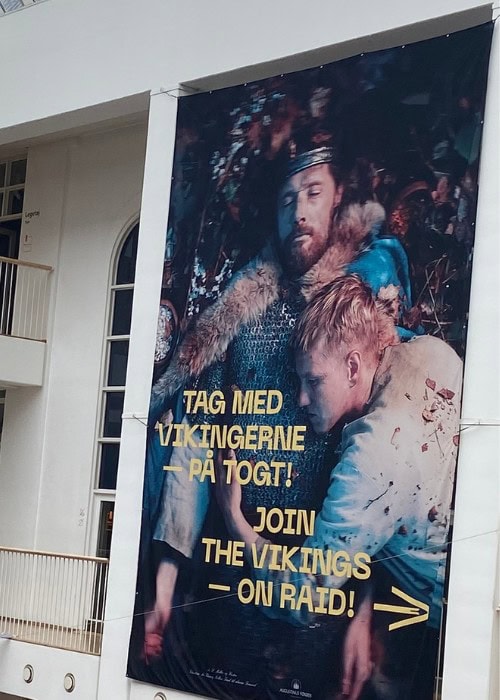
Included in the Viking exhibition is a new multi-media experience called “The Raid” that invites guests to “hop aboard and join the Vikings on an adventurous raid.”
“The Raid” isn’t actually a ride. You walk through a series of rooms, stopping in each to watch a 360-degree projection accompanied by commentary in English. The projections tell the exciting story of Björn Ironside, the legendary Viking who led 62 ships on an ill-fated journey to Rome.
Along the way, they plunder and pillage as Vikings are wont to do, but never actually make it to Rome. They do make it into the Mediterranean, however. Unfortunately, on their way out again, they are almost destroyed by large firebombs raining down upon them from the cliffs above the Strait of Gibraltar.
Poor Bjorn perishes and very few ships make it back to Denmark. So ends Bjorn’s raid, only to be revived 1500-odd years later for tourists to wonder at.
Poster for “The Raid” at the Danish National Museum
What Else to See at the National Museum
The museum includes exhibitions from Denmark’s Middle Ages and Renaissance, the histories of Denmark, an antique collection, the Children’s Museum, Voices from the Colonies, and a Coin and Medal Collection in addition to special exhibitions.
Everything is state-of-the-art, a real testament to recent advances in museumology.
I need to go back!
On the way to the National Museum of Denmark
National Museum of Denmark Practical Information
The National Museum of Denmark is located in the Prince’s Palace at Ny Vestergade 10. It’s within walking distance from Nyhavn where I recommend you stay. The museum is open Tuesday to Sunday from 10:00 to 18:00 (closed Monday) and covered by the Copenhagen Card.
Louisiana Museum of Modern Art
The Louisiana Museum of Modern Art (#3 on the map at the top of this post) is about a 30-minute train ride north of Copenhagen. It’s world-renowned as one of Europe’s best modern art museums, and therefore a must-visit for the Artsy Traveler!
The setting of the museum on the North Sea and the many outdoor sculptures are fabulous and well worth the trip.
The food in the restaurant overlooking the water is also excellent!
Founded by Knud W. Jensen to house Danish modern art, the museum opened in 1958. Within a few years, the focus shifted from featuring predominantly Danish art to becoming an international museum that showcased internationally renowned artists.
Check what exhibitions are on, but even if they don’t appeal, visit the museum anyway. It makes for a lovely morning out from Copenhagen. You reach it by train (covered by the Copenhagen Card) followed by a pleasant 20-minute stroll along a suburban road to the museum.
After visiting the exhibitions, head outside where the real stars of the museum are located. Here’s a selection of sculptures dotted all around the large property.
Louisiana Museum of Modern Art Practical Information
The Louisiana Museum of Modern Art is located in Humlebæk about 30 minutes north of Copenhagen. Catch the train from the main train station and then walk about twenty minutes to the museum. If you have a car, you can drive there. Ample parking is provided. The museum is open Tuesday to Friday from 10:00 to 22:00 and Saturday and Sunday from 11:00 to 18:00 (closed Monday) and covered by the Copenhagen Card.
Purchase the Copenhagen Card
Not all tourist cards are great value, but the Copenhagen Card is definitely worth purchasing. It covers so much of what you’ll want to see in Copenhagen, including all three of the museums covered in this post along with dozens more museums (there are a LOT of museums in Copenhagen), attractions such as Tivoli Gardens (worth a visit to see the lights in the evening), and all your transportation in and around Copenhagen.
You can use it on the local subways and on trains that go farther afield to popular destinations such as Frederiksburg Castle, Kronburg Castle, and the Louisiana Museum of Modern Art. It truly is a bargain and a major time-saver.
I almost never buy city cards, but I’m very glad I purchased the Copenhagen Card. Having it saved me loads of time, made sightseeing a pleasure, and took all the stress out of riding public transit. It’s a winner!
Click the image below to purchase the Copenhagen card.
Copenhagen Tours & Tickets
Check out more tours and things to do in marvelous Copenhagen with Get Your Guide.
You can also purchase tickets directly through Tiqets.com
Copenhagen Walking Tours
GuruWalk lists pay-what-you-please walking tours that connect tourists with tour guides all around the world. Check out their tours of Copenhagen!
Conclusion
Have you visited museums in Copenhagen? Which ones did you visit and recommend? Please share in the comments below.
Here are more posts about awesome museums to visit in England and Europe:
Are you a fan of modern art? If so, then you’ll find plenty of art thrills in Europe, where some of the best modern art and contemporary art museums in the world are located.
In this post, I’ve chosen mostly large modern art museums in Europe that feature a variety of artists, mostly from the 20th century, and modern art museums in Europe have collections that span the decades.
My focus is on modern art so you won’t find museums like the Prado and the Louvre in this post. But you will find the Pompidou, the Guggenheim Bilbao and the Tate Modern!
As a life-long lover of modern art (check out my husband Gregg Simpson’s art and you’ll see why!), I’m a bit of a kid in a candy store when it comes to finding awesome modern art museums in Europe.
You’ll be spoiled for choice!
Highlights at a Glance
The iconic architecture of the Guggenheim Museum in Bilbao in Spain’s evocative Basque Country
Picasso’s Guernica at the Reina Sofia in Madrid, Spain–so much more powerful in person than in reproductions
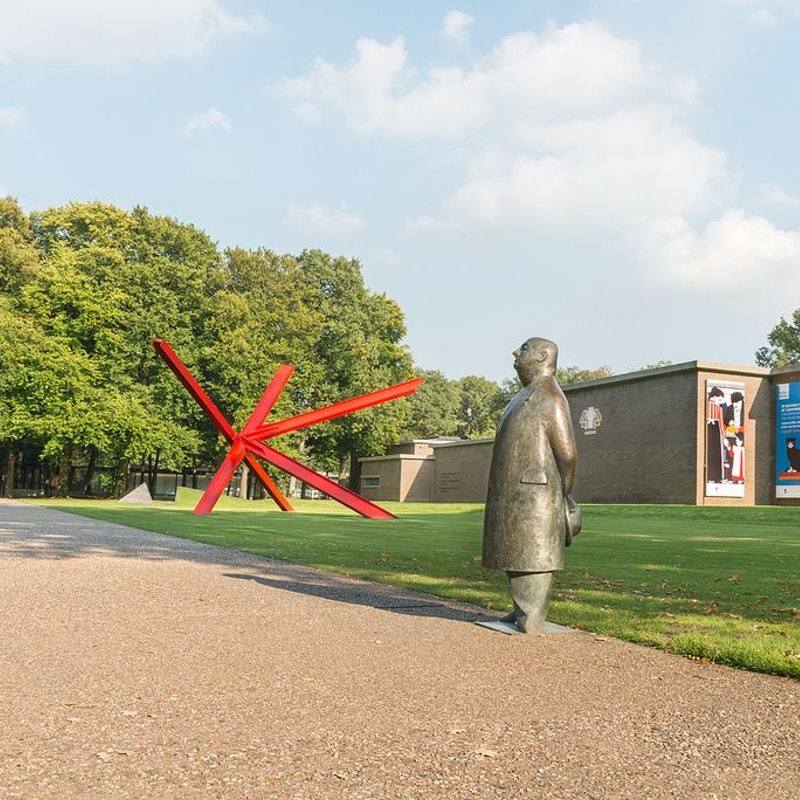
The stunning outdoor art installations at the Kröller-Müller Museum near Otterlo in the Netherlands
The collection of 20th century modern masters on the 4th floor of the Pompidou in Paris
The location and ambiance of the Fondation Maeght in the hills above the French Riviera near the delightful village of Saint-Paul-de-Vence
Check for Exhibitions
Modern art museums in Europe often host temporary exhibitions showcasing the best of contemporary art.
Before you set off for Europe, take some time to check for special exhibitions in the places you’re visiting. Many times, I’ve changed my itinerary on the fly to catch an exhibition before it closes or to take in one at its start.
One of the great pleasures of traveling is switching gears halfway through a trip—to zig when you planned to zag. Stay open to possibilities when you travel. Often, you’ll meet someone who’ll tell you about a must-see art museum that you’ve never heard of.
On a recent trip to Porto in Portugal, we were told about a special exhibition of the work of M. C. Escher. What a treat! We never would have known about it because of its location in an exhibition space rather than a museum.
Chat with servers at dinner and strike up a conversation with other travelers you meet on the train or at your hotel. People love to share recommendations!
Modern Art Focus
As I mentioned earlier, this post focuses only on modern art museums in Europe that have significant and varied modern artcollections.
What do I mean by modern art? I’m a huge fan of 20th-century art from about the turn of the century to the 1960s. I also appreciate some (not all) of the contemporary art created post-1960.
Most of the art museums covered in this post primarily exhibit traditional modern art. That sounds like an oxymoron, but if you’re an art fan, you’ll know what I mean!
Modern art—as distinct from contemporary art—encompasses the work of a slew of big names. These include Pablo Picasso, Joan Miró, Henri Matisse, Georgia O’Keeffe, Rene Magritte… the list goes on and on and on.
In this post, I list only modern art museums in Europe that feature works by modern masters in their permanent collections.
Map of Modern Art Museums in Europe
From the Louvre to the Tate Modern, the modern art museums in Europe are vast and varied.
Here are the locations of all the modern art museums covered in the post–from Bilbao (#1) in Spain to the Tate St. Ives (#12) in Cornwall, England.
Although not included in this post, another excellent modern art museum well worth a visit is the Ludwig Museum in Cologne. For more about this museum check out my post Cologne’s Museum Ludwig: Best Bet for Modern Art Lovers
Bilbao, Spain: The Guggenheim Museum
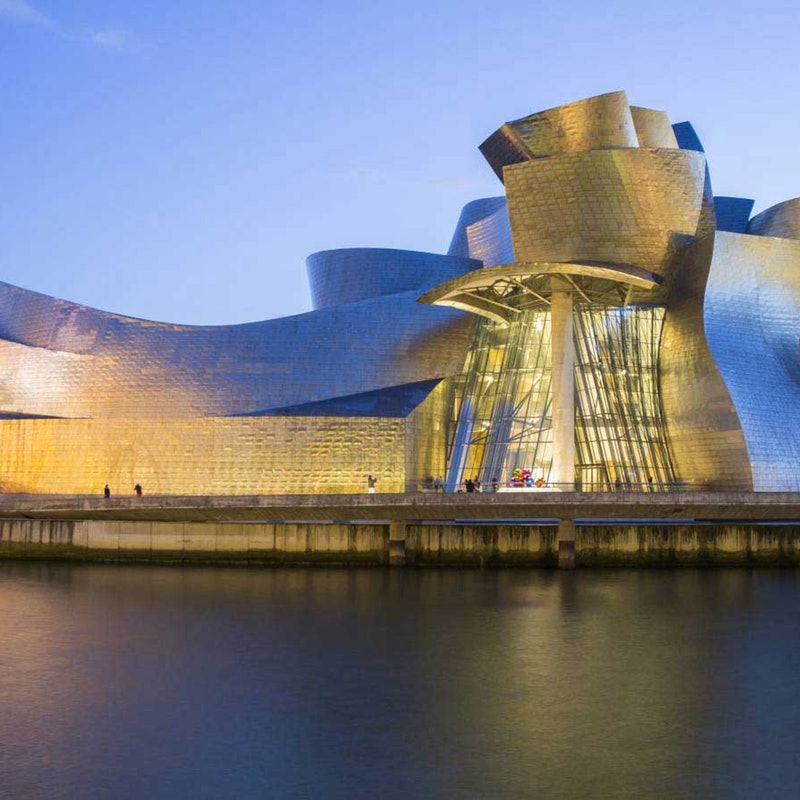
The Guggenheim Museum Bilbao (#1 on the map) is worth the hype and worth the trip. Located in the Basque region of northeast Spain, Bilbao isn’t on the beaten tourist path.
But please, if you’re in northern Spain and within striking distance of Bilbao, find the time to spend a night there so you can spend a few hours exploring the Guggenheim Museum Bilbao.
The Guggenheim Museum Bilbao was built to revive the failing industrial city. How marvelous that the city bigwigs used art to pull their city out of the economic doldrums and place it firmly on the world cultural map.
The move was bold, even audacious, but it’s paid off spectacularly, thanks to Frank Gehry’s spectacular structure.
Now the Guggenheim Bilbao shows up in just about every Top Ten list of modern art museums worldwide.
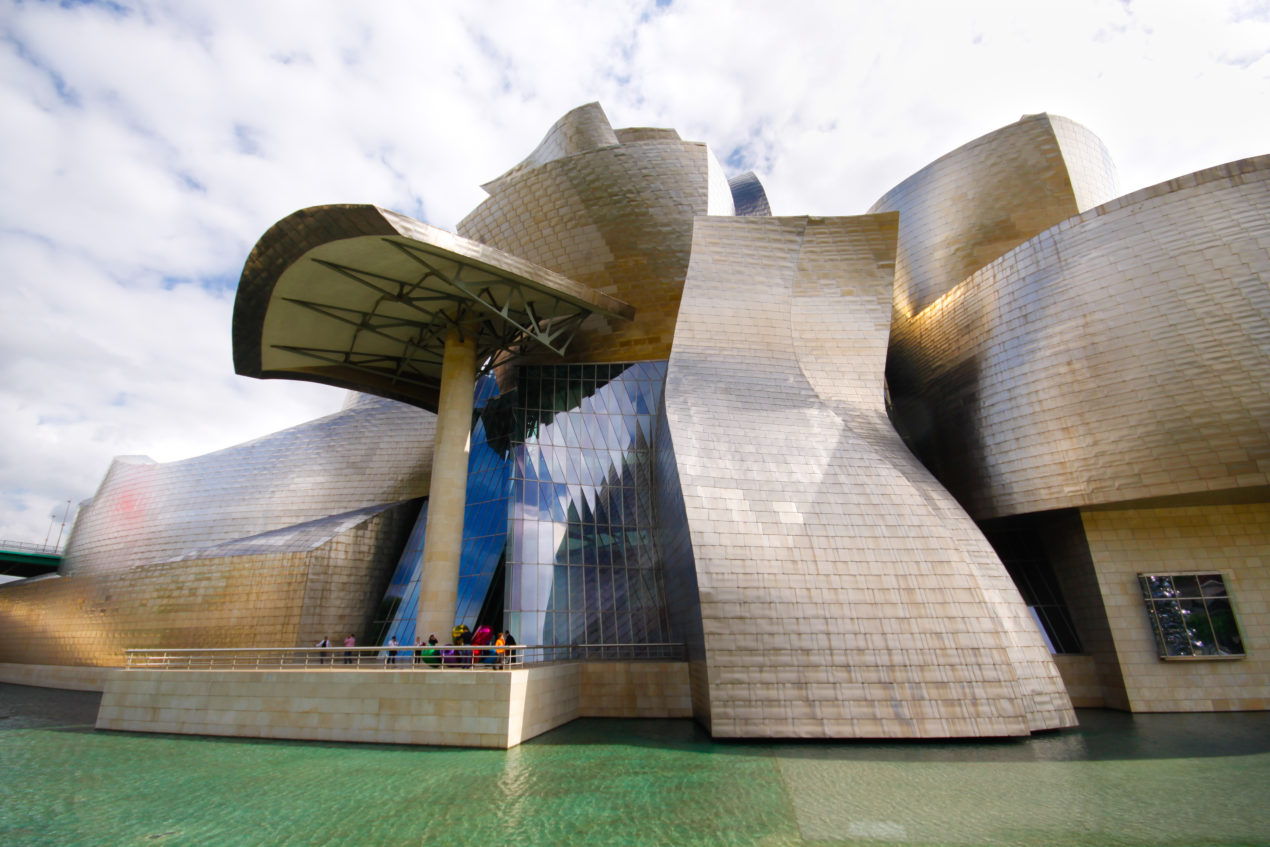
Exterior of the Guggenheim Bilbao
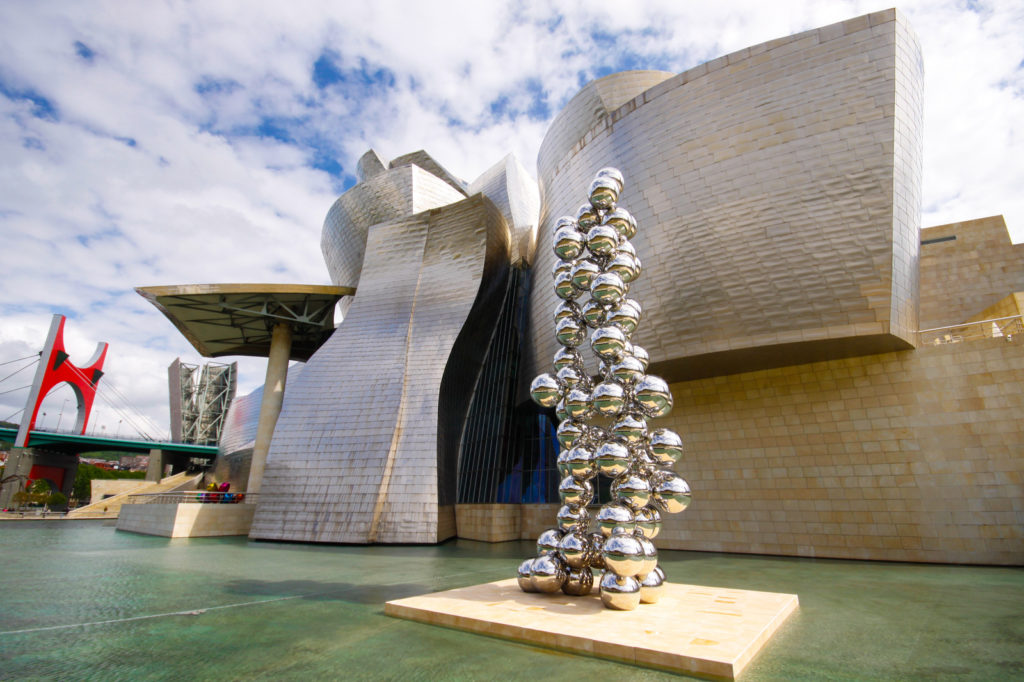
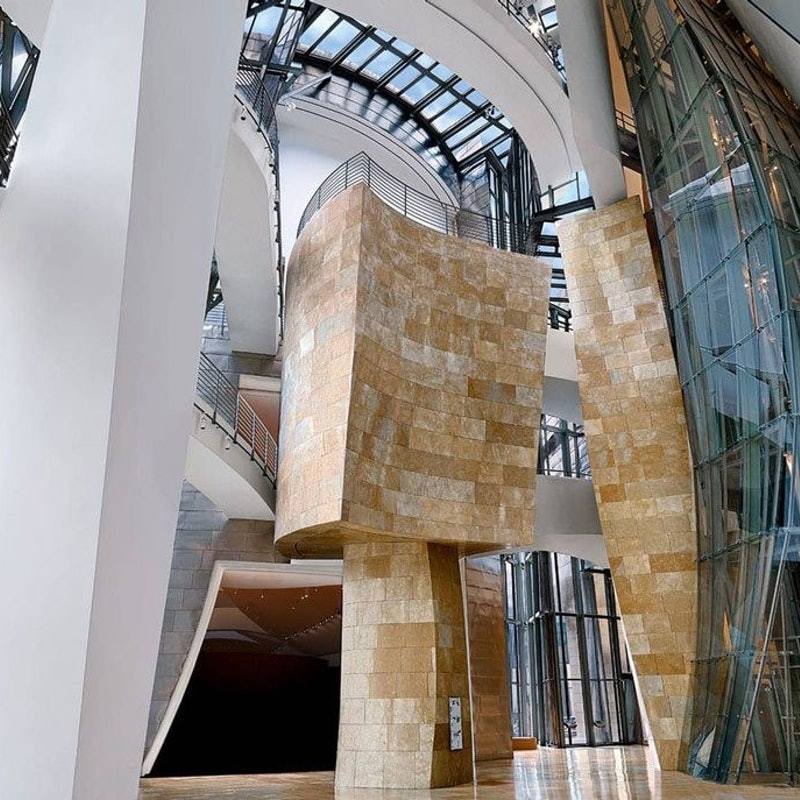
The exterior of the Guggenheim Bilbao plays a major role in its appeal to art lovers. Stroll around outside the building to see the many amazing sculptures.
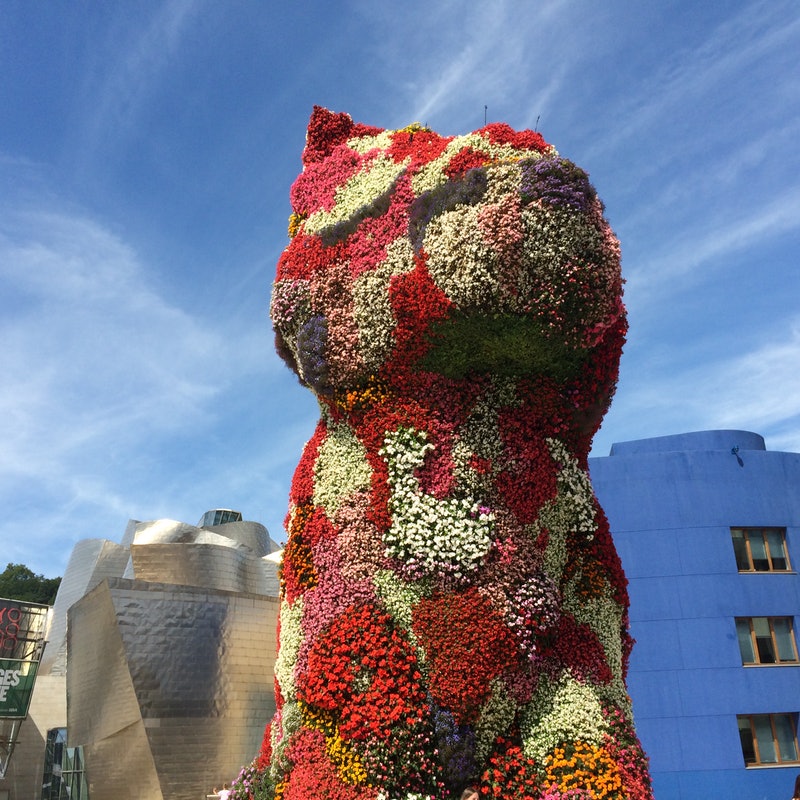
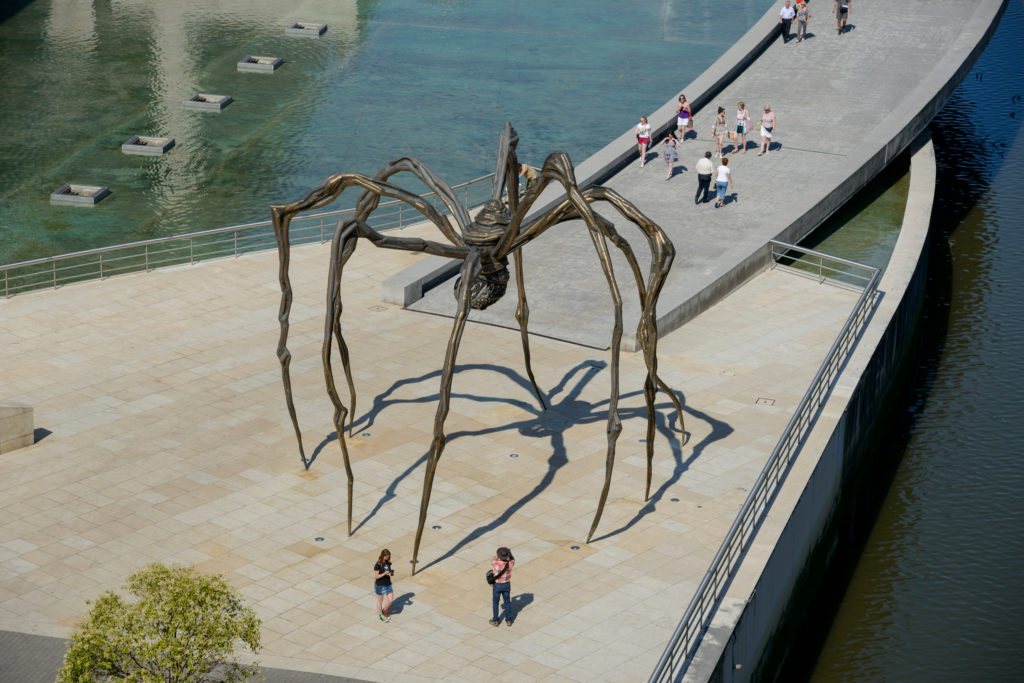
Most notable are Tall Trees and The Eye by Anish Kapoor, the massive spider Maman by Louise Bourgeois, and the wildly popular Puppy by Jeff Koons.
I defy anyone to stand in front of Puppy and not smile. He is adorable. That is, if a 43-foot tall, flower-encrusted West Highland Terrier can be called adorable.
The museum’s interior is as compelling as its exterior.
On one of my two visits to Bilbao, I was lucky to catch a major exhibition of recent landscapes by David Hockney. The massive galleries and thoughtful curatorial choices made the exhibition one of my favorites, which is saying something.
I was also taken with the massive installations by Frank Serra.
The whole complex with its gorgeous setting on the Nervion River really is miraculous. The museum attracts over 20 million visitors annually.
Now, that’s an art success story!
Exhibitions at the Guggenheim Bilbao change frequently, so check what’s on and then plan your visit accordingly. You won’t regret devoting time to exploring the Basque region of Spain.
Practical Information for the Guggenheim Bilbao
Guggenheim Bilbao is open from Tuesday to Sunday from 10 am to 7 pm. It’s closed on Christmas Day and New Year’s Day. Museum admission currently costs €15 for adults, €7.5 for seniors (65+) and students. Youths under 18 and Museum members are admitted free. The website has the latest rates.
Tours of the Guggenheim Bilbao
A great way to see the Guggenheim Bilbao is on a private tour if you have the spare funds, or a small group tour for the more budget-conscious. Modern art is sometimes not so easy to understand, and having a guide can really help you make sense of what you’re looking at.
You’ll also learn a lot about the stunning architecture and permanent installations such as Puppy and Maman. Here’s a guided tour offered through GetYourGuide.
Where to Stay in Bilbao
On both my trips to Bilbao, I stayed in excellent four-star hotels. Both were within walking distance of the Guggenheim Bilbao.
Catalonia Gran Vía Bilbao: In downtown Bilbao, this place is truly lovely with a very friendly staff and a good location for exploring more of Bilbao beyond the Guggenheim.
Hotel Meliá Bilbao: Situated right on the river, the modern hotel has all the amenities and is fairly easy to drive to.
Bratislava, Slovakia: Danubiana Meulensteen Art Museum
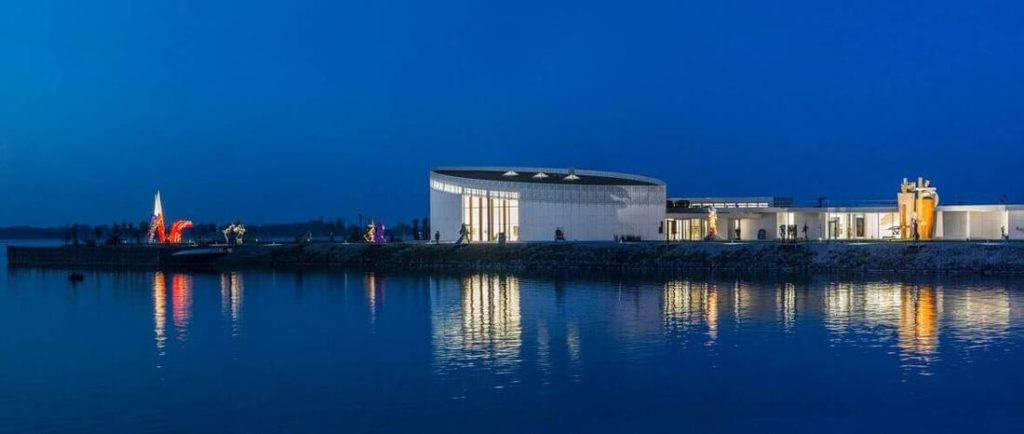
Situated on the Danube as the name suggests and about 20 kilometers from Bratislava in the Slovak Republic, the Danubiana Meulensteen Art Museum is billed as “one of the most romantic museums of modern art in Europe”.
The museum, opened in 2000, was founded by Gerard Meulensteen of Eindhoven, a Dutch collector and art patron, and Slovak gallerist Vincent Polakovič.
The collection includes works by artists from the experimental CoBrA group in the Netherlands, such as Karel Appel and Eugen Brands . Also included are works by Sam Francis, Christo, Corneille, Pierre Alechinsky, and others.
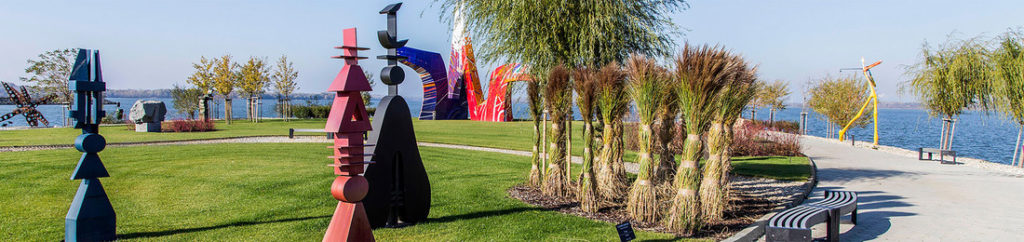
Plenty of quirky and colorful outdoor sculptures along with the dramatic setting on the Danube make this museum a must-see if you’re traveling to Bratislava.
Practical Information for the Danubiana Meluensteen Art Museum
Danubiana Meulensteen Art Museum is open from Tuesday to Sunday from 10 am to 6 pm. Museum admission currently costs €10 for adults, €5 for seniors (62+) and students. Children under 6, seniors (75+) and Museum members are admitted free. The website has the latest rates.
Where to Stay in Bratislava
The Danubiana Museum is a few kilometers up river from Bratislava itself where you’ll find these two hotels. Both are located in historic buildings and highly rated.
Marrol’s Boutique Hotel: Located in Bratislava city center, this hotel is rated 5-star, but the price is more like a 3-star. It looks amazing!
Arcadia Boutique Hotel: Centrally located in a 13th-century building in Bratislava’s Old Town. Rooms include antique furniture.
London, England: Tate Modern
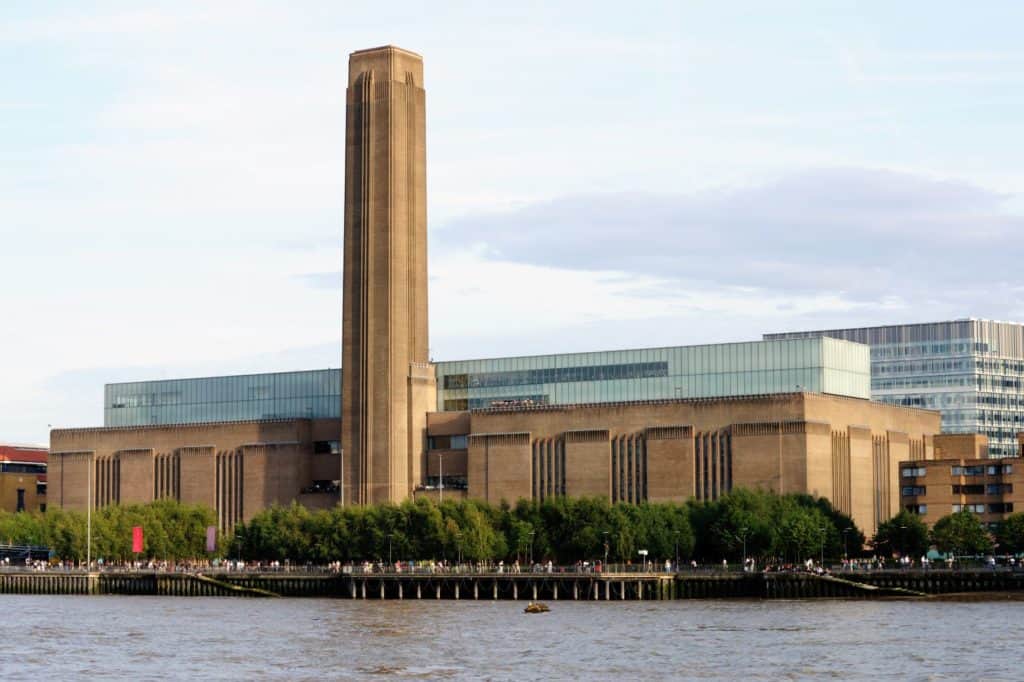
I’ve visited the Tate Modern in London a few times and have mixed feelings about it, to be honest! It’s a monumental place and a huge accomplishment from an architectural perspective.
I mean, seriously—a power station?
It’s pretty darned amazing that the Swiss architecture firm Herzog & de Meuron could convert the Bankside power station into an art gallery and still keep much of the building’s original character.
View of the Tate Modern from the Thames in London, England
However, I can’t say that I loved—or even liked—all the art exhibited in the Tate Modern. Several exhibits comprise contemporary and installation art, most of which was kind of hit or miss, in my opinion.
However, the special exhibitions can be worthwhile. I saw a wonderful retrospective of the work of American artist Georgia O’Keeffe on one visit, and an exhibition of international surrealism on another visit. My husband, Gregg Simpson, was honored to be included in the catalog for the latter exhibition.
Location of the Tate Modern
The location of the Tate Modern on the south side of the Thames, right across the new Millennium Bridge from St. Paul’s Cathedral, is a selling point. You can see the Tate Modern in the morning and then stroll across the bridge and visit St. Paul’s and the City in the afternoon.
You can also take in two Tates in a day. A good strategy is to start at the Tate Britain upriver. Check out the paintings by William Blake and some of the best works by the pre-Raphaelites. Then, hop on the Tate Boat at Millbank Pier and sail downriver to Bankside Pier to see the Tate Modern.
The Tate Boat runs every twenty to thirty minutes along the Thames.
And if you happen be down in St. Ives in Cornwall, don’t miss the Tate St. Ives.
Practical Information for the Tate Modern
Tate Modern is open daily from 10 am – 6 pm and the admission is free.
Tours of the Tate Modern
Why not take a tour of the Tate Modern with an expert guide? You’ll learn about the history and architecture of the gallery along with highlights of the collection. Here’s a guided tour offered through GetYourGuide:
I always stay around the West End so I’m within walking distance of the theaters, Trafalgar Square and two of my favorite art museums–the National Gallery and the Courtauld.
Here are three places I’ve stayed in that I recommend and that won’t break the bank (and are still four-star and comfy):
Wilde Aparthotel Covent Garden: Located steps from the Strand in the center of the action, the Wilde Aparthotel Covent Garden is an excellent choice. I even wrote a whole post about my stay there!
The Cavendish near Green Park is in a posh area and close to just about everything. When I stayed there, I was able to walk or take a bus everywhere I wanted to go. I didn’t once need to take the Tube!
Park Plaza Victoria London Hotel is located right across the street from Victoria Station and is a remarkably good deal for a modern, four-star hotel in the heart of London.
Madrid, Spain: Reina Sofia
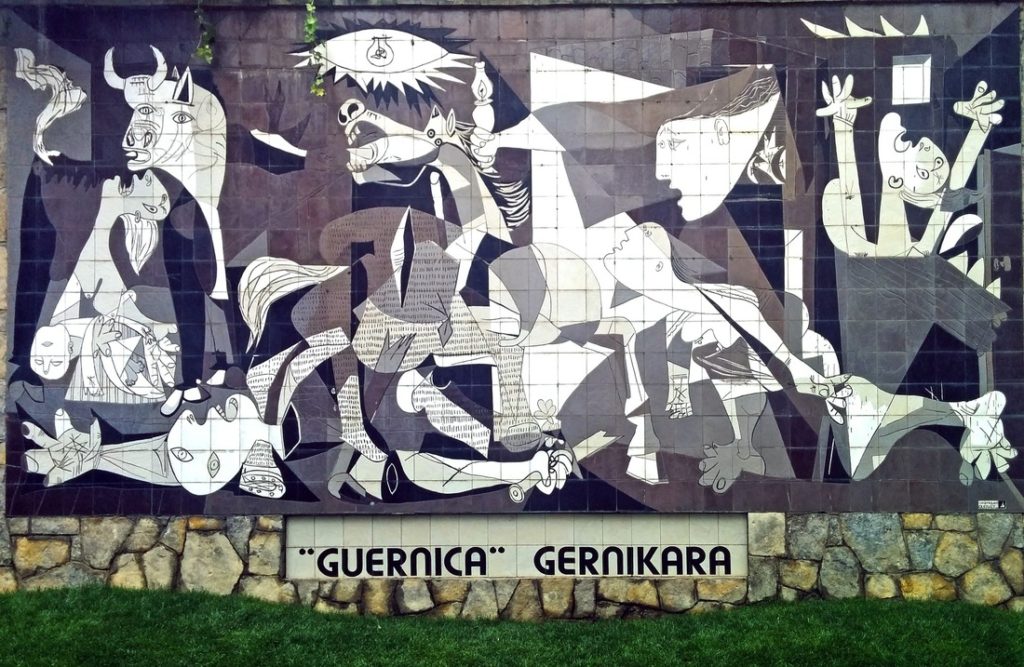
The Reina Sofia is home to one of the most famous paintings of the 20th century—Guernica by Pablo Picasso.
You’ve likely seen Guernica many times in reproduction. However, seeing the “real thing” is a different story.
The massive mural in the Reina Sofía has pride of place in a room of its own. You can sense how enraged Picasso must have felt as he painted it.
Its graphic depiction of the bombing of the old Basque city of Gernika in April 1937 has become an iconic image of the brutality of war.
Outdoor reproduction of Guernica by Picasso / Image by Almudena Sanz from Pixabay
As one of the premier modern art museums in Europe, the Reina Sofia combines a modern area with the arched hallways and barred windows of an old hospital. In several rooms, films representing specific 20th-century periods are running. Most are silent-era films, which makes following them a lot easier if your Spanish is minimal.
Included in the Reina Sofia are masterpieces by Salvador Dalí, Joan Miró, and Juan Gris, as well as a collection of over 22,400 works divided into three sections titled: The Irruption of the 20th Century: Utopia and Conflict (1900-1945), Is the War Over? Art in a Divided World (1945-1968), and From Revolt to Postmodernity (1962-1982).
Visiting the Reina Sofía
The museum is located on the Art Walk (Paseo del Arte)—a one-kilometer stretch that also includes the must-see Prado Museum and the Thyssen-Bornemisza Museum.
Reina Sofia is open from daily except Tuesdays from 10 am to 9 pm (Sundays until 2:30 pm). Museum admission currently costs €12. The website has the latest rates.
Tours of the Reina Sofia
Explore the Museo Nacional Centro de Arte Reina Sofía, Spain’s national museum of 20th-century art, on a guided tour and learn about the diverse collection.
Stay as close to the centro as you can in Madrid. Largely traffic free, the centro is full of narrow streets and grand plazas, and not too far from Madrid’s three big museums, including the Reina Sofia.
ApartoSuites Jardines de Sabatini: I stayed here for two weeks and loved it! The location right across the street from the Royal Palace puts it about a ten minute walk from the centro, but still outside the traffic limited zone so you can drive there and park in the parking lot right next door. The staff are wonderful and the one-bedroom apartments are spacious and comfortable.
nQn Aparts & Suites Madrid: This place is even closer to the city center within steps of the Plaza Mayor.
Munich, Germany: Pinakothek der Moderne
The Pinakothek der Modern in central Munich is one of three Pinakotheks in Munich’s Kunstareal (art district).
The museum features an excellent collection of the works of German Expressionist artists. In addition, you’ll find works by modern masters, including Picasso, Miró, Kandinsky, Klee, and Marc.
Other exhibits are related to form and function in a section that features modern industrial design and manufacture, furniture, and appliances.
On Sundays, the admission price is significantly discounted—at least it was when I visited. After strolling through the galleries, stop by the café.
Practical Information for the Pinakothek der Moderne
Pinakothek der Moderne is open from Tuesday to Sunday from 10 am to 6 pm (Thursdays to 8 pm). Museum admission currently costs €10 for adults, €7 for seniors (65+) and students. Youths under 18 are admitted free. The website has the latest rates.
Interesting Art Tour in Munich
After touring the Pinakothek der Moderne, keep the art juices flowing by taking this intriguing-looking street art bike tour with GetYourGuide. There’s a lively street art scene in Munich, a city that pioneered the graffiti movement in Germany in the 1980s.
Boutique Hotel Splendid: Located in the center of Munich within easy walking distance of many attractions. Comfortable rooms.
Andaz Munich Schwabinger Tor by Hyatt: This is a bit of a splurge, but its location next to the English Garden is great if you’re looking for a stroll in nature after touring Munich’s museums. The buffet breakfast here was the most opulent I’ve ever seen.
To say that the Kröller-Müller blew me away on my first visit would be an understatement. Fresh off the plane from Canada, I’d seen nothing like it in my suburban, middle-class life.
The Kröller-Müller Museum is light, airy, and filled with famous works by van Gogh and a load of other great painters.
Even better, the museum is smack in the middle of the Dutch National Park. This amazing park teems with deer, rolling sand hills, intriguing forests, and miles of bike paths.
Visiting the Kröller-Müller Museum
When I revisited the museum with Gregg recently, I was thrilled to discover that the Kröller-Müller and the park were as awesome as I remembered.
Everything about the place is perfect!
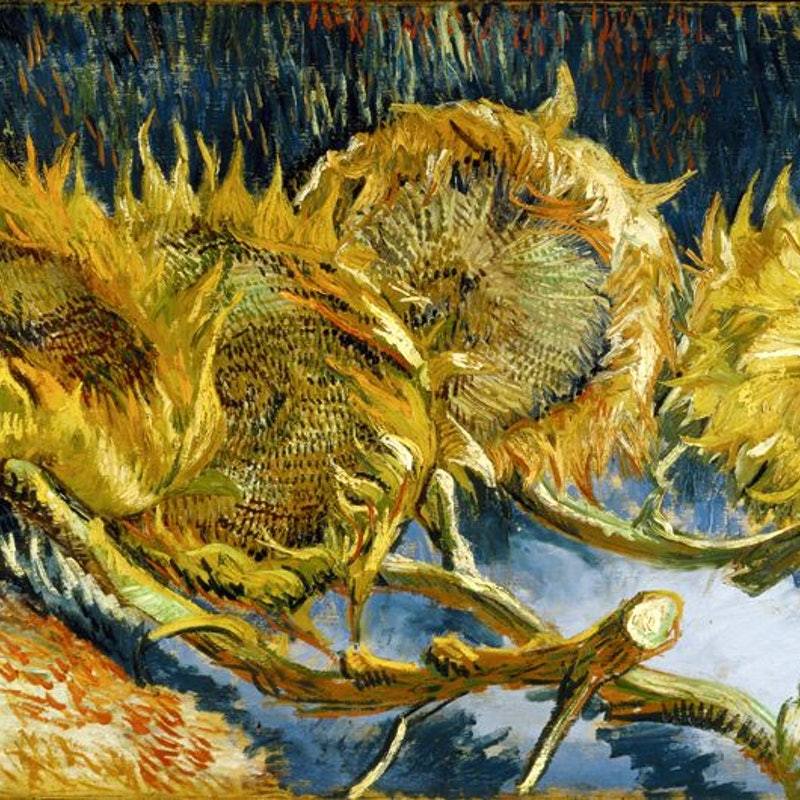
The museum includes dozens of paintings by van Gogh, room after room of other greats from the 19th and early 20th centuries, a massive sculpture garden, and even a bustling outdoor café with excellent food.
The word that comes to mind when touring the sculpture garden is serendipity. The sculptures are modern and diverse and often positioned in unexpected places.
Every turn of a pathway through forests and across green clipped lawns reveals yet another vista and another sculpture—stone or wood or marble, some moving, some static, some aesthetically stunning, some quirky, a few ugly, and yet all perfect.
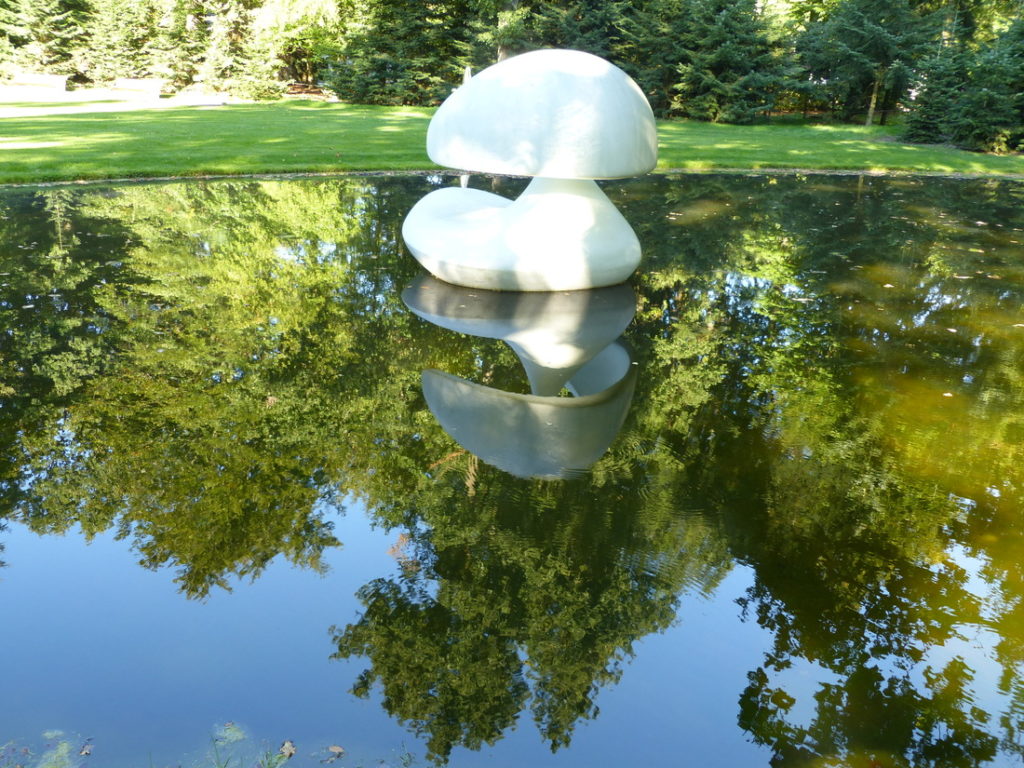
Floating sculpture on the grounds of the Kröller-Müller Museum in the Netherlands
Getting to the Kröller-Müller Museum
If you’re a fan of van Gogh and modern sculpture but haven’t visited the Kröller-Müller, then go.
Take a day tour from Amsterdam, or better, drive and stay a few days in the area. Gregg and I combined our visit to the Kröller-Müller with a bike ride around a portion of the 55-square-kilometer national park.
Explore a remarkably varied landscape that includes stunningly beautiful forests, heathlands, and sand dunes. You’ll spot impressively antlered deer, wild boar, foxes, sheep, and more.
Red deer stag in the Dutch National Park at Hoge Veluwe
Practical Information for the Kröller-Müller Museum
Kröller-Müller Museum is open from Tuesday to Sunday from 10 am to 5 pm. Museum admission currently costs €13.50 for adults, €6.75 for youths (13 – 18). Children under 12 are admitted free. The website has the latest rates. Plaese note that the museum is located in the middle of De Hoge Veluwe National Park. Therefore, you also have to buy a ticket for the park that costs €13.40 for age 13 and older, and €6.70 for ages 6 -12.
Tour to the Kröller-Müller from Amsterdam
This full-day tour is a great option if you don’t have your own transport. The tour goes from Amsterdam and includes time to explore the awesome Hoge Veluwe National Park.
The Kröller-Müller Museum is in a lovely rural area of the Netherlands. You can choose to stay near the museum or in nearby Arnhem. Here’s the place I stayed in:
Fletcher Hotel-Restaurant De Buunderkamp: This place is nestled in the woods not far from the Kröller-Müller Museum. Rooms are spacious and there’s an indoor pool. You can even rent bikes to explore the area, which we did and it was gorgeous!
Paris, France: Centre Pompidou
My most recent experience with the Pompidou Center (one of my absolute favorite modern art museums in Europe) was fraught with pure terror.
Gregg and I were trying to find an art gallery on an obscure side street that even Google Maps couldn’t find. The gallery was hosting an exhibition of Gregg’s work, so finding the gallery was a matter of some urgency.
I directed Gregg to turn down what I trusted was the right street. He drove a short block over cobblestones to emerge into a wide, pedestrian-only space that butted up against the back end of the massive Pompidou Center.
Mon Dieu!
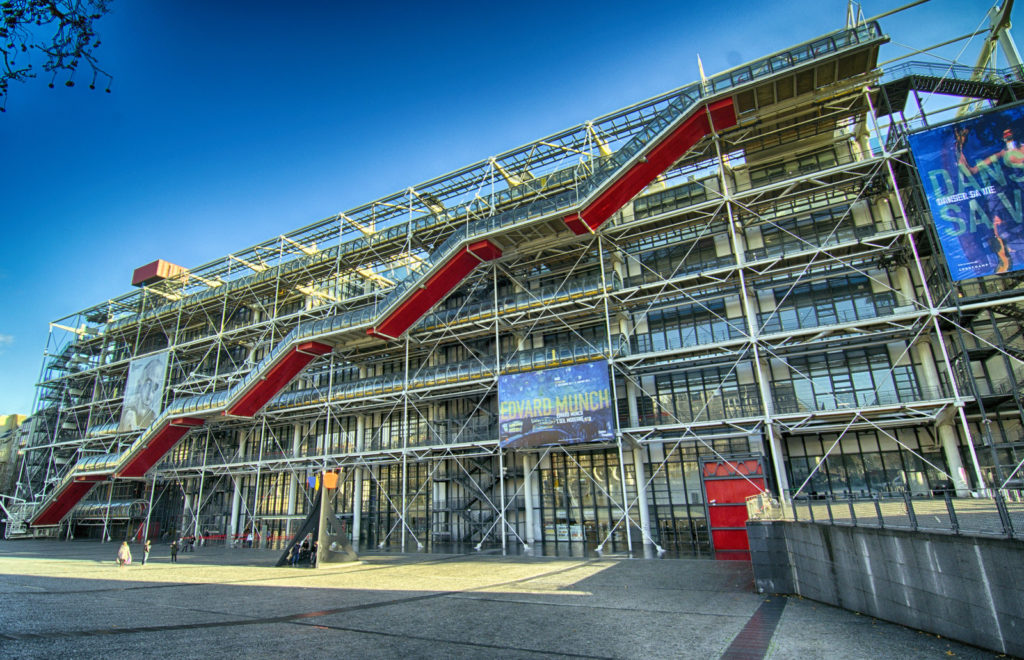
I looked up at the crazy exoskeleton of pipes and glass that had horrified Parisians when it was first built and yelled a few choice curses into my phone. The Google Maps lady was not impressed. She continued to insist that we drive across the square.
Exterior of the Pompidou Center in Paris
Luckily, the space was relatively empty of people (a rare event) so Gregg was able to execute a hasty U-turn and head smartly down the correct street. The only problem was that the street was one-way, and we were barreling down it the wrong way.
Fortunately, we found the gallery without having a head-on collision. A few hours later, after unloading the paintings and hanging the show, we were swanning about the vernissage (the opening), champagne glasses in hand.
Phew!
Visiting the Centre Pompidou
Every time we visit Paris, we make a beeline for the Pompidou. Its special exhibitions are almost always excellent.
UPDATE: The Centre Pompidou is currently closed for renovations set to last for several years. You can still take advantage of the Constellation Program that features exhibitions in venues around Paris. Check the Pompidou website for details.
The best thing about the Pompidou (before is temporary closure) is the collection on the legendary fourth floor. I don’t know where the collection will be housed when the Pompidou reopens, but I’m pretty sure it will still be a veritable “who’s who” of early 20th-century modern art.
All the most famous names are represented. Look forward to the day when you can again stroll through the rooms picking out your favorites and reveling in the glorious mishmash of colors and forms that characterize 20th-century modern art.
After sighing your way around the art, take the escalator to the rooftop to relish one of the best views of the Paris skyline.
Practical Information for the Pompidou Center
Centre Pompidou is currently closed for renovation. The website has the details.
Where to Stay in Paris
I favor staying on the Left Bank when I’m in Paris, preferably Saint Germain, although that area is getting pretty expensive. In Paris, an apartment or aparthotel may be your best bet. Hotel rooms tend to be very small.
Here are three of my recommendations for places to stay in Paris on the Left Bank.
Hotel de L’Université: I love the location of this boutique hotel–close to Boulevard Saint Germain and the Seine but a bit removed from the busiest areas of Saint Germain. Rooms are quite spacious (for Paris) and the old beams in the ceiling are a nice touch.
Citadines Saint-Germain-des-Prés: This aparthotel is part of the Citadines chain and is good value considering the excellent location right on the Seine in the 6th arrondisement. I’ve stayed here twice over the past two years.
Le Clos Medicis: Located very close to the Jardin du Luxembourg, this charming boutique hotel has attractive rooms and a very comfy lobby.
Rome, Italy: National Gallery of Modern Art
Rome’s National Gallery of Modern Art (Galleria Nazionale d’Arte Moderna) is conveniently located on the edge of the Borghese Gardens, surely one of Europe’s most beguiling parks.
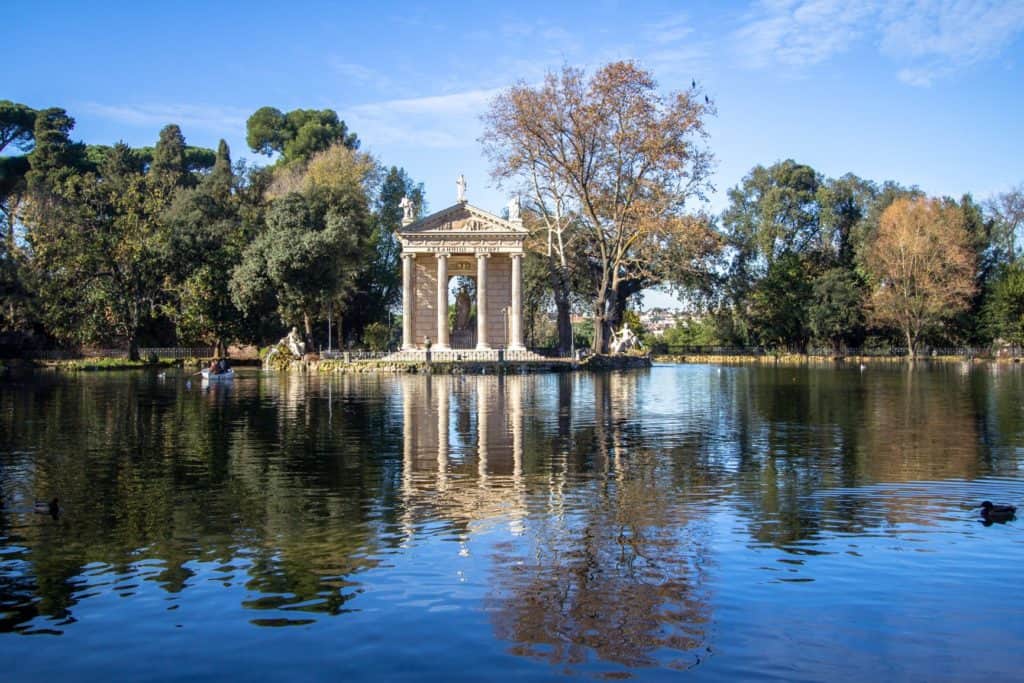
View of the Temple of Asclepius at Villa Borghese Gardens in Rome
The gallery features an excellent collection of 20th-century Italian painters, including Giorgio de Chirico (a particular favorite), Amedeo Modigliani, Antonio Canova, Giacomo Balla, and Giorgio Morandi.
You’ll also find works by Rodin, Degas, van Gogh, Monet, Duchamp, Man Ray, and Pollock.
Unlike the Vatican and the other Renaissance and ancient Roman attractions of Rome, the National Gallery of Modern Art is sparsely attended and therefore extremely pleasant.
After your visit, stroll along the shaded pathways of the Borghese Gardens.
Practical Information for the National Gallery of Modern Art in Rome
National Gallery of Modern Art is open from Tuesday to Sunday from 9 am to 7 pm. The admission currently costs €10.
Tour of the Borghese Gallery
The very popular Borghese Gallery is close by. Here’s an option that inclues a guided tour with your tickets. The Borghese is well worth a visit, and houses one of my favorite Baroque sculptures by Bernini.
I favor staying in apartments when in Rome because I’m usually staying at least a week. Here are three of the apartments I’ve stayed in that provided excellent value in great locations:
Monti Apartments: This centrally located place is not far from the Colosseum and close to a charming old neighborhood with lots of small restaurants and quiet side streets. The apartment is spacious, well-equipped, and excellent value. Staff are on hand during the day and the apartment has an elevator.
Viam 16b Suites: I loved this place! It’s located on a tiny side street close to the Piazza del Popolo and the Spanish Steps in an upscale area of Rome. Unlike many apartments in Rome, the Viam 16b Suites is staffed during the day. Our suite included an outdoor terrace.
Saint-Paul-de-Vence, France: Fondation Maeght
The Fondation Maeght makes just about every list of must-see art museums in Europe. While not the largest modern art museum in Europe, the Maeght is one of the most respected and also the most beautifully situated.
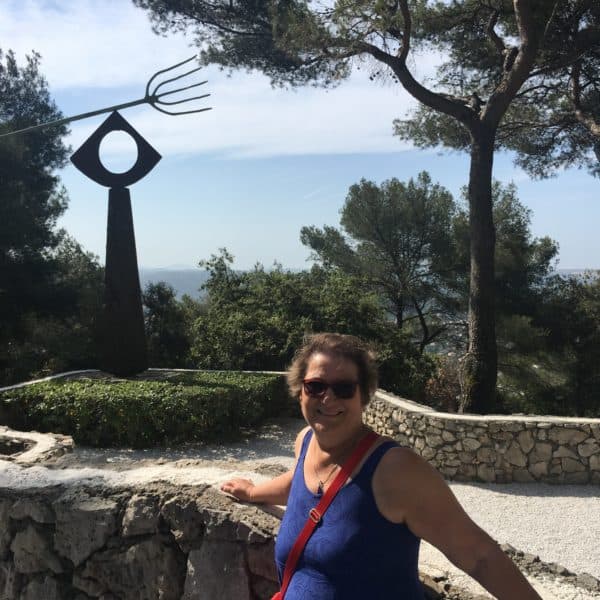
On the grounds of the fabulous Fondation Maeght in the south of France
I can’t say that every exhibition we’ve seen at the Fondation Maeght has been great. However, you still ought to visit if you’re in the area. When the exhibitions are good, they are extremely good.
The Fondation Maeght is a private foundation that was conceived and funded by Aimé and Marguerite Maeght to exhibit modern art. The Maeghts had several artist friends, including Georges Braque, Alexander Calder, Marc Chagall, Alberto Giacometti, Fernand Léger, and Joan Miró, who from the get-go donated or sold their work to the Foundation.
As Miró emphasized, the Fondation Maeght “…must before all be a place for art that remains alive.”
Visiting the Fondation Maeght
We first visited the Fondation Maeght in the 1990s during our first family trip to Europe with our young daughter. It was love at first sight!
Highlights include the giant sculptures by so many of the great 20th-century modern artists, including Miró, Giacometti, Arp, and Calder; spectacular views across the hills of the Riviera to the turquoise Mediterranean; and an airy modernist gallery.
You can visit the Fondation Maeght on a tour, but you’d be best off spending at least a few nights exploring the area and visiting the Maeght for a few hours at the beginning or end of the day when the light is best for photography.
Practical Information for the Fondation Maeght
Fondation Maeght is open daily from 10 am to 6 pm (July and Augusut to 7pm). The admission currently costs €18 for adults, €14 for youths (16 – 18), students, press and unemployed visitors. Children under 16 and disabled visitors are admitted free. The website has the latest rates.
Tour of Medieval Villages
If you don’t have a car, this tour of medieval villages that goes from Nice stops in Saint-Paul-de Vence for 1.5 hours, which is enough time for a flying visit to the Fondation Maeght.
The village of Saint Paul-de-Vence has been well and truly discovered and accommodations there are not budget-friendly. Here are two options:
Le Hameau: Located in an 18th-century farmhouse with a view of the valley and the village of Saint-Paul-de-Vence, this place is close to the Fondation and includes a gorgeous pool
Hotel Marc-Hely: Located a few kilometers away in La Colle-sur-Loup, this comfortable hotel room included a balcony and very friendly properietors.
Venice, Italy: Peggy Guggenheim Collection
If I were to pick a favorite modern art museum from this Must-See list, the Peggy Guggenheim Collection in Venice would rank in the top three.
Located right smack on the Grand Canal in the Dorsoduro district of magical Venice between Santa Maria della Salute and the Gallerie dell’Accademia, the Peggy Guggenheim Collection just makes me smile. I can’t visit it often enough!
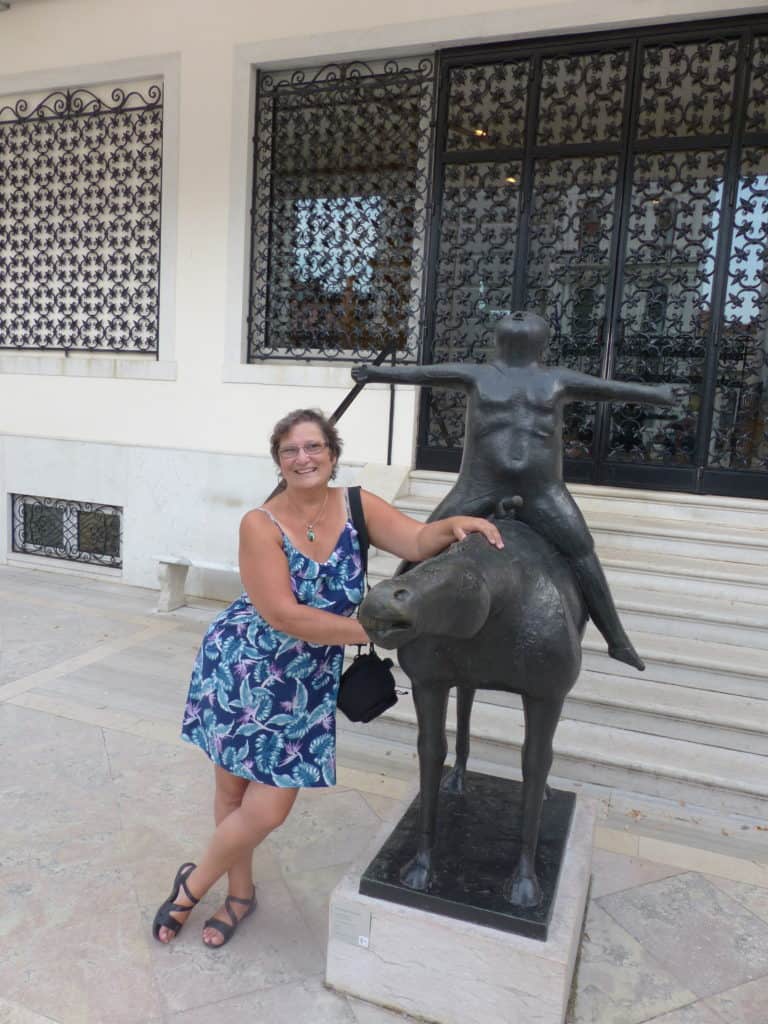
Carol next to a statue of a horse in front of the Peggy Guggenheim Museum in Venice.
The museum houses Peggy Guggenheim’s personal collection of 20th-century art, including masterpieces of cubism, surrealism, and abstract expressionism.
Gregg is a huge fan of Max Ernst,to whom Peggy was married for a time. Several of Ernst’s marvelous paintings are featured in the collection. Other artists in the permanent collection include Picasso, Kandinsky, Miró, Braque, Giacometti, Klee, Magritte, Dali, Pollock, de Chirico, Brancusi, Braque, Duchamp, and Mondrian.
It really is an embarrassment of 20th-century riches.
If you’re in Venice, take a break from the Renaissance and cross the canal to visit the Peggy Guggenheim Collection. Wander the cool halls of her renovated palazzo to view the paintings and sculptures, then descend the steps to the edge of the canal and watch the boats go by.
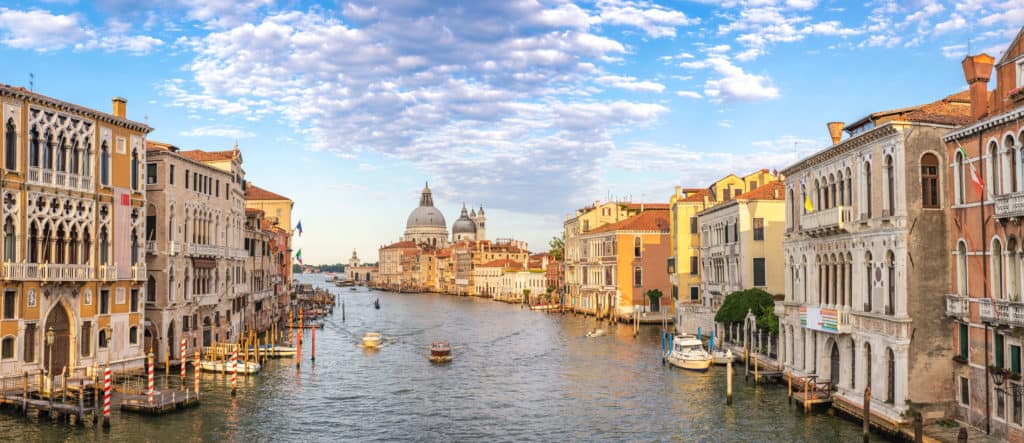
Venice panorama city skyline at Venice Grand Canal, Venice Italy
Practical Information for the Peggy Guggenheim Collection
Peggy Guggenheim Collection is open daily except Tuesdays from 10 am to 6 pm. The admission currently costs €16 for adults, €14 for seniors (70+), €9 for students under 26. Members and children under 10 are admitted free. The website has the latest rates.
Art Tour in the Dorsoduro
This private art and culture tour includes both the Peggy Guggenheim Collection and the wonderful collection of Venetian art at the Accademia.
Venice is expensive, but splurge and stay in a central area of this remarkable city rather than in nearby Mestre. Venice at night is the best. Streets that are thronged during the day become dark and empty and you’re bound to get lost on your back back to your accommodations. But you’re on an island and eventually you’ll find your way through alleyways that look like they haven’t changed in centuries, which is pretty much the case.
San Teodoro Palace: This one-bedroom apartment is huge by Venice standards and located steps from the Rialto Bridge in a very lively and touristy area.
Ca’ Mirò: Settle into this two-floor apartment in a quiet area of Venice not far from the train station and become a temporary Venetian. It’s gorgeous.
Another option if you’ve visited Venice before and are looking for some peace and quiet, is to stay on the island of Murano. I recently did just that. Here’s my post with recommendations for what to do and where to stay: Choose Murano For a Unique Venetian Experience
Louisiana Museum of Modern Art Near Copenhagen, Denmark
The Louisiana Museum of Modern Art (#11 on the map at the top of this post) is about a 30-minute train ride north of Copenhagen. It’s world-renowned as one of Europe’s best modern art museums, and therefore a must-visit for the Artsy Traveler!
Check what exhibitions are on, but even if they don’t appeal, visit the museum anyway. It makes for a lovely morning out from Copenhagen. You reach it by train (covered by the Copenhagen Card) followed by a pleasant 20-minute stroll along a suburban road to the museum.
After visiting the exhibitions, head outside where the real stars of the museum are located.
Sculpture at the Louisiana Museum of Modern Art near Copenhagen, Denmark
Practical Information for the Louisiana Museum of Modern Art
Louisiana Museum of Modern Art is open from 11 am to 10 pm on Tuesdays to Fridays and 11 am to 6 pm on Saturdays and Sundays. The admission currently costs DKK 145 for adults, DKK 125 for students. Louisiana members and youths under 18 are admitted free. The website has the latest rates.
Day Tour from Copenhagen
Here’s a private day tour to Louisiana Museum of Modern Art from Copenhagen with Viator, or on another day, consider this day trip from Copenhagen with GetYourGuide to three interesting destinatoins outside Copenhagen: Kronborg, Frederiksborg Castle and Roskilde:
Here are two recommended places to stay in Copenhagen, both in the atmospheric Nyhavn area.
Sanders Haven: This huge apartment is one of the best places I’ve stayed anywhere in Europe (which is saying something). If it’s available, book it!
Phoenix Copenhagen: A stylishly upscale hotel in the Nyhavn area with friendly staff.
Tate St. Ives in Cornwall, England
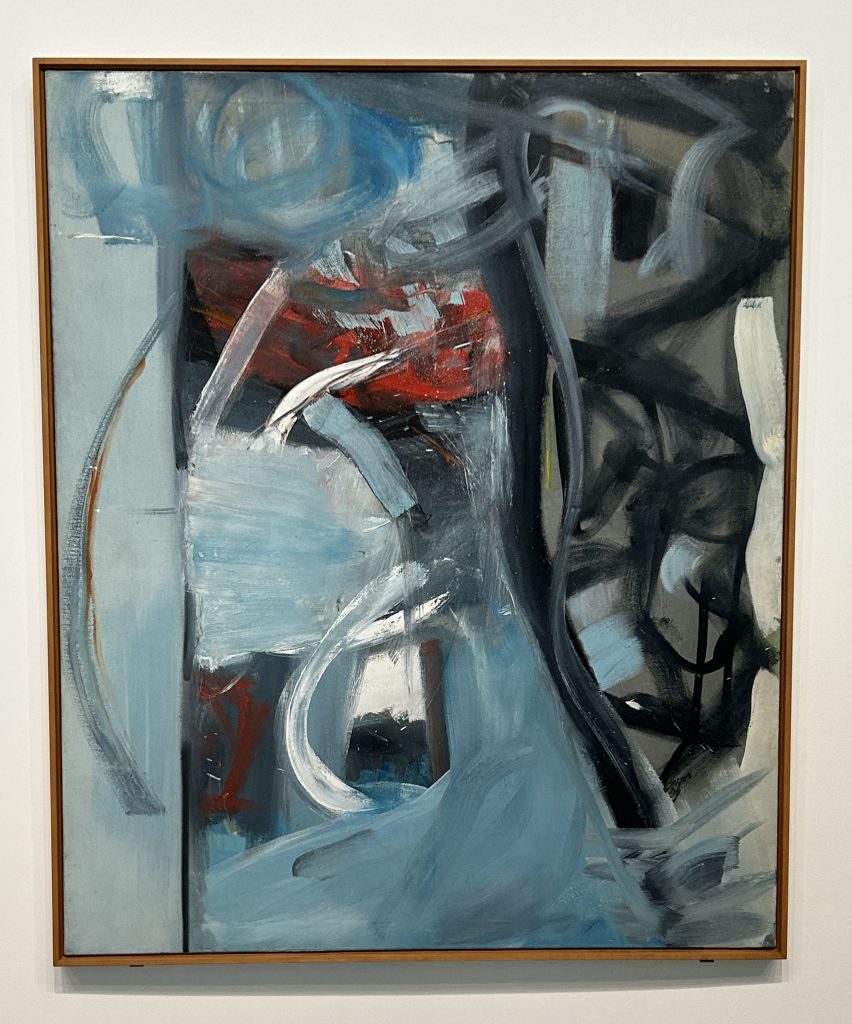
The Tate St. Ives (#12) is a delightfully compact and easy-to-tour museum overlooking the sea in lovely little St. Ives. I visited on a recent trip to Cornwall, and was lucky to sit in on two curator talks about local artist Robert Lanyon. Here’s one of his pieces.
Lost Mine by Peter Lanyon
Practical Information for Tate St. Ives
Tate St. Ives is open daily from 10 am to 4:20 pm. The admission currently costs £13.50 and visitors aged under 18 is admitted free. The website has the latest rates.
Entry to the Barbara Hepworth Museum
A few minutes’ walk from the tate St. Ives is the Barbara Hepworth Museum and Sculpture Garden. This place is well worth a visit if you’re a fan of world renowned sculptor Barbara Hepworth. Here’s a link to tickets to the site.
Tregenna Castle Resort: Why not stay in a castle! This place is about a kilometer from St. Ives and overlooks the Cornish coast. It even has a heated indoor swimming pool and an outdoor seasonal heated swimming pool.
Sightseeing Tips
I highly recommend purchasing tickets ahead of time when you’re traveling in Europe. Major art museums are increasingly crowded, with long lines that sap your sightseeing energy. Who can enjoy art after standing for an hour under the hot sun waiting to buy tickets?
By purchasing your tickets in advance, you can enjoy a leisurely breakfast before strolling straight into the museum past the long lines of tourists who did not book ahead.
You’ll be sighing in front of some of the world’s great masterpieces in no time!
What are your favorite modern art museums in Europe? Share your suggestions and recommendations for fellow artsy travelers? Please share them in the Comments below.
Looking for more great art? Here are posts on a few more of my favorite art museums in Europe: