Experience the creative energy of concerts, opera, theater, festivals, and live performances around the world. These guides highlight unforgettable musical and performing arts experiences—from iconic venues to local cultural events—and offer tips for enjoying them as an arts-focused traveler. Discover inspiring performances that bring a destination’s creative spirit to life.
Seeing a concert that features opera and classical music ranks right up there as one of my top unique things to do in Rome.
When traveling in Europe, I love slipping into local concerts—often on a whim. A poster in a hotel lobby or a flyer on a lamppost is all it takes. Most of the time, it’s worth every euro.
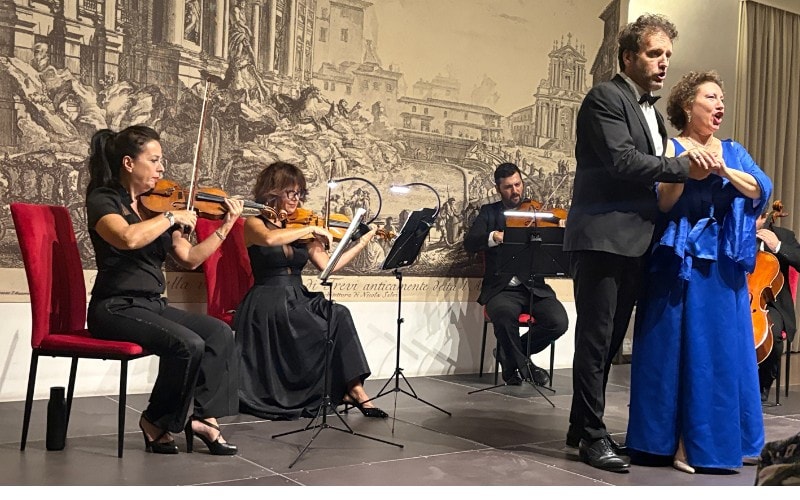
That was certainly the case with the Great Opera Arias Concert by Opera Lirica di Roma at the historic Palazzo Poli. Located right behind the Trevi Fountain, this concert will delight you with an hour of pure music magic.
See the concert at 7:30 pm, throw your coin in the Trevi Fountatin at 9 pm when the crowds have thinned, and then waft into the Roman night to enjoy a gourmet dinner on a moonlit piazza. Now that’s what I call a quintessential Rome experience!
🎟 Full disclosure: I received a complimentary ticket to the Great Opera Arias Concert in Rome in exchange for this post on Artsy Traveler. Spoiler: I’d happily pay for this experience.
The Venue: Palazzo Poli
The opera in Rome concert takes place inside the Palazzo Poli, the grand building that forms the backdrop to Rome’s iconic Trevi Fountain.
The concert hall in the Palazzo Poli is high-ceilinged, air conditioned, and spacious with plenty of leg room between the rows. This is by no means a trivial benefit!
Over the years, I’ve attended more than a few of these kinds of concerts held in venues that were less than stellar. A few weeks prior to attending the concert at Palazzo Poli, I went to a concert in a tiny church in France where the pews were so close together, I had to sit sideways and the temperature was well over 40 degrees. Although excellent, the music couldn’t compensate for the discomfort and I left at the interval.
Be assured that you’ll experience the Great Opera Arias Concert in complete comfort. Another plus is the inclusion of several modern tapestry art pieces hanging from the ceiling in addition to a magnificent modern chandelier.
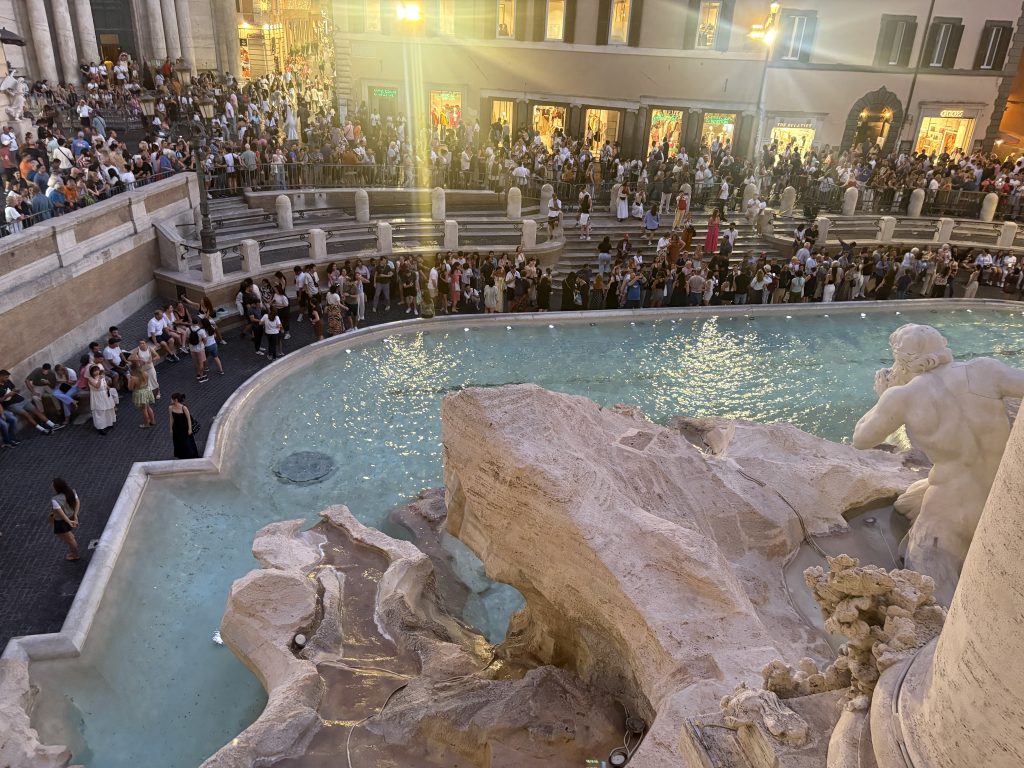
Here’s something special: the palazzo’s balcony offers a rare bird’s-eye view of the Trevi Fountain. Before or after the performance, step outside and watch the crowds from above—it’s one of Rome’s most unforgettable perspectives.
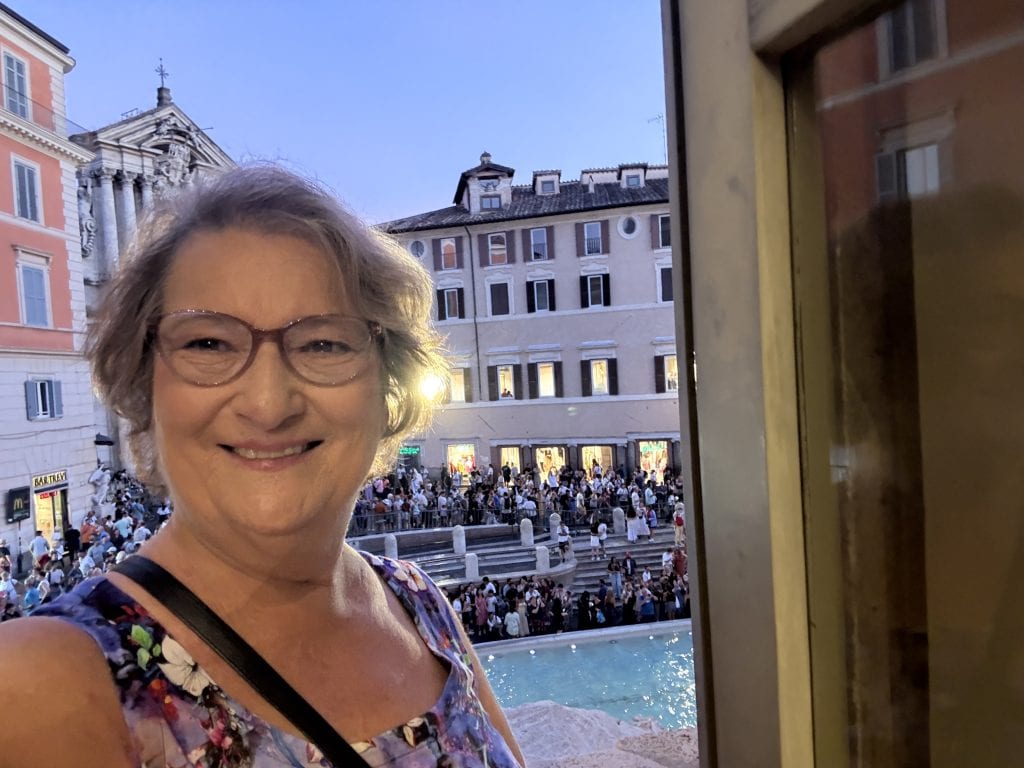
I guarantee you’ll not be the only audience member posing for a selfie before the concert begins. Here’s mine!
The Quartet: Pure Joy
The string quartet is led by one of the most enthusiastic first violinists I’ve ever had the pleasure of watching. At the beginning of the concert, she practically bounds onto the stage along with the second violinist, violist, and cellist.
Throughout the performance, her love of the music is amply evident. She conducts with such joy, her face often lit with a radiant smile. Her enjoyment is contagious and adds materially to my own enjoyment of the music.
Highlights include:
Marcello’s Adagio in D-minor, a calming opener after the bustle outside
Excerpts from Vivaldi’s Four Seasons, always refreshing in an Italian setting
A rousing Rossini William Tell Overture (Galop) that had the audience grinning (especially those of us who remember The Lone Ranger).
The Voices: Soprano & Tenor
The program features a soprano and a tenor, and both are delightful. Their voices beautifully fill the space and the cries of bravo and brava after each song attest to the quality of their performances.
The tenor’s performance of Nessun dorma from Turandot is particularly spine-tingling. I doubt there is a dry eye in the house by the time he hits the final heart wrenching note.
The Repertoire: Familiar Yet Fresh
What I appreciate most is the balance:
Beloved arias such as Nessun dorma and Bella figlia dell’amore
Lesser-known gems that expand my opera horizons
A welcome absence of overplayed staples like O sole mio and Figaro
The alternating structure—quartet-only pieces interwoven with vocal performances—keep the hour varied and interesting.
The Audience: Engaged & Enthusiastic
Tourist concerts sometimes risk being background entertainment, but not this one.
During the encore, I angle myself to watch people’s expressions as they listen to the music. Every face is rapt with concentration and enjoyment, and at the end of the piece, the standing ovation is genuine and heart felt.
Practical Details
Venue: Palazzo Poli, Via Poli 54, Rome
Length: About 1 hour starting at 7:30 pm
Booking: Reserve online; limited tickets may be available at the door
Tip: Arrive early to enjoy the Trevi Fountain balcony view before the music starts
Beethoven House Museum (known as Beethoven-Haus) in Bonn, Germany, is the place for fans of classical music (like me!) The museum is housed in the birthplace of Ludwig van Beethoven.
As one of the most popular museums in Germany, Beethoven House (Beethoven-Haus) provides music-lovers with three three floors of displays in one of the few remaining Baroque townhouses in Bonn.
While staying in Cologne, I did a day trip to Bonn, where I visited Beethoven’s birthplace, strolled through the car-free center of Bonn, and enjoyed a walk alongside the Rhine River to admire the passing boats. If you have time, you can even take a boat tour down the Rhine.
Exploring Beethoven-Haus Museum and communing with Beethoven
Strolling along the Rhine on the wide promenade
Discovering the old town of Bonn
Staying in Cologne at a hotel overlooking the Rhine
Getting to Bonn
I advise staying in Cologne, where there is lots to do, and then taking the train or the metro to Bonn. The trip takes about 30 minutes on the train and 50 minutes by metro, depending on where in Cologne you are staying.
I took the train from Cologne to Bonn and then the metro back. The metro is about 1/4 the price of the train, and not that much slower. Also, the train, which I took from the Koln Sud station (but you could also catch from the main station in Cologne) was extremely crowded with no place to sit.
By contrast, the ride on the metro was very poeasant, with quite a bit of the journey skirting the Rhine with beautiful views.
A few years ago, I drove to Bonn and ended up in a major traffic jam, and then couldn’t find a parking lot with space. I had to reluctantly abandon my plan to visit Beethoven-Haus on that trip.. The train is your safest bet.
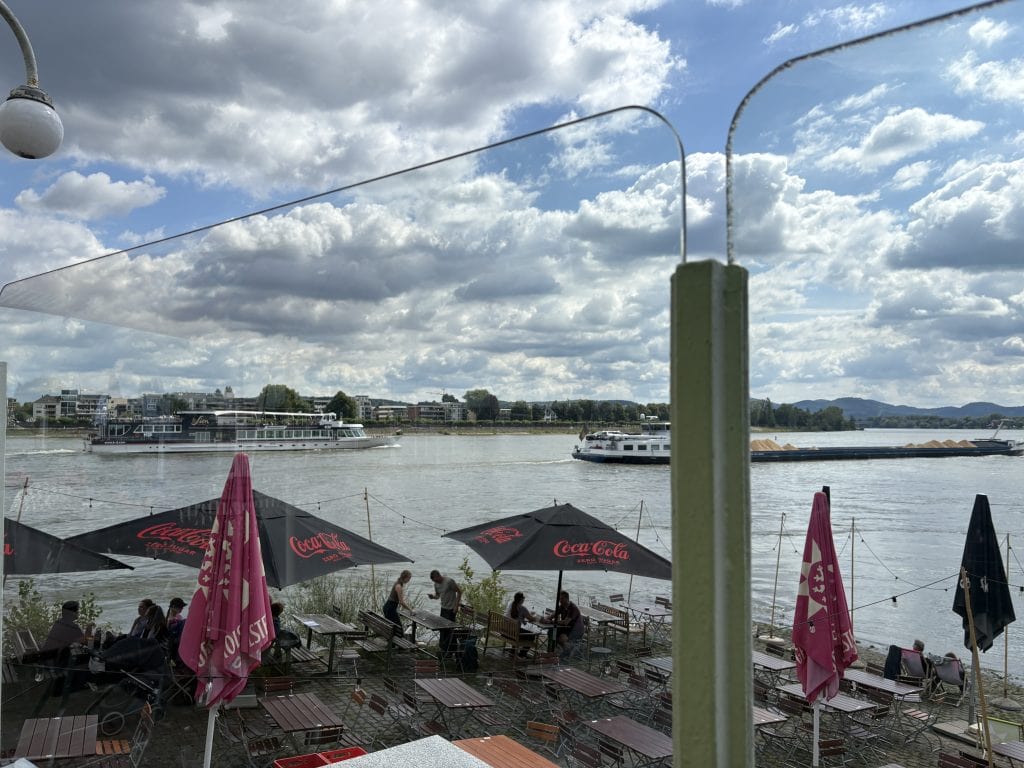
Once in Bonn, stroll from the train station down to the Rhine to enjoy the view and maybe stop for a drink at one of the riverside cafes. Here’s the view of boats playing the Rhine that we enjoyed while sipping a ginger lemonade:
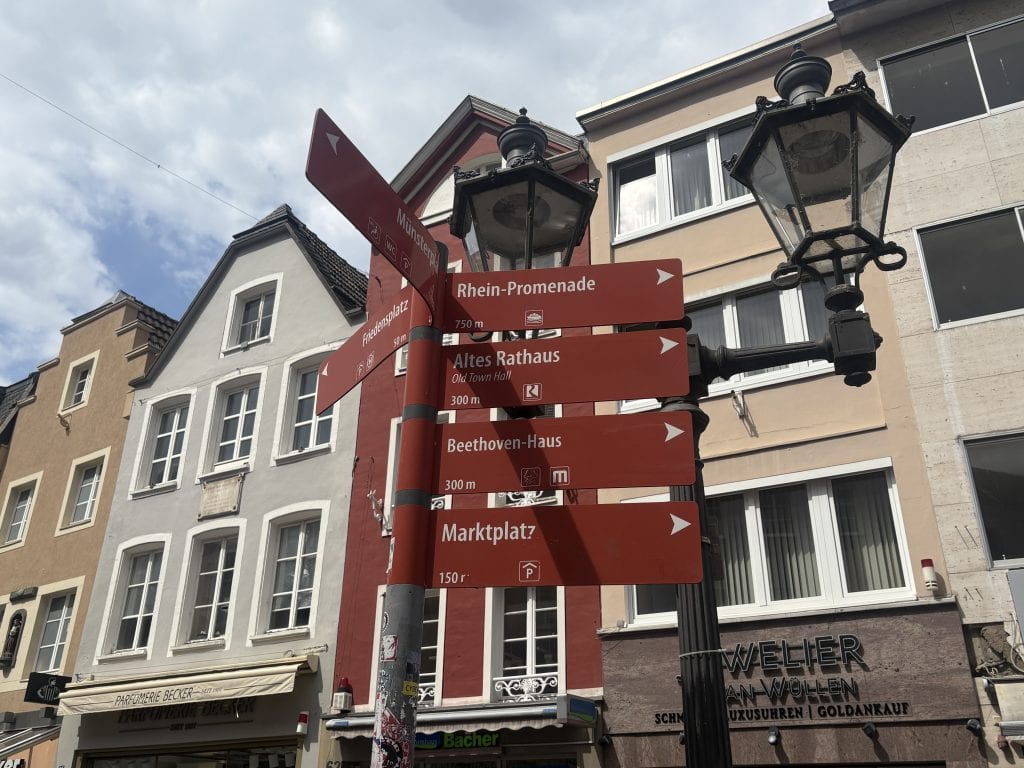
From the Rhine, walk back into the main part of Bonn and head for Beethoven-Haus at Bonngasse 20 (und 24-26).
Starting Your Visit at Beethoven-Haus in Bonn
Across the street from the house where Beethoven was born is a building housing the gift shop and ticket office. Go there first to buy your tickets.
If you’ve already bought them online (recommended), verify that you’re entering at the right time and date.
TIP: The museum is small, so to avoid disappointment, buy your tickets in advance for a specific time slot.
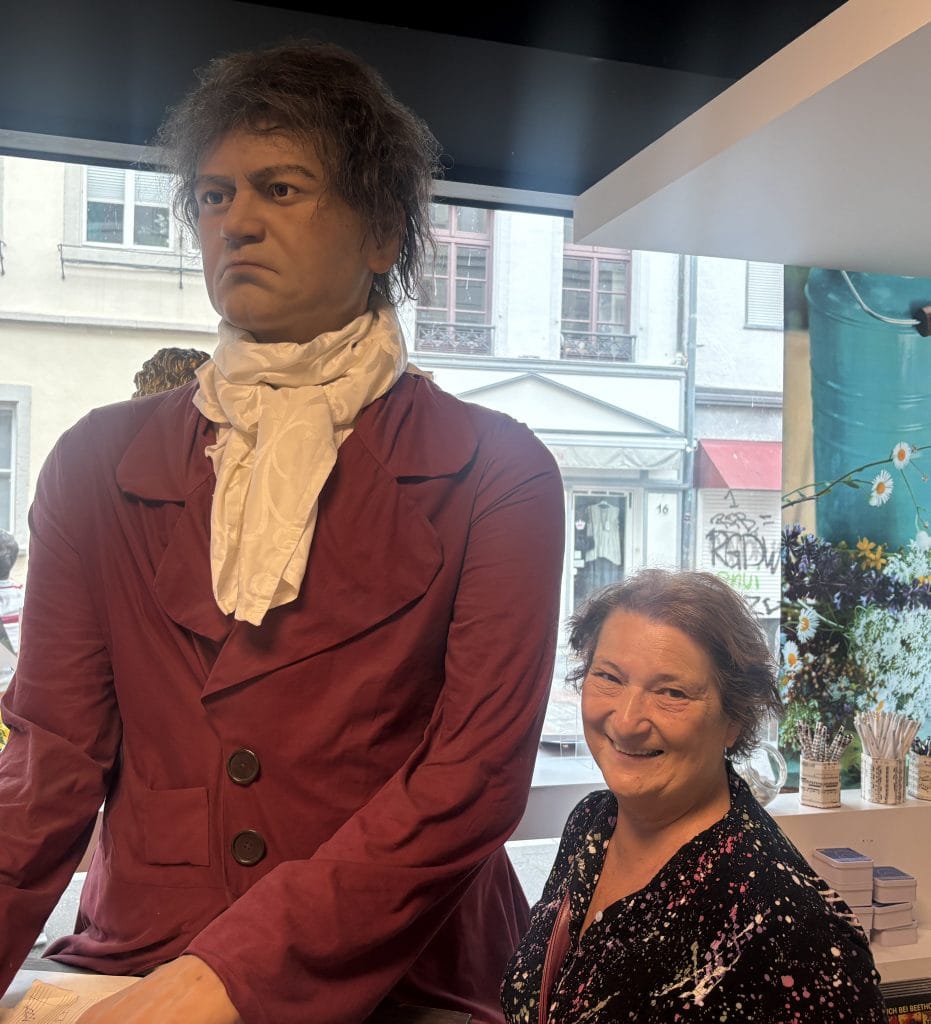
In the gift shop is a massive seated figure representing Beethoven at work. Like legions of Beethoven lovers before me, I had my picture taken standing next to him.
I then crossed the street to the house in which Beethoven was born on December 17th (or possibly December 16th) in 1770, and spent the first three years of his life.
Get the AudioGuide
At the entrance to Beethoven Haus, the attendant handed me a sheet with a QR code to scan to download the audio guide. While you can enjoy the displays spread across three floors without the audioguide, it does provide you with more in depth information about what you’re looking at.
The first thing you’ll learn by listening to the audioguide is that the house is the only one of the houses in Bonn in which the Beethoven family lived that has survived.
When the house was for sale in 1889, a group of wealthy businessmen purchased it and established the Beethoven House Association that to this day manages the site.
Touring Beethoven-Haus
Ground Floor
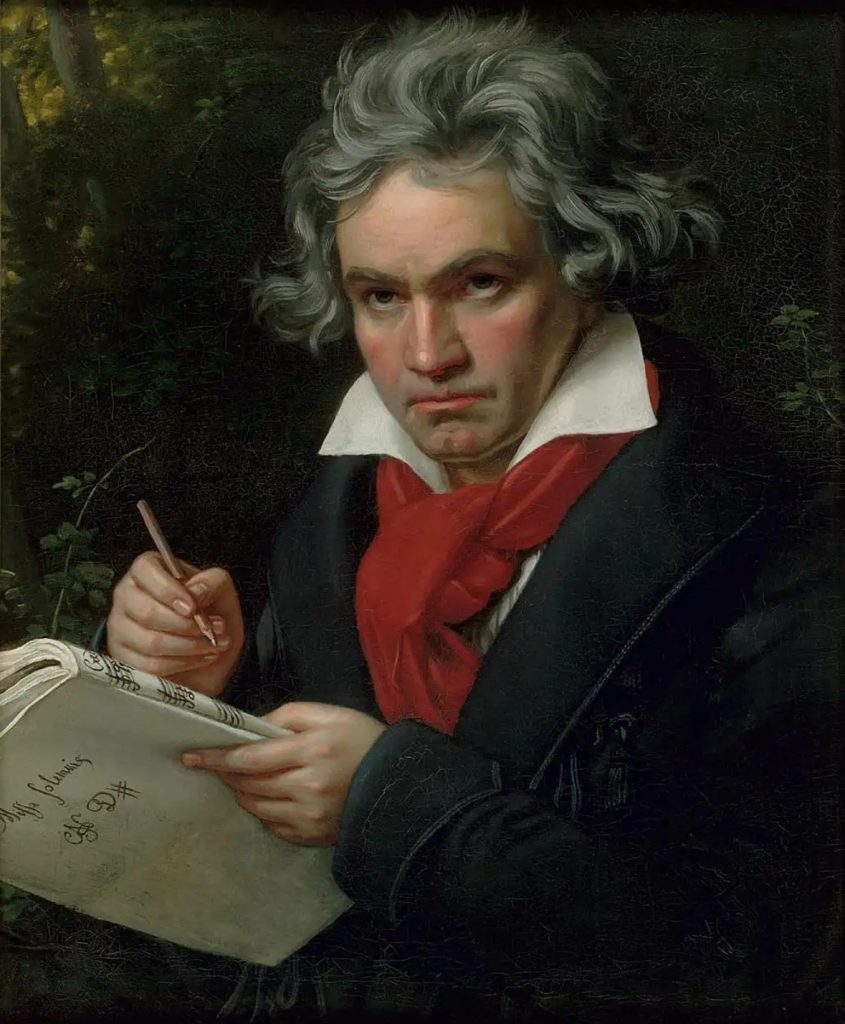
The first room you enter on the ground floor contains several of the many portraits and sculptures done of Beethoven during his lifetime. The most famous portrait of the great composer is by Joseph Stieler. It’s highly romanticized and idealized, and the only portrait showing Beethoven at work.
At the back of the house on the ground floor are displays from Beethoven’s childhood including the record of his christening. Historians don’t know if he was born on December 16th or 17th, only that he was christened on December 17th.
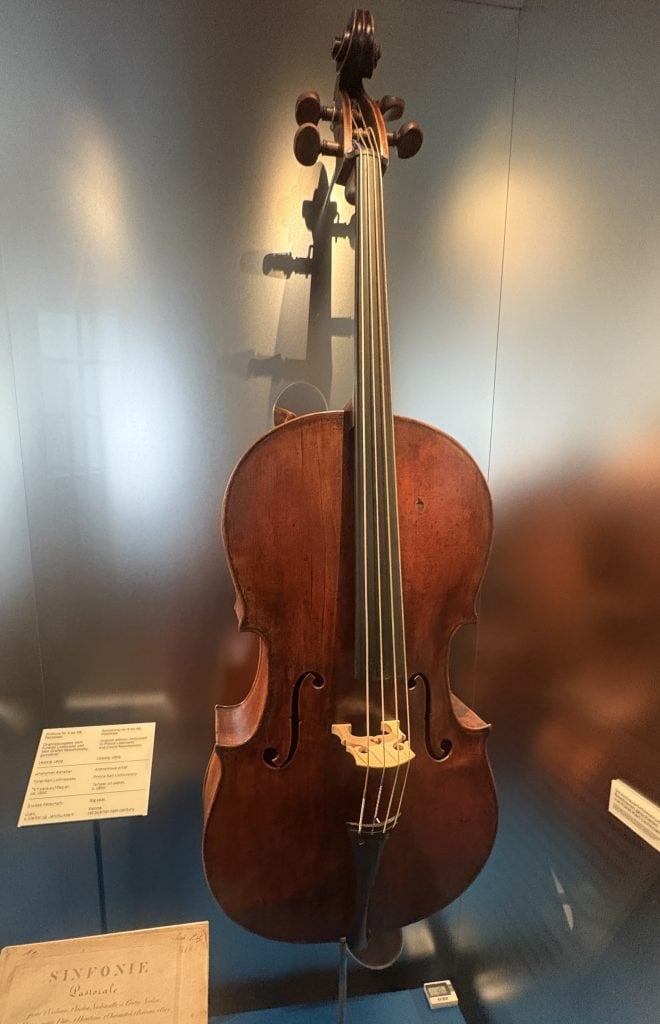
One of the displays is Beethoven’s viola, which he started playing at the age of 19 when he became a court musician. Up until that time, he was most known as a pianist, performing in his first public concert when he was just seven years old.
First Floor
Climb the narrow staircase to the first floor where you’ll find displays about Beethoven’s life and work. I was intrigued by the receipt from Beethoven’s publisher that records payment for five works, including the Fifth Symphony.
Beethoven made a lot of his money selling the rights to publish his pieces in countries all over Europe.
I was also surprised to see his eyeglasses and learn that Beethoven was short-sighted. None of the portraits showed him wearing glasses.
Also on this floor are displays related to some of Beethoven’s friends, mostly in Vienna where he lived after leaving Bonn as a young man.
Second Floor
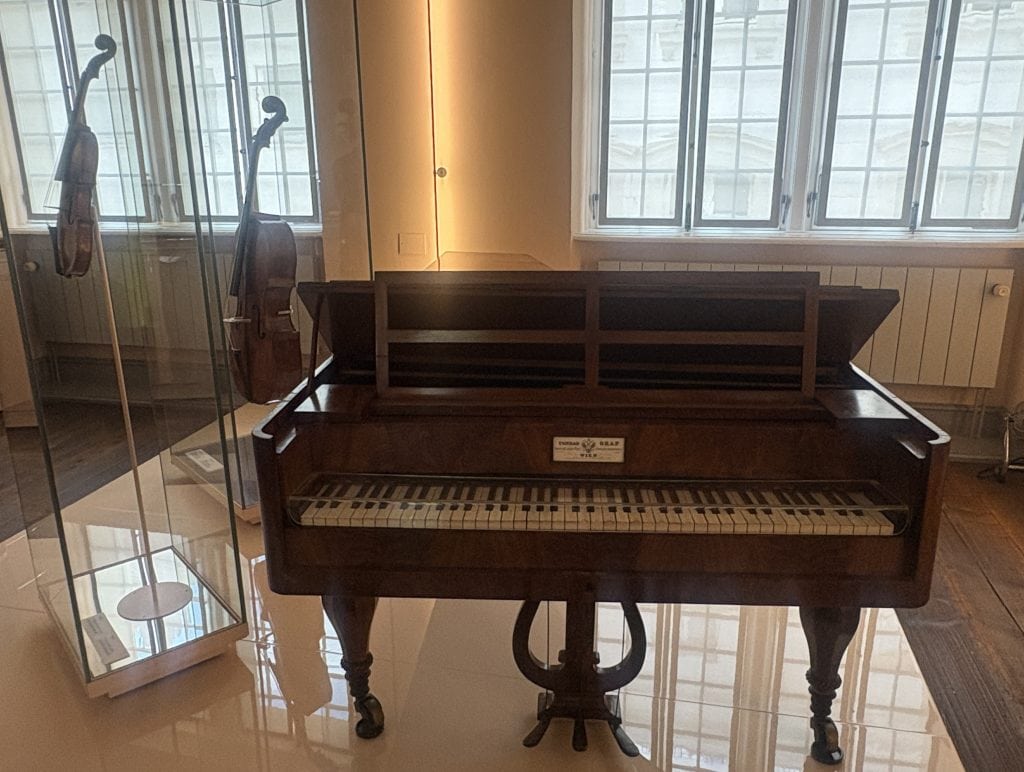
This was my favorite floor because it focused primarily on Beethoven and his work. Included is one of his pianos along with many of his manuscripts written in his characteristically illegible scrawl.
I couldn’t begin to decipher the notes and marveled at the patience of the publishers who managed to do in order to produce the music I’ve been playing since I was about twelve and could manage an octave!
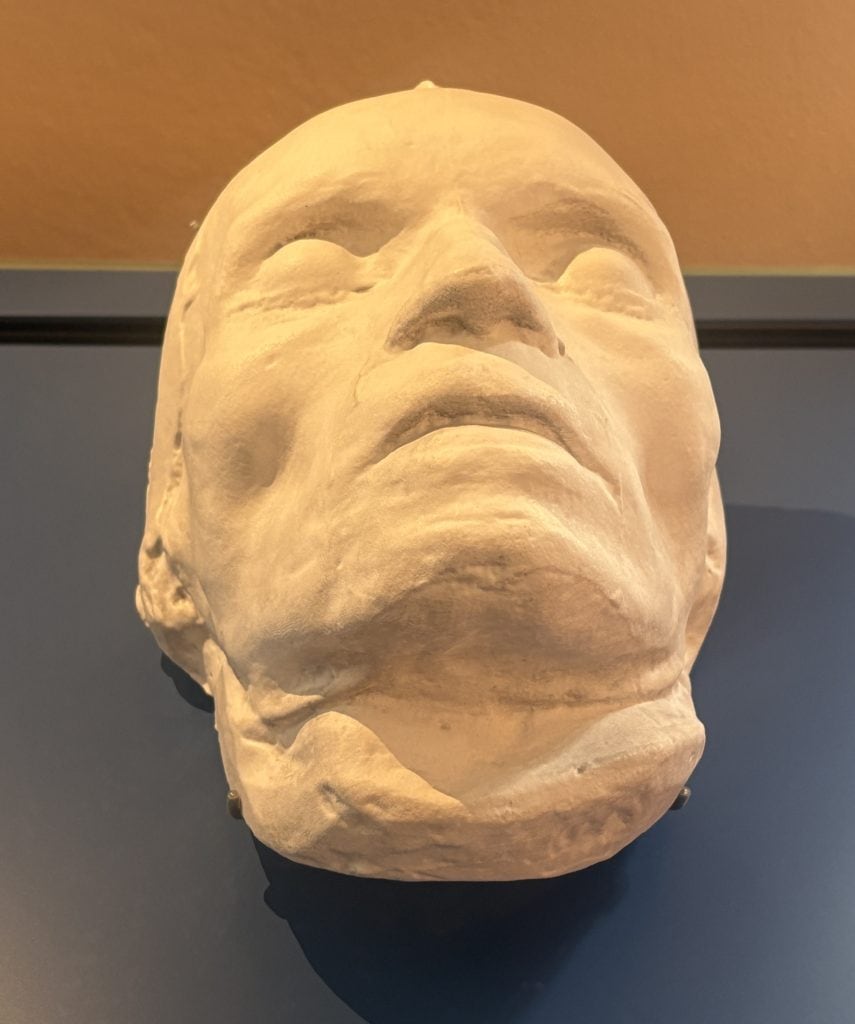
The floor also includes displays related to Beethoven’s tragic hearing loss beginning in his early thirties when he was at the height of his fame. The display of ear trumpets is particularly poignant as is this replica of Beethoven’s death mask.
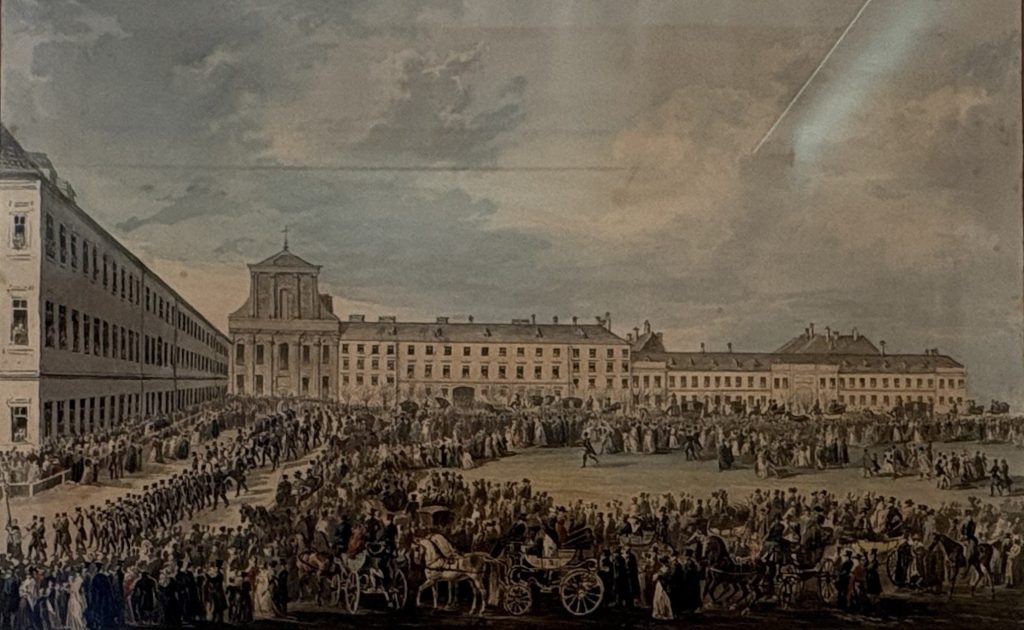
And finally, I was pleased to see a reproduction of a painting depicting Beethoven’s funeral on March 27, 1826. Between 10,000 and 30,000 people turned turned out to watch Beethoven’s casket pass by. Beethoven was very famous and a good chunk of Vienna wanted to pay tribute to the maestro.
My second novel, A Woman of Note, about a female composer in 1830s Vienna, opens with a description of Beethoven’s funeral. I looked at this painting many times during my research to get a sense of what the procession may have looked like.
Courtyard
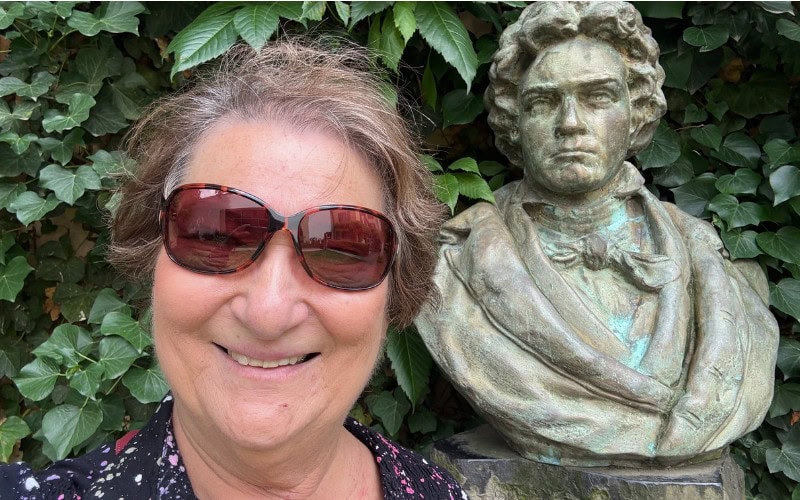
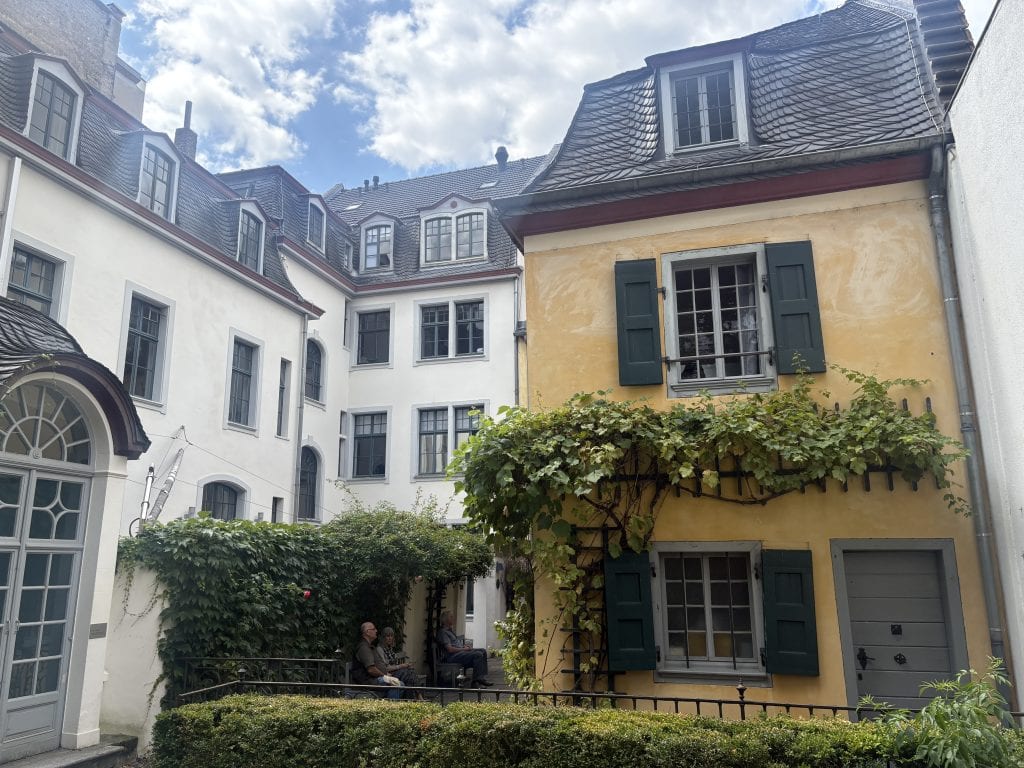
After touring the house, go back downstairs and out into the tranquil courtyard. If you’re lucky, as I was, you’ll find it deserted. Snap a picture of yourself with a bust of Beethoven and then settle onto a bench to enjoy the quiet.
Music Room at the Beethoven-Haus
To finish your visit, make sure you enter the adjacent building. Here, you can sit and enjoy a performance of the Moonlight Sonata. The manuscript that Beethoven wrote—with all its spikes and crossings-out—is projected onto the wall and a light follows the notes as they are played.
I’ve played this sonata many times and so was thrilled to hear it played while looking at the actual notes that Beethoven wrote.
Gift Shop
After communing with the maestro in his house and listening to The Moonlight Sonata, your very last stop is, naturally, the gift shop. Here, you’ll find plenty of Beethoven-themed schlock that is perfect for the Beethoven lover in your life.
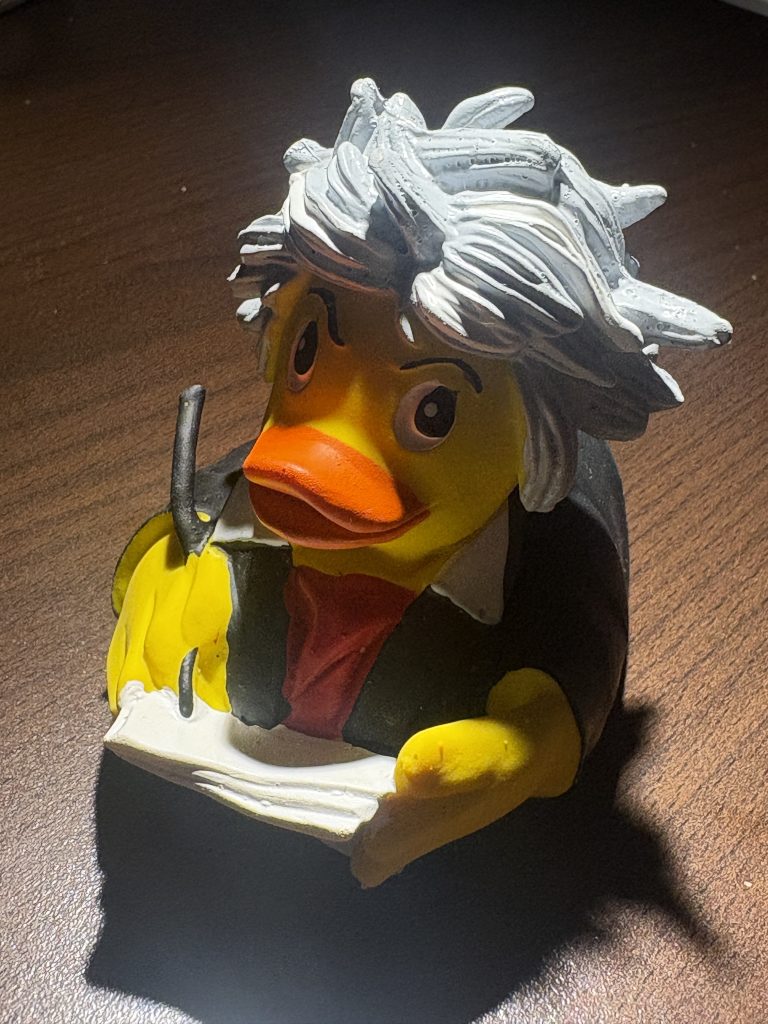
I resisted everything only to be seduced by the tackiest item in the shop—a Beethoven duckie. He sits on my desk as I write. His quill is poised, his hair wild and his orange beak opened just a touch as if ready to tell you all about his latest masterpiece.
Practical Information
The Beethoven-Haus (Bonngasse 20 and 24-26) is situated on the edge of the pedestrian zone within easy walking distance of the main station.
Opening hours are Wednesday to Monday from 10 am to 6 pm (open only to pre-booked groups on Tuesdays). Cost is €14 for adults and €7 for children.
Other Music Museums Worth Visiting
While I enjoyed visiting Beethoven Haus and communing with the spirit of the young Beethoven, I was even more excited by the Beethoven museums in Vienna. Here, you can visit some of the apartments in which Beethoven lived and worked, and gain a much deeper undrestanding of his music.
Vienna is also home to museums dedicated to Hadyn, Mozart, Schubert, and Strauss, among others. Read more in my post A Music Lover’s Guide to Vienna.
Also check out the Bach Museum in Leipzig, which for me, is the best music museum I’ve ever visited. Read more here.
Staying in Cologne
As mentioned earlier, consider staying in Cologne rather than in Bonn. Cologne as a lot to offer with its museums, cathedral, and lively riverfront area. Here you can watch the locals go by while enjoying a great meal. Don’t forget to sample a glass (or two) of Kölsch, a local beer brewed only in Cologne. It goes down very easy.
Conclusion
Have you visited the Beethoven-Haus Museum? What did you think? Share your recommendations fir other artsy travelres in the comments below.
Love Shakespeare? Then make the pilgrimage to Stratford-upon-Avon. It’s about a two-hour train journey from London and a perfect first stop after visiting the capital.
Stay at least one night (preferably two) and be sure to get tickets for a performance by the Royal Shakespeare Company (RSC).
On a recent trip, I stayed one night in Stratford-upon-Avon, saw a performance of Richard III (more on this in a minute!) and then the next day took a full-day, small-group tour of the Cotswolds with Go Cotswolds before hopping on the train to Birmingham for two nights.
Read about my wonderful day out with Go Cotswolds.
Stratford at a Glance
Take a guided tour of the town with Shakespeare from Tudor World
In this post, I share my almost-50-year love affair with Stratford-upon-Avon along with tips about what to see and do based on my recent visit.
Getting to Stratford-upon-Avon
I rose early and took a taxi from Wilde Aparthotels to Marylebone Station. I had to change trains at Solihul, which turned out to be a small station surrounded by countryside. The minute I stepped off the train to wait on the platform for the train to Stratford-upon-Avon, I was subsumed by a massive dose of nostalgia.
The smell and sound of the English countryside took me back to 1974. I was 18 again, inhaling the earthy odors of a deciduous forest as I walked through on the campus of the University of Reading on my way to lectures, hearing the same bird song, excited and a little nervous—a stranger in a new land.
England, pleasant England.
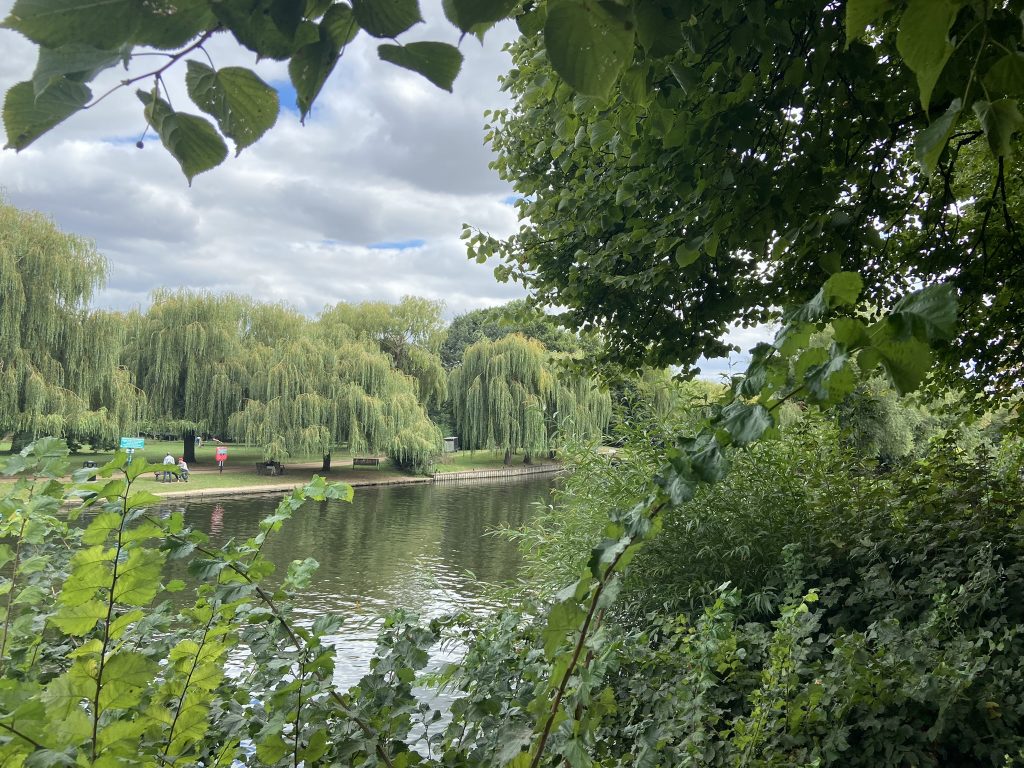
Pleasant English countryside – the River Avon in Stratford-upon-Avon
I felt like all the years in between had disappeared because inside I felt exactly the same now as I was then. All that’d changed was an accumulation of memories and people like my husband who hadn’t existed for me in 1974 and my daughter who hadn’t existed at all.
I decided that my 18-year-old self should feel good about how her life is turning out. Sure, I haven’t won an Oscar for a movie based on one of my novels (a girl can dream!), but I’m totally okay with that.
If my 18-year-old self knew what I know now, she would be too.
My First Visit to Stratford-upon-Avon
I boarded the train to Stratford-upon-Avon and more memories flooded in. On each of my last three trips to the UK, I’ve included a night in Stratford-upon-Avon because, well, Shakespeare.
Attending a performance at the Royal Shakespeare Company is a must.
I first visited Stratford-upon-Avon in 1970 when I was 14 and traveling with my mom. We went to a performance at the Royal Shakespeare Company theatre. As an English teacher, Mom was determined to expand my horizons, for which I am eternally grateful.
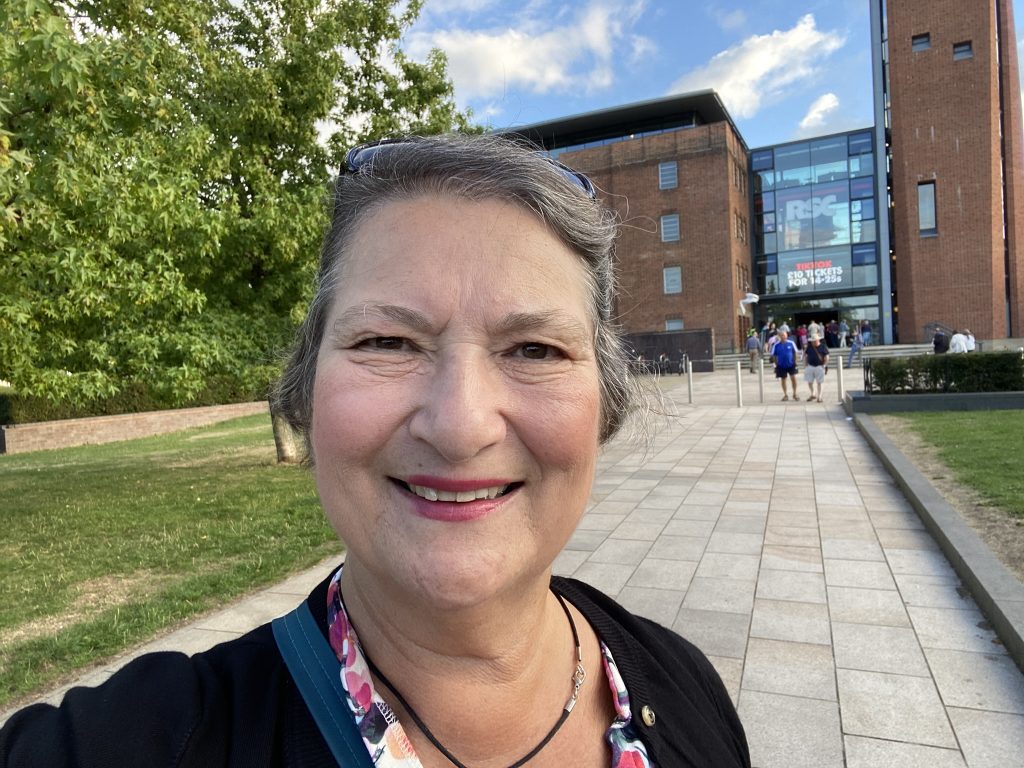
In front of the RSC theatre in Stratford-upon-Avon
We saw Two Gentlemen of Verona which is one of Shakespeare’s least memorable plays. The only thing I remembered all these years later was the small swimming pool set into the stage. I’d never see anything like it!
Every so often, an actor would slip into the pool and splash about.
Unfortunately, Mom and I visited Stratford-upon-Avon only a few days after landing in the UK and jet lag prevailed. I remember a lot of head bobbing as I tried to stay awake to see the next time someone got wet.
RSC Performances at Stratford-upon-Avon
Since that first performance, I’ve been to Stratford-on-Avon quite a few times.
For three years, from 1974 to 1977, I attended the University of Reading where I studied English Literature. Stratford-on-Avon is about a two-hour drive from Reading, so my friends and I frequently drove up to catch a performance.
I remember seeing Henry V, King Lear (fabulous storm scene!), and A Winter’s Tale. I’m sure there were others, but they are lost to memory now.
In 1999, my daughter Julia (aged 14 at the time) and I went to see Romeo and Juliet starring David Tennant of Doctor Who fame (among many other memorable roles) as Romeo.
We didn’t know who he was at the time, but I do remember the production being wonderful. Listening to actors from the RSC doing Shakespeare is like watching cut glass sparkle in the air. Every word, every gesture, every raised eyebrow is precise and perfect.
Hamlet in 2008
Another memorable visit was in 2008 when Julia and I saw Hamlet starring David Tennant, who was by then famous. Julia even got his autograph following the performance.
And so I returned to Stratford-upon-Avon in 2022, this time to see Richard III. I can’t say it’s my favorite play, being rather too full of dead bodies for my taste.
But it was the only play being performed on the only date I could be in Stratford-upon-Avon.
Also, I knew it would be well done.
Touring Stratford-upon-Avon with the Bard
But first, I needed to spend an afternoon with the Bard himself. I signed up for a two-hour tour of Stratford-upon-Avon led by Shakespeare (well, a guy dressed like Shakespeare!).
At 2 pm, I joined four other people outside Tudor World on Sheep Street and met our guide. Here’s the link to the tour (highly recommended).
He was crude, lewd, and a lot of fun. He also had a wealth of knowledge about his life back in the day, particularly the portion spent in Stratford-upon-Avon.
As the son of a tanner who was also the mayor, young Will received an excellent education. His is not a rags to riches story.
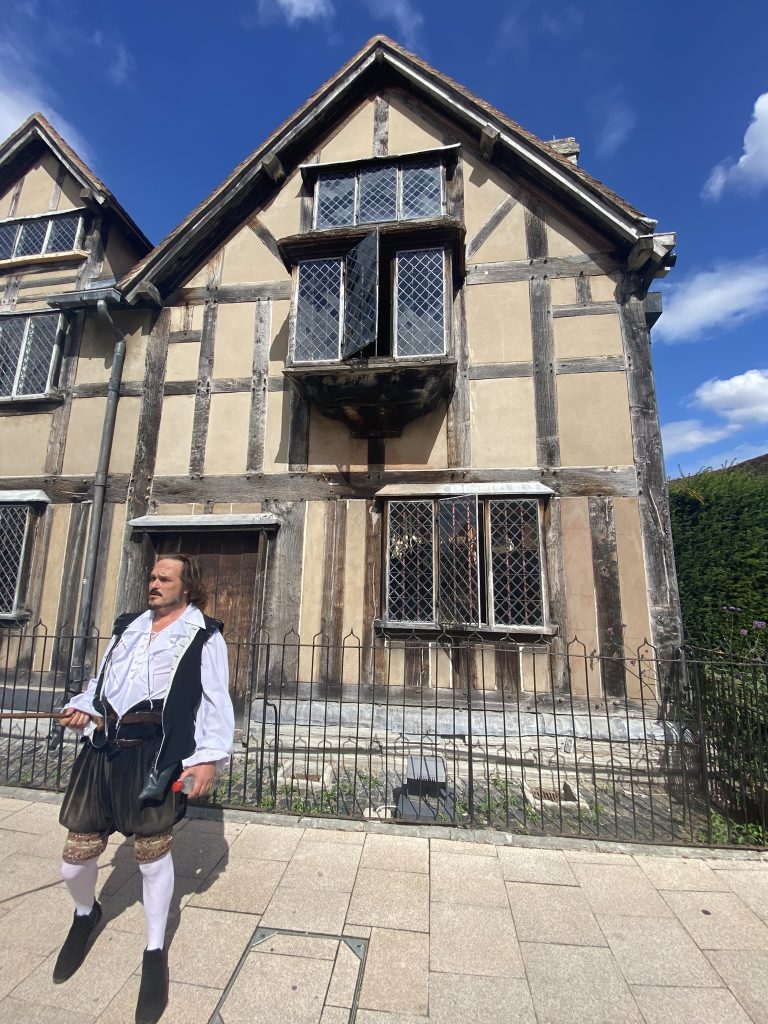
Shakespeare in front of “Dad’s House” – his birthplace in Stratford-upon-Avon
“Dad’s House” and Others in Stratford-upon-Avon
Over the next two hours, Shakespeare took us to various sites around town including “Dad’s house” as he called it (his birthplace) and the houses of his two grown daughters, one of whom married a nice guy and the other who didn’t.
We also saw his grammar school and the site of the house he built after retiring to Stratford-upon-Avon an exceedingly rich man.
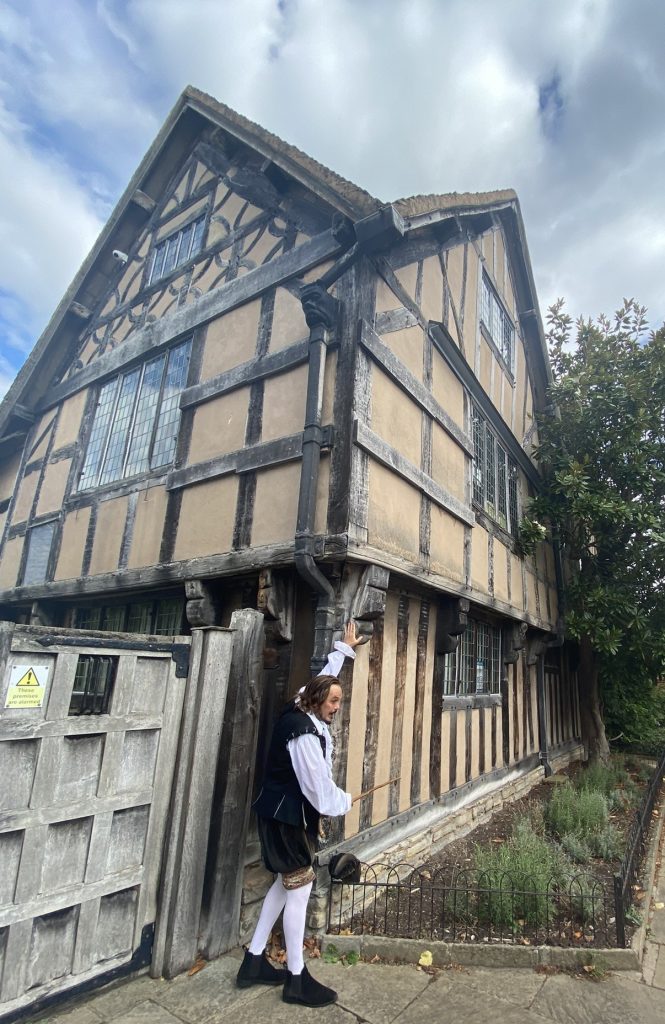
Shakespeare in front of one of his daughter’s houses in Stratford-upon-Avon
Along the way, Shakespeare kept up a constant commentary full of tidbits of knowledge about Elizabethan life (a smelly time indeed) and about Shakespeare’s life.
Shakespeare’s Final Resting Place
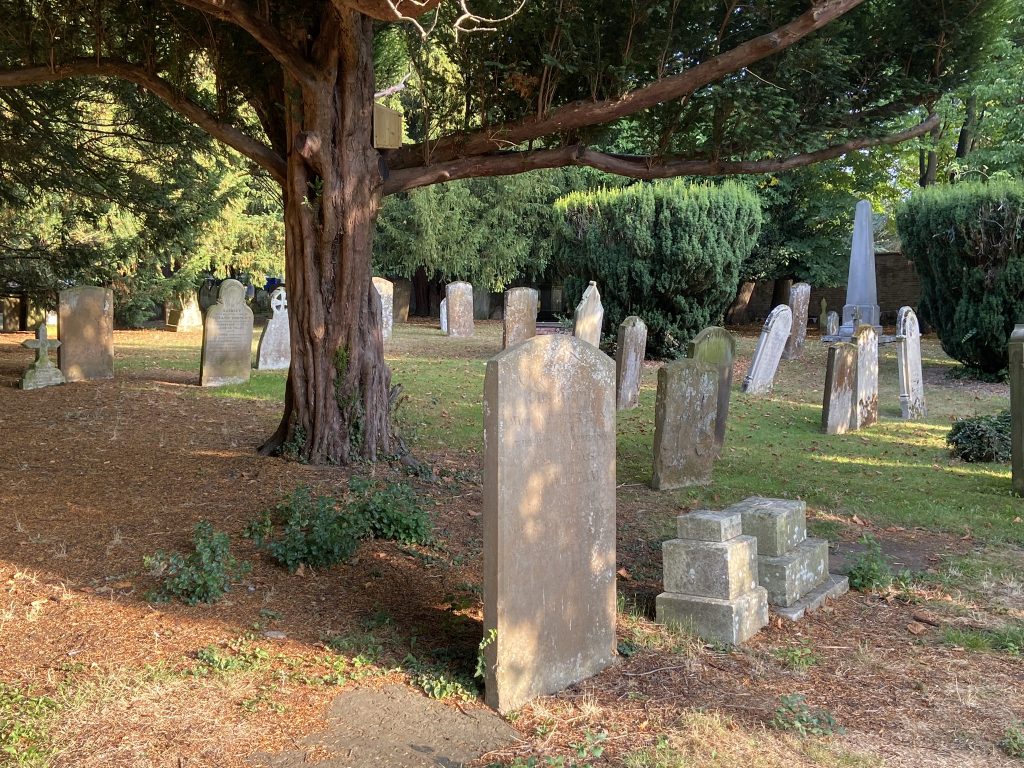
We ended the tour in the churchyard where Shakespeare (minus his head apparently) is buried. The church was closed, but we wandered around the tombstones, several of which are fake.
Shakespeare told us that back in the Victorian era, some enterprising busy bodies decided that the churchyard needed more gravestones for the mist to swirl around on spooky winter nights. So they had a bunch made and stuck them in willy nilly (some almost on top of real graves) all over the churchyard.
Apparently, they are easy to spot since everyone commemorates either William or Elizabeth. Bit of a giveaway.
Churchyard at the Stratford-upon-Avon church where Shakespeare is buried
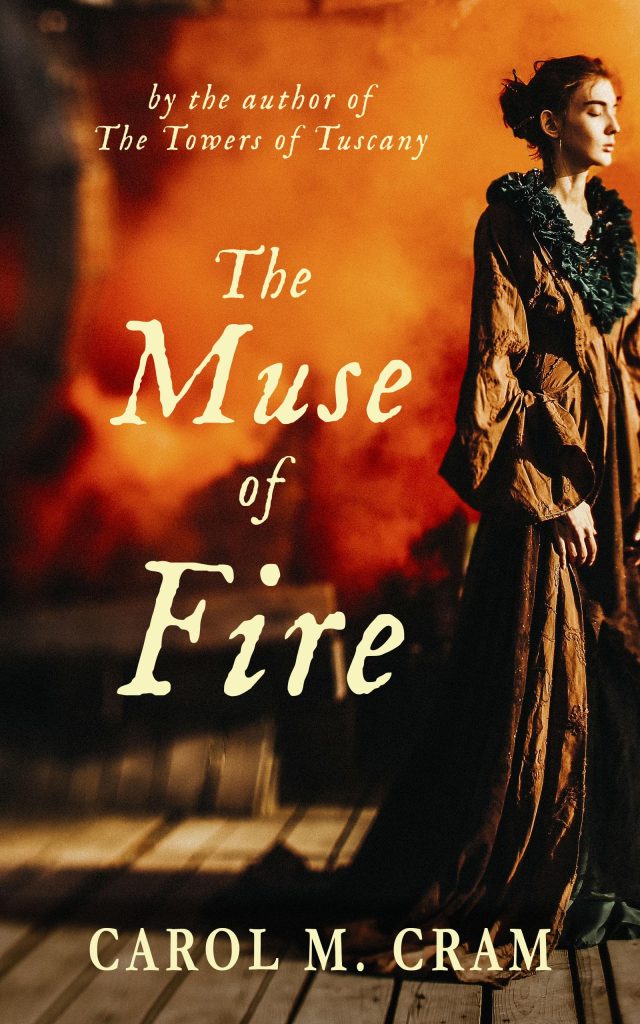
At the end of the tour, I chatted with the guide and told him about my third novel, The Muse of Fire. Since it’s about the theater and includes a lot of Shakespeare, I figured he might enjoy it.
He promised to download it on his Kindle. I wonder if he did!
Enjoying Stratford-upon-Avon
There’s really not a whole lot to see in Stratford-upon-Avon. You can tour Shakespeare’s birthplace and go to Anne Hathaway’s Cottage, but both feel a tad on the touristy side. I prefer taking the Tudor World tour which yes, is also touristy, but you’ll learn a lot and get a good feel for the town.
I suggest spending time just wandering around the town, which is not large.
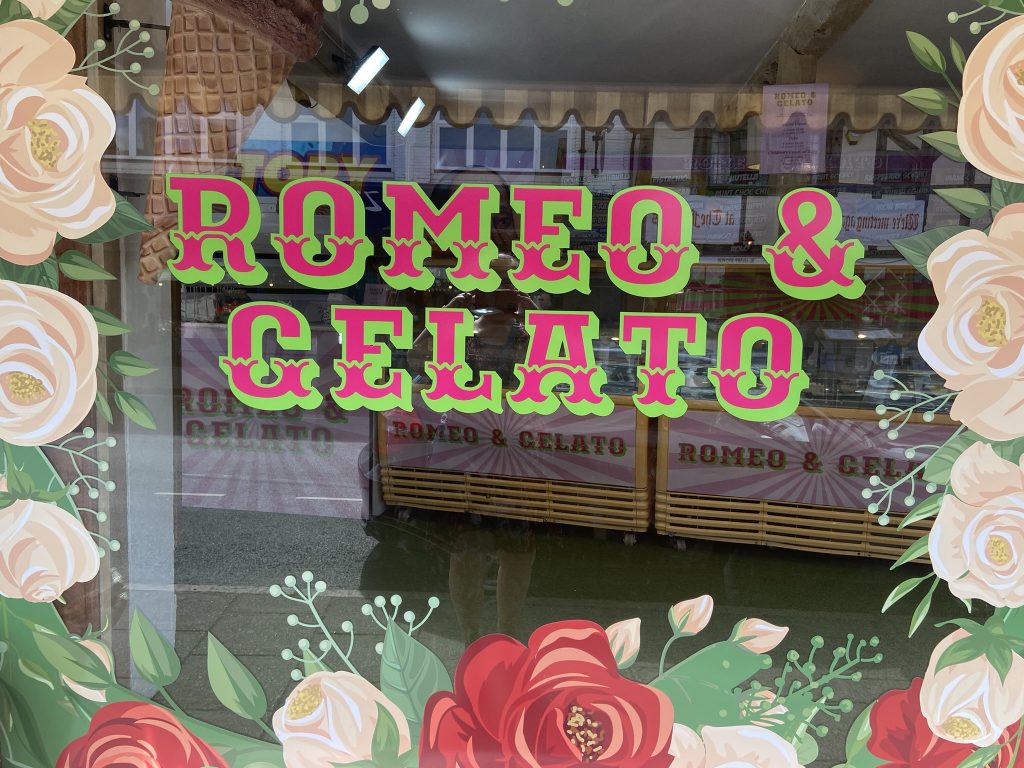
Stop in at Romeo & Gelato for an ice cream and, if the market is on, browse the stalls to buy knickknacks and gourmet food. I bought a large chocolate cookie that took me two days to eat.
Take a walk alongside the River Avon to enjoy the views. The place really is postcard-perfect.
Yes, it’s a real shop window in Stratford-upon-Avon
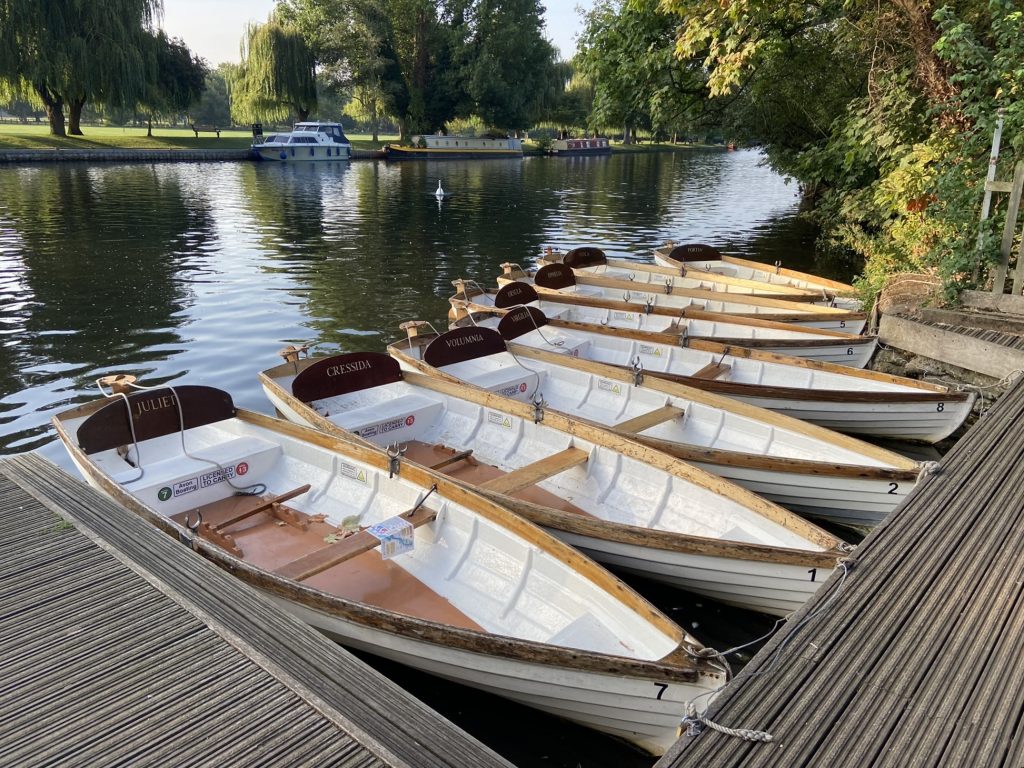
Each row boat is named after a different Shakespeare heroine
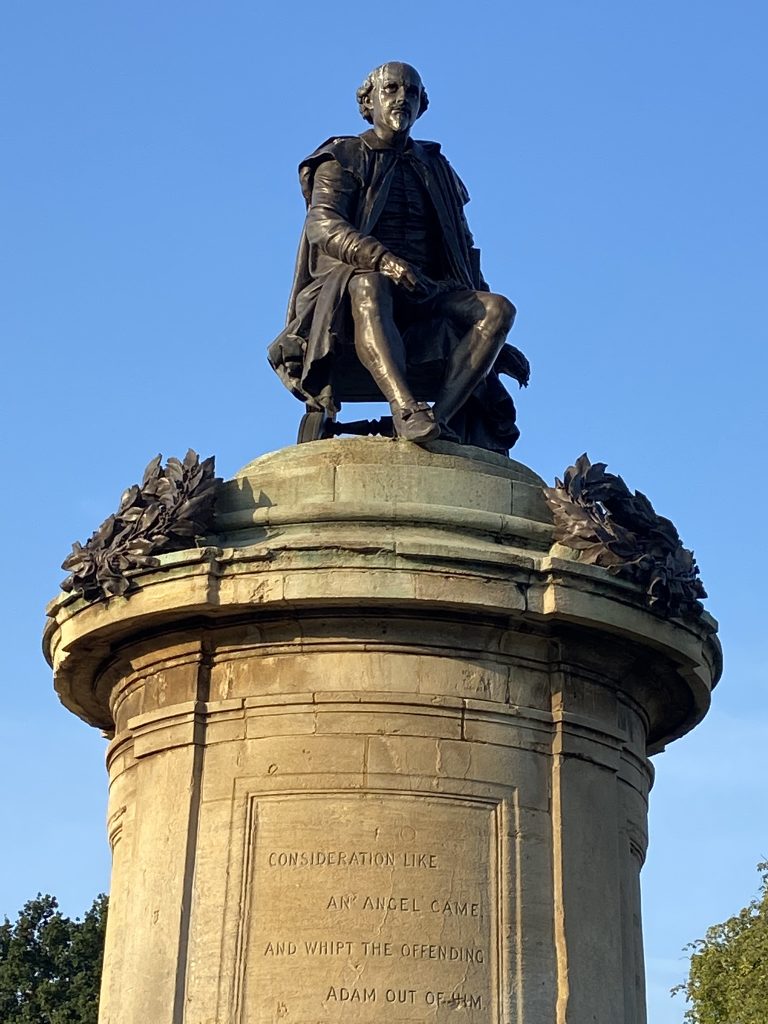
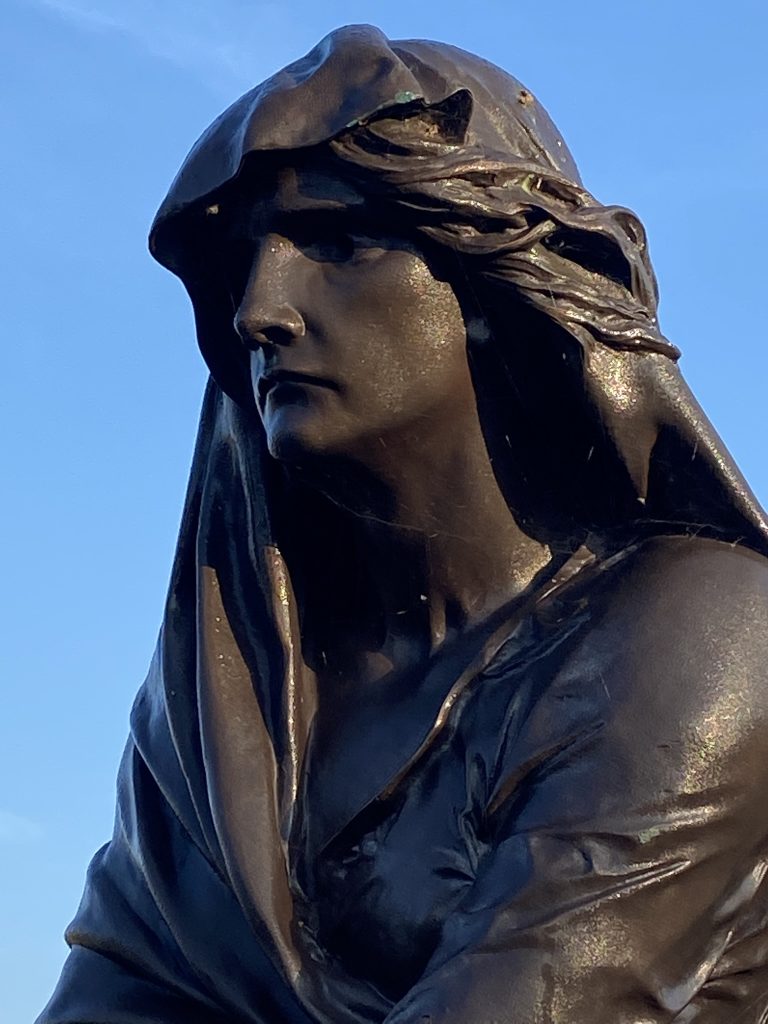
A good stop for photo ops is the collection of statues near locks in the middle of Stratford-upon-Avon. On an early morning walk, I snapped these photos.
Statue of Shakespeare in Stratford-upon-Avon
Statue of the ill-fated Lady Macbeth in Stratford-upon-Avon
Attending an RSC Performance
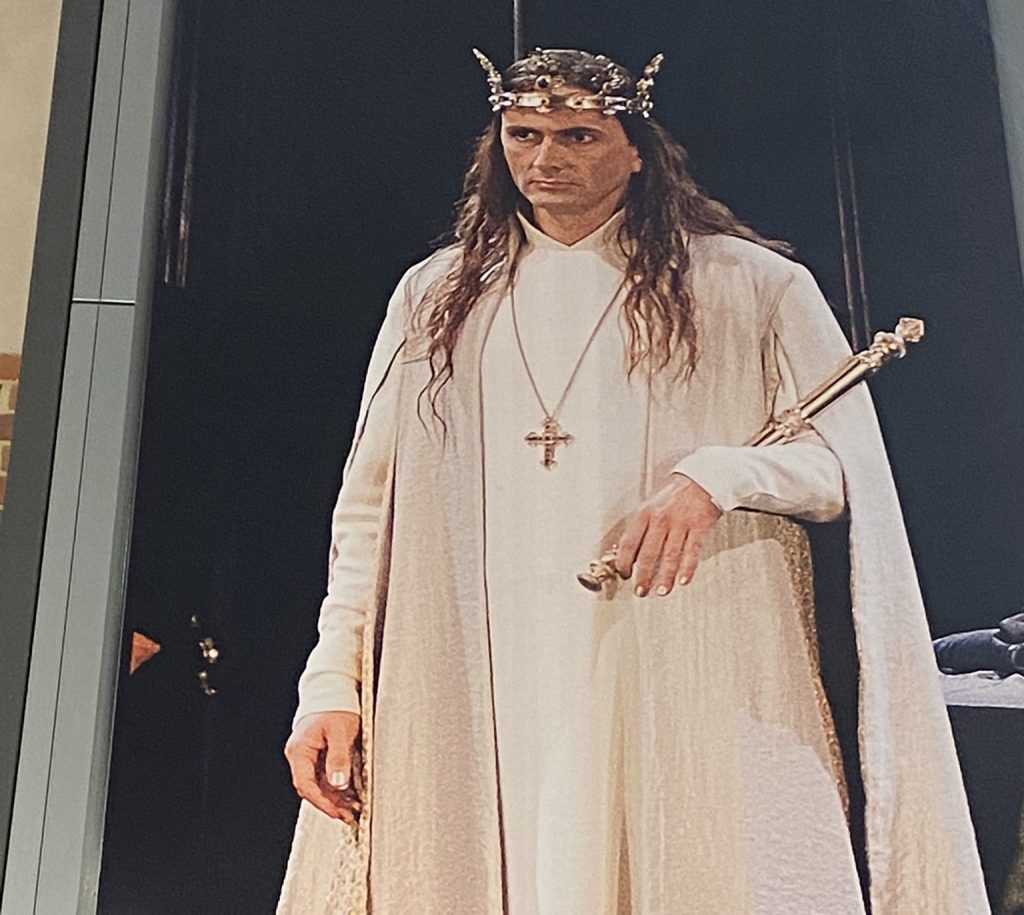
At just after 7 pm, I arrived at the RSC theater for the 7:30 performance. The first thing I saw upon entering the narrow lobby was a massive poster of David Tennant decked out as Richard II. I texted a photo to Julia who was just starting her workday back in Vancouver and learned that yes, she’d seen the production streamed.
Poster of David Tennant as Richard II in the lobby at the RSC Theatre in Stratford-upon-Avon
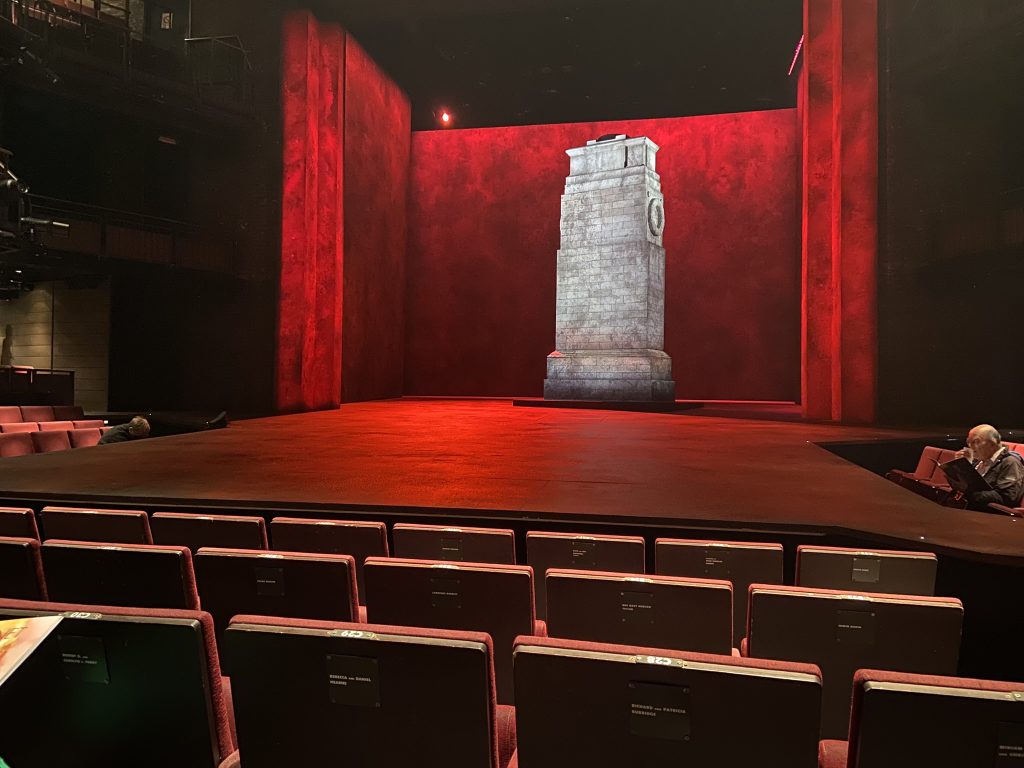
I found my seat, took a picture of the stage, and got to know my neighbor, a lady from Cheltenham who used to be a teacher. After retiring at the age of 50, she lived for 25 years in the Dordogne area of France. As fellow teachers (I trained in England in 1979) and lovers of France, we had lots to talk about.
Richard III
The production of Richard III was predictably amazing. The sumptuous costumes, stark set, skillful blocking and, of course, superb acting all added up to a masterful production.
Of particular note was the actor playing Richard III, surely one of the most difficult roles to make relatable. Arthur Hughes managed it, first by being very funny.
It’s hard to completely hate someone who makes us laugh. Hughes found comic moments throughout the play. Even at his most vile (and Richard gets pretty vile), Hughes was utterly compelling. Every time he strode on stage, he commanded attention.
Set of Richard III at the RSC theatre in Stratford-upon-Avon
And the second reason why the performance was so memorable was that Arthur Hughes was the first disabled actor the RSC has cast as Richard III.
He describes himself as “limb different” as a result of a rare condition known as radial dysplasia. He has no thumb or radius bone in his right arm. Hughes’s lived experience of disability brought an immediacy to his portrayal of Richard that I’d never seen before.
He was not pretending like so many actors; he knows. Here’s an interview with Arthur Hughes on the BBC website.
All in all, the production was a tour de force.
And if you are lucky enough to take in an RSC performance, get the ginger ice cream at the interval. It is to die for!
Visiting Stratford-upon-Avon
Stratford-upon-Avon is a tourist town and as such is well-endowed with restaurants and places to stay. If you can, stay the night.
Strolling along the canal after an RSC performance that has just blown your mind is a stellar artsy traveler experience!
Eating in Stratford-upon-Avon
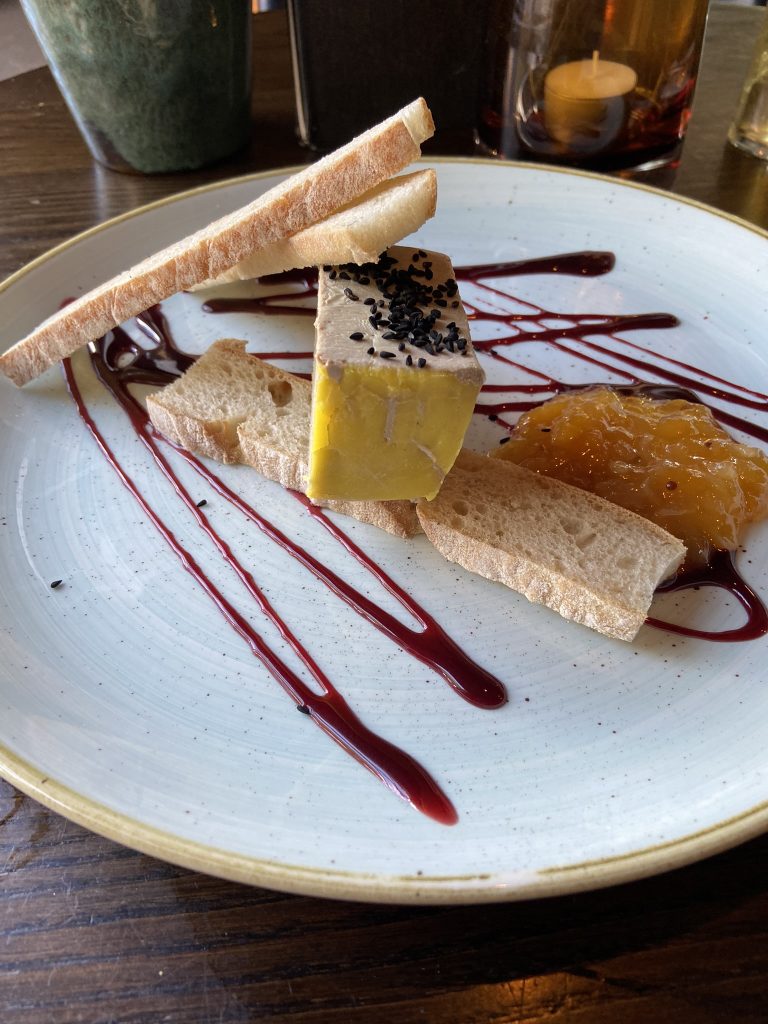
Both meals I enjoyed in Stratford-upon-Avon wee first rate! The first was a lunch consisting of two appetizers–a paté and chicken tenders. Both were superb, particularly when accompanied by a lager and eaten in a lovely old pub overlooking the canal.
Duck pate with confit onions
Chili chicken tenders
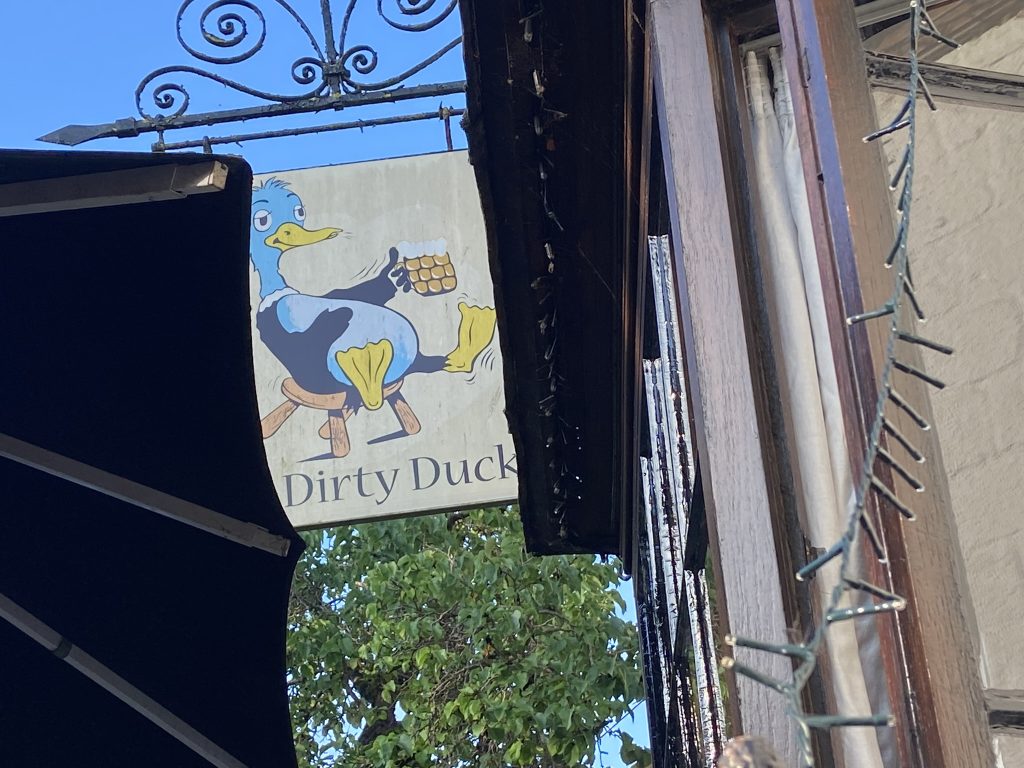
Stratford-upon-Avon has several pubs and restaurants; you won’t have trouble finding a good meal. I can also recommend the Dirty Duck where many years ago I ate dinner while visiting Stratford-upon-Avon with my brother. Passing it on an early morning walk brought back many memories of our visit and attending a performance of A Winter’s Tale way in 1975.
The Dirty Duck in Stratford-upon-Avon
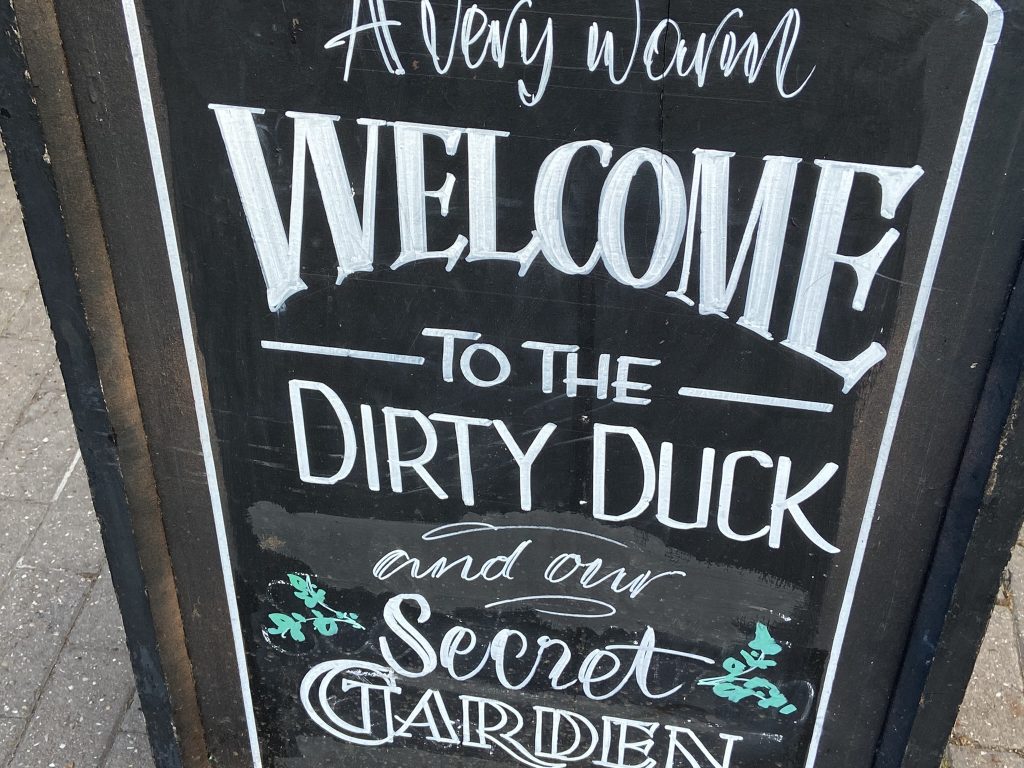
Welcome to the Dirty Duck
I enjoyed dinner at the Pen & Parchment Inn where I also stayed. The fish and chips (but with salad instead of chips!) were fresh and flavorful. The Inn itself retained just enough of a hint of stale cigarette smoke in the air to remind me of my misspent youth.
Fish and chips in Stratford-upon-Avon
Staying in Stratford-upon-Avon
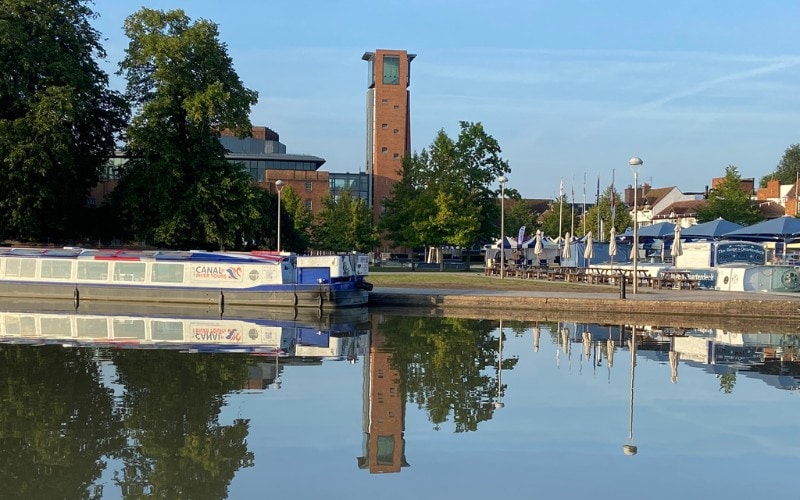
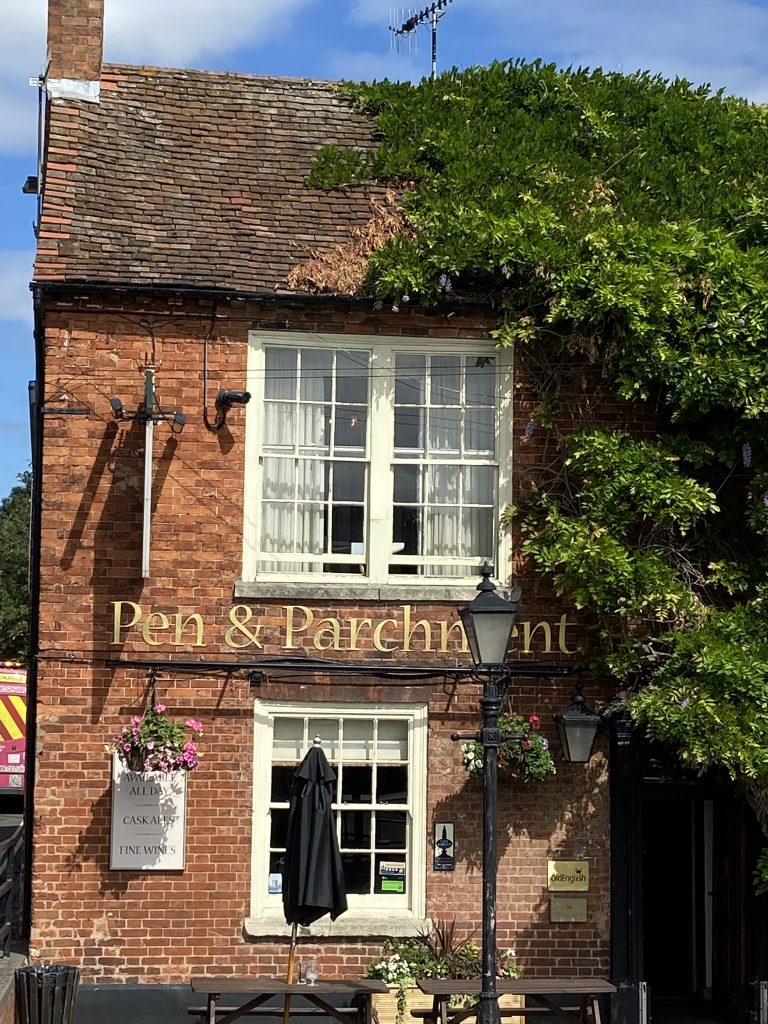
I stayed at the Pen & Parchment Inn which is also a pub (and where I ate dinner). It’s very conveniently located on the canal and within sight of the Royal Shakespeare Company theatre.
You can walk to the theatre in about five minutes. My room was small but comfortable and the people were very helpful. I’d recommend the place for a one-night stop. It’s quite reasonably priced (for Stratford-upon-Avon).
Pen & Parchment Inn in Stratford-upon-Avon
For other accommodation options in Stratford-upon-Avon, click the map below:
A visit to Stratford-upon-Avon, particularly if you can attend a performance at the RSC, is artsy traveling at its finest! You get to enjoy Shakespeare performed by the best of the best and you get to stroll around one of England’s most attractive towns with plenty of excellent places to eat and stay. It’s a win-win!
Have you visited Stratford-upon-Avon? Share your suggestions and experiences in the Comments below.
When it comes to experiencing memorable concerts & performances in Europe, you are spoiled for choice.
Europe is like a chocolate box brimming over with artsy flavors. Venues in every city and town showcase a wide range of musical styles, from classical to traditional to rock.
In addition to music concerts, you’ll find plenty of theater and dance performances, along with festivals and special events.
Some of my favorite memories are of performances we stumbled across, often as a result of chatting with local artists and fellow travelers, noticing posters and flyers, and checking out “What’s On” pages on local websites.
In this post, I present my favorite venues and performances in fourteen European cities: Amsterdam, Barcelona, Berlin, Cologne, Hamburg, Leipzig, Lisbon, London, Paris, Seville, Stratford-upon-Avon, Venice, Verona, and Vienna.
Overview – Planning Ahead
While I’m always open to serendipity when it comes to choosing performances and concerts, I also believe in planning ahead.
I suggest that as soon as you know the dates of your trip, go online and search for concerts, performances, festivals and other live events that will be on while you’re traveling.
A search for “musicals in London”, “classical concerts in Paris”, or “dance performances, Seville” should yield good results.
You can also use generic searches such as “what’s on in Berlin” or “concerts in Vienna” and then narrow down the choices to focus on the music genres that interest you.
Classical Concerts in Amsterdam
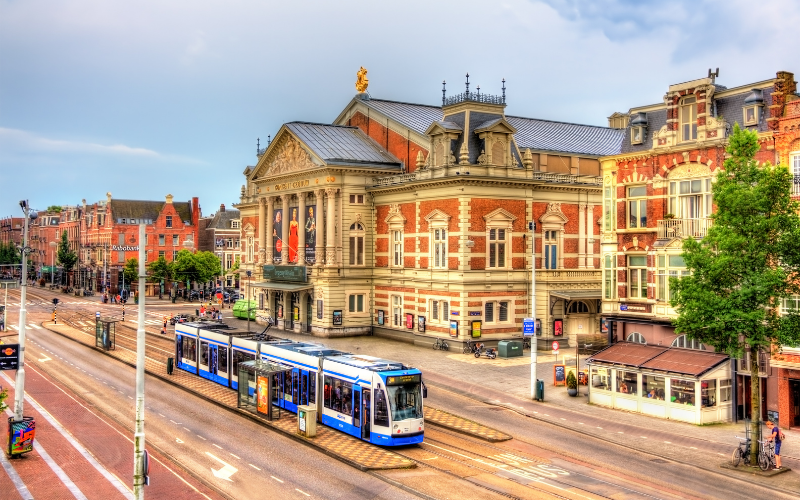
One of Europe’s most beautiful concert halls is Amsterdam’s Concertgebouw, located across from the Museumplein. Free lunchtime concerts are held on Wednesdays in the small concert hall adjacent to the main hall.
On a recent visit to Amsterdam, we enjoyed a lively performance by two vibraphonists. Check the website to find out what’s on when you’re in Amsterdam.
You’ll join locals and very few other tourists for a marvelous (and free!) musical experience.
The Concertgebouw in Amsterdam
Where to Stay in Amsterdam
Here are two of my recommended places to stay in Amsterdam.
Clayton Hotel Amsterdam American: This place is located within walking distance of the Concertgebouw and close to where you can hop onto a canal cruise. It’s stylish, comfortable, and excellent value in this expensive city.
Mokum Suites overlooking the Herengracht canal and near the Rembrandtplein is one of my favorite places to stay in Amsterdam. From your suite, watch the canal boats slide past.
If you’re even remotely interested in what’s playing, get tickets! Attending a concert at the astonishly exquisite Palau de la Música will quite simply blow your mind!
I saw a Ópera y Flamenco performance there that transported me.
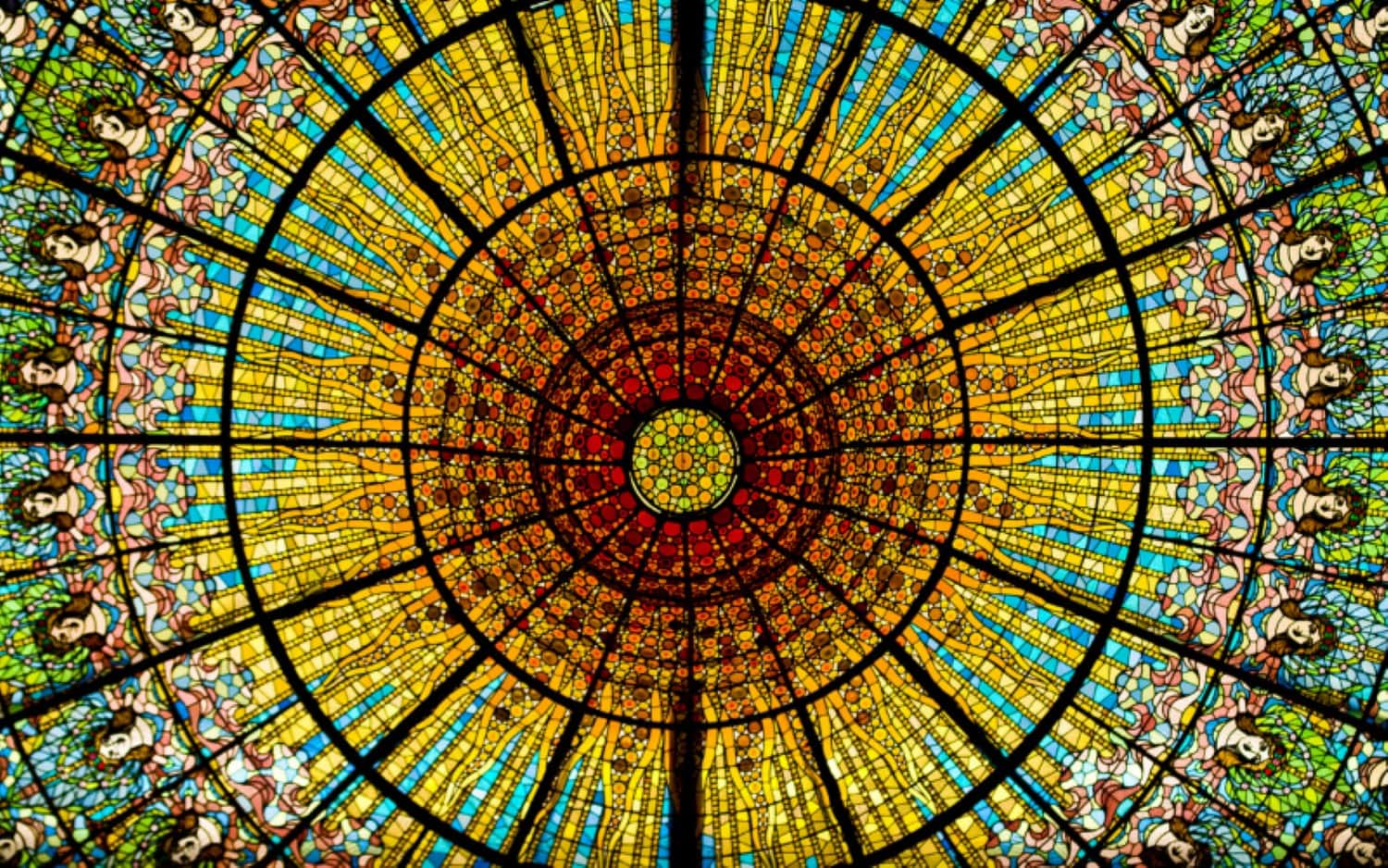
The magnificent stained glass at the Palau de la Música Catalana
Built between 1905 and 1908 by the modernist architect Lluís Domènech i Montaner, the Palau de la Música Catalana is designated as a UNESCO World Heritage Site.
If you can’t get tickets to a performance, you can still take a tour of the building. I’ve also done this and can recommend the experience. You’ll learn a lot, and get plenty of time sitting in the hall and gazing up at the incredible stained glass.
Where to Stay in Barcelona
Here are two of my recommended places to stay in Barcelona.
I loved staying at the Cram Hotel in the Eixample district for obvious reasons! I told the attendant that my last name was Cram, but unfortunately, I didn’t get a discount! Apparently the name “Cram” comes from spelling the name of the owner’s son (Marc) backwards. This is a truly lovely hotel with a rooftop pool.
I also recommend the Casp 74 Apartments near the Eixample district. The apartment hotel includes kitchens and an underground parking garage.
Concerts at the Berlin Philharmonic
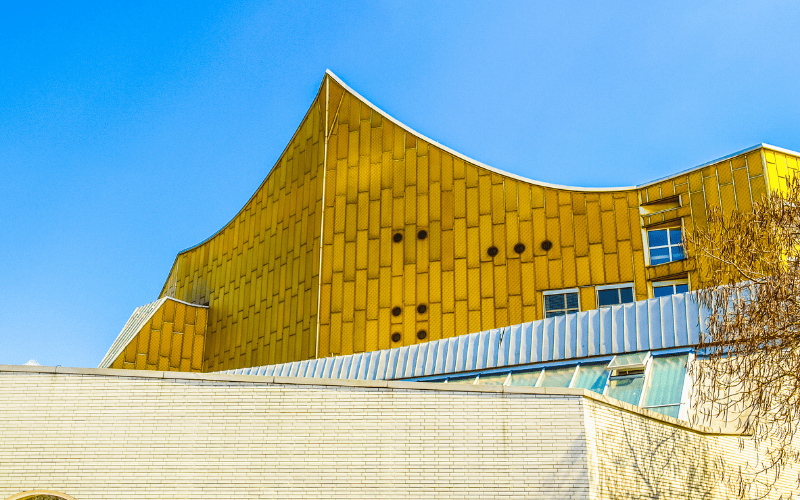
If you’re a classical music fan, check out what’s on at the impressive home of the Berlin Philharmonic (Berlin Philharmoniker).
The building itself is fabulous with wonderful acoustics and worth touring even if you can’t see a concert there. I enjoyed an awe-inspiring performance of Stravinsky’s Rite of Spring performed by the Deutsches Symphonie-Orchester Berlin.
The Berlin Philharmoniker
Check out the concert calendar and buy tickets from the Berlin Philharmoniker website.
While we usually book tickets well in advance, we’re always open to attending concerts on the spur of the moment. One such memorable concert was at the Kölner Philharmonie, a magnificent concert hall a stone’s throw from Cologne’s famous cathedral and in the same complex as the wonderful Ludwig Museum.
We had just finished visiting the Romano-Germanic-Museum (a must-see!) and were walking past the Kölner Philharmonie when we noticed a poster for the evening’s concert. The programme appealed to us and so we inquired at the box office about tickets. The very friendly, English-speaking attendant told us that tickets were available and at a price we considered incredibly reasonable, at least compared to what we were accustomed to paying in Vancouver.
Two hours later, we took our seats in one of the most dazzling modern concert halls I’d ever been in. Built in 1986, the Kölner Philharmonie is constructed like an amphitheatre and provides near-perfect acoustics. Even the size and padding of the seats have been selected to ensure constant acoustics regardless of whether the seat is occupied.
Select one of the hotels overlooking the Rhine and within walking distance of the cathedral and the concert hall. I recommend the Hotel Drei Kronen.
Elbphilharmonie in Hamburg
In Hamburg, get tickets to see a performance at the ultra-modern Elbphilharmonie, one of the world’s most stunning concert halls.
I saw a classical concert here that was inspiring, not least because of the beauty of the venue itself. You’ll climb up, up, up (elevators are available) and enjoy stunning views over Hamburg before and after the concert.
Where to Stay in Hamburg
Here are two recommendations for where to stay in Hamburg:
Radisson Blue Hotel Hamburg: I find the Radisson Blu hotels consistently good in Europe (I also recommend one in Leipzig).
Hotel Wedina an der Alster: The room was small, but the breakfast area was spacious and the food excellent.
Gewandhaus in Leipzig
Marvelous Leipzig is a must-visit for classical music lovers, particularly if you adore (like I do!) the music of Johann Sebastian Bach. Read my post about our visit to the Bach Museum (I still swoon when I think of it!).
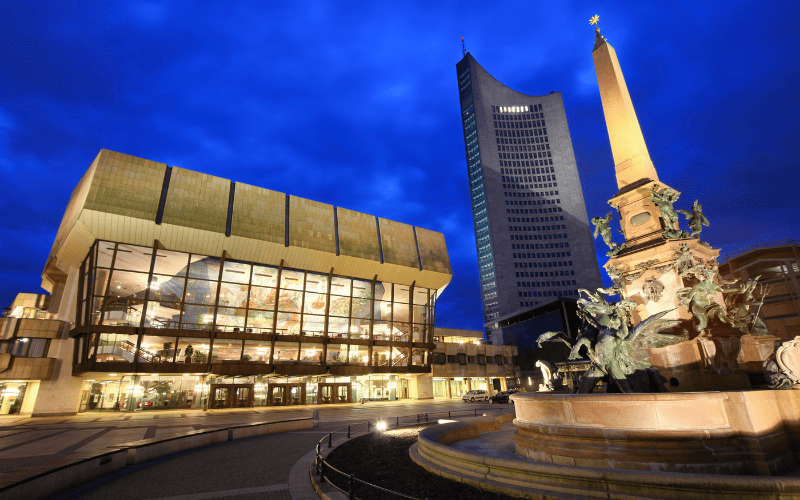
While in Leipzig, we attended a wonderful concert at the famed Gewandhaus where the young Clara Wieck (who became Clara Schumann and the inspiration for my second novel, A Woman of Note) debuted as a solo pianist in 1828.
Many other famous musicians have played at Gewandhaus and for that reason I was curious to see a performance there.
Gewandhaus concert hall in Leipzig, Germany
The ultra-modern Gewandhaus concert hall is nothing like the venue Clara played in, and is, in fact, the third concert hall to bear the name Gewandhaus, the first being built in 1781, the second in 1884 (designed by famed architect Martin Gropius), and the current hall in 1981.
We snagged tickets to a solo piano concert of music by Mozart and Chopin. What a treat, and, at less than $30CDN per ticket, probably the best value for a concert I’ve ever enjoyed.
At the interval, we thought the concert was over. The pianist had played for so long that we couldn’t imagine he’d be able to perform any longer. As we prepared to leave, a local woman came up to us and told us in careful English that it was only the break and that we needed to stay for the second half.
Gratefully, we returned to the concert hall to enjoy another ninety minutes of jaw-dropping music performed by the very hard-working pianist.
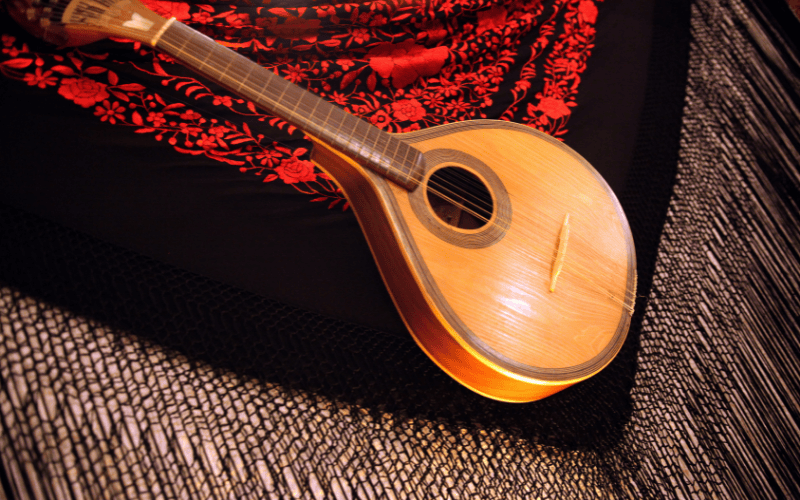
When you’re visiting Lisbon, make time for a fado performance (or two). We favor the smaller clubs with intimate performances over the more touristy offerings.
Our favorite place for fado in Lisbon is Restaurante Canto do Camões on Travessa da Espera in the Bairro Alto. Sadly, Restaurante Canto do Camões is now closed permanently; however, you’ll find other small restaurants that feature fado in the Bairro Alto and the Alfama. Walk around and listen!
Another option is to book a Fado performance. Here is an option with GetYourGuide:
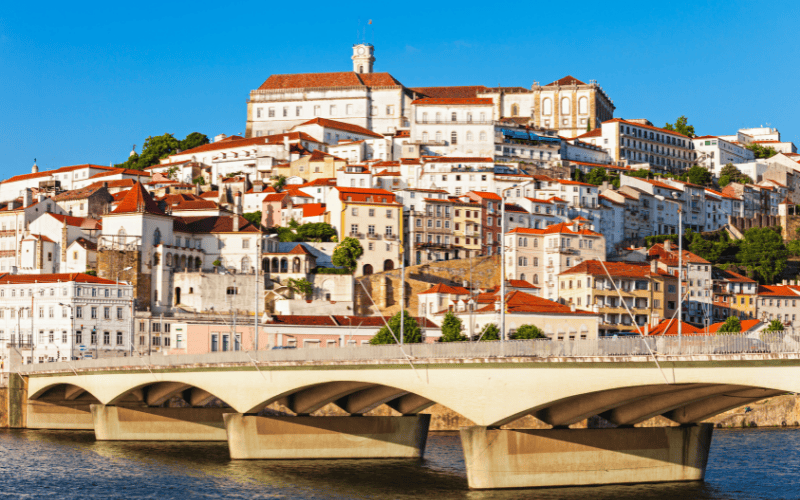
You can also see fado performances in Porto and Coimbra. In Porto, we loved the performance at the Casa da Guitarra, which also included a glass of port. In Coimbra, fado is only sung by men.
We saw a troupe of men who sing wearing traditional costumes at À Capella, a 14th-century chapel that includes a bar and tapas with the live fado serenades.
Coimbra is a charming town and a great place to enjoy fado
Where to Stay in Lisbon
I suggest staying in the central Baixa area. From there, you can walk just about everywhere. I highly recommend Vincci Baixa. It’s stylish and with excellent service.
Theater in London
The first thing I do after booking a trip to London is check out what’s playing in the West End and what’s on at the National Theater and the Globe.
I’ve enjoyed so many memorable performances in London, starting in the 1970s when I was a student at Reading University, a 40-minute train ride from the bright lights of the West End. In those days, performances in London were so reasonably priced that even a student could afford them!
Even now, I find that prices for musicals in the West End are far below what I’ve paid in New York.
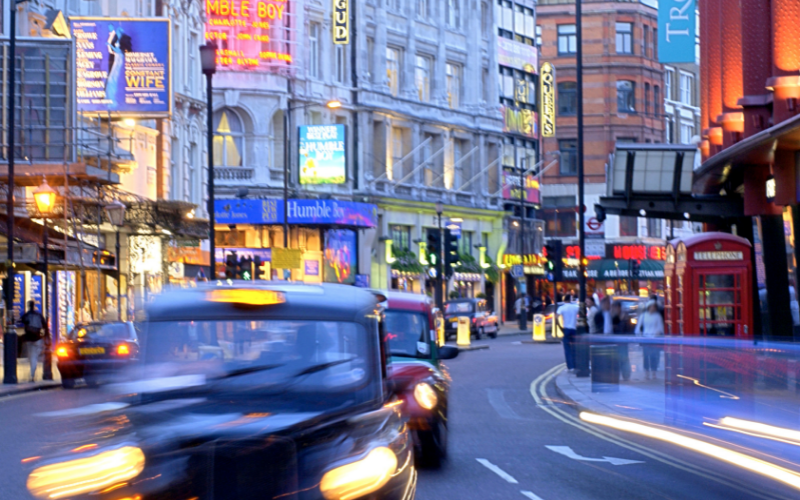
London’s busy West End has plenty of great theaters
Go to the London Theatre website, see what’s on and get tickets well in advance. You can also take your chances during your trip and purchase last-minute tickets, often at a reduced rate. However, I don’t recommend doing this for a performance that you really want to see.
If you are flexible and open to seeing what’s playing, you could well get lucky. On a recent trip to London, I got a ticket for Mamma Mia on the day of the performance for just 40 GBP.
Before going to the theater, enjoy an early dinner at one of the many restaurants in the West End advertising pre-theatre menus.
And while planning your entertainment options in London, don’t forget to check out what’s on at venues such as the Albert Hall and the Barbican Centre.
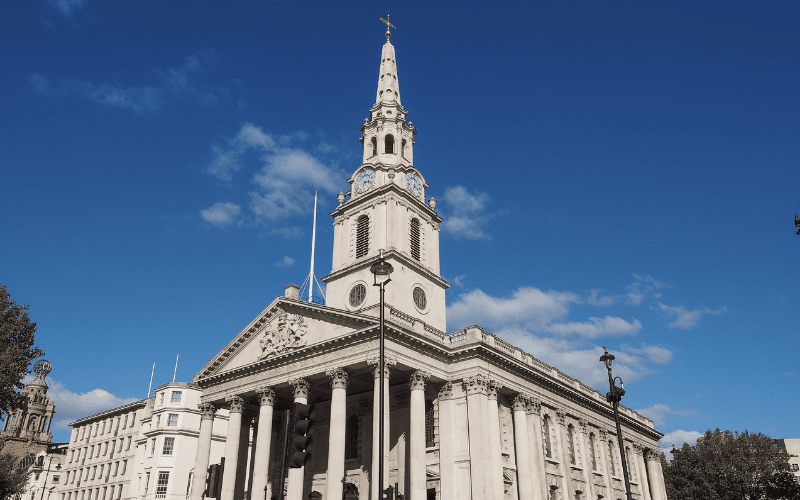
Another option is the lunchtime and evening concerts at the achingly lovely St Martin-in-the-Fields near Trafalgar Square.
Saint Martins-in-the-Fields next to Trafalgar Square in London hosts classical music concerts
Here are some more options for concerts in London:
Where to Stay in London
I visit London frequently, and here are two of my favorite places to stay:
The Wilde ApartHotel just off the Strand is also a wonderful choice. I loved its very central location within walking distance of Trafalgar Square and most of the West End theaters.
Opera & Classical Music in Paris
We love going to concerts in Paris. Spectacular venues such as the Opéra Bastille, the Paris Philharmonie and Sainte-Chapelle enhance the musical experiences, and the quality of the performances is always first-rate. Here are just a few of the venues to check out, particularly if you are a classical music lover.
Opéra Bastille
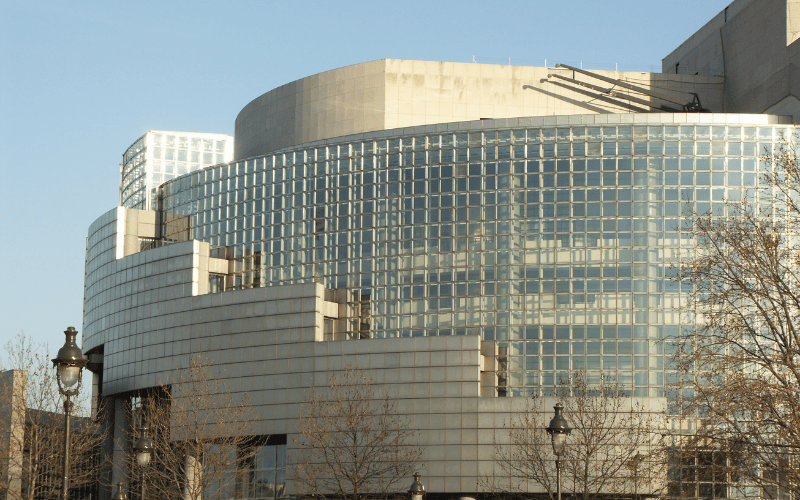
Seeing an opera in Paris is definitely a cool experience, and one that we hope to repeat as restrictions continue to lift. One of our most memorable opera experiences was seeing Götterdämmerung at the Opéra Bastille. Talk about mind-exploding!
Opéra Bastille in Paris
The Opéra national de Paris presents operas at two venues—the ultra chic and modern Opéra Bastille and the sumptuously decorated and historic Opéra Garnier. Check the website for the Opéra national de Paris.
Paris Philharmonie
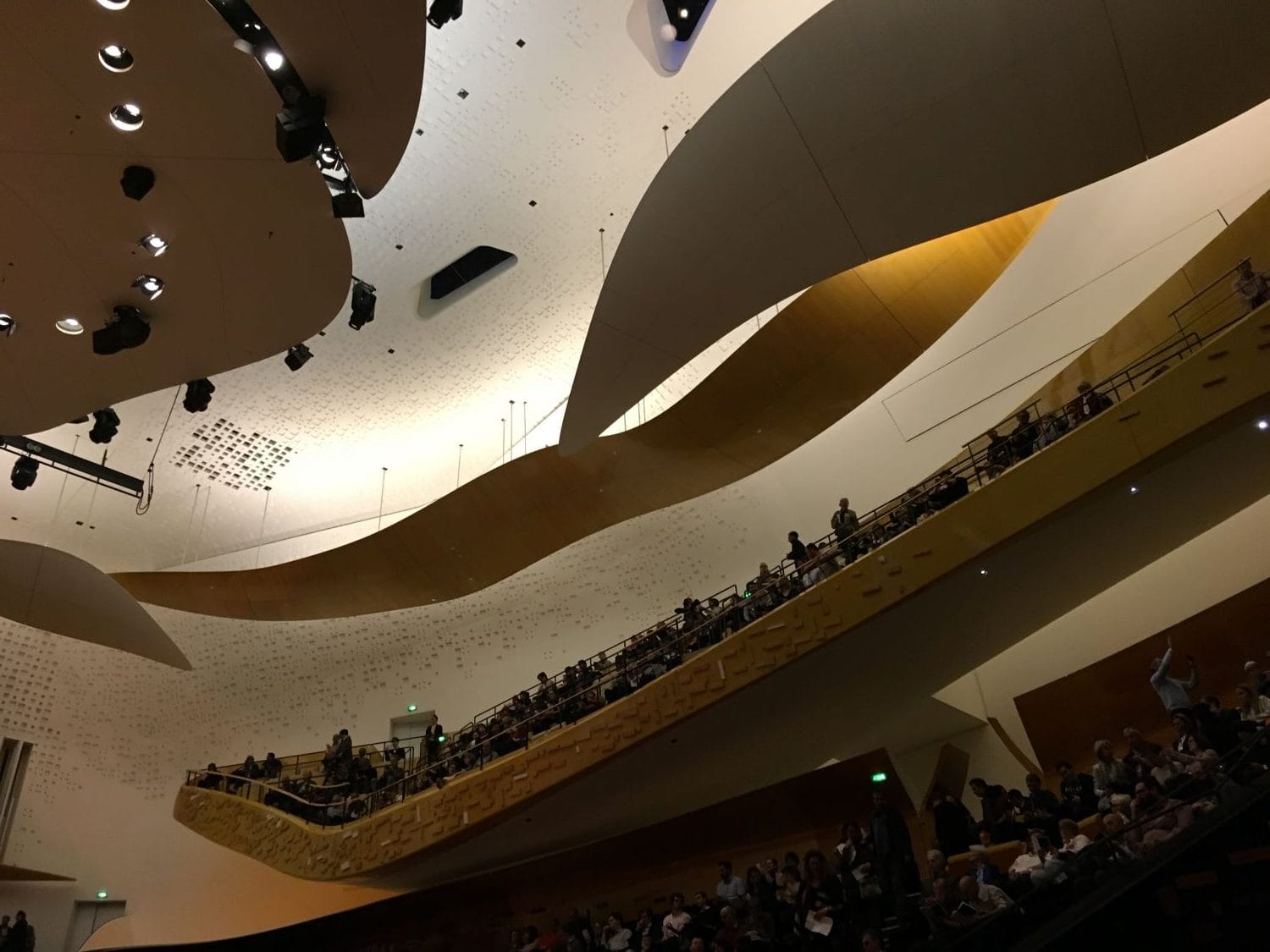
The Philharmonie de Paris is just breathtaking! Located in Parc de la Villette in the northeast of Paris, the Philharmonie is a complex of buildings that also house exhibition spaces and rehearsal rooms. We attended a performance in the symphonic concert hall—a 2,400-seat über-modern venue designed by Jean Nouvel and opened in January 2015. It was a stunning experience.
Interior of the Paris Philharmonie
Check the website for upcoming performances and events.
Piano Concerts at Église Saint-Julien-le-Pauvre
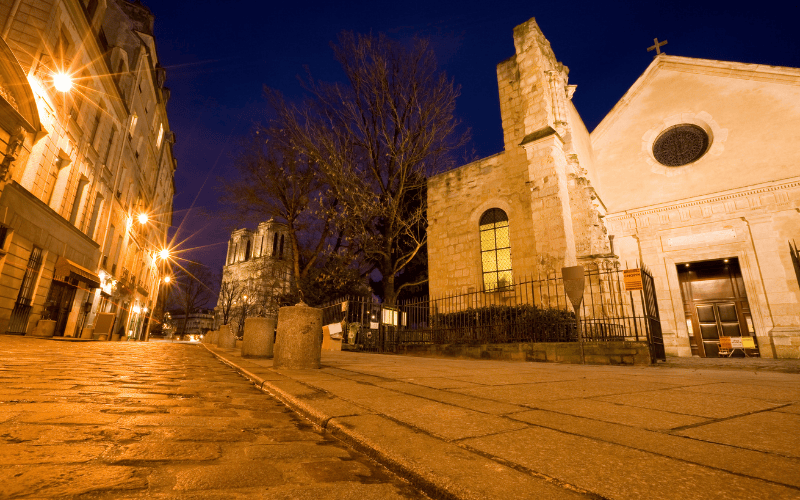
Located just across the Seine from Notre-Dame Cathedral in the 5th arrondissement, the Église Saint-Julien-le-Pauvre is one of the oldest churches in Paris. Concerts featuring either solo piano or duos (e.g., violin and piano or cello and piano) are frequently held there—and they are well worth attending. We’ve been to several. Tickets are reasonably priced, the venue is deliciously ancient and atmospheric, and the quality of the playing is first-rate.
Saint-Julien-le-Pauvre is just across the Seine from Notre-Dame Cathedral
Check the website for upcoming concerts and keep an eye out for posters in the area (that’s how we discovered what was on).
Sainte-Chapelle Concerts
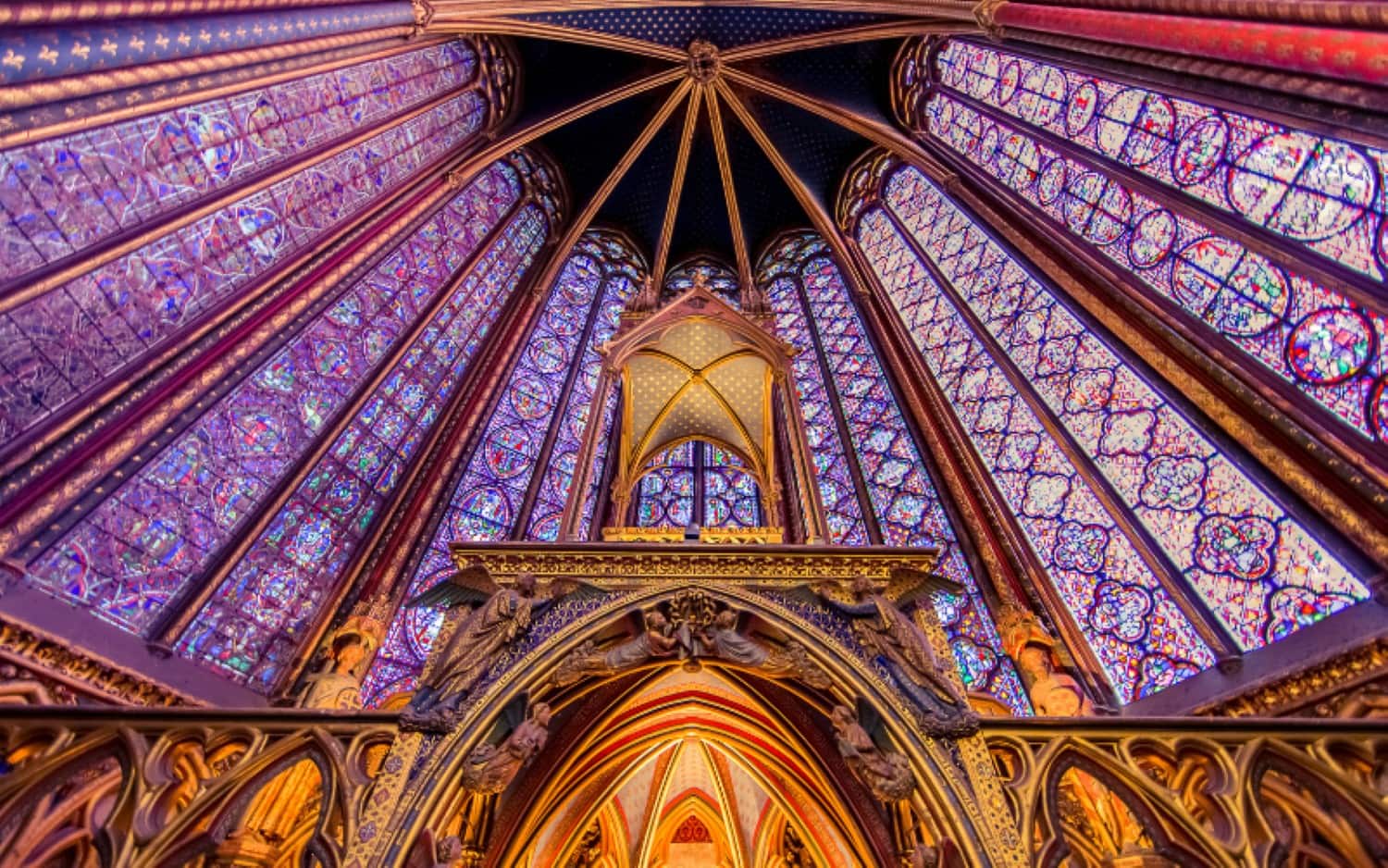
Fancy spending an hour or two staring up at sublimely beautiful stained glass supported by impossibly slender columns while listening to sublimely beautiful classical music? Then check out the website for Sainte-Chapelle’s concerts and purchase tickets for a performance. You won’t be disappointed!
Imagine listening to music surrounded by this view!
We’ve enjoyed several concerts at Sainte-Chapelle and have always been transported into ever higher planes of awesomeness. A favorite evening out is to enjoy the performance at 7 pm and then to wander starry-eyed through the cobbled streets of Île de la Cité to Île Saint-Louis and dine at one of the many small bistros in the area. Artsy traveling doesn’t get much better!
Where to Stay in Paris
I favor hotels and apartments on the Left Bank in Paris. Here are two of my favorites:
Hotel de L’Universite: in the heart of Saint-Germain, this boutique hotels is a bit removed from the crowds
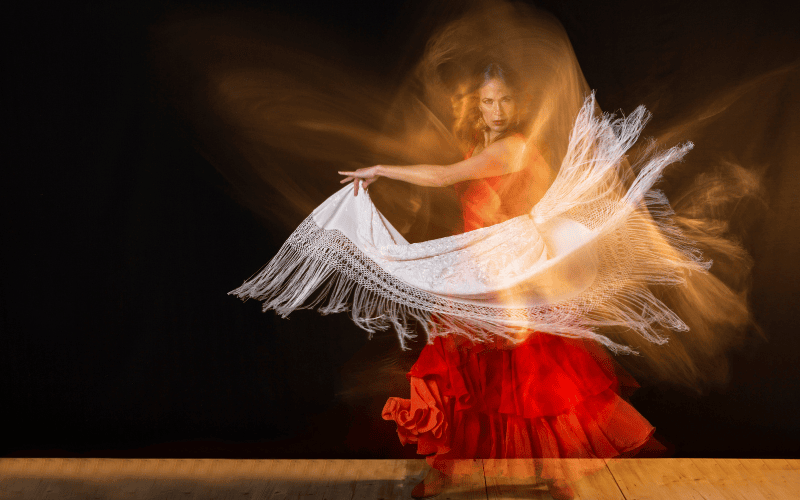
We’re firm fans of flamenco. See my post describing the flamenco performance we enjoyed on our first visit to Seville. In Seville, you can see flamenco at several venues. I recommend two.
A flamenco performance will captivate you!
Flamenco Museum
From the website, purchase the combo ticket that includes the museum and a late afternoon flamenco performance that will leave you breathless.
Los Gallos
Situated in a charming little courtyard in the heart of Seville, Los Gallos is an intimate venue with world-class talent. Sip the Sangria included in the ticket price and prepare to be blasted into the stratosphere.
Where to Stay in Seville
I recommend the Hotel Amadeus Sevilla deep in the old town in Seville. If you’re driving, park your car on the outskirts and take a taxi into the city.
Theater in Stratford-upon-Avon
Every time I visit England, I do my best to squeeze in a trip to Stratford-upon-Avon to see a performance by the Royal Shakespeare Company. I have been fortunate to see many wondrous performances there, including productions of Romeo and Juliet and Hamlet that both starred the incomparable David Tennant.
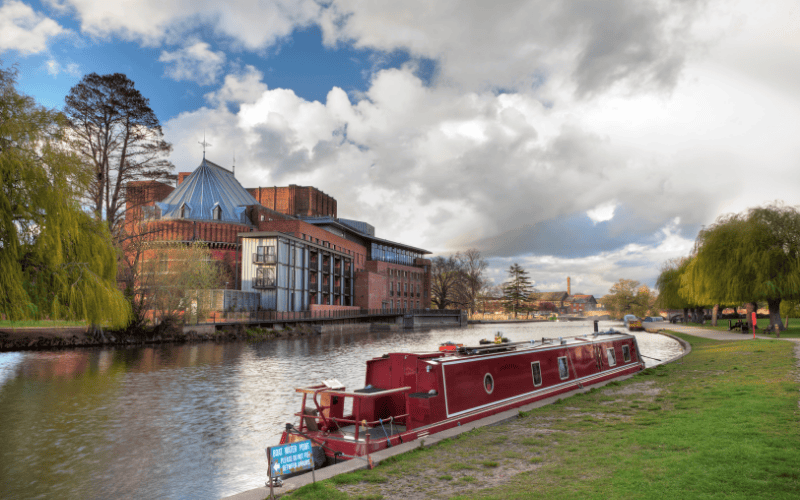
Main theatre at Stratford-upon-Avon
When I was a student at Reading University, a two-hour drive southeast of Stratford-upon-Avon, I frequently made the trek to see a performance. I was studying for a degree in English Literature so taking in as many Shakespeare productions as possible was almost mandatory.
You can see Shakespeare productions at the Globe in London and the experience is highly recommended. However, I must admit that I prefer the productions at Stratford-upon-Avon. The seating is more comfortable, and the quality is top-notch. I liken seeing a production by the Royal Shakespeare Company as the auditory equivalent of looking at high-quality cut crystal. Every word and gesture is crisp and perfect.
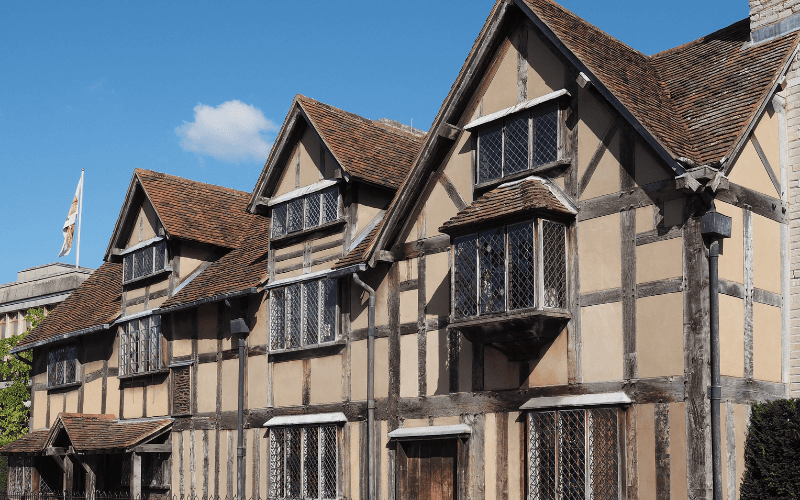
When you go up to Stratford-upon-Avon to slake your Shakespeare yen, you also get the bonus of having time to wander the charming streets of Stratford. Sure, it’s a bit touristy, but so what? I love touring Shakespeare’s birthplace, paying my respects at his grave in the church, and watching the swans glide by on the River Avon.
Shakespeare’s birthplace in Stratford-upon-Avon
Visit the RSC’s website for details about upcoming productions in Stratford-upon-Avon and London. Here are some other options:
Where to Stay in Stratford-upon-Avon
I recommend the Pen and Parchment Inn. The location is convenient to the theater and the breakfast was first-rate.
Vivaldi in Venice
On one visit to Venice, we were strolling through the quiet streets after dark when we noticed a young man dressed in 18th-century garb and carrying a violin case hurry past. We caught up to him and asked if he was a musician. He told us he was on his way to play a concert of 17th- and 18th-century music in a church. Did we like music like that?
Is Vivaldi Venetian?
Yes!
We followed him to the church and half an hour later were sitting beneath a mural painted by Titian and listening to a selection of Venetian classical music favorites. Bliss! The orchestra was clad in 18th-century garb and the performance was obviously aimed at tourists, but that didn’t affect the quality of the musicianship or the depth of our enjoyment.
Hearing Baroque music in Venice just makes sense!
After the concert, we floated out into a warm evening to find ourselves moments later at the edge of the Grand Canal. A barge filled with another group of musicians in period dress slid past, the music wafting through the balmy air like the rustling of silk stockings.
Magical!
In Venice, several venues feature classical music concerts. Check out the Music in Venice website for programs and dates.
Where to Stay in Venice
Here are two of the places I’ve stayed in Venice.
San Teodoro Palace: This one-bedroom apartment is huge by Venice standards and located steps from the Rialto Bridge in a very lively and touristy area.
Ca’ Mirò: Settle into this two-floor apartment in a quiet area of Venice not far from the train station and become a temporary Venetian. It’s gorgeous.
Opera in Verona
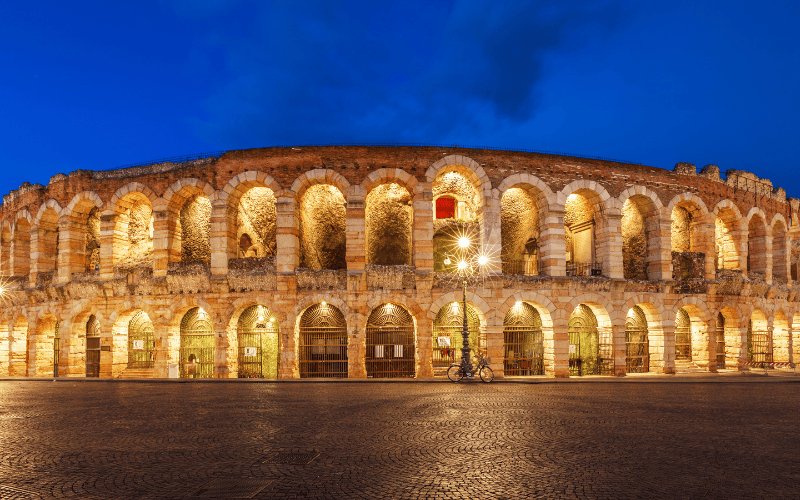
The Arena di Verona, the Roman amphitheatre in Verona, Italy, periodically presents operas to hundreds of fans who are mostly perched on the edge of very hard, very ancient Roman stone steps. We know because several years ago, we were such fans. To read about an evening that has become synonymous with disaster in our family, check out Meltdown in Verona.
Our experience aside, attending a performance at the Roman arena in Verona could be the magical experience we’d expected.
The detailed RM Europa Tickets website contains information about all the opera festivals in Europe in a given year. You’ll find opera festivals in almost all European countries, along with a detailed list of venues and schedules, including the Arena di Verona.
Arena di Verona
Where to Stay in Verona
Check out Hotel Torcolo, located a few steps from the arena in the heart of the old town.
Classical Concerts in Vienna
You can’t walk two feet in Vienna’s Stephansplatz without tripping over a bewigged young person trying to sell you tickets to a performance of Strauss, Mozart, or both. Vienna has several venues featuring tourist-oriented shows designed to showcase the oldie goldies of several of its most famous composers, particularly Johann Strauss.
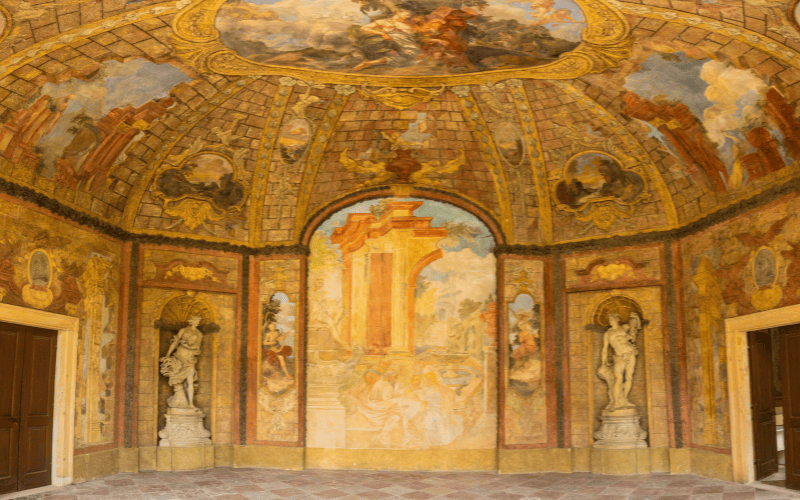
The last time I visited Vienna, traveling solo, I attended a delightful string quartet concert at the gorgeous Sala Terrena, an intimate and heavily decorated venue in the center of the city. Mozart allegedly lived in the building in which the Sala Terrena is housed when he first came to Vienna as a young man. While you wait for the concert to begin, feast your eyes on the riotous Baroque frescoes and look out especially for the leopard! For more about my experience at the Sala Terrena concert, check out my post on Music in Vienna.
Some of the frescoes at the Sala Terrena in Vienna
On the same trip to Vienna, I took the tram and then a bus out to Schloss Laudon (Water Palace) in the bucolic countryside surrounding Vienna to attend a concert that was part of the five-day Schloss Laudon festival.
I discovered the festival while planning my trip to Vienna and was very glad I managed to snag a ticket for a performance that featured an early Beethoven piano trio in the style of Haydn and a marvelous rendition of Tchaikovsky’s piano trio.
Where to Stay in Vienna
Here are some hotels in the center of Vienna with +9 ratings on booking.com that offer good value:
Before you travel, check websites for venues and performance times and budget as much money as you can spare for live entertainment. You’ll be making memories that last a lifetime.
And keep a lookout for local folk performances that are often free, with some even encouraging participation. You’ll typically find these advertised in flyers and on posters.
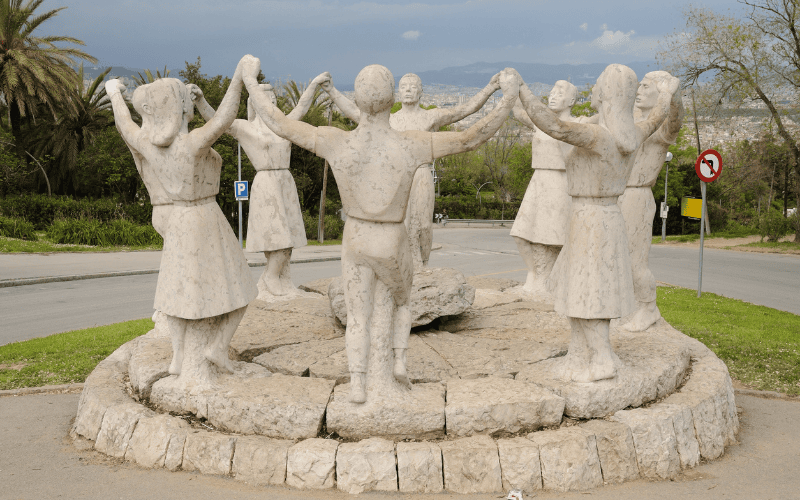
Watch a flag-waving demonstration by young people dressed in medieval garb in Siena, dance the Sardana in front of Barcelona Cathedral along with hundreds of locals and tourists, watch a concert featuring ancient instruments in a tiny chapel in Les Baux de Provence, and more!
Keep your eyes and ears open; you never know what’s around the next corner.
Statue commemorating the Sardana in Barcelona
Have you attended concerts while traveling in Europe? Share your experiences and recommendations in the Comments below. Here are some more posts that feature information about concert-going in Europe:
If you love music, you owe it to yourself to plan a trip to Vienna in Austria. For over 250 years, this great city has celebrated and enjoyed its reputation as the City of Music. And no wonder!
Many of Europe’s greatest composers, including Haydn, Beethoven, Mozart, Schubert, and Strauss, lived and worked in Vienna. When you visit Vienna today, you’ll see evidence everywhere of the city’s illustrious musical past.
In this post, I describe options for enjoying music in Vienna, including music museums, composers’ houses, and concerts.
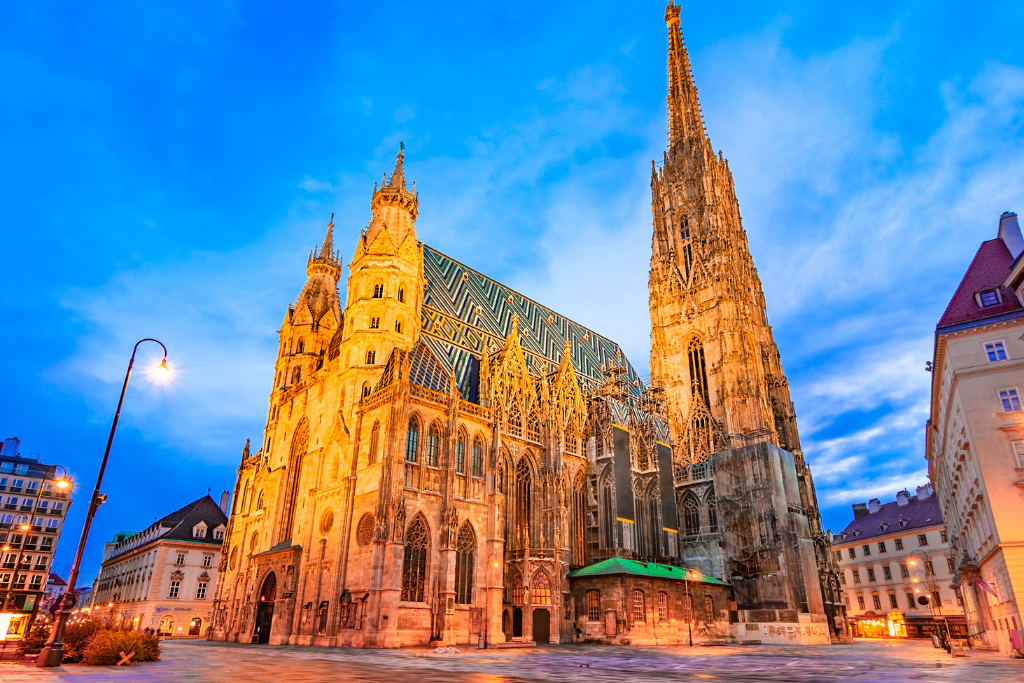
Hang out in the central square (Stephansplatz) near the imposing St. Stephen’s Cathedral, and within minutes, a young person dressed in 18th-century garb will hand you a flyer advertising the music concerts on offer.
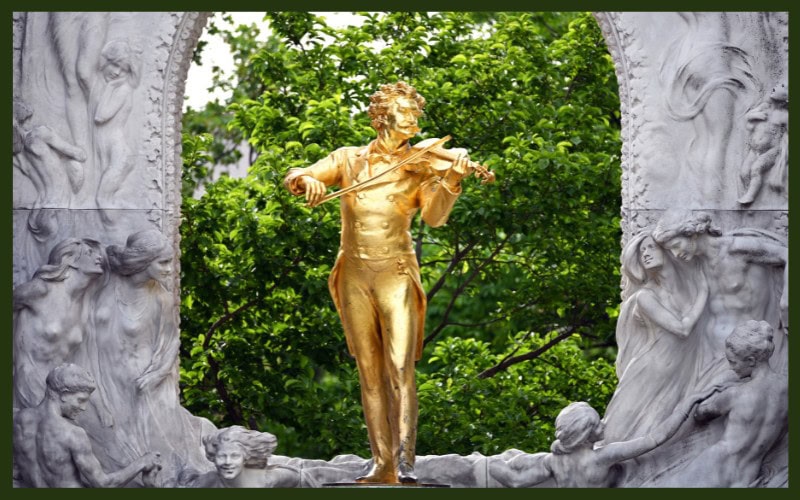
Go for a walk in any park and you’ll soon be snapping selfies in front of statues of composers.
Saint Stephansplatz in Central Vienna
In the evening, wander the cobbled streets in the center of the city and you’ll hear snatches of melodies from chamber music and full orchestras wafting into the soft air from concert venues specializing in tourist-oriented programs usually dominated by the music of Mozart and Strauss.
A Map of Musical Vienna
The map below shows the location of all the music sites mentioned in this post. Vienna is a very walkable city. You can easily stroll between most of the sites in central Vienna and still have energy left to enjoy a coffee, a slice of torte, and a spot of people watching.
I recommend starting at the House of Music (#1) and venturing out from there to visit the museums dedicated to your fave composers, and then spend the evening enjoying a concert.
Vienna is chock-a-block with excellent museums. I’m a bit of a museum fan girl, so for me, this city ranks as one of Europe’s top museum cities. You could easily spend a week here and not run out of world-class museums to visit.
In this post, I focus on two of my favorite music museums: the House of Music and the Musical Instrument Museum, which is part of the Kunsthistorisches Museum.
House of Music
Make time for a visit to the House of Music, (#1 on the map above) also known as Vienna’s Museum of Sound or Haus der Musik.
Housed in the historical palace of Archduke Karl in the old city center, this museum is a must-see for everyone. And it is absolute heaven for music lovers.
On a recent trip, I spent half a day there enjoying its five floors (yes, five!) of installations and displays celebrating music and sound. Trust me, you won’t want to miss this place.
Highlights of the House of Music
Here are some highlights at the House of Music.
Virtostage
This is a multimedia and interactive production. When you move in front of the screen, you become part of the 15-minute opera “zeitperlen”. Members of the Vienna Philharmonic Orchestra recorded the music with vocals by opera star Natalia Ushakova. Technically and musically, the production is a remarkable achievement.
NAMADEUS
Namadeus is an installation created after Mozart’s musical game KV 516f. Included are the interactive Waltz Dice Game and an interactive application called Facing Mozart that lets you bring the composer’s portrait to life by controlling his head movements and facial expressions. Hours of fun!
Virtual Conductor
This installation allows you to “conduct” a video projection of the orchestra that responds to your conducting commands. If you conduct poorly, the musicians respond with criticism, so you need to keep time correctly!
Sound installations
These installations use state-of-the-art technology, including opportunities to visualize sound as waves, swirls, and grids.
Exhibits at the House of Music
The museum includes gloriously comprehensive exhibits of composers including Beethoven, Mozart, Haydn, Strauss, and Mahler. I spent at least an hour in this section. Plenty of life-size figures and original musical instruments bring the subjects to life.
I especially enjoyed the Haydn portion of the exhibition.
During his long life, Papa Haydn exerted enormous influence on classical music. He even counted Beethoven and Mozart among his many pupils.
Haydn had a complicated relationship with Beethoven who criticized his teacher by saying “I never learned anything from Haydn” and then dedicated his set of three Piano Sonatas Opus 2 to Haydn. (reference: Beethoven and Haydn: their relationship)
The House of Music is located at Seilerstätte 30 in Vienna and you can get a discount with the Vienna City Card. The museum is open daily from 10 am to 10 pm.
You can also purchase tickets through GetYourGuide. If you love music, you really can’t miss the House of Music, aka Haus der Musik!
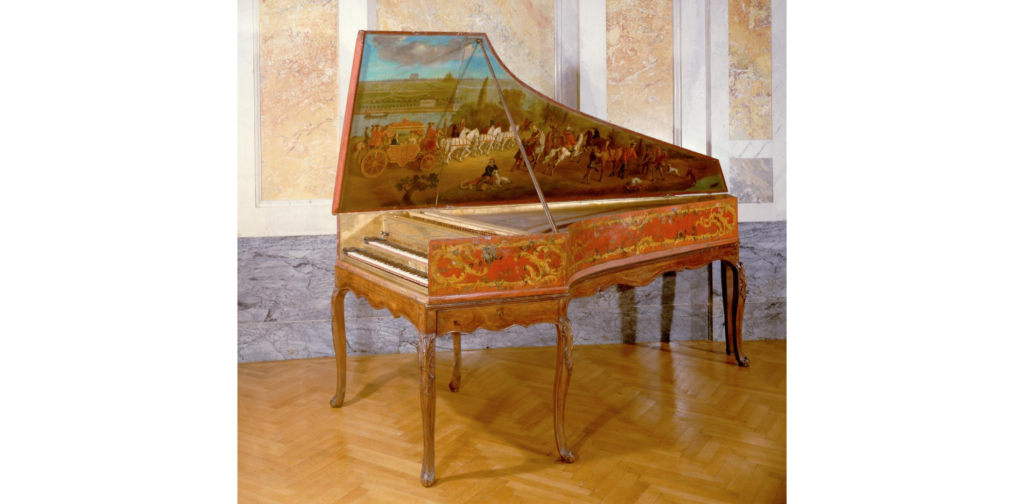
I always enjoy touring a good musical instrument museum, and this one is first-rate. Housed in the Hofburg Palace and part of the masive Kunsthistorisches Museum, the Musical Instrument Museum (#2 on the map above) exhibits five centuries of historical musical instruments. Its collection of Renaissance and Baroque instruments is considered one of the most important in the world.
You’ll see a particularly awesome collection of clavichords and Viennese fortepianos. A highlight for me was seeing pianos that had been played by Mozart, Liszt, Mahler, and Clara Schumann, who is the inspiration for my second novel, A Woman of Note.
Harpsicord made in 1745, Kunsthistorisches Museum Wien, Sammlung alter Musikinstrumente
The museum also includes replicas of historical instruments that visitors may play, and regularly holds concerts at which master interpreters of their professions play the original instruments.
The Musical Instrument Museum is located at Heldenplatz and is open daily except Wednesday from 10 am to 6 pm.
Composer Houses
Many of the apartments lived in by famous composers have been converted into museums. Download a map of Musician Walks from the excellent Wien Info website.
Here is information (in alphabetical order) about the museums dedicated to individual composers including Beethoven, Haydn, Mozart, Schönberg, Schubert, and Strauss. Some of them are celebrated in more than one museum.
You can visit the six apartments of Beethoven, Strauss, Schubert, and Haydn with a special combination ticket from the Wien Museum website. Note that most of the museums close on Mondays.
Ludwig von Beethoven
Beethoven House
I’ve made two pilgrimages to the Pasqualati House (#3 on the map above), one of the many houses in which the great composer lived. Built in the 18th century adjacent to the city walls, the house is named after its owner (Pasqualati). Beethoven lived for eight years, off and on, in the 4th floor apartment at the top of a series of old stone staircases.
During my second visit to the apartment, I was writing A Woman of Note about a woman composer in 1830s Vienna. The novel starts with the funeral of Beethoven, and his influence is felt by the characters throughout the novel. As I mounted the old staircase to Beethoven’s apartment, I imagined my characters mounting similar staircases in buildings of the same vintage.
When I visited, the apartment was virtually bare of furniture and contained little in the way of exhibits. Two listening desks are set up for listening to various Beethoven pieces on headphones.
I indulged myself with the second movement of Symphony No. 7 for a while. I was the only visitor, so it was just me and the Maestro’s soaring melodies and the temptation to burst into tears.
Musical tourism doesn’t get any better.
In front of Pasqualati House in Vienna
Beethoven Museum
Want more Beethoven? Visit the Beethoven Museum (#4).
In 2017, the original 40-square-meter apartment at Probusgasse 6 in Heiligenstadt in the 19th district where Beethoven lived was extended to create a spacious, 14-room museum. Here you’ll find exhibits chronicling the history of the house, Beethoven’s move from Bonn to Vienna, his stay in Heiligenstadt, and many more related to the maestro.
Pasqualati House (or Pasqualatihaus) is located at Mölker Bastei 8 in Vienna and is open Tuesday to Sunday from 10 am to 1 pm and from 2 pm to 6 pm except for public holidays. The Beethoven Museum is located at Probusgasse 6 and is also open Tuesday to Sunday from 10 am to 1 pm and from 2 pm to 6 pm except for public holidays.
Joseph Haydn
Haydnhaus
Managed by the Wien Museum (as are most of the composer houses), Haydnhaus (#5) is the location where Joseph Haydn spent the last twelve years of his life and where he died on May 31, 1809. The museum includes the rooms of his flat on the first floor, recently restored so that the rooms are divided in the same way they were when he lived there.
Haydn was extremely famous during his lifetime, and exhibits at the museum reflect the esteem in which he was held both then and now.
The museum also has a room dedicated to Brahms.
Haydnhaus is located at Haydngasse 19 and is open Tuesday to Sunday from 10 am to 1 pm and from 2 pm to 6 pm except for public holidays.
Wolfgang Amadeus Mozart
Mozarthaus Museum
Mozart lived in several houses in the city during his short and tumultuous life. The only one that survives is the Mozarthaus Museum (#6) at Domgasse #5, where he lived from 1784 to 1787.
Occupying 1,000 square meters on six levels, this museum is the premier pilgrimage site for Mozart fans.
And seriously, who isn’t a Mozart fan?
The museum immerses you in the great composer’s world. Exhibits celebrate his remarkable genius and creativity and feature his family, friends, and foes in the heady world of late-Baroque Vienna. Get tickets here.
Mozarthaus is located in St. Stephansplatz at Domgasse 5 and is open Tuesday to Sunday from 10 am to 6 pm except for public holidays.
Arnold Schönberg
Arnold Schönberg Center
Established in 1998, the Arnold Schönberg Center (#7) celebrates and life and work of one of the 20th century’s most notable composers (and also a painter, teacher, theoretician, and innovator). If you’re a music history buff, you’ll know that Schönberg is associated with the method of composing with the 12-tone scale.
The museum includes exhibitions about Schönberg’s life, a gallery of his paintings, a replica of his study in Los Angeles, the city in which he died in 1951, and lots of concerts, lectures, and other events aimed at helping people understand and enjoy Schönberg’s music.
The Arnold Schönberg Center is located at St. Stephansplatz at Schwarzenbergplatz 6 and is open Monday to Friday from 9 am to 5 pm except for holidays.
Franz Schubert
I’m very fond of Schubert, who makes a cameo appears in A Woman of Note and who, like Mozart, died very young (he was just 31). He managed to compose an amazing amount of music in his short lifetime, much of it lived in poverty. Two museums in Vienna are devoted to Schubert.
Schubert Geburtshaus
The Schubert Geburtshaus (#8) is the house where he was born on January 31, 1797. He came from a large family that shared one room and a kitchen with an open fire. The exhibits include a pair of spectacles that belonged to Schubert and has apparently become quite an object of veneration for his fans.
Schubert Sterbewohnung
Schubert died at the Schubert Sterbewohnung (#9) on November 19, 1828. Although he lived in the small apartment for only a few weeks, he composed several works including the song “The Shepherd on the Rock.” Exhibits document the last weeks of his life, his death, and his funeral.
Schubert Geburtshaus is located at Nußdorfer Straße 54 and is open Tuesday to Sunday from 10 am to 1 pm and 2 pm to 6 pm except for public holidays and Schubert Sterbewohnung is located at Kettenbrückengasse 6 and is open Tuesday to Sunday from to 10 am to pm and 2 pm to 6 pm except for public holidays.
Johann Strauss
Johann Strauss Wohnung
The Johann Strauss Wohnung museum (#10) is the apartment where the composer wrote “The Blue Danube” waltz which has become Austria’s unofficial national anthem. The museum includes his instruments along with furniture and paintings from his life, and references to the other musical members of the Strauss dynasty.
Strauss Museum
This new museum (it opened in 2015) is dedicated to the lives and work of the composers in the Strauss family, It’s a must-see for Strauss fans. Find pictures and documents from the period and listen to music at the various audio stations arranged in 15 themed areas. Here’s a detailed post about the museum on the Visiting Vienna website.
Johann Strauss Wohnung is located at Praterstraße 54 and is open Tuesday to Sunday from 10 am 1 pm and 2 pm to 6 pm except for public holidays. The Strauss Museum is to remain closed through 2021 and will reopen in 2022 at a new location.
Vienna Concerts
You can’t walk far without seeing ads for music concerts, particularly those organized for tourists and, as mentioned earlier, mostly featuring music by Mozart and Strauss (and occasionally Beethoven, Schubert, and Haydn). Check the current concert listings.
If you’re lucky, you might get to catch a performance by the Vienna Boys Choir, an opera at the opera house, or a performance by the Vienna Philharmonic (Wiener Philharmoniker). Following are descriptions of two concerts I enjoyed during a recent trip.
The Sala Terrena (#11) is a small concert hall next to a monastery in the centre of Vienna. Mozart lived in the building for about two months when he first came to the city as a young man. The room is frescoed from floor to ceiling with a cacophony of Italian Baroque splendor. You’ll see lots of fruit, cherubs, roses, urns, and even a leopard.
I chose the Sala Terrena concert rather than one of the flashier tourist concerts because Schubert was on the programme. Schubert makes a guest appearance in A Woman of Note, so I owed it to my imagination to hear his music played at least once in his home town.
Alas, ‘twas not to be. The programme was changed to include the American Quartet by Dvorak and some Hadyn string quartets. Fortunately, the performances were fantastic, so I had no complaints.
Concert Experience
Four musicians dressed in 18th-century garb (someone in this city must do a roaring trade in producing period costumes) entered the tiny salon and settled in to play. Unfortunately, as so often happens when I attend an evening concert soon after landing in Europe, jet lag hit me with a vengeance. I was seated in the front row, directly in the line of sight of the first violinist.
Despite my best efforts, my eyelids drooped, and my head started that awful bobbing thing that happens when you desperately fight falling asleep. What if I pitched face-first into the violinist’s lap? She might not appreciate the interruption.
In my defense, I defy any jet-lagged music lover to sit through an adagio without succumbing to the temptation to close one’s eyes and drift. In the intermission, I chatted with a young woman from Japan who was studying art in Florence. I love how traveling can connect you with people, including local artists and artisans, from all over the world.
The concert was a success, and I drifted out into the heaving mass of tourists and locals thronging the Stephansplatz. If I hadn’t been alone, I would have hung around for awhile to enjoy a slice of strudel and a glass of wine in the shadow of the floodlit cathedral. Instead, I let the atmosphere wash over me for about ten minutes and then caught the tram back to my apartment.
You can book tickets to a concert at the Sala Terrena below. The title says the Mozarthaus, but the concerts are the ones held in the Sala Terrena that I attended. Highly recommended!
While I was in Vienna, I was determined to see a “real” concert. By real, I mean a concert that does not feature costumed musicians and Eine Kleine Nachtmusik (not that there’s anything wrong with that). But I wanted to attend a concert with local people.
Fortunately, I discovered that the five-day Schloss Laudon festival—a yearly classical music event held in the salon at the Schloss Laudon (#12), also known as the Water Palace about an hour outside of the city —was on during my visit.
Getting to Schloss Laudon
With e-ticket in hand, I boarded the metro for a ride to the last stop. For forty minutes, the bus wound through a maze of suburban streets toward what I hoped would be the palace.
I had absolutely no clue where I was and what I’d do if I was on the wrong bus (I didn’t have a Smartphone with GPS at the time). What if there was no concert at the end of the ride and no bus back? I’d be stranded miles from nowhere with only 60 euros in my wallet and a pathological fear of incurring data roaming charges on my phone because on that trip I hadn’t had the foresight to buy a European SIM card.
Update note: Thank goodness you can now conveniently buy an eSIM card for traveling anywhere in Europe!
Fortunately, I heard a couple on the bus mention Schloss Laudon, and minutes later the bus stopped and they got off.
I followed.
Exploring Schloss Laudon
The Schloss Laudon and its stylishly landscaped grounds were exquisite. I was extremely early for the concert but fortunately not for the bar. I sipped a glass of wine while wandering the sylvan pathways and making friends with the swans.
At Schloss Laudon for a concert
Experiencing the Concert at Schloss Laudon
The concert featured a trio – piano, violin, and cello—in the large salon in the Schloss Laudon. A Schloss is basically a palace or a castle, and this place certainly qualified. The salon was frescoed floor to ceiling with exotic animals (tigers, rhinos, elephants, etc.) and exotic scenes of idealized, vaguely New World native-looking people in turbans. Evidently, historical accuracy was not a priority.
I snagged a seat in the second row, in direct line of sight of the keyboard. As a pianist myself, I always like to get as close to the keyboard as possible so I can watch the performer’s hands.
Almost everyone around me was dressed to the nines. Most of the men wore suits and ties, and the women wore cocktail dresses and lots of jewelry and perfume. I might as well have had a neon sign on my head – turista. But whatever.
No one paid any attention to me—not even a wee smile of musical comradeship. I felt a tad isolated, but what could I expect? Solitary travel can sometimes be a bit, ah, solitary.
A drawback of sitting in the second row quickly became apparent. The large spotlight caught me in its glare, and soon I was sweating. The heat would have been tolerable if indeed there had been music to listen to. However, to my dismay, the festival director and an expert on the modern composer featured on the program both shuffled to the front and faced the audience.
The Pre-Concert Talk
Festival-Director Guy talked for about five minutes–a bearable length of time to listen to German and pretend to understand. Then, Composer-Expert Guy took over and talked for at least thirty minutes.
He stood directly in front of me, even making eye contact occasionally, so I had to look as if I was hanging on his every German syllable. I caught a few words—Mexico, Nazis, Anschluss, Franco. I snuck a peek at the concert notes–in German, of course and managed to decipher that the composer of the modern piece had left Vienna in 1938 and settled in Mexico by way of Spain.
That was not a whole lot of information to get from a thirty-minute lecture.
Haydn & Tchaikovsky
Finally, the three musicians entered and performed an early Beethoven piano trio in the style of Haydn. The heat, the somnolence engendered by Composer-Expert Guy’s talk, and those darned slow movements marred my enjoyment of the piece.
Again, I experienced more than a few head bobs along with the terror that someone might notice. What if I snored or drooled? After the Beethoven came the modern composer’s piece, which was actually pretty good in a dissonant, modern music kind of way.
At the break, I thought about giving in to jet lag and catching the bus back to the metro. I even walked out to the bus stop and checked the times. Then I came to my senses and trudged back into the palace for the second half—the piano trio by Tchaikovsky.
Holy Russian romantic! It was stunning—no danger of head-bobbing for this one. I cheerfully bought the CD.
Exploring Vienna
Here are some GetYourGuide tours in Vienna.
Vienna Walking Tours
GuruWalk lists pay-what-you-please walking tours that connect tourists with tour guides all around the world. Check out their tours of Vienna!
Concerts at Schoenbrunn Palace
For a wonderful classical music experience that throws in a world-class palace for good measure, consider going to a concert at Schoenbrunn Palace. The repertoire leans heavily to Strauss and Mozart with performances by opera singers. If you take a tour, you’ll often also get dinner and drinks, along with priority entrance to the palace.
Here are some GetYourGuide tours that will take you to concerts at Schoenbrunn Palace.
Vienna is not an inexpensive city, but if you can swing it, stay as close to the center as you can afford.
On my first trip to Vienna, I made the mistake of staying waaaaay out in the suburbs in a cheap apartment. Well, let’s just say that it was a disaster! After two days of cramped quarters, cold water showers, bland suburbs that could be anywhere, and long commutes into Vienna, we moved to a hotel close to the action. The extra money was well worth it.
Vienna, the City of Music, is a must-see for the artsy traveler who loves classical music. You can’t help but swoon when you walk into your favorite composer’s house, or when you hear a Strauss waltz played in the city where it was composed, or explore the awesome exhibits at the House of Music.
And when you want a break from music (why?!), Vienna has some of the best art museums in the world, including the Belvedere where you’ll see Klimt’s The Kiss and the always amazing Kunsthistorisches Museum.
For more information about what to see and do in Vienna and Austria, check out these posts
Have you visited any of the music sites in Vienna described in this post? Share your thoughts about music and Vienna with other artsy travelers in the Comments section below.