Visit Vienna & Salzburg: Best Tips for Artsy Sightseeing Options
Artsy Traveler contains affiliate links for products and services I personally use and can happily recommend. As an Amazon Associate, I earn from qualifying purchases. Please read the Disclosure for more information. If you make a purchase through these links, at no additional cost to you, Artsy Traveler earns a small commission. Thank you!
On a family visit to Salzburg, I kept threatening to find a meadow and do my best Julie Andrews impression while twirling in a circle and belting out The hills are alive with the sound of music.
My family wasn’t amused.
For a long time, the people of Salzburg weren’t keen on capitalizing on their Sound of Music associations, but that has changed and tours are available to take you to many of the sights featured in the movie.
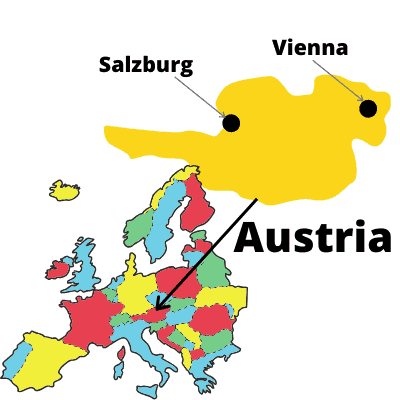
While walkable and ridiculously scenic Salzburg is perfect for a short visit, Vienna comes through with the blockbuster sights: imperial grandeur, Klimt and Schiele, and more concert halls than you can reasonably visit in a week.
This post covers the best artsy sightseeing in both cities, with tips on what to prioritize and how to get the most out of each visit.
This post is part of my guide to artsy & independent travel in Austria, where I share my best tips for exploring Austria’s music, museums, historic cities, Alpine landscapes, and cultural experiences, whether you’re planning your first visit or returning to dig deeper.
Table of Contents
Highlights at a Glance
- Riding the funicular up to the Hohensalzburg Fortress in Salzburg
- Touring Mozart’s House in Salzburg
- Going to music concerts in Salzburg and Vienna
- Touring Vienna’s many world-class museums
Overview
I first visited Austria on a skiing holiday in 1975 and fondly remember the friendliness of the people and the gorgeous Tyrolean scenery in the ski resort town of Sölden.
Since then, I’ve spent most of my Austria sightseeing time in Salzburg and Vienna (my particular favorite). In fact, my second novel, A Woman of Note, about a female composer in the 1830s is set in Vienna.
Artsy Sightseeing in Salzburg
Sound of Music Tours
More than 300,000 fans visit Salzburg every year to walk in the footsteps of the von Trapp family in the original shooting locations.
I did not get to take a Sound of Music tour but I wish I had (next visit!). Here’s a Sound of Music tour with GetYourGuide:
Touring Salzburg
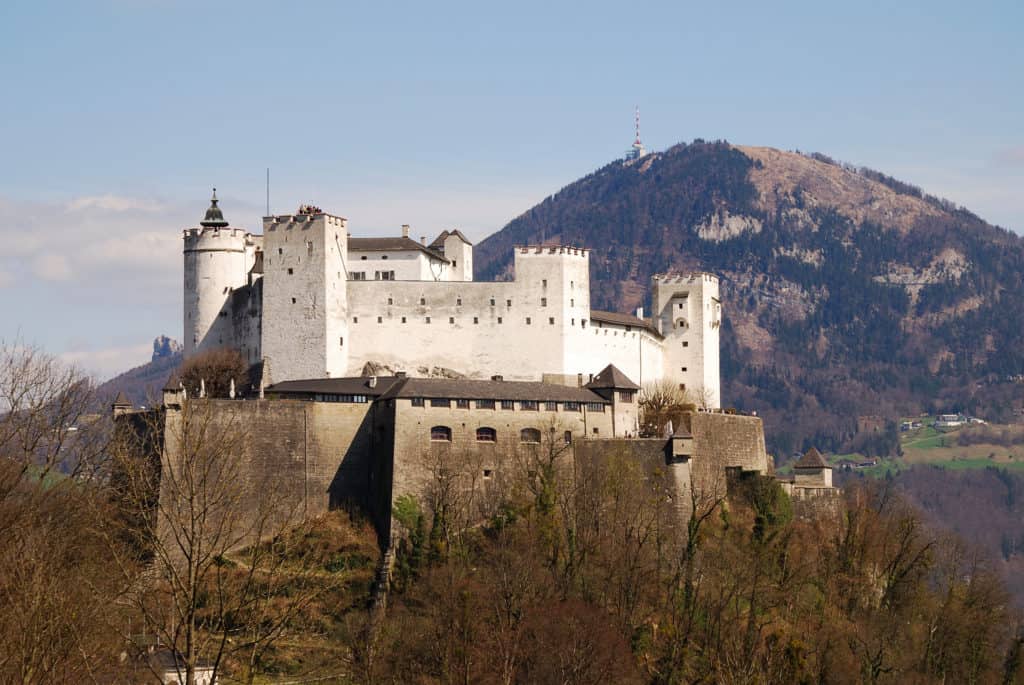
I loved wandering around Salzburg. It’s a stunningly beautiful small city dominated by the Hohensalzburg Fortress.
Apparently, the fortress is the largest preserved castle in central Europe and has become the symbol of Salzburg as the City of Mozart.
You can visit the Fortress year round. Tour the Fortress Museum to view historical exhibits about courtly life, the Marionette Museum, and the Altes Zeughaus which has interactive displays focused on the development of cannons, armaments and firearms (not really artsy, but interesting nonetheless!).
Part of the fun of a visit to Salzburg is riding the funicular from the Festungsgasse. Admission is included with the Salzburg card.
Go early to beat the crowds (always good advice with popular tourist attractions in Europe).
Mozart in Salzburg
One big reason people visit Salzburg is to worship at the feet of Mozart.
Evidence of Salzburg’s love affair with its most famous son is everywhere.
Wolfgang Amadeus Mozart was born in Salzburg on January 27, 1756 and died on December 5, 1791 in Vienna at the age of 35. Mozart wrote over 600 works, including symphonies, concertos, chamber music, operas, and choral music.
Ask anyone to name a great composer and chances are if they don’t say Beethoven or Bach, they’ll say Mozart.
Salzburg styles itself as the City of Mozart.
If you like Mozart-themed chocolates and other souvenirs, you’ve come to the right place. And if you don’t get them in Salzburg, you’ll also find them in Vienna.
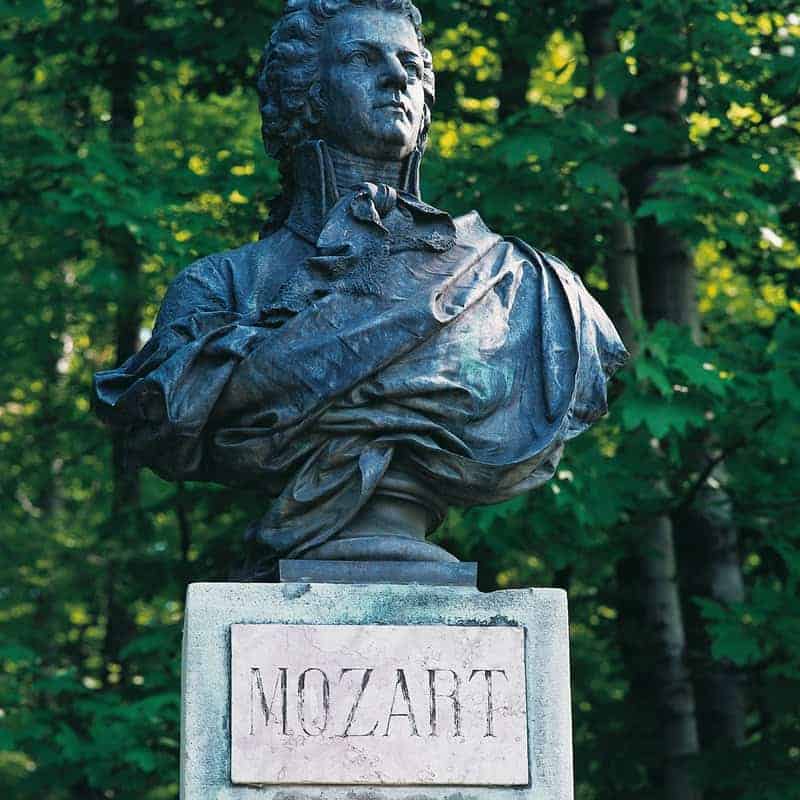
The big Mozart attraction is Mozart’s House at No. 9 Getreidegasse in the heart of Salzburg’s old city. Tour the house to see items of everyday life from the period, memorabilia that documents Mozart’s life in Salzburg, and several historical instruments.
To get the lay of the land quickly, consider signing up for a tour of the city that includes Mozart’s house. This tour also includes the Mirabell Gardens.
Concert-Going in Austria
For me, attending concerts in Austria has two benefits.
First, I get to hear awesome music played by local orchestras, often in the concert halls where the music was first performed. I get goosebumps listening to a concert of Mozart’s music just steps from the house in which he was born.
Second, concerts that are part of local festivals are generally tourist-free. Plenty of tourists attend the special Strauss/Mozart concerts put on for the bus tour groups.
These tourist concerts are great, don’t get me wrong. But if you want to be one of the few people in the audience who isn’t a local, check out the many musical festivals and concerts that attract a primarily Austrian crowd.
On the other hand, this strategy can backfire if you don’t do as the Austrians do. Let me explain!
A Tourist Faux Pas at a Concert in Salzburg
One year, we snagged tickets to a concert at the International Mozarteum Foundation building (Internationale Stiftung Mozarteum) in Salzburg. The concert was called Sturm und Drang (Storm and Struggle) and featured piano pieces by Liszt.
Anticipating a fiery afternoon of pyrotechnic piano playing, we happily entered the ornate concert room and took our seats.
Within minutes, we became acutely aware that we stood out like stupid-tourist sore thumbs. Although the day was searingly hot, every single person in the audience wore formal dress.
The men were decked out either in tuxedos complete with cummerbunds or in full dress uniforms, medals sparkling.
The women shimmered in long evening dresses and dripped with pearls and diamonds as they swished into their seats.
Gregg wore ratty, paint-daubed shorts and a T-shirt, Julia wore pink shorts and a grubby T-shirt (hey, we were on holiday…who does laundry?), and I wore my decidedly hippy-dippy, no-crease travel dress.
We looked like country bumpkins.
We also seriously miscalculated the appeal of the program. The music was by Liszt all right, but most of the program consisted of delicate, gossamer settings of Schubert’s lieder. The music was beautiful, no doubt about it, but it was also really, really, really slow.
After fifteen minutes of trying desperately to look entranced, I wanted nothing more than to curl into a ball under my chair and snooze away the afternoon hidden from the disapproving gaze of all those well-dressed Austrians.
And as for twelve-year-old Julia, who, despite our best efforts at the time, was not much of a classical music fan, sitting still in the oppressive heat was agony.
We left at the interval.
That said, don’t let our experience put you off investigating concerts while you’re traveling, especially in Austria where music concerts are as common as lunch.
Tours and Tickets in Salzburg
Here are more tour options in Salzburg:
Staying in Salzburg
Salzburg is not a large town, but save your legs and stay somewhere in the old town center so you can walk to all the attractions.
You’ll pay more, but the convenience will be worth it. Check the map below for some options.