As an Artsy Traveler, one of the most rewarding things I recommend you do is sign up for an artsy retreat in a gorgeous location. You’ll get inspired while learning new techniques and meeting like-minded travelers.
I recently discovered the Villa Lena in Tuscany (and I LOVE Tuscany!) where you can do just that.
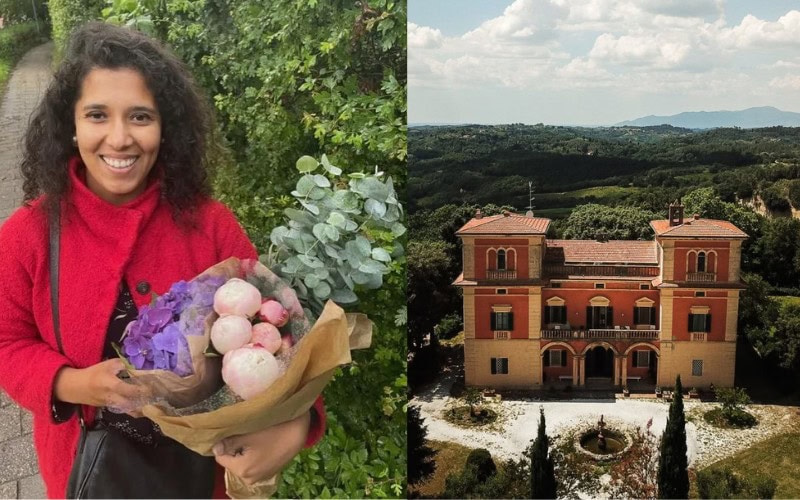
Imagine spending four days surrounded by spring flowers in the Tuscan countryside while you learn how to arrange and paint flowers with master artist Tanvi Pathare.
From May 5th to 10th in 2023, Tanvi conducted four watercolor master classes that “focused on an old and healing art form: the slow-paced appreciation of flowers, landscapes, and natural beauty.”
Sounds pretty awesome to me! I hooked up virtually with Tanvi and asked her some questions about her background as an artist and about her Flower Painting Retreat at the Villa Lena in Tuscany.
Interview with Tanvi Pathare
I interviewed Tanvi virtually (and hope one day to meet and learn with her in person!). Here is our interview.
Who is Tanvi Pathare?
Artsy Traveler: Tell us about your background as an artist–where you studied and some of your influences.
Tanvi Pathare: I was born in Mumbai, India. Since an early age, I was fascinated by the idea that you could create something beautiful with your hands; I enjoyed the craft element of it. I studied at the Sir J. J. School of Art in Mumbai, after which I moved to Florence in the search of more formal training as a realist painter.
I studied in the painting program at the Florence Academy of Art. After graduating from this program, I began teaching, and have been a Principal Instructor for drawing and painting at The Florence Academy ever since.
I look up to painters such as Rembrandt, Titian, Van Dyck, John Singer Sargent, Emil Carlsen, Henri Fantin-Latour, and Isaac Levitan to name a few.
Tanvi’s Inspiration
Artsy Traveler: What is it about floral painting that inspires you?
Tanvi Pathare: I feel my journey as a painter involves the constant delightful pursuit of studying the perfection of nature. Flowers are a wonderful source of inspiration, as they change, move, and grow. I find tracking their beauty through paint highly intriguing.
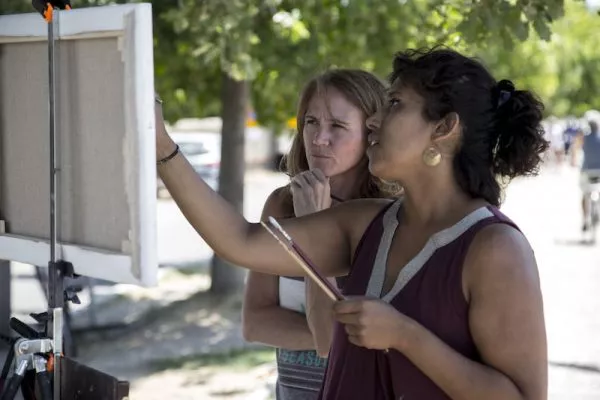
Tanvi teaching painting in Florence
Tanvi’s Favorite Flowers
Artsy Traveler: Do you have any favorite flowers that you particularly enjoy painting?
Tanvi Pathare: I truly enjoy painting roses and peonies. I think their overall forms are very intricate, and hence a good place to spend a few hours meditating over them.
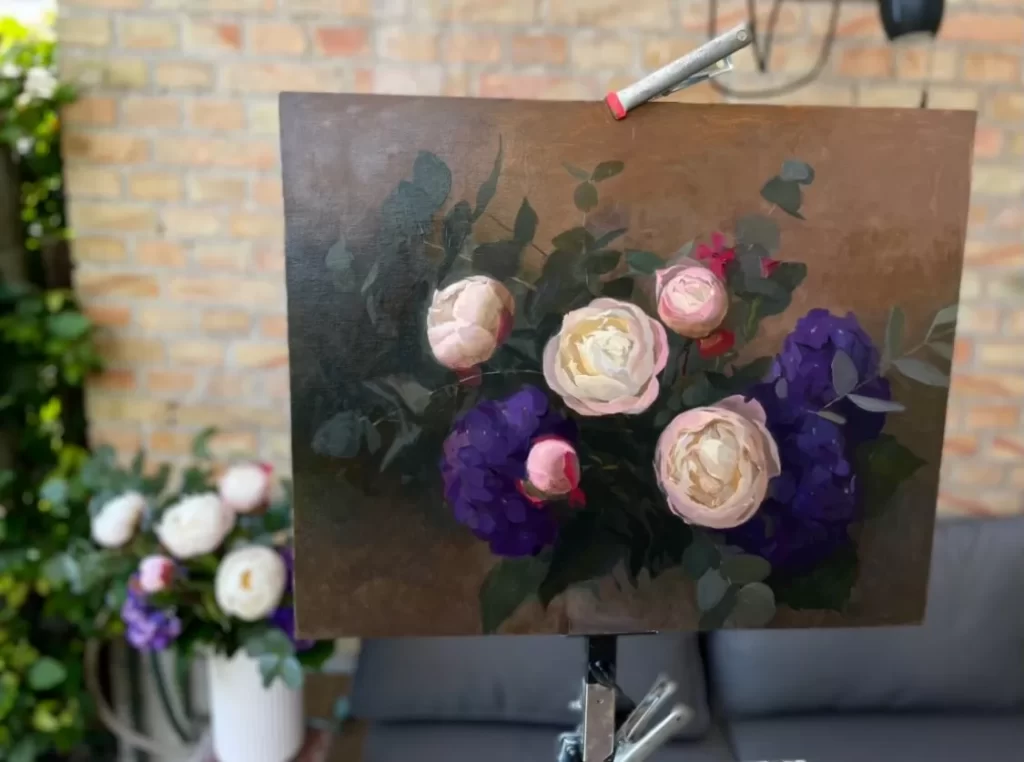
Painting of peonies by Tanvi Pathare
Influences of Location
Artsy Traveler: You grew up in India and now live in Florence. How have these locations inspired you? What changed in your work when you moved to Europe?
Tanvi Pathare: I think having grown up in India, color (and a lot of it) was always a part of my visual aesthetic. Moving to Florence, I think my palette, became a bit more harmonized, though still having sharp color notes. My formal training in Florence helped me organize my ideas in a more cohesive way. Living in Florence, you are spoilt by the beauty around you. I think Mumbai and Florence will always be an integral part of my language as a painter.
Villa Lena Workshop
Artsy Traveler: As a workshop leader, what do you hope participants will take away from their experience painting with you?
Tanvi Pathare: hope that participants walk away with a new found appreciation of nature and flowers. Painting flowers is a beautiful way of truly appreciating their beauty because you spend much longer looking at them, versus just taking a picture of them and moving along..
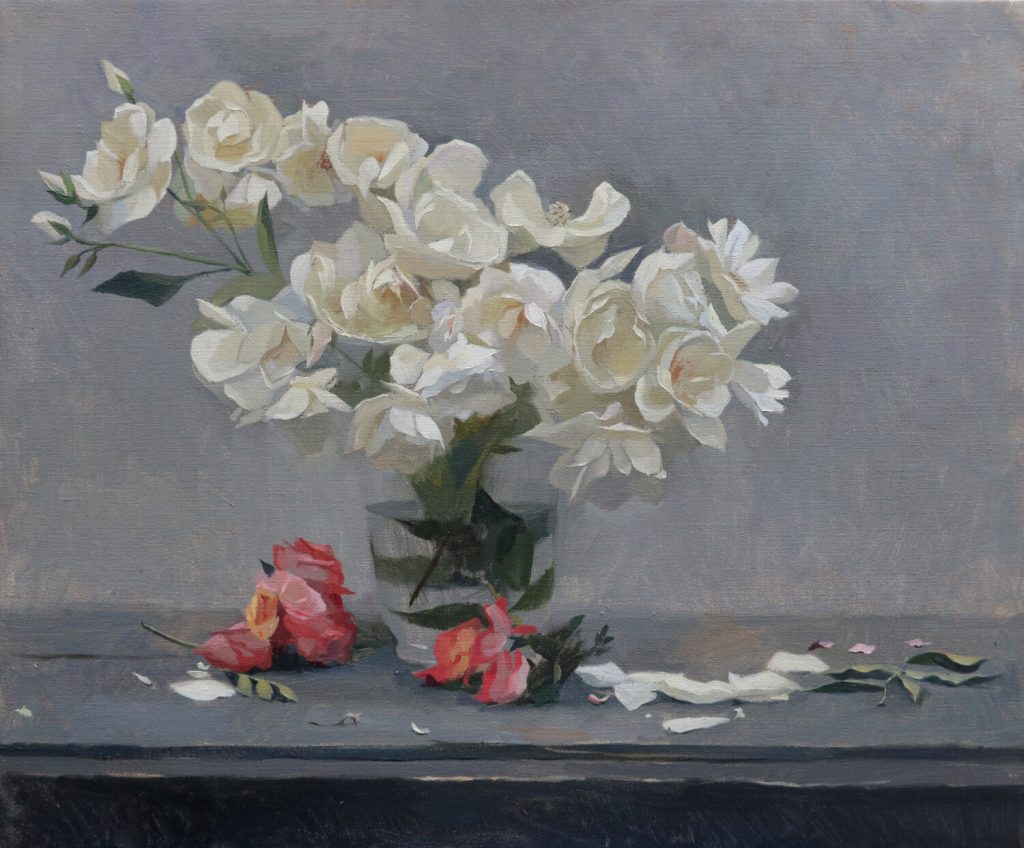
White Roses by Tanvi Pathare
Tanvi Pathare’s Artwork
Tanvi’s art is truly exquisite. Her website beautifully showcases her work with various subjects: portraits, landscapes, and still lifes (lots of flowers in this category).
Here is a selection of some of her works I particularly liked. I can definitely see how she is influenced by masters such as Titian and Rembrandt and also by 19th century painters such as Henri Fantin-Latour and John Singer Sargent.
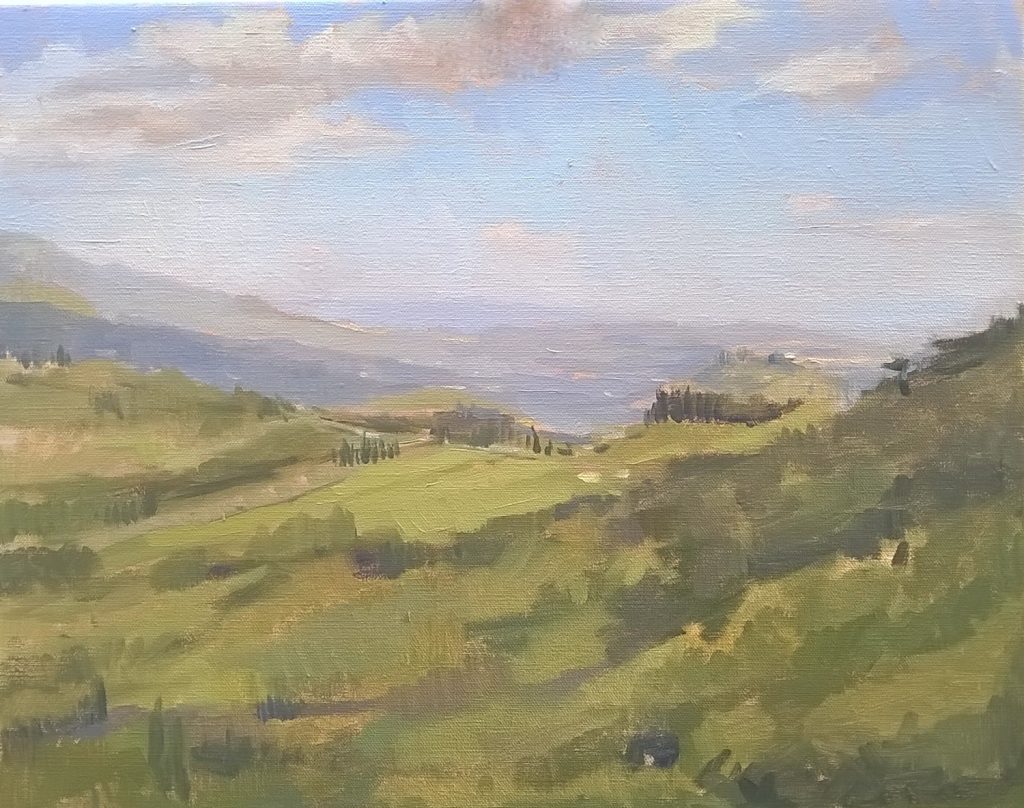
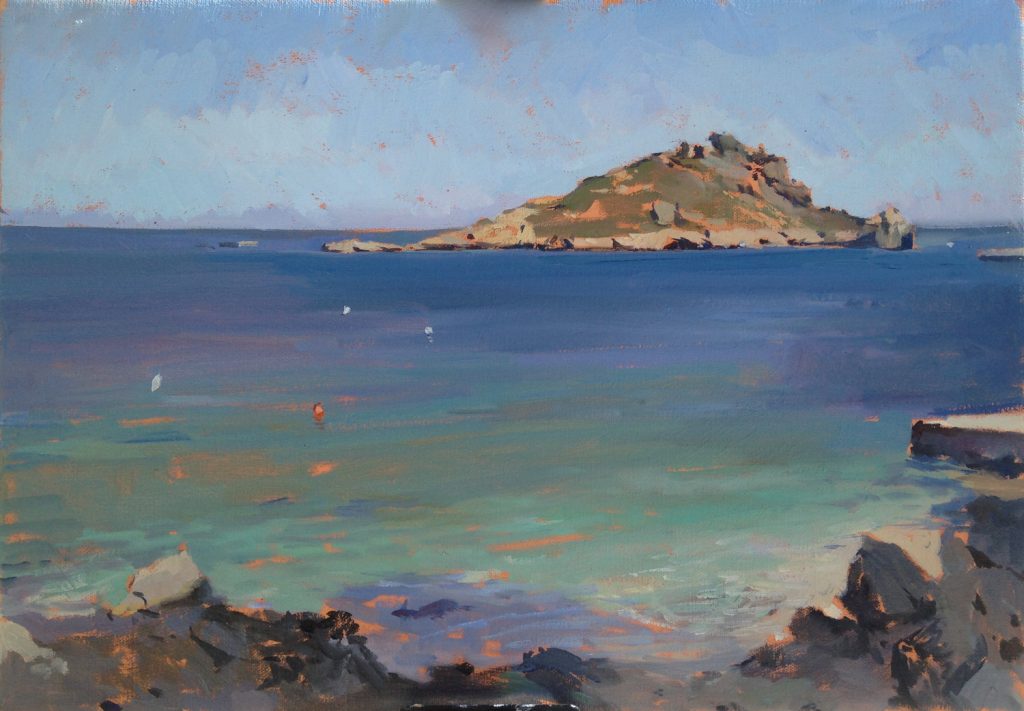
Landscapes by Tanvi Pathare
Tanvi’s website includes several paintings of the Tuscan landscape. Artists have been captivated by this landscape for centuries and no wonder. Tanvi captures the light and motion with fluid strokes and an eye for strong composition.
The Valley in Lucca by Tanvi PathareThe Mediterranean by Tanvi Pathare
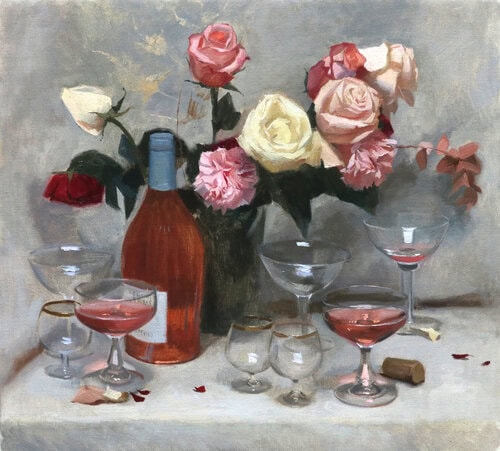
Still Lifes by Tanvi Pathare
I often gravitate to still life paintings when I tour art museums. I especially enjoy flower paintings, perhaps because my mother painted flowers almost until she passed at the age of 93. So flower paintings have been a part of my life forever. Also, although I’m not the best of gardeners, I love watching flowers grow! Tanvi’s flower paintings really spoke to me. She captures the exuberance of their colors and the whimsy of their forms spilling out of vases and scattering petals. I feel like I can reach out and pluck a rose just before it falls.
Wine and Roses by Tanvi Pathare
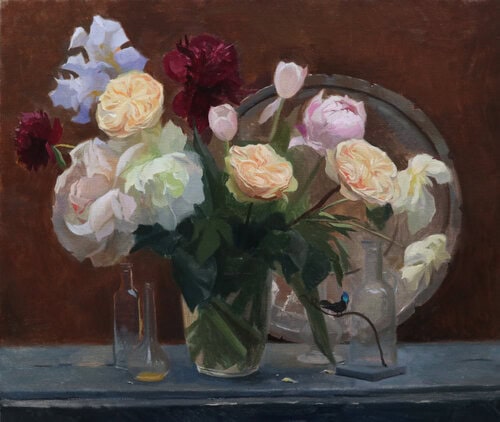
Of Peonies and Roses by Tanvi Pathare
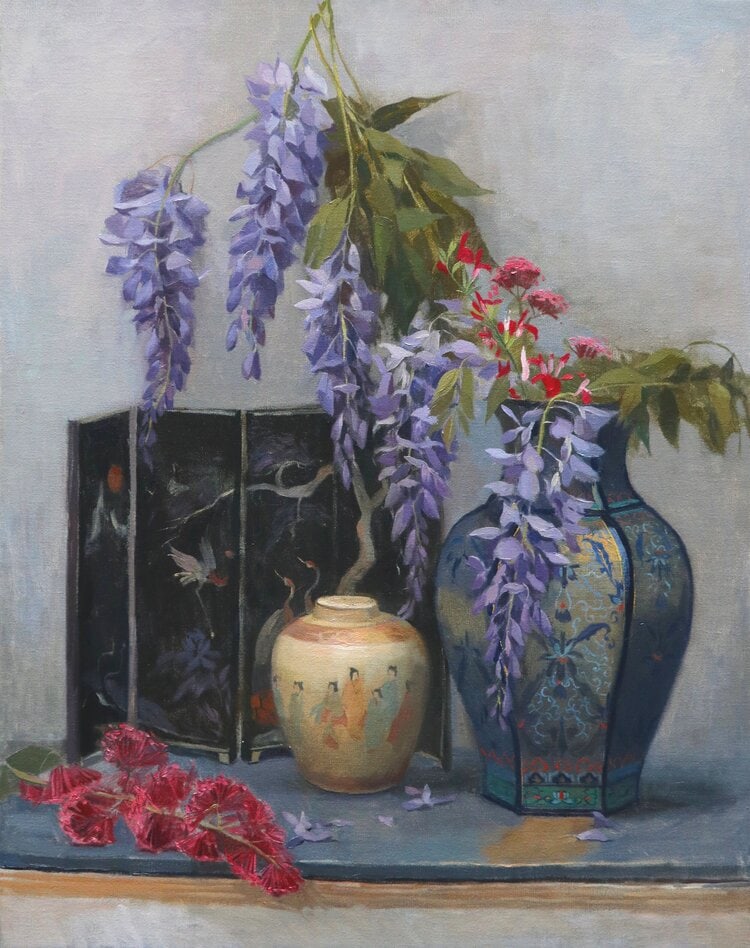
A Wisteria Dream by Tanvi Pathare
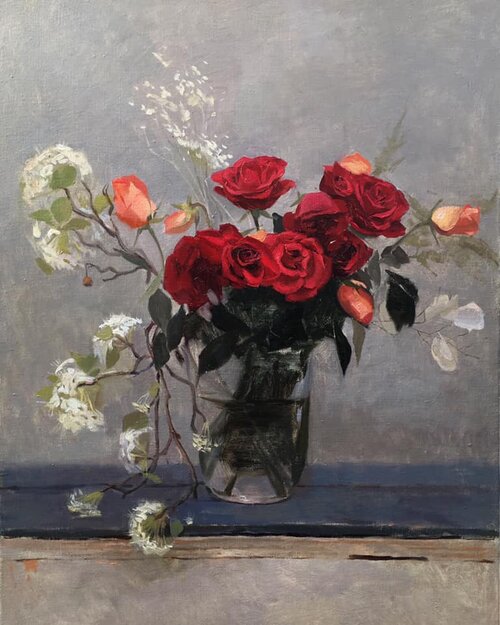
Still Life with Roses and Cherry Blossoms by Tanvi Pathare
The Flower Painting Workshop at Villa Lena ran from May 5th to May 10th, 2023. Participants stayed at the Villa Lena and participateed in many more activities in addition to flower painting.
When I read the description about what participants in Tanvi’s floral painting workshop at the Villa Lena did during their stay, I wished I could hop on a plane and attend myself.
Here’s what participants enjoyed during the floral painting workshop:
5 nights accommodation on site at Villa Lena
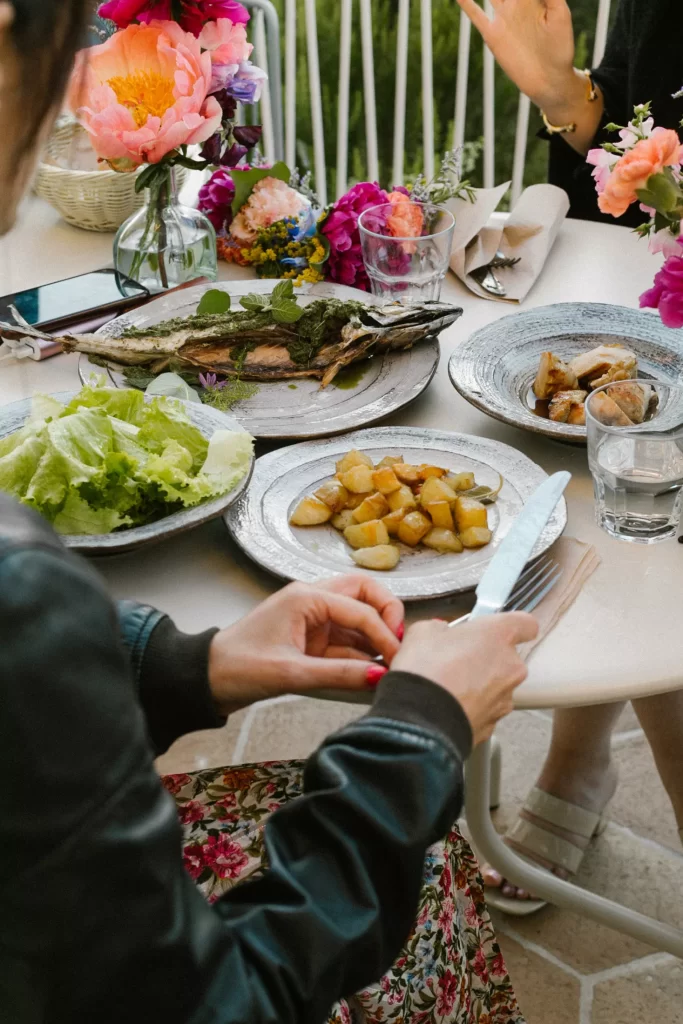
Full board – farm to table feasting.
4 master classes on painting floral compositions with Tanvi Pathare
Wine tasting
Afternoon tea & baking lesson with in-house pastry chef
Pasta cooking class
Olive oil tasting
Guided tours of the VL orto & flower farm, with flower cutting session
Daily Yoga
Access to Villa Lena facilities including 2 pools, 2 bars and beautiful common areas.
What an amazing way to spend some time in Tuscany!
Full disclosure: If you follow this link and book a stay at the Villa Lena, I earn a small commission. Thank you!
Visit Villa Lena
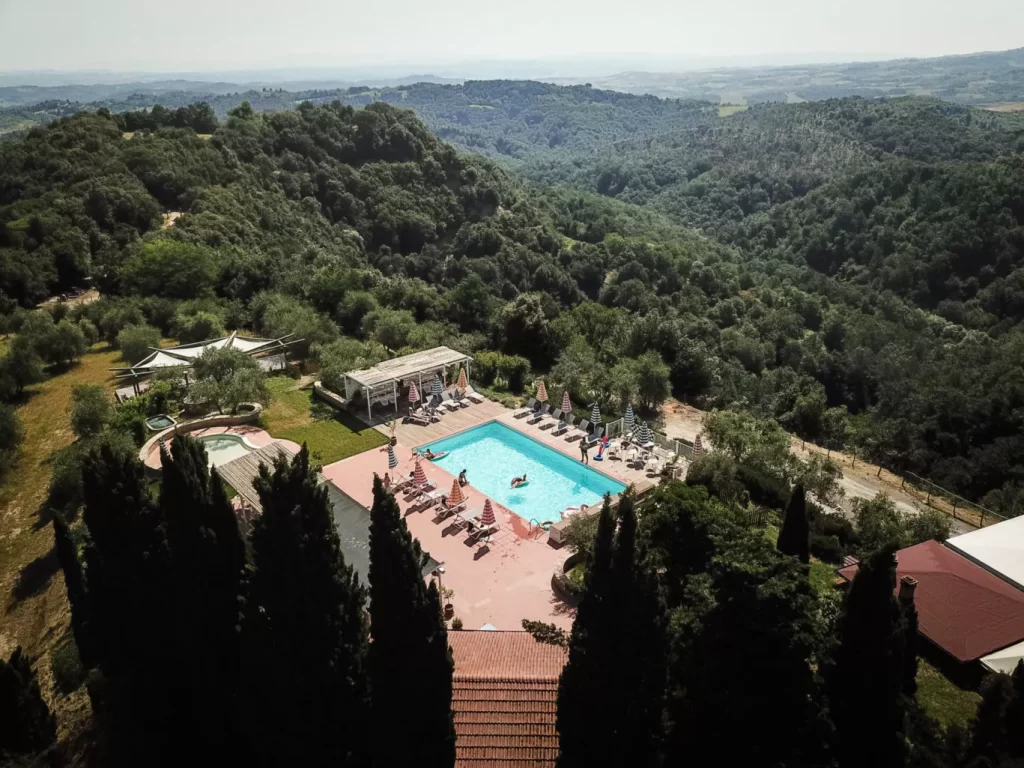
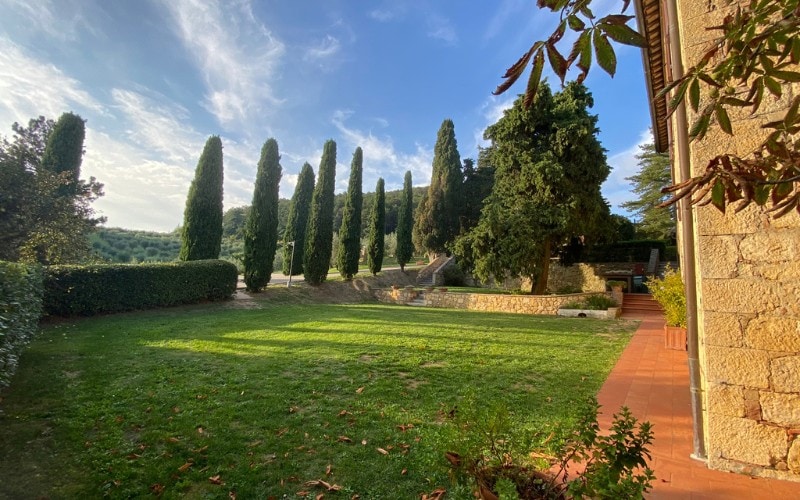
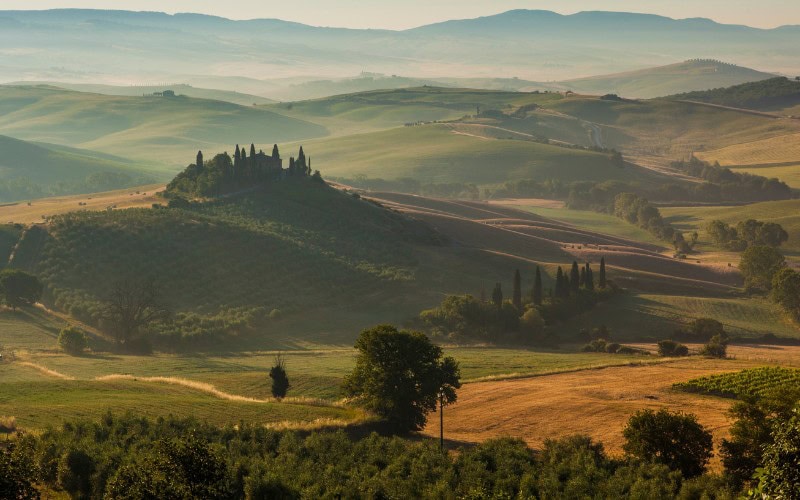
Villa Lena is located in the heart of Tuscany between Pisa and Florence. The villa hosts retreats and offers agriturismo accommodation.
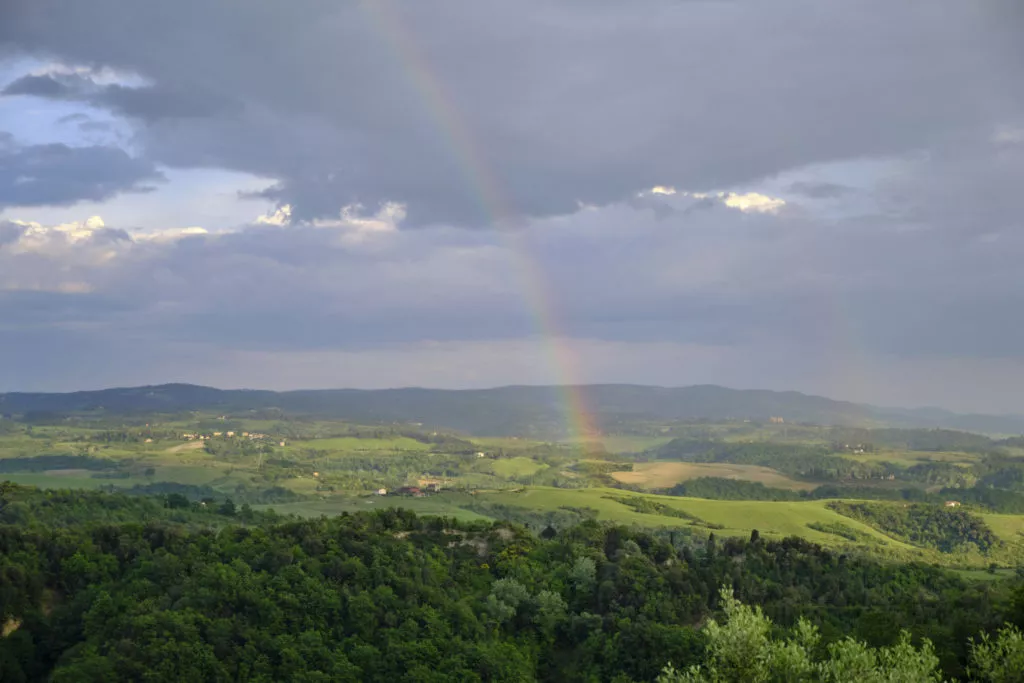
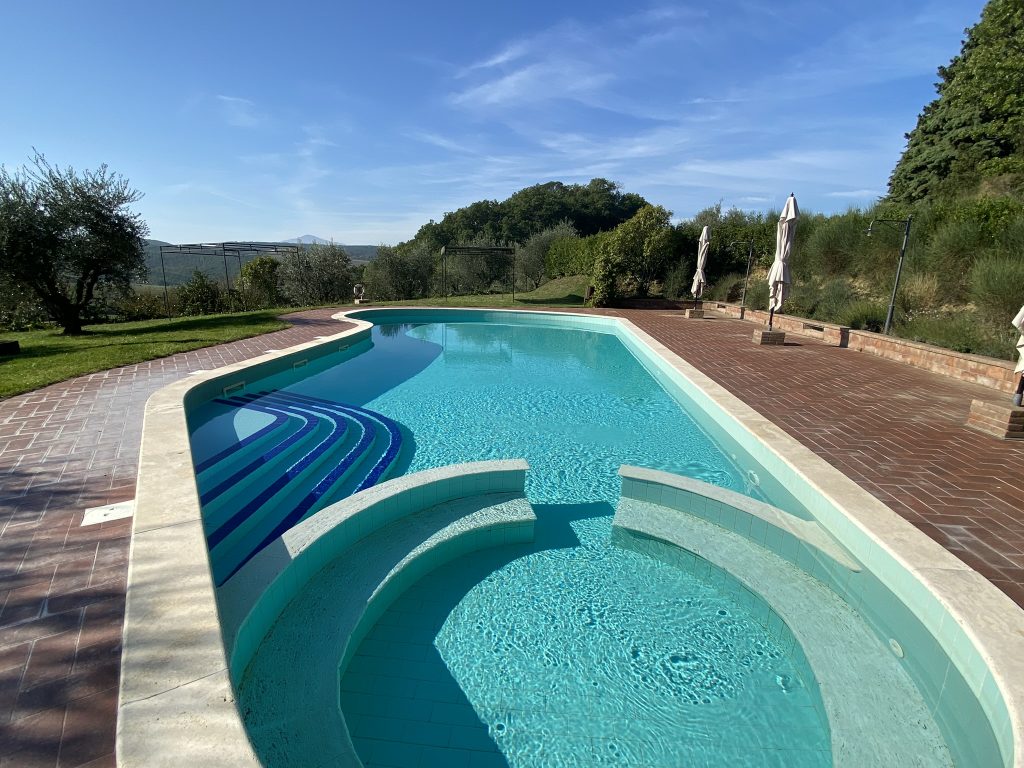
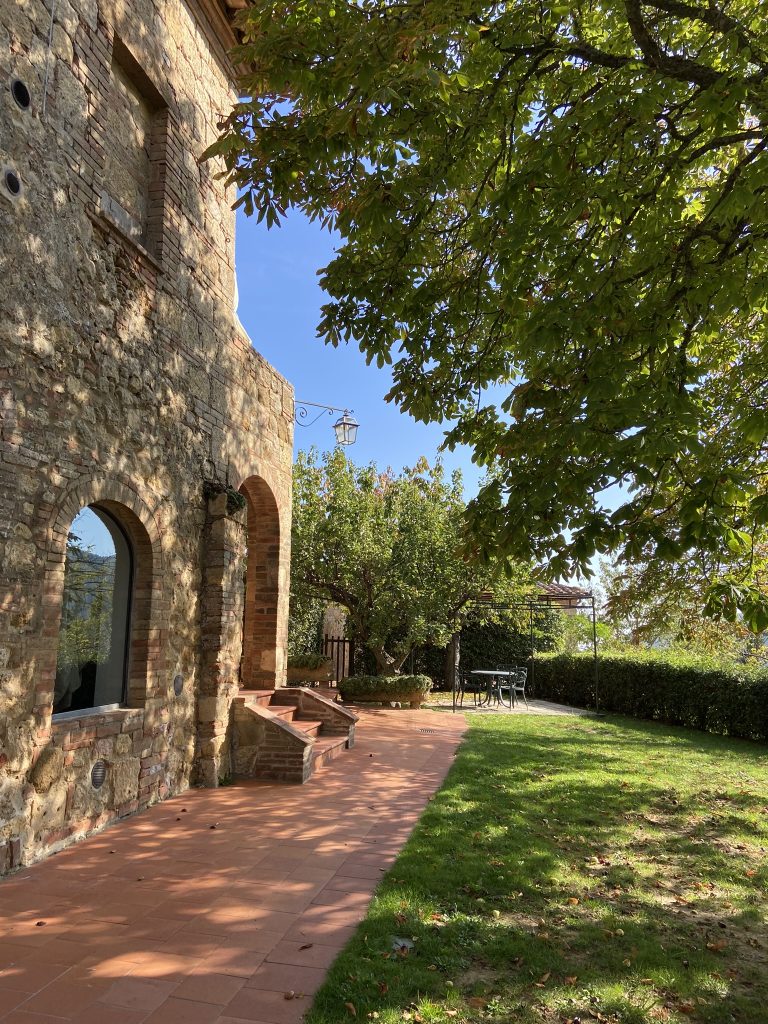
Villa Lena in TuscanyPool overlooking the Tuscany countryside at Villa Lena
Staying at the Villa Lena
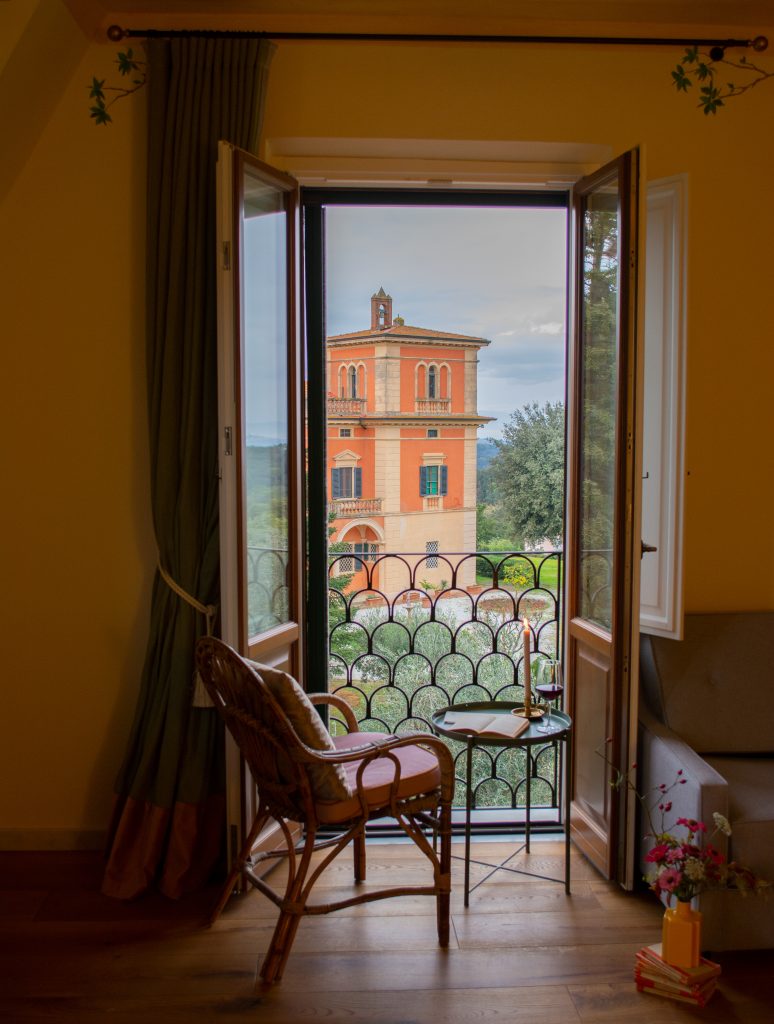
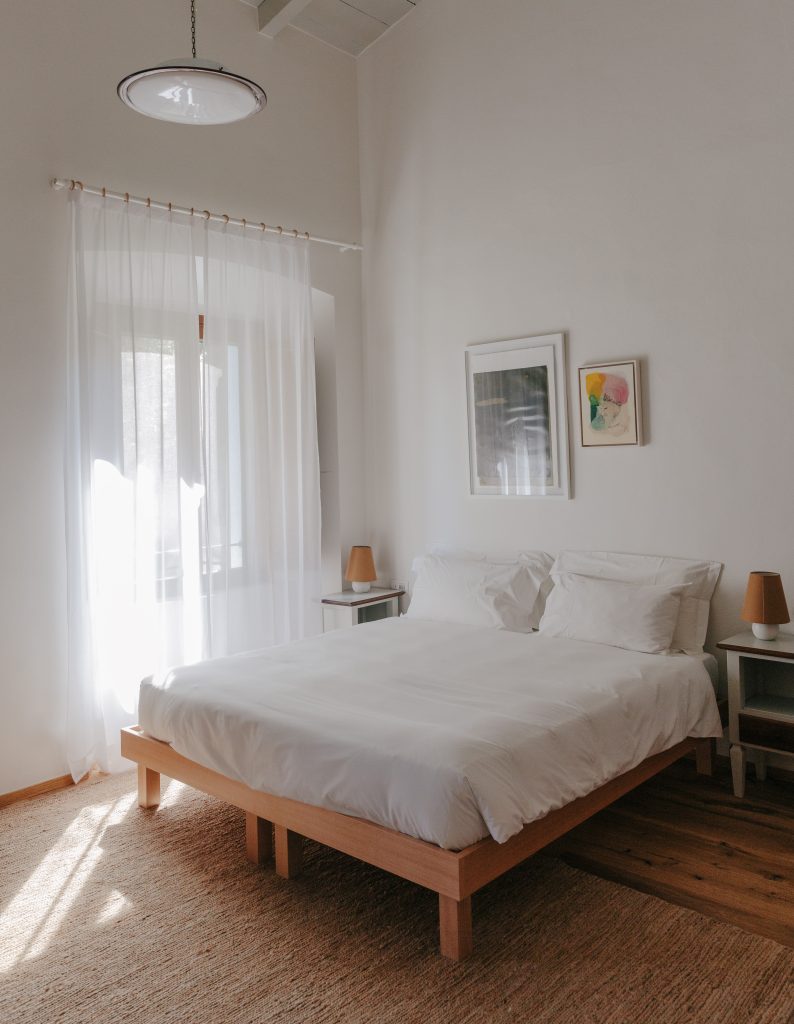
The accommodations at Villa Lena are stylish and comfortable. I’m imagining myself sitting in front of that view doing some writing. I’ve always found Tuscany an incredibly inspiring place to work and can’t wait to get back there in Fall 2023.
View from a room at Vill Lena
A bedroom at the Villa Lena
Villa Lena Foundation
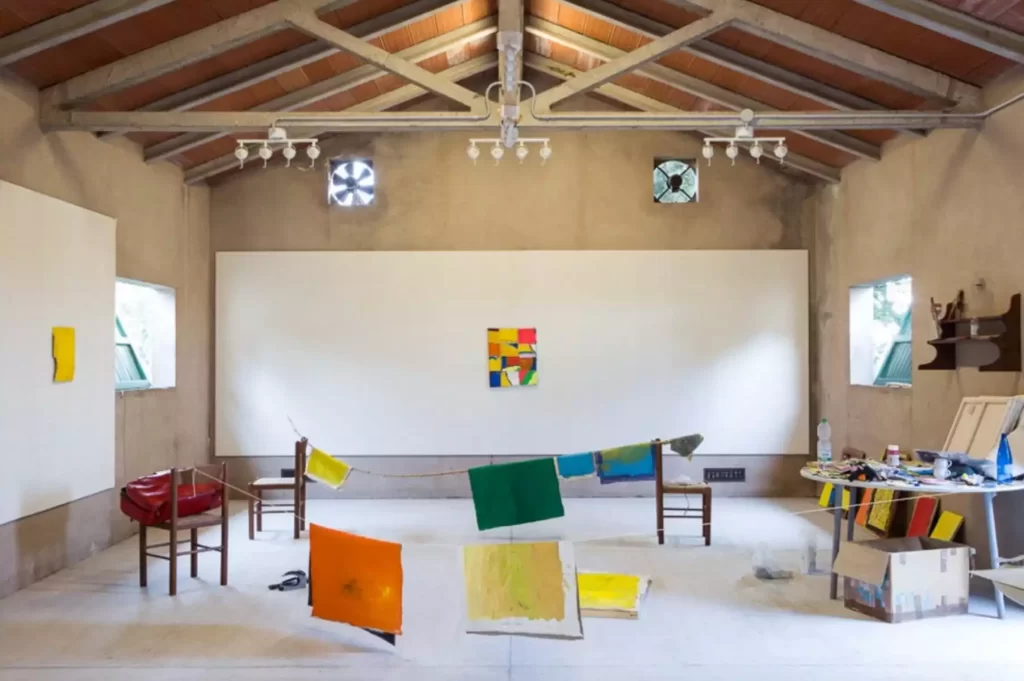
The villa is also affiliated with the Villa Lena Foundation, a not-for-profit organization dedicated to supporting international contemporary artists working in art, music, film, literature, fashion, and other creative disciplines, and fostering opportunities for multi-disciplinary dialogue. If you’re an artist, you can apply to do at residency at the Villa Lena Foundation. Applications open soon for residencies in 2024. Check the Villa Lena Foundation website for details.
Art studio at the Villa Lena Foundation
Conclusion
Are you traveling to Tuscany? Consider spending time participating in a painting workshop at the Villa Lena. You’ll come away with a renewed appreciation of the beauty of nature and a painting or two that you’ve created.
Have you ever taken an art workshop or gone on a painting retreat? Share your experience and suggestions with other Artsy Travelers in the Comments below.
Here are some more posts about artists and artsy traveling in Tuscany:
Carol M. Cram is the author of five award-winning novels inspired by art and the women who shaped it, the creator of Artsy Traveler, an arts-focused travel blog, the founder of Art In Fiction, a curated database of 2,600+ novels inspired by the arts, and the host of The Art In Fiction Podcast. She lives with her husband, artist Gregg Simpson, on beautiful Bowen Island near Vancouver, BC.
Every so often when traveling, serendipity rears its delightful head. The plans you’ve made go awry, but instead of facing disaster, you step into something even more wonderful.
That happened to us while traveling a few kilometers from the fabled town of Montepulciano in Tuscany.
Read about our day leading up to finding Sant’Antonio Country Resort or cut to the chase and scroll down to my review!
Lead-Up to Montepulciano
In Rome, we woke up to the first rainy day of our time in Italy (we’d been in the country two weeks). The clanging at the building site next door to our apartment was slightly muted, much to our relief.
After nine nights, it was time to leave the Eternal City. We were all packed and waiting at the door for our 10:30 Über. Horrendous Rome traffic delayed him over half an hour, but when he finally arrived, Roberto was cheerful and helpful.
Thirty minutes later, he dropped us at the garage where we found the same smiling attendant and our car already out of its slot and waiting for us to drive it away. What a wonderful service. Shout-out to Parclick!
Arrival in Montepulciano
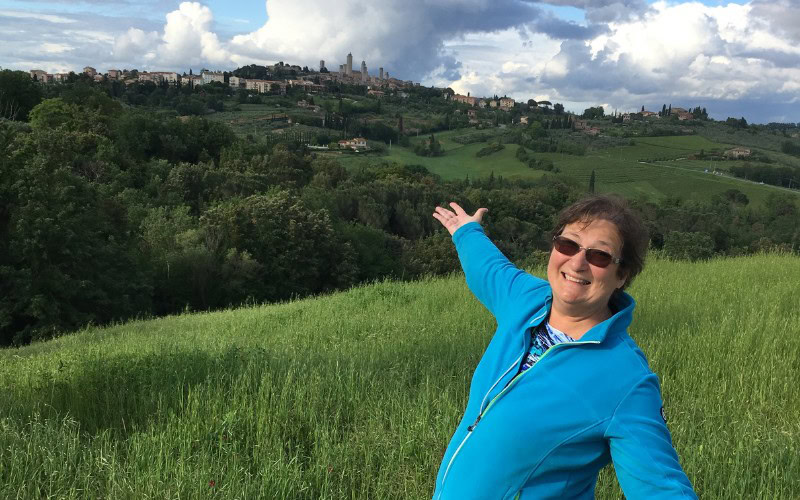
We made it out of Rome without even one wrong turn, a record for us! Soon, we were back on the Autostrade speeding north to Tuscany. Ah, Tuscany! It’s one of my favorite places in Europe which is why I set my first novel, The Towers of Tuscany, there. I’m working on two more novels set in Tuscany; perhaps on this trip I’d find more inspiration to finish them.
The beauty of the Tuscany landscape never gets old.
After a smooth two-hour drive, we pulled up in front of our hotel for two nights, a lovely albergo about five minutes outside of Montepulciano. Neither of us had ever visited Montepulciano and so decided that on this trip we’d skip our usual visits to San Gimignano and Siena and see something new. Good call!
No Room at the Inn
Except we had a few more hoops to go through before the full Tuscan experience would wash over us.
The proprietor of the hotel looked puzzled when I give him my name. He searched his list, frowned, shook his head.
No, Signora.
Oh dear. I pulled out my phone and showed him my booking on booking.com and said in a somewhat aggrieved tone, “We’ve definitely booked! See – October 13 to 15!”. A little shiver of doubt ran through me as I said this. Wasn’t today October 13?
He peered at my phone. “Ah. That’s next year, Signora.“
“Oh.“
And of course the place was full.
Plan B
We piled back into the car and started driving toward a place he suggested. Within three minutes, Google Maps notwithstanding, we were lost. We’ve found that Google Maps doesn’t always work well in the Italian countryside, or in the cities, for that matter.
Gregg pulled over and I consulted my phone to see what booking.com had to offer. Fortunately, several options popped up around Montepulciano. We wanted something outside the town in a country setting. Over the years, we’ve had our share of disasters when we’ve booked places within the medieval walls of an ancient town. If you’ve ever done so, you’ll know what I mean. And if you haven’t, trust me.
If you’re driving, never book a place inside the walls of a medieval city. Ever.
Success
After a few searches, I selected Sant’Antonio Country Resort. It ticked all the boxes: countryside, looked pretty, nice big rooms, and best of all, available. I booked it, paid for it, and entered the address in Google Maps. The suggested route took us around Montepulciano where a band of red showed traffic congestion. Another route that was supposed to be slower but seemingly more direct took us across country in a straight line.
Throwing caution to the wind, I decided to ignore Google Maps and the nice GPS lady and directed Gregg along the other route.
On Our Way Again
Soon, we were bumping along dirt roads cleaving through vine-studded fields punctuated by deep green cypresses. In the distance, a row of pale blue Tuscan mountains floated in a smoky autumnal haze.
It was the Tuscany of our dreams. And fortunately, the road, though unpaved, was not undrivable. So, at a leisurely and extremely scenic pace, we eventually arrived at a massive iron gate, the entrance to the grandly named Sant’Antonio Country Resort.
I wasn’t sure what to expect.
I pressed the intercom and a voice told us to drive in as the gates slowly opened. The owners were incredibly welcoming and friendly. They informed us that never in the history of their working with booking.com had anyone ever booked on the website on the same day they wanted to stay. Apparently, the system is designed to reject such bookings.
But for some unexplainable reason, a glitch in the system let us through. How fortuitous!
Heaven at Sant’Antonio Country Resort: My Review
Sant’Antonio Country Resort is everything we love about Tuscany. Here’s why:
Located out in the country but still within a short drive of an iconic hilltown, in this case, Montepulciano
Plenty of free parking and easy to drive to
Gorgeous self-contained units in a renovated medieval convent
Most units with terraces
A swimming pool and many outdoor areas on the grounds
Plenty of country walks and scenic drives nearby
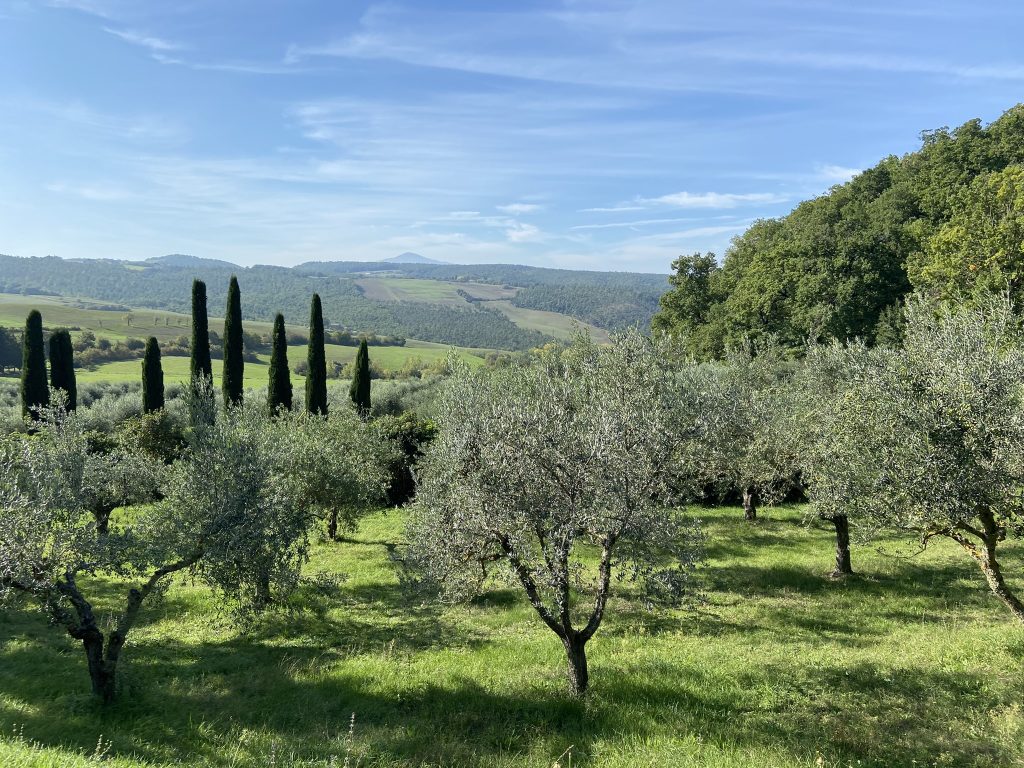
Stunning vistas of olive trees and cypresses at every turn
Excellent reviews
Friendly and accommodating owners who speak English and genuinely love sharing their little piece of heaven with their guests
And at the Sant’Antonio Country Resort, there is even a friendly fox that likes to steal shoes. We were warned not to leave our shoes outside our door because the fox would take them. What the fox does with the shoes is a mystery, but we agreed not to find out.
Our Accommodation at Sant’Antonio Country Resort
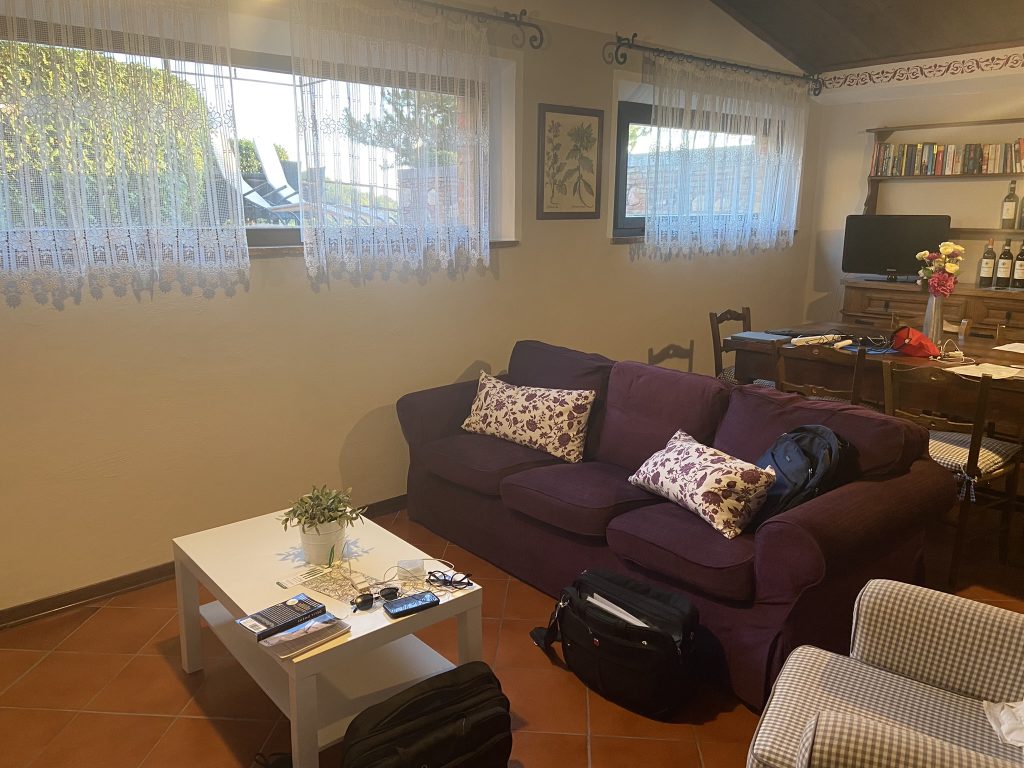
The owners very kindly upgraded us to a two-bedroom apartment complete with very comfortable living room, a big dining room, a large bed in the master bedroom, a second smaller bedroom where we stashed the luggage, and two bathrooms.
Oh, and two terraces.
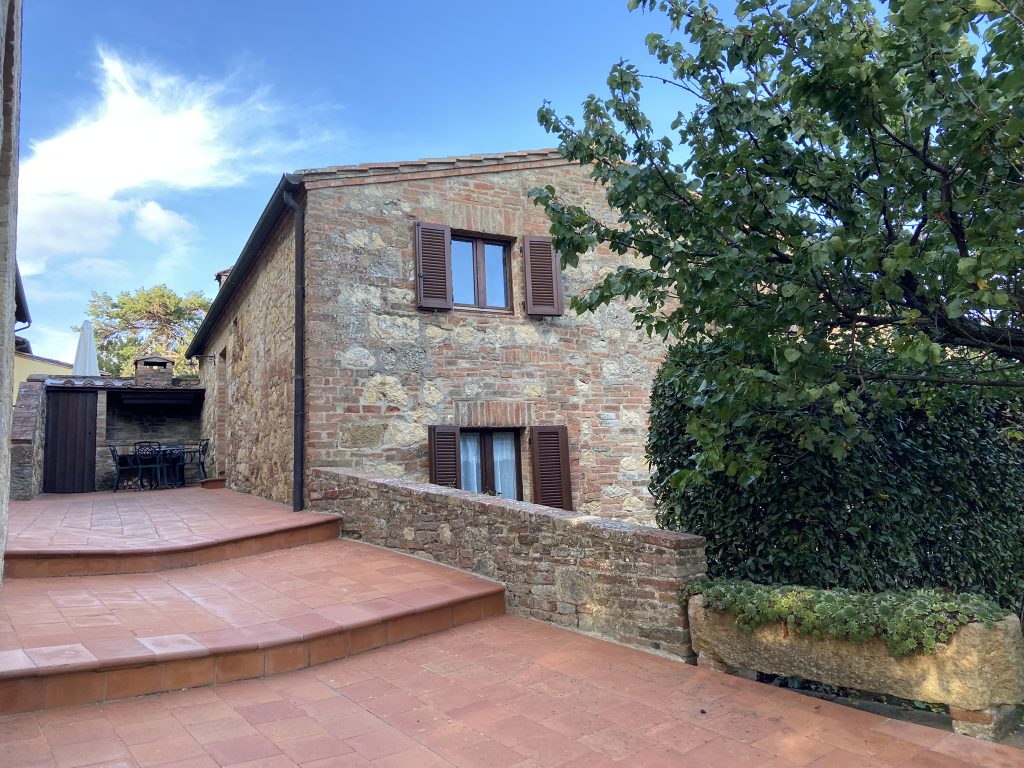
Here are a few photographs of the place.
Our two-bedroom apartment is on the ground floor.
Comfortable living room and dining area
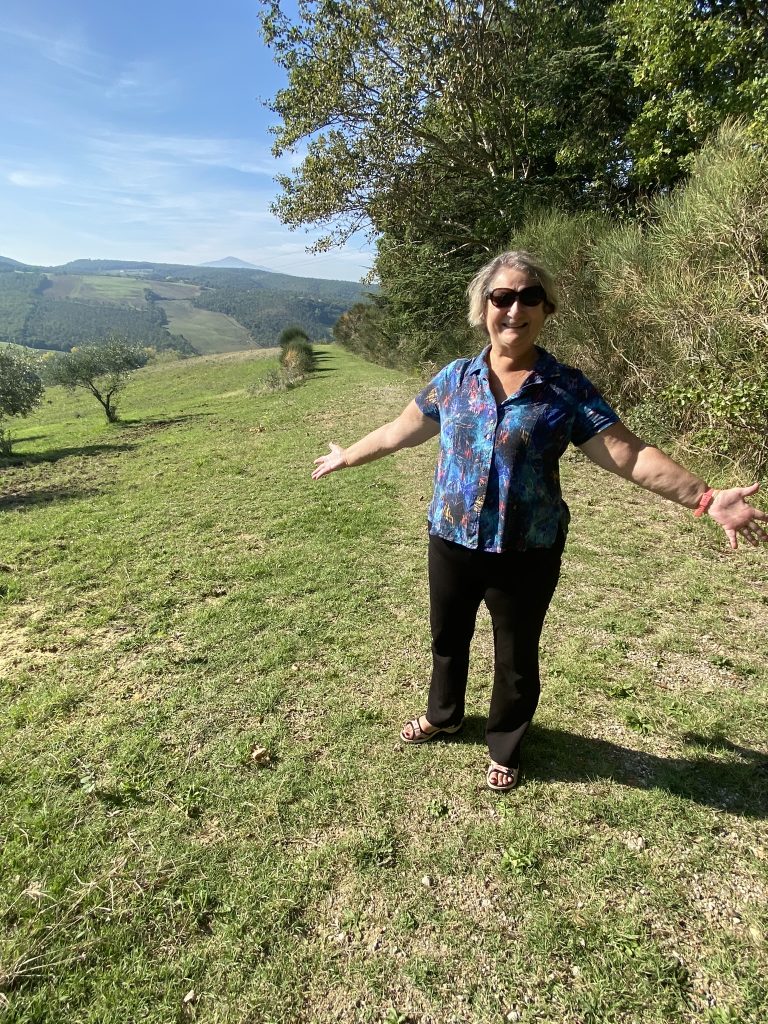
On a walk on the grounds of the resort
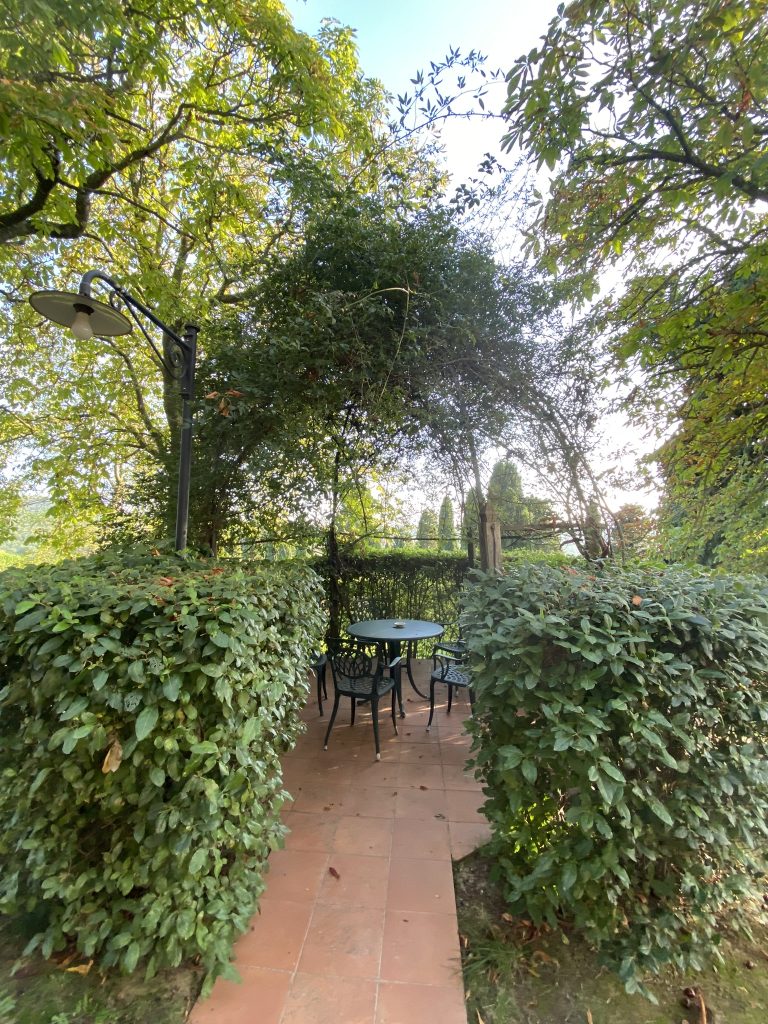
Beautiful spots for relaxing all over the property
Memorable Dinners in Montepulciano
After a few hours reveling in our good luck, we left around 5 pm for a drive up to Montepulciano which we discovered is a lovely, calm town, much less frenetic than other Tuscan towns such as San Gimignano.
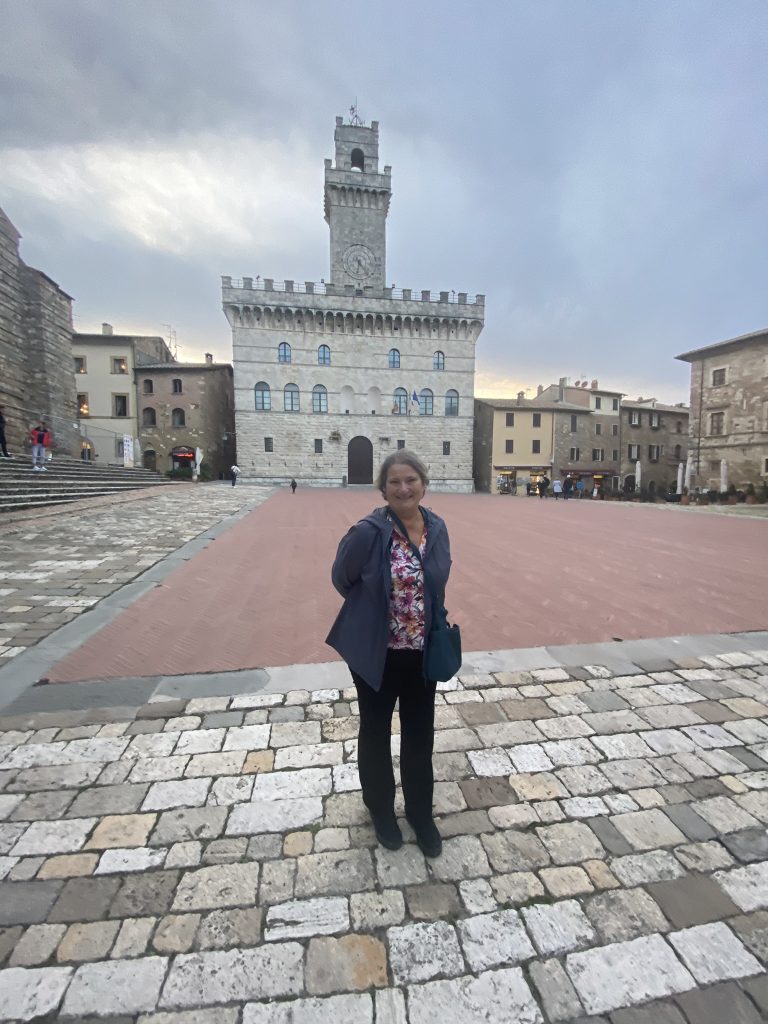
The deal here is food and wine—lots of wine, particularly the vino nobile of Montepulciano. We stopped at a little bar and I sampled my first glass while Gregg had a cappuccino. With about an hour to kill before our dinner reservation (kindly made by our hosts at Sant’Antonio Country Resort), we climbed the cobbled streets to reach the piazza. It was nearly empty in the early evening. I imagine that during the day, the place is mobbed.
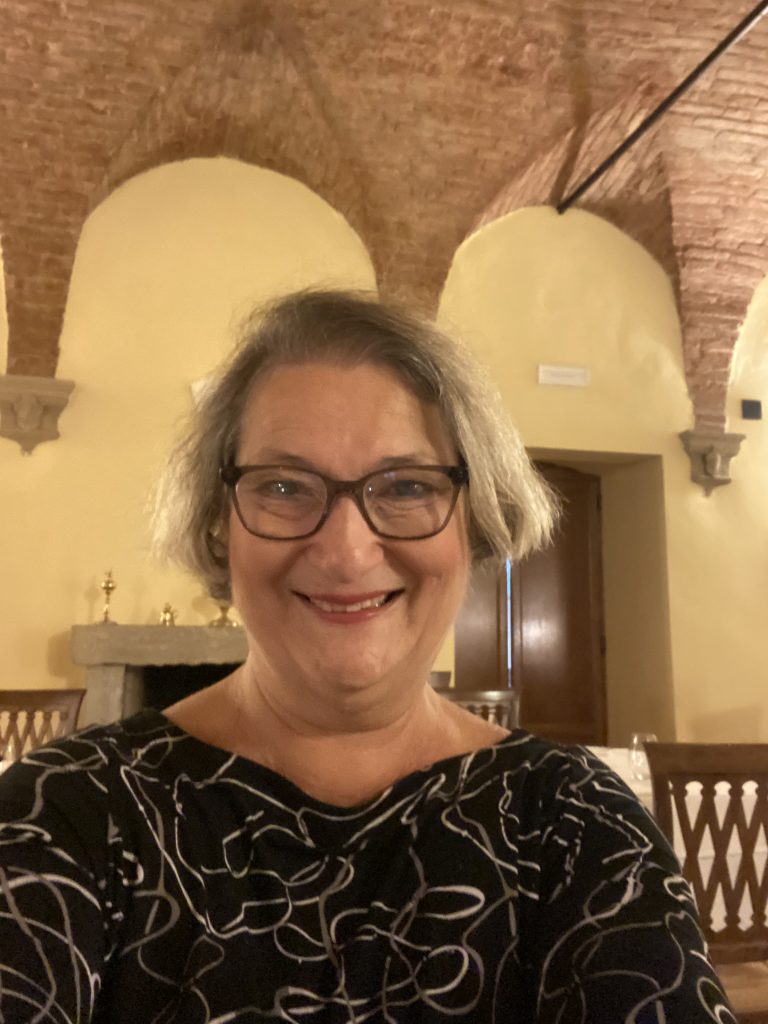
Carol in the Grande Piazza in Montepulciano
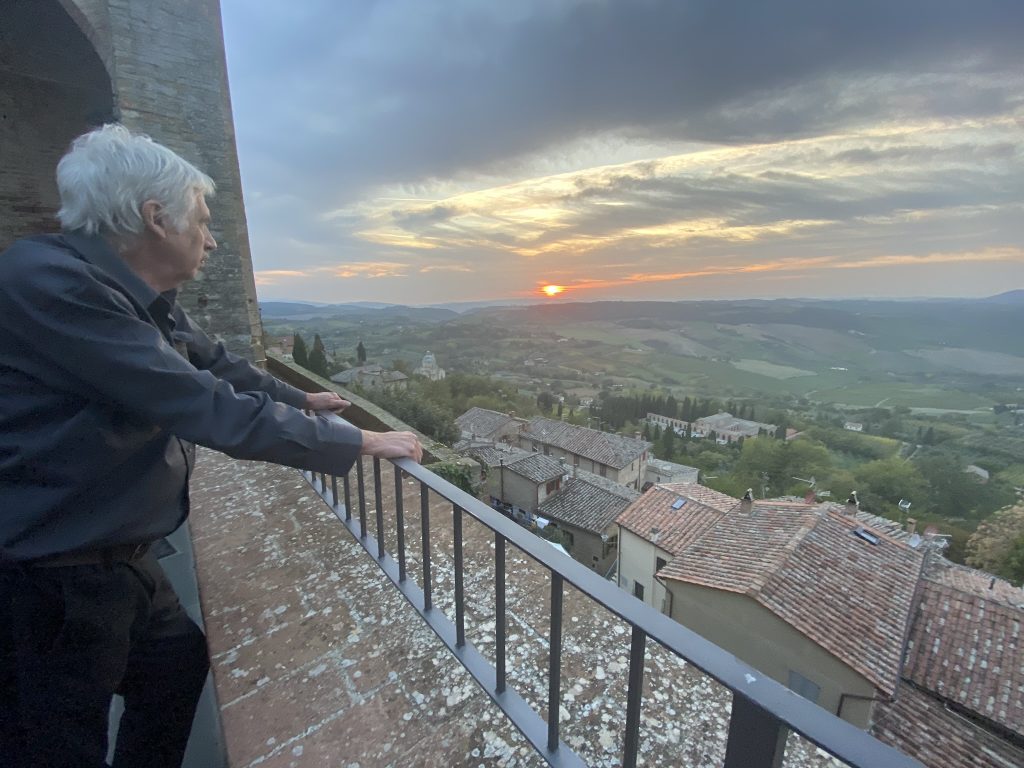
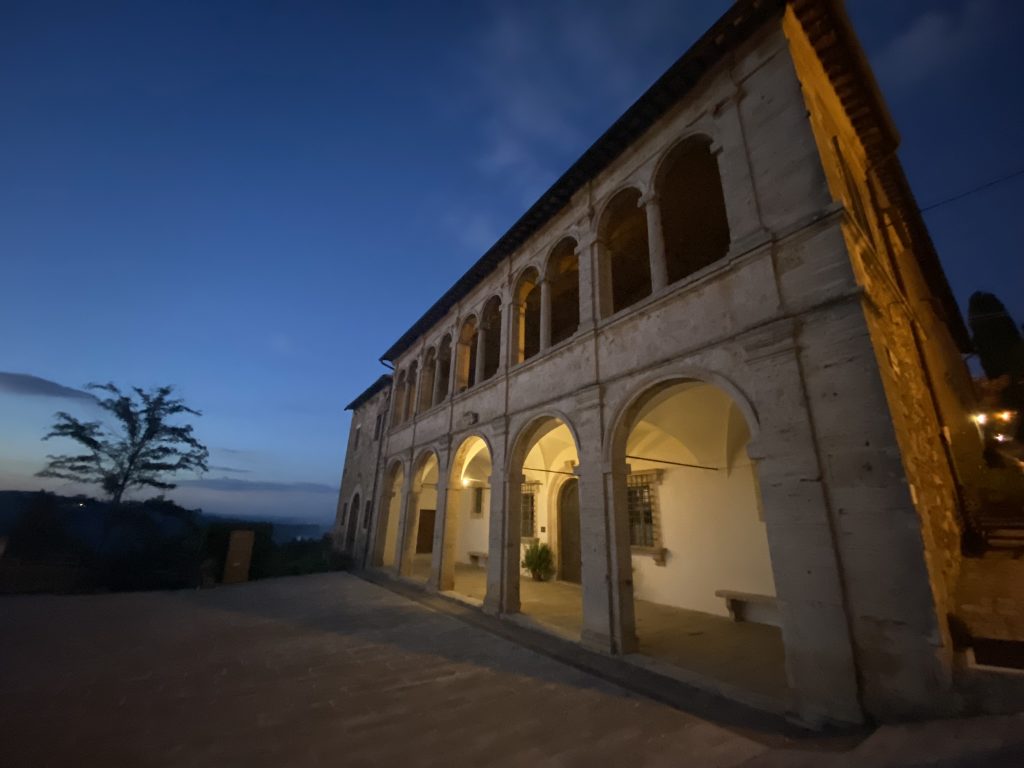
Sunset over Tuscany from MontepulcianoDarkness falls over Montepulciano
Dinner at Porta di Bacco was served in an ancient room replete with a column (is it Roman?) and brick arches. The wine and food were predictably excellent. I ordered gnocchi with a duck ragout—hearty and tasty. The food here is different from Rome, more country-style and a nice change from the usual fare offered in Roman trattorias, which can get rather repetitive.
After a moonlit stroll back to the car, we faced the challenging drive in the dark back to Sant’Antonio Country Resort. A drive that in daylight is quick and easy took on a different tenor at night. We made a few wrong turns but eventually got back on track and were soon pulling into our temporary home.
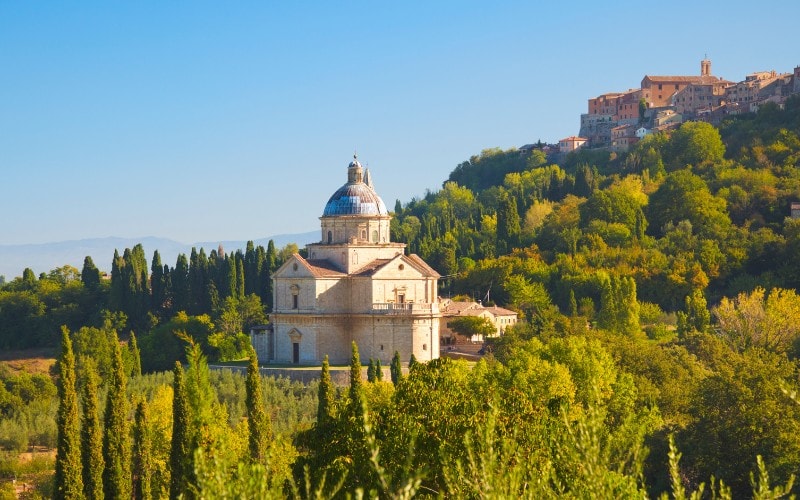
The next night we dined at Ristorante La Grotta, outside the city walls. Located in a 16th-century building, the restaurant was directly opposite the Church of San Biagio, a noted example of Tuscan Renaissance architecture.
Getting settled at the Ristorante La Grotta
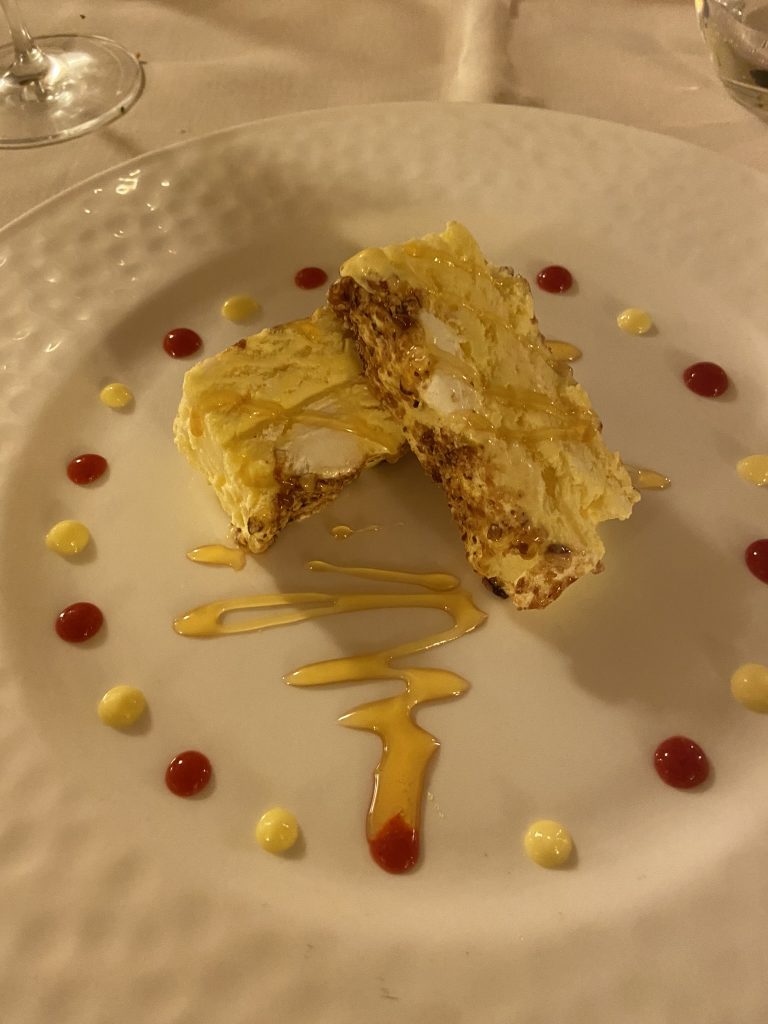
My dessert
Church of San Biagio with Montepulciano perched on the hill above
I highly recommend Ristorante La Grotta for a Tuscan splurge. The service was impeccable and the food excellent. It was the most expensive meal we had in nine weeks, but at 110 euros for three gourmet courses and excellent wine, it was an amazing bargain!
Enjoying Sant’Antonio Country Resort
While at Sant’Antonio Country Resort, we met some fellow Canadians who shared that they’d visited before, and loved returning. I can’t say I blame them!
We spent our “day off” from traveling by taking walks around the property (it stretches for several hectares), enjoying a drive along small country roads in the area, and generally chilling out. We even saw the fox!
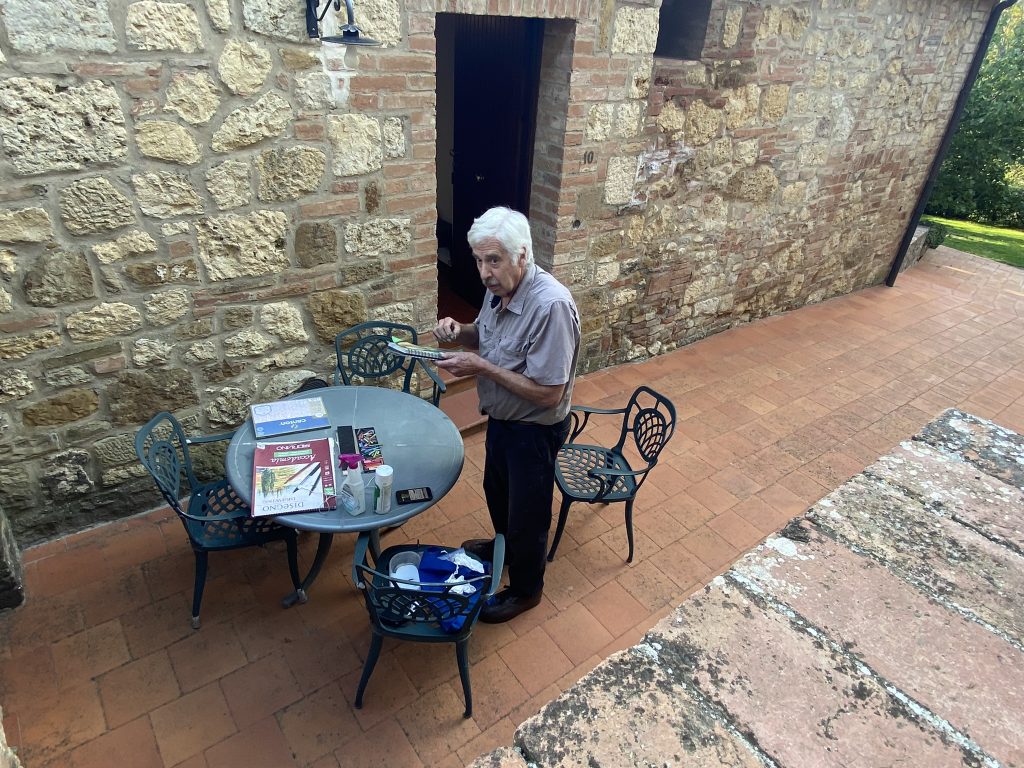
Gregg working on one of our two terraces
Swimming pool (too cold in October!)
Walkway to our suite
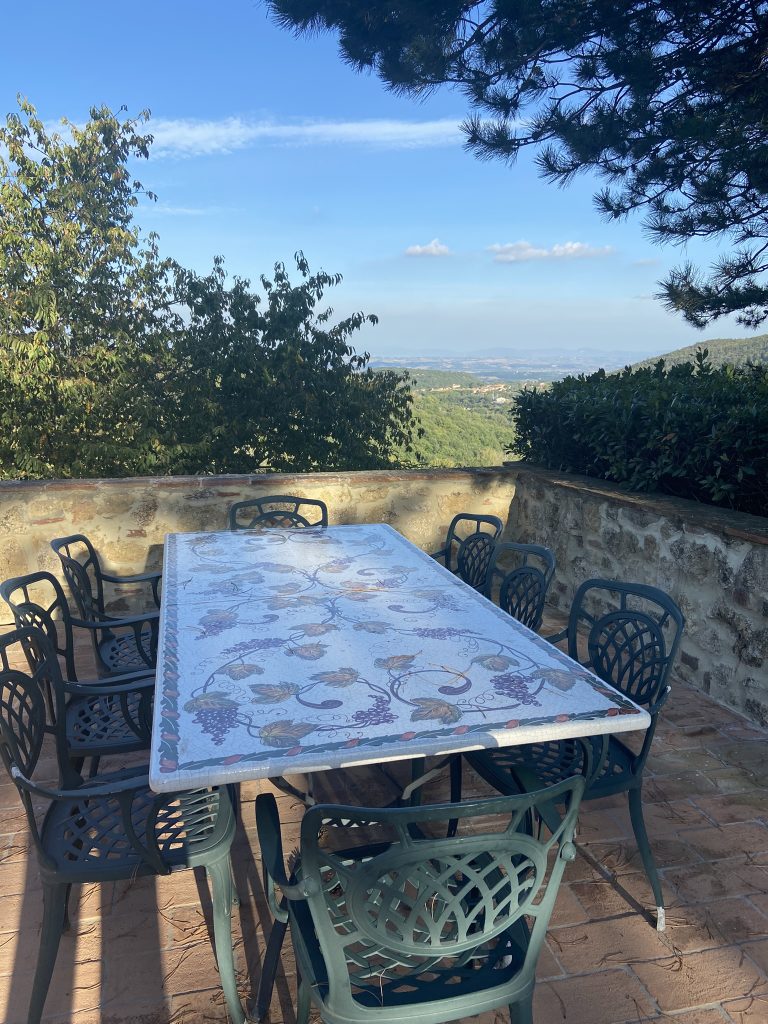
An outdoor dining area for guests
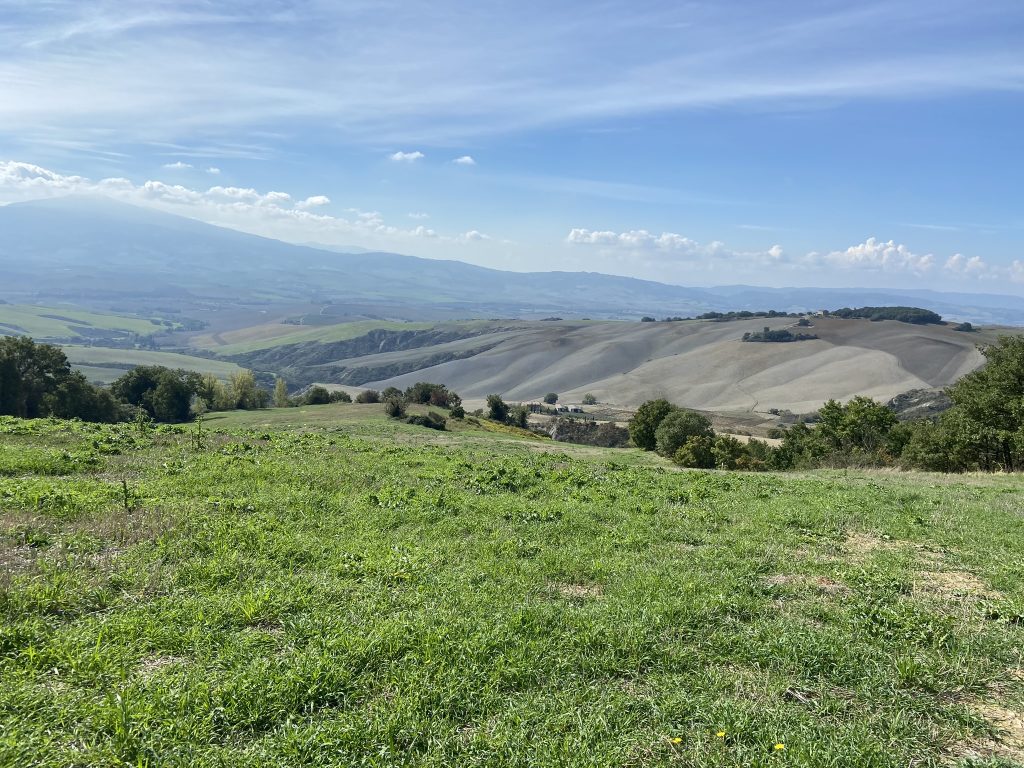
Beautiful vista of Tuscan countryside near Sant’Antonio Country Resort
Should You Visit Sant’Antonio Country Resort?
If you’re looking for a Tuscan retreat that offers excellent value for money, is set in a glorious landscape, and owned by very helpful and friendly hosts, then I can’t recommend Sant’Antonio Country Resort highly enough.
For other places in and around Montepulciano, click the map below.
Many years ago, I took a wine tour of Tuscany that included a visit to a vineyard near Montepulciano. If you have a day to spare while visiting Tuscany, consider booking a wine tour. Here are a few suggestions.
Keep Reading About Travel in Tuscany with Artsy Traveler
Over the past three decades, I’ve visited Tuscany at least a dozen times, and every time I discover new wonders to enjoy and fabulous places to stay. For more suggestions about Tuscany, check out these posts:
Do you have a favorite place to stay in Tuscany? Let us know in the Comments below.
About Carol Cram
Carol M. Cram is the author of five award-winning novels inspired by art and the women who shaped it, the creator of Artsy Traveler, an arts-focused travel blog, the founder of Art In Fiction, a curated database of 2,600+ novels inspired by the arts, and the host of The Art In Fiction Podcast. She lives with her husband, artist Gregg Simpson, on beautiful Bowen Island near Vancouver, BC.
Rolling hills, cypress trees like darkly mysterious question marks, Brunello wine that will knock your sandals off, Brunelleschi’s dome glowing in the late afternoon light.
Tuscany has it all.
My favorite city? Siena. I’d live there if I could (and have set two novels there).
So yes, Tuscany is amazing, but Umbria, just over the border to the east, is where things get interesting for the artsy traveler who has done Florence and wants something a little less curated.
You’ll find fewer crowds, quieter towns, and spectacular art in places like Perugia, Assisi, and Orvieto.
Together, these two regions contain more masterpieces of painting, sculpture, and architecture than most countries.
This itinerary is designed for independent travelers who want to go at their own pace, which in Tuscany and Umbria should always be a slow one. Savor the museum visits, linger over lunch, and let the history seep into your bones.
The map of Tuscany and Umbria includes all the destinations mentioned in this post. Click a number to read more about the location.
Trip map created with Wanderlog, the best trip planner app on iOS and Android
Suggested Itineraries for Exploring Tuscany and Umbria
Explore both Tuscany and Umbria by car or home-base in one or more of the towns and take day tours to others.
For Tuscany, one strategy is to spend three nights in Florence (see my suggestions below for enjoying this most Renaissance of cities), three nights in Siena, and one or two nights in San Gimignano. During those seven days in the Tuscan countryside, be sure to take a wine tour.
For Umbria, divide your time between the three main towns: Orvieto, Perugia, and Assisi, and reserve time for enjoying the rugged countryside.
If you want to explore Tuscany and Umbria by car, pick up your rental car at the Florence airport. Avoid picking your car up at the train station or some other area in central Florence. You don’t need the headache of navigating your way out of the city. Also, if you drive into a ZTL (Traffic Limited Zone) in Florence, you will get ticketed and fined.
After picking up your car at the Florence airport, you’ll be out on the highway within minutes.
TIP: Bear in mind that driving in Tuscany and Umbria can be slow going. If you home-base in a specific area or town, reserve a few days for just staying put and enjoying la dolce vita. Spending every day driving the twisting, narrow roads gets tiring.
Prefer not to drive? Daytrip offers private transfers between the major Tuscan cities with fixed pricing and no meter watching. Getting from Florence to Siena or from Siena to Perugia as you cross into Umbria is straightforward to book in advance, and you can ask your driver to stop at a vineyard or hilltop village along the way
Here are my recommendations for top towns to visit in Tuscany and Umbria.
Tuscany
If you have only a week to see Tuscany, make time for Florence and two of the other towns, such as Siena (my favorite) and San Gimignano, with perhaps a day trip to Montalcino or Volterra.
You kinda have to visit Florence (#1 on the map) because it’s, well, Florence. A sizable percentage of Italy’s finest art is found in Florence, and you owe it to yourself to see it.
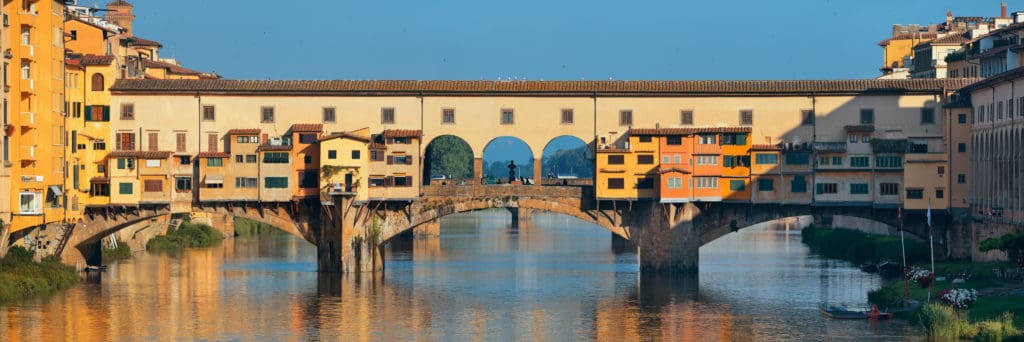
Unfortunately, half of the known universe descends on Florence every day (or at least that’s how it feels). I remember wondering if the medieval Ponte Vecchio was strong enough to bear the throngs streaming across it.
Ponte Vecchio in Florence
To beat the mid-day crowds, opt for lesser known but still amazing sites, such as the Masaccio frescoes in the Brancacci Chapel across the river from central Florence, the medieval Palazzo Davanzatti, and the Museo Nazionale di San Marco which houses the frescoes by Fra Angelico.
Florence Highlights
• Uffizi Gallery – Botticelli’s Birth of Venus and an unmatched collection of Renaissance masterworks
• Accademia – Home to Michelangelo’s monumental David
• Duomo & Dome Climb – Brunelleschi’s soaring dome with unforgettable city views
• Ponte Vecchio – Florence’s medieval goldsmiths’ bridge glowing at sunset
• Piazza della Signoria – An open-air gallery of sculptures in the city’s civic heart
• Palazzo Davanzati – A beautifully preserved medieval townhouse offering an intimate glimpse into medieval Florentine life
• Brancacci Chapel – Masaccio’s groundbreaking frescoes that transformed Renaissance painting
• Museo Nazionale di San Marco – Ethereal frescoes by Fra Angelico in a serene monastic setting
Staying in Florence
My favorite place to stay in Florence is Serristori Palace Residence. Although on the pricey side, the residence is excellent value because of the size of the one-bedroom apartment, its high ceilings, panoramic view of the river, and excellent location about a ten-minute walk from the action.
Tours in Florence
Here are sightseeing suggestions for Florence. Make sure you purchase tickets ahead of time for the Uffizi and the Accademia.
Spend at least two nights, preferably more, in Siena (#2). Siena is my favorite city in Tuscany, with enough great artsy sightseeing to keep you as busy as you want to be. You’ll also have time to just hang out in Siena. Walk the narrow, cobbled streets, relax in the Campo, and eat a great meal or two complemented by good Tuscan wine.
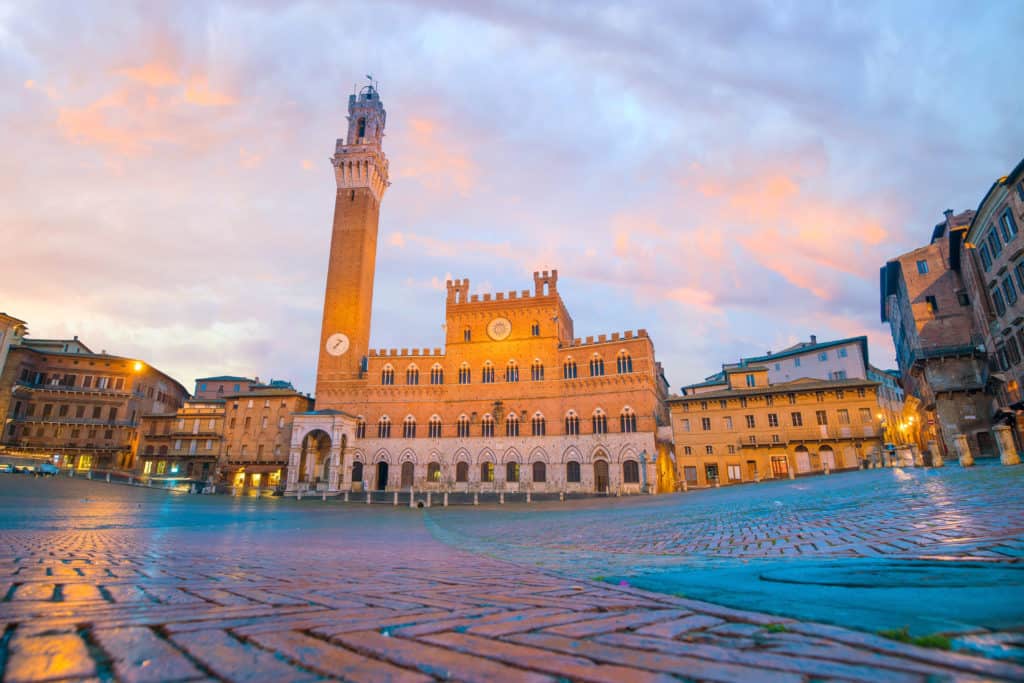
When you arrive in Siena, head first to the Campo. If the weather is dry, plop down on the 700-year-old bricks and soak up the history.
Siena Highlights
• Siena Cathedral (Duomo) – A Gothic masterpiece with striped marble, intricate pulpits, and a stunning floor
• Piccolomini Library – Brilliant Renaissance frescoes by Pinturicchio celebrating the life of Pope Pius II
• Palazzo Pubblico – Siena’s medieval town hall overlooking the Campo, home to landmark civic frescoes
• Lorenzetti’s “Good and Bad Government” Frescoes – One of the most important political fresco cycles of the Middle Ages
• Piazza del Campo – The fan-shaped heart of Siena and one of Italy’s most beautiful public squares
• Torre del Mangia – A slender 14th-century tower offering sweeping views across Siena and the Tuscan hills
• Santa Maria della Scala – A former hospital turned museum complex with frescoes, archaeological finds, and sacred art
The Campo gets very crowded during the day. Arrive later in the afternoon, enjoy a glass of wine at one of the cafés bordering the piazza, and watch the crowds disperse as the sun turns the Torre Mangia golden. Your glass of wine will be overpriced, but who cares? You’ll have a ringside seat to one of Europe’s most beautiful public piazzas.
Allocate one of your days in Tuscany to taking a wine tour of the region. Choose a tour that includes Montalcino, home of the scrumptious (and potent) Brunello di Montalcino.
The tour I took included a marvelous three-course lunch and visits to three wineries that also featured tastings.
Let your guide do the driving! Here’s some excellent options with Winedering:
Staying in Siena
I recommend the I Merli di Ada which is in a quiet area of Siena, a short walk from the Campo.
Yes, it’s crowded during the day with tour busses, but once they leave, you’ll have beautiful San Gimignano (#3), medieval city of towers, all to yourself. Enjoy top-class restaurants and stroll flood-lit streets. Little has changed, apart from the souvenir shops, in 700 years.
San Gimignano Highlights
• Collegiata (Duomo) – Vivid medieval fresco cycles depicting Old and New Testament scenes in a beautifully preserved Romanesque setting
• Chapel of Santa Fina – Ghirlandaio’s luminous frescoes honoring San Gimignano’s beloved saint
• Sant’Agostino – Benozzo Gozzoli’s elegant frescoes illustrating the Life of St. Augustine
• Historic Towers – Fourteen surviving medieval towers that shape the town’s dramatic skyline
• Piazza della Cisterna – A picturesque triangular square framed by stone palaces and towers
• Palazzo del Popolo & Civic Museum – Medieval art, local history, and access to the Torre Grossa for sweeping views
• Torre Grossa – The tallest tower in town, offering panoramic vistas across Tuscan vineyards and rolling hills
• San Gimignano 1300 – A detailed ceramic reconstruction of the town as it appeared in the year 1300, offering a fascinating window into its medieval past
And if you’re looking for something to read while staying in San Gimignano, consider downloading The Towers of Tuscany, my award-winning novel about a female artist in San Gimignano and Siena in the 1300s.
Staying in San Gimignano
Stay overnight in San Gimignano so you can enjoy this magical city without the crowds. If you’re driving, good options are the Hotel Pescille and the Cappuccina Country Resort, both located outside the city.
Tours to San Gimignano
If you don’t have a car and/or time to stay overnight in San Gimignano, consider taking a day tour from Florence or Siena. Here are some options, some of which include other towns in the area.
Fans of the Medici series on Netflix will recognize the town hall in Volterra (#4) as the stand-in for Florence’s Palazzo Vecchio.
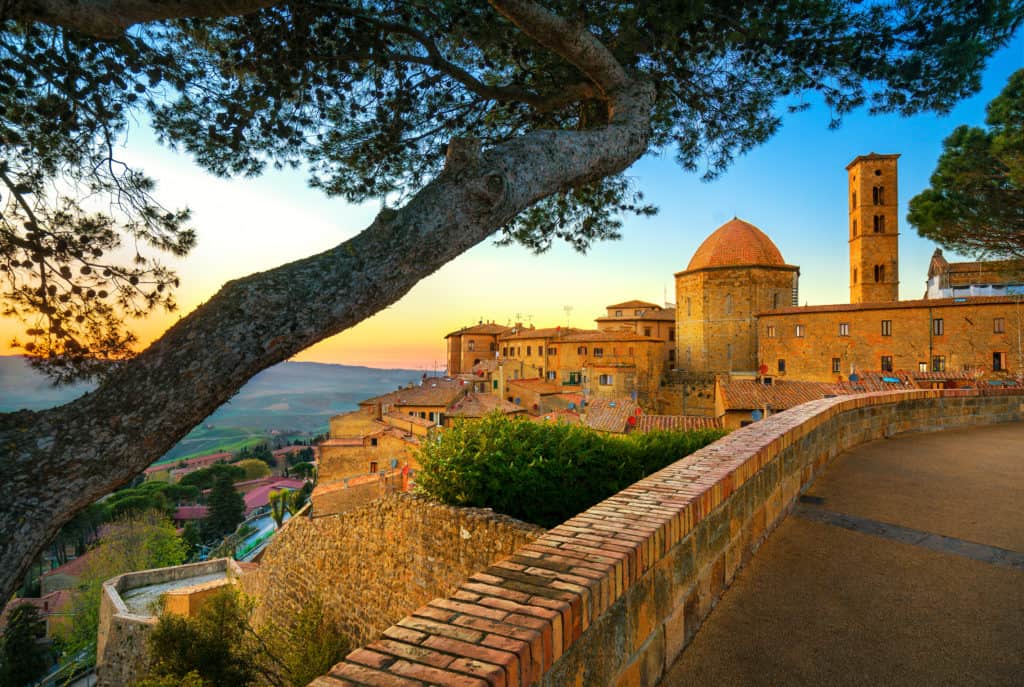
Volterra, known as the City of Alabaster, is considerably less crowded than its neighbor, San Gimignano, and has just as much (maybe more) to offer the artsy traveler.
Volterra Highlights
• Roman Theater – A beautifully preserved 1st-century BCE theater revealing Volterra’s ancient Roman roots
• Guarnacci Etruscan Museum – One of Italy’s oldest museums, with extraordinary Etruscan urns, bronzes, and funerary sculptures
• Palazzo dei Priori – Tuscany’s oldest town hall, with medieval frescoes and a tower offering views over the rooftops
• Volterra Cathedral & Baptistery – A serene Romanesque interior with Renaissance additions and a striking octagonal baptistery
• Etruscan Gate (Porta all’Arco) – A monumental 4th-century BCE gateway still bearing its original stone heads
• Alabaster Workshops – Traditional craft studios where artisans carve Volterra’s famous translucent alabaster
• Medici Fortress – A dramatic hilltop stronghold dominating the skyline (viewable from outside only)
Scenic Volterra in Tuscany
If you’re interested in the Etruscans, then Volterra is a must-see.
Staying in Volterra
Settle into a country place near Volterra and take a break from sightseeing. Agriturismo properties such as Agriturismo Pampilla are perfect places to while away a hot summer afternoon in Tuscany.
Tours in Volterra
You can find tours that take you around local wineries or teach you Tuscan cooking techniques. How about truffle hunting? That sounds very cool!
The walled city of Lucca (#5) is a charming place to spend half a day. Walk along the top of the walls, visit Lucca Cathedral (Lucca is known as the city of a hundred churches so there’s more than enough to choose from), and breathe in the medieval atmosphere.
Lucca Highlights
• Renaissance Walls – Wide, tree-lined ramparts encircling the city—perfect for walking or biking with panoramic views
• Duomo di San Martino – A graceful Romanesque cathedral with the exquisite Tomb of Ilaria del Carretto by Jacopo della Quercia
• San Michele in Foro – A dazzling marble façade rising above the site of Lucca’s ancient Roman forum
• Guinigi Tower – A medieval tower crowned with oak trees and sweeping views over Lucca’s red rooftops
• Piazza dell’Anfiteatro – An oval piazza built atop the remains of the Roman amphitheater, now ringed with cafés and shops
• Torre delle Ore – The city’s tallest tower, offering a classic climb and historic clock mechanism.
• Puccini Sites – Birthplace of composer Giacomo Puccini, with a dedicated museum celebrating his life and work
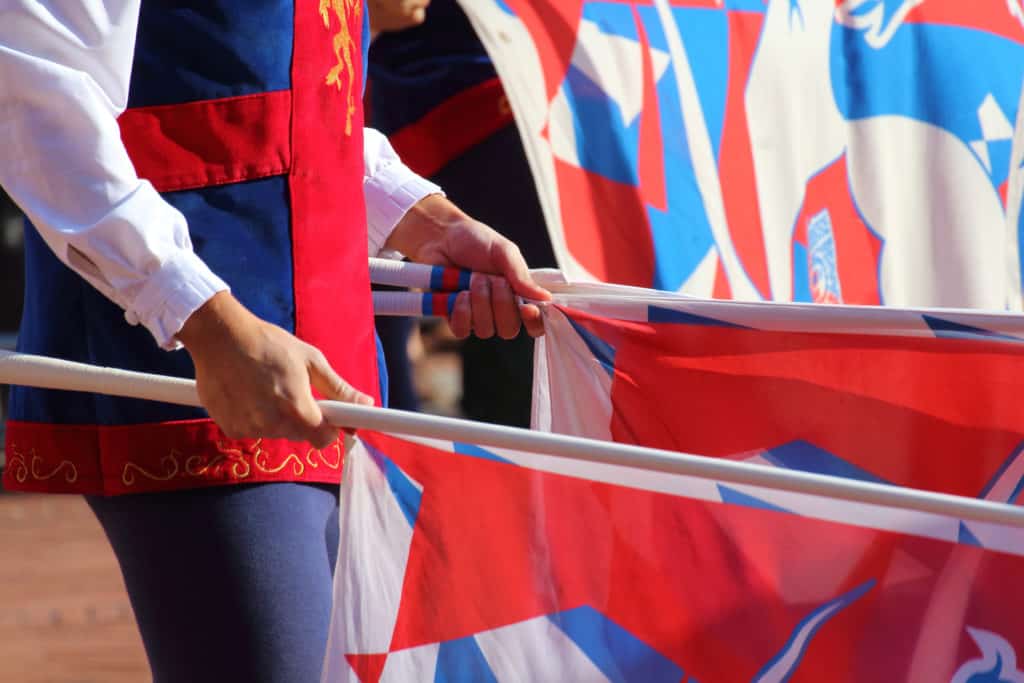
On one visit to Lucca, I saw a group of young people dressed in medieval garb presenting a flag-waving demonstration to the accompaniment of some serious medieval drumming. I was entranced.
Medieval flag-waving in Lucca
Staying in Lucca
Lucca is a magical place to stay overnight. The virtually traffic-free streets have emptied of tourists, and you can stroll around the ramparts for a floodlit view. I stayed at Hotel Alla Corte degli Angeli which was inside the town walls. It was delightful!
Tours in Lucca
Here’s an interesting tour option for opera lovers visiting Lucca during the Puccini Festival:
I’ve visited Pisa (#6) once, and that’s enough for me, although perhaps I’m being unfair. The area around the famous Leaning Tower teems with tacky souvenir stalls. I like a good tacky souvenir as much as the next gal, but even I reached my limit in Pisa.
That said, there are some interesting artsy sites to enjoy in Pisa. Your best bet is to go in the late afternoon and stay overnight. That way, you may be able to enjoy the tower and the cathedral without crowds.
Pisa Highlights
• Leaning Tower of Pisa – The world-famous tilting campanile, offering a memorable climb with views across the Piazza dei Miracoli
• Pisa Cathedral (Duomo) – A stunning Romanesque basilica with striped marble, glittering mosaics, and an elegant nave
• Baptistery – The largest in Italy, known for its perfect acoustics and remarkable blend of Romanesque and Gothic styles
• Camposanto Monumentale – A serene cemetery cloistered around medieval frescoes and ancient sarcophagi
• Museo dell’Opera del Duomo – Sculptures, treasures, and architectural fragments from the cathedral complex
• Piazza dei Miracoli – The “Square of Miracles,” a UNESCO masterpiece where all the major monuments unite in dazzling harmony
• Arno Riverside Walks – Charming riverside promenades lined with pastel façades and university energy
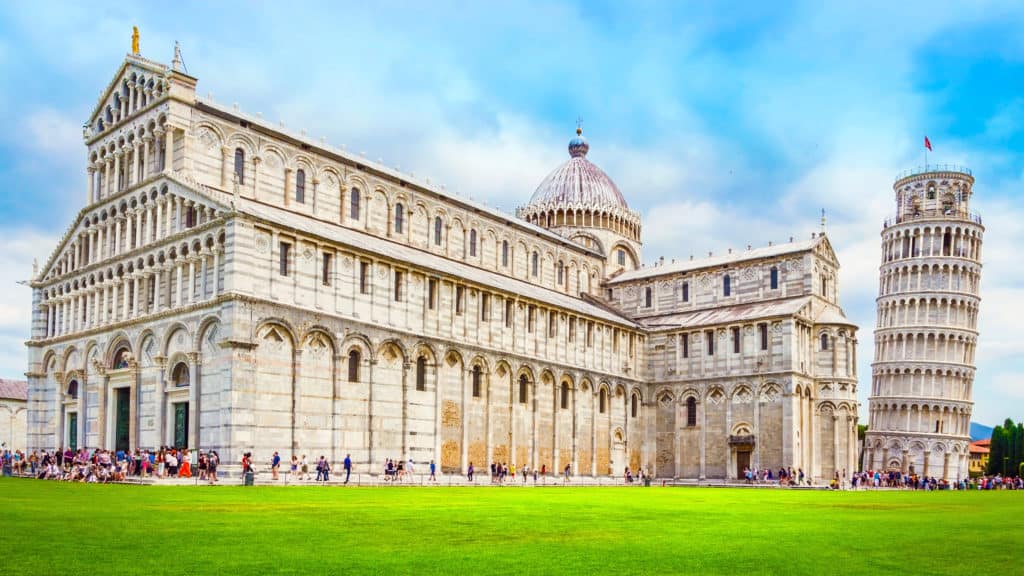
The Leaning Tower of Pisa and the Duomo
The cathedral is definitely worth visiting, and you must get someone to take the obligatory shot of you holding up the tower.
Staying in Pisa
For a place with a view of the leaning tower, check out the Grand Hotel Duomo.
Tours in Pisa
Here’s a guided tour of the baptistery, cathedral, and leaning tower that would be a good bet if you didn’t purchase tickets in advance:
Tuscany is one of the largest provinces in Italy, with many worthwhile hill towns to visit, including Montalcino, Montepulciano, Monteriggioni, Cortono, and Pienza.
All these small towns in Tuscany are best visited by car. Driving in Tuscany is relatively easy but not speedy. The roads are narrow and twisting. Slow down, relax, and enjoy the journey.
TIP: Never (and I mean never!) attempt to drive into a Tuscan hill town. First, you risk getting a stiff fine (being a tourist is no excuse), second, you risk ripping one or both of your side mirrors off your rental car, and third, you risk never again speaking to your partner.
Find the parking lot outside the city walls and walk into the town. Yes, you’ll likely be walking uphill (that’s why they are called hill towns), but some towns, such as San Gimignano, thoughtfully provide an elevator to take you from the car park to the town.
Others don’t, but if you’re going to travel in Tuscany, you need to be up for some good, stiff walking.
Umbria
Umbria (#7) has much to offer the artsy traveler. The landscape is just as stunning as the landscape in Tuscany, with even more rugged mountains, and the hill towns are just as interesting and historic.
Highlights include Perugia, Assisi, Gubbio, and Orvieto.
Perugia
Perugia (#8) is the capital of Umbria and one of its largest towns. Enjoy strolling around the central piazza and ducking into the cathedral. Perugia is laid-back and not overly crowded.
Perugia Highlights
• National Gallery of Umbria – A superb collection of Umbrian painting, including masterpieces by Perugino, Pinturicchio, and early Renaissance masters
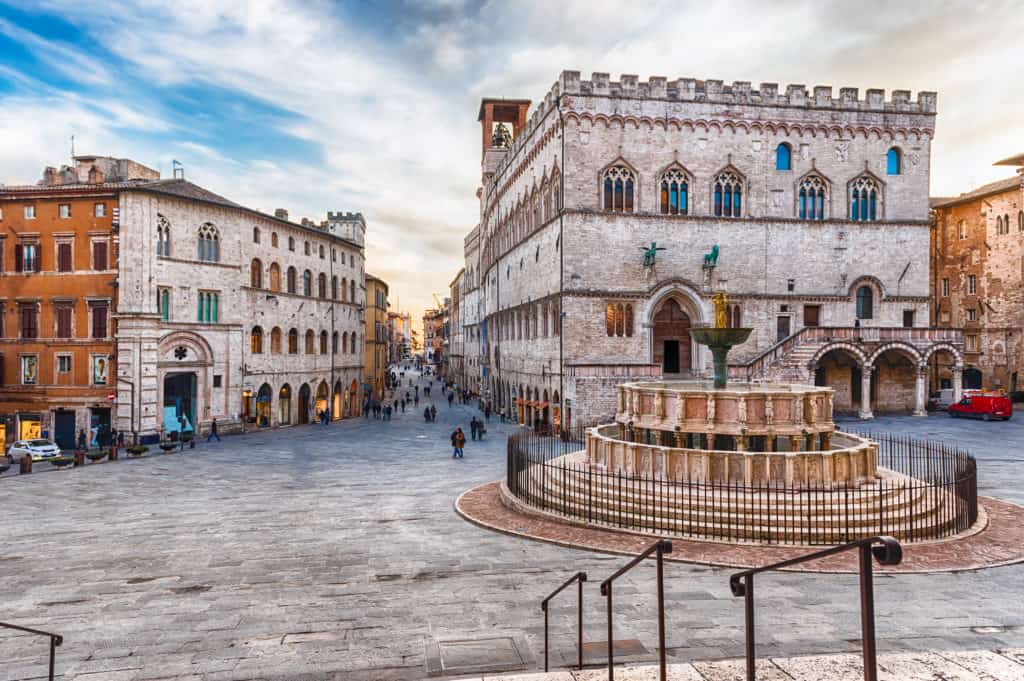
• Piazza IV Novembre – The city’s grand central square, anchored by the elegant Fontana Maggiore and the cathedral façade
• Fontana Maggiore – A 13th-century marble fountain adorned with scenes of daily life, zodiac signs, and biblical storie.
• Palazzo dei Priori – A monumental Gothic palace housing important civic halls and the National Gallery
• Perugia Cathedral (San Lorenzo) – A striking interior with notable artworks, including the Baroque sacristy and relics of local saints
• Rocca Paolina – An incredible underground fortress and “hidden city” of vaulted corridors built by the papacy
• Corso Vannucci – The lively main street lined with shops, cafés, and the perfect atmosphere for an evening stroll
View of the scenic Piazza IV Novembre, main square and masterpiece of medieval architecture in Perugia, Italy
The highlight of my visit to Perugia was discovering the Civic Museum at the Palazzo della Penna. There, I viewed the work of Gerardo Dottori, the leader of the Umbrian Futurists and one of the founders of Aeropainting.
The Palazzo della Penna is one of Perugia’s little-known museums and worth seeking out. It’s constructed on the ruins of a Roman amphitheater and an ancient Roman road.
One of the highlights of artsy traveling is looking for these lesser known but amazing small museums (of which Italy has many). They are almost always deserted, and most contain marvelous collections.
Assisi
Assisi is delightful. It does get crowded because of the famous Giotto frescoes, but not as crowded as Florence. Definitely stop in and even stay the night if you can. The frescoes are worth the journey, and the town itself is a great place to wander.
Assisi Highlights
• Basilica of St. Francis – A two-level masterpiece filled with fresco cycles by Cimabue, Giotto, Simone Martini, and Pietro Lorenzetti
• Giotto’s Life of St. Francis – Revolutionary narrative frescoes that mark a turning point in Western art
• Basilica of Santa Chiara – A serene Gothic church housing the relics of St. Clare and early Franciscan artworks
• Piazza del Comune – The ancient Roman forum turned central square, framed by medieval palaces and the Temple of Minerva
• Temple of Minerva – A remarkably preserved Roman temple with a striking Corinthian façade
• Eremo delle Carceri – A peaceful hermitage in the Monte Subasio woods where St. Francis retreated to pray
• Rocca Maggiore – A dramatic hilltop fortress offering sweeping panoramas over Assisi and the Umbrian valley
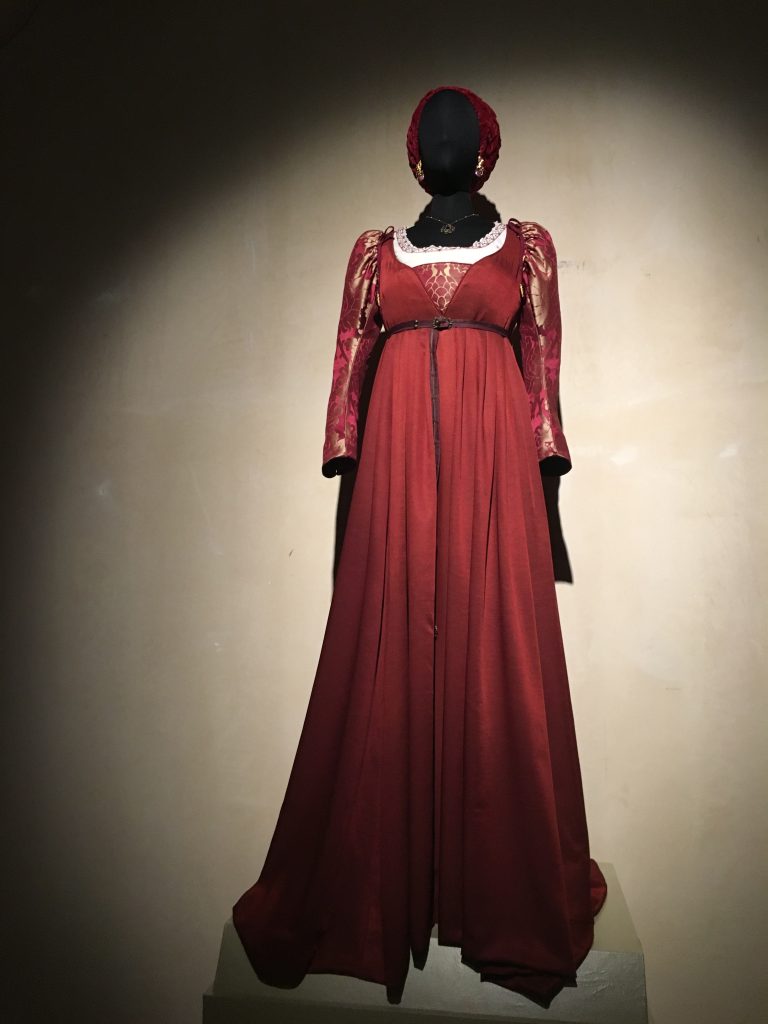
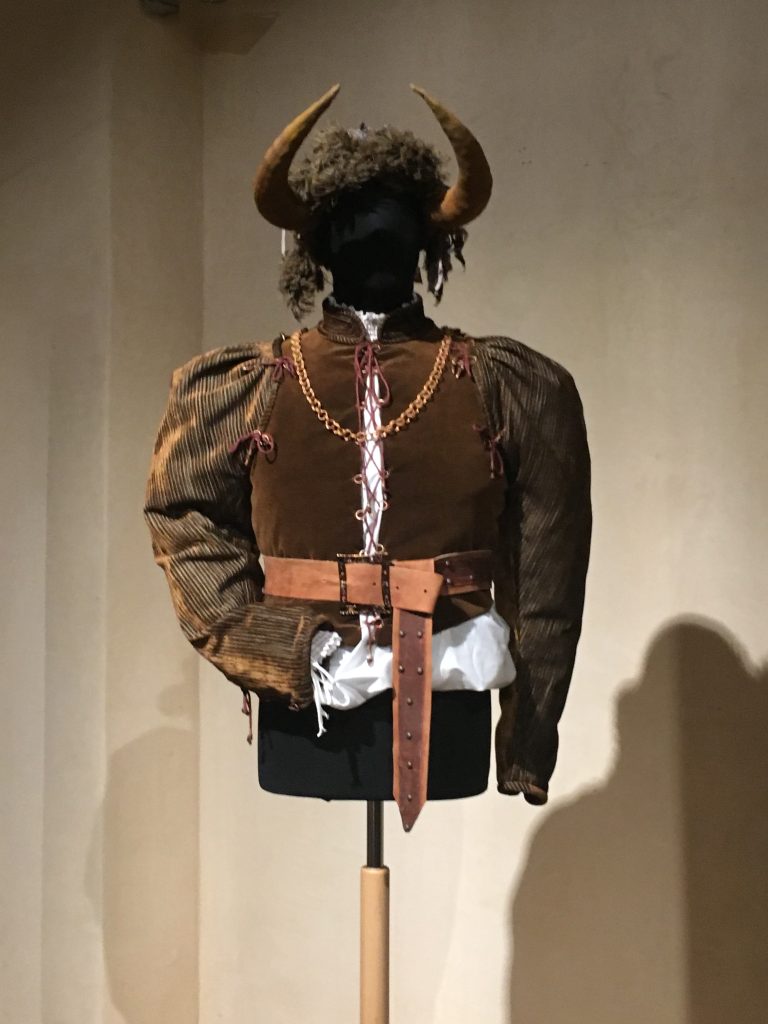
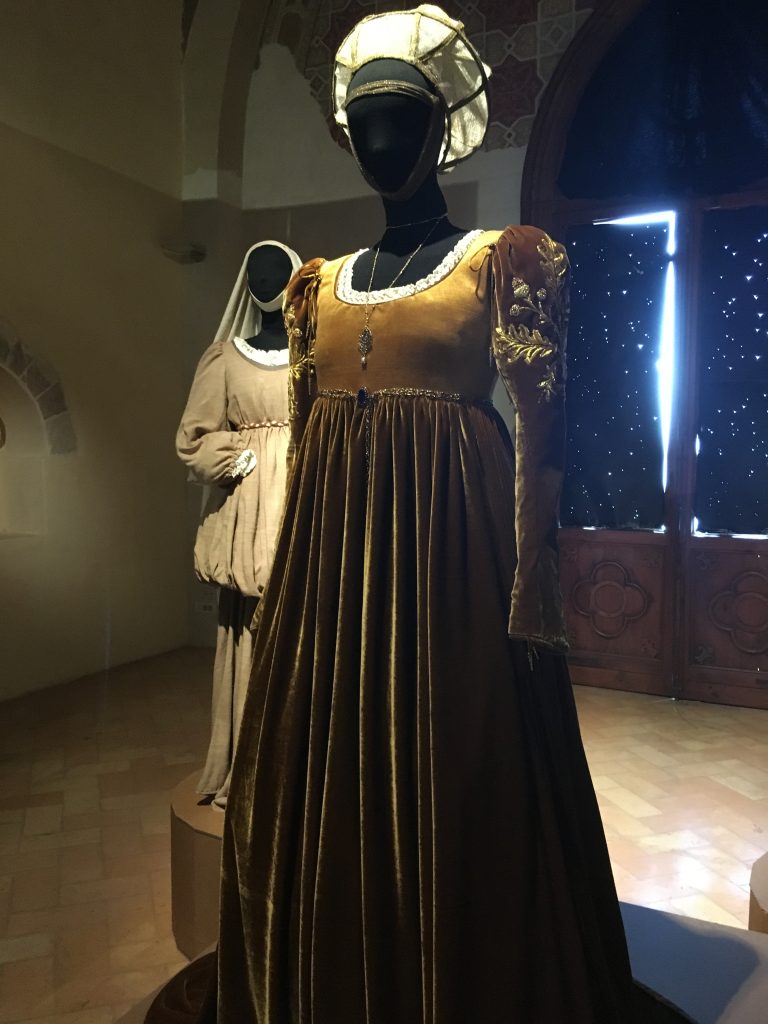
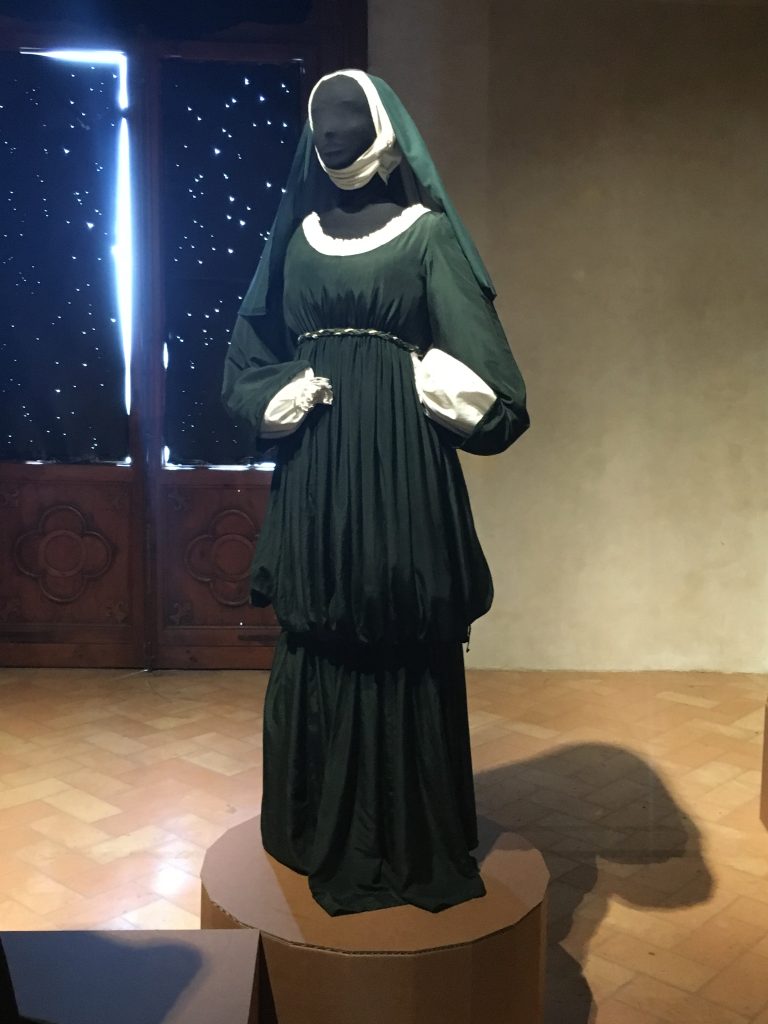
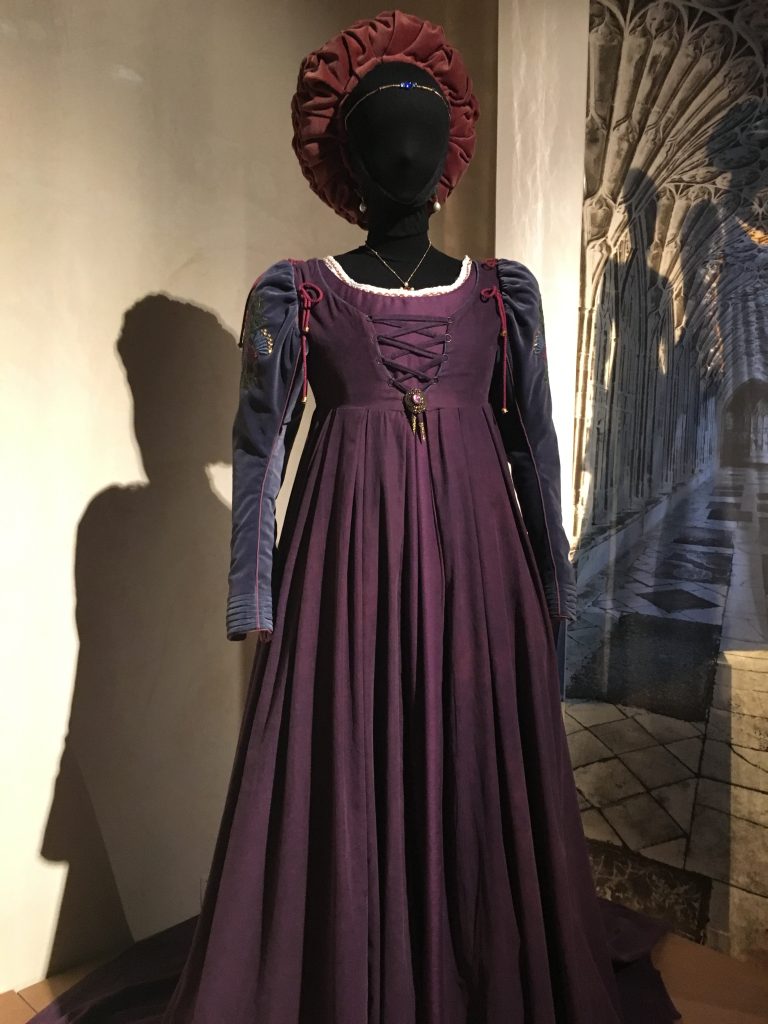
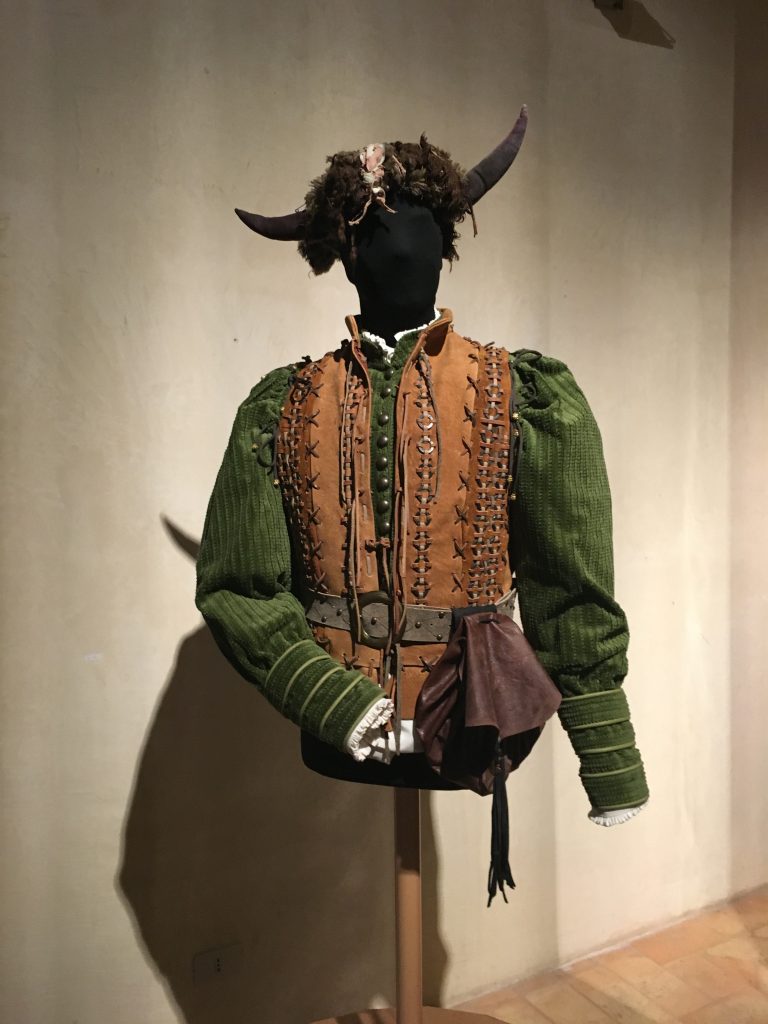
One of the hippest things I saw during our visit to Assisi (#9) wasn’t even on the tourist radar. I spied a small sign in a side street advertising a special exhibition of medieval costumes. As an historical novelist with a yen for all things medieval and Italian, I’d found my bliss.
Here are a few of the costumes on display in the exhibition.
When traveling to small towns in Tuscany and Umbria, check at the tourist office for local exhibitions and events and keep an eye out for posters. You never know what gems you’ll find.
Also taking place while we were in Assisi was an annual festival where all the locals dressed in medieval garb and paraded through the streets. Many other events were included in the festival, but we had neglected to get tickets.
More reason to do your research before you go!
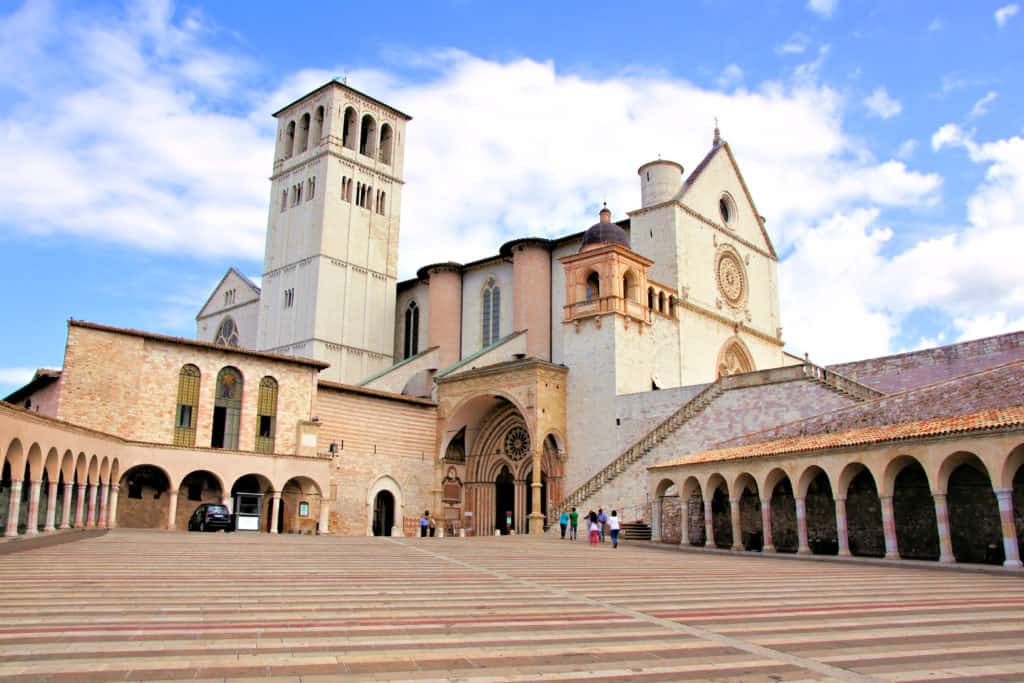
The big draw to Assisi is, of course, the Basilica of Saint Francis of Assisi, with its marvelous frescoes by Giotto. Start your visit to Assisi here, then walk up into the medieval town, and from there continue up to the fortezza for some stunning views.
Basilica of Saint Francis of Assisi
Where to Stay in Assisi
The highly rated Hotel Umbra is right in the centre of Assisi.
Tours in Assisi
Here’s a guided tour of the Basilica of Saint Francis of Assisi that would help you interpret Giotto’s famous frescoes:
What a delightful town! Nicknamed the City of Fools, Gubbio (#10) is unpretentious and relaxed. We spent a pleasant day wandering its cobbled streets, enjoying lunch in the panoramic Piazza Grande, and visiting the municipal museum.
Gubbio Highlights
• Palazzo dei Consoli – A striking medieval palace dominating the skyline, with a museum showcasing Gubbio’s ancient Iguvine Tablets
• Piazza Grande – A dramatic terrace-like square suspended above the city with sweeping views of rooftops and hills
• Roman Theater – One of Italy’s best-preserved ancient theaters, set just outside the medieval walls
• Gubbio Cathedral – A serene Gothic interior with a graceful rose window and notable Renaissance paintings
• Basilica of Sant’Ubaldo – Reached by funicular, home to the patron saint’s relics and magnificent views over the Umbrian valley
• Funivia Colle Eletto – A charming open-air cable car offering a scenic ride up to Monte Ingino
• Historic Ceramics & Craft Shops – Traditional artisans producing Gubbio’s famous maiolica and ceramics
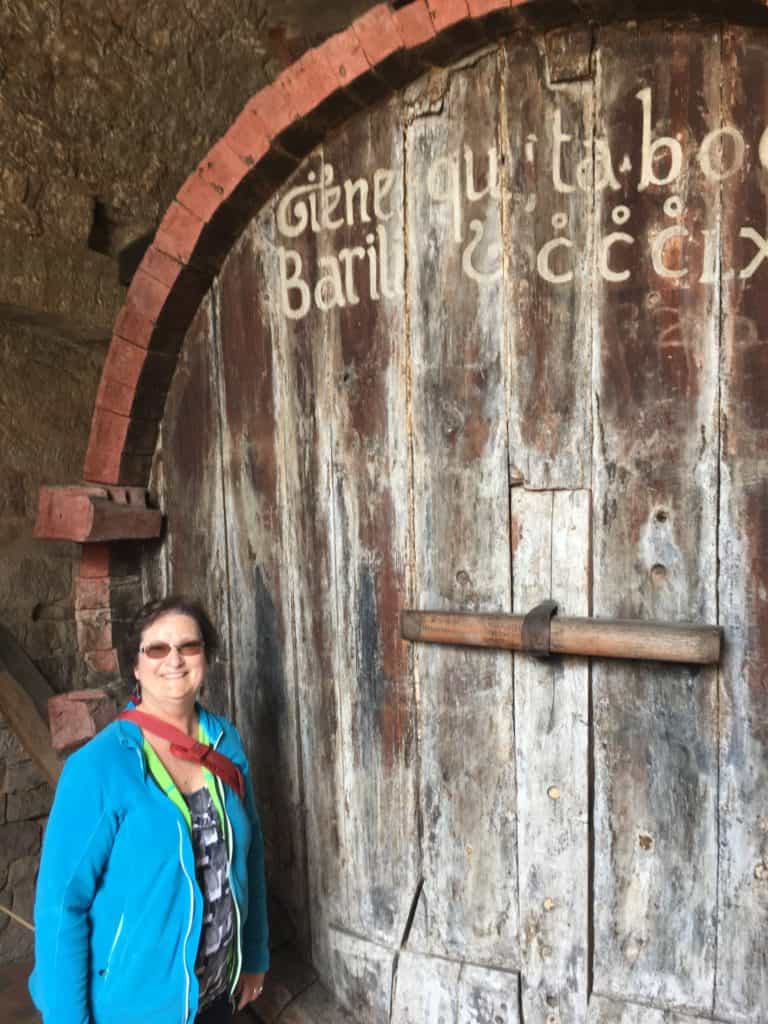
One of the fun attractions of Gubbio is the Big Barrel, otherwise known as La Botte dei Canonici. The barrel is reputed to be the world’s largest and oldest. It’s worth a photo op, and there’s a gift shop. Entrance is free, so if you pass it during your wanderings around Gubbio, pop in and find out more.
We also checked out the Roman Theatre outside the walls of Gubbio near where we parked.
The Roman Theatre outside the walls of Gubbio
Remember: always park outside the city walls!
Orvieto
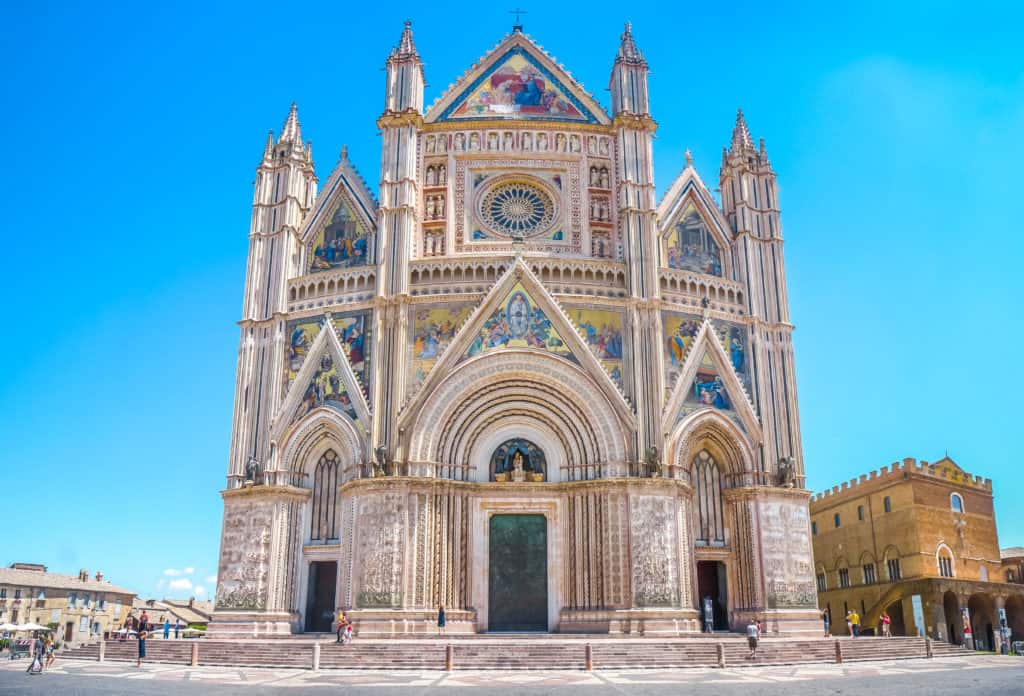
The stunning cathedral is the draw to Orvieto (#11), a beautiful Umbrian town perched atop a volcanic plug and worth an overnight stay.
Orvieto Highlights
• Orvieto Cathedral (Duomo) – A dazzling Gothic façade of mosaics and sculpture, with a luminous interior rich in medieval and Renaissance art
• Signorelli’s Last Judgment Frescoes – A dramatic, visionary cycle in the San Brizio Chapel that influenced Michelangelo
• Pozzo di San Patrizio (St. Patrick’s Well) – A remarkable double-helix well designed for mules to descend and ascend without crossing paths
• Orvieto Underground – A network of ancient tunnels, caves, and Etruscan passageways carved beneath the city
• Torre del Moro – A medieval clock tower offering panoramic views of Orvieto and the surrounding countryside
• Etruscan Museum (Museo Archeologico Nazionale) – Outstanding artifacts, urns, and bronzes revealing Orvieto’s ancient past
• Piazza della Repubblica & Historic Streets – Atmospheric lanes lined with stone buildings, cafés, and artisan shops
Unlike its better-known Tuscan counterparts, Orvieto is relaxed and approachable. Park in the large lot at the bottom of the hill and take the elevator or escalator to the medieval upper town.
The façade of the cathedral is unusual in its inclusion of golden mosaics, sculpture, and stained glass.
The stunning façade of the Cathedral at Orvieto
For more information about what to see in Orvieto, check out this article by Rick Steves, my fave travel writer.
Where to Stay in Orvieto
Orvieto makes a good homebase for touring Umbria. Borgo La Chiaracia Resort & Spa is a posh option outside the town that features a spa. Treat yourself!
Tours in Orvieto
Here are some options, including a tour from Rome that takes you to Orvieto and Assisi, a good choice if your time is limited.
Orvieto is as well known for its wine as for its extraordinary Duomo. The local Orvieto Classico is worth seeking out, and Winedering has some good options for tastings and winery visits in the area:
Tuscany & Umbria FAQs
I’ve traveled a lot in Tuscany and Umbria. Here are the questions I get asked most often:
How many days do you need for Tuscany and Umbria?
A week to ten days is ideal for exploring both regions without rushing. This gives you time to spend at least two nights each in Florence and Siena in Tuscany, and then to explore Orvieto, Assisi, and Perugia in Umbria. With fewer days, focus on just one region; with more time, you can add visits to towns such as San Gimignano, Volterra, Montalcino, and Montepulciano.
Is Umbria less crowded than Tuscany?
Yes. Tuscany attracts far more international visitors, especially Florence, which can be painfully overcrowded. Umbria feels quieter and more authentic, with smaller crowds even in major towns such as Assisi and Orvieto. Umbria is an optimal choice if you’re looking to savor Italy’s medieval charm without tour groups.
Do you need a car for this itinerary?
If you want to explore the countryside, stay in rural hotels, and visit smaller towns then yes, a car is recommended. Rent one from the airport in Florence after you’ve toured the city (don’t drive into Florence!). If you prefer public transit, you can reach Siena and Orvieto by train from Florence, and other towns by bus, although schedules can be limited. Another option is to home base in Siena or Florence and take small group or private tours around the region.
What’s the best home base in Tuscany?
Florence is best for art lovers and museum visits, while Siena works well if you prefer a quieter, more medieval atmosphere and easier access to the countryside. For wine and hill towns, consider basing in the Val d’Orcia near Pienza or Montepulciano, or stay near San Gimignano and visit Volterra and Cortona.
What’s the best home base in Umbria?
Orvieto and Assisi both make excellent bases. Orvieto offers dramatic views, a spectacular cathedral, and good train connections. Assisi has a peaceful atmosphere and some of Italy’s most important fresco cycles. Perugia works well if you prefer a lively university city with excellent museums.
Can you visit both Tuscany and Umbria by train?
Partially. Major cities such as Florence, Siena (via bus), Arezzo, Orvieto, Perugia, and Assisi are connected by train. However, public transportation rarely reaches the hill towns, vineyards, or smaller villages. If you don’t want to drive, choose your bases carefully and rely on guided day tours for harder-to-reach places.
What’s the difference between Tuscany and Umbria?
Tuscany is known for its Renaissance art, wine towns, and famous cities like Florence and Siena. Umbria is quieter, greener, and more spiritual, with medieval hill towns, important fresco cycles such as those by Giotto in Assisi, and far fewer crowds. Visiting both gives you a rich contrast between Italy’s artistic heart and its peaceful countryside soul.
Keep Exploring Italy with Artsy Traveler
Here are more posts to give you a taste of Italy. Check Visiting Italy to see the full list of posts about Italy.
Carol M. Cram is the author of five award-winning novels inspired by art and the women who shaped it, the creator of Artsy Traveler, an arts-focused travel blog, the founder of Art In Fiction, a curated database of 2,600+ novels inspired by the arts, and the host of The Art In Fiction Podcast. She lives with her husband, artist Gregg Simpson, on beautiful Bowen Island near Vancouver, BC.