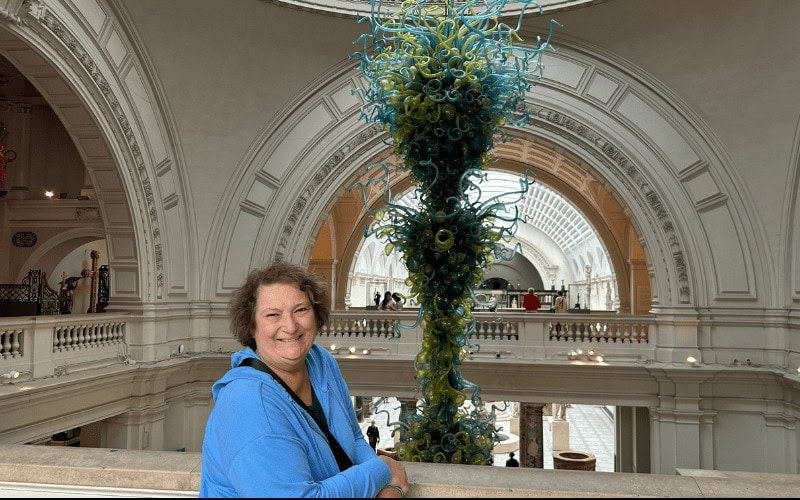
How to Get the Most Out of Your Visit to the Victoria & Albert Museum in London
Artsy Traveler contains affiliate links for products and services I personally use and can happily recommend. As an Amazon Associate, I earn from qualifying purchases. Please read the Disclosure for more information. If you make a purchase through these links, at no additional cost to you, Artsy Traveler earns a small commission. Thank you!
The Victoria & Albert Museum is one of the world’s most amazing repositories of, well, beautiful stuff.
It’s a collector’s dream come true with astonishing examples of the decorative arts and the applied arts. You’ll find everything from costumes to metal gates to furniture to bracelets and everything in between.
You’ll discover there’s so much to see at London’s Victoria & Albert museum that you’ll need to pace yourself and have a plan.
In this V&A Museum Guide, I share my recommendations for seeing the best of London’s fabulous Victoria & Albert Museum.
This post is part of my guide to artsy & independent travel in England, where I share my best tips for exploring England’s creative cities, historic sites, literature, theater, and cultural experiences.
Table of Contents
Quick Facts: Victoria & Albert Museum
- Facilities: Excellent café, garden courtyard, gift shops, cloakroom
- Location: Cromwell Road, South Kensington, London
- Founded: 1852
- Focus: Art, design, textiles, fashion, sculpture, decorative arts
- Admission: Free (special exhibitions require tickets)
- Closest Tube Stations: South Kensington (best), Gloucester Road
- Average Visit Time: 2–4 hours (full day recommended for art lovers)
- Top Highlights: Jewelry Gallery, Fashion Gallery, Medieval & Renaissance Courts, Cast Courts
- Best Time to Visit: Weekday mornings; late Fridays during extended hours
- Photography: Allowed in most galleries (no flash in sensitive areas)
Overview of the Victoria & Albert Museum
You can’t really define the V&A because it’s just so eclectic. Think of an object and the V&A probably has an example of a version made with exquisite skill by someone somewhere in the world.
It’s a sensual feast for the eyes and a testament to the ingenuity of human beings and their commitment to fashioning objects that are not only functional but also gorgeous.
There are so many things to see that you could spend days exploring. The V&A is HUGE! It’s also high on my list of all-time favorite museums. Almost every time I go to London, I pop in to the V&A. No matter how often I visit, I still discover new things to look at.
The only problem with this incredible museum is that it’s impossible to see and appreciate all of it in one visit, or two, or ten. I’ve visited at least five times, and feel like I haven’t even scratched the surface. The museum lives up to its reputation as the world’s largest museum of art and design.
Short History of the Victoria & Albert Museum
The V&A was established in 1852 with collections from the Great Exhibition of 1851, and was originally called the Museum of Manufactures and then the South Kensington Museum.
Queen Victoria laid the foundation stone of the current location in 1899 and changed the name to the Victoria & Albert Museum to honor her late husband Prince Albert.
Location of the Victoria & Albert Museum in London
The V&A is located near the South Kensington underground station and alongside several of London’s largest South Kensington museums.
If you love museums, make a day of it. Visit the V&A (1), and then hop on over to the Natural History Museum and the Science Museum (2 & 3 on the map). Both are excellent places to visit with children.
Better still, spread the visits over two days. Museum-hopping can be exhausting. Go at your own pace and take time to explore nearby Hyde Park (4) and Kensington Gardens (5) for a nature break.
Visting the V&A
Yes, the V&A is huge and yes, there’s a ton to see, but you have to start somewhere. Your best bet when first visiting is to select five or six galleries to explore, occasionally veering into exhibition rooms en route when something catches your eye.
V&A Highlights at a Glance
- Favorite Gallery: It’s a tie between Fashion and Glass
- Favorite Piece: Bed of Ware
- Where to Stay in London: Park Plaza Victoria
- Recommended V&A Tour: Guided Private Tour
V&A Galleries
- Architecture
- Britain (1500 – 1760)
- Britain (1760 – 1900)
- Buddhism
- Cast Courts
- Ceramics
- China
- Contemporary Glass
- Design (1900 – Now)
- Europe (1600 – 1815)
- Fashion
- Furniture
- Glass
- Gold, Silver & Mosaics
- Himalayas & Southeast Asia
- Ironwork
- Islamic Middle East
- Japan
- Jewelry
- Korea
- Leighton
- Medieval & Renaissance (300 – 1600)
- Metalware
- Paintings
- Photography Centre
- Portrait Miniatures
- Prints & Drawings
- The Raphael Cartoons
- Sacred Silver & Stained Glass
- Sculpture
- Sculpture (1300 – 1600)
- Silver
- South Asia
- South Asian Sculpture
- Tapestries
- Theatre & Performance
Daunting? You betcha! Note that some galleries may be closed. Start your visit by checking at the information desk to find out what’s open. For example, the Theatre & Performance gallery was not open when I visited.
So where to start?
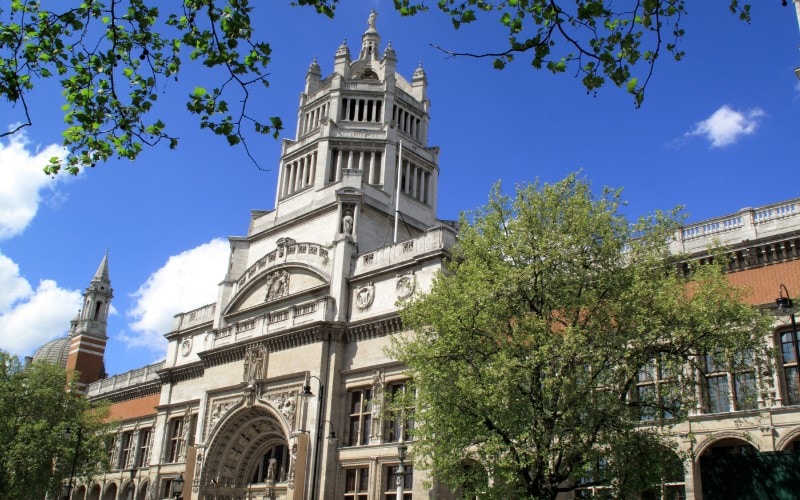
Arriving at the Victoria & Albert Museum
First, walk up the steps and enter the museum’s massive atrium. Straight ahead is a large information area, your first stop.
Put your wallet away (unless you’re planning to see the special exhibition) because admission to the permanent collection is FREE. I know. Amazing!
You can make a donation (I always do), but you don’t have to. The attendants at the information booth will give you a map and may also suggest you purchase the guidebook.
For £5, it’s a bargain because it gives you an overview of the highlights of each gallery.
Special Exhibitions
You can choose to buy a ticket to the special exhibition. A few weeks before you visit the V&A, check what’s on and make reservations. Popular exhibitions often sell out quickly.
Getting Started
Once you’ve purchased your guidebook, or just armed yourself with the free map, walk straight through the gift shop (you can come back later!) and out into the courtyard.
Buy something to drink from the kiosk and settle down at one of the tables (weather permitting) to check the map and/or guidebook.
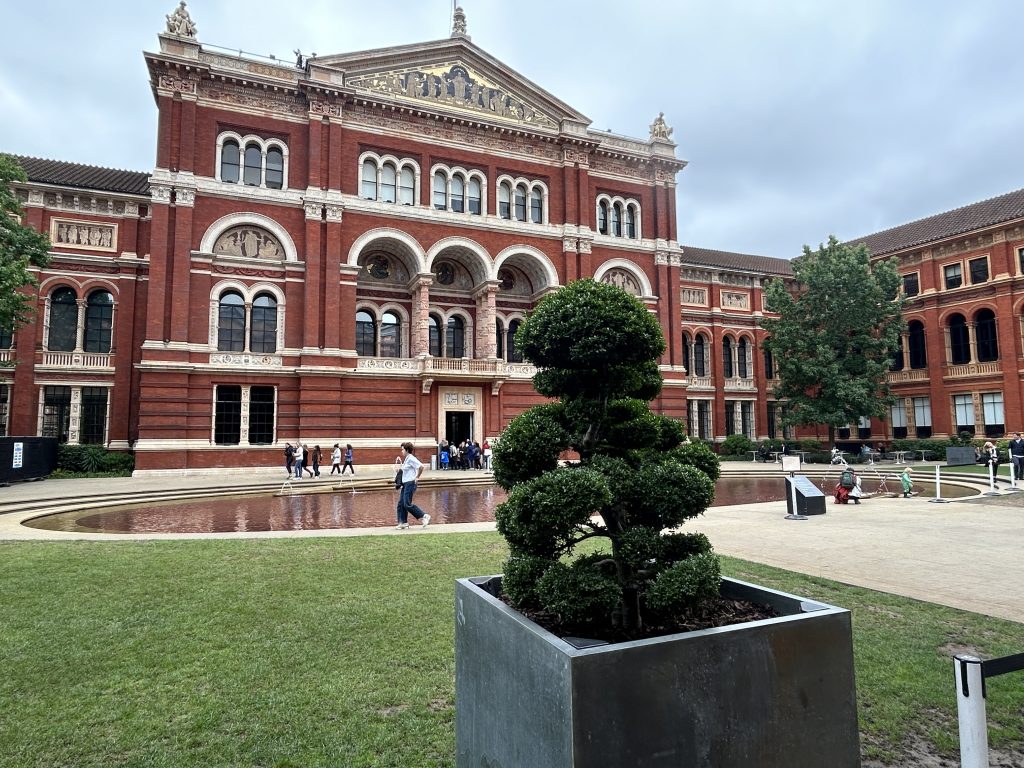
While sipping your beverage of choice, figure out which areas you want to focus on and where they are in the museum. You want to avoid backtracking.
The beauty of the V&A is that even if you’ve decided to tour only a few galleries, you’ll see plenty more as you walk through the museum from chosen gallery to chosen gallery. Don’t be surprised if you’re tempted to veer off to check out a gallery you hadn’t intended to visit.
Give in to these impulses. The V&A is a treasure trove!
Now you’re ready to start your tour. Go slowly and pace yourself. Beauty overload is a thing!
Here are just some of the hundreds (thousands?) of things to see at the V&A.
Things to See at the V&A
I’m focusing here on six galleries: Fashion, Asian (which includes several areas), Furniture, Cast Court, Glass, and Jewelry.
Fashion Gallery
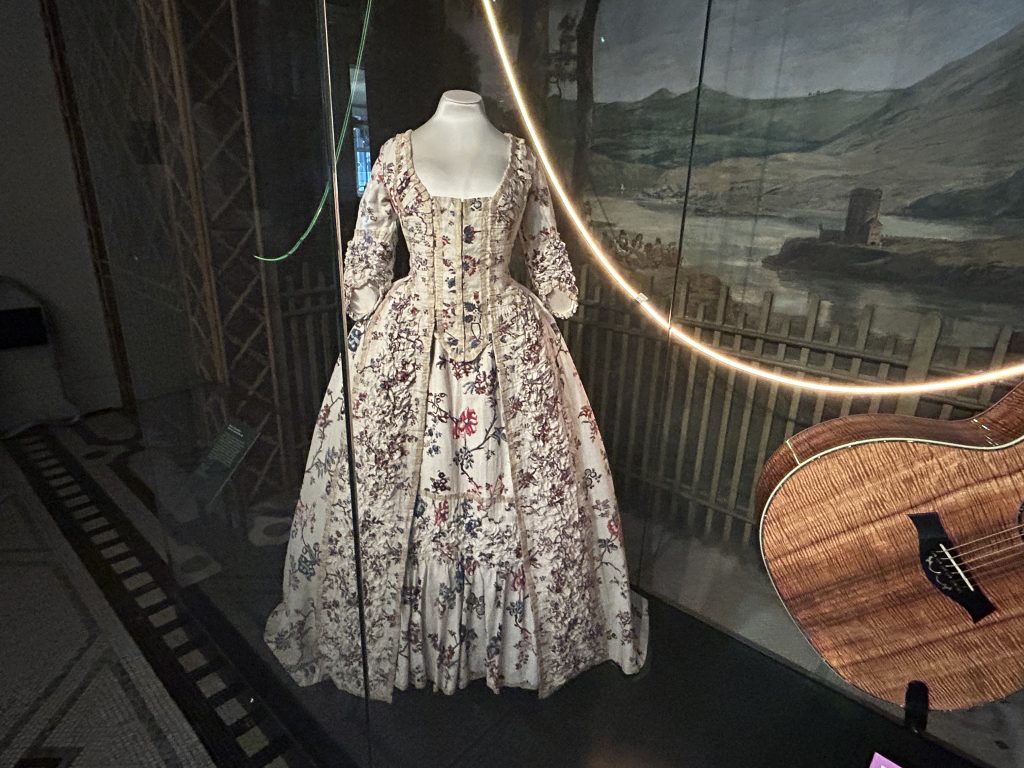
I always drop in to the fashion collection, located in the central area of the main floor. Here, you’ll find a unique collection of European clothing and textiles spanning from 1750 to the present.
I particularly enjoy the 18th- and 19th-century dresses. Can you imagine wearing so many hoops and corsets? Here’s an elaborate dress from the 1760s.
Asian Art and Objects at the V&A
This is a broad category that includes art and objects from several regions: Japan, Korea, China, South Asia and Himalayas, and Southeast Asia. Take a stroll through the galleries to enjoy an amazing collection of articles.
Highlights are the Samurai armor collection in the Japan section, a golden Buddha, jade objects from China, delicate porcelain, and so many more treasures.
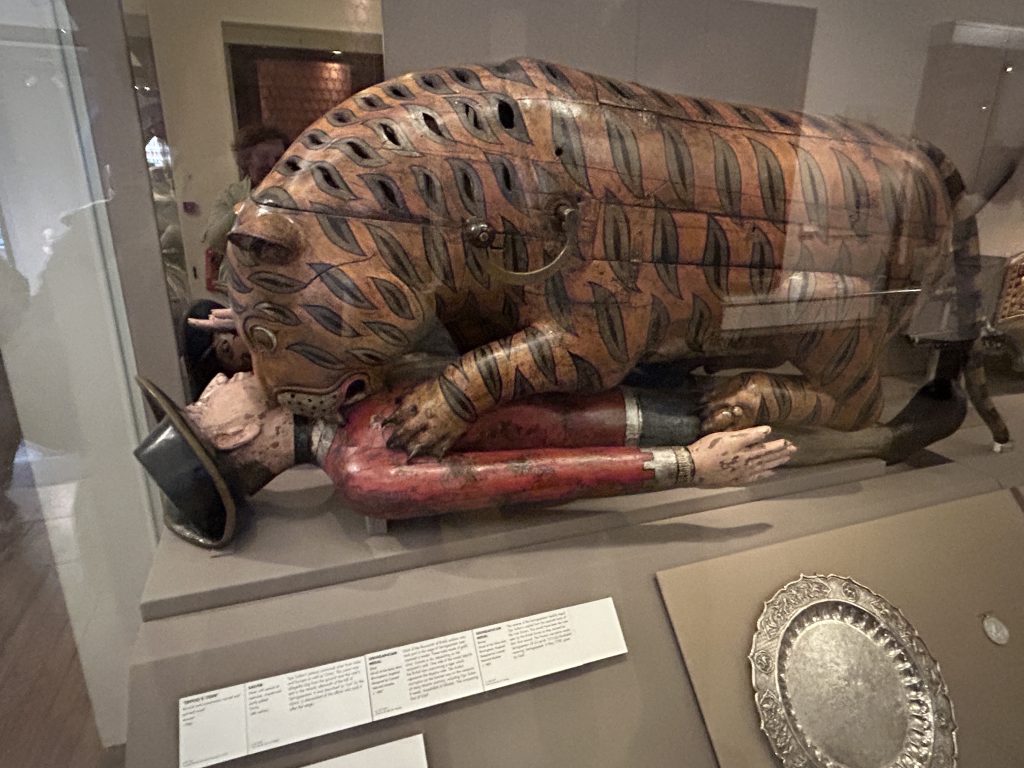
An interesting, if rather gruesome, piece is Tipu’s Tiger in the South Asia and Himalayas section. This wooden sculpture was made for Tipu Sultan, ruler of Mysore in South India.
When the handle on the side of the tiger is turned, the ghastly noises produced imitate the wails of agony of the British soldier lying underneath the tiger. Apparently, this exhibit was one of the most popular in the East India Company’s museum.
And although not part of the Asian galleries, take a quick detour to check out the Ardabil carpet, which is the world’s oldest dated carpet. Although its exact origins are unknown, the carpet was made sometime during the 16th century.
It’s a stunner.
Furniture Gallery
Examples of furniture are scattered throughout many of the galleries in the V&A. In addition, the Dr. Susan Weber Gallery of Furniture showcases how furniture has been made and decorated for over 600 years. Included are items from the Renaissance to the present.
Bed of Ware
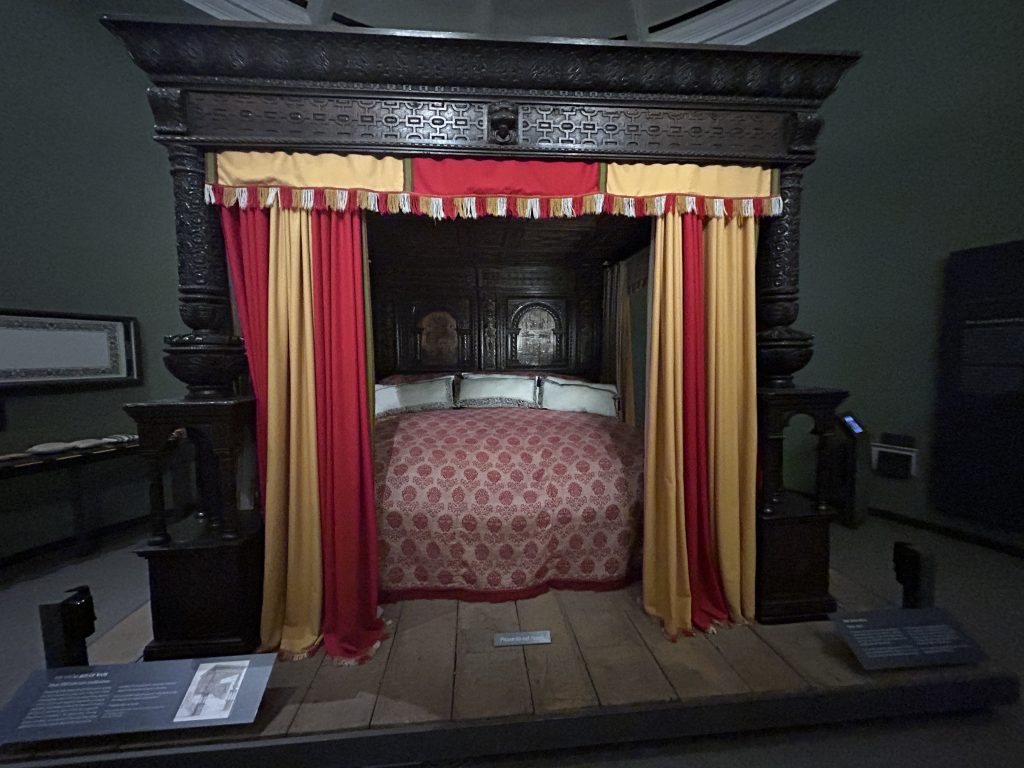
One of the most interesting pieces of furniture is in the Britain 1500 – 1760 gallery. Definitely make a detour to check out the Great Bed of Ware, so famous in its day that it was mentioned by Shakespeare.
The famous bed is three meters wide and apparently able to comfortably accommodate four couples (at least!). It was constructed around 1590 as a tourist attraction for an inn in Ware, Hertfordshire, which was a day’s journey from London and a convenient overnight stop for travelers bound for Cambridge and points north.
The initials that visitors carved into the bed posts and the headboard are still visible today.
Cast Courts
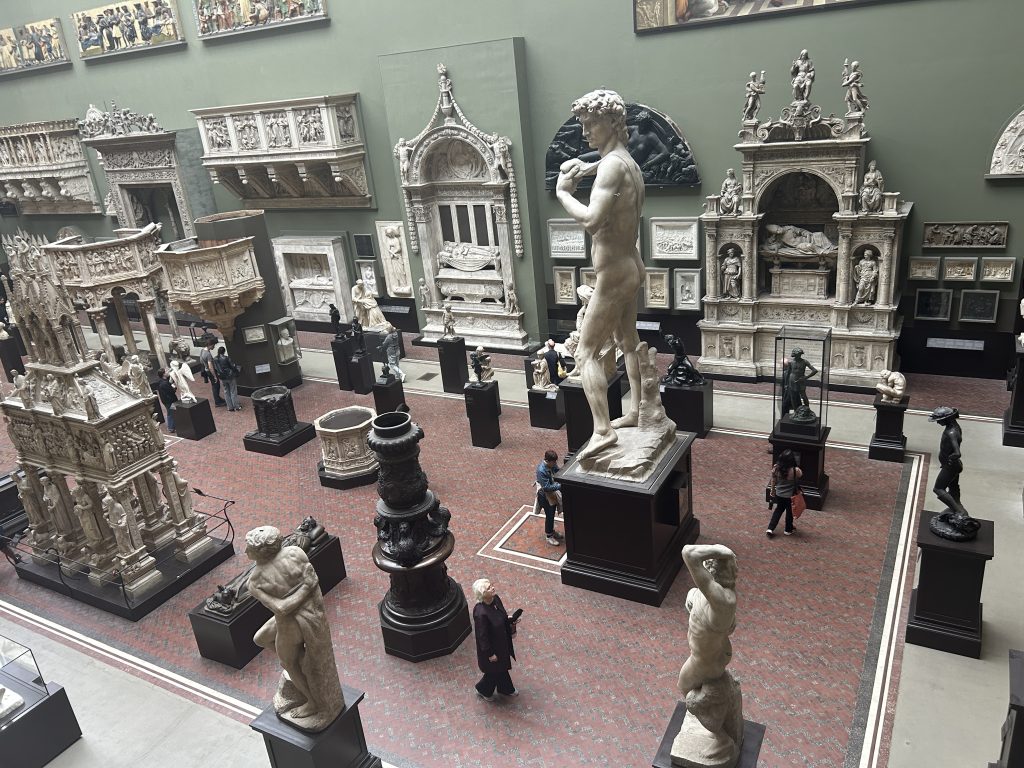
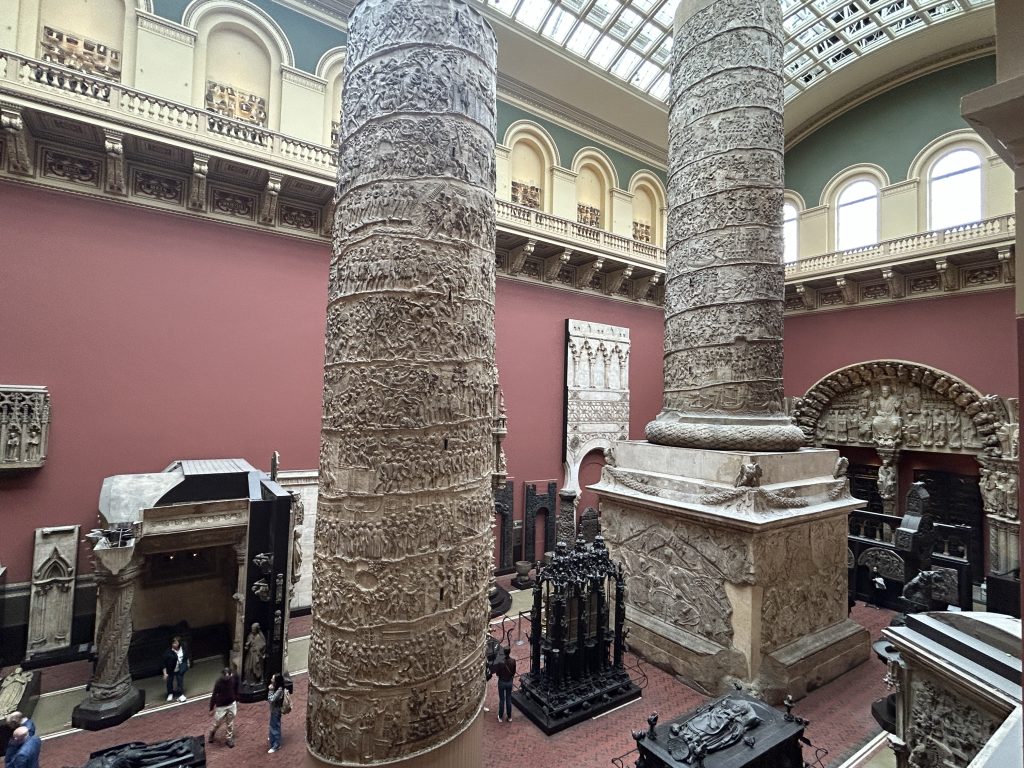
The massive sculptures in the Cast Courts are the showstopping, must-see areas of the V&A. View the two huge, connected courts from many angles as you make your way up through the four levels of the museum.
Look down from one of the walkways on the third or fourth level and find yourself faced with a bewildering hodge podge of iconic statues, altarpieces, and even columns.
Why go to Florence when you can visit the cast courts at the V&A instead? It’s like a souvenir store for giants.
These plaster casts of great art and architecture from around the world were collected and displayed for visitors to study.
One of the many highlights is Michelangelo’s David. Apparently, Queen Victoria was shocked by the anatomical correctness of the David cast and requested that a suitably proportioned fig leaf be made and hung on the statue when dignitaries visited.
My source didn’t specify if regular visitors were allowed to view the full Monty, so to speak.
Another highlight is the reproduction of Trajan’s column. The original is too tall to house in the building and so the reproduction is divided into two massive columns.
I’ve seen the original in Rome, and because of the column’s height, it’s difficult to see the detail. At the V&A, you can get pretty close to the columns to view the intricate carvings.
Glass Gallery
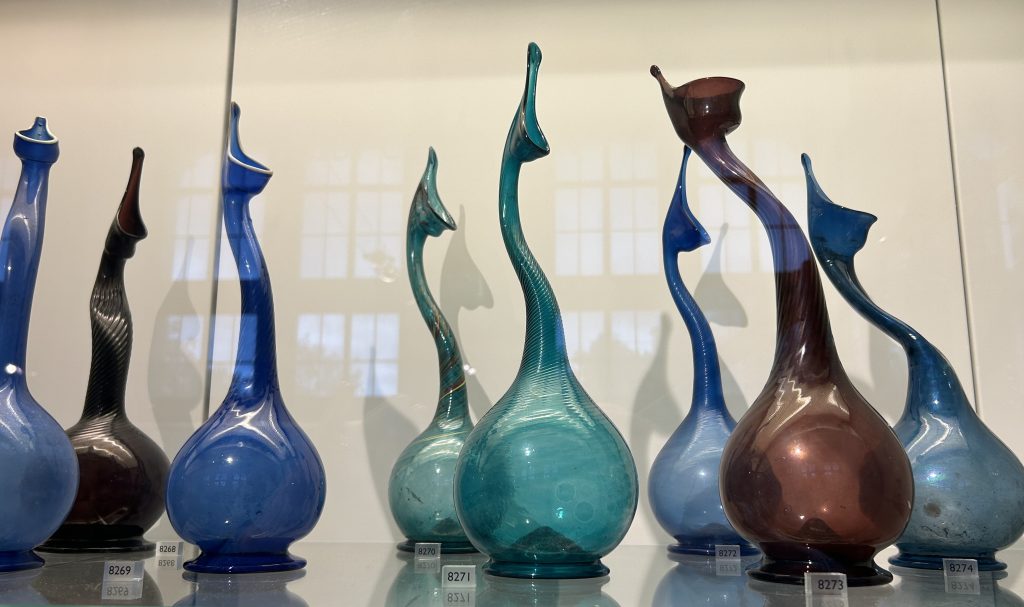
Up on Level 3 in a corner of the museum that was virtually empty when I last visited is the astounding Glass Gallery. Here, you’ll trace the development of design and technology in glassmaking over 3,500 years.
The museum’s glass collection is reputed to be one of the world’s most comprehensive.
I’m always intrigued by glass. How did people figure out that sand heated up could turn transparent? The variety and beauty of the hundreds of objects on display is remarkable. I could have stayed there for hours.
Jewelry Gallery
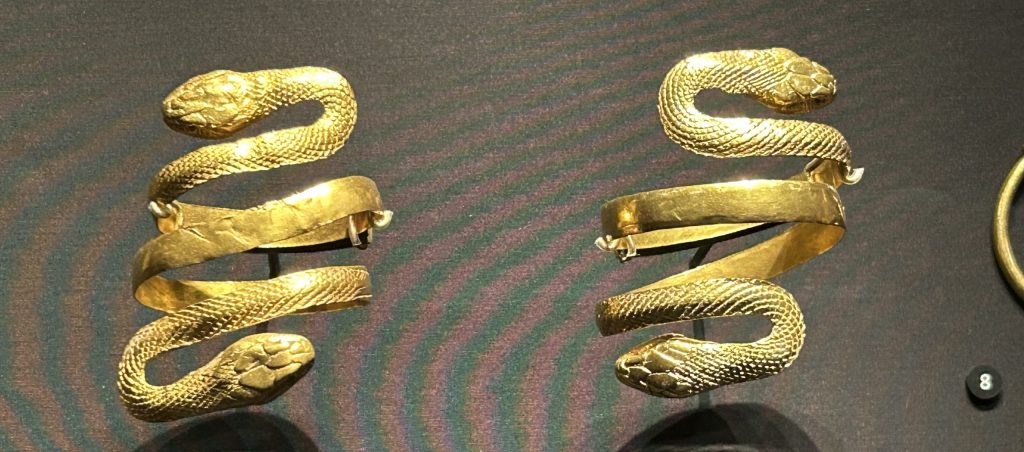
I felt overwhelmed after looking at some many amazing objects, but couldn’t resist a walk through the narrow, dimly lit and quite crowded collection reputed to be among the finest in the world.
More than 3,000 pieces tell the story of western jewelry from ancient times to the present day.
Case after case contain pieces ranging from tiaras, brooches, and earrings to stunning necklaces, bracelets, and rings.
All around me, people could be heard oohing and aahing, and no wonder! The ingenuity and skill that was required to make such superb objects is unfathomable.
Practical Information
The Victoria & Albert Museum is open seven days a week from 10:00 am to 17:45, except for Fridays when it is open until 22:00. Admission is free. Check the website for more information.
Taking a Break at the Café
A good strategy is to take a break to enjoy something to eat at the V&A café. Not only will you enjoy tasty food, but you’ll also benefit from getting off your feet to further study the guidebook and map.
The café can get crowded, so time your visit either before or after the lunch rush.
One good strategy to avoid crowds is to arrive at the museum when it opens at 10 am, tour a few galleries, and then enjoy an early lunch in the café before tackling some more.
Checking Out the Gift Shop
I do love a good gift shop, and the one at the V&A is first-rate. You’ll find relatively affordable textiles, jewelry, books, fashion items, gift items, cool stuff for kids, and much more.
I bought some lovely tea towels that will be for display only in my kitchen. They are far too nice to use!
Studying at the Victoria & Albert
The V&A is a world-class research center. In addition to displaying over 60,000 objects, the museum also maintains a number of study rooms, both on- and off-site. Here, you can view over two million objects from the Reference Collections and conduct private research.
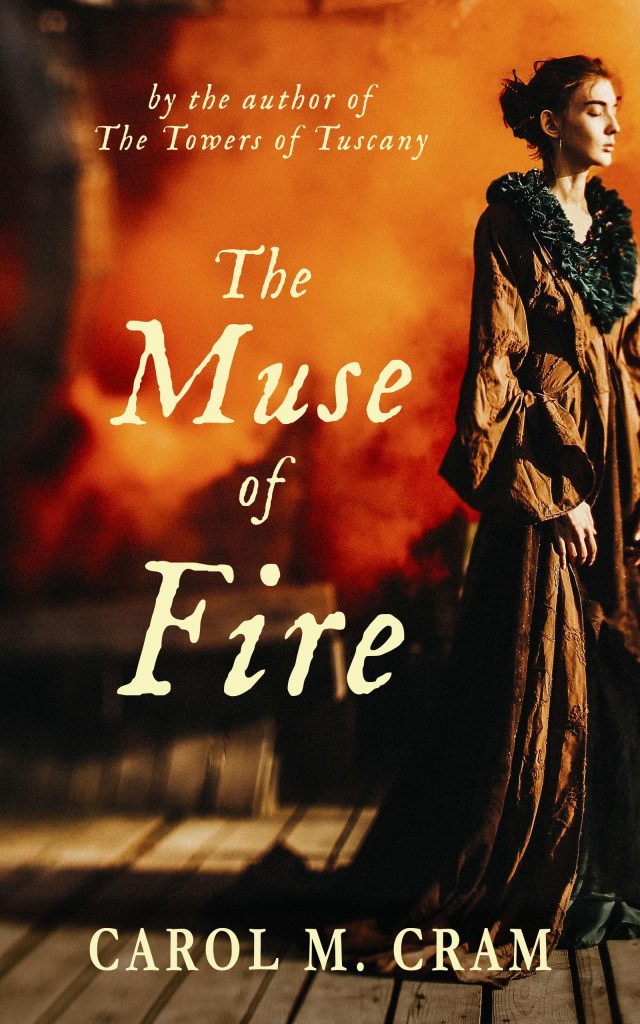
When I was researching my novel The Muse of Fire, set in early 19th century London, I booked time at one of the study centers to view original prints of cartoons popular at the time.
In the hushed atmosphere of the off-site study room, I received the box of prints from an attendant who looked straight out of a Dickens novel, and spent several happy hours making notes and taking pictures.
If you have a research project in mind, you may well find useful resources at the V&A. Check the website for more information. Note that you must book well in advance of your visit.
V&A Museum FAQs
Yes. General admission is free, although special exhibitions require paid tickets. Check the website and purchase tickets for special exhibitions well in advance of your visit.
Most visitors spend 2–4 hours, but art and design lovers can easily spend a full day.
Highlights include the Jewelry Gallery, Raphael Cartoons, Cast Courts, Fashion Gallery, and the Medieval & Renaissance Courts.
Absolutely. It’s one of the richest collections of decorative arts, design, and fashion in the world, perfect for creative and arts-minded travelers.
Weekday mornings are the quietest. Friday late openings offer a relaxed atmosphere and fewer crowds.
Photography is permitted in most galleries, although flash is restricted in sensitive areas and temporary exhibitions may have their own rules.
Yes. It’s centrally located, easy to access, and offers an inspiring introduction to British and global art and design.
Staying in London
London is not an inexpensive city, but over the years, I’ve discovered some excellent places to stay that, while not bargain basement, are good value and very centrally located.
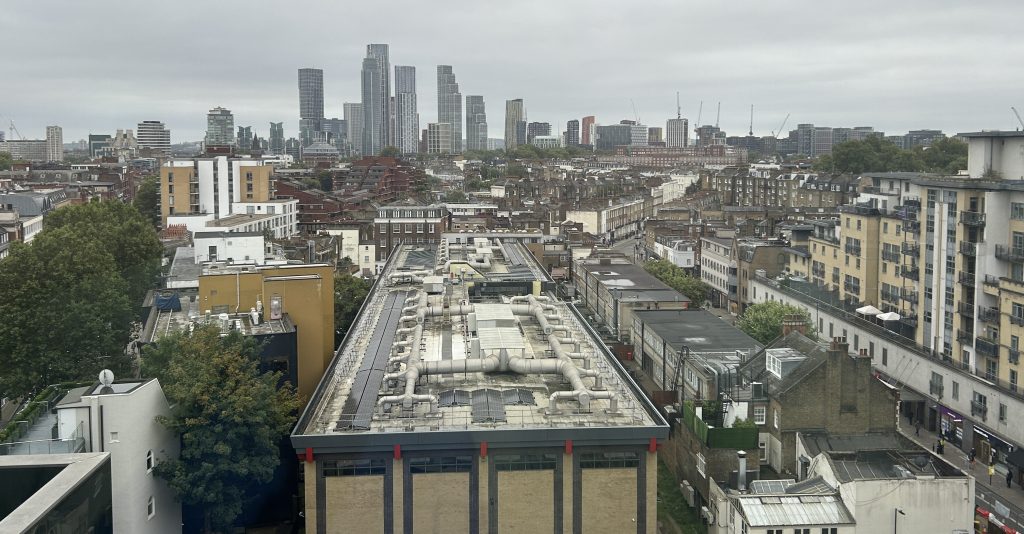
On my latest trip to London, I stayed at the Park Plaza Victoria London Hotel. Located right across the street from Victoria Station, the Park Plaza Victoria (6 on the map at the beginning of this post) is a remarkably good deal for a modern, four-star hotel in the heart of London.
My room for two was spacious and even had a view over London.
The Wilde ApartHotel (7) just off the Strand is also a wonderful choice. I love its very central location within walking distance of Trafalgar Square and most of the West End theaters.
Guided Tours in London
On one visit to the V&A, I opted to take a guided tour. Good call! The two-hour tour showed me all sorts of amazing objects I may have otherwise missed. You can take a free tour provided by the museum staff or an outside tour.
Here is a tour option from GetYourGuide:
Continue Exploring London’s Museums
Of course, top of the list is the British Museum, in which you’ll encounter objects from cultures all across the globe over two million years. Entry is free, but book your entry ticket in advance. The closest tube stations are Tottenham Court Road, Holborn, and Russell Square.
For art, you can’t beat the Tate Britain, the Tate Modern, the National Gallery of Britain (my favorite), the National Portrait Gallery, and the Courtauld Gallery.
The Wallace Collection is small but eclectic and worth a visit. And while you’re in South Kensington, check out the Design Museum, which has become one of my new favorite places in London.
Here are links to posts about three of my favorite London galleries.
- London’s National Gallery: The Best of the Best
- Best of the Courtauld Gallery in London: A Treasure Trove for the Artsy Traveler
- Things to See at the Design Museum in London
For all posts about England, see Visiting England.