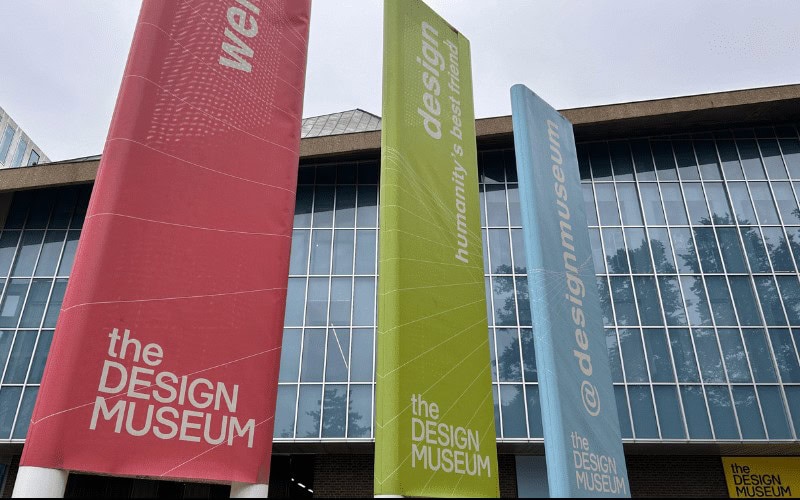
The Design Museum in London

Things to See at the Design Museum in London

I highly recommend a visit to the Design Museum in London. Unlike many museums that are full of objects we can admire but would never use, the Design Museum features objects we all use every day, from teaspoons to computers to cars.

The Design Museum’s vision is “A world in which design enables this planet and its inhabitants to thrive”.

Innovative exhibitions, partnerships, research and learning programs celebrate design in all its forms.

It’s fascinating to see the integral role design has played in shaping our modern world. Read on to learn what there is to see and do at the Design Museum in London.

This post is part of my guide to artsy & independent travel in England, where I share my best tips for exploring England’s creative cities, historic sites, literature, theater, and cultural experiences.


Design Museum Quick Facts

  • Accessibility: Fully accessible, assistance dogs welcome
  • Location: 224–238 Kensington High Street, London W8 6AG, UK
  • Focus: Contemporary design across architecture, fashion, graphics, product, and industrial design
  • Permanent Collection: Designer Maker User – free entry
  • Temporary Exhibitions: Ticketed (varies: get tickets in advance for popular exhibitions)
  • Transport: 7–10 min walk from High Street Kensington Tube station
  • Typical Visit Duration: 1–2 hours or more
  • Eat & Drink: On-site café & restaurant available

Overview: What is the Design Museum London?

The Design Museum London is the UK’s leading museum dedicated to showcasing contemporary design and exploring how design shapes everyday life.

In the Design Museum’s newly renovated and spacious building, you’ll find exhibits about architecture, fashion, graphics, product, and digital design.

The Design Museum’s free permanent collection, Designer Maker User, examines the creative process behind modern objects, while rotating exhibitions spotlight influential designers, brands, and movements from around the world.

Together, the galleries offer an engaging introduction to design’s impact on culture, technology, and society.


Highlights: Things to See at the Design Museum London

In addition to the marvelous permanent collection called Designer Maker User, the Design Museum houses several special exhibitions which require tickets.

Check the Design Museum’s website to see whether any of the special exhibitions interest you, buy your ticket online in advance, and then make sure you save some energy to tour the permanent collection. Tickets for popular exhibitions sell out quickly.

The Permanent Collection: Designer Maker User

After touring Barbie: The Exhibition at the Design Museum in London, I ascended to the third floor to tour the permanent collection of the Design Museum and admire the museum’s interior space.
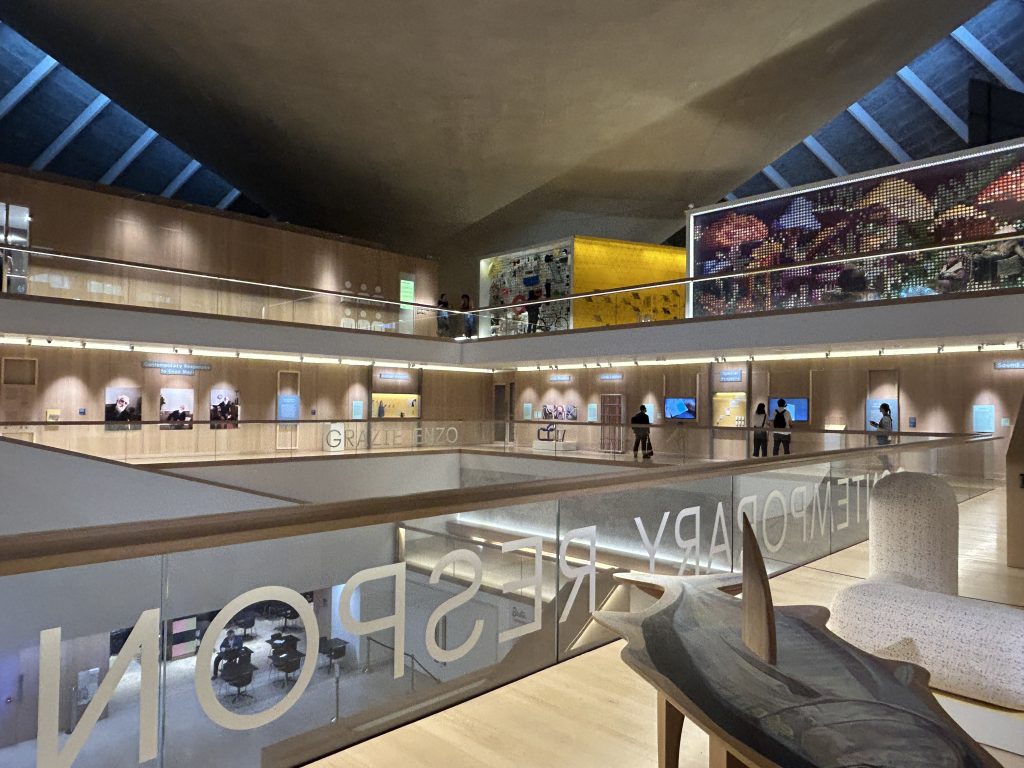
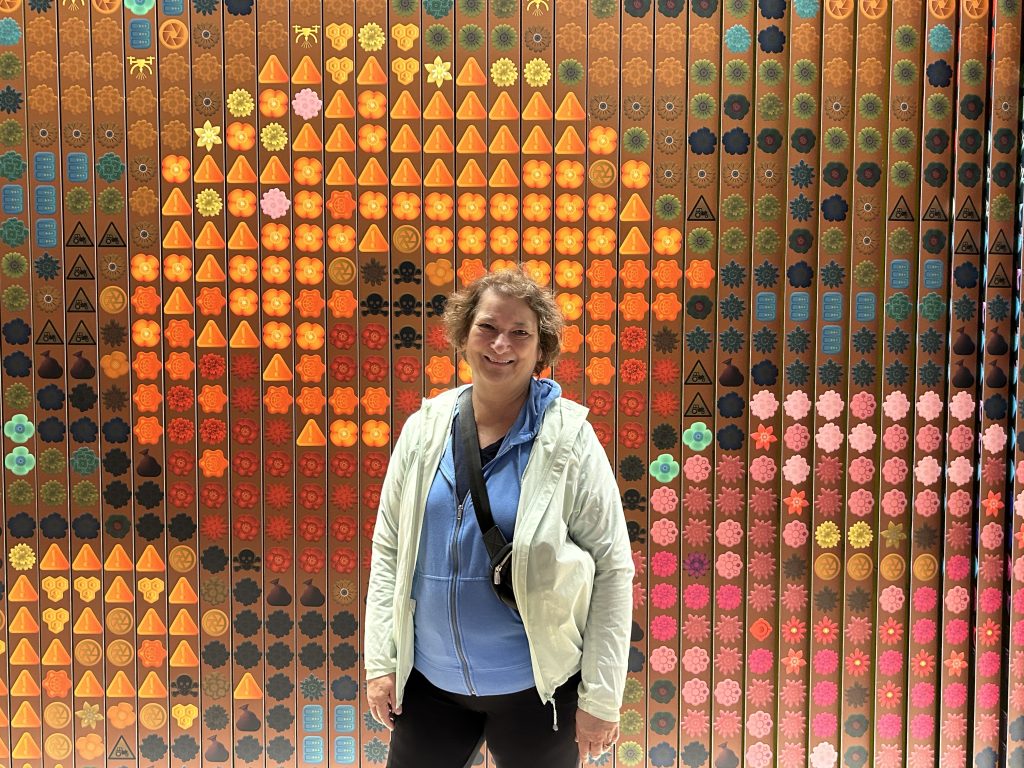
What to See in the Designer Maker User Collection

The permanent collection at the Design Museum is called Designer Maker User and it’s a stunner! The curators have done an excellent job of explaining various design concepts through the display of everyday objects, from spoons to chairs to computers.

The exhibit features over 1000 objects grouped into three segments: Designer, Maker, and User .

Designer at the Design Museum

The objects in the Designer section are displayed in ways that invite the visitor to contemplate the thought process of the designer who must envision how the designed object will be used. I like the quote on one of the information plaques: “The role of the designer stretches from the spoon to the city”.

In this section are displayed objects such as a traffic light, the Anglepoise lamp, and a Tube carriage.

Maker at the Design Museum

The Maker section presents objects in relation to the evolution of manufacturing. Included are café chairs, a Model T Ford, robotic arms, and 3D printers. Objects such as tennis balls and the London 2012 Olympic Torch are presented at different stages of production.

As I wandered through the exhibits, I was constantly amazed by the ingenuity of the human mind. Take tennis, for instance.  First, someone had to want a ball they could bounce and hit with a raquet. Then, someone else had to figure out how to make a prototype of the ball. Finally, a whole team of brainiacs had to determine how to manufacture thousands of balls so that anyone who wanted to could play tennis. Mind-boggling!

User at the Design Museum

The User section explores the interaction between people and brands that define the modern world. As a computer user for many decades, I was especially taken by the display of electronics, from the clunky Apple computers of the 1980s to the sleek Macs of today. The red Sony laptop in the picture below is identical to one I had a good twenty years ago. I really liked that computer!
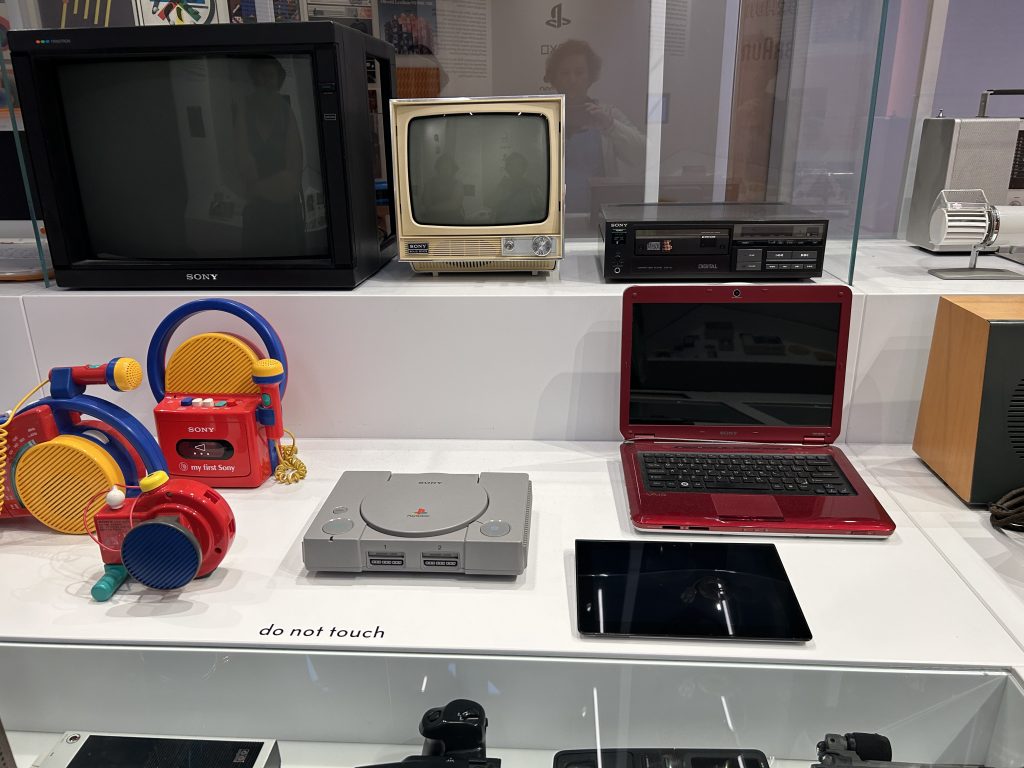
Computers at the Design Museum in London

Crowdsourced Wall at the Design Museum

Outside the Designer User Maker exhibit is the Crowdsourced Wall. Here are displayed more than 200 objects that people from 25 countries nominated as their most important objects. The diverse selection of objects is meant to “demonstrate the intimate relationships we have with the everyday objects that shape our lives”.

Items on display include a red bucket, an Underground sign, a bicycle, a green plastic stool, a sewing machine, a drill, a mop, a pair of jeans, and a lot more. The fascinating selection is so much fun to look at since many are objects that we know and use.
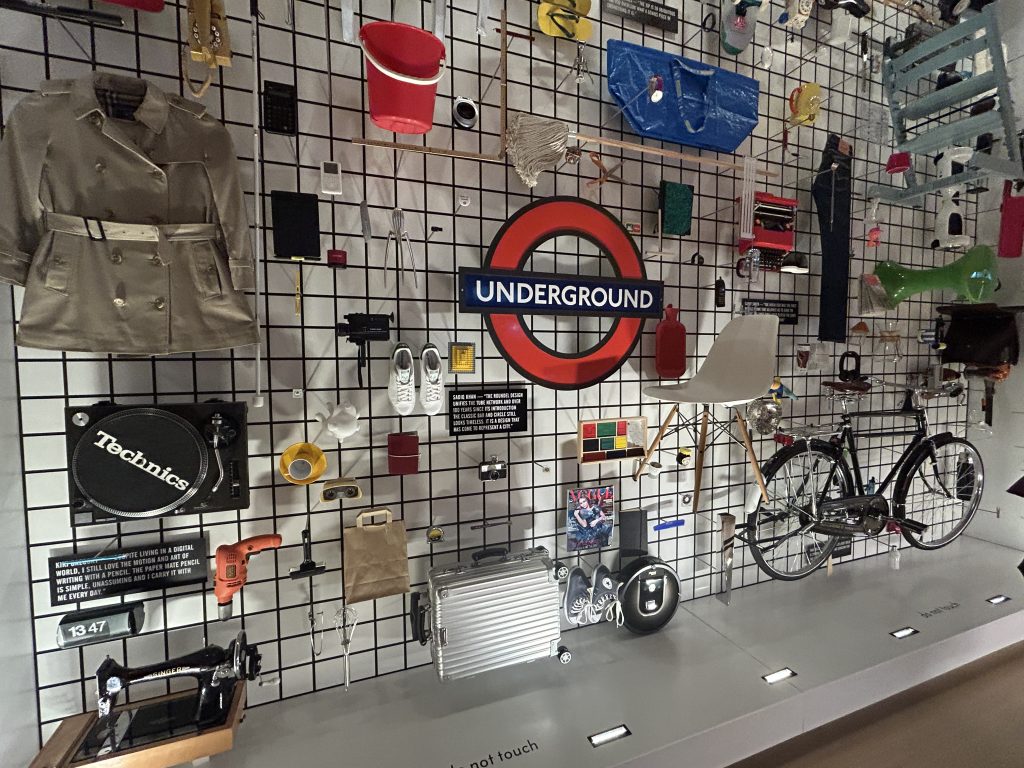
The Crowdsourced Wall of everyday objects at the Design Museum in London

Checking Out the Rods at the Design Museum

I am arrested by a display of…rods! I didn’t know rods were a thing in the UK, but they certainly were a cherished part of my early school years. For those who don’t know, rods are various colored plastic rectangles used to teach children arithmetic.

A white rod represents one and is one-tenth the size of an orange rod that represents ten. In between are red for two, green for three, and so on. When I was in Grades 1 and 2, the highlight of a day was when you finished your work early and the teacher let you go to the back of the room to “play rods”. I spent many a happy hour solving arithmetic problems with the tactile aid of those plastic rectangles that felt so smooth and were so pleasingly colored. Rods are still in use to this day, although my daughter doesn’t remember having them when she was at school in the 1990s.

What a shame! I credit rods with giving me a lifelong penchant for arithmetic. Mathematics? Not so much, but I’m a dab hand at addition, subtraction, multiplication and division without a calculator! Thank you, rods.
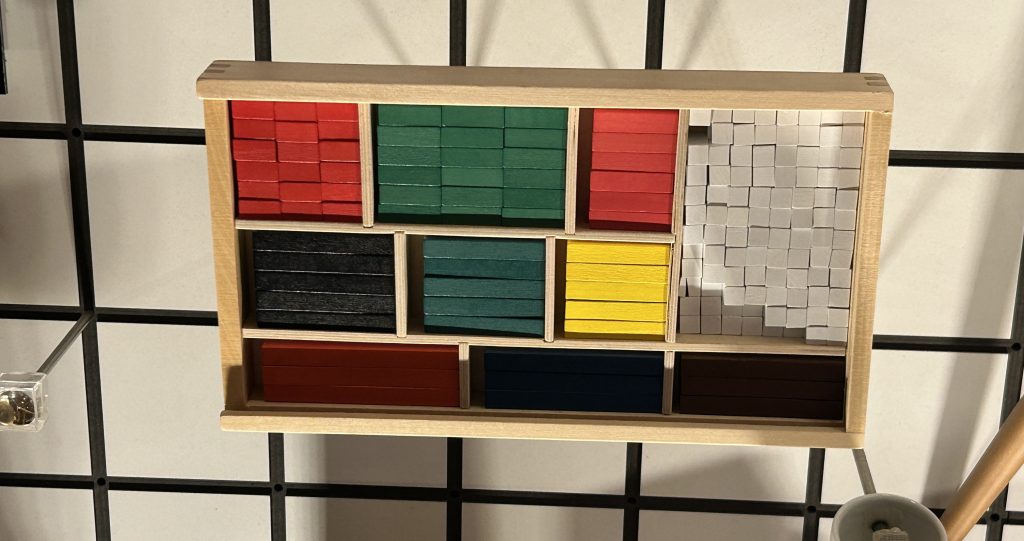
A box of rods used to solve arithmetic problems at the Design Museum in London
A display of rods used to teach children arithmetic

The box of rods on display at the Design Museum isn’t the only object that catapults me down memory lane. The entire museum is one big time-travel experience.

If you use household objects (and who doesn’t?), then check out the Design Museum. You’re bound to find at least a few displays that trigger happy memories.


Practical Visitor Information

Location of the Design Museum

The Design Museum is located at 224–238 Kensington High Street. The closest London Underground station is High Street Kensington (Circle and District lines), about a 7–10 minute walk from the museum. Other nearby Tube options are Earl’s Court (District & Piccadilly lines) and Holland Park (Central line), both roughly 10–15 minutes on foot.

Hours & Tickets

The Design Museum is open Monday to Thursday from 10:00 to 17:00, and Friday to Sunday from 10:00 to 18:00. Some ticketed exhibitions may remain open later on weekends. The Design Museum is closed on Christmas Eve, Christmas Day and Boxing Day. Admission to the permanent collection is free. Check the website for more information.

The Design Museum Shop

After you’ve toured the exhibits, check out the stylish gift shop. You’ll find all sorts of cool design items there.


Where to Stay in London

London is not an inexpensive city, but nevertheless, I’ve discovered some excellent places to stay that, while not bargain basement, are good value and centrally located.

On a recent trip to London, I stayed at the Park Plaza Victoria London Hotel. Located right across the street from Victoria Station, the Park Plaza Victoria (5 on the map at the beginning of this post) is a remarkably good deal for a modern, four-star hotel in the heart of London. My room for two was spacious and even had a view over London.

The Wilde ApartHotel (6) in central London is also a wonderful choice. I loved its central location within walking distance of Trafalgar Square and most of the West End theaters. Check out my post about the Wilde ApartHotel.


Design Museum London FAQs

Here are questions I’ve been asked about the Design Museum London:

Is the Design Museum worth visiting?

Absolutely! For anyone who has “stuff”, the Design Museum is a wonderful celebration of how design affects all of us every day.

Is the Design Museum London free to visit?

Yes. The permanent collection and free displays are free, but some temporary exhibitions require a paid ticket. Buy tickets online from the Design Museum website in advance for popular exhibitions which sometimes sell out.

How long should I plan to spend at the museum?

Most visitors spend between 1–2 hours exploring the exhibits.

Where is the Design Museum located?

At 224–238 Kensington High Street, in Kensington, London.

How do I get there by public transport?

The nearest Tube station is High Street Kensington (Circle & District lines), about a 7–10 minute walk away.

Are there food and drink options?

Yes; the museum has a café and a restaurant with seating throughout the day.

Is the museum family-friendly and accessible?

Yes. Accessibility info is provided on the museum’s website, and assistance dogs are welcome.


Continue Exploring London’s Museums & Galleries

London is full of intriguing museums and cultural experiences, including many that remain delightfully off the beaten path.

If you’re planning to explore more of London’s outstanding museums and galleries, here are guides to three of my favorites:

For more inspiration, see Visiting England, where you’ll find all of my England travel guides in one place.

If you’re interested in guided experiences, GetYourGuide also offers a wide range of tours and activities across London.

Powered by GetYourGuide

Carol Cram
About Carol Cram

Carol M. Cram is the author of five award-winning novels inspired by art and the women who shaped it, the creator of Artsy Traveler, an arts-focused travel blog, the founder of Art In Fiction, a curated database of 2,600+ novels inspired by the arts, and the host of The Art In Fiction Podcast. She lives with her husband, artist Gregg Simpson, on beautiful Bowen Island near Vancouver, BC.
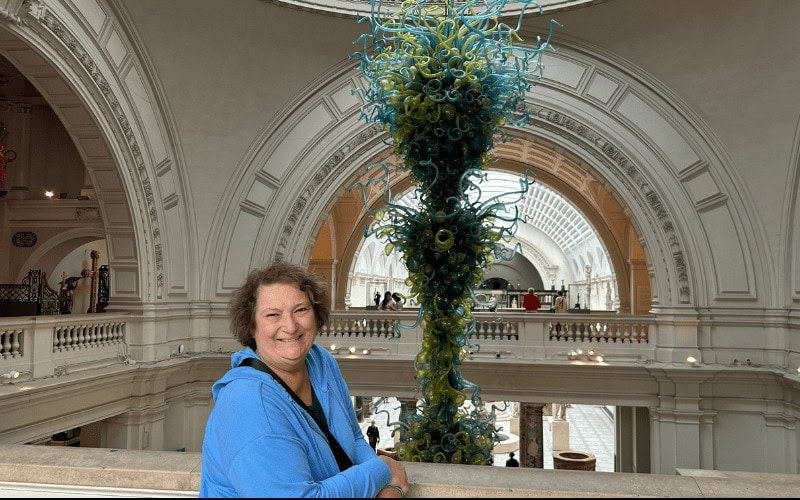
Carol Cram at the V & A Museum in London

The Victoria & Albert Museum in London: My Honest Guide & Personal Favorites

The Victoria & Albert Museum is one of the world’s most amazing repositories of, well, beautiful stuff.

It’s a collector’s dream come true with astonishing examples of the decorative arts and the applied arts. You’ll find everything from costumes to metal gates to furniture to bracelets and everything in between.

You’ll discover there’s so much to see at London’s Victoria & Albert museum that you’ll need to pace yourself and have a plan.

In this V&A Museum Guide, I share my recommendations for seeing the best of London’s fabulous Victoria & Albert Museum.

This post is part of my guide to artsy & independent travel in England, where I share my best tips for exploring England’s creative cities, historic sites, literature, theater, and cultural experiences.


Quick Facts: Victoria and Albert Museum

  • Facilities: Excellent café, garden courtyard, gift shops, cloakroom
  • Location: Cromwell Road, South Kensington, London
  • Founded: 1852
  • Focus: Art, design, textiles, fashion, sculpture, decorative arts
  • Admission: Free (special exhibitions require tickets)
  • Closest Tube Stations: South Kensington (best), Gloucester Road
  • Average Visit Time: 2–4 hours (full day recommended for art lovers)
  • Top Highlights: Jewelry Gallery, Fashion Gallery, Medieval & Renaissance Courts, Cast Courts
  • Best Time to Visit: Weekday mornings; late Fridays during extended hours
  • Photography: Allowed in most galleries (no flash in sensitive areas)

Overview of the Victoria and Albert Museum

You can’t really define the V&A because it’s just so eclectic. Think of an object and the V&A probably has an example of a version made with exquisite skill by someone somewhere in the world.

It’s a sensual feast for the eyes and a testament to the ingenuity of human beings and their commitment to fashioning objects that are not only functional but also gorgeous.

There are so many things to see that you could spend days exploring. The V&A is HUGE! It’s also high on my list of all-time favorite museums. Almost every time I go to London, I pop in to the V&A. No matter how often I visit, I still discover new things to look at.

The only problem with this incredible museum is that it’s impossible to see and appreciate all of it in one visit, or two, or ten. I’ve visited at least five times, and feel like I haven’t even scratched the surface. The museum lives up to its reputation as the world’s largest museum of art and design.

Short History of the Victoria and Albert Museum

The V&A was established in 1852 with collections from the Great Exhibition of 1851, and was originally called the Museum of Manufactures and then the South Kensington Museum.

Queen Victoria laid the foundation stone of the current location in 1899 and changed the name to the Victoria & Albert Museum to honor her late husband Prince Albert.

Location of the Victoria and Albert Museum in London

The V&A is located near the South Kensington underground station and alongside several of London’s largest South Kensington museums.

If you love museums, make a day of it. Visit the V&A (1), and then hop on over to the Natural History Museum and the Science Museum (2 & 3 on the map). Both are excellent places to visit with children.

Better still, spread the visits over two days. Museum-hopping can be exhausting. Go at your own pace and take time to explore nearby Hyde Park (4) and Kensington Gardens (5) for a nature break.

Map courtesy of Wanderlog, a trip planner on iOS and Android


The V&A Family is Growing

The original South Kensington V&A remains the flagship, but the museum has been expanding across London in exciting ways.

V&A East

The new V&A East opened in Stratford’s Queen Elizabeth Olympic Park in 2024 and focuses on contemporary creativity and making. It’s a completely different experience from the South Kensington museum, being less grand and more experimental. If you’re a sports fan, you can combine it with a visit to the Olympic Park.

Young V&A

Located in Bethnal Green and reopened in 2023 after a major transformation, Young V&A has been reimagined specifically for children and families. If you’re traveling with kids, this is a better option than the main museum.

Caveat: I haven’t visited V&A East or Young V&A yet, but both are firmly on the agenda for my next London trip. And like the V&A itself, both are free.


Visiting the V&A

Yes, the V&A is huge and yes, there’s a ton to see, but you have to start somewhere. Your best bet when first visiting is to select five or six galleries to explore, occasionally veering into exhibition rooms en route when something catches your eye.

V&A Highlights at a Glance

V&A Galleries

  • Architecture
  • Britain (1500 – 1760)
  • Britain (1760 – 1900)
  • Buddhism
  • Cast Courts
  • Ceramics
  • China
  • Contemporary Glass
  • Design (1900 – Now)
  • Europe (1600 – 1815)
  • Fashion
  • Furniture
  • Glass
  • Gold, Silver & Mosaics
  • Himalayas & Southeast Asia
  • Ironwork
  • Islamic Middle East
  • Japan
  • Jewelry
  • Korea
  • Leighton
  • Medieval & Renaissance (300 – 1600)
  • Metalware
  • Paintings
  • Photography Centre
  • Portrait Miniatures
  • Prints & Drawings
  • The Raphael Cartoons
  • Sacred Silver & Stained Glass
  • Sculpture
  • Sculpture (1300 – 1600)
  • Silver
  • South Asia
  • South Asian Sculpture
  • Tapestries
  • Theatre & Performance

Daunting? You betcha! Note that some galleries may be closed. Start your visit by checking at the information desk to find out what’s open. For example, the Theatre & Performance gallery was not open when I visited.

So where to start?

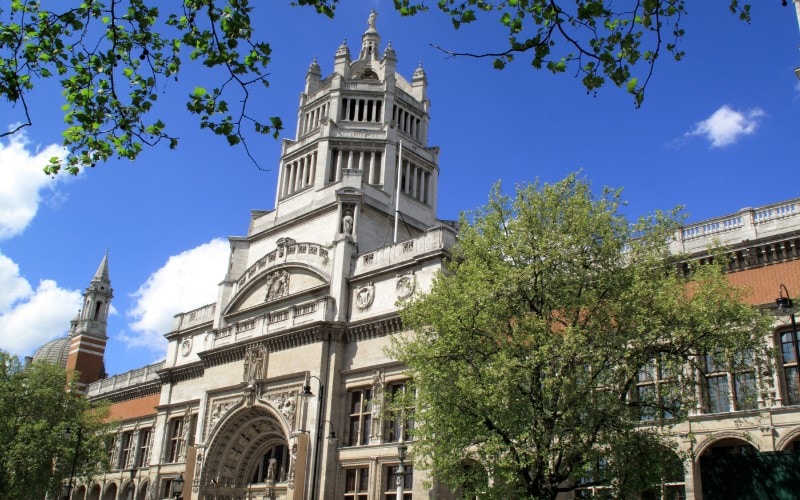
A bright view of the grand entrance to the Victoria and Albert Museum, showcasing the building's intricate white stone architecture against a clear blue sky.
Exterior of the Victoria & Albert Museum on Cromwell Road in Kensington

Arriving at the Victoria & Albert Museum

First, walk up the steps and enter the museum’s massive atrium. Straight ahead is a large information area, your first stop.

Put your wallet away (unless you’re planning to see the special exhibition) because admission to the permanent collection is FREE. I know. Amazing!

You can make a donation (I always do), but you don’t have to. The attendants at the information booth will give you a map and may also suggest you purchase the guidebook.

For £5, it’s a bargain because it gives you an overview of the highlights of each gallery.

Special Exhibitions

You can choose to buy a ticket to the special exhibition. A few weeks before you visit the V&A, check what’s on and make reservations. Popular exhibitions often sell out quickly.

Getting Started

Once you’ve purchased your guidebook, or just armed yourself with the free map, walk straight through the gift shop (you can come back later!) and out into the courtyard.

Buy something to drink from the kiosk and settle down at one of the tables (weather permitting) to check the map and/or guidebook.

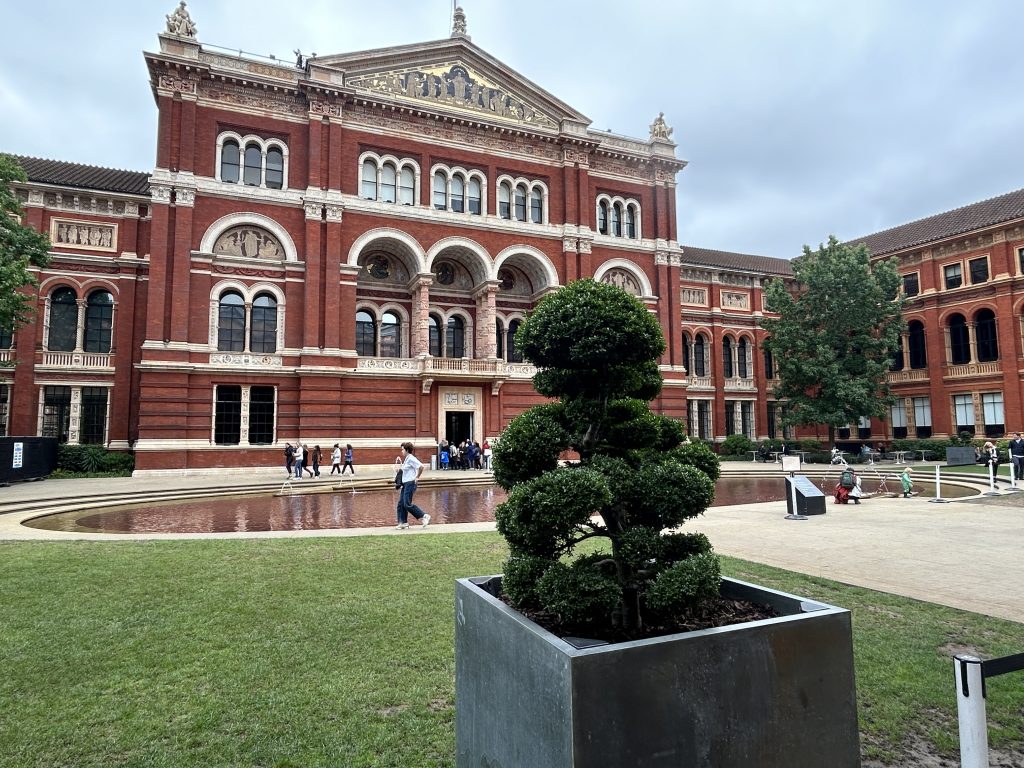
The exterior courtyard of the Victoria and Albert Museum in London, featuring the building's red brick façade, a circular fountain, and manicured greenery, including a topiary tree in a planter.
Courtyard at the V&A

While sipping your beverage of choice, figure out which areas you want to focus on and where they are in the museum. You want to avoid backtracking.

The beauty of the V&A is that even if you’ve decided to tour only a few galleries, you’ll see plenty more as you walk through the museum from chosen gallery to chosen gallery. Don’t be surprised if you’re tempted to veer off to check out a gallery you hadn’t intended to visit.

Give in to these impulses. The V&A is a treasure trove!

Now you’re ready to start your tour. Go slowly and pace yourself. Beauty overload is a thing!

Here are just some of the hundreds (thousands?) of things to see at the V&A.


Things to See at the V&A

I’m focusing here on six galleries: Fashion, Asian (which includes several areas), Furniture, Cast Court, Glass, and Jewelry.

Fashion Gallery 

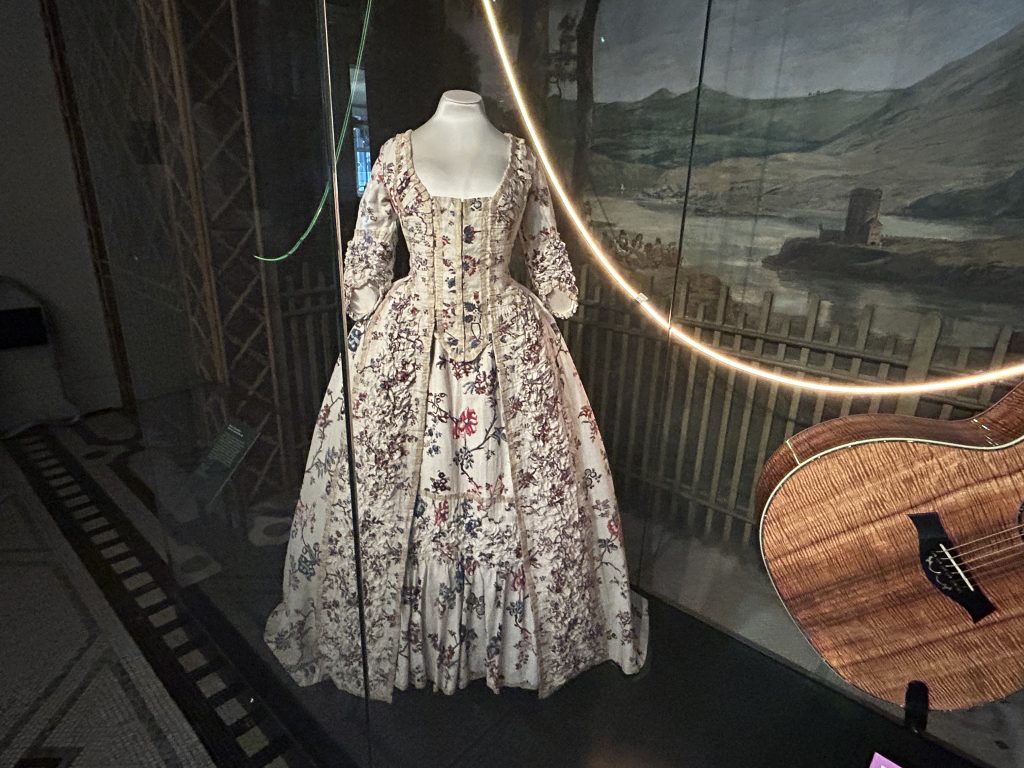
I always drop in to the fashion collection, located in the central area of the main floor. Here, you’ll find a unique collection of European clothing and textiles spanning from 1750 to the present.

I particularly enjoy the 18th- and 19th-century dresses. Can you imagine wearing so many hoops and corsets? Here’s an elaborate dress from the 1760s.

A museum display of an ornate 18th-century floral gown with a full skirt and corseted bodice. The dress is set against a historical backdrop alongside a wooden string instrument.

Asian Art and Objects at the V&A

This is a broad category that includes art and objects from several regions: Japan, Korea, China, South Asia and Himalayas, and Southeast Asia. Take a stroll through the galleries to enjoy an amazing collection of articles.

Highlights are the Samurai armor collection in the Japan section, a golden Buddha, jade objects from China, delicate porcelain, and so many more treasures.

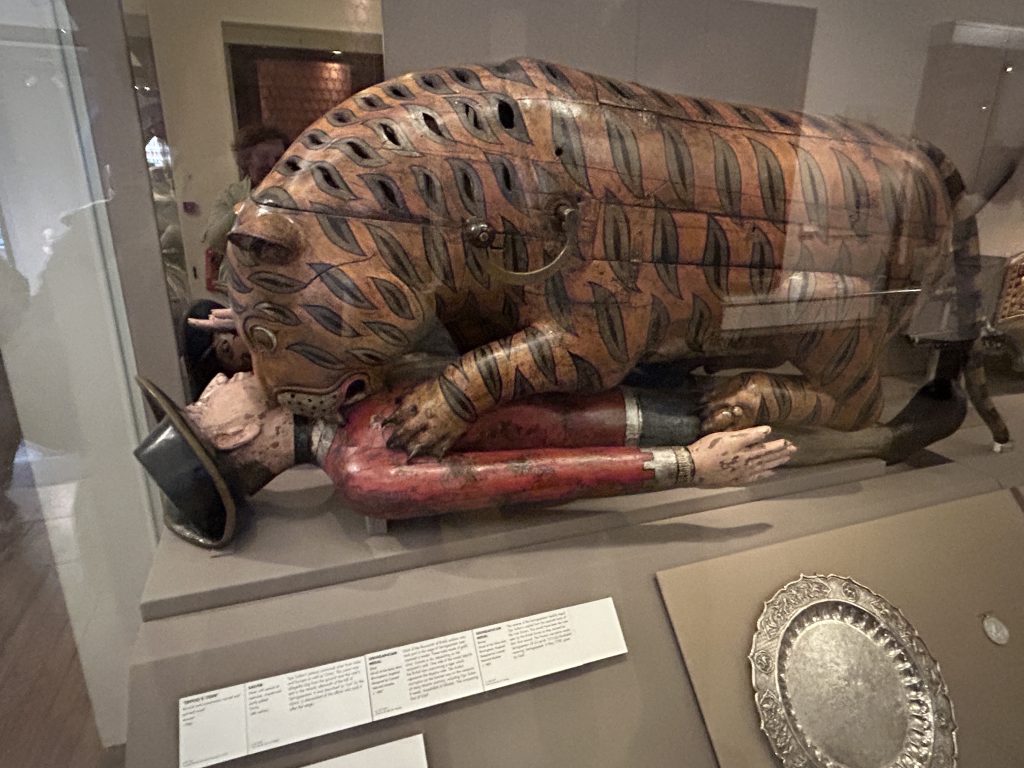
An interesting, if rather gruesome, piece is Tipu’s Tiger in the South Asia and Himalayas section. This wooden sculpture was made for Tipu Sultan, ruler of Mysore in South India.

When the handle on the side of the tiger is turned, the ghastly noises produced imitate the wails of agony of the British soldier lying underneath the tiger. Apparently, this exhibit was one of the most popular in the East India Company’s museum.

A unique wooden sculpture depicting a tiger attacking a British soldier, with vibrant colors and intricate carving. The piece is housed in a glass display case with accompanying text panels.

And although not part of the Asian galleries, take a quick detour to check out the Ardabil carpet, which is the world’s oldest dated carpet. Although its exact origins are unknown, the carpet was made sometime during the 16th century.

It’s a stunner.

Examples of furniture are scattered throughout many of the galleries in the V&A. In addition, the Dr. Susan Weber Gallery of Furniture showcases how furniture has been made and decorated for over 600 years. Included are items from the Renaissance to the present.

Bed of Ware

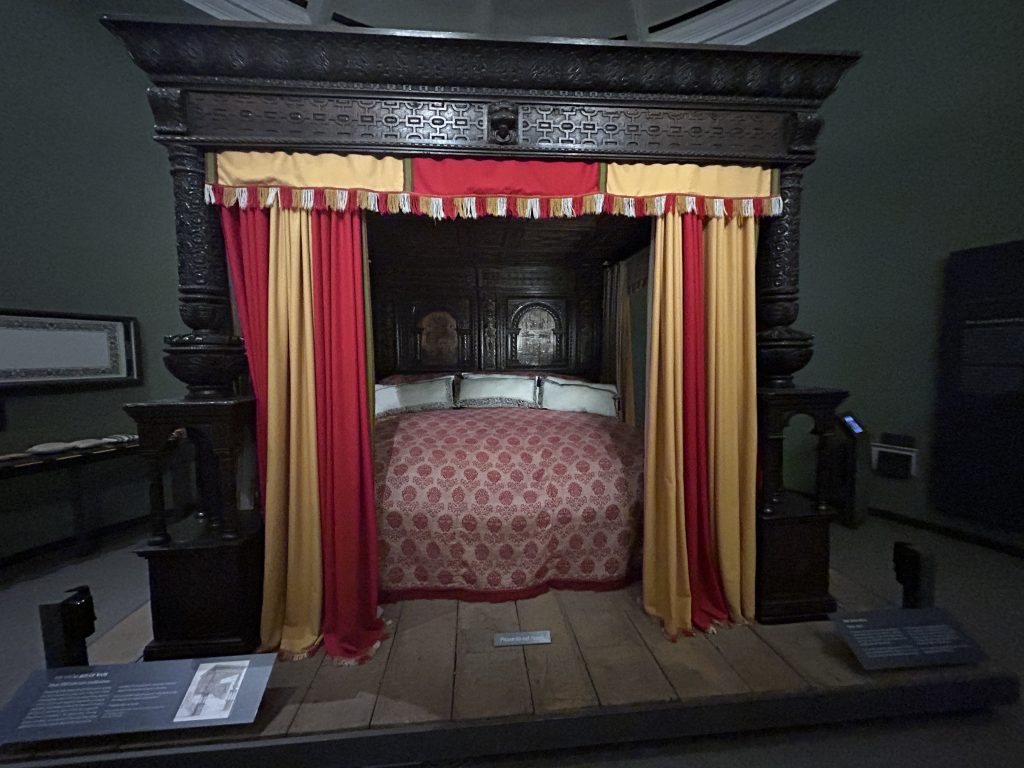
One of the most interesting pieces of furniture is in the Britain 1500 – 1760 gallery. Definitely make a detour to check out the Great Bed of Ware, so famous in its day that it was mentioned by Shakespeare.

The famous bed is three meters wide and apparently able to comfortably accommodate four couples (at least!). It was constructed around 1590 as a tourist attraction for an inn in Ware, Hertfordshire, which was a day’s journey from London and a convenient overnight stop for travelers bound for Cambridge and points north.

The initials that visitors carved into the bed posts and the headboard are still visible today.

A historic four-poster bed with ornate dark wood carvings and bright red and yellow curtains. The bed is displayed in a dimly lit museum gallery.

Cast Courts 

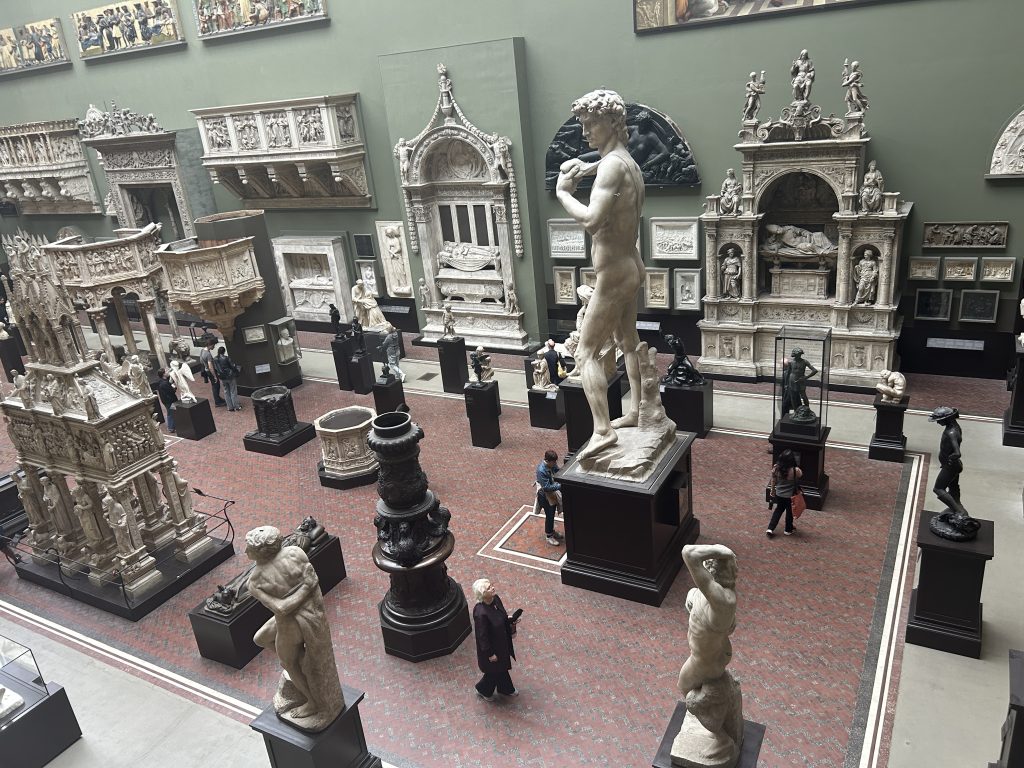
The massive sculptures in the Cast Courts are the showstopping, must-see areas of the V&A. View the two huge, connected courts from many angles as you make your way up through the four levels of the museum.

Look down from one of the walkways on the third or fourth level and find yourself faced with a bewildering hodge podge of iconic statues, altarpieces, and even columns.

Why go to Florence when you can visit the cast courts at the V&A instead? It’s like a souvenir store for giants.

These plaster casts of great art and architecture from around the world were collected and displayed for visitors to study.

One of the many highlights is Michelangelo’s David. Apparently, Queen Victoria was shocked by the anatomical correctness of the David cast and requested that a suitably proportioned fig leaf be made and hung on the statue when dignitaries visited.

My source didn’t specify if regular visitors were allowed to view the full Monty, so to speak.

A wide view of a museum's cast court filled with replicas of famous sculptures, including Michelangelo's David, surrounded by detailed architectural elements and other statues.

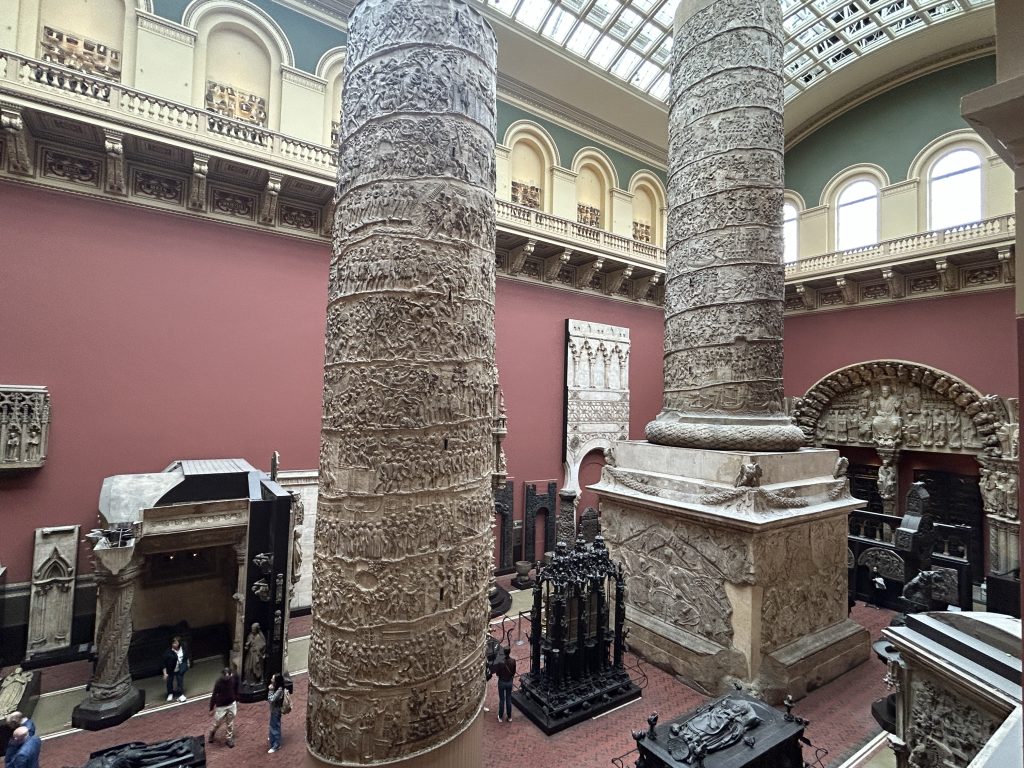
Another highlight is the reproduction of Trajan’s column. The original is too tall to house in the building and so the reproduction is divided into two massive columns.

I’ve seen the original in Rome, and because of the column’s height, it’s difficult to see the detail. At the V&A, you can get pretty close to the columns to view the intricate carvings.

Interior view of a museum gallery showcasing large replicas of ancient Roman columns, including Trajan's Column, surrounded by other monumental sculptures under a skylit ceiling.

Glass Gallery

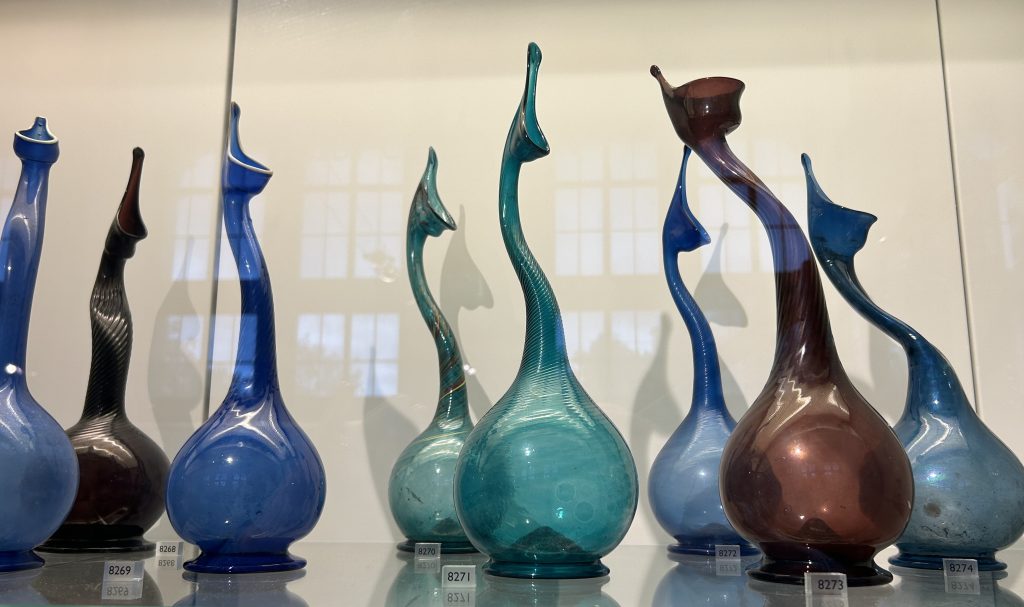
Up on Level 3 in a corner of the museum that was virtually empty when I last visited is the astounding Glass Gallery. Here, you’ll trace the development of design and technology in glassmaking over 3,500 years.

The museum’s glass collection is reputed to be one of the world’s most comprehensive.

I’m always intrigued by glass. How did people figure out that sand heated up could turn transparent? The variety and beauty of the hundreds of objects on display is remarkable. I could have stayed there for hours.

A display of slender, artistic glass vessels in shades of blue, turquoise, and brown with elongated, curving necks. These pieces are delicately shaped, highlighting the elegance of glassblowing techniques.

I felt overwhelmed after looking at so many amazing objects, but couldn’t resist a walk through the narrow, dimly lit and quite crowded collection reputed to be among the finest in the world.

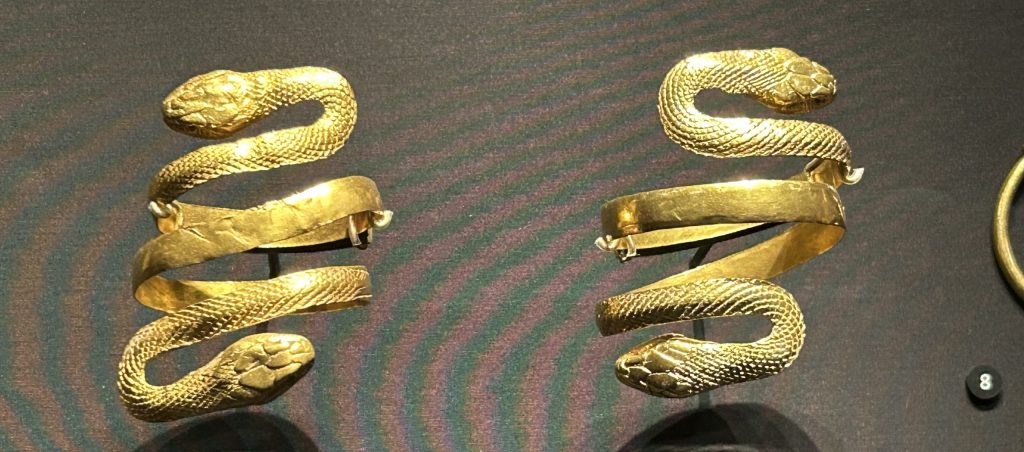
More than 3,000 pieces tell the story of western jewelry from ancient times to the present day.

Case after case contain pieces ranging from tiaras, brooches, and earrings to stunning necklaces, bracelets, and rings.

All around me, people could be heard oohing and aahing, and no wonder! The ingenuity and skill that was required to make such superb objects is unfathomable.

Close-up of two golden snake-shaped bracelets, intricately detailed with scales, displayed on a dark surface. The craftsmanship emphasizes the serpent motif with coiled designs and lifelike texture.

Practical Information

The Victoria & Albert Museum is open seven days a week from 10:00 am to 17:45, except for Fridays when it is open until 22:00. Admission is free. Check the website for more information.

Taking a Break at the Café 

A good strategy is to take a break to enjoy something to eat at the V&A café. Not only will you enjoy tasty food, but you’ll also benefit from getting off your feet to further study the guidebook and map.

The café can get crowded, so time your visit either before or after the lunch rush.

One good strategy to avoid crowds is to arrive at the museum when it opens at 10 am, tour a few galleries, and then enjoy an early lunch in the café before tackling some more.

Checking Out the Gift Shop 

I do love a good gift shop, and the one at the V&A is first-rate. You’ll find relatively affordable textiles, jewelry, books, fashion items, gift items, cool stuff for kids, and much more.

I bought some lovely tea towels that will be for display only in my kitchen. They are far too nice to use!

Studying at the Victoria & Albert

The V&A is a world-class research center. In addition to displaying over 60,000 objects, the museum also maintains a number of study rooms, both on- and off-site. Here, you can view over two million objects from the Reference Collections and conduct private research.

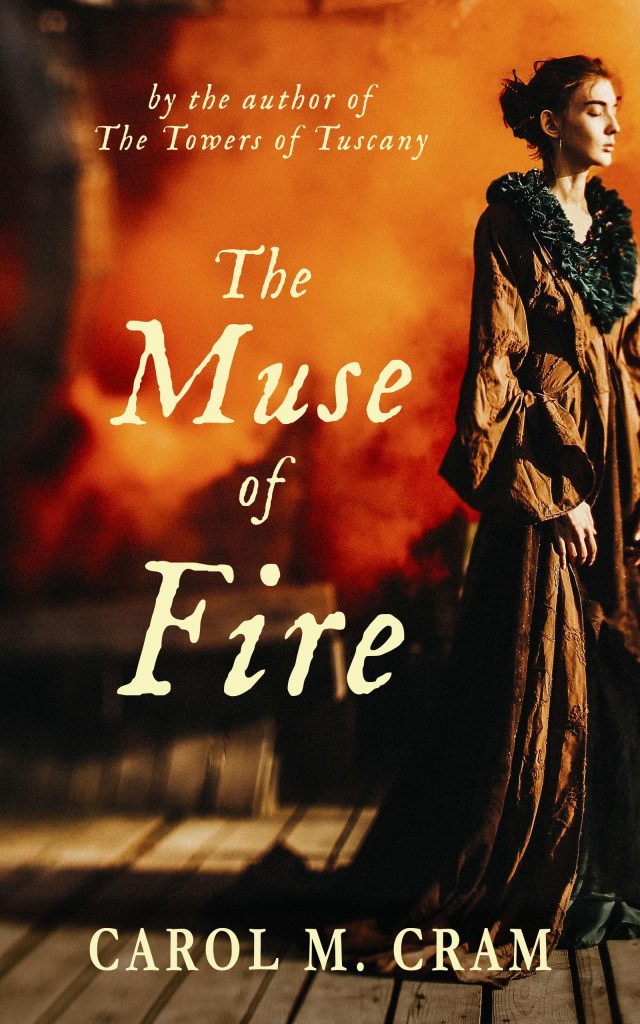
When I was researching my novel The Muse of Fire, set in early 19th century London, I booked time at one of the study centers to view original prints of cartoons popular at the time.

In the hushed atmosphere of the off-site study room, I received the box of prints from an attendant who looked straight out of a Dickens novel, and spent several happy hours making notes and taking pictures.

If you have a research project in mind, you may well find useful resources at the V&A. Check the website for more information. Note that you must book well in advance of your visit.

Book cover for "The Muse of Fire" by Carol M. Cram. It features a woman in a vintage brown dress standing against a fiery orange background, exuding a dramatic and historical ambiance. The tagline reads "by the author of The Towers of Tuscany."

The Miniaturist by Jessie Burton follows Nella Oortman, a young bride in 1686 Amsterdam who receives an uncanny wedding gift: a cabinet-sized replica of her own house. When an anonymous miniaturist begins sending tiny furnishings that seem to predict her family’s secrets, Nella is drawn into a mystery that unravels the household around her. A novel obsessed with the artistry of miniature craft and domestic design, fitting reading before wandering the V&A’s furniture and decorative arts galleries.

A Single Thread by Tracy Chevalier follows Violet Speedwell, one of the so-called surplus women left unmarried after the First World War, who finds purpose and independence stitching embroidered kneelers and cushions for Winchester Cathedral. Working alongside a community of needlewomen, she discovers a craft, and a freedom, she never expected. A quiet tribute to textile artistry that resonates with the V&A’s renowned collection of embroidery and design.

Search more novels celebrating decorative arts and design on Art In Fiction →


V&A Museum FAQs

Is the Victoria & Albert Museum free?

Yes. General admission is free, although special exhibitions require paid tickets. Check the website and purchase tickets for special exhibitions well in advance of your visit.

How much time do I need at the V&A?

Most visitors spend 2–4 hours, but art and design lovers can easily spend a full day.

What are the must-see exhibits at the V&A?

Highlights include the Jewelry Gallery, Raphael Cartoons, Cast Courts, Fashion Gallery, and the Medieval & Renaissance Courts.

Is the V&A good for an arts-focused visit?

Absolutely. It’s one of the richest collections of decorative arts, design, and fashion in the world, perfect for creative and arts-minded travelers.

When is the best time to visit the V&A?

Weekday mornings are the quietest. Friday late openings offer a relaxed atmosphere and fewer crowds.

Can I take photos inside the museum?

Photography is permitted in most galleries, although flash is restricted in sensitive areas and temporary exhibitions may have their own rules.

Is the V&A suitable for first-time visitors to London?

Yes. It’s centrally located, easy to access, and offers an inspiring introduction to British and global art and design.


Staying in London

London is not an inexpensive city, but over the years, I’ve discovered some excellent places to stay that, while not bargain basement, are good value and very centrally located.

On my latest trip to London, I stayed at the Park Plaza Victoria London Hotel. Located right across the street from Victoria Station, the Park Plaza Victoria (6 on the map at the beginning of this post) is a remarkably good deal for a modern, four-star hotel in the heart of London.

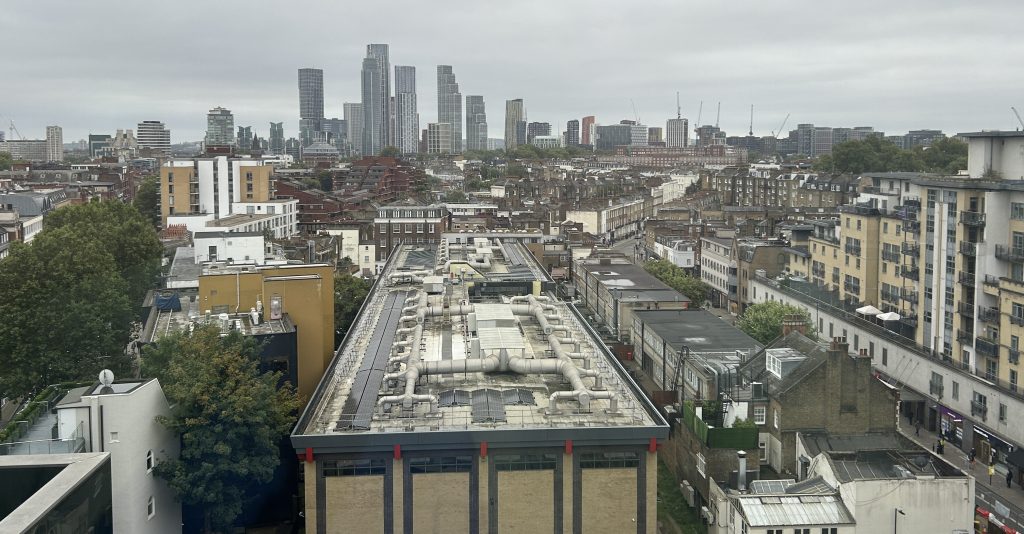
My room for two was spacious and even had a view over London.

A cloudy cityscape of London, featuring modern high-rise buildings in the distance and a mix of urban architecture in the foreground, with rooftops and chimneys adding character to the scene.
View from my room at the Park Plaza Victoria Hotel in London

The Wilde ApartHotel (7) just off the Strand is also a wonderful choice. I love its very central location within walking distance of Trafalgar Square and most of the West End theaters.


Guided Tours in London

On one visit to the V&A, I opted to take a guided tour. Good call! The two-hour tour showed me all sorts of amazing objects I may have otherwise missed. You can take a free tour provided by the museum staff or an outside tour.

Here is a tour option from GetYourGuide:

Powered by GetYourGuide

Continue Exploring London’s Museums

Of course, top of the list is the British Museum, in which you’ll encounter objects from cultures all across the globe over two million years. Entry is free, but book your entry ticket in advance. The closest tube stations are Tottenham Court Road, Holborn, and Russell Square.

For art, you can’t beat the Tate Britain, the Tate Modern, the National Gallery of Britain (my favorite), the National Portrait Gallery, and the Courtauld Gallery

The Wallace Collection is small but eclectic and worth a visit. And while you’re in South Kensington, check out the Design Museum, which has become one of my new favorite places in London. 

Here are links to posts about three of my favorite London galleries.

For all posts about England, see Visiting England.

Carol Cram
About Carol Cram

Carol M. Cram is the author of five award-winning novels inspired by art and the women who shaped it, the creator of Artsy Traveler, an arts-focused travel blog, the founder of Art In Fiction, a curated database of 2,600+ novels inspired by the arts, and the host of The Art In Fiction Podcast. She lives with her husband, artist Gregg Simpson, on beautiful Bowen Island near Vancouver, BC.
Bar at the Folies Bergeres by Manet

Why the Courtauld Gallery Is One of London’s Best Small Art Museums

I visited the Courtauld Gallery within hours of landing at Heathrow after flying to London from Vancouver. I couldn’t wait to see great art, and the Courtauld Gallery in London turned out to be the perfect place to ease into another Europe-bound artsy traveling trip.

Small, centrally located, and remarkably rich in masterpieces, the Courtauld is widely considered one of the best small art museums in London. Housed at Somerset House, it offers an intimate museum experience with a world-class collection that rivals far larger institutions.

The highlights include an outstanding Impressionist collection featuring Monet, Manet, van Gogh, Cézanne, and Gauguin, alongside a beautifully curated medieval collection.

This post is part of my guide to artsy & independent travel in England, where I share my best tips for exploring England’s creative cities, historic sites, literature, theater, and cultural experiences.


Courtauld Gallery: Quick Facts

  • Location: Somerset House, Strand, central London
  • Type: Art museum and gallery
  • Known for: World-class Impressionist and medieval collections
  • Highlights: Works by Monet, Manet, van Gogh, Cézanne, Gauguin, Fra Angelico, and more
  • Size: Small, compact museum, ideal for a focused 1–2 hour visit
  • Affiliation: Part of the Courtauld Institute of Art, University of London
  • Best for: Artsy travelers, art lovers, and visitors seeking an intimate museum experience
  • Good to know: Recently reopened after a major three-year renovation
  • Tickets: Advance booking recommended, especially on weekends and during special exhibitions; check the website.

The Courtauld Gallery is one of London’s most respected small art museums. Located at Somerset House in central London, the gallery is part of the renowned Courtauld Institute of Art, which is one of the world’s leading centers for the study of art history, conservation, and curatorship.

After a major three-year renovation, the Courtauld Gallery reopened as a beautifully reimagined space that is nothing short of spectacular.

The redesign enhances both the flow of the galleries and the display of the collection, making it easier, and even more rewarding, for visitors to experience some of Western Europe’s finest Impressionist and medieval artworks in an intimate setting.


Like the vast majority of visitors, I headed first to the top floor to view the Impressionist collection and the special exhibition of paintings by Edvard Munch (see my review of this exhibition).

The Impressionist paintings at the Courtauld attract the most visitors and the room housing them can get a bit crowded.

I walked into the large room containing a delicious collection of Impressionists and immediately had to sit down to prevent myself from falling down and embarrassing myself. What I really wanted to do is laugh out loud and twirl myself past masterpiece after masterpiece, giddy with the beauty surrounding me.

When, finally, I collected myself, I began pacing slowly and reverently past gorgeous painting after gorgeous painting by all the biggies—Monet, Cézanne, Gauguin, Renoir, and many others.

If you’re wondering what to see at the Courtauld Gallery, the Impressionist rooms are the obvious place to start.

Here are just a few of the highlights of the Impressionist collection.

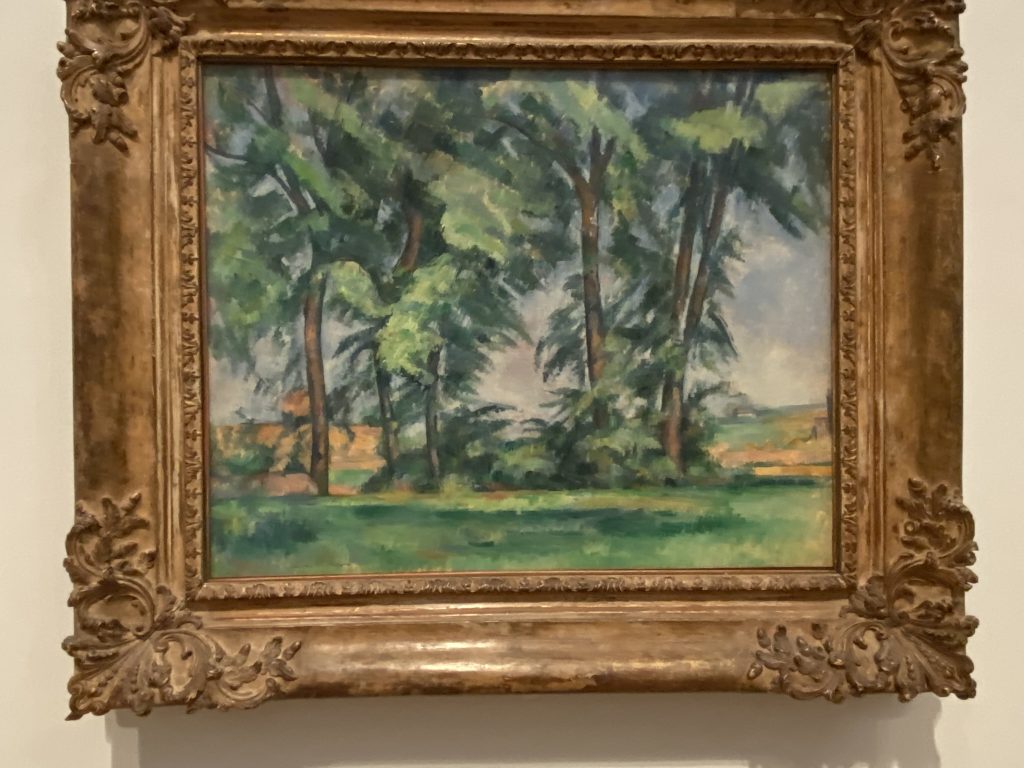
Tall Trees at the Jas de Bouffan by Paul Cézanne

Image of the painting entitled "Tall Trees at the Jas de Bouffan" showing a row of trees in Provence by Paul Cézanne included in the Impressionist collection at the Courtauld Gallery in London.
Tall Trees at the Jas de Bouffan by Paul Cézanne

Cézanne painted many views of the countryside surrounding Jas de Bouffan, a rural estate outside Aix-en-Provence owned by Cézanne’s father. Having visited the area, I can attest that Cézanne captures the shimmering quality of the light and the particularly vivid shades of green unique to Provence. My favorite Cézannes are his paintings of the Provence landscape.

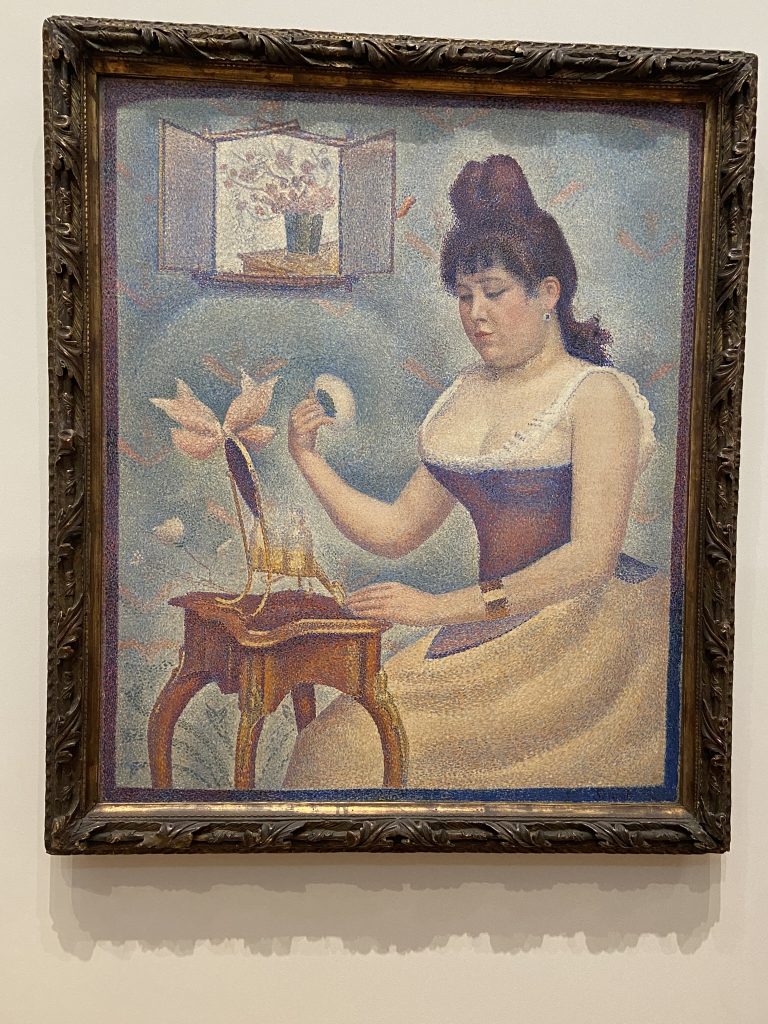
Young Woman Powdering Herself by Georges Seurat

Painting called "Young Woman Powdering Herself" by Georges Seurat showing a woman wearing a red corset and holding a powder puff. The style is pointillist and the piece is included in the Impressionist collection at the Courtauld Gallery in London.
Young Woman Powdering Herself by Georges Seurat

I’ve long been a fan of Georges Seurat who created the “pointillist” style of painting. He followed newly formulated optical theories by placing colors from opposite sides of the color wheel — orange and blue, pink and green — next to each other to create contrast. Seurat died at age 31 but he left behind some stunning works, this one being his only major portrait.

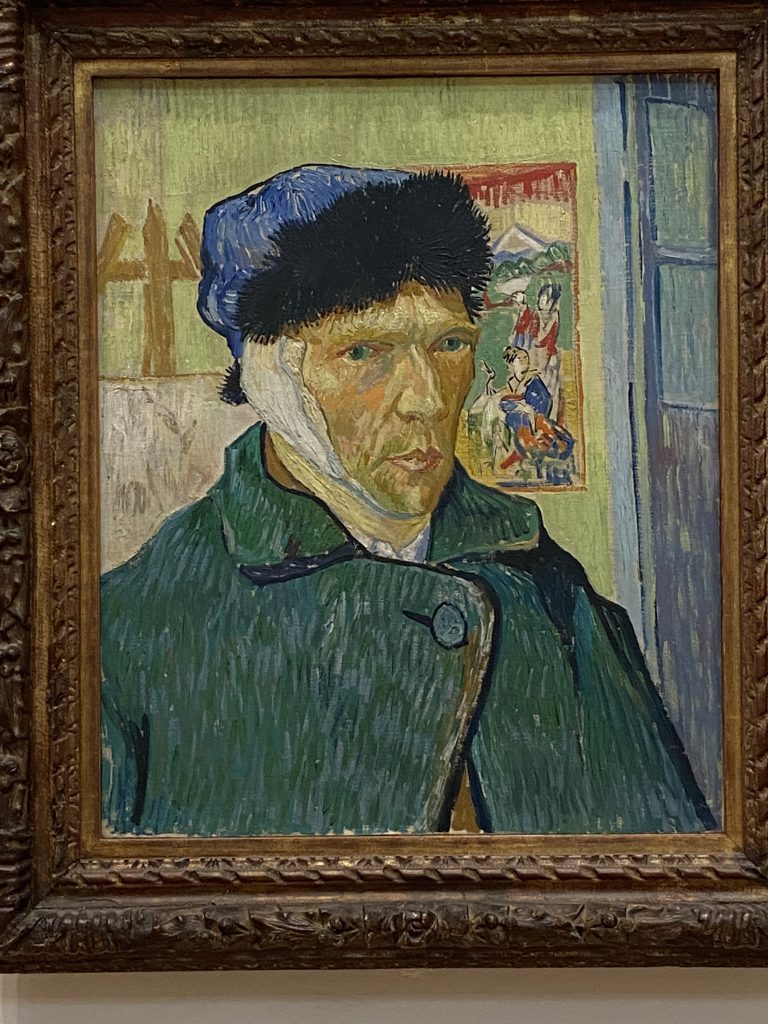
Self Portrait with Bandaged Ear by Vincent van Gogh

"Self-Portrait with Bandaged Ear" by Vincent van Gogh included in the Impressionist collection at the Courtauld Gallery in London.
Self-Portrait with Bandaged Ear by Vincent van Gogh

I couldn’t believe the Courtauld had this piece! It’s one of my favorite van Goghs. I love how he contrasts the various colors — blue hat, green coat, orange face — and includes the image of one of the Japanese prints he collected. Van Gogh was heavily influenced by Japanese printmaking. He painted this piece in 1889, a week after leaving hospital following the famous incident when he cut off a portion of his left ear after a heated argument with Paul Gauguin. Even injured, van Gogh was determined to keep painting.

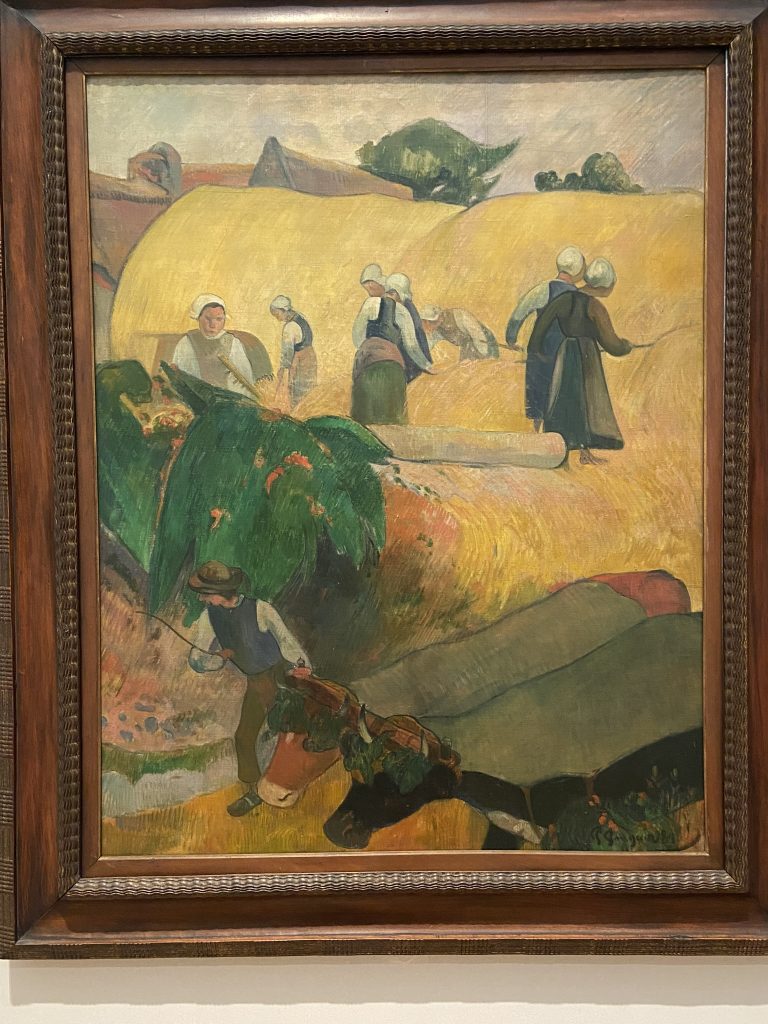
The Haystacks by Paul Gauguin

The Haystacks by Paul Gauguin included in the Impressionist collection at the Courtauld Gallery in London.
The Haystacks by Paul Gauguin

And speaking of Gauguin, I was thrilled to see this piece which he painted while he was living in Brittany. Gregg Simpson (husband and painter) had been working on the Pont Aven Suite, a series inspired by Gauguin’s Brittany paintings, so Gauguin had been a regular topic of a conversation in our house. I love how Gauguin simplifies and flattens forms and colors. This piece has so much movement, the women raking hay above and the man driving the oxen below.

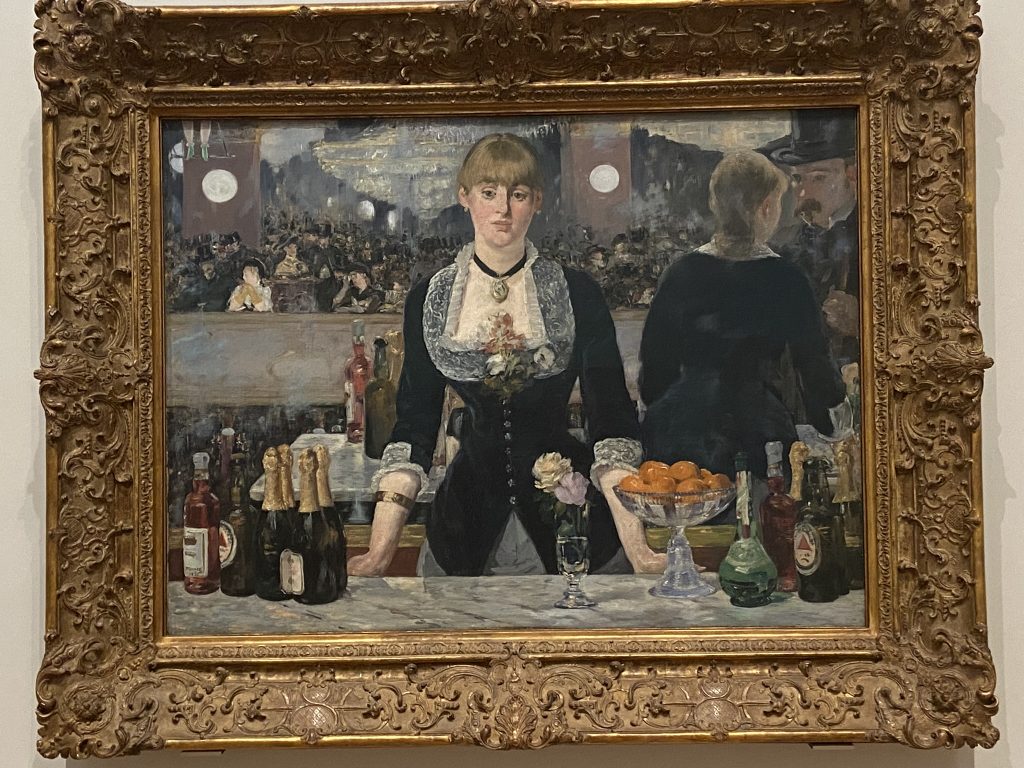
A Bar at the Folies-Bergère by Edouard Manet

A Bar at the Folies Bergere, painting by Edoaurd Manet at the Courtauld Gallery in London
A Bar at the Folies-Bergères by Edoard Manet

Fabulous as all the pieces in the Impressionist collection are, the best of all is my old friend A Bar at the Folies-Bergères by Manet. What a painting!

The young barmaid (the model’s name was Suzon) looks out at the viewer, her expression both bored and vulnerable at the same time. According to the descriptive text next to the piece, “Manet created a complex and absorbing composition that is considered one of the iconic paintings of modern life”. That is certainly true!

Suzon is every person in the world working in a dead-end job they hate but yet are obliged to pretend they enjoy for the sake of the customers.

After thoroughly exploring the top floor, I began my descent to the other two floors to explore the rest of the Courtauld Gallery’s collection. I was in for a treat as it turned out.

One of my favorite eras for painting is the Middle Ages, particularly the first half of the 14th century when artists were not worried about perspective and realism. I love the use of gold, the pastel shades of the egg tempera paint that the artists used, and the LEGO-like way in which they depicted medieval buildings.

Well, the Courtauld delivered! To my delight, it houses a lovely medieval collection that includes such notables as Lorenzetti and Duccio, two hometown boys from Siena, my fave Italian city (and one of the settings for The Towers of Tuscany).

As is often the case in art museums, the medieval rooms were pretty much empty so I drifted from painting to painting and admired to my heart’s content.

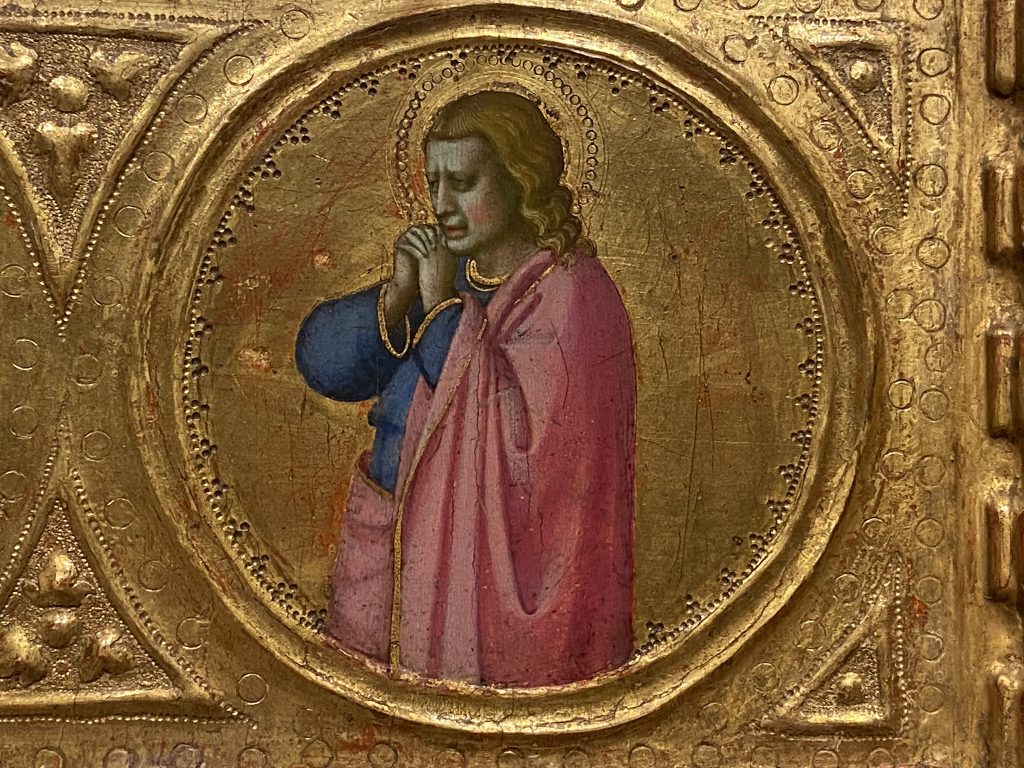
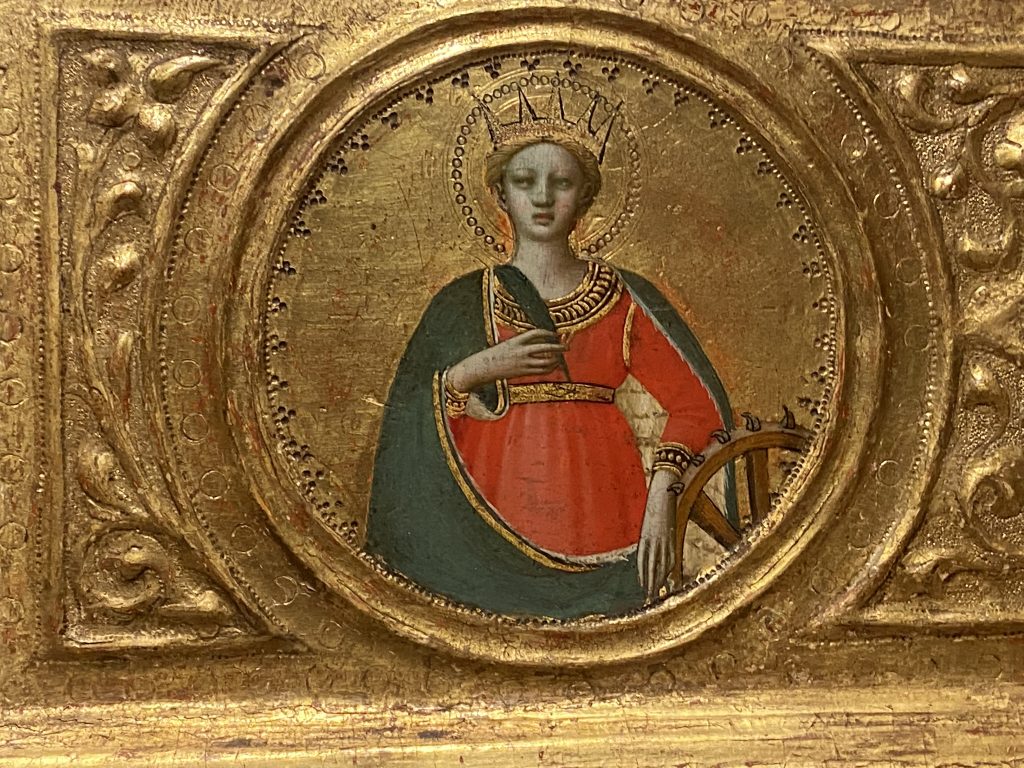
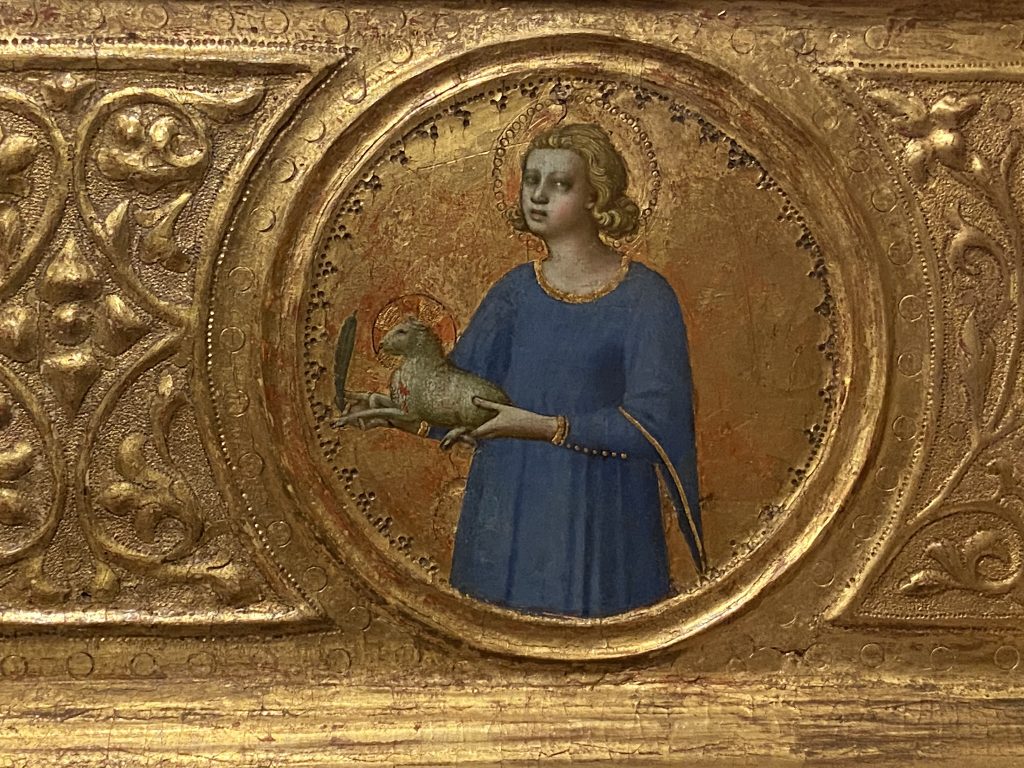
A highlight was a series of small panels painted by Fra Angelico (1417-1455) that depicts six female saints. Each face is incredibly expressive and compelling. I wonder who Fra Angelico used as models.

Medieval gold panel that includes a portrait of a female saint dressed in the black habit of a nun created by Fra Angelico included in the Medieval collection at the Courtauld Gallery in London.
Medieval gold panel that includes a portrait of a female saint dressed in a blue robe trimmed with gold and created by Fra Angelico included in the Medieval collection at the Courtauld Gallery in London.
Medieval gold panel that includes a portrait of a female saint dressed in a red robe and with long hair, and created by Fra Angelico included in the Medieval collection at the Courtauld Gallery in London.
Medieval gold panel that includes a portrait of a female saint dressed in a pink cloak and created by Fra Angelico included in the Medieval collection at the Courtauld Gallery in London.
Medieval gold panel that includes a portrait of a female saint wearing a red gown trimmed with gold and a green cape, and created by Fra Angelico included in the Medieval collection at the Courtauld Gallery in London.
Medieval gold panel that includes a portrait of a female saint wearing a simple blue gown and created by Fra Angelico included in the Medieval collection at the Courtauld Gallery in London.

After thoroughly exploring and enjoying the large collection of medieval art, I toured the rest of the collection. There’s a fair number of works from the 16th to the 19th centuries, including works by Rembrandt, Gainsborough, Reynolds, and Rubens.

One reason the Courtauld is considered one of the best small art museums in London is its compact size and because each piece in the collection is stellar. I don’t think I’ve ever visited an art museum where the quality of all the pieces is so uniformly high.

After my visit, I got chatting with the young man in the gift shop. He enthusiastically agreed that the Courtauld’s collection is first-rate and also kindly listened to me rattle on about how I first visited the Courtauld with my mom back in 1970 (likely a good forty years before he was born!)

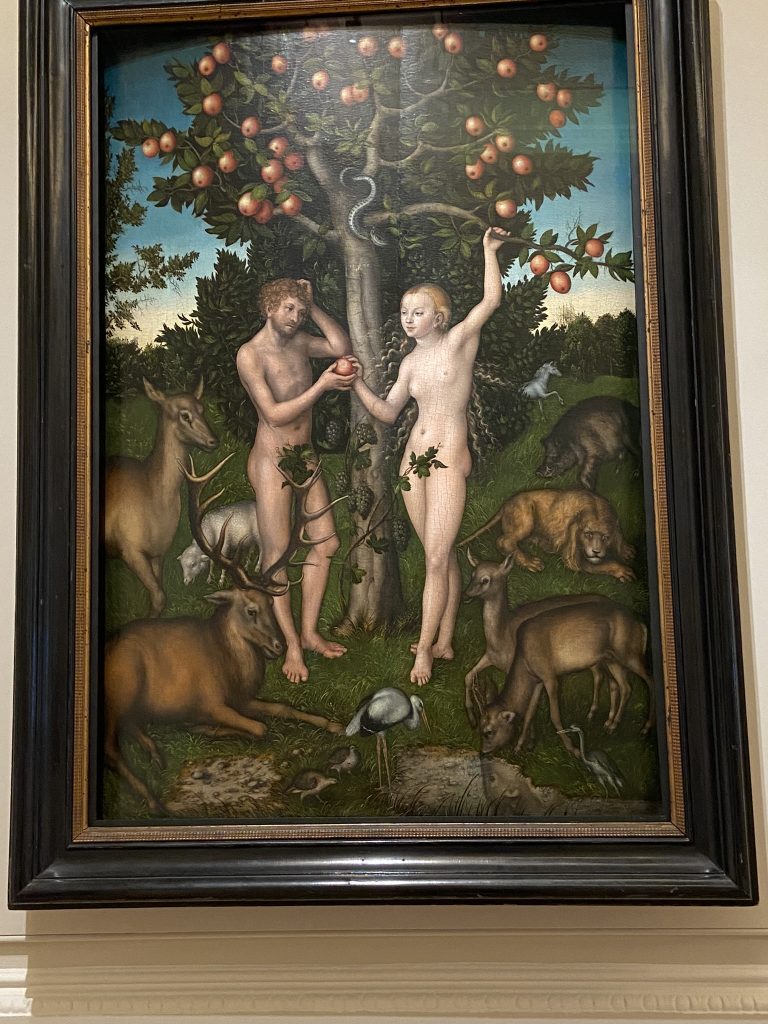
Here are two more of my favorites at the Courtauld Gallery.

Adam and Eve by Cranach the Elder included in the collection at the Courtauld Gallery in London.
Adam and Eve by Cranach the Elder
Landscape with the Flight into Egypt painting by Pieter Bruegel the Elder and included in the collection at the Courtauld Gallery in London.
Landscape with the Flight Into Egypt by Pieter Bruegel the Elder


Here are questions I’ve been asked about visiting the Courtauld Gallery in London:

Is the Courtauld Gallery worth visiting?

Absolutely. The Courtauld Gallery is one of London’s best small art museums, offering a world-class collection in an intimate setting. Its Impressionist masterpieces and exceptional medieval works make it especially rewarding for art lovers and artsy travelers with limited time.

How long do you need at the Courtauld Gallery?

Most visitors spend 1 to 2 hours at the Courtauld Gallery. Its compact size makes it ideal for a focused visit without museum fatigue.

Do you need to book tickets in advance for the Courtauld Gallery?

Yes, advance booking is recommended, particularly on weekends and during popular temporary exhibitions. Timed-entry tickets help manage crowds in the smaller galleries.

What are the must-see paintings at the Courtauld Gallery?

Highlights include A Bar at the Folies-Bergères by Manet, Self-Portrait with Bandaged Ear by van Gogh, works by Monet, Cézanne, and Gauguin, and a beautiful series of medieval panels by Fra Angelico.

Where is the Courtauld Gallery located?

The Courtauld Gallery is located at Somerset House on the Strand, in central London. It’s within easy walking distance of Covent Garden, the West End, and several major transport links.

Is the Courtauld Gallery good for first-time visitors to London?

Yes. Because of its manageable size and exceptional quality, the Courtauld Gallery is an excellent choice for first-time visitors who want to experience top-tier art without committing half a day to a large museum.


Where to Stay in London

Stay as close to the center of London as you can afford. You’ll be able to walk to a lot more places that you want to see and you’ll feel like you’re where the action is!

Here are three recommendations:

  • Park Plaza Victoria London Hotel located right across the street from Victoria Station is good value for the money for a modern, four-star hotel in the heart of London.
  • Wilde ApartHotel just off the Strand is an excellent choice and couldn’t be more central for the West End Theaters. It’s also within easy walking distance of the Courtauld Gallery.
  • The ParkCity in Kensington is a bit farther off the beaten track but very close to some of my favorite museums, including the Victoria & Albert.

London Tours & Tickets

Here are some options for touring London and buying tickets for interesting museums such as the Design Museum and other attractions.

Powered by GetYourGuide

London Walking Tours

GuruWalk lists pay-what-you-please walking tours that connect tourists with tour guides all around the world. Check out their tours of London!

Continue Exploring London’s Museums

Here are more posts about favorite galleries and museums in London:

For all posts about England, see Visiting England.

Carol Cram
About Carol Cram

Carol M. Cram is the author of five award-winning novels inspired by art and the women who shaped it, the creator of Artsy Traveler, an arts-focused travel blog, the founder of Art In Fiction, a curated database of 2,600+ novels inspired by the arts, and the host of The Art In Fiction Podcast. She lives with her husband, artist Gregg Simpson, on beautiful Bowen Island near Vancouver, BC.