
The National Portrait Gallery: In Search of Writers and Rebels
I'm Carol Cram, novelist and arts travel writer, and founder of Art In Fiction, a curated database of 2,700+ novels inspired by the arts. Artsy Traveler contains affiliate links for products and services I personally use and recommend. As an Amazon Associate, I earn from qualifying purchases. Please read the Disclosure for more information.
Most people go to the National Portrait Gallery to look at faces they already know: Tudors, Windsors, pop stars, and celebrities.
As an historical novelist, I go to commune with some of the many writers, rebels, and performers who have inspired me.
There are a lot of them! Their portraits are scattered through nearly every room in the building, from a Tudor queen who published books under her own name to a Booker Prize winner who died within living memory.
This post isn’t a complete guide to the National Portrait Gallery, but rather a guide to the people I’d point you toward if you only had an hour and cared more about who wrote Frankenstein than who wore a crown.
While you check out some of my favorite geniuses, you’ll also see some of the novels I recommend you read. These and many more novels are listed on Art In Fiction, a database of over 2700 novels inspired by the arts in 11 categories.
Table of contents
- Tudor Beginnings: Two Women Who Wrote
- The Only Portrait of Shakespeare Painted From Life
- Restoration Diarists, a Painter, and the King’s Favorite Mistress
- The Wits and Intellectuals of the 18th Century
- Making a Scene: Stars of the Georgian Stage
- Women Who Went Places and Wrote About It
- Fame, Scandal, and Dying Young: The Romantics
- The Novelists Who Made It Big
- Fast Forward: Into the Twentieth Century
- National Portrait Gallery FAQs
- Where to Stay in London
- Exploring Literary London
- Continue Exploring London’s Museums & Galleries
Tudor Beginnings: Two Women Who Wrote
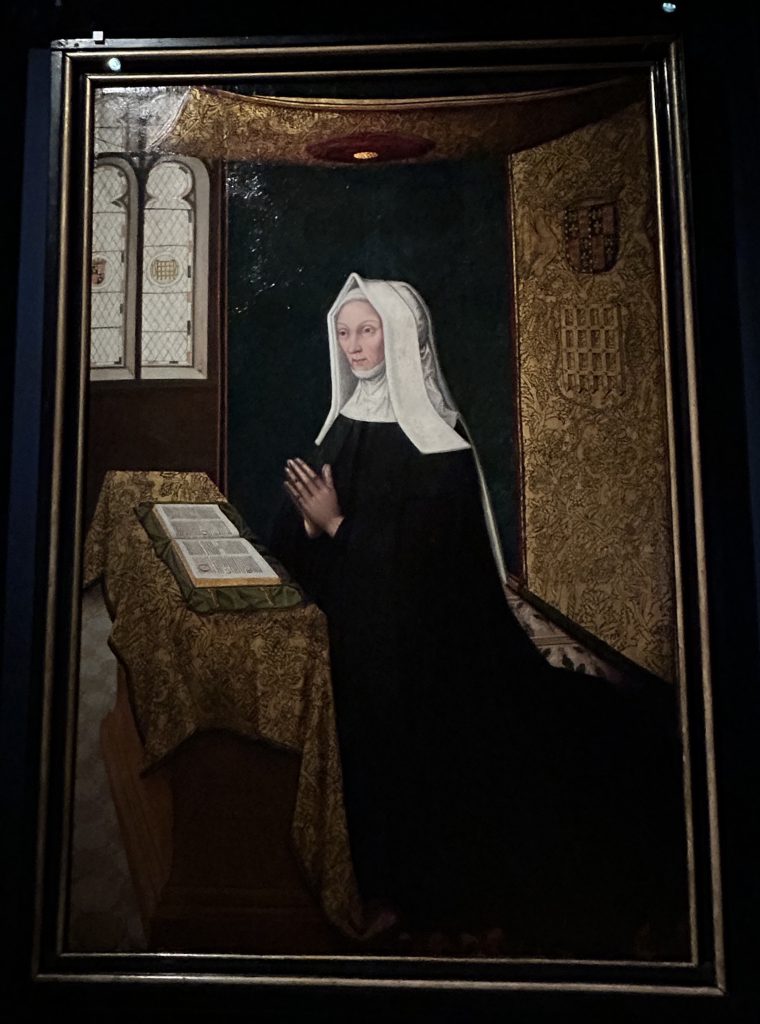
The earliest face in this guide belongs to Margaret Beaufort, Countess of Richmond and Derby, mother of Henry VII. She is portrayed kneeling at prayer in the earliest known full-length portrait of an Englishwoman.
Margaret is usually filed under “royal mother” rather than “writer,” but she translated devotional texts into English herself and used her fortune to bankroll William Caxton’s early printing press. She then went on to found St John’s and Christ’s Colleges at Cambridge University. That’s all pretty impressive for someone who gave birth to a future king in 1457 at the age of 13.
Katherine Parr doesn’t usually make the cut in a “writers and performers” post, mostly because she’s remembered as the wife who outlived Henry VIII. But like Margaret Beaufort, Katherine Parr is more than her relationship to a man.
Not only did she serve as Regent during Henry’s final military campaign in France, she used her position to promote religious reform and was the first Englishwoman to publish books in her own name. I’d like to know a lot more about Katherine!

The Only Portrait of Shakespeare Painted From Life
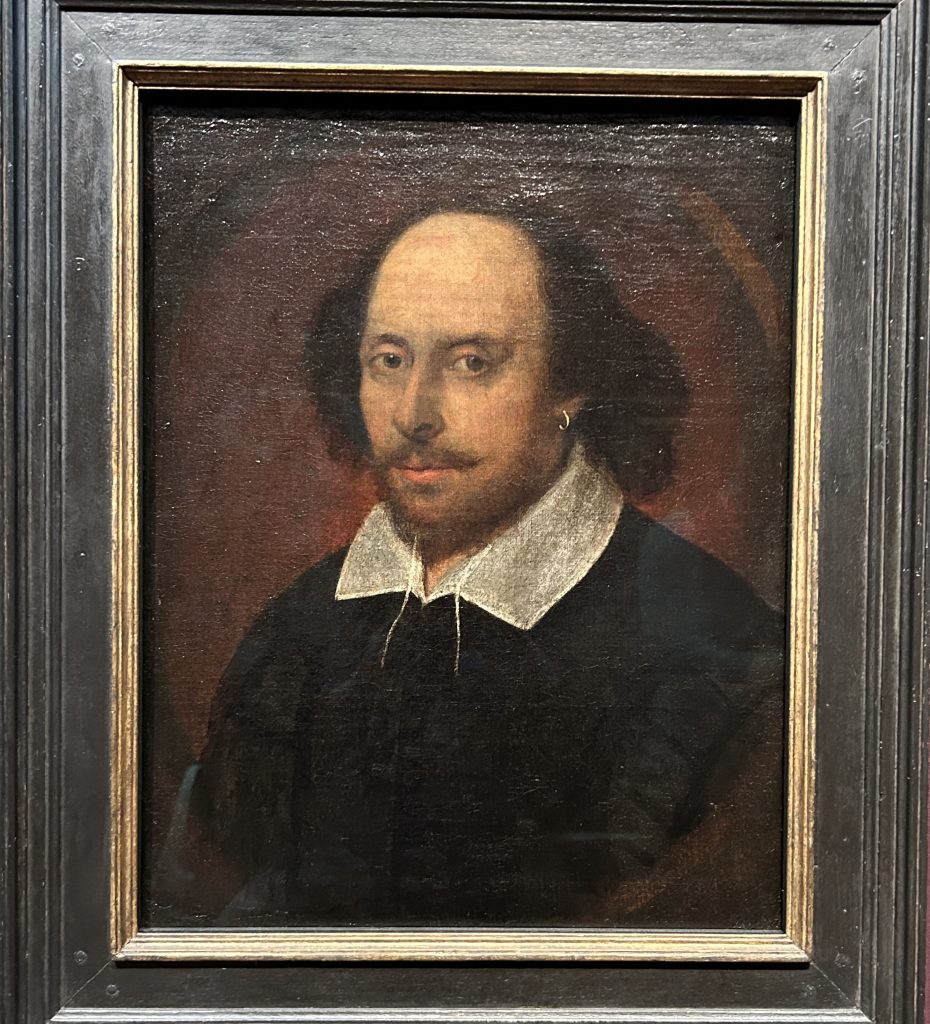
A few steps on is the painting the whole gallery was built around. The Chandos portrait of William Shakespeare was the National Portrait Gallery’s very first acquisition in 1856, and it’s probably the only likeness of him painted from life, meaning every other Shakespeare face you’ve ever seen, on a book cover, a mug, a five pound note, is a guess based on this one.
There’s also a plaster bust of him elsewhere in the collection, so he’s one of the few people represented twice over, once in paint and once in plaster, probably because he’s kind of important.
Recommended Novel Related to Shakespeare
The Women Who Saved Shakespeare by Mai Black
Set in Georgian London, this novel follows the real Shakespeare Ladies Club, a group of women who fought to revive his reputation at a time when his plays had fallen out of fashion, long before he became the National Portrait Gallery’s very first acquisition.
Restoration Diarists, a Painter, and the King’s Favorite Mistress
A few rooms over, you’ll find Samuel Pepys, the diarist who wrote down everything, including the parts he probably shouldn’t have. Let’s just say, Samuel got around.

For an entertaining take on Samuel Pepys, check out Deborah Swift’s Mr. Pepys trilogy on Art In Fiction and my interview with Deborah about this series on The Art In Fiction Podcast: Digging Deep in the 17th Century feat. Deborah Swift, author of Entertaining Mr Pepys.
Recommended Novel Starring Samuel Pepys
Pleasing Mr Pepys by Deborah Swift
The first in Swift’s Pepys trilogy, set just after the Great Fire of 1666, following Deb Willet, a young companion to Pepys’s wife who gets pulled into espionage and Pepys’s own wandering attentions.
A Plague on Mr Pepys by Deborah Swift
Set during the Great Plague of 1665, this one follows Bess Bagwell, who schemes to advance her husband’s career by cultivating Pepys’s favor, only to find he wants something else in return.
Entertaining Mr Pepys by Deborah Swift
The trilogy’s finale follows Bird Carpenter, a singer determined to make it on the Restoration stage alongside real figures like Nell Gwyn, culminating in the Great Fire of London.
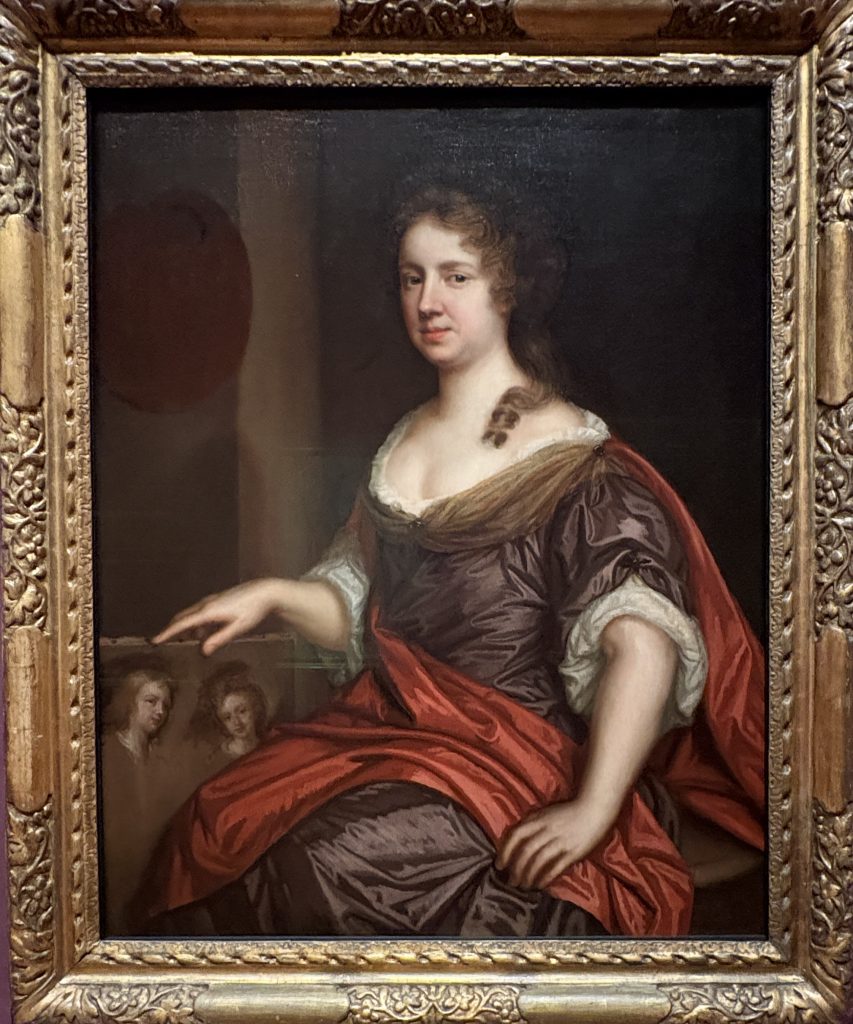
As the earliest professional female artist in the collection, Mary Beale gets a self-portrait. In her painting, she’s shown pointing at a painting of her own two sons like she’s daring us to say women couldn’t paint professionally in the 1600s. In fact, Mary established a studio in London in 1670 and became the family breadwinner with her husband as her assistant. Her unpublished Discourse on Friendship (1667) argues for equality in marriage. Mary was well ahead of her time.
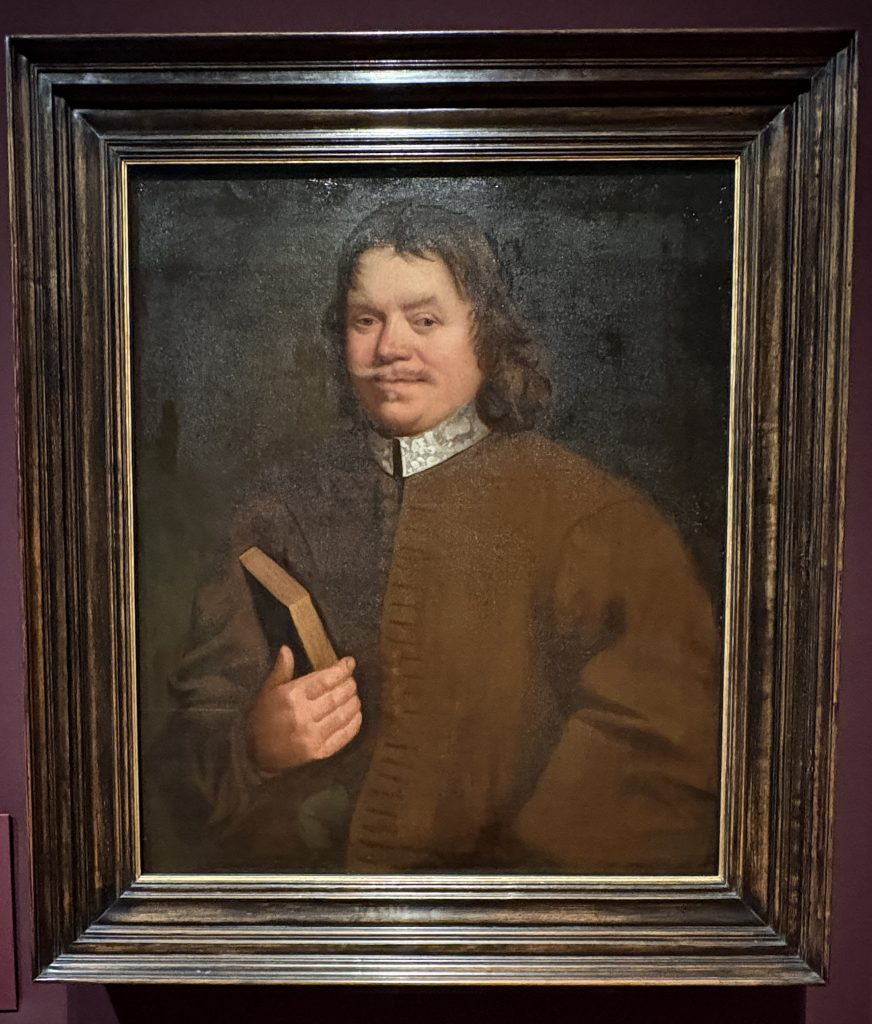
John Bunyan, looking very stolid in his brown coat and with a book in his hand, wrote Pilgrim’s Progress, one of the most popular books ever printed. Written largely during Bunyan’s years in jail where he was imprisoned for challenging some of the Church of England’s teachings, Pilgrim’s Progress had a profound influence on the development of the novel as a literary form. As a novelist, I owe a debt of gratitude to Bunyan.
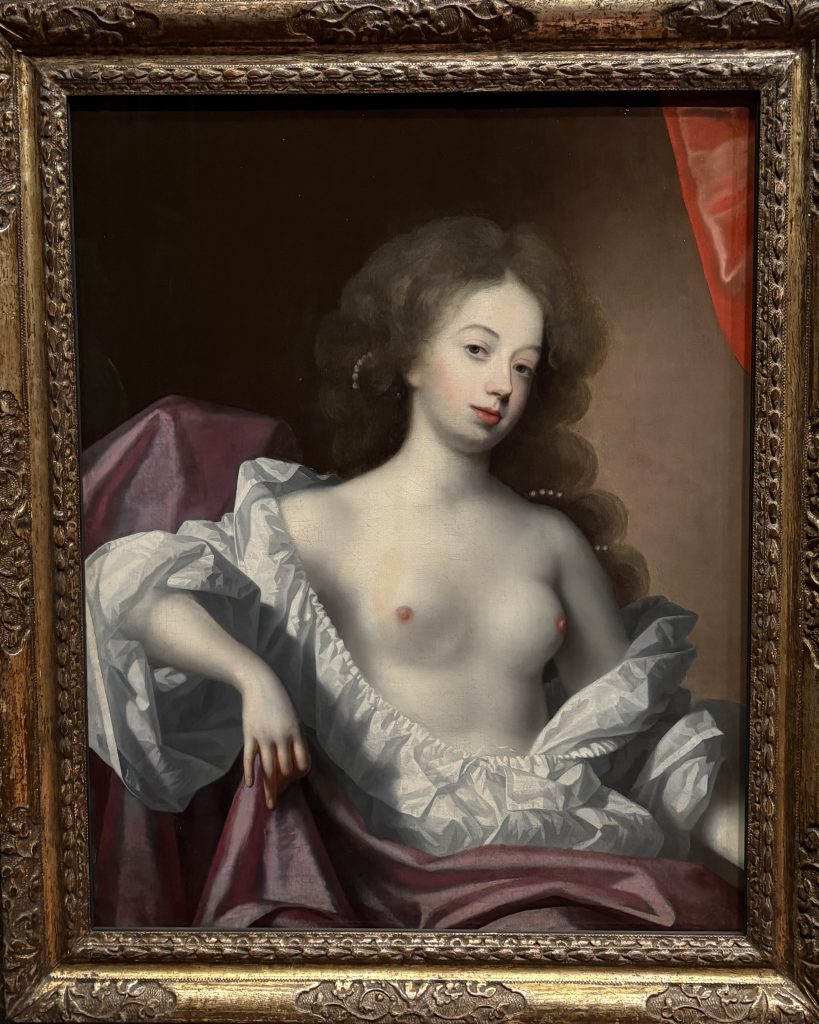
And then there’s Nell Gwyn, the orange seller turned actress turned mistress of Charles II. She was one of the first women to act on the public stage, becoming one of the most famous comic actors of her day.
Recommended Novel Starring Nell Gwyn
Exit the Actress by Priya Parmar
Narrated by Nell Gwyn herself, this novel follows her rise from selling oranges in the pit to the London stage to Charles II’s court and bed.
The Wits and Intellectuals of the 18th Century
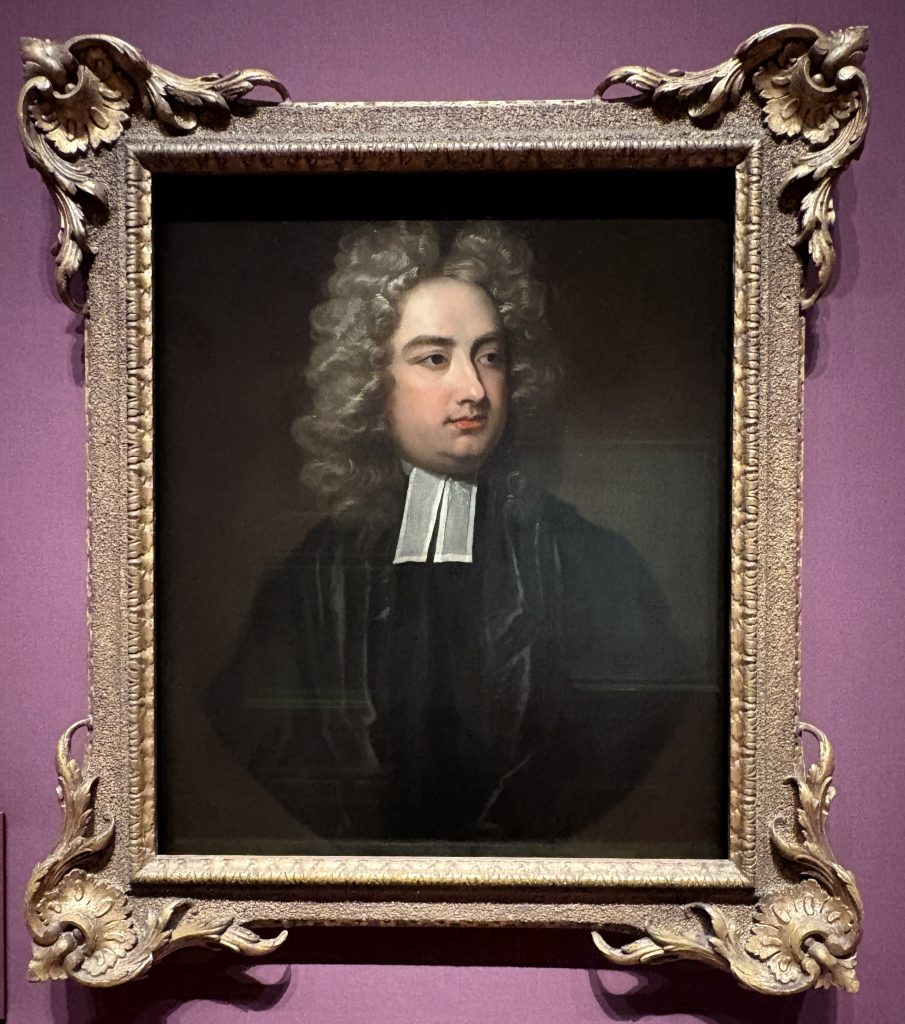
Jonathan Swift stares out from a dark, clerical-looking portrait that gives away nothing about the man who wrote Gulliver’s Travels. The frame around his portrait is particularly striking, even for a gallery that is not shy when it comes to elaborate frames.
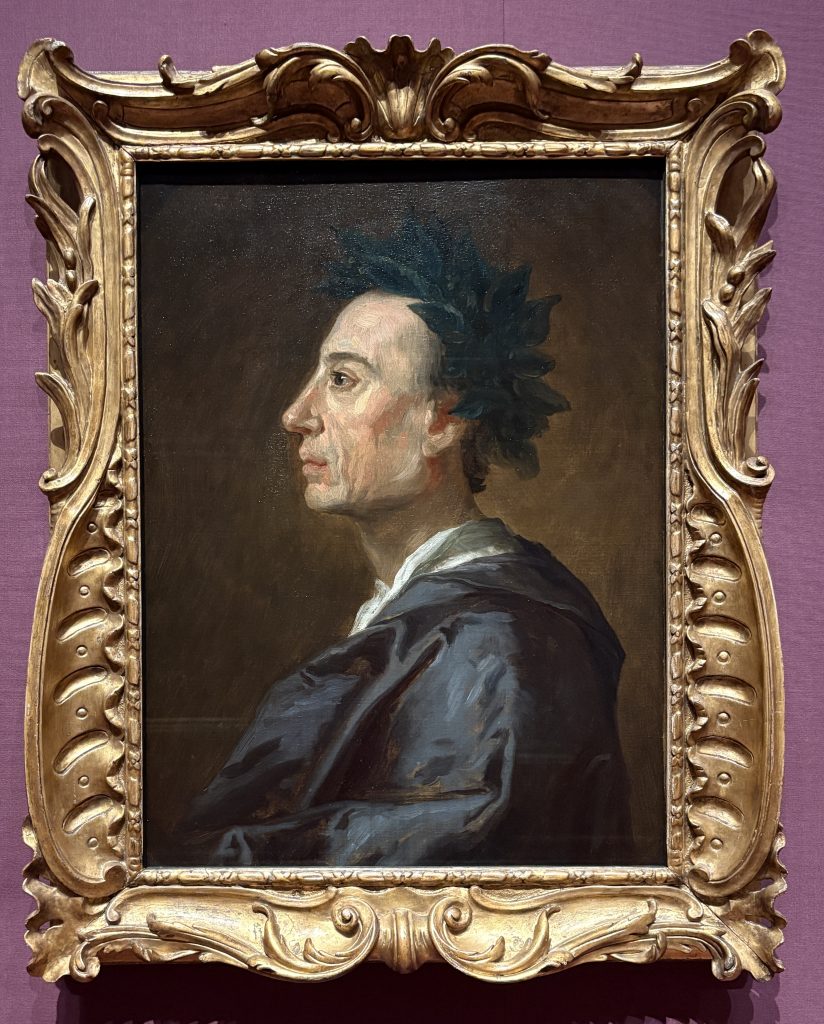
Alexander Pope is painted in profile with a laurel wreath, a fitting tribute to the first English poet to make a living from his own writing rather than a patron’s goodwill.
Also discover Elizabeth Carter, whom you may not have heard of (I hadn’t). Billed as one of the most learned women of her day, Carter translated Epictetus from Greek, was part of the Bluestocking circle, and reportedly out-argued Samuel Johnson often enough that he respected her more than most men in his circle. Fittingly, she’s painted as Minerva, goddess of wisdom.

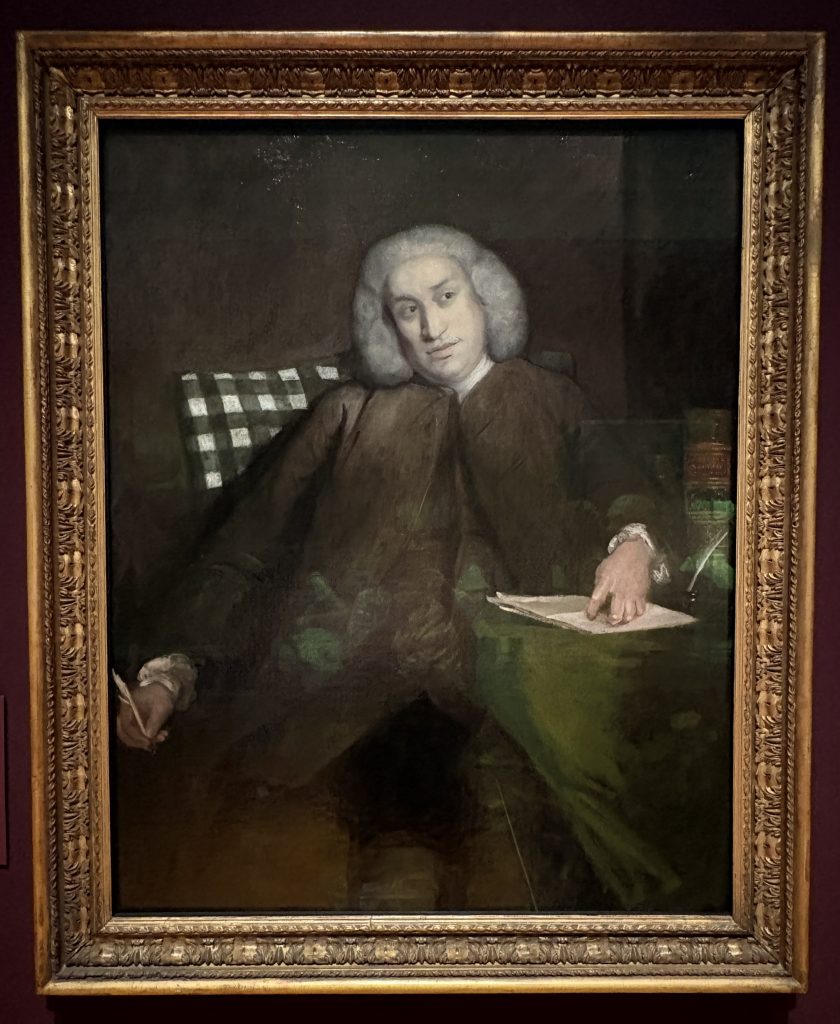
Samuel Johnson himself is here too, looking a bit green around the gills, perhaps as the result of spending too much time indoors compiling his dictionary.
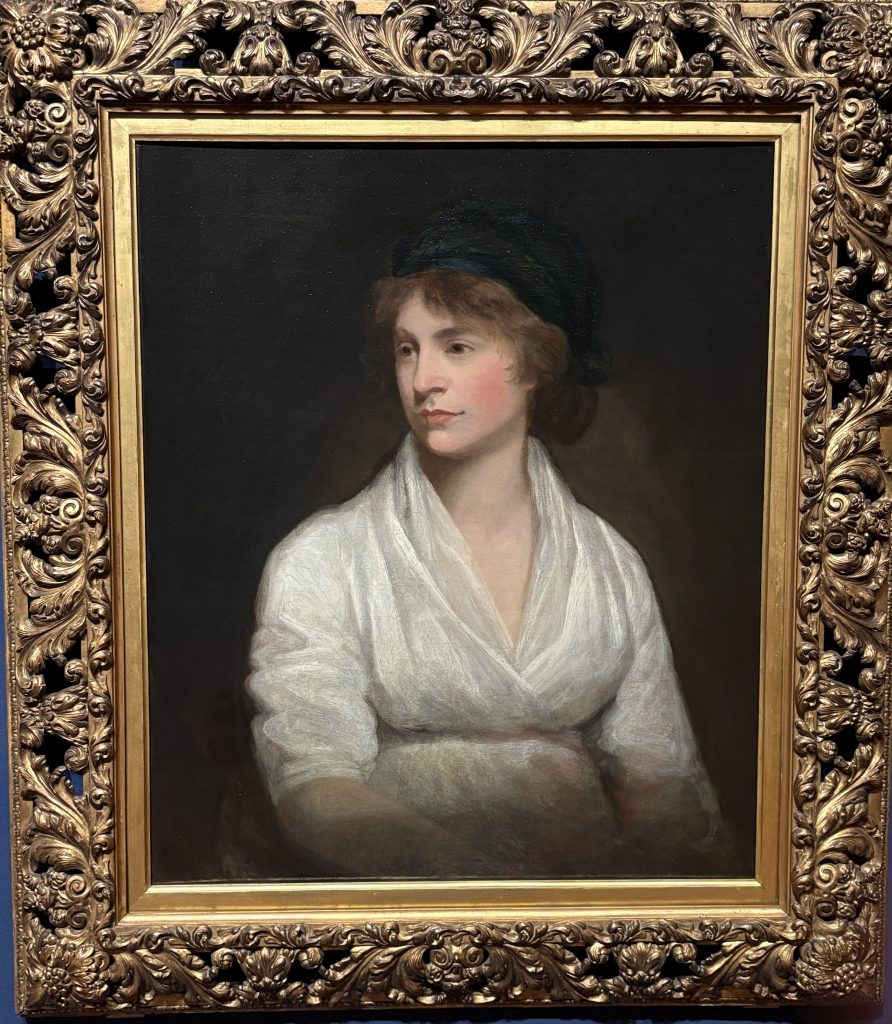
One of my favourite writers and thinkers of the period is Mary Wollstonecraft who wrote “Women ought to have representatives, instead of being arbitrarily governed without any direct share.” Known as the founder of British feminism, Mary died giving birth to her daughter Mary, author of Frankenstein.
Recommended Novel Starring Mary Wollstonecraft
Love and Fury by Samantha Silva
During the childbirth that will kill her, Mary Wollstonecraft tells her newborn daughter, the future Mary Shelley, the story of her own defiant life.
Making a Scene: Stars of the Georgian Stage
If the wits made their name in print, this next group of luminaries made theirs on stage, and is the group I always return to when I visit the National Portrait Gallery.
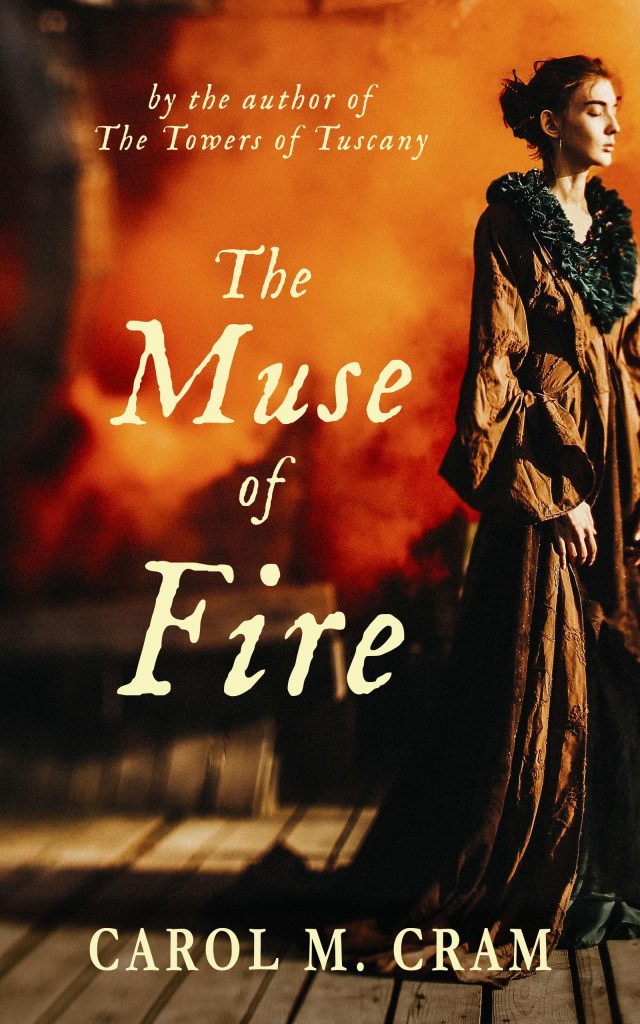
My two favourites are Sarah Siddons and her brother John Philip Kemble because both have roles in The Muse of Fire, my novel about London’s Old Price riots in 1809.
My fictional character, Grace, replaces Mrs. Siddons, touted as the greatest actress of her age, when she refuses to perform during the riots (and who could blame her?).
John Philip Kemble, actor and theatre manager, appears several times in the novel as he valiantly tried to quell the riots that plagued Covent Garden Theatre for 66 nights. He did finally succeed, but at a cost.
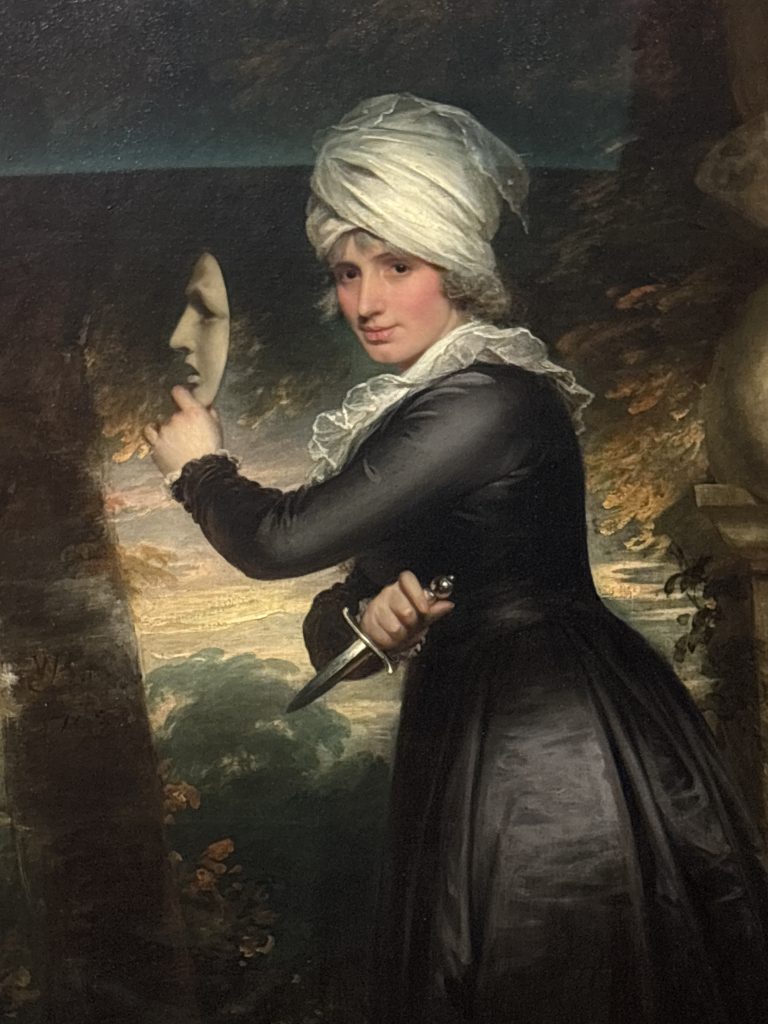
Sarah Siddons holds an actual mask and dagger in a portrait entitled “Mrs Siddons with the Emblems of Tragedy”, while John Philip Kemble, who was also a great actor and theatre manager, is painted mid-performance as Cato, wrapped in a toga and looking very pleased with himself.

Read The Muse of Fire
The Muse of Fire by Carol Cram
Full disclosure, I wrote this one. Grace Johnson dreams of becoming a Shakespearean actress in Regency London, a world that has no interest in letting her, and her story plays out against the real 1808 fire that destroyed Covent Garden’s Theatre Royal and the riots that followed its rebuilding.
Women Who Went Places and Wrote About It
This section was a pleasant surprise, featuring as it does portraits of intrepid ladies who became some of the world’s first female travel writers.
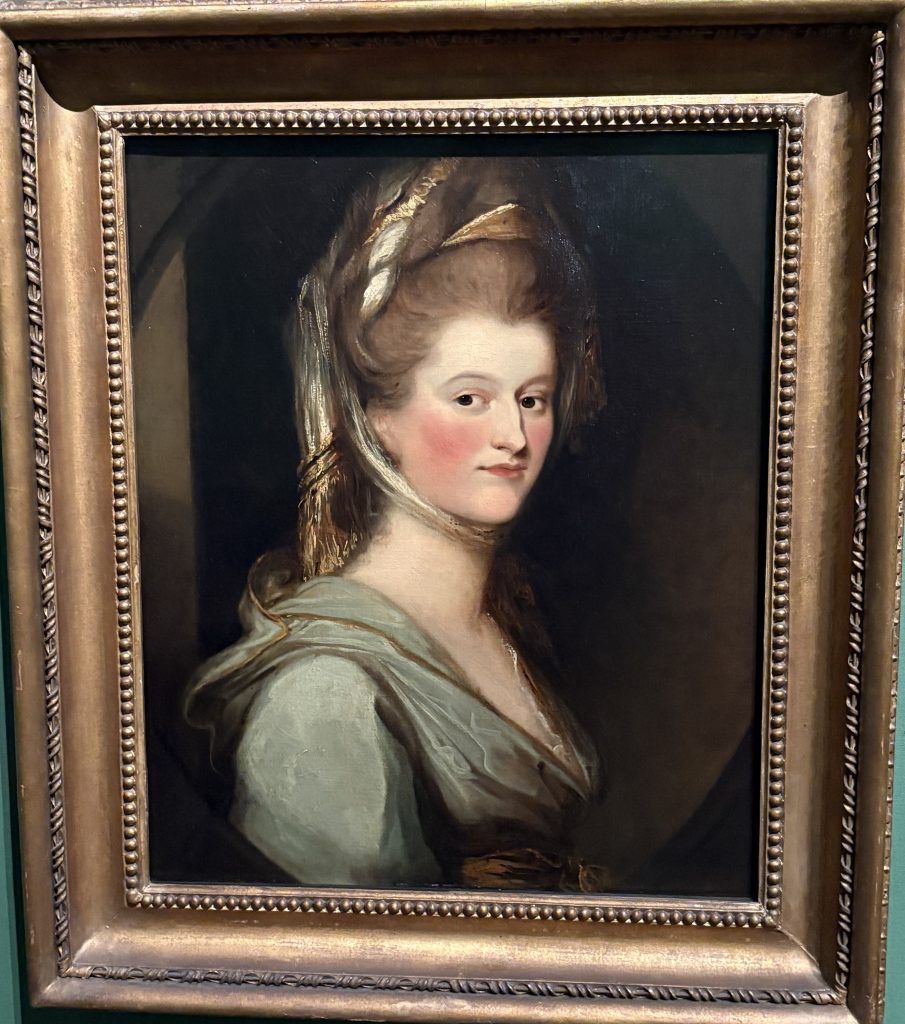
Elizabeth, Lady Craven, fled England to avoid scandal after her husband left her for his mistress and took custody of her children. She wrote travelogues of her adventures traveling through Europe and the Ottoman Empire (even breakfasting with Catherine the Great).
Maria, Lady Callcott, wrote about her travels in South America, India, and Italy. Her accounts describe politics, violence and human sacrifice, and defied expectations of what women might write about.
Mary English owned and ran a vast cacao plantation in Colombia, and chronicled her extraordinary life in letters published in the British press.
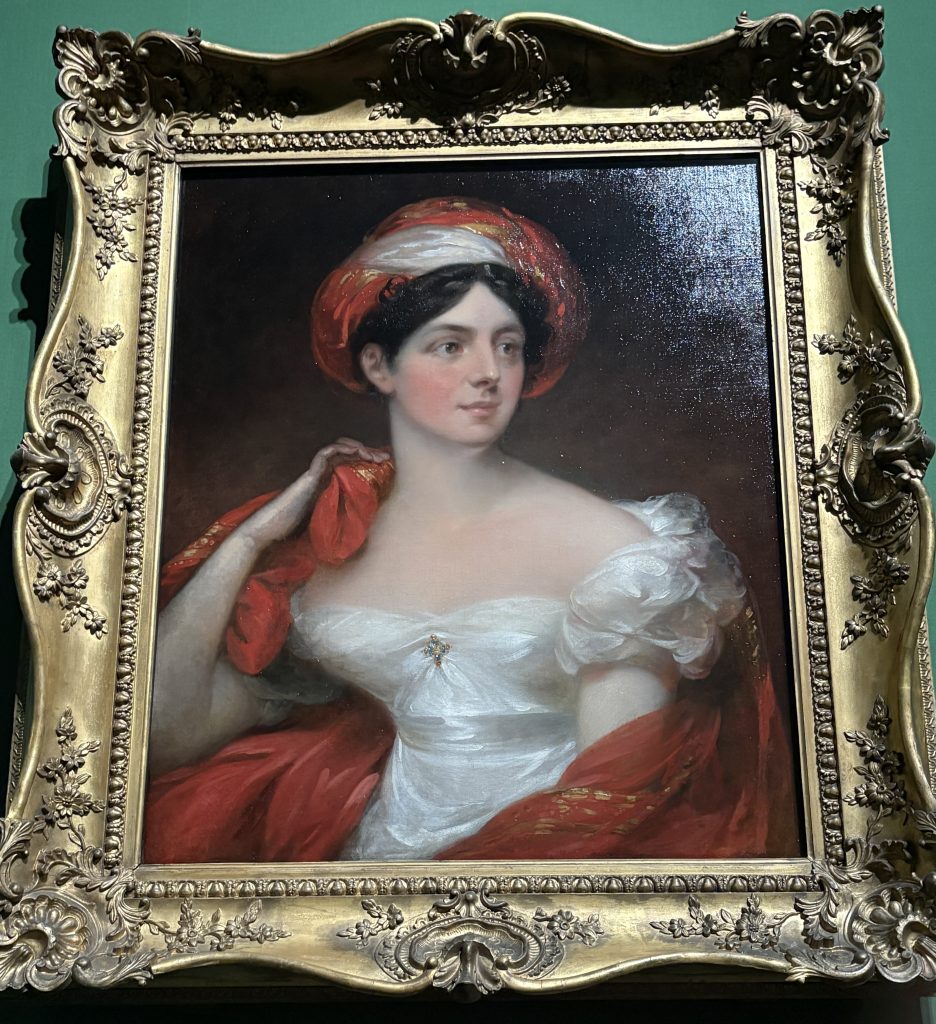

Fame, Scandal, and Dying Young: The Romantics
The green room where the Romantics hang together is the most theatrical stretch of the gallery with wall text to match.
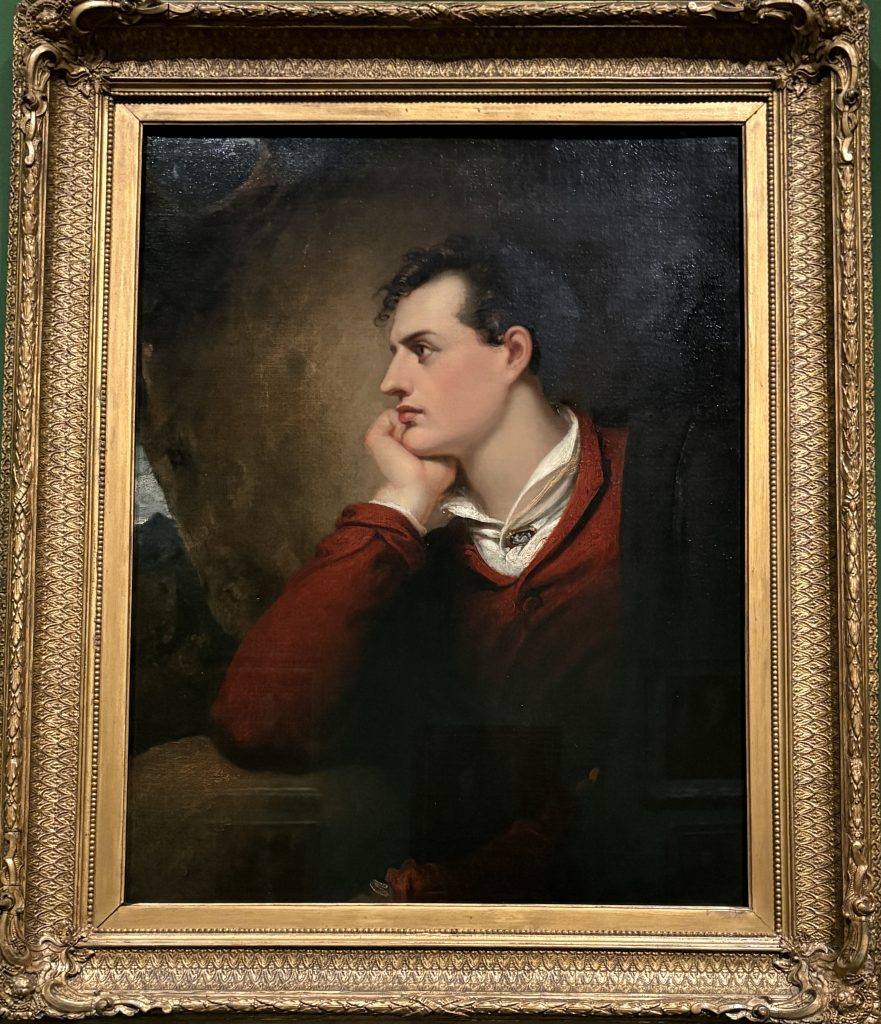
Byron’s portrait comes with a label calling him the first celebrity, someone who followed a strict diet, slept in hair curlers, and commissioned dozens of paintings of himself, then got run out of the country when public opinion turned on his private life.
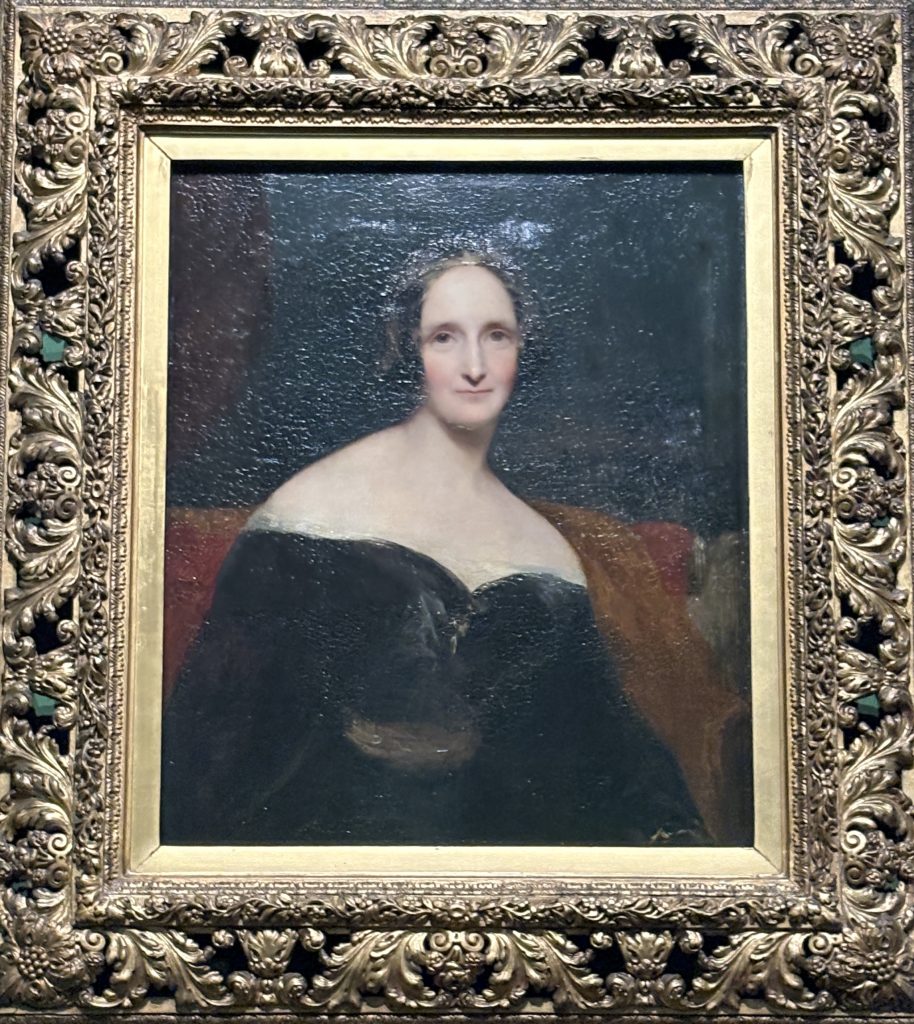
Mary Wollstonecraft Shelley, daughter of the feminist Mary Wollstonecraft, was just 18 when she wrote Frankenstein in Switzerland.
Recommended Novel About Frankenstein
Love, Sex, and Frankenstein by Caroline Lea
A reimagining of the summer of 1816 at Byron’s Villa Diodati, where an 18 year old Mary Shelley, tangled up in grief and jealousy over Percy’s infidelities, channeled all of it into the ghost story that became Frankenstein.
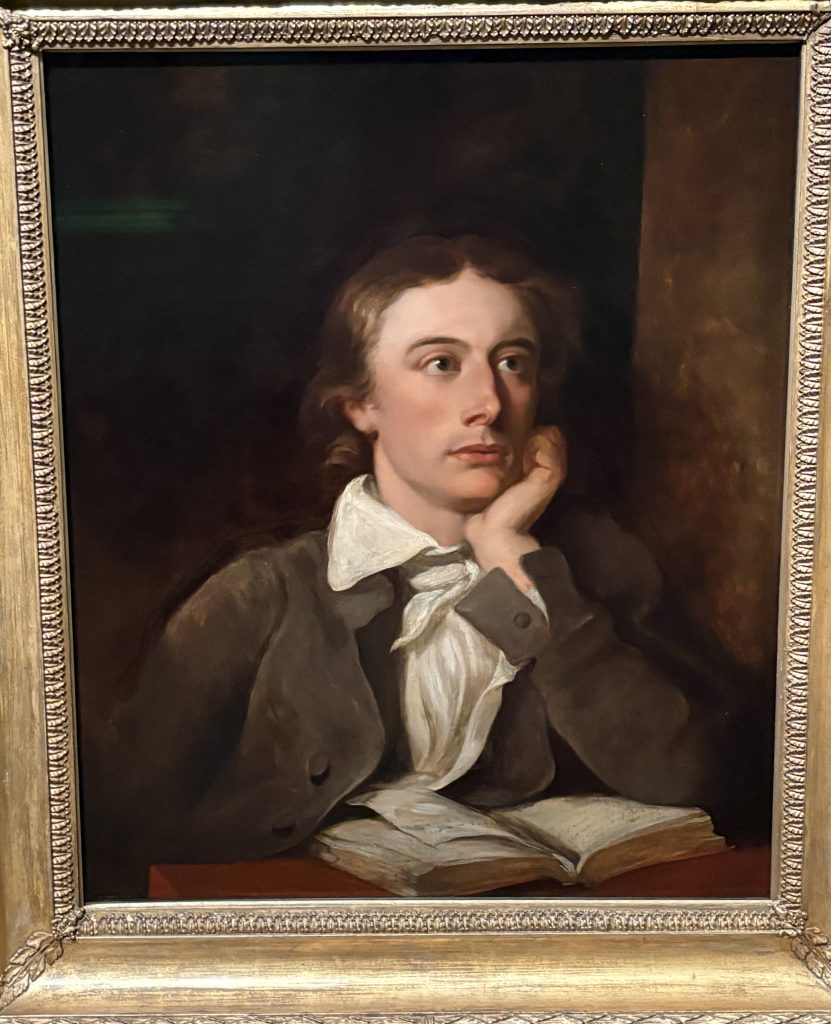
John Keats is heartbreakingly young. He died at the age of 25, and yet left behind an extraordinary body of work, much of it influenced by his radical politics, his melancholy, and his love for Fanny Brawne.
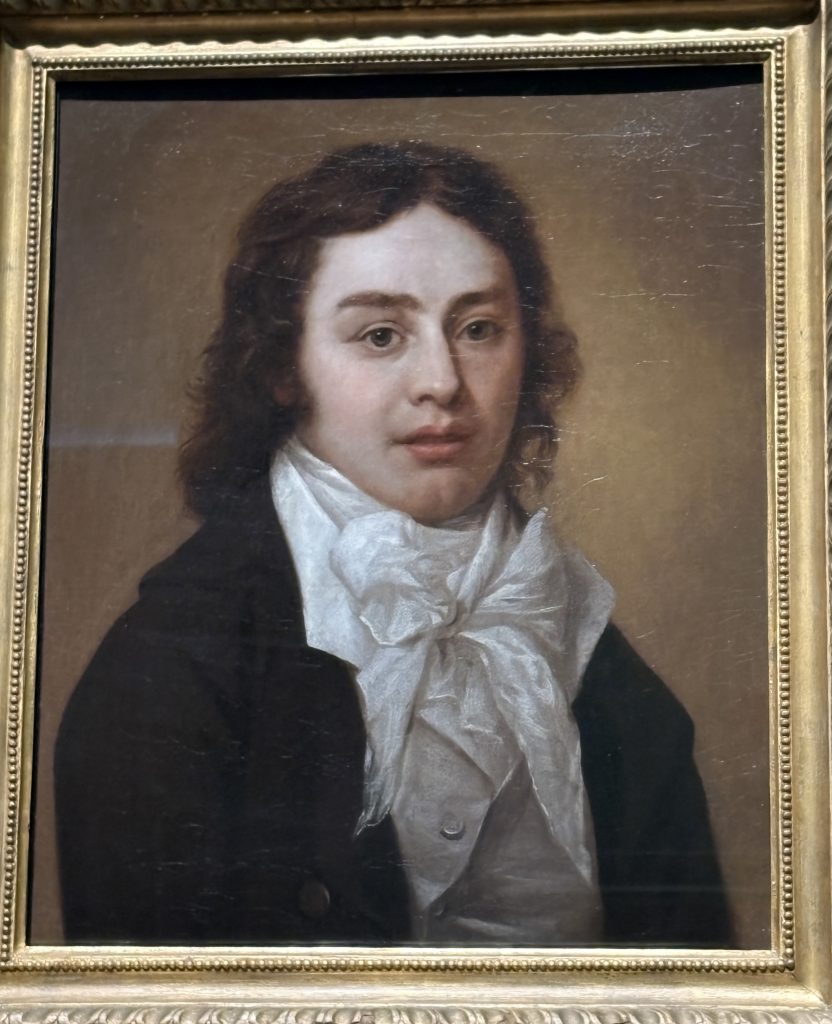
Samuel Taylor Coleridge gets my favorite label : alongside The Rime of the Ancient Mariner and the opium addiction that probably shaped it, the museum credits him with coining the words “bisexual,” “soulmate,” and “realism,” which is a strange and wonderful legacy for one portrait to carry.
The Novelists Who Made It Big
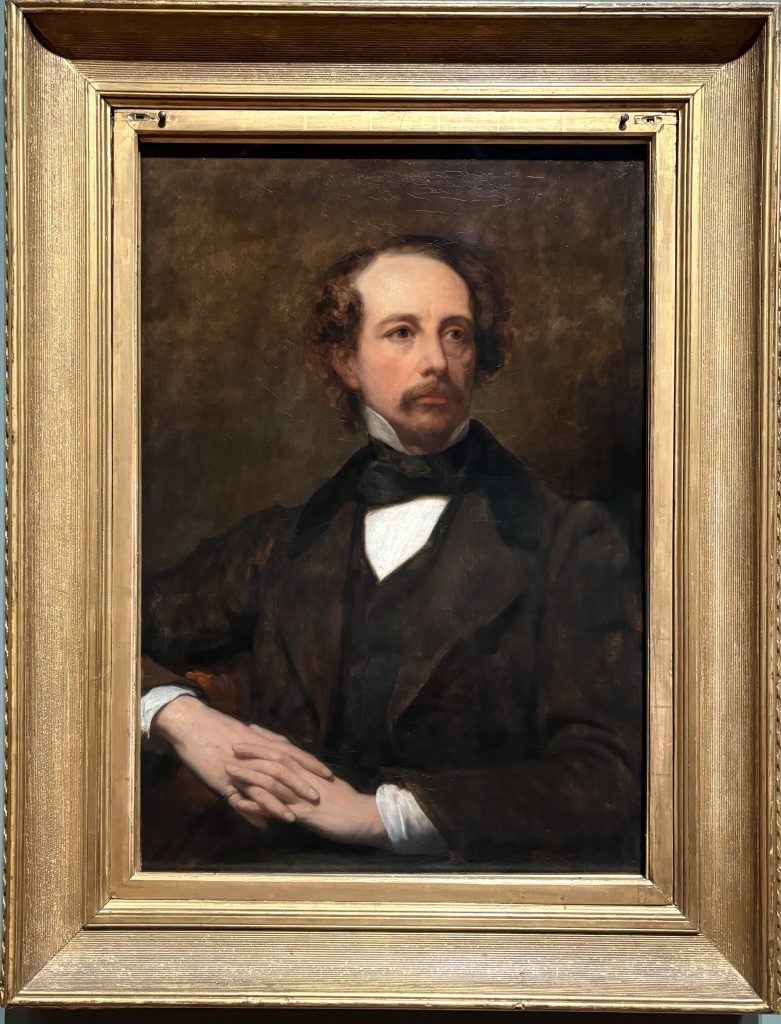
Charles Dickens is depicted at the height of his considerable fame. To see a portrait of him as a young man, check out my post on the Charles Dickens Museum.
Recommended Novel Starring Dickens
Mr. Dickens and His Carol by Samantha Silva
Dickens is broke, blocked, and under a three week deadline after his last book flops, then a mysterious woman in a purple cloak sends him on his own Scrooge-like tour through Christmases past. The story behind the story he’s holding in his NPG portrait.
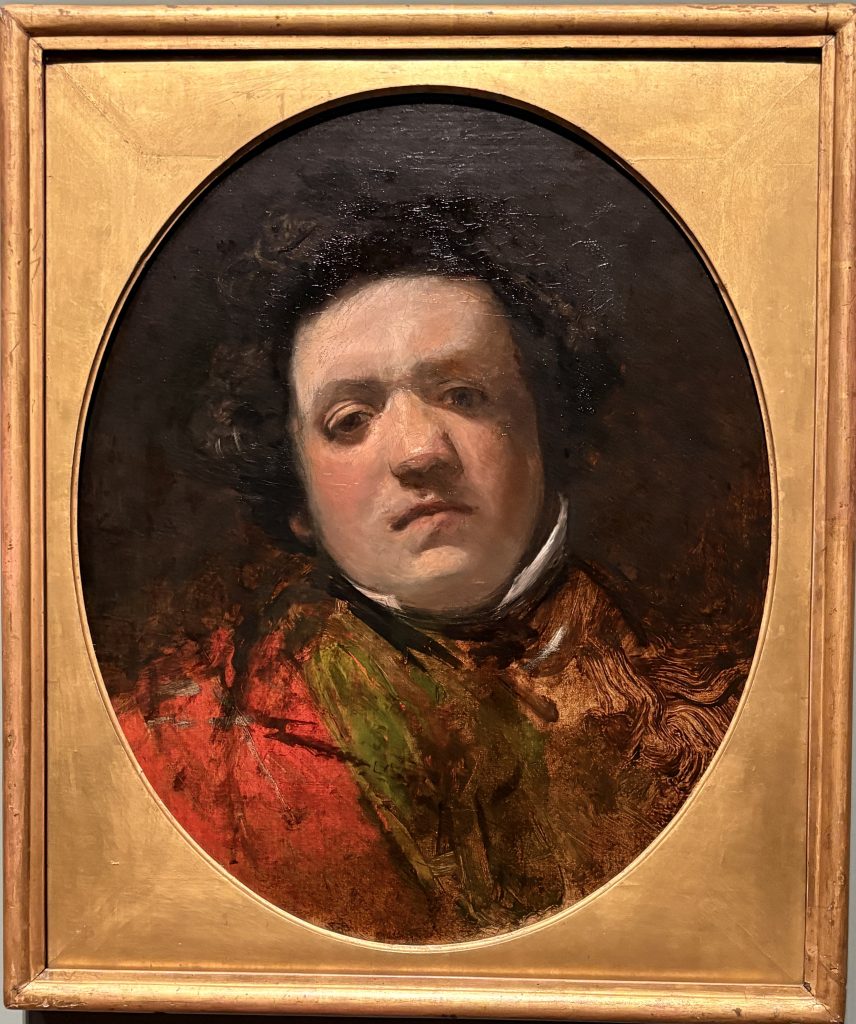
William Makepeace Thackeray is depicted when he was a young man years before Vanity Fair made him famous. It’s not the most flattering of portraits.
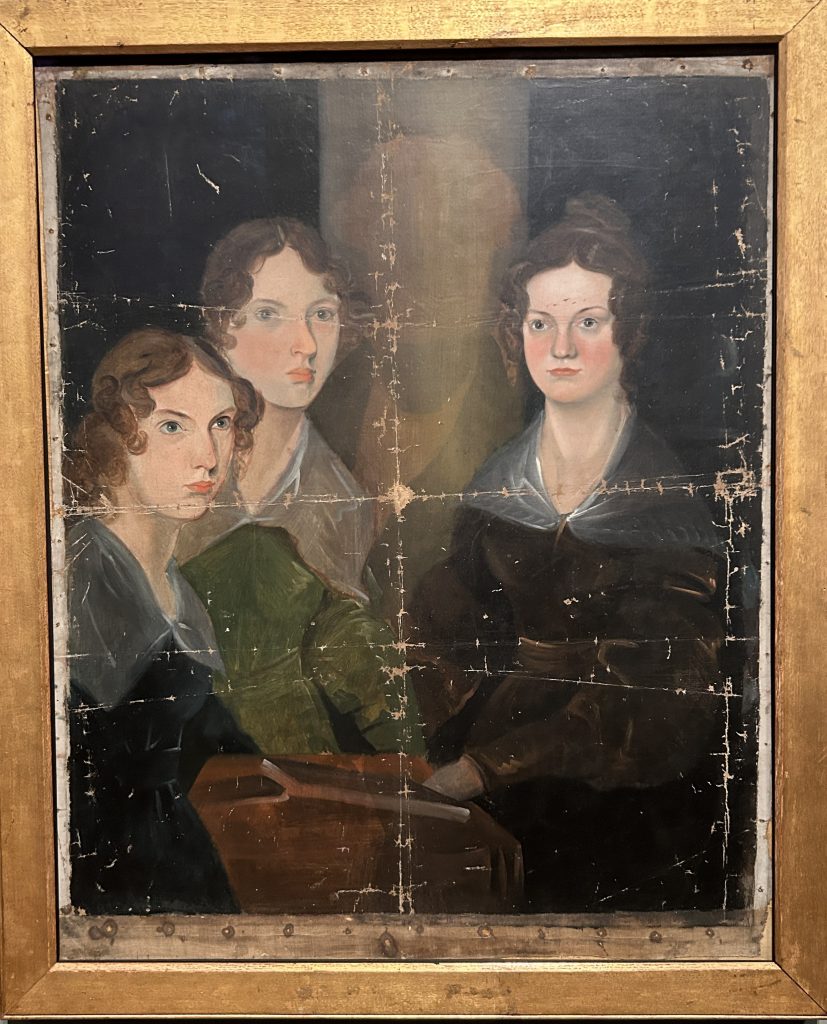
The Brontës get two separate portraits. The famous one is the “Pillar Portrait,” the only surviving group portrait of Anne, Emily, and Charlotte together, painted by their brother Branwell, who originally painted himself into the scene and then papered over his own face, leaving a ghostly pillar-shaped smudge between his sisters that’s still visible if you look for it.
Separately, there’s a smaller surviving fragment showing Emily alone, cut from an earlier, different group portrait that didn’t survive intact.
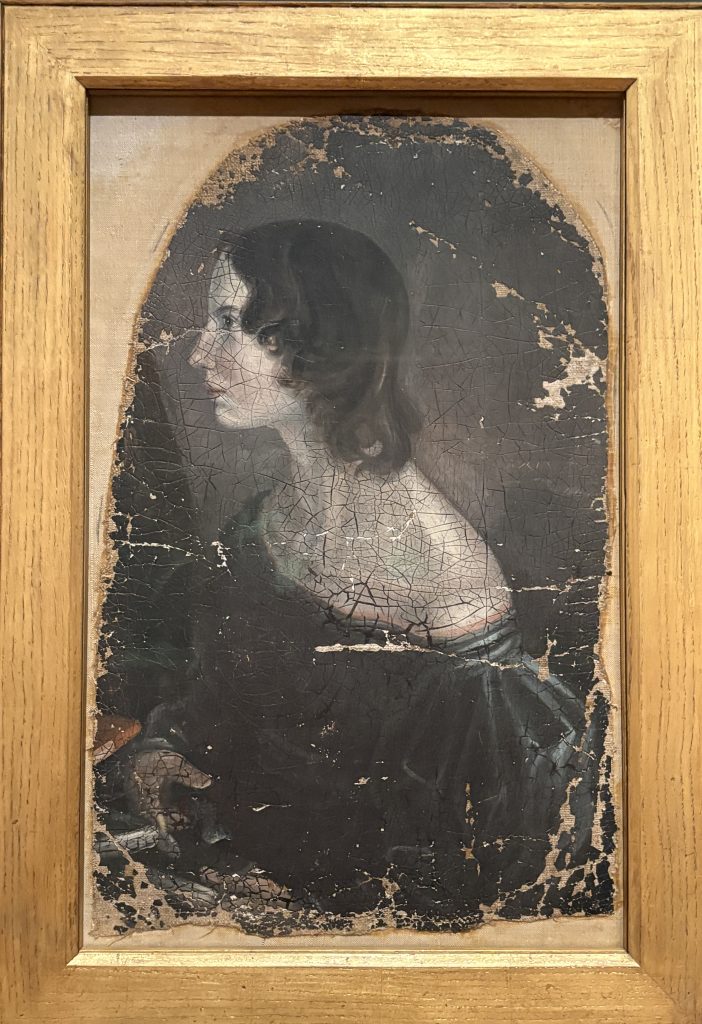
Recommended Novel Starring Emily Brontë
The Man in the Stone Cottage by Stephanie Cowell
Emily Brontë meets a shepherd on the moors that no one else can see, and after her death Charlotte finds hidden letters and a map that send her looking for the truth behind her sister’s secret. A good fit for the Brontë portraits, both the Pillar Portrait and Emily’s fragment.
Fast Forward: Into the Twentieth Century
Step into the gallery displaying portraits of 20th century celebrities and you’ll find Iris Murdoch, winner of the Booker Prize in 1978 for The Sea, The Sea. . Her portrait took the artist three years and fifteen studio visits to finish.

Read Murdoch’s Masterpiece The Sea, The Sea
The Sea, The Sea by Iris Murdoch
Retired theatre director Charles Arrowby retreats to a house by the sea, only to be pulled back into an obsession with his childhood sweetheart. This is the novel that won Murdoch the 1978 Booker Prize.
National Portrait Gallery FAQs
Yes, general admission is free. Some special exhibitions charge a separate ticket, but everything covered in this post, the permanent collection, is free to walk through.
The gallery is open daily, 10:30am to 6pm Sunday through Thursday, and 10:30am to 9pm Friday and Saturday, with last entry 30 minutes before closing.
An hour is enough to hit everyone in this post if you move at a reasonable pace, though I’d budget closer to two if you want to actually read the wall labels rather than just look at the faces.
I’d say yes. You don’t need to have read Frankenstein or Pilgrim’s Progress to enjoy the stories behind the portraits.
St Martin’s Place, London, WC2H 0HE, right next to Trafalgar Square and a short walk from Charing Cross station and just down the street from my recommended hotel: Radisson Blu London Leicester Square.
Where to Stay in London
When visiting London, I suggest staying in the West End where you’ll have easy access to the theaters and many of London’s most iconic sites.
On a recent trip to London, I stayed at the Radisson Blu London Leicester Square. Of all the places I’ve stayed in London, it’s the most conveniently located. Right on Leicester Square, the hotel was within five minutes of all three theatrical performances I attended, and around the corner from the National Gallery and Trafalgar Square.
My room was spacious and well-appointed, the staff friendly and helpful, and the air conditioning more than adequate, despite some unusually hot days.
Here are other excellent options at which I’ve stayed:
Park Plaza Victoria. Located right across the street from Victoria Station, this place is a remarkably good deal for a modern, four-star hotel in the heart of London. My room for two was spacious and even had a view over London.
The Wilde ApartHotel in central London is also a wonderful choice. I appreciate its central location within walking distance of Trafalgar Square and most of the West End theaters. Check out my post about the Wilde ApartHotel.
Exploring Literary London
Here are some tours with GetYourGuide exploring various aspects of literary London:
Continue Exploring London’s Museums & Galleries
London is full of intriguing museums and cultural experiences, including many that remain delightfully off the beaten path.
Planning to explore more of London’s outstanding museums and galleries? Here are guides to five of my favorites:
- Behind the Red Door: A Private Tour of the Charles Dickens Museum
- How to See Sir John Soane’s Amazing Museum
- Things to See at the Design Museum in London
- Best of the Courtauld Gallery in London: A Treasure Trove for the Artsy Traveler
- How to Get the Most Out of Your Visit to the Victoria and Albert Museum in London
- London’s National Gallery: The Best of the Best
Would you like to save this post?
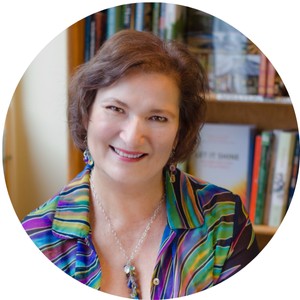
Carol M. Cram writes novels inspired by the arts; runs Artsy Traveler, an arts-focused travel blog, and Art In Fiction, a curated database of 2,700+ novels inspired by the arts; and hosts The Art In Fiction Podcast. She has also authored 60+ textbooks on computer applications and taught at Capilano University for over two decades. Carol lives with her husband, artist Gregg Simpson, on beautiful Bowen Island near Vancouver, BC.
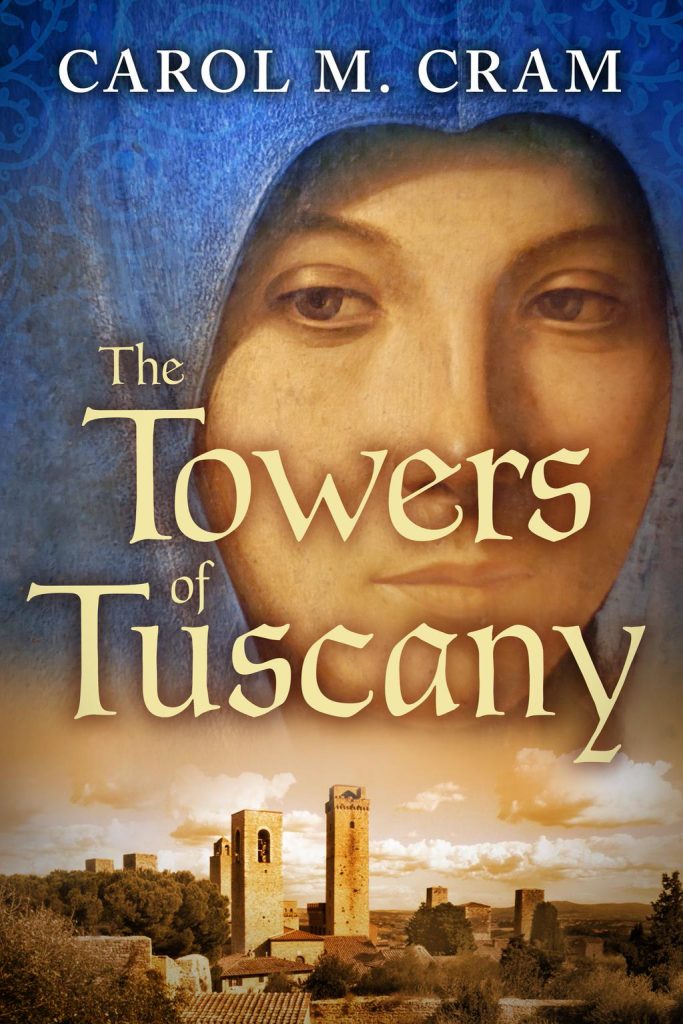
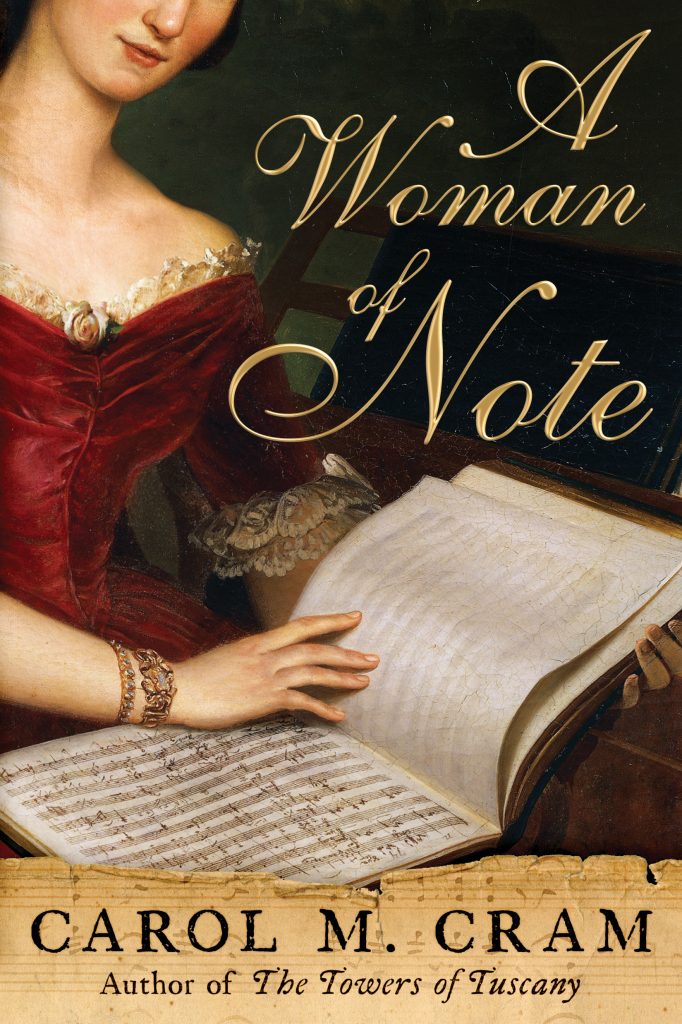
 See all my novels