
How to Find Awesome Accommodation in Europe: Insider Tips
Artsy Traveler contains affiliate links for products and services I personally use and can happily recommend. As an Amazon Associate, I earn from qualifying purchases. Please read the Disclosure for more information. If you make a purchase through these links, at no additional cost to you, Artsy Traveler earns a small commission. Thank you!
Finding awesome and unique accommodation in Europe takes time and patience, but the rewards are worth it. Your enjoyment of travel increases immeasurably when you stay in memorable hotels and apartments that don’t dent your budget.
Choosing the right place to stay becomes even more important if you’re traveling alone, especially when it comes to comfort, location, and peace of mind, so be sure to read my best tips for joyous solo travel.

After decades of traveling independently across Europe, I’ve learned how to spot great value, avoid common pitfalls, and choose places that are comfortable, well located, and memorable. My insider tips will help you find the best accommodation in Europe without overspending or sacrificing comfort.
And just to be clear, I’m not talking about student hostels and budget hotels here because, for me, comfort is key. While I recommend keeping track of your euros when you travel, I also recommend that you never sacrifice comfort to save money.
Let’s be honest! I’m not a student anymore, and my back appreciates a comfy mattress. In addition, I like my accommodations to include in-room Wi-Fi, a well-appointed bathroom with nice towels, air conditioning if the weather is hot, and plenty of space to move around.
Read on for my recommendations for finding the best accommodation in Europe. And note that some links to accommodations and other travel providers are affiliate links. If you click on one and book a stay, I get a small commission. Thank you!
Table of Contents
- My Accommodation Philosophy
- Step 1: Location, Location, Location
- Step 2: Identify Room Size
- Step 3: Select the Accommodation Type
- Step 4: Check Accommodation Amenities
- Step 5: Identify Cancellation Options
- Step 6: Pay Attention to Accommodation Ratings and Reviews
- Make the Final Choice
- Finding Accommodation FAQs
- Accommodation Recommendations
My Accommodation Philosophy
After decades of traveling in Europe, I’ve come to believe wholeheartedly in spending a little more money to get awesome accommodations that I still rave about.
Many of the places I recommend here also appear in my destination-specific guides, such as my posts on Where to Stay in Italy and Where to Stay in Spain.
Sometimes, the difference between a mediocre 3-star property and an incredible 4-star property is negligible. The trick is to focus on value for money. I’d rather spend €200 on a fabulous hotel with a balcony overlooking the Mediterranean than €175 on a dumpy place with a broken ceiling fan overlooking an industrial park.
Oh yes, on occasion I’ve stayed at those kinds of places when trying to a little too hard to “save money”.
Costs for Accommodation in Europe
On Artsy Traveler, I recommend moderately priced accommodations in Europe that are comfortable and in the three- to four-star range. My preferred budget is between €120-€250 per night, depending on location, for two people sharing. Yes, I know, that amount doesn’t sound very moderate. After all, I remember the days of traveling in Europe on $5 a day! But post-pandemic, prices have really risen.
And be prepared to pay more (sometimes much more) in Europe’s most popular tourist destinations such as Amsterdam, Paris, and Copenhagen and less in the countryside. Recently, I’ve been paying around €400 a night in the big cities, which I have to say is a bit on the high side.
However, I’ve learned that it’s much better to not cheap out when staying in big cities. Yes, you could find a budget place on the dreary outskirts, but you’ll spend hours commuting each way, and you’ll miss out on the ambiance and proximity to museums and other sites in the historic city centers. After all, that’s why you’ve traveled to Europe!
I share specific hotel and apartment recommendations, organized by city and region, in my Artsy Traveler Recommended Accommodations guide.
On a recent trip to Europe, four nights at an apartment with a terrace in the Loire Valley cost slightly less than one night in Paris. And I didn’t even book a particularly expensive place in Paris. However, the Citadines Saint-Germain-des-Prés was located right on the Seine in my favorite area of the city. During a one-week stay, I almost never needed to take the Métro.
Tips for Finding Accommodations in Europe
Finding the right place takes time and patience. Use a variety of methods to find lodging in the European destinations you’re visiting. I favor booking.com because they keep track of all my bookings and because I can book and cancel easily. Several other agencies offer the same service, including TripAdvisor, Hotels.com, and Expedia.
I also check the websites of individual hotels and refer to guidebooks. Fortunately, there’s no end of places to look for accommodations!
The challenge is how to get the biggest bang for your accommodation euro. And that’s the whole point of my six steps to ensuring accommodation awesomeness.
Step 1: Location, Location, Location
Check maps to determine the location of the hotel you’re considering. If it’s on the outskirts, look at the surroundings. Will you be staying in a soul-sucking suburb or a park-like resort?
Thank goodness for Google Maps! Use it to check out street views of the hotel. You’ll quickly figure out if the hotel looks run-down or if the neighborhood appears to be on the sketchy side.
If you’re driving, do not attempt to drive into the center of old historical towns and villages, especially in Tuscany and Provence. The roads are very narrow, you may get ticketed, and finding parking can be horrifically difficult.
Either park your car in a nearby car park and walk with your luggage to the hotel, or choose a place outside the city walls.

If you’re traveling by train, avoid hotels near the train station. They tend to be a bit scuzzy compared to hotels in the historic center that are typically several minutes’ walk or a taxi ride away from the station.
When I’m traveling by train, I always book the coolest, quaintest hotel I can find in the historic center. This makes up for the times I traveled by car and had to opt for modern, outside-the-walls convenience.
Step 2: Identify Room Size
Sites such as booking.com always specify the size of the room in square meters. 15 square meters (about 160 square feet) or smaller is too small to comfortably fit two people and their luggage.
In the middle of the night, I want to get to the bathroom without breaking my leg tripping over a suitcase.
I search for the largest room available within my budget and location options. Usually, rooms over 20 square meters are fine, but the bigger the better!
Step 3: Select the Accommodation Type
We favor hotels for one- or two-night stays and self-catering apartments or house rentals for longer stays. Hotels are great in big cities when you want to take advantage of in-house restaurants and bars and access the services of the front desk staff.
When we drive into a city, we choose hotels that either include parking garages or offer valet parking so we don’t need to search for a spot on the street.
Apartments in cities work well when you want to settle in and live like a local. Buy food and a bottle of wine (so much cheaper than a restaurant!) at local stores, cook a meal, and really stretch out.
I highlight some of my favorite self-catering stays in posts like 10 Best Charming Hotels in Europe for Independent Travelers, which includes both boutique hotels and apartment-style accommodations.
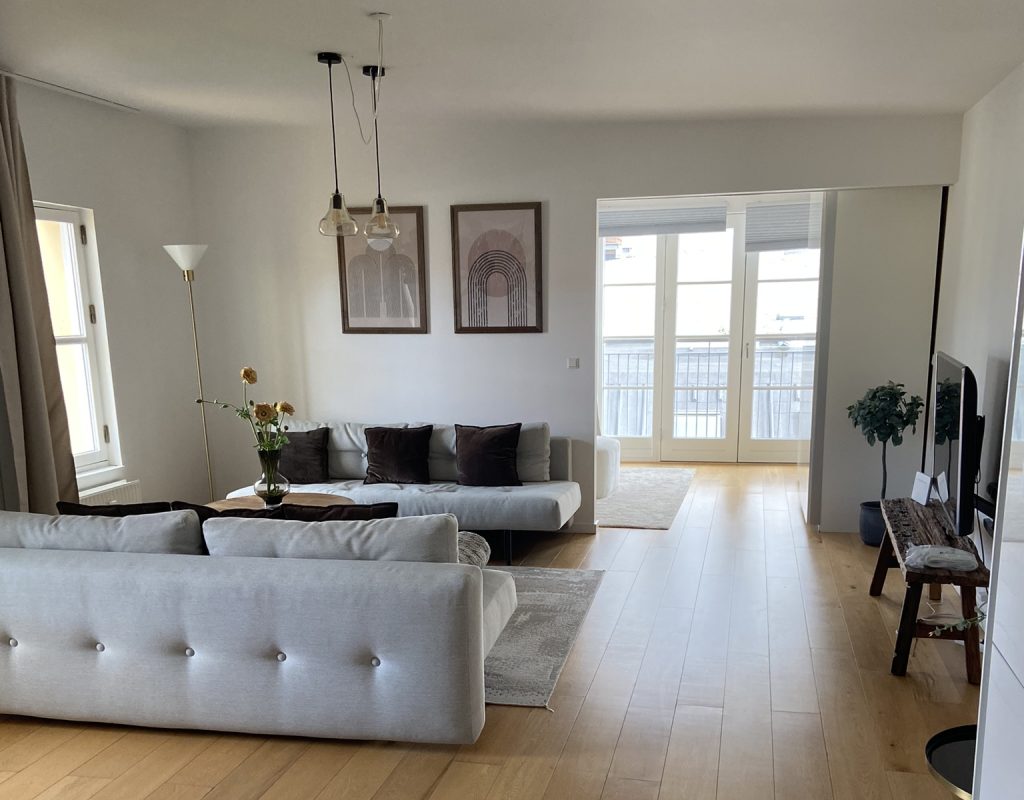
Here’s an awesome apartment I stayed at while visiting Copenhagen, Denmark.
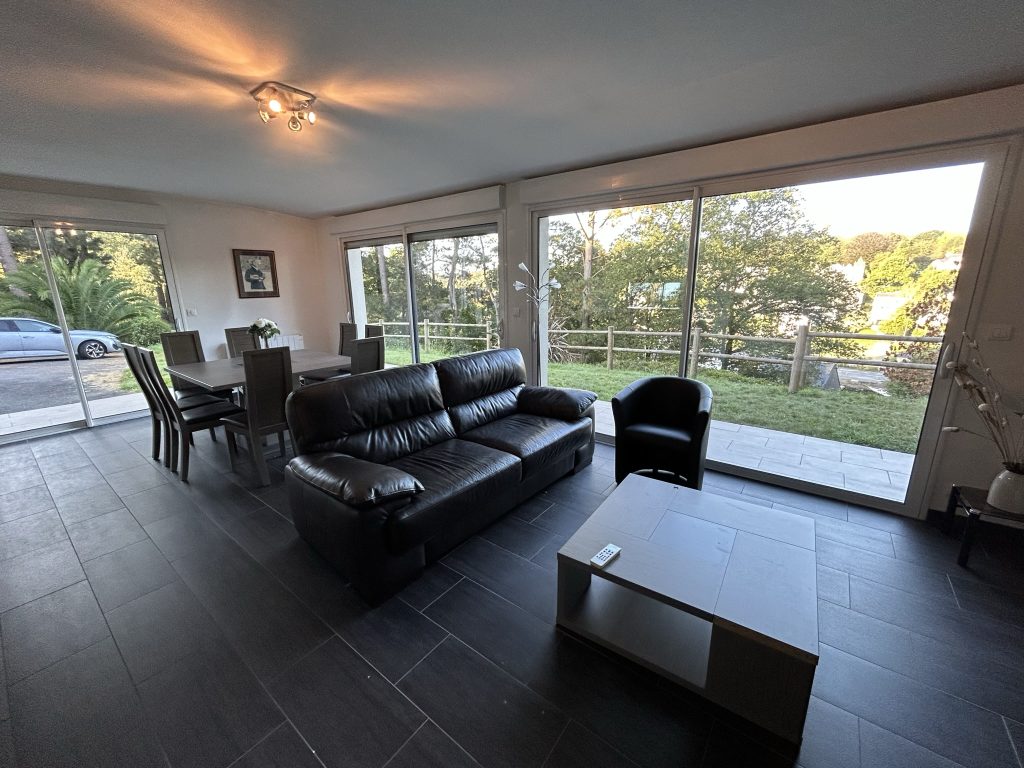
When staying in the countryside or in small towns or villages, check out options for renting a whole house. You’ll find many places listed on the travel websites. Here’s the gorgeous (and surprisingly affordable) house I stayed at during a one-week visit to Pont-Aven in Brittany.
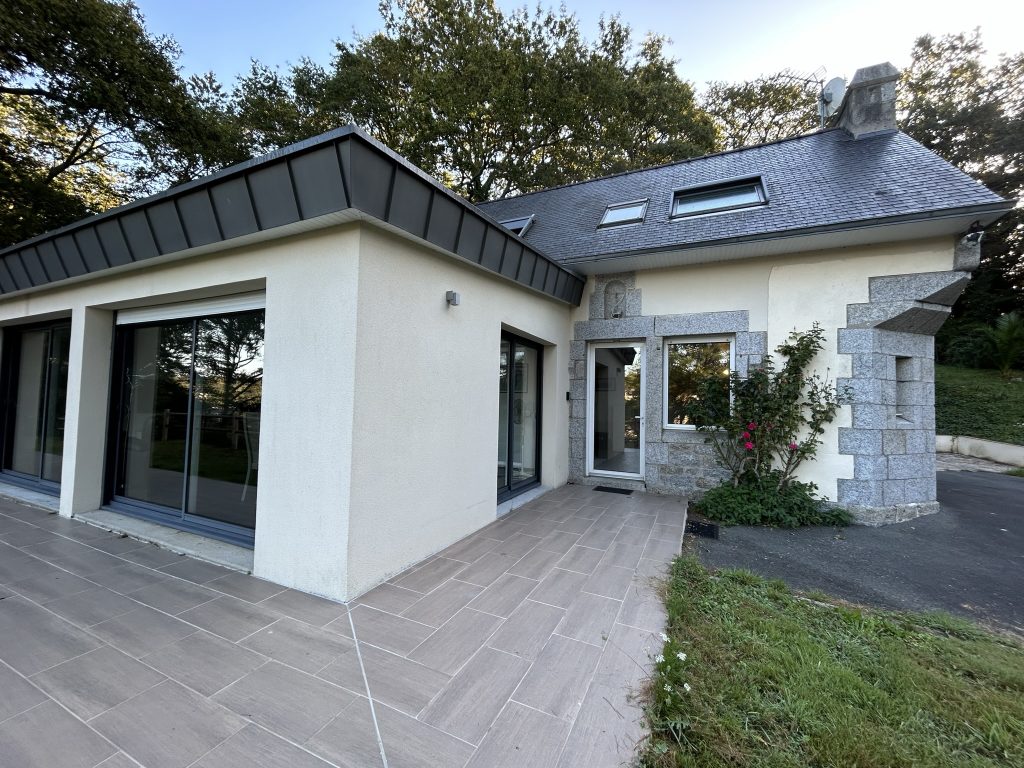
I’ve also enjoyed staying at agriturismo establishments, where I’ve eaten produce grown steps from the front door.
Unique Accommodation Options
And for a truly special travel experience, explore options for staying in a castle, château, convent, monastery, or other historic building. Often these places are no more expensive than a regular hotel, and can really elevate your trip to Europe!
A great source for unique accommodations in Spain are paradores. Here’s their website.
Where to Find Self-Catering Accommodations
You’ll find apartments on websites such as VRBO. Lately, I’ve favored the ones listed on booking.com because the booking and cancellation requirements are less stringent than on other sites.
On a recent trip to Porto in Portugal, I rented a place on the top floor of a lovely old house with a view of the river. I paid a few euros more to have a fabulous breakfast delivered to my door every morning.

Spectacular!
Step 4: Check Accommodation Amenities
At a minimum, I want the following amenities:
- Wireless networking In-room Wi-Fi (pronounced WEE FEE in Europe).. Read the fine print. Some hotels offer Wi-Fi only in the lobby and public spaces.
- Bathtubs instead of showers, although they’re becoming increasingly rare
- Air conditioning if traveling in the summer. Summers are, regrettably, getting hotter. If you choose to travel during the summer months, do yourself a favor and make sure your room is air conditioned.
- A fridge to store breakfast and picnic food
- A balcony or terrace or at least a view over a garden, a landmark, or the sea
TIP: Pack a soft-sided, collapsible insulated bag. It’s invaluable for keeping food cool-ish during transit. We fill ours with yogurts, cheeses, vegetables, and fruits, and buy fresh buns at local bakeries to make picnic lunches.
For more packing advice that makes hotel and apartment stays easier, see my full Travel Gear guide.
Step 5: Identify Cancellation Options
Choose rooms with free cancellation options until or unless you’re 100% sure you’ll be staying there. You never know what can happen, and to my mind the money saved by choosing the no-cancellation option is not worth the risk.
I’ve been burned before!
Step 6: Pay Attention to Accommodation Ratings and Reviews
I pay attention to the reviews and the rankings on travel websites such as TripAdvisor. A hotel that has an average rating of 6.8 out of 10 is a hard pass.
Occasionally I’ve chosen hotels in the high 7s, but 8.0 is typically my cut-off.
I also read a selection of the reviews. If a fair number of people grumble about cleanliness or unfriendly staff or funny smells, I move briskly on to the next listing.
Again, the key to making great accommodation choices is searching for value over price within your budget. If the difference between a hotel with a 9+ rating and one with a 7+ rating is not appreciable, always choose the hotel with the higher rating.
Make the Final Choice
Don’t wait too long to book your accommodation in Europe. I usually start at least six months in advance of my trip, and even then, I can have trouble finding exactly the properties I want.
If a property is not available on one website, try another website or go directly to the hotel’s website. Sometimes a property is listed as “sold out” on a website like booking.com when rooms are available on other sites.
If you’re still in the early stages of planning, my step-by-step guide, How to Plan a European Trip: 9 Easy Steps for a Perfect Itinerary, will help you put the whole journey together.

Stay flexible and be choosy. Happy hunting!
Finding Accommodation FAQs
It depends on the length and style of your trip. Hotels work best for short stays and in big cities where you want central locations, front desk service, and on-site amenities. Apartments and house rentals are ideal for longer stays, especially if you want more space, a kitchen, and the chance to live like a local. I often book a mix of both on our trips.
For popular cities and peak travel seasons, I recommend booking accommodation six months in advance if possible. Boutique hotels and well-located apartments tend to sell out early. If your plans aren’t firm, choose places with free cancellation so you can stay flexible.
Yes. Many European hotel rooms are smaller than what travelers from North America are used to, especially in historic city centers. Always check the room size in square meters before booking. For two people with luggage, I recommend booking a room over 20 square meters when possible.
Yes, almost always. Staying in or near the historic center saves time, transportation costs, and energy, and lets you enjoy the atmosphere of the city day and night. Cheaper accommodations on the outskirts may look like a bargain, but long daily commutes can quickly cancel out any savings.
At a minimum, look for reliable in-room Wi-Fi and good soundproofing. Get a room with air conditioning if you’re traveling in summer. A fridge, elevator, and comfortable bathroom can make a big difference, especially on longer stays. Small comforts add up when you’re traveling for weeks at a time.
I usually start with booking platforms because they make it easy to compare prices, read reviews, and manage cancellations. Once I’ve found a place I like, I sometimes check the hotel’s own website because occasionally they offer better rates or extra perks. It’s always worth a quick comparison.
Choosing based on price alone. A slightly more expensive hotel in a great location with good reviews often delivers far better value than a cheap place that’s uncomfortable, inconvenient, or poorly maintained. Comfort, location, and reviews matter more than saving a few euros a night.
Accommodation Recommendations
Here are links to my accommodation recommendations in several of the countries featured on Artsy Traveler. You’ll find many more recommendations in posts about specific destinations.
[…] Find Accommodation […]
[…] Find Accommodation […]
[…] Find Accommodation […]
[…] Find Accommodation […]
[…] Find Accommodation […]
Useful tips for finding great accommodations in Europe! The reminder to book early for popular destinations is spot-on. Perfect advice for travelers planning trips.
Thanks, John. I’m glad you’re enjoying Artsy Traveler! And yes, booking early is essential. I’m starting to book now for two trips coming up in spring and fall in 2025!