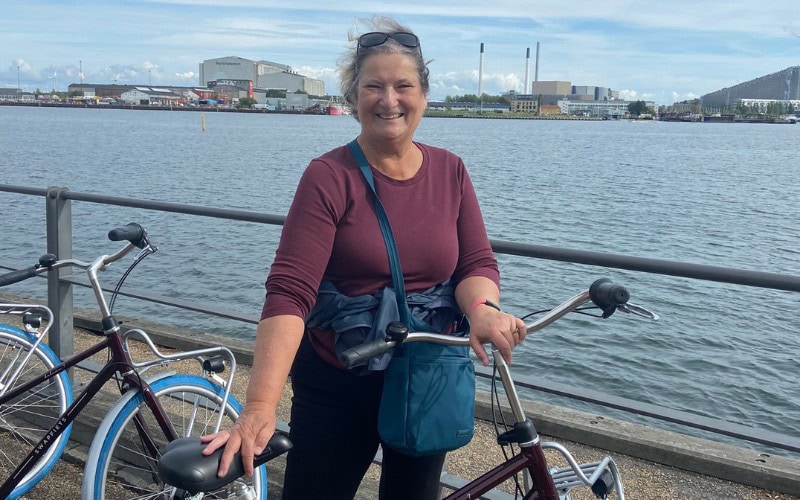
15 Best Things to Do in Copenhagen for Arts Lovers
I'm Carol Cram, novelist and arts travel writer, and founder of Art In Fiction, a curated database of 2500+ novels inspired by the arts. Artsy Traveler contains affiliate links for products and services I personally use and recommend. As an Amazon Associate, I earn from qualifying purchases. Please read the Disclosure for more information.
Every morning of my stay in Copenhagen, I walked from my apartment in Nyhavn to one of the coziest coffee shops I’ve ever visited.
For an hour or two, I happily worked on my current novel while watching fit-looking Danish people whiz past on their bikes.
Copenhagen has a way of making you feel like you should be outside doing something vigorous.
If you want to hang out with a lot of very healthy-looking people who all seem to ride bikes and love the outdoors and you like great museums and artfully presented food, then Copenhagen should be your next European destination.
This post highlights the 15 best things to do in Copenhagen for arts-loving travelers, and is part of my guide to artsy & independent travel in Denmark, where I share my best tips for exploring Denmark’s historic sites, museums, and cultural experiences.
Table of Contents
- My Stay in Copenhagen
- Where to Stay in Copenhagen
- Map of Copenhagen
- #1: Get the Copenhagen Card
- #2: Take a Bike Tour
- #3: Check out BOTH Mermaids
- #4: Take Pictures in Nyhavn
- #5: Eat Smørbrød
- #6: Tour the Design Museum
- #7: Visit the Danish National Museum
- #8: Visit Tivoli Gardens at Night
- #9: Go to a Concert at the DR Koncerthuset
- #10: Wander the Pedestrian Streets
- #11: Eat Lakrids by Bülow
- #12: Visit “Hamlet’s Castle”
- #13: Visit the Louisiana Gallery of Modern Art
- #14: Visit Frederiksborg Castle
- #15: Visit Roskilde
- Copenhagen Tours
- FAQs: Things to Do in Copenhagen
- Continue Exploring Denmark with Artsy Traveler
My Stay in Copenhagen
I stayed for eight nights in Copenhagen while my husband and partner-in-travel, Gregg Simpson, had an exhibition of his paintings at Galleri Bredgade 22 close to the picturesque Nyhavn area of the city.

I could have easily filled another eight days. Even so, I was able to pack a lot into the time I had.
I especially loved that Copenhagen doesn’t have a bustling, big-city vibe. Instead, it feels like a place where people are happy to live.
Where to Stay in Copenhagen
Copenhagen is not Europe’s most bargain-friendly city (understatement), so be prepared for a bit of sticker shock. Fortunately, the Copenhagen Card (see more info below) helps offset the cost of accommodation.
Here are some options:
For my recommendations on where to stay, read my Copenhagen accommodation guide.
Map of Copenhagen
Before starting, check the map below. Most of my suggested sites in Copenhagen city itself are within walking distance of each other.
The last four sites are outside Copenhagen and easily accessible by train.
#1: Get the Copenhagen Card
The first item on my list isn’t a site but rather the card you’ll need to tour most of the rest of my recommendations.
The Copenhagen Card is a bargain. With it, you can get into just about every museum and notable site in the city, including the three I recommend most in my Copenhagen Museum Guide.
You can also use the card on all the subways, buses, and trains in the Capital Region, which is a very large swathe of land that includes Copenhagen and most sites within an hour’s train ride.
The card makes day trips like those I cover in my Three Recommended Day Trips Guide very affordable.
You can purchase the Copenhagen Card for varying lengths. I purchased a five-day card which was perfect and allowed me to see almost everything I wanted to explore.
To find out if it’s worth your while to purchase a Copenhagen Card, choose the sites and museums you want to visit, check their prices online, and then compare them with the cost of the card. I pretty much guarantee you’ll find that the Copenhagen Card will be worth its price.
Click the image below to purchase the Copenhagen Card.
#2: Take a Bike Tour
A good idea is to take a bike tour on the first day or two you’re in Copenhagen. That way, you’ll get the “lay of the land” while also ticking off a few of the most touristy sites such as the Little Mermaid (you only need to see her once!), some of the parks, and Nyhavn.
I joined a small bike tour for a 90-minute joy ride through Copenhagen and loved every minute of it. Copenhagen is made for cycling.
You have your own lanes and your own traffic lights, and everyone knows and obeys the rules.
Meeting the Copenhagen Bike Tour
I met the tour at the bike racks in Kongen Nytorv (#2 on the map above), the large square not far from where we were staying in Nyhavn (see my review of our fabulous apartment).
Our guide showed us the basic hand signals for turning left and right and stopping, assigned each of us in the group of six people a large and sturdy bike, reviewed how to change gears, and then boom, we were off. Helmets? What helmets?
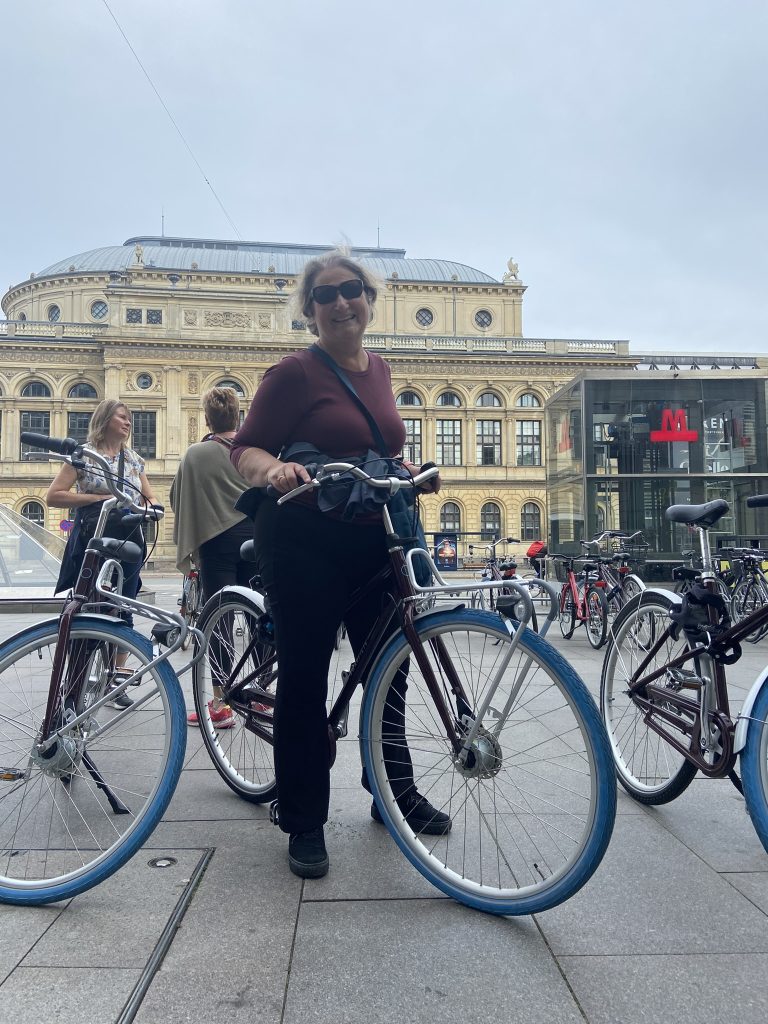
Riding around Copenhagen on a bike makes you feel like a real Copenhagener. Everyone cycles here, young and old.
Even if you’re not much of a cyclist, or out of practice (as I was), you’ll have no trouble cycling in flat Copenhagen. I think I changed gears once to go up a very slight incline in the area near the Little Mermaid.
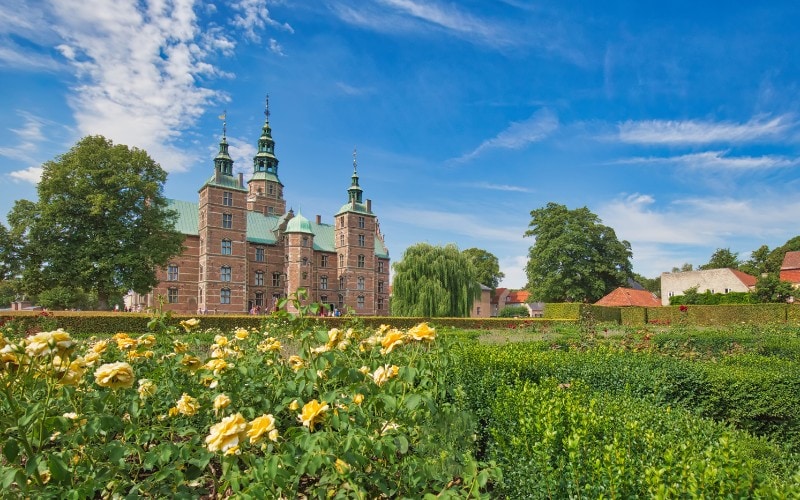
King’s Garden
We rode for about ten minutes to the King’s Garden (Kongens Have – #5 on the map), where our guide gave us a quick history of Denmark and Copenhagen. He was a font of knowledge.
While you could rent a bike and explore Copenhagen on your own, I recommend taking a tour. You’ll learn a lot, and also get the chance to chat with some fellow travelers.
The King’s Garden includes an attractive castle surrounded by a moat and plenty of tree-lined paths. In September, locals were hanging out on the lawns enjoying the sunshine.
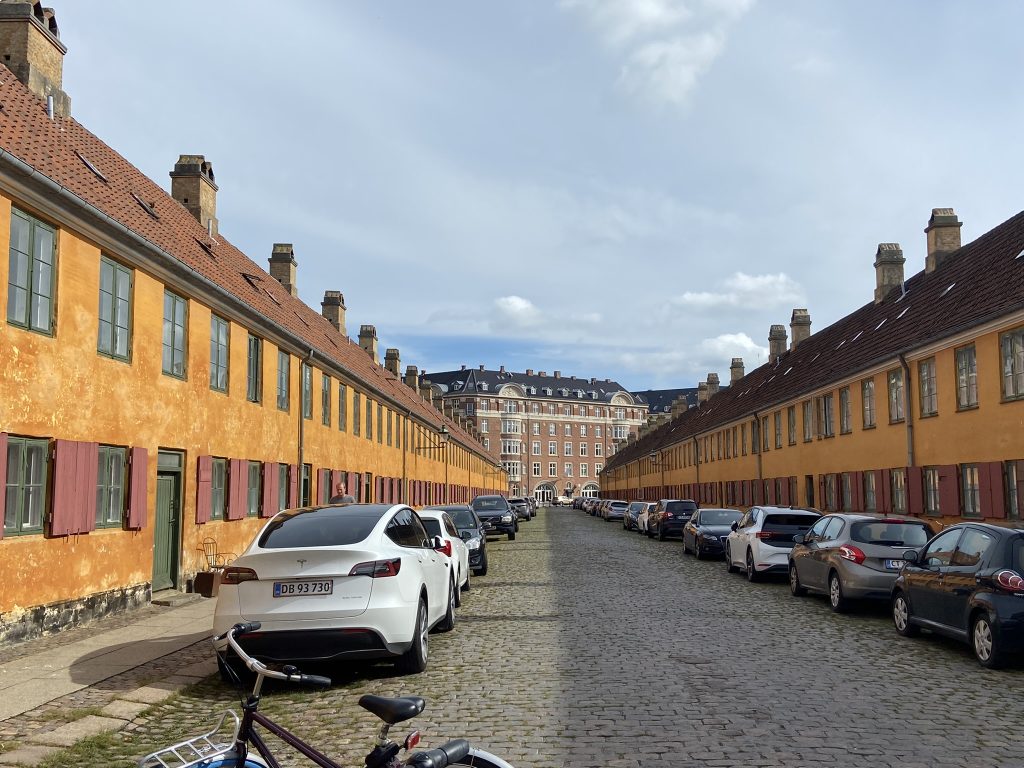
Nyboder
We rode next to Nyboder (#6 on the map), an area of historic row houses that housed sailors in the 18th century. Our guide shared interesting information about the hard life of sailors and their families back then.
We then checked out both of Copenhagen’s mermaids. To read about them, see #3 below.
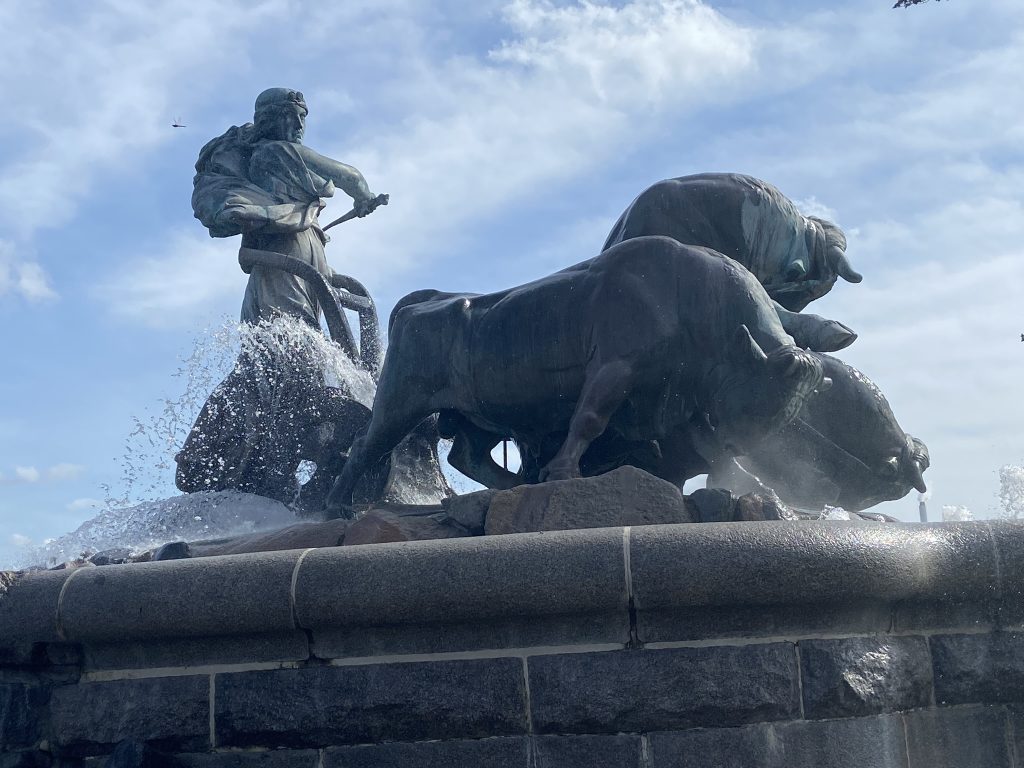
Gefion Fountain
A highlight was hearing the story attached to the Gefion Fountain (#10 on the map), which we rode to after visiting with the mermaids.
The fountain depicts the mythical story of the creation of the island of Zealand upon which Copenhagen is situated. According to legend, the Swedish king Gylfi promised Gefjun (a goddess) that she could have all the land she could plow in a night.
Well, being a bit of a resourceful lass, Gefjun turned her four sons into oxen and plowed out a Zealand-shaped chunk of land which was then thrown into the Danish sea to become the Zealand we know today. She left behind a hole that is now Lake Mälaren in Sweden.
What a woman!
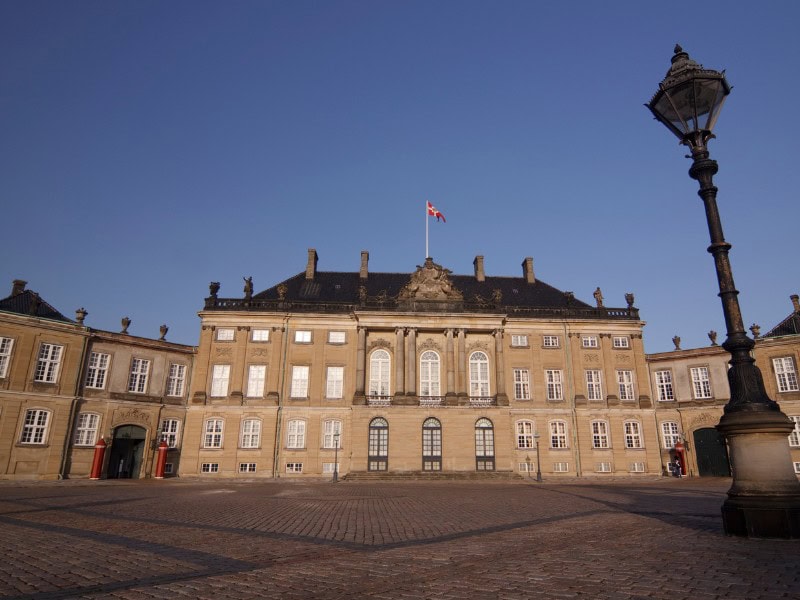
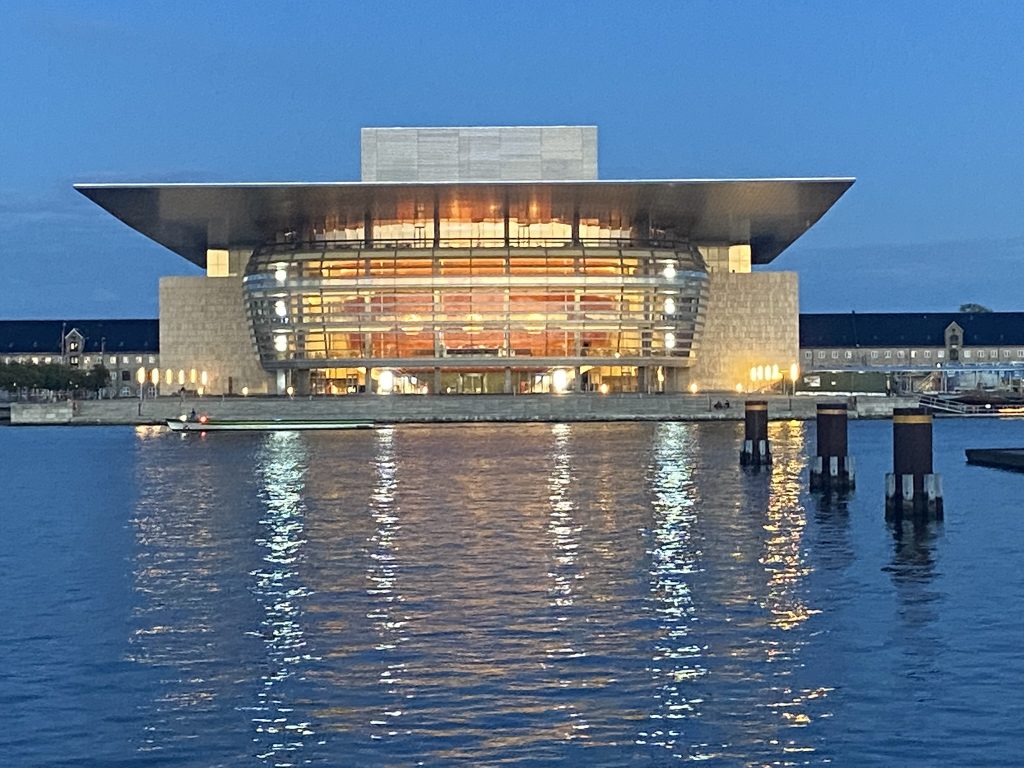
Royal Palace & Opera House
We rode to a location where we could see both the Royal Palace (#14) and the fabulous modern opera house (#15) directly across the harbor.
Our guide talked a lot about the many environmental innovations Denmark is pioneering, including exciting new ways of recycling trash and using wind energy. Denmark is an inspiration for the rest of the world.
Nyhavn
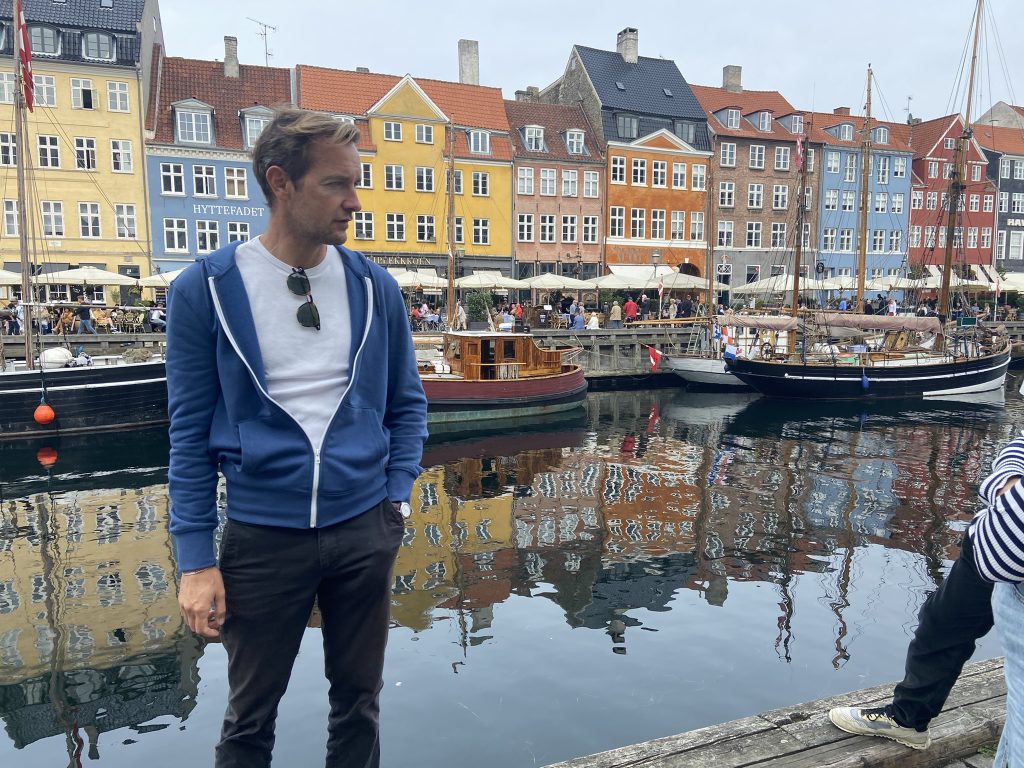
The bike tour ended in Nyhavn (#1) where our guide provided us with plenty of interesting commentary about living in Copenhagen and the remarkable social success story that is Denmark.
Yes, there are still problems, but overall, Denmark is having enviable success compared to most other countries when it comes to solving many of the 21st century’s most pressing social and environmental challenges.
In the photo below, you can see the building where we stayed. It’s the dark orange one between the brown and tan buildings to the right of the guide.
You can choose from plenty of bike tours and even book a private tour. Here are some options:
#3: Check out BOTH Mermaids
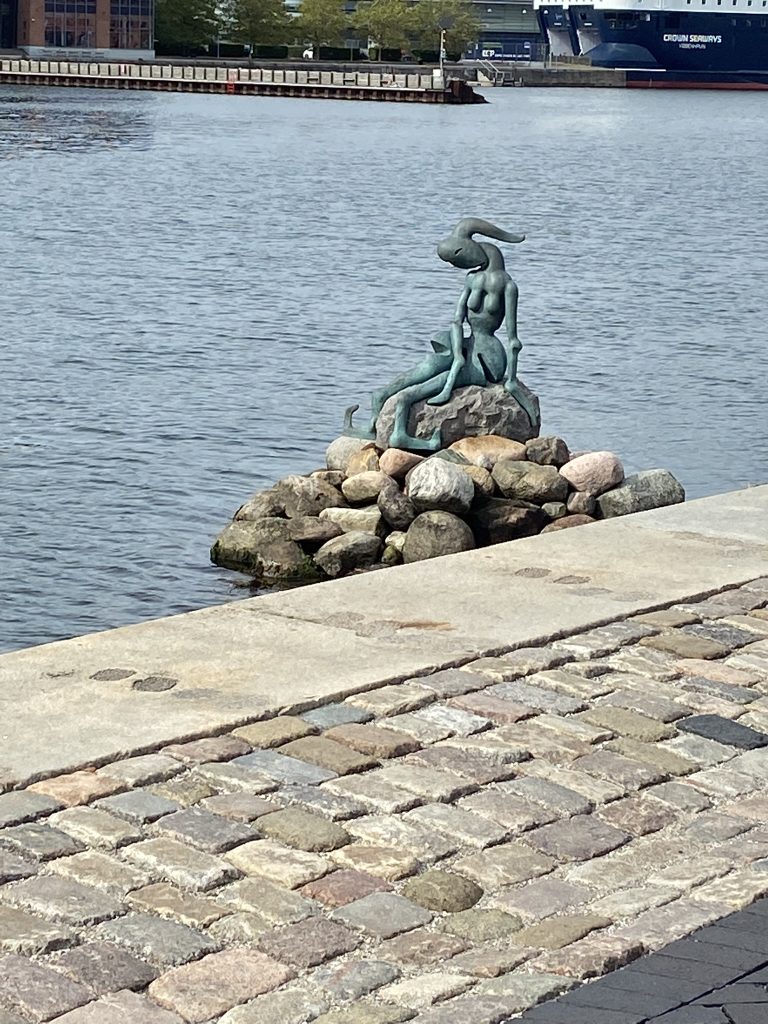
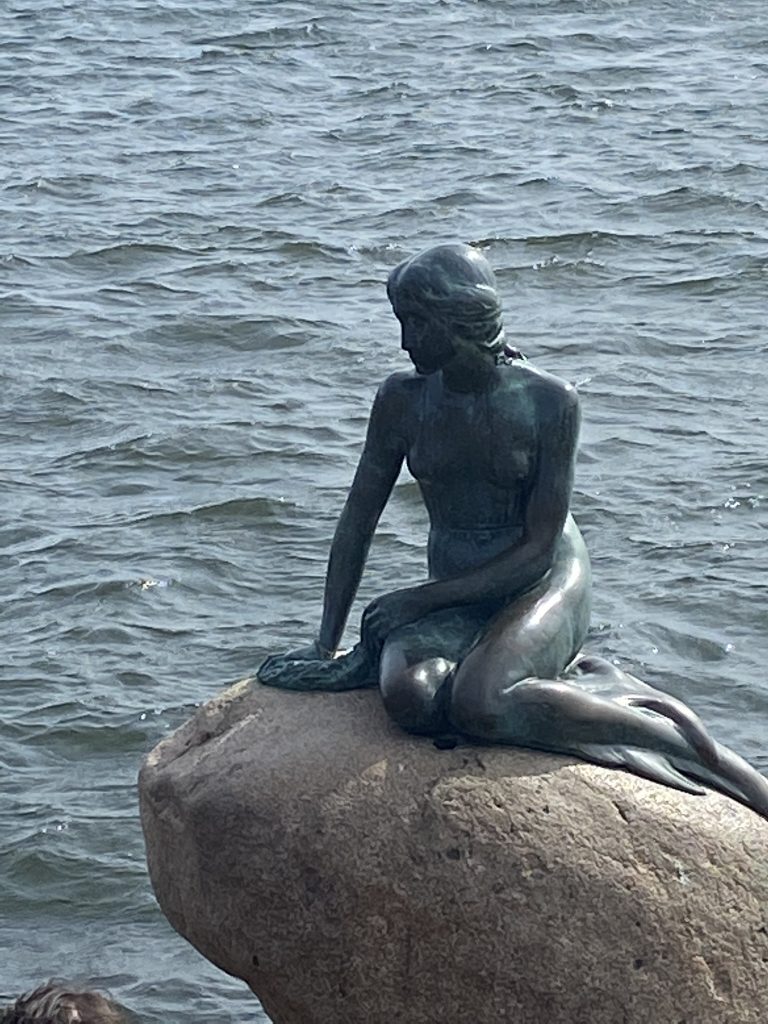
Yes, there are two: the famous one in the harbor that is mobbed with tourists, and the not-so-famous one about ten minutes away.
Called the Genetically Modified Mermaid (#7), the statue is blissfully lonely. When I visited with the bike tour (see above), we were the only people checking her out.
Her more conventionally depicted sister mermaid sits in the harbor and basks in the glow of a thousand cell phones. Getting a picture of her requires some judicious zooming in to avoid the crowds.
The bronze statue of the Little Mermaid (#9) by sculptor Edvard Eriksen is inspired by the 1837 fairy tale by beloved Danish author Hans Christian Andersen. The statue has reached iconic status worldwide and is a must-stop on every tour itinerary. It’s a pleasant place to pause for a few minutes to enjoy views of Copenhagen’s massive harbor.
#4: Take Pictures in Nyhavn
We stayed in a beautiful two-bedroom apartment in Nyhavn (#1) and I’m so glad we did.
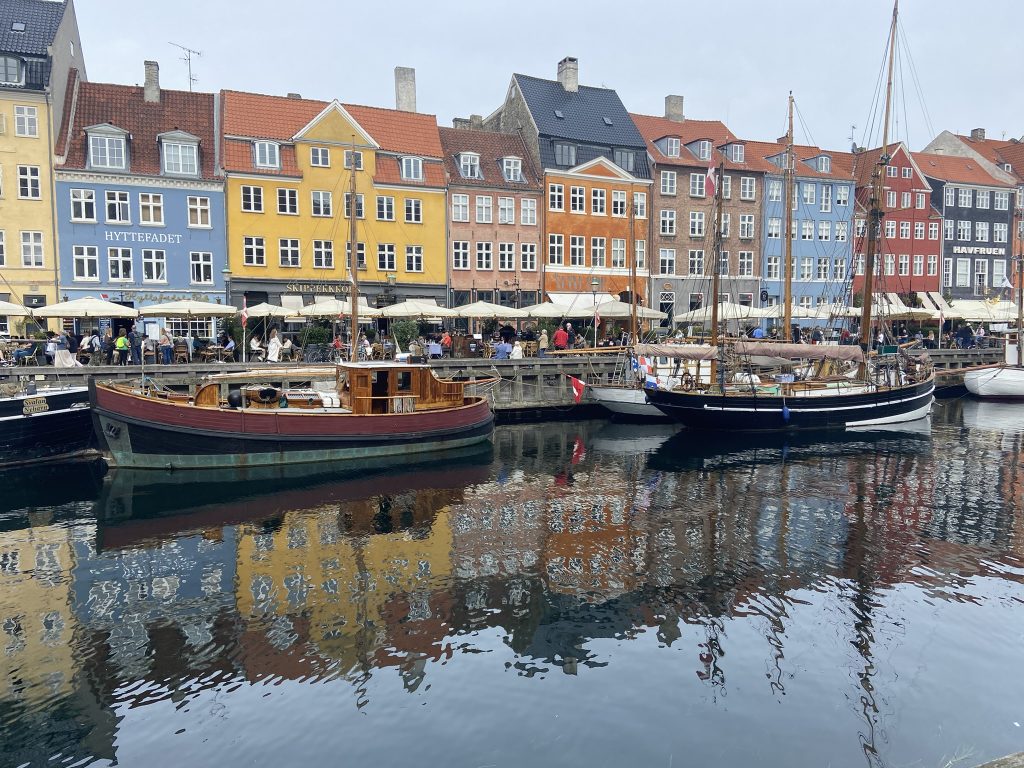
The area was once very sketchy—think rough pubs and brothels—but after major renovations and rebranding, Nyhavn has become one of the most recognizable regions in all of Copenhagen. In fact, nowadays you’d be hard-pressed to find any tourist info about Denmark that didn’t include a picture of Nyhavn.
The colorful buildings, old ships, and numerous sidewalk cafés are irresistible. I spent quite a bit of time taking photographs at various times of day to capture the shifting light.
According to the guide on my bike tour (see above), the restaurants in Nyhavn are overly touristy and overpriced. He has a point. We ate at one and yes, it was on the pricy side, which is saying something in pricy Copenhagen.
But the setting really can’t be beat, so at least stop at one of the sidewalk cafés to enjoy a drink and watch the world go by.
Here’s a selection of photos from different images and in different lights of what must be the world’s most photogenic harbor.


#5: Eat Smørbrød
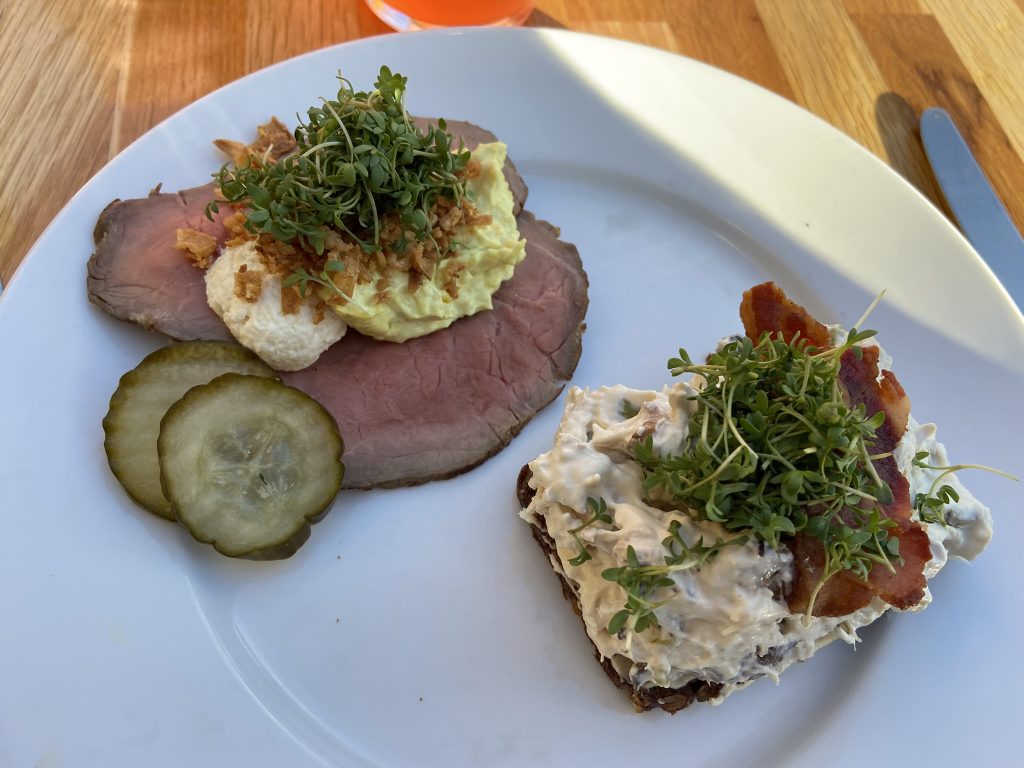
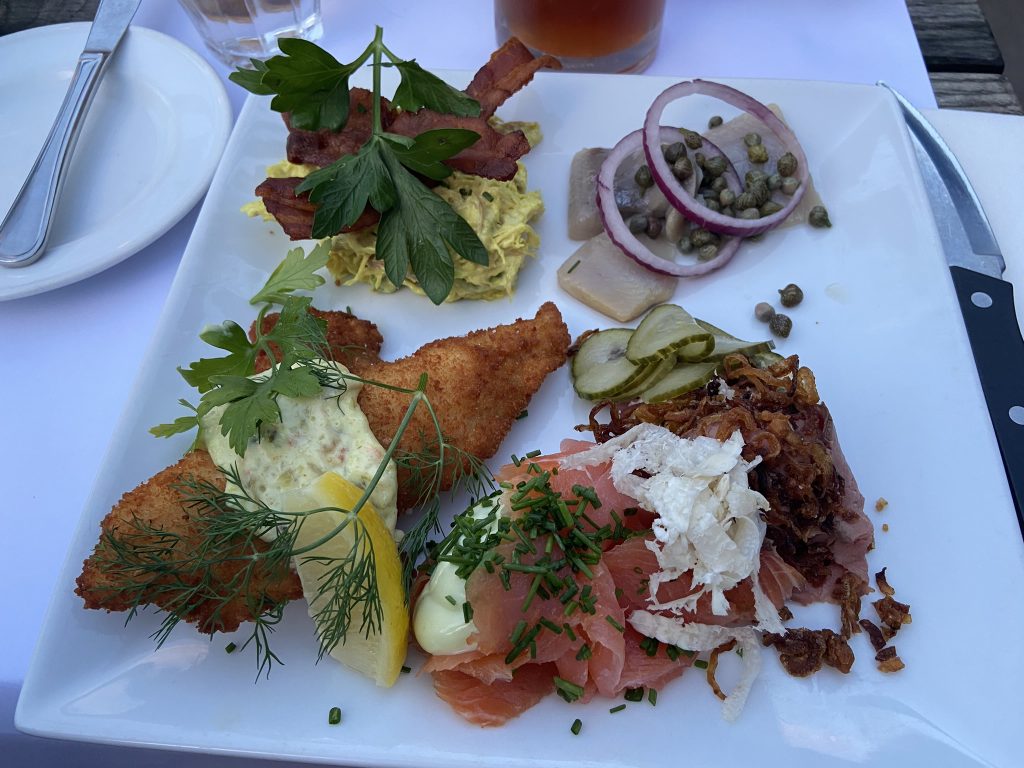
This is not optional! When you visit Copenhagen, you have to eat several pieces of smørbrød. These hearty, open-faced sandwiches consist of rugbrod rye bread heaped with a dizzying array of fresh and artfully displayed ingredients. Your biggest challenge will be deciding which smørbrød to choose.
They are surprisingly filling. I found that two or three were plenty for a good lunch.
You’ll find smørbrød at many restaurants around Copenhagen and beyond. Also check out cafés in places outside Copenhagen where you’re likely to find less expensive but just as fabulous smørbrød. Here are two plates of smørbrød, one enjoyed in Nyhavn on our first day and the other for a lovely dinner in Tivoli Gardens.
Enjoying this guide to Copenhagen? I publish new arts-focused travel guides every week, covering museums, cultural experiences, and destinations across Europe and beyond. Subscribe to the Artsy Traveler weekly update and never miss a post. Subscribe here.
#6: Tour the Design Museum
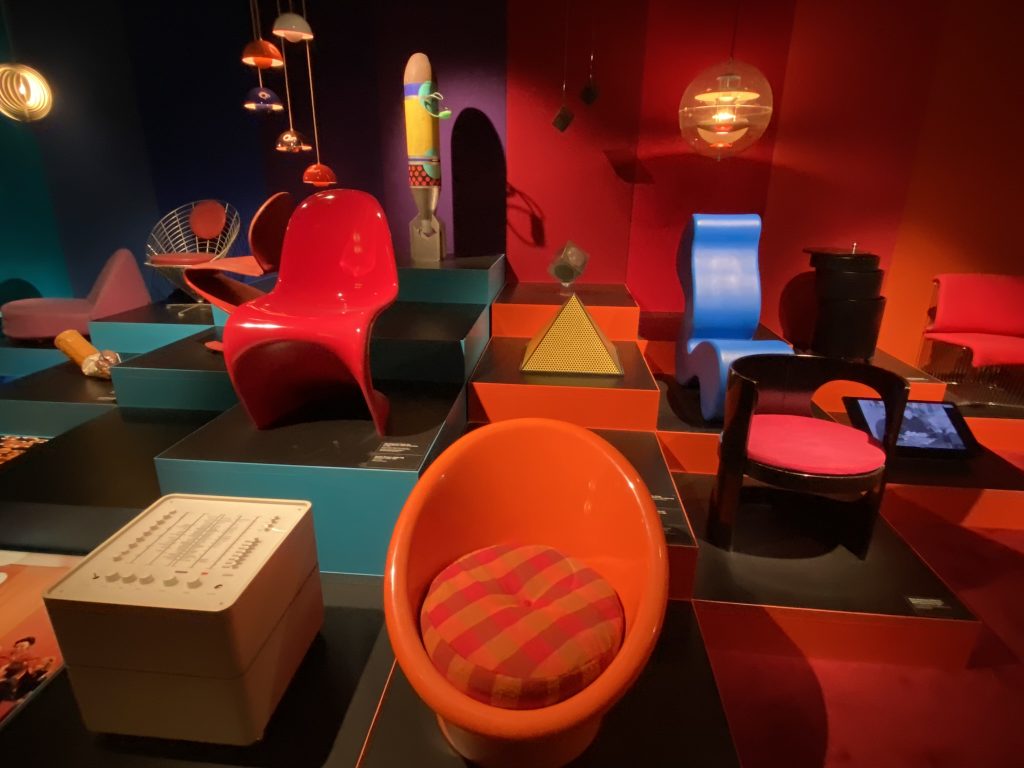
The Designmuseum Danmark (AKA the Danish Design Museum – #8) was the first museum we visited in Copenhagen and it set a high bar! It’s a wonderful place with interesting and gorgeously displayed exhibits and plenty of commentary in Danish and English. You could spend all day there and still want to come back for more.
Even if you’re not “into” design, carve some time out of your Copenhagen stay to visit the Design Museum.
Everyone sits on chairs and uses cutlery, and both these things, along with a ton more items we use every day, are featured in the context of design. The museum tells the story of Danish design of everything from furniture to objects to textiles to cutlery to posters, and a lot more.
The many rooms in the Designmuseum Danmark are arranged around themed exhibitions. For the most up-to-date information about current exhibitions, see the museum’s website.
Check out my post A Trio of Must-See Museums in Copenhagen for a more comprehensive description of what you’ll see at the DesignMuseum Danmark.
#7: Visit the Danish National Museum
Called the Nationalmuseet (#12), this major museum is also worth several hours of your time even on a short trip to Copenhagen.
We particularly enjoyed the prehistory collection (once of the best-displayed and best-explained I’ve ever seen) and the large exhibition devoted to the Vikings. They were a busy lot, as you’ll find out.
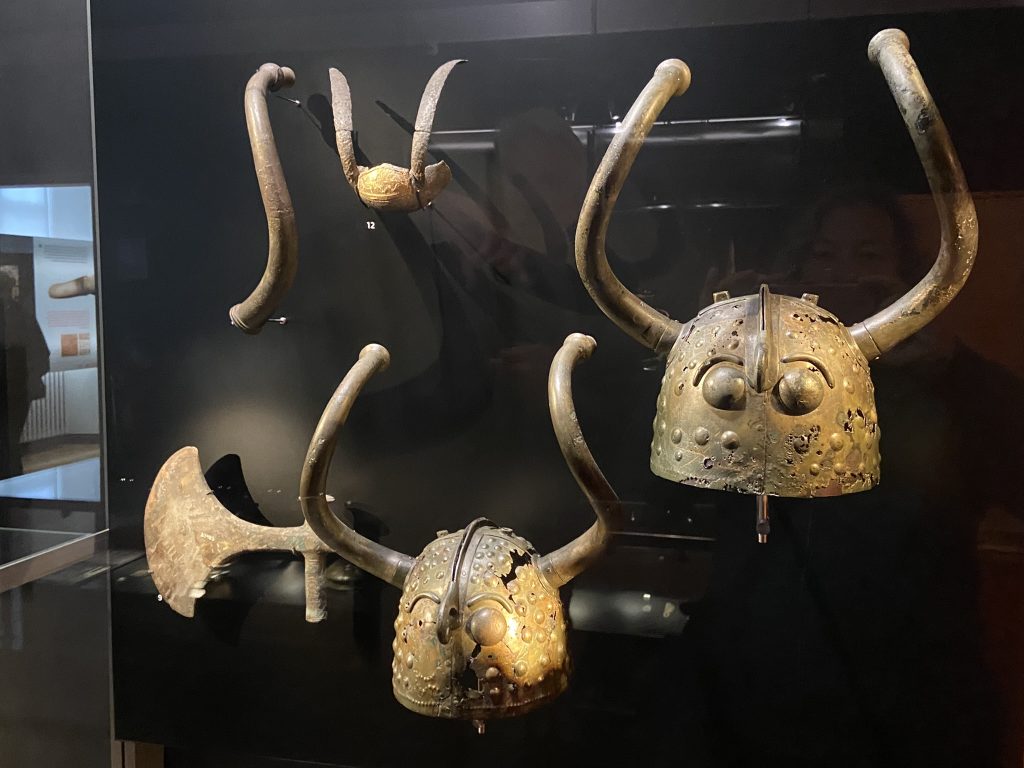
The museum is quite vast. Go early in the morning when you have energy and pace yourself! What I enjoyed most was the cleverness of the displays.
Everything is presented so artfully, which is fitting for a country famed for its design chops. And fortunately, as with the Design Museum, all the displays are accompanied by excellent commentary in both Danish and English.
Check out my post A Trio of Must-See Museums in Copenhagen for a more comprehensive description of what you’ll see at the Nationalmuseet.
#8: Visit Tivoli Gardens at Night
Tivoli Gardens (#11) is an amusement park smack in the middle of downtown Copenhagen. It’s one of the sites included with the Copenhagen Card, which is a good thing because I don’t think it’s worth the fairly steep admission price. Mind you, we’re not into rides and midway games, both of which take up a fair chunk of the park.
That said, the gardens, pavilions, and restaurants are worth the visit on their own.
Go in the early evening to stroll through the whimsically designed gardens and view the pavilions, then have dinner at one of the many restaurants.
We enjoyed an excellent meal at a restaurant overlooking the pirate ship. The server kindly took our picture.
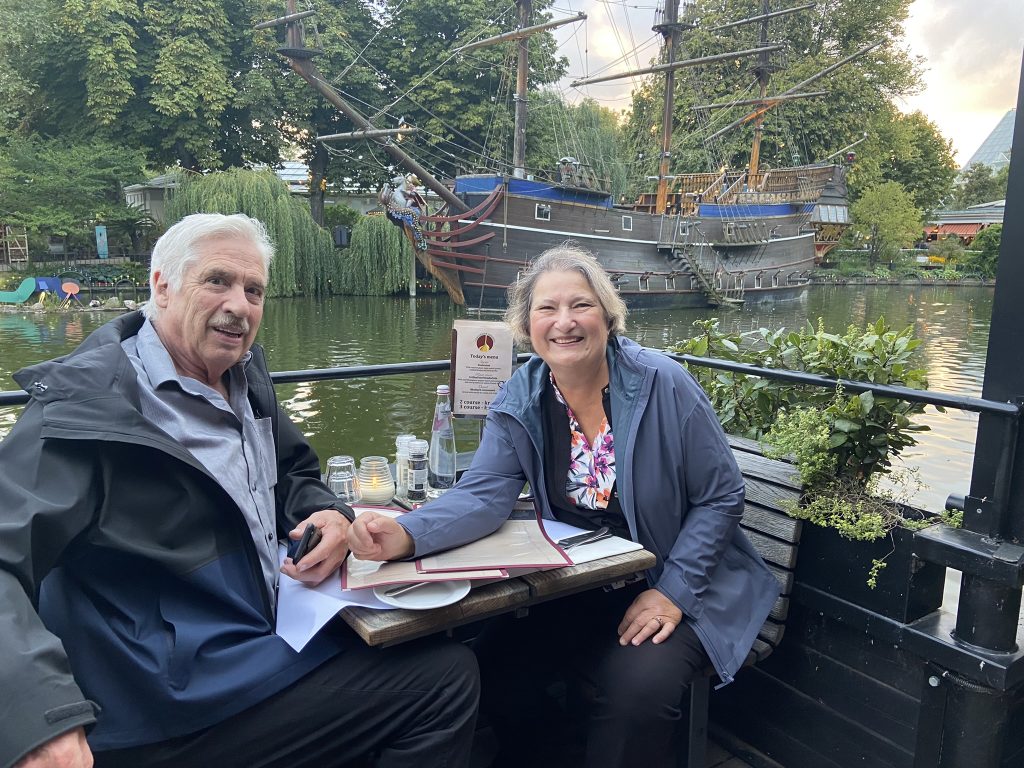
When night falls, linger for several hours to enjoy the illuminations that transform the gardens into a genuinely magical space.
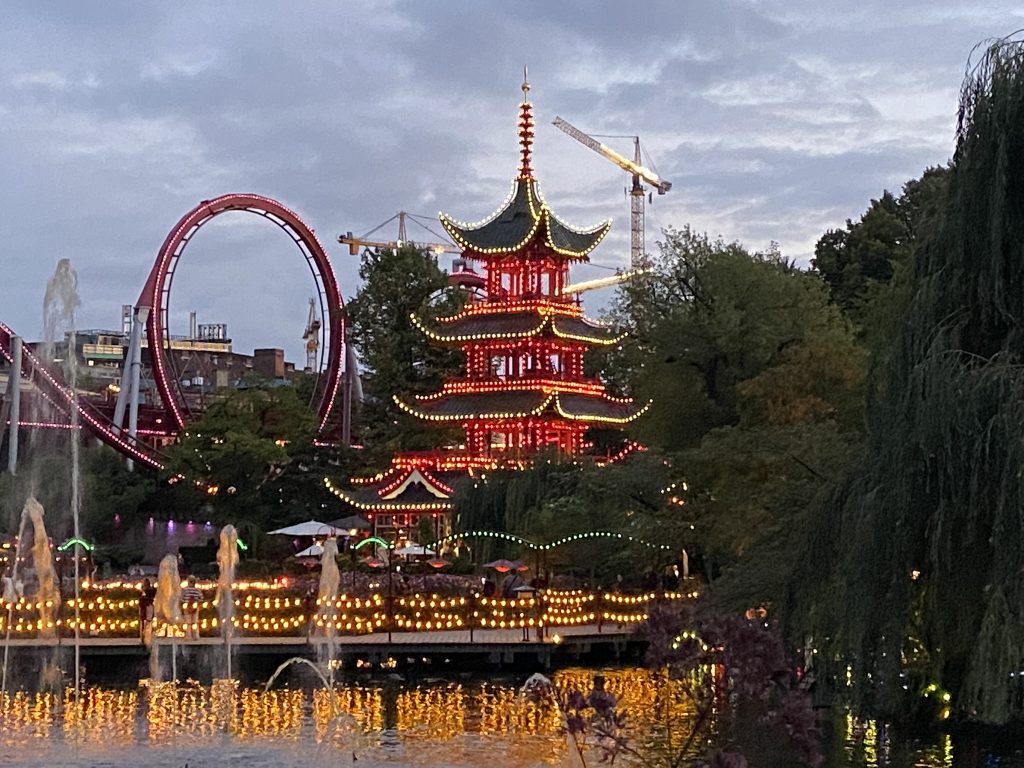
I’ll be honest: I wasn’t sure Tivoli was going to be my thing. An amusement park in the middle of Copenhagen felt like a potential tourist trap. But the fabled illuminations won me over completely. Tivoli after dark has an atmosphere that’s hard to find anywhere else.
#9: Go to a Concert at the DR Koncerthuset
We love going to classical music concerts when we travel in Europe and so got tickets for a concert at the DR Koncerthuset (#13), an ultra-modern, acoustically stunning hall a short metro ride from the center of Copenhagen.
We had perfect seats close to the front and in line with the piano keyboard (always a priority for me!). The concert included a Rachmaninoff concerto that knocked our socks off.
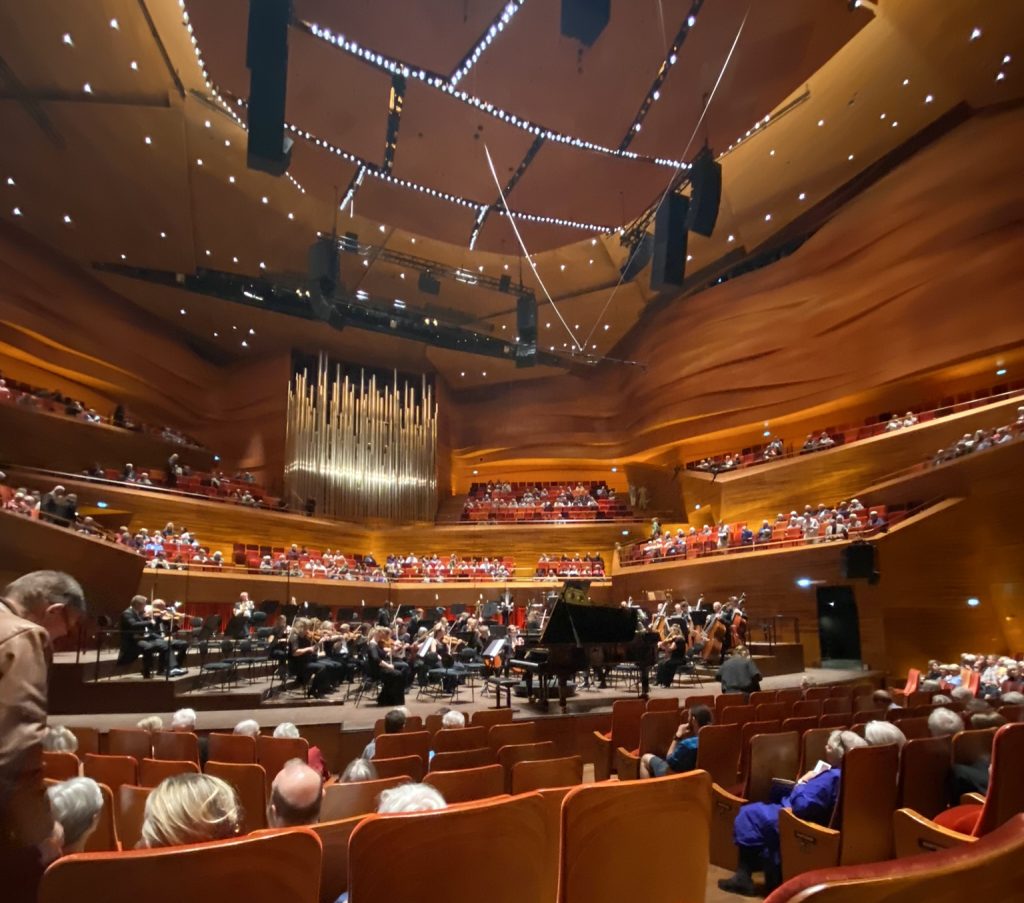
As soon as you know when you’ll be visiting Copenhagen, check out what concerts are on and get tickets in advance. The DR Koncerthuset website is in English and Danish.
#10: Wander the Pedestrian Streets
Copenhagen was one of the first (if not the first) European city to designate certain streets in the center of the city as “pedestrians only” in the early 1960s. The main street is called Strøget (#4).
At 1.1 km, it’s still one of Europe’s longest pedestrian streets and stretches from City Hall Square to Kongens Nytorv. You’ll find a lot of stores lining both sides, both budget chains and designer shops.
I remember being amazed by the Strøget when I visited Copenhagen for the first time in 1970 when I was a teenager. I’d never seen a pedestrianized street like it.
My mom and I spent several happy hours wandering up and down it, shopping for Danish souvenirs and eating smørbrød. The name Strøget also refers to several other streets in the area, including Frederiksberggade, Nygade, Vimmelskaftet and Østergade and Nytorv square, Gammeltorv Square and Amagertorv Square.
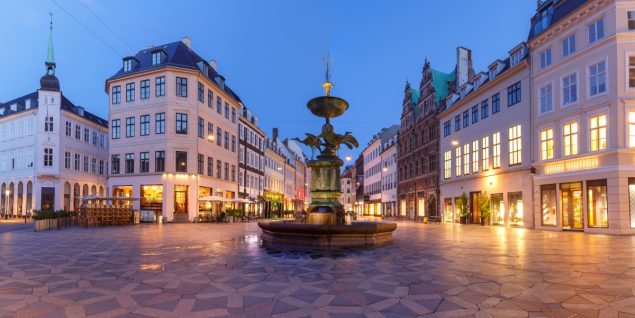
Take your time and explore the many streets in the area while soaking up the very Danish vibe.
#11: Eat Lakrids by Bülow
I had never heard of Lakrids and now I’m hooked! Fortunately for my waistline, they are not easy to find in Vancouver. However, the next time I visit Copenhagen, I’m stocking up.
What is Lakrids by Bülow? Only the most scrumptious, luscious, and luxurious licorice I’ve ever tasted. It is a premium brand with a premium price, but oh-so-worth-it for the licorice lover. The delectable balls come in a dizzying variety of colors and flavors. I only bought one tube and have regretted it ever since!
I discovered a beautiful display of Lakrids by Bülow in the very posh Magasin du Nord in an iconic building on the Kongens Nytorv, the central square very close to Nyhavn where we were staying.
Even if you’re not a licorice lover, go to the Magasin du Nord (#3), try a free sample of the licorice bites, and then check out the rest of the store.
The fashionable department store dates back to 1869 and covers five floors in addition to the basement that houses the food market. Here, you’ll find a fabulous selection of fresh and prepared food that reminded me of Harrods’ food floor in London. It’s a great place to pick up ingredients for a meal if your accommodations have a kitchen, which is one reason I recommend an apartment rental in my Copenhagen accommodation guide.
I spent a fair bit of time exploring the household goods and posh Danish souvenirs (not the plastic variety sold in the souvenir shops, but the really nice, Danish design variety).
Magasin du Nord is the place to pick up exquisitely designed candlesticks, platters, cutlery, Danish china, and the like. I could have spent a lot of money there!
Actually, I did spend a lot of money there…
Exploring the Capital Region of Denmark
After enjoying Copenhagen, venture outside the city where you’ll find plenty to do and see. You’ll also still save money with the Copenhagen Card on both the transportation and at the sites themselves.
Here’s a map of the Capital Region of Denmark to orient yourself.
Each of the four destinations listed is no more than 40 minutes by train from Copenhagen. If you have lots of energy, you could visit Hamlet’s Castle (Helsingør), the Louisiana Museum of Modern Art and Frederiksborg Castle in one full day and then reserve another day for the Viking Ship Museum in Roskilde.
Before you head out, check out my Guide to Three Recommended Day Trips from Copenhagen for more detail on each.
#12: Visit “Hamlet’s Castle”
Venture outside Copenhagen to visit Kronborg Castle (#1 on the Danish Capital Region Map above) in Helsingor, about a 40-minute train ride north. Both the castle and the train fare are covered by the Copenhagen Card.
Kronborg Castle is the setting for Shakespeare’s Hamlet, although Shakespeare never saw it. A UNESCO World Heritage site, the castle is worth a visit to tour its many rooms, learn about Danish history, and enjoy views over the water to Sweden from its narrow windows.
Also spend time exploring the charming little town of Helsingor. Although there’s lots for the tourist to see, the town doesn’t feel touristy. It feels very, well, Danish.
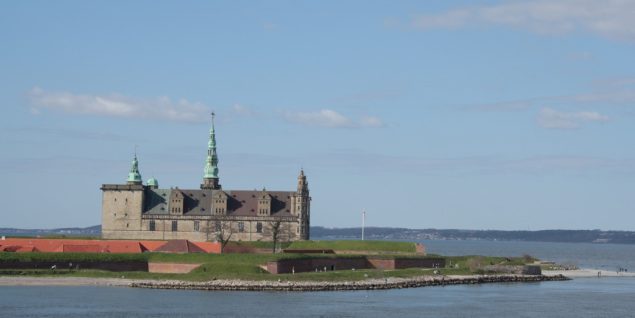
Check out more information about Kronborg Castle and Helsingor in my post Three Recommended Day Trips from Copenhagen.
#13: Visit the Louisiana Gallery of Modern Art
Consider visiting the Louisiana Gallery of Modern Art (#3 on the map above) on the same day you visit Helsingor.
The two places are very close to each other (with the Louisiana Gallery just south of Helsingor) and together make for a perfect day trip out of Copenhagen.
The Louisiana Museum is one of Europe’s most renowned museums of modern art. For me, the stars of the place are the outdoor sculptures artfully arranged in the magnificent natural setting overlooking the North Sea and Sweden.
Go on a day when the weather is clear so you can fully appreciate the views.
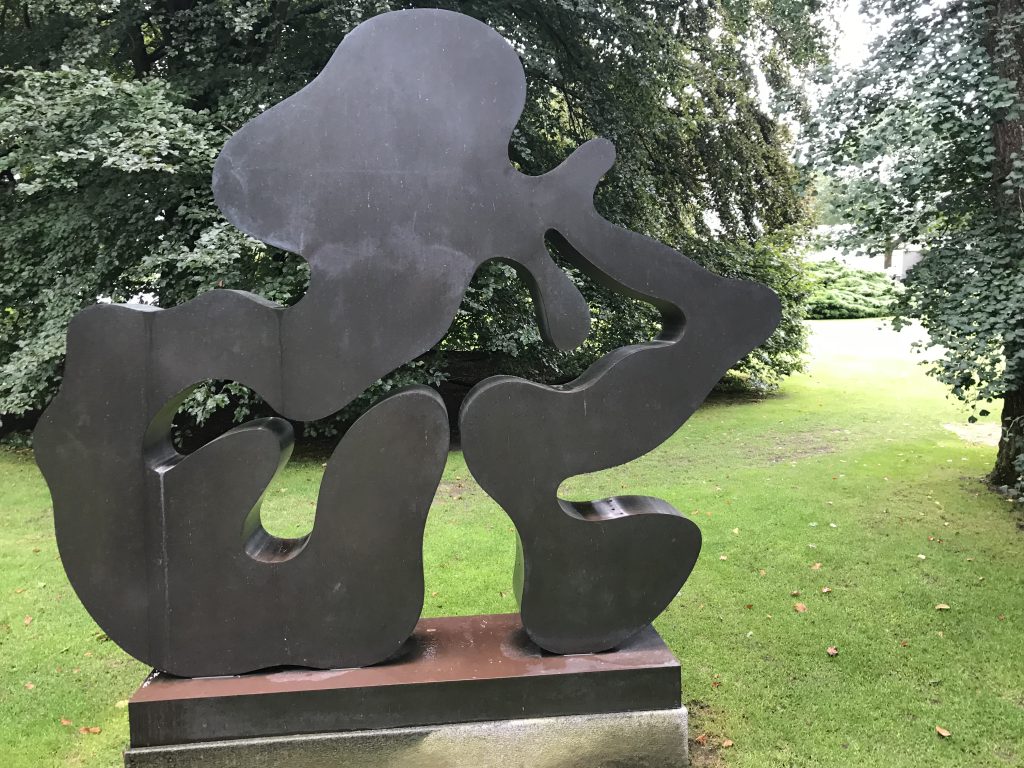
Check out more information about the Louisiana Gallery of Modern Art in my post Three Recommended Day Trips from Copenhagen.
#14: Visit Frederiksborg Castle
Another good day trip out of Copenhagen is to Frederiksborg Castle (#2). It’s an enormous place, very atmospherically located in a large lake.
You can even take a launch (cost covered by the Copenhagen Card!) from the little town of Frederiksborg to the castle (or take a bus from the train station). The castle itself is quite sumptuous and very large. Wear your walking shoes!
After touring the castle, spend some time in the landscaped gardens before returning to the charming little town of Frederiksborg for lunch.
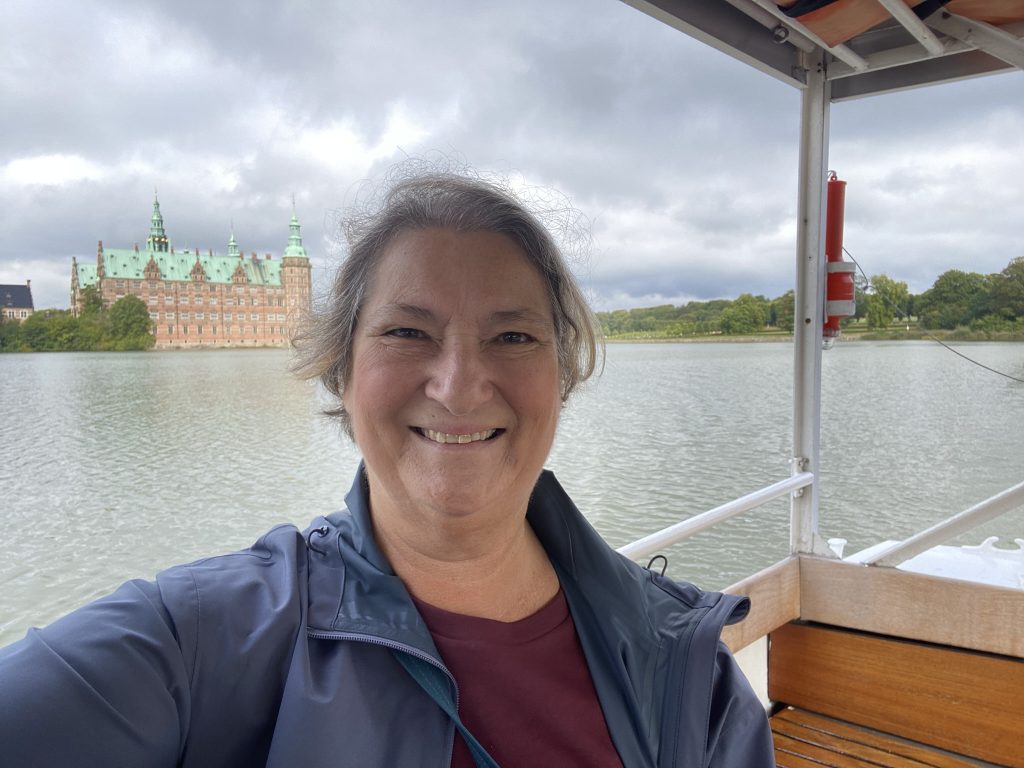
Check out more information about Frederiksborg Castle in my post Three Recommended Day Trips from Copenhagen.
#15: Visit Roskilde
The town of Roskilde, about thirty minutes west of Copenhagen (train fare covered by the Copenhagen card!), is home to the Viking Ship Museum (#4). The town was once the capital of Denmark and oozes history, particularly if you’re into Vikings (and who isn’t?).
Full disclosure: I didn’t get time to visit Roskilde on my recent trip to Copenhagen, which I’m sad about because Gregg and I are both genuine nerds when it comes to anything about Vikings (hence, our delight in the Viking exhibition at the Danish National Museum).
The Viking Ship Museum is a waterside museum built around five original Viking ships that were raised from the bottom of Roskilde Fjord. Next time I’ll make time to visit!
For more information about the Viking Ship Museum, check out the website.
Copenhagen Tours
Check out Tiqets.com for good tours of Copenhagen and the surrounding area.
GetYourGuide also has several well-rated tours of Copenhagen:
Copenhagen Walking Tours
GuruWalk lists pay-what-you-please walking tours that connect tourists with tour guides all around the world. Check out their tours of Copenhagen!
FAQs: Things to Do in Copenhagen
I recommend 3–4 days for the city highlights (museums, Nyhavn, Tivoli, food), and 5–7 days if you want to add day trips like Kronborg, Louisiana, Frederiksborg, and Roskilde.
Often, yes, especially if you plan to visit several museums/attractions and use public transit. The Copenhagen Card – Discover includes public transport across the Capital Region, which can make day trips much easier.
Very. Many major sights are close together, and the pedestrian shopping streets make exploring on foot easy.
Generally, yes. Copenhagen is famously bike-friendly with dedicated lanes. A guided bike tour early in your trip is a great way to learn the flow and rules. I loved the one I took.
Both are straightforward by train (and you can combine them in one day since they’re on the same north-coast route).
Late spring through early fall offers long daylight hours and pleasant weather. December is cozy (lights + markets), but expect shorter days and colder temps.
Absolutely. It’s one of the best modern art museums in Europe and would be worth a trip to Denmark on its own. The building sits right on the water north of Copenhagen and the integration of art, architecture, and landscape is extraordinary. Allow at least half a day.
For most museums, walk-in is fine. However, popular temporary exhibitions can sell out, so check ahead if there’s something specific you want to see. The Copenhagen Card gets you in without a separate ticket purchase, which simplifies things considerably.
Very. It’s safe, easy to navigate, English is spoken everywhere, and the café culture makes it a comfortable city to explore alone. Several of my best hours in Copenhagen were spent in a Nyhavn coffee shop writing and watching the city go past.
Yes, immediately. Smørbrød are open-faced sandwiches that are as much about presentation as flavor: beautifully constructed, endlessly varied, and very Danish. They’re not cheap but they’re worth it as a proper lunch experience at least once.
Continue Exploring Denmark with Artsy Traveler
Here are more posts about Copenhagen:
- Best Three Copenhagen Museums to Discover and Enjoy
- Three Recommended Day Trips from Copenhagen
- Accommodation in Copenhagen
Would you like to save this post?

Carol M. Cram is the author of five award-winning novels inspired by art and the women who shaped it, the creator of Artsy Traveler, an arts-focused travel blog, the founder of Art In Fiction, a curated database of 2,500+ novels inspired by the arts, and the host of The Art In Fiction Podcast. She also authored 60+ textbooks on computer applications and taught at Capilano University for over two decades. She lives with her husband, artist Gregg Simpson, on beautiful Bowen Island near Vancouver, BC.