Where To Go in France: Best 10-day Itinerary
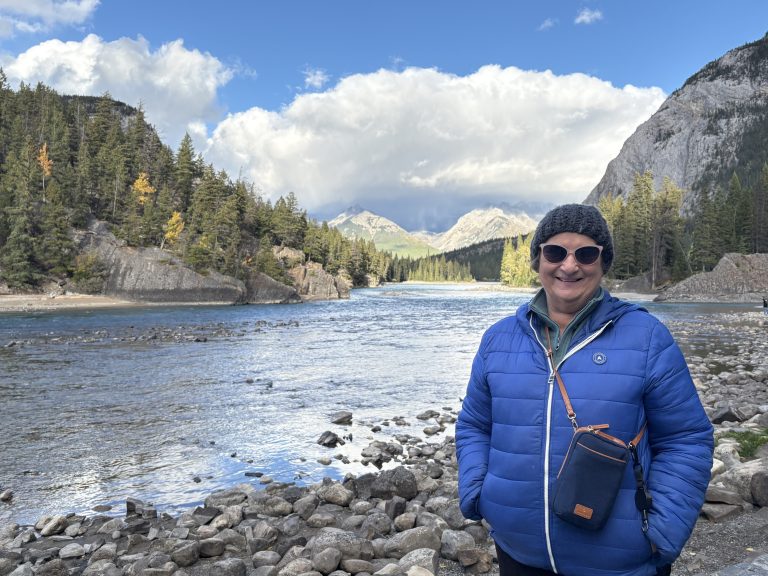
I'm Carol Cram, novelist and arts travel writer, and founder of Art In Fiction, a curated database of 2,700+ novels inspired by the arts. Artsy Traveler contains affiliate links for products and services I personally use and recommend. As an Amazon Associate, I earn from qualifying purchases. Please read the Disclosure for more information.
Ten days in France sounds generous until you’re standing in the Louvre and realizing you’ve allocated forty-five minutes for the entire Renaissance.
France rewards the unhurried, which means resisting the temptation to see everything and instead seeing a few things properly.
Visit two regions: Paris, which needs no introduction, and the south: Provence, the Luberon, and the Riviera, which rewards every traveler who makes it past the capital.

My recommended itinerary gives you three days in Paris, four days in Provence, and two days on the Riviera. It’s not enough, but it’s a very good start.
This post is part of my guide to artsy & independent travel in France, where I share my best tips for exploring France’s creative cities, historic sites, landscapes, and cultural experiences.
Table of Contents
Overview of 10-Day France Itinerary
Here’s an overview of an itinerary that provides a taste of fabulous Paris (just enough to make you want to return!), four days split between two of the most scenic areas of Provence, and finally, two days of sun and fun on the Riviera.
- Days 1 to 3: Arrive in Paris on Day 1 and spend three nights in Paris, leaving on the morning of Day 4.
- Days 4 and 5: Take the TGV to Avignon, pick up a rental car at the TGV station and drive east into the Luberon. Spend two nights in Roussillon or Gordes for a super Provence hit.
- Days 6 and 7: Drive to Aix-en-Provence and spend two nights there; explore nearby Arles, Les Baux-de-Provence, or the Camargue.
- Days 8 to 10: Drive to the coast and spend two nights in Antibes, Vence, or Cannes. Drop off the car at Nice airport and fly home.
Following are my suggestions for what to see in Paris and the South (particularly artsy sites!) and some recommended accommodations.
France Itinerary Map
Paris on Your Best France Itinerary
Three days in Paris is not nearly long enough to fully enjoy one of the world’s most fabulous cities, but it is long enough to explore most of the big-bang sites.
I’ll get to sightseeing suggestions in a minute, but first, consider where you wish to put down temporary Parisian roots. To my mind, making sure you stay in an interesting part of Paris is almost as important as seeing the sights.
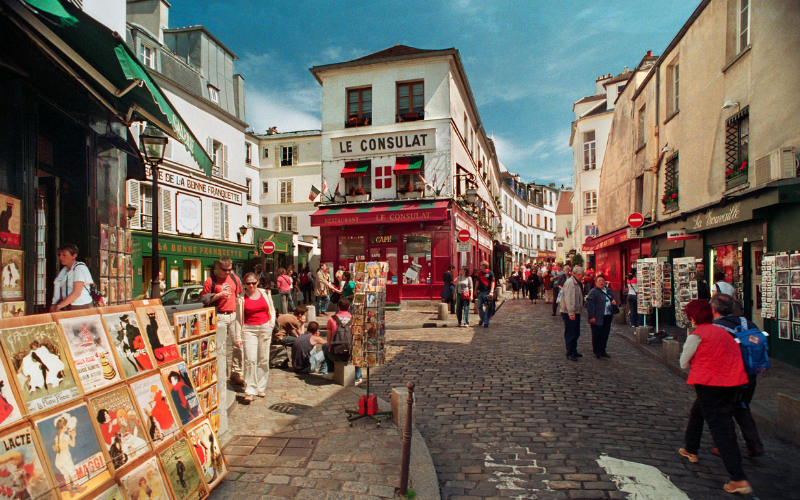
Choosing Your Parisian Neighborhood
Before and after you go touring around the city, you want to be able to walk to great restaurants and cafés, enjoy people-watching, and have quick access to the Seine for long, leisurely evening strolls to see the lights.
My preferred neighborhoods in Paris are the 6th, 14th, and 5th arrondissements (in that order) on the Left Bank.
Yes, you can save money by getting a hotel near the péripherique (the multi-lane ring road that circles Paris) and then taking the Métro into Paris for sightseeing, but don’t succumb to the temptation unless your budget is really tight.
A few times over the years, I’ve stayed at soulless chain hotels on the edges of Paris, and each time it was a mistake.
I may have saved a few euros, but I also wasted too many hours getting to and from the cool areas of Paris.
Instead of ending each evening watching the illuminated bateaux-mouches glide along the Seine with the sparkling Eiffel Tower in the distance before tumbling a few minutes later into a warm bed, I endured long, rattling Métro rides followed by quick walks through some pretty sketchy neighborhoods.
Like all major cities, Paris has its fair share of dreary and sometimes even unsafe areas, I’m sorry to say, and while you can still find some nice places to eat and enjoy Parisian street life out by the péripherique, I’d stick with the arrondissements closest to the river and Île de la Cité.
If you’re in Paris for longer than a few days, consider renting an apartment.
I’ve stayed in some great apartments in Montparnasse, the Marais, and Saint-Germain. But for short stays, I almost always head for the 5th and 6th arrondissements on the Left Bank, and occasionally the 14th arrondissement.
Where to Stay on the Left Bank
Sixth Arrondissement
Sometimes referred to as Luxembourg because it contains the Luxembourg Gardens, the 6th arrondissement is still the area of Paris I prefer to stay in. In recent years, it’s gotten very chichi and can be a bit touristy and expensive, but I still love wandering its narrow streets, window shopping and finding great little cafés to while away an afternoon.
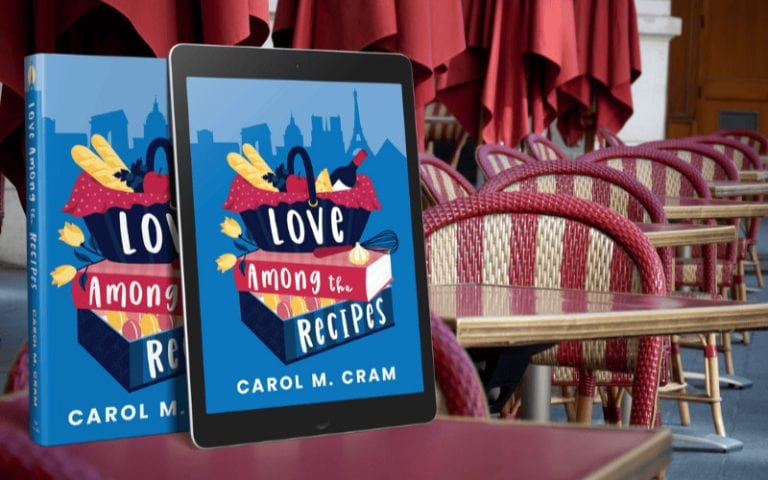
I like the area so much that I had the heroine of my novel Love Among the Recipes rent an apartment on rue Bonaparte right across the street from Les Deux Magots, one of the most famous cafés in Paris.
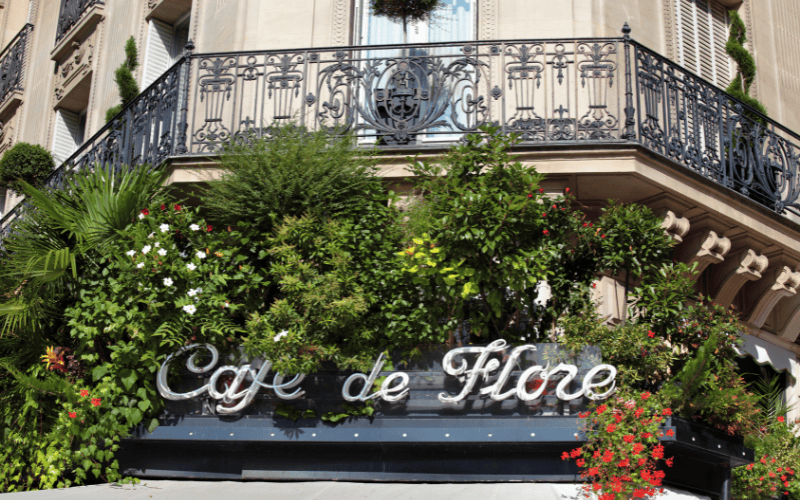
Back in the day, French intellectuals such as Simone de Bouvoir and Jean-Paul Sartre discussed philosophy at Les Deux Magots and its equally historic neighbor, Café de Flore.
Nowadays the prices for a café crème at either place might make you weep, so walk a few blocks toward the Luxembourg Gardens and you’ll find more reasonable and less crowded alternatives.
Here’s a great choice in the 6th arrondissement.
Hôtel de L’Universite
The Hôtel de l’Université is a reasonably-priced (for Paris) hotel on a quiet side street in the 6th arrondissement, a few blocks from the lively area around rue Bonaparte and Boulevard Saint-Germain.
I stayed there for three nights and loved the neighborhood, which is quintessentially Parisian and not too touristy. I spent many happy hours writing and people-watching at a café on the corner of the Boulevard Saint-Germain and Rue du Bac (where there’s also a convenient Métro station) about a three-minute walk from the hotel.
The staff was great, the beds comfy, and the location quiet but still central.
Fourteenth Arrondissement – Montparnasse
A little farther south past the Luxembourg Gardens is Montparnasse, another cool and less touristy area.
Back in the 1920s, Montparnasse was the haunt of artists, including Giorgio de Chirico, Amedeo Modigliani, Vassili Kandinsky, Max Ernst, Joan Miró, and Alberto Giacometti. For that reason alone, I enjoy staying in Montparnasse.
It’s a few Métro stops from the Seine, but within walking distance of the Luxembourg Gardens. The area abounds with cool restaurants such as La Rotunde on Boulevard Montparnasse where many artists and intellectuals congregated back in the day.
Hotel prices can also be a little more reasonable in this area.
Hôtel A La Villa des Artistes
I recommend the Hôtel A La Villa des Artistes, which is the first hotel I stayed at on my first trip to Paris with my family when my daughter was eight years old.
Located close to the Vavin Metro, the hotel is also a short walk to the Luxembourg Gardens where my daughter spent many happy hours in a smartly designed playground.
Fifth Arrondissement
I also enjoy staying in the 5th arrondissement near the Boulevard Saint-Michel. Like the 6th, the 5th is one of the oldest areas of Paris with plenty of winding side streets and one of my favorite museums, the Cluny.
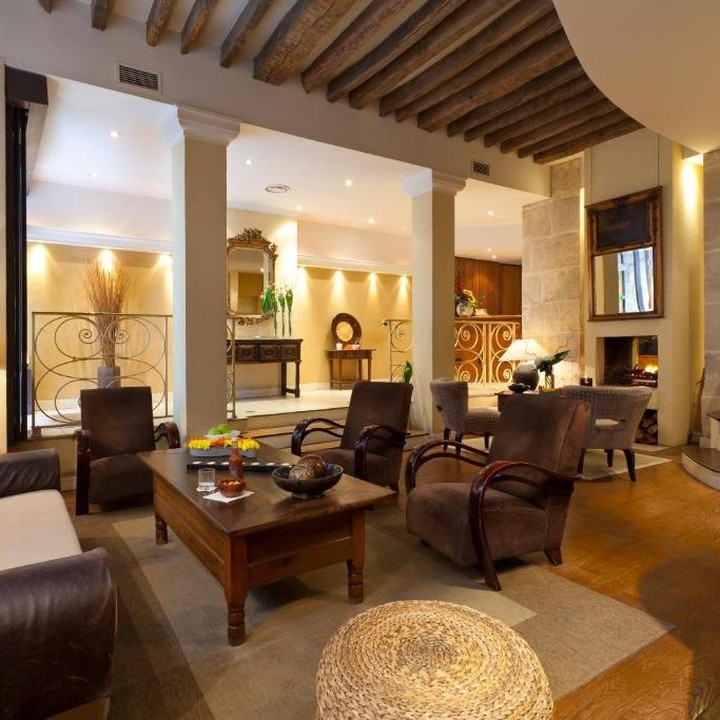
Hôtel Le Clos Médicis
I recommend the Hôtel Le Clos Médicis, located about a block from the Luxembourg Gardens near the Boulevard Saint-Michel.
The rooms are pricey and quite small but very well-appointed and comfortable.
Search for more hotels in Paris. Also check out my post about general tips to find good places to stay in France.
What to See in Paris
Where to start? On your three days in Paris, I recommend the sites described below. Check out just two or three each day, leaving plenty of time for wandering around your new neighborhood, sipping coffee in cafés and going out for dinner.
Eiffel Tower
Yes, it’s touristy and overpriced and super-crowded, but you have to go up the Eiffel Tower at least once. I recommend going at night when the crowds are considerably smaller and the views just as breath-taking.
Buy tickets in advance from the official website or consider a package that includes dinner:
The Louvre
The Louvre is massive, overcrowded, expensive, and magnificent.
The key to visiting the Louvre with ease is to focus on one or two areas at most. There’s a great deal of art in the Louvre, and while all of it is amazing, some pieces are more amazing than others.
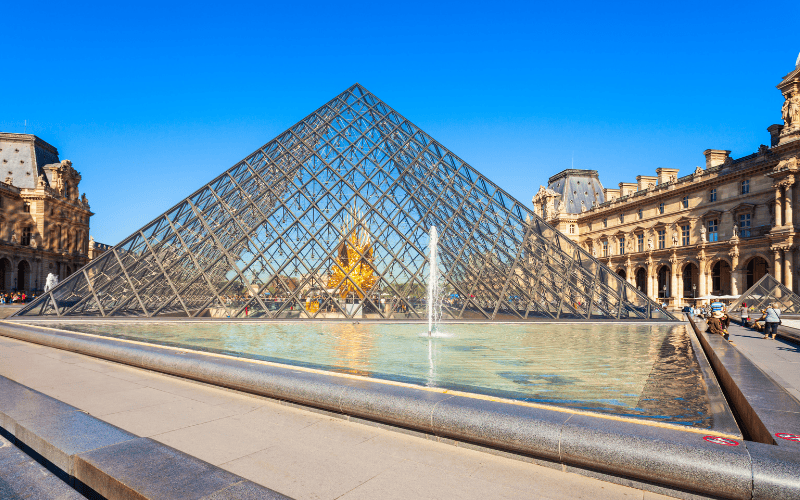
When you enter the pyramid and descend the escalator to the center of the Louvre, you’re faced with three wings: Sully, Richelieu, and Denon.
Most visitors make a beeline for the Denon wing because that’s where some of the most famous artworks in the world are displayed, including the Mona Lisa by Leonardo da Vinci.
Unless you have a burning desire to stand in a massive crowd bristling with pickpockets so you can peer over the tops of heads to see a tiny, glass-enclosed painting on a single wall, I’d give Mona a miss.
If you do want to see her, arrive early, or drop by just before the museum closes.
Suggested Way to Enjoy the Louvre
A better and less headache-inducing option is to head to the far end of the Denon wing and work your way back.
You’ll pass several remarkable pieces, including The Raft of the Medusa by Géricault, Autumn by Giuseppe Arcimboldo, Liberty Leading the People by Delacroix, Saint John the Baptist by Leonardo da Vinci, and La Grande Odalisque by Ingres (one of my faves).
Depending on your interests, you may also want to take a quick walk through the Greek, Roman, and Egyptian Antiquities in the Sully wing. The key to enjoying the Louvre is to pace yourself. You absolutely cannot see all of it in one visit.
Visiting the Louvre
You must book a time-slot to visit the Louvre. Check the website for details. The museum is open from 9 am to 6 pm daily (until 9 pm on Wednesday and Friday) and is closed Tuesdays.
Another good option for art lovers is to take a guided tour. This Masterpieces Tour with Reserved Access is a good option from GetYourGuide:
Sainte-Chapelle
The exquisite Sainte-Chapelle on Île de la Cité is still one of my all-time favorite Parisian sites. I make time for a visit every time I go to Paris. Its other-worldly beauty will literarlly stop you in your tracks. Guaranteed.
The best way to see and really enjoy Sainte-Chapelle is to get tickets for a concert. You’ll experience its awesomeness without crowds while soaring to the heavens on the wings of sublime music.
For me, a perfect Parisian evening starts with a 7 pm concert at Sainte-Chapelle followed by a walk across Île de la Cité to enjoy dinner on medieval Île Saint-Louis. Check out this website to buy concert tickets.
And for more about Sainte-Chapelle, check out my post about the top cathedrals in Europe.
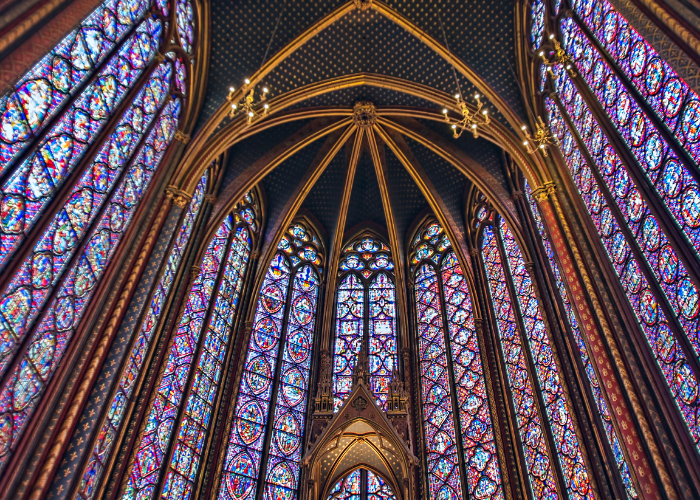
Sainte-Chapelle is open from 9 am to 7 pm (to 9 pm April-Sept. 30) and reservations are required. Get tickets for priority access.
Notre-Dame Cathedral
After the devastating fire in 2019 and five long years of reconstruction, Notre-Dame Cathedral is again open to the public. Notre-Dame has long been one of my favorite cathedrals in Europe.
The cathedral is free and open to all. However, you can reduce your waiting time by booking your access online. Here’s the link: Reservation.
The Musée d’Orsay
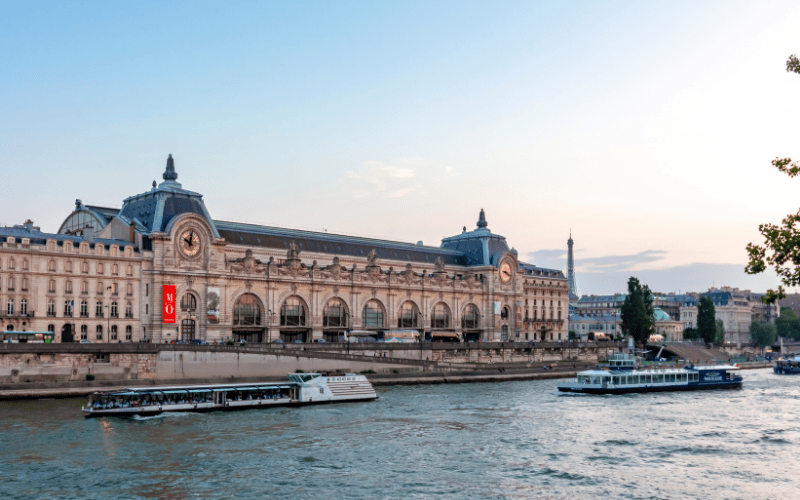
I love visiting the Musée d’Orsay maybe even more than the Louvre. It’s a little less crowded and not nearly so large.
It also displays some of the most-loved works of art by Manet, Morisot, van Gogh, Monet, and many more. To avoid the crowds, buy your tickets in advance and go early in the day or on a Thursday evening when the museum is open until 9:45 pm (last entrance one hour before closing).
Head first for the fifth floor so you can enjoy the most popular paintings in relative peace.
Take your time wandering from room to room and then stop by the café behind the large clock, the original from when the Musée d’Orsay was a train station.
Here’s an option for a guided tour of the Musée d’Orsay:
Quai Branly Museum
Also known as the Musée du quai Branly Jacques Chirac, the Musée quai Branly deserves a place on your Paris itinerary if you are interested in art and objects created by Indigenous cultures from around the world.
The collection is displayed in four distinct areas representing Africa, Asia, Oceania, and the Americas.
Plan to visit the Branly on the day you visit the Eiffel Tower. It’s within walking distance and is one of the few other noteworthy sites in the Eiffel Tower area.
If you’re in Paris on a Thursday, visit the museum around 6 or 7 pm (it’s open until 10 pm on Thursdays), go up the Eiffel Tower to see the sunset and the lights (depending on the time of year), and end with dinner at a restaurant in the area.
There aren’t many restaurants in that area, so check before you go and make reservations to avoid long, hungry walks up and down the relatively restaurant-free streets.
The museum is open Tuesday to Sunday from 10:30 am to 7 pm (Thursdays until 10 pm). Get tickets in advance to book your time slot and avoid lines.
The Orangerie
Monet’s water lily paintings take center stage at The Orangerie and are well worth a visit (go early or late to avoid crowds).
The Orangerie makes a nice stop after spending a few hours in the Tuileries Gardens watching the world go by. Get tickets in advance.
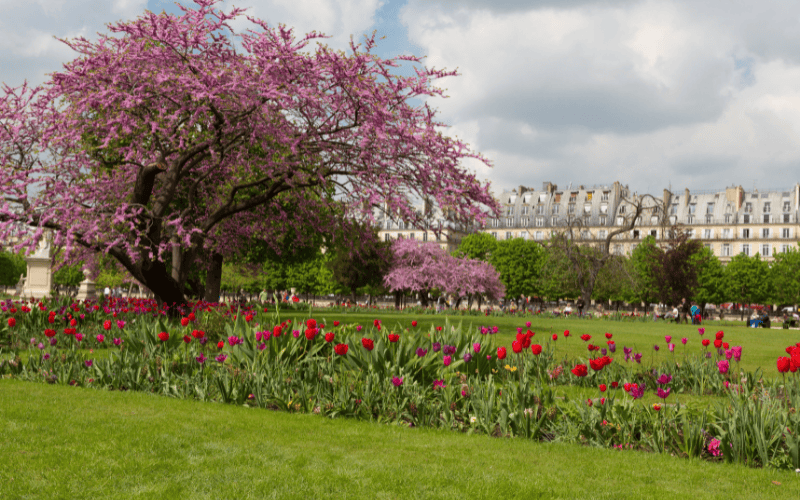
Paris has many more amazing museums in addition to the Big Three (Louvre, d’Orsay and Pompidou). If you have time, you’ll be spoiled for choice.
My post on Paris Art Museums provides you with some ideas.
And for even more details about my suggested sites and their tie-ins with Love Among the Recipes, along with descriptions of dozens of other things to see in Paris, check out my post on Paris Sightseeing.
Here are some options for taking a bus tour around Paris to see the main sites in comfort. A good strategy is to take a tour when you first arrive in Paris to orient yourself.
To the South on Best Your France Itinerary
After three full days of touring Paris, you’ll be ready for a relaxing morning riding the TGV, France’s high speed train, to the south of France. You catch the TGV to Avignon from Gare Montparnasse. Check the SCNF website to buy tickets, or book through Trainline.

I love riding the TGV. It’s so smooth and fast! Within about four hours, you’ll arrive at the sleek, modern train station in Avignon and step into the warm southern air.
I suggest renting a car for pick-up at Avignon station. The traffic around the station isn’t too frenetic, and very quickly you’ll be on your way east to the Luberon.
For information and tips about driving in Europe, see my post Top Tips for Driving in Europe.
Prefer not to drive in Provence? Daytrip offers private transfers between Avignon, the Luberon villages, and Aix-en-Provence with fixed pricing and the option to add a scenic stop along the way.
The Luberon
Made famous by Peter Mayle’s book A Year in Provence, the Luberon region of Provence has been thoroughly discovered. But it’s still a magical area and one which I visit as often as possible.
I never tire of driving around the little villages, taking walks through the glorious countryside, eating fabulous al fresco meals and poking around the little shops. I always come away with a bag full of lavender and honey soaps.
The villages I like best are Gordes, Roussillon (an absolute must-see) and Bonnieux.
I suggest settling into a country hotel in the area and taking day trips to explore the villages and just soak up the Provençal vibe. Other attractive villages are Menerbes, Lacoste, and Saignon where we stayed for two weeks back in the ’90s.
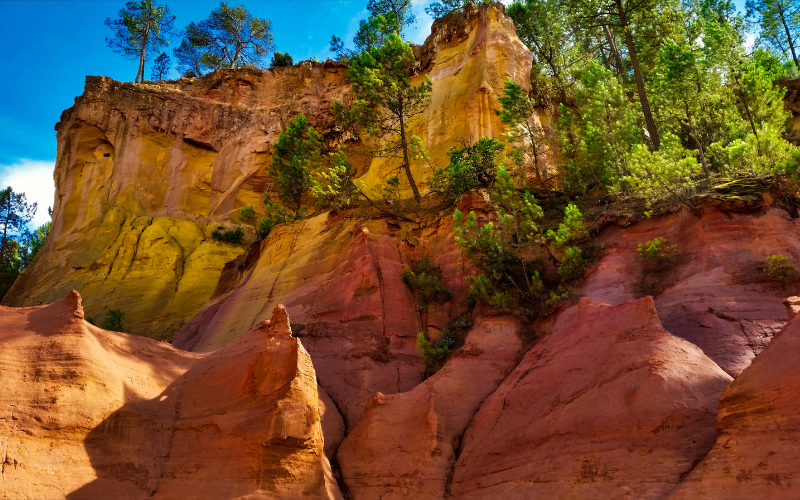
Roussillon deserves a special mention. Not only is the village itself delightful with plenty of good restaurants and shopping, but it’s also close to Le Sentier des Ocres. This area of stunning ochre cliffs and pathways is an easy walk from the village. For more information, check out this post.
Wine Tasting in the Luberon
The Luberon and surrounding Provence countryside produce some of France’s most distinctive wines, including the roses that have made the region famous worldwide. Winedering has some excellent tastings and winery visits in the area:
Staying in the Luberon
Here are two highly recommended hotels in the Luberon, one in Roussillon and one in Gordes.
Les Sables d’Ocre
A 15-minute walk from the village of Roussillon, Les Sables d’Ocre sets the bar for what a country-style, family-run, low-key, easy-on-the-budget place should be.
Book one of the rooms that includes a terrace. You’ll have your own private outdoor space and be steps from the pool.
Domain de l’Enclos
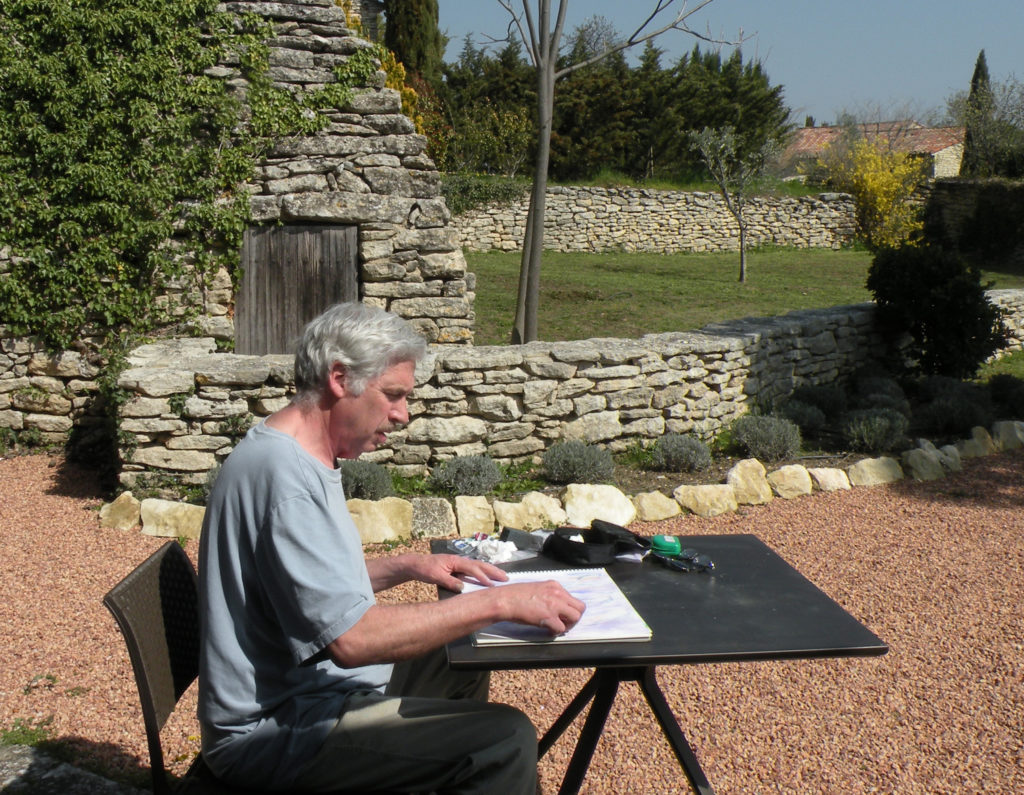
Close to lovely Gordes, the Domain de L’Enclos is wonderful. On a spring trip to the Luberon , I snagged a room with a terrace which Gregg made use of to do some drawing.
The views from the garden over the Luberon are spectacular. Check out his work on his website.
Avignon
On your way to Aix-en-Provence from the Luberon, consider stopping for an afternoon to see Avignon. I loved touring the Pope’s Palace (the Palais des Papes) where, back in the 14th century, several popes lived when the papacy was moved from Rome to Avignon.
The palace is one of the largest and most important medieval Gothic buildings in Europe.
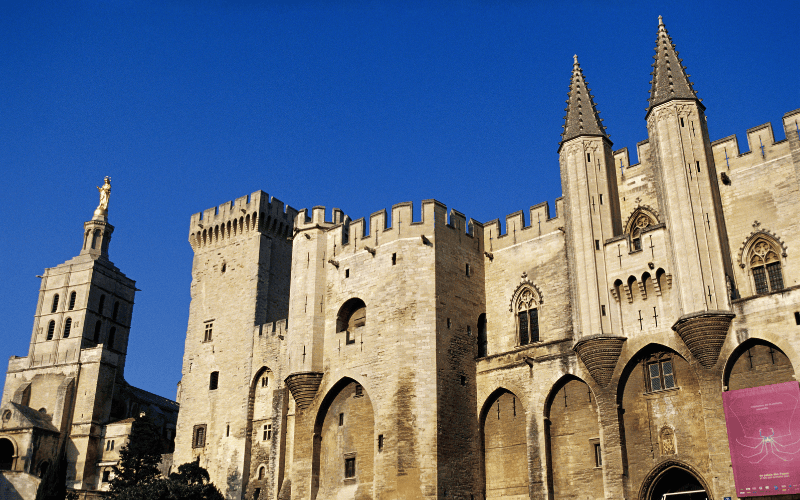
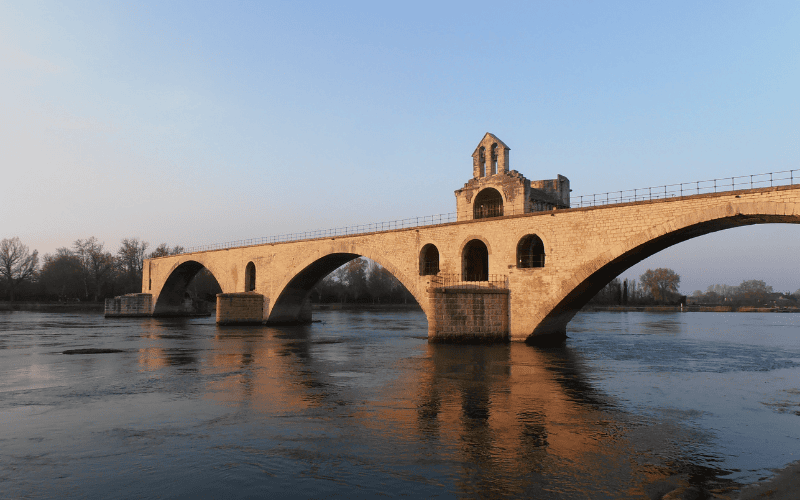
The town of Avignon is pleasant and compact, and it’s always fun to see the famous pont d’Avignon that stretches only halfway across the Rhone River.
Aix-en-Provence and Arles
You could choose to homebase either in Aix-en-Provence or Arles. Both have their charms and both are within easy driving distance of plenty of fabulous Provence landscapes.
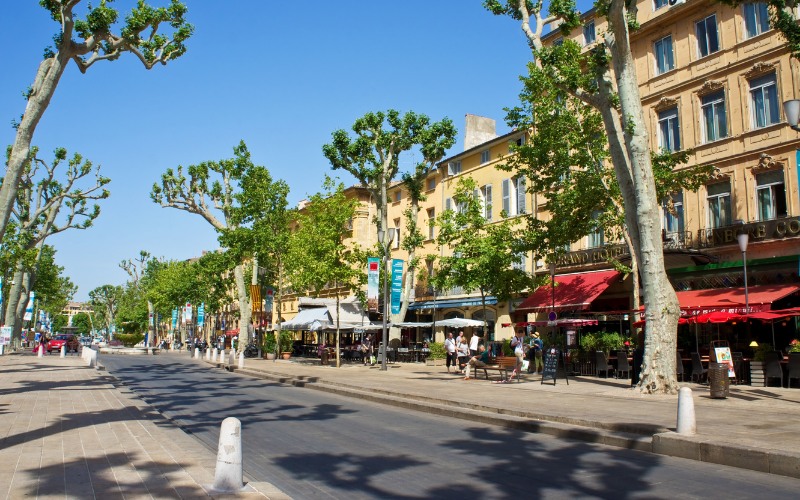
Consider spending a day in the Camargue, where you’ll see flamingos, bulls, and the Mediterranean; wander Arles in the footsteps of van Gogh; and enjoy a meal on the picturesque and car-free Le Cours Mirabeau, the main drag in Aix-en-Provence.
The key to enjoying this area is to just relax and soak up the atmosphere.
For an off-the-beaten-track adventure, check out Château La Coste in the hills north of Aix-en-Provence. It’s a vineyard and sculpture park with a great restaurant. Another option is to take a half-day wine tour of the region. Here’s a GetYourGuide tour:
The Riviera
Drive east from Aix-en-Provence and within two hours, you’ll see signs to Cannes, Antibes, Nice, Menton and Monte Carlo.
You’re on the fabled Riviera!
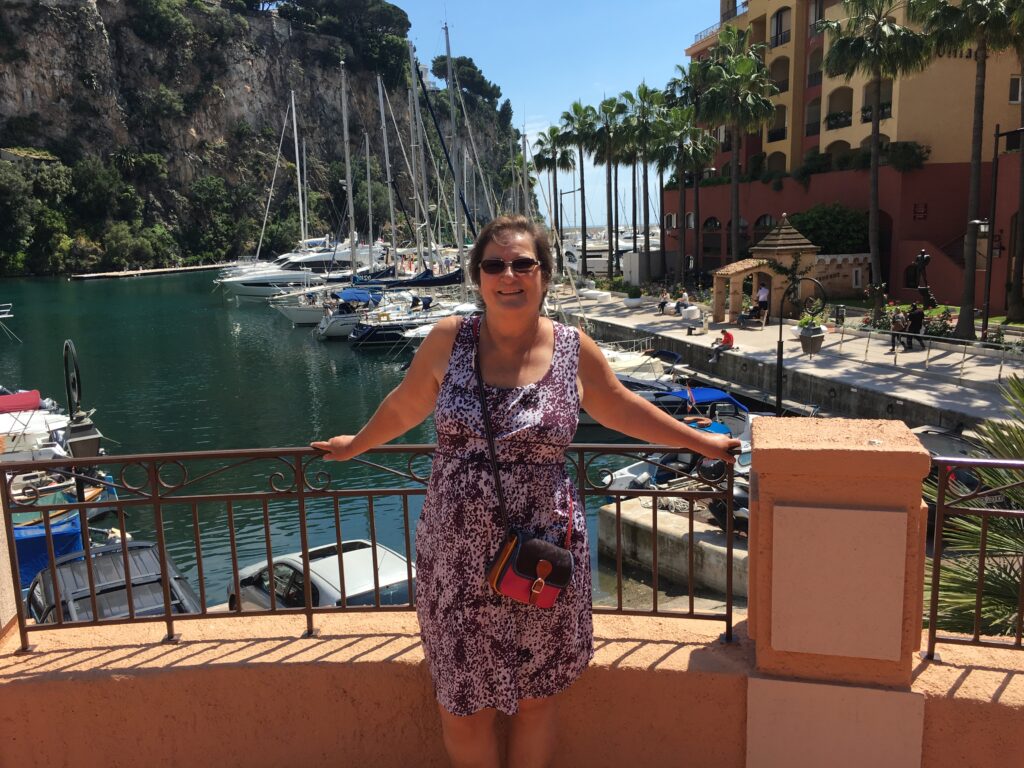
There is a lot to do on the French Riviera so I suggest finding a home base and then taking day trips. Here are just a few of the highlights.
Antibes
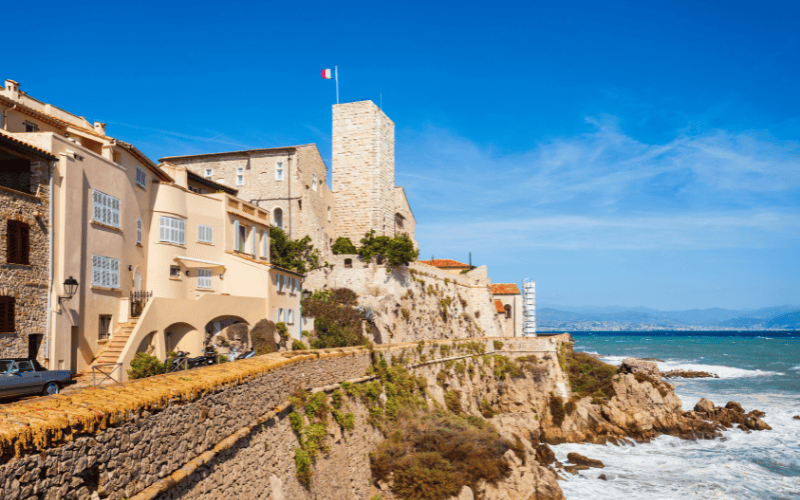
Visit the Picasso Museum and wander the picturesque back streets. Enjoy great views of the Mediterranean and watch the boats.
Cannes
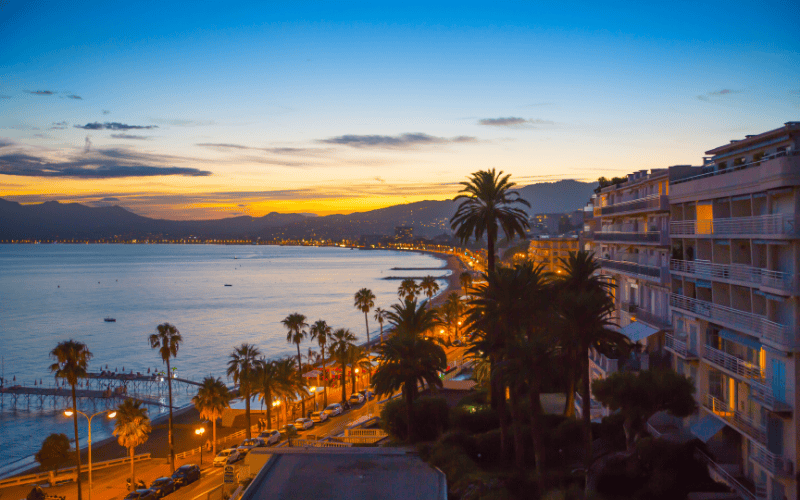
Promenade along the famous seaside and mingle with the beautiful people, enjoy a cocktail on the terrace of the famed Carlton Cannes Hotel, then check out the high-class shops.
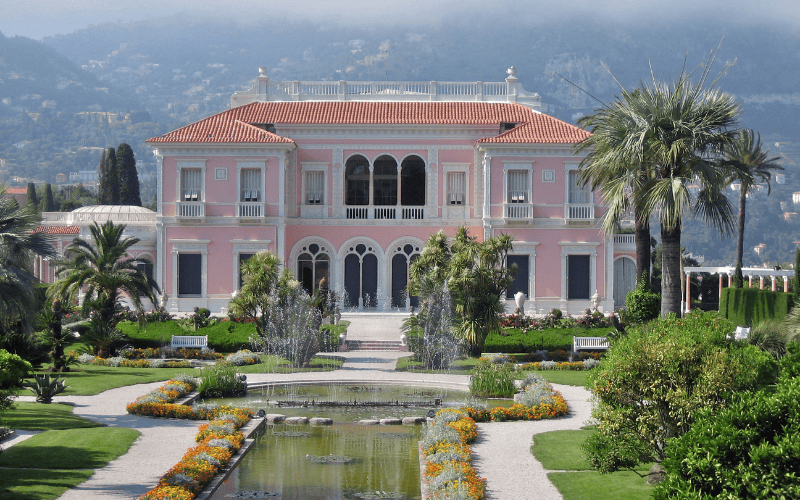
Villa Ephrussi de Rothschild
Located on Cap Ferrat just east of Nice, the Villa Ephrussi de Rothschild is worth a visit for the gardens alone (and the house is no slouch either). The nearby Greek Villa Kerylos is also fun to visit, particularly for the spectacular views of the Mediterranean.
Nice
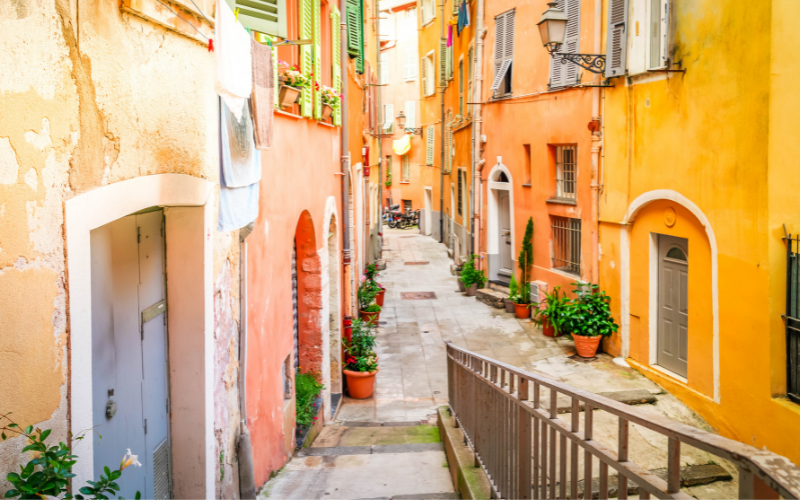
Nice is a large and bustling city and, although a bit iffy in some areas, a great place to homebase.
Avoid the areas near the train station. Spend an afternoon and evening exploring the narrow streets of Old Nice to sample great food and stimulate all your senses.
Menton
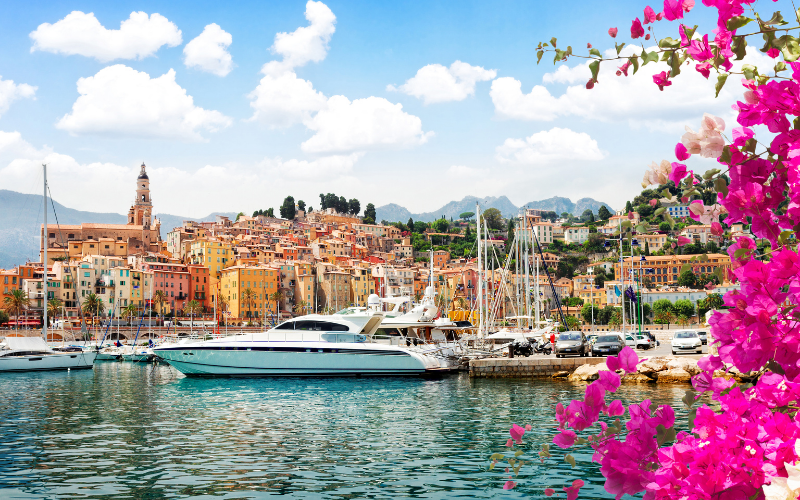
Menton is a great choice for a town that is less crowded than some of its more famous cousins. I’ve spent several afternoons in Menton and can’t wait to go back. Its old town is charming and its beach long and sandy.
Saint-Paul-de-Vence
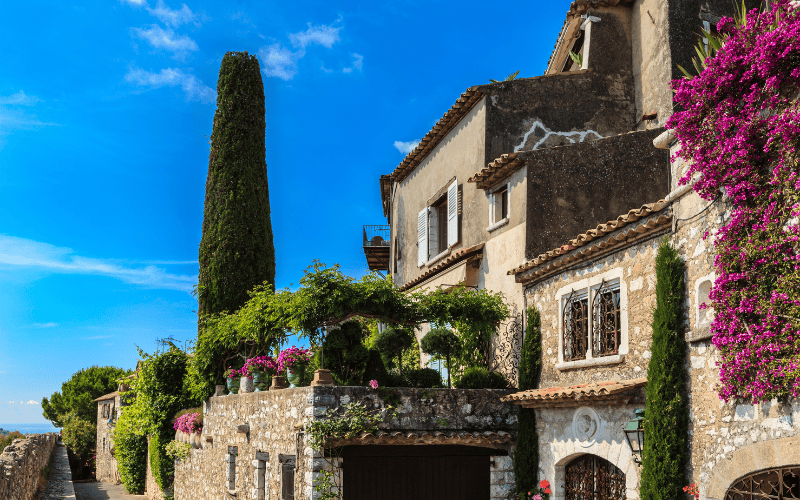
Located in the hills above Cannes, the enchanting (achingly so!) village of Saint-Paul-de-Vence is delightful, even though it’s become very upscale in recent years.
I’ve enjoyed some good meals there overlooking spectacular views. Saint-Paul-de-Vence is also very close to the Fondation Maeght, a modern art museum set in gorgeous gardens with very cool sculptures.
Vence
A few kilometers beyond Saint-Paul-de-Vence and closer to the mountains that buttress the French Riviera is Vence, one of our favorite places to relax away the hubbub on the coast.
The pedestrian-only medieval streets of this walled town are peaceful and shady with plenty of restaurants available. Vence feels like a place where people actually live.
If you’re a fan of Matisse, a visit to the Matisse Chapel (the Chapelle du Rosaire) a fifteen-minute walk from Vence, is a must. Matisse designed every detail of the chapel. The interior is very spare and modern with stunning stained glass windows.
Tour Options on the French Riviera
Here are some options with Tiqets.com for touring the French Riviera. A boat trip would be fun!
And here are some GetYourGuide tours of the area.
Accommodation Options on the Riviera
Nice or Cannes both make good home bases on the Mediterranean. You’ll find lots of hotels here, some on the waterfront.
Another option is to homebase in a village like Saint-Paul-de-Vence or Vence and then drive to the towns on the Mediterrenean.
One drawback of this plan is that traffic can be horrendous the closer to the waterfront you get. On the other hand, the villages above the Riviera are so spectacular that it would be shame not to spend some time there.
Here are some options:
Les Villas du Parc: I stayed at this gorgeous villa on the outskirts of Antibes for a week. If you have a car, this is a great choice.
Hôtel Marc Hély: We enjoyed a room with a view over Saint-Paul-de-Vence and a tasty breakfast in the courtyard. This is a great choice in La Colle-sur-Loup, which is about a ten-minute drive from the Fondation Maeght.
Miramar: This hotel is in Vence, which is just up the hill from Saint-Paul-de-Vence and a larger town with more services. FYI, we had the best pizza at an outdoor café in the Old Town of Vence! The Miramar is reasonably priced and well located, great for drivers.
Eating in France
Enjoying French cuisine in the thousands of small restaurants all over France is a huge highlight. You can get a bad meal in France (and I’ve endured some doozies), but that’s usually the exception.
Check online reviews of the restaurants in the area you’re traveling to and make reservations.
Check out my general tips on dining well on a budget in Europe.
Keep Exploring France with Artsy Traveler
Here are more posts about traveling in France:
- 17 Must-See Places to Visit in France You Should Know About
- Love Among the Recipes: Paris Sights & Bistro Dishes
- Paris for Art Lovers: Nine of the Best Small Museums in Paris
- Top Normandy Sights to Excite Art & History Lovers
Would you like to save this post?

Carol M. Cram writes novels inspired by the arts; runs Artsy Traveler, an arts-focused travel blog, and Art In Fiction, a curated database of 2,700+ novels inspired by the arts; and hosts The Art In Fiction Podcast. She has also authored 60+ textbooks on computer applications and taught at Capilano University for over two decades. Carol lives with her husband, artist Gregg Simpson, on beautiful Bowen Island near Vancouver, BC.

 See all my novels