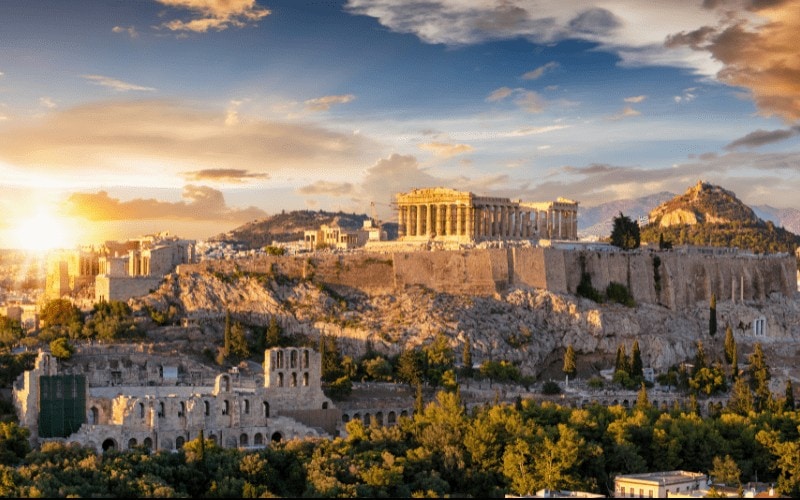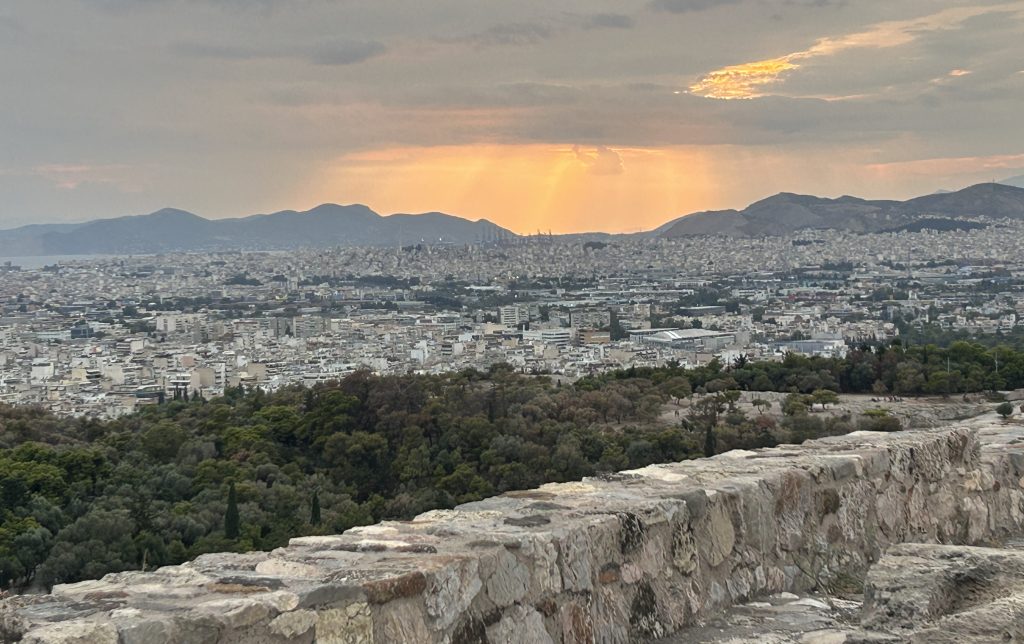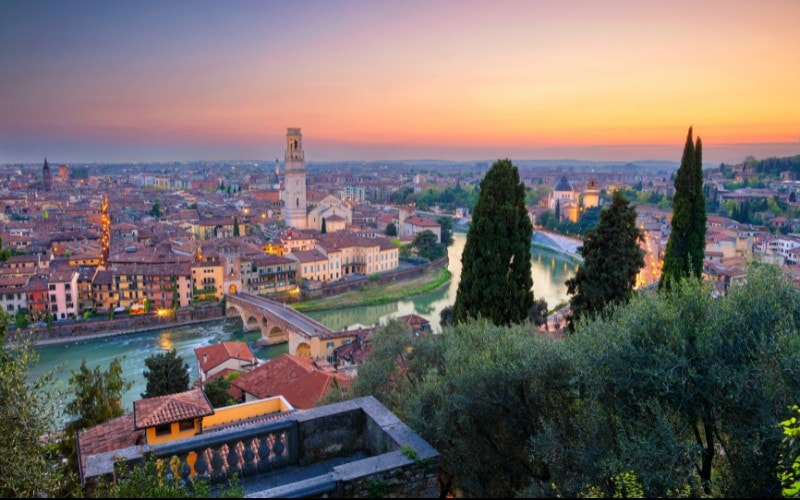
View over Verona at sunset - you'll find lots to see in Verona for the artsy traveler

Beyond Romeo and Juliet: What to See in Verona, Italy

Guest Post by Zoe Disigny, author of The Art of Traveling Strangers.

Ask what to see in Verona and most people say Juliet’s balcony. Yes, it’s there, but Verona is so much more. During a week-long stay, I went looking for art and the city’s real history, no Shakespeare required.

My husband and I arrived in Verona in the evening after taking the train directly from Venice, an hour away, then took an Uber to our house exchange on the left bank of the Adige River. After settling in, we went in search of a restaurant.

A stroll across the Ponte Vittoria (Victory Bridge) landed us right in the middle of Piazza Brà, otherwise known as tourist central.

The piazza was packed, and the energy electric. We quickly found an outdoor table across from Verona’s famous Roman arena and ordered—what else—pizza!
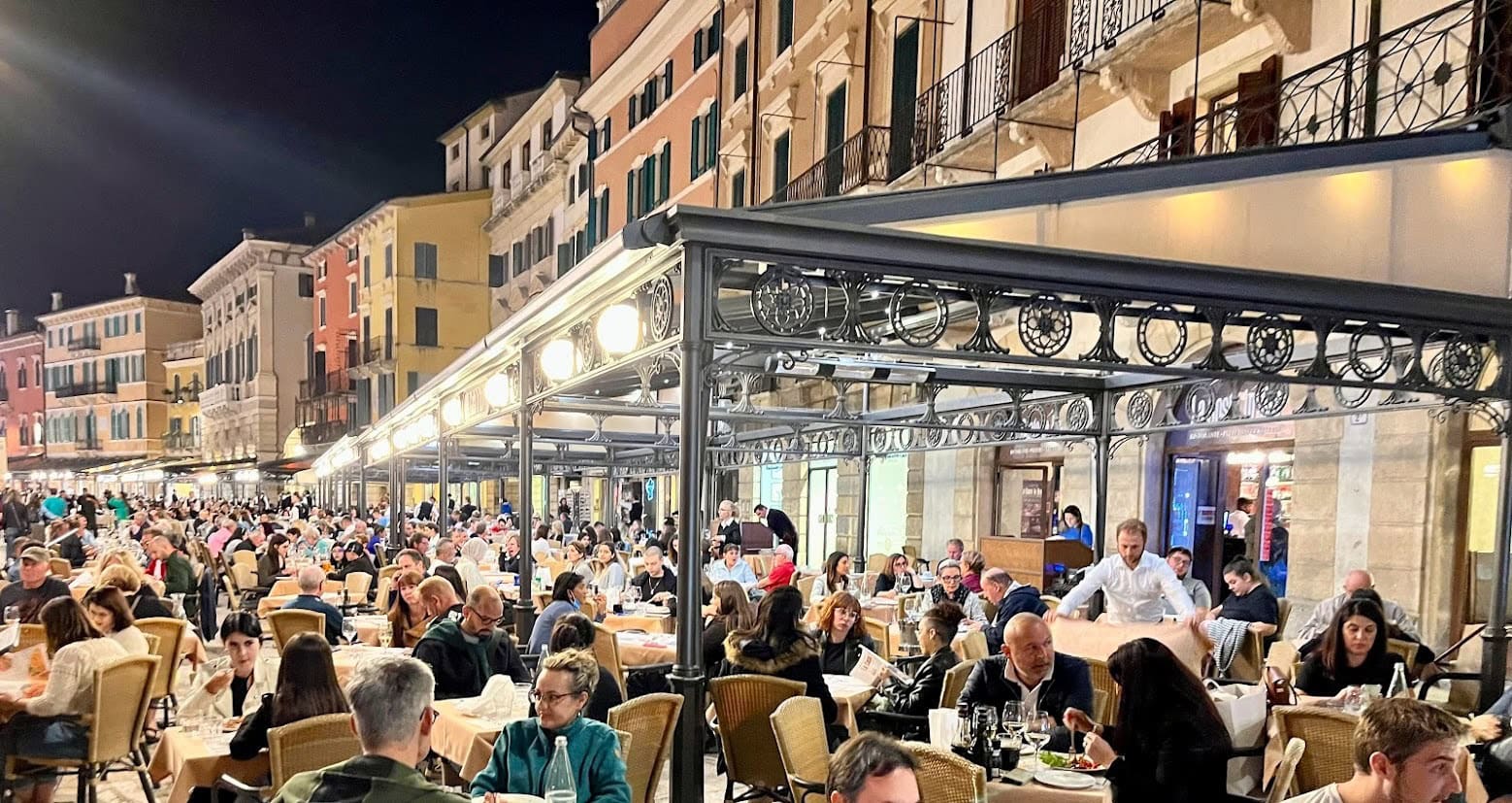
A bustling row of outdoor restaurants in Piazza Bra in Verona. The restaurants are packed with diners enjoying an evening meal beneath string lights and a covered terrace.
Piazza Brà Restaurants

Verona is a fabulously rich town on so many levels—the architecture, the art, the history, the landscape, the food, and, well, yes, the Romeo and Juliet lore.

In this post, discover Verona’s highlights, including where to stay and a day trip to Lake Garda.


The top things to see in Verona include the Roman Arena, Piazza delle Erbe, and the medieval Castelvecchio Bridge. Also visit the Roman Theatre, climb to Piazzale Castel San Pietro for the best views, and explore the Duomo, Piazza dei Signori, and Giardino Giusti. And for a quick tourist-trap experience if the crowds aren’t too large, pop into Juliet’s House for a brief look. One day is enough to see Verona’s highlights, but two days lets you enjoy museums, Verona’s Roman sites, and a relaxed walk along the Adige River.


Verona Highlights at a Glance


Top 10 Must-See Attractions in Verona

Here are the top ten attractions in Verona. Read on for Zoe’s more detailed descriptions.

1. Verona Arena (Arena di Verona): This remarkably preserved Roman amphitheater is Verona’s greatest monument. Step inside to appreciate its scale, stone craftsmanship, and the sense of history that still energizes the space—especially during summer opera performances.

2. Castelvecchio Museum & Ponte Scaligero: Castelvecchio offers Verona’s richest artistic experience, with Gothic and Renaissance masterpieces set in Carlo Scarpa’s masterful museum design. Stroll across the adjoining Scaliger Bridge for dramatic views of the Adige.

3. Basilica of San Zeno Maggiore: A Romanesque masterpiece, San Zeno glows with warm Verona stone and houses Mantegna’s renowned San Zeno Altarpiece, one of the most important early Renaissance works in northern Italy.

4. Verona Cathedral (Duomo Complex): The Duomo’s layered architecture—Romanesque, Gothic, and Renaissance—reflects centuries of religious history. Inside, Titian’s Assumption of the Virgin and the peaceful cloister reward slow, attentive looking.

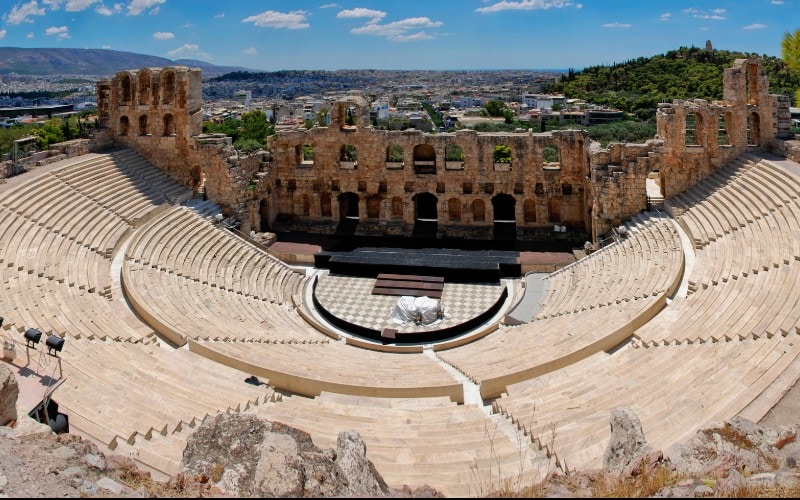
5. Roman Theatre & Archaeological Museum. Clinging to a hillside overlooking the river, the Roman Theatre is both ancient and atmospheric. The adjacent museum displays mosaics, sculpture, and artifacts that illuminate Verona’s Roman past.

6. Piazza delle Erbe: Verona’s most evocative square blends Roman columns, medieval towers, and frescoed palazzi. It’s the perfect place to absorb the city’s layers of history while enjoying the lively market atmosphere.

7. Piazza dei Signori: Once Verona’s political center, this elegant Renaissance square feels refined and contemplative. Dante’s statue presides over the space, evoking the city’s literary connections and scholarly spirit.

8. Giardino Giusti: These Renaissance gardens offer a peaceful retreat with cypress-lined paths, grottoes, and panoramic terraces. Their balanced geometry has long inspired writers, musicians, and travelers.

9. Castel San Pietro Viewpoint: Climb or take the funicular to Verona’s most breathtaking viewpoint. From here, the city’s rooftops, bridges, and river curve create a beautifully composed, painterly panorama.

10. Juliet’s House (Casa di Giulietta): A lighthearted final stop, Juliet’s House offers a look at the balcony, the courtyard, and the many notes left by visitors. It’s iconic but best enjoyed after first visiting the city’s more substantial artistic and historic highlights.


History of Verona

Thanks to its location along the Adige River in the Veneto region of northern Italy, Verona has been inhabited since prehistoric times. It became a Roman town in the 3rd century BC and was one of the most important Italian cities during the Roman era.

Because of its strategic location on the river, Verona was used as a base for overseeing the northern territories and was at the intersection of many important roads.  

Today, everywhere you look, the city teems with Roman art and architecture.

But that’s not all. Medieval Verona is equally represented, with its many artifacts woven seamlessly throughout the city. Add the city’s Renaissance and Baroque masterpieces, and this art-historical wonderland is complete.

No wonder Verona is a UNESCO World Heritage site.


What to See in Verona

Following is an overview of the places I visited during my week in Verona. While you can see quite a lot of the city in a day, slow down and consider spending a full week, or at least two or three full days. Verona has a lot to offer the traveler interested in art and architecture and just slowing down to savor one of Italy’s loveliest cities.

The Verona Arena

The most prominent reminder of Verona’s Roman past is the Arena di Verona. This must-see attraction was built in 30 AD (forty years before the Colosseum in Rome). The ancient Romans staged deadly gladiator and animal fights here—an entertainment staple throughout the Roman world.
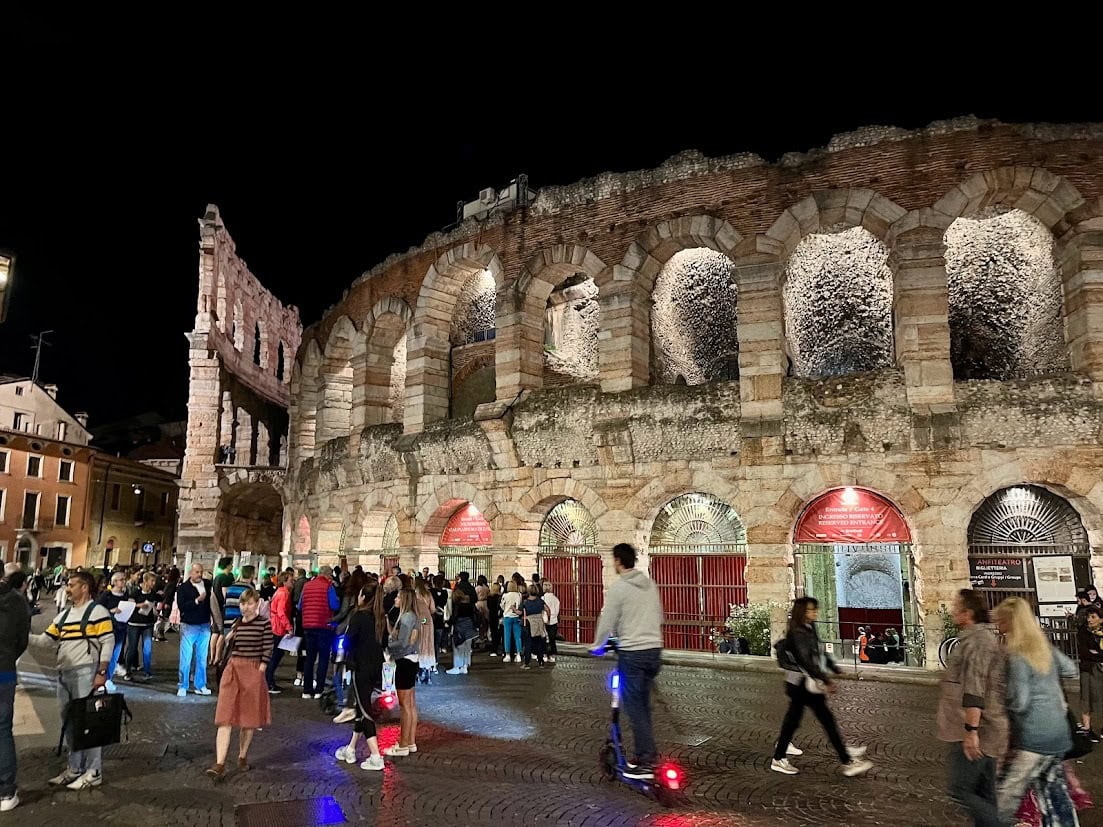
The illuminated Roman amphitheater at night, surrounded by visitors, with its arches glowing under warm lights.
Verona Arena, 30 AD

In the following centuries, as was the medieval custom, the arena became a rich source for the construction materials needed to create new buildings in the city.

The structure we see today is the result of this constant scavenging and a devastating 12th-century earthquake.

The arena has been in continual use over the centuries. In the Middle Ages, judicial disputes were resolved by hand-to-hand combat here, and until the 18th century, this was the site of jousts and tournaments.

Today, the arena is the setting for Verona’s world-famous opera season. One of the best ways to experience the arena is with a guided tour. Here’s one from GetYourGuide:

Powered by GetYourGuide

Piazza Brà

The Piazza Brà is the main square in the center of Verona. (The term bra is derived from the German word breit, which means broad.)  It’s one of Italy’s largest piazzas and is an ideal spot for people-watching.

The welcoming, open space is paved with pink marble and lined with restaurants, majestic historical buildings, and the picturesque Portoni della Brà (Gates of the Bra).
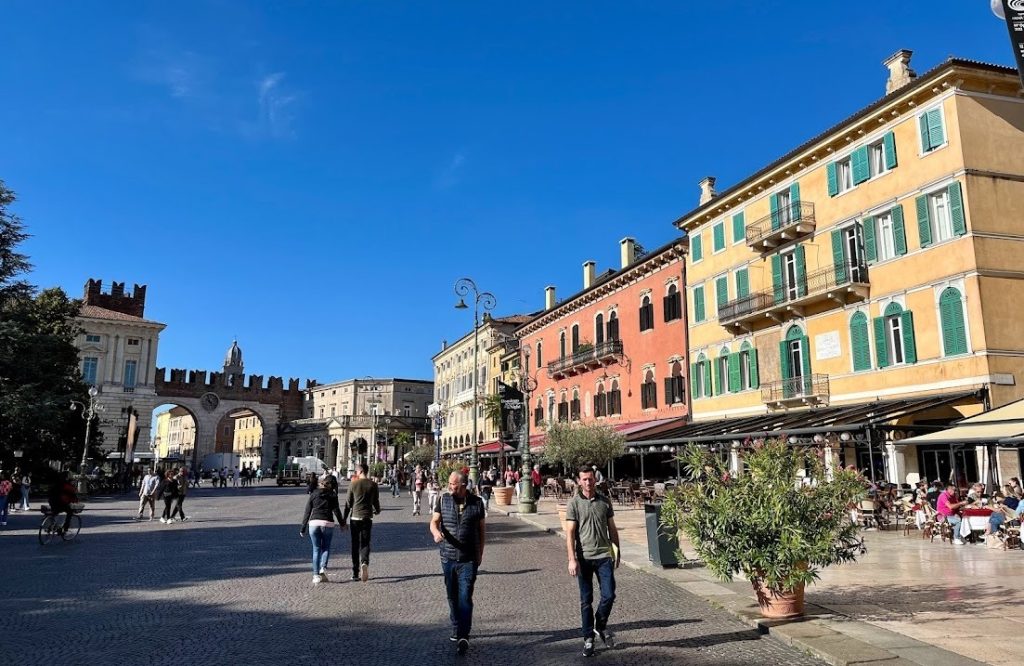
The piazza Bra in Verona with people strolling under the arches of the historic gate, flanked by colorful buildings and outdoor cafes.

The Portoni della Piazza Brà archways are embedded in Verona’s medieval walls, connecting the city to the suburban countryside at the time.

Verona Tourist Office

The tourist office is located in the Piazza Brà. Here you can buy tickets for the Hop-on-Hop-off bus to explore Verona or book other city tours.  

When I was younger, I had nothing but disdain for tourists who chose to explore a city in such a superficial manner. Now, I’ve realized that a bus tour is an excellent way to quickly get the big picture, find your favorite points of interest, and save your feet for the main events—museums, churches, castles, and ruins.

Taking a bus tour helps you decide what to see in Verona. Here are some tours from Tiqets.com to consider:

Porta Borsari

Not far from the Piazza Brà stands the impressive Porta Borsari (the Borsari Gate). Built in the 1st century AD, it was the primary entrance to the city in Roman times.

It was here that medieval tax collectors charged tariffs on goods entering and exiting the city; hence the gate’s name, which roughly translates to “the money purse gate.”

On the other side of the gate is the Corso Porta Borsari, an ancient Roman street. Now, it’s a charming pedestrian shopping district known for its shoe stores.
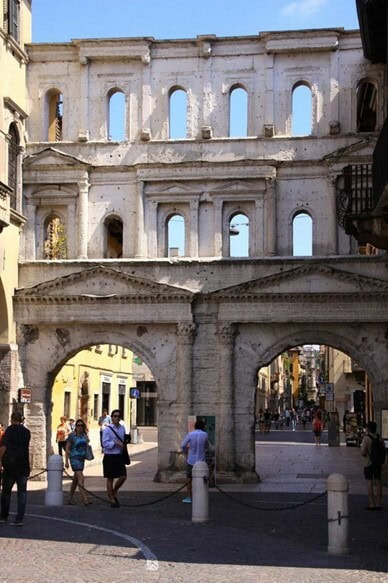
An ancient Roman gateway with arched entrances and upper stories featuring windows, situated at the entrance to a busy pedestrian street in Verona.
Porta Borsari, 1st Century AD

Via Mazzini

Another ancient street. Via Mazzini, is slightly beyond the Porta Dei Borsari. The buildings on either side of this marbled walkway house Verona’s most elegant shops.

Although these stores sell the latest fashions, they’re rooted—as is everywhere in Verona—in the past (literally).

A good example of this is the Benetton store. Its ground floor is covered in glass so you can see the 1st-century Roman domus (home) excavated beneath it.

Piazza delle Erbe

Both Via Mazzini and Corso Porta Borsari lead to the rectangular Piazza delle Erbe (Plaza of Herbs), originally the site of the Roman Forum.

This bustling square, surrounded by historic buildings, is now home to an open-air market, continuing one of the ancient forum’s traditional functions.
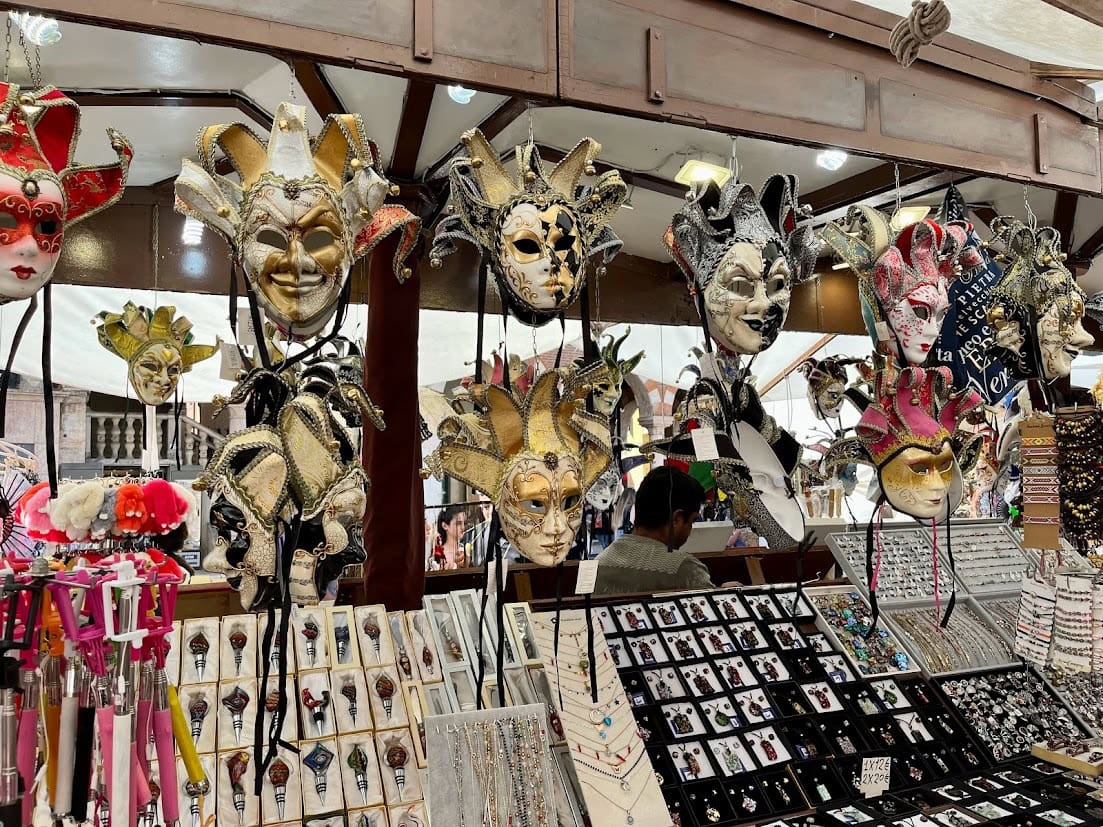
A market stall in Piazza delle Erbe, Verona, displaying an array of Venetian-style carnival masks with intricate designs in gold, red, and black. Below the masks are various trinkets, including keychains, jewelry, and other souvenirs, attracting visitors browsing the vibrant selection.
Outdoor market stall in the Piazza delle Erbe

Three historic relics adorn the middle length of the piazza: the Capitello, Madonna di Verona, and The Winged Lion of St. Mark.

Capitello

The Capitello (Capital) is a 13th-century canopied podium used in the Middle Ages to swear in magistrates.
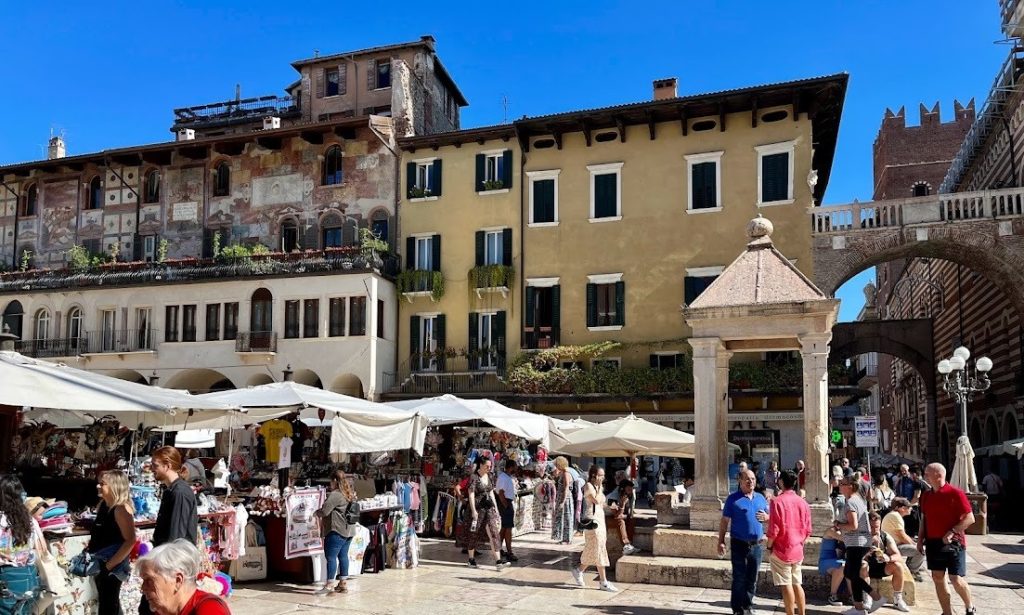
A lively outdoor market in Piazza delle Erbe, Verona, Italy, with white canopy tents filled with clothing, souvenirs, and accessories. People are strolling, browsing stalls, and chatting, while historic buildings with intricate frescoes and warm-toned facades create a picturesque backdrop. The Capitello, a small stone structure, stands in the foreground, adding to the charming and historic ambiance of the square.

Madonna di Verona

The Madonna di Verona (My Lady of Verona) fountain is named for the Roman sculpture it supports. In 1368, the original statue that had inhabited the piazza since the 1st century was restored, given a crown, and placed atop a fountain.

This was at the peak of Verona’s medieval political power, and the sculpture was intended to personify the great city.
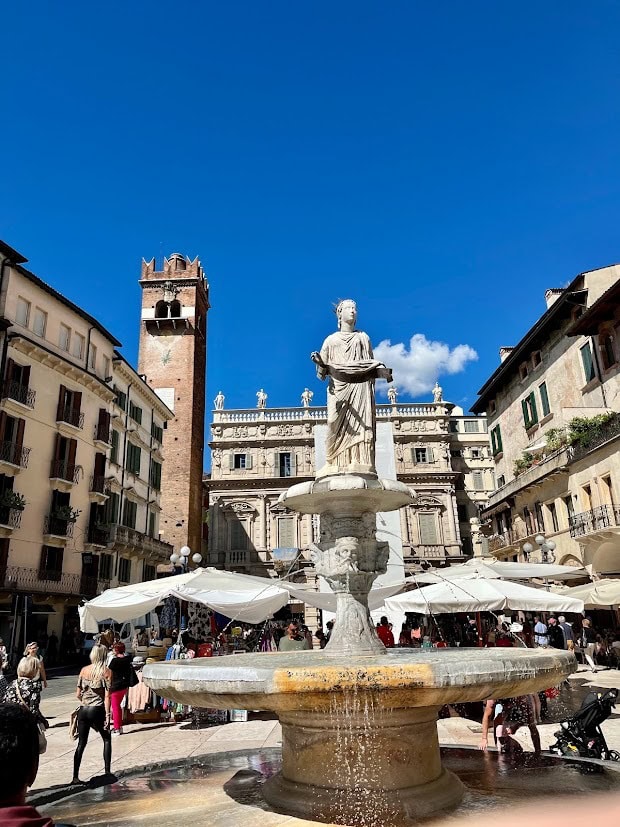
A central fountain in Piazza delle Erbe in Verona, featuring a statue of the Madonna di Verona atop a stone pedestal, surrounded by bustling market stalls and visitors.

Winged Lion of St. Mark

A tall marble column supports the winged lion of St. Mark. The sculpture was erected in 1523 as an emblem of the Venice Republic, which ruled Verona from the 15th to the 18th century.

Piazza delle Erbe - Palazzo Maffei (Verona)

Casa Mazzanti

Another art historical find in the Piazza delle Erbe is the painted façade of the Case Mazzanti (Mazzanti Houses), originally the residence of the powerful della Scala family, who ruled Verona during its medieval heydays.

In 16th- and 17th-century Verona, the palace façades of the city’s most prominent families were often entirely decorated with frescoes, so much so that Verona was nicknamed the painted city.

Unfortunately, many of these paintings did not survive, were plastered over, or were detached from their walls and exhibited in museums.

One of the best-preserved examples, and still in its original location, is Case Mazzanti, painted by Alberto Cavalli, a collaborator of the Mannerist painter Giulio Romano. It’s easy to see the influence of Michelangelo’s muscular style in these monumental frescoes.
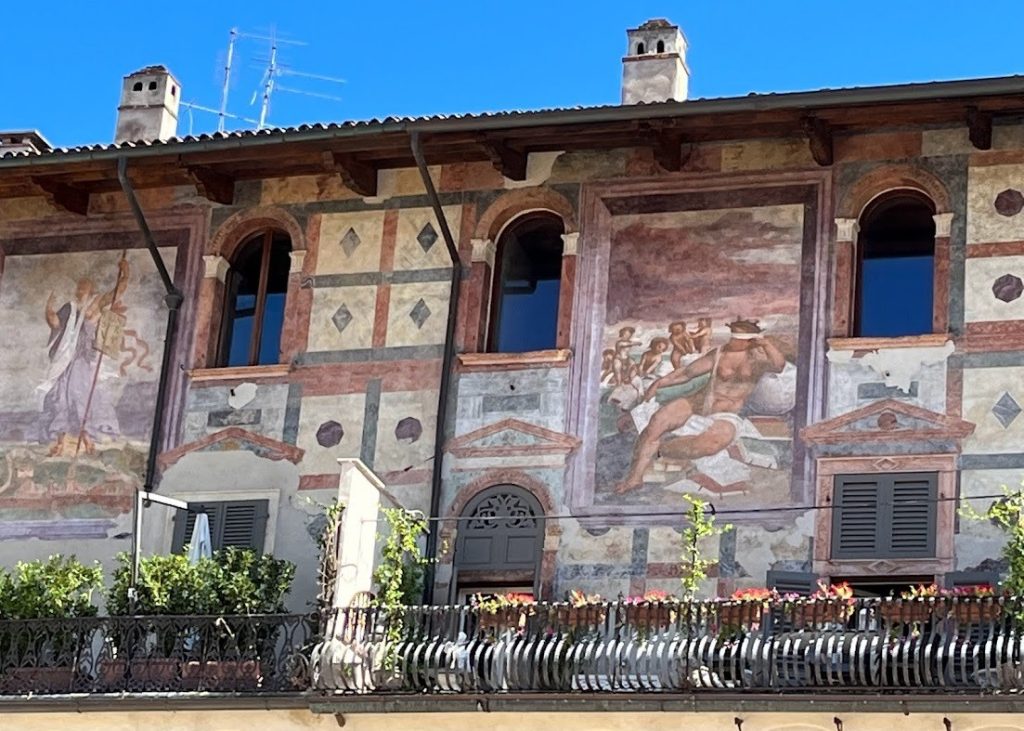
A historic building with elaborate Renaissance frescoes on the facade, including mythological and decorative elements, above a balcony with potted plants.

Palazzo Maffei

At the northwest end of the piazza, the Palazzo Maffei (Maffei Palace) provides a grand theatrical finale to the entire space. The original building dates back to the 14th century but was completely redesigned into a sumptuous Baroque mansion in the 17th century.

Today, the palazzo houses the Casa Museo (House Museum) art collection and a fabulous restaurant—the Ristorante Maffei. The museum was closed when we were there, but we were able to eat a delicious lunch between the grand Baroque columns of its elegant courtyard.

Verona’s Roman Theater and Archaeological Museum

From the Palazzo Maffei, we wandered the narrow streets to the picturesque Ponte Pietra (Stone Bridge)—first built in Roman times but rebuilt often since. Crossing the bridge, we came to Verona’s restored Roman theater, dating to the 1st century AD and still used today.
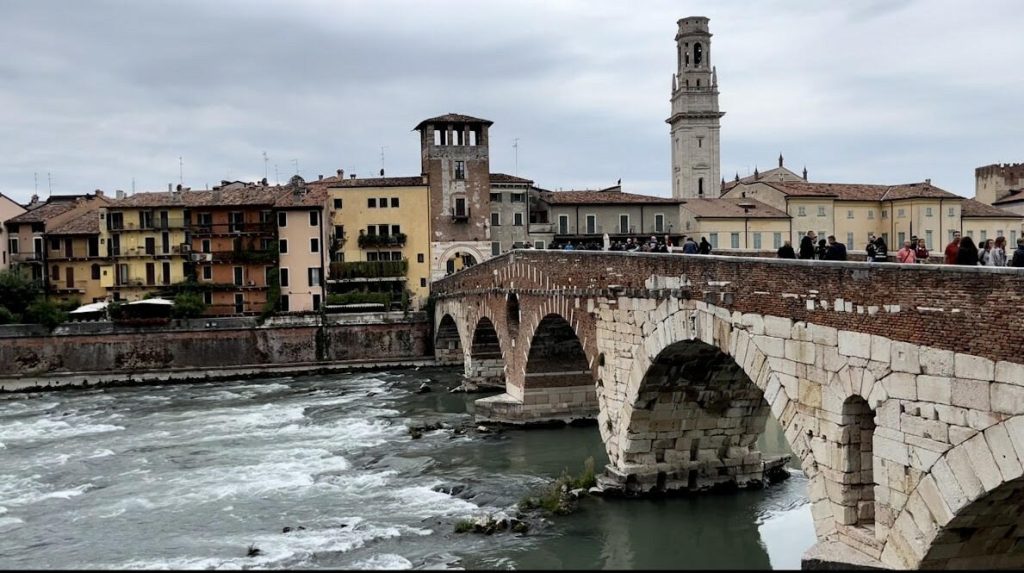
A historic Roman stone bridge crossing the Adige River, with flowing water beneath and Verona’s bell towers and colorful buildings in the background.

An impressive archaeological museum nestles in the hillside high above the theater in what used to be a 15th-century Jesuit monastery.

It’s a steep climb on uneven steps to get to the museum, but it’s worth it for those who like ancient art and a stunning historic setting.

Archaeological Museum

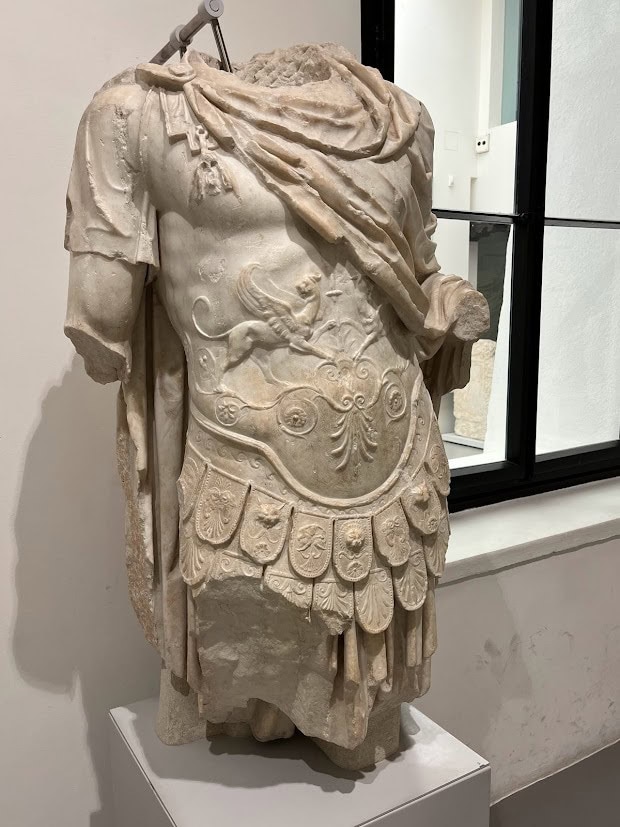
Here are two interesting exhibits in the Archaeological Museum: an ancient Greek rhyton (drinking cup) from the 4th century BC and the torso of a Roman soldier.
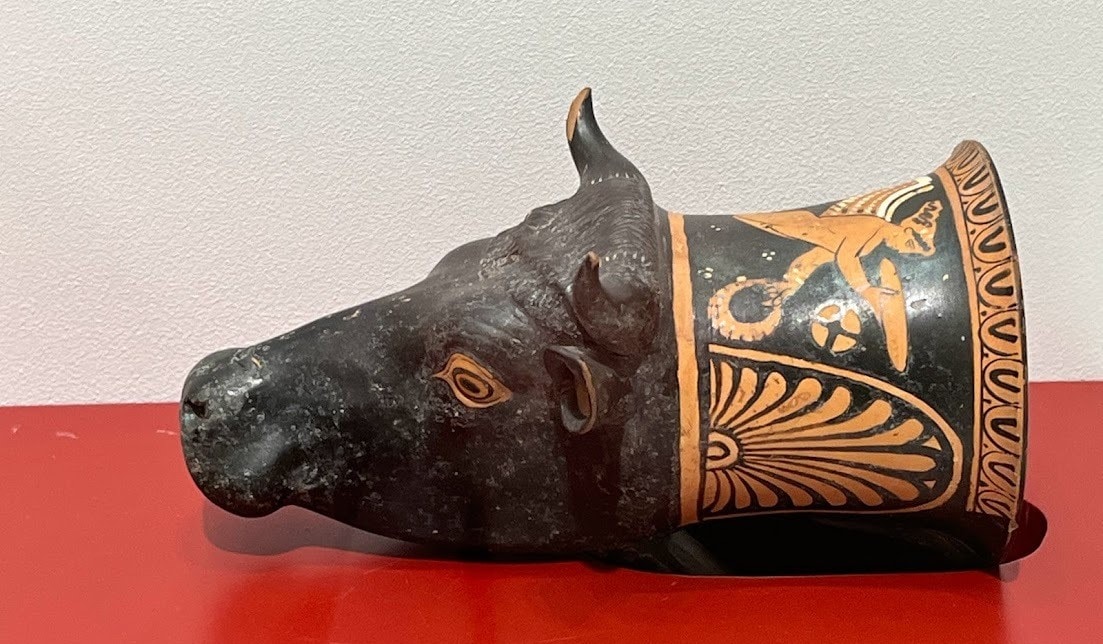
A ceramic rhyton in the shape of a bull’s head, adorned with black and orange decorative patterns and motifs.
A marble sculpture of a Roman soldier’s torso, featuring intricate armor details including a lion motif and decorative medallions.

Verona’s Piazza dei Signori

Returning across the Ponte Pietra, we came upon the Piazza dei Signori (Plaza of the Lords) with its statue of Dante in the center.

The sculpture was commissioned in 1863 to honor the 600th anniversary of Dante’s birth. Dante lived in Verona for seven years after his exile from Florence. Verona’s oldest café is also in this piazza. It named itself Caffè Dante after the Dante monument was installed. We didn’t eat at Caffè Dante, but I wish we had! 

Shown below is the Piazza dei Signori. The Caffè Dante is to the left; the sculpture of Dante is in the center, and the Loggia del Consiglio is to the right.
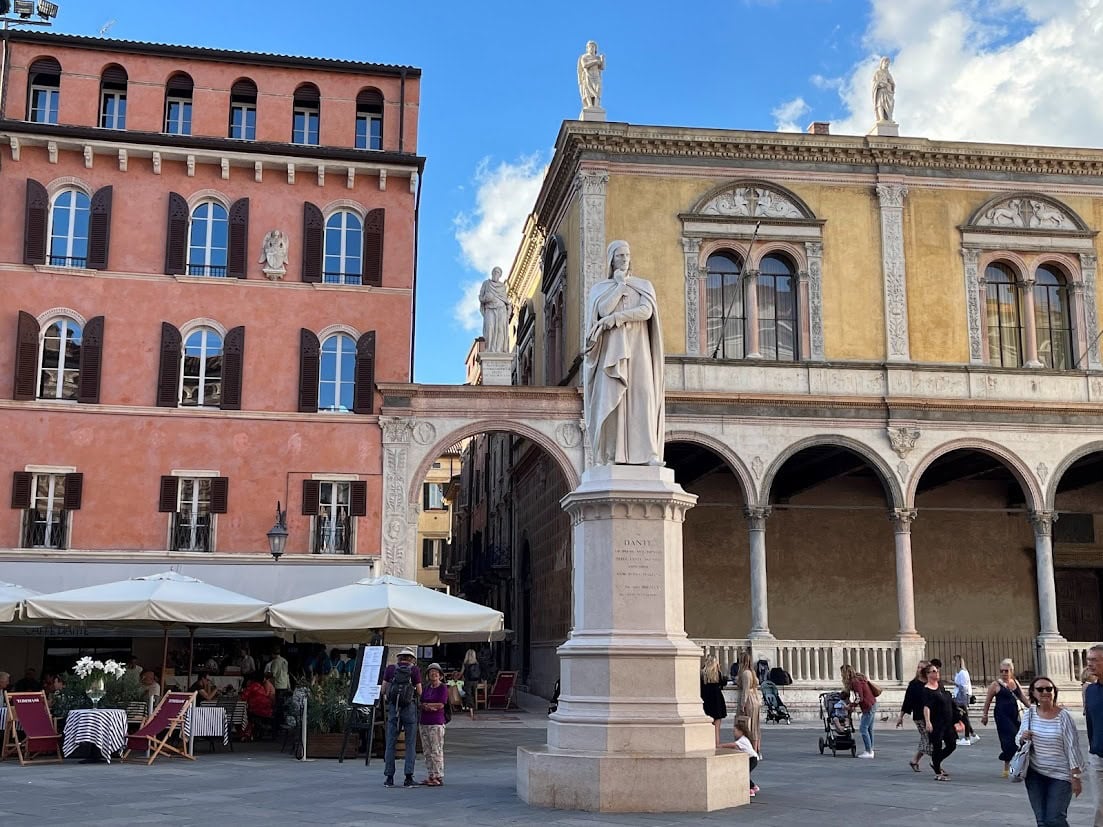
The Piazza di Signori in Verona with a statue of Dante at its center, surrounded by historic buildings, outdoor cafes, and visitors enjoying the open space.

Palazzo della Ragione and Loggia del Consiglio

The piazza is surrounded by splendid buildings dating from the Middle Ages. The Palazzo della Ragione (Town Hall) was built by the powerful della Scala family mentioned earlier.

They ruled Verona during the 13th and 14th centuries, a time of significant economic and cultural achievement for the city. 

The palace had four towers in medieval times, but only one remains today: the breathtaking 275-foot-high Torre dei Lamberti(Lamberti Tower).
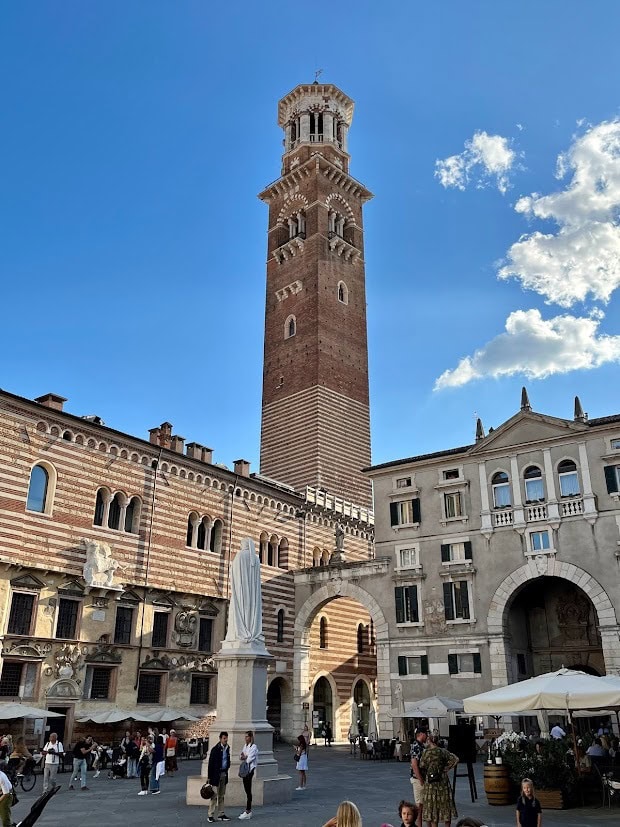
A side view of Palazzo della Ragione, with striped stone walls and a tall clock tower, located in Verona’s historic center.

On the north side of the Piazza dei Signori stands the 15th-century Loggia del Consiglio (Loggia of the Council), a classic example of Early Renaissance design. The figures on top represent famous Verona citizens.
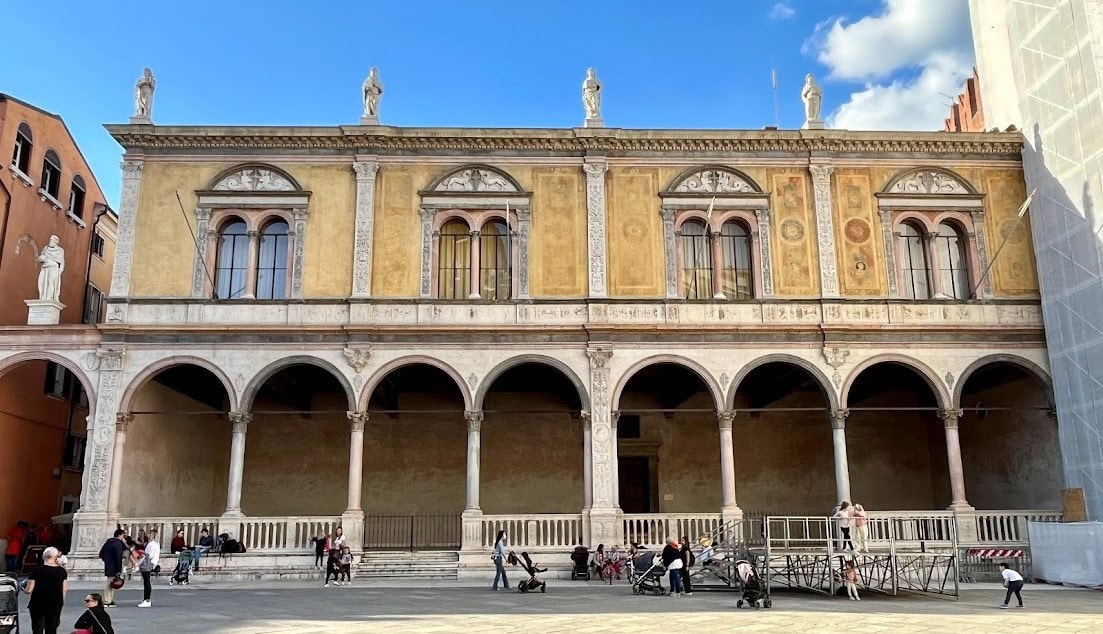
A historic loggia in Piazza dei Signori in Verona featuring arched colonnades and statues along its roofline, with visitors in the foreground.

The two buildings offer a sharp contrast of styles. While the medieval town hall incorporated soaring towers into its overall design to sweep you off your feet, the Renaissance loggia appeals more to the rational mind with its harmonious balance of horizontals and verticals.

The Church and Cemetery of Santa Maria Antica, Verona

Tucked around the corner down a narrow street from the Piazza dei Signori is the little 12th-century church of Santa Maria Antica, which became the della Scala family church.

The sarcophagus and equestrian statue of Cangrande I adorn the church façade above the door. 

Cangrande I was the most significant figure of the della Scala family. He protected Dante while in exile and was acclaimed as a great warrior and powerful autocrat who was Verona’s sole ruler from 1311 until he died in 1329.

Next to the church is the della Scala family cemetery with imposing Gothic tombs that almost overshadow the church itself.

Below is the Tomb of Cansignorio della Scala (who ruled Verona from 1359 to 1375). Like his more famous predecessor, Cangrande I, he’s depicted on horseback in full armor. 

This is the most richly decorated tomb in the cemetery with the elaborate cast of characters on its base: warrior saints, Gospel figures, the Virtues, and the Apostles–even more impressive than the statue itself.
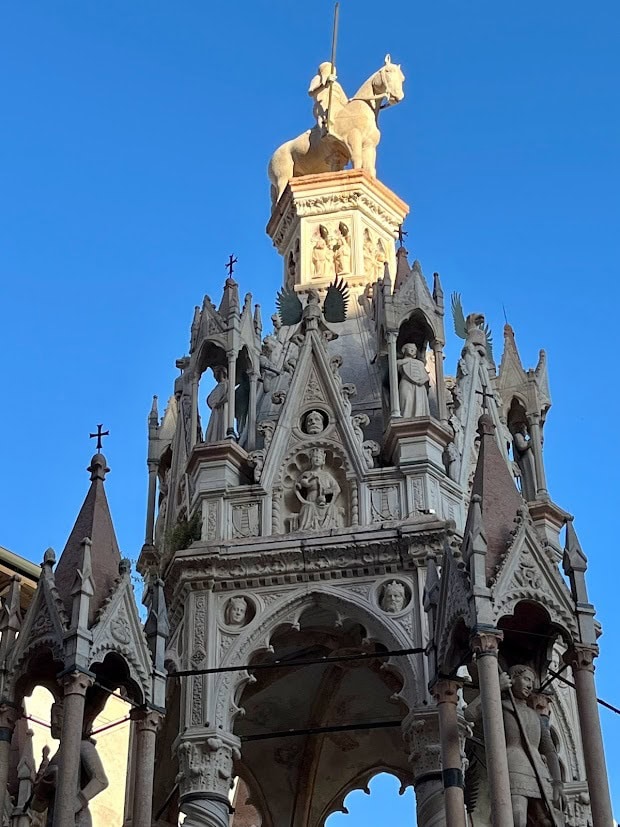
An ornate Gothic monument adorned with sculptures and pinnacles, topped with a statue of a knight on horseback.

Dinner and a View

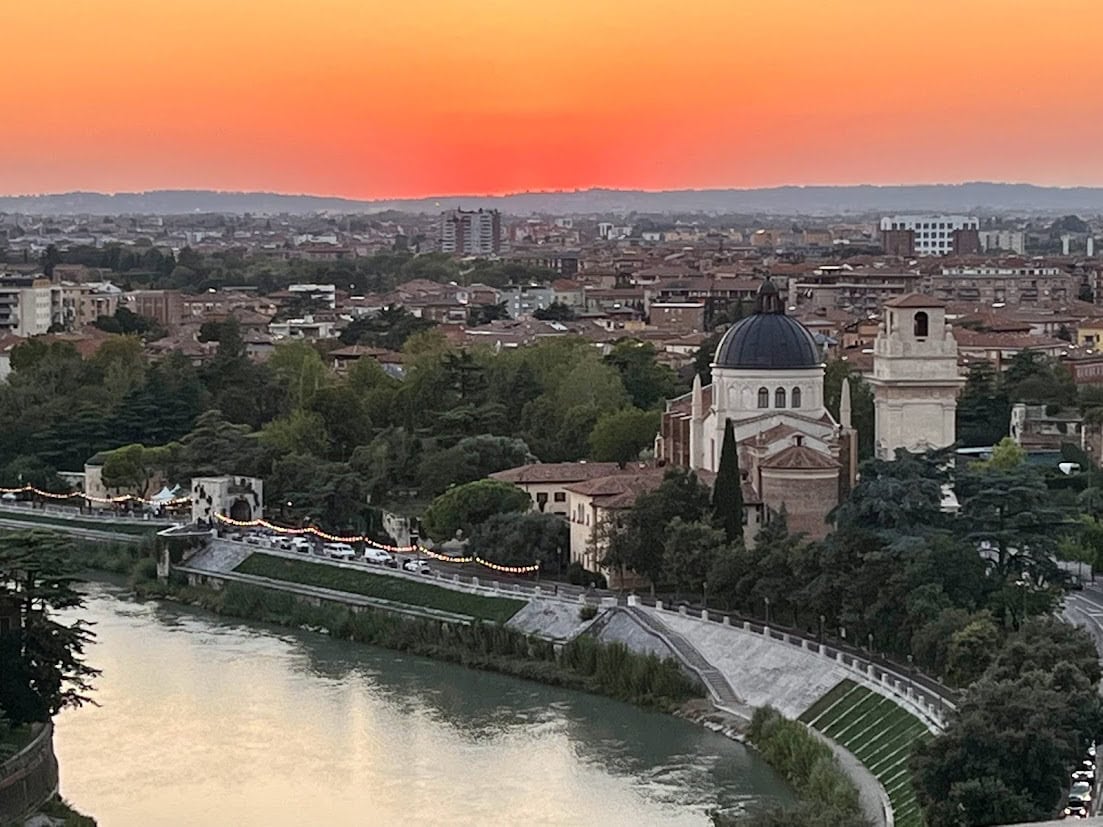
After an exhilarating and exhausting day of sightseeing, a relaxing dinner in a beautiful location is always welcome. With this in mind, we dined one evening at the Re Teodorico Bar and Restaurant near Piazzale Castel San Pietro on San Pietro Hill overlooking the Adige River.

The hill has been inhabited since the beginning of Roman times, and the restaurant has been there for sixty years. The views from this spot are spectacular, and the food outstanding.
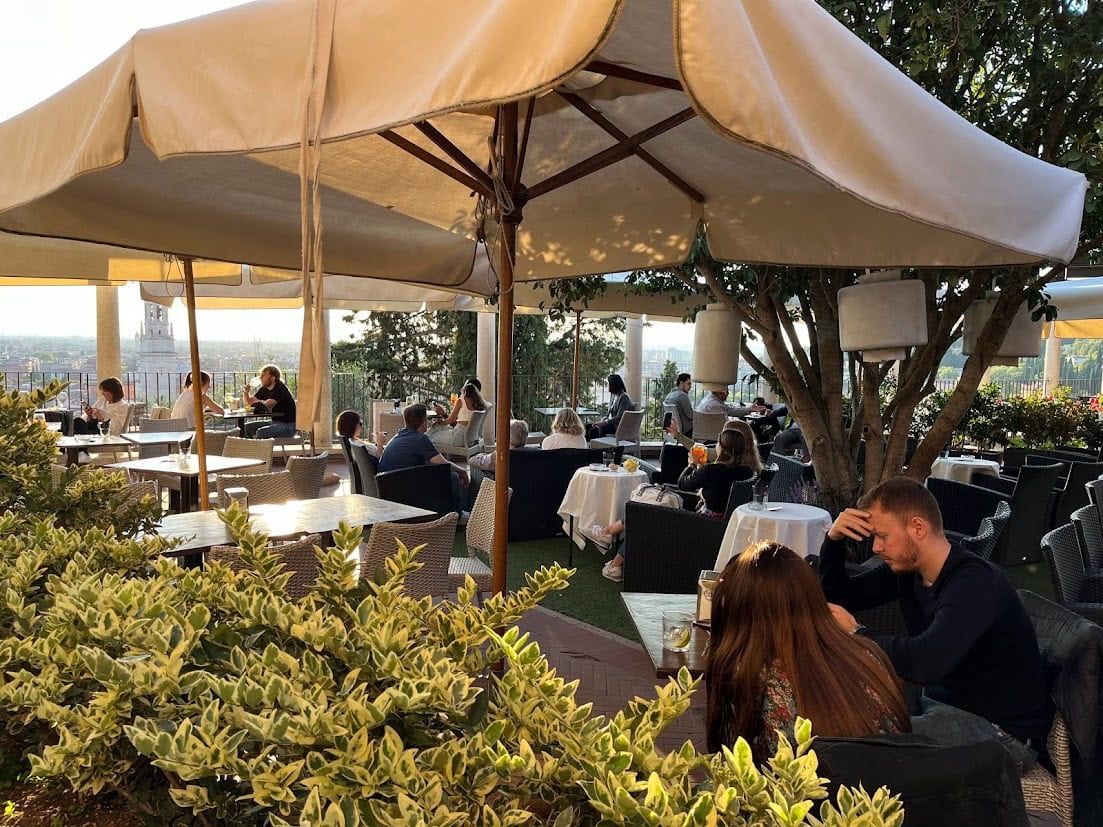
An outdoor terrace with shaded tables and chairs surrounded by greenery, offering diners a scenic view of the city at sunset.
Re Teodorico Bar
A panoramic view of Verona at sunset, showcasing the Adige River winding through the city and the dome of San Giorgio in Braida illuminated against the orange sky.
Re Teodorico view

Verona’s Castelvecchio

The della Scala family adorned Verona with not only magnificent tombs but also a magnificent castle.

The Castelvecchio is a massive fortress built next to the Adige River from 1354 to 1355 during the reign of Cangrande I.
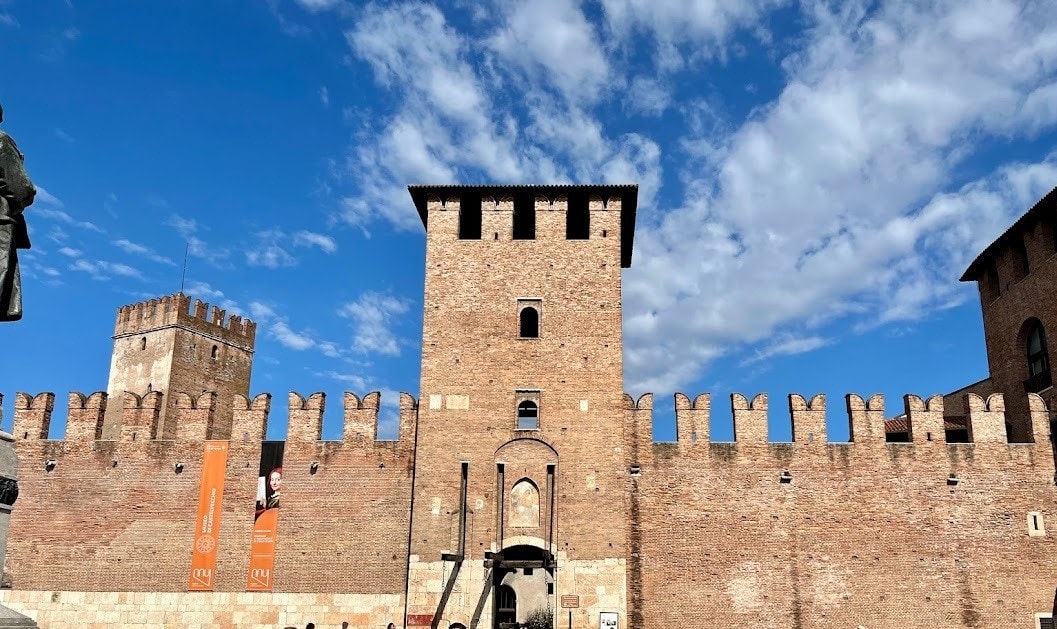
The brick facade of Castelvecchio, featuring crenelated towers and a central arched entrance, with visitors walking around the plaza in front.

The fortified structure even spans the river, providing the castle inhabitants a protected escape. Today, everyone can “escape” across this carefully reconstructed and gracefully arched Ponte di Castel Vecchio, a pedestrian bridge.
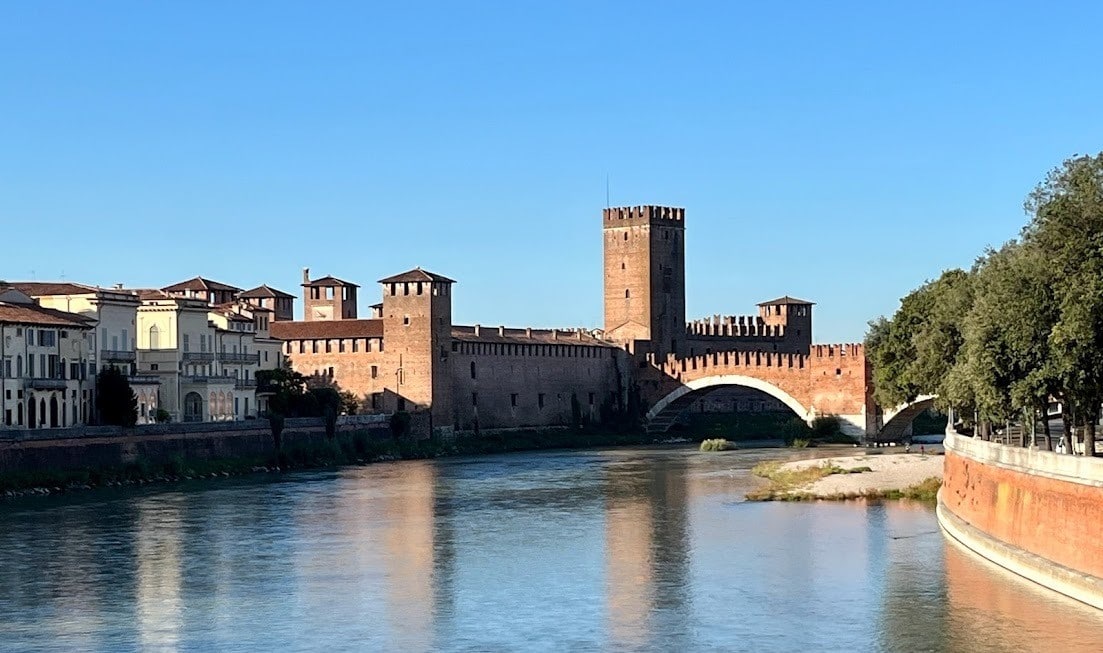
A scenic view of Castelvecchio Bridge and fortress reflecting on the calm waters of the Adige River under a bright blue sky.

Civico Museo d’Arte

The castle interior has been restored and transformed into bright exhibit spaces that include the collections of the Civico Museo d’Arte.

Paintings

The collection features sculptures and decorative arts in addition to paintings by Bellini, Rubens, Montagna, Guardi, Tiepolo, Tintoretto, Pisano, and artists of the 15th- and 16th-century Veronese school.

The detail below is from a painting called Madonna dell’ombrello (Madonna of the Umbrella), created by Girolamo dai Libri (Girolamo of books). Besides being a painter of large-scale works, he was also a manuscript illuminator, which explains his name and his ability to paint such beautiful, meticulous details.
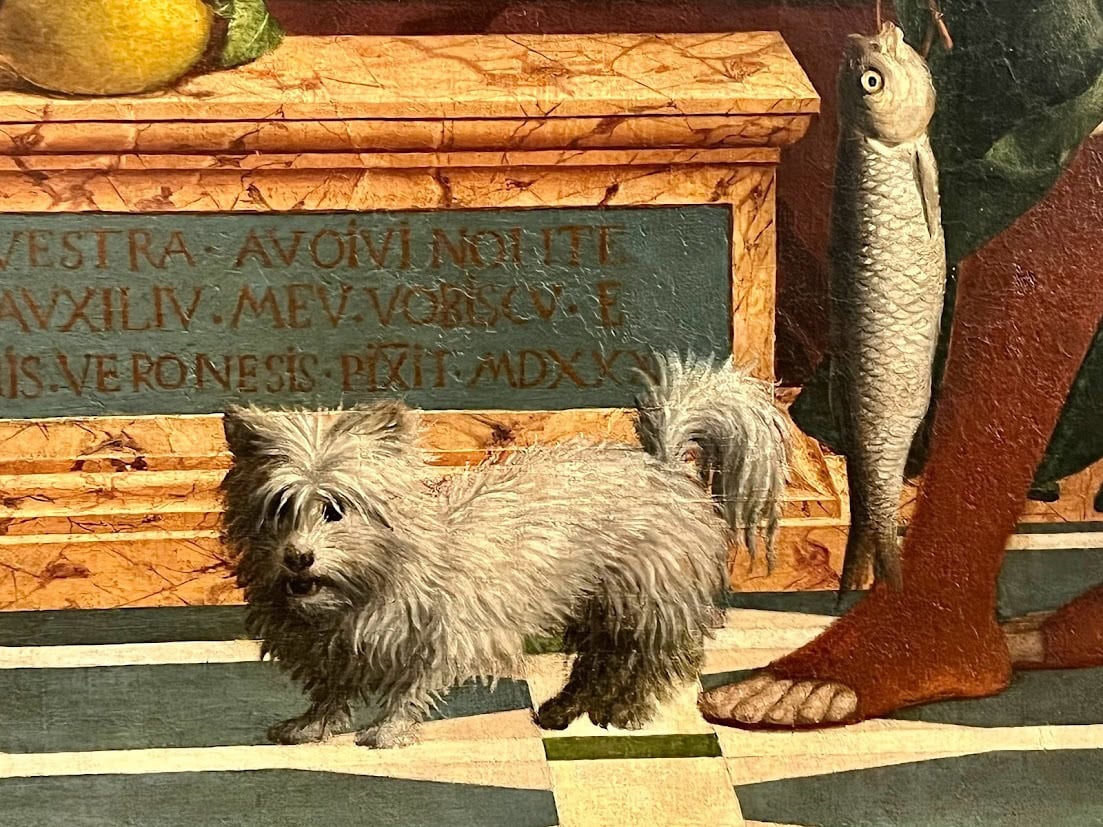
Close-up of a small white dog standing near a detailed inscription, with a fish and human feet visible in the background.

You can see the complete painting below. Although Girolamo is not known as one of the Renaissance greats, I find this piece captivating.
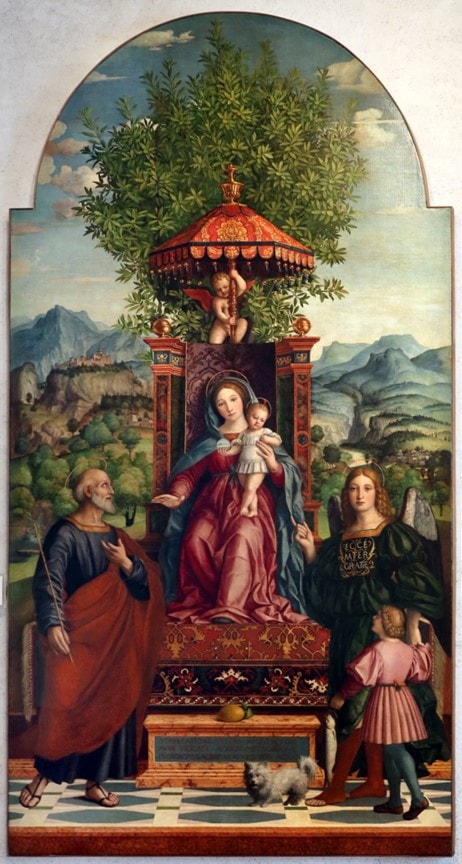
Renaissance painting of the Madonna and Child under a lush canopy, with angels and saints surrounding them in a vibrant pastoral setting.
Madonna of the Umbrella, 1530, by Girolamo dai Libri, Castelvecchio, Verona. Photo source: Wikimedia Commons

Statues

Outside on the castle grounds stands the original equestrian sculpture of Cangrande I—a Gothic art masterpiece. 

Although Cangrande was christened Can Francesco, his nickname–“big dog” in Italian–probably came from his physical and mental prowess. This nickname also explains the large dog-headed helmet with eagle wings that leans back on his shoulders in the sculpture.

But besides the elaborate helmet, the most striking thing about this artwork is Cangrande’s expression. Instead of looking serious or fierce, he appears to be resting between conflicts with a self-satisfied grin.

History remembers Cangrande as incredibly strong and brave in battle, but he was also known for his friendly and kind disposition. This sculpture, then, celebrates both the great warrior and the affable man.
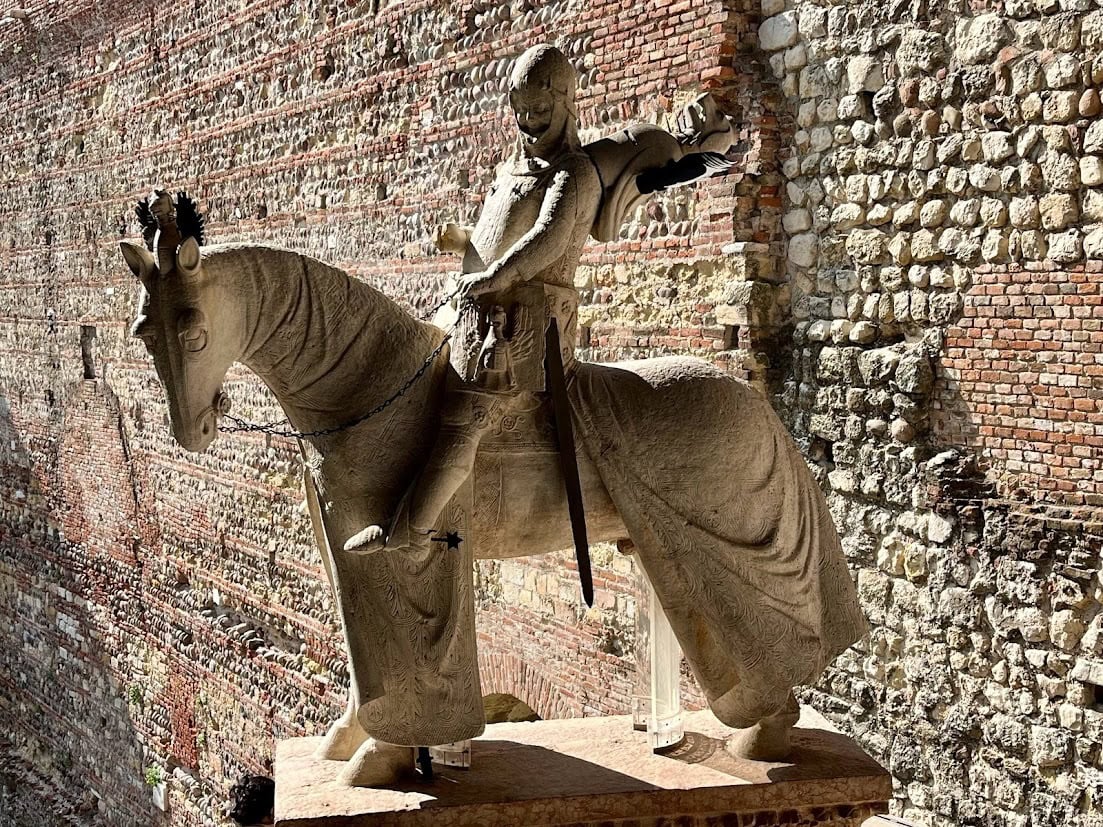
A stone statue of a knight on horseback, intricately carved, standing outdoors against an ancient stone wall.

In a corner tower of the castle’s raised walkways, you can also see the original equestrian monument of Mastino II. He came into power after Cangrande I died. Like his uncle, he’s shown in full armor. But instead of being relaxed, he’s prepared for a fight, his face hidden behind a helmet in the form of a winged mastiff. As with Cangrande I, the helmet references his name. Mastino means mastiff in Italian.
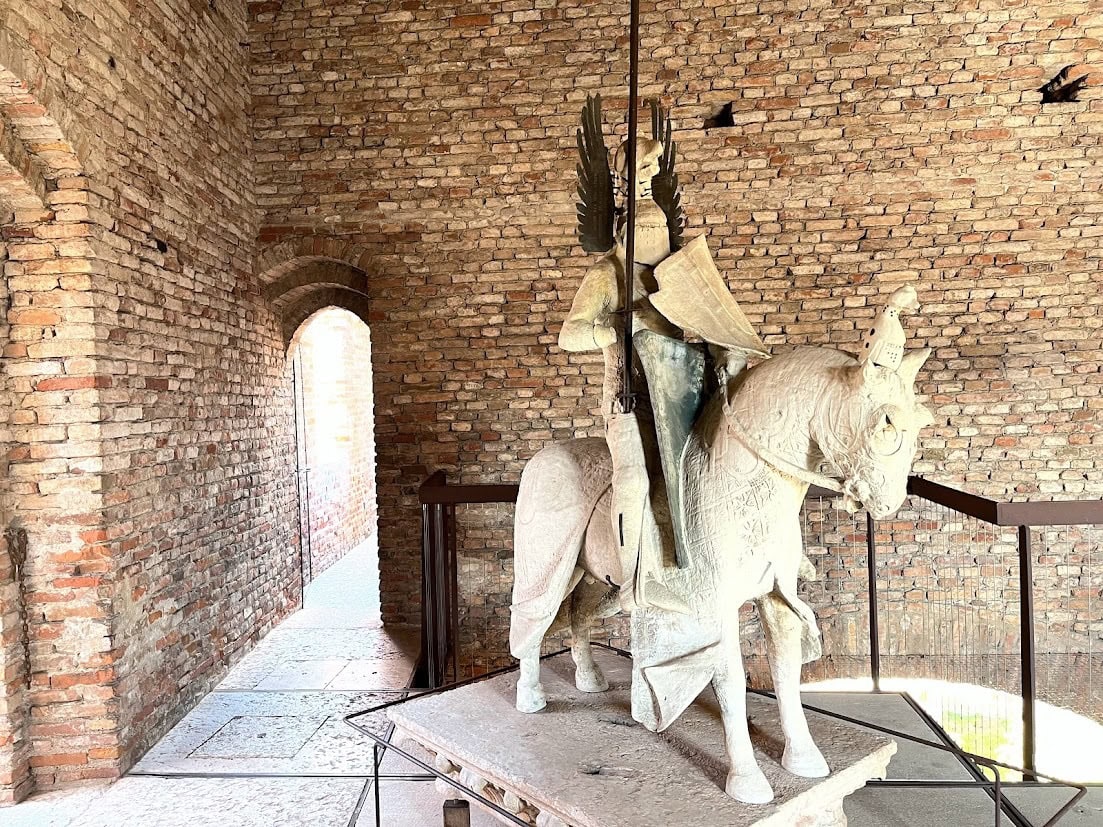
A medieval-style equestrian sculpture of a knight in armor, displayed against a brick wall with natural light streaming in.

The Basilica of San Zeno, Verona

Leaving the Castelvecchio, we walked west along the Adige River until we came to a large 11th-12th-century basilica dedicated to San Zeno, the 4th-century Veronese Bishop and Patron Saint of Verona.

But let me digress here for a moment. Although I wrote at the beginning of this post that my focus for this trip was not Romeo and Juliet, tradition says this church is where they married. So, as it turns out, we did see one of Romeo and Juliet’s haunts (although not the famous balcony, and quite unintentionally).

The church of San Zeno (pictured in the center below) is flanked by its elegant campanile on the right and the Benedictine abbey on the left with its classic medieval defensive tower. The three make a striking architectural ensemble.
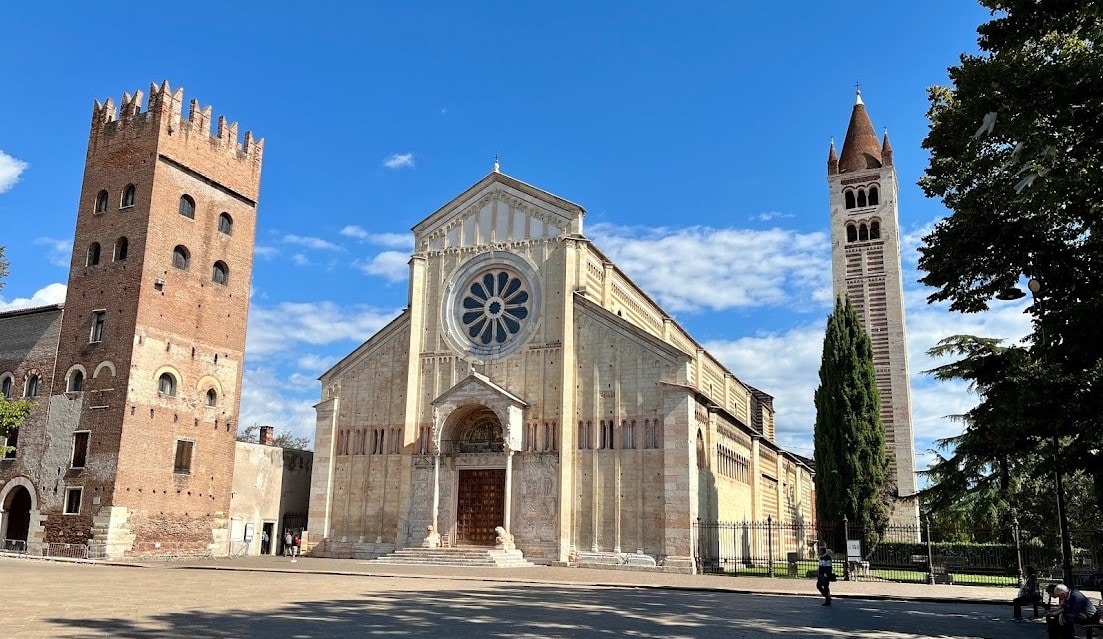
The exterior of the Basilica of San Zeno, featuring a Romanesque design with a rose window, stone facade, and two nearby towers.

We accessed the church through a side entrance. The front portal stays shut to protect the massive interior bronze doors with their marvellously expressive Romanesque reliefs dating from the 11th to the 13th century. Here is a detail from the bronze door.
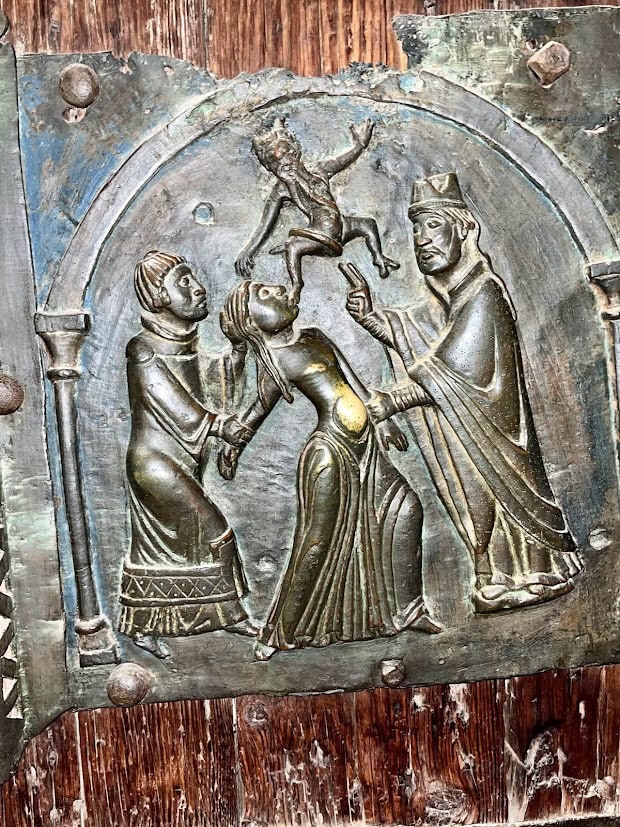
A detailed bronze relief panel depicting a dramatic scene of an exorcism, with a small demon being cast out from a woman by a figure in regal attire, while another figure supports her. The panel is framed by an arched design and shows intricate craftsmanship.

Along with its masterful bronze portals, the church interior includes an exquisite one-of-a-kind, 14th-century wooden roof and walls covered with frescoes from the 13th to the 15th century. Some of these frescoes have peeled away over time to reveal the earlier paintings underneath, making amazingly surreal images.
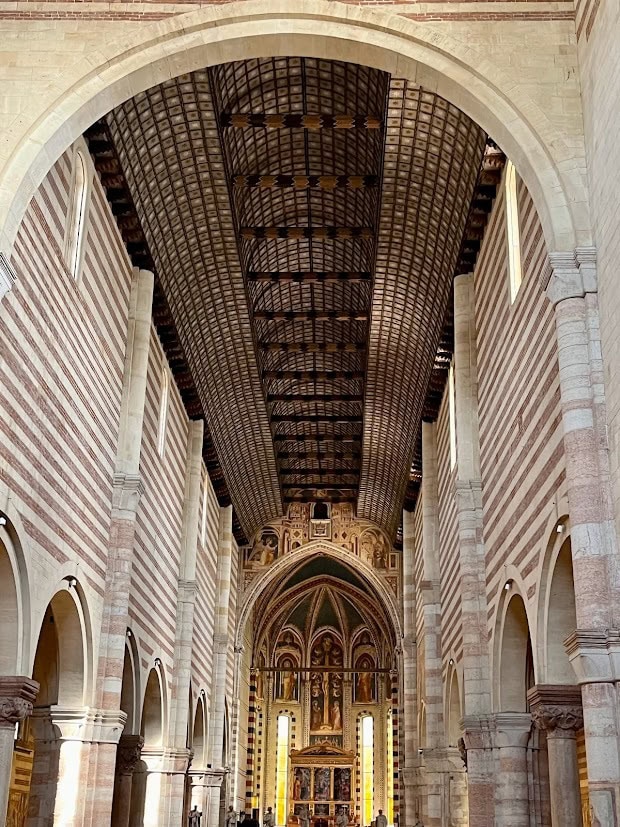
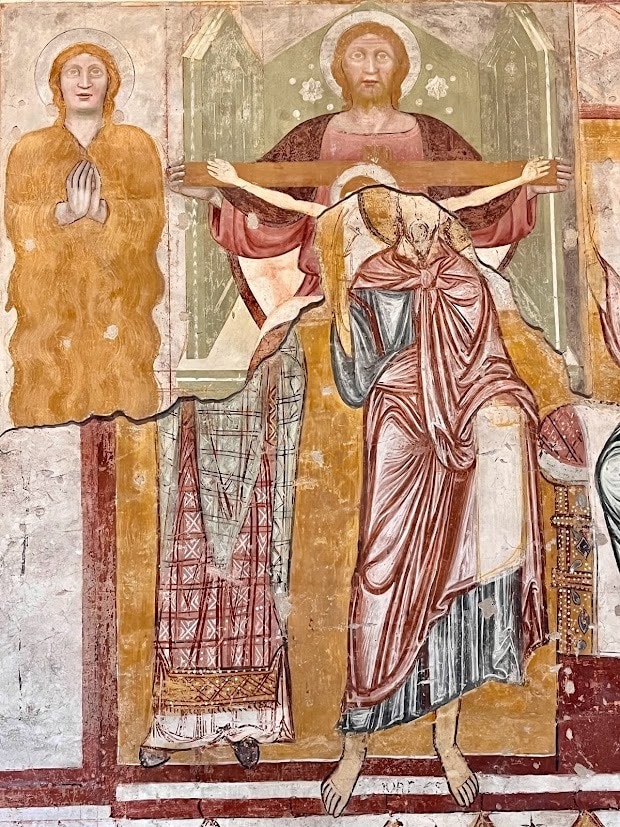
The pièce de résistance in this church is the elaborate 15th-century painting, Madonna with Saints, behind the high altar. Andrea Mantegna, one of the great artists of the Italian Renaissance, created this exquisitely detailed masterwork.

A detailed painting of the Madonna and Child seated under an ornate canopy, flanked by saints, with lush greenery and distant mountains in the background.

Verona FAQs

Here are some frequently asked questions about Verona:

How many days do you need in Verona?

Most travelers can see Verona’s major sights, including Arena, Juliet’s House, Castelvecchio, and the historic piazzas, in one full day. For museums, Roman sites, and leisurely walks, plan two days.

What is Verona best known for?

Verona is famous for its Roman Arena, one of Europe’s best-preserved amphitheaters; its Shakespearean associations with Romeo and Juliet; and its beautifully preserved medieval squares, churches, and bridges.

Is Juliet’s House worth visiting?

It’s very popular, and while the courtyard is often crowded, it’s worth a quick stop for its literary history. The small museum inside offers period rooms and exhibits, but the Balcony photo op is the main draw. And yes, it’s tacky. But go if you’re a Shakespeare fan (and who isn’t?).

What are the best views in Verona?

The top viewpoint is Piazzale Castel San Pietro, reached by funicular or stairs. Another excellent spot is the Roman Theatre terrace, overlooking the river and bridges.

What should I see in Verona if I love art and history?

Don’t miss the Castelvecchio Museum, with Pisanello and Veronese works; the Duomo Complex; the Basilica of San Zeno, a Romanesque masterpiece; and the Roman Theatre and Archaeological Museum.


Staying in Verona

As I mentioned in the beginning, we did a house exchange in Verona, but our friends (seasoned travelers) recently stayed in Hotel Torcolo, located a few steps from the arena in the heart of the old town. They loved its location, antique charm, and a restaurant (pictured below) with great food and wine. 
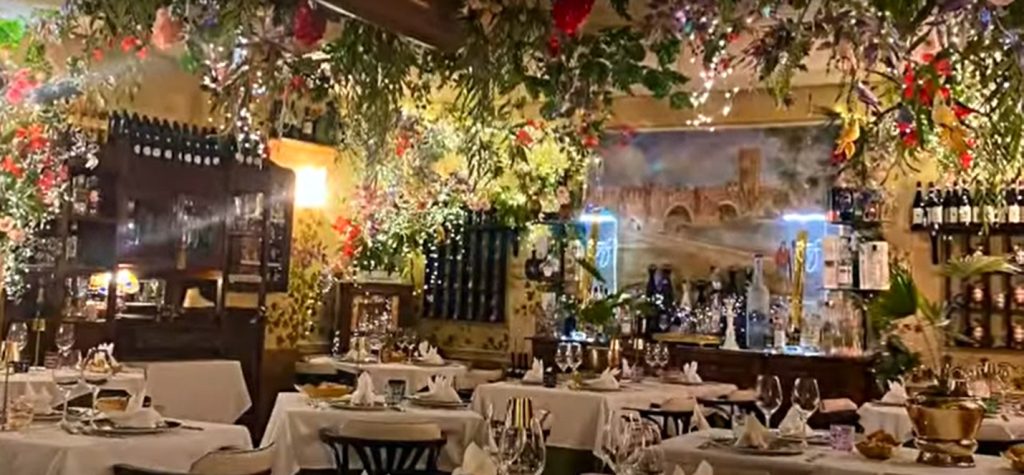
A cozy Italian restaurant with tables covered in white linens, surrounded by floral decorations and hanging greenery. Warm lighting and wine bottles enhance the romantic ambiance.
Torcolo Restaurant at the Hotel Torcolo

Here are other options for staying in Verona:


Walking Trail with ClueGo

While in Verona, consider taking a ClueGo self-guided walking tour. At your own pace, you’ll follow a trail of stories and riddles that take you beyond Romeo and Juliet to discover a world of secrets, legends, and fun facts.

The cost is 17.99€/group with 1-5 players per group. Main stops include several of the places described in this post:

  • Castelvecchio Museum
  • Arena di Verona
  • Piazza Erbe
  • Arche Scaligere

Full disclosure: I have not yet taken ClueGo’s Verona trail but I think it sounds intriguing and worth trying. If you click on the link to purchase the trail, Artsy Traveler receives a small commission. Thank you.


Day Trip to Lake Garda

During a week stay in Verona, consider taking a day trip to beautiful Lake Garda. The train from Verona Porta Nuova train station to Desenanzo del Garda/Sirmione takes just 20 minutes. Check out the Artsy Traveler post on Sirmione.

Here is a day trip with GetYourGuide:

Powered by GetYourGuide

Keep Exploring Northern Italy with Artsy Traveler

Here are more posts about destinations in northern Italy:

Carol Cram
About Carol Cram

Carol M. Cram is the author of five award-winning novels inspired by art and the women who shaped it, the creator of Artsy Traveler, an arts-focused travel blog, the founder of Art In Fiction, a curated database of 2,600+ novels inspired by the arts, and the host of The Art In Fiction Podcast. She lives with her husband, artist Gregg Simpson, on beautiful Bowen Island near Vancouver, BC.
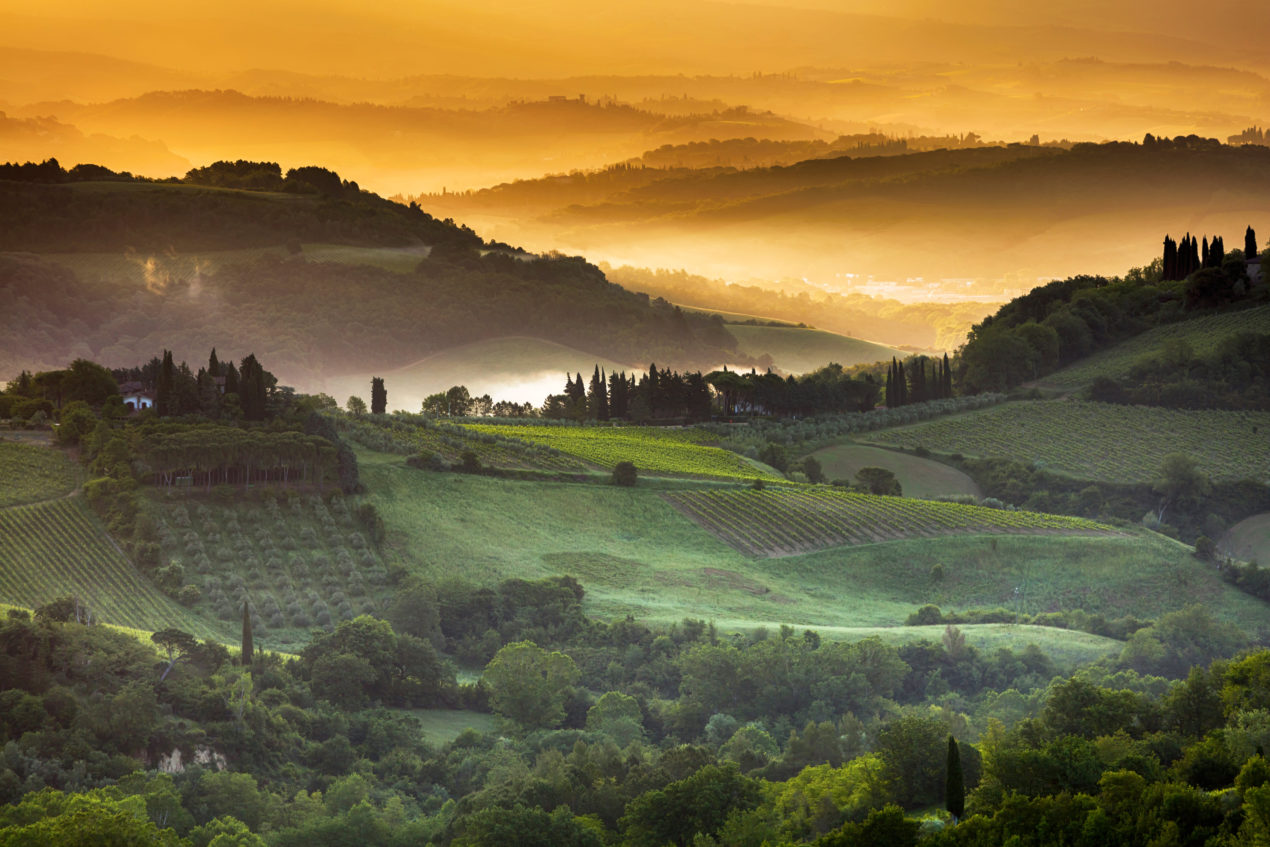
Art Masterpieces in Tuscany You Won’t Want to Miss

Art masterpieces in Tuscany are as thick on the ground as grapes at harvest time.

When you visit Tuscany, you’ll enjoy la dolce vita, for sure, but in between sips of some of the world’s best wine, prepare to have your breath taken away by some of the world’s most cherished art.

Let’s face it: Tuscany is the perfect storm for art lovers with its stunning scenery, amazing food, tons of history, and world-class art.  

In this post, I present a selection of the art masterpieces to consider including in your Tuscany travels, whether this is your first trip or your tenth (or somewhere in between).

My list of must-see art masterpieces barely scratches the surface of all the wonderful art you can enjoy when you slow down and take time to get to know Tuscany in all its glory.

Plan to spend two weeks enjoying the many beautiful towns and villages: Montalcino, Montepulciano, Lucca, Pisa, Volterra…the list goes on. Take a walking holiday or book into an agritourism property and settle in for a week of great food and long, warm days.


Tuscany is one of Italy’s top destinations for art lovers, home to Renaissance masterpieces, iconic frescoes, world-class sculpture, and some awesome modern art. From Botticelli and Michelangelo to hidden gems in medieval hill towns, this guide highlights the must-see artworks across Tuscany.


Top Masterpieces at a Glance


Overview

You’ll recognize some of the art included in this post, but others may be new to you. I include both individual masterworks and art destinations in Tuscany.

A few of my suggested places are a fair way off the beaten path which means they won’t be crowded. 

Organization

I’ve grouped the art by location:

  • Florence
  • Villa Demidoff (Outside Florence)
  • San Gimignano
  • Siena
  • Il Giardino dei Tarocchi near Grosseto

The map of Tuscany below shows the general locations of the pieces covered in this post. See individual places for more detailed maps.

My list is in no way exhaustive. Tuscany is chock-a-block with magnificent art, and to list it requires books, not blog posts. This list is a starting point to help you create your own perfect Tuscany itinerary.


Art in Florence

For many travelers to Tuscany, Florence, birthplace of the Italian Renaissance, is their only destination, which is a shame. 

You’ll see amazing art galore in Florence, but you’ll also find more crowds than you will in other, smaller Tuscan towns, such as Siena and Lucca.

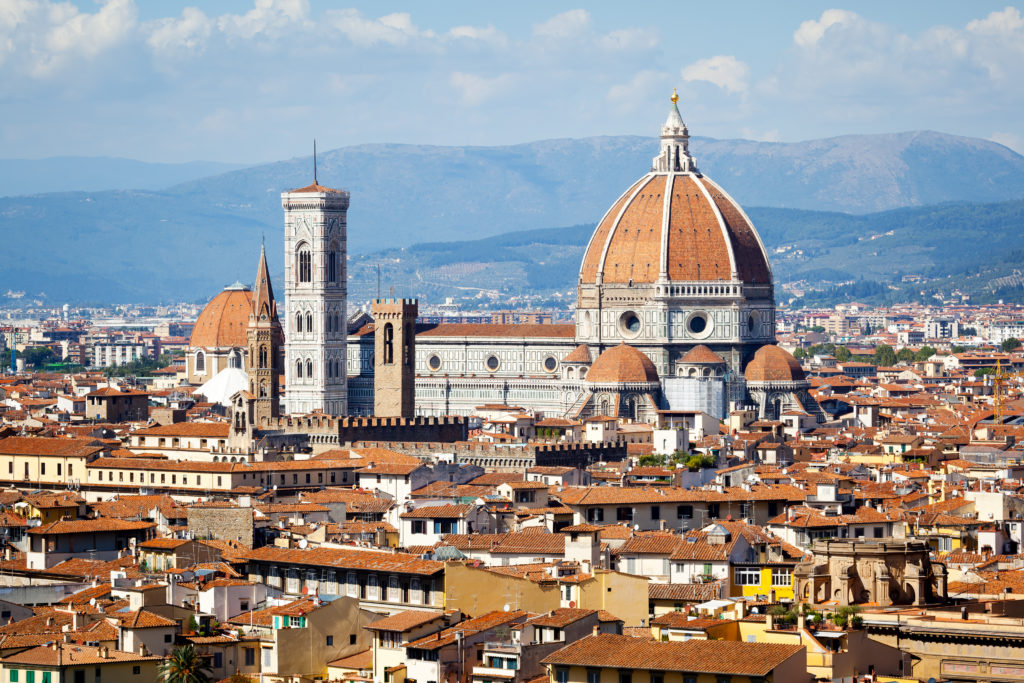
Florence Cathedral’s iconic dome and bell tower rising above a dense cluster of terracotta rooftops with mountains in the distance.
Duomo in Florence, Italy

That said, if you haven’t been to Florence, then you should include it on your itinerary. Stay at least two nights and preferably three or four.

You won’t run out of important works of art to enjoy.

Map of Florence

Florence is a very walkable and compact city. You can easily stroll between each of the main sites.

Trip map courtesy of Wanderlog, a trip planner app on iOS and Android

The Uffizi Gallery in Florence is masterpiece-central in Tuscany and a must-see. But be warned! You really, really need to make reservations for the Uffizi.

Don’t just show up hoping to walk right in. That is, unless you enjoy standing in long lines that move an inch a minute while all the people with pre-purchased tickets whisk by. It’s disheartening.

Here’s a ticket option for the Uffizi that includes a small-group guided tour.

Powered by GetYourGuide

My Favorite Pieces in the Uffizi

Here, I’m including four of my fave masterpieces in the Uffizi. For more details, check out my post: Top Ten Favorites at the Uffizi Gallery in Spectacular Florence

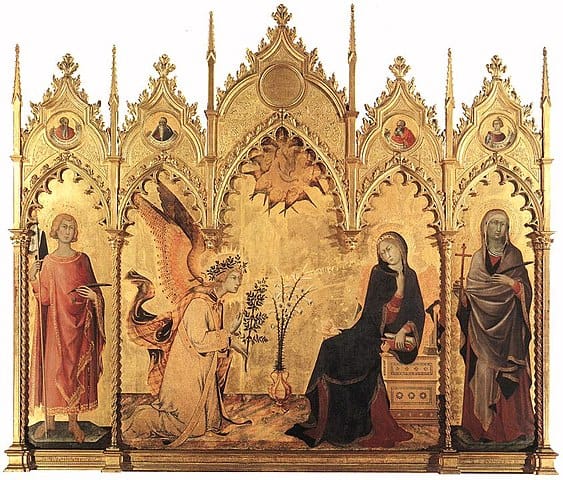
The Annunciation with St. Margaret and St. Ansanus by Simone Martini and Lippo Memmi (1333)

That’s a mouthful. I just call it Martini’s Annunciation. The subject of the annunciation—when the angel Gabriel flutters to earth and informs the Virgin Mary that she is to be the mother of Christ—was popular in medieval and Renaissance art.

I love this version by Martini and Memmi because of the expression on Mary’s face. She’s like, what? Seriously?

Gothic triptych altarpiece showing the Annunciation, with an angel and Mary flanked by two saints in a gilded, ornate frame.
The Annunciation with St. Margaret and St. Ansanus by Simone Martini and Lippo Memmi (1333) [Public domain]

I also love the gold background and the flatness of the figures, a characteristic of 14th-century art.

You’ll come across Martini’s Annunciation shortly after entering the Uffizi. Most visitors trudge right past it on a beeline for the more famous paintings by Botticelli, da Vinci, et al, but stop in the galleries of 14th-century paintings and spend some time.

You’ll be well rewarded and won’t be jostling for viewing room with thousands of selfie-stick wielders.

Annunciation by da Vinci

In later centuries, Annunciations, such as the famous one by Leonardo da Vinci below, look more realistic, but I like the energy and composition of the Martini one the best.

Since the art in the Uffizi is arranged chronologically, you’ll see da Vinci’s Annunciation after you view the Martini and Memmi version.

Leonardo da Vinci’s “Annunciation” painting, showing the angel Gabriel greeting the Virgin Mary with a serene garden backdrop.
The Annunciation by Leonardo da Vinci: Public Domain

Birth of Venus by Botticelli (1485)

You’ve probably seen many reproductions of Botticelli’s Birth of Venus. The goddess of beauty and love arrives on the island of Cyprus, born of the sea spray and blown by the winds Zephyr and Aura (seen in the top left corner).

Venus perches on the edge of a giant scallop shell as goddesses are wont to do. She’s just so danged perfect.

I mean, look at that hair!

“Birth of Venus” depicting the goddess Venus emerging from a seashell on the sea, with figures blowing wind and a robed woman awaiting her arrival.
Birth of Venus by Sandro Botticelli: Public Domain

The room containing several paintings by Botticelli is generally really crowded. If possible, visit the Uffizi early or late in the day so you can swoon in relative solitude.

Other Works by Botticelli

In addition to Birth of Venus, you’ll also see Botticelli’s equally famous Primavera along with several more of his paintings exhibited in four consecutive rooms.

And once you’ve finished looking at the real things, you can buy them on just about every knick-knack known to humanity in the many gift shops lining the streets of the city.

Primavera mouse pad? Sure. Birth of Venus apron? Definitely.

Judith Beheading Holofernes (1620) by Artemisia Gentileschi

Hooray for Artemisia Gentileschi, one of the first recognized woman artists of the Baroque period. Several other women artists from the period (and earlier) have gained notice in recent years, but Artemisia is the one most people think of when asked to name a woman artist from back in the day.

She was also the first woman to be admitted to the Academy of Art and Design in Florence, which was no small feat at the time.

Artemisia’s painting of Judith beheading poor old Holofernes (hey, he deserved it) is an amazing work. Look at Judith’s muscles as she holds down Holofernes.

This subject was a favorite of the period, and male artists usually depicted Judith as a bit of an ethereal wimp. Not Artemisia. She doesn’t shy away from showing the sheer brute strength that Judith would need to saw the head off a man.

She and her maid are working hard!

Dramatic Baroque painting by Artemisia Gentileschi, depicting Judith and her servant beheading Holofernes with expressions of intense determination.
Judith Beheading Holofernes (1620) by Artemisia Gentileschi: Public Domain

Two Amazing Davids in Florence

That’s Davids plural because in Florence you must see the super-famous David by Michelangelo as well as the not-as-famous-but still-awesome David by Donatello.

Michelangelo’s David

Each David represents the Renaissance in a different way.

The most famous statue of David is the one created by Michelangelo and displayed in the Accademia, another place for which you must secure reservations or risk a long line-up.

David stands with magnificent insouciance at the end of a long hallway lined with other works by Michelangelo.

Some of these works are unfinished—human figures emerging half-formed from marble blocks. I like these works almost more than the finished sculptures because they show the process of turning blocks into humans.

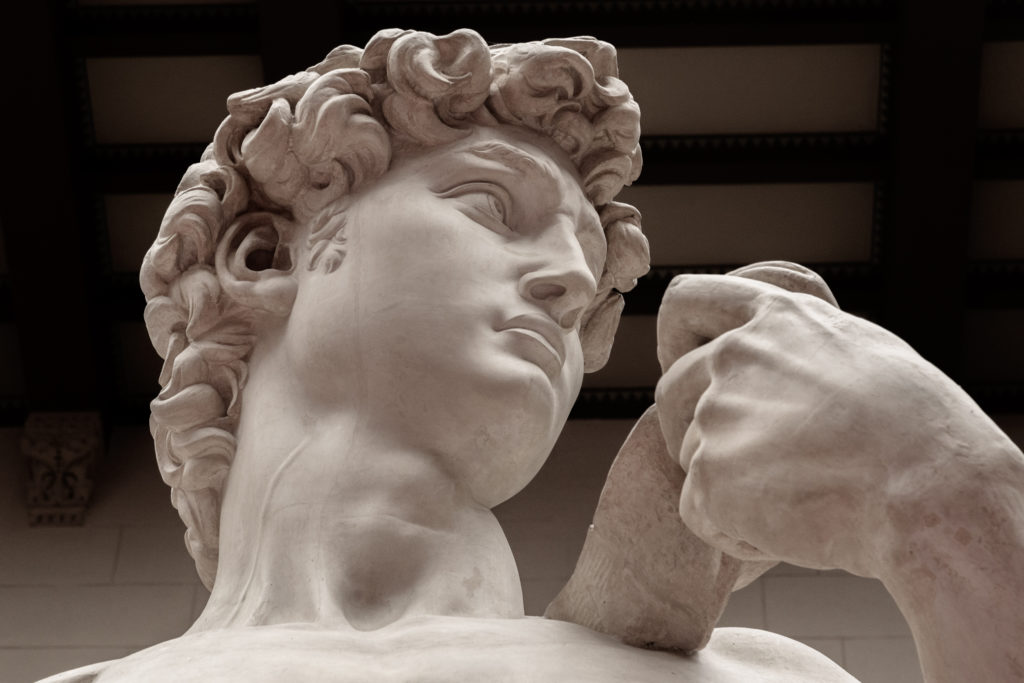
Close-up of Michelangelo’s David statue, showing detailed facial features and the muscular hand gripping a stone sling.
Michelangelo’s David in the Accademia Gallery

When you finally work your way up to the front of the line and stand in front of David in all his naked glory, you’ll know what all the fuss is about.

He is magnificent.

Although sculpted from marble, the muscles and sinews appear to pulse with life. Every inch of him is perfection—a testament to the beauty and power of the human form.

I remember wandering around the back of him and staring up at a pair of buttocks that any gym rat would kill for. While thinking unholy thoughts, I was joined by a bevy of nuns. They weren’t speaking English, so I couldn’t understand what they were saying, but they were definitely smiling—and, truth be told, giggling.

Well, no wonder.

Here’s an option for purchasing your timed-entry ticket to see Michelangelo’s David at the Accademia.

Powered by GetYourGuide

Donatello’s David

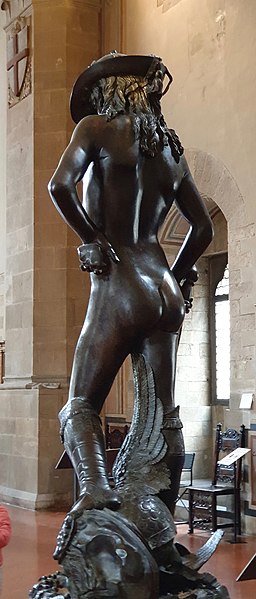
Donatello’s David at the marvelous Bargello Museum (reservations also recommended) might as well be a different species.

Where Michelangelo’s marble-carved David is tall, strong, and, let’s face it, hunky, Donatello’s bronze David is relaxed, laid-back, and kind of pretty.

He wears a hat festooned with flowers and leans on his sword, one hand on his hip. He’s, like, “come on Goliath, I dare ya to come at me“.

Donatello’s David is famous for being the first free-standing bronze sculpture since antiquity.

A bronze statue of David by Donatello, viewed from behind. The sculpture showcases a youthful, lightly dressed figure wearing a hat and boots, with one foot resting on the severed head of Goliath, displayed in a dimly lit interior space.

The Bargello Museum, a former prison, includes many more wonderful artworks to enjoy, including sculptures by Benvenuto Cellini and works by Michelangelo such as his statue of Bacchus.

Fra Angelico at the Museo di San Marco

The Museo di San Marco is a little off the beaten path which means it’s not crowded—a relief in Florence.

The museum is housed in the former Dominican Monastery (called the Convento di San Marco) where Fra’ Angelico lived as a monk from 1436 to 1455 and painted his stunning frescoes.

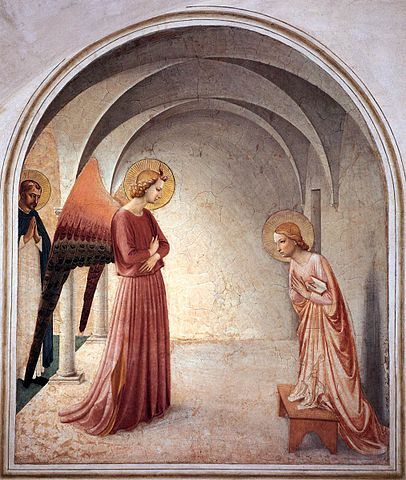
Wander down the long corridor flanked on either side by the monk’s cells and stop at each cell to view Fra’ Angelico’s frescoes. I love the way he painted angel wings—very art-deco-looking and colorful.

A fresco depicting the Annunciation by Fra Angelico. The image shows the Archangel Gabriel, with golden wings and a pink robe, addressing the Virgin Mary, who is seated and holding a book, within an arched architectural setting.
Annunciation by Fra Angelico in Cell 3: Public Domain

The museum contains numerous frescoes by Fra’ Angelico, including the magnificent fresco in the Chapter House and his famous version of the Annunciation located at the top of the stairs leading to the cells. As I mentioned, I’m partial to Annunciations, and Fra’ Angelico’s version is one of the best.

Savonarola: A Burning Tale

You can also peek into the cell once occupied by the infamous Savonarola, who preached vociferously against greed and luxury and denounced clerical corruption, despotic rule, and the exploitation of the poor.

Unfortunately for Savonarola, he went too far with his well-intended-but-over-the-top spectacles, including his Bonfires of the Vanities, and ended up hanged and burned in 1498.

Oops.

Brancacci Chapel

The attraction at the lovely Brancacci Chapel across the Arno in a quieter and less touristy area of Florence are the gorgeous frescoes by Masaccio and Masolino. The Chapel is located away from the tourist hordes and requires a pleasantly long walk through a Florentine neighborhood in which people actually live.

I stopped for lunch at a café with three tiny tables perched on the edge of the sidewalk and enjoyed being the only tourist in the vicinity.

I was entertained watching a group of well-heeled, impeccably dressed Florentine businessmen lunching nearby. Each man looked like he’d stepped straight out of one of the Renaissance frescoes in the Brancacci Chapel.

Substitute business suits for tights and cloaks and not much has changed.

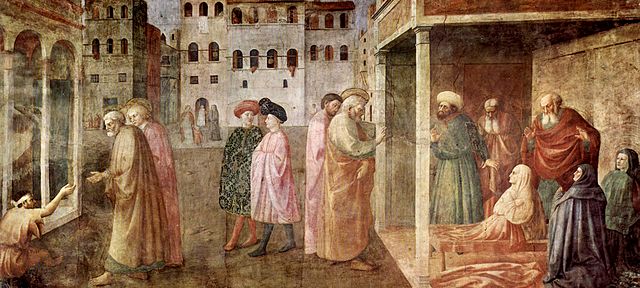
Fresco of biblical figures gathered in a public square, with medieval architecture in the background. The figures are interacting with a beggar on the left and people seated on the right.
The Healing of Tabitha by Masolino at the Brancacci Chapel: Public Domain

Admission to the Brancacci Chapel is limited so purchase your tickets in advance. Tickets from this site let you skip the line, and provide a video guide.

You’ll be struck by the vivid colors in the Masaccio and Masolino frescoes commissioned in 1424. The Expulsion of Adam and Eve from Paradise is especially evocative.

Palazzo Davanzati

Tour this medieval palazzo to discover what life was like for wealthy people in the early Renaissance. I had a great visit even though the guided tour was in Italian.

It didn’t matter; I still got a good idea of how people lived.

A highlight is the painted walls in many of the rooms. When I was writing my first novel, The Towers of Tuscany, I often envisioned the layout of the rooms in the Palazzo Davanzati as I wrote.

Here’s an option for a private guided tour of the Palazzo Davanzati, which would be well worth your time if you are interested in how rich people lived seven hundred-odd years ago.

Powered by GetYourGuide

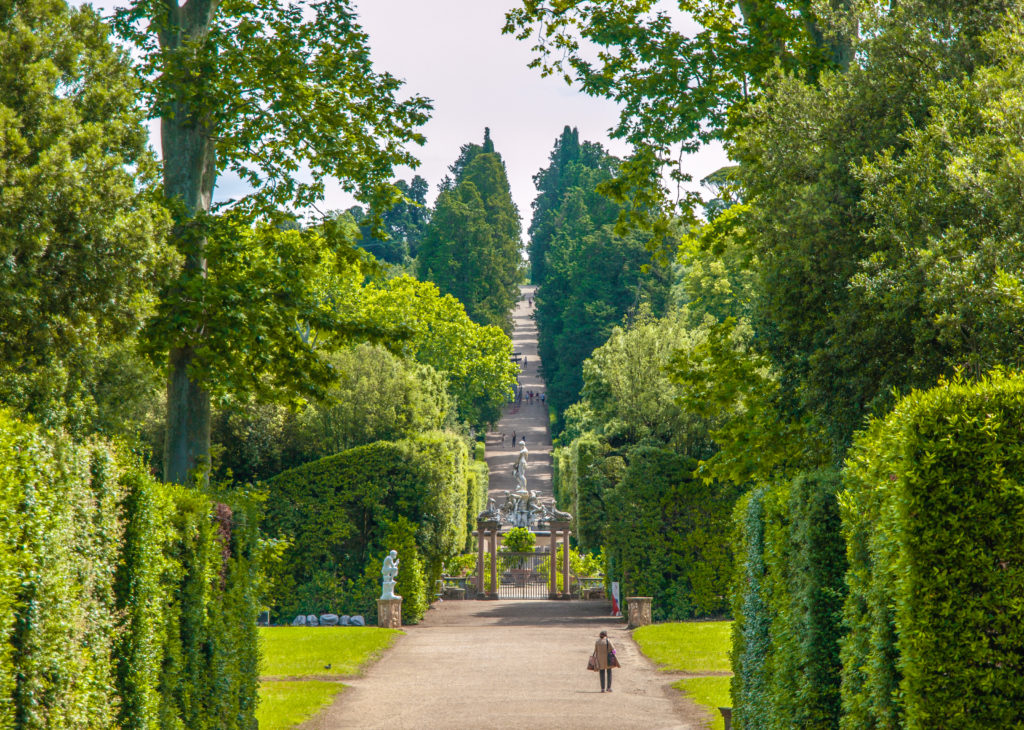
Boboli Gardens

Treat yourself to a refreshing walk through these beautiful gardens with spectacular views over Florence and the Tuscan countryside.

A path in the Boboli Gardens of Florence, lined with lush green hedges and trees, leading up a hill with statues and classical structures dotting the landscape.
The beautifully green Boboli Gardens

When it’s hot (as it often is in the summer), do yourself a favor and escape the crush of tour groups in the center of the city and take a taxi across the Arno to the Boboli Gardens.

Florence overflows with interesting museums and churches and artwork to keep you busy for days.

And don’t forget shopping! Florence is the place in Tuscany to buy leather goods (although they can be cheaper in Siena but without as much choice).

Tours in Florence

Here are some Get Your Guide tour options in Florence.

Powered by GetYourGuide

Florence – Getting There

  • By Air: Fly into Florence’s Amerigo Vespucci Airport (FLR), 20–30 minutes from the historic center by taxi or tram.
  • By Train: High-speed trains connect Florence Santa Maria Novella station with Rome, Milan, Venice, and Bologna.
  • By Car: Limited ZTL zones make driving difficult—park outside the center and use trams or walk.

Villa Demidoff – Outside Florence

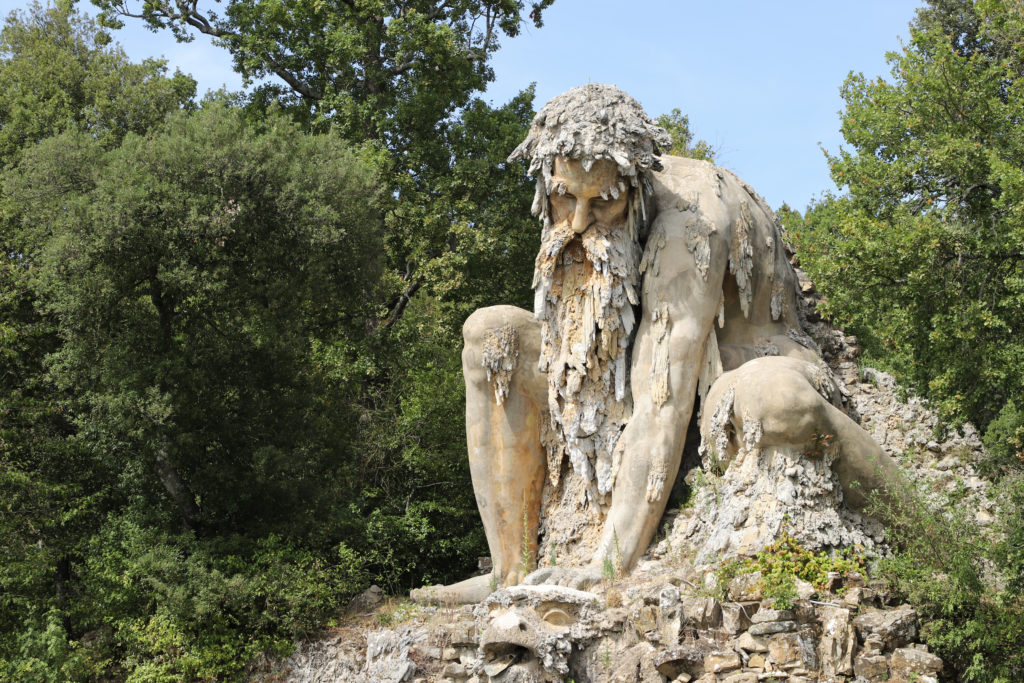
In the gardens of the Villa Demidoff in Pratolino, about ten kilometers north of Florence in the beautiful Tuscan countryside, you can visit the aptly named Colossus. A seated figure that appears to be half rock, half man broods on an outcropping above a pond.

I adore this statue!

It’s just so darned unexpected. We visited a hot summer’s day and were captivated. The 35-foot-tall Colossus is a colossal (ha!) statue created in the late 1500s by Italian sculptor Giambologna.

The Appennine Colossus, a large stone sculpture of a mythical figure crouching with a flowing beard, surrounded by lush greenery in the gardens of Villa Demidoff in Tuscany.
Colossus at the Villa Demidoff 

Despite his size, Colossus looks quite melancholy, as if he wished he could rise from the rocks keeping him captive and clomp off to a quiet grove where no one would take selfies with him.

Inside Colossus are various chambers.

Other Sites in the Gardens

The gardens are home to several more interesting features, including the hexagonal Chapel of Buontalenti, a fantastic dragon sculpture behind Colossus, the Cupid’s grotto, and the fountain of Jupiter.

The park is open every weekend from April to October, and admission is free. Before you go, check opening times on the park website.

For a good day out, rent a car and drive north to enjoy the park and the surrounding area, then have dinner in Fiesole while watching the sun set over Florence in the valley below.

You can also take a bus to Pratolino: catch the ATAF bus #25A from Piazza San Marco – the “A” is important. SITA also offers service to Pratolino from the main stop in SMN Piazza Stazione and CAP, with stops on Via Nazionale in Florence.

Villa Demidoff (Pratolino) – Getting There

  • By Bus: From Florence, take ATAF bus 25A toward Pratolino; get off at “Parco di Pratolino.”
  • By Car: A 25–30 minute drive north of Florence on the Via Bolognese (SS65). Free parking at the park entrance.
  • Tip: The park is open seasonally—check hours before going.

Art Masterpieces in Siena

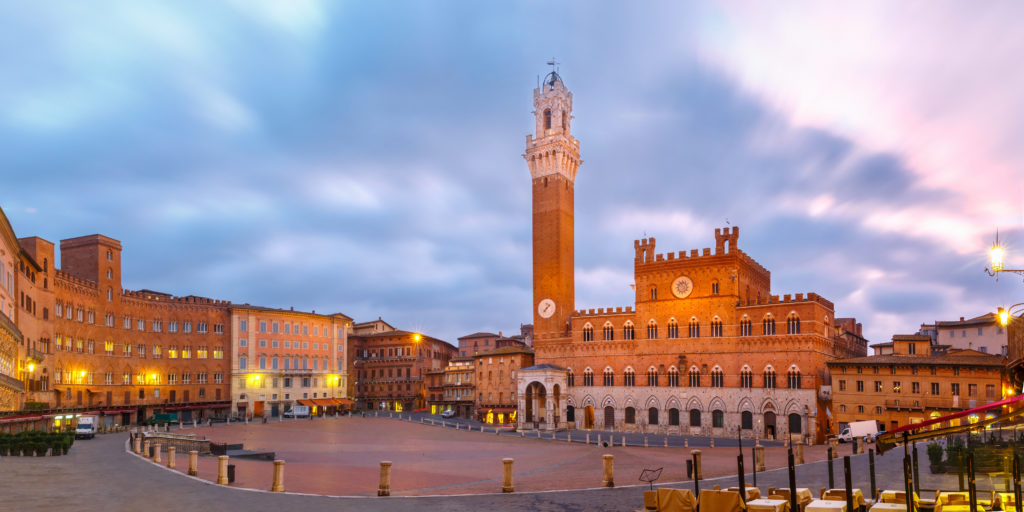
Hands down, Siena is my favorite city in Tuscany. I never tire of wandering its narrow streets and then emerging, dazzled by the sun, into the Piazza del Campo, aka Il Campo.

Called the most beautiful living room in Italy, Il Campo takes my breath away every time.

Campo in Siena at sunset
The breathtaking Campo 

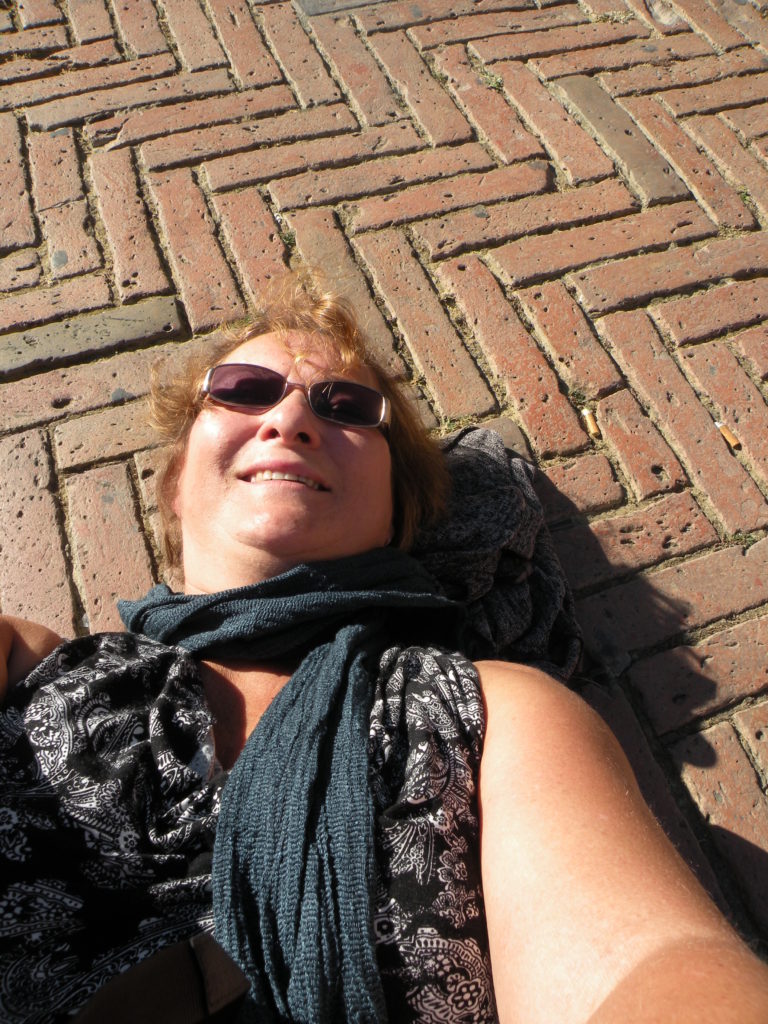
The first time I went to Siena by myself, I was so overcome with emotion at finally making it to the Campo, where several important scenes in my novel The Towers of Tuscany take place, that I dropped to my knees, lay down on my back, and took a selfie.

Carol Cram lying on a patterned brick surface--the Campo in Siena, smiling at the camera, with sunlight casting shadows on the historic herringbone-patterned pavement.
Relaxing on the 14th-century bricks of the Campo in Siena

Fortunately, no one batted an eye. Several people were doing the same, their backs warmed by bricks laid in the 1330s, not long before the Black Death carried away half of the medieval city’s population.

Siena is very compact, which is a good thing because the only way to get around is by walking. Fortunately, you can stroll between the two major sites–the cathedral and the Palazzo Pubblico in just a few minutes. Use the map below to orient yourself.

Map thanks to Wanderlog, a vacation planner app on iOS and Android

Map thanks to Wanderlog, a vacation planner app on iOS and Android

Piccolomini Library in the Cathedral 

I single out the Piccolomini Library as one of two must-see masterpieces in Siena, but really, the entire cathedral (also known as the Duomo) is worth a half-day of your touring time.

You can skip the line by buying your tickets ahead. Your ticket is also good for the baptistery, crypt, and the Opera museum—all must-sees.

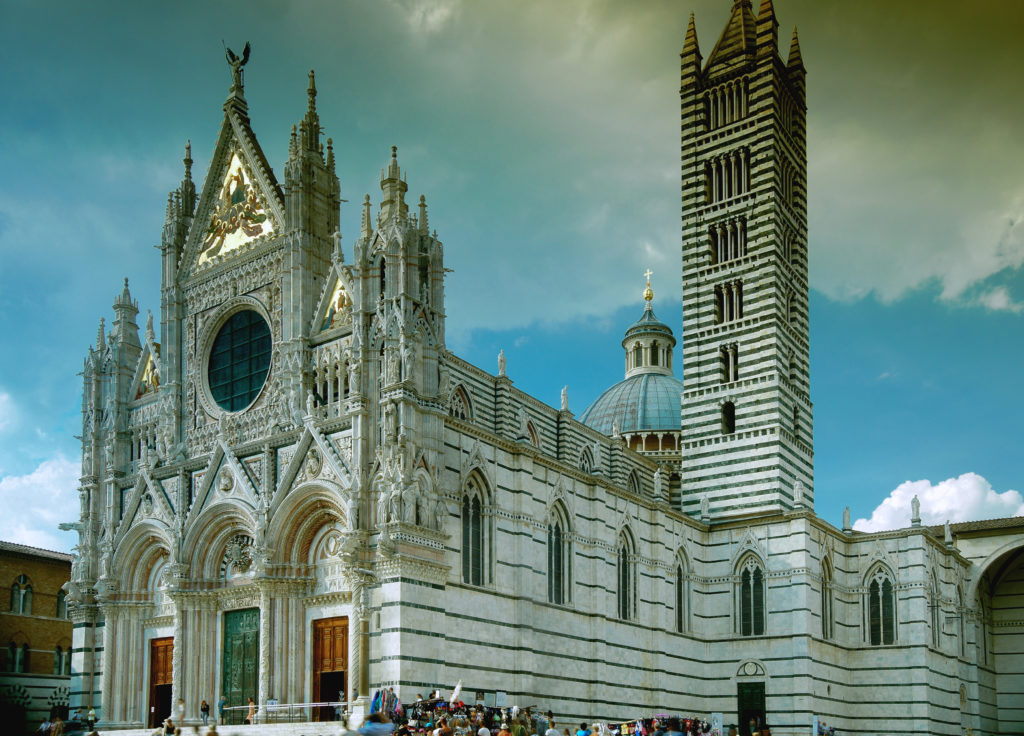
The exterior of the Siena Cathedral with its Gothic facade, intricate carvings, a large rose window, and the towering striped bell tower under a dramatic sky.
Cathedral Square and Duomo 

Cathedral of Siena

A superb example of the Gothic Roman style in Italy, the Cathedral (the Duomo) is full of treasures. Marvel at the Duomo’s indoor and outdoor alternating stripes in white and greenish-black marble.

Black and white are the symbolic colors of Siena.

Unlike the sparse interiors of some cathedrals in Italy, the interior of the Duomo is fantastically decorated.

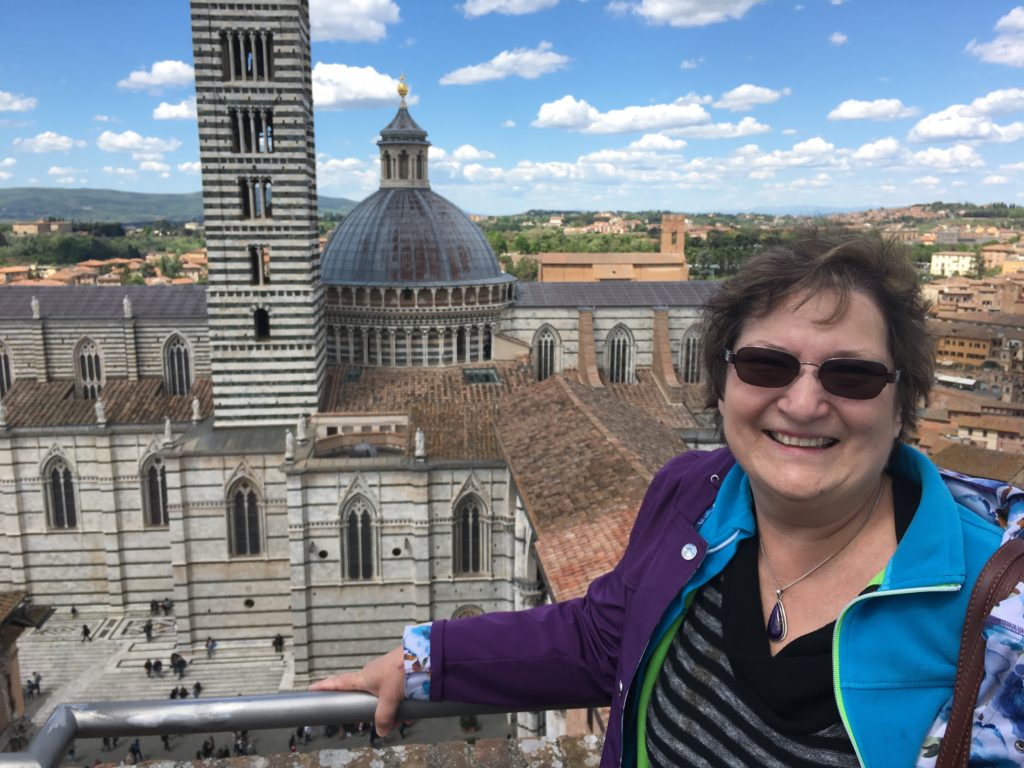
Carol Cram standing in front of the Siena Cathedral with its black-and-white striped bell tower, dome, and cityscape of Siena visible in the background.
Overlooking the Duomo 

Look for the statue of St. John the Baptist by Donatello to the right after the Piccolomini Library, the rose window by Duccio di Buoninsegna, and the marble pulpit by Nicola Pisano, along with many gorgeous frescoes.

One of the most beautiful parts of the cathedral is its floor. You can spend hours wandering around the huge mosaics to “read” the stories.

The fifty-six etched and inlaid marble panels were designed between 1369 and 1547 by forty leading artists.

Piccolomini Library

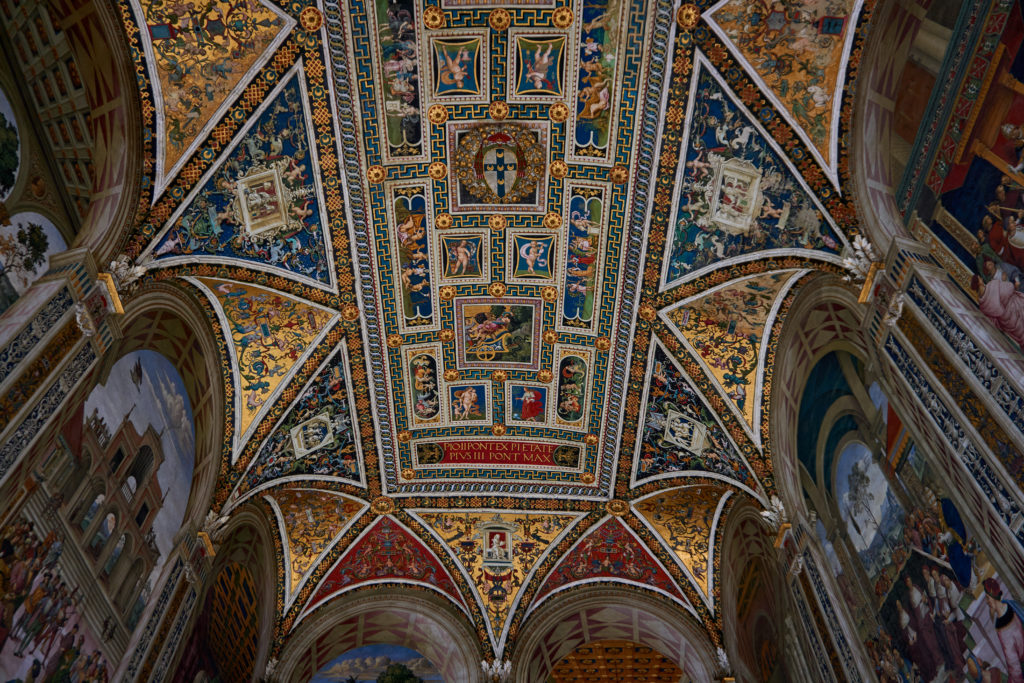
And then there’s the Piccolomini Library itself. This place was a surprise to me. I hadn’t heard of it and so was in for a treat when I entered and had the breath knocked out of me (figuratively speaking).

The elaborately decorated ceiling of the Piccolomini Library in the Siena Cathedral, adorned with vibrant frescoes, geometric patterns, and intricate gold detailing.
Ceiling in the Piccolomini Library 

The library is dedicated to Enea Silvio Piccolomini, an immensely powerful man in the mid-1400s who was elected Pope Pius II in 1458.

The big draw in the library are the frescoes by Pinturicchio.

Each of the ten scenes representing important stages in the life of Pope Pius II is exquisitely painted. The colors, perspective, figures, and backgrounds are incredibly detailed and evocative of their time. I was mesmerized.

Maestà Altarpiece by Duccio di Buoninsegna

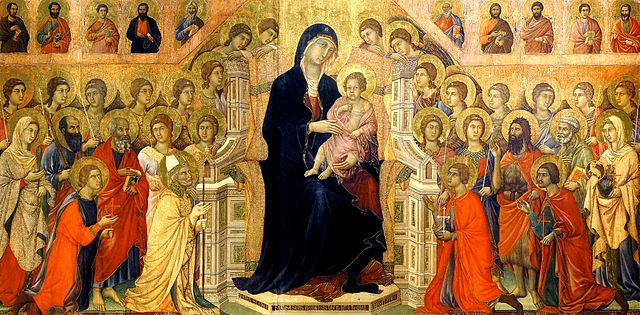
While you’re hanging around the Duomo, don’t miss the Opera museum (it’s part of your ticket) so you can admire the Maestà altarpiece by Duccio di Buoninsegna that was commissioned by the cathedral in 1311.

I like the altarpiece because it’s gorgeous and because it makes a cameo appearance in my novel, The Towers of Tuscany.

A colorful religious painting depicting the Virgin Mary seated with baby Jesus, surrounded by saints and angels, all framed by intricate golden details and smaller portraits of religious figures.
Central panel of the Maestà, 1308–1311, by Duccio di Buoninsegna. Museo dell’Opera metropolitana del Duomo, Italy

Palazzo Pubblico 

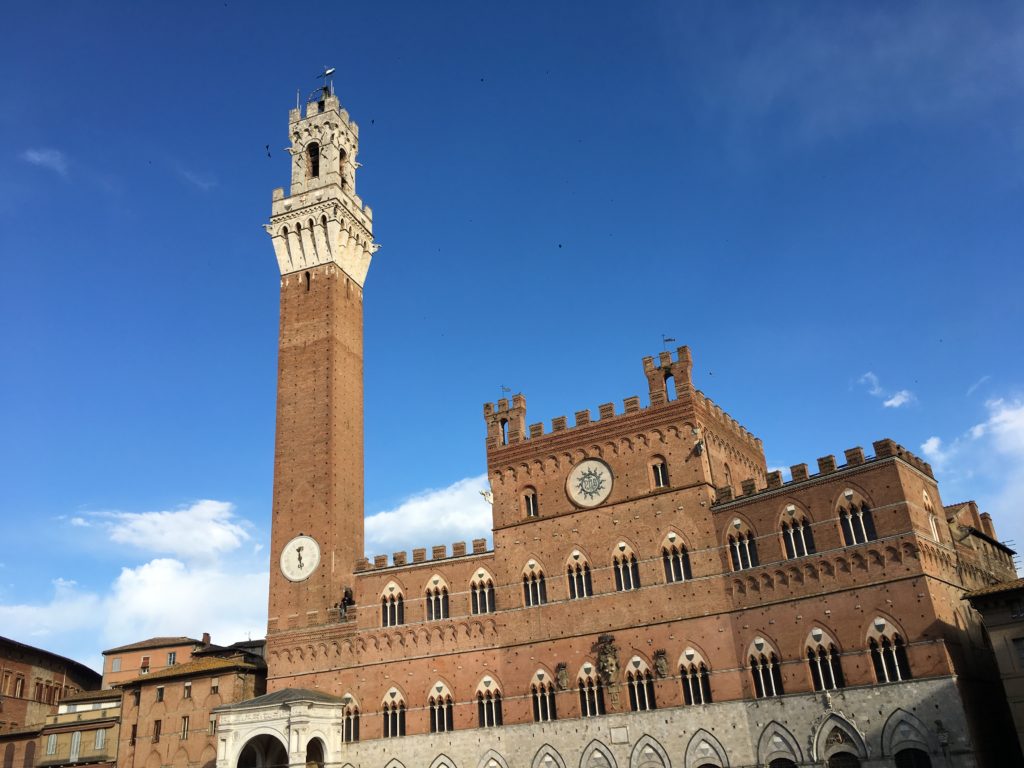
You can’t miss the Palazzo Pubblico in Il Campo. The much-photographed red brick palazzo that looks like a child’s drawing of a castle has become one of the most recognized views in Siena. I’ve taken my share of photos of it and the adjacent Torre Mangia.

The Palazzo Pubblico in Siena, Italy, with its tall Torre del Mangia against a clear blue sky, showcasing medieval architecture with its red brick facade and ornate clock tower.
Palazzo Pubblico 

The Palazzo Pubblico dates from the early 14th century and played an important role in ensuring Siena enjoyed relative peace from the late 13th century to 1355.

While you tour the Museo Civico, read about the “Government of the Nine”, the system of government that consisted of nine representatives of the people elected from the middle class and not from the noble families. This relatively democratic form of government was responsible for commissioning many civic works of art in the first half of the 14th century.

Museo Civico – Torre Mangia

The Museo Civico is located on the first floor of the Palazzo Pubblico, which still functions as Siena’s city hall.

Enter the courtyard called the Cortile del Podestà to access the Museo Civico and, if you’re feeling energetic, climb the 400 steps to the top of the Torre Mangia.

The view is spectacular, but the narrow staircase is claustrophobic and, in the summer, very hot. I’ve climbed the Torre Mangia once and do not feel the need to do so again.

Frescoes in Sala del Mappamondo

There are plenty of interesting things to look at in the Museo Civico, but the big draw are the frescoes by Simone Martini and Ambrogio Lorenzetti.

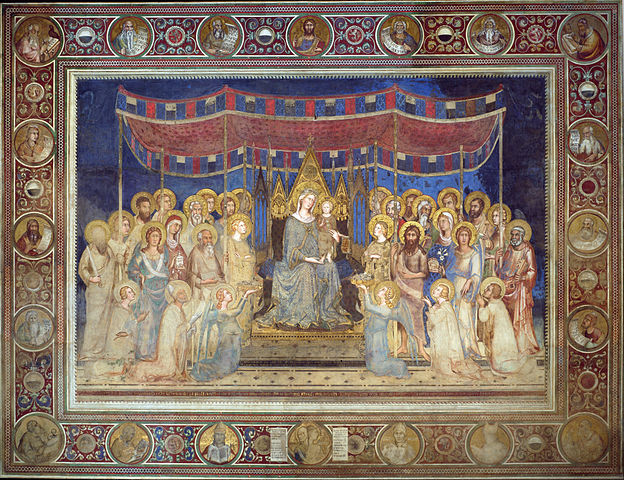
The two large frescoes by Simone Martini are located in the massive hall called Sala del Mappamondo. You can’t miss it. To your left as you enter the hall is the Maestà by Simone Martini. The gorgeous fresco shows the Madonna seated on a throne with the Child and surrounded by angels and saints. Note all the halos!

A large fresco painting featuring the Virgin Mary holding baby Jesus, seated on a throne and surrounded by saints, angels, and other religious figures in a richly decorated frame.
Maestà by Simone Martini in the Palazzo Pubblico: Public Domain

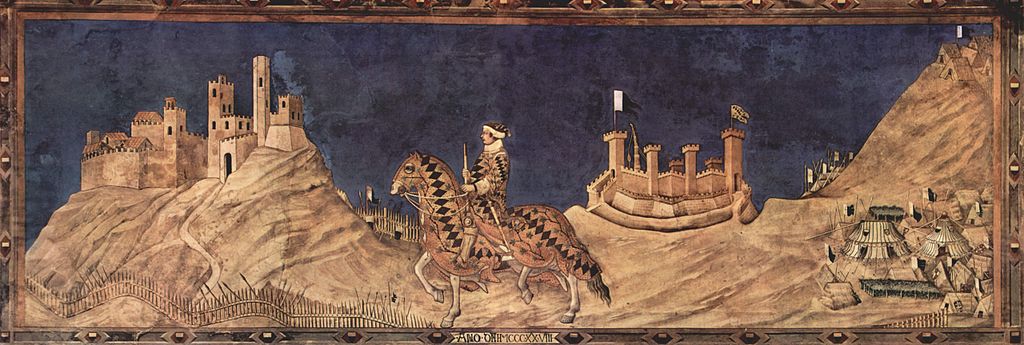
Turn around and at the other end of the hall you’ll see the fresco of Guidoriccio da Fogliano, a general on his horse with the castles he just conquered in the distance. Reproductions of this piece will be evident in many souvenir shops.

I love how Guidoriccio and his horse are wearing the same ensemble. Very stylish.

 A medieval fresco showing a knight on horseback in elaborate armor, set against a backdrop of rolling hills, castles, and a fortified city.
Fresco of Guidoriccio da Fogliano in the Palazzo Pubblico in Siena: Public Domain

Frescoes in the Sala dei Nove

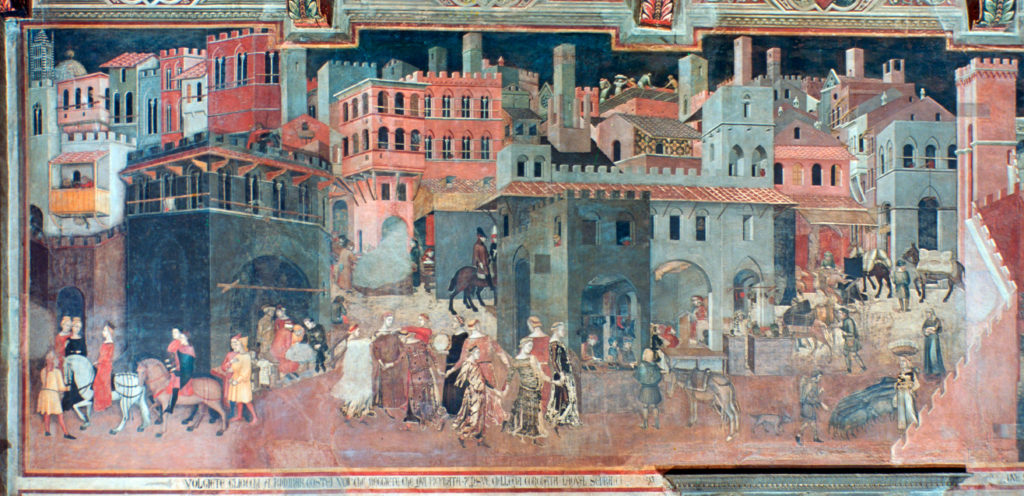
Now walk into the Sala dei Nove—the Hall of the Nine—to see Siena’s most famous masterpiece: the fresco cycle called Allegory of Good and Bad Government by Ambrogio Lorenzetti.

You’ll get a sore neck looking up at the three wall-size frescoes, famous because they’re interesting to look at and because they depict secular subjects instead of religious ones, a rarity at the time (1340s).

I love the girls dancing in the Good Government fresco (pictured below). Take a seat and gaze up at the frescoes. Whenever I’ve been to the Sala dei Novel, I’ve been pretty much alone.

Although famous, these frescoes aren’t that famous which means you’re likely able to enjoy them crowd-free.

A medieval fresco by Ambrogio Lorenzetti depicting a bustling city scene with buildings, people, horses, and vibrant daily life.
Allegory of Good and Bad Government by Ambrogio Lorenzetti in the Palazzo Pubblico: Public Domain

Other Suggestions for Siena

Siena is worth at least two days of your time, although people often squeeze it in as an afternoon trip from Florence. Please don’t do that!

Compared to overcrowded Florence, this wonderful small city is a medieval treat. Make room in your itinerary for a proper visit so you have ample time to get to know this delightful city. You won’t find many big-ticket sites, but that’s not the point of Siena.

Here are some options for touring Siena and other nearby locations:

Powered by GetYourGuide

And when you’re not enjoying the art, spend time wandering the backstreets of Siena.

Enjoy a cappuccino in one of the cafés overlooking the Campo and buy yourself a leather purse or two. They are far more reasonably priced here than in Florence. My collection is growing!

Siena – Getting There

  • By Bus: The fastest public option from Florence; direct buses take 1 hr 15 min and drop you close to the center.
  • By Train: Scenic but slower; trains arrive at Siena’s lower station—take the local bus or escalators into town.
  • By Car: Easy day-trip; allow 1 hr 15 min from Florence. Park in designated lots outside the ZTL.

Art Masterpieces in San Gimignano

San Gimignano is overrun with tourists and crammed with tacky tourist shops. And yet I love it!

Every time we visit Tuscany, we stay for a few days in the vicinity of San Gimignano. We usually spend the day either touring around the countryside or staying put in our hotel to write (me) and draw (Gregg).

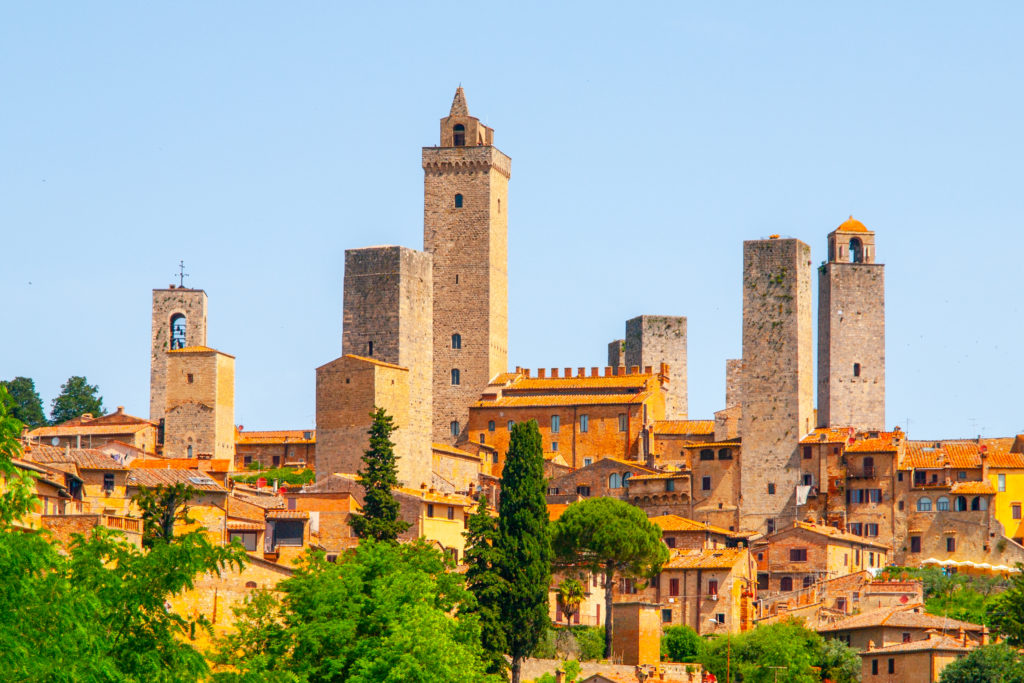
The skyline of San Gimignano, with multiple medieval stone towers and bell towers rising above the terracotta rooftops, framed by trees and a clear blue sky.
San Gimignano

Then, towards the end of the afternoon when the parking lots surrounding Gimignano start to empty, we venture forth.

By 4 or 5 pm, the tour busses have lumbered off, the merchants are standing outside their shops taking a much-needed break, the hot streets are shaded by the towers, and the whole town seems to exhale with relief.

Stroll virtually deserted side streets in search of art and food (in that order). For a small hilltown, San Gimignano punches above its weight in excellent restaurants.

You’ll see a lot of art in San Gimignano, but don’t miss these two sites which fortunately are close to each other:

Palazzo Comunale in the Civic Museum

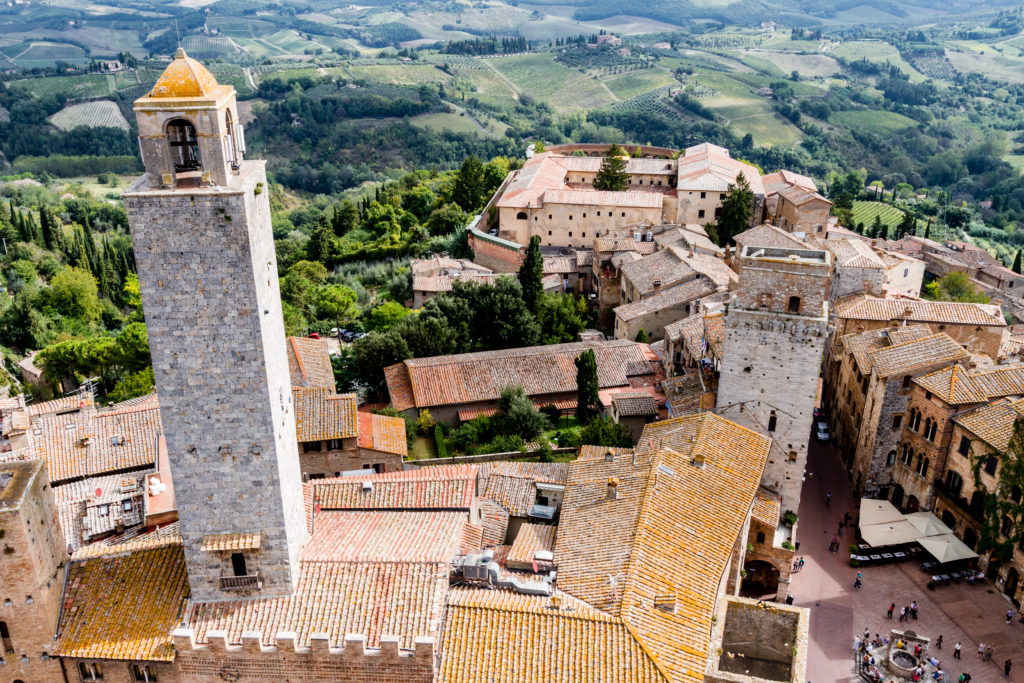
Located next to the Duomo, the Civic Museum also includes the Torre Grossa, the tallest of San Gimignano’s seventeen towers and the only one you can climb.

I have climbed it, and it’s worth doing, but the real draw are the frescoes in the chamber of the Podestà in the Palazzo Comunale (which also has other good art to enjoy).

A panoramic view of San Gimignano’s historic skyline, with its famous stone towers rising above the red-tiled rooftops, surrounded by green countryside.
View from the top of the Torre Grossa in San Gimignano

Snares of Love

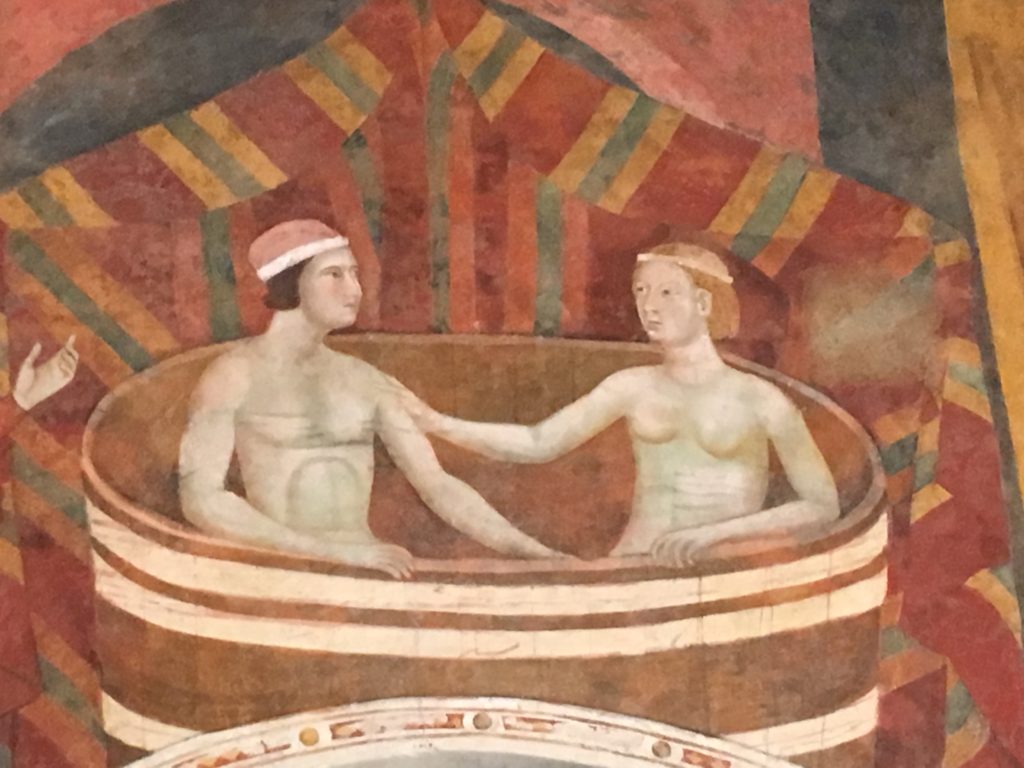
The series of frescoes is called the “snares of love”, painted by Memmo di Filippucio between 1303 to 1310.

Scenes show both profane love and scenes from marriage. I love the secular nature of these frescoes, especially the one where the young married couple share a bathtub.

A medieval fresco depicting two people sitting in a large wooden tub, one with a head covering, set against a background of rich red and gold fabric.
One of the frescoes in the Palazzo Comunale Civic Museum in San Gimignano

Frescoes in the Duomo of San Gimignano

The Duomo also contains an amazing number and variety of frescoes. Every wall on both sides of the nave is filled with frescoes, most dating from the 1300s.

The vivid colors are original; the frescoes have never required restoration.

A medieval fresco showing a lavish feast with two crowned figures at a banquet table, surrounded by servants, musicians, and a depiction of a heavenly figure above.
Fresco in the Duomo at San Gimignano by Bartolo di Fredi [CC BY-SA]

Get the audioguide and walk slowly around the frescoes, picking out scene after scene from the Old and New Testaments. Even if you’re not into Bible stories, you can’t help but be entranced by these frescoes. I enjoy studying the clothing and the facial expressions for inspiration.

Pick up a ticket to the Museum of Sacred Art in the Duomo that includes an audioguide from this link.

Other Suggestions for San Gimignano

Climb to the top of the ruined Fortezza (fortress) at the highest point in San Gimignano to enjoy spectacular views over the countryside.

Even when the main street is heaving with sweaty tourists, the Fortezza is usually virtually empty.

San Gimignano 1300

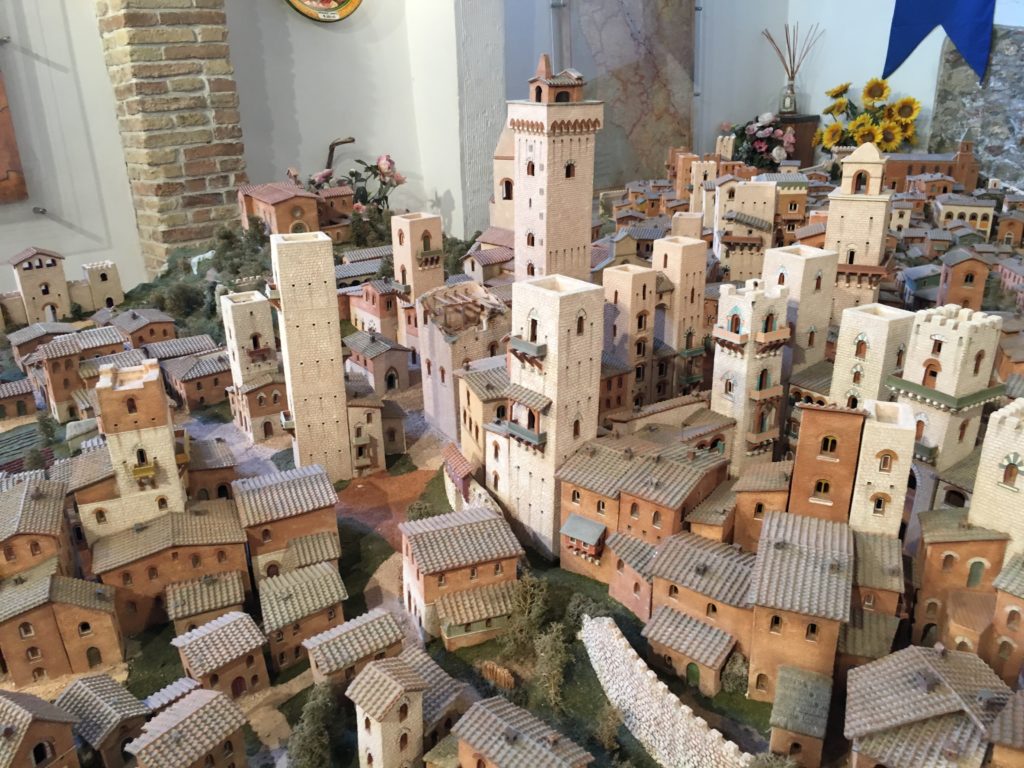
One of my favorite museums in San Gimignano is San Gimignano 1300, located in a side street close to the Piazzale Comunale.

Here you’ll view a scale model of San Gimignano as it appeared in 1300.

A detailed miniature model showcasing the medieval town of San Gimignano, with tall stone towers and terracotta-roofed buildings closely packed together.

You may also be able to pick up a copy of The Towers of Tuscany at San Gimignano 1300. I first visited the exhibit back in 2011 when I was researching my novel and have returned many times.

San Gimignano – Getting There

Train: No train station in San Gimignano—use bus/car only.
Bus: From Florence, take the bus to Poggibonsi, then transfer to the local bus into San Gimignano (total 1.5 hours).
Car: About 1 hr 10 min from Florence; park in lots below the walls and walk uphill into the center.


Grosseto – Il Giardino dei Tarocchi

Fancy a break from old style art (much as we love it)? Then get a fabulous modern art fix at The Tarot Garden (Il Giardino dei Tarocchi).

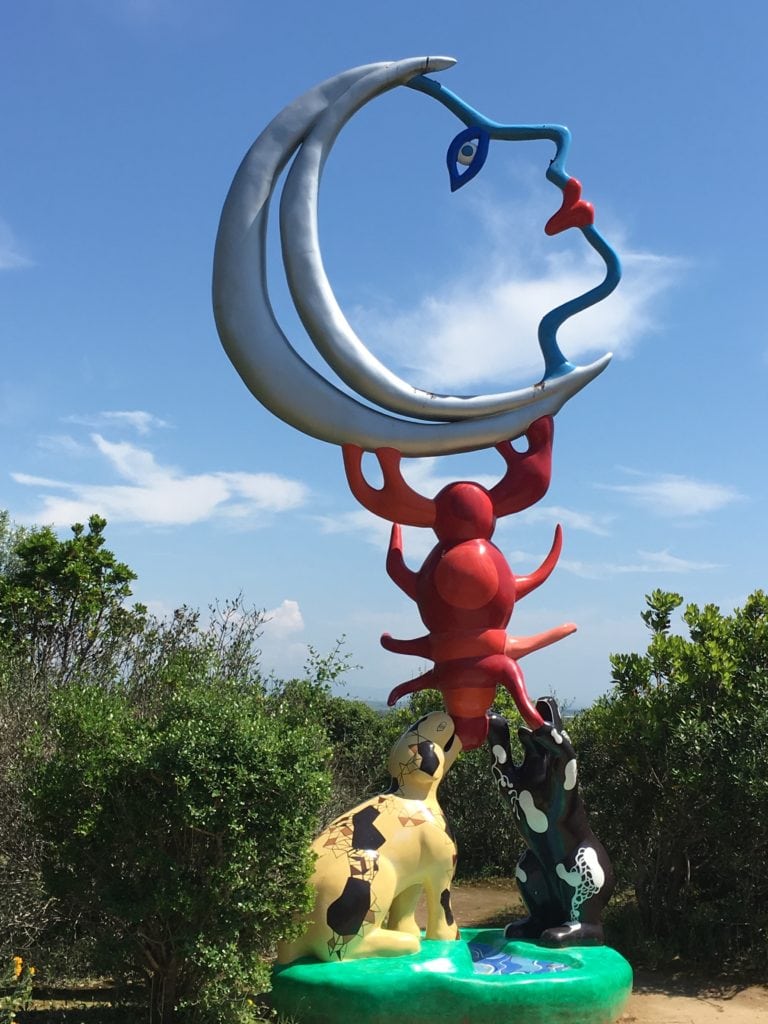
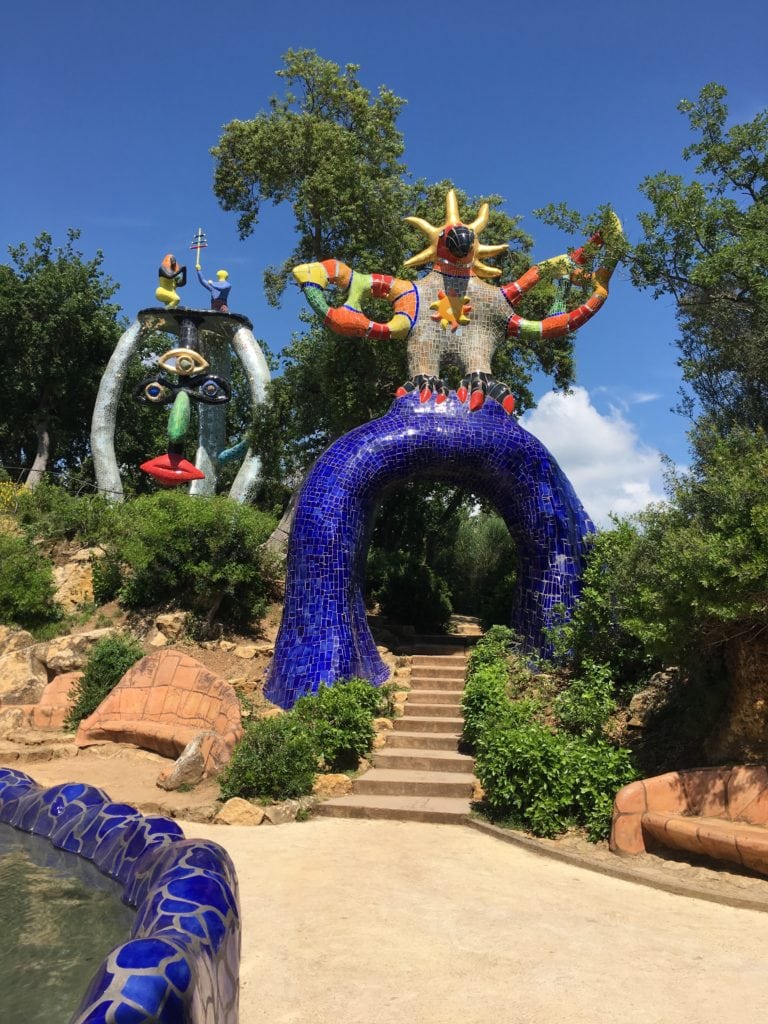
Here is where you’ll see a stunning collection of whimsical sculptures by modern artist Niki de Saint Phalle. The sculptures are based on the Tarot cards and are a must-see if you’re looking for something far off the beaten path.

And the sculptures are a nice break from the medieval and Renaissance masterpieces that make up most of the art in Tuscany.

A whimsical sculpture from the Tarot Garden, representing a crescent moon forming a face, balanced atop a red figure resembling a lobster, supported by two animal-like figures on a multicolored base surrounded by greenery.
A vibrant mosaic sculpture of a fantastical figure from the Tarot Garden, featuring colorful, mirror-covered legs, outstretched arms, and a sun-like face, set amidst lush greenery under a bright blue sky.

We spent a full hour wandering around the gardens on a hot afternoon in September. Although I took tons of photographs, they don’t do the sculptures justice. You have to visit the gardens and touch the sculptures, walk inside them, and sit on them to fully appreciate them.

When you go, check the website for the current opening hours. Usually, the gardens are open daily from April 1 to October 15 from 2:30 pm to 5:30 pm. In the winter, the gardens are open only on the first Saturday of the month from 9 am to 1 pm.

Il Giardino dei Tarocchi (Tarot Garden) – Getting There

Tip: Bring cash for parking and check seasonal opening times.
By Car: The easiest option. Located near Capalbio in southern Tuscany; about 1 hr 30 min from Grosseto, 2 hrs from Florence
By Train + Taxi: Train to Capalbio or Orbetello, then a 15–to-20-minute taxi ride to the garden


Botticelli’s Muse by Dorah Blume

Set in 1477 Florence, this novel follows Sandro Botticelli after the Medici cast him out, and traces his forbidden romance with Floriana, the convent weaver who becomes the muse behind his masterpiece La Primavera.

The Towers of Tuscany by Carol M. Cram

Set in mid-14th-century Tuscany, this novel follows Sofia Barducci, a woman painter fighting to survive in the all-male world of a painter’s workshop.

Tuscany Art Masterpieces FAQs

Here are answers to frequently asked questions about seeing art masterpieces in Tuscany.

When is the best time for art lovers to visit Tuscany?

The best periods are spring (April–June) and autumn (September–October) when the weather is comfortable, crowds are moderate and the golden light enhances the architecture and outdoor sculptures. Many museums are quieter in the early morning or late afternoon. Avoid major summer holiday blocks if you dislike crowds.

Do I need to book tickets in advance for major museums?

Yes. For top venues like the Uffizi in Florence and the Accademia (with David) you should absolutely book timed-entry tickets ahead to skip long lines. Pre-booking means less time waiting and more time appreciating.

How many days should I allocate if I want to focus on art in Tuscany?

If you’re primarily interested in art, plan for at least 4–5 days: 2–3 days in Florence, 1 day in Siena, 1 day in a smaller town like San Gimignano or exploring countryside art (e.g., Villa Demidoff). If you have a full week or more, you can include multiple smaller destinations.

Is it better to base myself in one city and daytrip, or move around?

It depends on your travel style. If you like unpacking once, base yourself in Florence or Siena and take day trips. But if you prefer experiencing different atmospheres (city, hilltown, countryside) moving between towns enhances discovery. In either case, staying overnight in a smaller town gives you the bonus of a quieter evening ambience.

What are some lesser-known art sites in Tuscany worth adding?

The article post mentions some: the giant Colossus in Villa Demidoff, the secular frescoes in the Palazzo Comunale in San Gimignano, and the modern whimsical works in Il Giardino dei Tarocchi near Grosseto. Also consider smaller museums in Lucca, Volterra, and Prato.

Are guided tours recommended or should I go self-guided?

Both are good options. Guided tours can give you rich art-history context and often skip the line. Self-guided is great if you prefer your own pace. For major venues, book ahead for a timed entry (self-guided) or reserve a small-group guided tour (especially in Florence).

What should I wear and bring when visiting museums and churches in Tuscany?

Dress comfortably but respectfully. Many churches require covered shoulders and knees. For outdoor sculpture parks, wear good walking shoes and bring a light jacket (weather can change). Bring along a small backpack with water, sunhat, and sunscreen.

Can I visit top art sites if I only have one day in Tuscany?

You can still see highlights, but you’ll be on a tight schedule. For example: spend the morning in Florence’s Uffizi and Accademia, have lunch, then exit for an afternoon in the Duomo or Palazzo Vecchio. But understand you’ll only scratch the surface. If possible, allocate more time to absorb the art fully.

Are there audioguides or apps I should use?

Many museums offer official audioguides included in your ticket price or for a small add-on fee. There are also third-party apps and websites offering downloadable audio tours. If you prefer exploring at your own pace, an audioguide is highly recommended (especially for fresco cycles where context helps).

How do I avoid crowds and make the most of my visit?

Arrive right at opening time or in late afternoon when fewer busloads arrive. Stay overnight in smaller towns rather than doing everything as day trips (and you’ll enjoy quieter streets after dinner). For major museums, book tickets with skip-the-line and consider visiting in off-peak months (i.e. early spring or autumn). Explore less-famous sites mentioned in the post for more relaxed experiences.


Where to Stay in Tuscany

I don’t think I’ve ever stayed in a sub-standard place in Tuscany. You are spoiled for choice! While prices will not be low if you’re looking for comfort and convenience (my two must-haves!), you’ll be rewarded with gorgeous views, friendly proprietors and la dolce vita!

Here are four of my favorite places I’ve stayed at around Tuscany:

  • Sant’Antonio Country Resort near Montepulciano: Fantastic place to kick back and relax. Stay for a week! I wrote an entire post about my experience staying there.
  • Agriturismo Casanova di Pescille near San Gimignano: You’ll need a car, but this place (and a handful more in the area) is just about perfect.
  • Serristori Palace Residence in Florence: This spacious apartment is right on the river and about a ten minute walk into the center of Florence. Highly recommended.
  • I Merli di Ada in Siena: This place is delightful! It’s very centrally located with lovely hosts and a comfy and spacious room.

Keep Exploring Italy on Artsy Traveler


Carol Cram
About Carol Cram

Carol M. Cram is the author of five award-winning novels inspired by art and the women who shaped it, the creator of Artsy Traveler, an arts-focused travel blog, the founder of Art In Fiction, a curated database of 2,600+ novels inspired by the arts, and the host of The Art In Fiction Podcast. She lives with her husband, artist Gregg Simpson, on beautiful Bowen Island near Vancouver, BC.
View of the Eiffel Tower

Should You Go Up the Eiffel Tower in Paris?

I’ve gone up the Eiffel Tower at least five times over the years (starting way back in 1970), and each visit was more crowded than the last.

So when people ask me whether they should bother going up the Eiffel Tower, my honest answer is: probably not, and I say that as someone who loves the tower so much I put it on the cover of Love Among the Recipes, my fourth novel.

Of course, riding to the summit of the Eiffel Tower, or even to the second level, has long been a Paris must-do. Millions flock to the iconic monument every year to stand in long lines, ride an elevator up one of the sturdy pylons, and then look at the view.

If you want to go up, then of course you should (it’s your Paris vacation after all). But before you decide, read on for my recommendations about how you can make the most of your Eiffel Tower visit.

This post is part of my guide to artsy & independent travel in France, where I share my best tips for exploring France’s creative cities, historic sites, landscapes, and cultural experiences.

Planning a Paris art trip and wondering whether the Eiffel Tower is worth your time? I’ve put together everything you need in Paris for Art Lovers, a 54-page digital guide available for $9.99.


Going Up the Eiffel Tower in Paris, France

Well, it’s the Eiffel Tower and you’ve traveled a long way to see it. And after all, it’s the most famous architectural feature of the Paris skyline. Going up the Eiffel Tower is almost a rite of passage for the first-time visitor to Paris.

But do you really need to go up it?

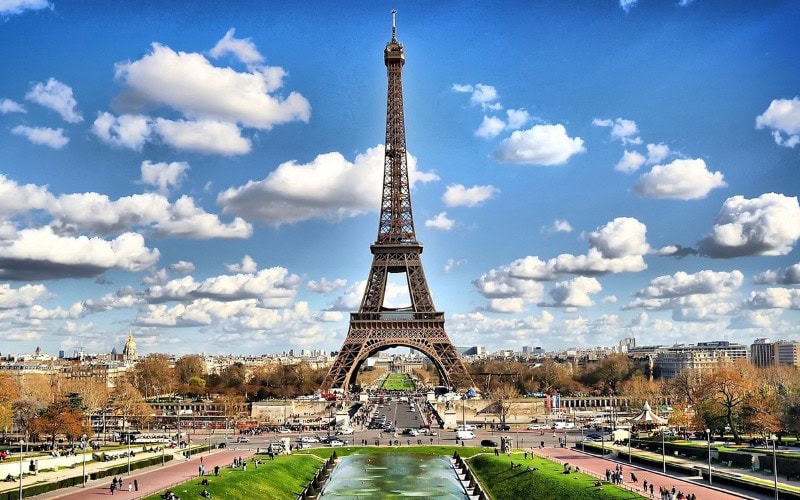
Frankly, I say forget the elevator ride and just admire the tower from a distance. Take pictures of it from the Trocadero on the opposite side of the Seine, or from the middle of one of the bridges.

A classic view of the Eiffel Tower taken from the Trocadéro gardens, with fountains, greenery, and a bright blue sky with fluffy clouds.

Stay well away from the crowds and enjoy seeing the tower pop up every now and again as you tour Paris. There are so many amazing things to see in this city that spending half a day waiting in line (even if you buy tickets in advance or take a tour) seems like such a waste of time.

I know—blasphemy—but really, if you don’t like crowds, can live without an elevator ride, and can find better things to spend the 25+ euros on (like lunch), then I say skip the Eiffel Tower.


What to Know If You Decide to Go Up the Eiffel Tower

That said, I totally get why going up the Eiffel Tower is appealing. I’ve gone up the tower at least five times, and each time was more crowded than the time before.

My most recent visit was in spring 2024, and wow! I couldn’t believe the size of the crowds as well as how little there was to do once I reached the second level and circumnavigated the tower to view Paris from all directions.

Go Up the Eiffel Tower in the Evening

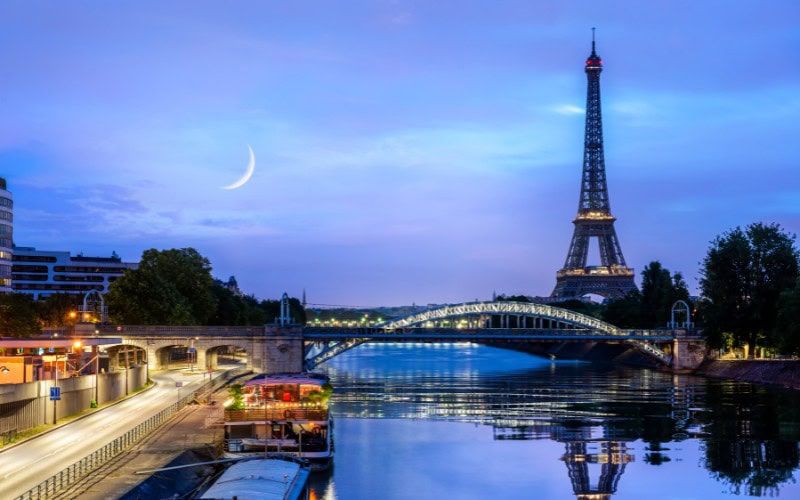
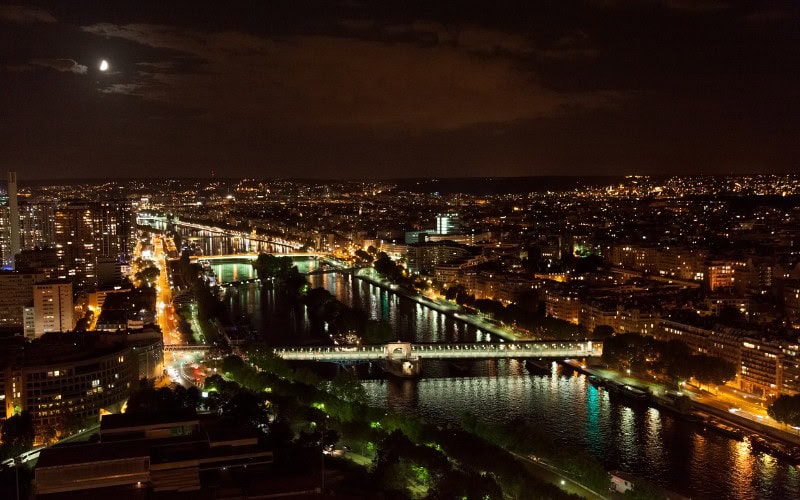
Of my five visits, my favorite was the one I made in the evening a few years ago. The crowds were thin and the view over the sparkling lights of Paris magical.

A breathtaking view of the Eiffel Tower illuminated against the night sky, with reflections in the nearby Seine River.

If you can manage to find a time when the Eiffel Tower is not crowded then sure, take a ride up to at least the second level.


Purchase Tickets in Advance

Whenever you decide to go, buy your ticket well in advance. You’ll probably still have to queue, but not for as long as you would without a ticket. Also, if you don’t get your ticket in advance, you risk not being able to get in at all if the tower is at capacity.

Here’s the official website for purchasing tickets to the Eiffel Tower.

Riding to the Tippy Top

Don’t be fooled by tours that say they include the summit. They may not, so you really need to double-check. If you have your heart set on going to the summit of the Eiffel Tower, then book your tickets on the official website as far in advance (up to three months) as you can. Spots book up really fast.

At the top, you’ll enjoy the highest view from two floors, one open-air and the other enclosed. You’ll also see a reconstruction of Gustave Eiffel’s office and a tableaux of wax models depicting Gustave Eiffel and his daughter, Claire, receiving the famous American inventor, Thomas Edison.


Should You Consider a Guided Tour?

On my most recent visit to the Eiffel Tower, I chose a guided tour because I (mistakenly as it turned out) thought it would take me to the very tippy top. It did not.

Basically, a guide takes you to a long line and waits with you while occasionally regaling you with facts and figures about the Eiffel Tower. At the second level, the guide bids you farewell and you’re on your own to enjoy the view.

Here’s a brief summary of my Eiffel Tower tour experience; decide for yourself if the 50+ euro price tag is worth it.

My Tour of the Eiffel Tower

I arrive at the Eiffel Tower with moments to spare before the tour is to begin, only to discover I’m in the wrong place.

HINT: Double-check the meeting place for the tour; it likely is not at the entrance to the Eiffel Tower. In the case of the tour I took, the meeting place was a brisk ten-minute walk away.

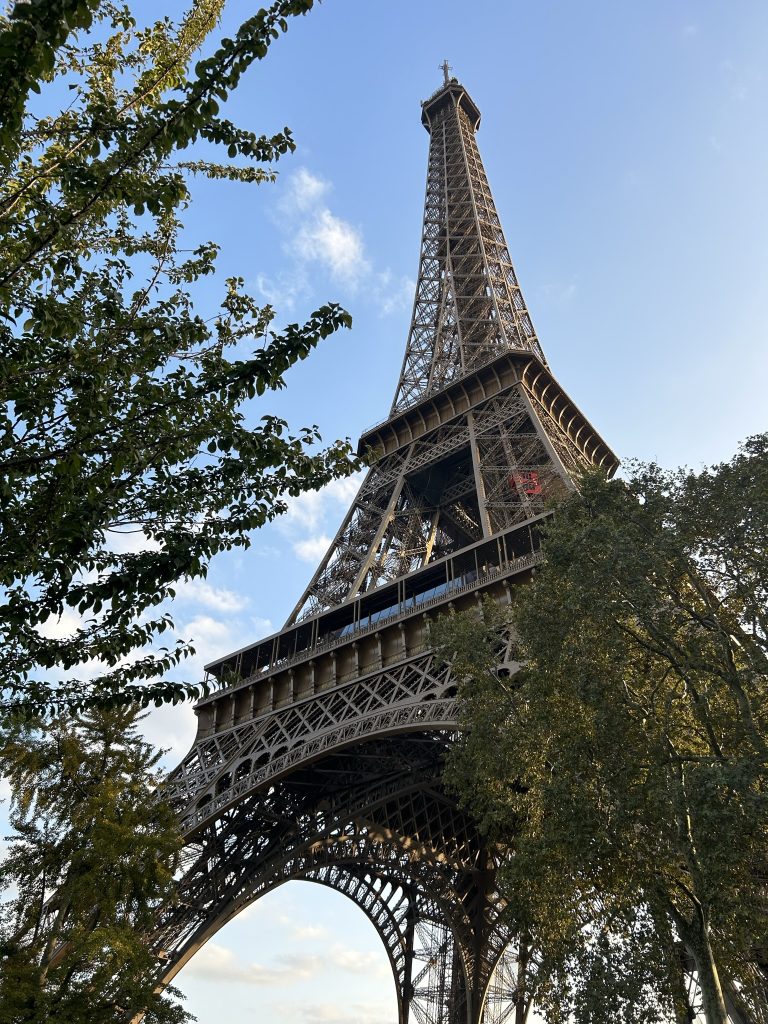
A ground-level shot of the Eiffel Tower framed by trees, emphasizing its grandeur and architectural beauty.

I run to where the guide is supposed to be, arriving ten minutes late to find her waiting and not at all worried. After joining her and eight other people, I briskly retrace my steps back to the base of the Eiffel Tower where we wait a good thirty minutes, about ninety minutes less than the wait for people without tickets, to ride the elevator to the second stage.

I ask if we’re going to the top.

Non, Madame.

But it says in the tour description that we go to the top…

Non, Madame. Second level only.

Oh.

I resolve to enjoy myself and get my 50 euros worth (pretty much double the cost of a regular ticket). The guide’s commentary is interesting, although I’m the only person who listens to it. The other people on the tour are either not interested or don’t speak English, or both.

Some History of the Eiffel Tower

I’m working on a novel set in the late 1880s during the time when the Eiffel Tower was being constructed. The novel includes a character modeled after the brave souls who, in the frigid winter before the Eiffel Tower opened for the 1889 World Exposition, climbed higher and higher every day to bang rivets into a structure that at the time was a marvel of engineering (and still is). Two men lost their lives building the Eiffel Tower (although not my character).

The guide doesn’t tell me very much that I haven’t already read during my research about Gustave Eiffel and the history of his tower. Construction of the Eiffel Tower began in 1888 and was completed in May 1889 just in time for the opening of the 1889 Paris Exposition that celebrated the 100th anniversary of the storming of the Bastille, which marked the beginning of the French Revolution. Over 32 million people attended, which was a lot of people in 1889!

If you’re looking for in-depth information about a site, you’re not likely to find it on a tour designed for the general public. You’d be better off connecting with an expert and arranging a private tour.

Riding Up to the Second Level

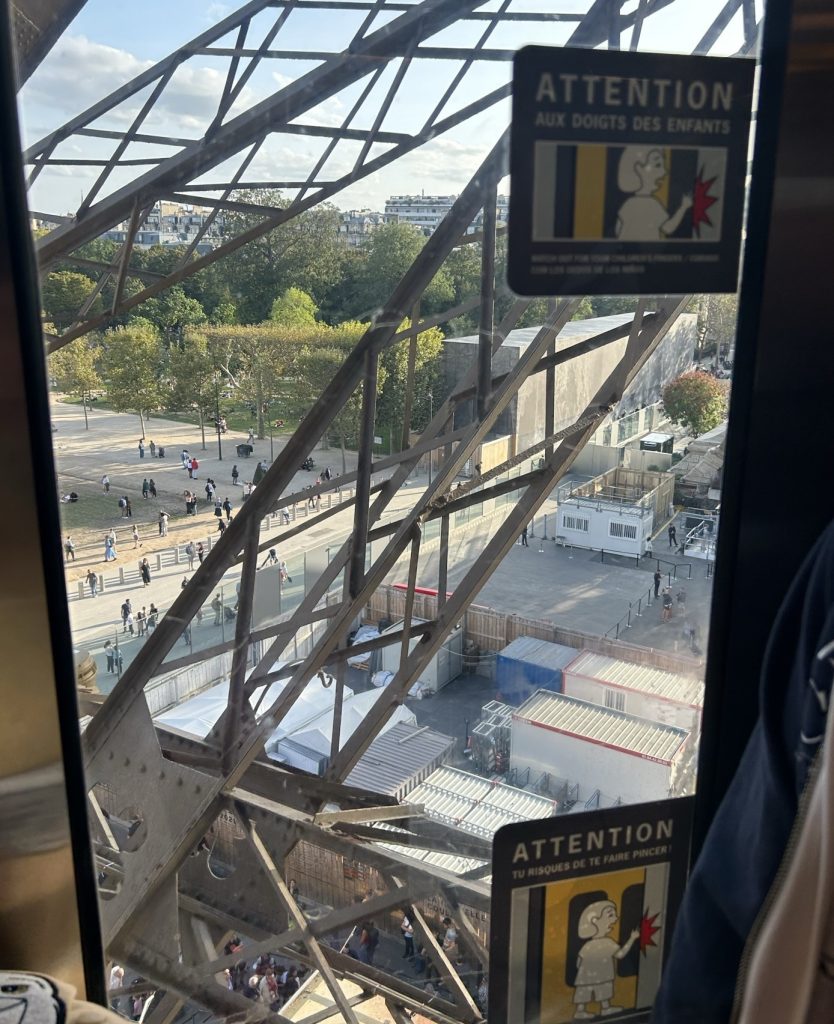
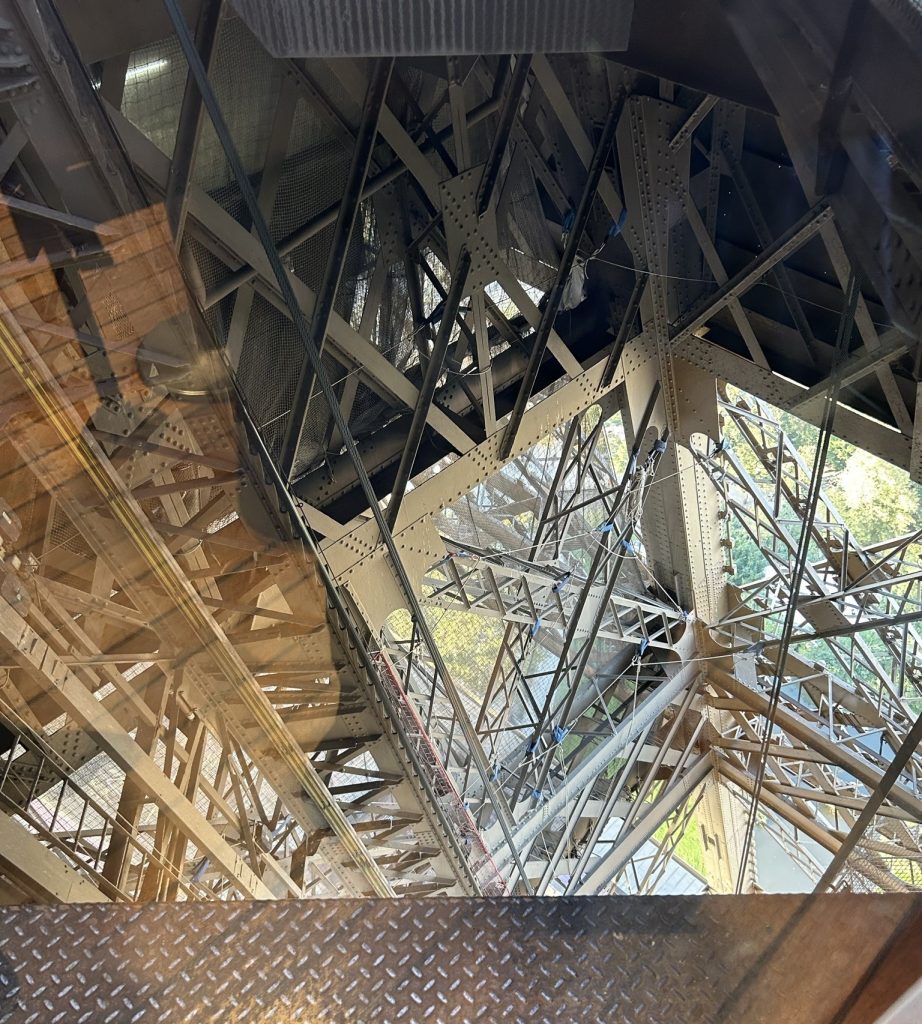
It takes about an hour to finally get up to the second level of the Eiffel Tower. The two elevators are crowded and hot, and the ride isn’t all that exciting. I snag a place by the window to snap photos and face away from the germs. If you are at all claustrophobic, you may wish to think twice about cramming yourself into the elevators to the first and then the second levels.

At the Second Level

Once we arrive at the second level, our guide thanks us and returns to Earth, presumably to herd another group up the elevators.

I stroll around the four sides, snap some photos, and feel a bit deflated. The view from the second stage is fine but not particularly breathtaking, even on a sunny day.

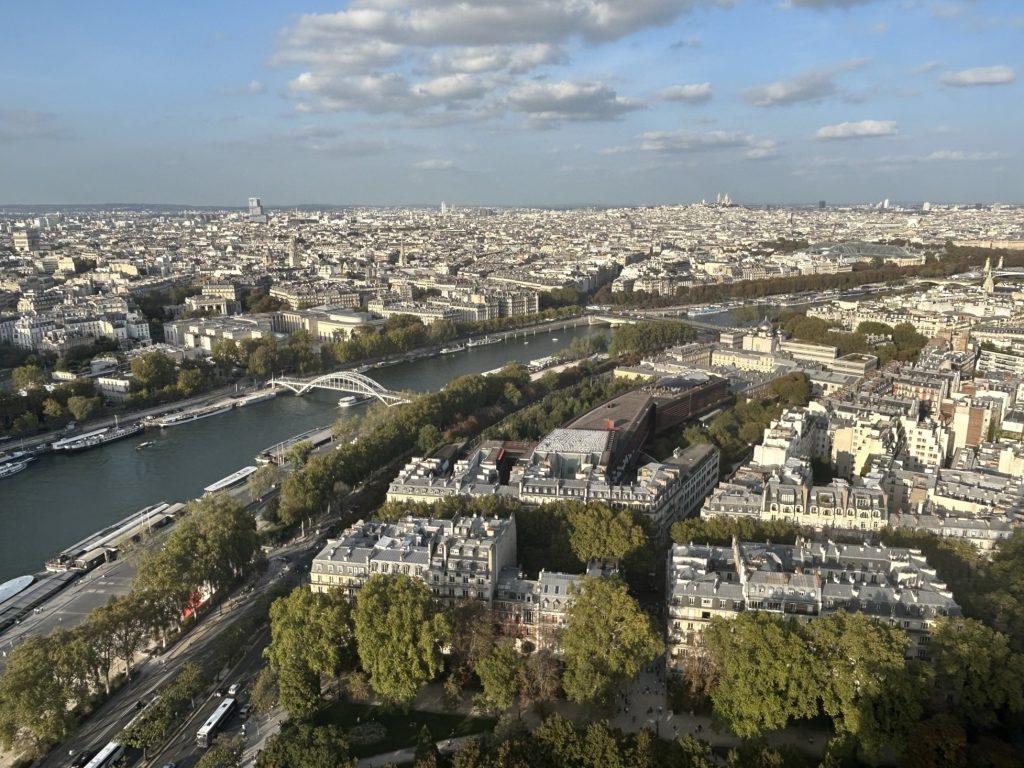
An expansive aerial view of Paris, featuring Les Invalides and the Montparnasse Tower, framed by green parks and historic buildings.
View to the south from the Eiffel Tower
A sweeping view of Paris from above, capturing the Seine River, bridges, and iconic Parisian architecture under a partly cloudy sky.
View to the northeast from the Eiffel Tower

I do, however, enjoy snapping photos of the upper portion of the Eiffel Tower that I didn’t get to visit.

A dramatic upward perspective of the Eiffel Tower from the second level, showcasing its intricate ironwork against a clear blue sky.

After the Tour

After taking as many pictures as I can and circumnavigating the second level at least twice to get my money’s worth, I descend to the bottom and snap lots of photos in the beautiful golden light. The nearby gardens are particularly fetching.

A serene view of a lush garden with a pond surrounded by trees and bushes, under a bright blue sky with scattered clouds.
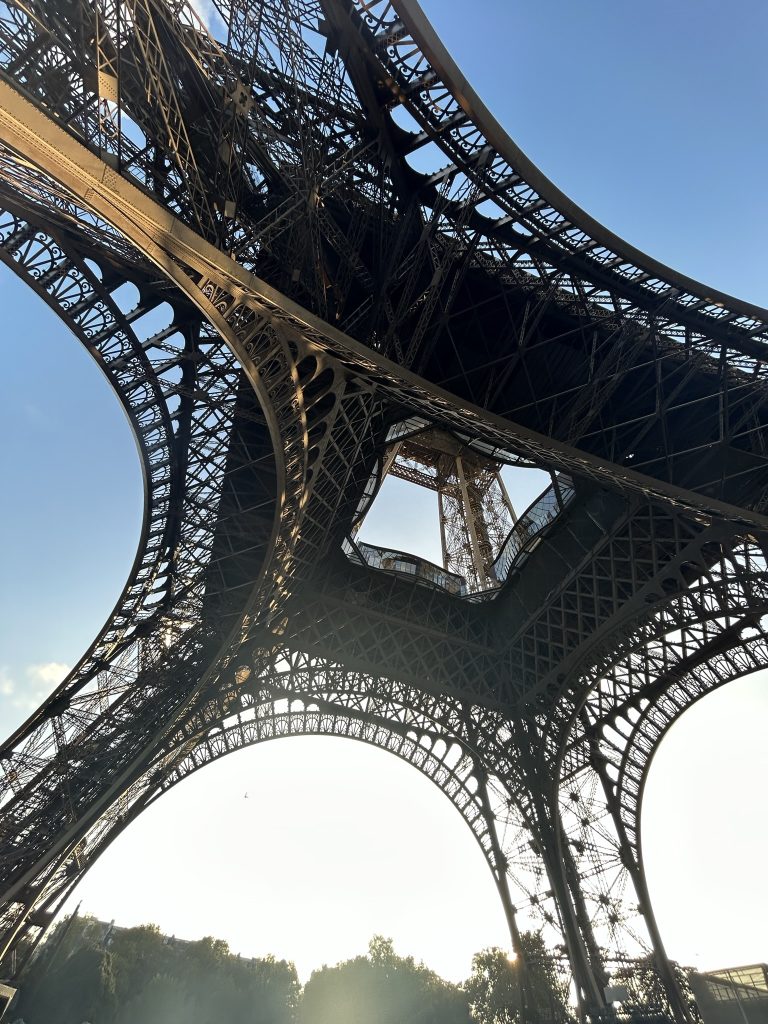
View from below the Eiffel Tower showcasing its intricate iron latticework structure against a bright blue sky, with sunlight streaming through the open arches.

A Paris Traffic Jam

With the sun starting to set, I go in search of a bus. I can’t find the right stop and finally admit defeat and hail a taxi. The traffic is practically gridlocked. I could probably walk back to where I’m staying near Boulevard Saint-Michel faster. The driver entertains me with a lot of voluble French commentary about the shocking state of the circulation in Paris, the bicycles, the other cars, the stupid pedestrians, etc. As the fare creeps up over twenty euros (I have a 20-euro bill clutched in my hand), I reach for my wallet. He gestures for me to put it away.

Non, non, madame. Il est vingt.

He waves away the number on the meter as if to make it disappear. I gather he’s not going to charge me more than the twenty euros that I have ready to pay him because the traffic is so bad. That’s very kind of him!

Where Are the Rude Parisians?

My taxi driver drops me at my destination, cheerfully takes the twenty and wishes me a bonne journée. I’ve yet to meet the fabled rude Parisians who are supposedly abundant in Paris.

In my experience over many, many trips to Paris, I’ve found the Parisians almost uniformly helpful, friendly, and good-humored. They also frequently like to make jokes. The night before, the clerk at the supermarket, after being asked the way out, shakes his head and tells us gravely that there is no way out, and that we will be locked in and have to stay the night. He then laughs and leads us to the exit where he merrily scans our items while telling us all about his brother who is moving to Calgary.


Tours of the Eiffel Tower

If you’ve decided to go up, you have more options than you might think, from a simple reserved ticket to a small group tour to dinner inside the tower itself. I’ll be honest: the guided tour I took wasn’t worth the extra euros. The guide said little I didn’t already know, and at the second level she wished us well and headed back down.

But the right tour, with a small group and a knowledgeable guide, is a different proposition. And dinner at Madame Brasserie is a different proposition entirely. Here are the options I’d consider:

Tickets & Tours: Eiffel Tower Options

If you do decide to go up, book in advance — tickets sell out fast, especially for the summit. Here are some options at different price points.

Reserved Access: 2nd Floor or Summit

Includes

  • Pre-booked reserved access by elevator
  • Choice of 2nd floor or summit
  • Local host to guide you through entry
  • Skip the general ticket queue

Best For

Independent travelers who want reserved access without a full tour

Why Choose It

The most flexible option — a host gets you through the door, then you explore at your own pace

From $28 per person

Book with GetYourGuide

Summit Ticket + Guided Tour + Seine Cruise

Includes

  • Summit access by elevator
  • Local guide from Trocadéro to the top
  • Round-trip Seine River Cruise ticket
  • Skip the ticket line

Best For

First-time visitors who want the summit plus a Seine cruise in one booking

Why Choose It

Good value if you want both experiences; the Seine cruise ticket is open-dated so you can use it whenever suits

From $90 per person

Book with GetYourGuide

Most Immersive

Dinner at Madame Brasserie

Includes

  • 3-course dinner by Chef Thierry Marx
  • Champagne, wine, or beer included
  • Lift ticket to the 1st floor
  • Express security entry — skip the queues

Best For

Couples or anyone who wants a genuinely memorable Eiffel Tower experience

Why Choose It

If you’re going to go up the Eiffel Tower, this is the version worth the euros — dinner inside the tower beats an elevator ride every time

From $149 per person

Book with GetYourGuide

Small Group Summit Tour (Max 6 People)

Includes

  • Summit access in a group of maximum 6
  • Expert English-speaking guide
  • Glass elevator to the top
  • Gustave Eiffel’s office reconstruction

Best For

Travelers who want a genuinely intimate guided experience at the summit

Why Choose It

The smallest group size available — if you want to actually hear the guide and ask questions, this is the one

From $150 per person

Book with GetYourGuide


Love Among the Recipes

I love the Eiffel Tower! It’s the symbol of Paris, and it’s beautiful and iconic and just so cool. I’m fascinated by how it was built, I love taking pictures of it, and I even include it on the cover of one of my novels (Love Among the Recipes). I’m writing a new novel featuring the Eiffel Tower at the beginning of its life. So yes, I think the Eiffel Tower is awesome!

But I also think that you’d not be missing a whole lot if you decided to skip waiting in long lines (even with a ticket and/or a tour) for what is essentially an elevator ride.

Illustration of the book cover for "Love Among the Recipes" by Carol M. Cram, featuring a basket with bread, cheese, and wine on top of a stack of cookbooks, with a blue background showing Paris landmarks, including the Eiffel Tower.

Spend your time touring some of the world’s best museums, enjoy a café crème at a sidewalk café, take a cruise on the Seine, snap pics of the Eiffel Tower to your heart’s content, and relax in Paris’s lovely parks (the Luxembourg Gardens is my fave).


Mademoiselle Eiffel by Aimie Runyan (2024) follows Claire Eiffel, eldest daughter of Gustave, who becomes her father’s confidante and private secretary as his architectural career reaches its peak. Claire’s story weaves through the 1889 World’s Fair and the Tower’s triumphant debut — and if you visit Gustave Eiffel’s reconstructed office at the summit, you’ll recognize her there among the wax figures.

The Devil in Montmartre by Gary Inbinder (2014) is a darker companion, also set during the 1889 Paris Universal Exposition. When a mutilated body is discovered in a Montmartre sewer, Inspector Achille Lefebvre hunts a killer through the gritty underworld of fin de siècle Paris — with Toulouse-Lautrec among the suspects. Gruesome but gripping, and rooted in exactly the same moment the Eiffel Tower was born.

Search more novels set in Paris on Art In Fiction →


Planning your Paris art itinerary? My Paris for Art Lovers guide covers the museums, galleries, and cultural experiences worth your time — including honest takes on what to skip.


Eiffel Tower FAQs

Is it worth going up the Eiffel Tower in Paris?

Honestly, it depends on what you’re after. The view is fine but not breathtaking, the elevators are crowded and hot, and the experience goes by faster than you’d expect for the price. My recommendation: admire the tower from the Trocadéro, from the bridges, or over dinner at Madame Brasserie on the first floor. That said, if going up the Eiffel Tower is on your bucket list, go in the evening when the crowds thin out and the lights of Paris are magical.

Is the Eiffel Tower summit worth it?

The summit certainly adds drama — nearly 300 meters up, open-air views, and Gustave Eiffel’s reconstructed office with wax figures of Eiffel, his daughter Claire, and Thomas Edison. If you’re going up at all, I’d push for the summit rather than stopping at the second floor. Just be aware that summit spots sell out months in advance, so book as early as possible on the official website.

How far in advance should I book Eiffel Tower tickets?

As early as you can. The official website opens bookings up to three months ahead, and summit slots in particular disappear fast. Even second-floor tickets sell out during peak season. Don’t count on buying at the door.

What is the best time to visit the Eiffel Tower?

Evening, without question. Crowds thin out, the tower lights up, and Paris looks its best from above after dark. If you go during the day, arrive as early as possible — the queues build quickly and by mid-morning the experience is considerably less pleasant.


Keep Exploring Paris with Artsy Traveler

Here are more posts about being an Artsy Traveler in Paris:

And for my take on touring another of Europe’s iconic sites, check out Should You Make the Climb to the Acropolis of Athens?


Carol Cram
About Carol Cram

Carol M. Cram is the author of five award-winning novels inspired by art and the women who shaped it, the creator of Artsy Traveler, an arts-focused travel blog, the founder of Art In Fiction, a curated database of 2,600+ novels inspired by the arts, and the host of The Art In Fiction Podcast. She lives with her husband, artist Gregg Simpson, on beautiful Bowen Island near Vancouver, BC.
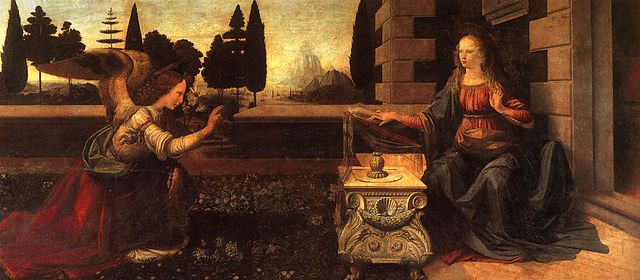
Nine Great Reasons To Visit Meteora in Greece

Meteora is located in the Thessaly region in Northern Greece and is out-of-this-world spectacular. And with over three million visitors annually, it’s been well and truly discovered.

When Julia (daughter and travel companion on my trip to Greece) first showed me pictures of the stunning rock columns of Meteora and told me she was going to include it in our itinerary, I was both intrigued and excited.

I’d seen the pictures of monasteries perched atop rock columns, but I never realized they were accessible to visitors.

Very accessible as it turns out, so long as you have the knees for lots of climbing. Only one of the six monasteries (there used to be 24) doesn’t require climbing.

In this travel guide to visiting Meteora, I describe my two-night and one full day trip to Meteora from Athens en route to Delphi, list the six monasteries, and share my top tips and reasons why you should definitely add Meteora to your list of must-see places in Greece.


Overview of Meteora

The region known as Meteora is located in Thessaly in northern Greece, about a four-hour drive from Athens. This spectacular area with its ancient monasteries perched atop spectacular rock formations is included on the UNESCO World Heritage List.

Kalambaka (#1 on the map below and the main town) and its smaller sibling Kastraki (#2) are the towns in the Meteora region where you’ll find accommodations and restaurants.

Trip map created with Wanderlog, a trip planner on iOS and Android

A Suggested Itinerary for Visiting Meteora

While you could book a tour as a day trip from Athens to Meteora, I wouldn’t advise it. The distances are just too great to allow enough time to enjoy this most spectacular of destinations.

You’ll spend most of your time on a bus and see one or two of the Meteora monasteries along with thousands of other visitors, and you won’t have time to view the famous Meteora sunset (a must-do), hike around some of the Meteora rocks, or explore lovely little Kalambaka.

So, first off, plan to stay in Meteora for at least one night. Two nights are better to give you a full day in which to enjoy both a morning and a sunset tour, explore Kalambaka and maybe go on a short hike. 

You’ll easily find things to fill your time in Meteora.

Our trip to Meteora was organized by Visit Meteora which took care of booking transfers and two excellent tours that I highly recommend. Both were small-group tours (my favorite kind). You could also book each component separately.

Here’s a 2-day trip that includes a one-night stay in Meteora and tours of the monasteries.

Powered by GetYourGuide

Day 1: Traveling to Meteora

  • Pick-up at 8 am in Athens (#10) for the four-hour bus ride to Meteora (#9)
  • Arrival in Kalambaka and transfer to a shuttle bus that drops us at the Hotel Theatro Odysseon (recommended)
  • Leisurely lunch in Kalambaka (great food and relaxed ambiance)
  • Pick-up from the hotel for a 4-hour small-group Sunset Tour that visits the Monastery of Saint Stephen (actually a nunnery) and a church, includes a walk to see the caves where the first monks lived, and culminates with a stop high above the valley to take in breathtaking views of the sunset

Here’s a Sunset Tour you can take from Kalambaka or Kastraki that includes the hermit caves and, of course, the breathtaking sunset over the Meteora rock formations and monasteries.

Powered by GetYourGuide

Day 2: All Day to Enjoy Meteora

  • Pick-up at the hotel for a 3-hour small-group tour of Meteora that visits two of the monasteries not included on the Sunset Tour itinerary
  • Leisurely lunch in Kalambaka
  • Free afternoon and evening to enjoy the pool at Theatro Hotel Odysseon (or to go hiking)

Six Monasteries at Meteora

The 6 monasteries that are open to the public in Meteora are:

  • Holy Monastery of Great Meteoron (#3): a male monastery founded around 1340 that is the oldest and largest of all the monasteries of Meteora. The ancient kitchens are interesting.
  • Holy Monastery of Varlaam (#4): the second largest monastery, founded in the mid-14th century by a monk named Varlaam. The frescoes inside the church are particularly beautiful.
  • Roussanou Nunnery (#5): one of the most traditional of the monasteries and not as crowded as some of the others. To access, walk down from the main road through a lovely forest to reach the steps leading up to the monastery. It feels very peaceful here.
  • Saint Stephen Nunnery (#7): connected by a small stone bridge to the road and the easiest of the six monasteries to access. As a result, it’s also one of the most crowded.  
  • Holy Trinity Monastery (#8): Situated atop a rocky precipice over 400 meters high, it’s reached via 130 steps. The view from the top is stunning (which is saying something).
  • Saint Nicholas Anapafsas Monastery (#6): the first monastery you come across after leaving Kastraki and the least visited.

Check to make sure the monastery you want to visit is open on the day you’ll be in Meteora.

Here are the closing days in summer. Note that in the winter season, most monasteries are closed for at least two days each week. Check Meteora.com for details.

  • Great Meteoran: Tuesday
  • Varlaam: Friday
  • Roussanou: Wednesday
  • Saint Nicholas Anapafsas: Friday
  • Saint Stephen: Monday
  • Holy Trinity: Thursday

Which Meteora Monasteries to Visit

This is a question visitors often ask when planning their visit to Meteora. During the two tours we took, we visited Saint Stephen, Great Meteoran, and Roussanou. Each is quite similar and includes plenty of stairs (except for St. Stephen), a chapel, a souvenir shop (always), possibly a museum, and amazing views.

I suggest picking just two or three to visit. You’ll get the general idea pretty quickly, and you’ll likely see the monasteries you don’t visit from the vantage points of the monasteries you do visit.

If you don’t like crowds, select one of the smaller monasteries such as Roussanou.

Note that each monastery charges an entrance fee of 3 euros.

The roads winding around the stone pillars offer plenty of viewpoints. Both of the tours we took included frequent stops to take pictures.

Best Time to Visit Meteora

I visited Meteora in September and the weather was perfect—warm, but not too hot. Some of the monasteries were crowded, but not nearly as crowded as I understood they can get.

Our tour guides timed the monastery visits to avoid the largest influx of tour buses, many coming all the way from Athens.

I suggest visiting the monasteries either right after they open or just before they close.  An hour is usually more than sufficient to tour a monastery.

Now that you know how to organize your time in Meteora, here are my reasons why you must visit (including plenty of recommendations!).


Nine Reasons for Visiting Meteora

1.     Stunning Geological Formations

First and foremost, the scenery around Meteora is beyond incredible. The geological formations, shaped 60 million years ago, must be seen to be believed. Pictures give some idea of the size of the formations, but they cannot prepare you for their jaw-dropping grandeur.

On both tours we took in Meteora, we learned about the geological shenanigans required to shape such an incredible landscape. It’s quite a story!

The rock columns are omnipresent, visible from both Kalambaka and Kastraki. You’ll likely be staying in one of these towns during your visit.

Every time you step out of your hotel (or look out your window if you spring for a room with a view), you’ll gaze up, up, up at these jagged formations and marvel at how they change with the passing of the sun across their grey flanks.

2.     Fascinating History of the Monasteries

The geological formations alone would be reason enough to visit Meteora, but even more interesting is the fact that around 1100 AD a group of intrepid monks moved into caves embedded in the rock columns.

After a few centuries, some even more intrepid monks decided they weren’t isolated enough in caves, so they started building monasteries on top of the rock columns.

Until recently, the only way to get from the valley up to a monastery was to rock climb or be cranked up in a basket. Rock climbing involved pounding sticks into the soft rocks.

One of the guides told us that the sticks sometimes broke. I couldn’t help wondering how many skeletons are buried in the deep valleys surrounding the rock pillars.

Monastery in Meteora

The sheer ingenuity and courage required to build and inhabit the first monasteries is mind-boggling.

Visiting the Monasteries

The six monasteries that welcome visitors are the big draw here. Two of the monasteries in Meteora are actually nunneries. There are approximately 50 nuns and 17 monks still living in the active monasteries of Meteora. 

Visiting the Monastery of Saint Stephen

Saint Stephen is the only monastery in Meteora that is easily accessed from the road and does not require climbing long flights of steps that in the summer heat could be very challenging.

Unfortunately, everyone and their cousin who comes to Meteora on any day except Monday (when the place is closed) visits Saint Stephen monastery.

It’s the only place where we saw monastic people. Nuns dressed all in black with serene faces took tickets and sat next to the cash register in the gift shop.

Modest Dress Required

When we arrived, a box of scarves was made available to women who were wearing shorts or pants. Modest dress for men and women is required, and women are required to wear dresses, so even if you are wearing pants that cover your knees, you must also wrap a long scarf around your waist so it falls past your knees.

Although I was wearing a dress, I worried it didn’t sufficiently cover my knees and so I grabbed a scarf. However, it wasn’t any longer than my dress so was kind of useless.

At another monastery the next day, the attendant told me my dress was fine.

Sign at a monastery in Meteora about modest dress
What to See

Saint Stephen includes a church, a small museum, a gift shop, and spectacular views, which for most visitors is the real attraction.

The monasteries at Meteora were originally built between the 14th and 16th centuries. Time and wars (several of the monasteries were bombed during WWII) have destroyed most of them. Those remaining have been heavily renovated.

Other Monasteries

Each of the three monasteries we visited during the Sunset and Morning Tours of Meteora included a church, a museum, and a gift shop. I was most fascinated by the remains of the mechanisms used back in the day to hoist provisions and monks up the side of the cliffs.

Winch used to hoist people and goods up to monasteries in Meteora

Nowadays, stairs have been cut into the rock—and there are a lot of them. Meteora is not a great place to visit if you have mobility issues, or if you don’t like crowds.

Julia on stairs climbing up to a monastery in Meteora
Frescoes in the Monasteries

Beautiful frescoes adorn each of the churches we visited. Photos are not allowed, although I saw several people snapping pics despite warnings from attendants.

There’s a heavy emphasis in the frescoes on depictions of the many and gruesome ways in which the early Christian saints and martyrs were tortured, mostly by the Romans, who were quite the hideously creative lot.

Most frescoes are quite new, having been painted during the rebuilding of the monasteries, some since WWII, so the pictures are alarmingly vivid and graphic.

I did manage to get one picture in a chapel where photos were allowed.

Fresco in a monastery in Meteora

View from the Monasteries

The views from each of the monasteries are stupendous, unworldly even. No wonder Game of Thrones petitioned to shoot here.

The monks declined the request because they didn’t approve of any production that involved violence. Unfortunately, their refusal to allow on-location shooting didn’t stop the production company from taking a panorama of the area and then using it in the last episode of the first season.

Kind of sneaky, if you ask me.

Carol at a viewpoint in Meteora

3.     Beautiful Ancient Churches and Precipitous Cave Dwellings

Take time to visit the ancient and evocative Church of the Virgin Mary in Kalambaka. Erected between the 10th and 11th centuries AD, this Byzantine church was built upon the ancient foundations of Greek and Roman temples. Many of the stones were incorporated into the current church.

Frescoes adorn the interior dominated by a marble pulpit that is unique in Greece. It rises imposingly at the center of the church in front of the Holy Gate.

During our Sunset Tour of Meteora, we hiked a short way up a gravel road to view the cliffs containing caves that once housed hermits. The wooden structures are medieval and intact because rock overhangs protect them from the elements.

Can you imagine monks living in those caves high up the rock faces?

Caves where early holy men lived in Meteora

4.     Informative Small Group Tours

If you have a rental car, you can easily visit as many of the open monasteries as you wish. Alternatively, you can opt for a guided tour. Both the tours organized by Visit Meteora were first-rate, with tour guides who grew up in the area and were passionate about sharing the history of Meteora. 

Finding a Meteora Tour

Several tour companies offer tours and activities in Meteora. If you arrive in Meteora without first booking a tour, just wander along the main street in Kalambaka and you’ll soon find a company selling local tours by bus, private car, hiking, or cycling. 

If you have the funds, discover Meteora on a private tour. That way, you can choose which monasteries you want to visit and ask your guide to take you to some out-of-the-way places to escape the crowds. 

Parking Woes at Meteora Monasteries

Parking is limited at the monasteries, with much of the available space taken up by massive tour buses. If you take a small-group tour, you’ll be dropped right at the entrance to each monastery.

If you drive, you’re likely in for a long walk uphill from wherever you can find a parking spot along the road. 

In this photo taken from a monastery, you can see the cars and tour buses parked all along the road.

View from a monastery in Meteora showing cars and busses.

5.     Breathtaking Sunsets

High above the valley are several spots from which you can bask in the rays of the setting sun. Adventurous souls walk far out onto the rocks to get the perfect shot. I didn’t venture too close to the edge, but I still enjoyed some remarkable views.

Julia walked farther out to the edge and took this video.

6.     Charming Small Towns

We stayed in Kalambaka, the larger of the two Meteora towns. The central area with its smattering of outdoor cafés and a cooling fountain is charming and laid-back. 

Julia in the small town of Kalambaka in a monastery in Meteora

At one restaurant, the server had just moved back to Greece from Canada, where she grew up. We enjoyed a great conversation with her while chowing down on yet another tasty Greek meal.

7.     Good Accommodation Options

Both Kalambaka and Kastraki have a variety of accommodation options at reasonable prices.

The Hotel Theatro Odysseum where we stayed had comfortable rooms, each themed around a movie and featuring large photographs of actors and actresses. The staff were friendly, the pool a bit on the chilly side in late September, and the views of the iconic granite columns spectacular.

View of the pool from the Hotel Theatro Odysseum in a monastery in Meteora

Here are some more options in the area:

8.     Plenty of Hiking and Cycling Opportunities

If you’re energetic, you can hike around the rocks and into the valleys that do not have monasteries nearby and so are free of tour buses and gift shops.

You can also rent eBikes to scale the steep roads with ease, although I’m not sure I’d want to share the roads with the many massive tour buses.

The landscape is wild and beautiful away from the tourist beat, and it doesn’t take long to leave the main roads behind. You could easily spend a week exploring all the area has to offer.

View over the geological formations in Meteora

9.     Easy to Reach From Athens

Meteora is about 350 kilometers from Athens, with buses being the only public transit option apart from flying. Visit Meteora organized our transport to Meteora which included a shuttle bus to our hotel and the two tours in addition to a private transfer from Meteora to Delphi.

If you’re driving, you can go on to explore more of northern Greece. West of Meteora are the town of Thessaloniki and the island of Corfu, a destination that is definitely on my to-visit-next list.


Tours to Meteora

Check out some of the tours offered through GetYourGuide or connect with Visit Meteora directly.

Powered by GetYourGuide

Keep Exploring Greece with Artsy Traveler

Here are more posts about Greece:


Carol Cram
About Carol Cram

Carol M. Cram is the author of five award-winning novels inspired by art and the women who shaped it, the creator of Artsy Traveler, an arts-focused travel blog, the founder of Art In Fiction, a curated database of 2,600+ novels inspired by the arts, and the host of The Art In Fiction Podcast. She lives with her husband, artist Gregg Simpson, on beautiful Bowen Island near Vancouver, BC.
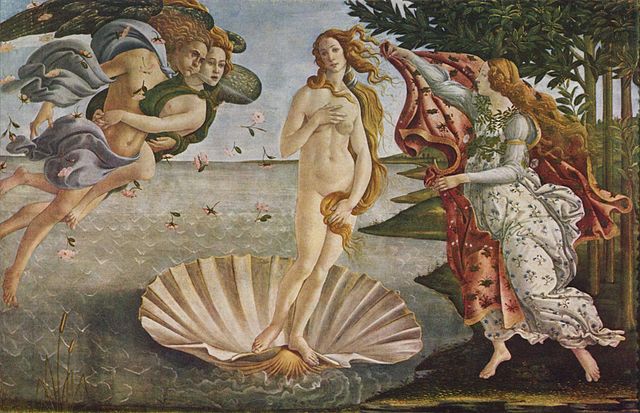
View of Athens and the Acropolis of Athens: A panoramic view showcasing the city of Athens with the Acropolis prominently perched on a hilltop, highlighting its significance as a UNESCO World Heritage site.

Climbing the Acropolis of Athens: Is It Hard and Is It Worth It?

Ah, the Acropolis of Athens is the pinnacle of Greek culture and a mecca for cultural travel. It’s both a graceful monument to the old gods as well as a tourist attraction famed for the number of visitors willing to risk heatstroke to see it in all its rubble-strewn glory.

I confess I was worried about climbing it. While reasonably fit, I’m not exactly a contender for the Olympics and I knew heat could be an issue. I really didn’t want to embarrass myself by getting out of breath, or worse, tripping.

The reality was less onerous than I’d feared mostly because even in September when I climbed, the Acropolis is crowded and you have no choice but to climb slowly. People are constantly stopping to snap pictures (as will you).

Take some precautions (see my advice below) and relax. People have been climbing the Acropolis for thousands of years. You can do it.


Acropolis Quick Facts

  • Best time to visit: Late afternoon as the heat eases and crowds thin; avoid midday in summer
  • Book in advance: Timed-entry tickets sell out, especially April to October — always book ahead
  • Combo ticket: Covers the Acropolis plus the Ancient Agora, Hadrian’s Library, Kerameikos, and more, valid for five days
  • Single ticket: Acropolis access only, within a 30-minute window of your selected time slot
  • Must-see on site: The Parthenon, the Erechtheion with its female column figures, the Temple of Athena Nike, and the views over Athens
  • Don’t miss: The Acropolis Museum, a short walk from the site — visit in the evening when it’s open late and nearly empty
  • Mobility note: An elevator is available for visitors with disabilities; call ahead to arrange (+30 210 3214172)
  • What to bring: Comfortable shoes (the stones are uneven and can be slippery going down), a hat, sunscreen, and water
  • Stay at the Hotel Lozenge.

Ready to book? Jump to Tours & Tickets


Overview of the Acropolis of Athens

A UNESCO World Heritage site, the Acropolis inspires millions of visitors every year to make the long trek from the ticket office to the temples, puffing up stone steps that go on forever (or at least feel like they do). There is no shade; for several months of the year, the sun can be life-threatening; and you make the trek with thousands of fellow visitors.

Unless you’re visiting in the depths of winter, forget romantic thoughts of strolling up the steps in solitary communion with the ancient Greeks.

I’m actually surprised so many people visit the Acropolis. And yet they do. Thousands upon thousands of them visit every day—young and not so young, fit and definitely not fit, and from all over the world. The Acropolis is the must-see hit of Athens.

You can’t go to Athens and not climb to the Acropolis. Not to do so is probably illegal.

Read on for more about my experience and my recommendations for comfortably visiting the Acropolis and the must-see Acropolis Museum.

Note that the hill is called the Acropolis and the big temple in the middle is called the Parthenon, but people often use the two terms interchangeably.

When It’s Too Hot to Visit the Acropolis

Officials sometimes close the Acropolis on summer afternoons when temperatures soar to the high forties Celsius. I can’t even imagine how hot that must feel. With no shade on the way up, such high temperatures plus bare rocks equal a searing experience.

If you’re visiting on a particularly hot and crowded day in the summer, I recommend just admiring the Acropolis from afar. Why risk heat stroke?

Instead, visit the wonderful (and air conditioned) Acropolis Museum and/or the National Archaeological Museum (check out my suggestions for touring!), enjoy a leisurely lunch, do some shopping, do some people-watching of the modern Athenians, and maybe take a peek at some of the lesser-known and much less crowded archaeological sites. You’ll still see the Acropolis from just about anywhere you walk in central Athens. Let that be enough.

Here are some tours fromGetYourGuide that don’t include the Acropolis!

Powered by GetYourGuide

Visiting the Acropolis of Athens in the Late Afternoon

When the heat is manageable, consider visiting the Acropolis in the late afternoon. The crowds start to thin out, the temperature starts to wane, and sunset is imminent.

Here’s what I did during a visit with my daughter, Julia, in mid-September.


How Hard Is the Climb to the Acropolis?

The honest answer is: harder than it looks from the bottom and easier than you feared by the time you’re at the top.

The climb involves uneven ancient stones rather than a neat staircase, and the path gets steeper as you approach the entrance gate. There’s no shade on the way up, which is a big challenge in summer. The stones are also polished smooth by millions of feet over millenia, so traction matters more than stamina.

Most reasonably fit people manage the climb without difficulty. People in their eighties make it to the top with only occasional pauses, and fit-looking thirty-year-olds struggle in 40-degree heat at noon. Everyone is different, but most people make it just fine.

A few practical things that make a real difference:

Shoes: Wear proper walking shoes with grip. Sandals and smooth-soled shoes are not a good idea, particularly on the descent, which is trickier than the way up. The marble gets slippery and the handrails are limited.

Timing: Visit as late as possible in the afternoon if you possibly can. The heat drops, the light is extraordinary, and you’re not competing with the cruise ship crowds that arrive in the morning.

Pace: Go slowly. Everyone stops every few meters to take pictures anyway, which works in your favor. Use those pauses to catch your breath and look at the view, which gets better with every step.

The descent: Take it seriously. More people struggle on the way down than on the way up. Watch your footing and don’t rush.

An elevator is available for visitors with mobility difficulties. Call ahead to arrange access: +30 210 3214172.


My Visit to the Acropolis

We arrive at the ticket area near the main entrance to the Acropolis site at 4:30 pm to find that tickets for the 4:45 time slot are sold out, with the next available time slot being 5:45 pm.

If you go in the late afternoon, you may be lucky, like we are, and only wait an hour to get in. If, however, you are visiting at other times of the day or during the summer, buy your tickets online in advance of your visit.

To Combo or Not to Combo?

Your big decision when buying your ticket to the Acropolis is whether you should buy a single or a combo ticket.

The single ticket only allows access to the Acropolis & Slopes within a 30-minute time frame from 15 minutes before to 15 minutes after your selected timeslot.

The combo ticket offers the Acropolis & Slopes at your appointed time and entry to the Ancient Agora, Hadrian’s Library, Kerameikos, Aristotle’s School [Lyceum], Olympieion, and the Roman Agora anytime within five days of the ticket date. That’s a lotta ruins!

With only a day and a half in Athens, we decide to throw caution to the wind and buy the combo tickets. I figure that for the extra cost, we’re bound to visit at least one of the other sites. Most cost around €10, so we only have to visit one additional site to get our money’s worth.

We visit the Ancient Agora the day after our visit to the Acropolis, so for us, the combo ticket paid for itself, just. Here’s some advice on How to Spend a Perfect Artsy Traveler Day in Athens that includes a visit to the Ancient Agora.

Here’s the fabulous Temple of Hephaestus in the Agora.

I recommend you buy the combo ticket if you think you’ll have time to explore other sites. The Ancient Agora is definitely worth a visit.

Check the official ticket site.

Waiting to Enter the Acropolis

After buying combo tickets, we go in search of a café to have a drink while we wait. My daughter, Julia, chooses a donut that looks like it will be a tasty, if indulgent, treat.

Unfortunately, it’s drier than a vat of pixie dust. We should complain and get our €3.50 back. But I don’t have the heart since the server was so cheery when she seated us. We leave the donut virtually untouched and return to the ticket office.

Picture of a very large and dry donut with caramel icing flaking off as an example of what not to order at the touristy cafes near the Acropolis in Athens.

NOTE: Avoid the string of cafés a few steps from the entrance to the Acropolis. There are many better places to eat in the nearby Plaka district.

Joining the Line-up to the Acropolis of Athens

We arrive back at the line at 5:30 and join the queue. There are quite a few people, but not so many that we feel overwhelmed. Precisely at 5:45, the turnstiles open and the line moves with surprising briskness.

Soon we’re through and ready to begin the long climb up to one of the world’s most iconic sites.

OMG! I’m at the Acropolis! Socrates walked here. Plato pontificated here. Thousands of believers made their way across these very slick stones to climb to the temples and worship the gods.

It’s one of those “pinch me” moments that make travel worthwhile.

Have you been to the Acropolis in Athens?

Oh yes. It was marvelous.

Fortunately, most people move quite slowly, what with stopping every two meters to snap pictures, so the climb feels less strenuous than it would if the place were empty. Every few steps, we get to pause, admire the view, and catch our breath.

I listen to a Rick Steves audio commentary as I climb and learn all sorts of interesting things about what I’m seeing. I recommend Rick’s commentaries; they’re fun, informative, and not boring.

The Odeon of Herodes Atticus

On the way up to the Acropolis, we pass the Odeon of Herodes Atticus. It’s a superb open-air theater with seating for 5,000 spectators that is still used for performances. Built in 161 AD, the Odeon of Herodes Atticus has hosted such stars as Elton John, Pavarotti, Frank Sinatra, and Sting.

Panoramic view over the Odeon of Herodes Atticus on the Acropolis Slopes showing the sweep of seats and the backdrop of Roman-style ruins with the skyline of Athens beyond.
Odeon of Herodes Atticus on the Acropolis Slopes

Slowly, slowly we climb up and up Acropolis Hill until we face the monumental entrance to the Acropolis, enormous pillars soaring into the cloud-studded Athenian sky. I am suitably awed and snap away happily along with a few hundred of my fellow climbers.

Massive columns at the entrance to the Acropolis in Athens visible as you climb up to the Acropolis. the backs of a large crowd of people climbing to the top is in the foreground.
Approaching the entrance to the Acropolis in Athens

What’s Up Top at the Acropolis of Athens?

When, finally, we make it to the top, all of Athens is laid at our feet which is pretty danged spectacular. We’re also standing in the shadow of the mighty Parthenon which, despite the scaffolding and the missing columns, is magnificent.

It’s the very definition of iconic.

People are everywhere, but it’s not difficult to crop them out of pictures, and everyone is in good spirits. After all, they’re in the midst of crossing a major experience off their bucket lists. Also, the temperature at around 28 C degrees with a nice breeze and the sun fast setting is just about perfect.

Front view of the Parthenon in Athens which is covered in scaffolding. The columns along the left side do not have scaffolding and are Doric columns and very beautiful.
The front façade of the Acropolis

Warning: No Disrespecting Allowed

Resist the temptation to engage in any shenanigans while snapping pictures of the monuments of the Acropolis. Guards patrol the perimeter on the lookout for anyone daring to make light of Greece’s national treasures. They frown on people mugging for the camera with excessively silly poses or acting disrespectfully in any way.

Temple of Erechtheion at the Acropolis of Athens

The beautiful temple of Erechtheion with its columns made from the figures of women is a highlight of the Acropolis. The original statues are in the Acropolis Museum, which I detail later in this post. The statues you’ve climbed up to see are reproductions.

But the temple is still wonderful! Who cares that most of it was rebuilt in modern times?

The Temple of Erechtheion  on the Acropolis with a view of the Athens skyline beyond. This temple is a highlight of the Acropolis because the columns are actually statues of women in Greek robes.
The Temple of Erechtheion  on the Acropolis

The Parthenon

The main activity at the top of the Acropolis is walking around the Parthenon and snapping pictures of it along with the other temples and the view of Athens from every angle.

You can eavesdrop on tour groups or listen to an audioguide to learn more about the site, or you can just look and enjoy.

The attraction of the place is its hold over our collective imaginations. The Acropolis of Athens symbolizes much of what is good in Western culture as defined by the ancient Greeks. Their contributions to medicine, theater, literature, language, architecture, sculpture, and a whole lot of other useful pursuits have lasted millennia.

The world owes a lot to the Greeks, and the Acropolis of Athens stands proud witness to that debt.

We circle the Parthenon, admiring its perfect dimensions and lamenting its sorry state of disrepair. Over the millennia, it was bombed by the Venetians, had a mosque built inside of it by the Ottomans, and had bits of it removed by a certain British lord whose name begins with E.

Many Greeks are not happy that their “Elgin” marbles were removed from the Acropolis back in the day to be housed in the British Museum. I hope they get them back so they can be installed in the gorgeous new Acropolis Museum that we visit next.

Side view of the Parthenon on the Acropolis taken from the top of the Acropolis in Athens. Some scaffolding is visible, but most of hte columns are free of scaffolding and very impressive.

Temple of Athena Nike

Athena, goddess of wisdom, crafting, and victory, is one of my favorite goddesses. Perched at the edge of a cliff, the temple dedicated to the goddess Athena is the smallest temple at the Acropolis. It was built in the Ionic order (my favorite of the three orders) in 420 BC. 
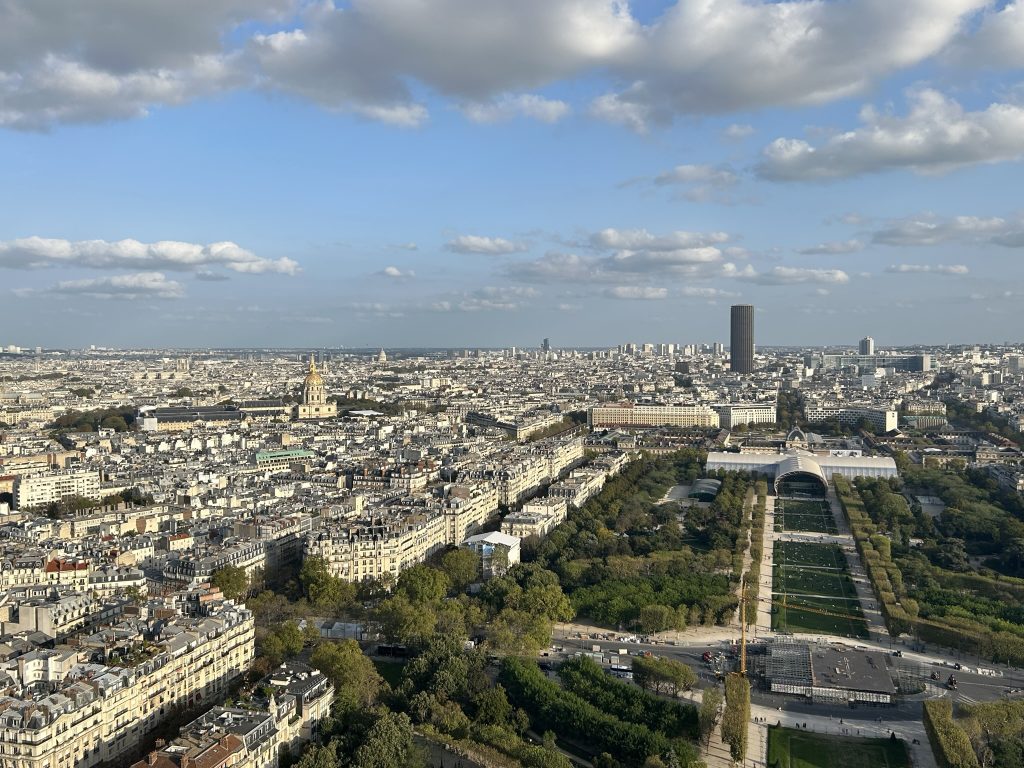
Sunset Over Athens

The sun is starting to sink over Athens and the guards start ushering people towards the exit. Although the Acropolis is supposed to stay open until 8 PM, that apparently is not the case. I suppose they want everyone off before darkness falls which, considering the roughness of some of the steps, is a good idea.

Spectacular view over the large city of Athens facing west to a beautiful sunset. The view is taken from the top of the Acropolis and is well worth the climb to see in the early evening.

The journey back down the slopes of the Acropolis is much easier than the journey up. Before long, we’re back in front of the Acropolis Museum.

Because it’s a Friday, the museum is open until 10 PM. Visiting it after an early evening climb to the Acropolis makes a perfect ending to an Acropolis outing.

Accessing the Acropolis via Elevator

If you are not able to climb the many, many steps to the Acropolis, you may be able to use the elevator. Thank you to a commenter on this post for reminding me that an elevator is available.

Note that access is strictly controlled. You need to prove you are disabled, and should call ahead to check availability. The number is  +30 210 3214172 or +30 210 9238470

The ride up takes just 32 seconds!

Visiting the Acropolis Museum

This museum is an Athens must-see. It’s brand new and gorgeous and is equally rewarding whether visited before or after climbing to the Acropolis. And if the weather and crowds prevent you from making the climb, the Acropolis Museum is a fine consolation prize.

The stylish and modern entrance to the Acropolis Museum in Athens, a must-see museum to learn more about the temples and the history of the Acropolis.
Entrance to the Acropolis Museum in Athens

The three floors of the museum are large and airy with beautifully curated displays of artifacts from the Acropolis of Athens. In addition, informative videos, and lots of information in English, bring Greek history to life.

Allow at least two hours to tour the museum.

A highlight are the original statues from the Temple of Erechtheion. The details in the robes and hair of the women are astonishing.

On the top floor, you can see great views of the Acropolis. Since we are visiting in the evening, the floodlit ruins appear to float in the night sky.

Floodlit view of the Acropolis as seen through a large window on the top flow of the Acropolis Museum.

Also on the top floor is the glass-encased “Parthenon Gallery” on which the relief sculptures of the Parthenon frieze are exhibited in continuous sequence around all four sides, mimicking the real Parthenon.

While most of the sculptures were long ago plundered by Lord Elgin, enough remain to give an idea of the splendor of the original building.

Plenty of information is provided to help visitors visualize the original friezes as well as understand the significance of the sculpted figures. It’s a pretty cool experience to walk around the four sides of the massive structure on the top floor, occasionally glancing out the window to see the real thing rising into an indigo sky from the moonlit Acropolis.

On the ground floor, wide expanses of glass that you can walk over allow you to view the active archaeological dig below ground.

View of archaeological ruins below street level at the Acropolis Museum in Athens visible as you walk in the entrance. This museum is one of Athens's must-see archaeological museums.

When to Visit the Acropolis Museum in Athens

I highly recommend visiting the Acropolis Museum in the evening, if possible. We pretty much had the place to ourselves for the entire visit. Earlier in the day, the museum can get very crowded because people often go to the Acropolis first and then visit the museum.


Acropolis Tours & Tickets Comparison

Skip-the-Line Entry Ticket + Audio Guide

Includes

  • Timed-entry ticket sent to your phone
  • Self-guided audio tour of the Acropolis
  • Optional live guide upgrade available
  • Explore at your own pace

Best for

Independent travelers who want to move at their own pace with audio context

Why choose it

Pre-booked ticket means no queuing at the ticket office — the most frustrating part of any Acropolis visit

From $41

Book with GetYourGuide

Top rated

Acropolis, Parthenon & Acropolis Museum Guided Tour

Includes

  • Skip-the-line entry to Acropolis and Museum
  • Licensed expert guide, 2-4 hours
  • Private option available
  • Free cancellation up to 24 hours

Best for

First-time visitors who want both the Acropolis and the museum covered in one experience

Why choose it

The museum is as essential as the Acropolis itself — this tour covers both and is rated 4.8 from over 11,000 reviews

From $39

Book with GetYourGuide

Acropolis & Ancient Agora Full Guided Tour

Includes

  • Entry tickets to Acropolis and Ancient Agora
  • Licensed archaeologist or historian guide
  • Wireless headsets throughout
  • 4 hours covering both sites

Best for

Travelers who want to add the Ancient Agora, where Socrates actually walked, to their Acropolis experience

Why choose it

The Agora is one of the highlights of any Athens visit and is included in the combo ticket anyway — this tour makes the most of it

From $124

Book with GetYourGuide

Acropolis & Parthenon Sunset Tour

Includes

  • Acropolis entry ticket
  • Licensed guide in English, Spanish, German, or French
  • Small group, 1.5 hours
  • Free cancellation up to 24 hours

Best for

Visitors who want to avoid the midday heat and see the Parthenon in golden light as the sun sets over Athens

Why choose it

Late afternoon is genuinely the best time to visit and the marble at sunset is something you won’t forget

From $98

Book with GetYourGuide


Cartes Postales from Greece by Victoria Hislop

A contemporary novel in which mysterious postcards from Greece arrive week by week in an English woman’s mailbox, eventually drawing her to Athens and into a stranger’s emotional journey through the country. Illustrated with photographs that bring Greece to life on the page.

Glorious Exploits by Ferdia Lennon

Set in Sicily during the Peloponnesian War, two unemployed potters with a fondness for Euripides hatch a plan to stage a full production of Medea for the Athenian prisoners of war rotting in a rock quarry. A brilliant, unexpected novel about art, war, and what it means to be human.


Acropolis FAQs

Do I need to book Acropolis tickets in advance?

Yes, always. Timed-entry tickets sell out regularly, particularly between April and October. Even in shoulder season you can find yourself waiting for the next available slot, as my daughter and I did when we arrived to find the 4:45 slot gone and had to wait until 5:45. Book online before you go and choose your time slot carefully.

What is the difference between the single and combo ticket?

The single ticket gives you access to the Acropolis and its slopes within a 30-minute window of your chosen time slot. The combo ticket adds the Ancient Agora, Hadrian’s Library, Kerameikos, the Lyceum, the Olympieion, and the Roman Agora, all valid for five days from the date of first use. If you’re spending more than a day in Athens, the combo is almost certainly worth it.

When is the best time to visit the Acropolis?

Late afternoon is my strong recommendation. The heat is more manageable, the light is extraordinary as the sun drops over the city, and the crowds are thinner than at midday. If you time it right, you can visit the Acropolis in the late afternoon and the museum in the evening when it stays open late and is practically empty.

Is the Acropolis Museum worth visiting separately?

Absolutely, and I’d argue it’s as important as the Acropolis itself. The original statues from the Erechtheion are there, the Parthenon frieze is displayed across the entire top floor, and you can look out through the glass at the floodlit Acropolis while standing in front of the artifacts that once adorned it. Allow at least two hours.

How difficult is the climb to the Acropolis?

The climb up is manageable for most people, though the stones are uneven and there’s no shade, so heat is the bigger challenge in summer. The descent is actually trickier, as the marble can be slippery and handrails are limited. Wear proper shoes, not sandals, and take your time going down. An elevator is available for visitors with mobility difficulties; call ahead to arrange access.

Can I visit the Acropolis in summer?

Yes, but go late in the afternoon and bring water, a hat, and sunscreen. Officials sometimes close the site on afternoons when temperatures exceed 40°C. If that happens when you’re there, the Acropolis Museum is an excellent air-conditioned alternative and honestly not a consolation prize at all.
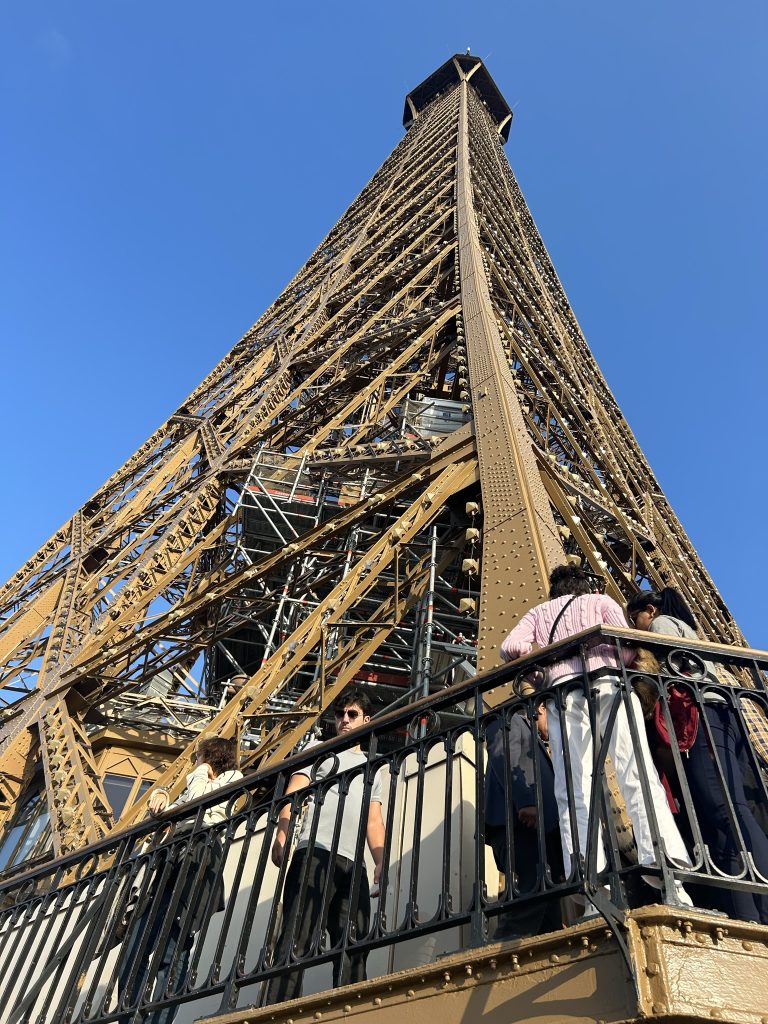
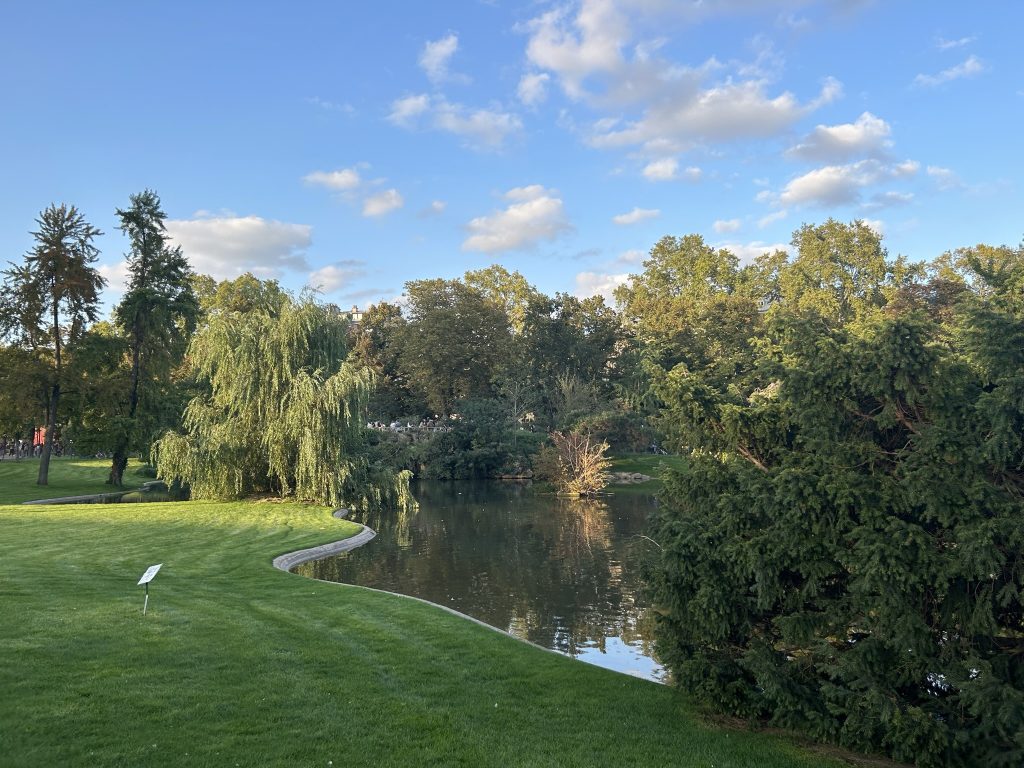
How long does a visit to the Acropolis take?

Plan for at least an hour on the site itself, more if you want to linger. Add another two hours minimum for the museum. If you’re also visiting the Ancient Agora on the combo ticket, that’s a full day of archaeology, so pace yourself and take breaks.


Where to Stay in Athens

On my recent trip to Athens, I stayed at two places: a holiday apartment for two nights and a hotel for one night. I highly recommend both.

Karma Athens: Located on a quiet street just around the corner from the lively Plaka district, Karma Apartments was the perfect place to stay in Athens. Our one-bedroom apartment included a private terrace that featured a peek-a-boo view of the Acropolis.

The building contains only holiday rentals so it’s more like a hotel, but without a reception desk. However, an attendant was there when we arrived early who kindly stored our luggage until the apartment was ready and then carried it up to our apartment on the top floor. The stairs were steep but the climb was worth it.

Hotel Lozenge: This business hotel is located in the high-end Kolonaki area of Athens, within easy walking distance of most of what you’d want to see in Athens. It’s clean and modern with friendly staff and an attached bar-restaurant.

We stayed one night before flying home the next morning, and it was an excellent end-of-trip choice.

Here are some more accommodation options in Athens:


Keep Exploring Greece with Artsy Traveler

The Acropolis of Athens is a definite must-see if you can avoid risking heatstroke or standing in long lines for hours on end. Go late in the afternoon, if possible, scheduling your visit to the Acropolis Museum for when the museum is open late, and take your time.

It’s likely you’ll only make the climb up to the Acropolis once or twice in your life. Make sure the experience is one you look back on with fondness, remembering the thrill of treading in the footsteps of the ancients rather than the tedium of inching painfully across sun-baked stones.

Other posts about Greece:

Carol Cram
About Carol Cram

Carol M. Cram is the author of five award-winning novels inspired by art and the women who shaped it, the creator of Artsy Traveler, an arts-focused travel blog, the founder of Art In Fiction, a curated database of 2,600+ novels inspired by the arts, and the host of The Art In Fiction Podcast. She lives with her husband, artist Gregg Simpson, on beautiful Bowen Island near Vancouver, BC.