
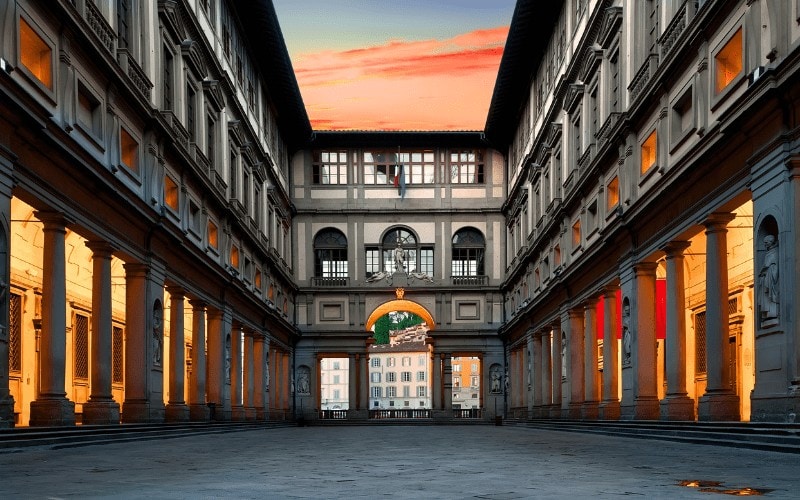
Uffizi Gallery: Top 11 Masterpieces You Can’t Miss (And How to Visit)

I'm Carol Cram, novelist and arts travel writer, and founder of Art In Fiction, a curated database of 2,700+ novels inspired by the arts. Artsy Traveler contains affiliate links for products and services I personally use and recommend. As an Amazon Associate, I earn from qualifying purchases. Please read the Disclosure for more information.
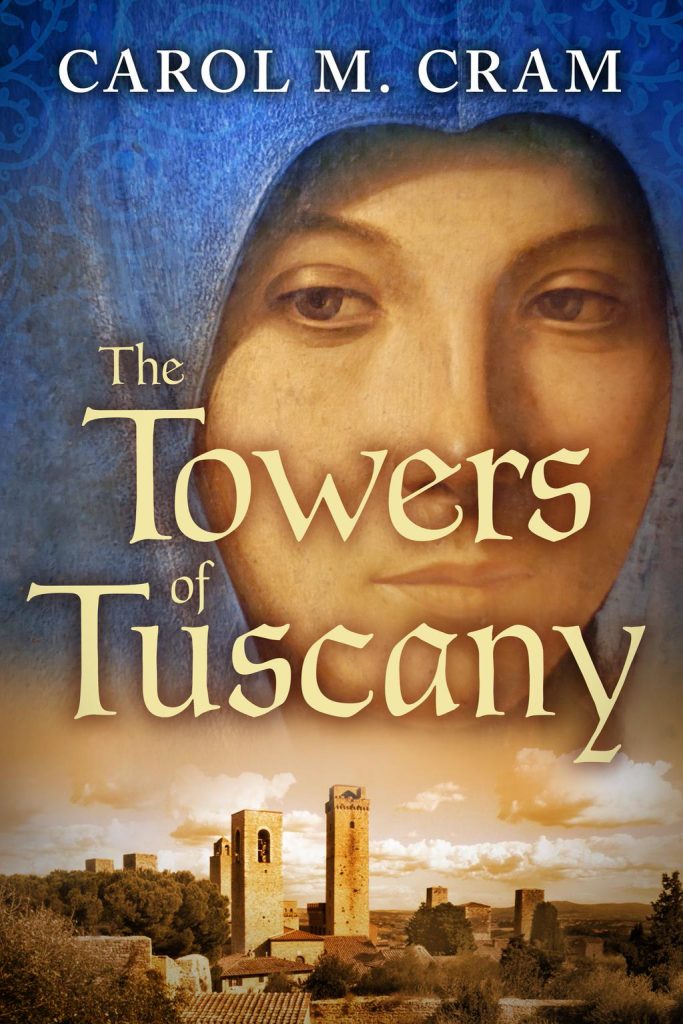
On one of my most memorable visits to the Uffizi, I was traveling in Florence on my own to research my first novel The Towers of Tuscany, about a female artist in 14th century Tuscany.
I entered the large room containing the Annunciation by Martini and just about fell over. Most people walk quite briskly through this room full of masterpieces from the 14th century en route to the Renaissance heavy hitters.
Not me. I love the flattened, more symbolic medieval style that my main character Sofia would have painted in, and I could have stood in front of that Martini for an hour.
That’s the thing about the Uffizi. It contains so many iconic works that trying to see everything is a reliable recipe for sensory overload (the Stendhal Effect is real here), not to mention sore feet. After five visits, I’ve made peace with focusing on a handful of paintings and ignoring the rest.
This post is built around that approach. You’ll find my personal top eleven masterpieces, the ones I seek out every single time, plus practical advice on tickets, timing, and whether a guided tour is worth the extra cost.
One more thing before we start: use the benches. Sitting down to spend five quiet minutes with a single painting beats a breathless sprint past twenty.
Table of Contents
- Quick Facts – Uffizi Gallery in Florence
- Overview of the Uffizi Gallery
- Tickets & Tours Comparison
- Location of the Uffizi Gallery
- Advice for Touring the Uffizi Gallery
- My Eleven Favorite Uffizi Masterpieces
- More to See on Level 1
- Uffizi Gallery FAQs
- Enjoying Florence
- Staying in Florence
- Recommended Novels to Read Before You Go
- Walking Tours in Florence
- More Great Galleries in Europe on Artsy Traveler
Quick Facts – Uffizi Gallery in Florence
- Must-see works: Birth of Venus, The Duke and Duchess of Urbino, Madonna of the Goldfinch, The Battle of Romano, Judith Beheading Holofernes (and more)
- Best time to visit: Early morning as soon as the museum opens or in late afternoon; book a timed entry ticket to avoid long lines.
- Recommended booking in advance: See the Tickets & Tours Comparison below for options at every price point, from timed entry to private guided tours.
- Visit duration: Allow at least 2–3 hours; if you’re an art-lover allow 4+ hours (take some breaks).
- Where to stay nearby: Santa Croce / Oltrarno (less crowded), historic centre near Piazza della Signoria.
- Transport tip: From Florence Santa Maria Novella station it’s a 10-minute walk; use the Firenze Card if visiting multiple museums.
Ready to book? Jump to Tickets & Tours Comparison ↓
Overview of the Uffizi Gallery
The Uffizi (which means offices) was built in the mid 16th century by the all-powerful Medici family to administer their vast holdings and show off their art collections.
Designed by Giorgio Vasari, the Uffizi was opened to the public as a museum in 1769.
The Uffizi is big and crowded and, quite frankly, overwhelming. All that amazing art concentrated in one space makes for a heady experience. Take your time and enjoy the ride.
Assume you’ll return!
When to Visit the Uffizi Gallery
The very best time to visit the Uffizi Gallery is first thing in the morning, particularly if you are visiting in high season (April to October).
You’ll have the vast complex to yourself, at least for a little while, so you can trip wide-eyed from room to room in peace. You may even snag a place in front of one of the two most famous Botticellis without sharing air with dozens of other people.
If you’re visiting Florence between November and March, you’ll find fewer crowds and a more relaxed pace. As a result, you’ll likely be comfortable visiting at any time of day.
On a recent visit to Florence in November, I chose an afternoon time. Although the Uffizi Gallery was less crowded than I’ve found it at other times of the year, it was hardly empty. I still saw a long line-up of people who hadn’t gotten the memo about buying their tickets in advance, and large groups of art lovers still jockeyed for position in front of the Botticellis.
Tickets & Tours Comparison
No matter what time of year you visit Florence, purchase your tickets to the Uffizi Gallery in advance. In high season, purchase them at least a week or more before your visit. You’ll get the entry time that suits your schedule, and you won’t need to queue.
I arrived at the Uffizi about 45 minutes before the 13:15 entry time on my ticket. The weary ticket collector let me in anyway, probably because it was November. The only delay was getting through security.
Whether you want to go at your own pace with a timed entry ticket and audio guide, join a small group with an expert guide, or book a fully private tour, GetYourGuide has good options at every price point. See the comparison below to find what suits your trip.
Timed Entry + App Audioguide
Includes
- Timed-entry ticket
- Digital app audioguide
- Self-guided at your own pace
- Stay as long as you like
Best for
Independent travelers who want flexibility and context without a guide
Why choose it
Go at your own pace, linger in front of the Botticellis as long as you want
From $39
Small-Group Tour (Max 9) + Vasari Option
Includes
- Expert guide, max 9 guests
- Reserved skip-the-line entry
- 2 hours in the Uffizi
- Optional Vasari Corridor add-on
Best for
Travelers who want guided depth without a large group
Why choose it
The Vasari Corridor option adds access to the secret elevated passage the Medici used to move through Florence unseen
From $87
Uffizi + Accademia & David Walk with Art Historian
Includes
- Skip-the-line entry to Uffizi and Accademia
- Expert art historian guide, max 9 guests
- Authentic gelato tasting included
- 3.5–4 hours covering both museums
Best for
Serious art lovers who want both the Uffizi and Michelangelo’s David in one day
Why choose it
An art historian guide who connects the dots between Botticelli, Michelangelo, and the Medici world that made them — plus gelato
From $151
Private Uffizi Tour
Includes
- Private guide, your group only
- Skip-the-line entry
- 3 hours in the Uffizi
- Hotel pickup and drop-off
Best for
Families, couples, or anyone who wants a fully personalized experience
Why choose it
Your guide, your pace, your questions — no one else’s agenda in the room
From $290
Practical Planning
For practical planning details including the best times to visit, ticket prices, and which rooms to prioritize, Art Visit Guide’s Uffizi visitor guide is an excellent resource. Their room-by-room approach takes the guesswork out of navigating one of the world’s busiest museums.
Location of the Uffizi Gallery
The map below shows the location of the Uffizi Gallery in Florence.
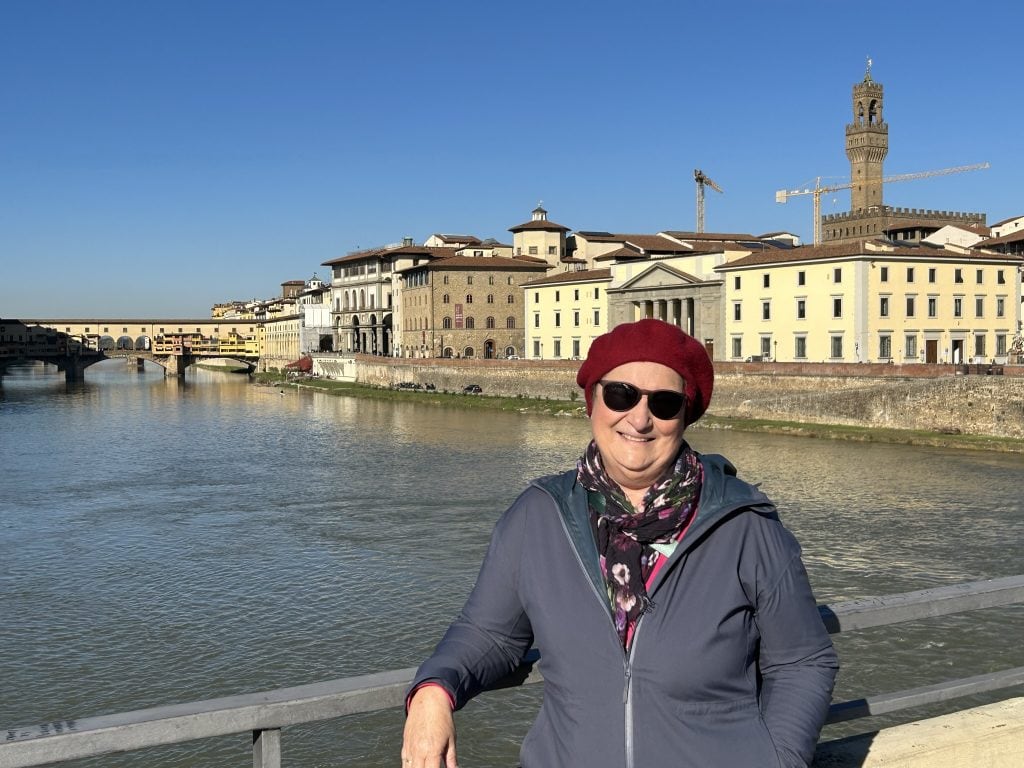
Also shown is the location of the Accademia (#2), the Duomo (aka Cathedral of Santa Maria del Fiore at #3), the Bargelo (#4), the Museo di Palazzo Davanzati (#5), an awesome small museum showing what life was like for a wealthy person in medieval Florence, and the gorgeous apartment we stayed in on the banks of the Arno during our three-day stay in Florence in November (#6: see below for more information about the Palazzo Serristori Residence — highly recommended).
Advice for Touring the Uffizi Gallery
As mentioned, the Uffizi Gallery is large and brimming over with amazing art, particularly Renaissance masterpieces.
To avoid burnout, focus on enjoying ten to twenty pieces rather than stopping to admire every one. Doing so will quickly exhaust you.
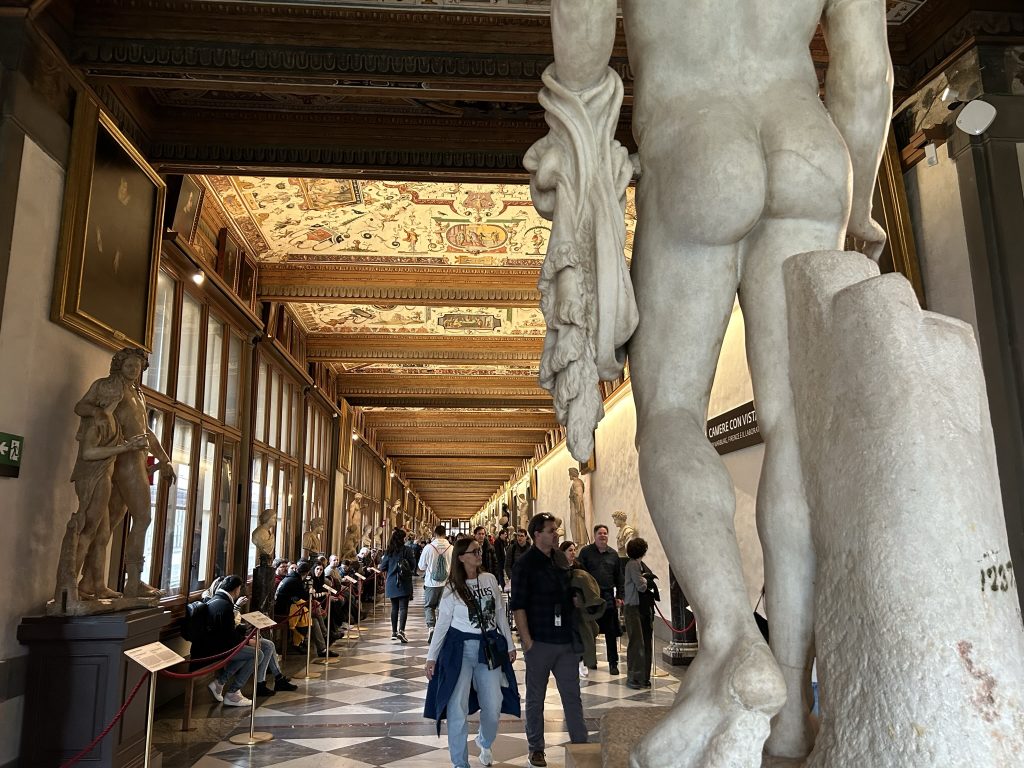
The Uffizi’s collection of amazing artwork is spread across two floors, with the most famous pieces by artists such as Botticelli, Michelangelo, Raphael, and Giotto located on the second floor.
Take the elevator to Level 2 and then start with the room of medieval art that contains gorgeous works by Giotti, Lorenzetti, and Martini.
My Eleven Favorite Uffizi Masterpieces
Here are my eleven favorite pieces in the Uffizi, presented by artist and in the order in which you’ll encounter them.
Giotto
I’ve become a big Giotto fan over the years. Although he died in 1337, Giotto is considered the first artist of the Renaissance because of his use of realism to depict his subjects.
His most famous works are the frescoes in the Scrovegni Chapel in Padua and in the Basilica of Saint Francis in Assisi.
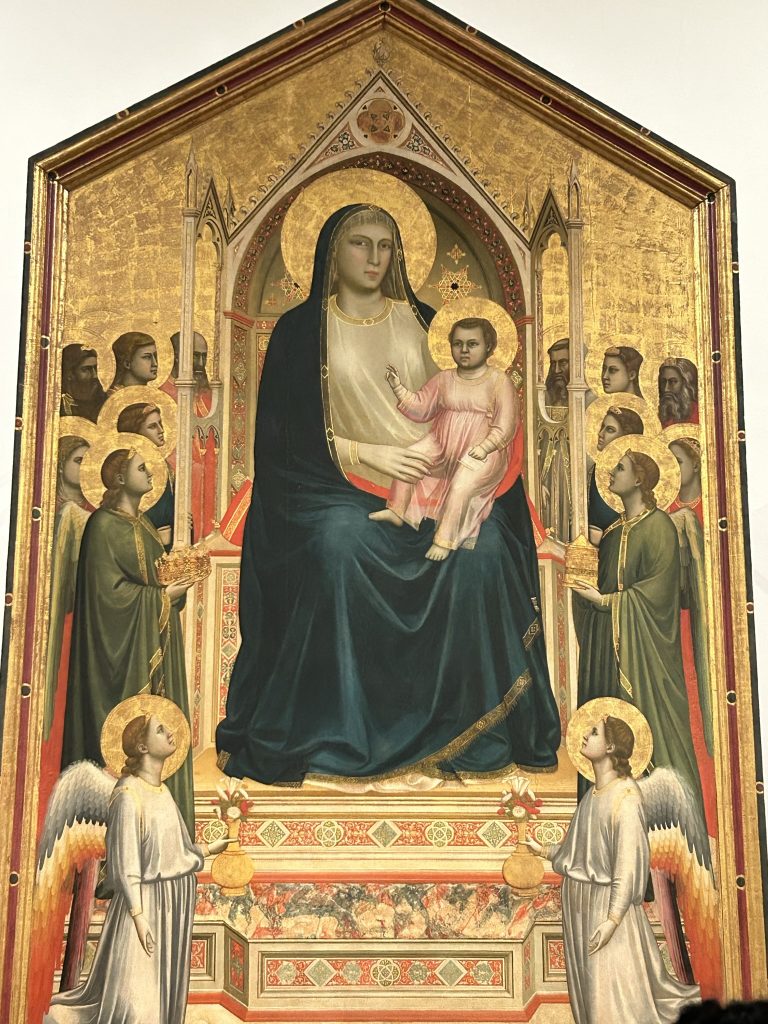
Madonna and Child Enthroned with Angels and Saints shown below is one of Giotto’s most iconic pieces. It’s breathtaking, particularly when you realize that Giotto painted it in 1306 at a time when other artists were still depicting everything on one plane.
Check out the Madonna’s knee under the blue drapery of her gown. It’s three-dimensional. This use of perspective set Giotto apart from his contemporaries and heralded the realism that became the hallmark of Renaissance painters such as da Vinci and Raphael over 150 years later.
This painting was a source of inspiration for Florentine artists for generations.
Martini
I have a huge soft spot for Simone Martini, who was active in the mid-14th century. I even include a reference to his Maestà fresco in Siena’s Palazzo Pubblico in my novel The Towers of Tuscany.
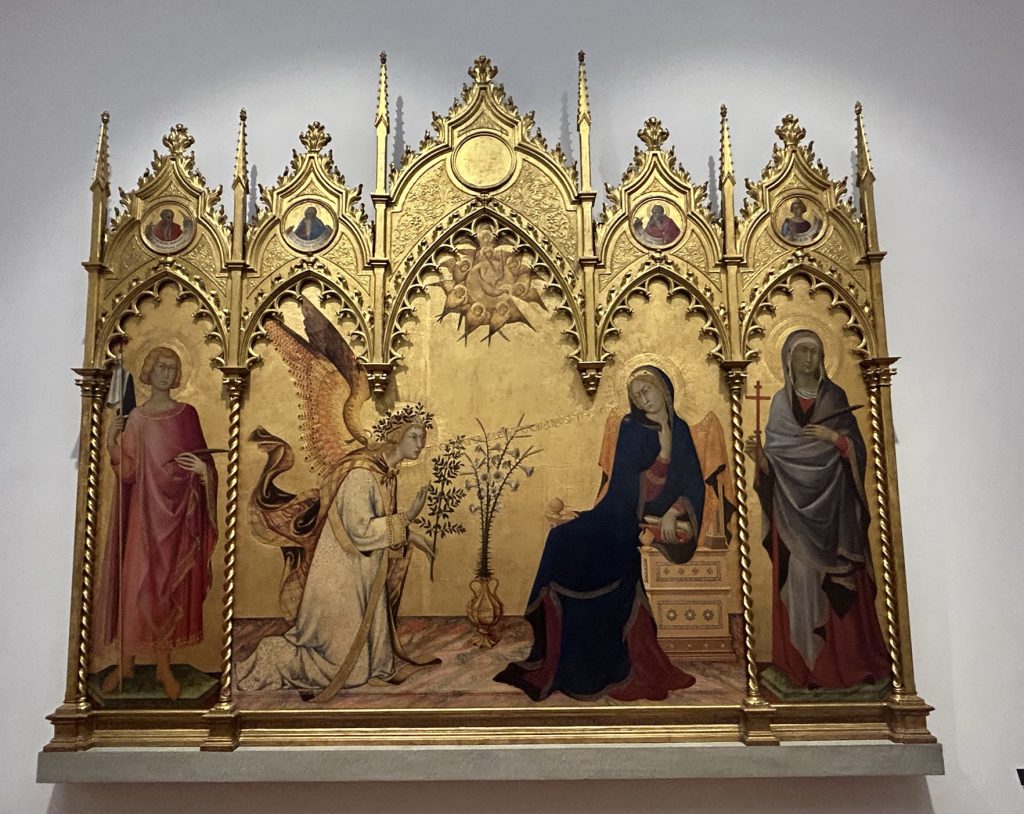
In The Annunciation with St. Ansanus and St. Maxima, below, check out Martini’s over-the-top use of gold, as well as how he shows the Archangel Gabriel in relationship to Mary.
Martini depicts a fluttering cloak and unfurled wings to suggest that the angel’s appearance is sudden. No wonder Mary looks distressed, turning away and wrapping her cloak around her. The fact that Gabriel is telling her she’s to be the mother of Jesus would have likely added to her confusion and distress.
In her hand, Mary holds a book. Martini is likening her to a wealthy Sienese woman, the only kind of woman who would be able to afford a book, much less read it. Memmo Lippi is also given credit for the work.
Lorenzetti
Every time I walk into a room of medieval paintings in an art museum, I make a beeline for anything painted by Ambrolgio Lorenzetti. He’s a Siena hometown boy who was a major figure in his day, before succumbing to the plague (so far as we know) in 1348.
He painted The Allegory of Good and Bad Government frescoes in Siena’s Palazzo Pubblico, one of the palazzo’s many breathtaking highlights.
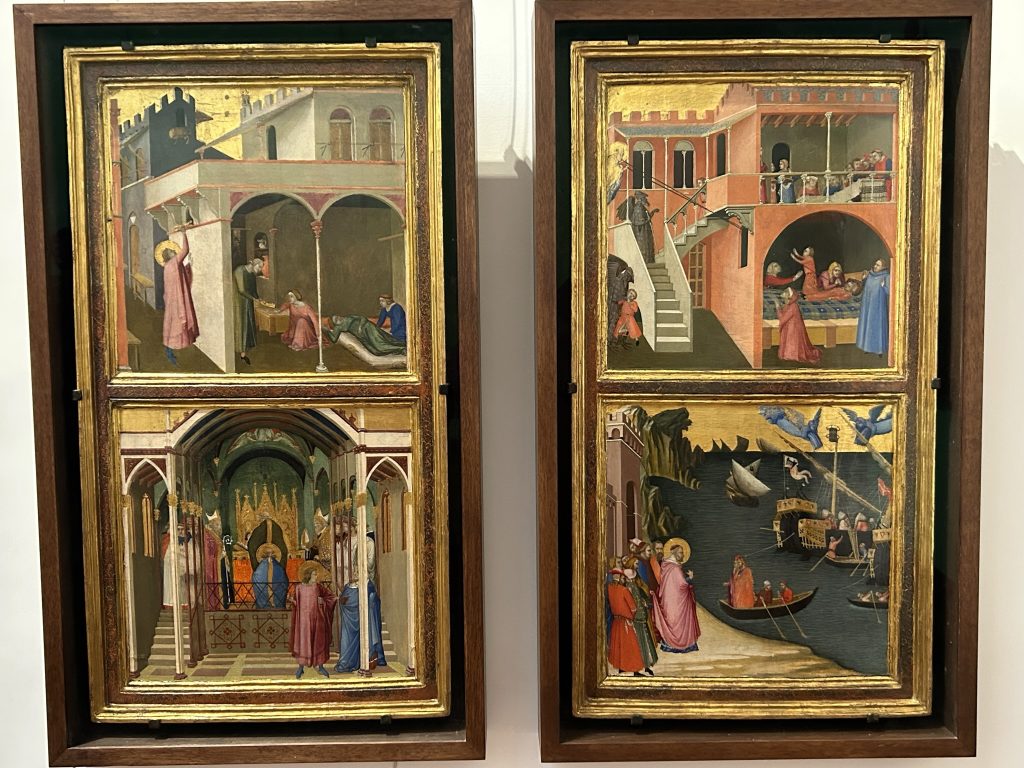
Lorenzetti painted the four panels from the life of St. Nicholas shown below. I get such a kick out of Lorenzetti’s depictions of people and life in medieval Siena and the architecture: the graceful archways, exterior staircases, and crenelated rooftops.
I’ve spent a lot of time over the years looking at Lorenzetti’s work to help me visualize what Siena looked like in the mid-14th century so that I can accurately write about the period.
St. Nicolas Gives to the Poor
In the top left painting, St. Nicholas is throwing pieces of gold to a poor man to enable him to gather the dowry required to marry off his daughters. The point is that St. Nicholas is carrying out the charitable deed secretly and humbly, without seeking acknowledgment. What a swell guy!
St. Nicholas Gets Ordained
In the bottom left painting, St. Nicholas is being ordained as a bishop of the city of Myra in Asia Minor. The legend is that the prelates who had gathered to elect the new bishop of Myra heard a voice ordering them to choose the first man named Nicholas who entered the church.
And guess who just happened to walk in?
St. Nicholas Raises the Dead
The top right painting depicts a miracle performed by St. Nicholas after his death. He returns to bring a child back to life after the child was killed by the devil disguised as a pilgrim (the figure in black mounting the stairs).
There’s a lot to look at in this panel. I particularly like the way the figures are portrayed in the upper and lower rooms.
St. Nicholas Talks to Sailors
In the bottom right panel, Nicholas asks sailors to give some of the grain their ships are carrying to the starving people of Myra. When the sailors comply, the ships are miraculously replenished with grain.
Uccello
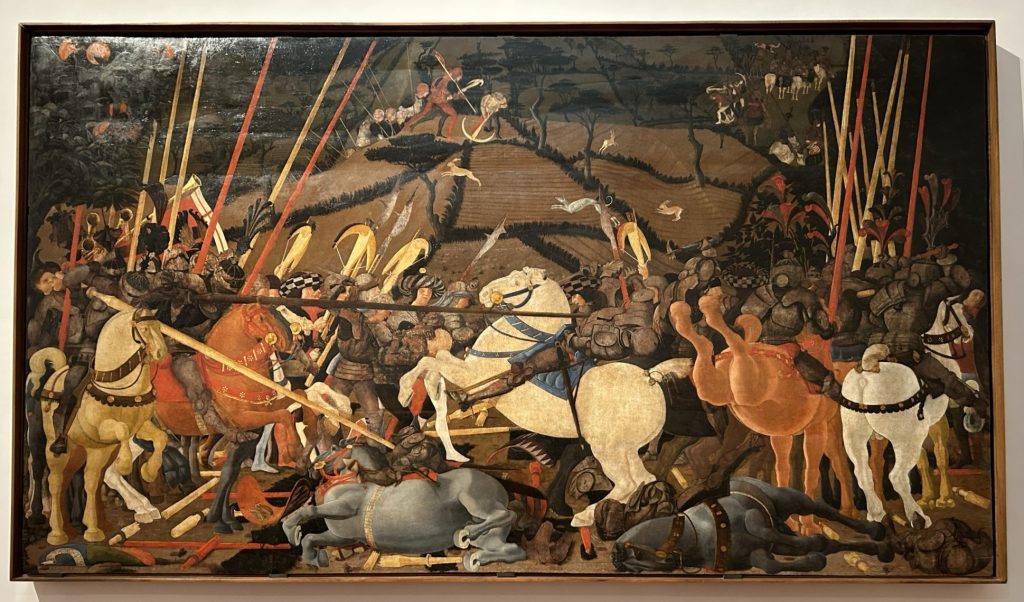
This large painting by Paolo Uccello dominated the wall on which it was installed in the Uffizi Gallery. Check out all the horses; there’s so much vigor and action.
The painting is called The Battle of San Romano and is part of a cycle of three paintings that celebrated the victory of the Florentine forces over the Sienese troops in 1432.
Poor Siena. It had a tough time after being devastated by plague in 1348 and then suffering numerous mercenary raids, famines, and hostile takeovers culminating in its defeat at the hands of the bellicose Florentines in 1432.
While I’m firmly on the side of Team Siena since I wrote a novel set there, I have to admire how Uccello depicted the battle in his painting.
Botticelli
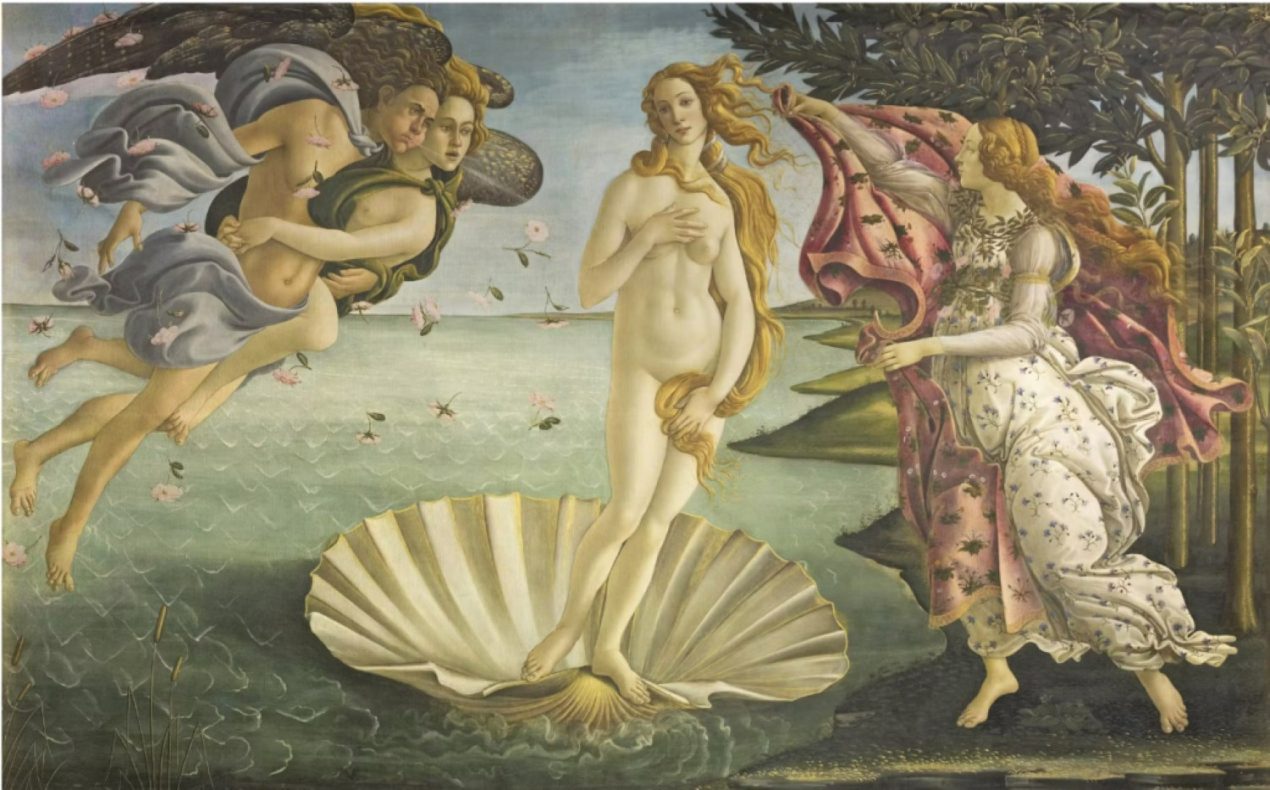
No visit to the Uffizi Gallery is complete without doing some serious swooning in front of two of Botticelli’s most famous paintings–Primavera and Birth of Venus.
Both paintings are huge and fabulous; that is, if you can get close enough to get a good, long look.
The large room in which the paintings are hung is mobbed with visitors, all brandishing cell phones and elbowing for position to get a good shot.
I know. I was one of them.
Standing in quiet contemplation is out of the question. But it’s still worth seeing the paintings in the flesh, so to speak, just to confirm that yes, indeed, they deserve their vaunted place in Western art history.
The figures are ethereal and also realistic, the movement joyous, the themes full of promise and celebration. I don’t think it’s possible to look at Botticelli’s masterpieces and not smile.
Primavera
Here’s what you see while approaching Primavera.
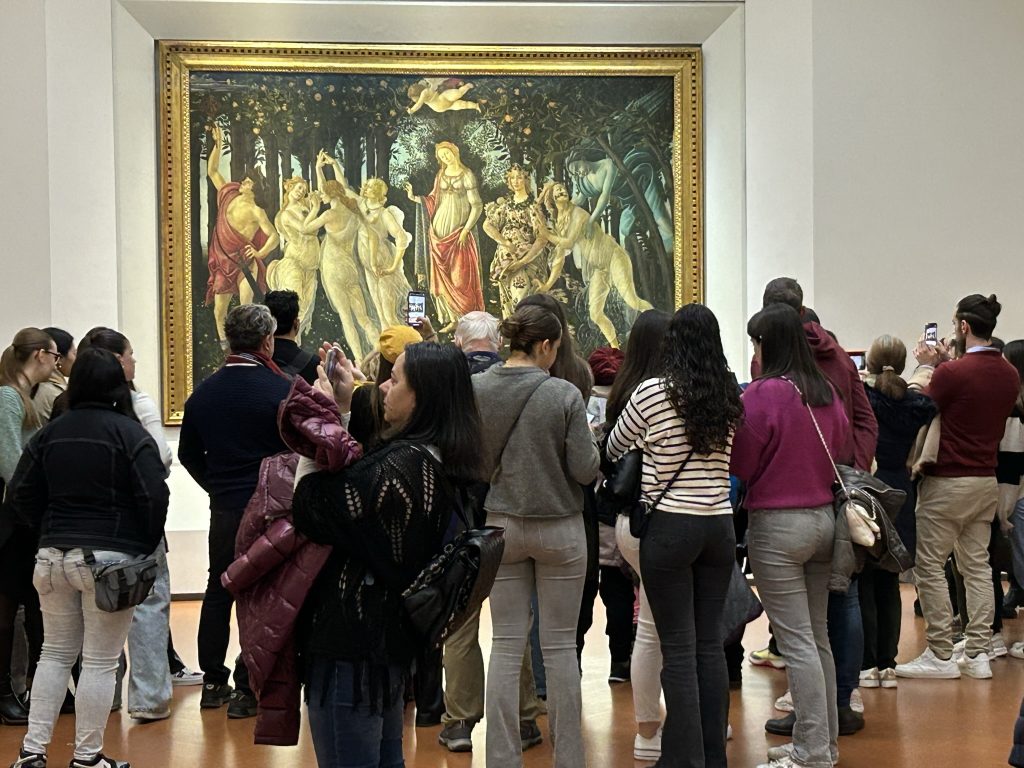
And here’s the shot I managed to get when it was my turn to step in front of the painting.
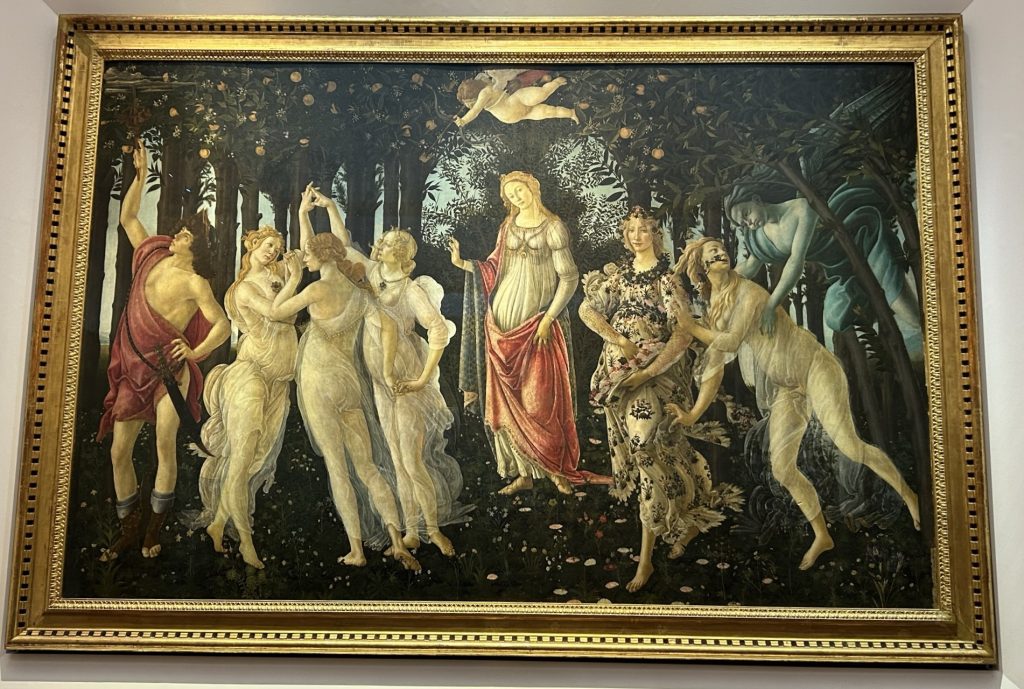
Botticelli had chops, all right. Look at how he depicts the gossamer draperies encasing the three dancing muses and the figure to the right. The central figure in the painting is Venus, goddess of love and beauty. She’s a stunner for sure.
Birth of Venus
Birth of Venus is just as mobbed as Primavera, which comes as no surprise considering versions of this work appear on everything from aprons to mugs to mouse pads in Florence’s gift shops.
There is so much movement that you can practically feel the wind in your hair as you contemplate this painting, which depicts Venus, goddess of love and beauty, surfing to shore on a clam shell, gently spritzed with sea spray and blown by the winds Zephyr and Aura.
I wasn’t able to get a decent shot of the painting, so the image below is from the Uffizi’s marvelous website.
Michelangelo
Florence’s Number One Son is well represented at the Uffizi Gallery and elsewhere in Florence. Thanks to a long and prolific career, Michelangelo’s work is pretty much synonymous with the Italian Renaissance.
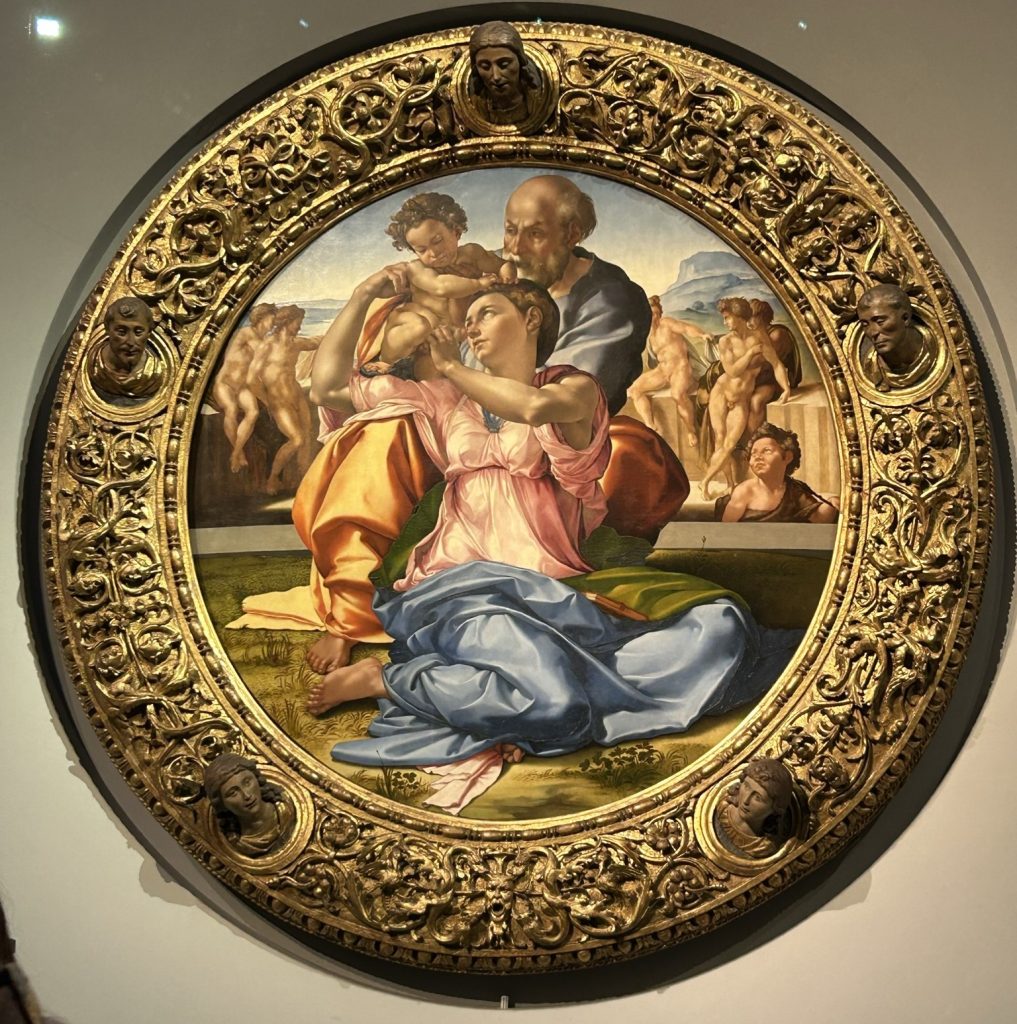
One of the masterpieces at the Uffizi Gallery is the magnificent, circular Doni Tondo, the only finished panel painting done by Michelangelo that has survived the centuries.
It glows.
Piero della Francesca
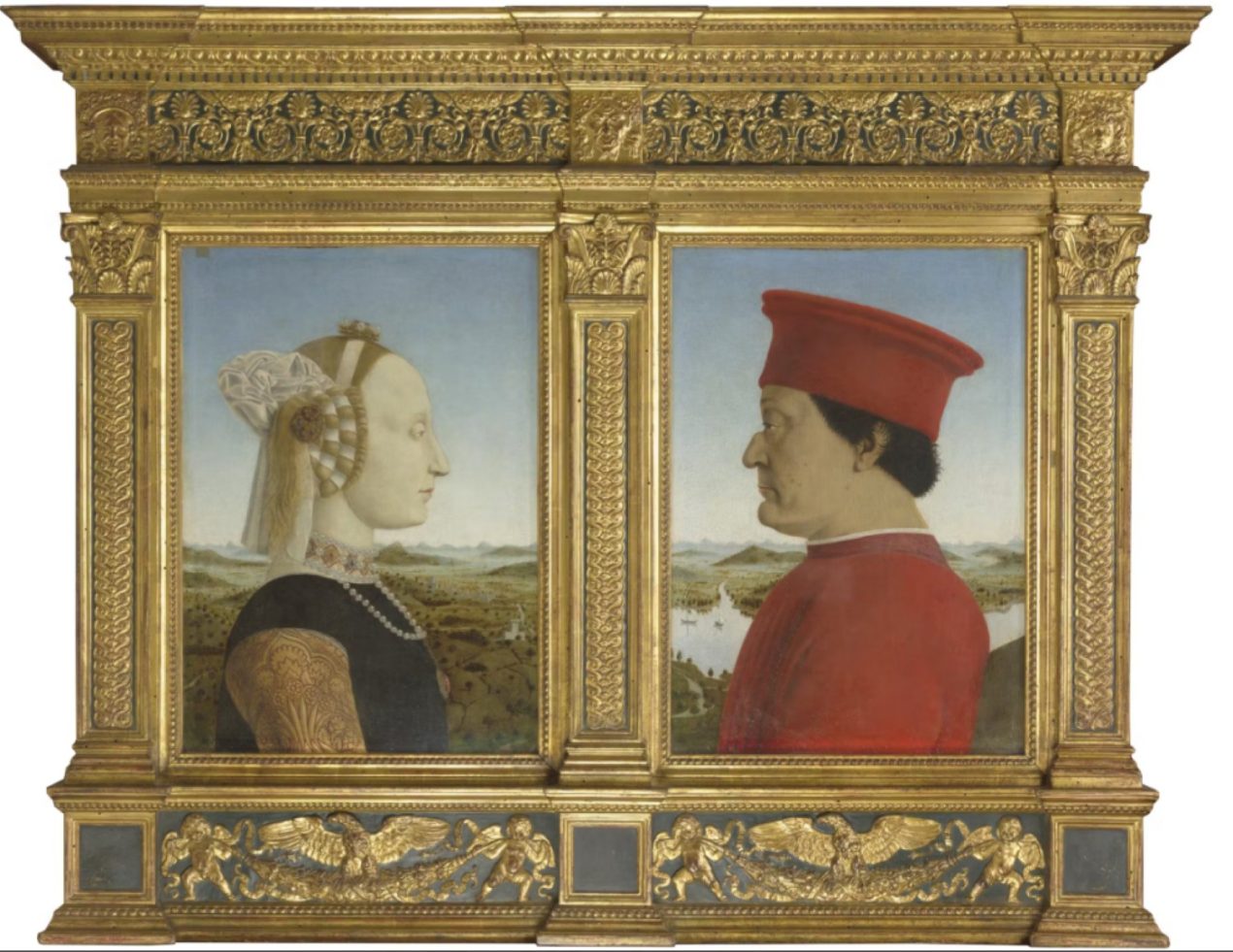
Piero della Francesca’s double portrait of the Grand Duke of Urbino and his wife positively defines aristocratic haughtiness. Imagine how long the duchess must have had to sit still to have that hairdo done.
I’m hoping it wasn’t a daily thing.
Look at how the background continues through from one side to the next. Showing the two figures in profile was a typical device in 15th-century portraiture that was a throwback to ancient coins. The artist’s attention to detail is the result of his training in both Florentine and Flemish traditions.
Leonardo da Vinci
Another big draw to the Uffizi Gallery is the presence of a handful of paintings by Leonardo da Vinci.
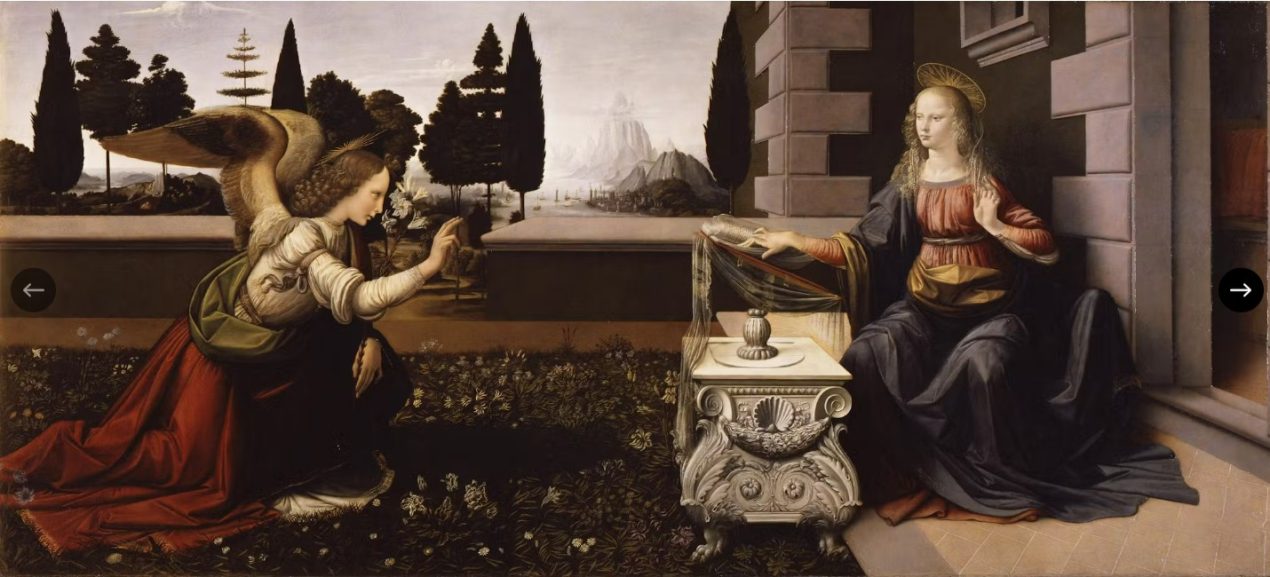
My favorite is his Annunciation because I love the contrast in styles between da Vinci’s version done in the late 15th century and Martini’s version done in the mid-14th century (see above).
In da Vinci’s Annunciation, the figures are rendered extremely realistically and are also quite static. The Virgin is not shrinking away from Archangel Gabriel but is confident and receptive. The trees almost look like fantasy trees, and the distant mountains like something out of Lord of the Rings.
The way da Vinci renders the folds of the clothing is remarkable, considering he completed this painting when he was still quite young.
Raphael
I’ve grown to appreciate Raphael’s work over the years. He’s certainly one of the biggies, considered by some to be the greatest painter of them all.
There’s a lot of justification for that view. Unlike Michelangelo and da Vinci, who had other pursuits (science for da Vinci and architecture and sculpture for Michelangelo), Raphael only did painting, and an astonishing amount of it considering he died young, while da Vinci and Michelangelo both lived to ripe old ages.
The work by Raphael I most liked in the Uffizi is Madonna of the Goldfinch. The expression on the face of the Virgin Mary is so youthful and serene. Unlike many Madonnas, she really does look like a young mum.
The trees and landscape in the background are also beautifully rendered. In places, they almost look like something Cézanne would have painted 400 years later.
And check out the red of the Madonna’s gown–so rich and full and Florentine. It’s a keeper.

Artemisia Gentileschi
After exploring Level 2, head down the stairs to Level 1 and the rooms full of Baroque masterpieces. My favorite is Judith Beheading Holofernes by Artemisia Gentileschi.
Along with a heartening number of female painters, Artemisia is having a well-deserved revival, and deservedly so. A few years ago, I saw a fabulous retrospective of her work in Paris.
She was the first woman admitted to the Accademia delle Arti del Disegno in Florence, painted professionally at a time when female artists were rare, and produced a body of work that was largely overlooked for centuries before being rediscovered and celebrated.
Artemisia painted Judith Beheading Holofernes around 1612, and it pulls no punches. Judith and her maidservant are not fan-fluttering bystanders, paling at the sight of blood. Quite the opposite. They are unflinching women with a job to do. Let’s face it: these chicks mean business.
The contrast with the many male-painted versions of this scene, where Judith tends to look vaguely apologetic about the whole business, is striking.
Read any of several novels written about her and you’ll quickly discover that Artemisia knew a thing or two about determination. Good bets are The Passion of Artemisia by Susan Vreeland and Disobedient by Elizabeth Fremantle.
As someone who writes historical fiction about women navigating male-dominated worlds, I find Artemisia’s story as compelling as her art. Standing in front of this painting, I always feel like she’s telling us something we still need to hear.

More to See on Level 1
Additional highlights include Titian’s Venus of Urbino and Caravaggio’s Medusa.


Uffizi Gallery FAQs
Here are answers to questions I’ve been asked most frequently about visiting and enjoying the Uffizi Gallery in Florence:
The key works you shouldn’t miss include Botticelli’s Birth of Venus and Primavera, Raphael’s Madonna of the Goldfinch, Michelangelo’s Doni Tondo, Giotto’s Madonna and Child Enthroned with Angels and Saints, da Vinci’s Annunciation, and Artemisia Gentileschi’s Judith Beheading Holofernes.
For a solid overview of the top masterpieces, plan for 2–3 hours; art-lovers or slower explorers should allow 4+ hours—and ideally book morning entry to avoid the largest crowds. Take a break or two during your tour to rest and get your bearings.
Early morning when the museum opens, or late afternoon near closing time. Avoid weekends and high-season midday if you want a calmer experience.
Reserve your timed-entry ticket online well ahead, especially if visiting during high season.
Yes, and many people do. Both museums are within easy walking distance of each other. The key is to book timed entry tickets for the Uffizi in the morning and the Accademia in the late afternoon, leaving time for lunch and a wander in between. Be warned: two major museums in one day is ambitious. If you have an extra day in Florence, spreading the visits out will serve you better. You’ll absorb more and your feet will thank you.
For first-time visitors, yes. The Uffizi is vast, the layout can be confusing, and without context it’s easy to walk past something extraordinary without realizing it. A good guide helps you slow down and understand what you’re looking at. For repeat visitors who already know the collection, self-guided is fine. I’ve done both and found the audio guide perfectly adequate for a focused visit.
Enjoying Florence
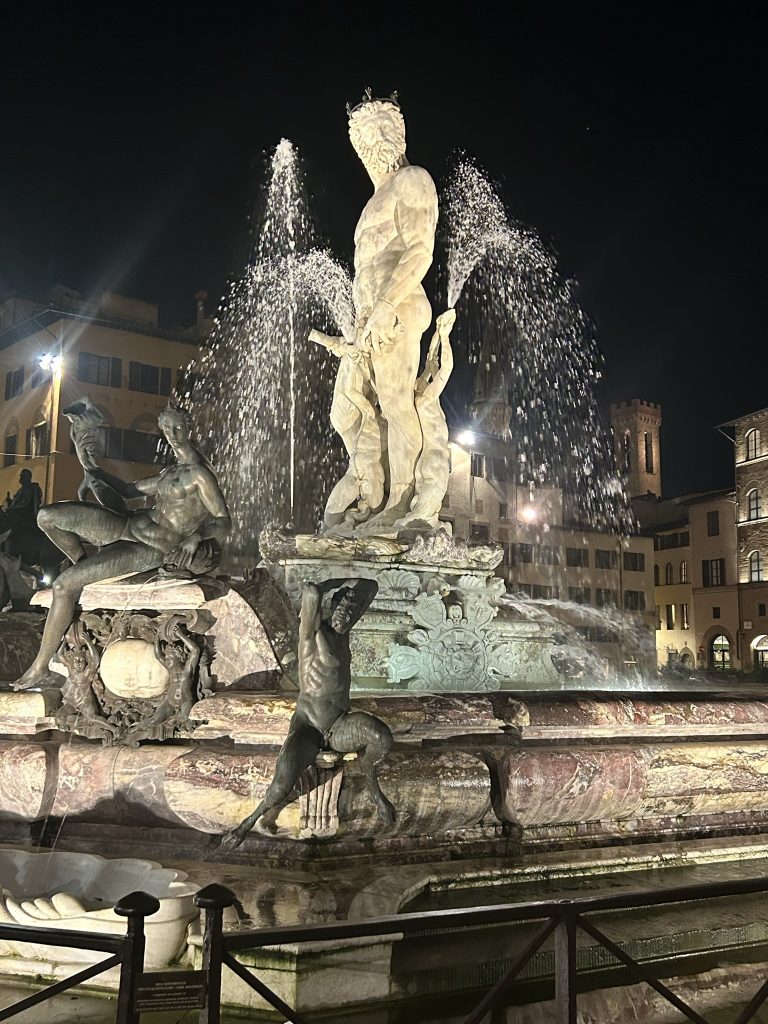
You emerge from the Uffizi into the beautiful piazza della Signoria. Here, you’ll stare up at the Palazzo Vecchio with its iconic tower, check out a statue of Michelangelo’s David (the original is displayed in the Accademia), and marvel at the fountain and statue of Neptune.
Here’s a shot of it in the evening.
Resist the urge to stop and have a coffee at one of the cafés in the piazza. These high-rent places cater to tourists and have eye-watering prices.
Walk a few blocks into the maze of streets leading from the piazza toward the river to find slightly less touristy places, although to be honest, Florence is Tourism Central.
And no wonder! It’s crowded, crammed with souvenir shops, and far from undiscovered. But hey, it’s Florence, and there’s no place on Earth quite like it for conjuring the grandeur and pomposity of the Renaissance.
For a full day of arts-focused sightseeing in Florence that includes the Uffizi, the Palazzo Davanzati, and the Accademia, check out my Perfect Artsy Traveler Day in Florence.
Staying in Florence
On each visit to Florence, I’ve stayed somewhere different, sometimes on the outskirts and sometimes in the middle.
My favorite place is Serristori Palace Residence. Although a bit on the pricey side, the Serristori Palace Residence is excellent value because of the size of the one-bedroom apartment, with its high ceilings, panoramic view of the river, and excellent location about a ten-minute walk from the action.
Here’s a video I shot from my bedroom window early on a breezy November morning.
The walk that takes you along the Arno to the center of Florence is just spectacular, particularly at sunset. Compared to a typical hotel room in Florence, the Serristori Palace Residence is almost a bargain, at least for Florence.
Here’s a map of Florence showing several more accommodation options. Stay as close to the centro as you can.
Recommended Novels to Read Before You Go
The Last Masterpiece by Laura Morelli
Set in WWII Florence, this novel follows Austrian photographer Ava Gruber as she chronicles the fight to protect masterpieces like Botticelli’s Primavera from destruction, revealing how close the world came to losing them.
The Most Beautiful Woman in Florence by Alyssa Palombo
Set in Florence in the 1470s, this novel tells the story of Simonetta Vespucci, the celebrated beauty who was the obsession of Giuliano de’ Medici and the muse of Sandro Botticelli.
Walking Tours in Florence
Florence is a great city for a walking tour. It’s relatively small and there is a LOT to see. Check out these tours offered through GuruWalks.
More Great Galleries in Europe on Artsy Traveler
Here are more posts about my recommendations for touring some of Europe’s most iconic museums:
- Visit These 20 Best Museums in Vienna
- London’s National Gallery: The Best of the Best
- Discover the Masterpieces of the Musée d’Orsay in Paris
- Best of Amsterdam’s Rijksmuseum: Guaranteed Thrills for the Artsy Traveler
- Van Gogh Museum in Amsterdam: Best Bets for the Artsy Traveler
- Cologne’s Museum Ludwig: Best Bet for Modern Art Lovers
- The 12 Best Modern Art Museums in Europe (And Why Each One Is Worth the Trip)
Would you like to save this post?

Carol M. Cram writes novels inspired by the arts; runs Artsy Traveler, an arts-focused travel blog, and Art In Fiction, a curated database of 2,700+ novels inspired by the arts; and hosts The Art In Fiction Podcast. She has also authored 60+ textbooks on computer applications and taught at Capilano University for over two decades. Carol lives with her husband, artist Gregg Simpson, on beautiful Bowen Island near Vancouver, BC.

 See all my novels



Nice post! Very well written and enjoyable to read.