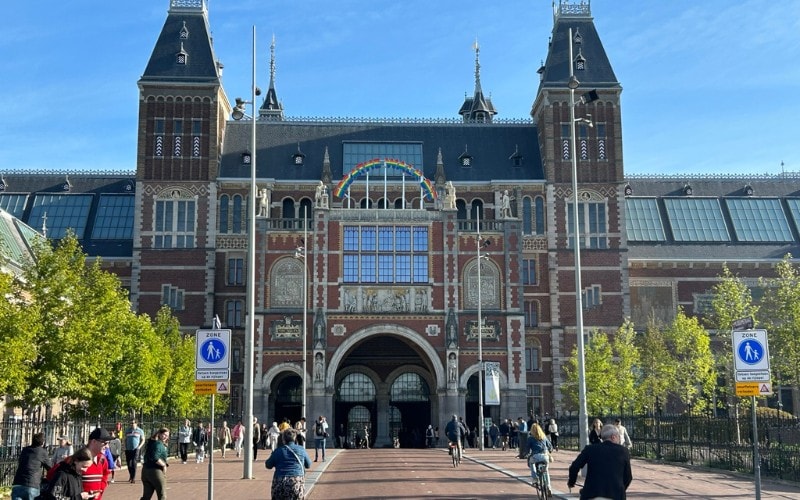
Rijksmuseum, Amsterdam: My Favorites After 50 Years of Visiting
I'm Carol Cram, novelist, podcaster, and travel writer, and founder of Art In Fiction, a curated database of 2600+ novels inspired by the arts. Artsy Traveler contains affiliate links for products and services I personally use and recommend. As an Amazon Associate, I earn from qualifying purchases. Please read the Disclosure for more information.
On my first visit to Amsterdam in 1970, I remember the Dutch National Museum (the Rijksmuseum) as a gloomy, rather dingy place. The famous Night Watch by Rembrandt was so dark as to be virtually invisible, and I don’t recall seeing any of the amazing objets d’art I’ve seen on more recent visits.
Refurbished and renovated, the new Rijksmuseum is a total delight. It’s even more amazing than the Van Gogh Museum, although I suppose it’s not fair to compare.
While most people associate the Rijksmuseum with its stunning collection of paintings by Dutch Old Masters (Rembrandt, Vermeer, Frans Hals and the gang), you’ll see so much more during your visit.
Yes, check out the most famous paintings (more below), but also spend time enjoying the hundreds of other objects on display, from medieval art to porcelain to model ships to doll houses.
And what I really love is that the Rijksmuseum is not overwhelming. To me, it’s a perfectly sized major museum to keep me entertained for a good two or three hours, with a wee break to sample a coffee and a piece of cake in the airy cafeteria and, of course, to check out the gift shop.
Table of Contents
- Rijksmuseum at a Glance
- Location of the Rijksmuseum
- Rijksmuseum Tours & Tickets: Compare Your Options
- Medieval Art: One of the Rijksmuseum’s Hidden Highlights
- Dutch Ships: The Rijksmuseum Highlight Most Visitors Overlook
- Masterworks: Tje Rijksmuseum’s Most Famous Paintings
- Still Lifes: Some of the Best Paintings at the Rijksmuseum
- Porcelain: A Rijksmuseum Highlight Worth Slowing Down For
- The Rijksmuseum Doll Houses: Don’t Walk Past These
- What to Know Before You Visit Rijksmuseum
- Where to Stay in Amsterdam
- Recommended Novels to Read Before You Go
- Keep Exploring Great Art Museums with Artsy Traveler
Rijksmuseum at a Glance
- Marvel at the extensive medieval collection.
- Don’t miss the ship models.
- Check out the Dutch Masters in the Hall of Honour.
- Stay at Here’s Lucy or Mokum Suites in Amsterdam.
- Consider a guided tour to get the most out of your Rijksmuseum visit.
Rijksmuseum: Quick Facts
- Address: Museumstraat 1, Amsterdam
- Hours: Open daily, 9:00–17:00
- Tickets: From €25 per adult
- Book tickets: Rijksmuseum official site
- Ready to book a tour? Jump to Tours & Tickets ↓
Location of the Rijksmuseum
The map below shows the location of the Rijksmuseum (#1) in Amsterdam’s Museumplein, easily reached from the Centrum via trams 2 or 12. Also shown is the location of the Van Gogh Museum (#2) next door, and the location of the charming apartment we stayed in on tiny Sint Nicholastraat in the lively Centrum area (#3). Called Here’s Lucy, it’s highly recommended if you’re looking for a private one-bedroom apartment, and it’s a much better deal than any hotel I’ve ever stayed at in Amsterdam.
The location, not far from Amsterdam Central Station and the Damrak, is pretty much perfect.
Rijksmuseum Tours & Tickets: Compare Your Options
The Rijksmuseum sells out regularly — book ahead. Here’s how the main options compare:
Entry TicketFrom $31 | ⭐ 4.7 (31,757 reviews) Self-guided access to the permanent collection. Explore at your own pace — the Night Watch, the Milkmaid, the ship models, all of it. Best for independent travelers who prefer to wander. |
Most Popular
Small Group Tour + TicketFrom $103 | ⭐ 5.0 (45 reviews) 2.5-hour guided tour with an art historian, max 12 guests. Ticket included. Covers the Dutch Golden Age highlights — Rembrandt, Vermeer, and beyond. Perfect for first-time visitors. |
Semiprivate Tour with Art HistorianFrom $97 | ⭐ 4.6 (10 reviews) 2-hour guided tour, max 5 guests. An art historian leads you through the Dutch Golden Age — not just the famous works but the social and historical stories behind them. Ticket included. |
Private Tour with Art HistorianFrom $194/group | ⭐ 5.0 (2 reviews) 2-hour fully private tour tailored entirely to your interests. Skip-the-line entry included. Your guide adapts the route on the fly — ideal for couples or families who want depth over breadth. |
Prices shown in USD and subject to change. This post contains affiliate links — if you book through them, I earn a small commission at no extra cost to you.
Medieval Art: One of the Rijksmuseum’s Hidden Highlights
The first room I enter features art from the Middle Ages—and wow! I have a soft spot for art from this period that spans from 1100 to about 1500, and the Rijksmuseum has a superb and varied collection. Here are a few of the knockout pieces.
Wood Sculptures
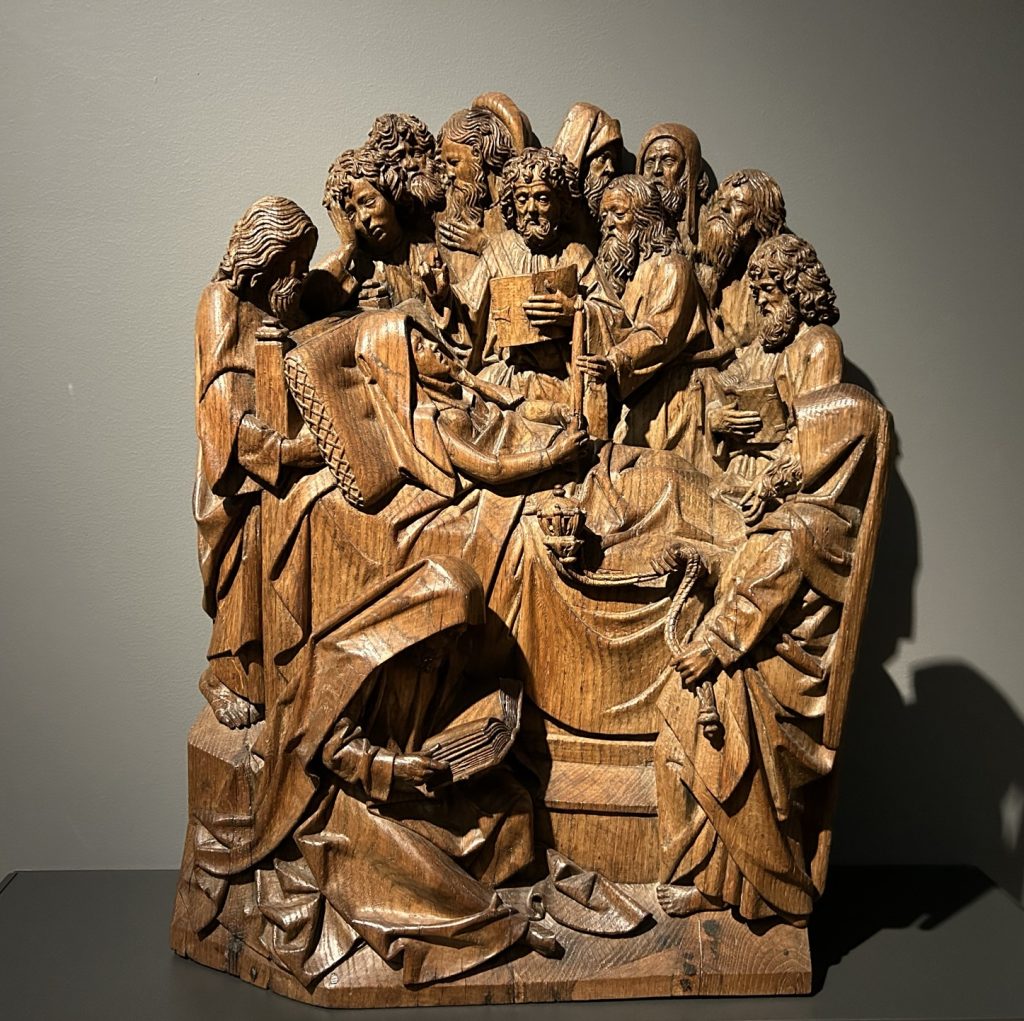
The figures in this wood sculpture were created in 1475 from a hunk of oak and formed part of a large altar. It depicts the adoration of the newborn child by the Virgin, Joseph and the angels. Check out the detail and the expressions on the faces.
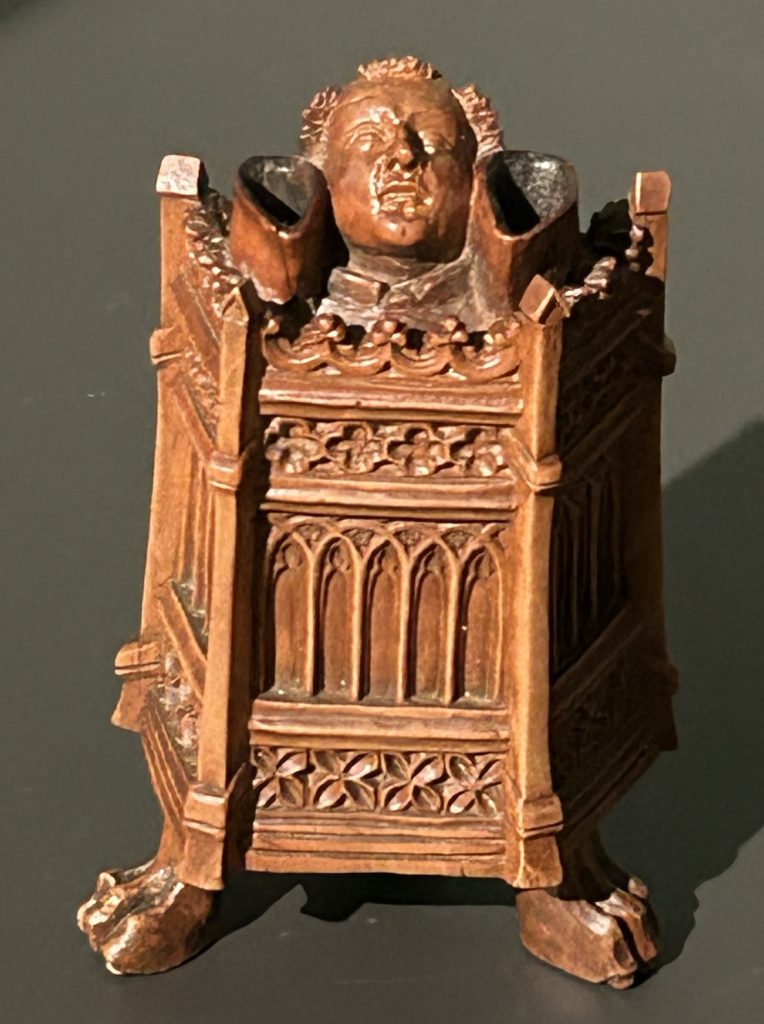
This amusing sculpture from around 1380 of a monk who can barely see over the edge of the pulpit is actually a medieval ink pot. The scribe dipped his pen or quill in the sleeves of the monk’s habit.
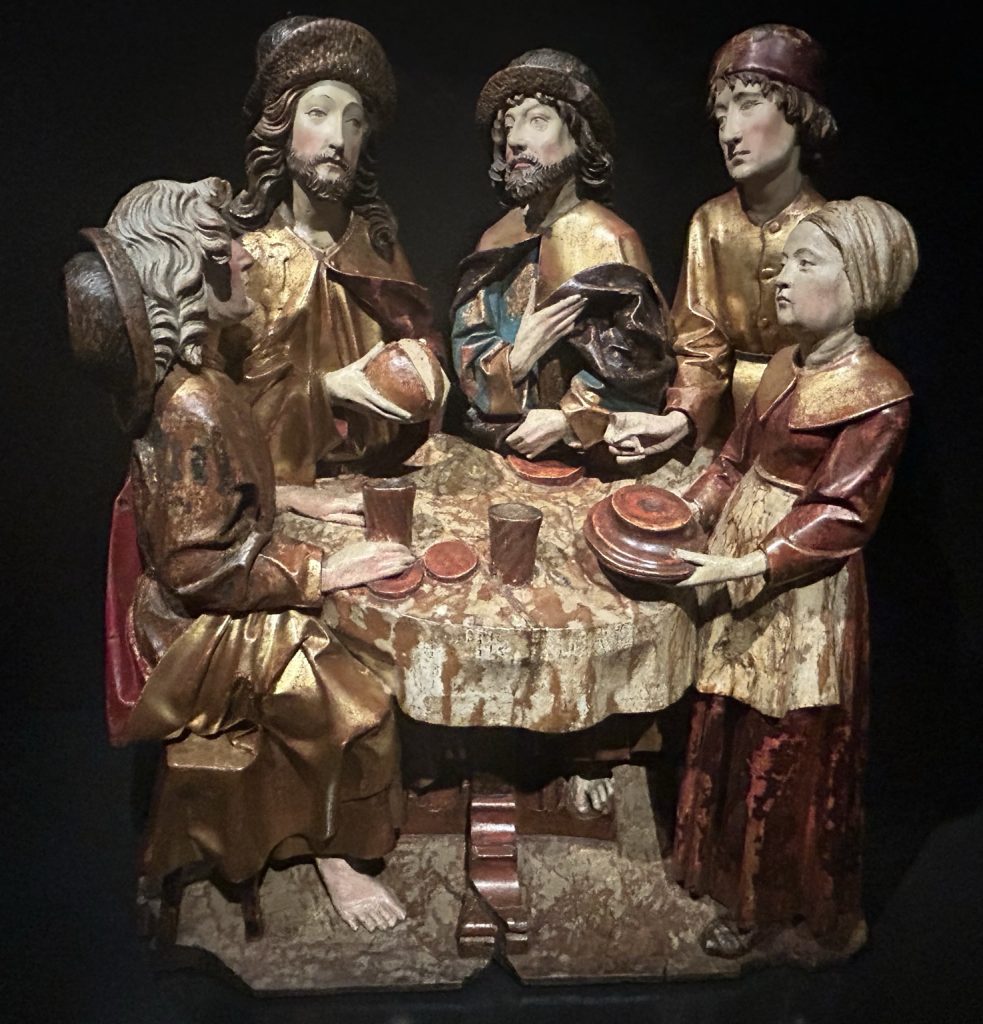
And look at this gem of a sculpture that dates from 1520, closer to Renaissance than medieval. It’s one of three related pieces. This one depicts the celebration of Mass with Christ. Check out the bread Christ holds in his hands and the impassive look on the servant girl’s face.
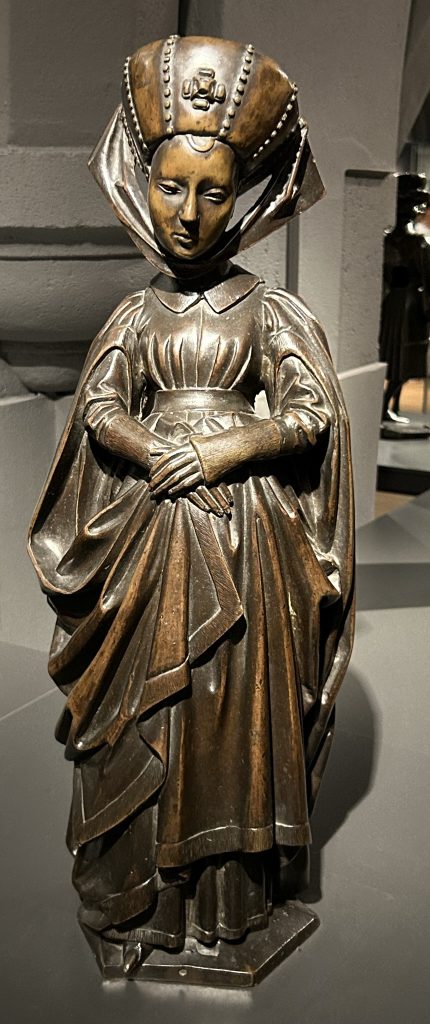
One of the reasons I like medieval art so much is because it depicts the elaborate gowns worn by both men and women, but particularly women.
This wooden sculpture is one of 24 similar-sized sculptures that ringed the tomb of Isabella of Bourbon, the wife of Charles the Bold, Duke of Burgundy. She died in 1465. The figures represented mourning family members and ancestors and were known as “weepers”.
Renaissance Paintings
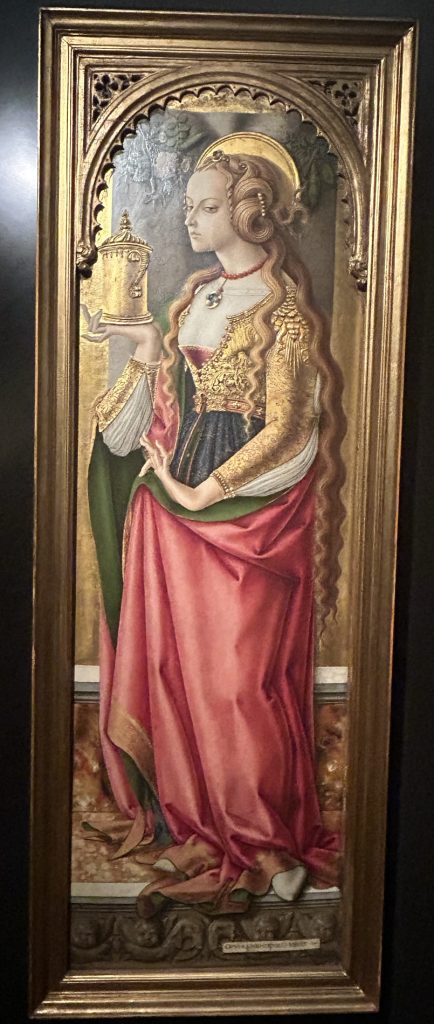
While most of the paintings in the medieval and Renaissance rooms at the Rijksmuseum were created in the low countries, this depiction of Mary Magdalene comes from Italy and is an example of the International Gothic style.
I’m quite taken by the elaborate coiffure and the beautiful way in which the red gown is rendered.
This landscape depicts an episode in the conquest of America and was painted in 1535 not long after the conquest.
The painting is the first to depict Spanish soldiers subduing the people who lived in the “new world”. Jan Jansz Mostaert, the painter, created a traditional European landscape and then added a few exotic elements—a monkey, a porcupine, and some parrots— to show that the landscape was not in fact European.

Dutch Ships: The Rijksmuseum Highlight Most Visitors Overlook
Several rooms are devoted to displaying models of Dutch ships. They are remarkable!
This model of a late-17th-century Dutch warship was made at the same dockyards where real warships were built. It’s about one/twelfth life-size. The real ship would have had 74 guns.
I am taken by the elaborate decoration and the sheer size of the stern area where presumably the captain would have his quarters. I doubt conditions were quite so luxurious for the regular sailors.
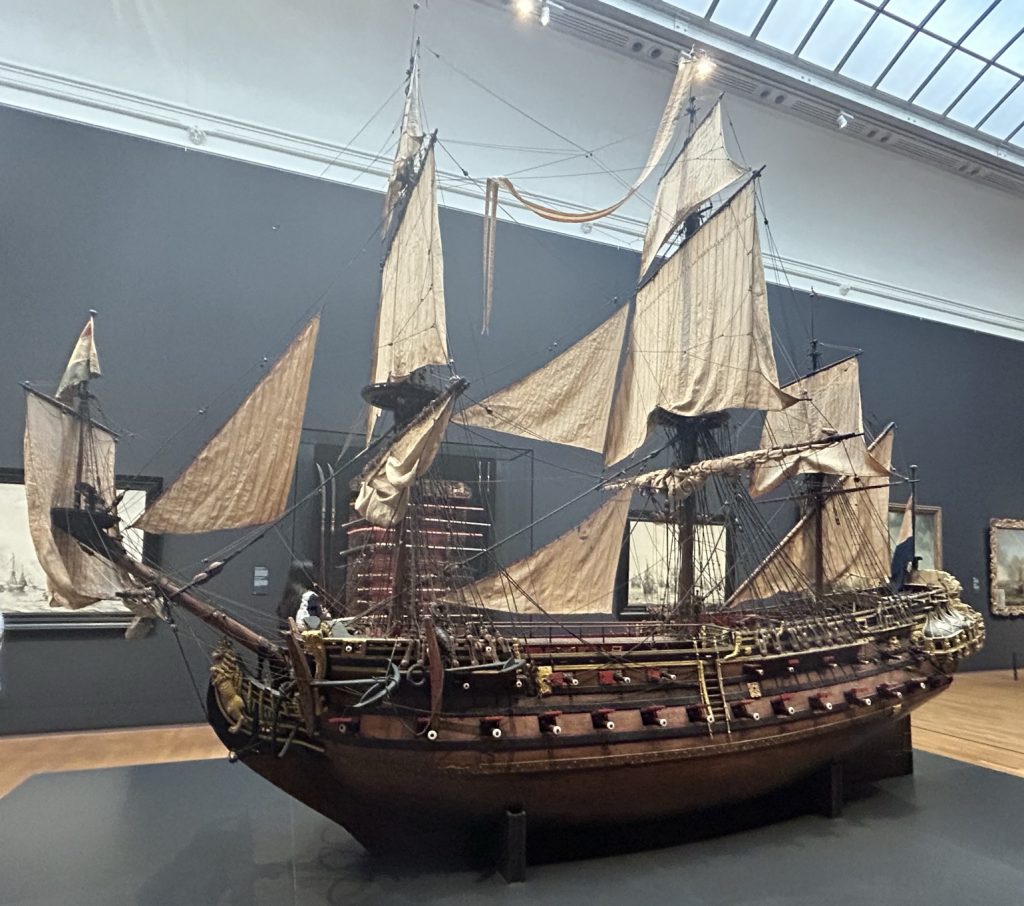

Here’s another view of the many ship models in the Rijksmuseum.

Masterworks: Tje Rijksmuseum’s Most Famous Paintings
Most visitors to the Rijksmuseum make a beeline for the “Gallery of Honour” which includes several paintings by Rembrandt van Rijn and Johannes Vermeer, probably the two most famous Dutch artists.
The Night Watch by Rembrandt
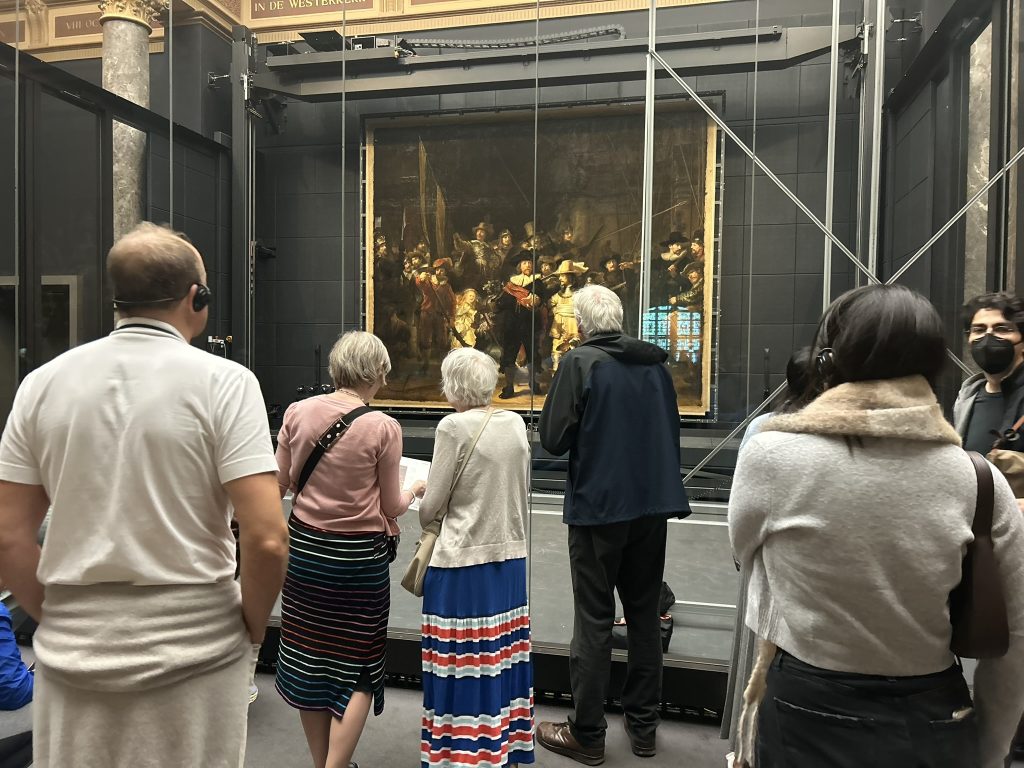
The Night Watch is displayed in a temperature-controlled structure so we can’t get very close. It’s an impressive artwork, and certainly much more enjoyable to look at now than when I first saw it at the age of 14 when it was almost black.
Here’s my husband, Gregg (the guy in black), checking it out.
And here’s a close-up sans viewers.
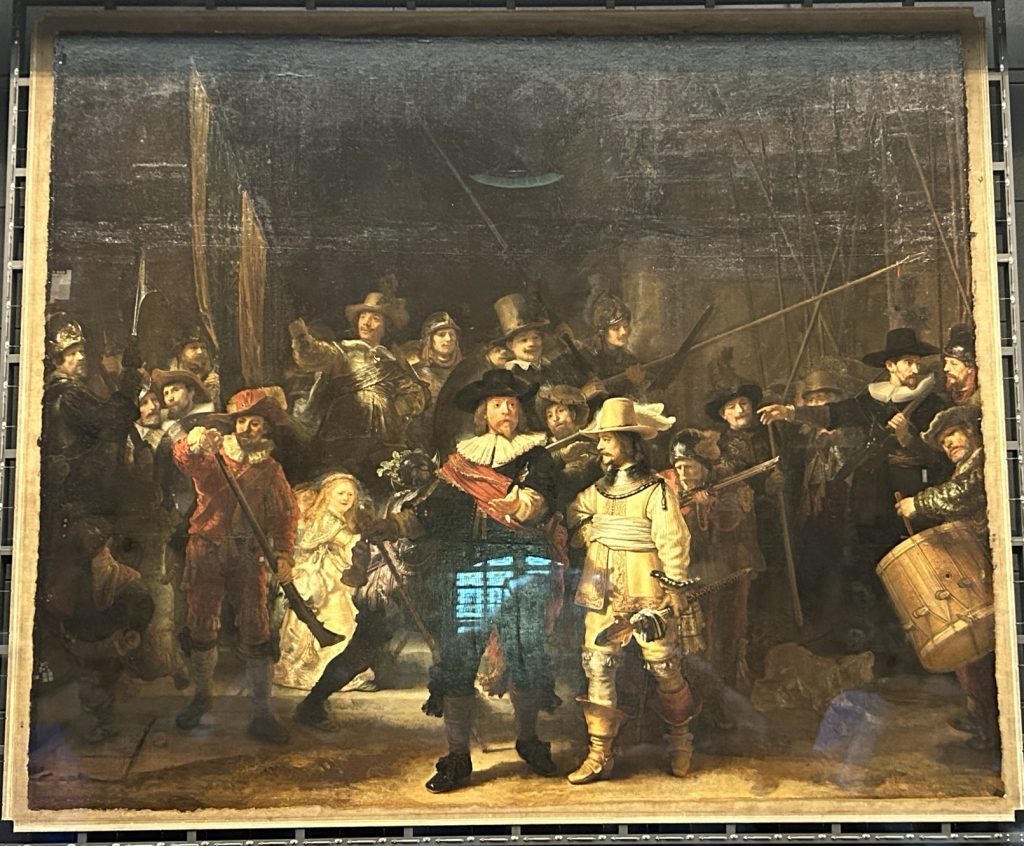
Thanks to glare, it’s almost impossible to get a decent shot, but you get the idea.
Rembrandt’s control of light and shadow in the painting is remarkable. There’s so much life and movement in the painting. Everyone is doing something.
I like the drummer to the right and the little girl to the left of the guy with the red sash.
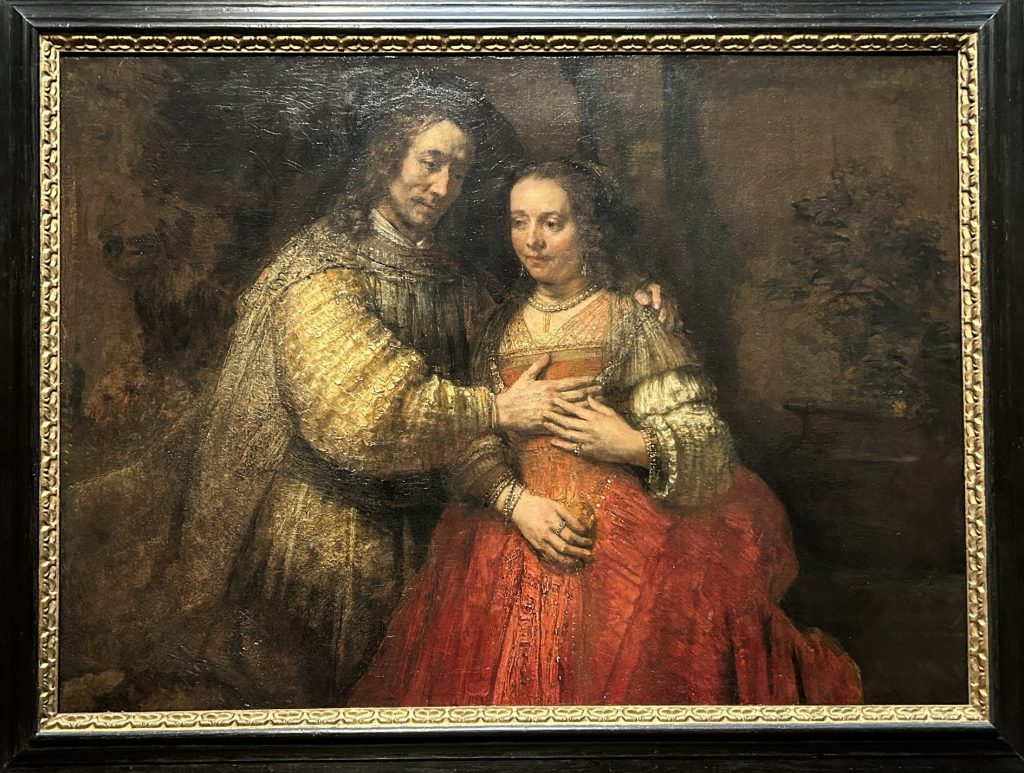
The Jewish Bride by Rembrandt
In this beautiful portrayal of a newly married couple, Rembrandt used thick, impasto paint and worked it with a palette knife to create a glittering and sculptural relief.
There is a bittersweet quality to this painting. The man looks to be quite a bit older than his bride. While richly dressed, she looks very uncertain about what the future might hold for her.
The Milkmaid by Vermeer
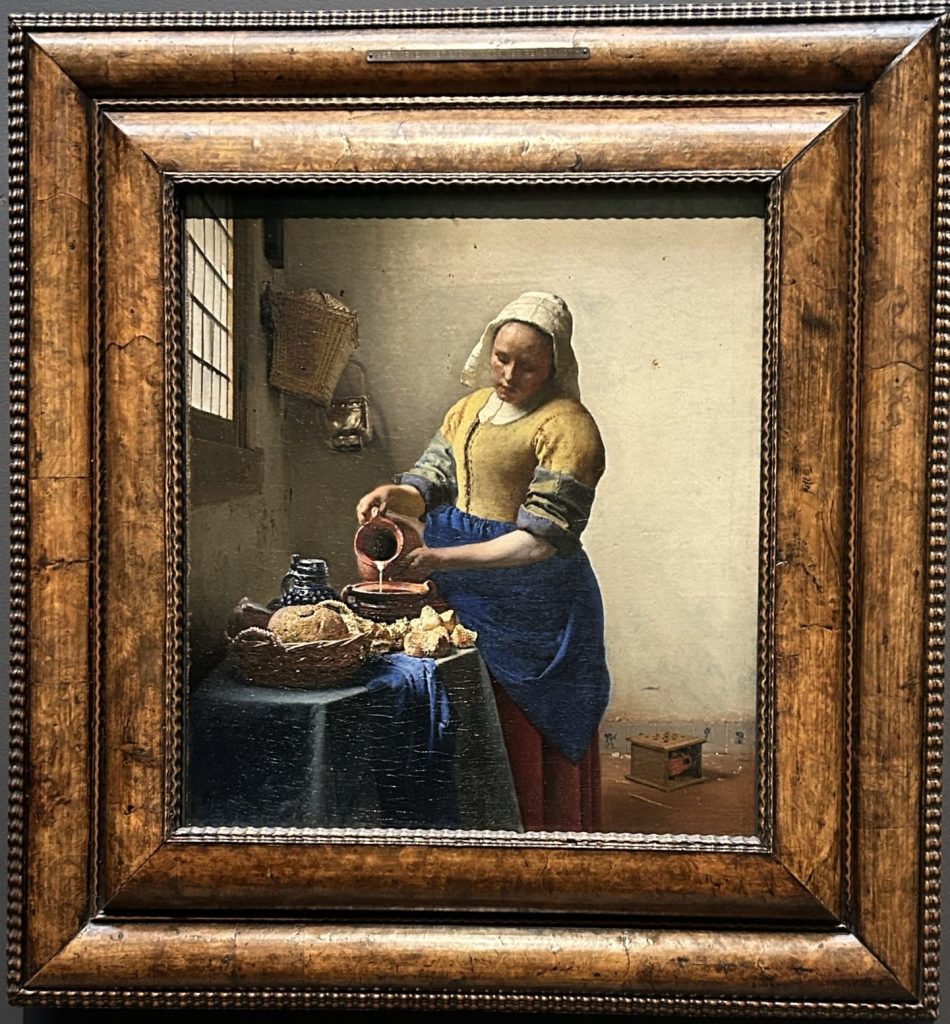
The small, intimate paintings by Vermeer are among the Rijksmuseum’s highlights. You’ll realize that when you see knots of people clustered around each Vermeer painting as they listen to tour guides or audioguides.
I managed to sneak through and get this picture of The Milkmaid, which I’ve always had a soft spot for, perhaps because the subject is so humble and yet so exquisitely rendered.
She is totally intent upon her task, unaware she will be looked at by millions for centuries to come. This painting also shows how Vermeer was a master of light.
You really “get” how great Vermeer was when you compare his paintings to those of most of his contemporaries. While most are competently painted, they don’t glow like Vermeer’s paintings do. He didn’t complete many paintings in his life, but each one was a masterpiece.
The Threatened Swan by Jan Asselijn
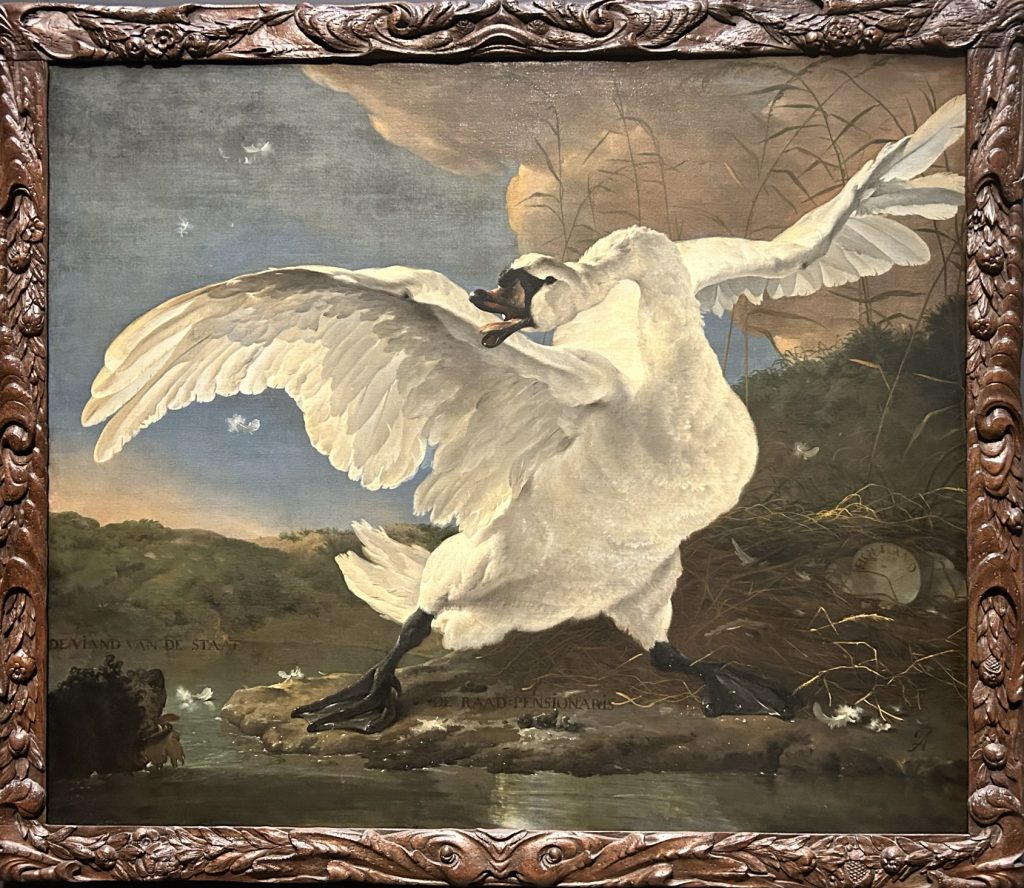
This painting by Jan Asselijn is an oil on canvas from 1650. It’s reproduced on bags, mugs, tea towels and other products in the gift shop so obviously it strikes a chord with people.
The painting depicts a swan fiercely defending its nest against a dog. In later centuries, the scuffle was interpreted as a political allegory, the white swan symbolizing the Dutch statesman Johann de Witt who was assassinated in 1672 while protecting the country from its enemies.
This meaning was attached to the painting when it became the first work to be accepted into the collection of the Nationale Kunstgalerij, the forerunner of the Rijksmuseum, in 1800. I’m guessing that the Dutch liked the image of their nation as a swan furiously defending itself.
Still Lifes: Some of the Best Paintings at the Rijksmuseum
I’ve developed a real fondness for still life paintings of flowers, kitchen scenes, fruit, and the like.
I’m not sure why, but there’s something kind of comforting about super-realistic paintings of everyday things. And the Dutch are masters of the genre.
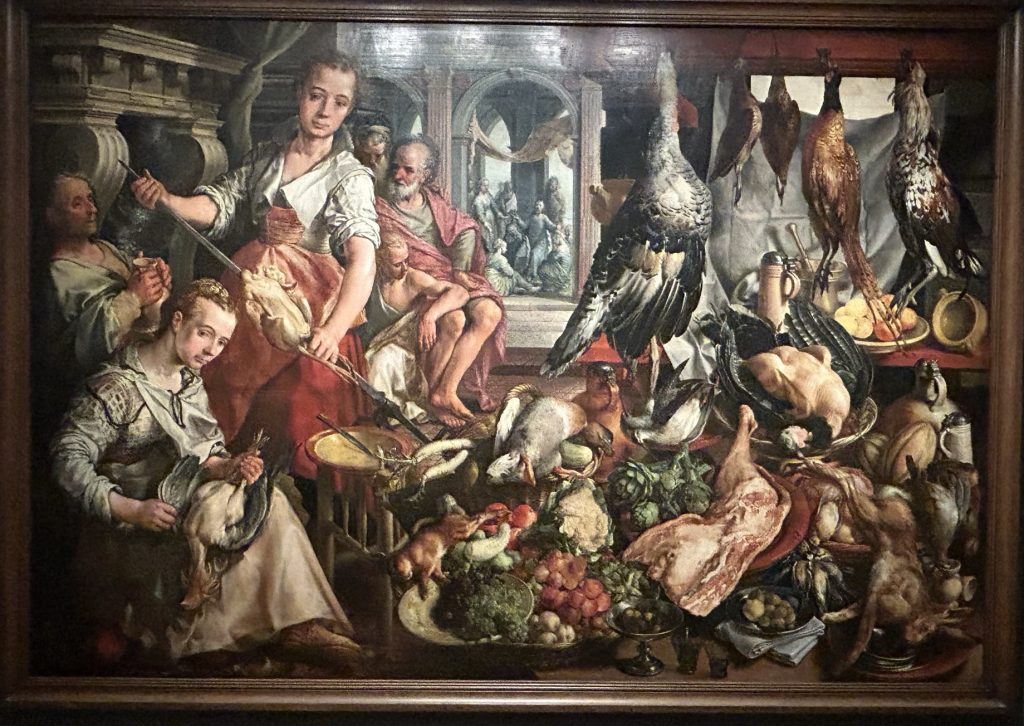
The Well-Stocked Kitchen by Joachim Beuckelaer
This piece by Joachim Beuckelaer painted in Antwerp in 1566 depicts Christ’s visit to Mary and Martha, although that’s hard to figure out because the action takes place in the background while in the foreground is a profusion of richly painted vegetables, fruit, meat, poultry, and pots and pans.
The contrast between the foreground and the background conceals the message of the painting: do not give in to earthly temptations.
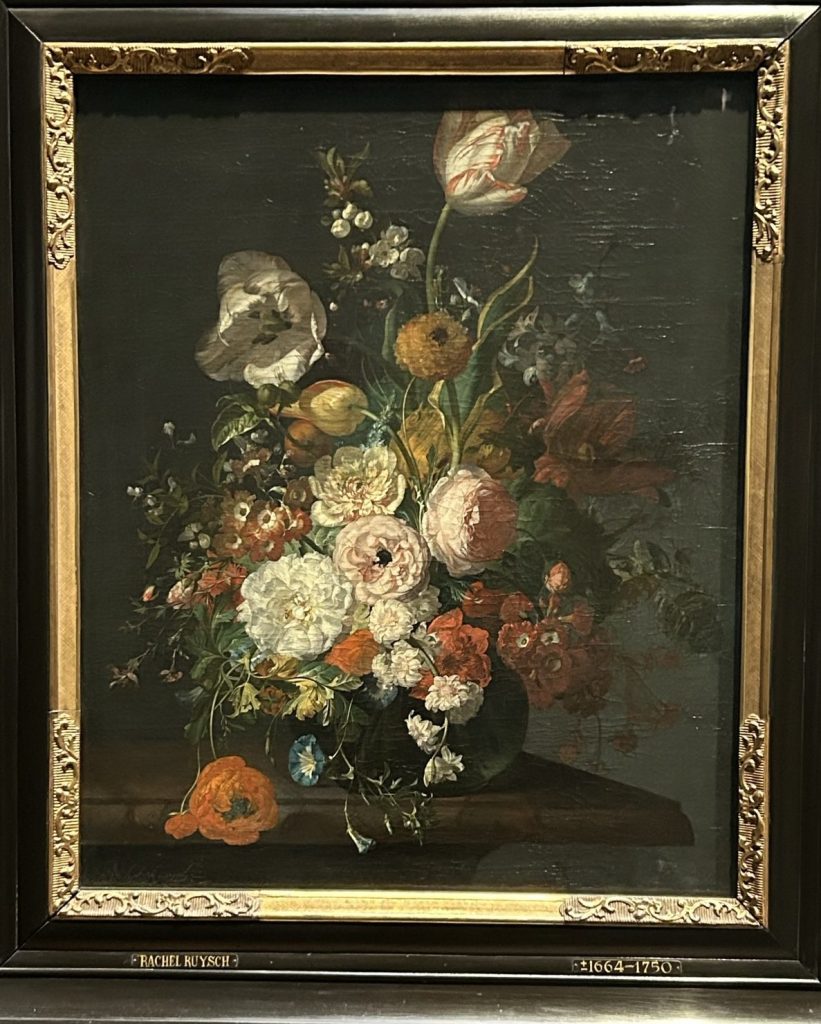
Still Life of Flowers in a Glass Vase by Rachel Ruysch
I’m thrilled to discover that this stiff life was painted by a female artist I hadn’t heard of. Her name is Rachel Ruysch and I have discovered that she was big news in her time.
In fact, she was the most famous female artist of the period. Patrons loved her monumental, sumptuous flower still lifes like this one and paid big guilders to own one. Even after marrying and having ten children, Rachel Ruysch continued to not only paint, but also to sign her paintings with her own name. Now she’s an artist I want to know more about.
Later in the gift shop, I buy a stunningly illustrated book about still lifes from the Dutch Golden Age that includes quite a few of Ruysch’s paintings.
Unfortunately, the text is in Dutch, but I can still enjoy looking at the paintings and drawings, most of which are by women artists. It appears that still lifes—and flower paintings in particular—were popular subjects for female painters of the period.
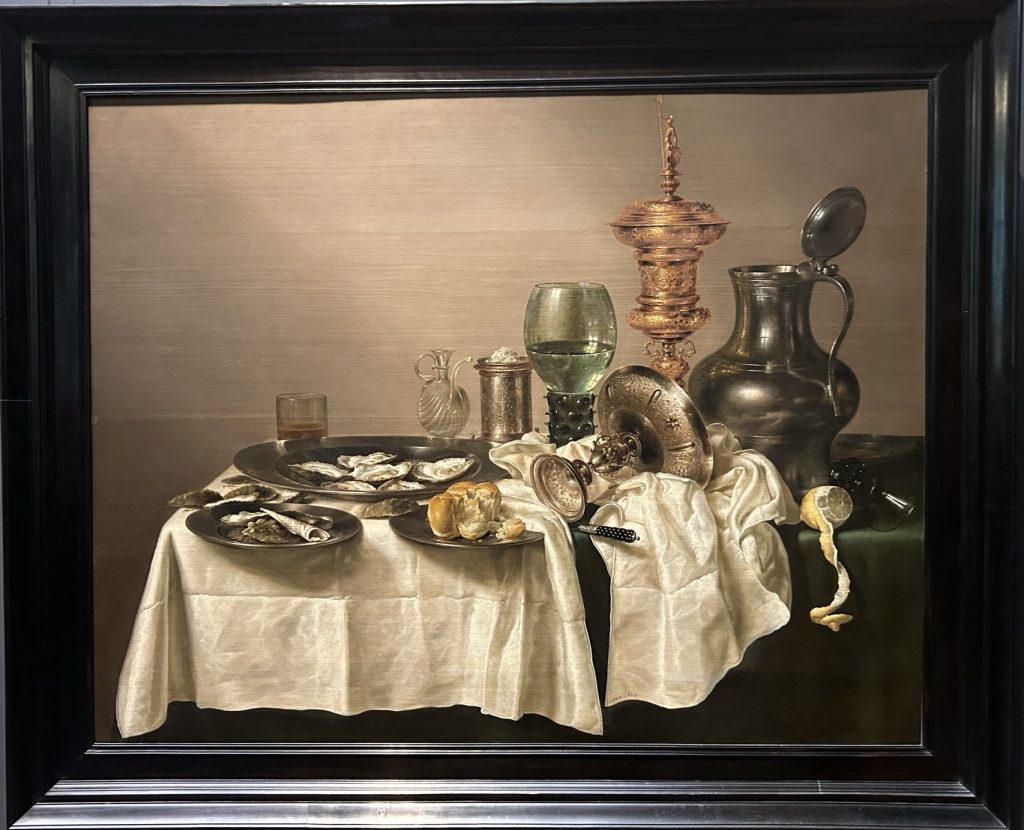
Still Life with Gilt Cup by Willem Claesz Heda
This painting includes an astounding array of grey tonalities. Heda’s palette is subtle—pewter, silver, damask, glass, mother-of-pearl, with a few yellow and ochre accents thrown in for good measure. He specialized in near-monochromatic still lifes that were known as “tonal banquet pieces”.
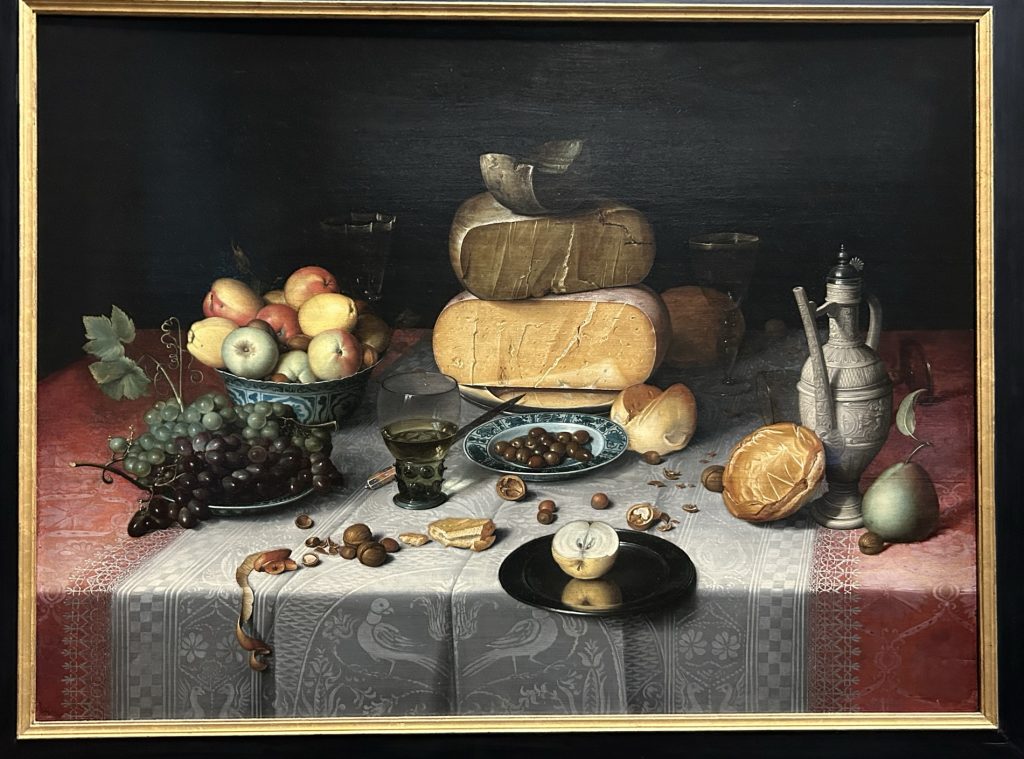
Still Life with Cheese by Floris Claesz van Dijck
Van Dijck really brings the subjects in his painting to life. Check out the ridges in the slabs of cheese and how the pewter plate extending over the edge of the table seems to come right out of the painting.
Floris van Dijck was considered one of the pioneers of Dutch still-life painting.
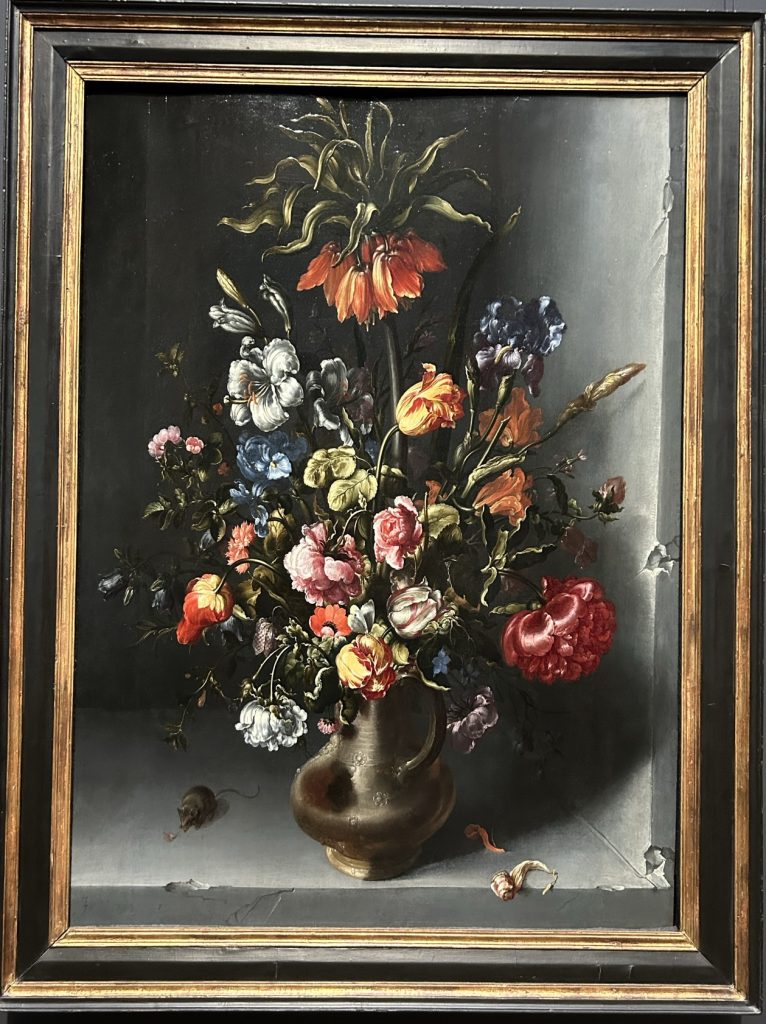
Flower Still Life with a Crown Imperios Fritillary in a Stone Niche by Jacob Woutersz Vosmaer
This impressively named painting is an exceptionally large example of a still life. There’s a tactile quality to the flowers that makes them look like they are moving.
And then there’s the wee mouse and the cracks in the wall—real life intruding on the luscious beauty of the flower arrangement.
Other Notable Artists at the Rijksmuseum
Check out works by other Dutch masters including Frans Hals and Jan Steen. The Merry Drinker by Frans Hals is a perennial favorite.
Porcelain: A Rijksmuseum Highlight Worth Slowing Down For
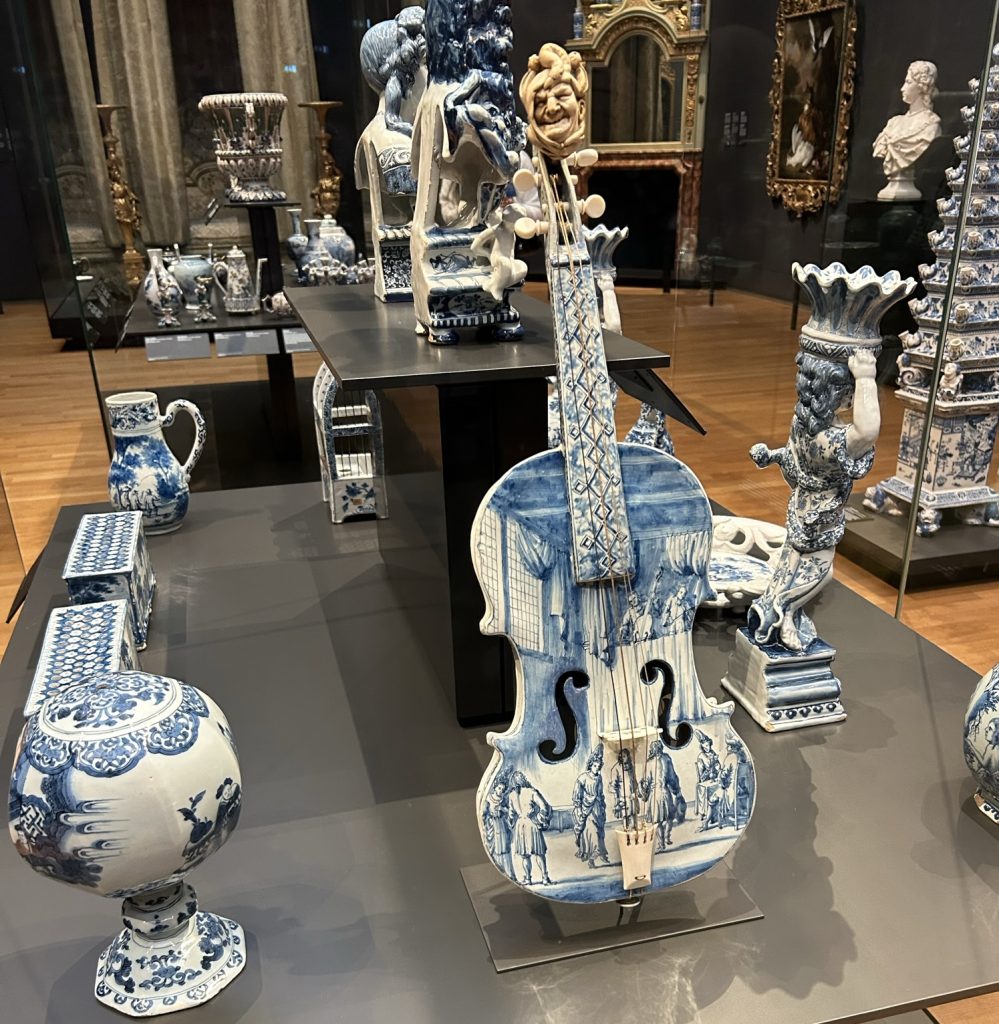
The Rijksmuseum collection includes a lot of porcelain and china.
My eye is caught by this tin-glazed earthenware violin. It cannot be played and was made purely as a decorative object. The violin is considered to be an absolute masterpiece of Delft earthenware—and no wonder.
The Rijksmuseum Doll Houses: Don’t Walk Past These
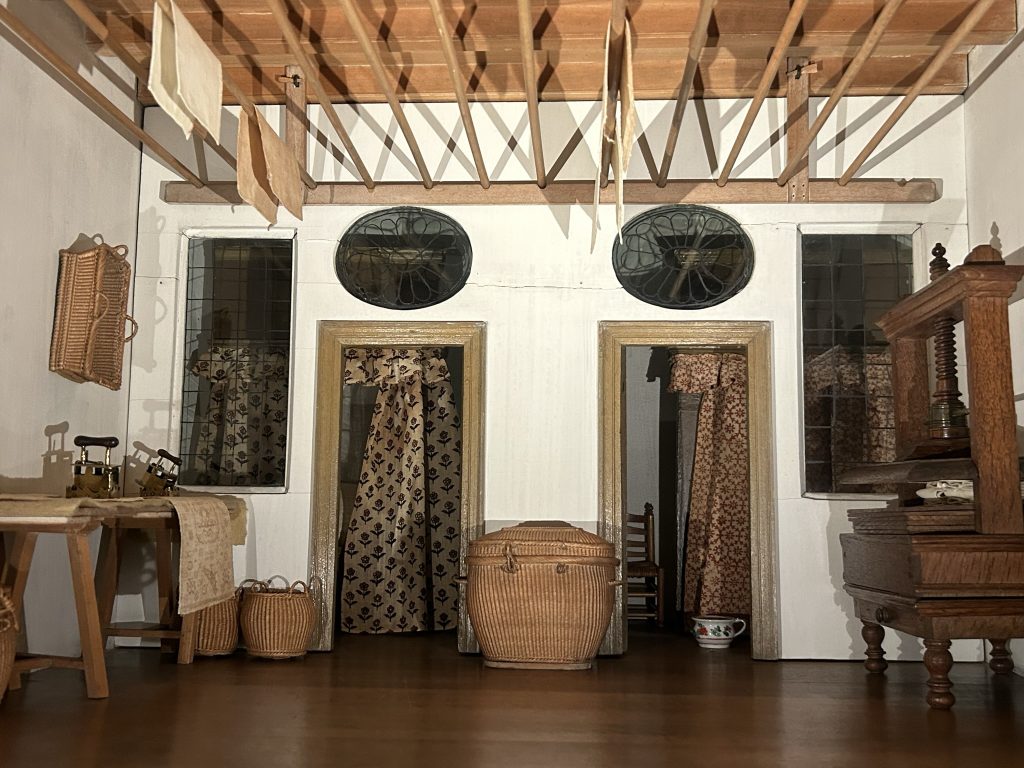
One of the rooms in the Rijksmuseum is devoted to showcasing two extraordinary dollhouses. They’re both HUGE! And the detail in the rooms is astonishing.
What to Know Before You Visit Rijksmuseum
The Rijksmuseum can sell out so buy your tickets online at least a week before you plan to travel to Amsterdam (even more during the busy summer months). Most visitors appear to get the audioguide which probably enhances the viewing experience. We did not, preferring to discuss the pieces as we looked at them. Click one of the options below to purchase your ticket.
Here’s an option that includes a guided tour:
Practical Planning
For practical planning details including timed entry, ticket prices, and what to see first, Art Visit Guide’s Rijksmuseum guide covers everything you need before your visit. Their honest take on crowd patterns will help you make the most of your time there.
Where to Stay in Amsterdam
I visit Amsterdam frequently and so have stayed in a lot of different areas. My favorite area by far is the Centrum. You’ll pay more for proximity to the canals and the action, but it’s worth it!
Here are three options:
- Mokum Suites overlooking the Herengracht canal and near the Rembrandtplein is fabulous. From my window on the 1st floor, I had a view over the canal.
- Here’s Lucy is an apartment on a tiny side street very close to the Damrak, a perfect and yet quiet location in busy Amsterdam.
- Holiday Inn Express – City Hall is a chain hotel but excellent value in a good location. Staff are friendly and you may even get a view of a canal!
Check the map for even more options:
Recommended Novels to Read Before You Go
A Light of Her Own by Carrie Callaghan
A vivid portrait of Judith Leyster, a 17th-century Dutch painter whose work was lost to history until 1893, working in the shadow of Rembrandt and an unforgiving religious establishment.
Still Life by Dodie Bishop
Gifted painter Clara Peeters defies convention to train under a renowned master in 17th-century Amsterdam, risking a hard-won patronage and her own safety to keep painting. Inspired by a real, long-overlooked artist.
Keep Exploring Great Art Museums with Artsy Traveler
- Exploring Cologne & the Rhine Valley
- London’s National Gallery: The Best of the Best
- Courtauld Gallery in London: A Treasure Trove for the Artsy Traveler
- Paris for Art Lovers: Nine of the Best Small Museums in Paris
- Best Vienna Museum Experiences that Appeal to the Artsy Traveler
Would you like to save this post?

Carol M. Cram is the author of five award-winning novels inspired by art and the women who shaped it, the creator of Artsy Traveler, an arts-focused travel blog, the founder of Art In Fiction, a curated database of 2,600+ novels inspired by the arts, and the host of The Art In Fiction Podcast. She lives with her husband, artist Gregg Simpson, on beautiful Bowen Island near Vancouver, BC.