
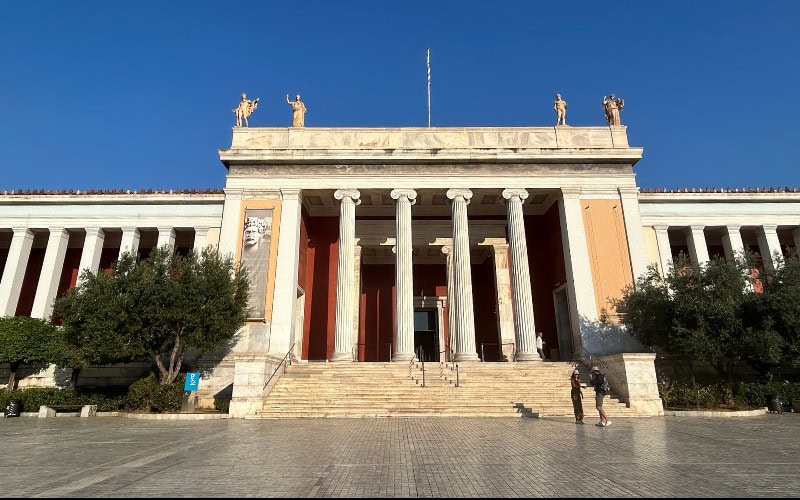
What to See at the National Archaeological Museum in Athens
I'm Carol Cram, novelist and arts travel writer, and founder of Art In Fiction, a curated database of 2,700+ novels inspired by the arts. Artsy Traveler contains affiliate links for products and services I personally use and recommend. As an Amazon Associate, I earn from qualifying purchases. Please read the Disclosure for more information.
The National Archaeological Museum in Athens is the largest archaeological museum in Greece and a must-see while visiting Athens.
As one of the world’s most important museums devoted to ancient Greek art, the National Archaeological Museum in Athens showcases centuries of ancient Greek history.
You’ll find artifacts from the earliest inhabitants to the Romans displayed in several large rooms. Information about each exhibit is provided in both English and Greek.
Table of Contents
Orientation to the National Archaeological Museum in Athens
The National Archaeological Museum (#1 on the map below) is about a twenty-minute walk or a short taxi ride from the center of Athens where you’ll likely be spending most of your time. Here’s a map showing the location of the museum along with other Athens landmarks.
Don’t be tempted to skip the National Archaeological Museum in favor of the more modern Acropolis Museum. Both museums offer different takes on the ancient world and both are well worth your time. If possible, schedule your visits on different days so you don’t get overloaded!
In this post, I feature my favorite pieces from the Prehistoric Antiquities and Sculpture collections. Take your time wandering through the Archaeological Museum. It’s large, but not overwhelming. Many of the rooms are quite spacious and, at least when I was there in September, not crowded.
Prehistoric Antiquities at the National Archaeological Museum in Athens
Your first stop after entering the museum is the area featuring unique works of art from the major civilizations that flourished in Greece and the Aegean Sea area from the 7th millennium (that’s a long time ago) to around 1050 BC.
Discover works from the Neolithic period and the Bronze Age. Some of the most significant artifacts come from the royal tombs of Mycenae. You’ll also view evocative Cycladic marble figurines and the astonishingly well-preserved wall paintings from Thera (aka Santorini).
Mycenean Collection
Two of the many show-stoppers in the Mycenean collection are gold masks dating from the 16th century BC. The mask on the left is known as the mask of Agamemnon.
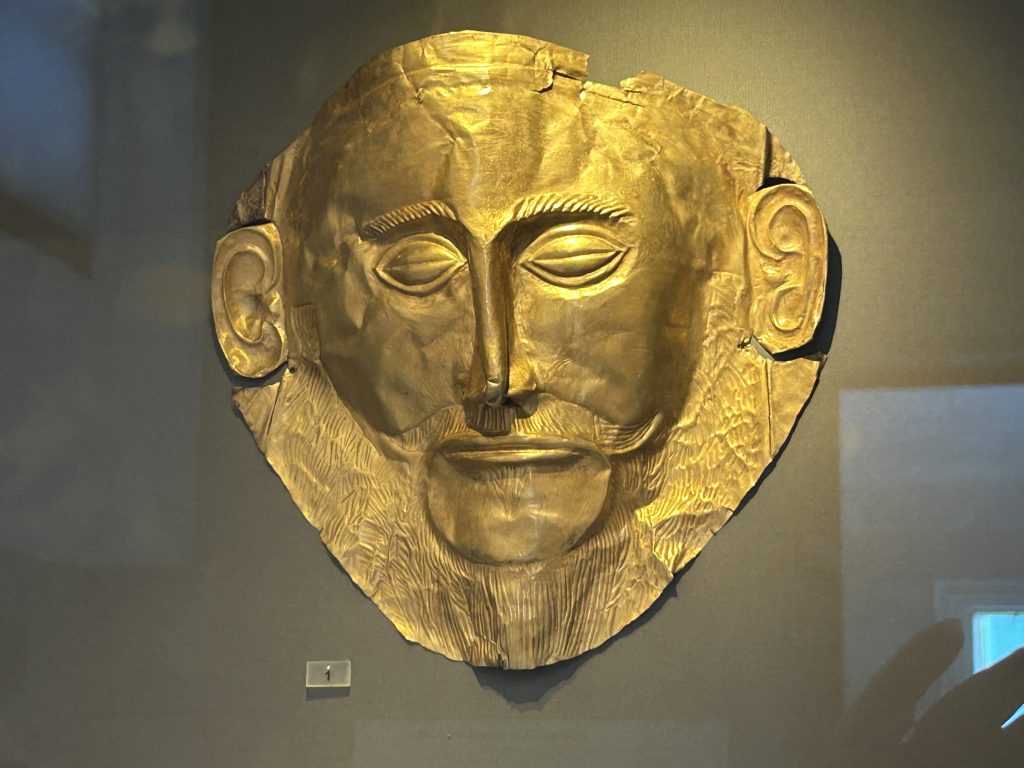
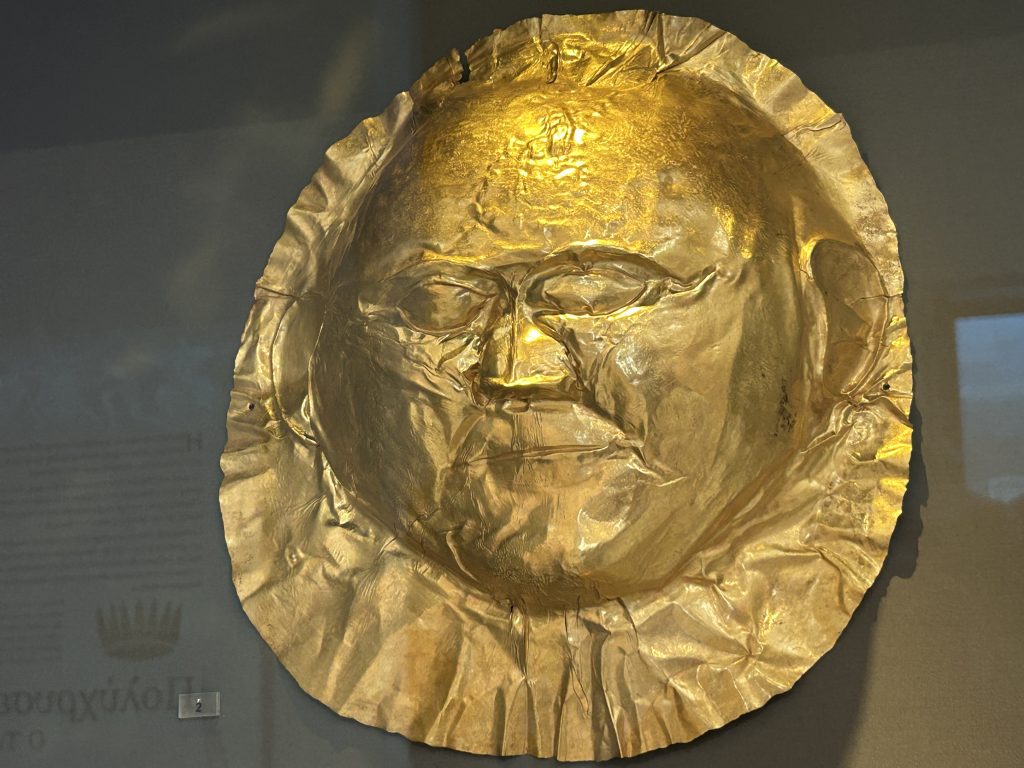
Having already visited Mycenae (see my post on the two days I spent in Nafplio during which I took a semi-private tour to Mycenae), I enjoyed seeing even more artifacts from that period. The Mycenaean civilization flourished between 1600 and 1100 BC, and was a wealthy and very influential culture. The beauty and intricacy of the objects, many rendered in gold, is astonishing.
Cycladic Antiquities
I’m glad I chose to visit the Archaeological Museum of Athens at the end of my trip around Greece. I had more context for understanding what I was looking at. During my visit to the Cyclades (Santorini and Naxos), I visited several small museums featuring Cycladic art and already knew a little bit about it.
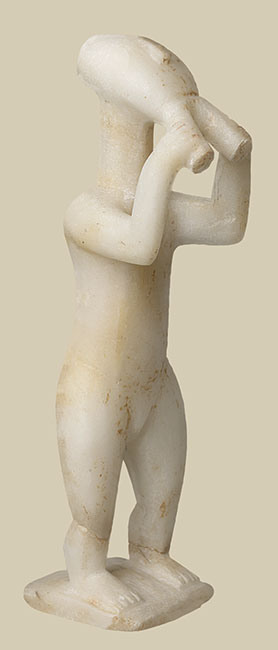
I especially loved the almost alien-looking marble sculptures with their smooth surfaces and blank eyes. This little guy is playing a double flute and dates from 2800 to 2300 BC.
Antiquities of Thera
Thera is the proper name for Santorini, which was the first stop on my trip to Greece. While there, I visited the archaeological site at Akrotiri (check out my post on Santorini) where many of the artifacts in the National Archaeological Museum come from.
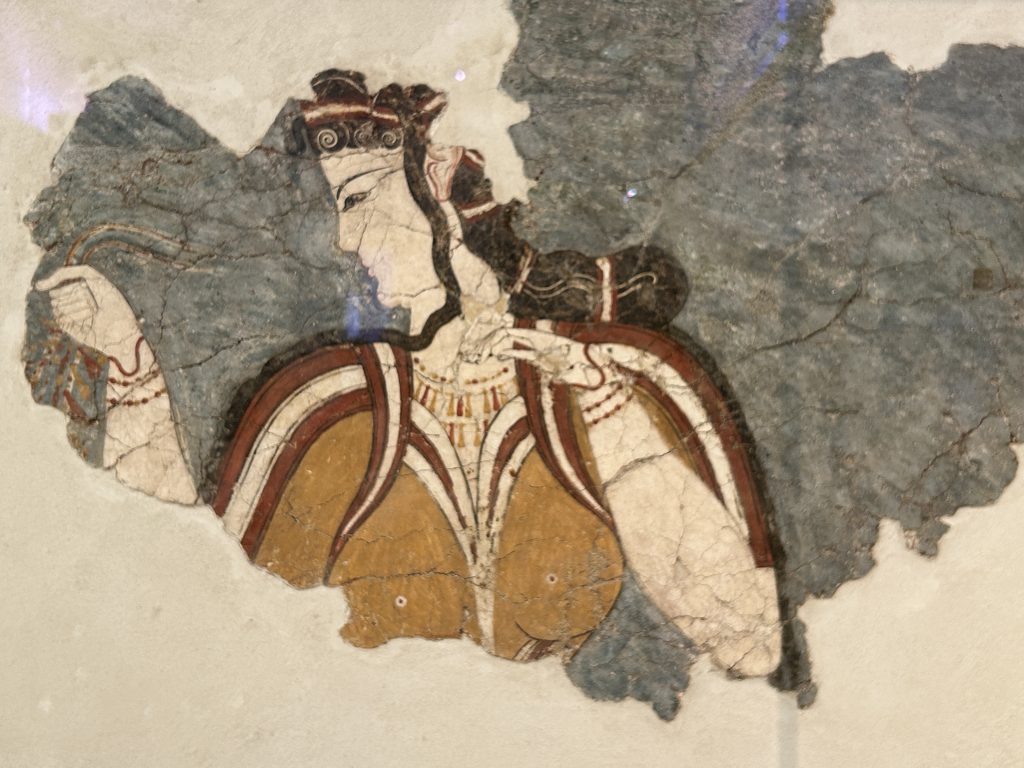
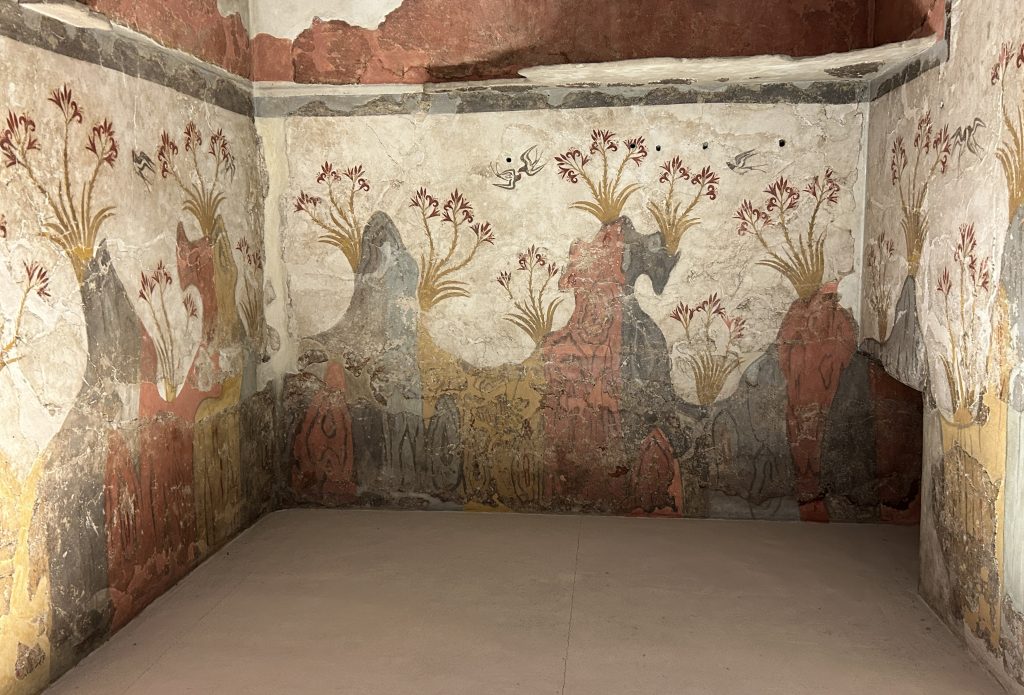
Before it was destroyed in a volcanic eruption, Akrotiri included public spaces and three-story houses decorated with wall paintings, many of which survived in remarkably good condition. Here are two of them. The stylization, color combinations, and sheer delicate beauty of the paintings took my breath away.
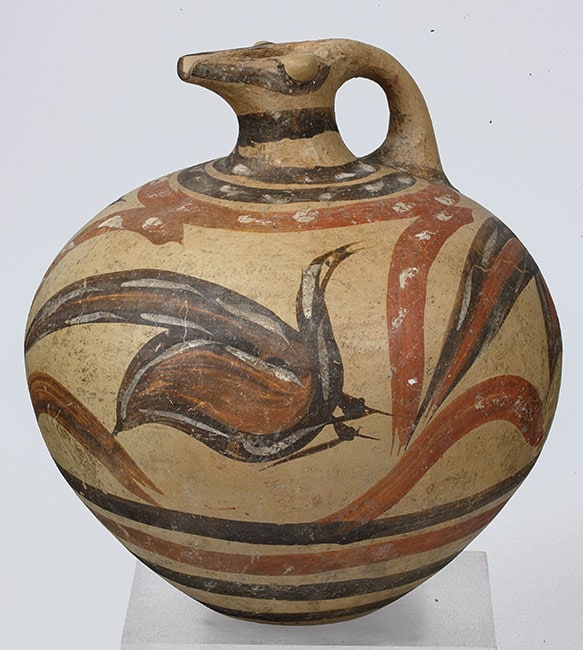
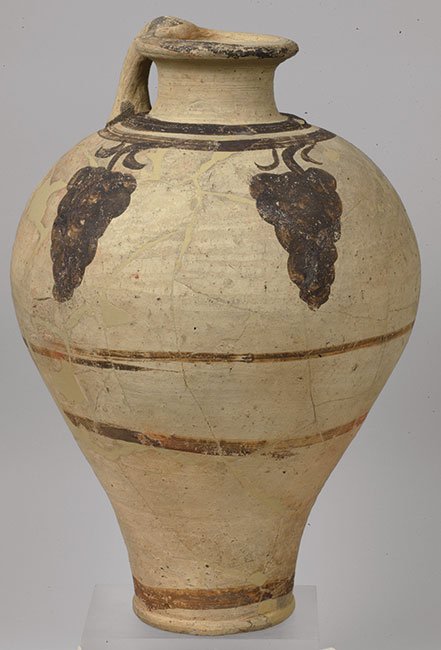
Also featured in the collection at the National Archaeological Museum are some amazing pots, my favorites being these two. It’s hard to believe that these were painted in the 16th century BC. They look so modern!
Sculpture Collection at the National Archaeological Museum in Athens
The sculpture collection occupies several rooms at the museum and presents the evolution of ancient Greek sculpture from 700 BC to the 5th century AD. The collection contains over 16,000 sculptures from archaeological sites all over Greece, not all of which are on display. Four periods are represented: Archaic, Classical, Hellenistic, and Roman.
Archaic Sculptures
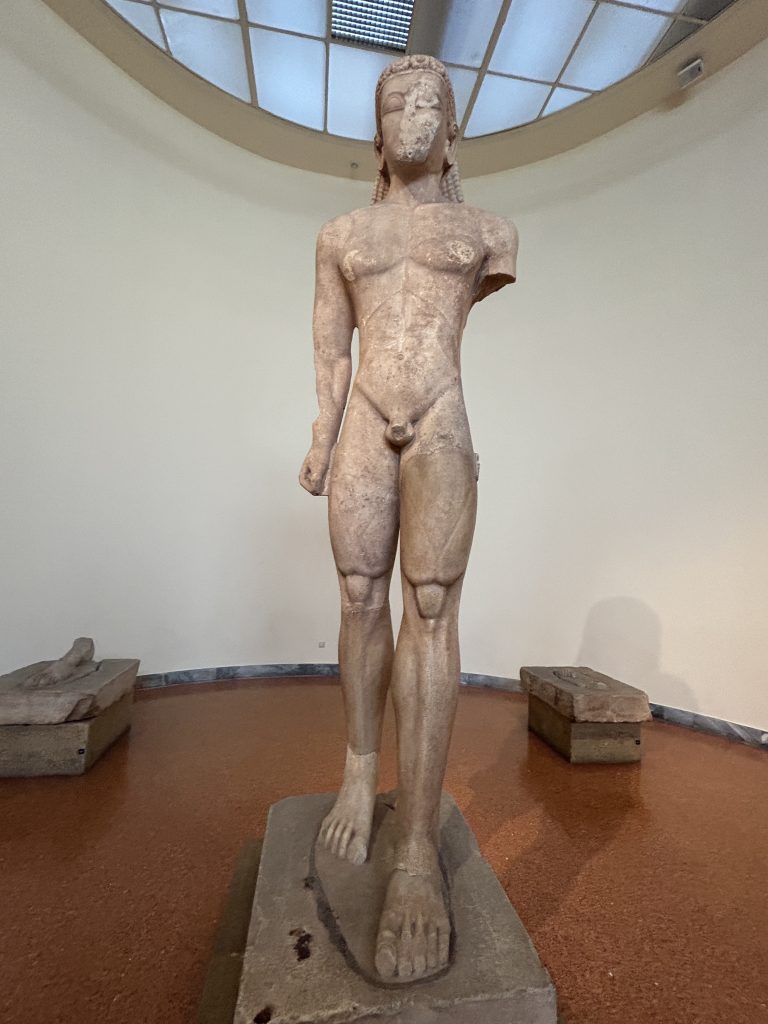
My faves are the sculptures from the Archaic period. While I appreciate the much more realistic sculptures from later periods, there’s something about the stiff, upright, far-seeing Kouros statues that just gets to me. They are larger than life-size and not realistic, but then, they don’t pretend to be. This one is made of Naxian marble and was a votive offering to Poseidon.
Classical Sculptures
The sculptures from the Classical period date from the 5th century BC. Democracy had been established in Athens and various military victories at the battles of Marathon and Plataea had resulted in an era of intellectual creativity, material prosperity, and democratic consolidation. Artists flocked to the city and by the peak of the century, sculptors were drawing their inspiration from the idealized human body.
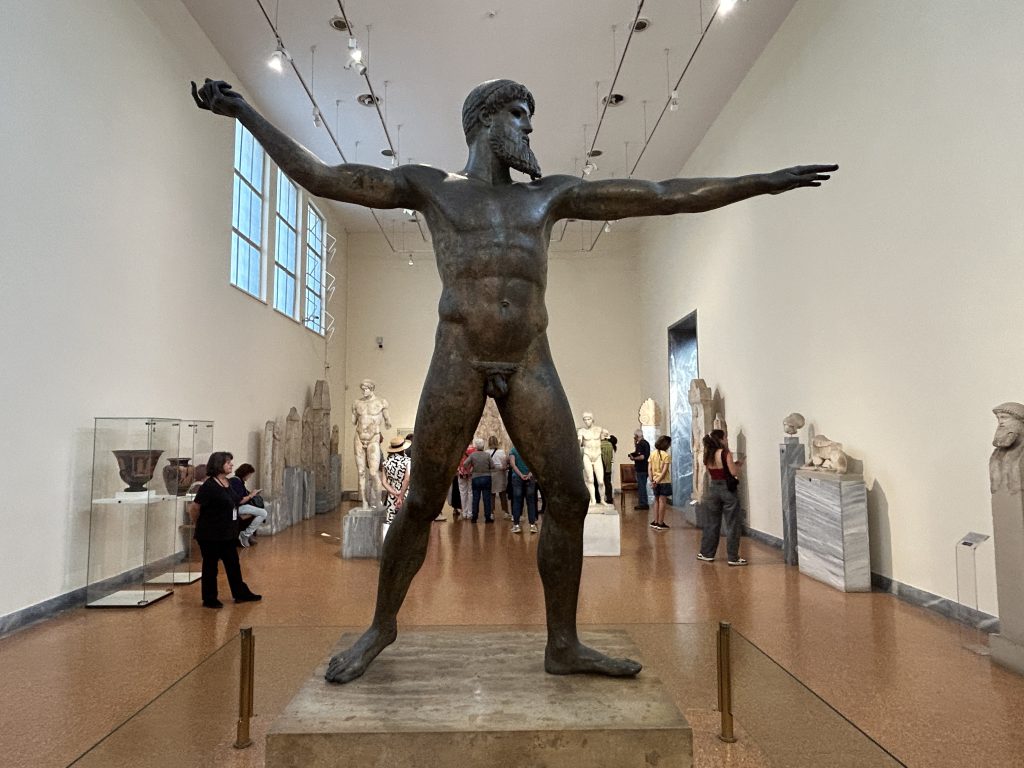
You’ll find many wonderful sculptures from the Classical period to check out. One of the most famous is the statue of Poseidon. He dominates one of the rooms with his great set of abs and one arm poised to throw his trident into the waves. This imposing statue dates from around 460 BC and was found on the seabed off Cape Artemision in 1926.
Hellenistic Sculptures
The Hellenistic period spans the late 4th to the early 1st century BC. Figures were rendered realistically, rather than in the idealized way they tended to be in the Classical period.
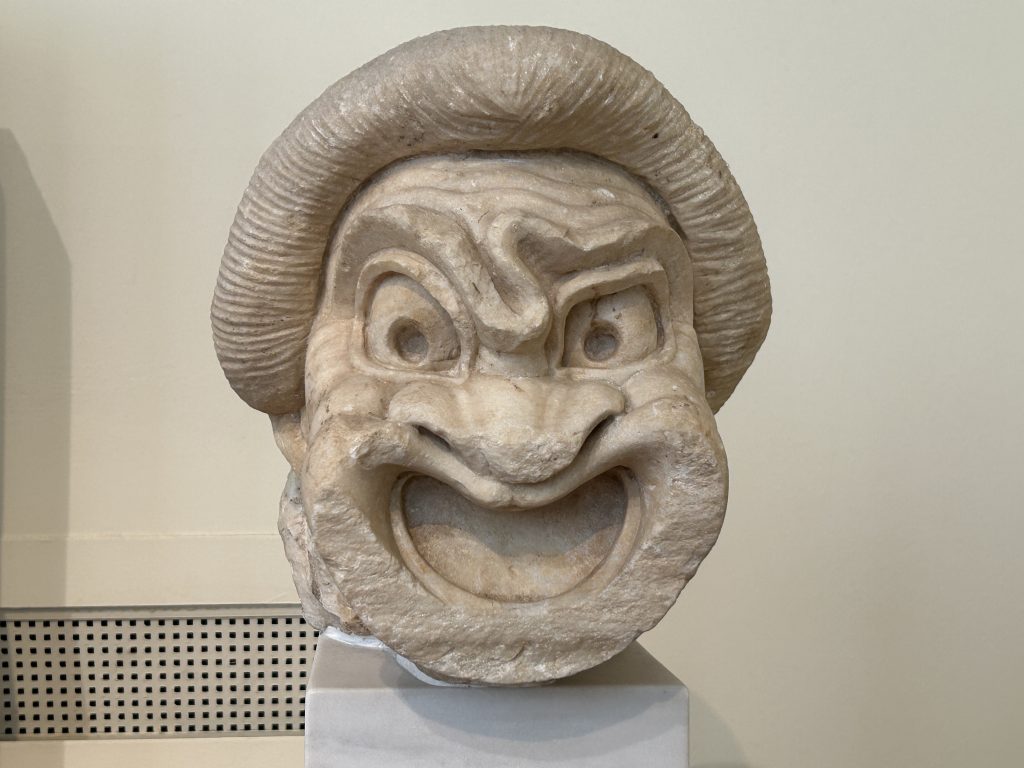
I was drawn to the theater masks made from marble. This one dates from the 2nd century BC and is modeled after masks used in comedy.
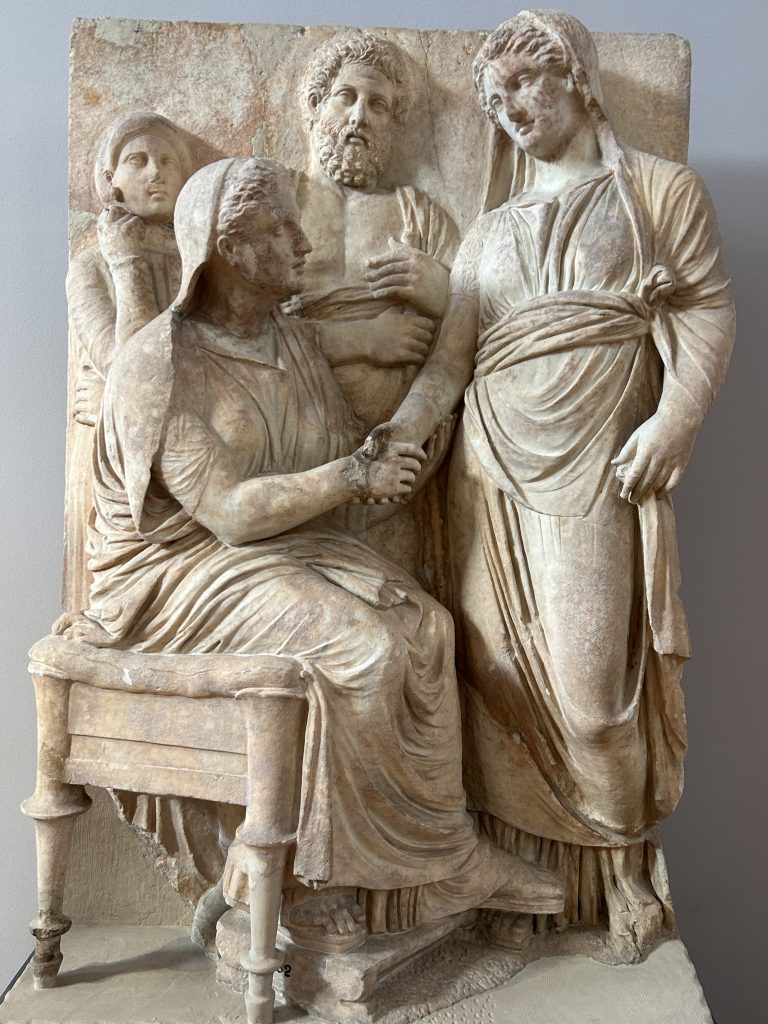
This grouping from 340 BC is pretty amazing; it’s one of several similar sculptures that were created as grave reliefs. Look at the details in the hair and beard, and the facial expressions!
Roman Sculptures
I got the impression while traveling around Greece that the Greeks are still none too happy that the Romans invaded their country back in the day. Occasionally, a guide would disparagingly note that a particular ruin was Roman, and they didn’t mean it as a compliment. From the 2nd century BC onwards, Greece was gradually conquered by the Romans until their eventual dominance in 31 BC.
Many of the artistic treasures of Greece were taken to Rome, which probably didn’t go over too well with the locals. Eventually, new local workshops were established to satisfy the demand for copies of Classical and Hellenistic works and by the 2nd century AD, Athens was once again an artistic center.
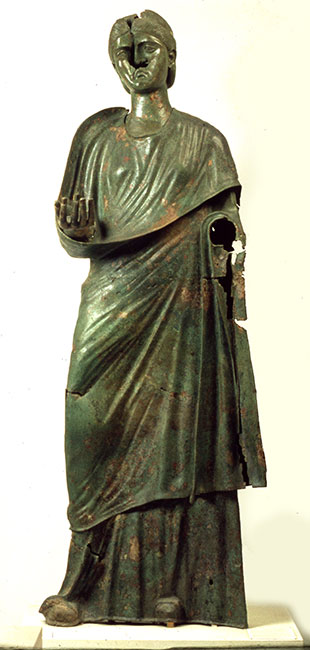
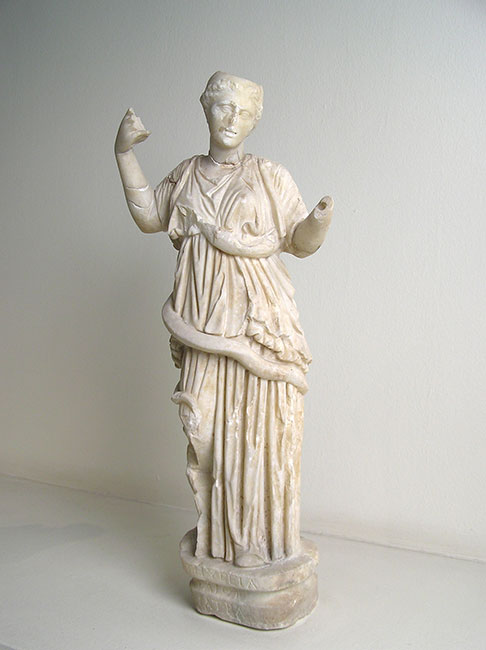
Here are two of the many Roman sculptures in the museum. On the left is an intriguing bronze portrait statue of the empress Julia Aquilia Severa (AD 220). She doesn’t look particularly happy. On the right is a rather fine statue of the goddess Hygieia dating from AD 200 that was found at the sanctuary of Asklepios at Epidauros which we visited while staying in Nafplio.
The Jockey
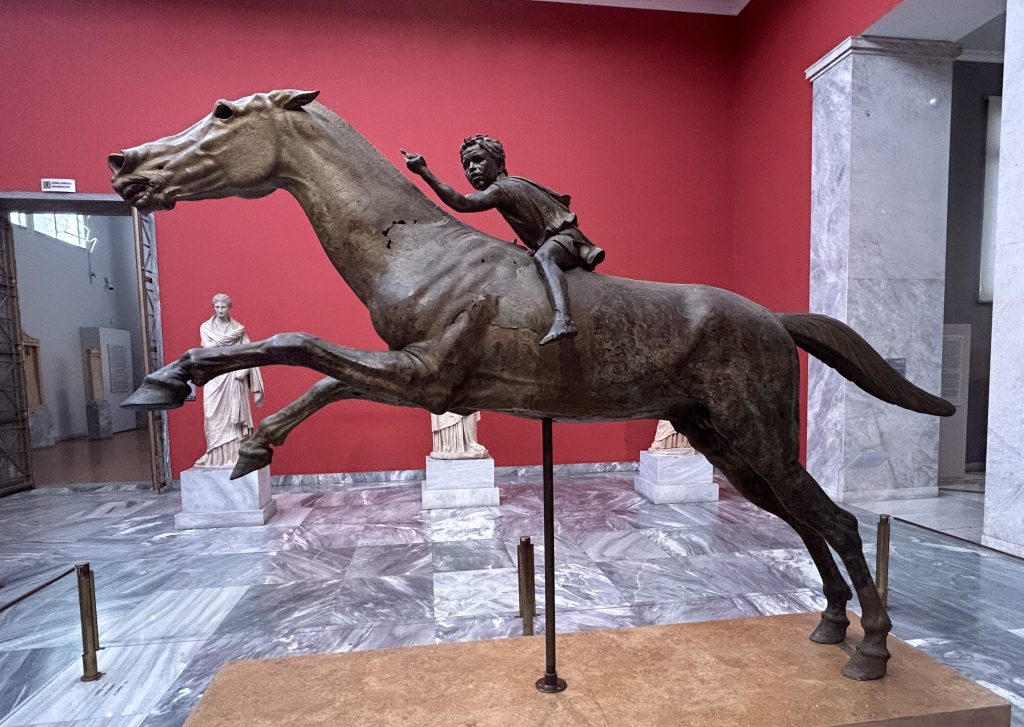
One of the most famous pieces in the National Archaeological Museum in Athens is known as The Artemision Jockey. This bronze statue of a horse and jockey dates from around 140 BC, and was retrieved in pieces between 1928 and 1937 from the sea floor off Cape Artemision. Check out the boy’s expression. He’s so focused on handling his massive steed. This huge piece takes pride of place in the museum and no wonder. It’s remarkable.
Other Collections at the Archaeological Museum in Athens
The museum also includes a wonderful collection of metalwork, with its Bronze collection reputed to be one of the world’s finest. In addition, you’ll find an extensive collection of vases, many with the distinctive black and gold coloring.
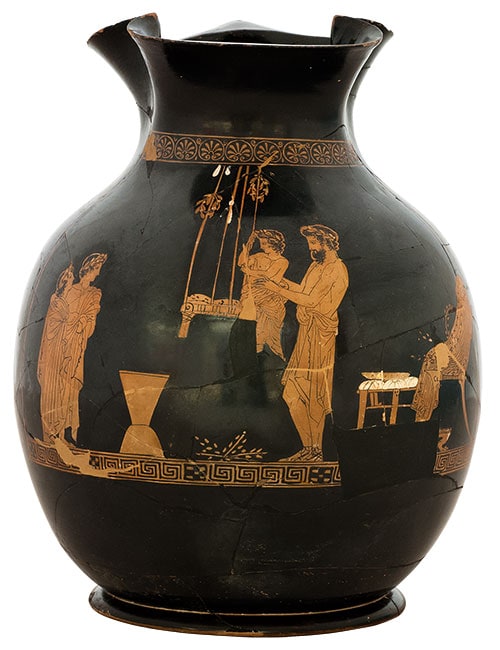
I never get tired of studying these ancient vases with their intricately drawn scenes. If I ever decide to write a novel set in ancient Greece, I can see myself spending a lot of time studying the imagery on the vases to learn what people wore and how they lived.
Check out this vase depicting a man placing a child on a swing. Sweet or what?
And just in case you haven’t yet slaked your appetite for looking at antiquities, check out the Egyptian and Cypriot collections, both world renowned.
Practical Information
From November 1 to March 31, the National Archaeological Museum in Athens is open from Wednesday to Monday from 8:30 am to 3:30 pm and on Tuesdays from 1:00 pm to 8:00 pm. From April 1 to October 31, the museum is open from Wednesday to Monday from 8:30 am to 8:00 pm and on Tuesdays from 1:00 pm to 8:00 pm. The museum is closed on December 25 – 26, January 1, March 25, May 1 and Orthodox Easter Sunday. Admission costs 12€ from April 1 to October 31 and 6€ from November 1 to March 31.
Where to Stay in Athens
On our recent trip to Athens, we stayed at two places: a holiday apartment for two nights and a hotel for one night. I highly recommend both, which are in neighborhoods convenient for sightseeing in Athens.
Karma Apartments
Steps from the lively Plaka district on a quiet side street, Karma Apartments is a real find in Athens. The one-bedroom apartment on the top floor of a building containing other holiday rentals includes a large terrace with a peek-a-boo view of the Acropolis.
Hotel Lozenge
On our last night in Greece, we stayed at the Hotel Lozenge in the upscale Kolonaki neighbourhood. This is a great choice for a business-style hotel with comfortable rooms, an adjacent restaurant, and very helpful staff.
Here are some more options for staying in Athens:
Tours of Athens
Here are some tours of Athens from GetYourGuide.
Keep Exploring Greece with Artsy Traveler
Athens is more than its antiquities, but wow, they sure do have incredible antiquities! Take the time to wander through the rooms at the National Archaeological Museum to marvel at the some of the most beautiful sculptures ever made by human hands. And then when you’re done, go enjoy a tasty Greek meal (every meal I had was tasty!) and relax.
You’re in Athens and life is good. Here are more posts about travels in Greece:
- Stay in Oia for a Stunning Santorini Experience
- How to Spend Two Laid-Back, Glorious Days on the Greek Island of Naxos
- Nine Great Reasons To Visit Meteora in Greece
- How to Spend a Perfect Artsy Traveler Day in Athens
- Explore Greek Cuisine in a Savor Nafplio Cooking Class
- How To Spend Two Wonderful Days in Charming Nafplio in Greece
- Should You Make the Climb to the Acropolis of Athens
Would you like to save this post?

Carol M. Cram writes novels inspired by the arts; runs Artsy Traveler, an arts-focused travel blog, and Art In Fiction, a curated database of 2,700+ novels inspired by the arts; and hosts The Art In Fiction Podcast. She has also authored 60+ textbooks on computer applications and taught at Capilano University for over two decades. Carol lives with her husband, artist Gregg Simpson, on beautiful Bowen Island near Vancouver, BC.

 See all my novels


