During a perfect Artsy Traveler day in Paris, you’ll balance cultural sightseeing with relaxed wandering and memorable meals. My itinerary focuses on experiencing the city at a human pace, with time for observation, reflection, and the occasional spontaneous detour.
In one well-planned day, you can enjoy a meaningful slice of what makes Paris distinctive.
The Perfect Day itinerary includes suggestions for museums, self-directed exploration, and unhurried moments in neighborhoods, cultural sites, and public spaces.
Treat my Perfect Day itinerary as a framework rather than a checklist. Swap elements as you like, linger where curiosity pulls you, and leave room for serendipity. That is often when the most rewarding travel moments happen.
A Perfect Day itinerary is my answer to a question I get asked often: if you only have one day in a city, what should you do? Not what the guidebooks say you should do, but what will actually make you glad you went?
Each Perfect Day itinerary is built around the things I love most when I travel: museums worth lingering in, neighborhoods worth getting lost in, meals worth slowing down for, and at least one experience that couldn’t happen anywhere else. I leave out the obligatory sights that everyone photographs (but sometimes don’t even enjoy), and I include the things that made me want to stay longer.
These itineraries are frameworks, not schedules. If you find a café you want to sit in for an extra hour, get comfy and order another coffee or glass of wine. If a museum pulls you in deeper than you expected, let it.
Your goal is to craft a day that feels genuinely yours rather than tick off bucket list sites just to say you did them.
If you love this approach, see the full list of cities at the end of this post.
Highlights of a Perfect Artsy Traveler Day in Paris
Get up early to enjoy a coffee and some people-watching at a Parisian café on the Left Bank.
Make a morning visit to enjoy one of the world’s best collections of French Impressionists at the Musée d’Orsay.
Wander past the antique shops and galleries on the Left Bank.
A few days or even weeks before embarking upon your Perfect Paris Day, go online to secure tickets to your chosen art museum(s).
On the perfect day described in this post, I include a visit to the Musée d’Orsay. You’ll definitely want to get your tickets as far in advance as possible. I suggest buying tickets for the earliest time slot you can get, preferably at opening time.
My Perfect Day in Paris also includes a visit to the Musée de Cluny. While the Cluny is not usually as crowded as the Musée d’Orsay, hedge your bets by snagging tickets for an afternoon visit.
Thus equipped, you’re ready to go.
Morning in Paris
When I travel, I love to get up early and spend an hour or two wandering around my neighborhood before stopping at a café for a light breakfast. In Paris, I generally stay somewhere close to the Seine on the Left Bank and so that’s where I’ll start.
How about you? Do you enjoy early morning walks in the places you travel?
Walk along the Seine
In the early morning, Paris is quiet. A few locals walk briskly to jobs, a street cleaner trundles past, the bookstalls overlooking the Seine are shuttered, the cafés are just opening, and the heavenly scent of coffee and fresh croissants competes with the evocative smells of the river and old stone.
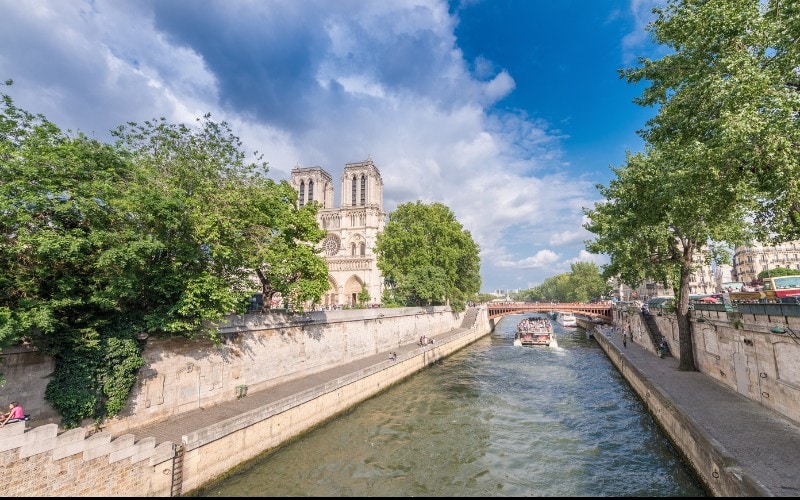
Later in the day, the area in front of the cathedral will be mobbed with tourists, but for an hour or so in the early morning, you’ll have the view to yourself.
Walkway along the Seine heading towards Notre Dame Cathedral
Cross back over to the Left Bank and find a café for breakfast. My favorite is a café au lait with a length of baguette accompanied by pots of French butter and jam. At home, I never eat jam, but in France? Mais oui.
While enjoying my breakfast, I divide my time between people-watching and writing. In the early morning, few tourists are about so most of the people nearby are locals scrolling on their phones.
The atmosphere is peaceful and unhurried, a marked contrast from the busy-ness to come.
Visit to the Musée d’Orsay
Refreshed and ready for some serious artsy sightseeing, hop on a bus that takes you along the Quai Anatole France to the Musée d’Orsay.
While the Métro is great for getting from A to B quickly, the bus is a more leisurely and visitor-friendly option. Instead of taking an expensive Hop On, Hop Off Bus tour, take local buses and see the same monuments of Paris for a fraction of the price and get in some seriously interesting people-watching.
Few artsy traveler experiences are more rewarding than walking into the Musée d’Orsay ahead of the crowds.
Of all the grand museums in Paris, the Musée d’Orsay is my favorite, and I drop in every time I visit. In addition to its stunning permanent collection, the museum hosts excellent special exhibitions.
TIP: Before traveling to Paris, check what’s on and be sure to get your tickets well ahead of your visit.
Go to the Top Floor
Start your visit by taking the escalators straight up to the fifth floor so you can tour them while they are still relatively empty. Later in the day, you’ll be hard-pressed to see any of your favorites through the crowds.
A Break in the Museum Café
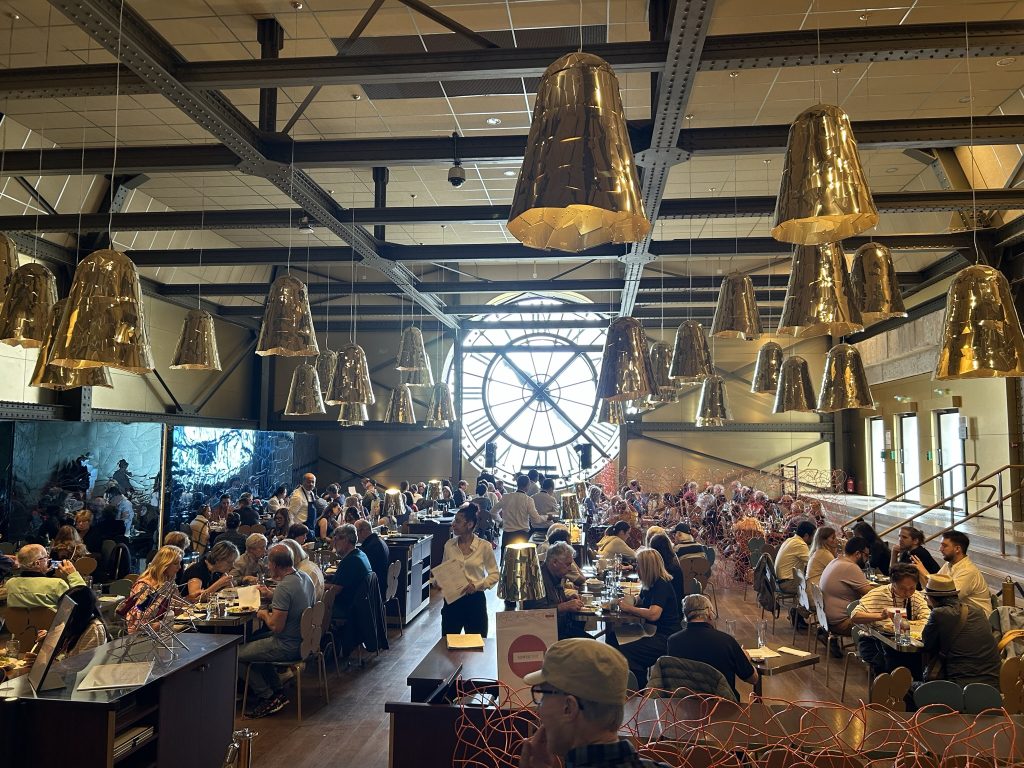
After touring the top floor, take a break and enjoy a coffee and pastry in the elegant café behind the giant clock. Usually, it’s not too crowded in the morning before the lunchtime rush. Sip your coffee, contemplate the glorious art you’ve seen, and plan which galleries to visit next.
The elegant café on the fifth floor of the Musée d’Orsay
The Lower Floors
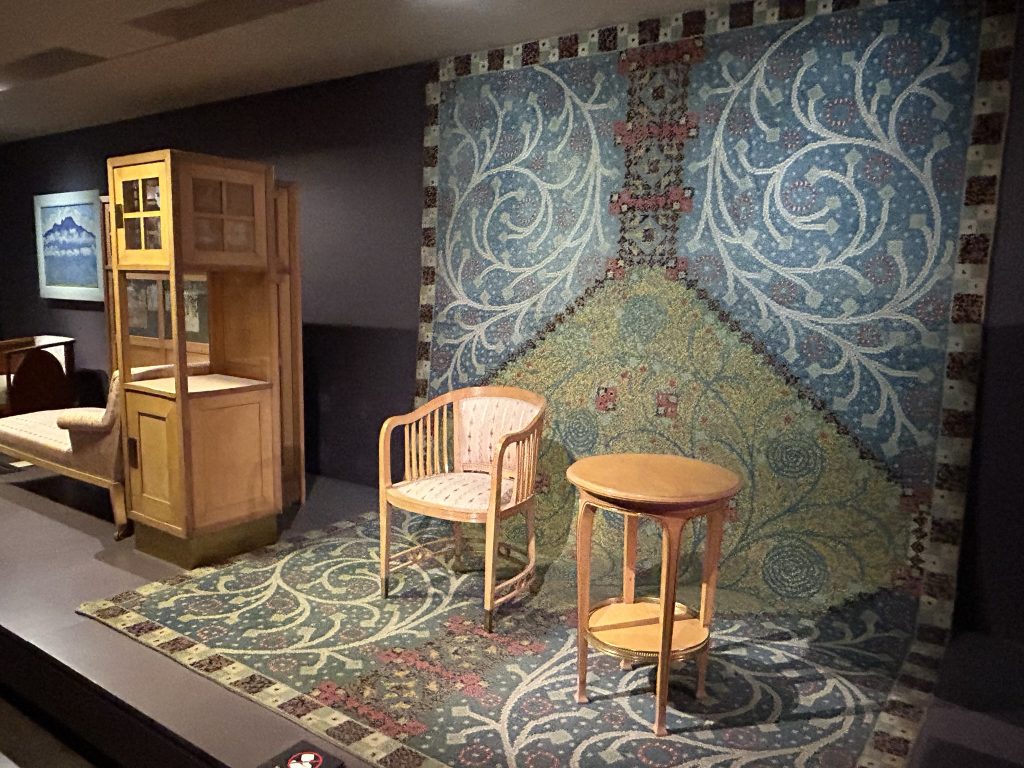
Once refreshed, begin your descent through the next few floors, taking time to check out the art nouveau exhibits on the second floor. This floor is almost always deserted, and yet the art is stunning.
Display of art nouveau furniture at the Musée d’Orsay in Paris
On the main floor, make sure to see Manet’s Le Déjeuner sur l’herbe and Courbet’s evocative L’Origine du Monde.
The Gift Shop
Always leave some time to browse the gift shop at the Musée d’Orsay where there are shelves full of beautiful art books along with plenty of art-encrusted swag.
An umbrella emblazoned with van Gogh’s Sunflowers? A Manet fridge magnet? A Gauguin mug? They’re all here, and a great deal more.
After a few hours enjoying the delights of the Musée d’Orsay, re-emerge into the light and head east again. You could take a bus back to the Saint-Michel area, but consider walking.
Browsing Left Bank Shops
Although the walk is fairly lengthy, it takes you past so many interesting shops. The area of the Left Bank between the Musée d’Orsay and the Boulevard Saint-Michel teems with boutiques offering antiques, objets d’art, and paintings.
The variety of artsy stuff on display is astonishing. You could spend an entire day peering into the shop windows.
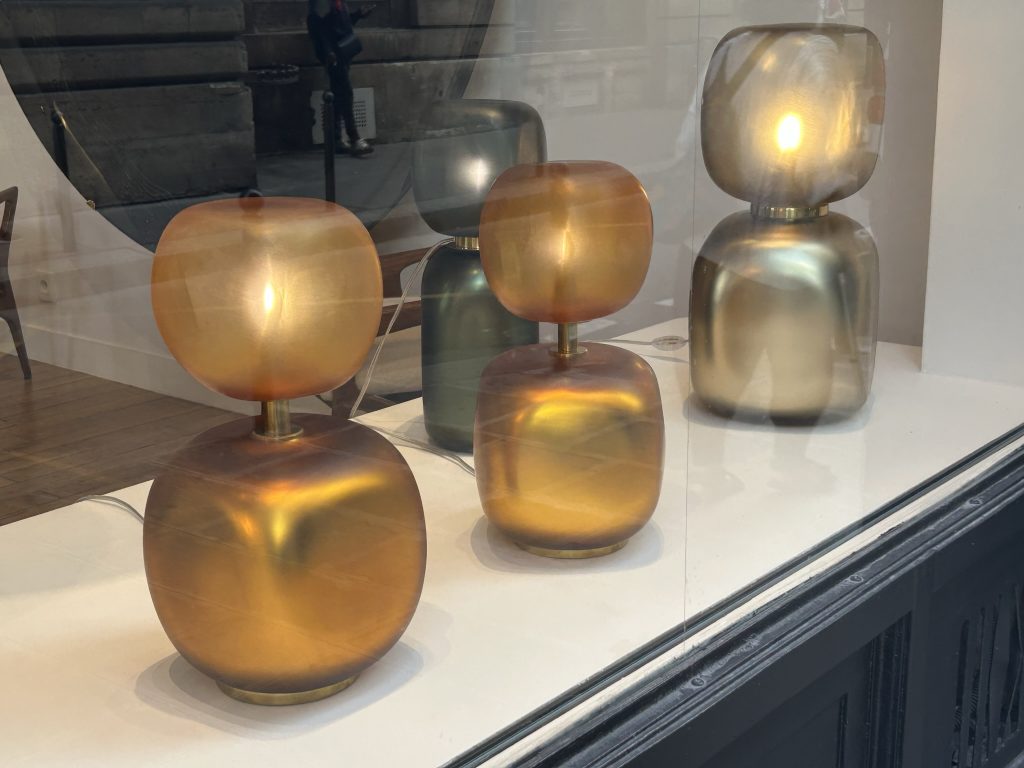
Elegant shop window on the Left Bank
I’m not sure who buys a life-size antique sculpture of a Roman gladiator or an ornate armoire that probably graced a room in Louis XIV’s Versailles, but obviously someone does.
Many of these shops have probably been in business for centuries.
Lunch in Paris
As you stroll, you’ll notice the crowds swelling. By the time you get to the area around the Boulevard Saint-Michel, the solitary hours of your early morning walk will feel like a dream.
Finding a good place to have lunch can be a challenge in this busy area. There are plenty of choices, but not all are great. Use your smartphone to help you find an eatery that has at least a 4.5-star rating. You’ll need to veer off the main thoroughfares and search along small side streets.
After settling on a café for lunch, treat yourself to one of the grande salades. These never disappoint.
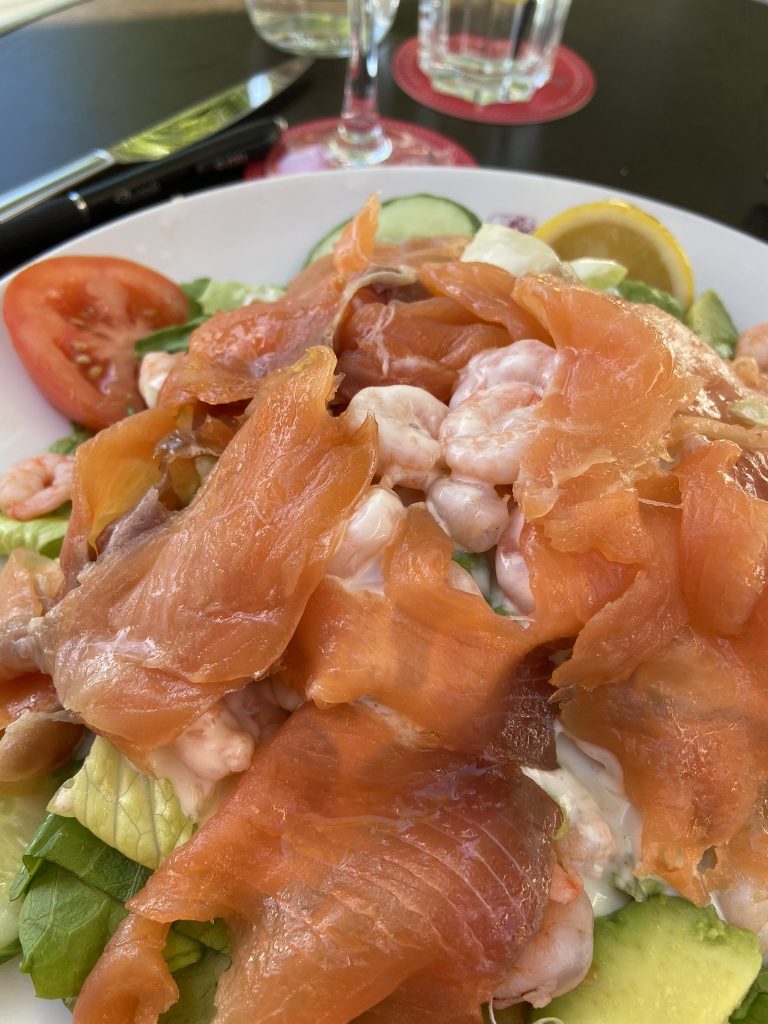
My favorite is the Salade Norge. Usually, it consists of a massive helping of smoked salmon and shrimps with salad greens, hard-boiled eggs, capers, olives, and plenty of lemon slices. If I’m in the mood, I may even order a glass of white wine to accompany my salad.
Generous helpings of seafood in a Grande Salade in Paris
Afternoon in Paris
After lunch, wander up the Boulevard Saint-Michel to the Musée national du Moyen Âge, also known as the Musée de Cluny.
Visit the Musée de Cluny
If I had to choose my favorite small museum in Paris, the Musée de Cluny would win hands down. I love it because two of my novels—The Towers of Tuscany (Lake Union Publishing 2014) and The Merchant of Siena (coming soon)—are set in the 14th century.
The Musée de Cluny is the 14th and 15th centuries on steroids.
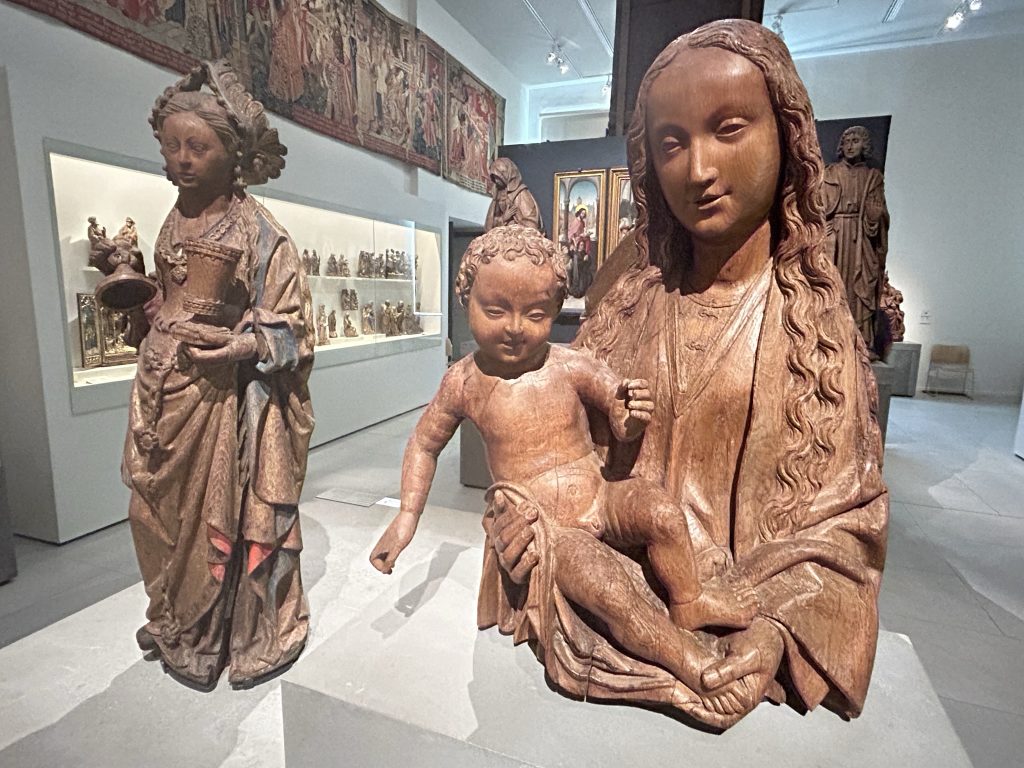
The exhibits feature exquisite items in a wonderful variety of mediums—from woodworking to enameling to metalworking to sculpture to miniatures to, well, you name a medium and you’ll find a medieval example of it at the Musée de Cluny.
Exquisite wood sculpture at the Musée national du Moyen Âge
A highlight of your visit will be the room containing the Lady and the Unicorn tapestries. These stunning tapestries warrant a good chunk of your touring time. Take a seat in the middle of the room and enjoy the details in each of the six tapestries.
If you’re still full of energy after your Cluny visit, stroll up Boulevard Saint-Michel to the Luxembourg Gardens.
The Luxembourg Gardens is the quintessential Parisian garden, full of gorgeous flower beds, cool activities and Parisians at play.
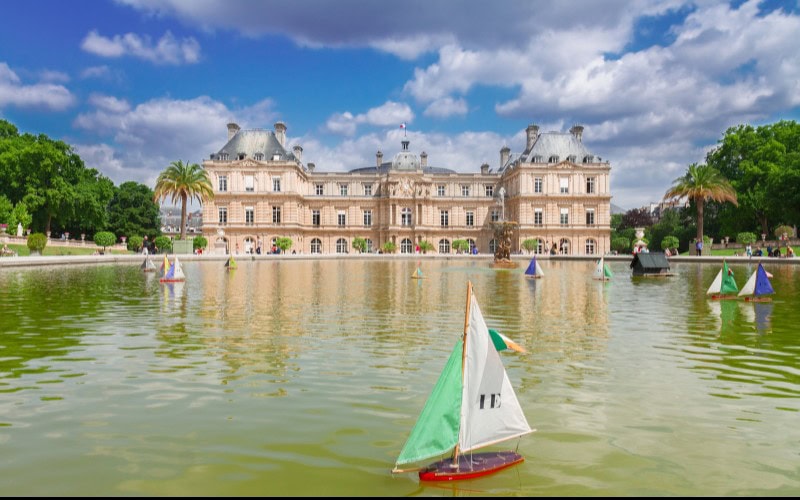
Linger by the round pool in the middle and watch children sail remote-control boats, wander the beautiful pathways and enjoy the wealth of sculptures, stop for a coffee or a drink at one of the small cafés, and just chill out.
If the weather cooperates, snag a chair near the pool and bask in the sunshine.
Large pool at the Luxembourg Gardens in Paris
TIP: If you’re traveling with children, don’t miss the Luxembourg Gardens playground. Even after thirty years, my daughter still speaks fondly of playing on the varied apparatus at the Luxembourg Gardens when she was eight. During that trip back in 1995, our family spent a LOT of time at that playground!
Evening in Paris
Ready for a rest? Head back to your hotel room to enjoy some quiet time and to make dinner reservations, if you haven’t already.
Early Concert
A perfect artsy day in Paris definitely includes taking in a classical music concert. And you’ll have plenty of options to choose from.
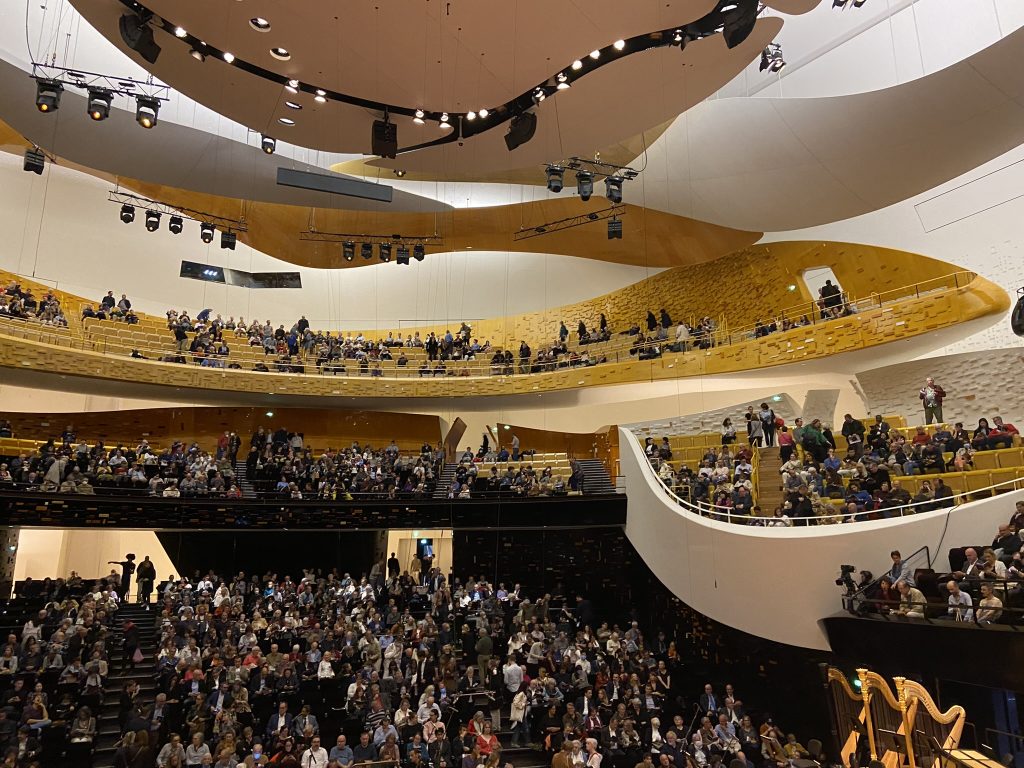
A reliable option is to get tickets for a concert at the stunning Philharmonie de Paris in the Cité de la Musique located in the Parc de la Villette in northeast Paris. I’ve gone a few times, and every time I’ve been blown away both by the venue and the performance.
Interior of the stunning Philharmonie de Paris concert hall
Or perhaps go to a concert at Sainte-Chapelle on the Île de la Cité or at Saint-Julien-le- Pauvre on the Left Bank. I highly recommend both options. Check the classictic website to purchase concert tickets.
Late Dinner
And finally, the pièce de résistance of a Perfect Artsy Traveler Paris Day—dinner! After all, one of the many reasons to visit Paris is to sample great food. With so many options, always make sure to check reviews.
I’ve had some of the best meals of my life in Paris, and some of the worst. Bad food in Paris can be really, really bad.
Avoid the super-touristy joints on the Champs-Élysées and search for places tucked away on side streets, favoring places with menus printed only in French. Chances are very good that your server will speak English and cheerfully translate.
The myth of the snooty French server is, at least in my experience, a myth. Almost without exception, every French server I’ve encountered during the fifty-odd years I’ve been traveling to Paris has been helpful, friendly, and fun, often cracking jokes and anxious to ensure I enjoy my meal.
I find that the key to getting good service in Paris is to start off in French, even if it’s only Bonjour or Bonsoir. Showing your willingness to at least try speaking French means you’re almost always rewarded with excellent service.
You will pay more for an excellent meal in Paris than in other parts of the country, but you don’t need to spend a fortune. You can spend a fortune if you want to, but it’s possible to get a top-rate meal for two that includes three courses and wine for about 100 euros.
So no, not cheap, but excellent value.
Stroll Home
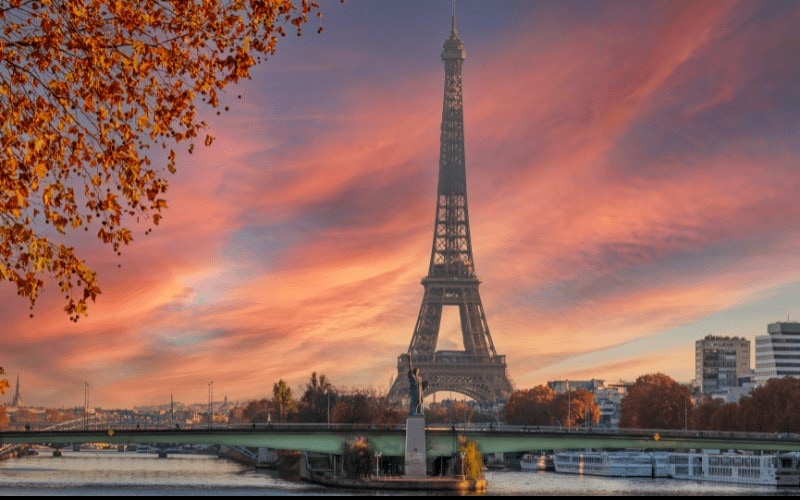
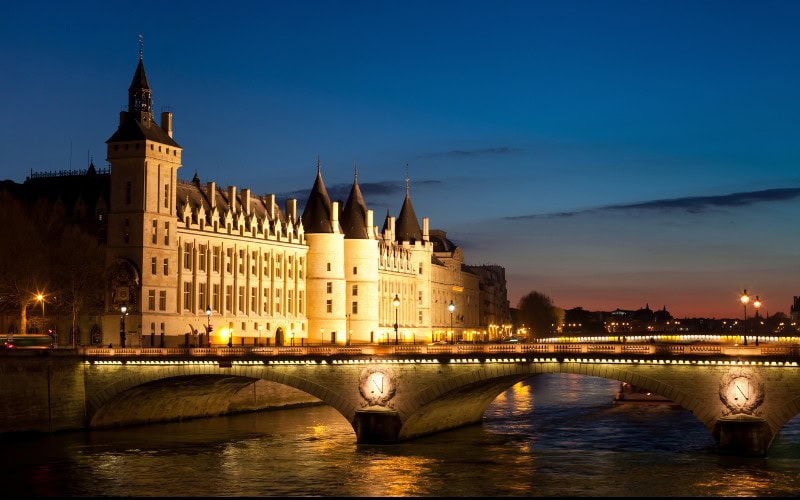
End your Perfect Artsy Traveler day in Paris with a stroll past its many floodlit monuments. Paris is called the City of Light for good reason. Linger in the middle of a bridge spanning the Seine and admire the Eiffel Tower in one direction and Notre-Dame Cathedral in the other. It feels wonderful to slow down and relax.
Floodlit buildings make Paris magical at night.
Where to Stay in Paris
I favor hotels and apartments on the Left Bank in Paris. Here are some of my favorites:
Hotel de L’Universite: In the heart of Saint-Germain, this boutique hotels is a bit removed from the crowds.
Author Zoe Disigny (The Art of Traveling Strangers) has made her dream of owning a house in France come true! Read about her experience in this guest post for Artsy Traveler.
Vive la Différence
We bought a house in France! I know, I can’t believe it either!
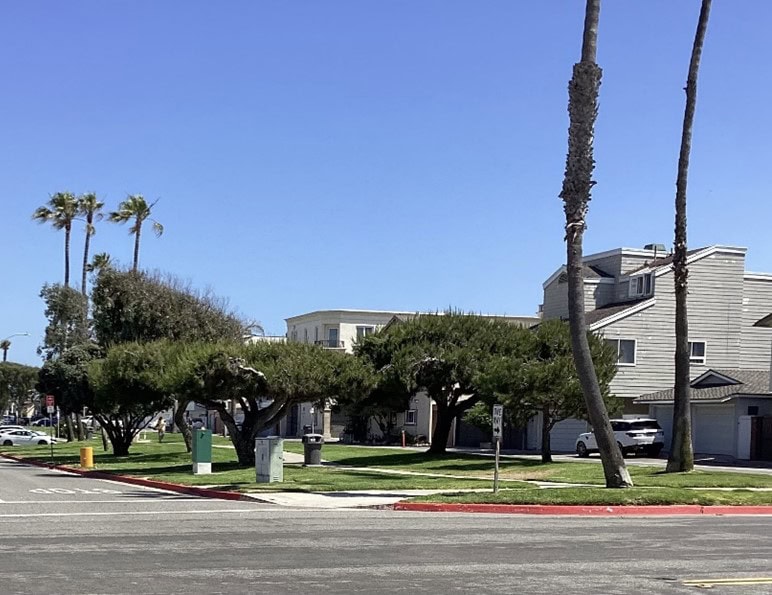
I’ve fantasized about living in France since my first high school French class, and now, over fifty years later, that dream has come true four months out of the year. And although I’m new to this, I’d like to share some preliminary observations about living in rural Southern France versus urban Southern California.
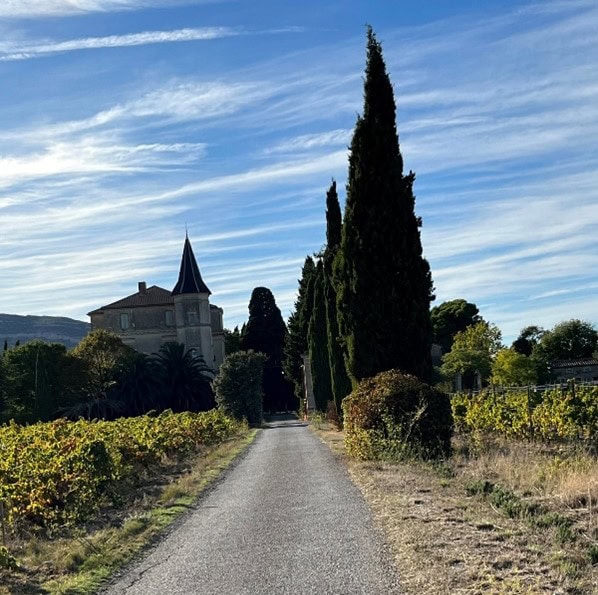
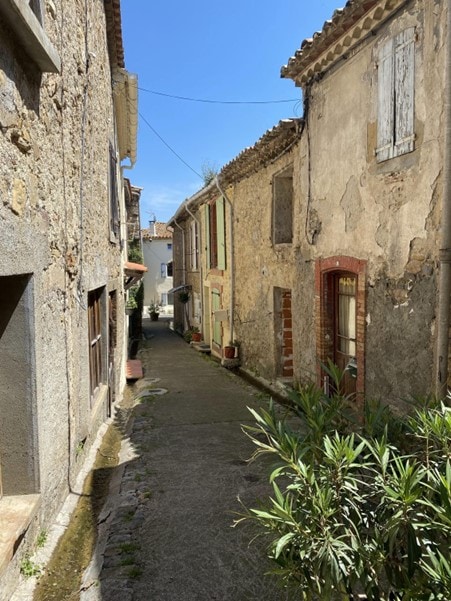
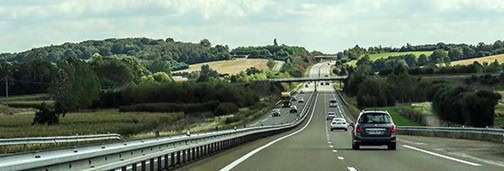
A road outside my home in Southern California vs a road outside my home in Southern France
History is Everywhere
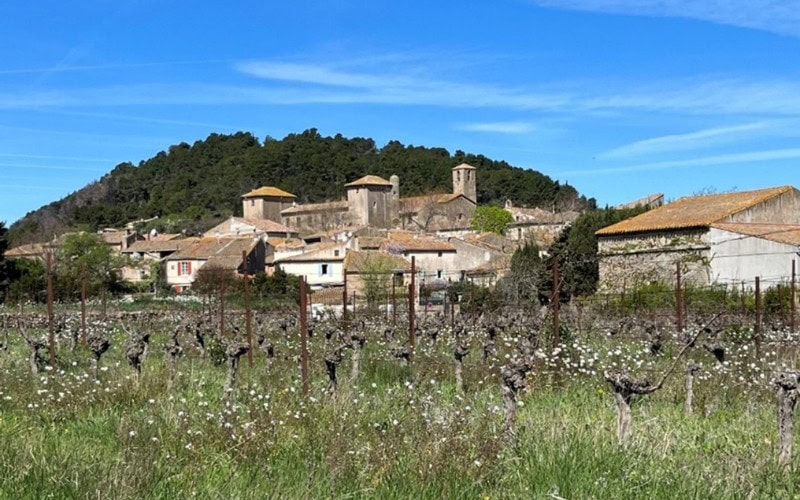
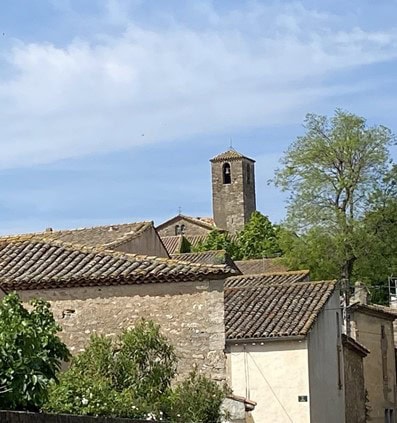
The first thing I always notice about France is the palpable presence of history, and my little village is no different. I’m drawn to the textures of the old buildings, with their peeling layers of plaster, red tile roofs, and decorative eaves looking like the pinched edges of pie crusts.
And I love how the village houses still cluster around medieval churches. In Southern California, the buildings would be sleek condos surrounding a shopping center.
Views of our village in the south of France
For Whom the Bell Tolls
A sturdy bell tower crowns the 12th-century church in the center of our village. Its ancient bell tolls daily at seven in the morning, noon, and seven at night, calling the faithful to pray the Angelus—a prayer dating back to the 11th century. The clanging bell is far from melodious, but it fills me with inexplicable joy.
Nothing in Southern California compares.
Beautiful Details
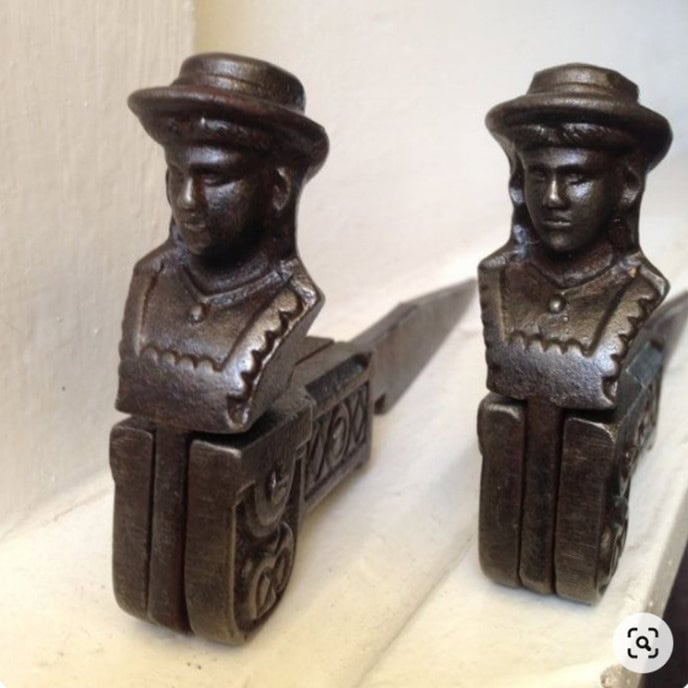
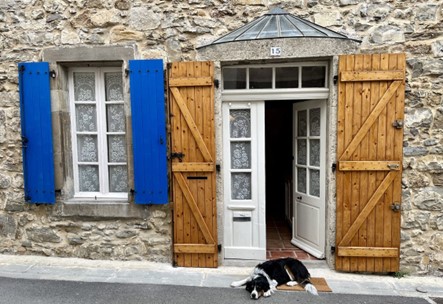
It’s not just the weathered façades of old French homes that reel me in but also their traditional wooden shutters with black iron hardware. The iron fasteners that hold our window shutters open take the shape of tiny female busts and are called arrêts bergère (shepherdess stops). I love their hats and how proper these ladies look. They clearly take their job seriously!
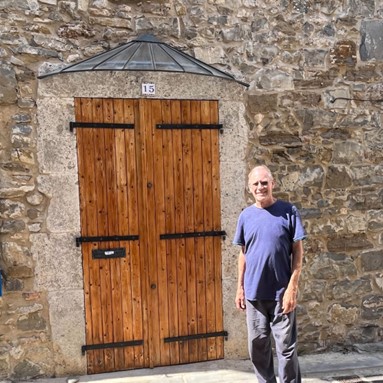
Against the stone façade of our house, our door shutters with their multiple iron bars remind me of a medieval fortress. And the six-step process to close and latch them each night feels just as archaic—an inefficiency that would not go over well in the U.S. but appeals to my romantic soul.
I’m also charmed by the delicate lace curtains placed flat against the inside of the windows. They soften the darkness of the closed shutters and filter the light when the shutters are open—an old-fashioned window treatment that would look entirely out of place in my home in California.
Navigating French Bureaucracy
The English word bureaucracy comes from the French word bureaucratie coined in the 18th century to describe a cumbersome government of multiple bureaus or offices. It’s fitting that the French invented this word because France is notorious for it.
Case in point: Our cash offer for our French house was accepted on May 16, 2022. Even though there were no contingencies, the sale was not approved until Aug. 30—three and a half months later!
In California, if all goes well, cash buyers can close a sale in as little as seven days.
Getting from Here to There
Driving in France (not Paris) is a pleasure, as long as you’re good at navigating endless rond points (roundabouts) and realize you won’t get stopped for speeding. Instead, if you’re caught on a speed camera, you’ll get a ticket in the mail. Surprise!
Of course, there’s often no need to drive because the trains go everywhere and are comfortable, clean, and inexpensive for short hops. It only takes twelve minutes and costs three euros for us to train to Narbonne (fourteen miles away on the Mediterranean).
And one of the best things about traveling around France . . . no billboards!
A highway in France
The Pause that Refreshes
In my part of France, most stores (except grocery stores) close from noon to 2 (unless it’s Sunday when nothing is open—again, except grocery stores, but they’re only available until noon). Got it?
Our home improvement store, Bricomarche, is very strict about its midday closure. As the noon witching hour approaches, staff members circulate the store, barring customers from selecting more items and shooing us toward the checkout counter.
Stop a client from buying? That would never happen in the U.S.
As the stores shut down for lunch, the restaurants open—but only from noon to 2 (or sometimes 1:30). If you miss that window, they don’t open again until 5 (at the earliest).
Dining in France
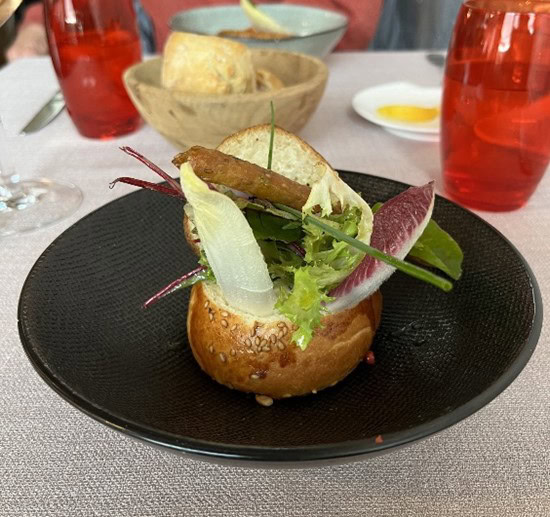
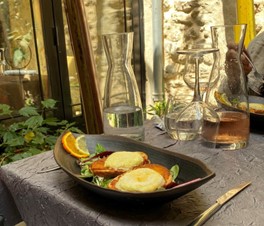
The tradeoff for this narrow timeframe is the delicious, artfully presented food! Other compensations include no loud music or distracting TVs (making mealtime more favorable for conversation, savoring, and digestion).
Tipping is strictly voluntary. With a government-required service charge added to the bill, a 5-10% tip is generous.
Artfully presented and delicious food in France
Another dining difference in France—the pace of the meal. Not only does it usually take a little longer to get your food, but it takes a lot longer to get your bill. This is not great if you’re in a hurry, but at least they won’t whisk your plate away while you’re still chewing your last bite!
And take heed, no “doggie bags.” I mean, you could ask for one, but it’s not normally done. So eat up!
Bonjour, Madame
Perhaps it’s just my little village and the towns near mine, but everyone passing by says “bonjour.” The delivery man, dog walker, shoppers, children. No one passes anyone without a friendly “bonjour.” And most of the time, the greeting is even more polite. “Bonjour, Madame,” “Bonjour Monsieur.” Or if you’re in mixed company, “Bonjour messieurs-dames.” It’s just so respectful and, well . . . French!
So, there you have it, a few of my early impressions on the differences between living in the U.S. and France.
Vive la différence!
Read about Zoe Disigny on the Artsy Traveler Guest Posters page.
I’ve been traveling around France since I was 14 when I toured Europe with my mother on a budget of about $10 a day (you can read about that trip in My Story).
Since then, I’ve returned 17 times. So if you’re wondering why I’m listing 17 off-the-beaten-path places in France, now you know.
Each place on this list comes with a memory: a vineyard discovered by accident, a surrealist postman’s dream palace in the middle of nowhere, flamingos in a French wetland, a hill town where Max Ernst spent the last years of his life. These are the places that make me want to come back.
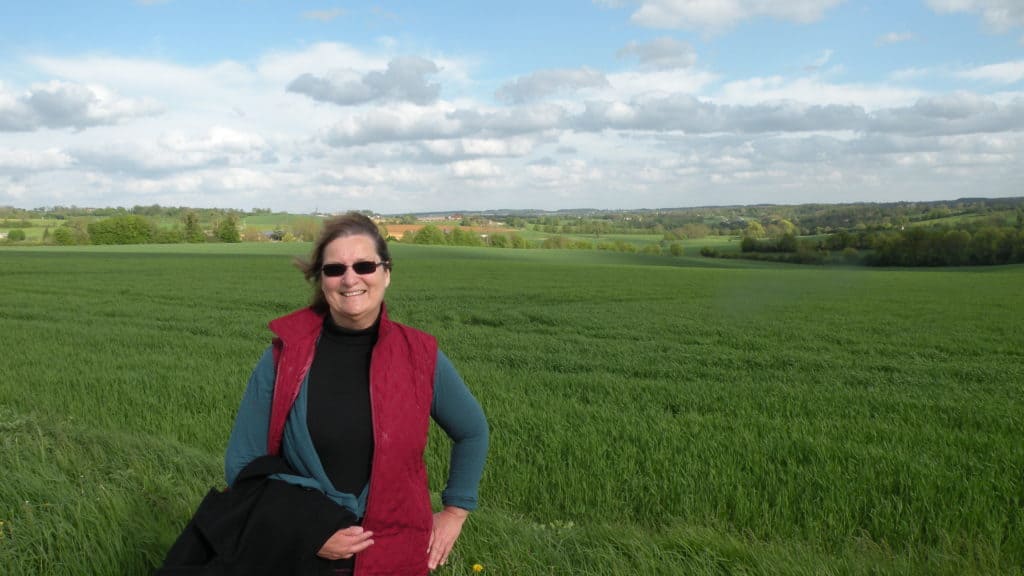
In the Normandy countryside about an hour south of Honfleur
This post is part of my guide to artsy & independent travel in France, where I share my best tips for exploring France’s creative cities, historic sites, landscapes, and cultural experiences.
The map below shows my 17 choices in the order in which I mention them, starting with Honfleur (#1) and ending with the Fontainebleau Forest (#17). If you have wheels, you could easily string together an around-France itinerary using these 17 places as stop-over points.
I also include a Google map showing the location of each individual place following its description in the post.
How I Chose These Unique Places to Visit in France
For a place to make my list, it needed to have an artsy component, be beautiful, and feel off the beaten path. These are not the usual headline destinations, but some of the most unique places to visit in France.
Ready to check out my 17 favorite places to visit in France? I start with Honfleur on the Normandy coast northwest of Paris and go in a more or less counter-clockwise direction to take in Brittany, the Loire Valley, the Dordogne, the south of France, the east of France and ending at the Fontainebleau Forest just south of Paris.
If these places inspire you but combining them into an itinerary feels overwhelming, Rough Guides allows you to plan with a local travel agent in France .
#1: Honfleur, Normandy
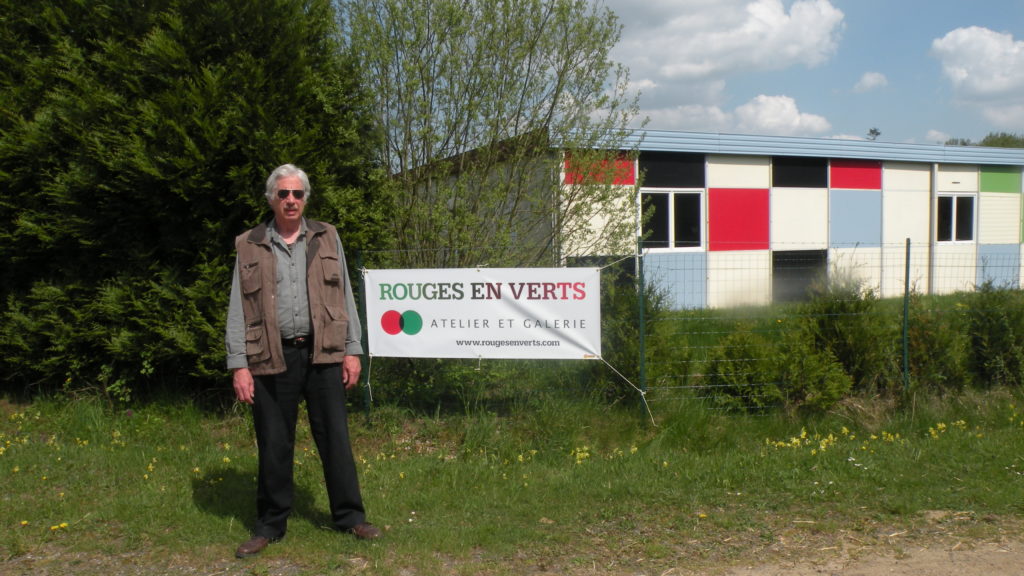
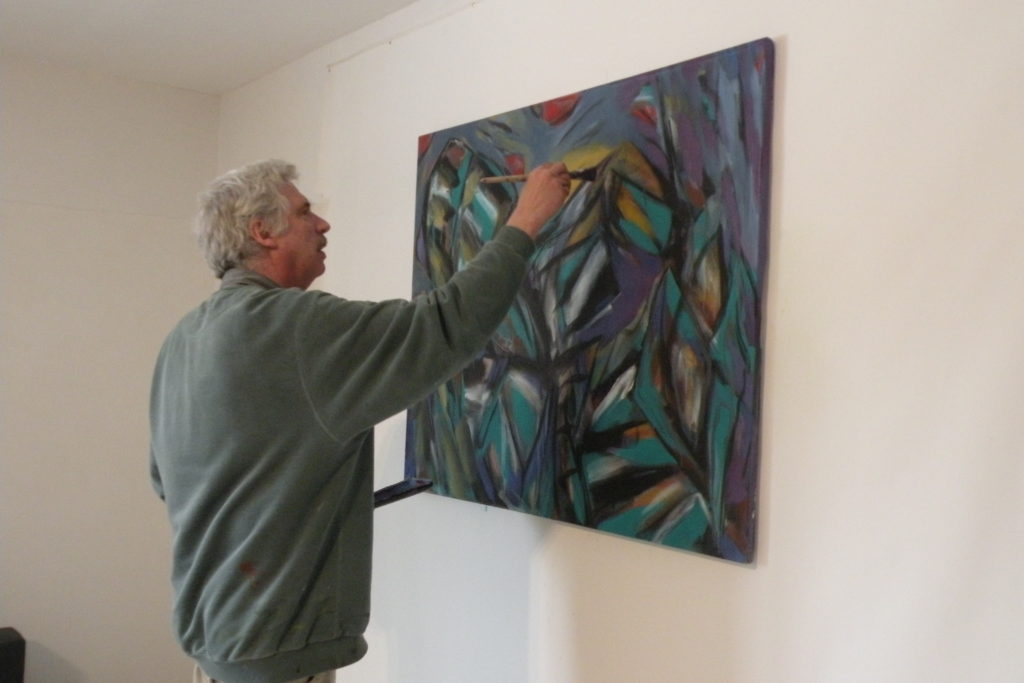
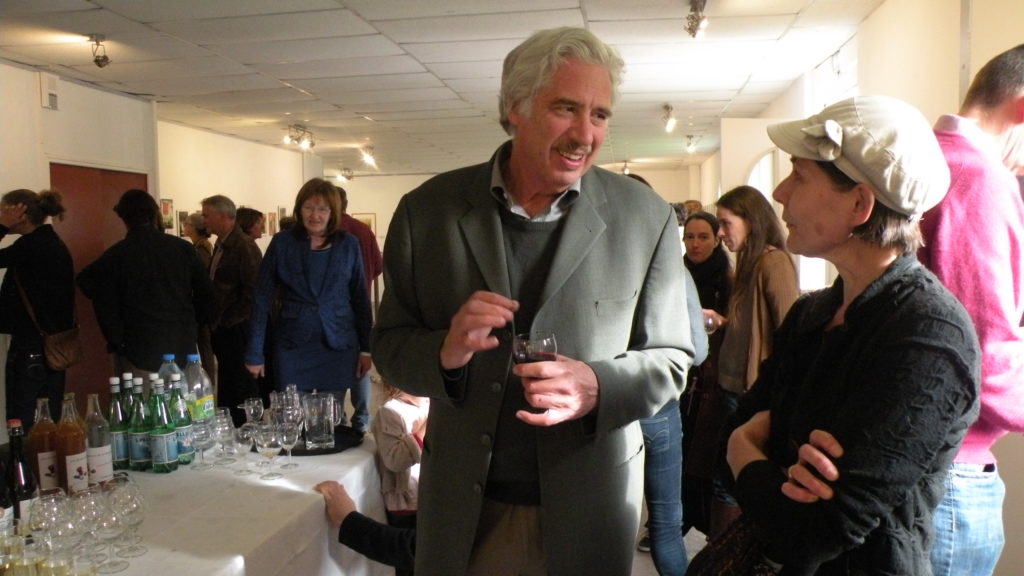
A few years ago, Gregg and I were fortunate to be artists-in-residence at a gallery located in the Perche region of central Normandy. For two months when we weren’t painting (Gregg) and writing (me), we explored this beautiful and untrammeled area. Although close to Paris, peaceful rural Normandy feels like another country.
On one trip, we went north to the gorgeous little town of Honfleur on the Normandy coast. To our delight, Honfleur was packed with artsy sites.
What is Special About Honfleur?
Art Galleries in Honfleur
First of all, if you’re looking to purchase art, Honfleur is renowned for its galleries. You can spend many happy hours browsing the offerings in the galleries lining the streets leading to the harbor.
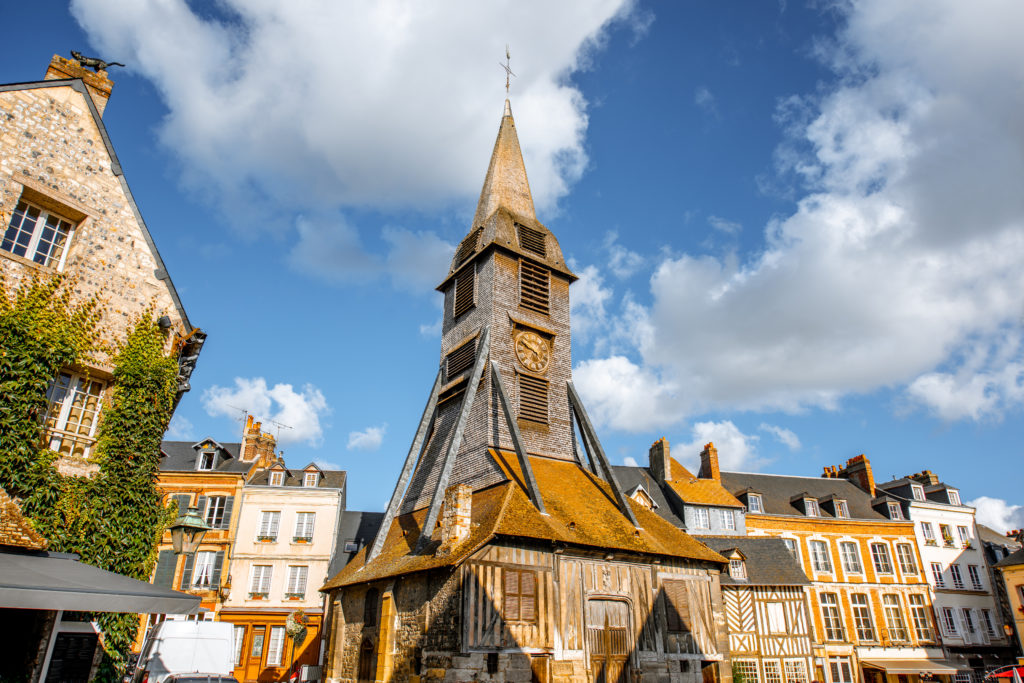
From an architectural perspective, Honfleur has much to offer. The Church of Sainte Catherine on the town square was built entirely of wood in the late 15th century by shipwrights. Wander through the church to view its many decorative details.
Church of Saint Catherine in Honfleur, Normandy
The Vieux-Bassin
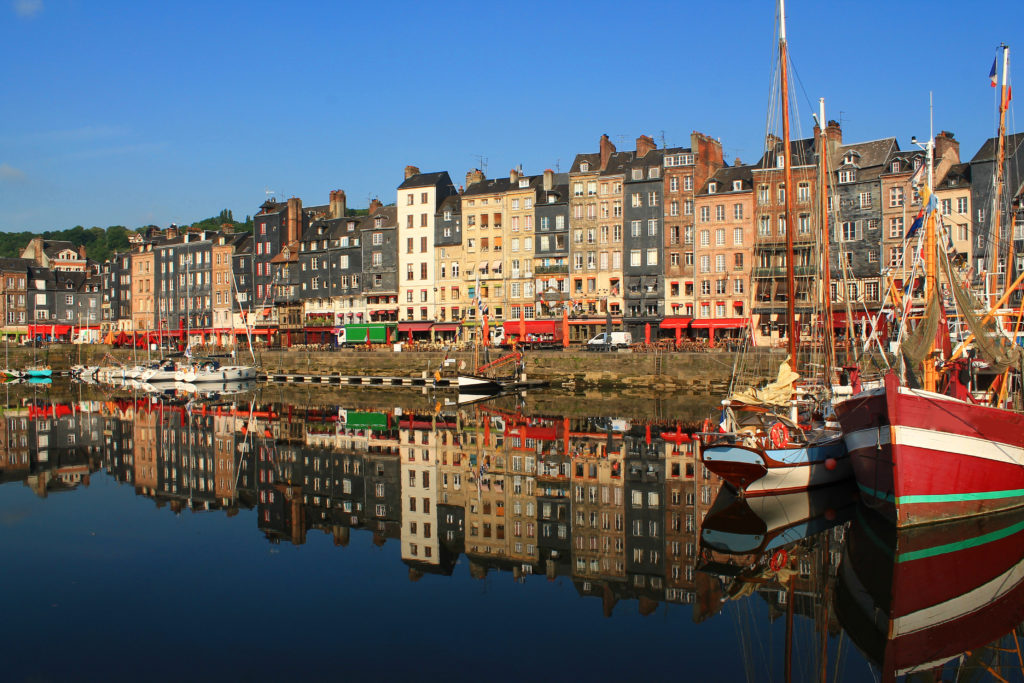
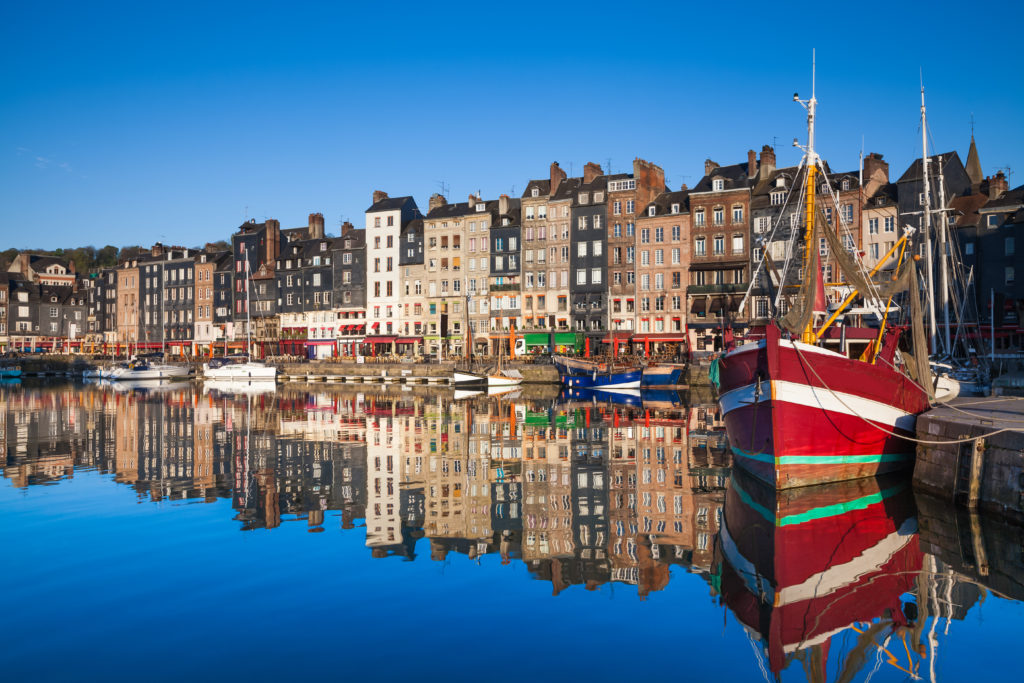
You’ll eventually end up at the harbor (the vieux bassin), surely one of the most stunning sights in Normandy. The distinctive high and narrow timber-frame houses are reflected in the still water of the boat-filled harbor.
We spent quite a bit of time walking along the harborfront enjoying the gorgeous views and stopping for a dinner of moules et frites (mussels and fries) along with local wine.
The Vieux-Bassin in Honfleur harbor is lined with wonderful cafés.
Museums in Honfleur
Two museums in Honfleur are particularly attractive to the Artsy Traveler.
Musée Eugène Boudin
First up is the Musée Eugène Boudin, named after the painter Boudin who was born in Honfleur. The museum exhibits an impressive collection of Boudin’s paintings along with works by other artists who have visited or are closely associated with Honfleur, including some big names: Courbet, Dufy, and Monet (you’ve probably heard of him!).
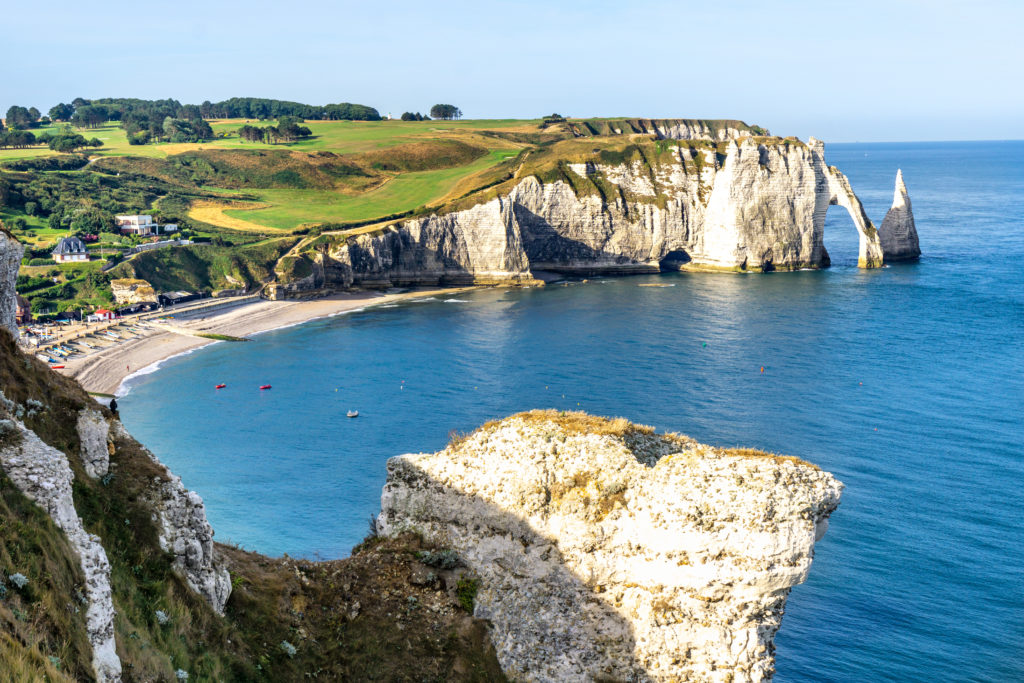
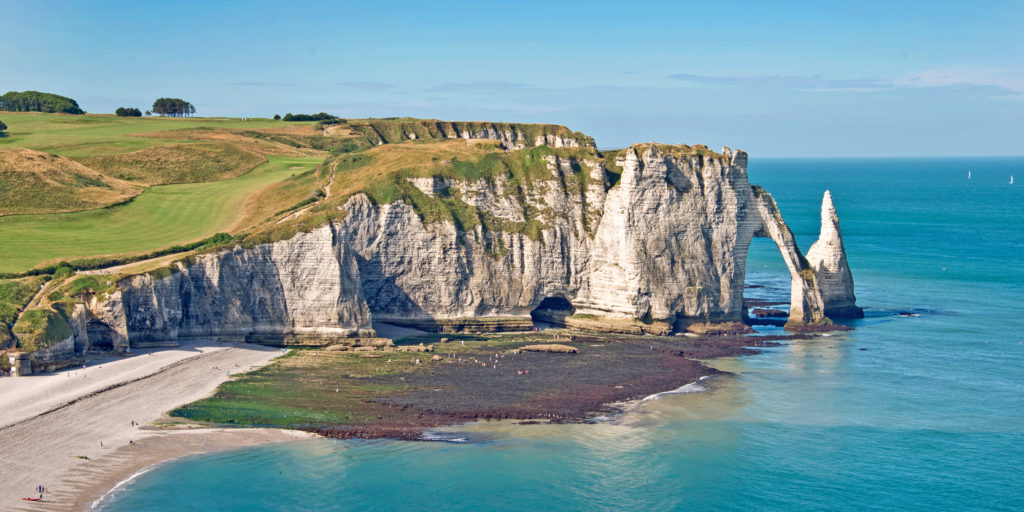
As a side note, Honfleur is not far from Étretat which we also visited. Courbet, Boudin and Monet each painted these cliffs.
Alabaster Coast at Étretat. Aval cliff. Normandy, France.
Maisons Satie
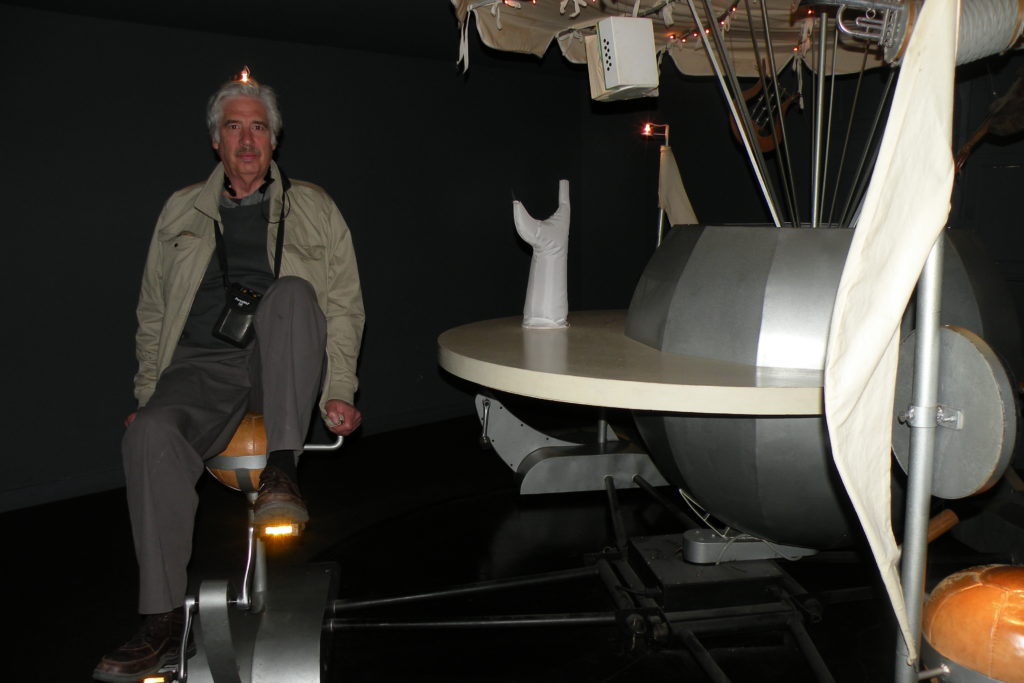
Our favorite of the two museums we visited in Honfleur is the entrancingly eccentric Maisons Satie. Housed in the birthplace of the composer and darling of the Dadaists Erik Satie (1866-1925), the museum takes you on an interactive tour of Satie’s music.
Armed with an audioguide, you prowl through dark rooms and activate various musical themes from Satie’s work. It’s a playhouse for music-loving grownups.
If you love Satie’s music (Gymnopedies and Gnossienne are his most famous works), then don’t miss this wacky, wonderful museum.
Getting to Honfleur
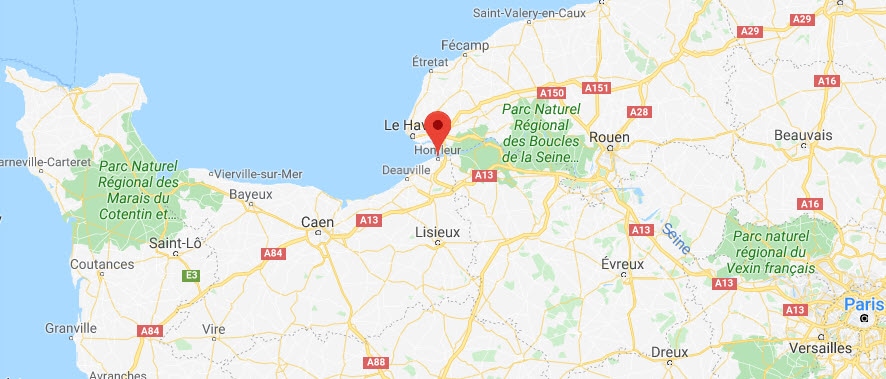
Location of Honfleur northwest of Paris
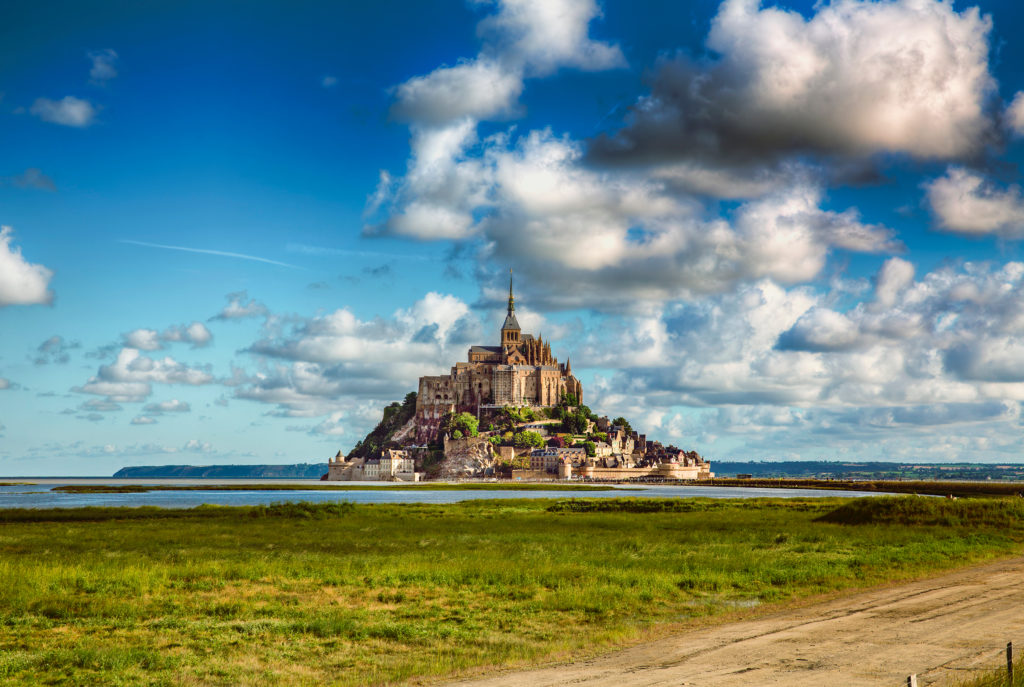
Honfleur is about a two-hour drive northwest of Paris. The Normandy coast from Honfleur in the northeast to Mont Saint-Michel in the southwest on the border with Brittany is worth a good long stay.
In addition to Étretat, two other highlights of this fascinating section of coastline are the D-Day beaches and Bayeux. Both places witnessed invasions, a millennium apart.
D-Day Beaches in Normandy Near Honfleur
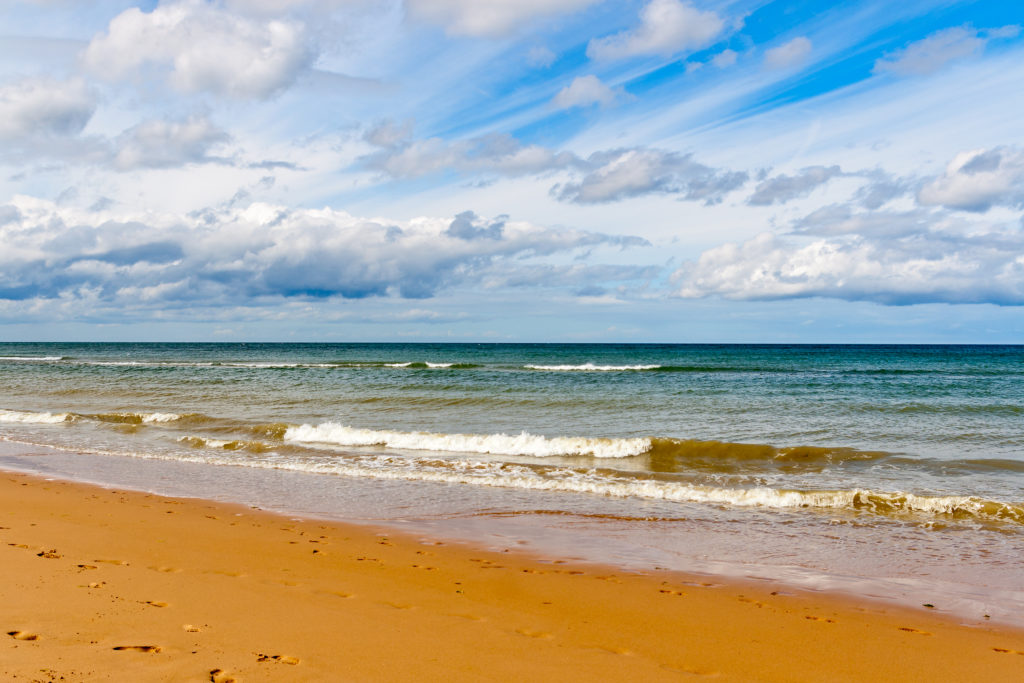
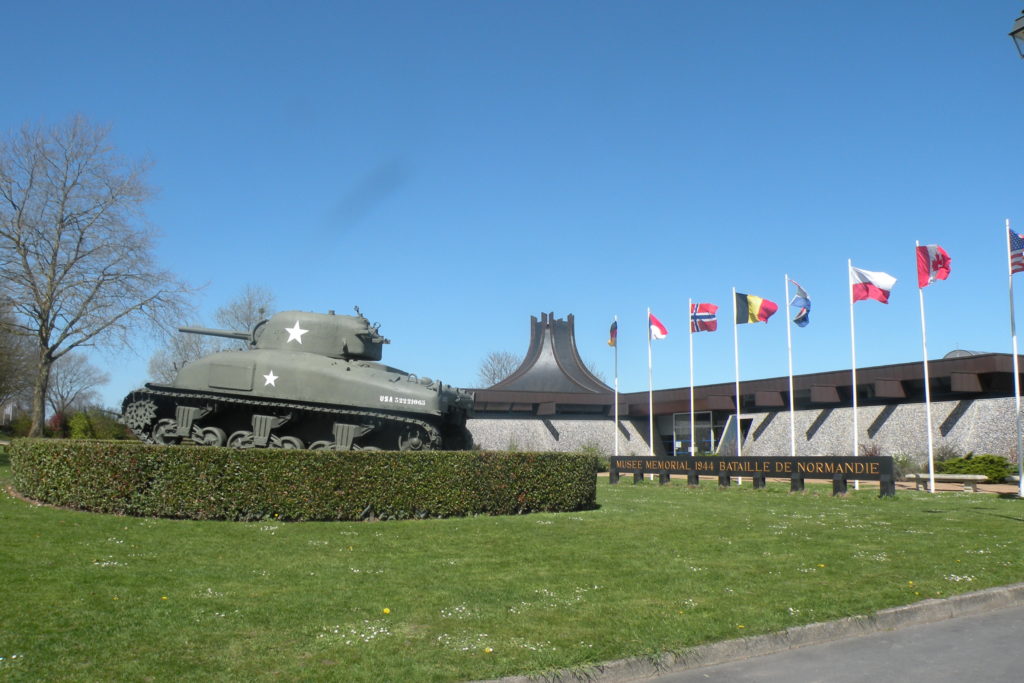
At the D-Day beaches, I was struck by the spectacular beauty of this stretch of coastline. That it was the scene of so much death and destruction in 1944 is sobering. We visited the marvelous museum and memorial at Juno Beach where the Canadians landed. The Caen Memorial Museum near Caen south of the beaches is also worth a visit.
Here are two guided tours of the area from Paris and one from Caen:
Omaha BeachPortion of the Bayeux tapestry showing Edward the Confessor looking a trifle bemused
Bayeux Tapestry
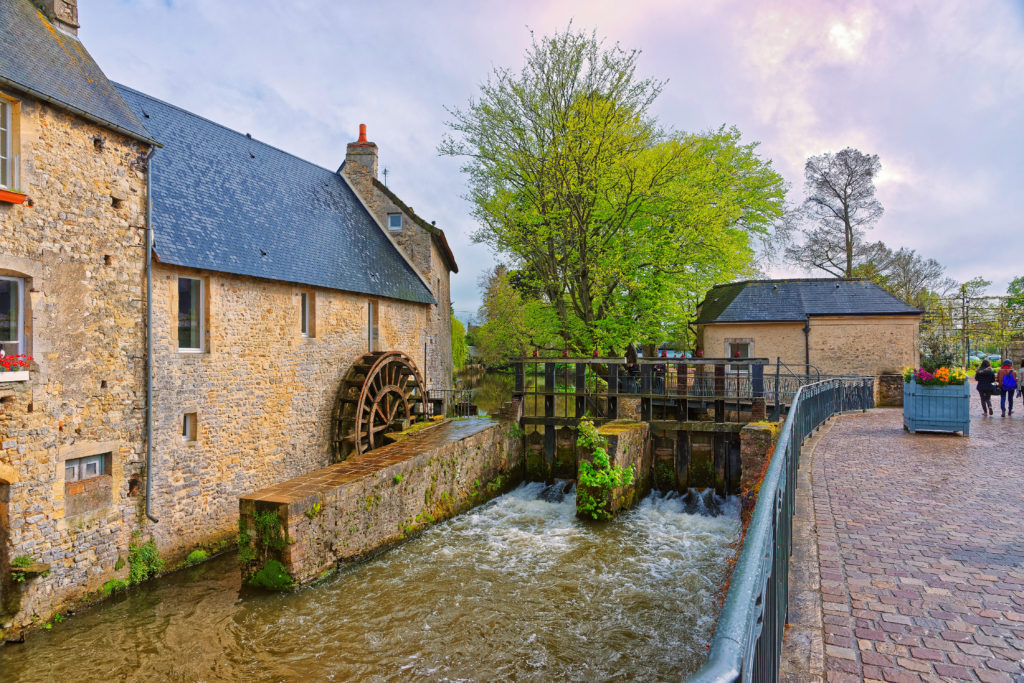
A millennium earlier, the French went in the opposite direction to invade England. At Bayeux, you can see the Bayeux tapestry that documents the invasion. The audioguide presentation of the tapestry is excellent—a definite must-see.
Honfleur makes a good home base for a few days while you tour the area. We stayed at the Hôtel L’Ecrin, a lovely old mansion set in beautiful gardens that include a pool. Free parking was a bonus as was the location of the hotel, an easy stroll to the harbor.
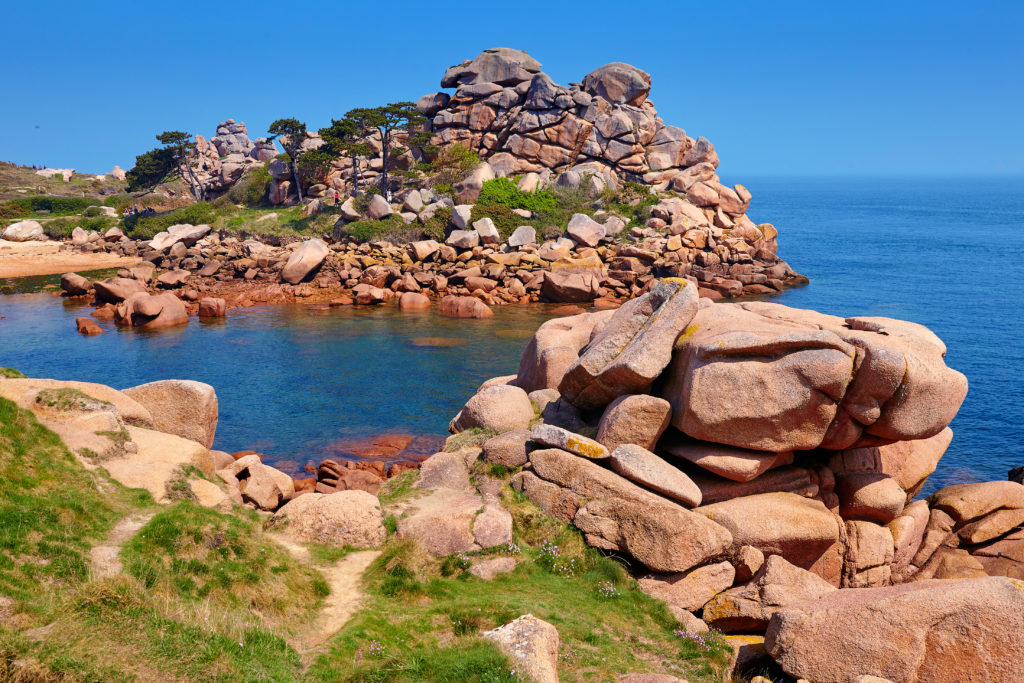
Gregg and I have visited the spectacular Côte de granit rose twice and hope to return. Thanks to its many plages (beaches), the area is a popular summertime destination for French families. But the area doesn’t feel touristy or crowded.
What is Special About the Côte de granit rose?
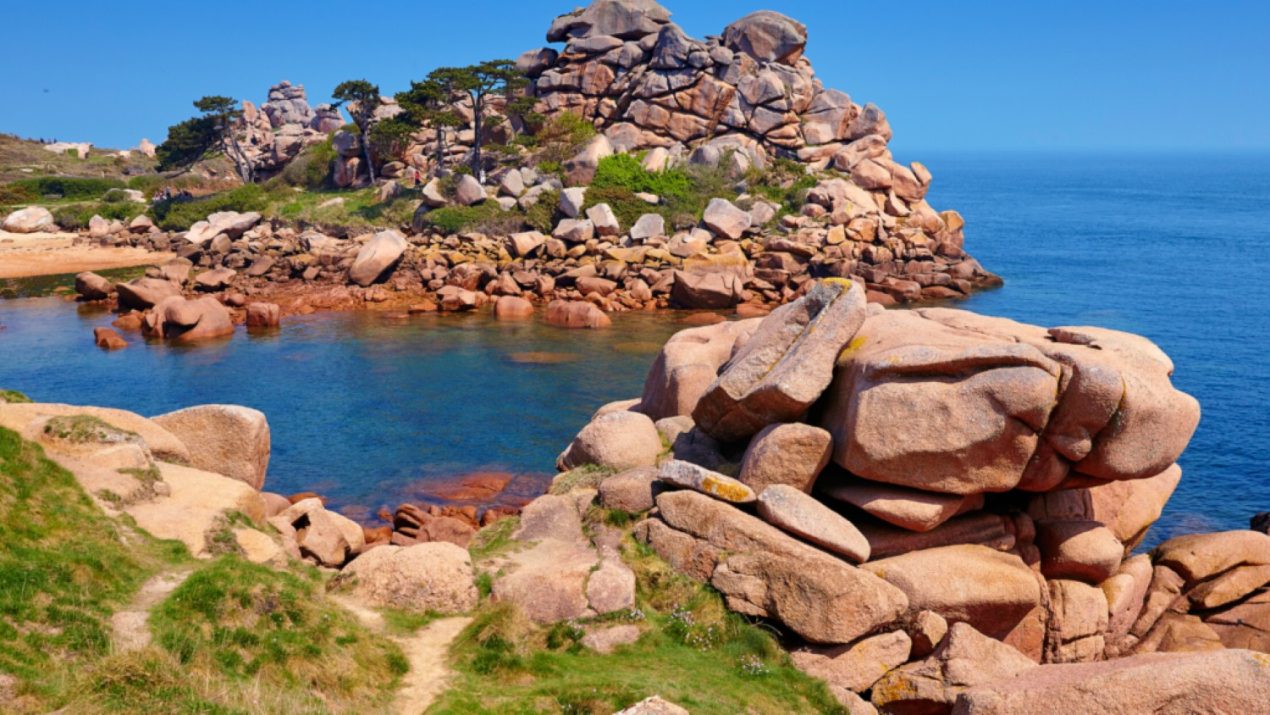
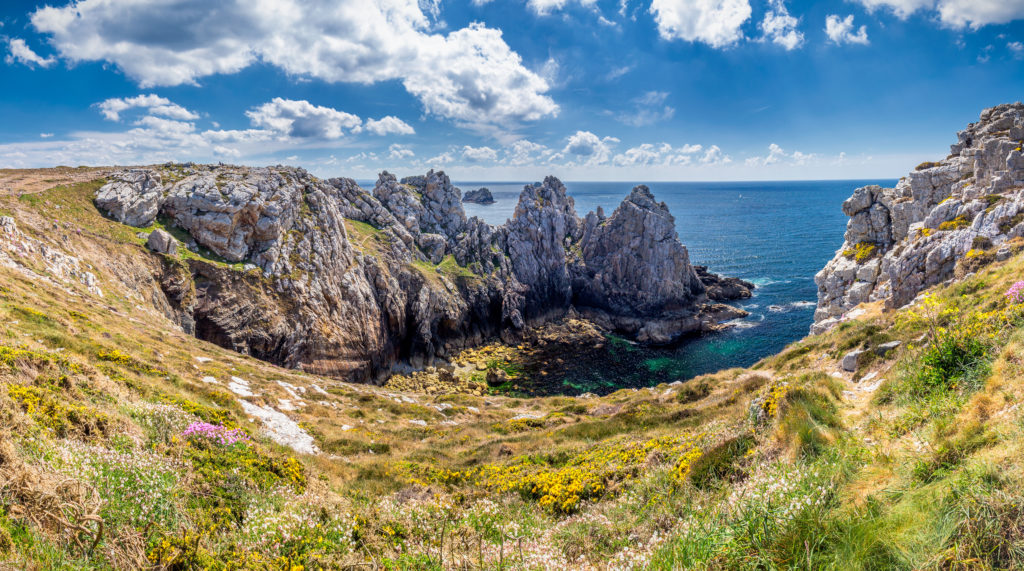
The thirty-kilometer stretch of pink granite rocks twisted into fantastic shapes is considered one of the most outstanding coastlines in Europe.
The marriage of pink rocks with turquoise ocean has inspired many artists, notably the French surrealist artist Yves Tanguy (1900-1955).
The Côte de granit rose in northern Brittany is a delight for the senses.
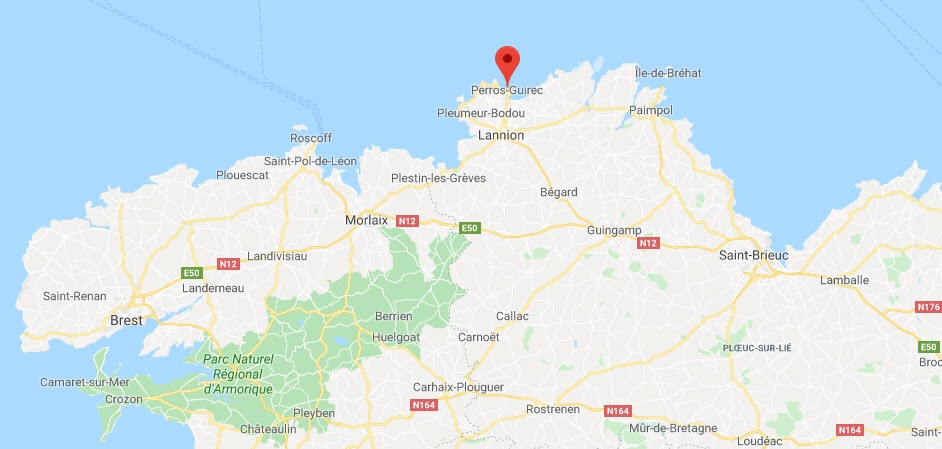
This area is perfect for walking and hiking. In fact, you can walk the sentier de douaniers, a former coastguard footpath, from Perros-Guirec via Ploumanac’h to Trégastel Plage. You’ll pass rocks that make you think of slabs of pink fudge huddled around invitingly sandy coves perfect for paddling.
The last time we were in the area, a violent windstorm reminded us how nature is her own best artist, using wind and water to sculpt the rocks into such fantastic shapes.
Getting to the Côte de Granit Rose
The 30-kilometer stretch of coastline between Perros-Guirec and Trégastel is known as the Côte de granit rose.
You need a car to tour this area of northern Brittany. Consider allocating a week to enjoy two or three areas in Brittany, perhaps two nights in the Côte de granit rose, two nights farther west in Crozon in the Parc Naturel Regional d’Armorique, and then two nights farther south near Carnac.
For even more amazing coastline, go farther west to the Pointe de Pen-Hir on the Crozon peninsula in Brittany.
But even a week isn’t long enough. You could easily spend two weeks!
In Brittany, driving is slow along small country roads, and Brittany itself is surprisingly large and varied. Take your time to explore both the northern and the western/southern coasts of this spectacular peninsula.
Did you know that in Brittany, people consider themselves Bretons first, French second? You will occasionally see signs written in Breton, a language related to the Celtic languages of the British isles. After all, Brittany is not far from Cornwall in England.
Practical Tips for Your Visit to the Côte de granit rose
We always found delightful small hotels in Brittany. Another option is to rent a house for an extended stay. And while you’re in Brittany, make sure you sample plenty of galettes, the Breton crêpes.
Towns to stay at in the area include Trégastel, Perros-Guirec, and Saint-Guirec.
#3: Gavrinis, Gulf of Morbihan, Brittany
Known as the island of ancient stones, tiny Gavrinis is located in the Gulf of Morbihan, renowned as one of the largest and most beautiful bodies of water in France.
In an area brimming with ancient burial sites, stone alignments, and other Neolithic sites, the burial chamber at Gavrinis is considered one of the most interesting.
What is Special about Gavrinis?
The Neolithic structure on the island of Gavrinis consists of a tumulus (earth mound) that covers a cairn (stone mound) that in turn covers a dolmen within which is the stone burial chamber. At the Winter Solstice, the sun shines down the passageway and hits the back wall.
How did Neolithic people figure out how to do that? I haven’t a clue, but I love visiting neolithic sites, like Carnac in Brittany and of course, the big kahuna, Stonehenge in England, to try and find out.
What makes Gavrinis unique are the swirling patterns and symbols cut deep into 23 of the 29 rock slabs that form the 24-meter passageway leading to the burial chamber. The designs were cut into the stone over 5,500 years ago (3,500 BC) by some very artistic and amazing people.
[CC BY-SA 4.0 (https://creativecommons.org/licenses/by-sa/4.0)]–Gavrinis passage. Replica in the “Musée des tumulus de Bougon” (Deux-Sèvres), France.
Who were they and why did they make the carvings? You’ll find out on the 90-minute guided tour (including the boat trip) required to view the burial chamber.
The carved patterns are startling in their modernity—zigzag lines, swirls, lozenges, and circles. Some of the shapes appear to be non-abstract objects, such as axes and horns.
Getting To Gavrinis
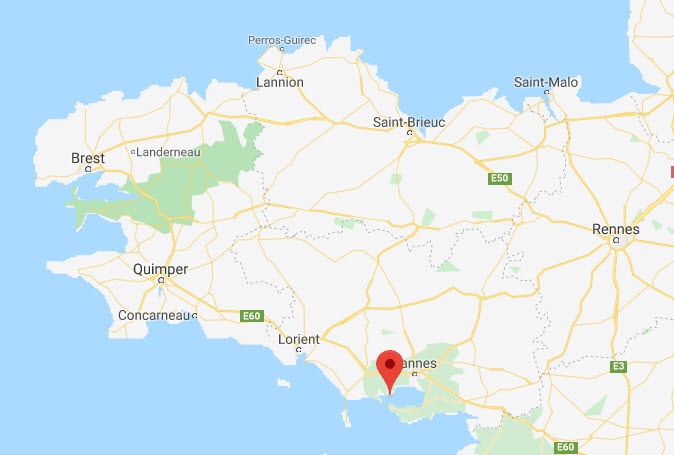
Gavrinis is located in the Gulf of Morbihan in the southern area of Brittany in western France – Map data @ 2019 Google
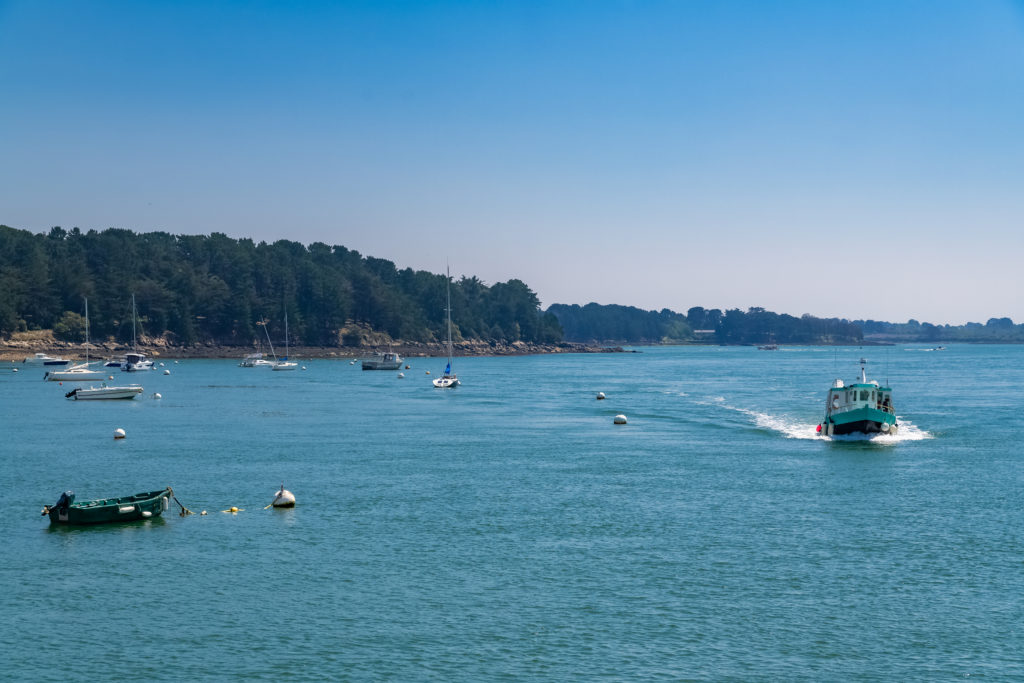
The island is accessible by a guided tour from the small town of Larmor-Baden. The boat trip across the sparkling waters of the Gulf of Morbihan makes the 90-minute tour especially enjoyable.
Boat trip across the Gulf of Morbihan to the island of Gavrinis
Check the Brittany Tourism site for more information about touring Gavrinis.
Practical Tips for Your Visit to Gavrinis
The Gulf of Morbihan area is worth several days of your time so you can explore dozens more Neolithic sites and enjoy the marine scenery. And if you are a Gauguin fan, don’t miss Pont-Aven: Savoring Life in Pont-Aven—The City of Artists.
The island of Gavrinis is uninhabited and the village of Larmor-Baden where you catch the boat to tour Gavrinis doesn’t offer much in the way of accommodations. However, you’ll find plenty of small, family-run hotels in the area.
#4: Chenonceau, Loire Valley
The Loire Valley is famous for its beauty, its wine, and its châteaux. It’s definitely a must-visit place in France! Even if you don’t have a week to explore, consider taking a day trip from Paris to at least see the highlights.
Back before the French Revolution, kings and dukes and marquises and your basic blue-blood types built their summer cottages in the Loire Valley.
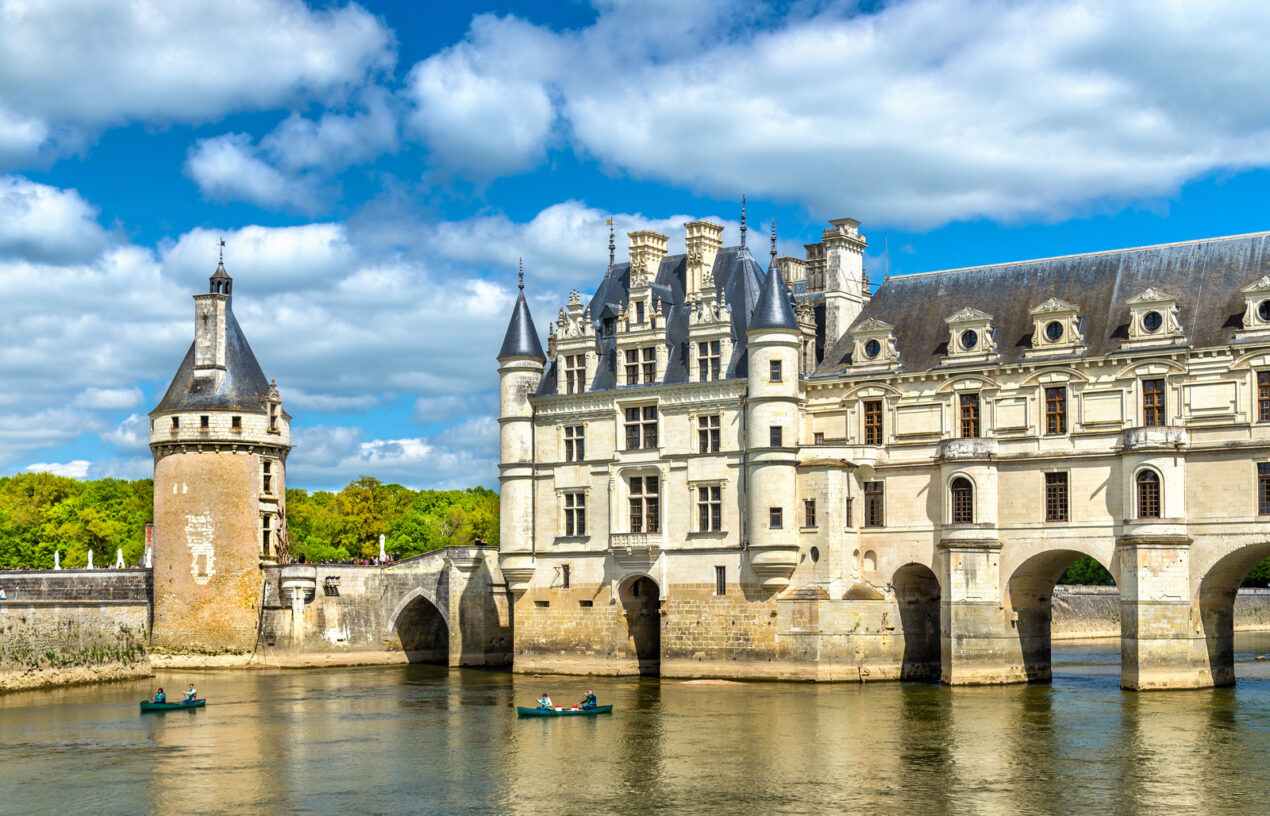
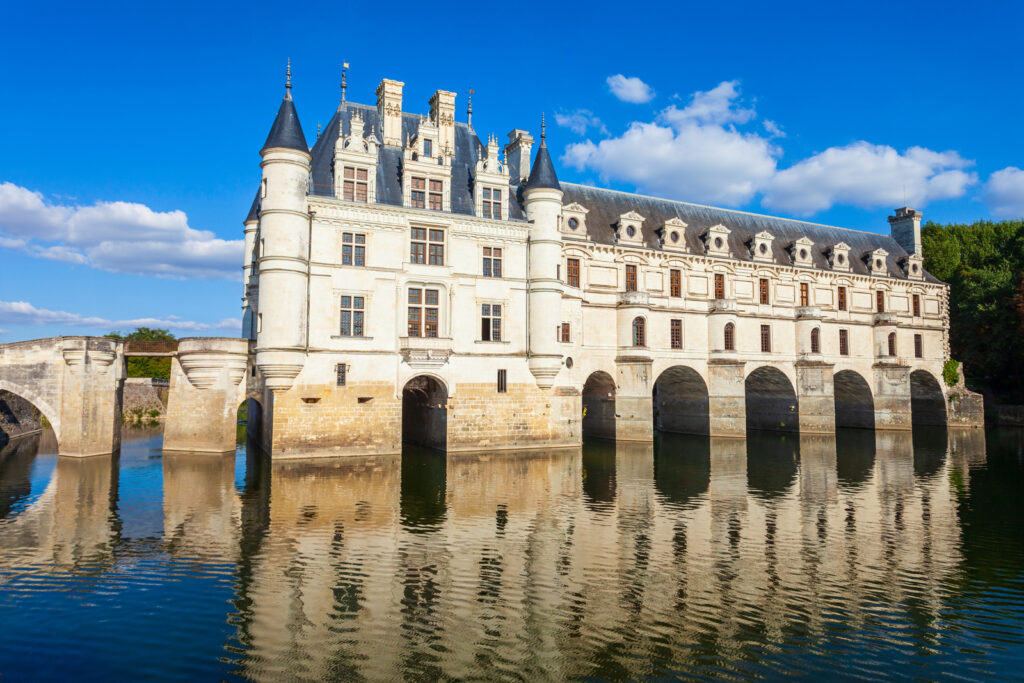
Château de Chenonceau is a French castle spanning the River Cher near Chenonceaux village, Loire valley in France.
Okay, cottages is maybe a bit of a misnomer. The number, variety, and sheer scale of the châteaux in the Loire is astonishing. There are architectural wonders to gawk at, ornamental gardens to wander through, and history to learn.
What is Special about Chenonceau?
The Château de Chenonceau is my favorite Loire Valley château.
A series of graceful arches supports the château across the River Cher. In World War II, Vichy France was on one side of the river and Free France was on the other. I wonder how many people used the château to escape to freedom?
The first château dates from the 12th and 13th centuries, of which only the dungeon remains: the Tour des Marques. The château in its current form was built between 1513 and 1517.
Women have played an outsized role in the development of Chenonceau. Henry II gave the château to his mistress, Diane de Poitiers, who, shortly after his death, was kicked out by his wife, Queen Catherine d’Medici. Catherine managed the Kingdom of France from her study, the Green Cabinet at Chenonceau.
In the 18th century, Louise Dupin, an exceptional woman who drafted a Code of Women’s Rights, entertained some of the biggest names of the Age of Enlightenment at Chenonceau.
During your visit through the sumptuous rooms, you’ll learn all about these remarkable women and much more. Also visit the formal gardens and imagine yourself in Renaissance dress taking your morning constitutional. There is even a maze!
If you had money back in those days, you sure had it made.
Getting to Chenonceau
Chenonceau is located on the Cher River 214 km west of Paris and 34 km east of Tours. If you don’t have time to stay in the Loire Valley, consider taking a tour from Paris. Here are two options that go from Paris and a third from close to Chenonceau on an ebike (sounds fun!) with GetYourGuide:
Spend several days in the Loire Valley so you can visit more than one château, but limit yourself to two a day, at most. Châteaux-visiting gets tiring after a while. Less is more.
To minimize driving, spend two or three days around Tours near Chenonceau and then another two or three days closer to Blois. You won’t run out of places to visit.
Another highlight of a visit to the Loire Valley and the area around Chenonceau is the opportunity to sample excellent wine and food. Of course, that’s true pretty much anywhere in France, but the Loire Valley is particularly blessed.
Zoom out the map below to find accommodation options in the Loire Valley.
#5: Les Eyzies-de-Tayac-Sireuil, Dordogne, Aquitaine
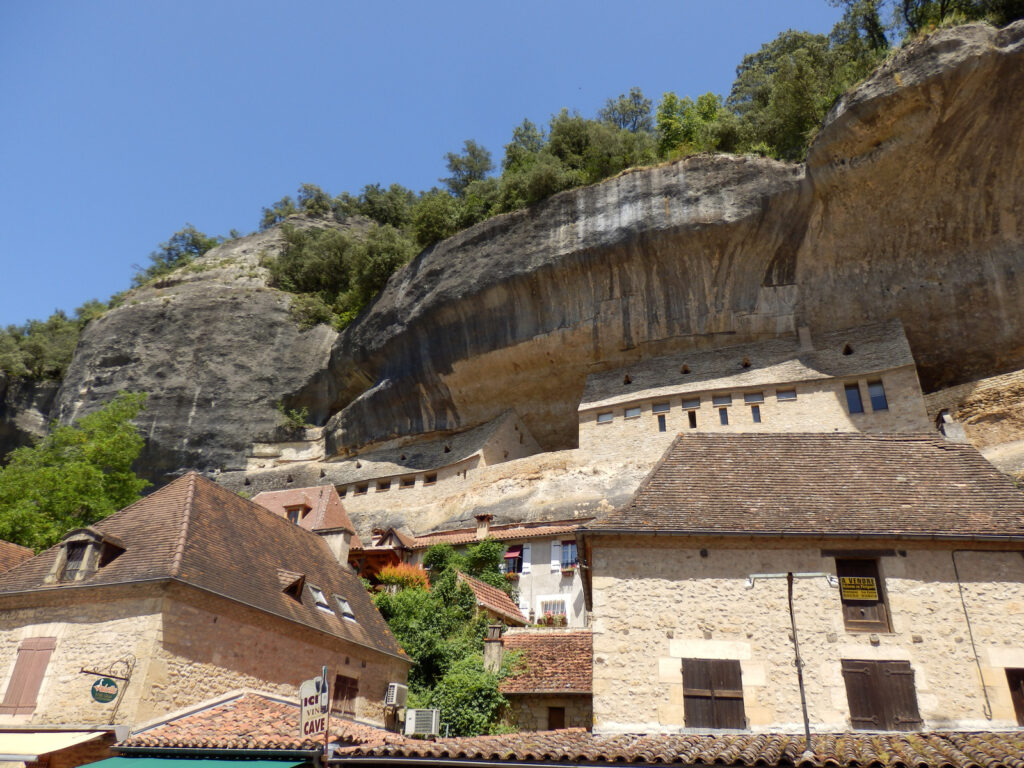
I chose Les Eyzies-de-Tayac-Sireuil (Les Eyzies for short) because it’s smack in the middle of some of the Dordogne’s most compelling prehistory attractions.
Houses in the town of Les Eyzies, Dordogne, France under the shadow of overhanging limestone cliffs
Gregg and I are suckers for prehistory—cave paintings, dolmens, megalithic monuments, archeological museums, the lot. If it’s really old, we like it. And if you are also that way inclined, head for this area of the Dordogne around Les Eyzies.
What is Special about Les Eyzies?
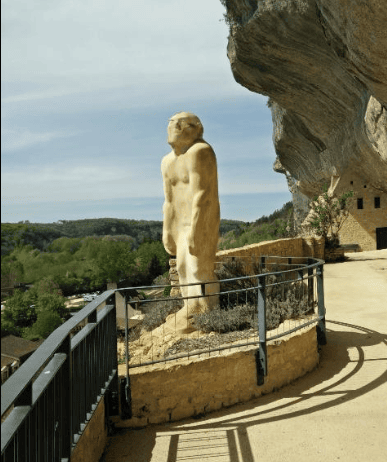
It’s small and charming and is the location of the wonderful Musée National de Préhistoire. Start your exploration here to discover the rich paleolithic heritage of the Vézère Valley, also known as the European “Valley of Man”.
Musée National de Préhistoire in Les Eyzies
Not far from Les Eyzies is the Grotte de Font-de-Gaume where you can view over 800 engravings and drawings of prehistoric horses, bison, aurochs, lions, reindeer, and more.
The Font-de-Gaume is one of the few extensive prehistoric caves still open to the public. Check online for information and to buy tickets. Admission is limited so make sure you buy your tickets well in advance.
Stay a few days around Les Eyzies and then drive about thirty minutes north to Montignac to visit Lascaux IV. We thoroughly enjoyed our visit there and recommend it to anyone interested in prehistoric cave painting. Check out my post: Visiting Lascaux IV in the Stunning Dordogne.
Take some time to enjoy the local cuisine. You’ll find plenty of lovely country restaurants in the Dordogne.
Dinner next to a canal in the DordogneL’Escargots in the Dordogne
Getting to Les Eyzies
Les Eyzies is a two-hour drive east of Bordeaux in the Aquitaine region of southwest France.
We had one of the best meals we’ve ever enjoyed in France (and that’s saying something) at a restaurant overlooking a sleepy canal not far from Les Eyzies.
Practical Tips for Your Visit to Les Eyzies
You’ll find plenty of charming family-run places in the area. On one trip, we stayed in the tiny village of Thonac about halfway between Montignac and Les Eyzies. The place was on the Vézère River, which we spent an afternoon canoeing down. Heavenly.
Zoom to see accommodation options in the Dordogne.
Enjoying these off-the-beaten-path picks? France keeps rewarding me with new discoveries no matter how many times I return. Subscribe to the Artsy Traveler weekly update for new arts-focused travel posts every week covering France, Europe, and beyond. Subscribe here.
#6: Albi, Midi-Pyrénées
Albi in southwest France is a charmingly walkable city with a wonderful red brick cathedral and the world-class Musée Toulouse-Lautrec. If you’re on your way to the Pyrénées, take a day out for Albi.
What is Special about Albi?
It’s just so darned pretty with its red bricks glowing in the evening light, good restaurants, panoramas over the River Tarn, and laid-back atmosphere.
I also like that it’s steeped in the history of the Cathars, the enlightened sect that practiced a form of proto-Protestantism and refused to recognize the authority of the Catholic church. That didn’t go down too well with the Church (no surprise there) and led to the Cathars being cruelly wiped out in the Albigensian Crusade (1209-1229).
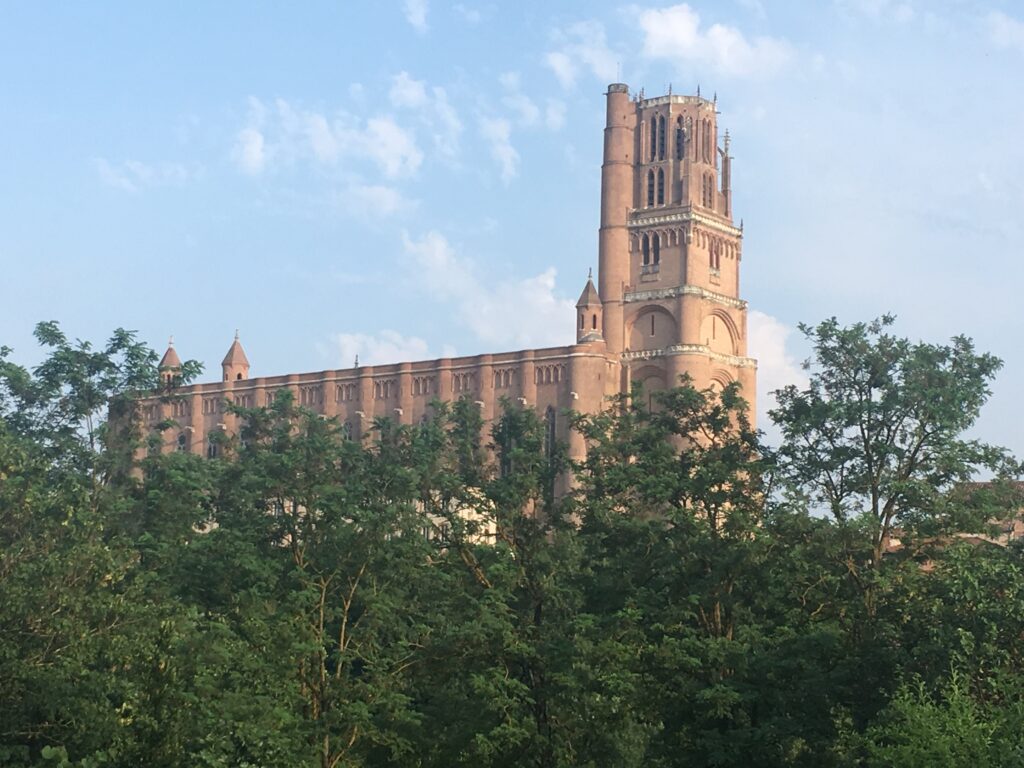
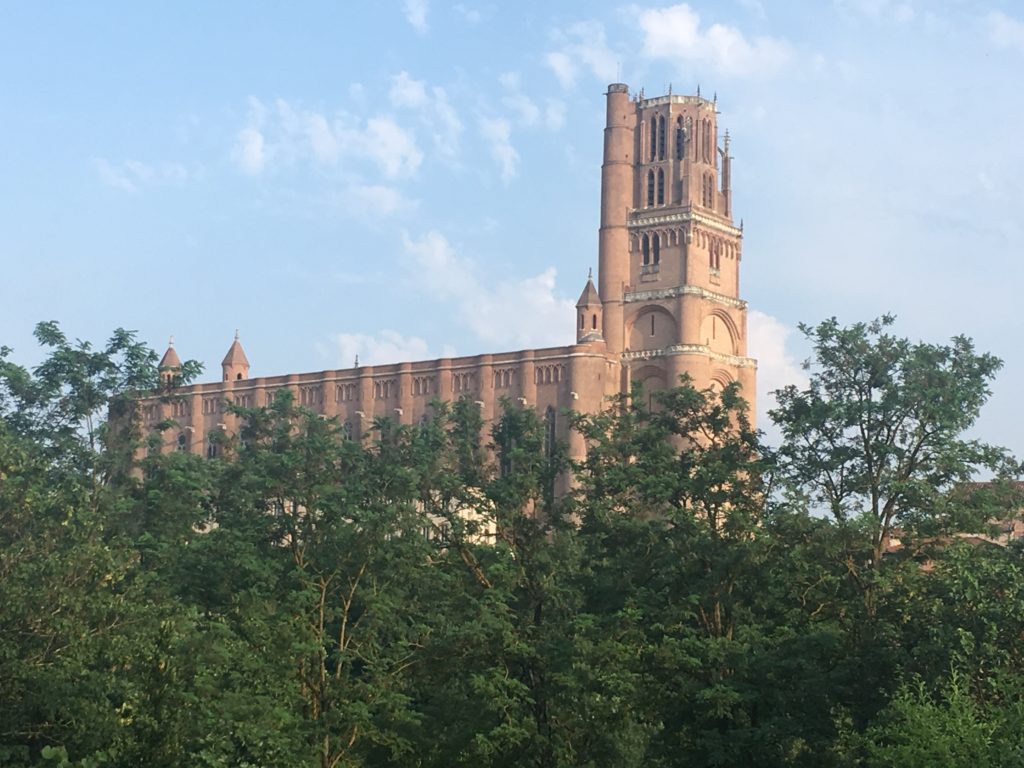
Dominating the ridge above the Tarn River, the cathedral was built a few decades after the conflict and looks more like a fortress than a church. It’s the only large gothic cathedral built out of bricks (pink ones at that) rather than stone.
Here’s a view of the cathedral from our bed-and-breakfast across the river.
Cathedral in Albi
In addition to the cathedral, the big attraction in Albi is the Musée Toulouse-Lautrec located in the also-pink-bricked medieval Palais de la Berbie next to the cathedral.
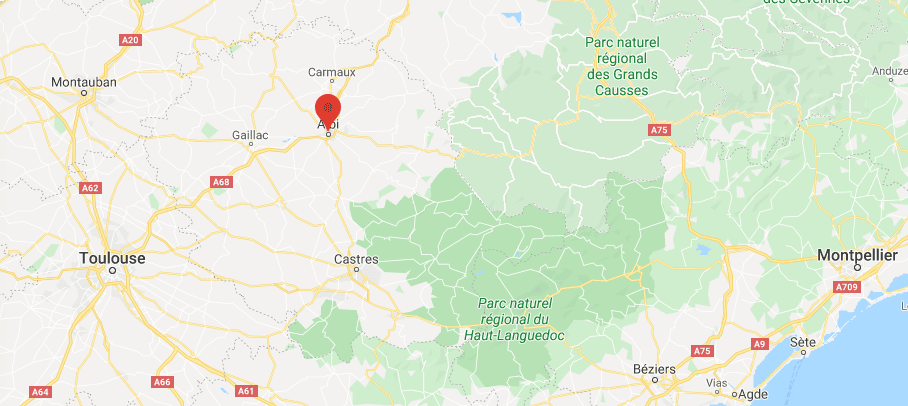
Albi is located 85 km northeast of Toulouse. I recommend staying the night so you can wander around the narrow cobbled streets in the evening and watch the sun as it sets over the cathedral.
Map showing the location of Albi in southwest France
Practical Tips for Your Visit to Albi
Albi makes a good stop either on your way east from the Dordogne or on your way west toward the Pyrenees and Spain. It’s far enough off the beaten track to retain its provincial feel while still maintaining good tourist services.
Zoom to find accommodation options in Albi.
#7: Chaos of Montpellier-le-Vieux, Millau, Midi-Pyrénées
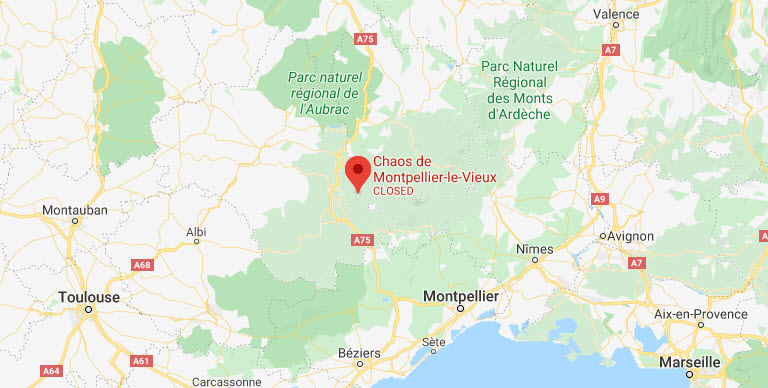
If you like weird rock formations, you must pay a visit to the Chaos of Montpellier-le-Vieux. Situated in the heart of the Grand Causses Regional Natural Park about 15 km from Millau and south of the Ardèche area of southwest France, the Chaos is far off the beaten path. You’ll need to plan a special trip.
What is Special about Chaos of Montpellier-le-Vieux?
The Chaos is nature’s art gallery, a maze of canyons bristling with tortured limestone formations. You’ll find over 30 natural works of art, the result of centuries of erosion, with fanciful names such as The Great Sphinx, L’Arc de Triomphe, The Crocodile, The Cathedral, and the Chair of the Devil.
The most accessible rock formations are contained within a 120-hectare area.
Getting to Chaos of Montpellier-le-Vieux
It’s pretty remote! We visited while enroute from the city of Montpellier on the Mediterranean northwest toward Albi.
Map showing the location of the Chaos de Montpellier-le-Vieux in southwest France
Practical Tips for Your Visit to Chaos of Montpellier-le-Vieux
The area is rugged, with some of the most precipitous roads we’ve ever driven in Europe. Leave yourself plenty of time and consider staying the night in Millau. If you’re in the area, the Ardèche Gorge is well worth a detour: The Ardèche Gorge in France: Best One-Day Stay.
#8: Camargue, Provence
South of Arles and bordering on the Mediterranean Sea is Europe’s largest river delta, the vast, flat, and wildlife-teeming Camargue, one of the most unusual and rewarding places to visit in France.
Every time we go to the Camargue, we declare that we really need to stay longer to explore the lakes and marshlands.
The Parc naturel régional de Camargue protects the area and provides visitors with facilities such as observation towers, information boards, themed trails, and guided tours.
What is Special about the Camargue?
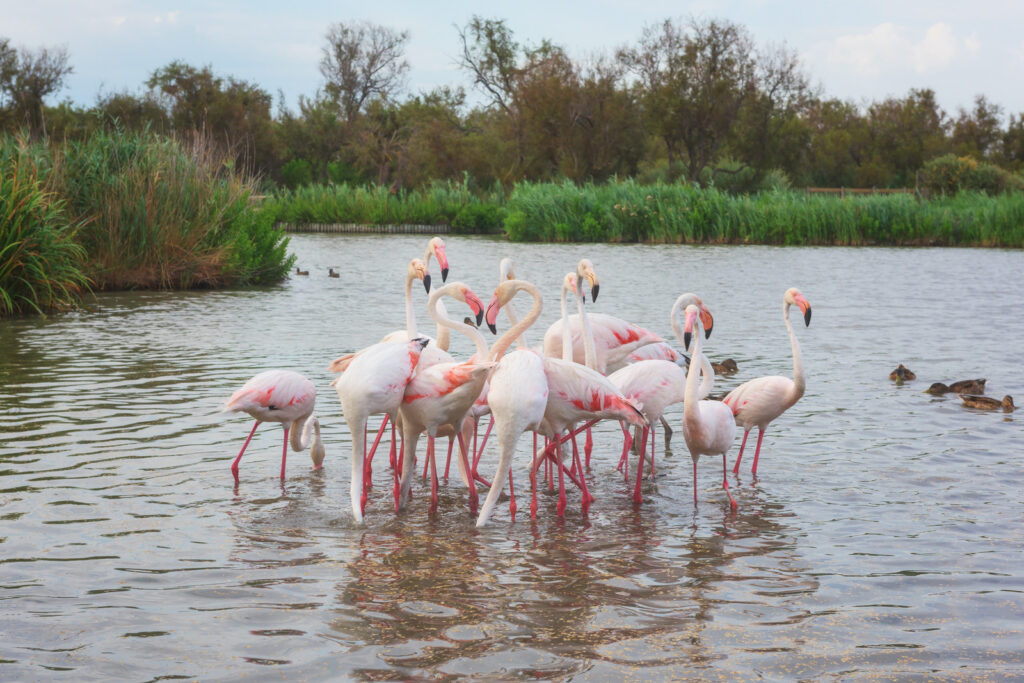
The wild and flat scenery is beautiful, but for me the big attraction of the Camargue is its wildlife: horses, bulls, and especially flamingos.
I don’t know why, but it feels very exotic to come across flocks of flamingos in Europe. Even from the road, you can see them standing serenely in the marshes, looking pink and delightful. If you’re into birds, the Camargue is a must-see with more than 400 species of birds.
Pink flamingos in the Camargue
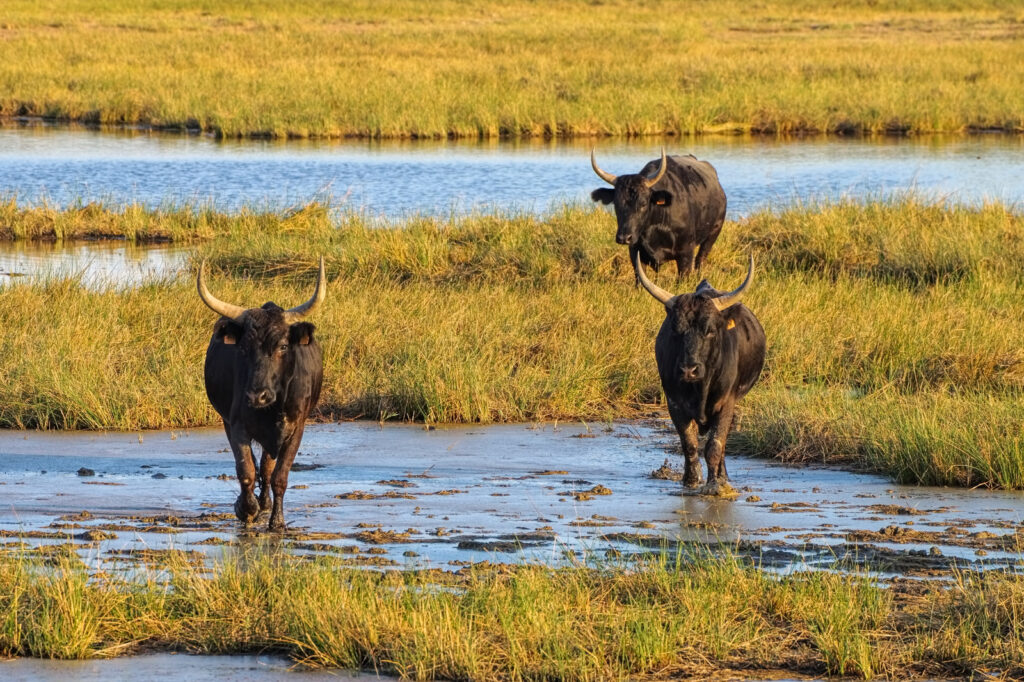
On one trip to the beach, we were surprised to look across the marsh from where we’d parked the car and see several very large, very horned grazing bulls. We stayed clear!
Black Camarguais bulls in swamp, southern France
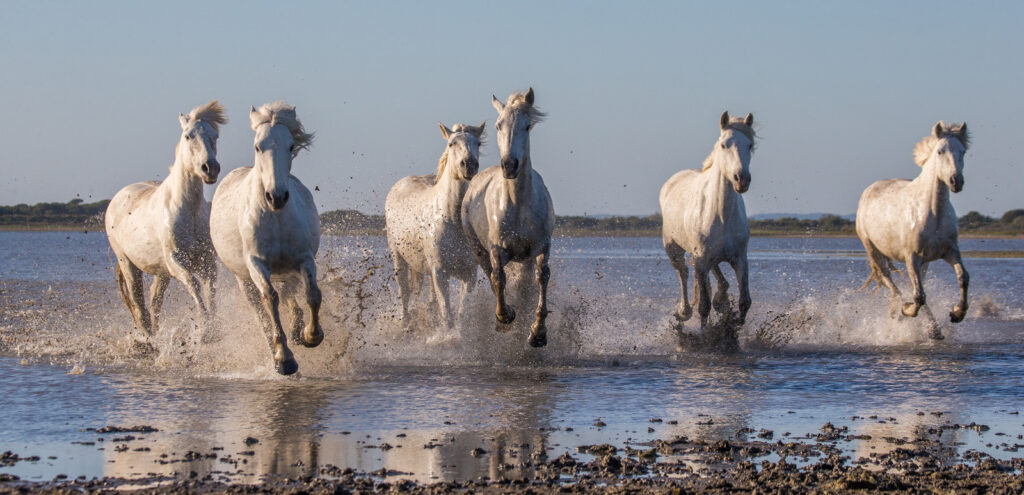
And of course, if you’re lucky, you’ll see the famous Camargue horses galloping freely, white manes flowing.
Riding stables are scattered throughout the area if you harbor fantasies of riding a horse along the beach. Here’s a TripAdvisor list of horseback riding tours accessible from Saintes-Maries-de-la-Mer.
White Camargue horses running free
Getting to the Camargue
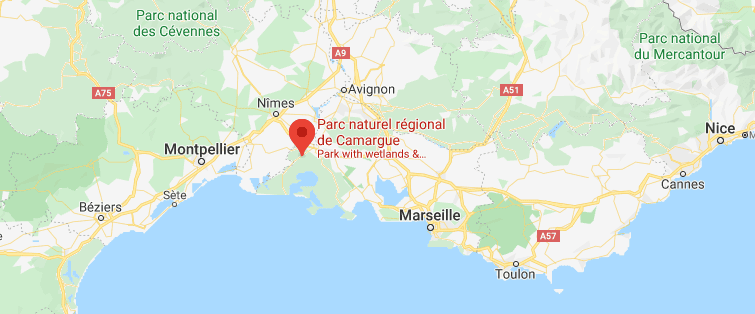
The Camargue is located between Montpellier in the west and Marseille in the east. Drive south from Arles and you’re in the Camargue.
Map showing the location of the Parc naturel régional de Camargue west of Marseille
A good strategy for exploring the area in a few days is to homebase in either Arles or Saintes-Maries-de-la-Mer. We like both places for different reasons.
Arles has the Roman arena and, of course, its association with Vincent van Gogh. With its winding streets, good shopping, and outdoor cafes, it’s a very pleasant town to spend time in. Check out Arles, France: Best 3 Museums for Art and History Lovers.
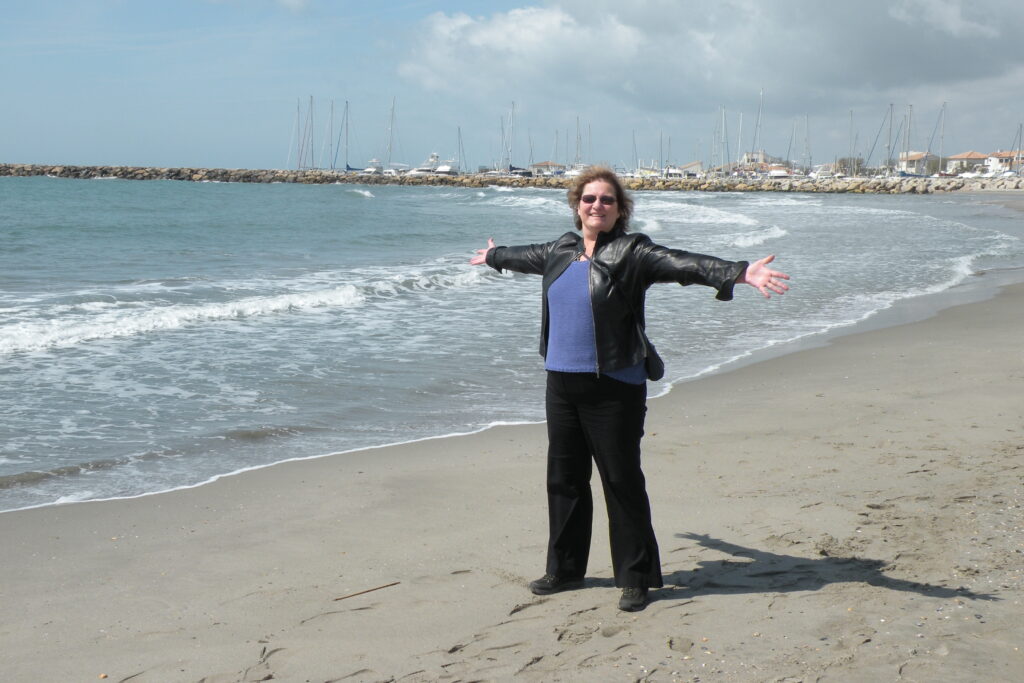
Saintes-Maries-de-la-Mer is, as its name suggests, on the Mediterranean Sea. Bristling with boats, cute shops, and cafés, the town is well worth a visit. When we were last there, it was mid-spring, and the place was virtually deserted.
On the beach near Saintes-Maries-de-la-Mer
Practical Tips for Your Visit to the Camargue
Two words: mosquito repellent! We got caught without any while taking a stroll through the Camargue wetlands in mid-summer and oh, dear. It was not pretty. I tried counting how many mosquito bites I got and had to give up.
We discovered a brand of mosquito repellent in France called Le Camargue. That tells you something.
Below are accommodation options in the area.
#9: Carrières des Lumières, Les Baux-de-Provence
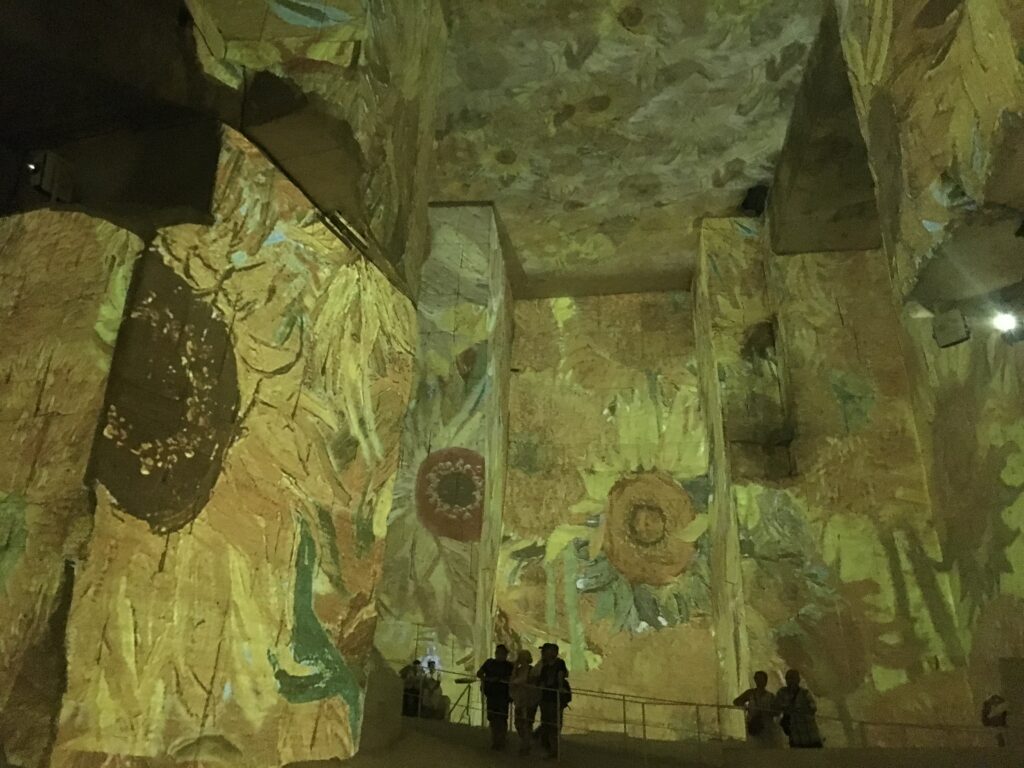
This relatively new attraction in a quarry near Les Baux-de-Provence brings you up close and personal with massive projections of artworks, particularly the art of Vincent van Gogh. Managed by CultureSpaces, the exhibition is a “digital immersive experience”.
Van Gogh Experience at Carrières des Lumières
We saw two “experiences” during our visit: Van Gogh and Japanese Prints. Both ran about 30 minutes and were accompanied by music.
In the enormous interior space that was once a rock quarry, artworks are projected and duplicated. You are literally walking into the art. The experience is remarkable.
Here’s a video I took of the van Gogh performance when the sunflower paintings were being projected. The venue is dark, but you can get some idea of the scale of the projections.
Getting to Carrières des Lumières
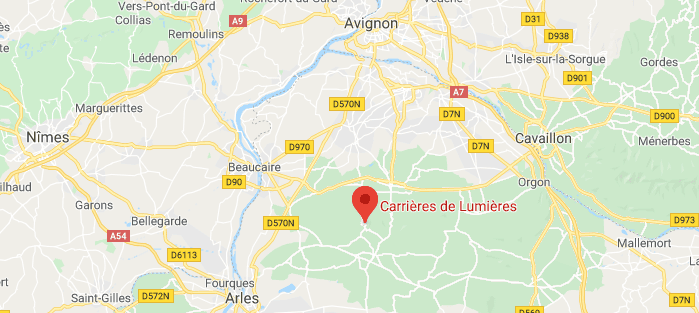
The Carrières des Lumières is located 800 m from the Château des Baux-de-Provence, 15 km north-east of Arles and 30 km south of Avignon.
Map showing the location of Carrières des Lumières near Les-Baux-de-Provence
If you don’t have your own wheels, here’s a tour that goes from Avignon:
Practical Tips for Your Visit to Carrières des Lumières
Purchase your tickets in advance. Admission to the Carrières is strictly limited so if you don’t have advance tickets, you may be out of luck. Parking near the venue is also very limited. Check the website for details.
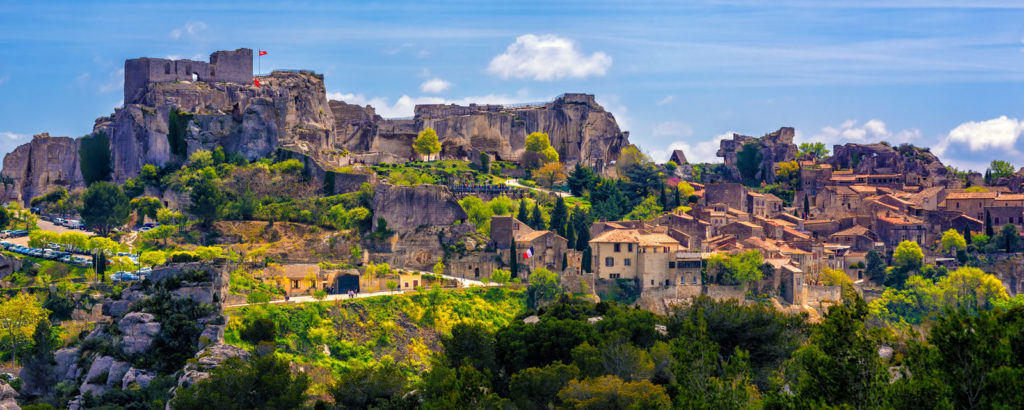
Once you’ve toured the Carrières des Lumières, spend some time exploring Les Baux-de-Provence, preferably in the late afternoon or early evening when the bus tours have pulled out. From the ramparts at the top of the village, you’ll get a panoramic view of the surrounding countryside.
Each time we’ve stayed near Les Baux-de-Provence, we’ve found wonderful rural properties with pools. Here’s a video I shot on the grounds of the Domaine du Mas Foucray situated near the small town of Maussane-les-Alpilles and within sight of Les-Baux-de-Provence.
Billed as an aparthotel, our one-bedroom suite included a kitchen and sitting area and a private terrace. In early July when we were there, we picked fresh apricots off the trees.
For more options, see the map below.
#10: Roussillon, Luberon, Provence
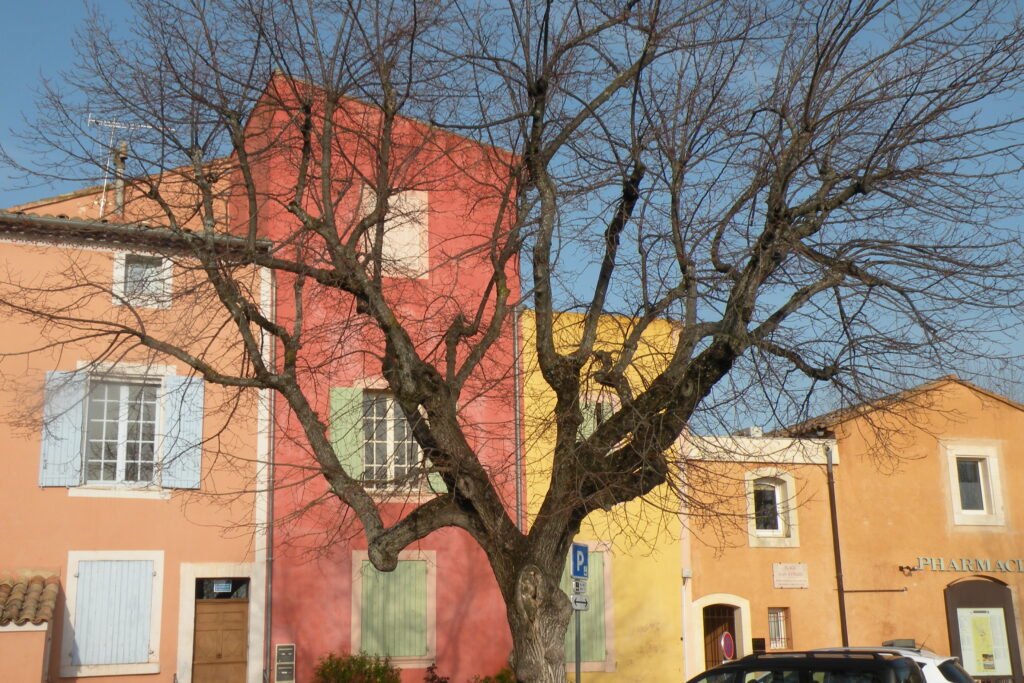
Roussillon has been a family favorite since we first discovered it 25 years ago. The red and ochre walls of the village houses distinguish it from other villages in the Luberon area.
The village itself is lovely in an area full of lovely villages, including Bonnieux, Ménerbes and Gordes. Pick any village in the Luberon and settle in for several days.
Colorful houses in the village of Roussillon
What is Special about Roussillon?
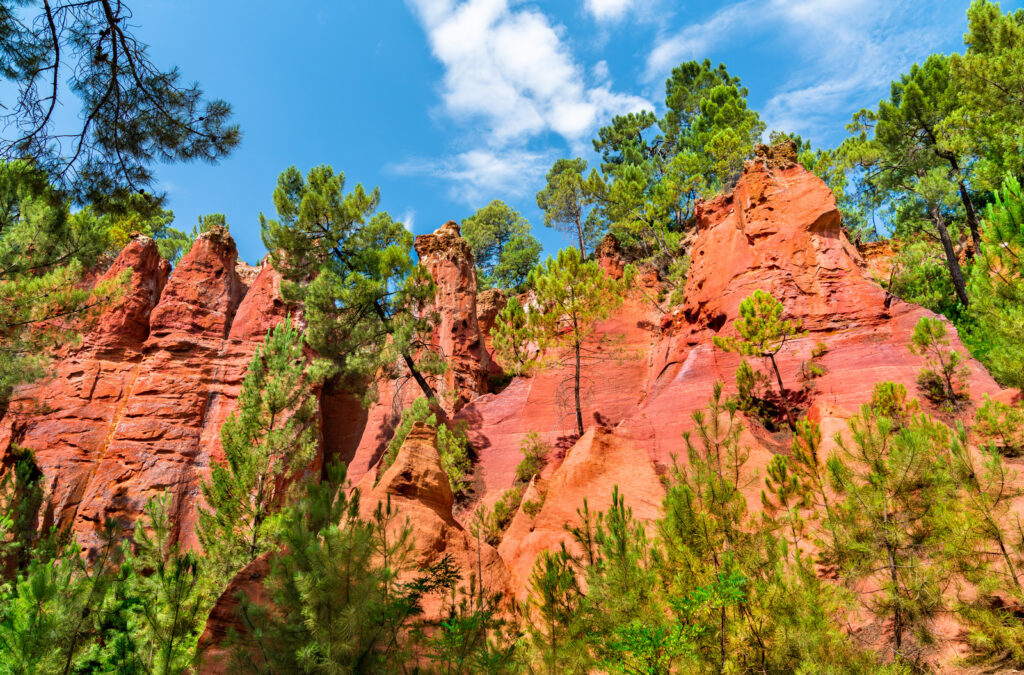
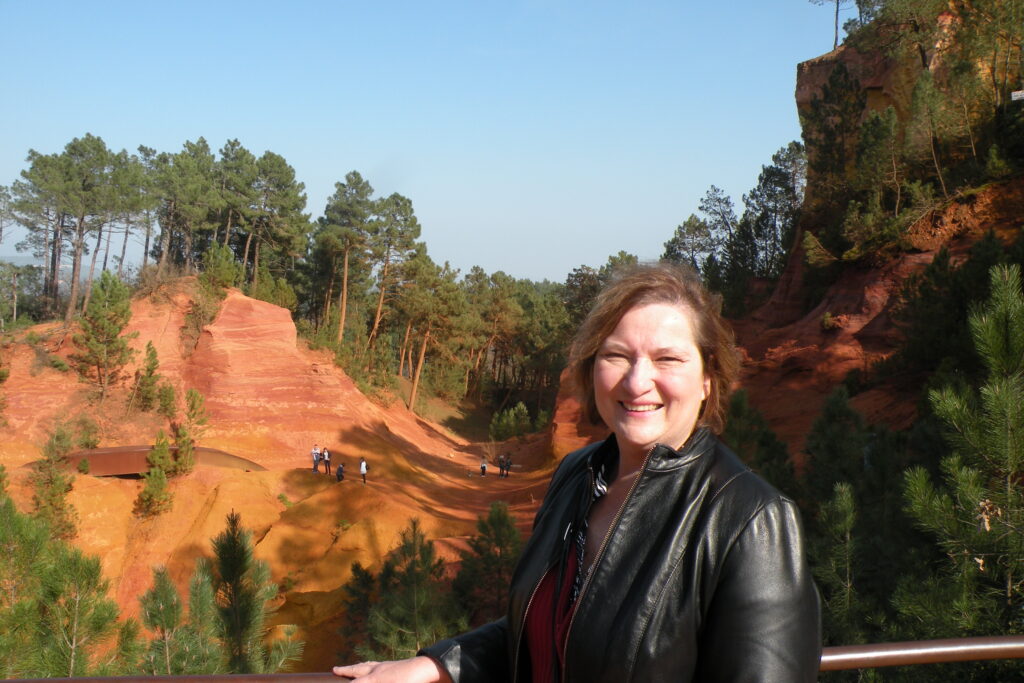
What really distinguishes Roussillon are the ochre cliffs situated about 200 meters from the entrance to the village. Trails that make up the Le Sentier des Ocres wind through this magical area where the vivid oranges, yellows and reds of the ochre cliffs contrast with the green trees and brilliant blue Provençal sky.
Ochre landscape at Roussillon in Provence, France
When you arrive in Roussillon, leave your car in the main parking area and walk to where Le Sentier des Ocres starts.
Visit Roussillon late in the day, say, about an hour before the quarry closes. Then you can enjoy it relatively crowd-free and take spectacular photographs of the ochre cliffs in the afternoon sun. After your stroll through the quarry, wander around the village and have dinner at one of the local restaurants.
Roussillon is about an hour’s drive east of Avignon. The main villages of Gordes, Ménerbes, and Bonnieux are close by. You need a car to enjoy the area.
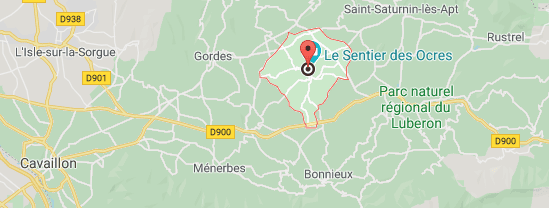
Map showing the location of Roussillon in the Luberon region of Provence
Practical Tips for Your Visit to Roussillon
Here are two highly recommended hotels in the Luberon, one in Roussillon and one in Gordes.
Les Sables d’Ocre – A 15-minute walk from the village of Roussillon, this place sets the bar for what a country-style, family-run, low-key, easy-on-the-budget place should be. Book a room with a terrace.
Domaine de l’Enclos – This place close to Gordes, one of the most beautiful hill towns in the area, is wonderful. The views from the garden over the Luberon are spectacular.
For more accommodation options, check the map below.
#11: Château La Coste, Aix-en-Provence
On a beautiful May day, we drove into the hills behind Aix-en-Provence with no particular destination in mind. The weather was gorgeous—fluffy white clouds, not too hot, fresh breeze. Perfection!
We hoped to stumble across a nice side-of-the-road restaurant to enjoy a hearty Provençal lunch, preferably overlooking the landscape that had inspired Cézanne.
Rounding a bend in the twisty secondary road, I saw a sign to Château La Coste. I didn’t know anything about the place, but in the vague hope that it would have a café attached to it, I told Gregg to turn left and follow the signs.
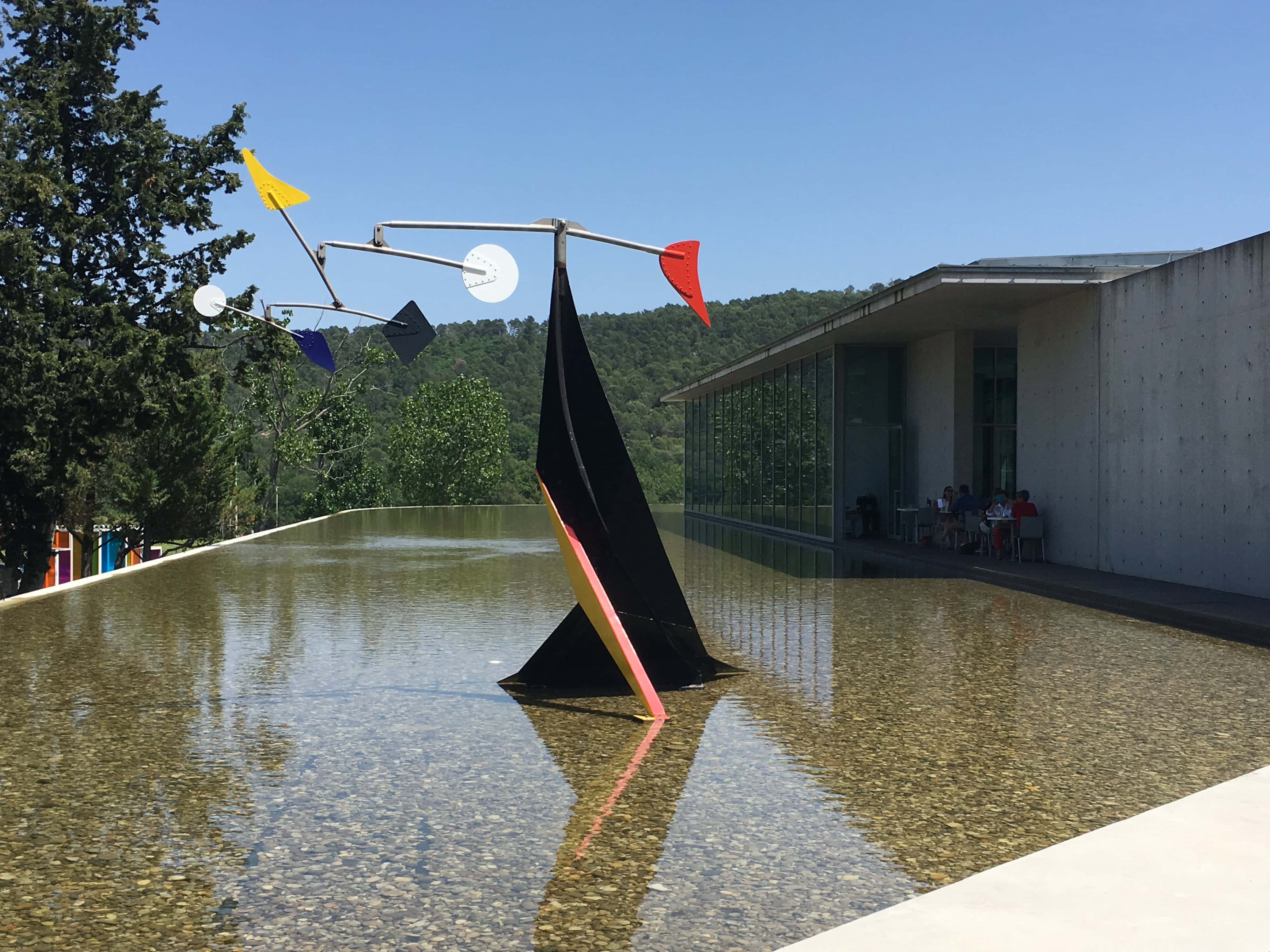
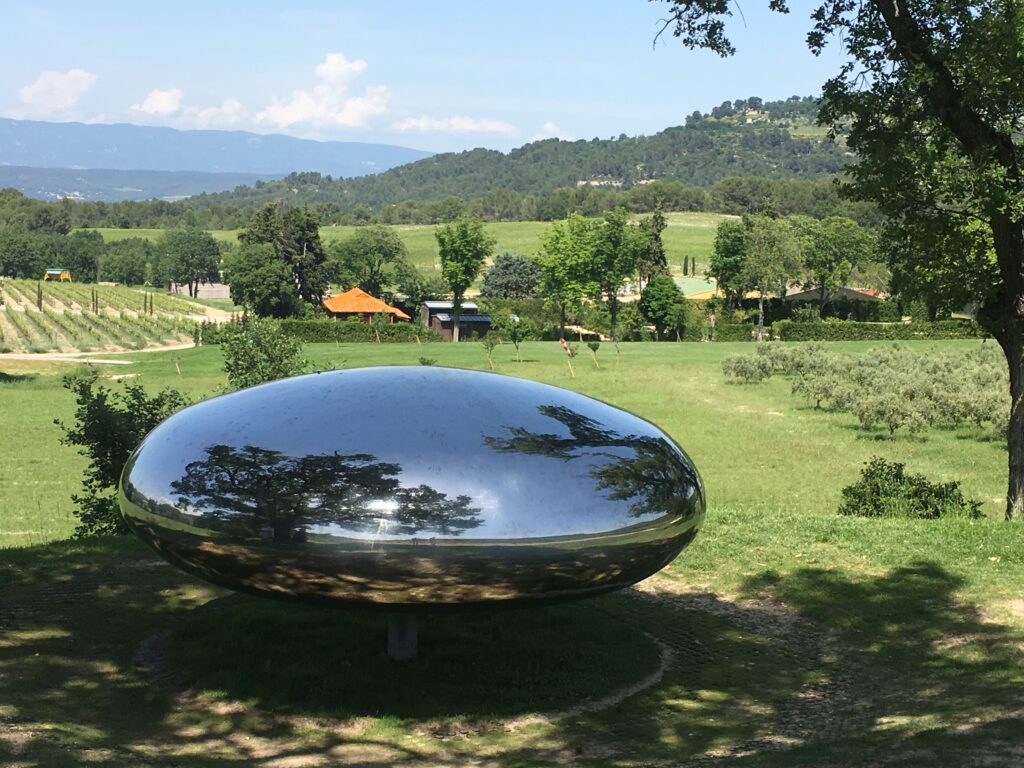
And so we discovered lovely and luscious Château La Coste with its gourmet lunch and, best of all, its several hectares of modern outdoor sculptures.
What is Special about Château La Coste?
Château La Coste is a vineyard that also features a fabulous art walk populated with modern sculpture. Artists and architects from around the world were invited to visit the domaine and choose a place in the landscape on which to create a sculpture or installation.
The resulting Art Walk is an eclectic array of pieces, many which move with the wind and can be pushed, sat upon, and walked through. The Art Walk is extensive and includes hills, so put on your walking shoes and bring water.
Here’s a selection of pieces we explored.
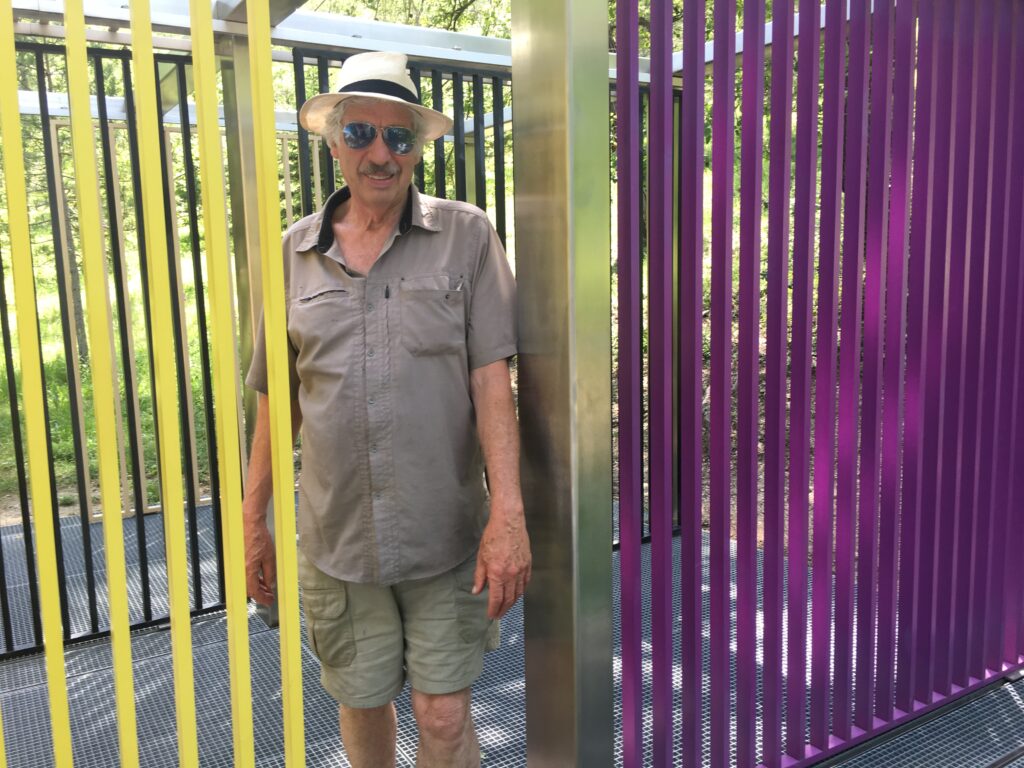
Gregg walking through a colorful sculptureSculpture by Calder at the entrance to the Château La CosteSculpture in front of the glorious Provence landscape at Château La Coste
Getting to Château La Coste
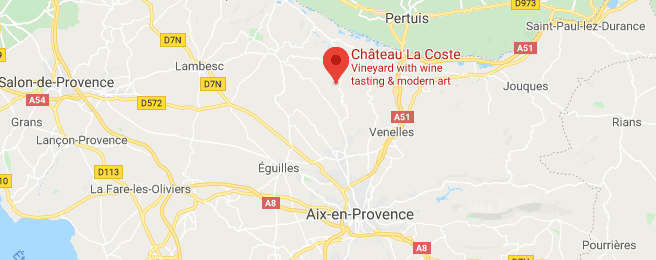
Château La Coste is about 15 km north of Aix-en-Provence along a beautiful winding secondary road with gorgeous views over the countryside. Drop in for lunch (the food was fabulous!), pick up a few bottles of wine, and do the Art Walk. You can easily spend an entire afternoon there.
Map showing the location of Château La Coste north of Aix-en-Provence
Practical Tips for Your Visit to Château La Coste
You can go all out and spend a night (or three) at the Villa La Coste, billed as a luxury hotel and spa. It’s way out of our price range, but wow – it looks amazing!
Here are other options in the area.
#12: Seillans, Var, Provence
When you drive into Seillans, a hill town in the Var region of Provence, you are greeted by a sign announcing Seillans as among the Plus Beaux Villages de France; that is, one of the most beautiful villages in France.
You see these signs all over France at the entrance to villages. On the official website, 176 villages are currently listed. Follow the link above to view them. The website is in French, but the site includes plenty of pictures and maps.
What is Special about Seillans?
We don’t love Seillans because it’s beautiful (and it really is). We love it because of its association with Gregg’s favorite surrealist artist, Max Ernst.
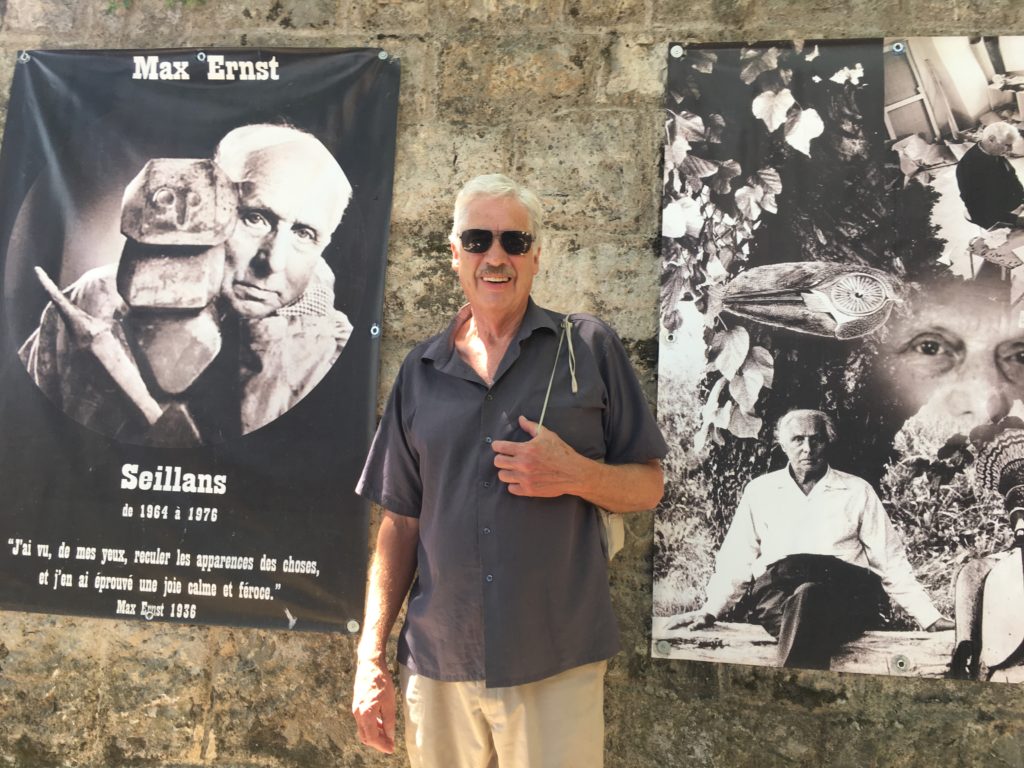
From 1964 until his death in 1976, Max Ernst lived in Seillans with his wife, Dorothea Tanning, another noted surrealist artist. View a selection of their lithographs at the Seillans tourist office located in the main square about 100 meters from the parking area.
Large black-and-white photographs of Ernst are posted on the stone wall lining the cobbled street leading down to the square.
Max Ernst and Gregg, just before Gregg hangs an exhibition of his paintings in Seillans
Just past the square is the exhibition space—the Salle du Couvent (a former convent)—in which Gregg has twice exhibited his work.
We spent two weeks in Seillans. While Gregg chatted with visitors to his exhibition, I wandered around Seillans, snapping pictures and communing with the ghosts of the centuries of humanity who made Seillans home.
Seillans was likely founded around 500 BC by the Saillens, a Celtic-Ligurian tribe. The village grew slowly with one of the oldest surviving structures, the castle from the 11th century, located at the top of the village.
You can only explore Seillans by foot. Drive up the steep road leading from the lower entrance to the village as far as you can go, then leave your car in the large and shady parking lot. From there, walk into the village to explore its quaint and shady streets.
Seillans is about a 30-minute drive from the A8 motorway that connects the Riviera with Aix-en-Provence, Marseille, and western France. You can choose to exit the motorway at two places. Coming from the west (Aix-en-Provence or Marseille), take Exit 36 and drive north toward Callas. You’ll pass gorgeous wineries sprawling across the rolling countryside.
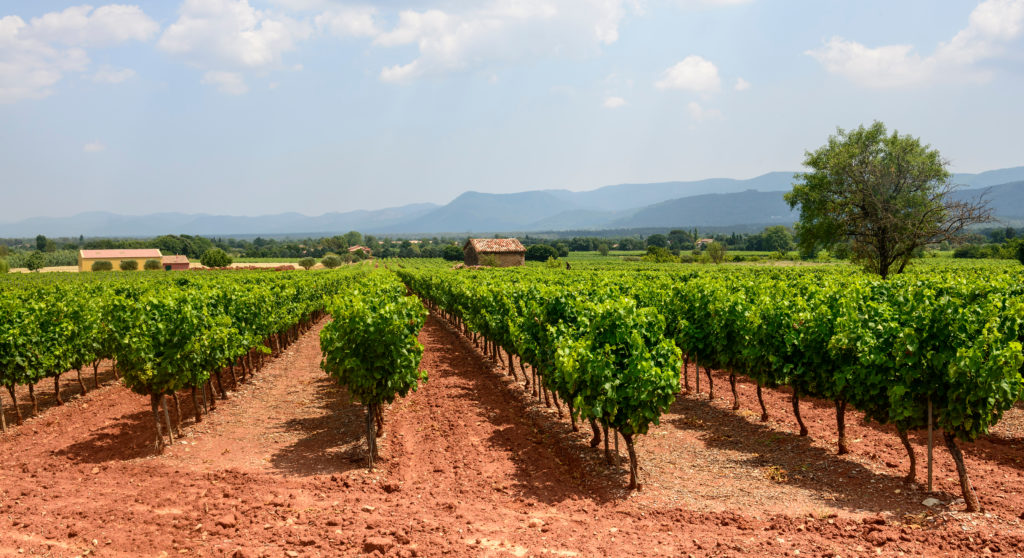
Vineyards in the Var region of southern France
Coming from the east (Nice or Cannes), take Exit 39 and drive alongside the stunning Lac de Saint-Cassien that is actually reservoir and accessible at several points for water sports.
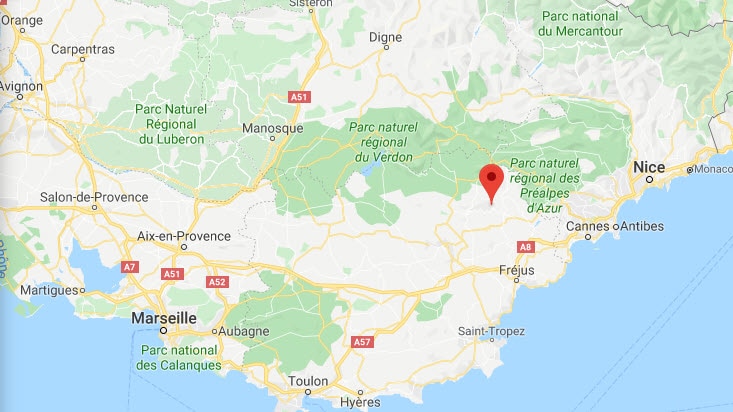
Map showing the location of Seillans in the Var region of Provence in southern France
Practical Tips for Your Visit to Seillans
Seillans is one of several appealing villages in the Var region of Provence. The region is perfect for a one-week stay to fully immerse yourself in the heat and beauty of this relatively undertouristed area.
You are only about an hour from the glitz and galleries of the Cote d’Azur; about 40 minutes due south are Sainte-Raphael and Frejus where you can swim in the Mediterranean.
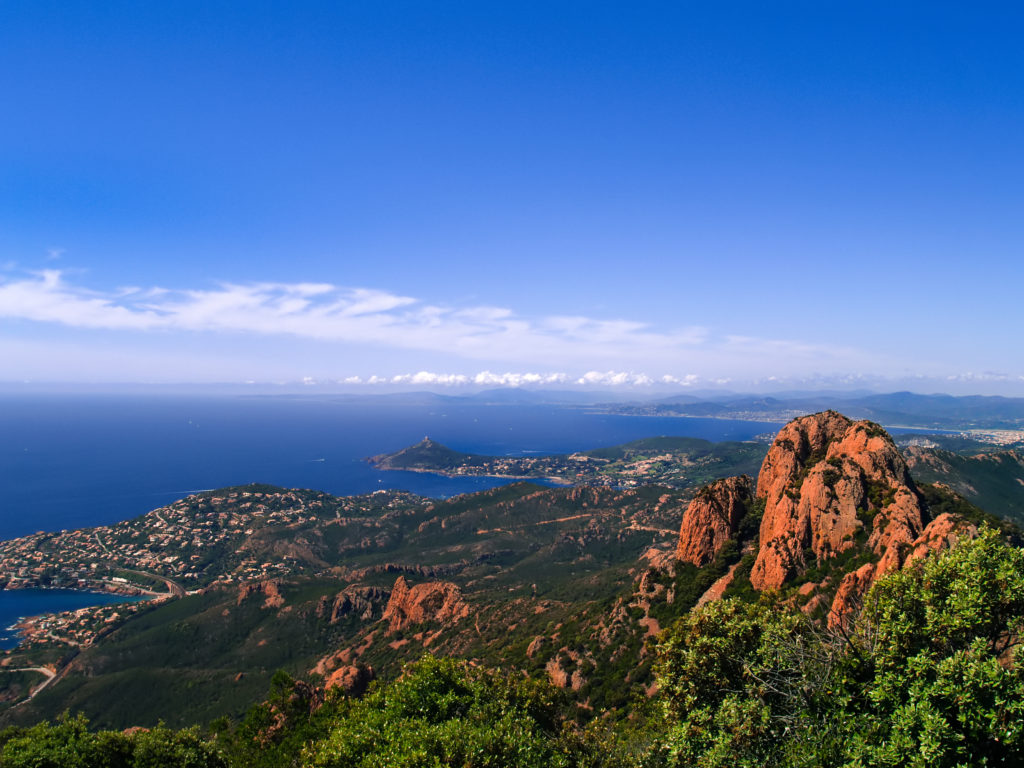
Overlooking the Mediterranean from Cap Esterel about 40 minutes south of Seillans
And if you go to Seillans even for a short visit, stay overnight in the area and have dinner at one of Seillans’s wonderful small restaurants.
We enjoyed a marvelous meal at Chez Hugo which perches on the edge of Seillans overlooking the bucolic Var countryside.
You’ll find small B&Bs in the area along with several home-stay options. We rented a house for two weeks through booking.com. The house was about a 30-minute walk to the village of Seillans along a lovely country road.
To find other accommodation options in the area, zoom out on the map below.
#13: Vence, Côte d’Azur
Over the years, we’ve stayed in a few towns in the hills above Cannes and Nice on the Côte d’Azur. Our favorite is still Vence. It’s big enough to feel like a real town and old and quaint enough to be enjoyable to stroll around.
Whenever we fantasize about living in the south of France, we inevitably agree that Vence would be the perfect location.
What is Special about Vence?
The town itself is the attraction. Perched high above the Mediterranean Sea, it feels a world away from the glitz and bustle of cities like Cannes and Nice. The pedestrian-only medieval streets are quiet and relatively crowd-free, certainly compared to the towns bordering the sea.
Enjoy lunch or dinner in a café, do some shopping, and take in an art exhibition
A highlight of a trip to Vence is touring the Chapelle du Rosaire de Vence, otherwise known as the Matisse Chapel. The stained glass and murals are spare and modern. Matisse himself considered the chapel his masterpiece.
Getting to Vence
You need a car to really enjoy Vence and the surrounding areas. Drive farther north up the Col de Vence to enjoy stunning views of the countryside and the Mediterranean.
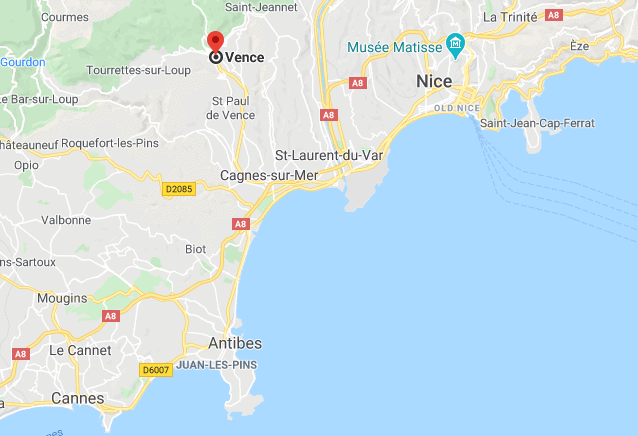
Map showing the location of Vence between Cannes and Nice
Practical Tips for Your Visit to Vence
In all the years we’ve been visiting the area, we’ve always found great, family-run hotels to stay at. Here are some options.
#14: Monte Carlo, Côte d’Azur
The last time we visited Monte Carlo (which I know is technically not in France), we did so by mistake. The house we’d rented way up in the hills above Monaco turned out to be unavailable when we arrived, and we were obliged to find alternative accommodations.
We rolled down the very steep hills to the Mediterranean and for three nights stayed right on the harbor in Monte Carlo.
To Gregg’s delight, our hotel overlooked not only the boats in the harbor but also part of the route of the Monaco Grand Prix. Preparations were underway for the race while we were there.
Our splurge-worthy 4-star hotel room would shoot from a relatively affordable 200 euros per night to 2000 euros per night on race days!
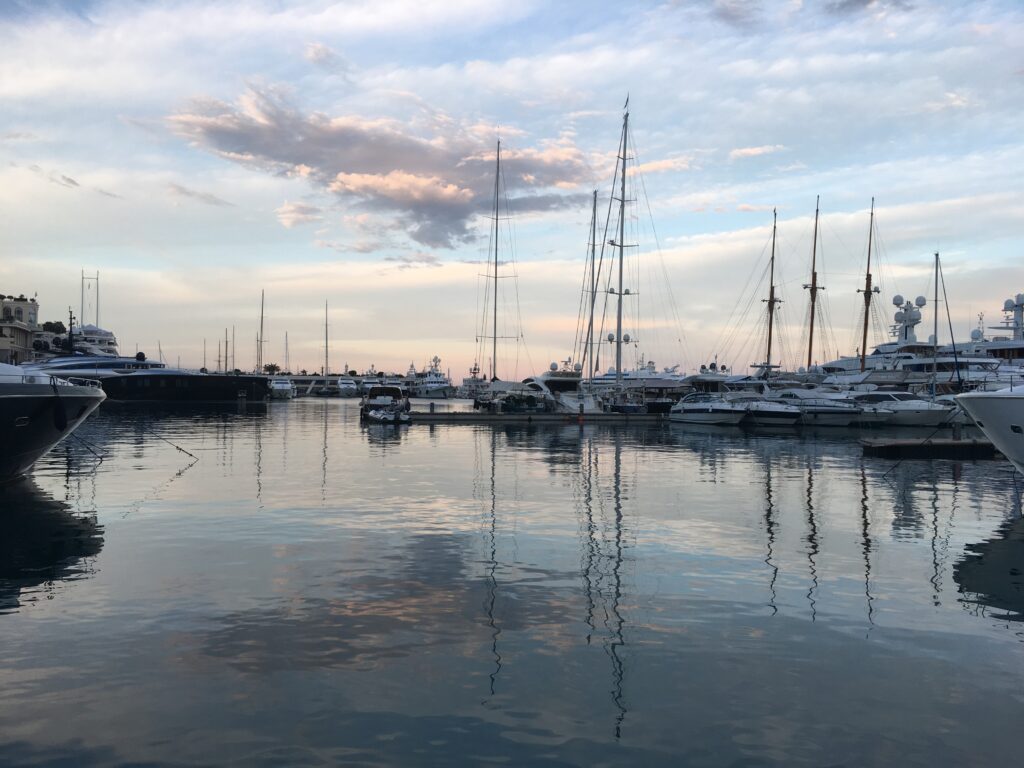
Harbor at Monte Carlo in Monaco
What is Special about Monte Carlo?
I never expected to like Monte Carlo so much. I’d visited before but only just long enough to see where the casino was but not to go in since we were traveling with Julia.
Monte Carlo and Monaco (they kind of blend together) are compact and easy to walk around. Stay for a few days and just wander the narrow streets and quiet squares.
Monaco’s old town up on a bluff overlooking the harbor includes the palace and plenty of charming little streets to get lost in.
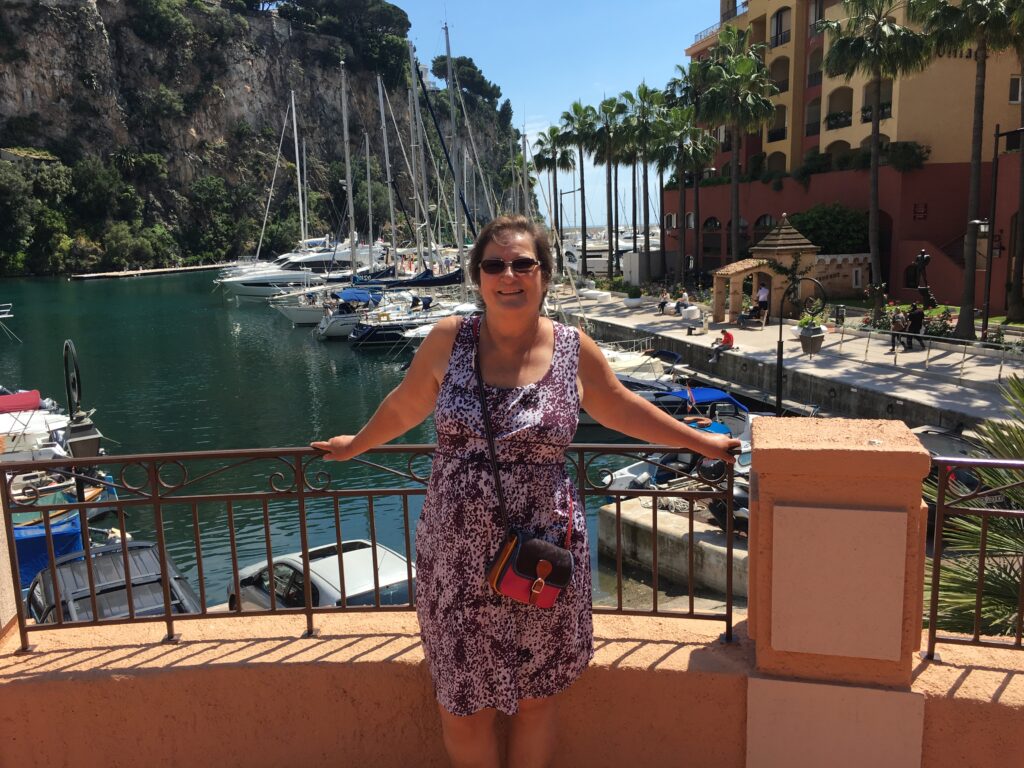
Overlooking an interior harbor near the old town in Monaco
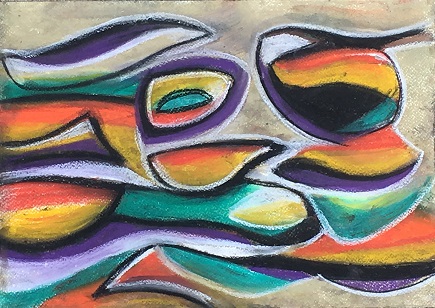
A highlight for us was the car museum, especially for Gregg who is a racing car enthusiast. While in Monte Carlo, he completed this piece as a homage to the Monaco Grand Prix.
Straightaway by Gregg Simpson
Getting to Monte Carlo
The area around Monaco is very, very tight. If you don’t have to drive, take the train from Nice. If you’re driving, get to your hotel, park the car, and then walk.
On one of our days in Monte Carlo, we caught the train to Menton to visit friends, a much easier way to travel. The traffic on the Côte d’Azur is pretty much always dreadful.
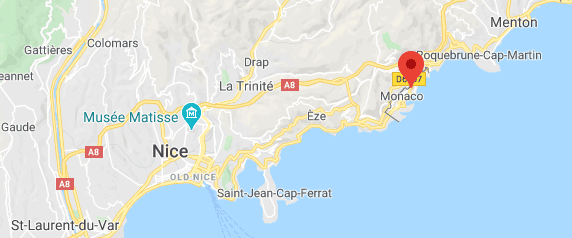
Map showing the location of Monte Carlo and Monaco
Practical Tips for Your Visit to Monte Carlo
We stayed in the fabulous Port Palace Hotel right on the harbor. It was a splurge but worth every penny. The staff were friendly and the room huge, with a view over the boats. Here are other options.
#15: Palais Idéal, Hauterives
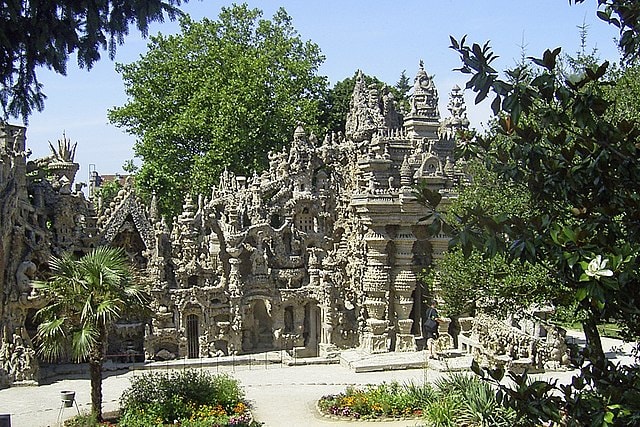
In 1879, a postman named Ferdinand Cheval picked up a stone while on his rounds and over the next 33 years built a fantasy structure that can only be described as surreal.
In fact, the surrealists led by André Breton consider postman Cheval’s Palais Idéal as the precursor of surrealistic architecture. Breton, along with other artists, including Max Ernst and Leonora Carington, visited and wrote about the Palais Idéal several times.
Palais Idéal – Source: Wikipedia
The Palais Idéal is also considered a premier example of Naïve art. Ferdinand Cheval, who had no training in art or architecture, is recognized as a pioneer of Naïve art.
The Palais Idéal may be off the beaten track for many tourists, but it is well known to French people and is one of the most memorable hidden gems to visit in France.
What is Special about Palais Idéal?
The Palais Idéal is quite simply remarkable. It looks like a cross between Angkor Wat and a strangely ornate wedding cake. You really have to see it and wander through its passageways to admire the incredible details.
You’ll be awestruck by Cheval’s dedication and imagination.
If you’re feeling at all cynical about the power of one person’s commitment to fulfilling a dream, visit the Palais Idéal and restore your faith in human ingenuity.
Getting to Palais Idéal
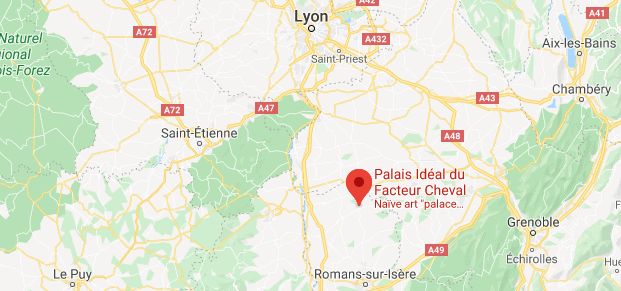
The Palais Idéal is about an hour south of Lyon in the village of Hauterives in the Drôme Department of southeast France. Combine a trip to Palais Idéal with a drive through this beautiful area west of the Alps.
Map showing the location of the Palais Idéal in the Drôme Department of southeast France
Practical Tips for Your Visit to Palais Idéal
Check the Palais Idéal website for detailed information about ticket prices and location.
Here are accommodation options in the area of Hauterives.
#16: Strasbourg
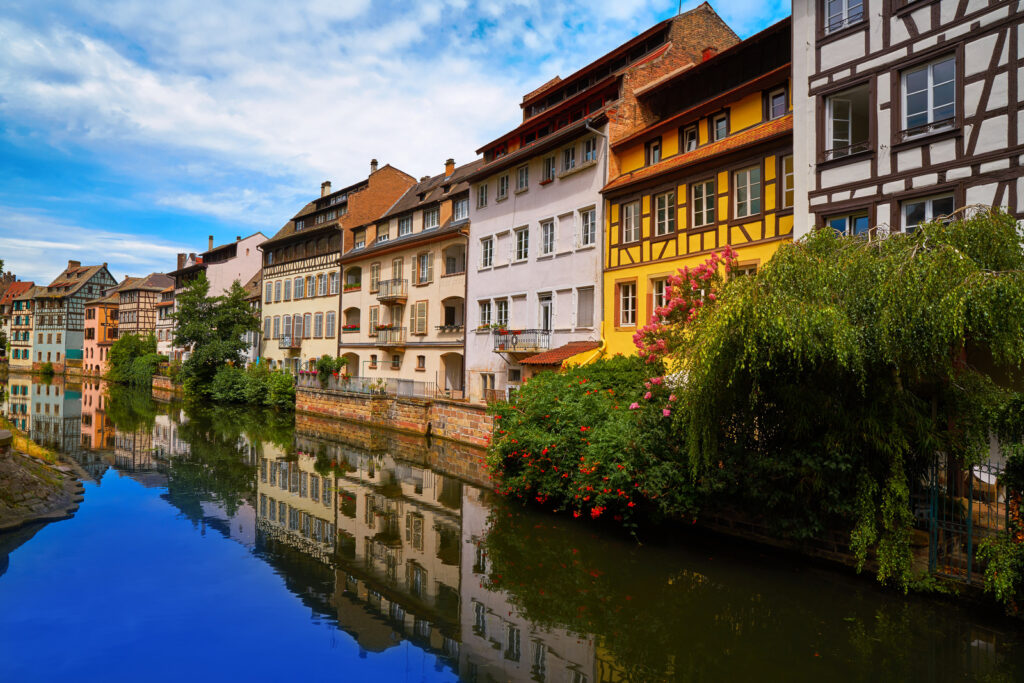
The city of Strasbourg is not really off the beaten track, but I include it because for us it was a surprise. The Petite France area is utterly charming, with its waterside cafés and Alsatian architecture.
As the chief city of Alsace and a major business center, Strasbourg is also the seat of the European Parliament, the Council of Europe, and the European Court of Human Rights. It’s a hopping place.
What is Special about Strasbourg?
Strasbourg is the center of Alsatian culture, a unique combination of French and German reflecting a 2000-year history during which custody of Strasbourg frequently changed.
The city is also drop-dead gorgeous, with its maze of narrow streets and a melange of architectural styles, including the distinctive half-timbered houses lining the canals in the Petite France area.
Half-timbered houses in Strasbourg, la Petite France in Alsace
The center of Strasbourg is recognized as a UNESCO World Heritage Site.
Another great attraction of Strasbourg is, predictably, the food!
Alsatian cuisine is a unique and hearty combination of French and German, all accompanied with glasses of wine. Strasbourg is close to the Alsatian Wine Trail known for producing Gewürztraminer, Pinot noir, and Riesling wines.
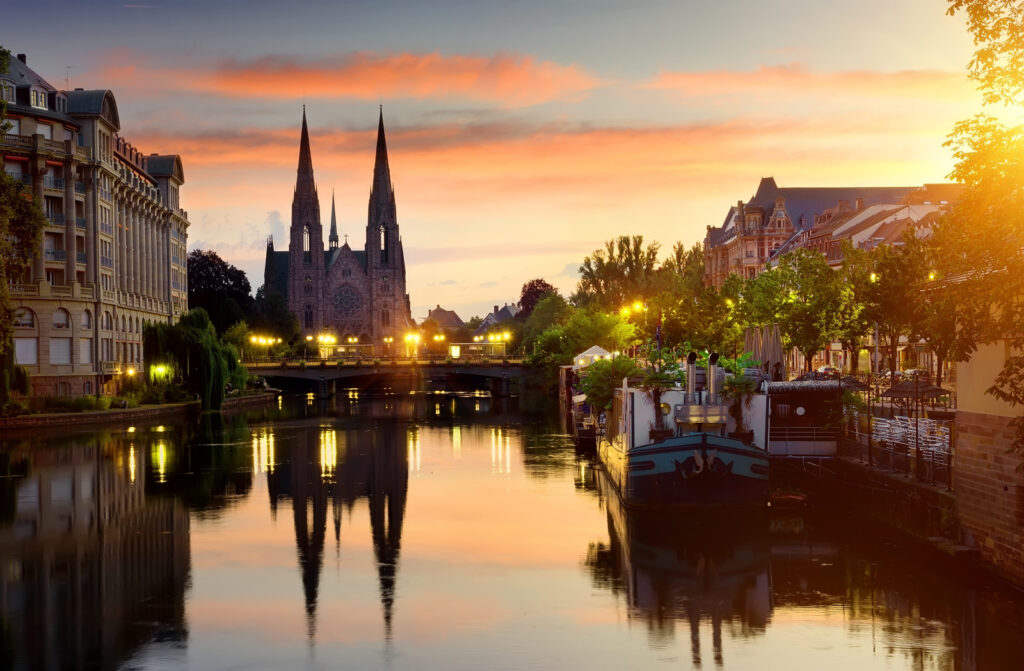
Also don’t miss Strasbourg Cathedral with its ornate Gothic façade framing a delicately stunning rose window.
Strasbourg Cathedral at sunrise
Getting to Strasbourg
If you’re coming from or going to Germany, stop for a day or two in Strasbourg.
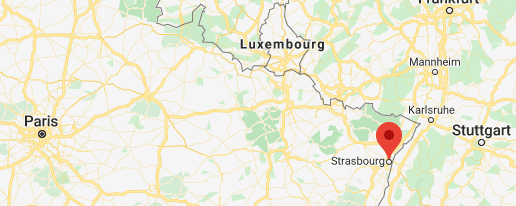
Map showing the location of Strasbourg in Alsace in northeast France
Consider exploring Strasbourg (and tasting some wine) with one of these tours:
Strasbourg’s status as the location for the European Parliament means that it’s very well served by transportation, including an international airport and a TGV train that whisks you to Paris in under two hours.
Here are accommodation options.
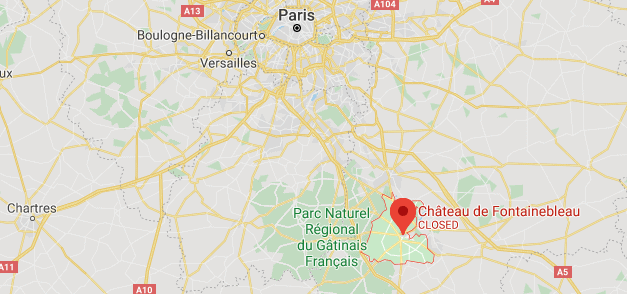
#17: Fontainebleau Forest
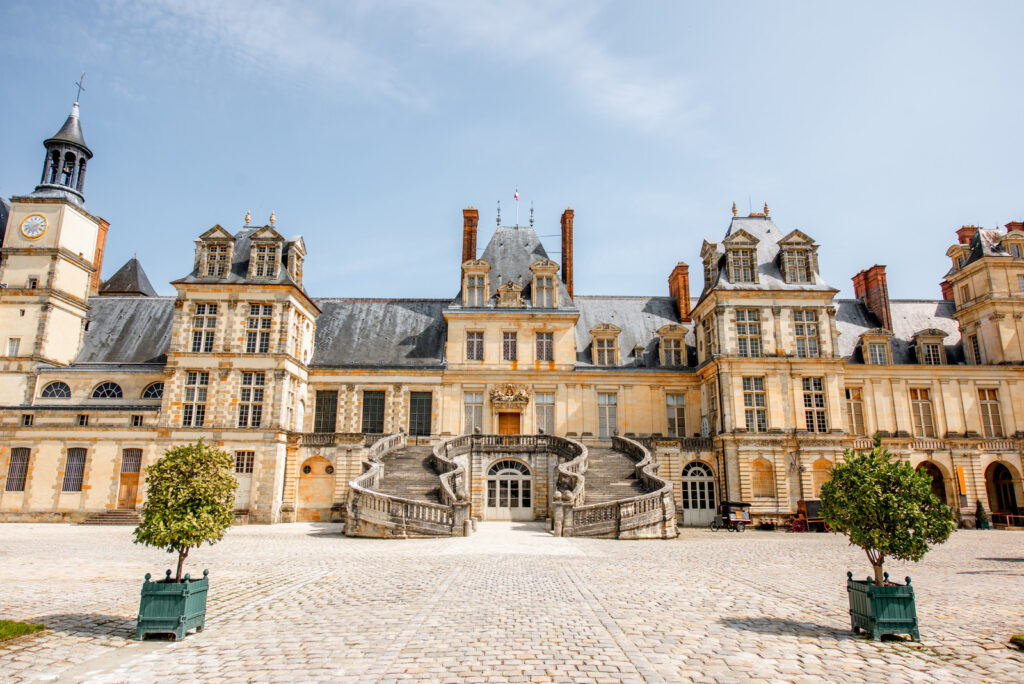
The Forêt de Fontainebleau is an easy day trip from Paris, but do yourself a favor and settle in for at least one or two nights. That way, you’ll have time to explore both the Château of Fontainebleau and the vast forest, once the hunting grounds of the kings of France and the second-largest national forest in France.
View of the palace of Fontainebleau with White Horse Court
Kilometers of trails criss-cross the forest, taking you past sunlit glades and strange rock formations, many resembling animals such as elephants, tortoises, and crocodiles.
What is Special about Fontainebleau Forest?
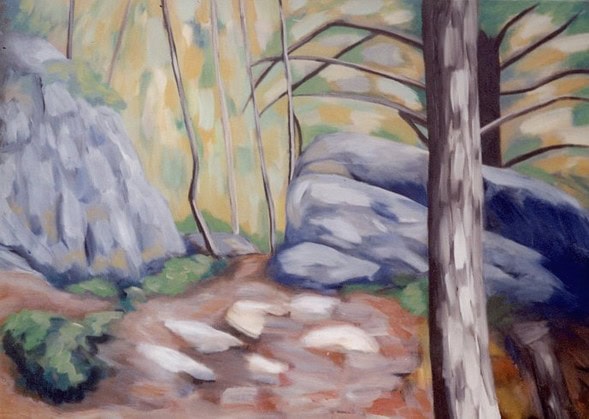
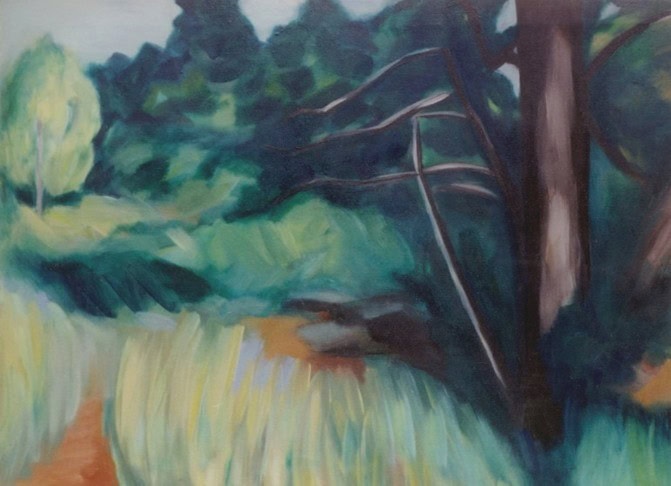
The Forêt de Fontainebleau has been a mecca for artists since the 19th century when it was the headquarters for the Barbizon group of painters.
Gregg was in good company when he created his own series of paintings inspired by the strangely evocative forest. Here are two of his large canvases completed after our first visit to Fontainebleau.
66 The Clearing by Gregg Simpson
Impressions of the Fontainebleau Forest by Gregg Simpson
In addition to spending time in the forest, you can’t miss the Palace at Fontainebleau. We were fortunate to visit it just after it opened in the morning and so were the first people to walk through its sumptuous rooms.
I enjoyed our visit to the palace much more than Versailles, which is overcrowded and overpriced.
I’m not suggesting you give Versailles a miss; it’s definitely worth seeing. However, if you have time for only one day trip from Paris and you want to see a royal palace, consider the much less touristy, more authentic-feeling Palais de Fontainebleau.
The last time we visited Fontainebleau, we took a train from the Gare de Lyon train station in Paris and then picked up our rental car near the train station at our destination.
It’s much less stressful to pick up a rental car in a small town like Fontainebleau than in the middle of Paris (I don’t recommend doing that!).
After spending a day tootling around the forest, we headed south to begin our trip around France.
Allow forty minutes to take the train, or drive from Paris to Fontainebleau.
Map showing the location of Fontainebleau south of Paris
Practical Tips for Your Visit to Fontainebleau Forest
The charming town of Fontainebleau contains several of the type of small hotels we favor when traveling in France. Check options on the map below.
France Guides
Click the image below to discover lots more things to see and do in wonderful France.
Keep Exploring France with Artsy Traveler
From prehistoric caves and surreal palaces to wild wetlands and art-filled villages, my 17 places reflect the depth and diversity that make France endlessly fascinating to explore.
If you’re drawn to creative destinations that reward curiosity, these places will give you a France you won’t forget.
Here are more posts to read to help you plan and enjoy your time in France:
You’re in luck when it comes to finding great places to stay in France.
In fact, some of our most memorable stays in Europe have been in family-run, country-style hotels in France.
In this post, I provide general tips about accommodations in France and then list hotels I recommend.
Recommended hotels are comfortable, well located, and usually family-run, perfect for art lovers, drivers, and travelers who value character over chain hotels.
I favor a combination approach to booking hotels in France. Generally, I book most of the hotels on my itinerary before I leave home, and then while traveling, I make adjustments as needed.
I like the security of knowing that I have a place to stay, but I also take advantage of cancellation options to ensure I can always change my mind.
To stay flexible, choose a hotel booking site that allows you to book, change, or cancel hotel reservations if your itinerary changes. Most sites offer a no-cancellation option at a lower price. I favor booking.com and Expedia for hotels and VRBO for long-term stays.
TIP: Stay flexible when you travel. You never know when you might meet someone who recommends a festival or event or exhibition. More than once, I’ve altered an itinerary to attend a special exhibition or visit a new attraction.
I never choose the no-cancellation price unless I’m 100% sure I’ll be staying at the hotel. For example, I will select the no-cancellation price for hotels I’m staying at in the cities I fly into and depart from because I know those locations won’t change.
Breakfasts in French Hotels
Breakfasts in France are generally of the continental variety and include croissants (both regular and chocolate-filled), fresh baguettes with wonderful butter and lots of jams and marmalades, and coffee.
You may also find fresh fruit, dry cereal, cold meats, and cheeses. In large hotels, cooked options may be available.
In my experience, most breakfasts in small country hotels in France are continental breakfasts that are either included in the room price or are generally not too expensive.
If hotel breakfasts are too pricey, I buy yogurt and fruit at a local grocery store and then go to a bar or café for my morning café au lait.
Recommended Locations
In France, I favor hotels on the outskirts of cities or in the countryside if I’m driving. I check the map showing the location of hotels and choose one that is outside town walls but within walking distance of the center of town.
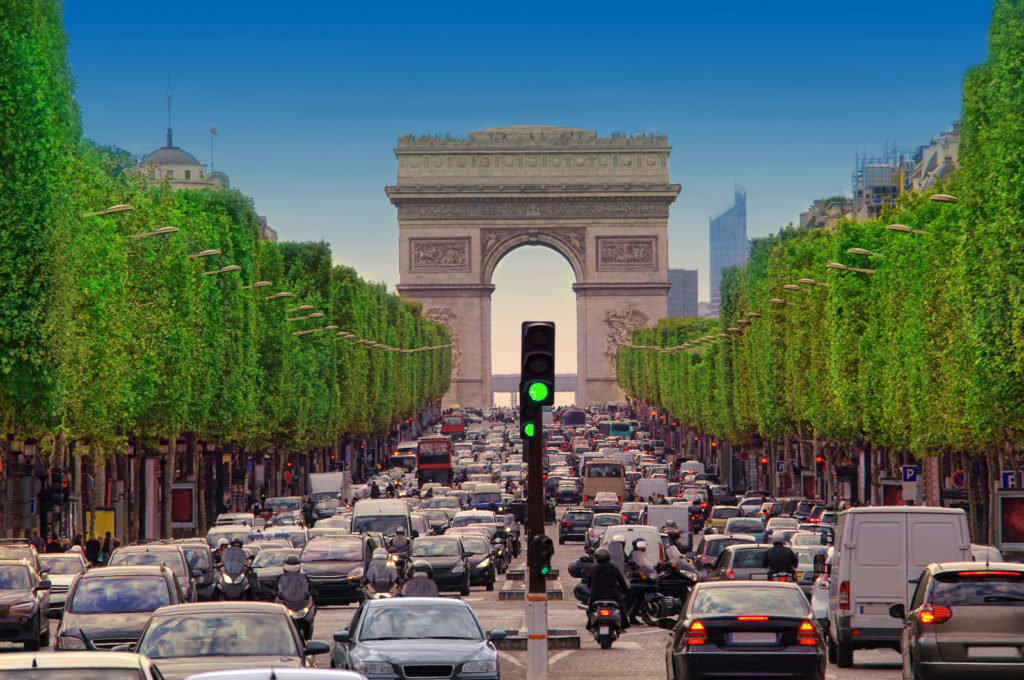
I don’t recommend driving into Paris. We’ve done so several times, and it’s challenging, to say the least!
Traffic in Paris—not for the faint of heart!
Star Rating
I favor three- or four-star properties in France that offer amenities such as elevators, air conditioning, parking, bathtubs, pools, and Wi-Fi.
I also like larger rooms. Check the square meterage of the room. Anything under 15 square meters is too small for two people with luggage. I do my best to book rooms that are at least 20 square meters.
Reviews – Should You Care?
I recommend that you pay attention to reviews. If a property’s aggregate review is under 8.0 out of a possible 10, consider taking a pass. Sometimes, the difference between a property with a 9.6 review and one with an 8.2 review is only a few euros, and yet the quality of the higher-rated property is worth the extra money.
You have to take reviews with a grain of salt, however. Just because a property has a score of 9.8 doesn’t mean it’s five-star luxury. A 9.8 score for a two-star hotel is not the same as a 9.8 for a four-star.
TIP: Read reviews on a few sites, such as booking.com and TripAdvisor. I take my time when booking accommodations in France and elsewhere to make sure I’m getting the best value for my travel dollar.
For each destination, I describe properties I’ve stayed at. Click the link to the hotel to make a reservation with booking.com.
Places to Stay in Paris
When you’re in Paris, you won’t want to stay outside the périphérique in what are pretty dull suburban areas. The périphérique is the multi-lane ring road that circles Paris. Mammoth traffic jams are not uncommon on the périphérique; I’ve experienced a few!
To avoid driving into Paris, I’ve occasionally stayed at a hotel near one of the portes on the périphérique. However, I don’t recommend doing so. The surrounding area can be quite dreary, and you’ll need to take a long Metro ride into the center.
If you’re driving, consider organizing your trip so that you either start or end in Paris. That way, you can be car-free in the city and stay at a place in an interesting and central area, such as the Marais or my favorites, the 5th, 6th, and 14th arrondissements on the Left Bank.
Recommended Neighborhoods in Paris
I visit Paris frequently and usually stay in apartments or hotels on the Left Bank. The Montparnasse area in the 14th arrondissement is far enough from the tourist crowds and the throat-tightening prices of Saint-Germain but still only a short walk or Metro ride from the Seine.
Montparnasse these days isn’t the bohemian, majorly hip place it was between the World Wars when everyone who was anyone—from Hemingway to Picasso to the newly formed surrealist group— hung out there.
However, it still has plenty of good restaurants (La Coupole, Le Dôme) with appropriately snooty waiters (I adore watching Parisian waiters work!) and amazing seafood.
Here are my accommodation picks for Paris, all of which I’ve stayed at.
Hôtel de L’Université on the Left Bank near Saint-Germain-des-Prés is lovely with spacious rooms and an excellent location just blocks from the Seine and the hip part of Saint-Germain-des-Prés. I will definitely stay there again.
Hôtel A La Villa des Artistes is the first hotel I stayed at with my family. Located in Montparnasse on the same street as the Hôtel Le Chaplain and close to the Vavin Metro, the hotel is also a short walk to the Luxembourg Gardens where our daughter spent many happy hours in the smartly designed playground.
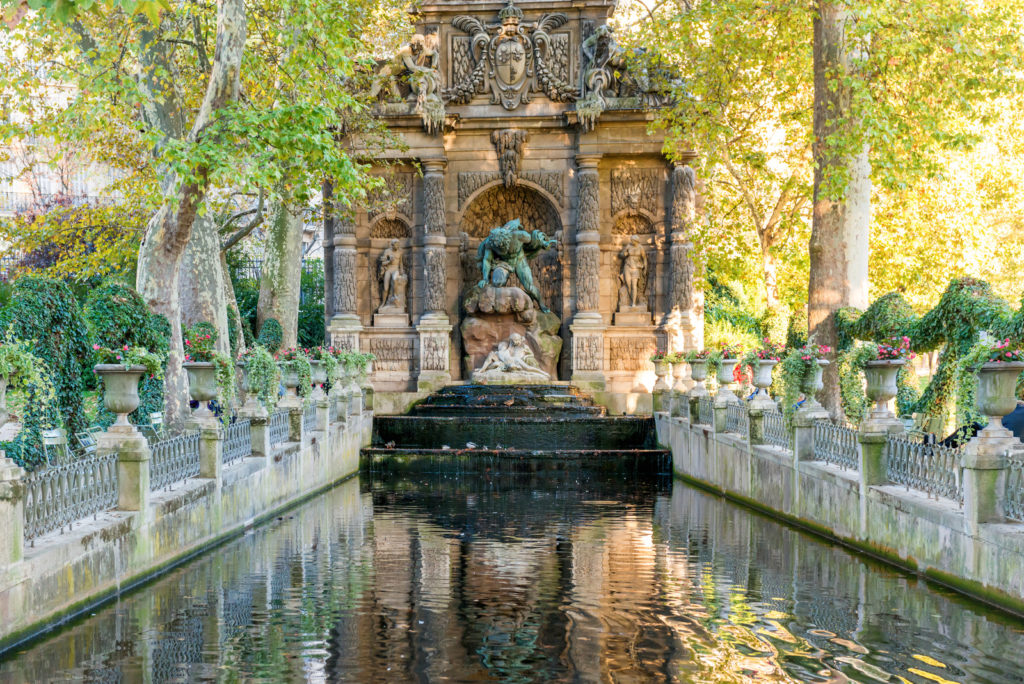
Hôtel Le Clos Médicis has a great location about a block from the Luxembourg Gardens near the Boulevard Saint Michel. The rooms are pricey and a bit small, but well-appointed and comfortable.
Citadines Saint-Germain-des-Prés Paris is a surprisingly reasonable option considering the size of the room, which includes a small kitchen. The location is perfect, right on the Seine in the 6th arrondissement.
Medici fountain in the Luxembourg Garden near the Hôtel Le Clos Médici
I’ve stayed at a few more hotels that don’t warrant a recommendation. Paris has its share of overpriced and underwhelming places. Take your time finding a place and be aware that you may need to adjust your budget upwards to get a comfortable room in a good location.
As mentioned, I usually stay in apartments. Good options are available on VRBO and booking.com.
Here are some more options for accommodations in Paris:
Places to Stay in Normandy
I recommend basing yourself in Honfleur and from there exploring the World War II beaches at Normandy, the charming town of Bayeux with its historic tapestry, and the soaring cliffs of Étretat.
Honfleur has several good choices, including the Hotel L’Ecrin where I stayed. The hotel includes free parking and is within easy walking distance of the Vieux Bassin.
We love traveling in Brittany! We’ve visited a few times and have always found excellent, country-style accommodations.
Here are three hotels that I’m happy to recommend:
Trébeurden and Trégastel on the Côte de Granit Rose
Both Trébeurden and Trégastel are great choices if you want to spend time exploring the gorgeous Côte de Granit Rose (Pink Granite Coast). Both of these hotels are excellent options:
Trébeurden: Hôtel Le Toeno offers simple and comfortable accommodation with terraces that overlook the ocean.
Trégastel: Le Beauséjour also features sea views in addition to an excellent restaurant. Our room had a very fancy spa bath with more jet settings than I’ve ever seen.
View of the Côte de Granit Rose near Trégastel in Brittany
Pont Aven
Spend some time in lovely little Pont Aven where Gauguin was inspired to paint some of his most memorable works.
We stayed at Le Domain de Pont Aven Art Gallery Resort, quite a posh place that was worth the expense. Set in beautiful grounds and within walking distance of Pont Aven, the resort is a good choice for a splurge.
Here are some more options for staying in Pont Aven:
Places to Stay in the Loire Valley
While you can do a day trip from Paris to the Loire Valley to see two or maybe three chateaux at a sprint, consider dedicating at least a week to exploring the Loire Valley.
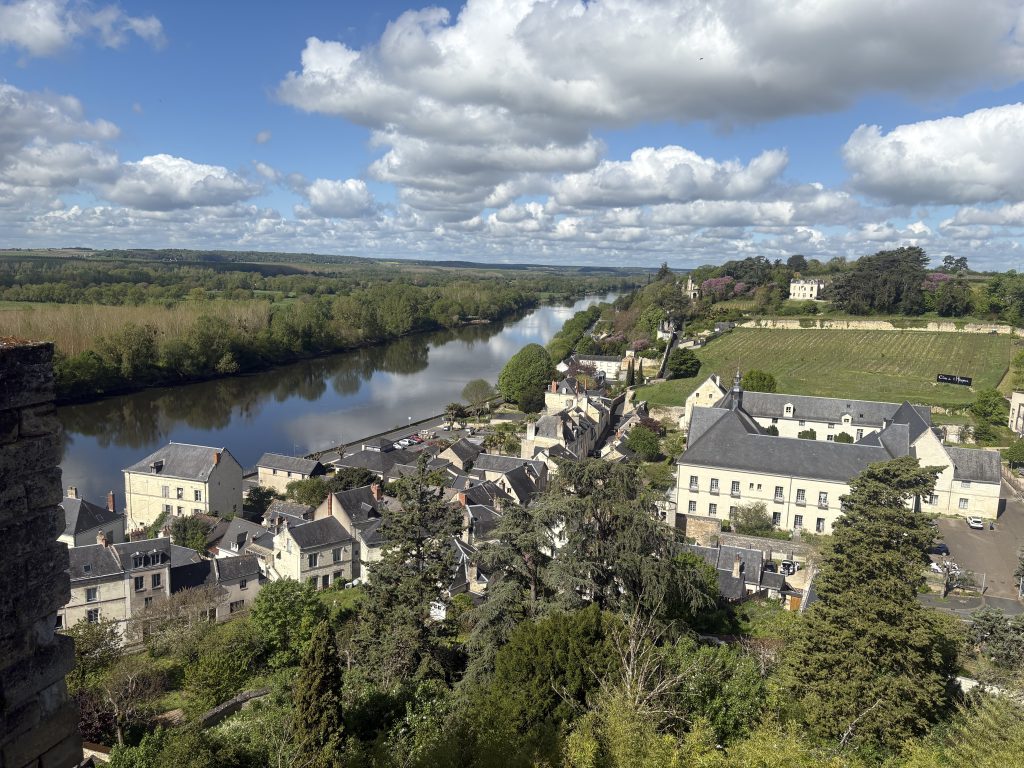
On my most recent visit to the area, I home based in Chinon, which I recommend. It’s a small, charming town with stunning river views and a fantastic castle, and within easy driving distance of several of the Loire Valley’s most beautiful château including Château Villandry, and Château Azay-le-Rideau, and Château d’Ussé.
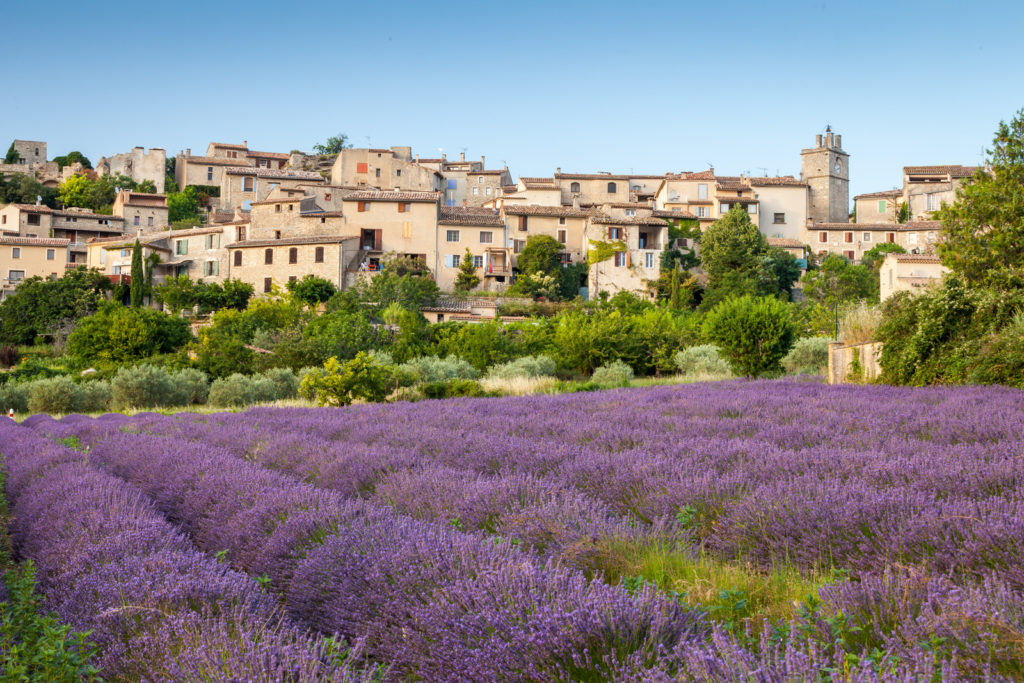
Provence and the stunning Côte d’Azur are, hands down, my favorite areas of France. Well, why not? Provence has it all: fields of lavender and sunflowers under brittle blue skies, swims in the warm Mediterranean, excellent meals enjoyed al fresco, and that special light that has inspired artists for centuries.
Pretty much every time we’ve traveled to Europe during the past several years, we’ve squeezed in at least a few days in the south of France.
Here, I’ll describe some of the places we’ve stayed at in Provence. Areas include van Gogh country around Les Baux-des-Provence on the western edge of Provence, the charming towns of Roussillon and Gordes in the Luberon area, the relatively undiscovered Var region, and finally, the fabled Côte d’Azur.
Les Baux-des-Provence in Van Gogh Country
By van Gogh country, I mean Arles and the surrounding areas where Vincent van Gogh painted during the few years he lived in the region. Because I always have a car in Provence, I book places in the countryside in this area rather than within the Arles city limits or in difficult-to-navigate Les Baux-des-Provence.
Les Baux-des-Provence is close to both recommended properties.
But if you’re not driving, find a hotel in Arles so you can enjoy wandering this delightful city in the warm, Provençal evening.
Here are two places I highly recommend, both in the countryside near Les Baux-des-Provence:
Du Côté Des Olivades is outside the small town of Paradou, but it’s in the vicinity of Les Baux-des-Provence. This place is Provence with a capital P, with plenty of 4-star luxury and a gorgeous country setting. I walked from here to nearby Paradou to enjoy one of my favorite meals in Provence (which is saying something!).
On my most recent trip to the area, I stayed in Domaine du Mas Foucray in a rural setting near the small town of Maussane-les-Alpilles and within sight of Les-Baux-de-Provence. Billed as an aparthotel, the one-bedroom suites include a kitchen and sitting area and a private terrace. In early July when I was there, I picked fresh apricots off the trees.
I took this video on the grounds of the property. If you’re looking for a relaxing, Provençal experience without the hefty price tag of some of the properties in the area, then you can’t go wrong with the Domaine du Mas Foucray.
Domaine du Mas Foucray near Les Baux-de-Provence
Here are more options near Les Baux-de-Provence:
Luberon Area (Vaucluse)
On one of my first family trips to Europe when my daughter was nine years old, I rented a house for two weeks in the hill town of Saignon, located near Apt in the Vaucluse region of the Luberon.
With lavender season in full swing and beautiful vistas everywhere I looked, not to mention warm summer days and lots to see, I fell in love with the area.
Saignon in the Luberon in Provence
Pick one of the gorgeous little towns and settle in for as many days as you can manage. We’ve home-based in Bonnieux, Roussillon, and Gordes. Other good options are Menerbes (where A Year in Provenceby Peter Mayle is set), Lacoste, and tiny Saignon with its ruined fortress and sweeping views.
One of our favorite family-run, country-style hotels is Les Sables d’Ocre in Roussillon. The place is also one of the two French properties I include in 10 Family-Run Hotels in Europe I Recommend.
Here are two highly recommended hotels in the Luberon, one in Roussillon and the other in Gordes.
Les Sables d’Ocre – A 15-minute walk from the village of Roussillon, this place sets the bar for what a country-style, family-run, low-key, easy-on-the-budget place should be. Book one of the rooms that includes a terrace. You’ll have your own private outdoor space and be steps from the pool.
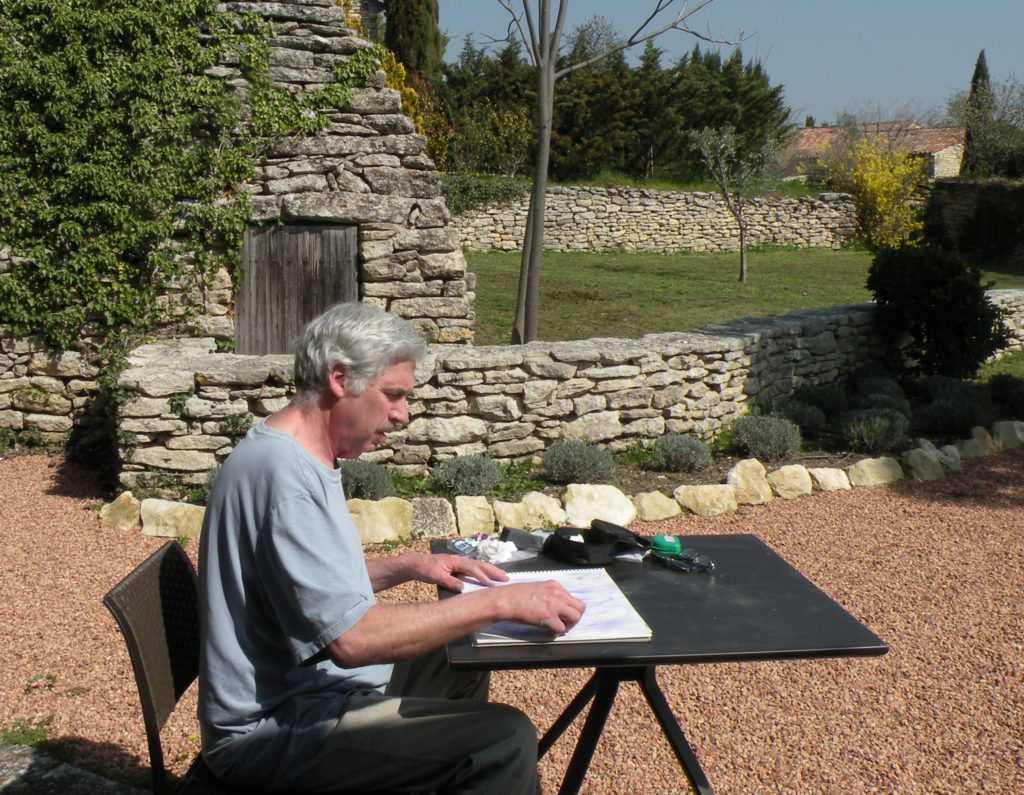
Domain de l’Enclos – This place close to Gordes, one of the most beautiful hill towns in the area, is wonderful. I snagged a room with a terrace which Gregg made use of to do some drawing. The views from the garden over the Luberon are spectacular.
Gregg drawing on the terrace at the Domaine de l’Enclos near Gordes, Provence
The Var
If you’re driving from Aix-en-Provence to the Côte d’Azur, you pass through the spectacular and relatively undiscovered region of the Var. We’ve stayed in the Var a few times when Gregg has had exhibitions in the gorgeous little village of Seillans, a hill town not far from Fayence, one of the principal towns in the area.
Here are two recommended properties in the area around Seillans.
Hôtel Restaurant des Deux Rocs – Situated at the edge of Seillans and including a lovely restaurant with a terrace overlooking the view, this place is a great choice if you want to stay in the village of Seillans.
La Bastide de Negrin – This place is a good example of a typical small bed-and-breakfast in the area, with comfortable rooms and, of course, a pool.
Each of the four rooms is named after a different artist: Matisse, Picasso, Renoir, and Cézanne.
Saint-Paul-de-Vence and Vence
This area of the Côte d’Azur is one of our favorites, particularly the town of Vence. You’ll find plenty of gorgeous properties in the area. Here are three that we’ve stayed at.
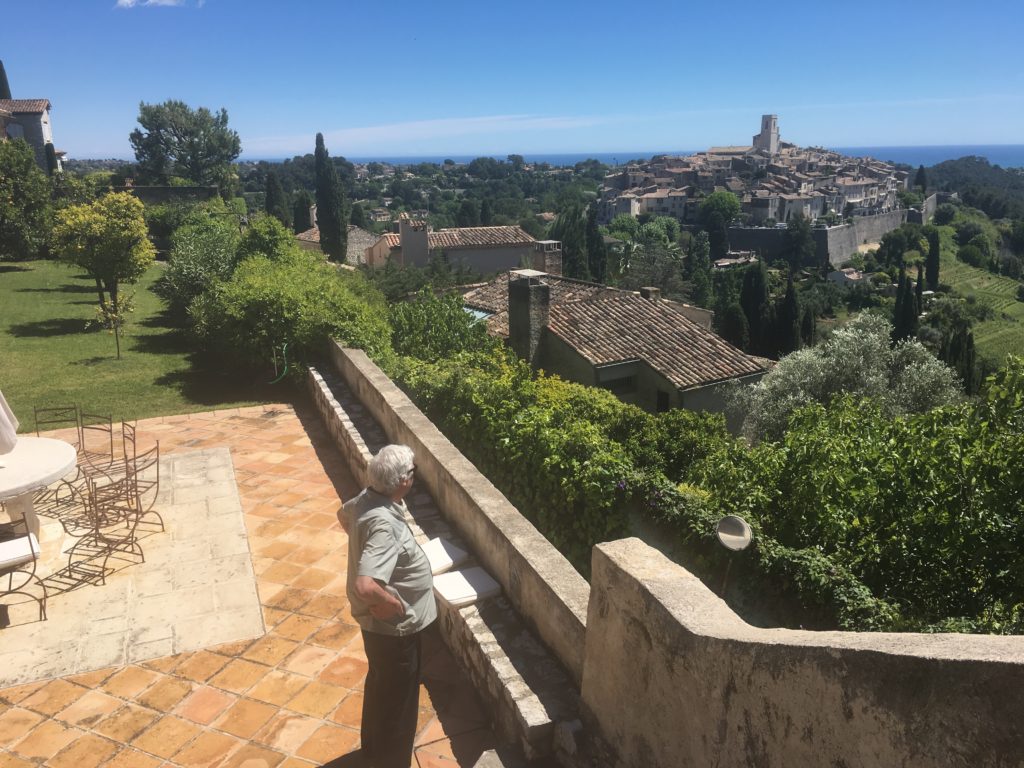
La Petite Maison: This two-story apartment has a spectacular view over Saint-Paul-de-Vence and the Mediterranean beyond. You’re also within easy walking distance of the village.
Gregg surveying Saint Paul-de-Vence from the terrace of Le Petite Maison
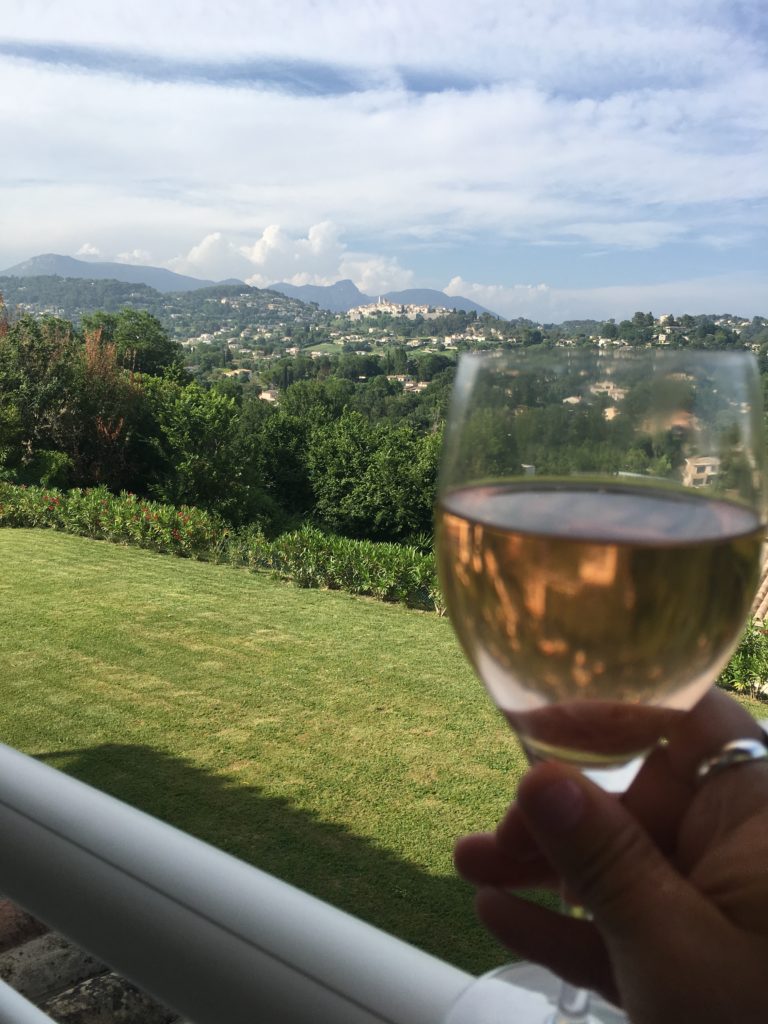
Hôtel Marc Hély: I enjoyed a room with a view over Saint Paul-de-Vence and a tasty breakfast in the courtyard. This is a great choice in La Colle-sur-Loup, which is about a ten-minute drive from the Fondation Maeght.
Wine on the balcony at the Hôtel Marc-Hély
Miramar: This hotel is in Vence, just up the hill from Saint-Paul-de-Vence and a larger town with more services.
FYI, I had the best pizza at an outdoor café in the Old Town of Vence! The Miramar is reasonably priced and well located—great for drivers.
Port Palace Hôtel in Monte Carlo – On a recent trip to the Riviera, I arrived at the house I’d rented for three days high above Monte Carlo to find no one there.
A quick call to the agency we’d rented the place from confirmed that our reservation had never been confirmed, despite emails to the contrary. What to do? Fortunately, the agency responded to our predicament by booking us into the Port Palace Hôtel right on the harbor in Monte Carlo.
The first night was comped, but I loved the place so much that I stayed for another two nights.
Although a bit pricey, the massive room and the harbor view along with fabulous breakfasts and really friendly staff made our stay at the Port Palace one of our most memorable in France.
Hôtel de l’Esterel in Agay overlooking the Mediterranean and not far from Saint Raphael is located right smack in the middle of a Pierre-en-Vacances, otherwise known as a holiday village.
The room overlooked one of the largest hotel pools I’ve ever seen. The holiday village was hopping with French families and included several restaurants, a row of shops, and numerous activities.
Massive pools at the Holiday Village where the Hôtel de l’Esterel is located
Here are more options on the Côte d’Azur
Places to Stay in Dordogne and Languedoc
Like Provence, both Languedoc and the Dordogne have many gorgeous properties set in idyllic countryside. Here are two in the Dordogne and one in Albi in Languedoc that we’ve stayed at and recommend.
Château le Tour is a fabulous choice in the middle of the countryside east of Bergerac and near the tiny village of Faux.
I stayed for several days and enjoyed evening meals served al fresco to all the guests, swims in the infinity pool, and lots of lounging around the grounds. If you want a country experience in the Dordogne and you’re touring France by car, you can’t go wrong with this place.
Château de Tour in the Dordogne region of France
The Hôtel Archambeau in the tiny village of Thonac not far from Montignac is another great country-style choice. Take a walk around the village and out into the bucolic countryside.
We recently visited Albi in Languedoc for the first time and were very taken with it. La Cabane Albigeoise is a self-contained, two-floor mini-house located in a large garden above the river and right across from the iconic Albi Cathedral. Here’s the view from the terrace.
View of Albi Cathedral from La Cabane Albigeoise
Here are some more options in Albi:
Keep Exploring France with Artsy Traveler
Once you’ve secured your accommodations, check out all there is to see in the places you’re visiting. Here are some posts to help you choose:
Normandy is one of those French regions that rewards the traveler who slows down and actually stays.
I know this because Gregg and I spent two months there as artists-in-residence in the Perche region, which gave us time to explore well beyond the D-Day beaches and Mont-Saint-Michel, as extraordinary as both are.
Normandy has charming villages, quirky museums, some of France’s best food, and a tapestry that is quite literally one of the wonders of the medieval world.
Spend at least a week here. You won’t regret it.
This post is part of my guide to artsy & independent travel in France, where I share my best tips for exploring France’s creative cities, historic sites, landscapes, and cultural experiences.
A few years ago, Gregg Simpson (husband and artist) and I spent two months at an artist-in-residence place called Les Rouges en Vert in the tiny village of Soligny-la-Trappe in the Perche region of France.
When we weren’t painting (Gregg) and writing (me), we spent many hours exploring a region of France that’s both stunningly beautiful and that has played an outsized role in the history of Western Europe.
Here are a few shots of our time at Les Rouges en Vert where Gregg had a painting studio and an exhibition and where I worked on my first novel, The Towers of Tuscany.
Normandy is home to more than thirty World Heritage Sites, including Honfleur, Mont-Saint-Michel, the cliffs of Étretat, Caen, and Bayeux, all of which are covered in this post.
Cliffs at Étretat
These iconic chalk cliffs captivated Monet, and they’ll likely captivate you. On a clear day, the white cliffs, needles, and arches shimmer in the famous Normandy light. No wonder Monet painted so many views.
Climb to the top of the cliffs from either end of the beautiful sandy beach to enjoy better views than from the beach below.
The paths and steps are steep with few hand railings. Vertigo sufferers are advised to admire the cliffs from the beach.
Panoramic landscape of the famous cliffs of Étretat, Normandy, France
The resort town of Étretat (#1), with its half-timbered houses and outdoor cafés, is a wonderful place to enjoy lunch before or after climbing to the top of the cliffs. You’ll find resort-style shops and even a casino on the beach.
Honfleur
Visit Honfleur (#2) to see where many of the Impressionist painters were inspired, including Monet, Renoir, Courbet, Pissarro, and native son Eugène Boudin who has an entire museum dedicated to his work.
Honfleur is fabulous! As an artist, Gregg was captivated by the same luminous light that attracted the Impressionists. The town’s dedication to the arts continues, with many art galleries lining the streets of the old town.
The other big attraction, since we love music, is the quirky Satie Museum.
Satie Museum
Known as the Maisons Satie (#3), the Erik Satie Museum ranks high on our list of favorite music museums. The museum occupies the entire house in which Satie was born in 1866.
Satie was a composer from the early 20th century, a compatriot of Debussy, and active in the Dada movement.
When you enter the museum, you’re given an audioguide that takes you on a sonic and sensory journey unlike any I’ve experienced. Put on the headphones, then walk into any room to trigger a range of music, light, image, and sound effects.
The museum even includes a leg-powered merry-go-round to pedal to the accompaniment of Satie’s music.
Gregg rides the music- and leg-powered merry-go-round in the Satie Museum
Musée Eugène Boudin
Close to the Satie Museum is the Musée Eugène Boudin (#4). This large museum is worth an hour or two of your time to admire paintings by not only Boudin but also many of his impressionist compatriots, including Claude Monet and Berthe Morisot (one of my favorites).
The museum also exhibits clothes and furniture, photographs from 1880 to 1920, a cool collection of more than 100 tourist posters from 1880 to 1950 advertising the delights of Normandy, and even antique toys.
Staying in Honfleur
Stay two nights so that you’ll have lots of time to wander the old town and enjoy the Vieux Bassin (#5), where tall, skinny houses rise above a sea of fishing boats and masts.
Honfleur Harbour – Vieux Bassin in Normandy, France
Pull up a chair at one of the many outdoor cafés lining the Vieux Bassin, order moules–frites (mussels and fries), and watch the world go by.
Honfleur is a popular tourist spot with several good accommodation options for staying a night or two. We stayed at the very comfortable Hotel L’Ecrin.
Another option is to make Honfleur your home base for a longer stay in the area. The location is convenient for driving to Caen, the D-Day beaches and Bayeux to the west, and the cliffs at Étretat to the east.
World War II Beaches
Today, the windswept Normandy beaches invite long walks on golden sands, face upturned to a blue sky arched over white-capped waves. I hadn’t expected the area to be so beautiful, considering the devastation it witnessed decades ago.
Caen Memorial Museum
Make your first stop the Caen Memorial Museum (#6) near Caen to learn about the D-Day invasion from the point of view of both the Allied and the German soldiers.
Reserve a few hours to browse the comprehensive exhibition of artifacts and films. You’ll leave with a deeper understanding of the Battle of Normandy.
Caen Memorial Museum in Normandy
Proceed to at least one of the beaches. We chose Juno Beach, where the Canadians landed on June 6, 1944. If you’re from the United States, you’ll want to see Omaha and Utah beaches farther west.
Visiting Juno Beach
At Juno Beach (#7), a thoughtfully curated museum provides a Canadian perspective on the war and on the invasion.
Most poignant was a film showing a continuous stream of names in alphabetical order of the men who landed on Juno. We knew one of the men and waited for his name to come up, but there were so many that we realized we’d have to wait a long time to see his.
It’s sobering to realize that each name belongs to a young man who, even if he’d survived, would be forever plagued by trauma.
The 54-mile
stretch of coastline from Utah Beach in the west to Sword Beach in the east is
awash in WWII museums, memorials, cemeteries, and battle remains from the
largest military operation in history. You could easily spend several days in
the area.
Direction sign of Omaha Beach in Normandy
Direction sign of Juno Beach in Normandy
Bayeux
Update: The Bayeux Tapestry Museum is closed for renovation work until October 2027.
I was thrilled to finally visit the museum housing the famous Bayeux (#8) Tapestry, La Tapisserie de Bayeux (#9). If you’re fascinated by the story of the invasion of England by the Normans in 1066, then you’ll enjoy this fine museum.
The 70-meter-long tapestry is displayed on a special round spool that you walk around to the accompaniment of an excellent audioguide. In the darkened room, only the tapestry is lit. Follow the progress of the invasion—the boats and horses and helmeted men wielding swords.
The story told by the tapestry begins in 1064, when Edward the Confessor, King of England, tells his brother-in-law, Harold Godwinson, to go to Normandy and offer his cousin, William, the succession to the English throne. The story ends with the Anglo-Saxons fleeing at the end of the Battle of Hastings in October 1066, although the last bit of the tapestry is missing.
Description of the Bayeux Tapestry Museum
The tapestry
contains 58 scenes, 626 characters, and 202 horses.
What intrigued me about the Bayeux Tapestry was that it was created by women. Some historians maintain that the women embroiderers of Kent did the stitching. How did these women feel about telling the story of their invaders? How did they make the designs?
Some of these questions are answered in the film and museum exhibits you’ll see after viewing the tapestry.
After touring the museum, wander around Bayeux’s quaint streets and pop into the massive Bayeux Cathedral that dominates the skyline. The Bayeux Tapestry was commissioned by Bishop Odo, half-brother of William the Conqueror, to adorn the cathedral where, for centuries, the tapestry was displayed once each year.
Water mill and Aure River in the attractive town of Bayeux
Perche Region
This
pleasant area of rolling green hills, thousands of white cows, and
grey-steepled churches is not a tourist mecca. It is, however, a popular place
for wealthy Parisians to have second homes—and no wonder. The countryside is
achingly gorgeous.
Drive around the quiet country roads past lakes and forests and visit some of the charming towns, including Alençon (#10), Argentan (#11), the cathedral at Sées (#12), and L’Aigle (#13). Get out of the car and go walking, make friends with the cows, and visit the Perche Natural Regional Park.
Enjoying a walk in the Perche countryside
For Canadians, particularly those of French descent, a visit to the Museum of French Emigration to Canada in Tourouvre is worthwhile. Many of the people who populated Quebec in the 17th century came from the Perche region. The museum tells their story.
Here are pictures of the countryside surrounding the place where Gregg and I did a two-month artist-in-residence stint a few years ago.
Cathedral at Sées
Lots of white cows in Normandy
Enjoying a picnic in the countryside
Golden fields of rapeseed
Mont-Saint-Michel
Floating off the Normandy coast on the border of Brittany, Mont-Saint-Michel will make you smile.
Approaching Mont-Saint-Michel in Normandy, France
Is it real? Did people from centuries ago actually brave the tortuous tides to build the massive, stone-walled abbey?
Indeed, they did, and since its founding in 966, Mont-Saint-Michel (#14) has attracted pilgrims and now tourists. Its tiny cobbled streets are clogged with souvenir shops and crowds, but visit anyway. The views of the swirling waters from the ramparts of the abbey are breathtaking.
Park in the new car parks located about 1.5 miles from the island and walk to the Place des Navettes to catch a shuttle bus (passeur) across the causeway to the island.
You can also walk across the causeway to the island. Once there, you’ll climb the steep streets to the abbey. Buy tickets in advance to skip the line.
Inside, you’ll find peaceful cloisters, the soaring Gothic church, and one of the grand chambers, known as The Marvel because it clings spectacularly to the rock.
Traveling To and Around Normandy
Normandy is best explored with a car or on a tour from Paris. A good strategy is to pick up a rental car outside of Paris at Charles de Gaulle Airport and then head west into Normandy for at least a week.
Coming from Paris? Daytrip offers private transfers from Paris to Normandy with fixed pricing and is a comfortable alternative to the train if you’re heading to Bayeux or the D-Day beaches.”
On your way to the locations described in this post, stop off in Rouen to view the magnificent cathedral, one of Monet’s favored subjects.
Tours in Normandy
If you choose not to drive in Normandy, consider taking a tour. Here are options through Tiqets.com:
And here are some options for tours in Normandy with GetYourGuide: