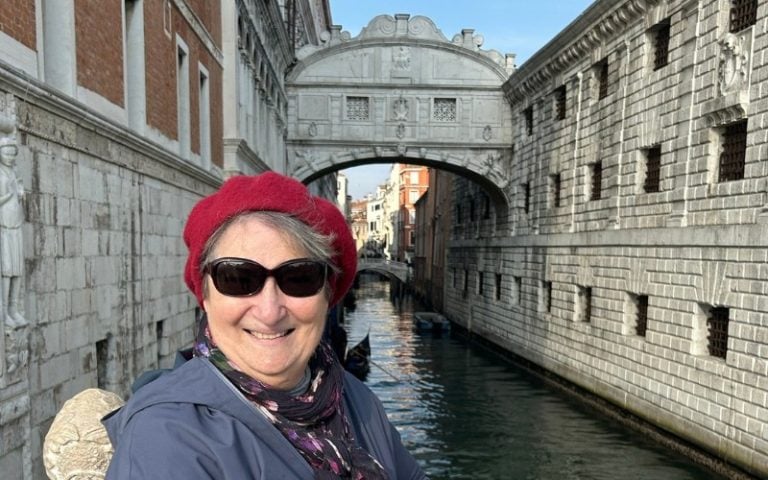

12 Things to Do in Banff: Museums, Mountaintops, and a Few Elk
I'm Carol Cram, novelist and arts travel writer, and founder of Art In Fiction, a curated database of 2,700+ novels inspired by the arts. Artsy Traveler contains affiliate links for products and services I personally use and recommend. As an Amazon Associate, I earn from qualifying purchases. Please read the Disclosure for more information.
I’ve visited Banff a handful of times since my first trip as a child in the early 1960s, and each time I’m blown away by its stunning setting.
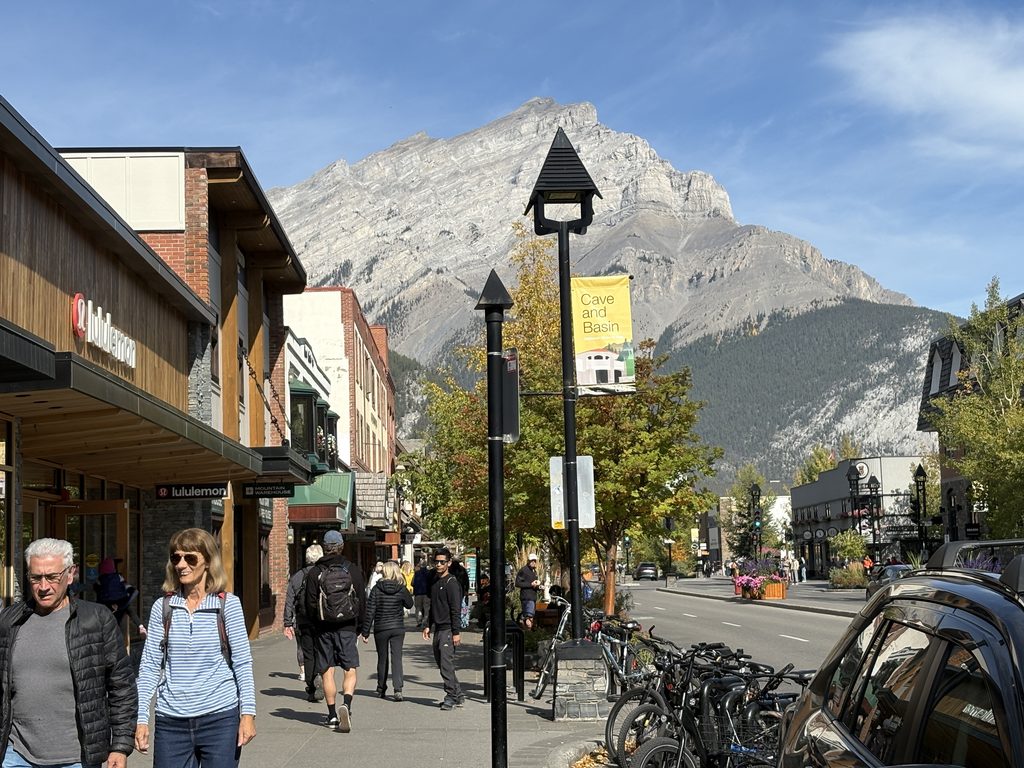
Walk north along Banff Avenue and the massive bulk of Cascade Mountain stands guard. When I arrived on my latest trip in late September, its rocky slopes were sharp and gray. By the time I left a few days later, they were frosted with snow against a deep blue sky.

Walk south along Banff Avenue and you’ll see Sulphur Mountain looming. Its gondola whisks you to the top where you’ll enjoy incredible 360-degree views of more mountain peaks than you can easily count.
To the southeast rises Mount Rundle, to the northwest Mount Norquay, and to the east squat Tunnel Mountain, home to Buffalo Mountain Lodge and the Banff Centre for Arts and Creativity.
Banff is one of those places where the mountains get all the attention, and for good reason. But the town itself has more history and culture than most visitors realize, from a museum founded by two painters to a steaming cave where Canada’s national park system was born.
It also has crowds. Over 4.5 million people a year visit Banff National Park, home to a town of just 8,300 residents. Walk down Banff Avenue in summer and you’ll be dodging people from all over the world.
The good news? Most of those people are on the same three or four sidewalks. Step into a museum and you’ll often have the place more or less to yourself.
I spent time in Banff as part of a five-day trip through the Canadian Rockies. Here are the twelve things I recommend, sorted by weather, because in the Rockies the weather is in charge.
Disclosure: Canadian Rocky Mountain Resorts hosted my stay at Buffalo Mountain Lodge. As always, my opinions are my own. This post also contains affiliate links. If you book through them, I may earn a small commission at no extra cost to you.
Table of contents
Quick Tips Before You Go
- Check the Sulphur Mountain webcam before you buy gondola tickets. If all you see is clouds, postpone your visit to a day when the sun is shining.
- You need a Parks Canada pass to stop anywhere in Banff National Park, including the town. Buy it online before you go, at the park gates if you’re driving, or at the Parks Canada office on Banff Avenue in Banff.
- Save the museums for cloudy days. They’re the best crowd escape in town.
- If you’re driving, stay just outside downtown. You’ll get quiet nights and a six-minute drive to everything (see Where to Stay below).
- September is a sweet spot: you’ll see the fall colours, experience fewer crowds than summer, and possibly see early snow on the peaks (I did).
- Hit the big sights early or late in the day. By late morning, the gondola lineup is at its busiest.
If the Sun Is Shining
1. Ride the gondola to the top of Sulphur Mountain
Riding the gondola to the top of Sulphur Mountain is a must-do in Banff, but only if the weather is clear. Before you go, check the webcam at the top of Sulphur Mountain. If all you see is clouds, do something else.
The gondola ride cost us $95 per person in 2026 (alas, no seniors rate). You really don’t want to spend that kind of money unless you’re going to see fabulous views.
We lucked out and enjoyed perfect conditions on a cold, clear day. I’ve lived all my life within sight of mountains on the west coast of Canada, but the mountains surrounding Banff are on a whole other level.
These mountains dominate the land, their jagged peaks and cut-glass ridges screaming their relative youth, geologically speaking. The Rockies are teenagers and proud of it.
From the top of the gondola, I suggest you walk the boardwalk to the old weather station on Sanson’s Peak, a distance of about one kilometer round trip.
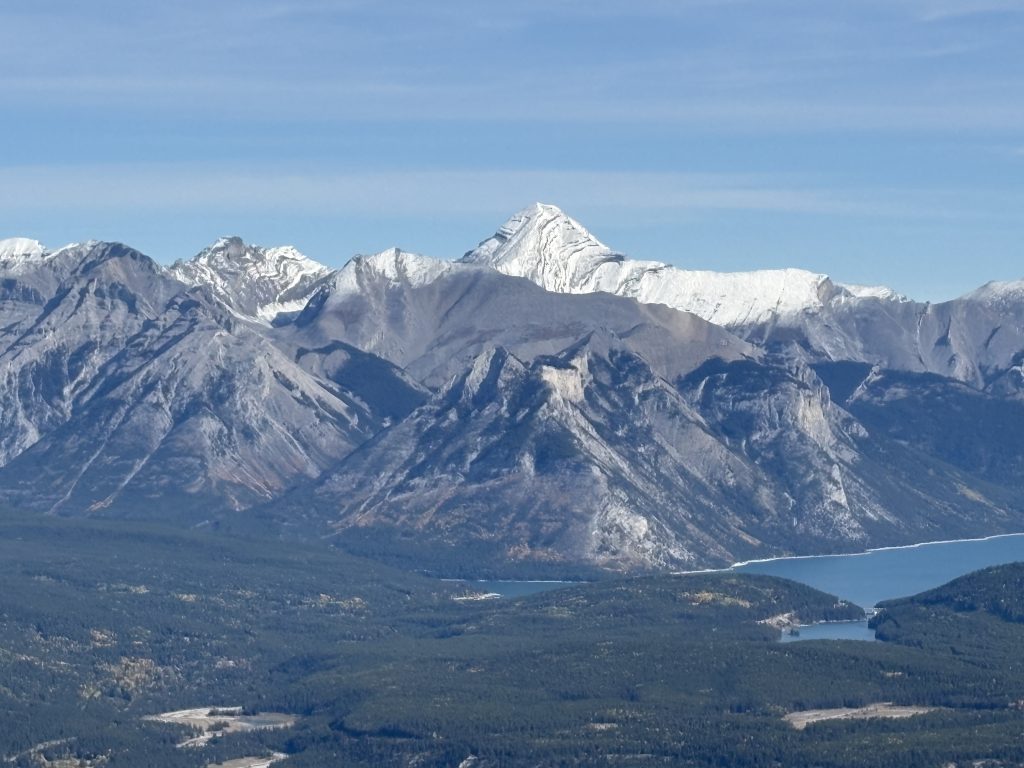
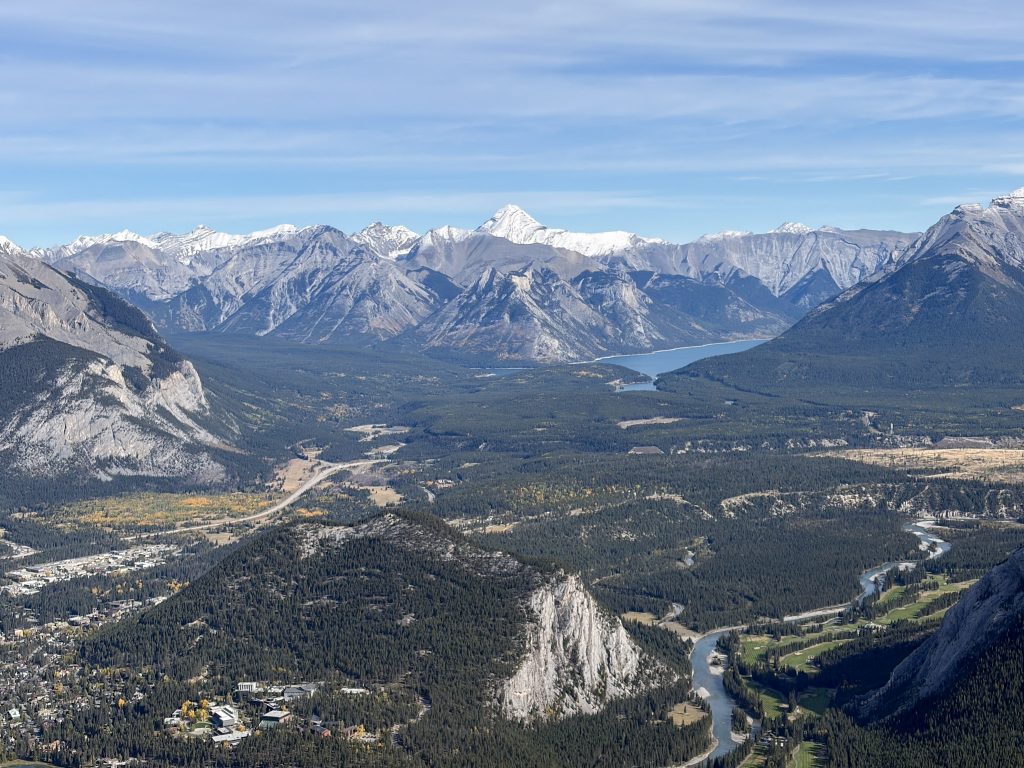
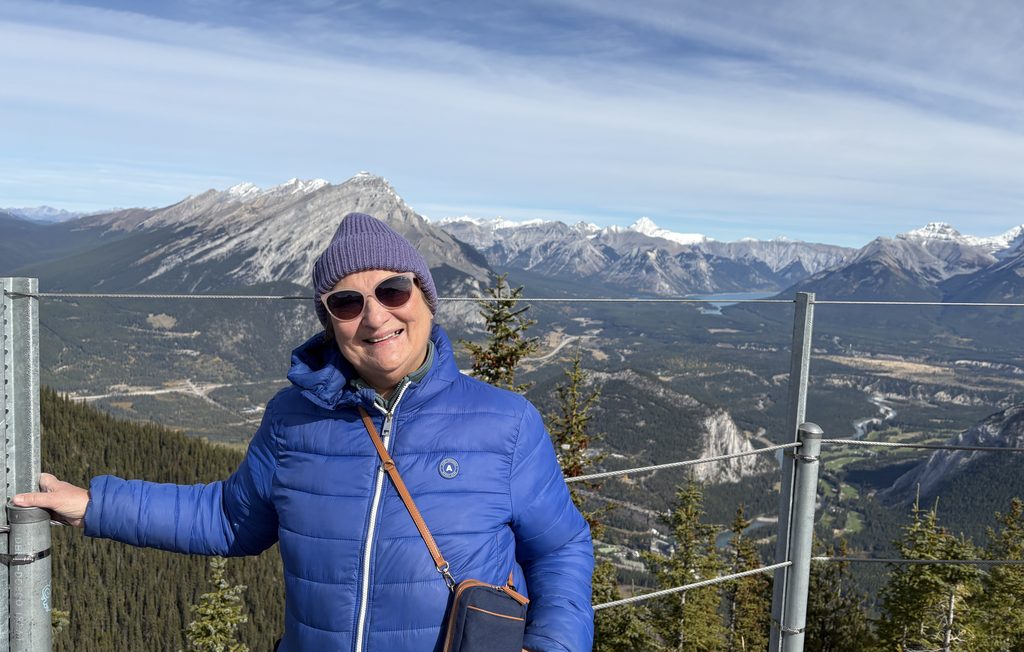
If you don’t like stairs, give the walk a miss. Otherwise, get out on the boardwalk to enjoy the stunning views, culminating in the best panorama of all from the weather station.
Back at the gondola, you can enjoy drinks and food and also a ten-minute film with plenty of jaw-dropping footage of the mountains you’ve just seen. If you visit on a cloudy day, the film is a must to show you what you’re missing.
2. Take a sunset (or Sunrise) wildlife tour
Weather permitting, I recommend booking a sunset wildlife tour, or a sunrise tour if you’re an early riser.
Choose a small-group tour rather than one of the large coach tours for a more intimate experience. We chose Horizon Tours, which I recommend.
Promptly at 5:30 pm, we were picked up and driven around Banff in search of wildlife.
At the golf course attached to the Banff Springs Hotel, we saw quite a few elk, including several bulls with impressive antlers.

The golf course is considered one of the most scenic in the world, and for good reason. I can’t imagine golfing within spitting distance of wild elk, but I suppose it adds a certain je ne sais quoi to the experience. Our guide told us that elk are actually the most dangerous animal in the park in terms of how often interactions with them injure people.
Those antlers can do a lot of damage.
We didn’t see any other wildlife for the rest of the two-hour trip, but did enjoy some stupendous views over the valley.

We also learned some valuable information about bears. Apparently, carrying bear spray when hiking in the backcountry is a must. Also, grizzly bears have humps behind their heads because they are diggers, and that hump is all muscle. Black bears, on the other hand, are champion climbers.
Our guide also said that only 102 bears of both varieties live in Banff National Park.
Book your tour in advance with GetYourGuide:
3. Go for a walk
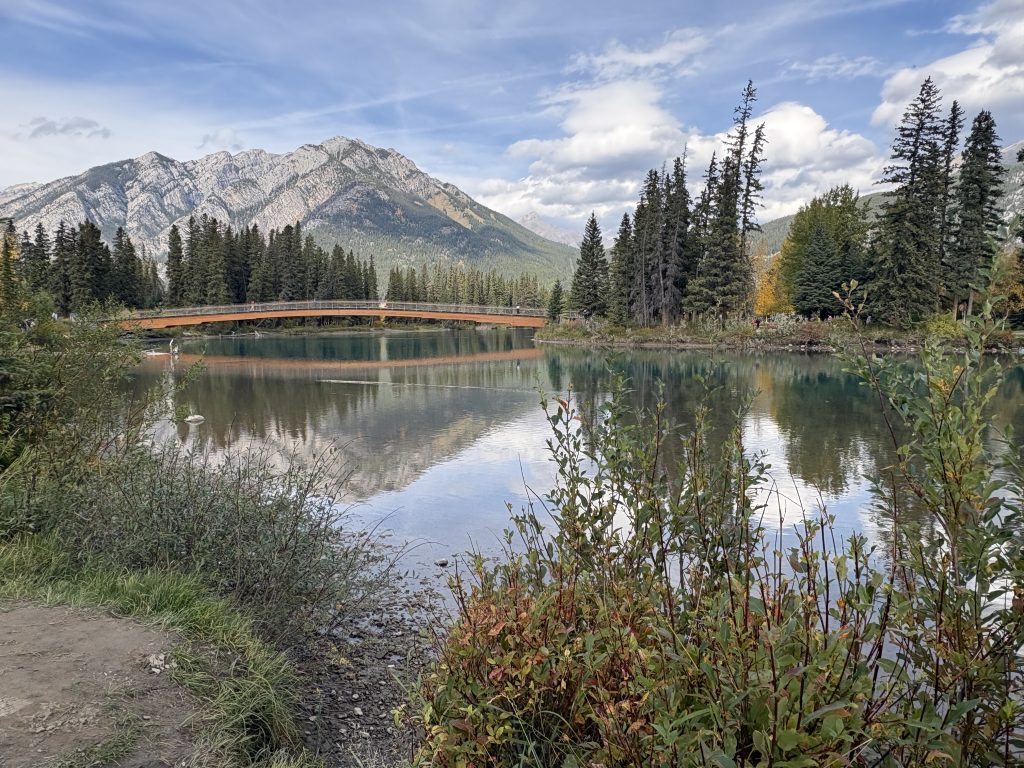
A dodgy knee kept me off the steep trails this trip, but Banff has plenty of easy walks with big payoffs. The simplest starts right downtown: follow the Bow River Trail from the Banff Avenue bridge to Bow Falls, about 1.2 km each way. The falls aren’t tall, but they’re wide and wild, and Marilyn Monroe filmed River of No Return here in 1953.
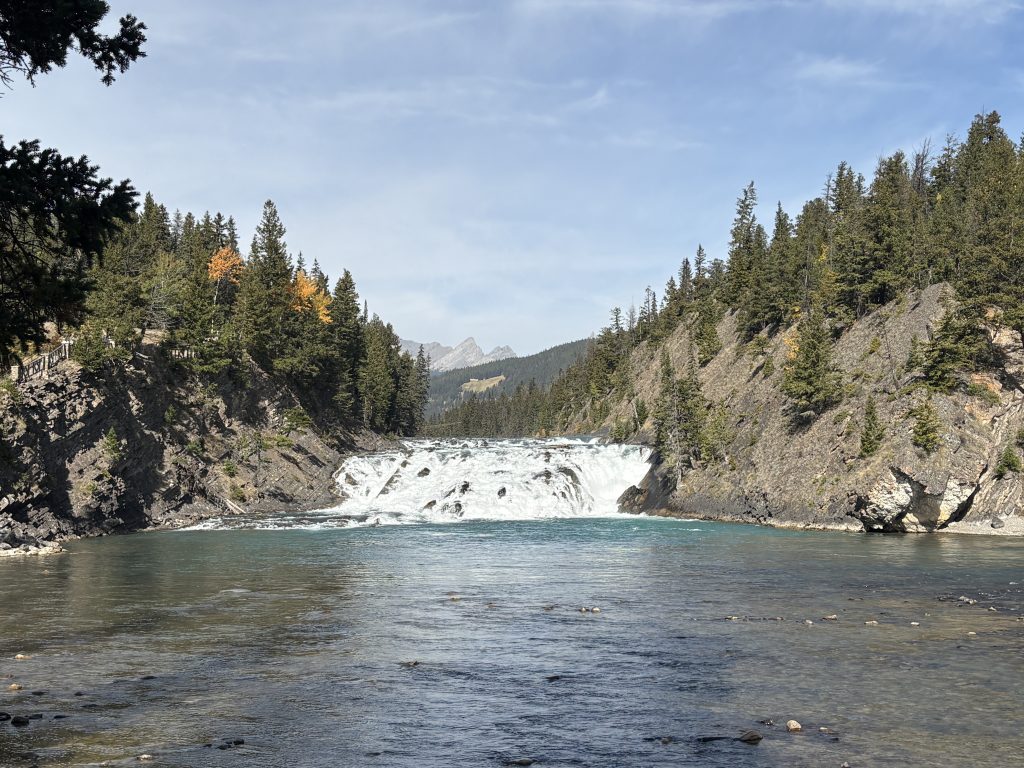
For more drama with less effort, drive up Tunnel Mountain Road to the Hoodoos Viewpoint. A short path leads to a lookout over strange, eroded rock spires with Mount Rundle as the backdrop.

If you’d rather stay flat, try the Fenland Trail, a 2 km forest loop, or the Marsh Loop, which starts at the Cave and Basin.
Trail conditions change, and trails sometimes close for bear activity, so check the Parks Canada trail reports before you set out.
If It’s Cloudy (or Cold)
4. Wander along Banff’s main drag
Downtown Banff is one long strip of tourist shops and restaurants, usually mobbed in summer. Even in September, a fair bit of dodging was required.
Most shops sell either outdoor gear or souvenirs, although there is a healthy contingent of chocolate/fudge/ice cream/fancy popcorn places to tempt you.
And yes, we were tempted a few times, but then what’s a holiday for?
5. Take a dip in the Upper Hot Springs pool (maybe)
For decades, Banff’s natural hot springs were touted as cure-alls for numerous ailments. Today, you can take a dip in a pool heated by the hot springs, but if you’re expecting a naturalistic, steamy experience such as you’ll encounter at the Blue Lagoon in Iceland, you’ll be disappointed.
The Upper Hot Springs is basically an overpriced swimming pool with hot water. The day we went, the water temperature was 104°F (40°C), hot enough that every ten minutes or so we had to sit up on the deck in the cold air to cool off.
Is it worth it? Not really, to be honest. If it’s a cold day, the warmth is comforting, but the downside is that your bathing suit will smell like sulphur for days afterwards. That said, I’ve probably taken a dip in the hot springs pool at least three times over the years!

6. Take the history tour at the Fairmont Banff Springs
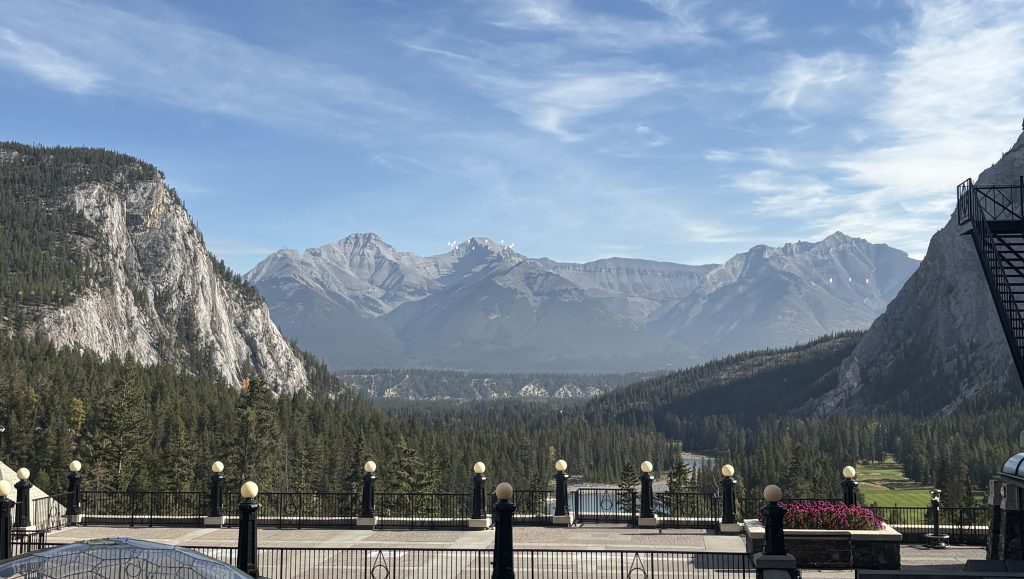
Built by the Canadian Pacific Railway and opened in 1888, the Banff Springs Hotel was renowned in the first decades of the 20th century for hosting the rich and famous.
On the one-hour history tour, you’ll learn that potential guests were required to prove they had $50,000 in their bank accounts before they were deemed worthy of spending their summer at the Banff Springs Hotel. That was a lot of money back in the day, equivalent, so the guide said, to at least half a million dollars of liquid cash today.
Nowadays, the Fairmont Banff Springs no longer requires proof of savings, but it does charge eye-watering rates.
Its location above Banff overlooking a million-dollar view, combined with its iconic towers, makes it well worth a visit. Drop in en route to Sulphur Mountain and the Upper Hot Springs.

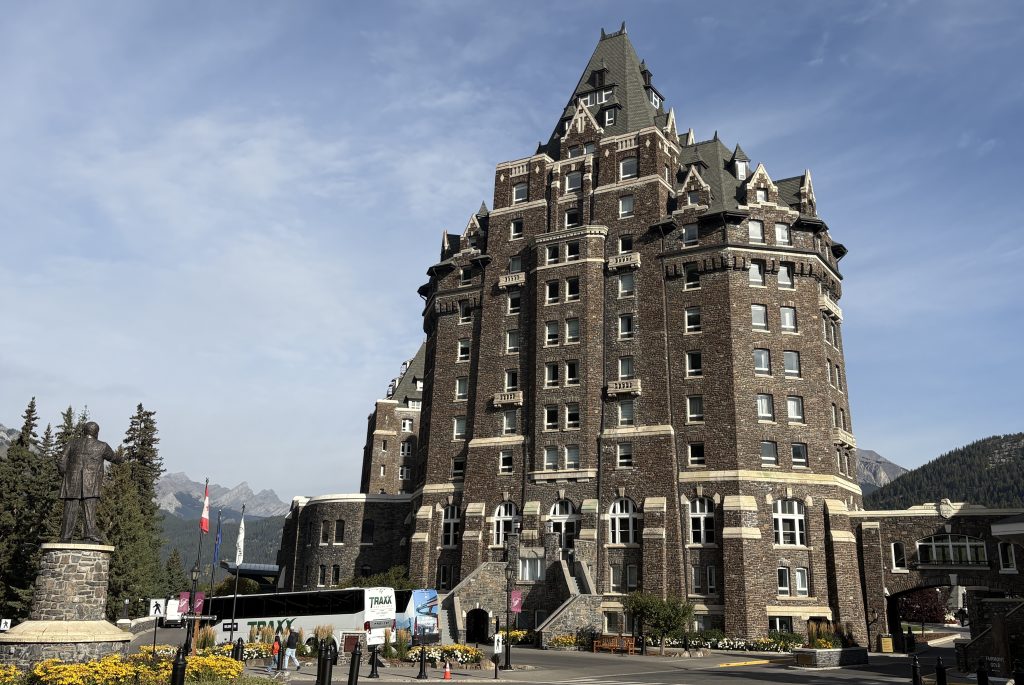
To find out when history tours are offered, contact the hotel through its website.
7. Explore the Cave and Basin National Historic Site
Drive along the Bow River a short distance from Banff to find the exact location where Banff National Park, Canada’s first, was born. The natural hot springs in the basin were long known to the local First Nations people, who used them for ceremonies.
But it wasn’t until 1883, when three Canadian Pacific Railway workers descended into the cave, that word got around about the hot water. Within two years, the government had set aside the hot springs as a reserve, which soon grew into Banff National Park to protect not only the hot springs but the plethora of peaks and valleys encircling Banff.
A visit to the historic site includes a walk into the original basin, which I found fascinating. In the half-darkness, hot water still bubbles and steams beneath the stone ceiling of a cavern pierced with a single opening through which rain gently fell to pockmark the water.

Signs warn visitors not to touch the water because it is home to the endangered Banff Springs snail, which lives only in these hot springs.
After visiting the basin, check out the displays documenting the history of Parks Canada, including a replica of the very first Parks Canada booth on the highway leading into the park from the east and information about the formidable woman who collected entrance fees from visitors for over thirty years.
8. Visit the Whyte Museum of the Canadian Rockies
Located on Bear Street, a block from Banff Avenue, the Whyte Museum of the Canadian Rockies was founded by Peter and Catharine Whyte, two Banff painters who spent their lives documenting the people and landscapes of the mountains. Today, the museum combines art exhibitions, a heritage collection, and one of the richest mountain archives in Canada.
I spent two productive afternoons in the museum’s archives researching my current WIP (work in progress), a novel set in the postwar Rockies. If you’re interested in digging deeper into the history of the region, ask the archives staff for assistance. They are very approachable.

9. Visit the Banff Park Museum
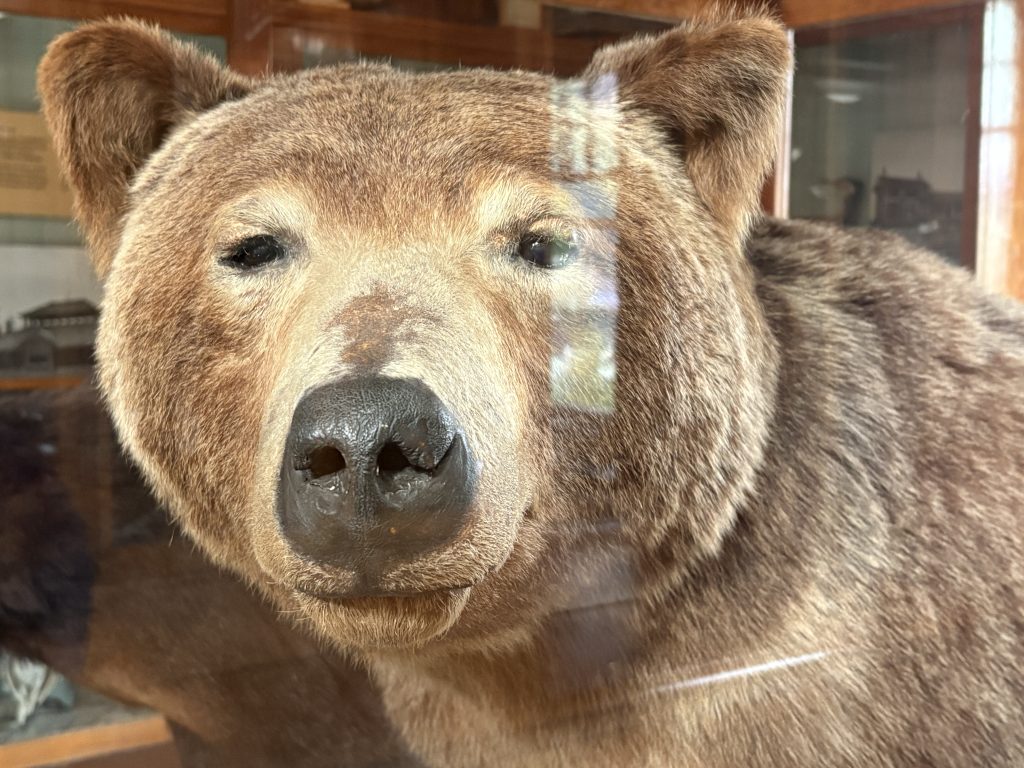
Built in 1903, this lovely little museum is the oldest building maintained by Parks Canada and the oldest natural history museum in western Canada. It’s basically two floors of stuffed, dead animals, but I liked it. You’ll see dozens of birds, including several impressive snowy owls, along with bears, antlered critters, and more.
You’ll also have the place more or less to yourself.


10. Visit the Buffalo Nations Luxton Museum
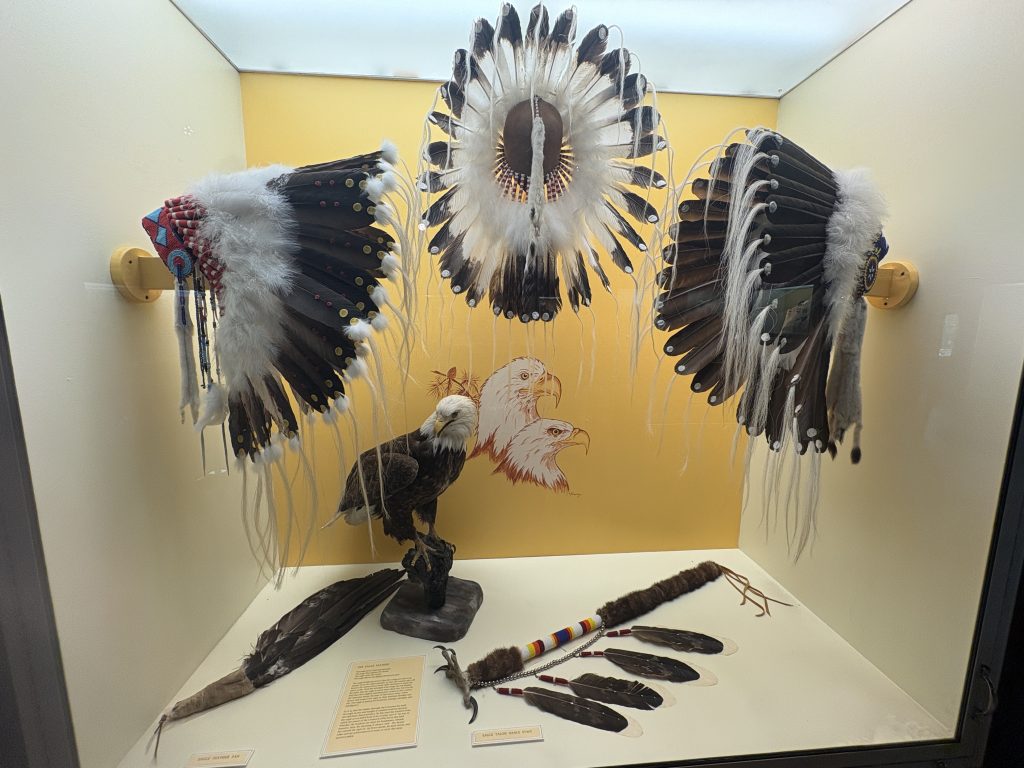
Walk across the bridge spanning the Bow River (pause to snap some breathtaking views) and spend an hour or so exploring the Buffalo Nations Luxton Museum. Again, you’ll likely have the place to yourself.
This museum documents the culture of the First Nations peoples who have called the region home for thousands of years.
I particularly appreciated the film that plays on a continuous loop about the history of First Nations in the area, including heartbreaking stories about the state-sponsored efforts to eradicate Indigenous cultures by sending generations of children to residential schools.
This informative and beautifully curated museum rewards slow browsing.


11. Visit the Historic Luxton Home
If you’re interested in local history, drop into the Historic Luxton Home, a tiny white house built around 1905 that belonged to Norman Luxton, the Banff entrepreneur who also founded the Buffalo Nations Luxton Museum.
Luxton was instrumental in shaping many of Banff’s annual events, most notably Banff Indian Days, which he managed from 1909 to 1950, and the Winter Carnival, which he launched in 1917. Indian Days ended in the 1970s and has since been revived by the Stoney Nakoda.
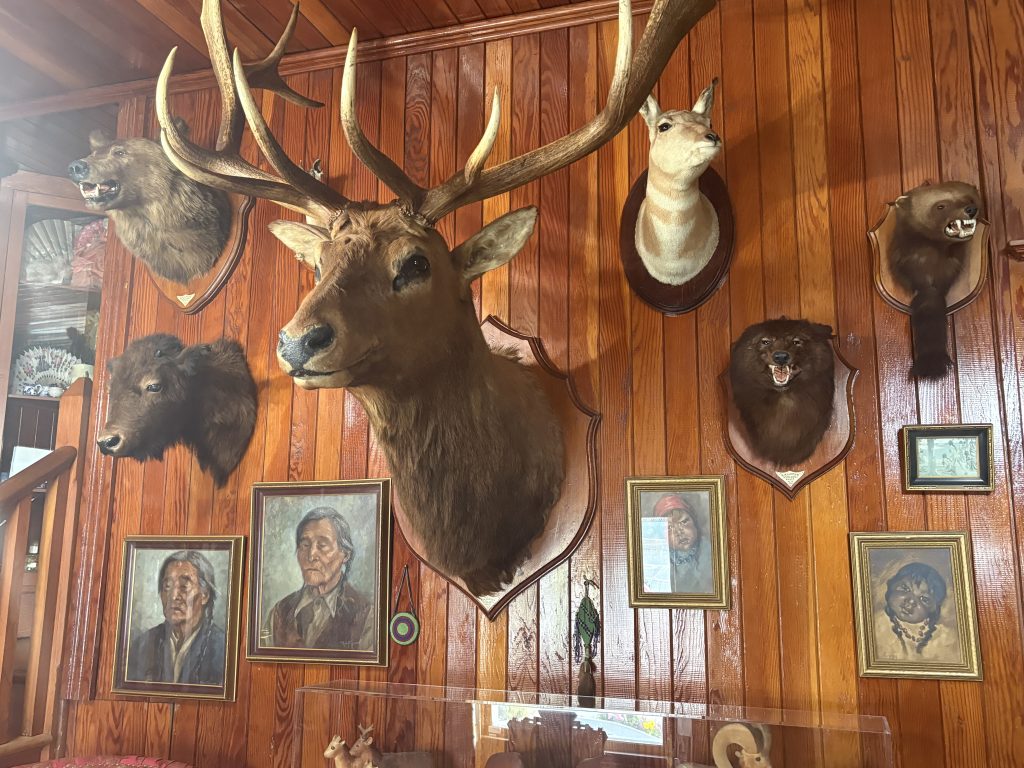
Luxton’s daughter, Eleanor, lived in the house until her death in 1995, after which it became a museum showcasing the family’s extensive collection of taxidermy, art, and china.
Eleanor was also an author and historian; her book, Banff: Canada’s First National Park, is on sale at the museum, and of course I bought a copy.

12. Explore the Banff Centre for Arts and Creativity
Perched on the slopes of Tunnel Mountain, the Banff Centre for Arts and Creativity has been nurturing artists since 1933, when it opened as a summer drama school. Today, painters, writers, musicians, dancers, and filmmakers from around the world come here for residencies, workshops, and the kind of uninterrupted creative time most of us can only dream about.
You don’t need to be in residence to enjoy it. Drop into the Walter Phillips Gallery for contemporary art, check the calendar for concerts, readings, and performances, or wander the grounds and soak up the views that have inspired generations of artists. If you’re visiting in the fall, the Banff Mountain Film and Book Festival is a highlight of the town’s cultural year.
For an artsy traveler, it’s one of the most inspiring places in the Rockies. Just being on campus makes you want to pick up a pen or a paintbrush.
For information about what’s on, check the Centre’s website.
Where to Stay in Banff
I stayed two nights at Buffalo Mountain Lodge, one of four Rocky Mountain lodges run by Canadian Rocky Mountain Resorts. It’s on the flank of Tunnel Mountain, about a six-minute drive from downtown Banff, which means you get quiet nights and forest views without giving up easy access to town.
I also stayed two nights at Banff Rocky Mountain Resort, a budget-friendly option with spacious condo-style units. Before boarding the Rocky Mountaineer, I spent one night at Banff Ptarmigan Inn, which has an excellent location right on Banff Avenue.
Where to Eat in Banff
Banff has no shortage of restaurants, and after a day of gondolas and museums, you’ll have earned a good meal. Here are my favourites from this trip.
- The Prow at Buffalo Mountain Lodge: Worth the six-minute drive from downtown. The stuffed zucchini blossoms rivalled the ones I’ve eaten in Rome, and the lemon tart was spectacular. We ate here twice and would happily have gone a third time.
- The Boss Kitchen & Bar: Stop here for lunch and order the Banff Burger. It’s made with bison and is one of the best burgers I’ve ever eaten, and I’ve eaten a few.
- The Fat Ox: A cozy Italian spot that’s perfect for dinner after a long day of sightseeing. The lobster ravioli was excellent. Book ahead, because it’s small and popular.
- Pho House, Banff Avenue: For a quick, cheap lunch on the go, this little spot serves excellent banh mi sandwiches. Grab one and eat it by the Bow River.
Small-Group Tours in Banff
If you’d rather leave the driving to someone else, small-group wildlife, bike, and hiking tours are a good way to see more of the park. Here are some options with GetYourGuide:
Final Thoughts
Yes, you will find plenty of crowds in Banff, and at times you may feel a tad overwhelmed. When that happens, take a step back and find the pathway that leads away from the people, or duck into one of the town’s museums.
The mountains will still be there when you come out.
Heading farther into the Rockies? See my five-day itinerary covering Johnston Canyon, Emerald Lake, Moraine Lake, and Lake Louise.
Keep Exploring Canada with Artsy Traveler
- Memorable Mother-Daughter Bonding on the Rocky Mountaineer
- National Gallery of Canada: Best Bets for the Artsy Traveler
- Out-of-this-World Scenery Sparks Joy on a Maligne Lake Cruise
- Jasper Photo Tours: Sharpen Your Skills with a Pro
- Exceeding Expectations: Best of Gwaii Haanas with Moresby Explorers
- Sea to Sky Highway: The Ultimate Artsy Traveler Getaway from Vancouver
- 10 Things to Do in Québec City If You Love Art and History
Would you like to save this post?

Carol M. Cram writes novels inspired by the arts; runs Artsy Traveler, an arts-focused travel blog, and Art In Fiction, a curated database of 2,700+ novels inspired by the arts; and hosts The Art In Fiction Podcast. She has also authored 60+ textbooks on computer applications and taught at Capilano University for over two decades. Carol lives with her husband, artist Gregg Simpson, on beautiful Bowen Island near Vancouver, BC.

 See all my novels