
10 Famous Artist Homes You Can Visit Around Europe
I'm Carol Cram, novelist and arts travel writer, and founder of Art In Fiction, a curated database of 2,700+ novels inspired by the arts. Artsy Traveler contains affiliate links for products and services I personally use and recommend. As an Amazon Associate, I earn from qualifying purchases. Please read the Disclosure for more information.
Some of the most memorable travel experiences happen not in grand museums or famous galleries, but in the rooms where creative giants actually lived.
To stand in the same space once occupied by an artist you admire is a soul-stirring experience. You see the same light slanting through the window as once fell on their work, the same piano keys they once played, the same desk they once wrote at.
These intimate spaces meaningfully connect us to the artists who shaped our cultural world. When I travel, I always seek out the small museums created from the homes of some of my favorite composers, writers, and artists.
For this collaboration post, I invited fellow travel writers and arts lovers to share the homes of some of their favorite artists. Each contributor has visited their chosen home and brings a personal perspective on why it moved them and why it deserves a place on your itinerary. I’ve also contributed several homes.
Whether you’re planning a trip or simply armchair traveling, I hope these recommendations inspire you to seek out the places where creativity actually happened.
Table of Contents
- Frédéric Chopin and George Sand Museum, Valldemossa, Mallorca, Spain
- Salvador Dalí House Museum, Port Lligat, Cadaqués, Catalonia, Spain
- Gustave Moreau Museum, 9th Arrondissement, Paris, France
- Lumière Villa (Musée Lumière), 8th Arrondissement, Lyon, France
- Strawberry Hill House, Twickenham, England
- Musée Courbet, Ornans, Franche-Comté, France
- Maisons Satie, Honfleur, Normandy, France
- Rembrandt House Museum (Rembrandthuis), Amsterdam, the Netherlands
- Albrecht Dürer’s House, Nuremberg, Germany
- Pasqualati House (Pasqualatihaus), Vienna, Austria
- Conclusion
Frédéric Chopin and George Sand Museum, Valldemossa, Mallorca, Spain
Contributed by Ulysse Verguin, Slow Travel the World
If you are exploring the village of Valldemossa on the Balearic Islands in Spain, you cannot miss the Frederic Chopin and George Sand Museum. During the winter of 1838, the lovers both found shelter and peace in this mountain village, far away from the tragedies in their respective lives.
Hidden inside the old Carthusian monastery, the Frédéric Chopin and George Sand Museum is one of the most meaningful cultural visits in Mallorca, not because of its size, but because of what it holds.
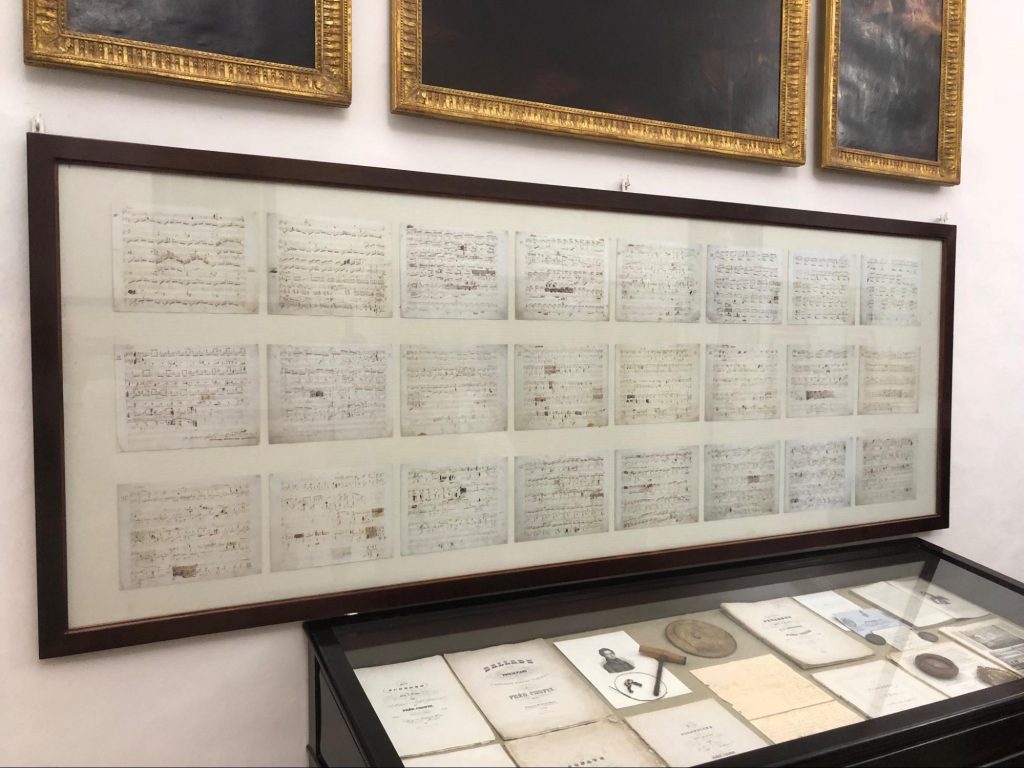
Inside, you’ll wander through the small monastic rooms where the couple lived during a difficult, rainy winter. Visitors can see Chopin’s original Pleyel piano, handwritten manuscripts, letters, portraits, and personal objects that still carry the atmosphere of their stay.
After your visit by explore the garden with its panoramic view overlooking the Tramuntana mountains.
Getting there: Valldemossa is 30 minutes by car from Palma de Mallorca and pairs well with my complete 7-10 days slow travel itinerary to Mallorca.
Practical Information: Celda 4, Real Cartuja de Valldemossa, 07170 Valldemossa, Mallorca Hours: Monday to Saturday, 10am to 5:30pm (summer); hours vary by season Website: celdadechopin.es
Where to stay: Es Petit Hotel de Valldemossa is perfect for couples seeking charm without excess. Travellers on a smaller budget should check Hostal Can Mario.
Salvador Dalí House Museum, Port Lligat, Cadaqués, Catalonia, Spain
Contributed by Shara Johnson, SKJ Travel
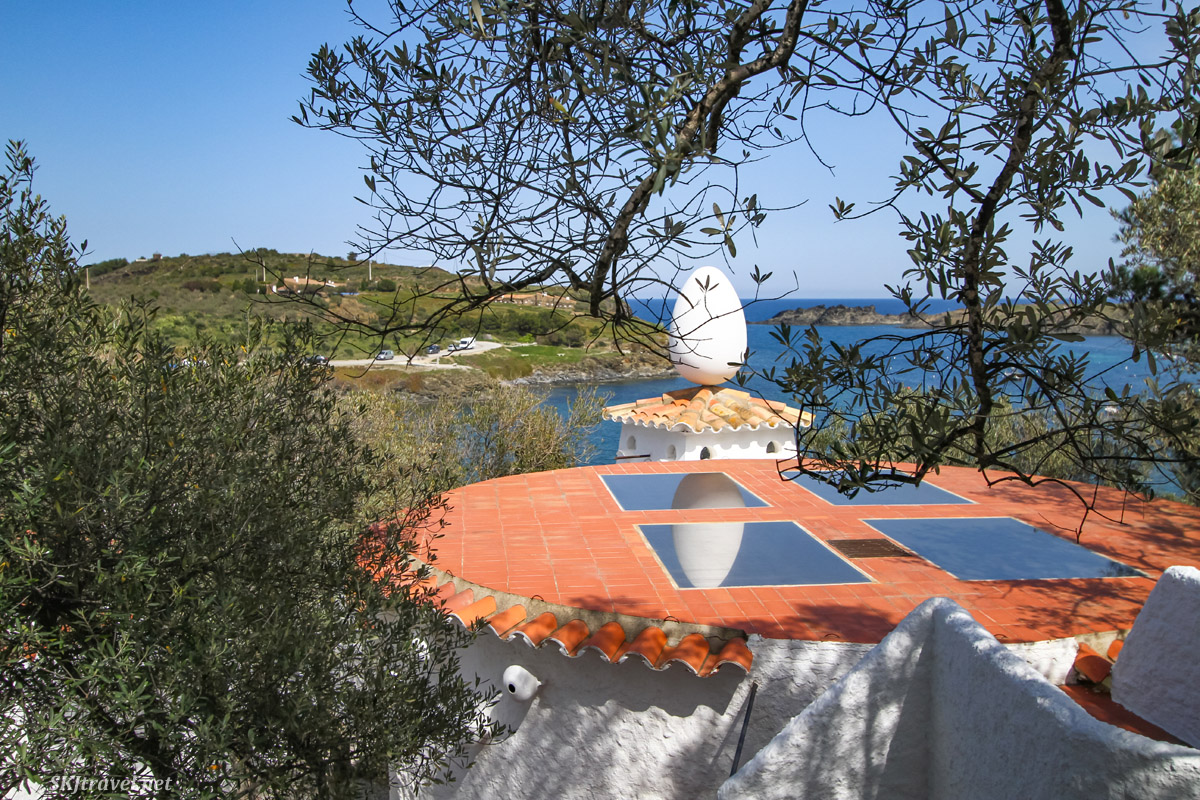
The Salvador Dalí House Museum in Port Lligat (or Portlligat) outside Cadaqués, in Catalonia, Spain, was the second point I visited on the “Dalinian Triangle.” The other two points are in Figueres and Púbol. It was the seaside home of Salvador Dalí and his wife, Gala, from 1930 to 1982.
Visiting The Salvador Dali House Museum is a beautiful, intriguing and whimsical experience whether or not you know Dalí or his work.
If you happen to be a fan, then the museum is truly a feast of his iconic surrealism. And if you weren’t a fan before, you just might leave as one. In 1930 there was but a small fisherman’s hut, and over the years Dali gradually created the sprawling house and grounds.
“Each new pulse in our life has its own new cell, a room,” Dali said of the home, “a true biological structure.”
Some rooms are sparsely furnished, focusing your attention on the architecture and space; some are crammed with things both bizarre and pretty. You could never be bored in these rooms; there’s so much to look at while contemplating the fascinating mind of Dalí.
Egg shapes are one his most-used and well-known motifs. I made a game for myself seeing how many I could find.
Of all the areas I would want to hang out in myself, I particularly loved the patio and pool with huge knitted snakes draped around. These are the only snakes I would ever want to be in such close proximity to!
Practical Information: Cala Port Lligat, 17488 Cadaqués, Girona Hours: Tuesday to Sunday, 10:30am to 6pm. Closed Mondays. Advance booking essential — tickets are time-stamped and must be collected 30 minutes before entry. Website: salvador-dali.org
Where to stay: Hotel Calina is a stone’s throw from the museum — convenient if you want to linger. There’s also a small cafe on the museum grounds, complete with resident cat.


Gustave Moreau Museum, 9th Arrondissement, Paris, France
Contributed by Latifah, Gimme Confetti
The Gustave Moreau Museum in the 9th arrondissement in Paris is set inside the house of French symbolist painter Gustave Moreau who was born in Paris in 1826. Moreau’s former family home was turned into a museum in 1895 at his own initiative. It contains Moreau’s original apartment on the first floor.
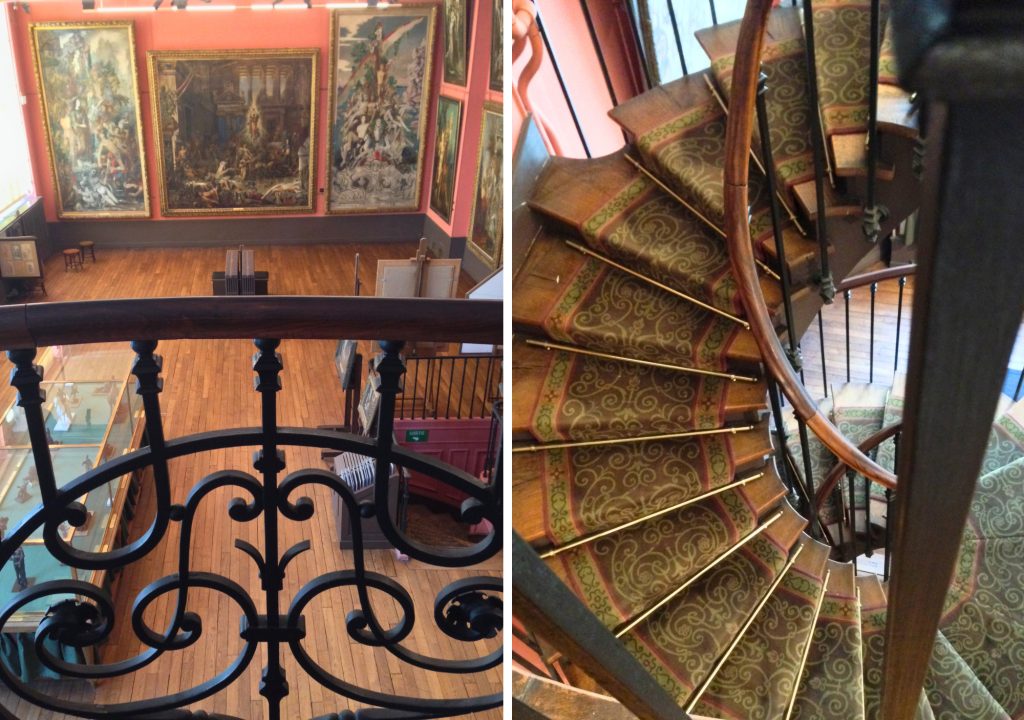
The museum offers a look into a rare, preserved artist’s home, practically unchanged since the 19th century. It also features the famous spiral staircase, one of the most photographed in Paris, and holds an unusually large collection of mythological and Symbolist works by Moreau, who was an influential teacher at the Ecole des Beaux-Arts and even taught Matisse.
I love the intricate details on his paintings of mythological figures. It’s almost surreal and fictional. After his death, he left thousands of works to the French state.
The museum features two large studio floors, and it’s famous for its dramatic spiral staircase connecting the studio levels. It definitely feels like the spiral staircase is the star of the visits, and people seemed to be photographing it more than the paintings.
Stepping into the house feels like an eccentric time capsule that’s remained untouched all these years. It’s kept intentionally old fashioned. What hits you is the studio floors smell slightly of old wood and varnish, which adds authenticity to the place.
I found the drawing cabinets to be a fun surprise. You can slide them open to find hundreds of sketches. The walls are also packed floor to ceiling with paintings.
Practical Information: 14 rue de La Rochefoucauld, 75009 Paris Hours: Monday, Wednesday, Thursday 10am to 12:45pm and 2pm to 5:15pm; Friday, Saturday, Sunday 10am to 5:15pm. Closed Tuesday, January 1, May 1, December 25. Website: musee-moreau.fr
Practical tip: Entry is free on the first Sunday of each month. Latifah has a full guide to Free Museums in Paris if you want to plan around it.
Where to stay: Hôtel Le Ballu is a charming small hotel close to the museum, good restaurants, and Montmartre.
Lumière Villa (Musée Lumière), 8th Arrondissement, Lyon, France
Contributed by Latifah, Lyon Trip
The Lumière villa, built around 1900, is the family home of Auguste Lumière and Louis Lumière, who were the inventors of cinema. It is situated in Lyon’s 8th arrondissement, and I found public transport straightforward to get there. It stands near the Hangar du Premier Film, which is the original filming site and which many visitors confuse with the villa.
Most people don’t know the brothers lived in a second twin villa, right next door, which was later demolished in 1970. This is their preserved family home which was turned into a museum. Inside, you’ll find their original inventions like early cameras and projections and the 1895 Cinématographe displayed behind glass. My favorite was the small interactive stations where you can try simple optical gadgets.
The Lumière brothers filmed some of the first motion pictures in history. And I found it amusing to watch the famous factory exit from their short film: “Workers Leaving the Factory” which was playing inside the museum.
The first thing that struck me was the elegant art nouveau exterior and details. Upstairs, it feels like you’re stepping inside a real home rather than visiting a museum. You are greeted with the creaking of the wooden parquet floors and the family bedrooms showing how the family lived.
I liked the vintage family photos, furniture and restored art nouveau rooms. The family villa was also unusually modern for its time when the family lived there. It had heating, and elevator and telephone which was unheard of at the time (and no doubt stirred a bit of jealousy).
Practical tip: Latifah has a full Lyon museums guide if you want to plan a broader Lyon itinerary around your visit.
Practical Information: 25 rue du Premier-Film, Place Ambroise Courtois, 69008 Lyon Hours: Tuesday to Sunday, 10am to 6:30pm. Closed Monday, January 1, May 1, December 25. Website: institut-lumiere.org
Where to stay: Hotel Oceania Lyon is a comfortable modern option near the museum.

Strawberry Hill House, Twickenham, England
Contributed by Gabi, Under Flowery Sky
The former home of Horace Walpole, Strawberry Hill House is a beautiful Gothic villa. Walpole was an 18th-century writer, best known for his Gothic novel The Castle of Otranto. The house was his peaceful retreat to write and features wonderful views, even to Richmond.
Located in Twickenham, the house is a quiet and pleasant place that Walpole designed as a fantasy castle. It’s easy to reach Strawberry Hill House from central London by train, which makes it a perfect day trip.
From the outside, the building looks like a small while castle with towers and pointed windows.
Inside, visitors can explore beautifully decorated rooms, grand staircases and impressive galleries filled with Gothic details. I especially liked the library and the long gallery, where every wall and ceiling has elegant patterns. The guide inside explains Walpole’s life, his love of art and how he influenced the Gothic Revival style.
What makes this place worth visiting is its atmosphere. It feels creative, mysterious and romantic at the same time.
The gardens are lovely, unfolding the peaceful walk after the tour. Famous for the beautiful shell bench, it was unfortunately damaged during my visit. Chilling in the adjacent cafe offers amazing snacks and cakes.
Visitors should expect a calm, cultural experience with fascinating history and beautiful interior. There’s a plenty of photo opportunities to make the visit more memorable. Strawberry Hill House is a hidden gem for anyone interested in literature, architecture or unusual villas.
Getting there: Strawberry Hill House is easily reached from central London by train, making it an ideal day trip. Twickenham is roughly 30 minutes from Waterloo.
Practical Information: 268 Waldegrave Road, Twickenham, TW1 4ST Hours: Saturday to Wednesday, 11am to 4pm (last entry 3pm). Closed Thursday and Friday. Website: strawberryhillhouse.org.uk
Where to stay: The Alexander Pope Hotel is very near Strawberry Hill House; it’s a modern hotel with a traditional pub overlooking the Thames.


Musée Courbet, Ornans, Franche-Comté, France
Contributed by Liliane Milgrom, artist and author of L’Origine: The Secret Life of the World’s Most Erotic Masterpiece
Ornans is the birthplace of Gustave Courbet, who is one of France’s most notorious native sons and the painter who scandalized 19th-century Paris with his unflinching Realism. I visited to research my novel about Courbet’s most famous and controversial work, determined to walk in his footsteps and breathe the air he breathed.
L’Origine: The secret life of the word’s most erotic masterpiece traces the extraordinary story behind Gustave Courbet’s iconic painting L’Origine du monde (1866). Aside from reading a multitude of academic and biographical tomes, letters and online archives, the highlight of my sleuthing was my visit to Ornan, Courbet’s birthplace in the Franche-Comté region of France.
The Gustave Courbert family home is now the Gustave Courbet museum and the small offices of the Friends of Gustave Courbet, all nestled in the plateau surrounded by forested limestone hills, not far from Switzerland’s border.
The Musée Courbet’s permanent collection comprises approximately 400 works including around 60 by the artist.
With its cluster of 17th and 18th-century village houses, Ornans is beautiful, and for anyone serious about Courbet, standing in the town that shaped him is worth the trip.
Practical Information: 1 Place Robert Fernier, 25290 Ornans Hours: June to September daily except Tuesday, 10am to 6pm. October to May: Wednesday to Sunday 10am to 12pm and 2pm to 5pm, Monday 2pm to 5pm. Closed Tuesday year-round. Website: musee-courbet.fr
Where to stay: Gîte et Chambres Les Muses offers comfortable guest house accommodation a one-minute walk from the Musée Courbet.

Maisons Satie, Honfleur, Normandy, France
Contributed by Carol Cram, Artsy Traveler
Erik Satie was born in Honfleur in 1866, and the house where he came into the world is now one of the most inventive music museums anywhere in France.
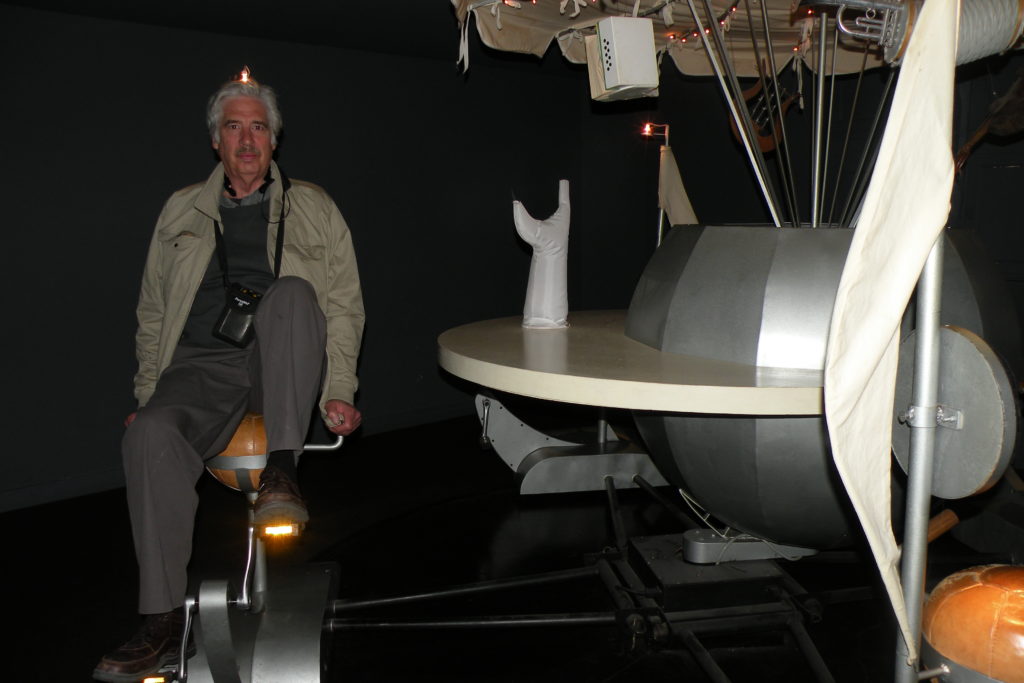
When you arrive at the small museum, you’re given an audioguide and then let loose to wander through the rooms. Each time you walk into a space, the headphones trigger a different combination of music, light, images, and sound effects. The effect is fabulously immersive, making the experience less a conventional museum visit and more a sonic journey through the mind of one of the 20th century’s most singular composers.
Satie was a compatriot of Debussy, a key figure in the Dada movement, and a man with a deeply strange and wonderful interior life. The museum does justice to all of it.
The highlight, at least in our household, was the leg-powered merry-go-round. You pedal it yourself, to the accompaniment of Satie’s music.
Honfleur itself is one of Normandy’s loveliest towns with the old harbor lined with tall narrow houses, painters everywhere, and excellent cider. The Maisons Satie is reason enough to visit, but you’ll want to stay longer.
Practical Information: 67 Boulevard Charles V, 14600 Honfleur Hours: May to September daily except Tuesday, 10am to 7pm. October to April daily except Tuesday, 11am to 6pm. Closed January to mid-February, May 1, July 14, December 25. Website: musees-honfleur.fr
Where to stay: Honfleur has excellent accommodation options ranging from charming harbor-side hotels to country B&Bs just outside town. The very comfortable Hotel L’Ecrin is perfectly located for drivers.
Rembrandt House Museum (Rembrandthuis), Amsterdam, the Netherlands
Contributed by Carol Cram, Artsy Traveler
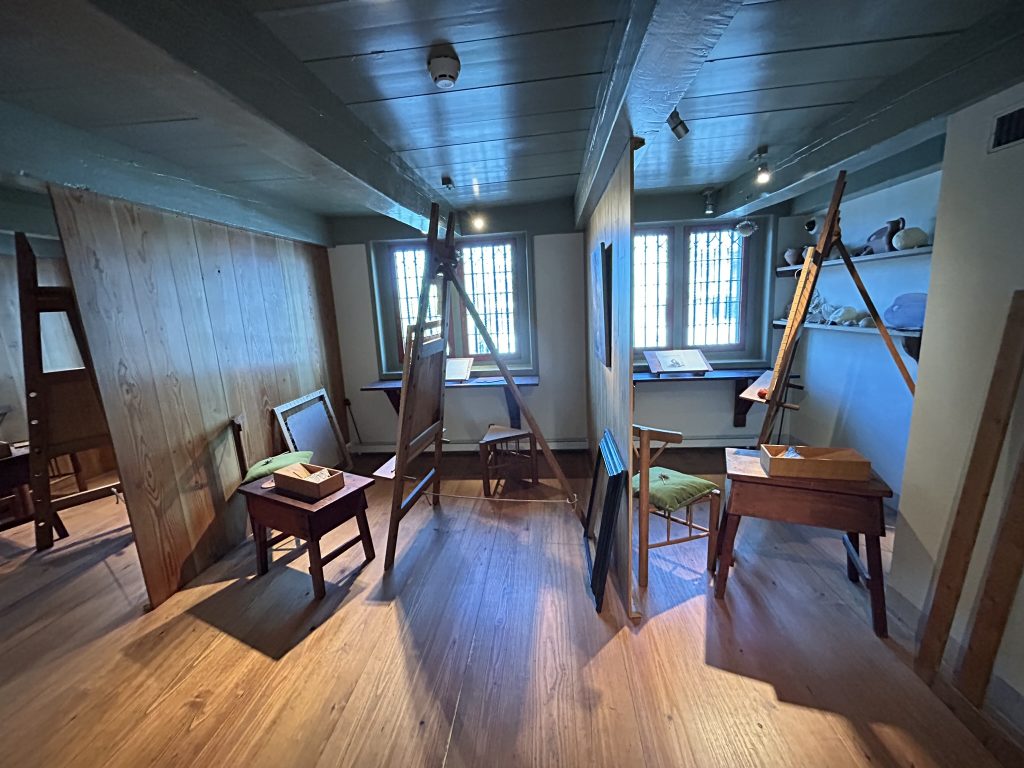
Rembrandt lived in this large, comfortable house on the Jodenbreestraat for nineteen years, during the height of his success.
He was flush with commissions and teaching income when he and his wife moved in. He was considerably less flush when his creditors eventually forced him to sell everything and move across town, and it’s thanks to that financial disaster that the museum exists in the form it does today.
When Rembrandt liquidated his assets, he left behind an extraordinarily detailed inventory of the house contents. Historians used it to recreate the rooms faithfully, right down to the furnishings. Walking through them feels remarkably close to the real thing.
The highlights are many. The bright and airy painting studio at the top of the house is where you feel Rembrandt’s presence most strongly. In the etching studio, you can watch demonstrations of his printmaking process.
The room of curiosities, crammed with stuffed caimans, parrot feathers, tortoise shells, and a hundred exotic objects collected from Amsterdam’s global port trade, reveals the collector’s mind behind the painter. And the short box beds throughout the house are a reminder that 17th-century medicine firmly believed sleeping fully prone was dangerous to one’s health.
The audioguide is a must-listen in order to fully understand this wonderful little museum.
Practical information: Book tickets in advance at rembrandthuis.nl. Allow at least an hour. For a more in-depth post about Rembrandt Huis, see The Rembrandt House Museum and National Maritime Museum: Two of Amsterdam’s Best Kept Secrets.
Where to stay: The Jordaan and canal ring neighborhoods put you within easy walking distance of the Rembrandt House and the Rijksmuseum. A good option is the Clayton Hotel Amsterdam American, a venerable old hotel in a perfect location for exploring Amsterdam.
Albrecht Dürer’s House, Nuremberg, Germany
Contributed by Carol Cram, Artsy Traveler
Albrecht Dürer lived and worked in this handsome house in Nuremberg for over twenty years, from 1509 until his death in 1528. It’s one of the few surviving burgher houses in the city, and the only surviving artist’s house from the period anywhere in northern Europe. That alone makes it worth seeking out.
The house gives you a vivid sense of how a prosperous and celebrated artist lived in 16th-century Germany. Tour the various rooms, then head upstairs to the workshop where demonstrators show the printmaking techniques Dürer used to produce his famous woodcuts.
The rhinoceros — one of the most recognizable images in the history of printmaking, drawn entirely from a written description since Dürer never actually saw one — features prominently, and watching the process that produced it is illuminating.
Nuremberg’s old town is worth a full day alongside the Dürer house, and the Germanic National Museum nearby is one of Germany’s finest.
Practical information: The Dürer House is a short walk from the old town center. Check current hours and ticket prices at museen.nuernberg.de.
Where to Stay: Hotel Drei Raben is centrally located and includes imaginatively designed and stylish rooms. Some are even themed and tell mythical stories about Nuremberg.

Pasqualati House (Pasqualatihaus), Vienna, Austria
Contributed by Carol Cram, Artsy Traveler
Beethoven was not a man who stayed put. He moved constantly around Vienna, living in dozens of different apartments over the course of his life. The Pasqualati House on Mölker Bastei is one of the few that survives, and one of the most atmospheric. It’s a handsome 18th-century building adjacent to the old city walls where Beethoven occupied the 4th floor apartment, on and off, for eight years.
I’ve made two pilgrimages here. The second was during the writing of A Woman of Note, my novel about a woman composer in 1830s Vienna. The book opens with Beethoven’s funeral, and his shadow falls over the characters throughout. Climbing the old stone staircases to his apartment, I found myself imagining my characters mounting similar stairs in similar buildings.
The apartment itself is sparsely furnished, with little in the way of conventional exhibits. Two listening desks are set up for Beethoven’s music on headphones. On my visit I was the only person there, which meant it was just me, the second movement of Symphony No. 7, and my soaring emotions. Musical tourism doesn’t get much better than that.
Also worth visiting: The Beethoven Museum at Probusgasse 6 in the 19th district, which expanded in 2017 to fourteen rooms and covers his life from Bonn to Vienna in considerable depth.
Practical information: Pasqualati House is at Mölker Bastei 8, open Tuesday to Sunday, 10am to 1pm and 2pm to 6pm, closed public holidays. The Beethoven Museum at Probusgasse 6 keeps the same hours, closing at 5pm.
Where to Stay: the ARTIST Boutique Hotel is quite close to Pasqualati House and receives excellent reviews for its spacoius rooms and great location.

Conclusion
The homes in this post span centuries and countries, from a rainy Mallorcan monastery to a sparse Vienna apartment to a sun-drenched Catalan headland.
Visiting each gives you a sense of the personality that lived and created there. You can’t help but feel inspired.
If you have a favorite creative home we haven’t included, tell us in the comments. The list is never finished.
Keep Exploring Interesting Museums with Artsy Traveler
- 7 Outstanding Single-Artist Museums in Europe
- 9 Best Small Museums in Paris for Art Lovers: Beyond the Big 3
- 13 Unique & Unusual Museums in Europe Worth Seeking Out
- The Hague’s Best Museums: Mauritshuis and Escher in the Palace
- Best Copenhagen Museums: Art, Design, and Vikings
Would you like to save this post?

Carol M. Cram writes novels inspired by the arts; runs Artsy Traveler, an arts-focused travel blog, and Art In Fiction, a curated database of 2,700+ novels inspired by the arts; and hosts The Art In Fiction Podcast. She has also authored 60+ textbooks on computer applications and taught at Capilano University for over two decades. Carol lives with her husband, artist Gregg Simpson, on beautiful Bowen Island near Vancouver, BC.

 See all my novels


