
How to Make the Most of Your Visit to the Roman Baths Museum
I'm Carol Cram, novelist, podcaster, and travel writer, and founder of Art In Fiction, a curated database of 2600+ novels inspired by the arts. Artsy Traveler contains affiliate links for products and services I personally use and recommend. As an Amazon Associate, I earn from qualifying purchases. Please read the Disclosure for more information.
The Roman Baths Museum in Bath, England, is the city’s foremost must-see attraction.
If you only have time to visit one historic site in the city of Bath, make it the Roman Baths.
It’s small enough to enjoy in about an hour, offers an excellent audioguide, and is enlivened by numerous projections of Roman-clad people going about their bathing business.
I’ve visited the Roman Baths Museum three times over the past several years and each time, I discover something new.
This post is part of my guide to artsy & independent travel in England, where I share my best tips for exploring England’s creative cities, historic sites, literature, theater, and cultural experiences.
Table of Contents
Roman Baths Museum Quick Facts
- Must-See Artifact: Gilt bronze head of Sulis Minerva
- Location: Bath, Somerset, England
- Original Name: Aquae Sulis (Roman name)
- Established: Built c. 70 CE over natural thermal springs
- UNESCO Status: Part of Bath’s World Heritage designation
- Main Components: Sacred Spring, Roman Temple, Bath House, and Museum exhibits
- Estimated Visit Time: 1–3 hours depending on depth of exploration
- Visitor Tip: Audioguide highly recommended for context
- Consider a tour: This guided tour helps you get the most out of your visit.
- Stay at the Harington’s Boutique Hotel in the center of Bath.
Visiting the Roman Baths Museum: What To Know Before You Go
The Roman Baths Museum is located next to the Pump Room in the center of Bath. It’s a short walk from the train station.
Coming from London? Daytrip offers private transfers from London to Bath with fixed pricing and no meter watching, a comfortable alternative to the train if you’re traveling with luggage.
When you arrive in Bath, you may find quite a crowd gathered and signs indicating which time slot is currently being accommodated.
If you didn’t get tickets in advance, ask the person marshaling the crowd if you can still get in. I did this on a recent visit and the attendant promptly stood aside and motioned for me to walk right in, bypassing the long line. I didn’t stop to question my good fortune.
That said, I wouldn’t count on getting in without buying your ticket in advance. You can purchase tickets online from the official website or choose a tour.
The Roman Baths are open daily from 9am to 6pm (last entry at 5pm) every day of the year except 25 & 26 December.
Audioguide
The ticket price includes a superb audioguide with two tracks in twelve languages. The regular track provides the usual historical context in short and interesting installments.
The children’s track includes first-person accounts by the many characters that wander across screens projected throughout the museum. I suggest alternating between the adult and children’s tracks. Both are excellent.
Roman Baths History and the Story of Aquae Sulis
The history of the Roman Baths in Bath begins with the city’s unique natural hot springs, the only ones of their kind in Britain. These geothermal waters have attracted visitors for millennia.
Long before Bath became a Roman settlement, the local Dobunni tribe worshipped the goddess Sulis at the sacred spring. In those days, the heated natural spring was a bubbling, steaming pool surrounded by a thick swamp.
When the Romans reached Britain, they incorporated Sulis into their own religious traditions, merging Sulis with the Roman goddess Minerva. The settlement became known as Aquae Sulis, and the sacred spring was transformed into a monumental bathing and temple complex.
The Romans were generally “equal opportunity” when it came to accommodating other religions, so long as the people practicing them rendered unto Caesar the necessary taxes.
In Roman Britain, the legionnaires who first conquered the area must have been very happy centurions indeed to have found a place to soak their weary bones in warm water in the midst of a Great Britain winter.
Centuries later, during the 17th and 18th centuries, Bath experienced another golden age. The city became one of Europe’s most fashionable spa towns, attracting aristocrats, artists, and writers, including Jane Austen, who came to “take the waters”.
For me, seeing waters where Jane Austen actually bathed is a literary thrill!
Roman Baths Museum Exhibits
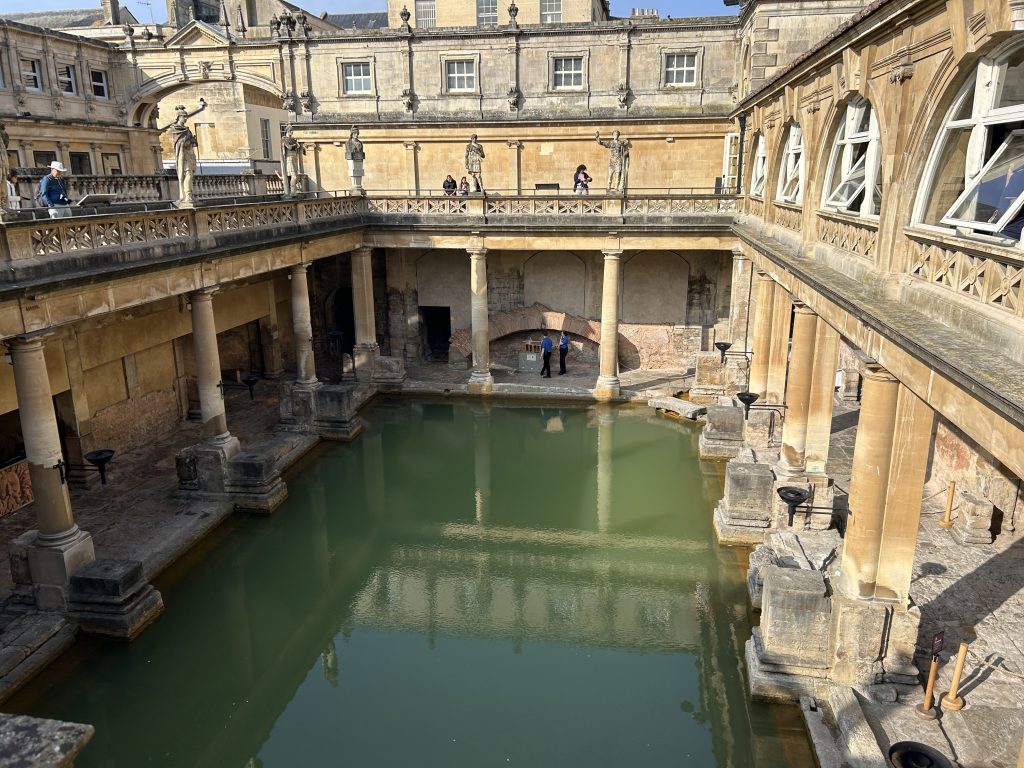
Your visit to the Roman Baths Museum begins on the terrace, which consists of a walkway surrounding the baths.
This structure and the statues of various Roman bigwigs are Victorian additions that were built atop the Roman ruins to house the Roman Baths Museum when it opened in the late 19th century.
The terrace is a delightful space surrounded by warm Bath stone and with the façade of Bath Abbey looming in the background. Below are the deep green waters of the main pool.
Bath has been a mecca for health-seekers for two millennia.

Roman Baths Museum Rooms
The tour leads back indoors and descends through several rooms full of artfully displayed exhibits about the Romans.
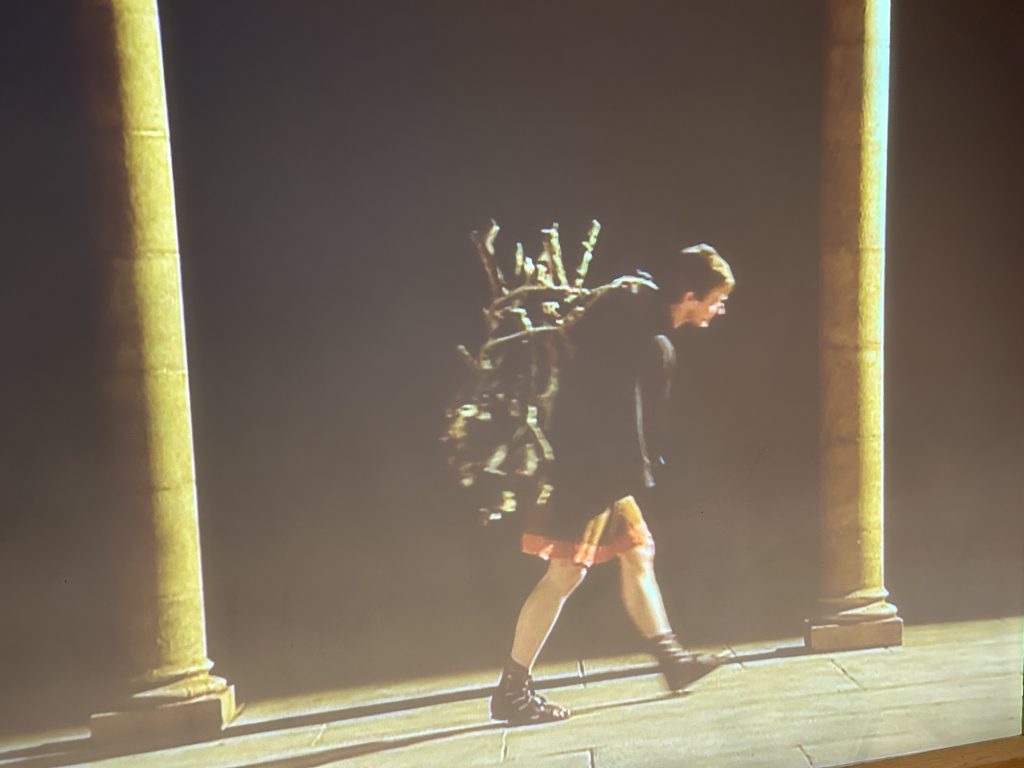
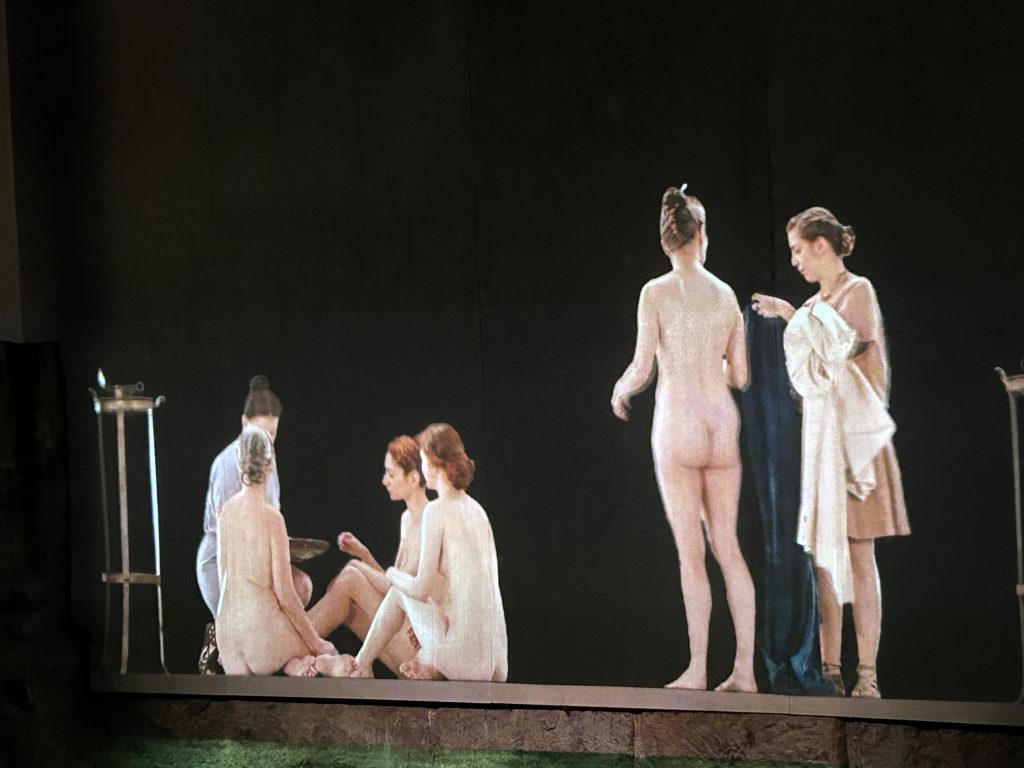
Enlivening the experience are screens projecting a selection of Roman bathers who would have frequented the baths back in the day. It’s a clever way to bring history to life and makes you feel like you’re witnessing it firsthand.
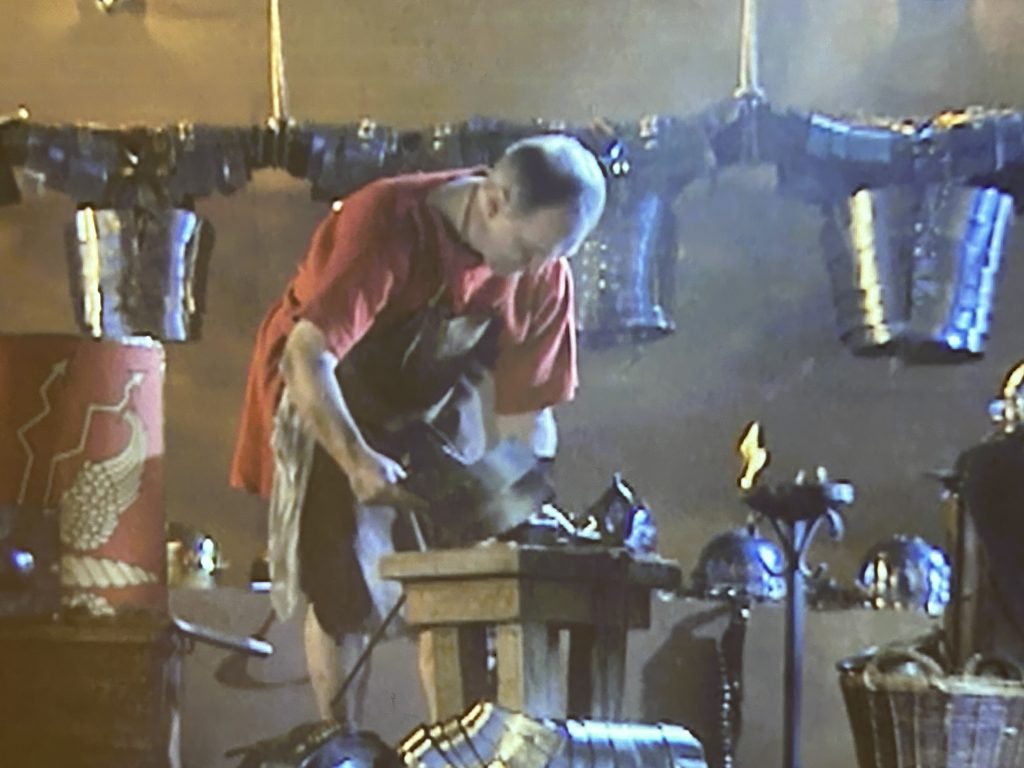
You can listen to a blacksmith on the audioguide while watching a screen showing him hard at work making armor.
The Baths
The exhibits give way to a series of walkways leading across the archaeological remains of the various rooms in the Roman Baths.
The Romans took their health seriously. There are rooms for getting massaged and plucked (apparently, the Romans weren’t keen on body hair), rooms for bathing in various water temperatures, and even a gymnasium where Romans got good and sweaty in humid air that still smells of sulfur.
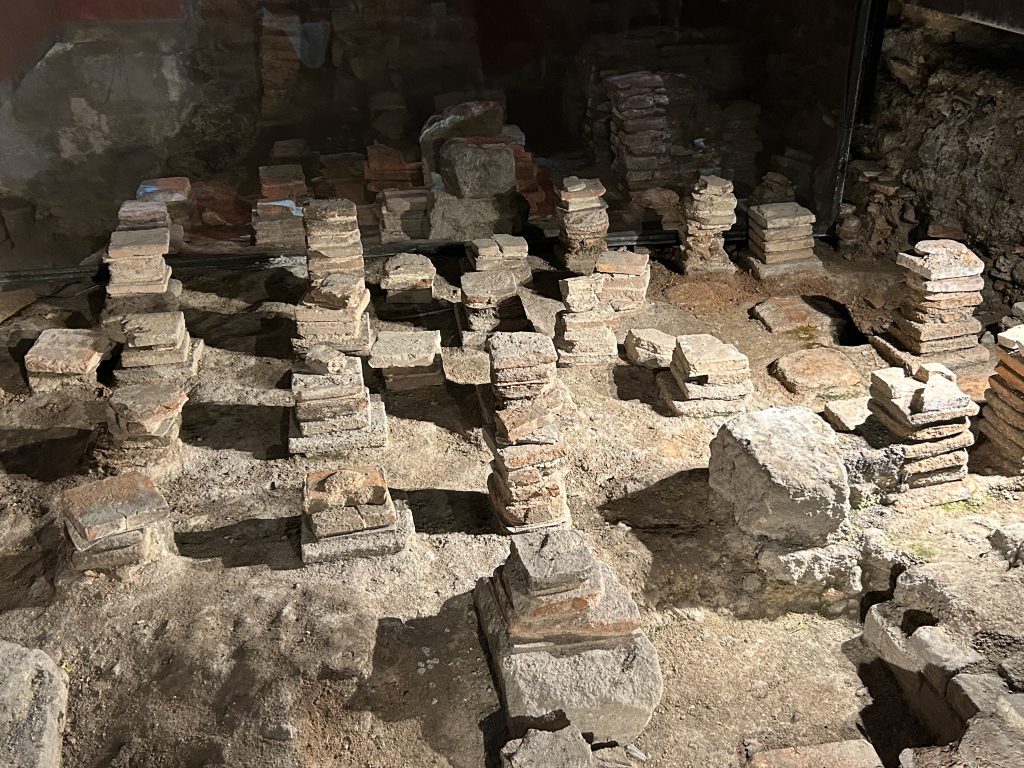
The ruins themselves don’t photograph particularly well. Here’s one room showing the bricks positioned under the floor to supply the heating.
The audio commentary provides details about the impressive heating and cooling mechanisms. The Romans certainly knew how to engineer.
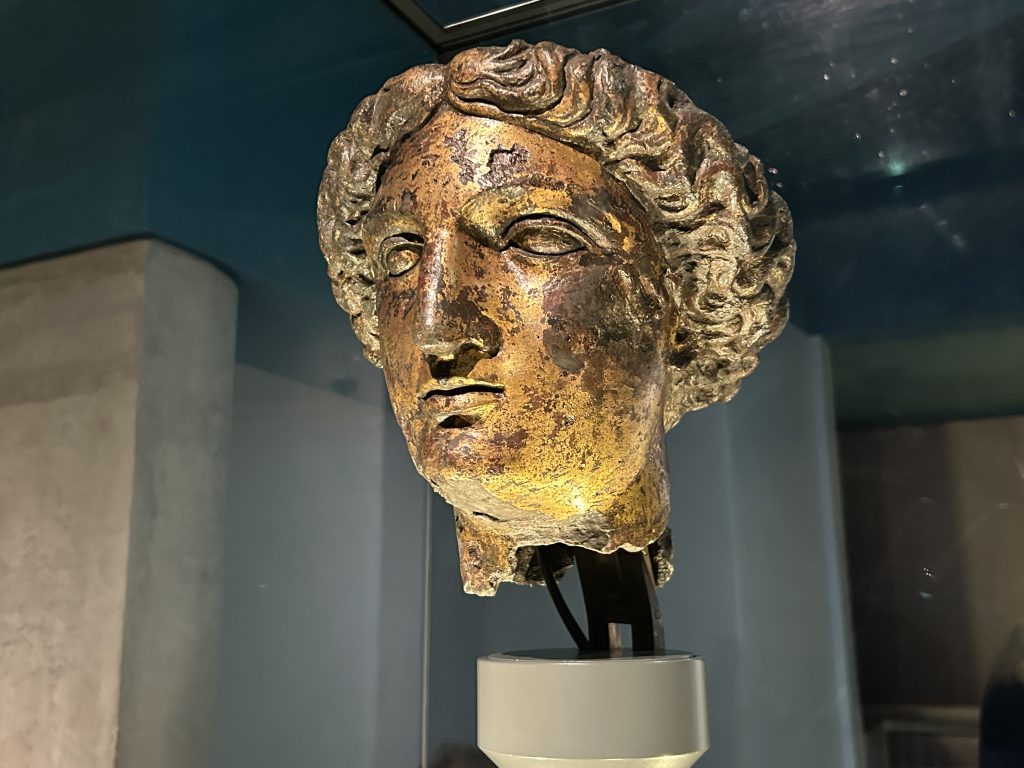
Sulis Minerva
One of the most striking artifacts on display is the gilt bronze head of the goddess Sulis Minerva. It’s a rare and beautiful example of ancient craftsmanship.
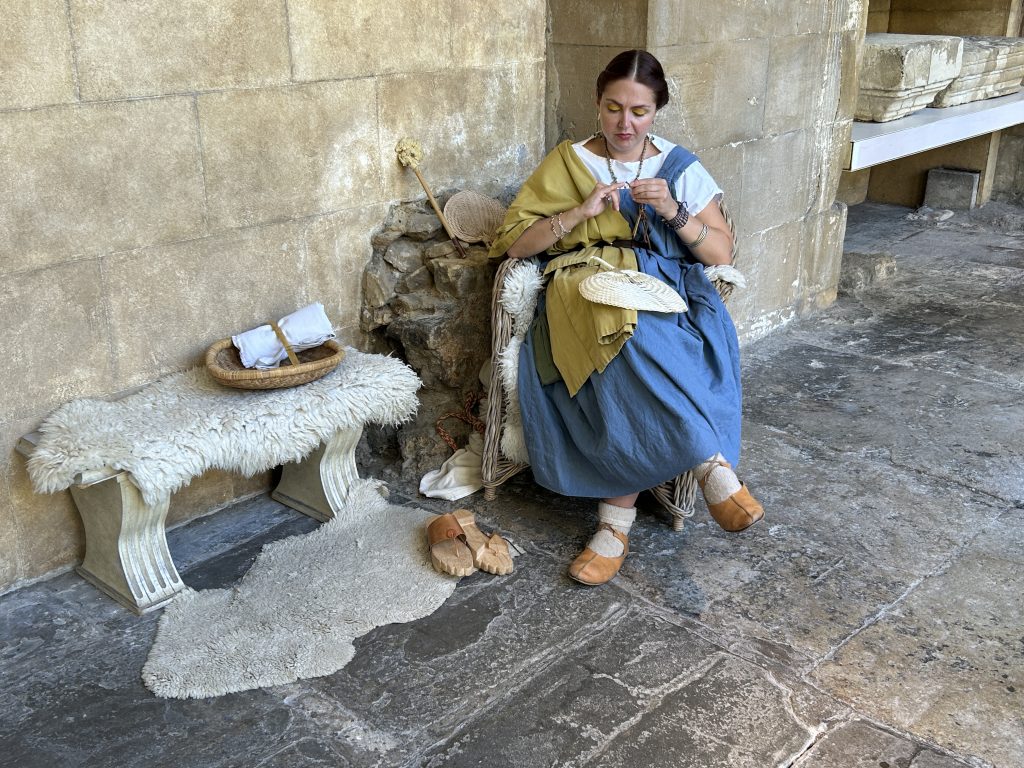
Outside the exhibit rooms and next to the large pool sits a Roman-clad guide. She acknowledges me with a regal nod when I take her picture.
I’m unsure if she’s meant to speak or if her job is to sit by the pool all day and have her picture taken.
Take the Waters
As you exit the museum, you can enjoy a cupful of the medicinal waters to give you energy for more Bath sightseeing. I’m not going to lie; the water tastes dreadful. But it’s good for you, so bottoms up.
Bath Tours
Bath is unique in that it has two inscriptions as a UNESCO World Heritage site. In the 1980s, the town was inscribed for its Hot Springs, Roman archaeology, Georgian buildings and natural landscape setting.
And then in 2021, it was awarded a second inscription as one of the Great Spa Towns of Europe.
The best way to explore Bath is through a walking tour. If you’re a Bridgerton fan, you may find this tour fun:
Roman Baths Museum FAQs
Here are some frequently asked questions about the Roman Baths Museum:
Yes! It’s the highlight of a trip to Bath, and one of the best museums you’ll find anywhere in England. Just make sure you get tickets in advance during the busy summer months.
No, The historic site does not allow bathing. The water is preserved for heritage purposes. For a marvelous thermal bath experience, visit Thermae Bath Spa. I spent a few hours there soaking away the aches and pains of travel. It’s pricey but worth it.
Most visitors spend 1 to 3 hours — longer if you engage with exhibits and audioguides in detail.
The museum includes archaeological artifacts, interactive projections, historical context, and displays like the Roman head of Sulis Minerva. An excellent audioguide is also included.
Yes. The museum and main terrace are largely wheelchair accessible, with lifts and step-free routes noted in visitor guides.
It’s in the heart of Bath next to Bath Abbey, central and easy to reach on foot from the train station.
Continue Exploring England’s Museums & Galleries
Here are posts about other excellent museums in England:
- Enjoying the Museum of English Rural Life in Reading, England
- Best of the Courtauld Gallery in London: A Treasure Trove for the Artsy Traveler
- Things to See at the Design Museum in London
- How to Get the Most Out of Your Visit to the Victoria & Albert Museum in London
To view all my posts about artsy things to see and do in England, go to Visiting England.
Would you like to save this post?

Carol M. Cram is the author of five award-winning novels inspired by art and the women who shaped it, the creator of Artsy Traveler, an arts-focused travel blog, the founder of Art In Fiction, a curated database of 2,600+ novels inspired by the arts, and the host of The Art In Fiction Podcast. She lives with her husband, artist Gregg Simpson, on beautiful Bowen Island near Vancouver, BC.