
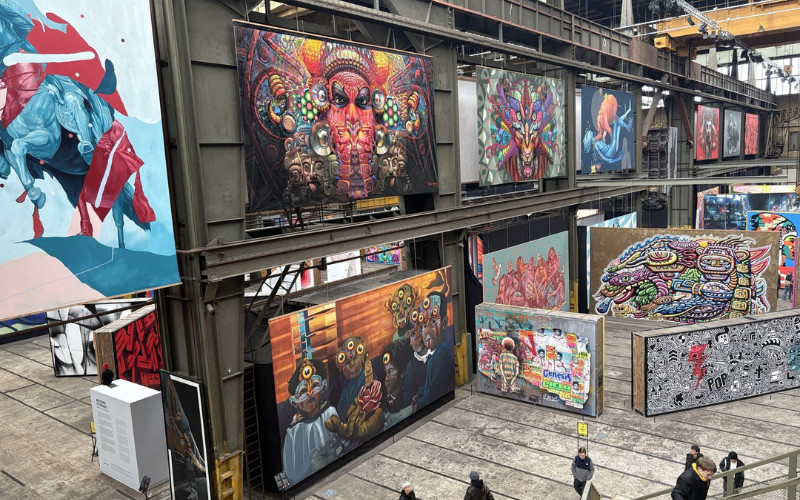
STRAAT Museum Amsterdam: Street Art, A Free Ferry, and No Crowds
I'm Carol Cram, novelist and arts travel writer, and founder of Art In Fiction, a curated database of 2,700+ novels inspired by the arts. Artsy Traveler contains affiliate links for products and services I personally use and recommend. As an Amazon Associate, I earn from qualifying purchases. Please read the Disclosure for more information.
I defy anyone to walk into STRAAT, Amsterdam’s street art museum, and not smile. No. Make that grin. It’s that kind of place.
A former shipyard hall the size of a village is filled floor to rafters with some of the most joyous, colorful, and thought-provoking (not to mention massive) art I’ve ever seen gathered in one place.
Also, there were no crowds, at least on the October Sunday when I visited, which made taking good photos of the murals a pleasure.
If you’re looking for something different, but still artsy, to do in Amsterdam, get out of the centrum and take the ferry across the harbour to one of the coolest art galleries I’ve ever visited.
Table of contents
- Getting There: The Best Free Ferry Ride in Amsterdam
- What Is STRAAT?
- A Very Short History of Graffiti
- Street Art Talks Back to the Old Masters
- More Works Not to Miss
- Don’t Miss: Henry Chalfant’s “Art Is Not a Crime”
- Practical Tips for Visiting STRAAT Museum
- STRAAT FAQs
- Final Thoughts
- Keep Exploring the Netherlands with Artsy Traveler
STRAAT Quick Facts
- What: Museum of street art and graffiti, 160+ works by 150+ international artists, nearly all painted on site
- Where: NDSM Wharf, Amsterdam Noord (NDSM-Plein 1)
- Getting there: Free ferry 906 from behind Centraal Station, under 15 minutes
- Hours: Mon 12:00 to 17:00; Tue to Sun 10:00 to 17:00; Thursdays open until 21:00
- Tickets: Adults €21.50, youth 13 to 18 €11.50, kids 12 and under free with an adult
- Time needed: 1.5 to 2 hours
- Don’t miss: The Panorama Deck and Henry Chalfant’s photo exhibition, on until March 13, 2027
Who will love STRAAT
- Art lovers who think they don’t like street art (you will)
- Families. Lots of colorful things to see and talk about, and kids 12 and under get in free
- Repeat visitors to Amsterdam looking for something new
- Anyone looking for a break from shuffling past masterpieces in a crowd
Getting There: The Best Free Ferry Ride in Amsterdam
You don’t have to take the ferry to STRAAT. You can take a bus instead, but taking the ferry is way more fun.
Ferry 906 leaves from the piers at the back of Centraal Station (head out the far side, away from the city) and crosses the IJ to the NDSM Wharf in under 15 minutes. It’s free, it runs often, and it gives you a mini harbour cruise thrown in for good measure.
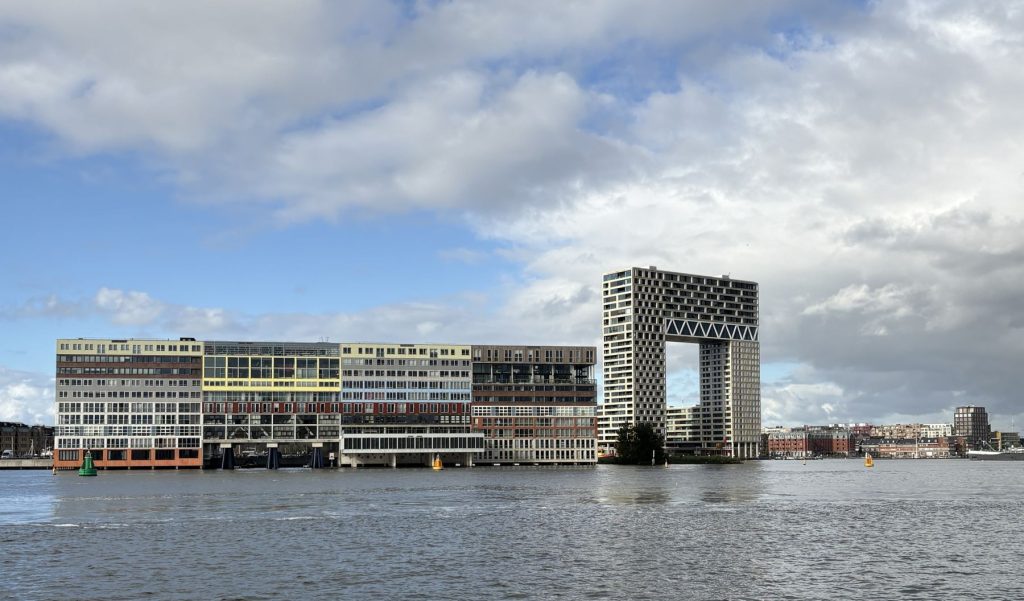
On the way over, watch for the Silodam, an apartment block on stilts that looks like a stack of shipping containers, and the Pontsteiger, the giant arch beside it. This is modern Amsterdam that doesn’t make the postcards, and it’s terrific.
My crossing came with a dramatic sky of sun on the water and storm clouds rolling in from the west. Unfortunately, those storm clouds were heavily swollen with rain. By the time I left STRAAT the rain was pelting down (and me without an umbrella).
Fortunately, the ferry is covered, but getting on and off the ferry is not.
What Is STRAAT?
STRAAT (Dutch for “street”) opened in 2020 in a former shipbuilding warehouse on the NDSM Wharf. The outdoor walls of the wharf were a graffiti “hall of fame” long before the museum moved in, so the art came first and the museum followed.
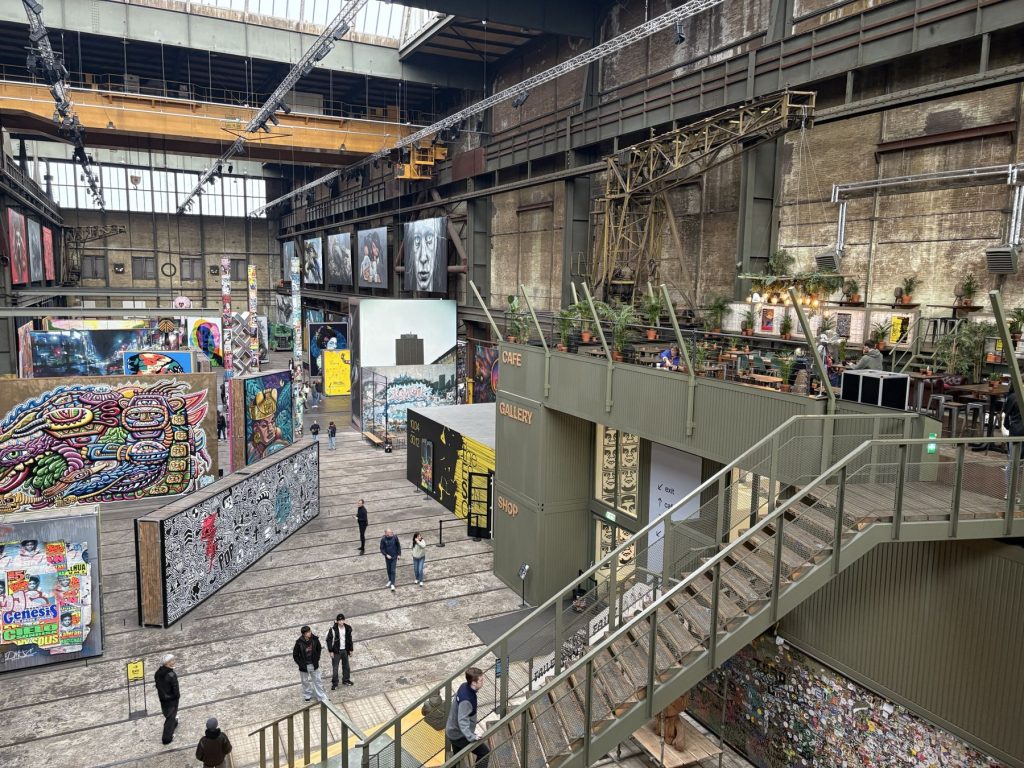
Inside, more than 160 works by 150+ artists from around the world hang from the old crane rails and stand on the original shipyard floor. Nearly every piece was painted right here, on site. The hall is laid out like a city, with streets, squares and intersections.
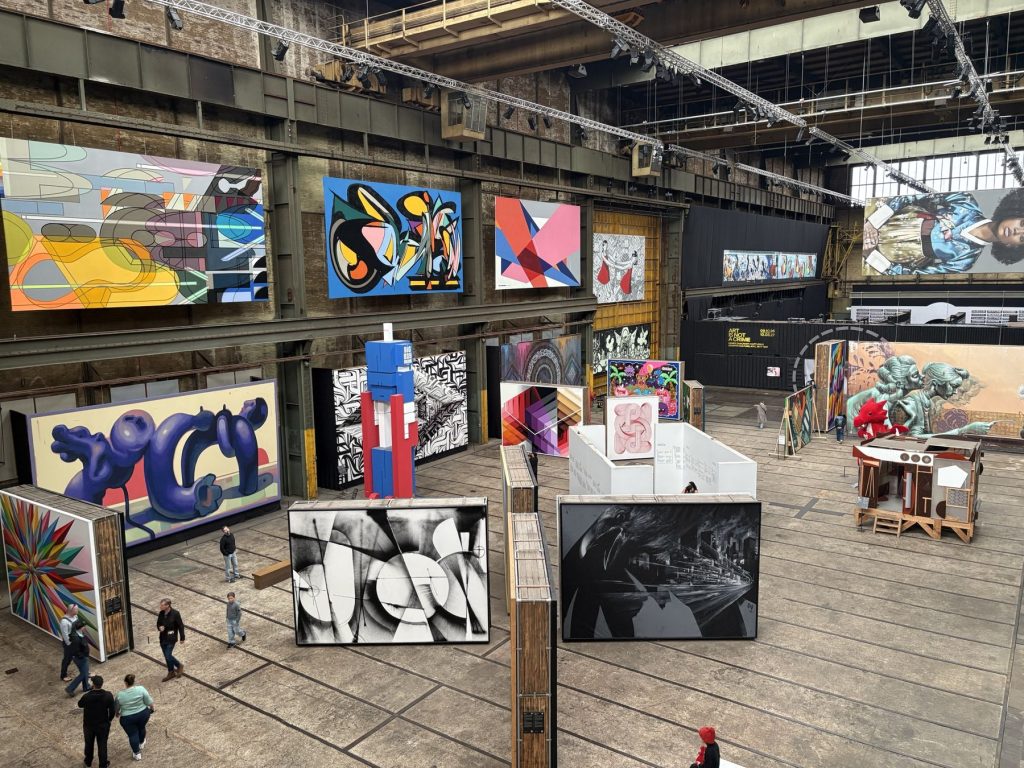
One thing to know before you go: the collection rotates, and new works arrive regularly. If you fall for a piece in one of my photos, it may have moved on by the time you get there. Consider that an excuse to go back.
A Very Short History of Graffiti
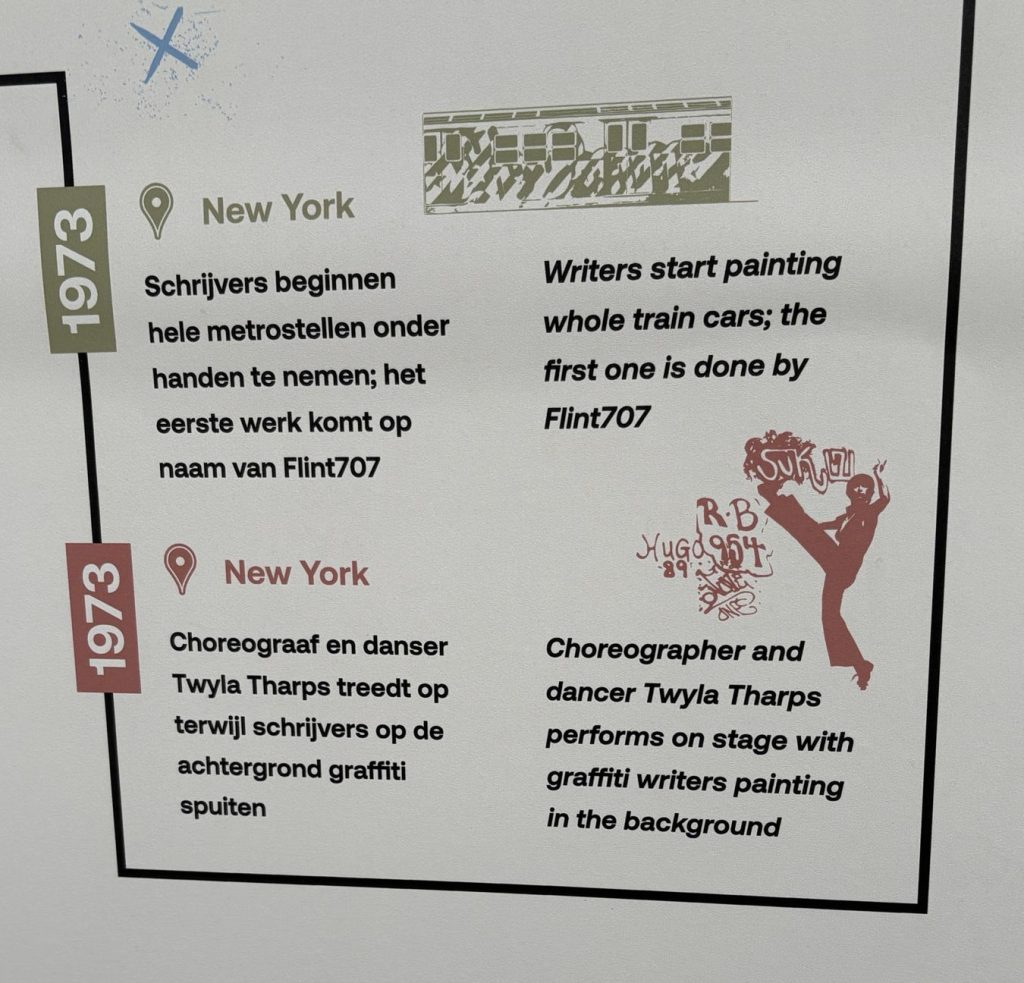
Spend a few minutes reading STRAAT’s timeline wall to get a fascinating crash course in the history of graffiti. Here are a few highlights:
- 1968: Julio 204 starts tagging in New York, and students at the Sorbonne in Paris and Columbia in New York borrow the look of graffiti for their protest slogans.
- 1973: Flint707 paints the first whole subway car. The same year, choreographer Twyla Tharp performs with graffiti writers painting behind her on stage.
- 1977: Punk graffiti arrives in the UK and the Netherlands, with slogans, band names and nicknames scrawled across the walls.
- 1981: Blek le Rat takes his stencils to the streets of Paris (Banksy owes him a thank-you note), and the Washington Post runs an article titled “Graffiti: learn to appreciate it.”
- 1980s: Keith Haring paints the Houston Bowery Wall in Manhattan, and Futura 2000 goes on tour with The Clash.
- 1990s: The Interrail pass spreads train graffiti all over Europe, as writers travel from city to city. Travelers, it turns out, have been spreading art for a long time.
- 2020: STRAAT opens in the middle of a pandemic.
Fifty-odd years ago, kids were tagging subway cars. Now their art fills a shipyard and people pay admission to have a look.
Street Art Talks Back to the Old Masters
For me, the most exciting thread at STRAAT was how many artists are in conversation with art history. If you’ve spent the day before at the Rijksmuseum or the Van Gogh Museum, you’ll see old friends here, remixed.
PichiAvo, Untitled (2024)
This Spanish duo from Valencia blends Greco-Roman sculpture with graffiti, and their towering rainbow-colored figure set against grayscale tags stops you in your tracks. The museum label describes their work as challenging “traditional boundaries between ‘high art’ and popular culture.” That’s more or less the whole museum in one sentence.

ELLE, Girl With A Pearl Earring; Contemporary AI Remix (2023)
The American artist ELLE sketched this one in collaboration with AI, and then painted it, deliberately keeping the glitches: the odd eyelid, the strange flowers, the ear melting into the hat.
The work nods to Vermeer and to the Dutch Vanitas tradition, while also being a time capsule of AI’s “toddler” stage. I suspect it will age into something fascinating.

Nina Valkhoff, Lamento en la Selva (2023)
The Rotterdam muralist set out to paint “some sort of Dutch Golden Age composition, but with animals,” in order to draw attention to endangered species. Look closely and you’ll find, in her words, “an okapi licking its own eye.”
Yep, once you see it (and I had to look for a while) you can’t unsee it.

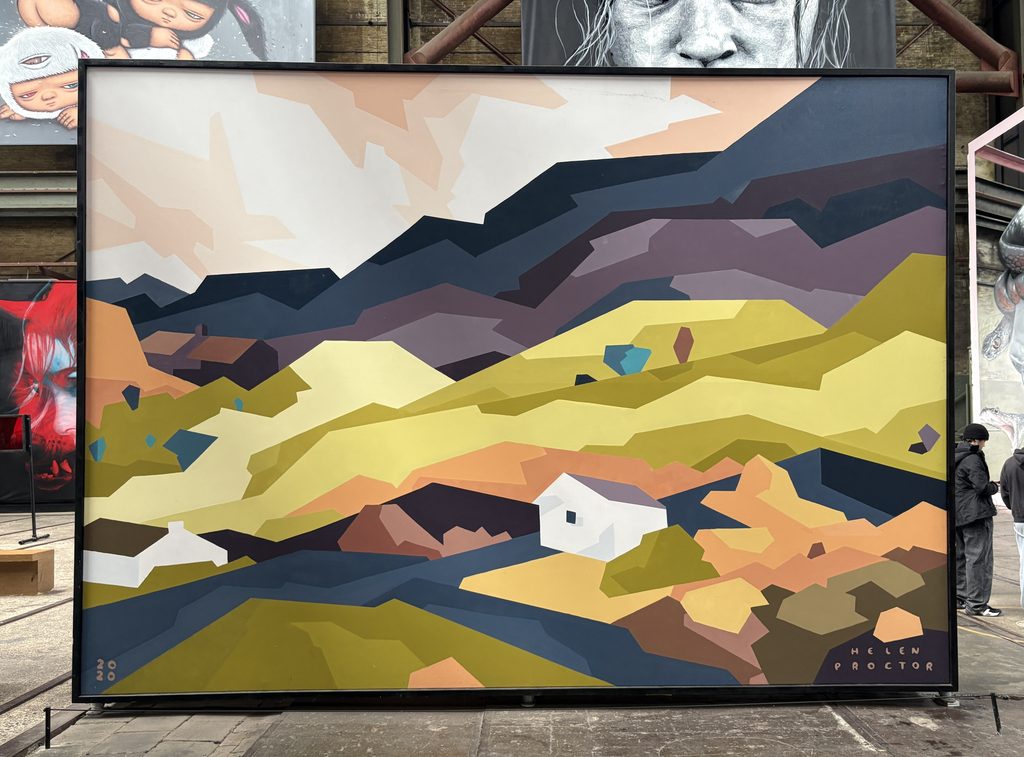
Helen Proctor, Les Alpilles, Mountain Landscape (2020)
This Australian artist painted her own take on Van Gogh, and cheerfully calls it “my version of cultural appropriation.” Amsterdam is the right city for it.
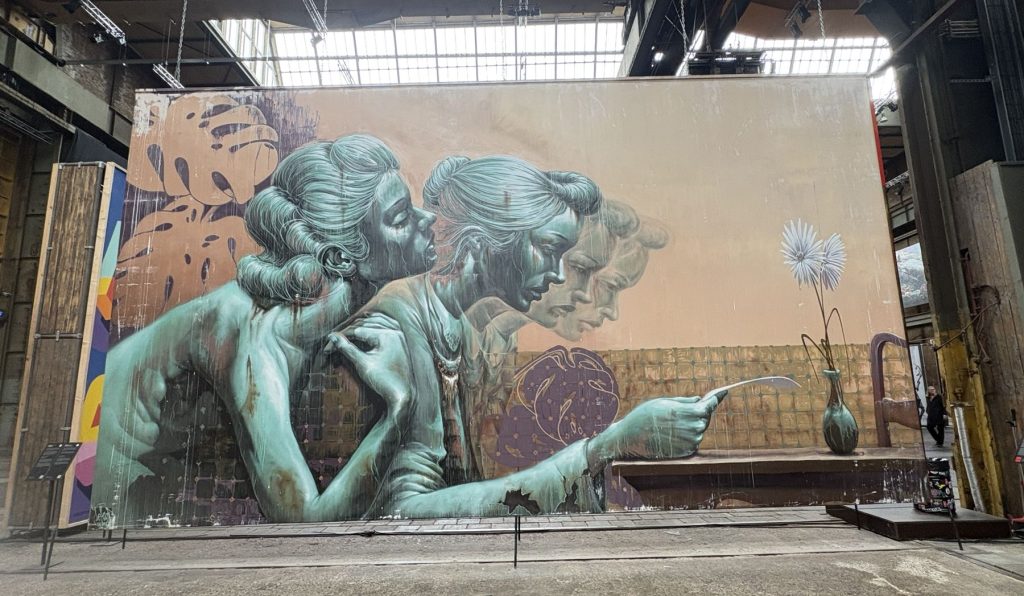
Sokar Uno, Hiobsbotschaft (2016)
The German artist paints figures that look like weathered bronze sculptures, here a woman reading a letter that clearly brings bad news (the title translates roughly as “Job’s tidings”). His label quote stayed with me as a novelist: “What would art be anyways if everything could also be expressed in words?”
More Works Not to Miss
Okuda San Miguel, Star of Infinite Destinies (2024)
The Madrid-based artist’s “Kaos Star” is an explosion of color, a three-dimensional compass rose whose spikes represent the many paths available in life. It’s the piece that first caught my eye after entering the hall, probably because I love abstract art.

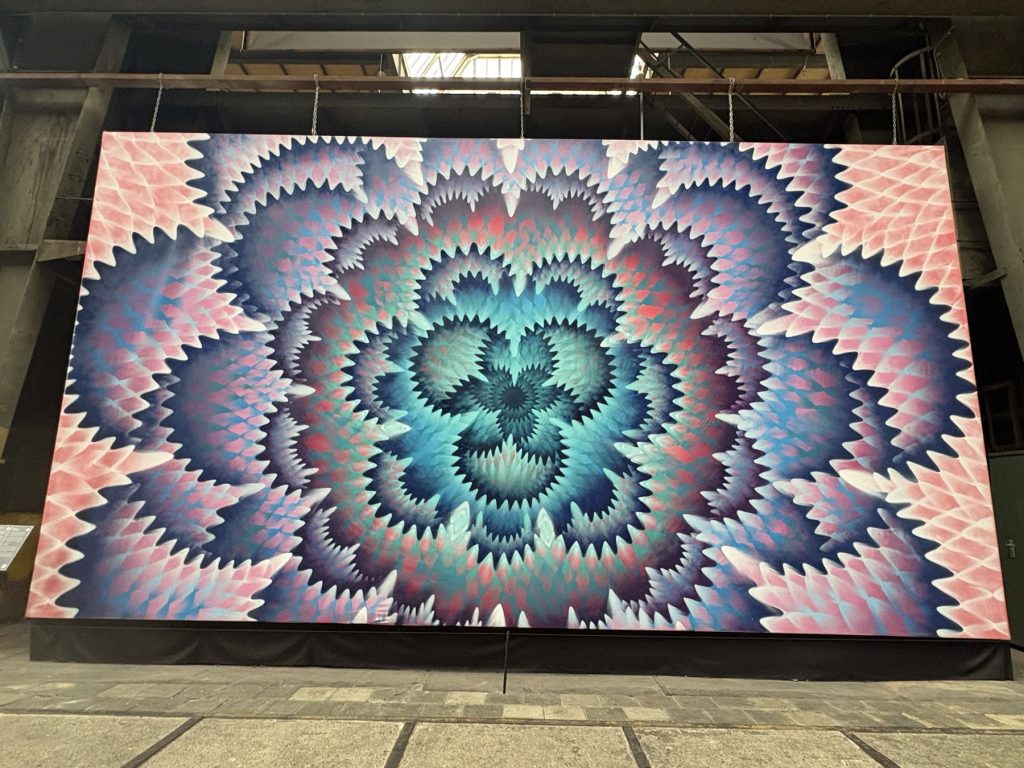
Hoxxoh, Amsterdoor (2023)
This Miami-based artist is known for his intricate, mandala-like patterns. This enormous work dominates the space with cheerful exuberance.
Chris Dyer, Shamanic Journey (2017)
Dyer, a fellow Canadian, created this riot of a creature after visualizing it during an ayahuasca ceremony in Peru. It asks a simple question: if one creature made of many different elements can be a beautiful unity, “why can’t humanity?”

Frankey, Lucky Dragon (2025)
The Dutch artist has made more than 800 street interventions around Amsterdam, and this giant red dragon is pure delight. Little Frankey waits underneath with his hand up for a high five. Kids love it.

Ledda, Humans Kill
Fish crammed into a tin can, with hooks dangling overhead. Not every piece at STRAAT is cheerful, and this one makes its environmental point without saying a word.

Don’t Miss: Henry Chalfant’s “Art Is Not a Crime”
Running from October 9, 2026 to March 13, 2027, Art Is Not a Crime showcases the photographs of Henry Chalfant, who documented New York’s painted subway trains from 1977 to 1987, when most people saw only vandalism. His photos helped spark the Dutch graffiti scene. The exhibition is included in your ticket, and free guided tours (about 60 minutes) run on Saturdays and Sundays at 3 pm. Register in advance since space is limited.
Practical Tips for Visiting STRAAT Museum
Climb to the Panorama Deck. From up top you finally see how the “city” fits together, and you’ll get your best photos.

Stop at the café. The mezzanine café overlooks the main floor and serves organic baked goods and fresh iced teas. My lemon and ginger tea was so refreshing I’d go back just for that. The shop is next door, and there’s a sticker wall at the bottom of the stairs that is a work of art in itself.
Allow 1.5 to 2 hours. I was in and out in about an hour, but only because I photographed the labels to read later instead of reading them on the spot. It’s a good trick if you’re short on time, and the labels are worth reading.
Go on a weekend morning. Even on a Sunday, the hall felt spacious and almost free of tour groups. Thursday evenings are another option, when the museum stays open until 9 pm.
Book ahead. The museum recommends buying tickets in advance, and an Amsterdam City Card gets you in free.
STRAAT FAQs
Absolutely. It’s not stuffy, there’s plenty of space to roam, and the art is big, bright and fun. Kids 12 and under get in free with an adult, and the museum runs a daily drawing table and family treasure hunt.
Take the free ferry 906 from the piers behind Centraal Station to the NDSM Wharf. The crossing takes under 15 minutes, and STRAAT is a short walk from the ferry landing.
Plan on 1.5 to 2 hours to see the main hall, read some labels, climb to the Panorama Deck and stop at the café. Add the ferry and you have a perfect half day.
Nearly all of it. Artists paint their works in the warehouse itself, and the collection rotates, with new pieces added regularly.
Final Thoughts
STRAAT was a revelation, and a must for any art lover visiting Amsterdam. It’s joyous, thought-provoking and so incredibly colorful. Above all, it’s optimistic. So much of the work carries a message of hope: Okuda’s star about choosing your own path, Frankey’s dragon radiating love and luck, and Dyer’s question about why humanity can’t be one beautiful whole.
I left feeling good about the world, which was just as well since I got soaked on my way back to the ferry!
Keep Exploring the Netherlands with Artsy Traveler
- Rijksmuseum, Amsterdam: My Favorites After 50 Years of Visiting
- Exploring Amsterdam’s Anne Frank House and Begijnhof
- Amsterdam Canal Cruise: Worth It? I First Took One in 1974
- The Hague’s Best Museums: Mauritshuis and Escher in the Palace
- Small Museums in Amsterdam: Rembrandt House and the National Maritime Museum
- The Van Gogh Museum Amsterdam: A Personal Guide to Its Greatest Treasures
Would you like to save this post?

Carol M. Cram writes novels inspired by the arts; runs Artsy Traveler, an arts-focused travel blog, and Art In Fiction, a curated database of 2,700+ novels inspired by the arts; and hosts The Art In Fiction Podcast. She has also authored 60+ textbooks on computer applications and taught at Capilano University for over two decades. Carol lives with her husband, artist Gregg Simpson, on beautiful Bowen Island near Vancouver, BC.



 See all my novels


