
Visiting Italy: My Best Tips for Artsy & Independent Travelers
I'm Carol Cram, novelist and arts travel writer, and founder of Art In Fiction, a curated database of 2,700+ novels inspired by the arts. Artsy Traveler contains affiliate links for products and services I personally use and recommend. As an Amazon Associate, I earn from qualifying purchases. Please read the Disclosure for more information.
Visiting Italy is a dream for artsy and independent travelers. From ancient Roman ruins and medieval hill towns to Renaissance masterpieces and world-class museums, Italy offers an unmatched concentration of art, history, and culture.
I’ve been traveling to Italy since my first visit to Rome in 1974, and I return again and again—both on my own and with my family.
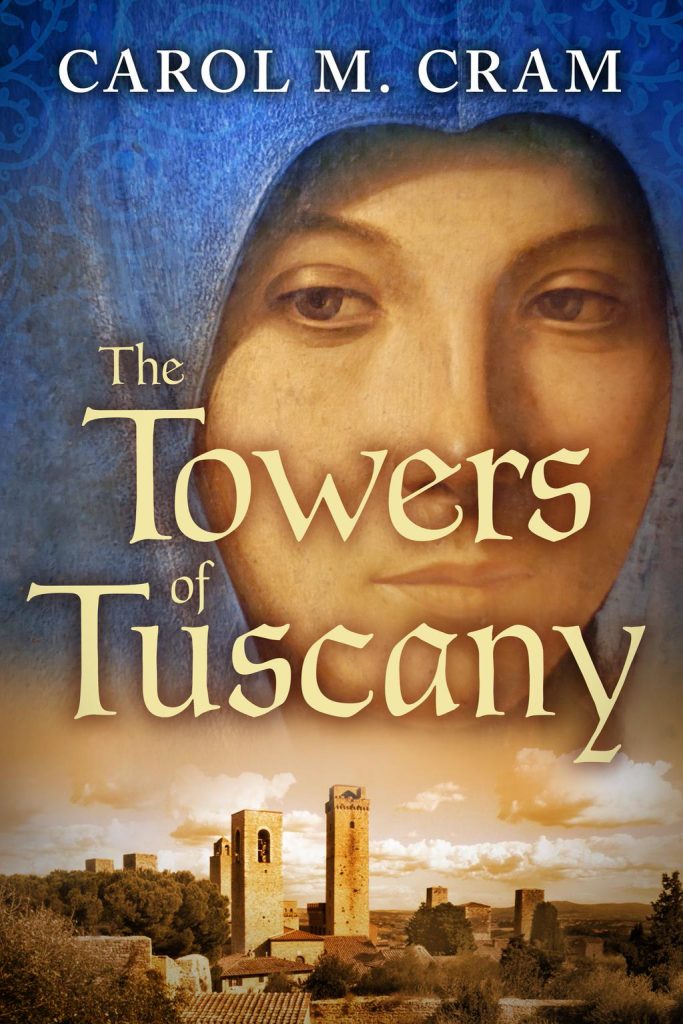
Italy has inspired my fiction, including The Towers of Tuscany, and continues to shape how I travel: slowly, thoughtfully, and always in search of meaningful cultural experiences.
For arts lovers, Italy ranks at the very top. Its churches, museums, and galleries overflow with treasures from the Etruscans and Romans through the Middle Ages, the Renaissance and Baroque periods, and into the modern era. Add regional cuisines, welcoming local culture, and endlessly varied landscapes, and you have a country that rewards repeat visits and deeper exploration.
If you want to experience art in all its forms—architecture, painting, food, and daily life—you’ve come to the right place.
Table of Contents
- Italy Highlights at a Glance
- My Relationship with Italy
- Favorite Places in Italy
- Traveling as a Temporary Local in Italy
- Practical Tips for Artsy and Independent Travel in Italy
- Getting Around Italy
- Tours to Take While Visiting Italy
- Where to Stay While Visiting Italy
- Eating in Italy: Pasta, Pizza, Gelato & a Lot More
- Why Italy Belongs on Every Artsy Traveler’s Itinerary
Italy Highlights at a Glance
These highlights showcase why artsy and independent travel in Italy is so rewarding, especially for travelers who prefer culture over crowds.
- Take a gondola ride in Venice to see this magical city from the water. Touristy? Yes. But worth the money to do at least once.
- Spend several days exploring charming Siena where crowds after dark disappear and you are transported back to the middle ages.
- Skip the Vatican and explore the lesser-known museums in Rome: The Roman Museum, the Etruscan Museum, the Keats-Shelley House, and the Museo Borghese to name a few.
- Go south to Naples and view the art of Pompeii in the world-class archeological museum.
- Take a cooking class and learn how to make fresh pasta.
My Relationship with Italy
I first visited Italy when I was eighteen on a short jaunt from England where I was attending university. I instantly fell in love, even after a car ran over my foot in Rome (fortunately, I wasn’t injured!).
Italy is endlessly fascinating as I’ve discovered after numerous visits over the past several decades. In recent years, I’ve taken to visiting Italy at least once a year, mostly because my husband, Gregg Simpson, has been exhibiting his paintings in venues around Italy, including Turin, Venice, Piacenza, and Rome.
Attending his art openings is such a treat because I get to meet so many interesting people, many of whom fortunately speak English. Here’s Gregg outside his latest exhibition in Rome.

Every time I visit Italy, I discover new things to see and do. Each region is distinct and fascinating, the people are welcoming, and for an artsy traveler, few countries offer so many opportunities to see some of the western world’s most spectacular art.
For such a relatively small country, geographically, Italy has a LOT to offer.
Favorite Places in Italy
When you’re planning your trip to Italy, you first need to choose which regions you want to visit. Limit your itinerary to no more than two or three regions in a two-week period. Spending four or five days in one area with no more than two destinations is ideal.
Avoid one-night stays and too much city-hopping. For an overview of artsy sightseeing options in Italy, check my post Amazing Artsy Sightseeing Choices in Italy for the Independent Traveler.
The map below shows many of the regions of Italy you may wish to visit and that are described below.
Venice & the Veneto
The Veneto offers a rich mix of art, architecture, and landscapes, anchored by Venice (#1 on the map above), one of the world’s most atmospheric and unforgettable cities.
Explore the canals, palaces, and extraordinary museums of this magical city and then venture beyond the lagoon to discover elegant Verona (#2), Palladian villas, and charming towns like Padua (#3) and Vicenza (#4). Spend three nights in Venice to soak up its unique beauty, and add three nights in Verona or Padua if you want to explore more of the region.
Northern Italy
Alpine peaks, lakes such as Lake Garda (#5) and Lake Como (#6), and elegant cities like Milan (#7) and Turin (#8) define Northern Italy, along with the Italian Riviera.
Spend three nights in the Dolomites (#9) and two or three nights at one of the lakes, or two nights each in Milan and Turin for a big-city hit. Don’t miss da Vinci’s Last Supper in Milan and the Egypt Museum in Turin.
Check out my Northern Italy itinerary for more ideas.
Marche & the Adriatic Coast
This region combines coastline with remarkable art and architecture. Spend two nights in Ravenna (#10) to enjoy its astonishing Byzantine mosaics and two nights in Urbania (#11) to get well off the beaten path.
Bologna & the Emilia Romagna
It’s all about food in this area of Italy between the towns of Northern Italy and Tuscany. Bologna (#12) has much to offer the artsy traveler and is a mecca for foodies.
Tuscany
Rolling countryside, vineyards, olive groves, and medieval hill towns such as Siena and San Gimignano complement world-class art in Florence (#13). Spend three nights in Florence and two nights in Siena (#14). With more time, add two nights in San Gimignano (#15) and visit nearby Volterra (#16).
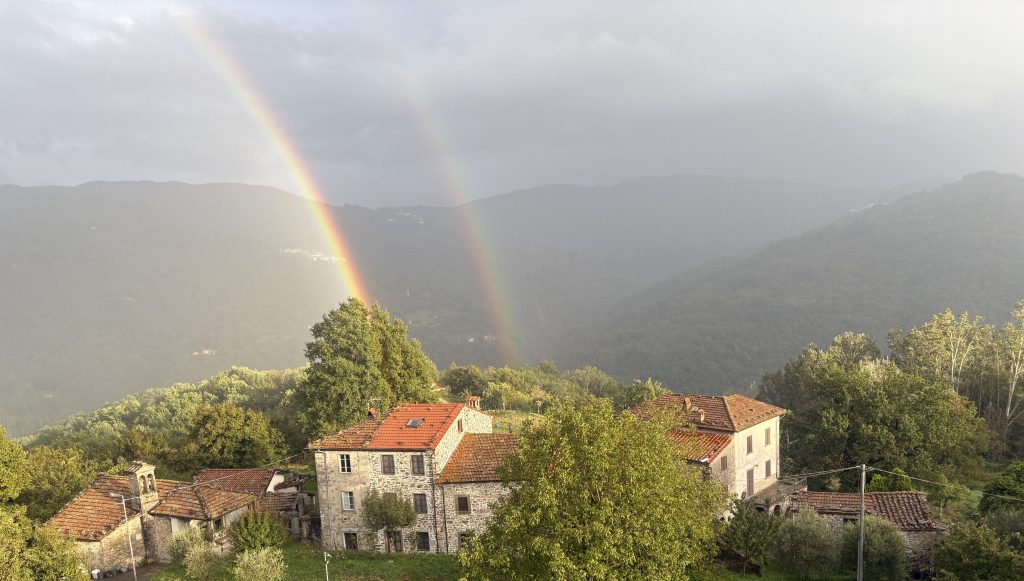
For an off-the-beaten-track experience, explore the wilder side of Tuscany (between Florence and the Mediterranean coast). I recently spent a week at an art retreat north of Lucca amid this spectacular landscape. Check out my experience at the art retreat: Get Inspired at a Writing and Art Retreat in Tuscany
Umbria
Often called the “green heart” of Italy, Umbria offers peaceful hill towns, deep religious heritage in Assisi, and rustic agritourism. Spend two nights in Perugia (#17) and two nights in Assisi (#18) to enjoy the towns after the tour buses leave.
Rome
Rome (#19) offers ancient ruins, vibrant neighborhoods, and the Papal city of the Vatican. Spend five nights in Rome and consider a day trip to Villa d’Este (#20) and Villa Adriana (#21) (Hadrian’s Villa).
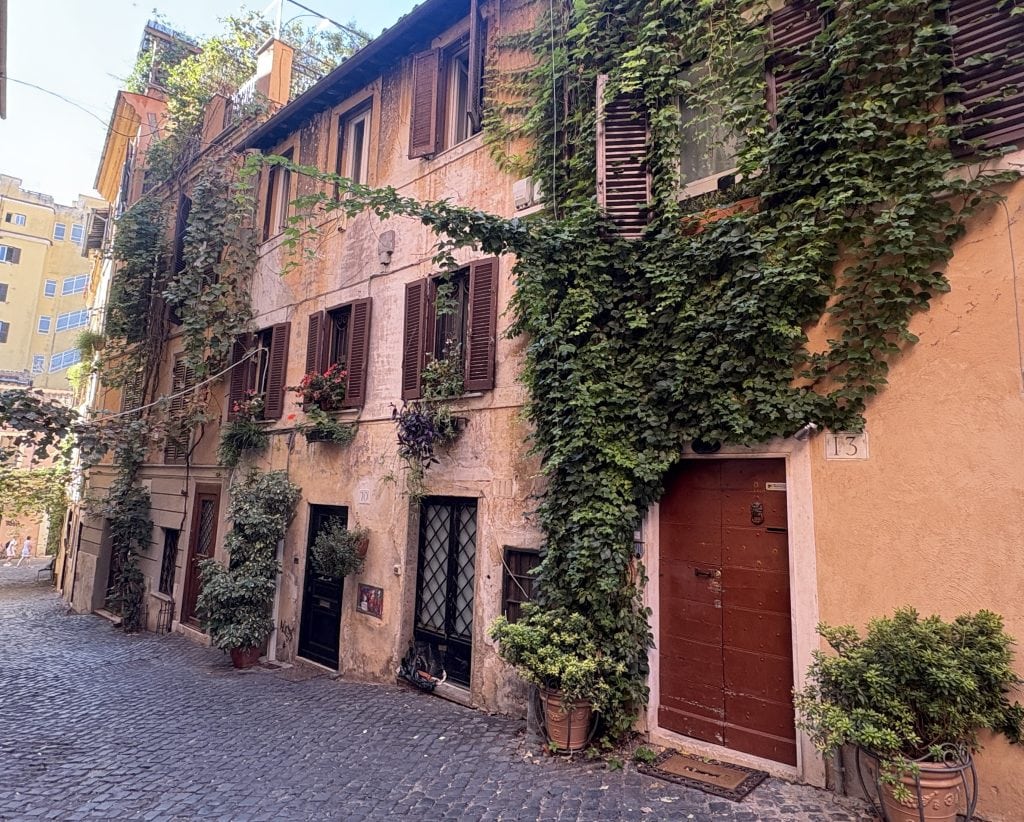
When in Rome, steer clear of the busy tourist areas around the Colosseum and the Piazza Navona and instead seek out quiet side streets where you’ll be alone with your thoughts and the ghosts of 2000 years of history.
Campania & the South
Vibrant southern culture, dramatic coastlines, archaeological sites like Pompeii, and fantastic food define this region. Spend three nights in Naples (#22) and two nights in Sorrento (#23) or Positano (#24). If you have extra time, add Paestum (#25) for another night or two.
Sicily & Sardinia
These large islands offer distinctly different cultures. Sicily (#26) features layered history including Greek theaters, Roman mosaics and Norman cathedrals, while Sardinia (#27) provides rugged landscapes and beautiful beaches. Spend at least a week in each place for a fuller experience.
There are many more regions of Italy to explore, including Puglia (#28) in the southeast and the Cinque Terre (#29) on the west coast south of Genoa. You won’t run out of places to visit in Italy in a lifetime.
Traveling as a Temporary Local in Italy
Of all the countries in Western Europe, I think Italy is the most diverse, both culturally and geographically. From the jagged peaks of the Dolomites to the sun-soaked coastline of Sicily, Italy changes dramatically from region to region.
It wasn’t all that long ago that Italy consisted of numerous city states, often at war with each other. In fact, the country was not united into what we know as modern Italy until 1861.
The culture, the architecture, the landscapes and the food of the many regions of Italy are still very distinct. Don’t limit yourself to the heavy hitters such as Rome, Florence, and Venice. Get off the beaten track to explore smaller towns, islands, coastal areas, and countryside regions such as Umbria, the Marche, or Puglia.
You’ll experience a quieter, more authentic Italy with fewer crowds and richer local character. On a recent trip to the charming town of Piacenza, for example, I saw only a handful of tourists during a five-day stay.
Embrace Slow Travel
Spend more time in fewer places to reduce stress and connect with locals. Instead of rushing from city to city and site to site with a tour group, seek out unique experiences like attending an opera performance at a palazzo near the Trevi Fountain in Rome or taking a photography tour.
Support small businesses, eat at family-run trattorias, and seek out regional artisans. Use refillable water bottles, choose train travel over domestic flights, and be mindful of preserving Italy’s fragile historic sites.
Your goal, even on a short trip, is to live like a local. Shop in neighborhood markets, stop for a coffee or an aperitif at a café where most of the other patrons are speaking Italian, and in the evening, join the locals in the passeggiata (stroll).
Practical Tips for Artsy and Independent Travel in Italy
Italy is pretty easy to travel around, particularly in the north and Tuscany. The train system is fast and efficient and the main roads are excellent. My husband Gregg, who does pretty much all the driving when we travel together in Europe, is always commenting on the high quality of the roads in Italy.
Check Events and Exhibitions
Before you travel to the major cities in Italy–Rome, Milan, Naples, Florence, Venice–check online for exhibitions and performances. Also be on the lookout for local festivals.
Visit Italy and Relive Its Amazing Past
Every time I’ve traveled in Italy, I’ve come across either a festival where the whole town turns out in medieval garb to participate in processions and other medieval-inspired activities, or at the very least a demonstration of medieval flag-waving.
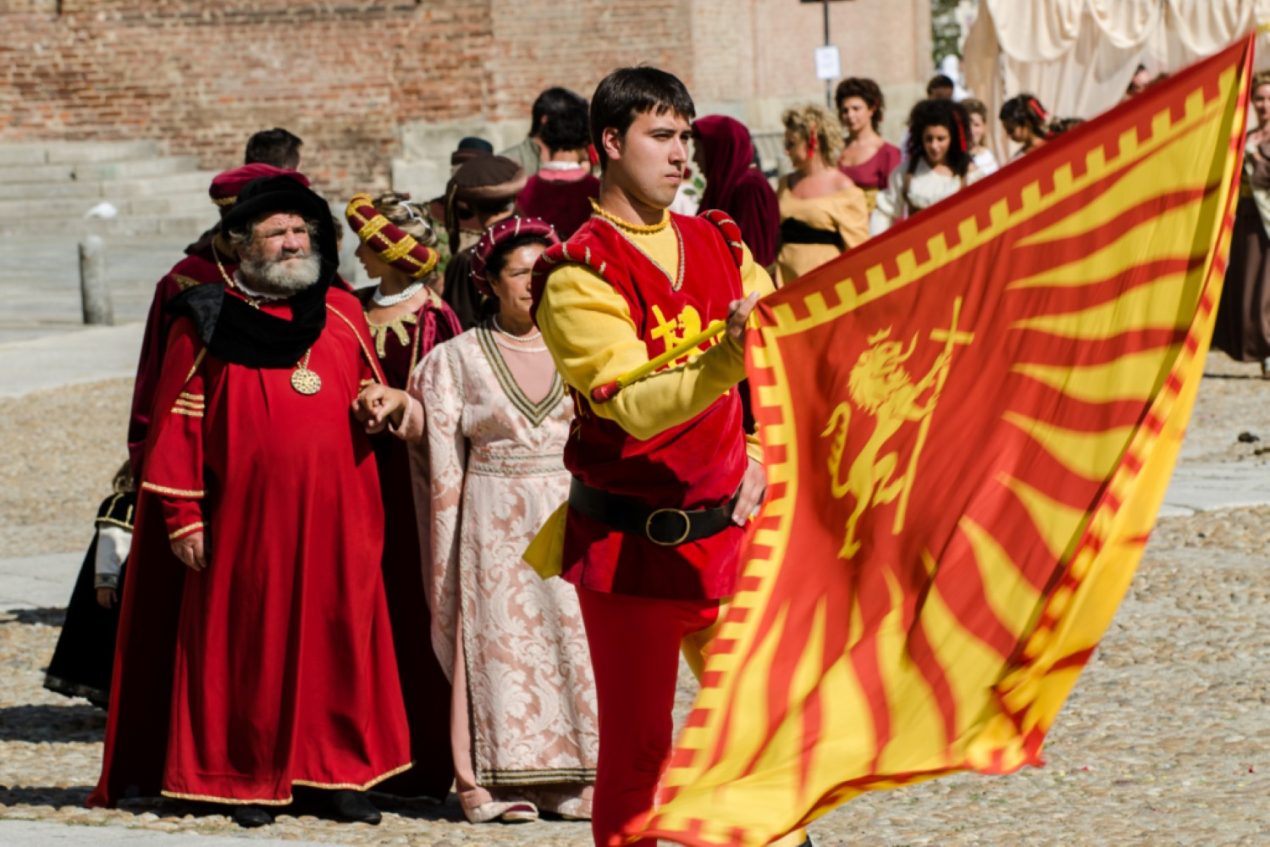
The Italians pay a great deal of loving attention to their remarkable past.
On a day trip to the Appian Way outside Rome, we joined a festival celebrating ancient Rome. Local people dressed as centurions and legionnaires marched in formation, sock-clad feet shoved into fake ancient sandals and slapping the cobblestones, swords clanging, leather tunics creaking.
Scattered around a field were tables worked by people dressed in various Roman costumes and demonstrating Roman crafts—matrons and merchants in simple white tunics; vestal virgins dressed in alluring green togas, hair fashioned into elaborate braids and swirls; the occasional toga-clad aristocrat; even a priest carrying incense and intoning prayers.
While creating your itinerary, search the web for exhibitions and performances scheduled while you’re in a town or region.
When you’re traveling, check local posters, ask your server at dinner, and chat with other travelers about their experiences. In addition to the artsy sights you’ve planned to visit, you may discover several more you might never have heard of that will enrich your visit.
Getting Around Italy
Italy extends from the Alps in the north all the way south to Sicily, a distance of more than 1,600 kilometers. Driving the length of Italy requires at least three days unless you’re a maniac, and even then, you’ll see nothing more than Autostrada cafés which I don’t recommend.
Where you go in Italy depends upon the time you have available and how you plan to travel. You have two choices—use public transit or rent a car.
Public Transit
I’ve often taken trains in Italy with no problems. The high-speed trains are fast and comfortable. Traveling by public transit works well if you plan to stay primarily in cities such as Venice, Milan, Florence, and Rome.
On one solo trip to Italy, I flew to Rome, took the high-speed train to Florence, and then the bus to San Gimignano and Siena. From Siena, I caught the train back to Rome. While in Siena, I booked a full-day wine tour in a minibus so I could experience quality time in the glorious Tuscan countryside.
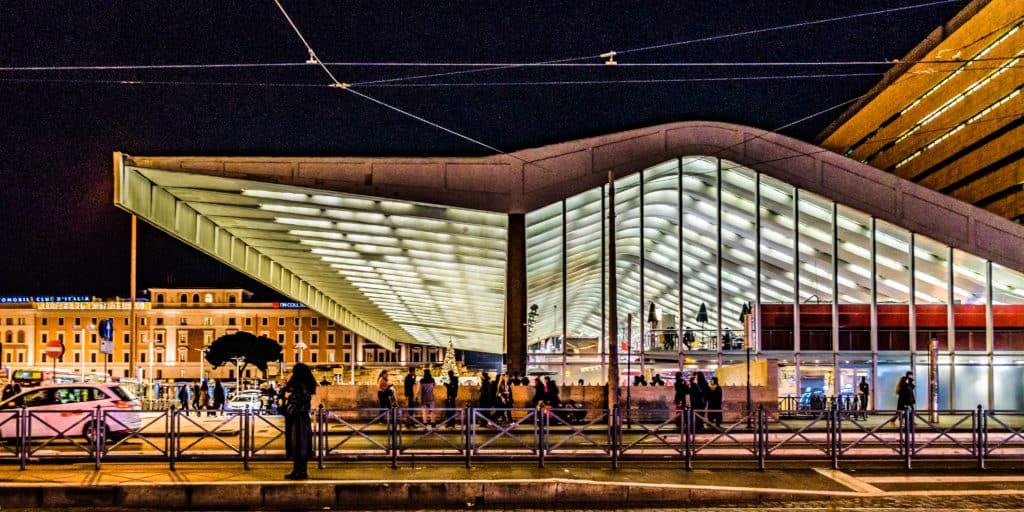
TIP: If you prefer not to drive in Italy, I recommend combining train and bus travel with the occasional small group tour. You’ll get to see much more of the countryside and have the benefit of a knowledgeable guide.
You can book your train tickets before you leave home. Check the Rail Europe website for schedules and prices.
Renting a Car
The benefit to driving in Italy is that you can get to places in the countryside that are difficult to access by bus or train. A good strategy is to fly or take the train to a central hub such as Milan or Rome and then rent a car.
TIP: Do not arrange to pick up your rental car in the center of the city! Take a taxi to the airport and pick up the car there.
Driving Tips in Italy
Driving in Italy is a challenge because of heavy traffic and because GPS is not always reliable. Take along paper maps and learn patience. We’ve gotten lost almost as often using GPS in recent years as we used to when we had only maps.
The drivers in Italy are capable but fast. After all, this is the country that makes Ferraris and Lamborghinis. Gregg is convinced that every male Italian driver fancies he’s competing in the Grand Prix while on his way to pick up pasta for the evening meal.
Speed limits sometimes feel like guidelines but don’t ignore them. Speed traps exist and you won’t know you’ve crossed the line until you get a bill in the mail after you arrive home.
SUPER TIP: Never (and I mean never!) attempt to drive into the centro (center) of an Italian town, particularly a medieval hill town. First, you risk getting a stiff fine (being a tourist is no excuse), second, you risk ripping one or both of your side mirrors off your rental car, and third, you risk never again speaking to your partner.
Find the parking lot outside the town and walk. If you’re in Tuscany or Umbria, you’ll likely be walking uphill because most towns are hill towns. Fortunately, some towns such as San Gimignano and Orvieto thoughtfully provide an elevator to take you from the car park to the town. Others don’t, but if you’re going to travel in Italy, even by car, you need to be up for some good, stiff walking.
Driving into Italy from Austria, Switzerland, and France
Thanks to the Alps, you don’t have many options for driving into Italy from the north. The three main options for travel from northern Europe south into Italy from Austria, Switzerland, and France are:
- Drive through Austria and enter Italy through the Brenner Pass. Then tour the Dolomites and Bolzano before carrying on to Venice (see the green numbers on the map below).
- Drive through Switzerland, cross the Italian border at Lugano and then head south to Lake Como and Milan (purple numbers on the map).
- Drive through France via Mont Blanc into Italy, then spend a day or two in Turin (see the blue numbers on the map).
From the south of France, drive the extremely scenic route from Nice to Genoa (see the red numbers on the map) and then on to Florence and Rome.
Tours to Take While Visiting Italy
I enjoy taking local tours when I travel and favor small group, specialty tours, especially those that connect with local artists. I avoid the big bus tours and search for tours that will take me to places I may not be able to visit on my own.
One of my more memorable small group tours was a wine tour of Tuscany I took while staying on my own in Siena. The tour took myself and four other people plus the very knowledgeable guide to vineyards in Montalcino and Montelpulciano and included a gourmet four-course lunch at a charming medieval village.
Find local tours if you can, particularly walking tours. Here are some options for tours in Italy with GetYourGuide:
Where to Stay While Visiting Italy
We’ve always enjoyed wonderful accommodations in Italy. From modest two-star pensions to apartments on VRBO and four-star splurges, we’ve experienced excellent service, comfortable rooms, and good breakfasts.
Accommodation Budget
Budget-wise, Italy is in the moderate range, although you can pay a lot for luxury. On average, we pay €150 a night for a comfortable three-star hotel and about €220 for a four-star hotel.
Prices are higher in tourist places such as Florence and Venice. I suggest spending the extra money to get a comfortable place in a good location that’s close to the action. Sure, you can get bargains at hotels on the mainland but who wants to commute to Venice? Wandering around Venice at night is one of Europe’s great travel experiences.
Recommended Places to Stay in Italy
For my accommodation recommendations in Italy, read Where to Stay in Italy: My Best Tips. You’ll find wonderful properties in all the areas described on this page and in the related posts.
Check out more places to stay on the interactive map below:
Eating in Italy: Pasta, Pizza, Gelato & a Lot More
The Italians love food and are masters at preparing it. You won’t go hungry in Italy although you may get tired of pasta and pizza. Salads are not easy to come by (the insalata mista or green salad usually isn’t much to write home about), and if you’re gluten intolerant, you may be challenged to eat well in Italy.
That said, embrace the different cuisines of Italy. You’ll find excellent seafood in the Veneto, tender beef in Tuscany, risotto in Milan, spaghetti Bolognese in Bologna, Carbonara in Rome, and on and on. We’ve had some of the most memorable meals of our travels in Italy.
To eat well in Italy as opposed to choking down microwaved pasta (oh yes, some restaurants serve that), check reviews and menus online and make reservations. We’ve never failed to have a great meal when we’ve done that.
TIP: When you order a pizza in Italy, expect to get a large plate-sized, thin-crust pizza as a single serving. Gregg and I often split one pizza and one order of pasta. We’ve found that servers in Italy do not mind if you tell them you’re planning to share.
Why Italy Belongs on Every Artsy Traveler’s Itinerary
From world-class museums, archeological sites, and fabulous art to iconic landscapes and great food, artsy and independent travel in Italy rewards curiosity, slow exploration, and repeat visits.
Here are posts to read to help you plan and enjoy your time in Italy:
- Perfect Day in Florence: An Itinerary for Artsy Travelers
- Fire Up Your Creativity with Italiana Tours
- How to See the Art of Pompeii at the National Archaeological Museum in Naples
- How Not to Tour the Colosseum in Rome: Mistakes to Avoid
- Sensational Siena: Best Things to Do, Top Sights and How to Visit
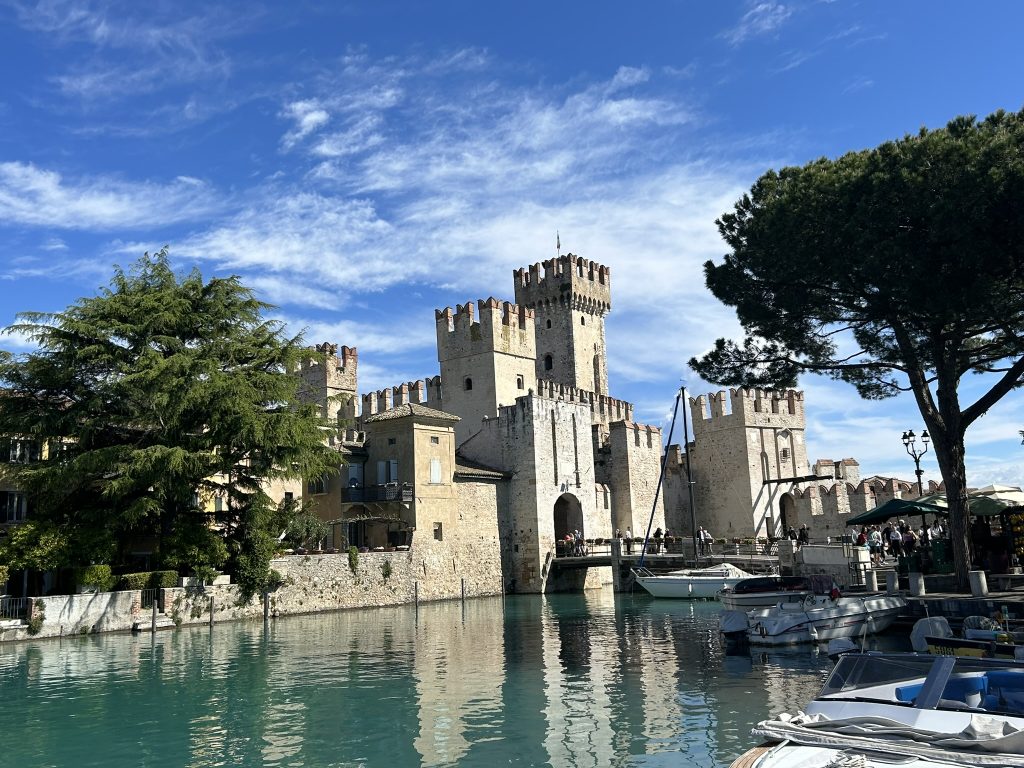
- Sirmione on Lake Garda: Experience the Magic of Staying Overnight
Would you like to save this post?

Carol M. Cram writes novels inspired by the arts; runs Artsy Traveler, an arts-focused travel blog, and Art In Fiction, a curated database of 2,700+ novels inspired by the arts; and hosts The Art In Fiction Podcast. She has also authored 60+ textbooks on computer applications and taught at Capilano University for over two decades. Carol lives with her husband, artist Gregg Simpson, on beautiful Bowen Island near Vancouver, BC.

 See all my novels