Visiting France: My Best Tips for Artsy & Independent Travelers
I'm Carol Cram, novelist, podcaster, and travel writer, and founder of Art In Fiction, a curated database of 2600+ novels inspired by the arts. Artsy Traveler contains affiliate links for products and services I personally use and recommend. As an Amazon Associate, I earn from qualifying purchases. Please read the Disclosure for more information.
I first visited France on my epic around-Europe trip with my mom when I was fourteen. We only went to Paris for two days, and I can’t say I was impressed. Fortunately, my initial negative view of France has changed dramatically in the ensuing years.
My long relationship with France has shaped how I approach artsy and independent travel in Europe as a whole, from slow regional stays to deep dives into museums, food, and landscapes.
On my second major trip to France after university, I explored many of the regions that have become my favorites: the Loire Valley, the Dordogne, and best of all, Provence and the Côte d’Azur.
Fast forward a few years, and I deepened my love of France by traveling with my husband and daughter (nine years old at the time) around the country for seven weeks, an experience we still reminisce about.
Since then, I’ve visited France many more times, sometimes as a family and more recently with my husband, Gregg Simpson, an artist who exhibits regularly in France. We’ve explored almost all of France, or at least we think we have. Then we return and find more regions to explore, more museums to discover, and more tasty regional foods to sample.
On our most recent trip, we spent time in the stunning Ardèche Gorge and spent a fabulous afternoon touring the Caves of Chauvet to view prehistoric art, and also discovered the quirky Ochre Museum in Roussillon in the Luberon area of Provence.
I set my novel Love Among the Recipes, a contemporary “second-chance” romance, and a portion of my historical novel A Woman of Note in Paris.
France keeps calling me back.
This post is part of my Visiting Europe series, where I share my best tips for artsy and independent travelers exploring Europe’s most culturally rich destinations. You can find the full series here.
Table of Contents
- France Highlights at a Glance
- Favorite Places in France: My Top Nine Must-Visits
- Practical Tips for Artsy & Independent Travel in France
- Getting Around France
- Tours to Take While Visiting France
- Where to Stay for an Arts-Focused France Trip
- Eating Well in France: It’s Hard Not To Do
- Why France Belongs on Every Artsy Traveler’s Itinerary
France Highlights at a Glance
These highlights showcase why artsy and independent travel in France is so rewarding, especially for travelers who prefer culture over crowds.
- Visit world-class museums in Paris, including the Musée d’Orsay, my favorite.
- Explore 17 Must-See Places to Visit in France for a comprehensive look at the best artsy travel in France.
- Explore iconic architecture that’s so very French in the Châteaux of the Loire Valley.
- Don’t miss the incredible Caves of Lascaux to see where artists worked 35,000 years ago.
- Savor life in Pont-Aven in Brittany, the city of artists.
Favorite Places in France: My Top Nine Must-Visits
The map below shows nine of my favorite regions/cities to visit in France. Click a number to read more about the location and to link to relevant posts.
Practical Tips for Artsy & Independent Travel in France
France is an easy country for artsy and independent travel thanks to an efficient and fast train system, a network of toll freeways, thousands of restaurants (most of which are good and some that are out of this world), and accommodation options at all budget levels (except ‘really cheap’, because hey, you’re in western Europe).
To make the most of your visit to France, pick one or two regions and stay for a week (or more) in each. Check my post about my six favorite regions to explore in France.
Check Events and Exhibitions
While creating your itinerary, search the web for exhibitions and performances that will be on while you’re in a town or region. A bit of advance planning ensures that you’re in the right place at the right time. There are few worse things for the artsy traveler than arriving in a city the day after an exhibition of a favorite artist closes. Ouch!
Once you’ve arrived in France and you’ve embarked upon your travels, keep an eye out for events advertised on posters, ask your server at dinner to tell you what’s happening in the area, and chat with other travelers about their experiences.
In addition to the artsy sights you’ve planned to visit in France, you may discover several more you might never have heard of that will enrich your visit.
When we visit France, we’re always on the lookout for local events like festivals, exhibitions, and concerts frequented mostly by locals. Most of the time, we find information on posters or simply by talking to people.
Getting Around France
When visiting France, should you drive or should you take trains, buses, and taxis? Your answer depends on where you home-base in France and how you like to travel.
We’ve traveled around Europe by train and by car and we prefer driving because first, Gregg is almost always carrying a box or two of his paintings to an exhibition, and second, we like the freedom.
But cars and gas are not cheap (although neither are trains) and driving can be hairy, even with GPS and sometimes because of GPS.
I suggest a combo approach to getting from A to B in France.
TIP: Start or end in a major hub such as Paris or Nice (our two faves). You don’t need a car in Paris. Gregg and I have driven into the center of Paris and I don’t advise it. Please trust me on this. Drivers in the French capital are a tad on the crazy side. Also, Paris has recently declared that at least some Sundays are traffic-free, which means no driving in Paris. Taxis are still allowed.
Taking the Train in France
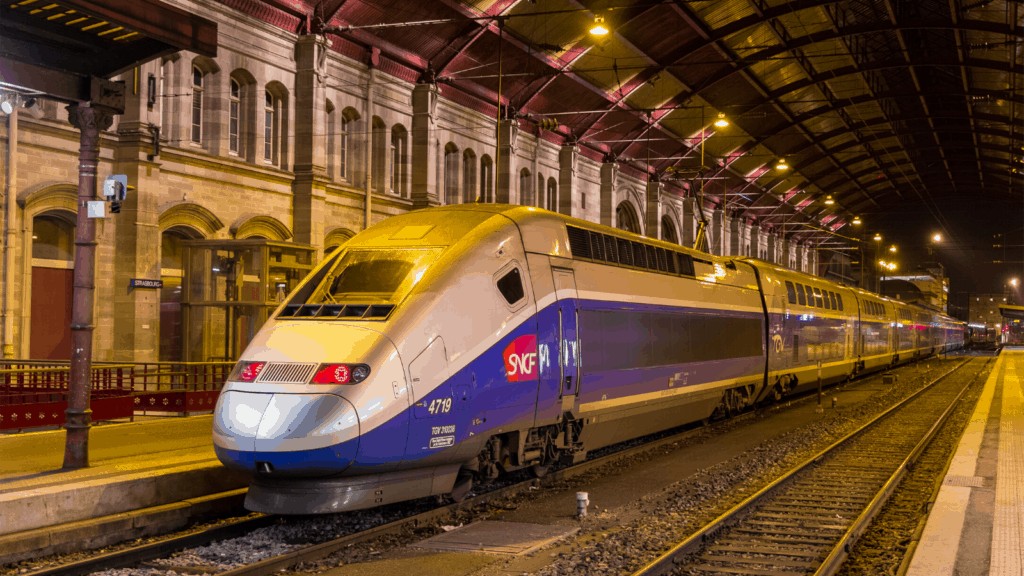
If you’re heading out from Paris to explore France, take the TGV, France’s marvelous high-speed train service, to another hub such as Avignon, Lyon, or Bordeaux. You’ll recline in comfort, watch the green fields whiz past at an indecent rate and arrive at your destination refreshed and relaxed.
From there, pick up your car and head out on roads that are considerably less congested than those surrounding Paris.
If you start your visit to France in Nice, consider picking your car up after you’ve spent a few days exploring the area on local trains. The traffic in the region can be horrendous!
On one trip to the area, we parked our car for three days in Monte Carlo and took the train to visit friends in Menton. The day was so much more relaxing than if we had driven.
Renting a Car in France
In Paris, pick up (or drop off) your car at Charles de Gaulle airport. Yes, it’s quite a distance from the city, but the convenience is worth the extra cost of a taxi into Paris. Or opt to take the train into the city.
TIP: Gregg and I like taking the train from Paris to the modern TGV station outside Avignon. Minutes after stepping into the warm Provençal air, we’ve collected our rental car from the large parking lot in front of the station and are on the road heading for the Luberon and bliss.
Driving Tips in France
Driving in France comes in two flavors: fast on the autoroutes and slow on the side roads. I recommend a combination of both.
To get from city to city, take the autoroute. The tolls do add up, but you’ll get to where you’re going quickly and relatively stress-free. We’ve logged thousands of kilometers on the autoroutes of France. Most of the time, it’s smooth sailing, although every so often we’ve been trapped for hours in some spectacular traffic jams. But that can happen at home so just go with it.
TIP: The café fare in the autoroute rest stops (aires) is generally pretty good although monotonous. Buy groceries and use the aires as picnic stops. They all have picnic tables and are generally set in bucolic areas.
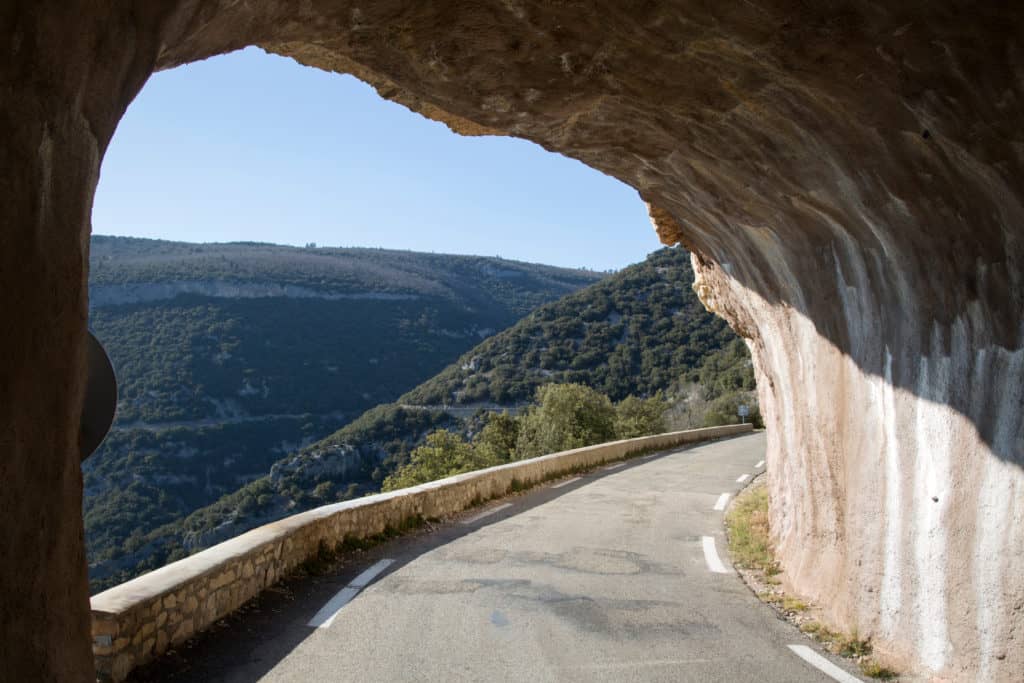
Driving on the side roads in France can be delightful or scary. We’ve driven on some ridiculously narrow roads with knife-sharp switchbacks, no guardrails and precipitous drops. If the road looks like a piece of twisted spaghetti on the GPS, consider an alternate route.
When you arrive at a town, avoid driving directly into the centre-ville. The streets are very narrow (we’ve scraped our share of side mirrors) and parking may be non-existent.
TIP: Stow the car in a parking garage on the edge of town and then walk or grab a taxi. That way, you’ll avoid the frayed nerves that can result from trying to navigate streets originally built for ox carts and feet.
Tours to Take While Visiting France
Small-group tours are a great option for getting out into the countryside, particularly if you’ve chosen not to drive in France. Find local tours in the town or city you’re visiting, or pre-book tours of a specific region. Here are some options.
Where to Stay for an Arts-Focused France Trip
Where you stay can make a big difference for artsy travel in France, especially if you value walkable towns, local markets, and easy access to cultural sites.
After years of traveling and sightseeing, we increasingly prefer settling into a house or apartment and living like we do at home, except with warmer weather and more interesting food.
We spend our mornings doing our thing (writing for me, painting for Gregg). Then, around noon, we drive to the local village to pick up supplies and stop en route for a picnic. We spend the afternoons relaxing and/or working before setting off around 4 PM for a spot of sightseeing followed by dinner in a good, local restaurant.
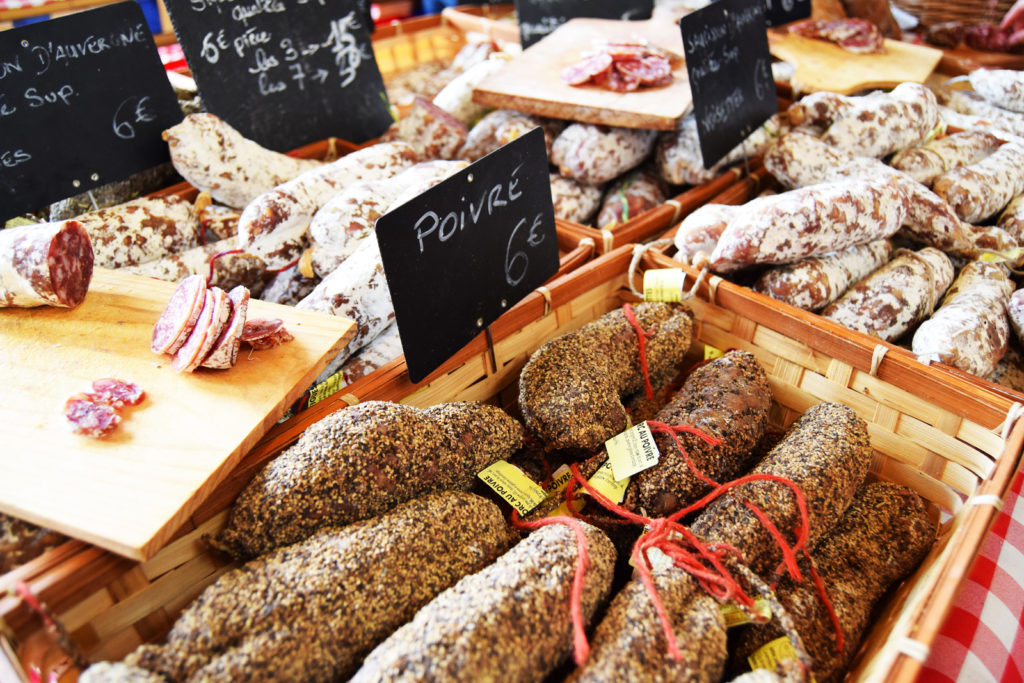
We also enjoy staying at hotels. When touring in the countryside, I book small and attractively appointed “mom and pop”-owned establishments. I like places that have beautiful settings and free parking.
When visiting towns or cities by car, we often choose one of the higher-end chain hotels such as a Novotel or Mercure. The quality of the accommodation is consistent and the locations convenient for drivers.
When booking accommodation, I always pay attention to location, having learned from experience the folly of driving into the center of a medieval town or village in search of a hotel.
Accommodation Budget
France is not the most expensive country in Europe (the Scandinavian countries have that honor), nor is it as relatively inexpensive as many Eastern European countries.
When traveling by car and staying at hotels, we budget about €200-250 a day for accommodation, gas, and meals, which include picnics and restaurants. Comfortable hotels (three- and four-star) are around €100-150 per night, more in the cities.
In Paris, be prepared to spend €200-250 per night for accommodation. You may find lower-priced hotels, but we’ve learned that the difference between a budget two-star hotel and a lovely, air-conditioned four-star hotel can be as little as €30. Go for the nicer places and enjoy yourself!
When we stay in an apartment or house for a week or more, our daily living costs go down. We tend to eat in much more often and we don’t drive as much as we do on road trips.
Use services such as booking.com. All your reservations are kept together in one place when you download the service’s app.
Eating Well in France: It’s Hard Not To Do
Food and France—the two go hand in hand like, well, gourmet and tasty. While visiting France, I’ve eaten some of the best meals of my life—and some of the worst. Oh yes, I will not forget in a hurry the massive dish of putrid-tasting beef kidneys I was served in the small town of Lussac-les-Châteaux in the Poitiers region.
TIP: Consult your pocket French-English food dictionary (or check your phone) before ordering a dish that you don’t recognize. I blithely ordered rognons de boeuf only to discover that rognons are kidneys and I don’t do organ meats. Ever.
I digress.
French Cuisine
Eating in French restaurants and enjoying French cuisine should be a major component of your trip. Budget for several splurge dinners, as in €30-40 per person. You could certainly spend more—a lot more. But for Gregg and me, €100 total including wine is as high as we go, and we still speak fondly of some of those top meals in France.
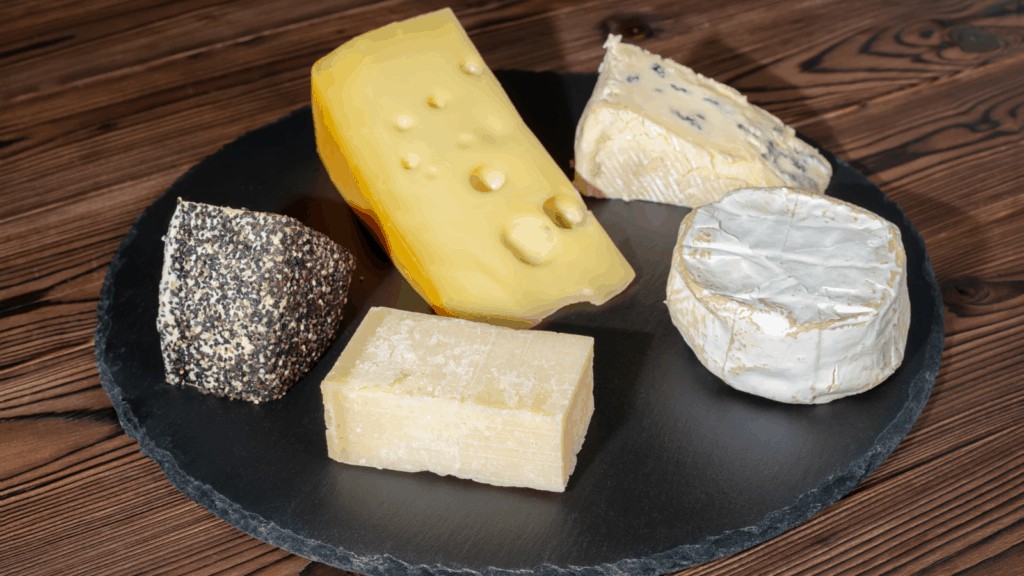
The difference between okay eating and spectacular eating in France averages about €20 per person— more in the big cities like Paris and somewhat less in small towns.
You can definitely eat well on a budget in Europe. Combine splurge dinners with regular dinners and then every so often enjoy a picnic and cook your own meals if you’re staying in a house or apartment.
As for what to eat in France, the fare is generally meat-based with vegetables, a starch (best potatoes in the world) and a sauce. Most menus include poulet (chicken), canard (duck), poisson (fish) and variations on boeuf and porc.
The posher the place, the shorter the menu.
Restaurants in France
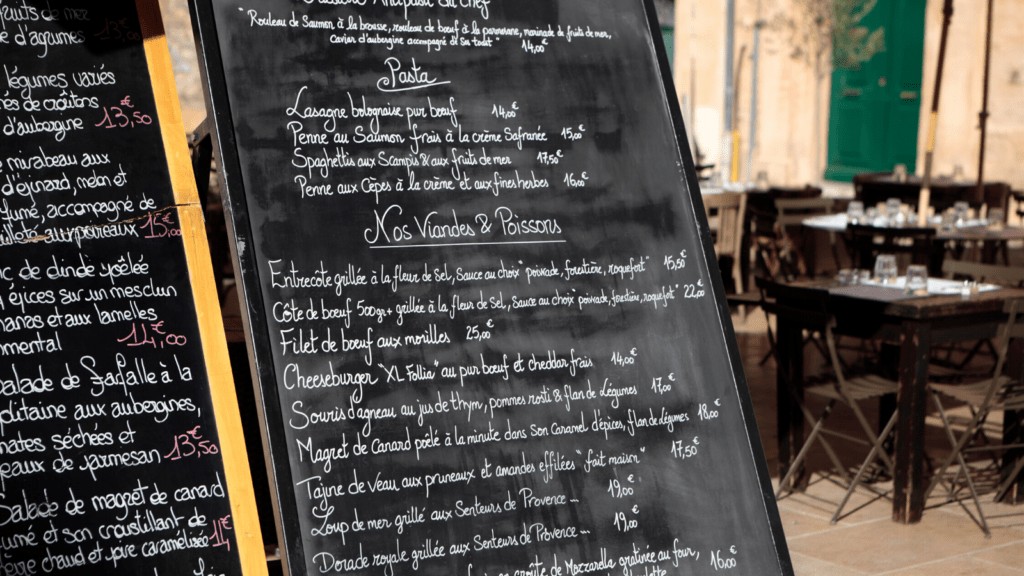
Chain restaurants abound, with long and glossy menus often based around steak, but search out smaller restaurants where the menu du jour (menu of the day) is scrawled on a chalkboard. Also, make reservations for the nicer restaurants. Usually, unless the restaurant is Michelin-starred, you’ll be fine if you call around lunchtime for a same-day dinner reservation.
Another good choice on most menus, at least at déjeuner (lunch), are the grandes salades. I’m partial to the fruits de mer (seafood) and lardons (bacon) frisée salads often served with chunks of warm goat cheese. Oh yeah!
And while you’re in France, you’ll of course want to sample the local wines. I typically order the house wines; they’re usually delicious and the prices are reasonable.
Why France Belongs on Every Artsy Traveler’s Itinerary
From world-class museums to regional traditions, artsy and independent travel in France rewards curiosity, slow exploration, and repeat visits.
Here are posts to read to help you plan and enjoy your time in France:
- Eiffel Tower: Should You Soar to the Summit?
- Why Visit Lascaux IV in the Stunning Dordogne
- Savoring Life in Pont-Aven—The City of Artists
- Six Sensational Days in Paris for an Artsy Traveler
- Discover the Best of the Musée d’Orsay in Paris
- Where To Go in France: Best 10-day Itinerary
- Six Favorite Regions in France
- 17 Must-See Places to Visit in France You Should Know About
- Seven Super Single-Artist Museums in France You Should Visit
Would you like to save this post?

Carol M. Cram is the author of five award-winning novels inspired by art and the women who shaped it, the creator of Artsy Traveler, an arts-focused travel blog, the founder of Art In Fiction, a curated database of 2,600+ novels inspired by the arts, and the host of The Art In Fiction Podcast. She lives with her husband, artist Gregg Simpson, on beautiful Bowen Island near Vancouver, BC.