Kröller-Müller Museum: Why It’s Worth a Trip
I'm Carol Cram, novelist and arts travel writer, and founder of Art In Fiction, a curated database of 2,700+ novels inspired by the arts. Artsy Traveler contains affiliate links for products and services I personally use and recommend. As an Amazon Associate, I earn from qualifying purchases. Please read the Disclosure for more information.
I first visited the Kröller-Müller Museum in 1974 when, at the tender age of eighteen, I was backpacking solo in the Netherlands. For some reason that I don’t remember, I decided to go to Arnhem after spending my first few days in Amsterdam. I’d never been to Arnhem and knew only that it had a youth hostel.
While there, I met a young man from Texas who, when he found out I liked art, offered to take me to the Kröller-Müller Museum the next day. How we got there without a car, since it’s buried deep within Hoge Veluwe National Park, also remains locked away in my memory.
But what I do remember is being absolutely, totally blown away by the spacious modern galleries, the gorgeous grounds with their eclectic sculptures, and of course, the incredible artwork with many pieces by Van Gogh, an artist I’d just discovered and already loved.
I cherished memories of that day for decades until finally, in 2015, I returned with Gregg and had the pleasure of seeing him fall in love with the Kröller-Müller Museum just like I had.
On my most recent trip to the Netherlands, I decided to squeeze in two days in Arnhem so I could visit once again and, this time, write a post about it for Artsy Traveler.
Bonus for me: the museum was displaying its entire collection of Van Goghs, a collection that is the second-largest in the world, after the Van Gogh Museum in Amsterdam.
Lacking a car and with the trains not running as a result of a strike, we took an Uber from Hotel Modez in Arnhem straight to the Kröller-Müller Museum and, in the late morning of a perfect autumn day, started in the enormous sculpture garden.
Table of contents
Quick Facts: Kröller-Müller Museum
| Where | Houtkampweg 6, Otterlo, inside Hoge Veluwe National Park, about a 30-minute drive from Arnhem |
| What | The world’s second-largest Van Gogh collection, late 19th- and early 20th-century masters (Seurat, Mondrian, Monet and more), and a huge sculpture garden in the woods |
| Hours | Tuesday to Sunday and public holidays, 10:00 to 17:00. Closed Mondays (except during summer holidays) and 1 January |
| Tickets | Combined park and museum day ticket: €27.75 adults, €20.80 ages 13 to 18, €6.95 ages 6 to 12 (2026 prices). Museumkaart holders get into the museum free but still need a park ticket (€13.85). Buy online |
| Van Gogh exhibition | Van Gogh, All Our Paintings shows all 88 of the museum’s Van Goghs until 3 January 2027. You need a free timed-entry exhibition ticket on top of your regular ticket |
| Time needed | About three hours for the museum and sculpture garden; most of a day if you add lunch and the park |
| Getting there | Taxi or Uber from Arnhem, or public transit. Drivers pay a separate park entry fee for the car (€9.80 in 2026) |
| Ready to book? | Jump to tours |
The Sculpture Garden: Ignore the Map
Going to the garden first turned out to be the best decision of the day. It’s huge, and in the late morning, it was close to empty.
A word about the map: it’s impossible to follow. I tried, gave up, and just walked, which is exactly what you should do. Follow the paths and let the sculptures find you.
The pieces are spread well apart, so a visit to the sculpture garden really is a walk in the woods. The forest is mostly deciduous with autumn leaves carpeting the paths, and the air has that rich, slightly fecund smell of fall.
Every so often you come across something that makes you stop and think for a minute. Now and then you spot other people and remember you’re not alone. The rest of the time you can easily feel like the last person on earth, discovering these works for the first time.
One minute the art is sleek and serious. The next it’s whimsical and wildly colourful. You never know what you’re going to find, which is half the fun.
Here are some of my favourites.
Barbara Hepworth
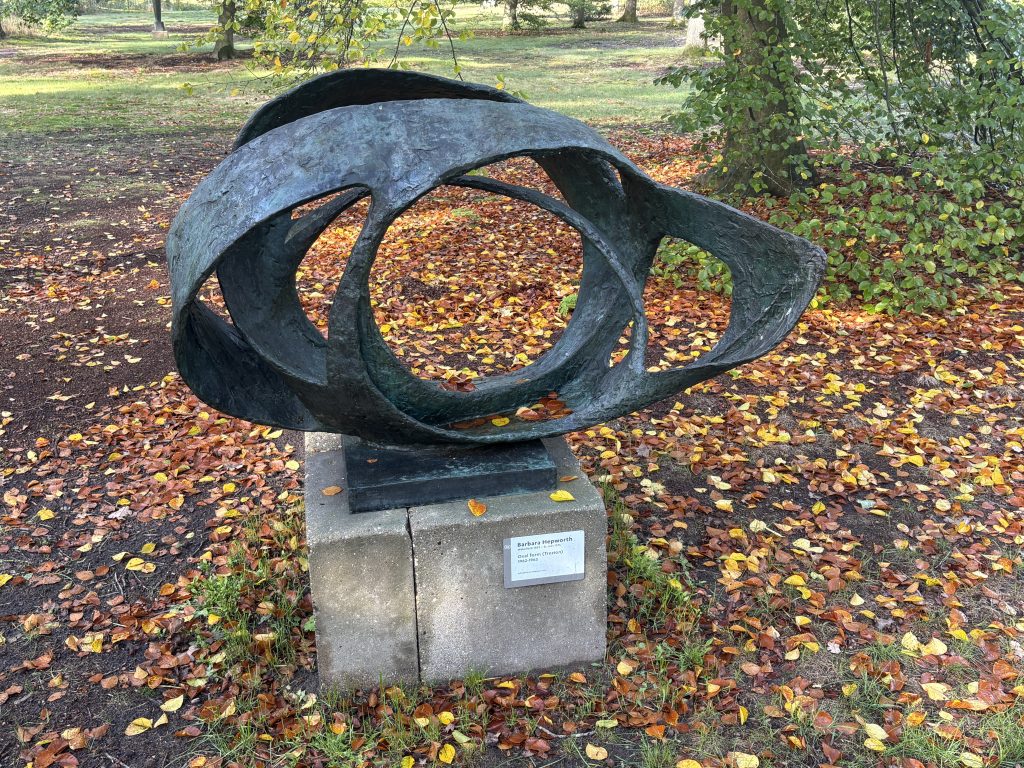
To my delight, I found a whole field dotted with Hepworths.
Oval Form (Trezion) (1962-63) sat on a bed of fallen leaves, and its hollows framed the trees behind it. Elegy III (1966) is quieter and more inward, the kind of piece you walk around twice.
Seeing Hepworth’s work outdoors, where she meant it to be, is a different experience from seeing it in a gallery.

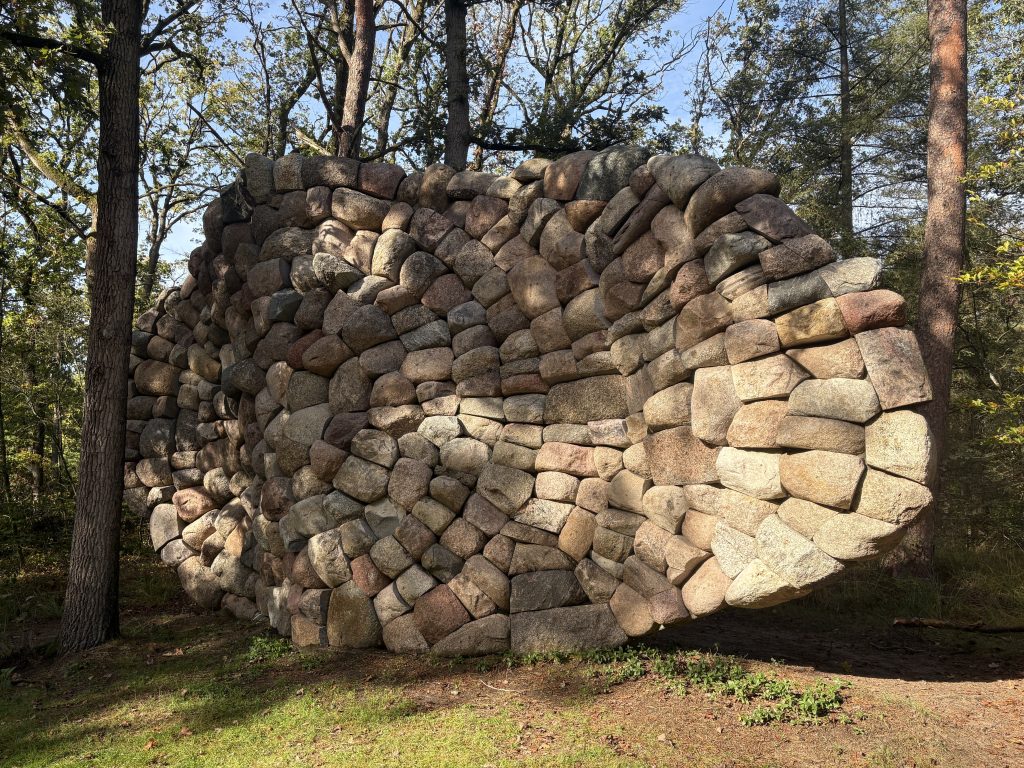
Chris Booth
New Zealand sculptor Chris Booth’s stacked-stone piece rolls through the trees like a wave of rock. It looks as if it grew there rather than being installed. Make sure you walk all the way around it to truly appreciate its size and the intricacy of the interlocking stones.
Marta Pan
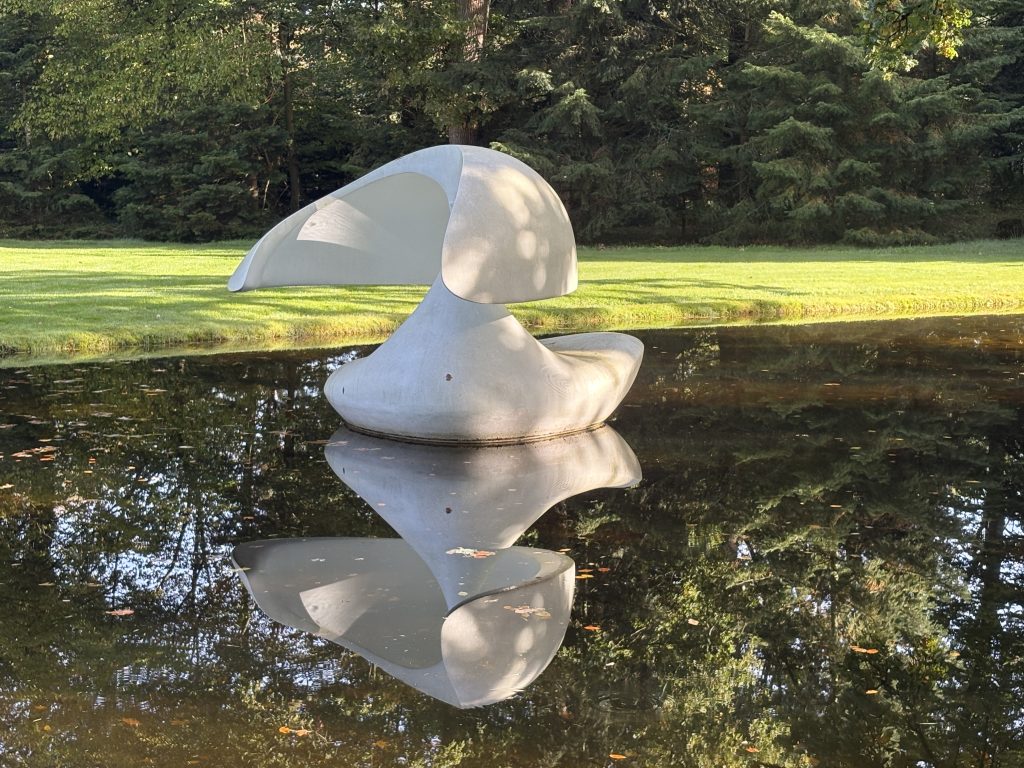
Marta Pan’s Floating Sculpture drifts on its pond, with the wind slowly rotating it, so every time you look, you see different angles. The sensuous white form is one of the most serene things in the garden, and also one of the most photographed.
Kenneth Snelson, Needle Tower
Aluminium tubes that never touch each other are held in the air by tensioned cables. I stood under it looking up for quite a while, trying to work out why it doesn’t fall down. Physics, apparently.

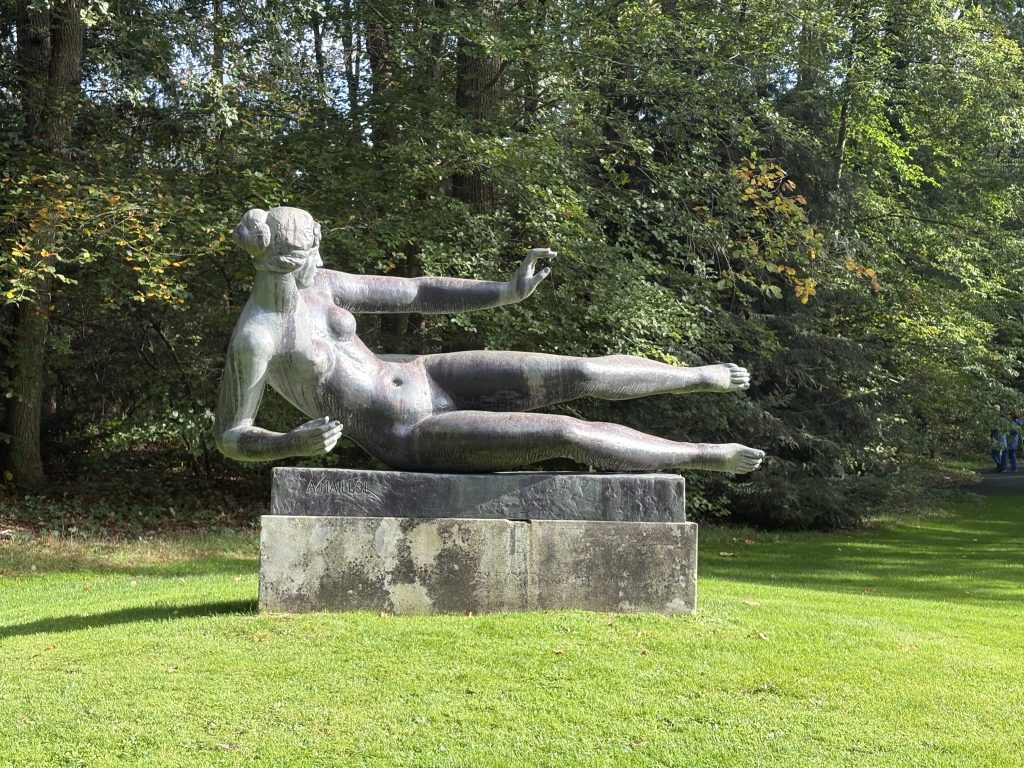
Aristide Maillol
Maillol’s reclining woman looks perfectly at home on the lawn, and is by far the most conventional piece in the garden. If you love his work, make time for the Musée Maillol in Paris, a small, lovely museum devoted to him on the Left Bank.
More Garden Highlights
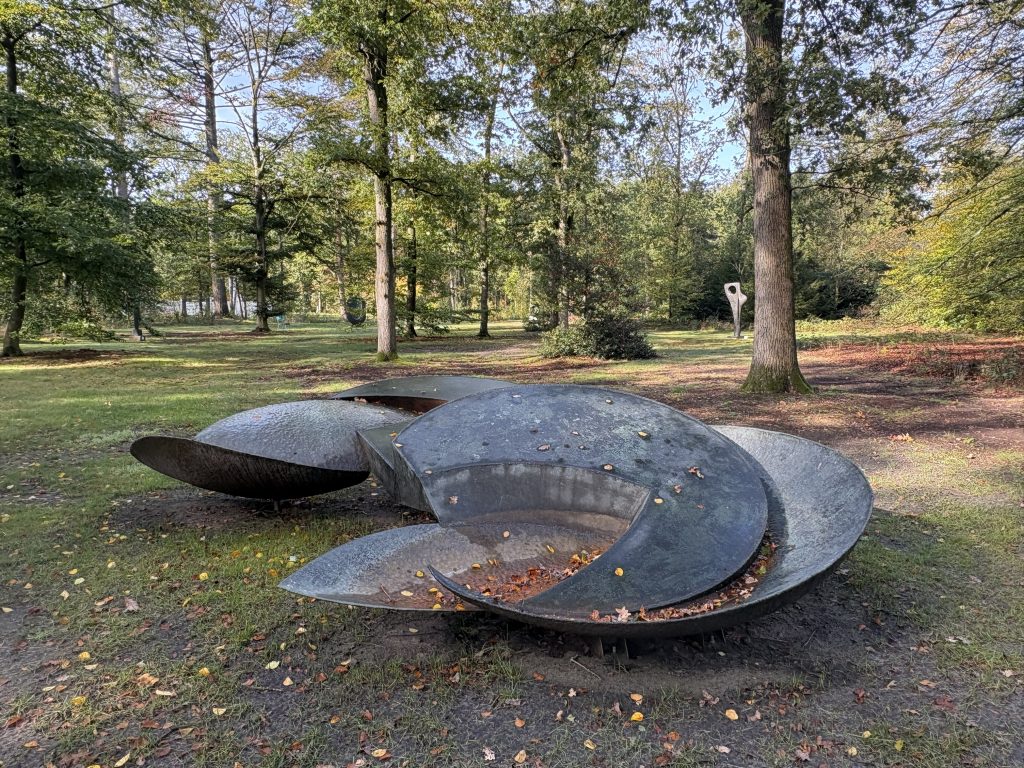
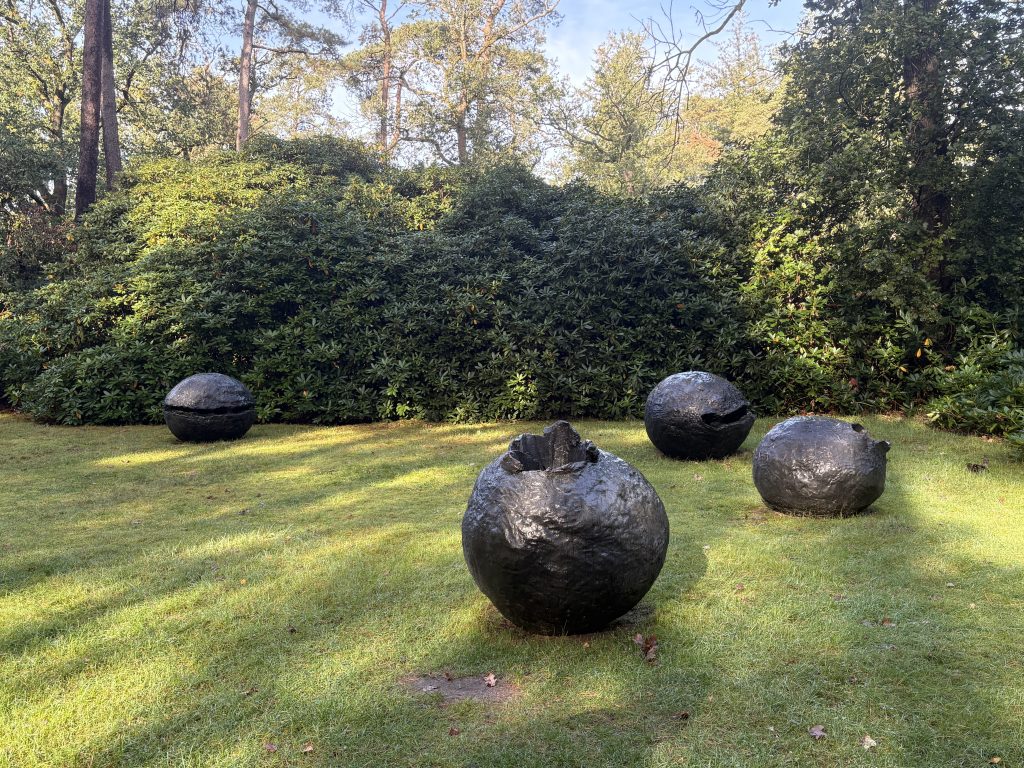

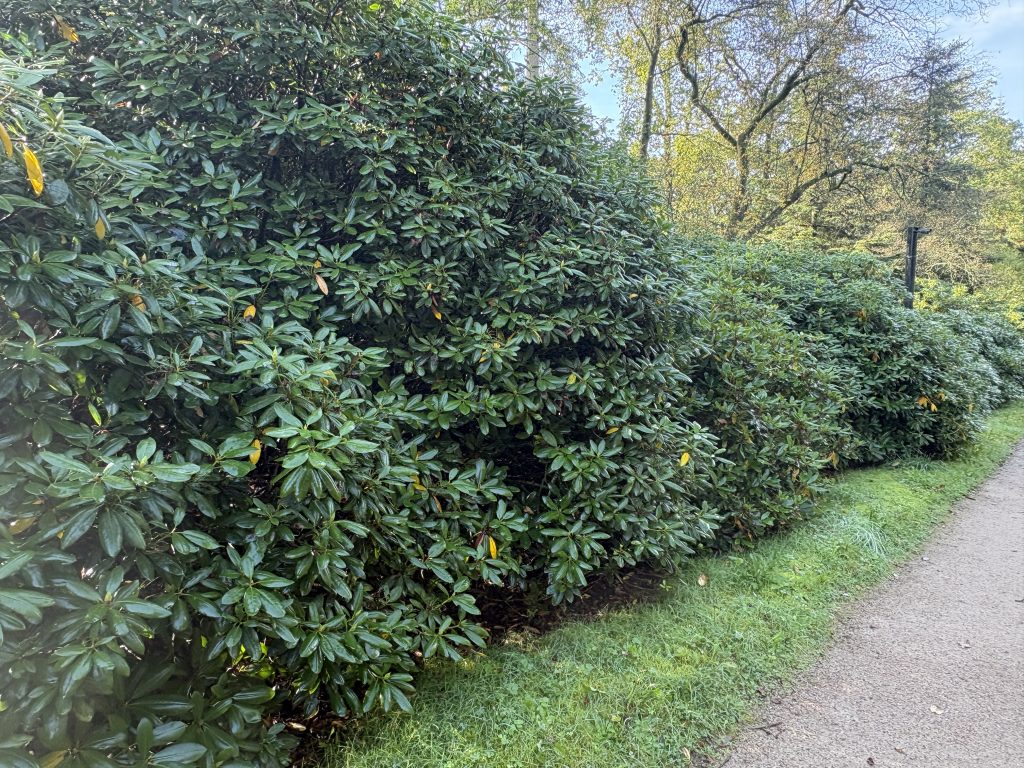
There’s also an avenue of rhododendrons that must be spectacular in spring.
The Outdoor Restaurant
You have two options for eating at the Kröller-Müller Museum: inside the museum or at the outdoor terrace restaurant.
We stopped for coffee at the outdoor restaurant while exploring the gardens. In the late morning, it was almost empty. Mist was lifting off the lawn, the coffee was hot, and we had the terrace nearly to ourselves.

By the time we circled back to the restaurant for lunch, the quiet terrace from the morning was packed. We waited a long time for a table and our food.
It was worth it. I had the best Tom Yum soup I’ve ever eaten, and that includes on my trip to Thailand.
The Van Gogh Rooms: All Our Paintings
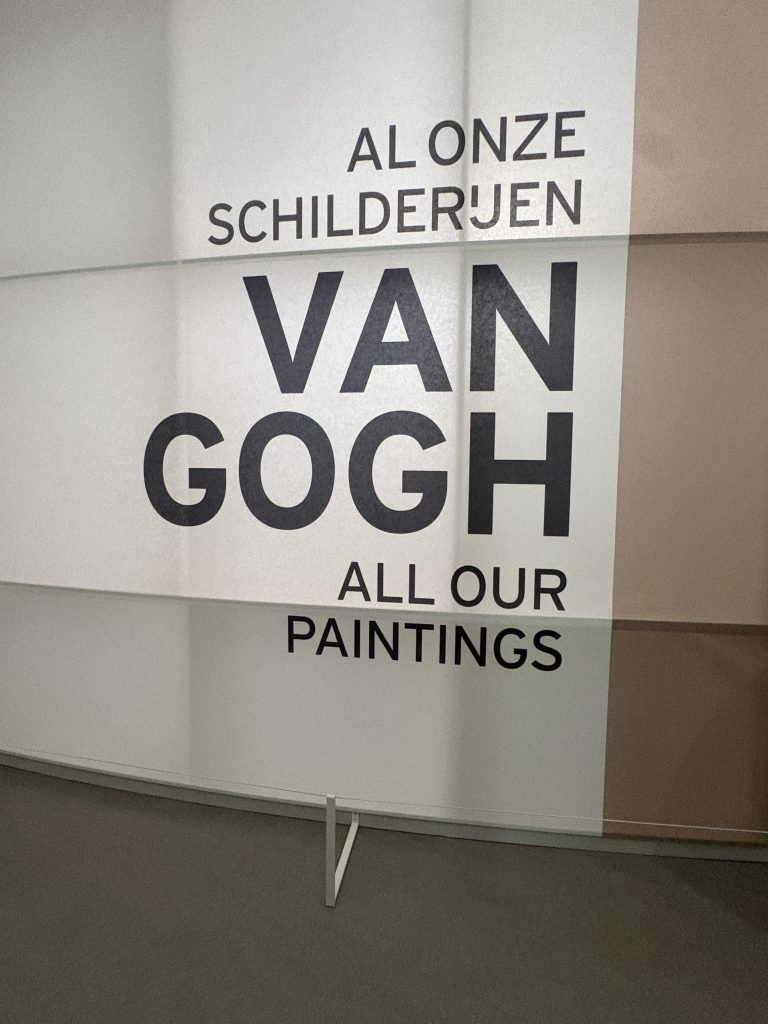
The collection covers both Van Gogh’s early work and the paintings he did towards the end of his life.
I’ve focused on his later period: Paris, then Arles, and then Saint-Rémy. In these years his brushwork gets bolder and the colour less literal, and you can watch his work moving step by step toward abstraction.
The exhibition was out-of-this-world fabulous. It was also mobbed!

What struck me most was the visitors. I’m pretty sure the vast majority were Dutch, and they looked. Very few were taking photos. Instead they stood in front of each painting and studied it, sometimes for minutes at a time.
Each painting has a simple wooden frame, with nothing ornate to compete with the brushwork.
Here is a selection of my favourite pieces, all from the last years of his life. Although I know Van Gogh’s work quite well, I was surprised and delighted to discover several new-to-me pieces.
Four Sunflowers Gone to Seed (1887, Paris)
These are not the cheerful sunflowers on everyone’s tote bag. They’re wilted, spiky and almost violent. I liked them so much I bought the fridge magnet.

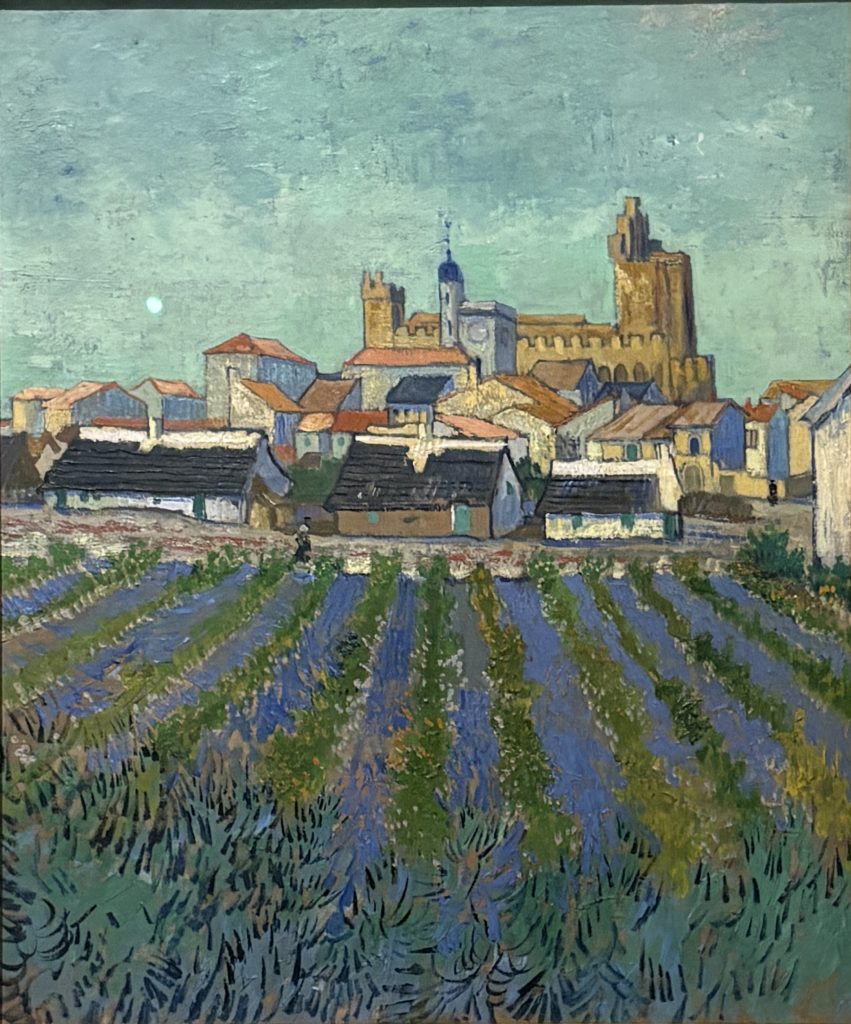
View of Saintes-Maries-de-la-Mer (1888)
Stripes of lavender-blue rows lead your eye straight up to the fortified church. The colours are so Provence, particularly the turquoise sky.
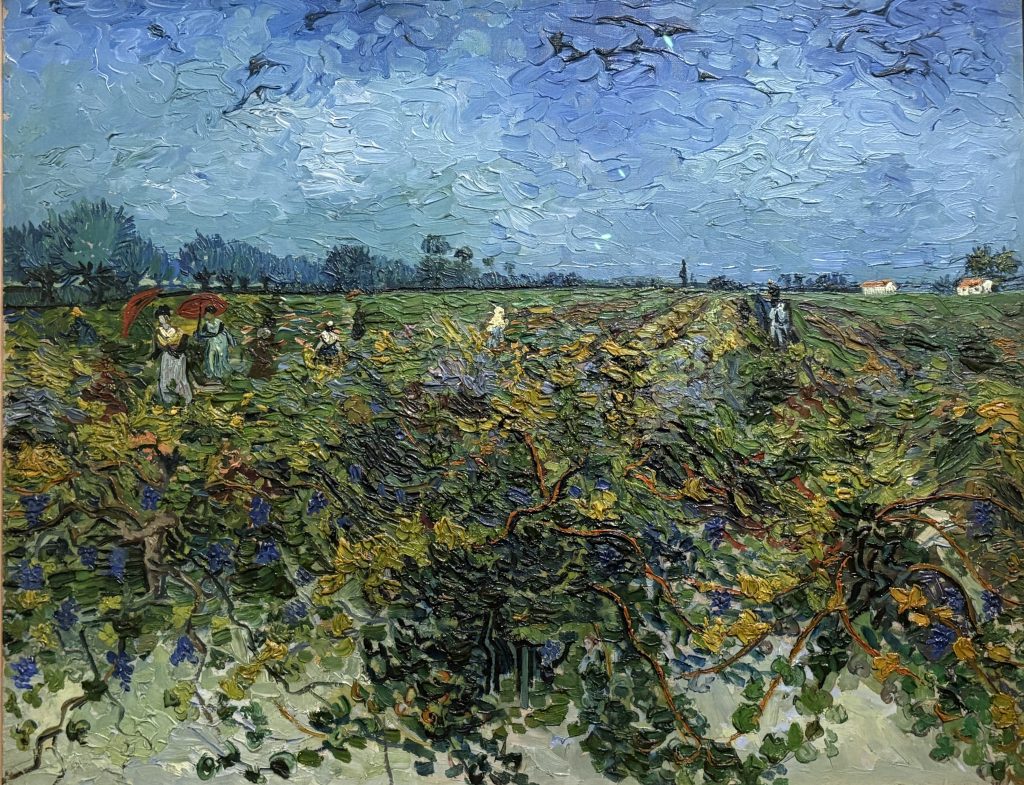
The Green Vineyard (1888, Arles)
The paint is so thick that the vines practically stand off the canvas. Look for the two women with red parasols at the left.
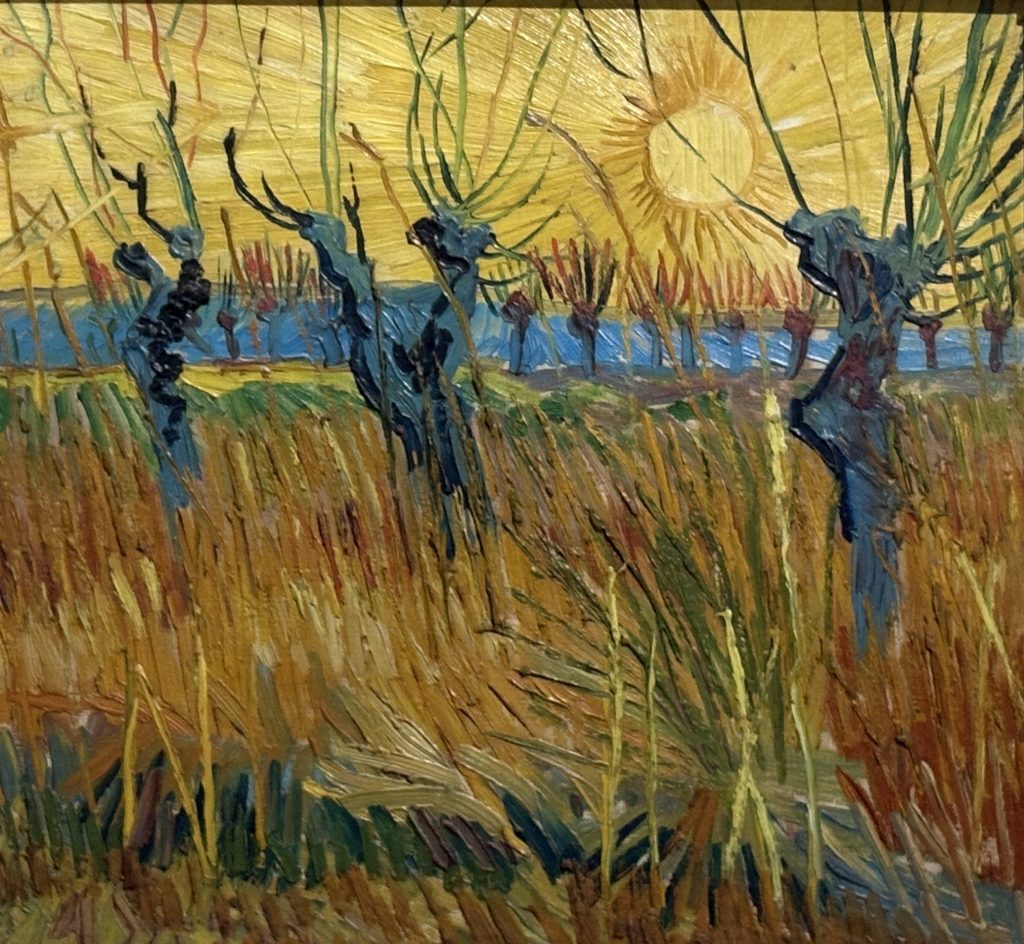
Pollard Willows at Sunset (1888, Arles)
In this small painting with an enormous sun, the willows look as if they’re about to start dancing. Van Gogh is really starting to edge into the abstract with paintings such as this.
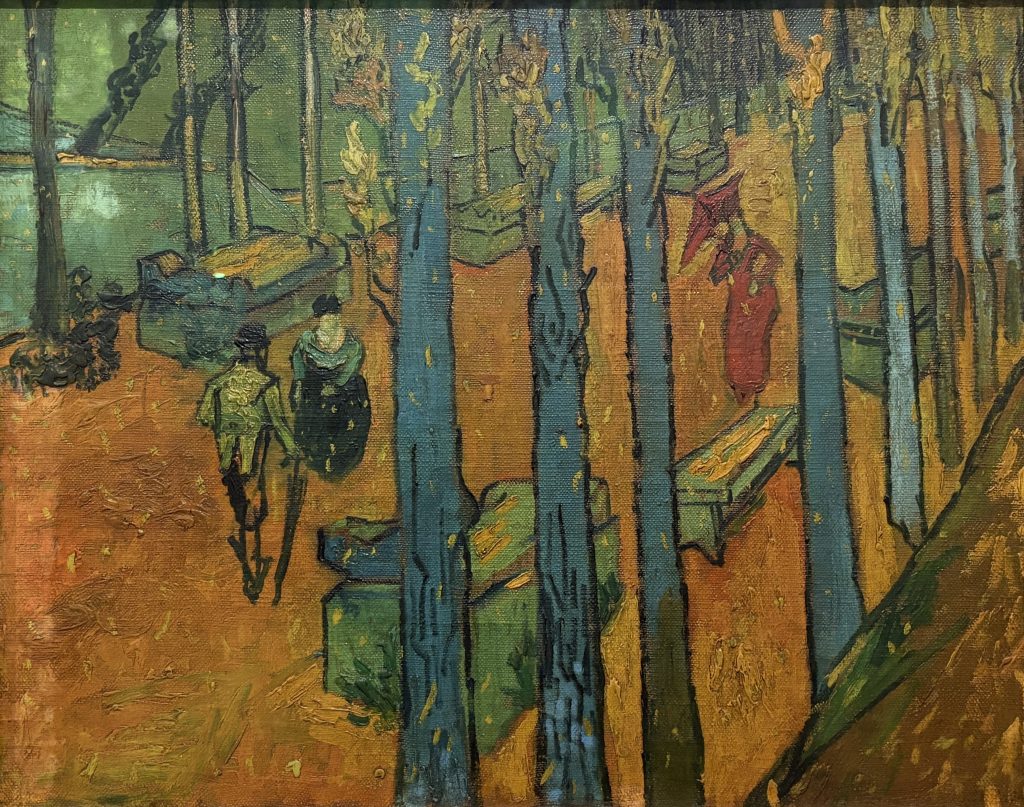
Les Alyscamps (Falling Leaves) (1888, Arles)
Blue tree trunks slice the canvas into vertical strips over an orange path. Van Gogh painted this not long after Gauguin arrived in Arles to share the Yellow House. You can really see the resemblance to Gauguin’s work in the use of black outlines and the colour combinations.
Portrait of Joseph Roulin (1889, Arles)
Van Gogh really captures the stolid, reliable nature of Joseph Roulin, who befriended him while he was living in Arles and was one of the few people to support him after Van Gogh cut off his ear. And what a marvelous beard!

Olive Grove (1889, Saint-Rémy)
Twisting trunks flow into a sky made of brushstrokes that won’t sit still. The whole canvas moves with the wind of the south.

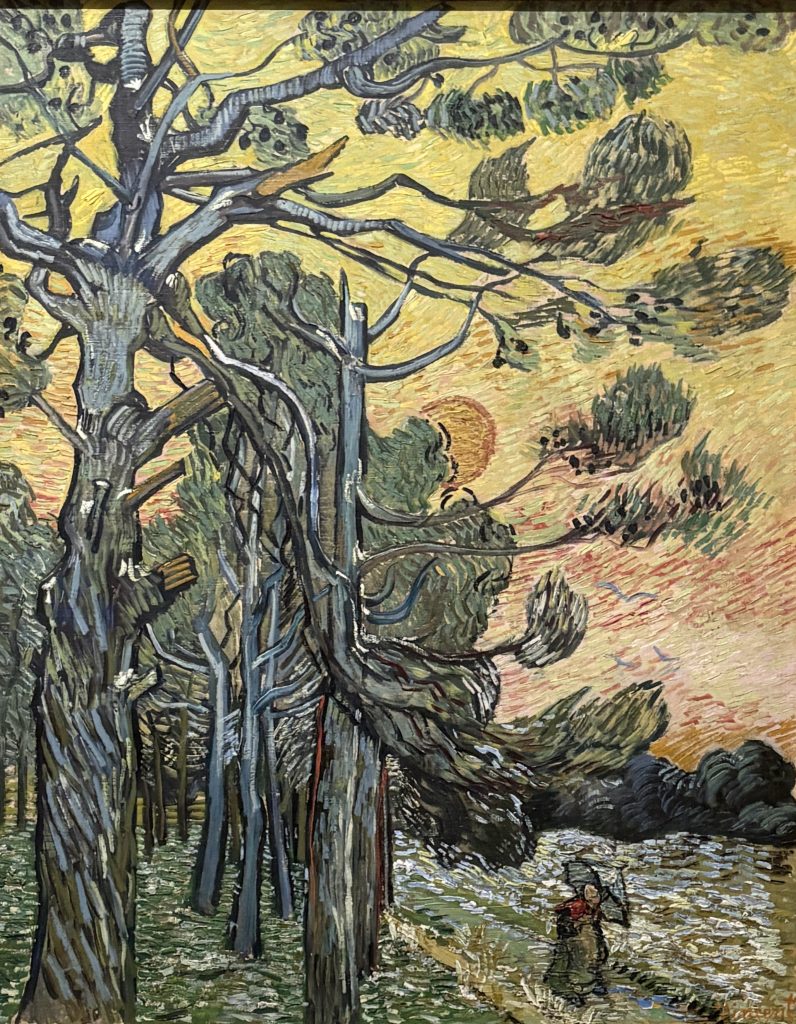
Pine Trees at Sunset (1889, Saint-Rémy)
In this very late painting, the contorted pines against a yellow sky move ever closer to abstraction. Imagine how his work would have progressed if he’d lived longer.
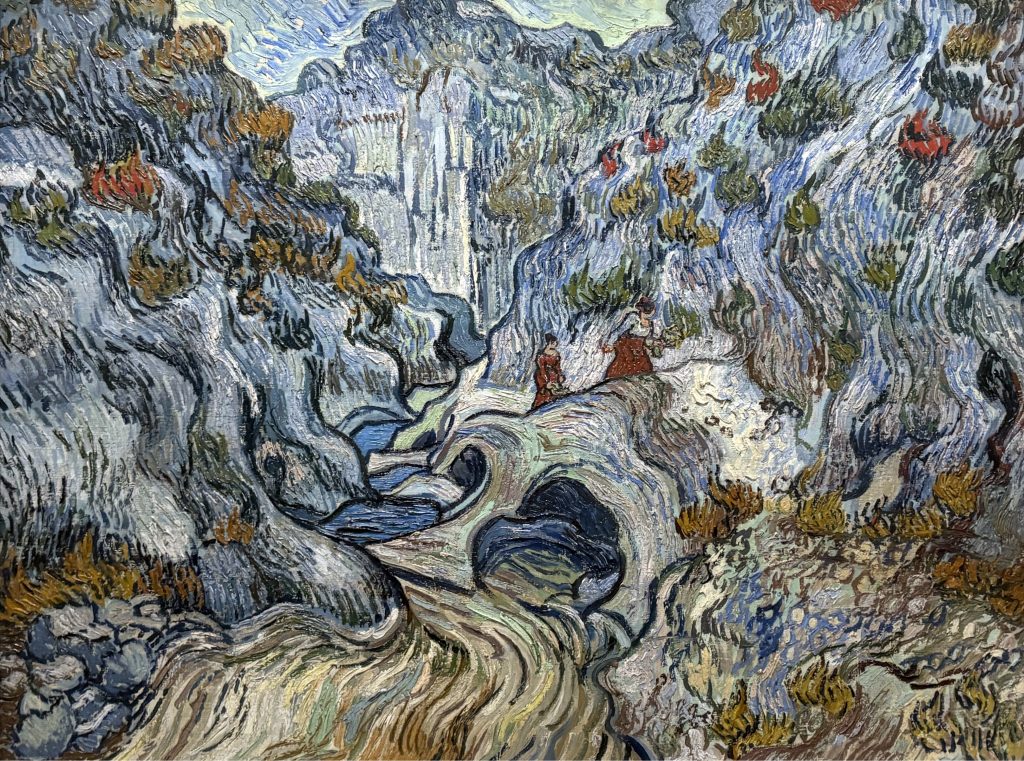
The Ravine (Les Peiroulets) (1889, Saint-Rémy)
The rocks have turned into swirls and ribbons. This piece was definitely one of my favourites in the whole exhibition. It took my breath away.
Wheat Fields in a Mountainous Landscape (1889, Saint-Rémy)
This is the view near the asylum at Saint-Rémy, with blue mountains and a pale yellow sky. It’s a strangely peaceful painting given the situation Van Gogh was in when he painted it.

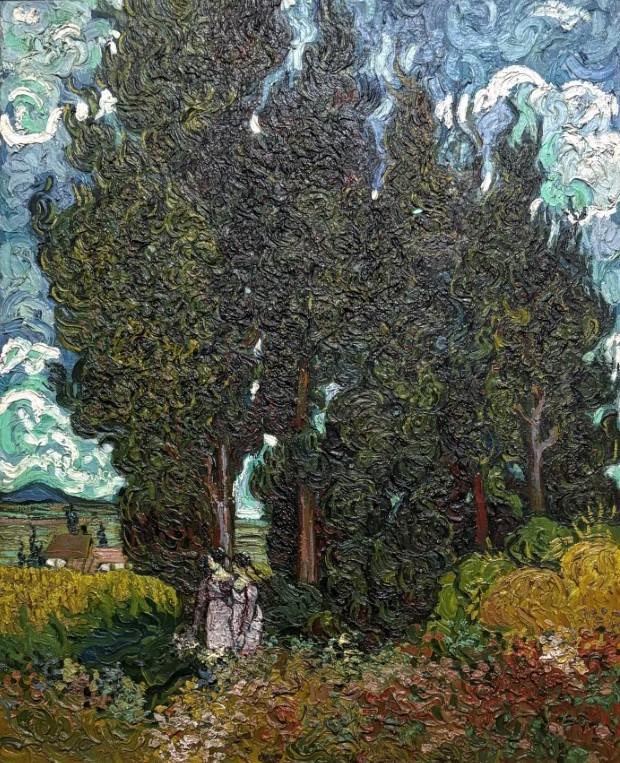
Cypresses with Two Figures (1889-90, Saint-Rémy)
The cypresses are a dark, writhing mass, and the paint is laid on so thickly it’s almost sculpture. Van Gogh is no stranger to impasto, but this work takes thickness to a whole new level. I wanted to reach out and touch the trees.
Tree Trunks in the Grass (1890, Saint-Rémy)
This close-up of bark and meadow flowers, cropped like a photograph, feels almost modern.

Country Road in Provence by Night (1890, Saint-Rémy)
I’m pretty sure I saw this painting on my first visit to the Kröller-Müller Museum in 1974. It stopped me then and it still does, so reminiscent is it of its more famous cousin, The Starry Night, which hangs at MoMA in New York.

The Permanent Collection
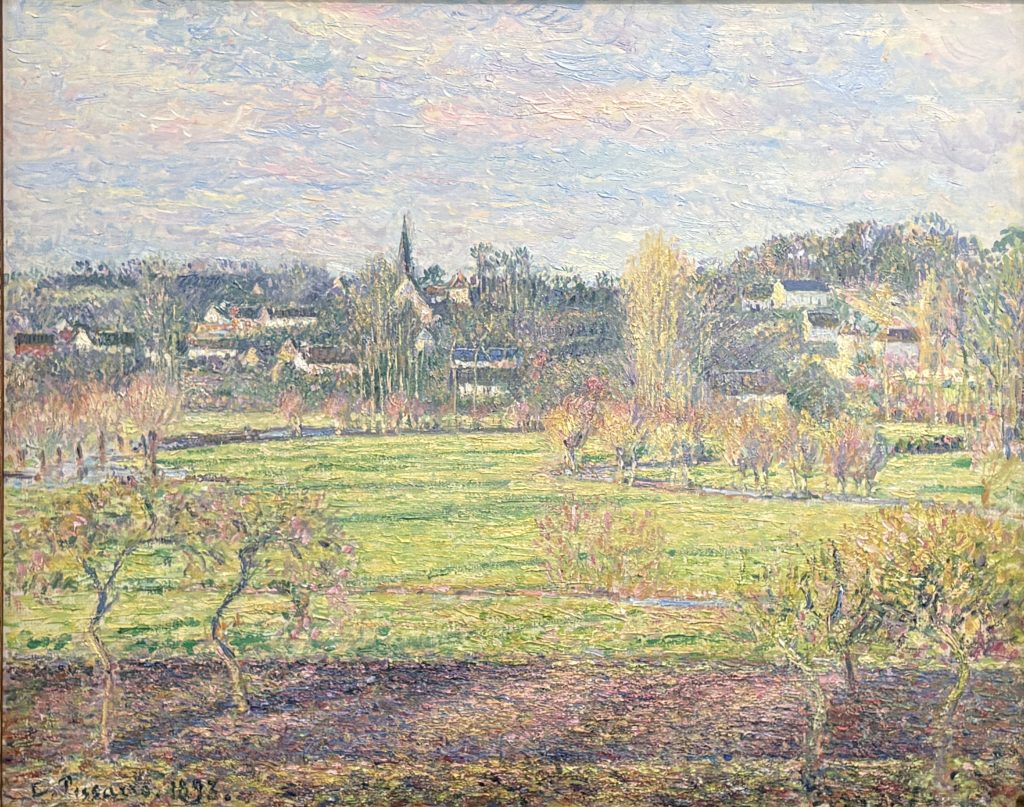
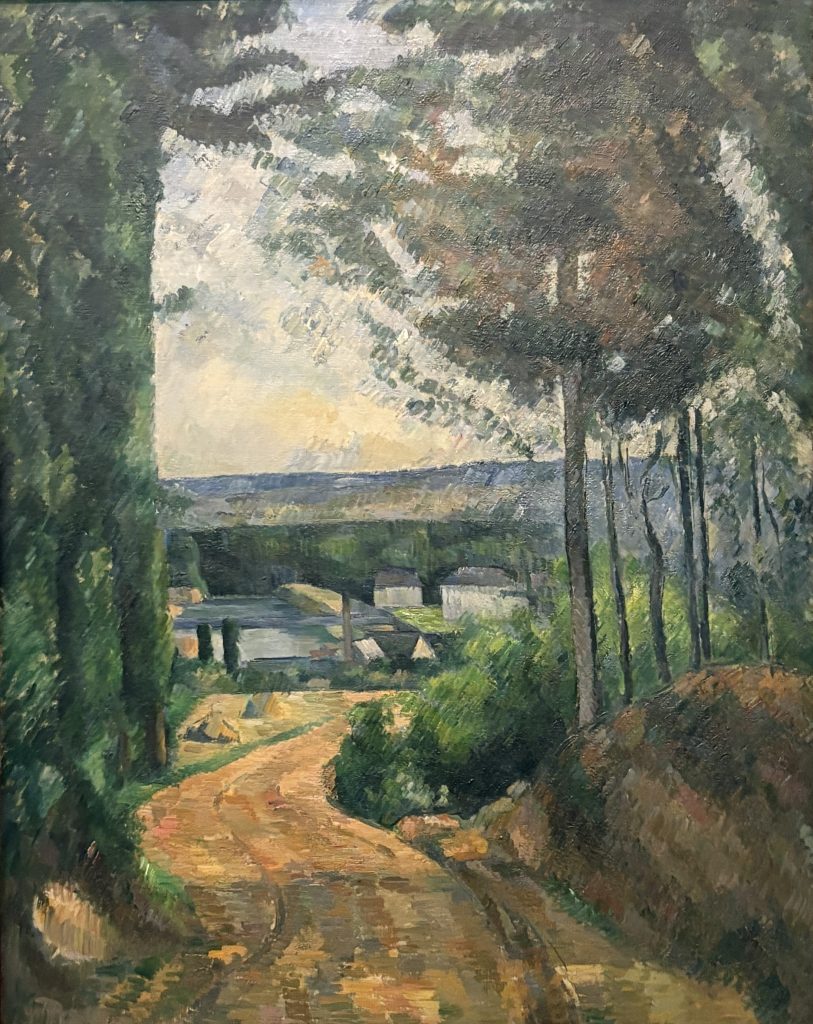
Once you’ve had your fill of Vincent, don’t leave. The rest of the collection is a wonderful selection of late 19th- and early 20th-century masters, and it was far less crowded.
Impressionists

Seurat and the Neo-Impressionists
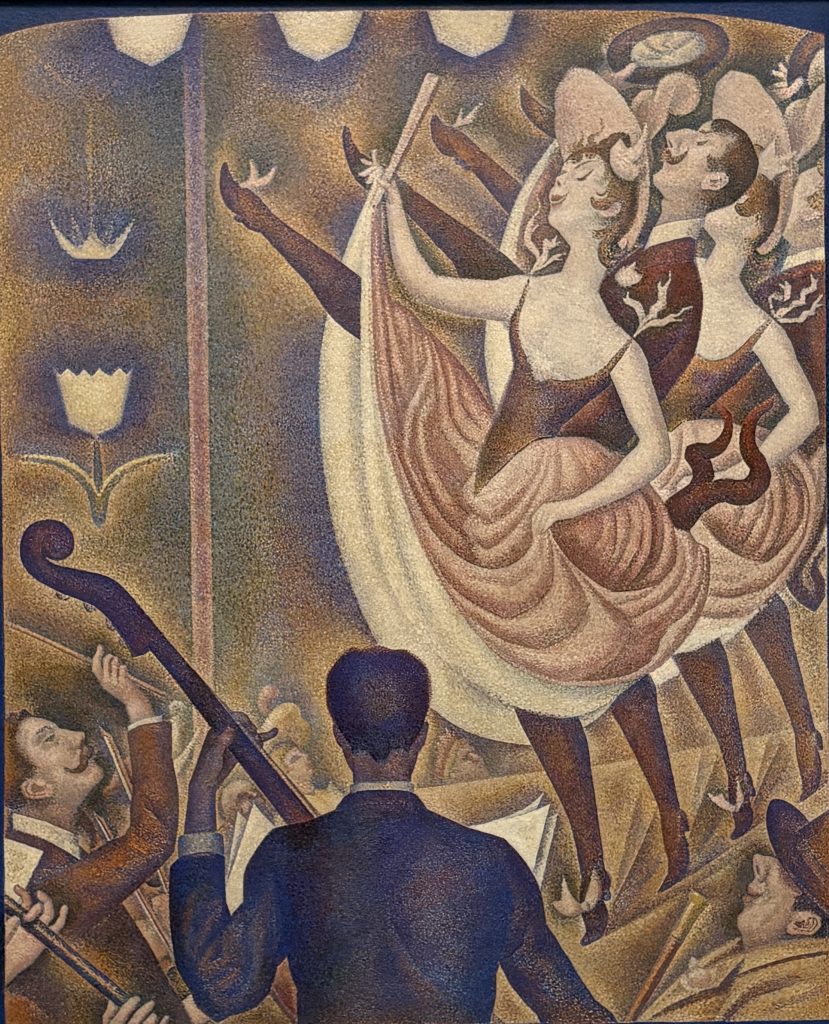
Seurat’s Le Chahut (1889-90) is big, brash and built entirely from dots. Can-can dancers kick, the bass player saws away, and the whole thing is somehow both rigidly geometric and very funny. It’s well worth standing in front of for a while.
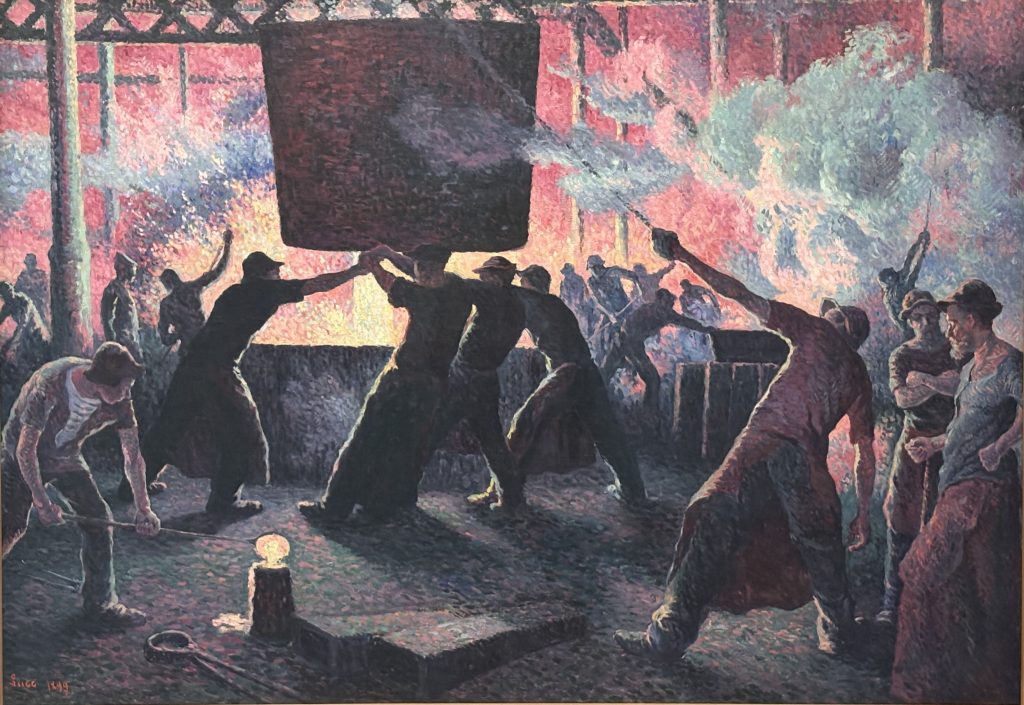
I love Maximilien Luce, and The Iron Foundry shows why: he took the dotty technique of Neo-Impressionism and pointed it at workers and industry instead of Sunday picnics. (My favourite Luce is in the Musée d’Orsay.)
Mondrian
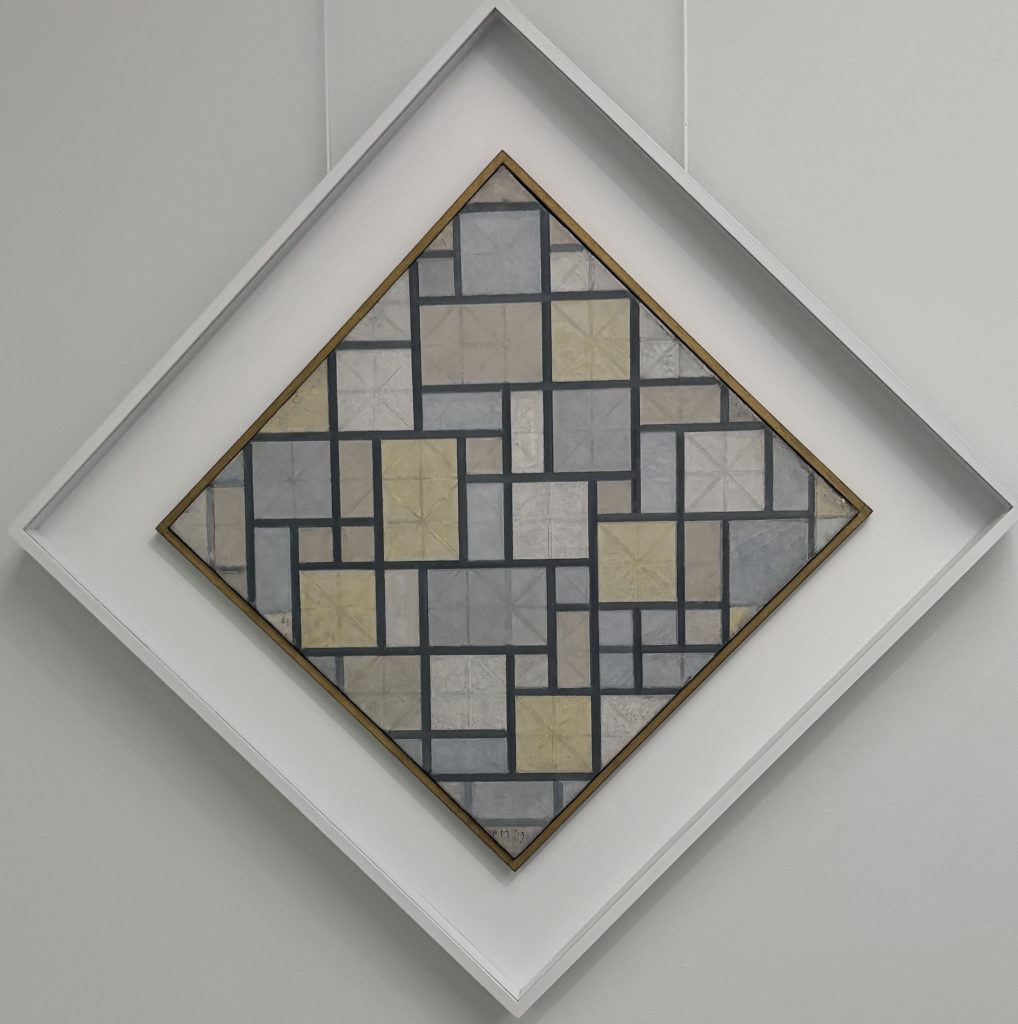
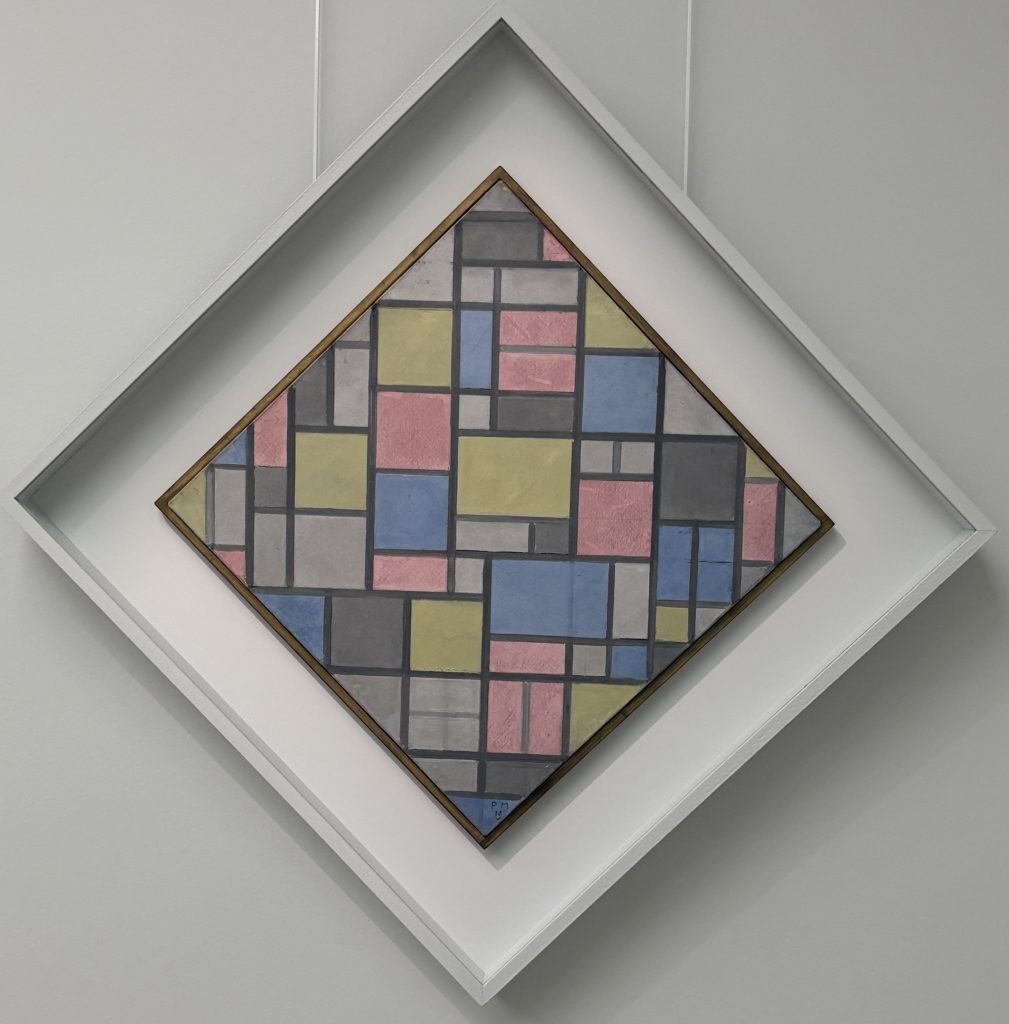
I’ll confess something: I prefer these Mondrians, with their soft pastel pinks, yellows and blues, to the famous primary-coloured grids. The lozenge (diamond-shaped) compositions from 1919 are so subtle, and you can see his hand in the paint.
Leo Gestel
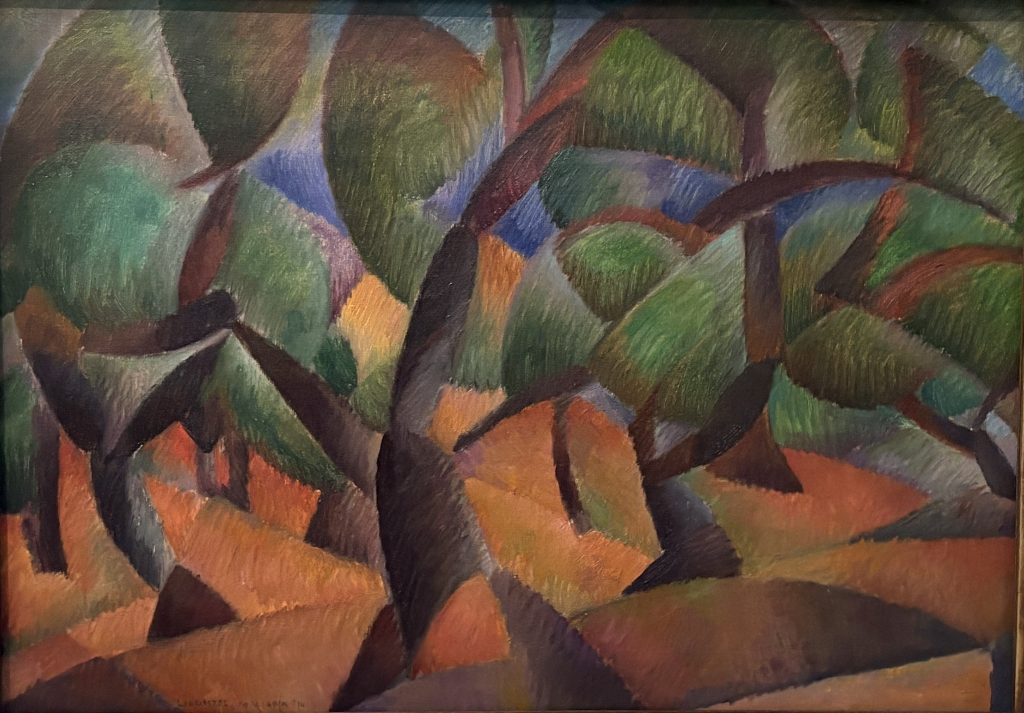
Gestel was new to me, which is one of the joys of a collection like this. I loved his colour. The Mallorca olive grove (1914) is Cubist and full of light.
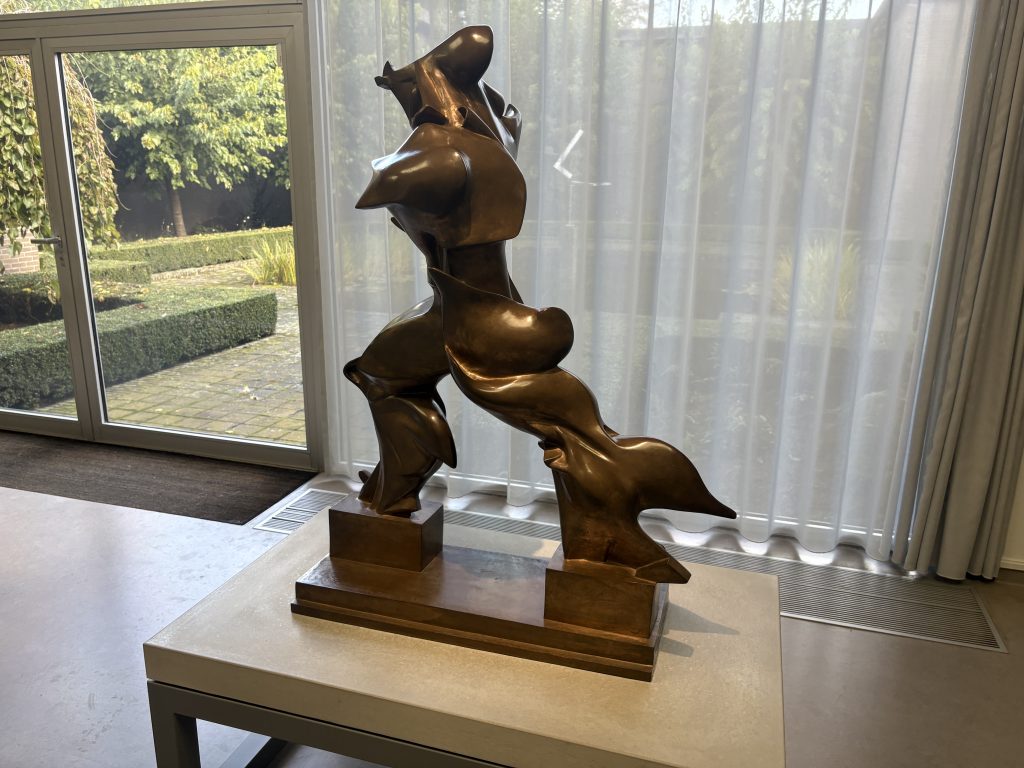
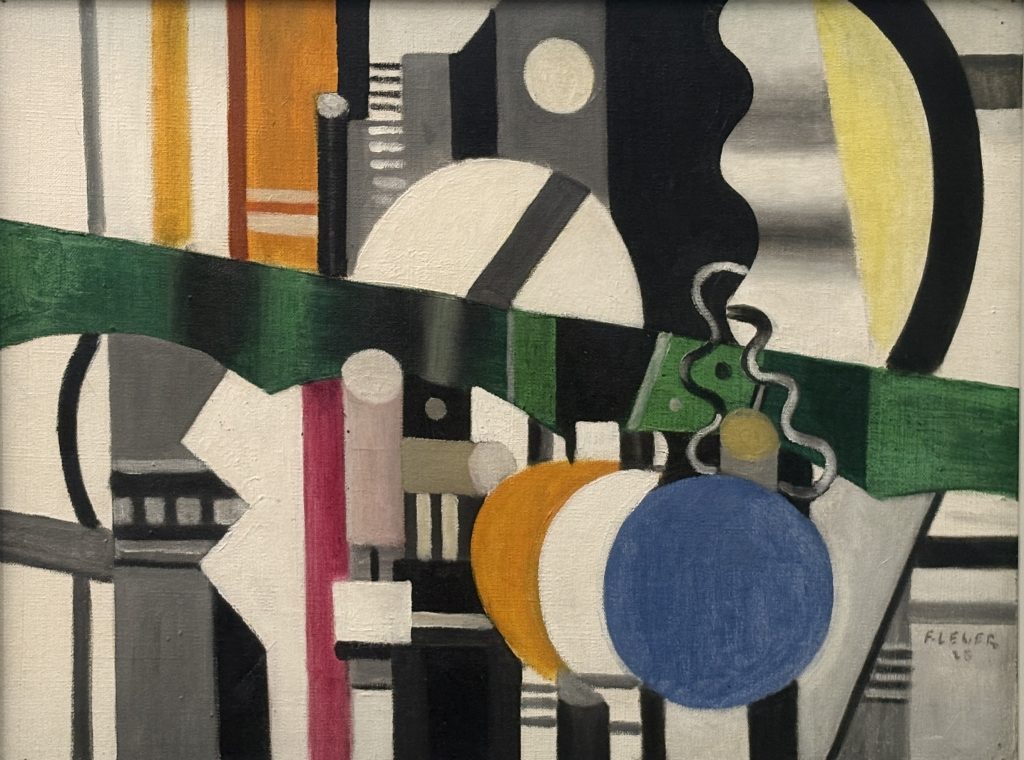
Also Worth Finding
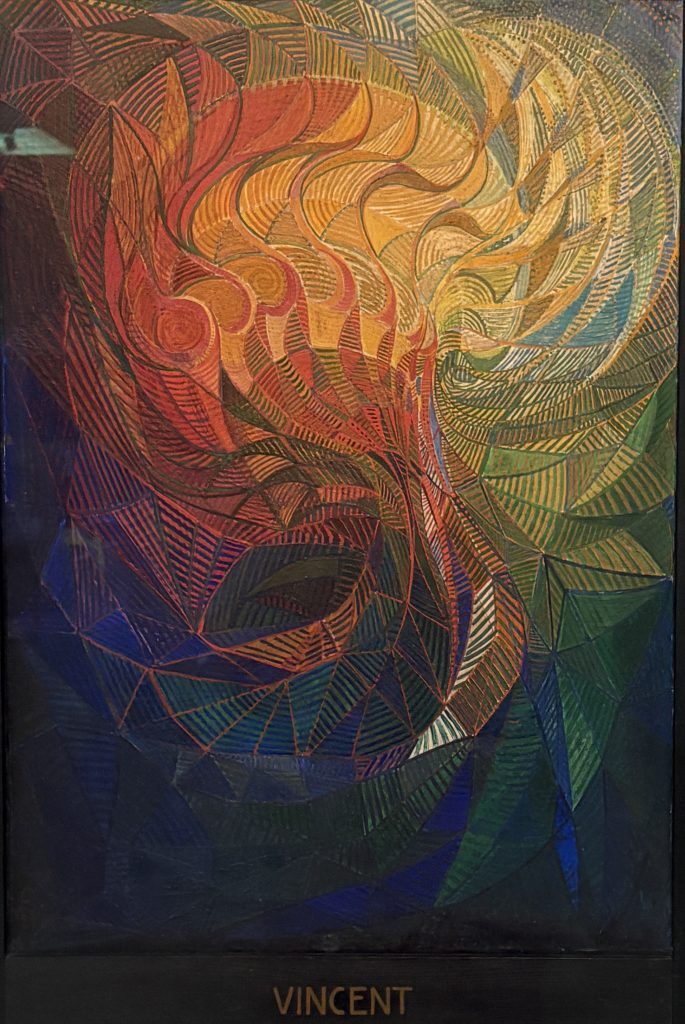
Vilmos Huszár’s Vincent is a homage that turns Van Gogh’s head into a blaze of faceted colour.
Before You Go
- The museum is inside Hoge Veluwe National Park, so you’ll need a combined park and museum ticket (see Quick Facts).
- Start in the sculpture garden if you like solitude, and accept that the Van Gogh rooms will be busier when you get back. Or reverse it if Van Gogh is your priority.
- Wear proper shoes. The garden paths are long, and in autumn they’re damp.
- For lunch, go early or bring patience. The Tom Yum soup is worth it.

Getting There from Arnhem
We based ourselves in Arnhem, about a 30-minute drive from the museum. Most visitors know Arnhem for its bridge and the Second World War battle behind A Bridge Too Far, but it’s also a lively small city with a serious fashion streak, which is how we ended up in a hotel decorated by Dutch designers.
We took Uber both ways. It wasn’t cheap, but it was convenient, and we had the same friendly driver in both directions. You can also get there by public transit, which we’d planned to do until we discovered our museum day was also strike day. Check before you go.
Where We Stayed: Hotel Modez
We stayed at Hotel Modez in Klarendal, the heart of Arnhem’s Modekwartier (fashion quarter). Every room was decorated by a different Dutch designer, the staff couldn’t have been warmer, and the neighbourhood is full of ateliers, independent shops and good places to eat, with barely a tourist in sight. The centrum is an easy 15-minute walk.
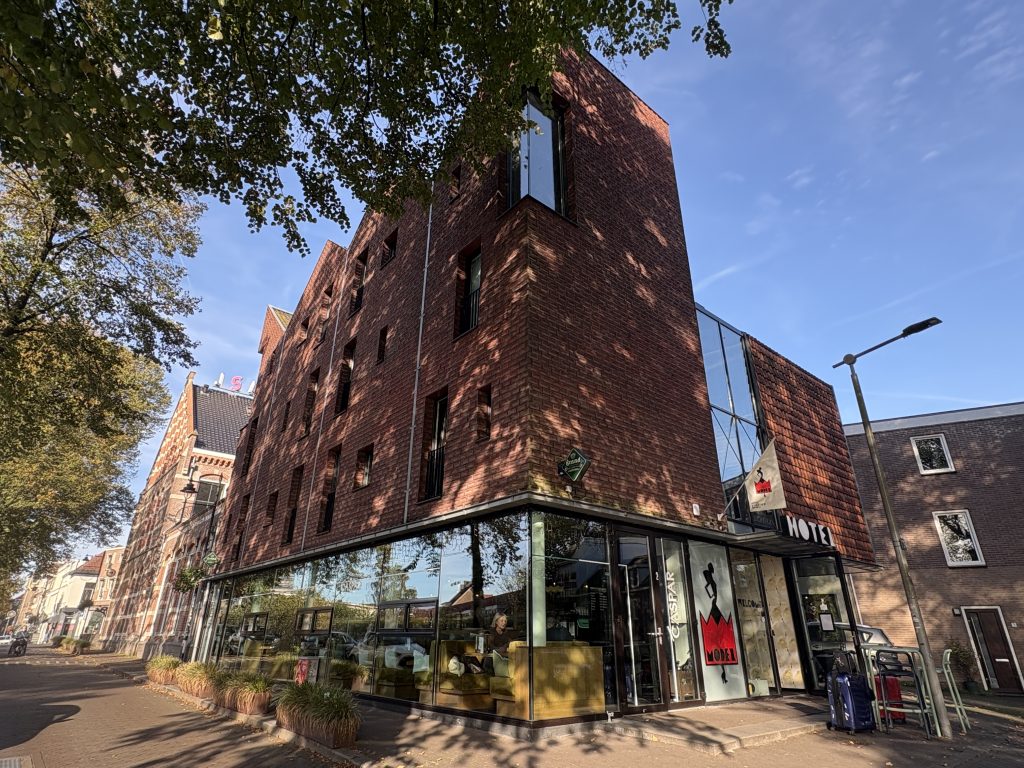
For the full story, including our very memorable Chanel room and where to eat and drink nearby, read my Hotel Modez review.
Tours in the Area
Here are some tours offered through GetYourGuide of the area around Arnhem, including the Kröller-Müller Museum.
Keep Exploring the Netherlands with Artsy Traveler
- Hotel Modez, Arnhem: A Fashion Hotel in a Neighbourhood Most Visitors Never See
- Moco Museum: Why Amsterdam’s Fun Museum Is Worth an Hour
- STRAAT Museum Amsterdam: Street Art, A Free Ferry, and No Crowds
- Rijksmuseum, Amsterdam: My Favorites After 50 Years of Visiting
- Exploring Amsterdam’s Anne Frank House and Begijnhof
- Amsterdam Canal Cruise: Worth It? I First Took One in 1974
- The Hague’s Best Museums: Mauritshuis and Escher in the Palace
- Small Museums in Amsterdam: Rembrandt House and the National Maritime Museum
- The Van Gogh Museum Amsterdam: A Personal Guide to Its Greatest Treasures
Would you like to save this post?

Carol M. Cram writes novels inspired by the arts; runs Artsy Traveler, an arts-focused travel blog, and Art In Fiction, a curated database of 2,700+ novels inspired by the arts; and hosts The Art In Fiction Podcast. She has also authored 60+ textbooks on computer applications and taught at Capilano University for over two decades. Carol lives with her husband, artist Gregg Simpson, on beautiful Bowen Island near Vancouver, BC.

 See all my novels